

கியூபிட்டல் டனல் விடுவிப்பு (Cubital Tunnel Release) தகவல்
Mater Private Hospital Rockhampton-இல் டாக்டர் கியரன் ஹிர்பரா செய்யும், முழங்கையில் அல்நார் நரம்பை (ulnar nerve) அறுவை சிகிச்சை மூலம் விடுவிக்கும் முறைக்குப் (கியூபிட்டல் டனல் விடுவிப்பு, cubital tunnel release) பிந்தைய உங்கள் மீட்சிக்கு இந்த நெறிமுறை (protocol) வழிகாட்டுகிறது. என்ன எதிர்பார்க்கலாம், ஆரம்ப வாரங்களுக்கான முன்னெச்சரிக்கைகள், மற்றும் எல்லாம் சீரடையும்போது நரம்பு சுதந்திரமாக நழுவிக்கொண்டே இருக்க வைக்கும் பயிற்சிகள் ஆகியவற்றை இது விளக்குகிறது. உங்கள் மறுவாழ்வுப் பயிற்சி ஒருங்கிணைந்து இருக்க, இந்தப் பக்கத்தையோ அதன் PDF-ஐயோ உங்கள் இயன்முறை சிகிச்சையாளரிடமோ (physiotherapist) கை சிகிச்சையாளரிடமோ (hand therapist) கொண்டு செல்லுங்கள். உங்கள் மீட்சி எப்படி முன்னேறுகிறது என்பதைப் பொறுத்து உங்கள் சிகிச்சையாளர் இந்தத் திட்டத்தை மாற்றியமைக்கலாம்.
அறுவை சிகிச்சைக்குப் பிறகு உங்கள் காயம் பற்றி ஏதேனும் கவலை இருந்தால், கிளினிக்கைத் தொடர்பு கொள்ளுங்கள். காயத்தைப் புகைப்படம் எடுத்து, பார்வையிடுவதற்காக மின்னஞ்சலில் அனுப்புவது பெரும்பாலும் உதவியாக இருக்கும்.
இரண்டு வெவ்வேறு அறுவை சிகிச்சைகள், சற்று வேறுபட்ட இரண்டு மீட்சிகள். அல்நார் நரம்பை முக்கியமாக இரண்டு வழிகளில் விடுவிக்க முடியும்; அவற்றில் உங்களுக்கு எது செய்யப்பட்டது என்பது உங்கள் ஆரம்பகால முன்னெச்சரிக்கைகளை மாற்றுகிறது:
- நரம்பை அதே இடத்தில் அழுத்த நீக்கம் செய்யும் எளிய முறை (in-situ decompression): நரம்பை நகர்த்தாமல், அது இருக்கும் இடத்திலேயே விடுவிக்கப்படுகிறது. டாக்டர் ஹிர்பரா செய்யும் வழக்கமான அறுவை சிகிச்சை இதுதான்; மீட்சியும் விரைவானது: முழங்கையின் மென்மையான முழு அசைவு ஆரம்பத்திலேயே தொடங்குகிறது. இறுக்கமான பிடிப்புக்கட்டு (brace) எதுவும் பயன்படுத்தப்படுவதில்லை.
- முன்பக்க (தசைக்கு அடியில்) இடமாற்றம், anterior (submuscular) transposition (நரம்பை உயர்த்தி, முழங்கையின் முன்பக்கத்தில் மேலும் பாதுகாப்பான ஓர் இடத்திற்குப் புதிய பாதை அமைத்து நகர்த்துதல்): முழங்கையை மடக்கும்போது நரம்பு எலும்பு மேட்டின் (மீடியல் எபிகொண்டைல், medial epicondyle) மேல் பகுதியளவு இடம்பெயரும் (subluxes) அல்லது முற்றிலும் விலகும் அரிதான சூழ்நிலையில் மட்டுமே இது செய்யப்படுகிறது. இதற்கு மேலும் கவனமான ஓர் ஆரம்பக் கட்டம் தேவை: நரம்பும் மெல்லிய திசுக்களும் தங்கள் புதிய இடத்தில் நிலைபெறும் வரை, முதல் சில வாரங்களுக்கு முழங்கையை எல்லை வரை மடக்குவதையும் எல்லை வரை நேராக்குவதையும் தவிர்க்க வேண்டும். வசதிக்காக மட்டுமே ஒரு எளிய கைத்தாங்கி (sling) அணியப்படலாம்.
உங்களுக்குச் செய்யப்பட்ட அறுவை சிகிச்சைக்கான வழிகாட்டுதலைக் கீழே பின்பற்றுங்கள்: பெரும்பாலான சமயங்களில் நரம்பை அதே இடத்தில் விடுவிக்கும் முறை; உங்கள் நரம்பு நிலையற்றதாக இருந்த இடத்தில் இடமாற்ற முறை.
என்ன எதிர்பார்க்கலாம்
காயம், வீக்கம், வடு ஆகியவற்றைக் கையாளுவது பற்றி கிளினிக்கின் காயப் பராமரிப்பு வழிகாட்டுதலைப் பாருங்கள்.
அல்நார் நரம்பின் (உங்கள் சுண்டு விரலுக்கும் மோதிர விரலுக்கும் உணர்வைத் தரும், கையின் பல சிறிய தசைகளை இயக்கும் நரம்பு) மீதுள்ள அழுத்தத்தை நீக்குவதே அறுவை சிகிச்சையின் நோக்கம். அழுத்தம் நீங்கியதும் நரம்பு மீளத் தொடங்குகிறது; ஆனால் நரம்புகள் மெதுவாகவே குணமாகின்றன.
உங்கள் அறிகுறிகள் எவ்வளவு விரைவாக மேம்படும் என்பது, நரம்பு எவ்வளவு காலம் அழுத்தப்பட்டிருந்தது, அறுவை சிகிச்சைக்கு முன் அது எவ்வளவு எரிச்சலடைந்திருந்தது என்பவற்றைப் பெரிதும் பொறுத்தது. கூச்சமும் ஊசி குத்துவது போன்ற உணர்வும் பெரும்பாலும் முதலில் தணியும் — சில சமயம் சில நாட்களுக்குள் அல்லது சில வாரங்களுக்குள். மரத்துப்போதலும் கையின் வலிமையும் அதிக காலம் எடுக்கும் (அடிக்கடி மாதங்கள்); இறுதி முடிவு அறுவை சிகிச்சைக்குப் பிறகு ஓராண்டு அல்லது அதற்கும் மேலாகத் தொடர்ந்து மேம்படலாம். அறுவை சிகிச்சைக்கு முன் நீண்ட காலமாக நரம்பு மிகவும் எரிச்சலடைந்திருந்த நிலையில், சில மரத்துப்போதலோ பலவீனமோ முழுமையாக மீளாமல் போகலாம்; அப்போது நிலைமை மோசமாவதைத் தடுப்பதும், நரம்புக்கு அதன் சிறந்த வாய்ப்பை அளிப்பதும்தான் அறுவை சிகிச்சையின் நோக்கம்.
இரண்டு அறுவை சிகிச்சைகளையும் ஒப்பிடும்போது, வெளியிடப்பட்ட மருத்துவச் சோதனைகளின் பெரிய மதிப்பாய்வுகள், நரம்பை அதே இடத்தில் அழுத்த நீக்கம் செய்யும் எளிய முறையும் முன்பக்க இடமாற்ற முறையும் ஒட்டுமொத்தமாக ஒத்த முடிவுகளையே தருகின்றன என்று கண்டறிந்துள்ளன; எளிய அழுத்த நீக்கத்தில் காயம் மற்றும் மெல்லிய திசு சார்ந்த சிக்கல்கள் குறைவாக இருக்கும் போக்கு உள்ளது [1][2]. இவற்றுக்கு இடையிலான தேர்வை, உங்கள் நரம்பையும் உங்கள் முழங்கையையும் அடிப்படையாகக் கொண்டு உங்கள் அறுவை சிகிச்சை நிபுணர் செய்கிறார்.
முன்னெச்சரிக்கைகளும் கட்டுப்பாடுகளும்
சுய பராமரிப்பு, சாப்பிடுவது, உடை அணிவது, எழுதுவது, தட்டச்சு செய்வது போன்ற அன்றாட வேலைகளுக்கு உங்கள் கையை இலகுவாகப் பயன்படுத்துவது, வசதிக்குட்பட்டு, தொடக்கத்திலிருந்தே ஊக்குவிக்கப்படுகிறது.
ஆரம்பகால வரம்புகள், உங்களுக்கு எந்த அறுவை சிகிச்சை செய்யப்பட்டது என்பதைப் பொறுத்தவை:
- நரம்பை அதே இடத்தில் அழுத்த நீக்கம் செய்யும் எளிய முறைக்குப் பிறகு (வழக்கமான அறுவை சிகிச்சை): நரம்பு நழுவிக்கொண்டே இருக்க, முழங்கை, முன்கை, மணிக்கட்டு, கை ஆகியவற்றின் மென்மையான முழு அசைவு ஆரம்பத்திலேயே ஊக்குவிக்கப்படுகிறது. பிடிப்புக்கட்டு எதுவும் பயன்படுத்தப்படுவதில்லை. முதல் சுமார் ஆறு வாரங்களுக்குப் பொருட்களைத் தூக்குவதையும், பிடிப்பதையும், கையின் மீது எடை தாங்குவதையும் இலகுவாக வைத்திருங்கள்; பின்னர் படிப்படியாக அதிகரியுங்கள்.
- முன்பக்க இடமாற்றத்துக்குப் பிறகு (உங்கள் நரம்பு நிலையற்றதாக இருந்தால் மட்டுமே): முதல் சில வாரங்களுக்கு முழங்கை பாதுகாக்கப்படுகிறது; நரம்பு அதன் புதிய இடத்தில் நிலைபெறும் வரை, அதை வலுக்கட்டாயமாக முழுமையாக மடக்குவதையோ முழுமையாக நேராக்குவதையோ தவிர்க்கவும், நீண்ட நேரம் மடக்கியே வைத்திருப்பதையும் தவிர்க்கவும். வசதிக்காக மட்டுமே ஒரு எளிய கைத்தாங்கி அணியப்படலாம். எளிய விடுவிப்புக்குப் பிறகு தொடங்குவதை விட நரம்பு நழுவல் பயிற்சிகள் சற்றுத் தாமதமாகத் தொடங்கும் (பொதுவாகச் சுமார் இரண்டு முதல் மூன்று வாரங்களில்). நரம்பை அதே இடத்தில் விடுவிக்கும் முறையைப் போலவே, முதல் சுமார் ஆறு வாரங்களுக்குப் பொருட்களைத் தூக்குவதையும் எதிர்ப்புப் பயிற்சியையும் இலகுவாக வைத்திருங்கள்; பின்னர் படிப்படியாக அதிகரியுங்கள்.
ஒரு பொது வழிகாட்டியாக, சுமார் ஆறு வாரங்கள் வரை பொருட்களைத் தூக்குவதும் எதிர்ப்புடன் வலுப்படுத்தும் பயிற்சியும் இலகுவாகவே வைக்கப்படுகின்றன; பின்னர் படிப்படியாக அதிகரிக்கப்படுகின்றன [3][4].
முழங்கையை ஊன்றுவது (கடினமான மேற்பரப்பில் உங்கள் முழங்கையை வைத்து ஓய்வெடுப்பது) நரம்பின் மீது நேரடியாக அழுத்தத்தைத் தருகிறது; அது மீளும் வரை இதைத் தவிர்க்க வேண்டும்.
உங்கள் காயம் குணமானதும், நரம்பின் மேலுள்ள தோலும் திசுக்களும் மென்மையாக இருக்க வடு மசாஜ் உதவுகிறது. வடுவைக் கையாளுவது பற்றிய மேலும் தகவல்கள் காயப் பராமரிப்பு பக்கத்தில் உள்ளன.
இவை உங்கள் கையேட்டில் உள்ள பயிற்சிகள்; ஒவ்வொரு அட்டையிலும் விவரிக்கப்பட்டபடி அவற்றைச் செய்யுங்கள். டாக்டர் ஹிர்பராவும் உங்கள் சிகிச்சையாளரும் வழிகாட்டியபடி அவற்றைத் தொடங்குங்கள்: நரம்பு நழுவல் பயிற்சிகளைத் தொடங்கும் தேதியும், முழங்கையின் அசைவு வரம்பில் ஏதேனும் கட்டுப்பாடும், உங்களுக்கு எந்த அறுவை சிகிச்சை செய்யப்பட்டது என்பதைப் பொறுத்தவை.
உங்கள் பயிற்சிகள்
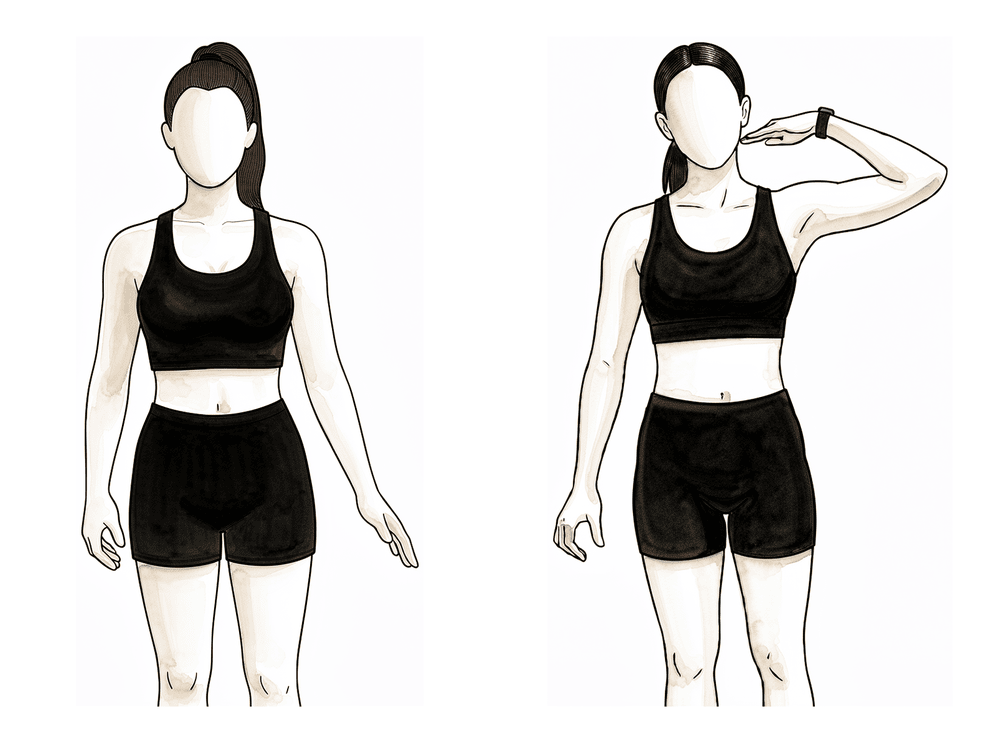
Kieran Hirpara 4.0
அல்நார் நரம்பு நழுவல் (ulnar nerve glides)
அல்நார் நரம்பு குணமாகும் திசுவுடன் ஒட்டிக்கொள்ளாமல் சுதந்திரமாக நழுவிக்கொண்டே இருக்க இந்த மென்மையான அசைவுகள் உதவுகின்றன. ஒவ்வொரு நிலைக்கும் வசதியாக முடிந்த அளவு மட்டுமே சீராக நகருங்கள் — லேசான இழுப்போ கூச்சமோ இயல்பானது, ஆனால் கூர்மையான அல்லது வலுவான ஊசி குத்துவது போன்ற உணர்வுக்கு முன்பே நிறுத்திவிடுங்கள். நீட்சியை ஒருபோதும் வலுக்கட்டாயமாகச் செய்யாதீர்கள். உங்கள் அறுவை சிகிச்சை நிபுணரோ சிகிச்சையாளரோ சொல்லும்போது மட்டுமே தொடங்குங்கள் (உங்களுக்கு இடமாற்ற அறுவை சிகிச்சை செய்யப்பட்டிருந்தால் இது பொதுவாகத் தாமதமாகவே தொடங்கும் — கீழே உள்ள முன்னெச்சரிக்கைகளைப் பாருங்கள்).
5 மெதுவான மறுசெய்கைகள், நாளொன்றுக்கு 2–3 முறை
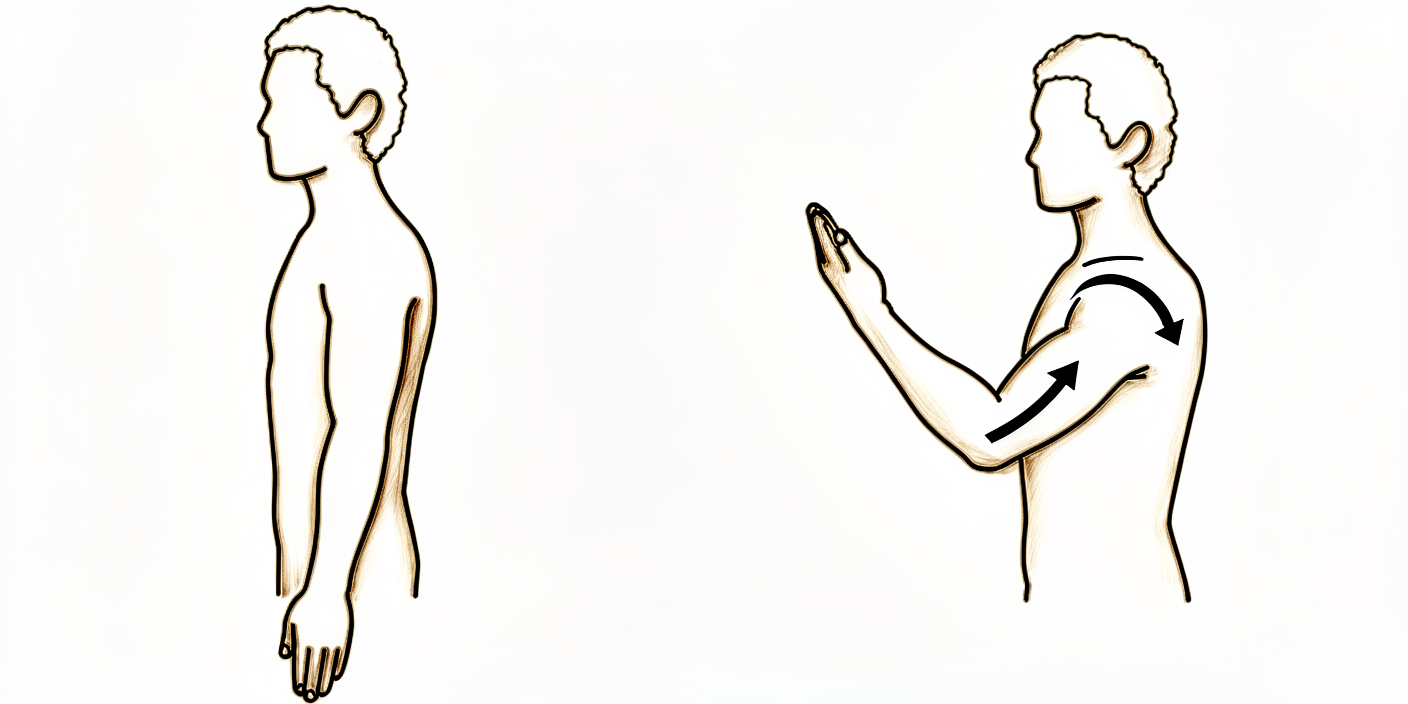
Kieran Hirpara 4.0
முழங்கையை மடக்குதல் (flexion)
உங்கள் மேல்கையைத் தாங்கி வைத்துக்கொண்டு, உங்கள் கையைத் தோள்பட்டையை நோக்கிக் கொண்டு வரும்படி முழங்கையை மென்மையாக மடக்கி, பின்னர் மீண்டும் இறக்குங்கள். வசதியான அசைவு வரம்புக்குள் மட்டுமே நகருங்கள். உங்களுக்கு இடமாற்ற அறுவை சிகிச்சை செய்யப்பட்டிருந்தால், முதல் சில வாரங்களுக்கு முழங்கையை முழுமையாக மடக்குவதைத் தவிர்க்கும்படி உங்கள் அறுவை சிகிச்சை நிபுணர் கேட்டுக்கொள்ளலாம் — உங்களுக்குத் தரப்பட்ட வரம்பைப் பின்பற்றுங்கள்.
10 மறுசெய்கைகள், நாளொன்றுக்கு 3–4 முறை, உங்களுக்கு அனுமதிக்கப்பட்ட அசைவு வரம்புக்குள்
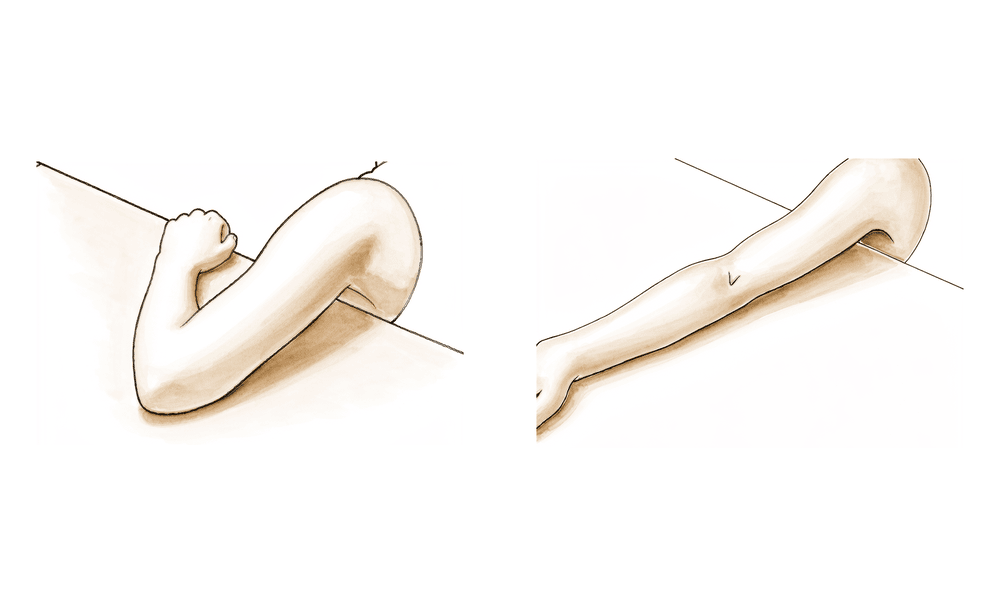
Kieran Hirpara 4.0
முழங்கையை நேராக்குதல் (extension)
மடங்கிய நிலையிலிருந்து, வசதியாக முடிந்த அளவு உங்கள் முழங்கையை மென்மையாக நேராக்கி, பின்னர் திரும்புங்கள். உங்களுக்கு இடமாற்ற அறுவை சிகிச்சை செய்யப்பட்டு, அப்படிக் கேட்டுக்கொள்ளப்பட்டிருந்தால், ஆரம்ப வாரங்களில் முழங்கையை வலுக்கட்டாயமாக முழுமையாக நேராக்குவதைத் தவிருங்கள் — உங்கள் அறுவை சிகிச்சை நிபுணர் நிர்ணயித்த வசதியான அசைவு வரம்புடன் நிறுத்திக்கொள்ளுங்கள்.
10 மறுசெய்கைகள், நாளொன்றுக்கு 3–4 முறை, உங்களுக்கு அனுமதிக்கப்பட்ட அசைவு வரம்புக்குள்
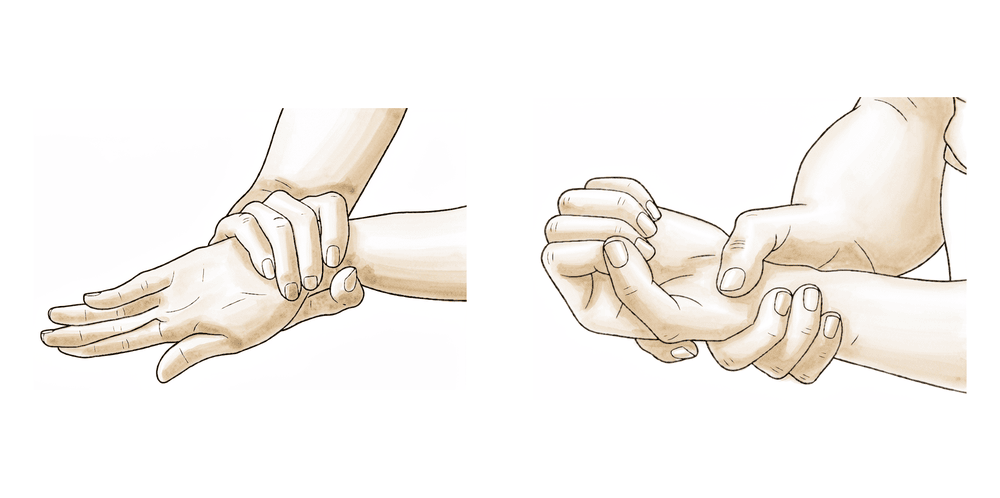
Kieran Hirpara 4.0
முன்கைச் சுழற்சி
முழங்கை உங்கள் உடலின் பக்கவாட்டில் ஒட்டியபடி செங்கோணத்தில் மடங்கியிருக்க, உங்கள் உள்ளங்கையை மெதுவாக மேல்நோக்கிக் கூரையை நோக்கித் திருப்பி, பின்னர் கீழ்நோக்கித் தரையை நோக்கித் திருப்புங்கள். முழுநேரமும் உங்கள் முழங்கையை உடலோடு ஒட்டியே வைத்திருங்கள்.
ஒவ்வொரு திசையிலும் 10 முறை, நாளொன்றுக்கு 3–4 முறை
Kieran Hirpara 4.0
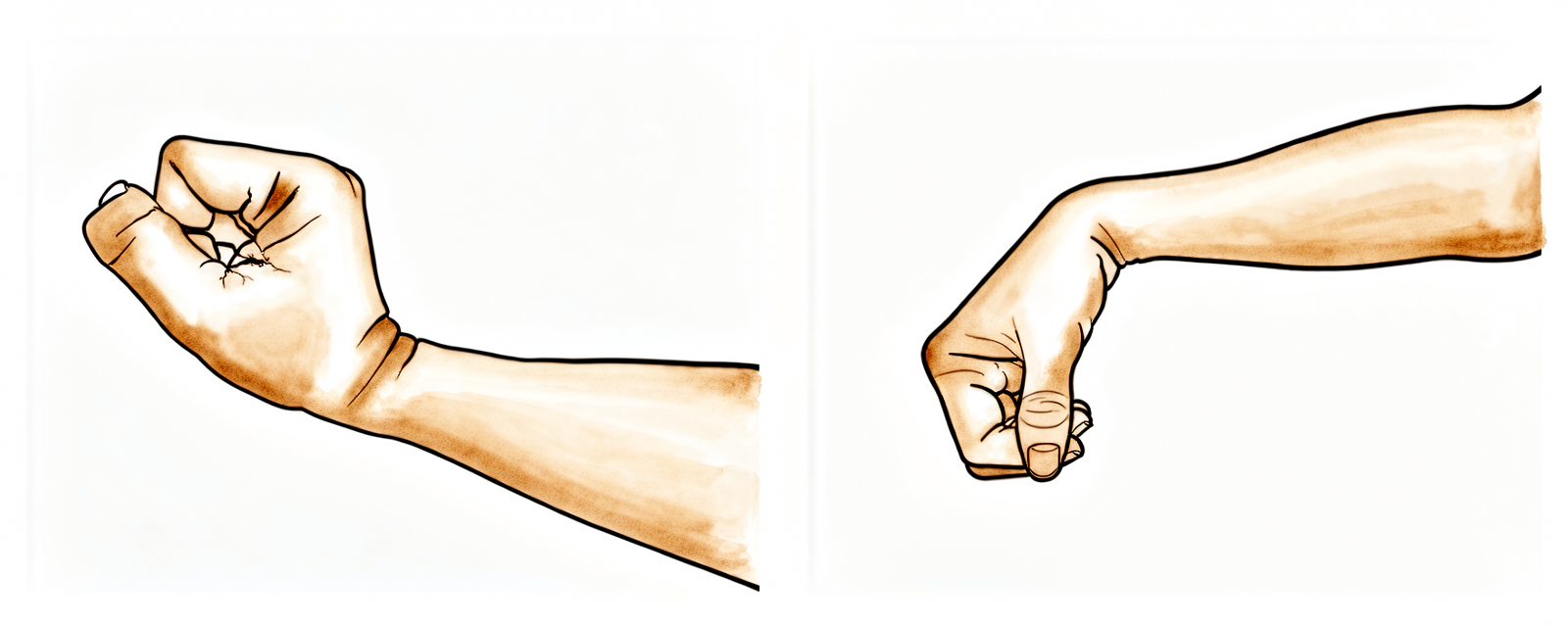
மணிக்கட்டு மற்றும் விரல் அசைவு
உங்கள் மணிக்கட்டை மென்மையாக மேல்நோக்கியும் கீழ்நோக்கியும் வளையுங்கள்; உங்கள் விரல்களை முழுமையாக விரித்து மூடுங்கள் — ஒரு தளர்வான முஷ்டியை மடக்கி, பின்னர் விரல்களை விரியுங்கள். இது முழு அவயவத்தையும் அசைந்துகொண்டே இருக்கச் செய்கிறது; முழங்கை சீரடையும்போது வீக்கத்தையும் இறுக்கத்தையும் குறைக்க உதவுகிறது.
ஒவ்வொன்றும் 10 முறை, நாளொன்றுக்குப் பல முறை
டாக்டர் ஹிர்பராவும் உங்கள் கை சிகிச்சையாளரும் வழிகாட்டியபடி மட்டுமே, உங்களுக்குத் தரப்பட்ட அசைவு வரம்புக்கும் கட்டுப்பாடுகளுக்கும் உட்பட்டு, கீழே உள்ள பயிற்சிகளைத் தொடங்குங்கள். அல்நார் நரம்பு நழுவல் பயிற்சிகளே முக்கியமானவை — வடுத் திசுவால் ஒட்டிக்கொள்ளாமல், நரம்பு தடையின்றி நழுவிக்கொண்டே இருக்க அவை வைக்கின்றன; அவை ஆரம்பத்திலேயே தொடங்குகின்றன. முழங்கையை மடக்குவதும் நேராக்குவதும் முன்கையைச் சுழற்றுவதும் முழங்கை இறுகுவதைத் தடுக்கின்றன; மணிக்கட்டு, விரல் அசைவுகள் மற்ற எல்லாவற்றையும் இயங்கிக்கொண்டே இருக்கச் செய்கின்றன. முழங்கையை முழுமையாக மடக்கியபடி நீண்ட நேரம் ஓய்வெடுப்பதைத் தவிருங்கள்; முதலிலேயே நரம்புக்கு எரிச்சலை ஏற்படுத்துவது அதுதான். முன்கையிலிருந்து கீழே சுண்டு விரலுக்கும் மோதிர விரலுக்கும் கூர்மையான அல்லது மின்சாரம் பாய்வது போன்ற வலியை ஏற்படுத்தும் எதையும் நிறுத்திவிடுங்கள்.
வேலைக்கும் செயல்பாடுகளுக்கும் திரும்புதல்
பெரும்பாலானோர் ஒன்று முதல் இரண்டு வாரங்களுக்குள் மேசை சார்ந்த அல்லது இலகுவான வேலைக்குத் திரும்புகிறார்கள்; கனமான, திரும்பத் திரும்பச் செய்யும் அல்லது உடலுழைப்பு வேலைகளுக்குப் பொதுவாகச் சுமார் நான்கு முதல் எட்டு வாரங்கள் ஆகும். ஒரு குறிப்பிட்ட பணிக்குத் தேவையான தொடுதலையும் அழுத்தத்தையும் உங்கள் காயம் தாங்கும்போது, மேலே உள்ள முன்னெச்சரிக்கைகளுக்குள் இருந்து அதை வசதியாகச் செய்ய முடியும்போது, அந்தப் பணிக்கு நீங்கள் தயார். உங்கள் வேலை கனமானதாக இருந்தால், முழங்கையை ஊன்ற வேண்டியிருந்தால், அல்லது அதிர்வூட்டும் கருவிகளைப் பயன்படுத்த வேண்டியிருந்தால், அறுவை சிகிச்சைக்குப் பிந்தைய மறுபரிசோதனையின்போது அதைச் சொல்லுங்கள்; அப்போது ஒரு திட்டத்தை (மாற்றியமைக்கப்பட்ட கடமைகள் உட்பட) உருவாக்க முடியும்.
நீங்கள் கைத்தாங்கியிலிருந்து விடுபட்டு, வாகனத்தைக் கட்டுப்படுத்தவும் அவசரநிலையில் வலியின்றிச் செயல்படவும் முடிந்ததும், பொதுவாகச் சுமார் இரண்டு முதல் மூன்று வாரங்களில் வாகனம் ஓட்டுவது மீண்டும் தொடங்குகிறது. விளையாட்டுக்கும் தலைக்கு மேலான செயல்பாட்டுக்கும் திரும்புவது பொதுவாகச் சுமார் ஆறு முதல் பன்னிரண்டு வாரங்களில் நிகழும்.
நரம்பின் மீட்சி அதற்கேயுரிய மெதுவான கால அட்டவணையில் நடக்கிறது. கூச்சம் பெரும்பாலும் முதலில், சில நாட்கள் முதல் சில வாரங்களுக்குள் அடங்கும்; மரத்துப்போதலும் வலிமையும் பல மாதங்களுக்குத் தொடர்ந்து மேம்படும், சுமார் ஓராண்டு வரை மேம்பட்டுக்கொண்டே இருக்கலாம். நீண்ட காலமாக நரம்பு மிகவும் அழுத்தப்பட்டிருந்த நிலையில், சில மரத்துப்போதலோ பலவீனமோ முழுமையாக மீளாமல் போகலாம்; அப்போது நிலைமை மேலும் முற்றுவதைத் தடுப்பதே அறுவை சிகிச்சையின் நோக்கம்.
உங்கள் நெறிமுறைக்குப் பிறகு
இந்த நெறிமுறை கிளினிக்கின் பொதுவான மீட்சி ஆலோசனைகளுடன் இணைந்து செயல்படுகிறது: அறுவை சிகிச்சைக்குப் பிந்தைய வலியைக் கையாளுதல், காயப் பராமரிப்பு மற்றும் கை சிகிச்சையின் அடிப்படைகள் பக்கங்களைப் பாருங்கள். மேலே உள்ள கட்டவாரியான திட்டம், முழங்கையில் அல்நார் நரம்பின் அழுத்த நீக்கம் குறித்து வெளியிடப்பட்ட சான்றுகளுடன் ஒத்துப்போகிறது; உங்கள் நரம்பும் முழங்கையும் எப்படி முன்னேறுகின்றன என்பதற்கேற்ப, உங்கள் இயன்முறை சிகிச்சையாளரோ கை சிகிச்சையாளரோ உங்கள் தொடர் மீட்சிக்குத் தனிப்பட்ட முறையில் வழிகாட்டுவார்.
மேற்கோள்கள்
[1] Said J, Van Nest D, Foltz C, et al. Ulnar nerve in situ decompression versus transposition for idiopathic cubital tunnel syndrome: an updated meta-analysis. J Hand Microsurg. 2019;11(1):18–27. https://pmc.ncbi.nlm.nih.gov/articles/PMC6431285/ [2] Macadam SA, Gandhi R, Bezuhly M, Lefaivre KA. Simple decompression versus anterior subcutaneous and submuscular transposition of the ulnar nerve for cubital tunnel syndrome: a meta-analysis. J Hand Surg Am. 2008;33(8):1314.e1–12. https://pubmed.ncbi.nlm.nih.gov/18929194/ [3] Caliandro P, La Torre G, Padua R, Giannini F, Padua L. Treatment for ulnar neuropathy at the elbow. Cochrane Database Syst Rev. 2016;11:CD006839. https://www.cochranelibrary.com/cdsr/doi/10.1002/14651858.CD006839.pub4/full [4] Andrews K, Rowland A, Pranjal A, Ebraheim N. Cubital tunnel syndrome: anatomy, clinical presentation, and management. J Orthop. 2018;15(3):832–836. https://pmc.ncbi.nlm.nih.gov/articles/PMC6082832/
Evidence & references
This is the clinical evidence summary written for health professionals. It is technical, and it lists the research this page was built from. You do not need to read it to understand your treatment or to make a decision about it.
Topic scope: post-operative rehabilitation after surgical decompression of the ulnar nerve at the elbow. The single defining branch point is the operative technique: (A) in-situ (simple) decompression — an early-full-motion pathway; versus (B) anterior transposition (subcutaneous or submuscular) — a protected early phase that avoids end-range elbow flexion/extension for the first few weeks to protect the transposed nerve and its soft-tissue bed.
Defining principle of the rehab here: decompression relieves pressure on a nerve; it does not, by itself, create a load-bearing repair that needs months of protection. So the rehab is fundamentally an early-motion, nerve-glide pathway aimed at preventing perineural adhesion while the nerve recovers on its own (slow) biological timeline. The one variable that changes the early phase is whether the nerve was transposed — a transposed nerve sits in a new bed and end-range elbow excursion is restricted briefly to protect it, so nerve glides start later and elbow ROM is capped for a few weeks. Phase timings below are typical of published surgeon protocols and institutional consensus rather than trial-derived.
A. PROCEDURE CHOICE & OUTCOME EQUIVALENCE
- In-situ decompression and anterior transposition give equivalent clinical outcomes. Multiple meta-analyses of RCTs and comparative series find no significant difference in motor nerve conduction velocity or clinical outcome scores between simple decompression and transposition for idiopathic cubital tunnel syndrome. Strong (multiple SR/meta-analyses).
- Simple decompression carries a lower complication burden (wound, soft-tissue, devascularisation risk), and is often preferred where the nerve is stable and does not subluxate. Moderate–strong.
- Transposition is selected for nerve instability/subluxation, prior failed in-situ release, bony deformity, or a hostile cubital tunnel floor — surgeon's intra-operative judgement. Consensus.
- Endoscopic vs open in-situ decompression show comparable outcomes; choice does not change the rehab pathway (both early-motion). Moderate (SR).
B. POST-OPERATIVE REHABILITATION
Common principles (both pathways)
- Early digital, wrist and shoulder motion from day 1 to prevent stiffness and oedema.
- Ulnar nerve gliding to prevent perineural adhesion — timing differs by pathway (see below).
- No elbow leaning / direct pressure over the nerve during recovery.
- Wound: suture removal ~10–14 days; scar massage and desensitisation once healed.
- Nerve recovery is slow and graded: paraesthesia often improves first (days–weeks); numbness and intrinsic strength lag (months); final outcome continues to ~12 months. DASH, clinical findings and NCV improve postoperatively, with significant early gains by ~1 month in cohort data. Pre-operative severity/chronicity is the dominant predictor of incomplete recovery.
Phased timeline (typical of published surgeon protocols)
| Phase | In-situ (simple) decompression | Anterior transposition (SC / submuscular) |
|---|---|---|
| Week 0–2 | Soft dressing; early active full elbow ROM + digit/wrist/shoulder ROM; light ADLs | Splint/sling for comfort/protection (often elbow ~semi-flexed early); avoid end-range flexion AND extension, and avoid sustained/prolonged elbow flexion; digit/wrist/shoulder ROM |
| Week 2–6 | Progress to full unrestricted active ROM; scar massage + desensitisation once healed; nerve glides as tolerated | Suture out ~10–14d; gradually restore elbow ROM within set limits; scar/desensitisation; introduce nerve glides — typically deferred to this window |
| Week ~6+ | Strengthening / lifting built up as tolerated; return to full activity | Restrictions usually lifted ~6 wk; resistance strengthening from ~6 wk; build up gradually |
Dr Hirpara's practice parameters:
- Default operation = in-situ (simple) decompression; anterior submuscular transposition is reserved for a nerve that subluxates over the medial epicondyle. No rigid brace is used.
- Early elbow ROM: full active elbow motion from day 1 after in-situ decompression. After a transposition the elbow is protected from end-range flexion/extension for the first few weeks (a simple sling for comfort only — no rigid brace).
- Nerve glides: start early/as-tolerated after in-situ; start around 2–3 weeks after a transposition.
- Lifting: kept light (around ≤2 kg) for the first ~6 weeks, then resistance strengthening is built up gradually.
- Nerve recovery: paraesthesia settles first (days–weeks); numbness and intrinsic strength recover over months and can keep improving to ~12 months. Pre-operative severity/chronicity is the dominant predictor — long-standing severe compression may not fully recover, and surgery then aims to halt progression.
C. KEY CONTROVERSIES / EVIDENCE QUALITY
- Procedure equivalence is well supported (multiple meta-analyses); the complication-profile advantage of simple decompression drives the "in-situ first unless unstable" stance. Strong.
- The post-op rehab protocol itself is consensus/expert — drawn from surgeon patient-guidance protocols, not a rehab RCT. Phase timings are typical, not trial-derived. Weak/consensus.
- Nerve-glide evidence is stronger as a non-operative and adhesion-prevention measure than as a proven post-operative outcome-changer; biomechanical and clinical work supports gliding to reduce excursion-related symptoms. Moderate.
D. EVIDENCE STRENGTH FLAGS (summary)
- STRONG (SR / meta-analysis): clinical-outcome equivalence of in-situ decompression vs anterior transposition; lower complication rate with simple decompression.
- MODERATE (cohorts / SR): endoscopic vs open in-situ equivalence; post-op DASH/NCV improvement with early gains by ~1 month; nerve-gliding rationale.
- WEAK / CONSENSUS: the post-operative rehabilitation protocol (surgeon patient-guidance documents; no defining rehab RCT) — including the transposition early-ROM cap, nerve-glide start date, and the ~6-week lifting/strengthening threshold.
CITATIONS
RAG corpus (180,000+ Orthopaedic articles)
- Open vs retractor-endoscopic in-situ decompression of the ulnar nerve in cubital tunnel syndrome. Neurosurgery. DOI: 10.1227/neu.0b013e3182846dbd
- Randomized, prospective study comparing ulnar neurolysis in situ with submuscular transposition. Neurosurgery. DOI: 10.1227/01.neu.0000194847.04143.a1
- Open versus endoscopic in situ decompression in cubital tunnel syndrome: a systematic review. Int J Surg. 2016. DOI: 10.1016/j.ijsu.2016.09.012
- Simple decompression vs. subcutaneous anterior transposition of the ulnar nerve (2025). J Hand Surg Glob Online / XRRT. DOI: 10.1016/j.xrrt.2025.100630
- Cubital tunnel syndrome: current concepts. Curr Rev Musculoskelet Med. 2020. DOI: 10.1007/s12178-020-09650-y
- Predictors of surgical revision after in situ decompression of the ulnar nerve. J Shoulder Elbow Surg. 2015. DOI: 10.1016/j.jse.2014.12.015
- Clinical outcomes of ulnar nerve gliding exercise in the nonoperative treatment of cubital tunnel syndrome. JSES Int. 2025. DOI: 10.1016/j.jseint.2025.02.001
- Biomechanical analysis of ulnar nerve gliding and elongation. Clin Shoulder Elbow. 2024. DOI: 10.5397/cise.2024.00934
- Postoperative improvement in DASH score, clinical findings and nerve conduction velocity in cubital tunnel syndrome. Sci Rep. 2016. DOI: 10.1038/srep27497
Comparative-effectiveness literature (URLs)
- Said J, et al. Ulnar nerve in situ decompression versus transposition for idiopathic cubital tunnel syndrome: an updated meta-analysis. J Hand Microsurg. 2019. https://pmc.ncbi.nlm.nih.gov/articles/PMC6431285/
- Macadam SA, et al. Simple decompression versus anterior subcutaneous and submuscular transposition of the ulnar nerve: a meta-analysis. J Hand Surg Am. 2008. https://pubmed.ncbi.nlm.nih.gov/18929194/
- Caliandro P, et al. Treatment for ulnar neuropathy at the elbow. Cochrane Database Syst Rev. 2016;CD006839. https://www.cochranelibrary.com/cdsr/doi/10.1002/14651858.CD006839.pub4/full
- Andrews K, et al. Cubital tunnel syndrome: anatomy, clinical presentation, and management. J Orthop. 2018. https://pmc.ncbi.nlm.nih.gov/articles/PMC6082832/
Published rehab protocols (patient-guidance — basis for the phase structure)
- University of Virginia Orthopaedics — Cubital Tunnel Release, In-situ Rehabilitation Guidelines. https://med.virginia.edu/orthopaedic-surgery/wp-content/uploads/sites/242/2024/09/Cubital-tunnel-release-in-situ.pdf
- University of Virginia Orthopaedics — Cubital Tunnel Release, Anterior Subcutaneous Transposition. https://med.virginia.edu/orthopaedic-surgery/wp-content/uploads/sites/242/2024/09/Cubital-tunnel-release-anterior-subcutaneous-transposition.pdf
- AAOS OrthoInfo — Cubital Tunnel Release (patient recovery expectations). https://orthoinfo.aaos.org/en/treatment/cubital-tunnel-release/





