

DRUJ பகுதி அகற்றல் மூட்டுச் சீரமைப்பு தகவல்
Mater Private Hospital Rockhampton-இல் டாக்டர் கியரன் ஹிர்பரா செய்யும் கீழ்முனை ரேடியோ-அல்நார் மூட்டின் (DRUJ) பகுதி அகற்றல்–இடைவைப்பு மூட்டுச் சீரமைப்பு (hemiresection-interposition arthroplasty of the distal radioulnar joint) அறுவை சிகிச்சைக்குப் பிறகு உங்கள் மீட்சிக்கு இந்த நெறிமுறை (protocol) வழிகாட்டுகிறது; முன்கையின் தேய்ந்துபோன முனையை மறுவடிவமைத்து, முன்கையை வசதியாகவும் வலியின்றியும் சுழற்றும் திறனை மீட்டுத் தரும் அறுவை சிகிச்சை இது. இது உங்கள் வீட்டுப் பயிற்சித் திட்டத்துடன் தொடங்குகிறது; அதைத் தொடர்ந்து உங்கள் கை சிகிச்சையாளருக்காக (hand therapist) எழுதப்பட்ட, கட்டமைக்கப்பட்ட மருத்துவ நெறிமுறை வருகிறது; உங்கள் மறுவாழ்வுப் பயிற்சி (rehabilitation) ஒருங்கிணைந்து இருக்க, இந்தப் பக்கத்தையோ அதன் PDF-ஐயோ உங்கள் முதல் சிகிச்சைச் சந்திப்புக்குக் கொண்டு வாருங்கள். உங்கள் மீட்சி எப்படி முன்னேறுகிறது என்பதைப் பொறுத்து உங்கள் சிகிச்சையாளர் இந்தத் திட்டத்தை மாற்றியமைக்கலாம்.
அறுவை சிகிச்சைக்குப் பிறகு உங்கள் காயம் பற்றி ஏதேனும் கவலை இருந்தால், கிளினிக்கைத் தொடர்பு கொள்ளுங்கள். காயத்தைப் புகைப்படம் எடுத்து, பார்வையிடுவதற்காக மின்னஞ்சலில் அனுப்புவது பெரும்பாலும் உதவியாக இருக்கும்.
என்ன எதிர்பார்க்கலாம்
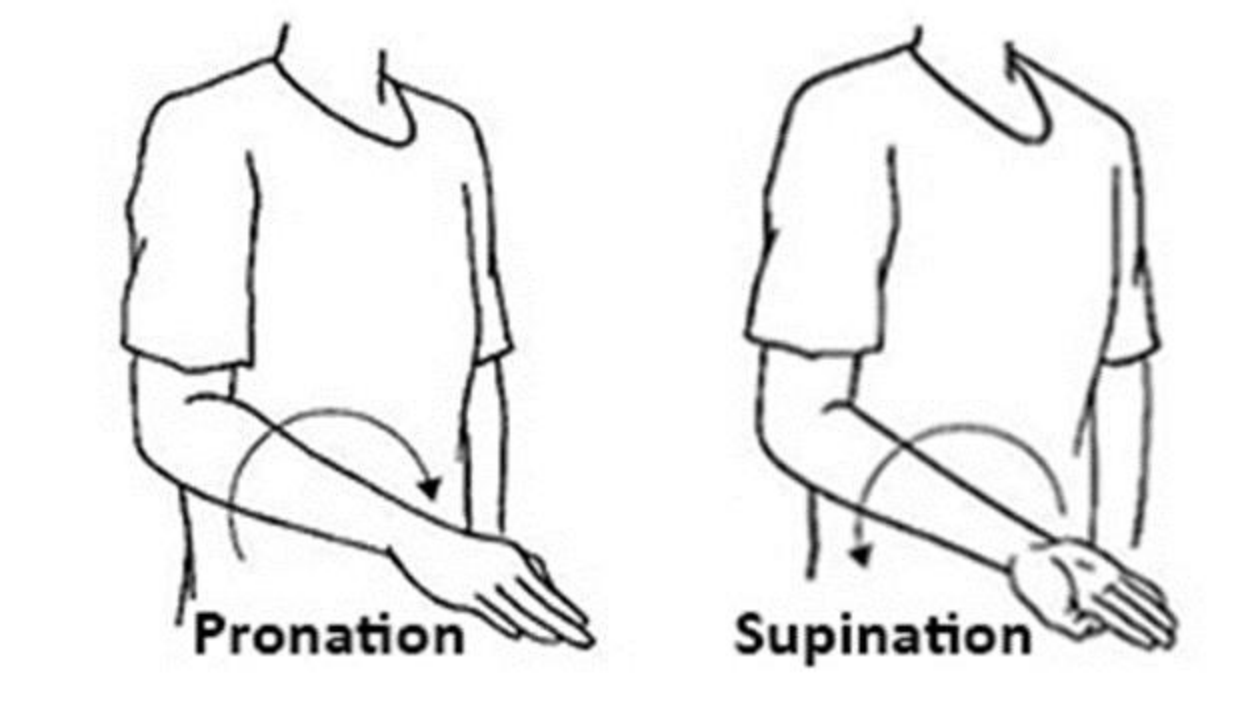
கீழ்முனை ரேடியோ-அல்நார் மூட்டு (distal radioulnar joint, DRUJ) என்பது உங்கள் மணிக்கட்டுக்கு அருகில், சுண்டுவிரல் பக்கத்தில், முன்கையின் இரண்டு எலும்புகள் (ரேடியஸ், radius; அல்னா, ulna) சந்திக்கும் இடத்தில் உள்ள சிறிய மூட்டு. முன்கையைத் திருப்பி, உள்ளங்கையை மேல்நோக்கி (சுப்பினேஷன், supination) மற்றும் கீழ்நோக்கி (ப்ரோனேஷன், pronation) கொண்டுவர உதவுவது இந்த மூட்டுதான். இந்த மூட்டு தேய்ந்து, மூட்டழற்சி (arthritis) ஏற்படும்போது, முன்கையைத் திருப்புவது வலியுடையதாகிறது.
பகுதி அகற்றல் மூட்டுச் சீரமைப்பில் (hemiresection arthroplasty), அல்னா எலும்பின் தலையில் தேய்ந்துபோன, மூட்டழற்சி ஏற்பட்ட பகுதி மட்டுமே சீவி அகற்றப்படுகிறது (பகுதியளவு அகற்றல்: "hemi" என்றால் பாதி); மேற்பரப்புகள் ஒன்றோடொன்று உராய்வதைத் தடுக்க, உங்கள் சொந்த மென்திசுவின் ஒரு சிறு திண்டு அந்த இடைவெளியில் வைக்கப்படுகிறது. முக்கியமான நிலைப்படுத்தும் அமைப்புகளை இந்த அறுவை சிகிச்சை பாதுகாக்கிறது — TFCC (அந்தப் பக்கத்தில் மணிக்கட்டைத் தாங்கும் குருத்தெலும்பு மற்றும் தசைநார் தொட்டில்), அல்நார் ஸ்டைலாய்டு (ulnar styloid), மற்றும் மென்திசு இணைப்புகள் உட்பட; இதனால் அல்னாவின் முனை தாங்கப்பட்டே இருக்கிறது. அல்னாவின் தலையை முழுமையாக அகற்றும் சிகிச்சையிலிருந்து (Darrach procedure) இதை வேறுபடுத்துவது இதுதான்.
மூட்டின் மேற்பரப்புகள் பழுதுபார்க்கப்படுவதோ மறுகட்டமைக்கப்படுவதோ இல்லாமல் மறுவடிவமைக்கப்படுவதால், மாதக்கணக்கில் பாதுகாப்புடன் குணமடைய வேண்டிய தசைநாணோ தசைநாரோ எதுவும் இல்லை. இந்த அறுவை சிகிச்சையின் நோக்கம் வலியில்லாத முன்கைச் சுழற்சி; அந்தச் சுழற்சியை ஆரம்பத்திலேயே அசைவில் கொண்டுவருவதே உங்கள் மறுவாழ்வுப் பயிற்சியின் மிக முக்கியமான பகுதி. மென்திசுக்கள் சீரடைய, சிம்பில் (splint) ஒரு குறுகிய காலம் பாதுகாப்பாக வைத்திருந்த பிறகு, முன்கையைத் திருப்பும் திறனை (உள்ளங்கை மேல்நோக்கியும் கீழ்நோக்கியும்) மீட்டெடுப்பதே உங்கள் மீட்சியின் தலைப்புச் செய்தியாகிறது. வலிமையும் கனமான சுமையும் அதன் பிறகு படிப்படியாகச் சேர்க்கப்படுகின்றன.
முன்னெச்சரிக்கைகளும் கட்டுப்பாடுகளும்
- முதல் சுமார் இரண்டு முதல் மூன்று வாரங்களுக்கு, சொல்லப்பட்டபடி உங்கள் சிம்பை அணியுங்கள்; இடைவைப்புத் திசு சீரடையும்போது அது முன்கைச் சுழற்சியை மென்மையாகக் கட்டுப்படுத்துகிறது. இந்தக் காலம் முழுவதும் உங்கள் விரல்களையும், (அனுமதிக்கப்படும்போது) உங்கள் மணிக்கட்டையும் அசைத்துக்கொண்டே இருங்கள்.
- சிம்பிலிருந்து வெளியே வர அனுமதி கிடைத்ததும், முன்கைச் சுழற்சியையே உங்கள் முன்னுரிமையாக ஆக்குங்கள்; அதை வலியின்றியும் சுமையின்றியும் வைத்திருங்கள். ஆரம்பச் சுழற்சி வெறும் கையால் செய்யப்பட வேண்டும், எடைக்கு எதிராக அல்ல.
- ஆரம்பத்தில் முன்கையைச் சுழற்சியில் சுமைக்கு உட்படுத்த வேண்டாம்: வலுப்படுத்துதலுக்கு அனுமதி கிடைக்கும் வரை (பொதுவாகச் சுமார் ஆறு முதல் எட்டு வாரங்கள்) ஜாடிகளைத் திருகித் திறப்பது, துணிகளைப் பிழிவது, திருப்புளி (screwdriver) பயன்படுத்துவது, அல்லது அந்தப் பக்கத்தில் கனமான பைகளைச் சுமப்பது வேண்டாம்.
- முன்கையின் வழியாகத் தள்ளும்போதோ சுமை கொடுக்கும்போதோ, மணிக்கட்டின் சுண்டுவிரல் பக்கத்தில் ஏற்படும் வலியையோ நிலையற்ற உணர்வையோ கவனியுங்கள்; அறுவை சிகிச்சை நடந்த பகுதி அதுதான். அதை உங்கள் கை சிகிச்சையாளரிடம் சொல்லுங்கள்; அதைப் பொருட்படுத்தாமல் வலிந்து தொடர வேண்டாம்.
- தொடக்கத்திலிருந்தே உங்கள் விரல்கள், கட்டைவிரல், முழங்கை, தோள்பட்டை ஆகியவற்றைச் சுதந்திரமாக அசைத்துக்கொண்டே இருங்கள்; வலுக்கட்டாயமான அல்லது சுமையுடன் கூடிய திருகுதல் சம்பந்தப்படாத வரை, வசதிக்கு உட்பட்டு இலகுவான அன்றாட வேலைகளுக்குக் கையைப் பயன்படுத்துங்கள்.
காயம், வீக்கம், வடு ஆகியவற்றைப் பராமரிப்பது பற்றி கிளினிக்கின் காயப் பராமரிப்பு வழிகாட்டுதலைப் பாருங்கள்.
உங்கள் பயிற்சிகள்
Kieran Hirpara 4.0
முன்கைச் சுழற்சி (உள்ளங்கை மேல்நோக்கி / உள்ளங்கை கீழ்நோக்கி)
இதுவே முதன்மையான பயிற்சி — இந்த அறுவை சிகிச்சை எந்த அசைவை மீட்டுத் தர வடிவமைக்கப்பட்டுள்ளதோ அதுதான் இது. உங்கள் முழங்கையை உடலின் பக்கத்தில் ஒட்டி, செங்கோணத்தில் மடக்கி வைத்துக்கொண்டு (இதனால் தோள்பட்டை அசைவில் ஏமாற்ற முடியாது), உள்ளங்கையை மெதுவாக மேல்நோக்கி — கூரையை நோக்கி — திருப்புங்கள்; பின்னர் மெதுவாகக் கீழ்நோக்கி — தரையை நோக்கி — திருப்புங்கள். வசதியாக இருக்கும் அளவுக்கு மட்டுமே அசையுங்கள். பயிற்சிகளுக்காகச் சிம்பிலிருந்து வெளியே வர டாக்டர் ஹிர்பராவும் உங்கள் கை சிகிச்சையாளரும் அனுமதி தரும்போது — பொதுவாகச் சுமார் இரண்டு முதல் மூன்று வாரங்களில் — இதைத் தொடங்குங்கள்; அதன் பிறகு இதையே உங்கள் முதன்மைக் கவனமாக ஆக்குங்கள்.
ஒவ்வொரு திசையிலும் 10 முறை, ஒரு நாளைக்கு 3-4 முறை, வலியில்லாத அசைவு வரம்பில்
Kieran Hirpara 4.0
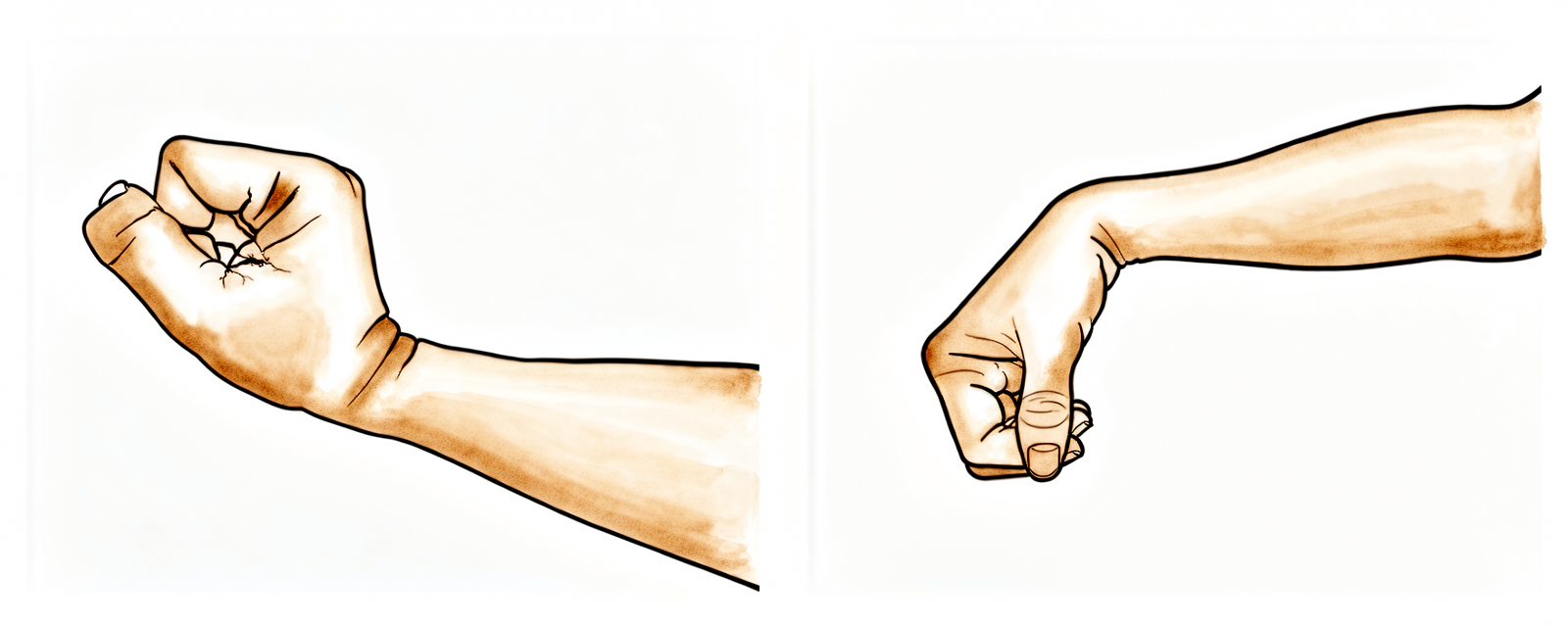
மணிக்கட்டு அசைவு (மடக்குதலும் நேராக்குதலும்)
உங்கள் மணிக்கட்டை மெதுவாக முன்னோக்கி (உள்ளங்கை முன்கையை நோக்கி) மடக்குங்கள், பின்னர் பின்னோக்கி (புறங்கை முன்கையை நோக்கி) வளையுங்கள்; அசைவை மெதுவாகவும் வசதிக்கு உட்பட்டும் வைத்திருங்கள். கீழ்முனை அல்னா சீரடையும்போது இது மணிக்கட்டு விறைத்துப்போவதைத் தடுக்கிறது. தொடக்கத்தில் மென்மையாகச் செய்யுங்கள்; அசைவு வரம்பின் இறுதியை வலுக்கட்டாயமாகத் தள்ள வேண்டாம்.
ஒவ்வொரு திசையிலும் 10 முறை, ஒரு நாளைக்கு 2-3 முறை
Kieran Hirpara 4.0
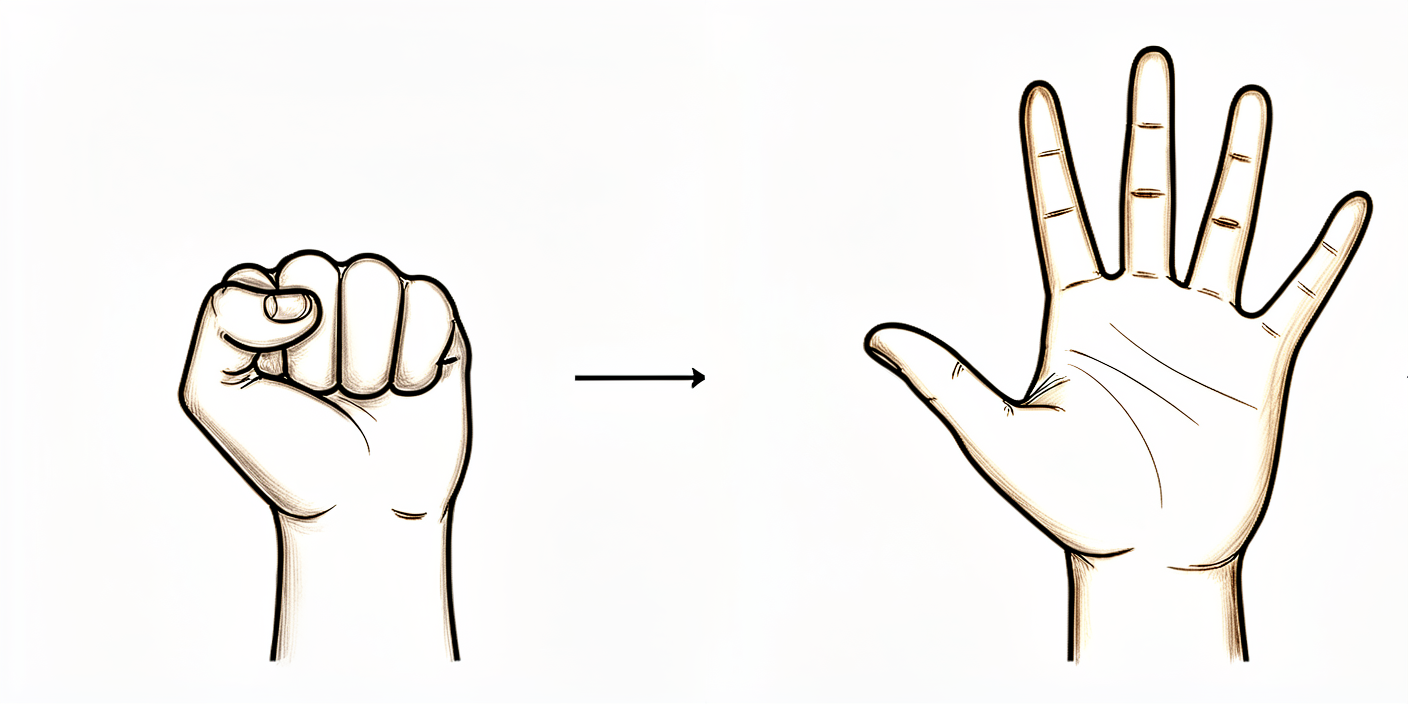
விரல் அசைவு (முழு முஷ்டியும் நீட்டுதலும்)
இதை முதல் நாளிலிருந்தே தொடங்குங்கள். முழுமையான, இறுக்கமான முஷ்டியை மூடுங்கள்; பின்னர் கையைத் திறந்து விரல்களை நேராக நீட்டுங்கள். விரல்களை ஆரம்பத்திலேயே அசைத்துக்கொண்டிருப்பது விறைப்பைத் தடுக்கிறது, வீக்கம் வடிந்து போகவும் உதவுகிறது. உங்கள் முன்கை இன்னும் சிம்பில் இருக்கும்போதே கூட, நாள் முழுவதும் இதை அடிக்கடி செய்யுங்கள்.
10 முறை, விழித்திருக்கும்போது ஒவ்வொரு இரண்டு மணி நேரத்திலும்
Kieran Hirpara 4.0
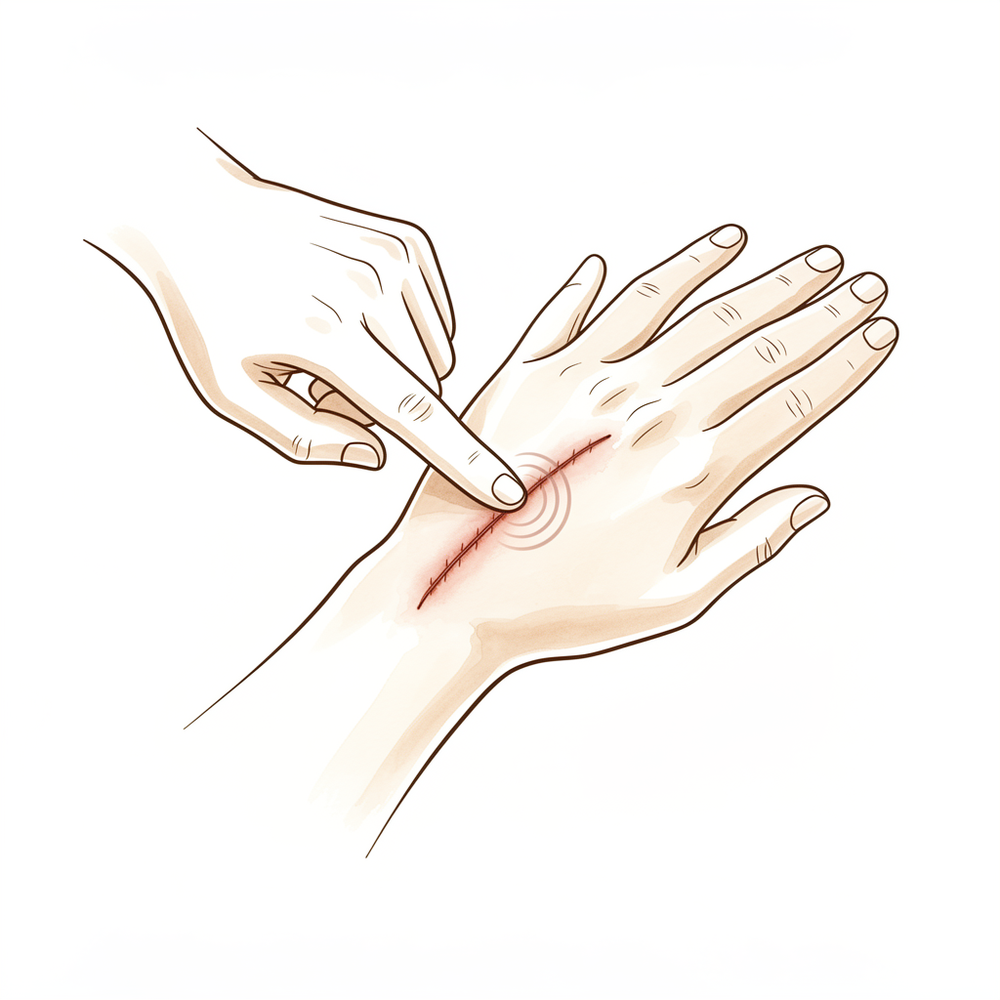
வடு மசாஜ்
காயம் முழுமையாகக் குணமாகி, மேலோடு எதுவும் இல்லாதபோது (பொதுவாகச் சுமார் மூன்று முதல் நான்கு வாரங்களிலிருந்து), சிறிதளவு சாதாரண ஈரப்பதக் களிம்பை வடுவில் சிறிய, உறுதியான வட்டங்களாக இரண்டு நிமிடங்கள் தேய்த்து விடுங்கள். இது வடுவை மென்மையாக்குகிறது; கீழ்முனை அல்னாவின் மேல் உள்ள தோலும் தசைநாண்களும் சுதந்திரமாக அசையவும் உதவுகிறது. காயம் இன்னும் முழுமையாக மூடவில்லை என்றால் இதை நிறுத்திவிடுங்கள்.
2-3 நிமிடங்கள், ஒரு நாளைக்கு இரண்டு முறை, காயம் ஆறிய பிறகு
Kieran Hirpara 4.0
பிடி மற்றும் சுழற்சி வலுப்படுத்துதல் (பிற்பட்டது)
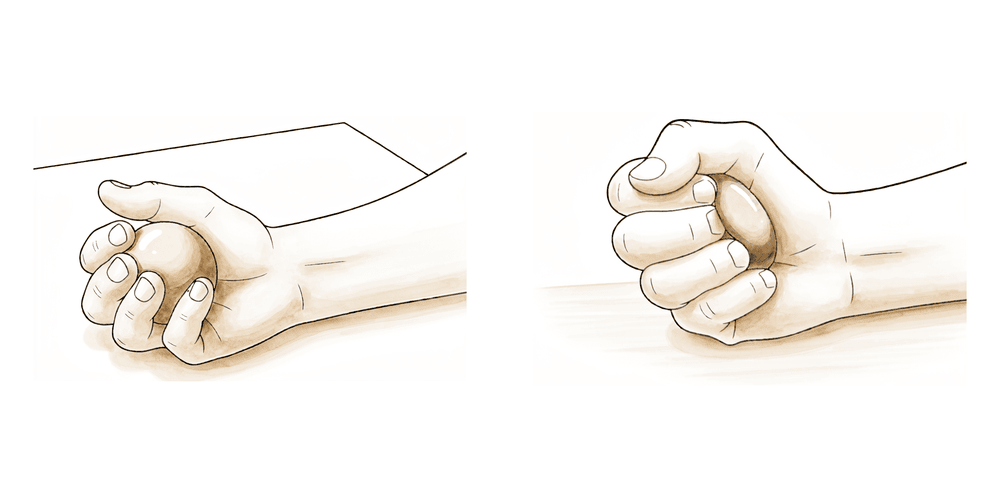
இது ஒரு பிற்பட்ட பயிற்சி — வலுப்படுத்துதலுக்கு டாக்டர் ஹிர்பராவும் உங்கள் கை சிகிச்சையாளரும் அனுமதி தந்த பிறகே; பொதுவாகச் சுமார் ஆறு முதல் எட்டு வாரங்களிலிருந்து. பிடியை மீண்டும் கட்டியெழுப்ப ஒரு மென்மையான பந்தையோ பசையையோ அழுத்துங்கள்; இலகுவான எதிர்ப்புக்கு எதிராக முன்கையை உள்ளங்கை மேல்நோக்கியும் கீழ்நோக்கியும் திருப்புங்கள் (எடுத்துக்காட்டாக, சுத்தியலைப் போலப் பிடித்த ஒரு இலகுவான கை எடை). பல வாரங்களில் எதிர்ப்பை மெதுவாக அதிகரியுங்கள். சுமையின் கீழ் முன்கையைத் திருப்பும்போது மணிக்கட்டின் சுண்டுவிரல் பக்கத்தில் வலித்தால் நிறுத்திவிடுங்கள்.
உங்கள் கை சிகிச்சையாளர் வழிகாட்டும்படி (~6-8 வாரங்களிலிருந்து மட்டுமே)
இவை உங்கள் கையேட்டில் உள்ள பயிற்சிகள். டாக்டர் ஹிர்பராவும் உங்கள் கை சிகிச்சையாளரும் வழிகாட்டும்படி மட்டுமே இவற்றைத் தொடங்குங்கள்; உங்களுக்குத் தரப்பட்ட அசைவு வரம்புக்கும் கட்டுப்பாடுகளுக்கும் உட்பட்டு இருங்கள். விரல் அசைவு உடனடியாகவே தொடங்குகிறது. முன்கைச் சுழற்சியும் (இந்த அறுவை சிகிச்சை முழுவதும் எதைச் சுற்றி அமைக்கப்பட்டுள்ளதோ அந்தப் பயிற்சி) மணிக்கட்டு அசைவும், சிம்பிலிருந்து வெளியே வர அனுமதி கிடைத்ததும் — பொதுவாகச் சுமார் இரண்டு முதல் மூன்று வாரங்களில் — தொடங்குகின்றன; அதன் பிறகு சுழற்சியே உங்கள் முதன்மைக் கவனமாகிறது. காயம் முழுமையாகக் குணமானதும் வடு மசாஜ் தொடங்குகிறது. பிடி மற்றும் சுழற்சி வலுப்படுத்துதல் ஒரு பிற்பட்ட கட்டத்துக்கு உரியது; உங்களுக்குத் தனிப்பட்ட முறையில் அனுமதி தரப்படும் வரை அதைத் தொடங்கக் கூடாது. மணிக்கட்டின் சுண்டுவிரல் பக்கத்தில் கூரிய வலியை ஏற்படுத்தும் எதையும் நிறுத்திவிடுங்கள்.
உங்கள் மருத்துவ நெறிமுறை
இந்தப் பக்கத்தின் மீதிப் பகுதி, கீழ்முனை ரேடியோ-அல்நார் மூட்டின் பகுதி அகற்றல்–இடைவைப்பு மூட்டுச் சீரமைப்புக்குப் பிந்தைய மறுவாழ்வுப் பயிற்சிக்கான கட்டம் கட்டமான மருத்துவ நெறிமுறை. இந்தப் பகுதி உங்கள் கை சிகிச்சையாளரிடம் தரப்பட வேண்டும்; ஒவ்வொரு கட்டமும், என்ன நடக்கிறது என்பதை எளிய மொழியில் விளக்குவதுடன் தொடங்குகிறது. இது மூட்டை மறுவடிவமைக்கும் (மூட்டுச் சீரமைப்பு, arthroplasty) சிகிச்சை; பழுதுபார்ப்பு அல்ல: மாதக்கணக்கில் பாதுகாக்க வேண்டிய, இழுவிசையில் இருக்கும் அமைப்பு எதுவும் இல்லை. வேண்டுமென்றே விதிக்கப்படும் கட்டுப்பாடு குறுகியது: மென்திசு இடைவைப்பும் மூட்டுறையும் சீரடைய, சிம்புடன் ஒரு குறுகிய காலம்; அதன் பிறகு, முன்கைச் சுழற்சியை ஆரம்பத்திலேயே மீட்டெடுப்பதே வெளிப்படையான முன்னுரிமை — ஏனெனில் இந்த அறுவை சிகிச்சை எந்தச் செயல்பாட்டை மீட்டுத் தர இருக்கிறதோ, அதுவே சுழற்சிதான். இந்தக் காலம் முழுவதும் மதிக்கப்பட வேண்டிய முதன்மையான சுமை, கீழ்முனை அல்னாவின் மீதான சுழற்சிச் சுமை; அதுதான் வலியுடன் கூடிய அல்நார் அடிமுனை நிலையற்ற தன்மையையும் (ulnar-stump instability), ரேடியோ-அல்நார் நெருங்குதலையும் (radioulnar convergence) தூண்டுகிறது.
சிகிச்சைக்கு முன், நோயாளியின் அறுவை சிகிச்சை அறிக்கையையும் கடந்தகால மருத்துவ வரலாற்றையும் சரிபார்த்து, உடன் செய்யப்பட்ட வேறு சிகிச்சைகள் (TFCC பழுதுபார்ப்பு, கீழ்முனை ரேடியஸ் எலும்பு வெட்டுச் சீரமைப்பு, PIN நரம்பு அகற்றல், நீட்டும் தசைநாண் மறுகட்டமைப்பு), அறுவை சிகிச்சையின்போது மதிப்பிடப்பட்ட கீழ்முனை அல்நார் அடிமுனையின் நிலைத்தன்மை, பரிந்துரைக்கப்பட்ட சிம்பு மற்றும் சுழற்சி உச்ச வரம்பு ஆகியவை குறித்து சிகிச்சையளிக்கும் அறுவை சிகிச்சை நிபுணருடன் கலந்து பேசுங்கள். உடன் செய்யப்பட்ட TFCC பழுதுபார்ப்போ கீழ்முனை ரேடியஸ் எலும்பு வெட்டுச் சீரமைப்போ பாதுகாப்புக் கட்டத்தை நீட்டிக்கிறது; சிதைவு சார்ந்த அல்லது காயத்துக்குப் பிந்தைய மூட்டழற்சிக்காகச் செய்யப்படும் தனித்த பகுதி அகற்றல், கீழே உள்ள குறுகிய பாதையையே பின்பற்றுகிறது. டாக்டர் ஹிர்பரா TFCC, அல்நார் ஸ்டைலாய்டு, அல்நார் மென்திசு இணைப்புகள் ஆகியவற்றைப் பாதுகாக்கிறார்; எனவே கீழ்முனை அல்னா தாங்கப்பட்டே இருக்கிறது, அதனால் மறுவாழ்வுப் பயிற்சி ஆரம்பச் சுழற்சிக்கு முன்னுரிமை தர முடிகிறது.
கட்டம் I — சிம்பில் பாதுகாக்கப்பட்ட சீரடைதல் (வாரம் 0 முதல் 2-3 வரை)
முதல் இரண்டு முதல் மூன்று வாரங்கள், அவயவத்தின் மற்ற பகுதிகளை அசைவில் வைத்திருந்தபடியே, மென்திசு இடைவைப்பையும் மூட்டுறையையும் பாதுகாக்கின்றன. முன்கை ஒரு சிம்பில் ஓய்வெடுக்கிறது (பொதுவாக முழங்கைக்கு மேல் செல்லும் / Muenster வகைச் சிம்பு அல்லது கட்டு; இது முன்கைச் சுழற்சியைக் கட்டுப்படுத்துகிறது); சுத்தம் செய்துகொள்வதற்கும், கட்டத்தின் இறுதியில் முதல் மென்மையான சுழற்சிக்கும் மட்டுமே அது கழற்றப்படுகிறது. விரல்கள் முதல் நாளிலிருந்தே அசைகின்றன.
உங்கள் கை சிகிச்சையாளருக்கு:
கல்வியும் முன்னெச்சரிக்கைகளும் - முன்கைச் சுழற்சியைக் கட்டுப்படுத்தும், பரிந்துரைக்கப்பட்ட சிம்பில் அசையாமல் வைத்தல் (முழங்கைக்கு மேல் செல்லும் / Muenster வகை, அல்லது அறுவை சிகிச்சை நிபுணர் சொல்வதன்படி); சுத்தம் செய்துகொள்வதற்கும் அனுமதிக்கப்பட்ட பயிற்சிகளுக்கும் மட்டுமே கழற்றலாம் - சுமையுடன் கூடிய முன்கைச் சுழற்சி கூடாது; அறுவை சிகிச்சை செய்த முன்கையின் வழியாக எடை தாங்குதலோ திருகுதலோ கூடாது - ஆரம்பத்தில் பிடி வலிமை குறைவதும், அல்நார் பக்கத்தில் வீக்கம் இருப்பதும் எதிர்பார்க்கப்படுவதே என நோயாளிக்கு உறுதியளியுங்கள்
சிகிச்சை மேலாண்மை - காயம்: சொல்லப்பட்டபடி அறுவை சிகிச்சைக் கட்டுகள்; தொற்று ஏற்படுகிறதா எனக் கண்காணித்தல் - வீக்கம்: உயர்த்தி வைத்தல், மென்மையாகக் கையை முறுக்கித் திறத்தல் (hand pump), தேவைக்கேற்ப ஐஸ் - பயிற்சிகள்: முதல் நாளிலிருந்தே விரல், கட்டைவிரல், மற்றும் (சிம்பு தடுக்காவிட்டால்) தோள்பட்டையின் சுய அசைவு வரம்பு; சிம்பு அனுமதிக்கும் அளவுக்கு மென்மையான முழங்கை அசைவு வரம்பு; சிம்பை முன்கூட்டியே கழற்ற அறுவை சிகிச்சை நிபுணர் அனுமதித்தால், இந்தக் கட்டத்தின் கடைசி சில நாட்களில் மென்மையான, வலியில்லாத சுய முன்கைச் சுழற்சியை அறிமுகப்படுத்துதல்
அடுத்த கட்டத்துக்குச் செல்வதற்கான அளவுகோல்கள் - காயம் சீரடைந்திருத்தல்; சிம்பு அணியும் காலம் (தனித்த பகுதி அகற்றலுக்கு ≈2-3 வாரங்கள்) முடிந்திருத்தல்; சுய சுழற்சிக்கு அறுவை சிகிச்சை நிபுணரின் அனுமதி கிடைத்திருத்தல்
கட்டம் II — ஆரம்ப முன்கைச் சுழற்சி (முன்னுரிமை) (வாரம் 2-3 முதல் 6 வரை)
இதுவே தீர்மானகரமான கட்டம். சிம்பிலிருந்து வெளியே வந்த பிறகு, சுயமான ப்ரோனேஷனும் சுப்பினேஷனும் மறுவாழ்வுப் பயிற்சியின் தலைப்புச் செய்தியாகின்றன: மென்மையாக, அடிக்கடி, வலியின்றி, சுமையின்றி. மணிக்கட்டு அசைவும் சேர்க்கப்படுகிறது. இந்த அறுவை சிகிச்சை மீட்டுத் தரும் செயல்பாடு சுழற்சிதான்; எனவே சுமை இன்னும் அனுமதிக்கப்படாத இந்த நிலையிலேயே அது தீவிரமாகப் பின்தொடரப்படுகிறது.
உங்கள் கை சிகிச்சையாளருக்கு:
மதிப்பீடுகள் - முன்கையின் சுய மற்றும் பிறர் அசைக்கும் ப்ரோனேஷன்/சுப்பினேஷன் (விளைவு ஆய்வுத் தொடர்களில் பதிவான, ஒவ்வொரு திசையிலும் ~80° என்ற அளவை நோக்கி மீட்டெடுப்பதே இலக்கு); மணிக்கட்டு மற்றும் விரல் அசைவு வரம்பு; மணிக்கட்டின் அல்நார் பக்க வலி; வீக்கம்; காயம்/வடு பரிசீலனை
கல்வியும் முன்னெச்சரிக்கைகளும் - முன்கைச் சுழற்சியே முன்னுரிமை: அடிக்கடி, வலியின்றி, சுமையின்றிச் சுயமான ப்ரோனேஷன்/சுப்பினேஷன்; முன்கையைத் தனிமைப்படுத்த முழங்கையை உடலின் பக்கத்தில் ஒட்டி வைத்தல் - ~6-8 வாரங்கள் வரை எதிர்ப்புடனோ சுமையுடனோ சுழற்சி கூடாது; கனமாகப் பிடித்தல் கூடாது; திருகும் வேலைகள் கூடாது - கட்டு அகற்றப்பட்ட பிறகு சில வாரங்களுக்கு, சில சிம்புகள் சுழற்சியின் இறுதி வரம்பை மேலும் கட்டுப்படுத்துகின்றன; பரிந்துரைக்கப்பட்ட எந்த உச்ச வரம்பையும் மதியுங்கள்
சிகிச்சை மேலாண்மை - பயிற்சிகள்: முதன்மைக் கவனமாகச் சுய மற்றும் உதவியுடன் கூடிய சுய ப்ரோனேஷன்/சுப்பினேஷன்; சுயமாக மணிக்கட்டை மடக்குதல்/நீட்டுதல் மற்றும் ரேடியல்/அல்நார் பக்க விலகல்; விரல் மற்றும் பிடியின் அசைவு வரம்பைத் தொடர்தல் (எதிர்ப்புடன் பிடித்தல் இன்னும் வேண்டாம்); காயம் முழுமையாகக் குணமானதும் வடு பராமரிப்பைத் தொடங்குதல் - தேவைக்கேற்ப வீக்கத்துக்கும் வடுவுக்குமான சிகிச்சை முறைகள்
அடுத்த கட்டத்துக்குச் செல்வதற்கான அளவுகோல்கள் - வசதியான, கட்டுப்பாட்டுடன் கூடிய, கிட்டத்தட்ட முழுமையான, வலியில்லாத சுய முன்கைச் சுழற்சி; காயம் ஆறியிருத்தல்; வலி ≤3/10; மென்மையான சுழற்சியில் அல்நார் பக்கத்தில் தூண்டப்படும் வலி இல்லாதிருத்தல்
கட்டம் III — வலுப்படுத்துதலும் திரும்புதலும் (வாரம் 6-8, அதற்கும் மேல்)
சுழற்சி மீட்கப்பட்டு வலியில்லாமல் ஆனதும், வலுப்படுத்துதல் தொடங்கி படிப்படியாக அதிகரிக்கப்படுகிறது: முதலில் பிடி, பின்னர் சுமையுடன் கூடிய முன்கைச் சுழற்சி; சுமையின் கீழ் வலியுடன் கூடிய அல்நார் அடிமுனை நிலையற்ற தன்மையோ ரேடியோ-அல்நார் நெருங்குதலோ ஏற்படுகிறதா என்பதைக் குறிப்பாகக் கவனித்தபடி. கனமான வேலைக்கும் விளையாட்டுக்கும் திரும்புவது அளவுகோல்களை அடிப்படையாகக் கொண்டது.
உங்கள் கை சிகிச்சையாளருக்கு:
மதிப்பீடுகள் - மறு பக்கத்துடன் ஒப்பிடுகையில் பிடி வலிமை (விளைவு ஆய்வுத் தொடர்கள், மறு பக்கத்தின் ~85-90% அளவுக்கு மீட்சி ஏற்படுவதாகப் பதிவு செய்கின்றன); முன்கைச் சுழற்சி வலிமை, மற்றும் சுமையுடன் கூடிய சுழற்சியில் ஏதேனும் வலி அல்லது நிலையற்ற தன்மை; பொருத்தமான இடங்களில் செயல்பாட்டு ரீதியான மற்றும் வேலை/விளையாட்டுக்கே உரிய பரிசோதனைகள்
கல்வியும் முன்னெச்சரிக்கைகளும் - சுமார் ஆறு முதல் எட்டு வாரங்களிலிருந்து, முதலில் எதிர்ப்புடன் கூடிய பிடியை அறிமுகப்படுத்துங்கள்; பின்னர் படிநிலையாகச் சுமையுடன் கூடிய முன்கைச் சுழற்சியை (எடுத்துக்காட்டாக, இலகுவான எடையுடன் சுத்தியல் திருப்பும் பயிற்சி); சுமையை மெதுவாக அதிகரியுங்கள் - அச்சு அல்லது சுழற்சிச் சுமையின் கீழ் வலியுடன் கூடிய அல்நார் அடிமுனை நிலையற்ற தன்மை / ரேடியோ-அல்நார் நெருங்குதல் ஏற்படுகிறதா எனக் கவனியுங்கள்: தூண்டப்பட்டால், சுமையைக் குறைத்து, அறுவை சிகிச்சை நிபுணருடன் கலந்து பேசுங்கள்
சிகிச்சை மேலாண்மை - பயிற்சிகள்: படிப்படியாக முன்னேறும் பிடி/பசைப் பயிற்சி; படிநிலையான, எதிர்ப்புடன் கூடிய ப்ரோனேஷன்/சுப்பினேஷன் (இலகுவானது → மிதமானது); பணிக்கே உரிய சுமை; மீதமுள்ள அசைவு வரம்புப் பயிற்சிகளைத் தொடர்தல் - சுழற்சியும் பிடியும் செயல்பாட்டுக்கு உகந்ததாகவும் கிட்டத்தட்ட இரு பக்கமும் சமமாகவும் ஆகி, செயல்பாடு பொருத்தமான அளவுக்குத் திரும்பியதும் சிகிச்சையை முடிப்பதைப் பரிசீலியுங்கள் - மீட்சி முன்னேற்றமின்றித் தேங்கினாலோ, அடிமுனை நிலையற்ற தன்மையையோ நெருங்குதலையோ சுட்டிக்காட்டும் வகையில் அல்நார் பக்கத்தில் சுமையின்போது வலி தொடர்ந்தாலோ, சிகிச்சையளிக்கும் மருத்துவரிடம் மீண்டும் பரிந்துரைப்பதைப் பரிசீலியுங்கள்
சுமைக்கும் விளையாட்டுக்கும் திரும்புவதற்கான அளவுகோல்கள் - கிட்டத்தட்ட இரு பக்கமும் சமமான பிடி மற்றும் சுழற்சி வலிமை; சுமையுடன் கூடிய சுழற்சி வலியின்றி இருத்தல்; செயல்பாட்டுப் பரிசோதனையில் நிலையற்ற தன்மை இல்லாதிருத்தல்
வேலைக்கும் செயல்பாடுகளுக்கும் திரும்புதல்
முன்கையை வலுக்கட்டாயமாகவோ சுமையுடனோ திருகுவது சம்பந்தப்படாத வரை, வசதிக்கு உட்பட்டு, தொடக்கத்திலிருந்தே இலகுவான அன்றாடக் கைப் பயன்பாடு (உண்ணுதல், எழுதுதல், இலகுவான சுய பராமரிப்பு) ஊக்குவிக்கப்படுகிறது. தொடக்கத்தில் உங்கள் முன்கை சிம்பில் இருப்பதாலும், சுக்கானைப் பாதுகாப்பாகக் கட்டுப்படுத்த (அதைத் திருப்புவது உட்பட) உங்களால் முடிய வேண்டும் என்பதாலும், முதல் சில வாரங்களில் போக்குவரத்துக்கு உதவி கிடைக்க ஏற்பாடு செய்யுங்கள். சிம்பிலிருந்து வெளியே வந்து, வாகனத்தைச் செலுத்த முன்கையை வசதியாகவும் பாதுகாப்பாகவும் சுழற்ற முடியும் என்ற நிலையில், உங்கள் மறுபரிசோதனையில் உறுதிப்படுத்தப்பட்ட பிறகு வாகனம் ஓட்டுவதை மீண்டும் தொடங்கலாம்.
சுமையுடன் கூடிய திருகும் வேலைகள் (இறுக்கமான ஜாடிகளைத் திறப்பது, பிழிவது, திருப்புளி பயன்படுத்துவது, அந்தப் பக்கத்தில் கனமான பைகளைச் சுமப்பது) வலுப்படுத்துதலுக்கு அனுமதி கிடைக்கும் வரை (பொதுவாகச் சுமார் ஆறு முதல் எட்டு வாரங்கள்) காத்திருக்கின்றன; பின்னர் படிப்படியாக அதிகரிக்கப்படுகின்றன. கனமான கைத்தொழில் வேலைக்கும் விளையாட்டுக்கும் திரும்புவதும் இதே அளவுகோல் அடிப்படையிலான முன்னேற்றத்தையே பின்பற்றுகிறது; அது வலியில்லாத, கிட்டத்தட்ட இரு பக்கமும் சமமான முன்கைச் சுழற்சியையும் பிடியையும் மீண்டும் பெறுவதைப் பொறுத்தது — இதை நாட்காட்டி மட்டும் அல்ல, டாக்டர் ஹிர்பராவும் உங்கள் கை சிகிச்சையாளரும் தீர்மானிக்கிறார்கள்.
உங்கள் நெறிமுறைக்குப் பிறகு
இந்த நெறிமுறை கிளினிக்கின் பொதுவான மீட்சி ஆலோசனைகளுடன் இணைந்து செயல்படுகிறது; அறுவை சிகிச்சைக்குப் பிந்தைய வலியைக் கையாளுதல், காயப் பராமரிப்பு மற்றும் வடு பராமரிப்பு பக்கங்களைப் பாருங்கள். உங்கள் DRUJ பிரச்சினை ஒரு மணிக்கட்டு எலும்பு முறிவைத் தொடர்ந்து வந்திருந்தால், கீழ்முனை ரேடியஸ் எலும்பு முறிவுப் பொருத்தம் நெறிமுறை பயனுள்ள துணையாக இருக்கும். மேலே உள்ள கட்டம் கட்டமான திட்டம், கீழ்முனை ரேடியோ-அல்நார் மூட்டின் பகுதி அகற்றல் மூட்டுச் சீரமைப்புக்குப் பிறகு வெளியிடப்பட்ட மறுவாழ்வு வழிகாட்டுதல்களைப் பிரதிபலிக்கிறது; உங்கள் முன்கை எப்படி முன்னேறுகிறது என்பதற்கேற்ப, உங்கள் தொடர் மீட்சிக்கு டாக்டர் ஹிர்பராவும் உங்கள் கை சிகிச்சையாளரும் தனிப்பட்ட முறையில் வழிகாட்டுகிறார்கள்.
Evidence & references
This is the clinical evidence summary written for health professionals. It is technical, and it lists the research this page was built from. You do not need to read it to understand your treatment or to make a decision about it.
Topic scope: post-operative rehabilitation after hemiresection-interposition arthroplasty (HIT) of the distal radioulnar joint (DRUJ) — the Bowers procedure — for painful DRUJ arthritis (degenerative, post-traumatic, or inflammatory). The arthritic portion of the ulnar head is partially resected and a soft-tissue spacer is interposed, preserving the TFCC, ulnar styloid and ulnar soft-tissue attachments so the distal ulna remains supported. This is a joint-reshaping arthroplasty, not a repair or reconstruction: the rehab is therefore an early-rotation pathway built around a short protected settling phase, then prioritised restoration of forearm pronation/supination, then graded loading — not months of construct protection.
Defining principle of the rehab here: the operation exists to restore pain-free forearm rotation, and nothing is sutured under tension that must heal protected for months. The deliberate restraint is a brief splinted phase (commonly an above-elbow / Muenster-type splint limiting forearm rotation for ~2-3 weeks in the isolated case) to let the soft-tissue interposition and capsule settle. After that, early active pronation/supination is the explicit priority — rotation is the function the operation restores. The single load to respect throughout is rotational/axial loading of the distal ulna, which provokes the characteristic failure mode: painful ulnar-stump instability and radioulnar convergence. The main branch point that lengthens the protected phase is a concurrent procedure (TFCC repair, distal radius osteotomy, extensor reconstruction).
A. PROCEDURE OUTCOMES (hemiresection-interposition arthroplasty)
The Bowers HIT is a long-established, generally reliable salvage for the arthritic DRUJ. The evidence base is level IV (retrospective cohorts and case series, no randomised trials), but it is consistent across decades: most patients gain durable pain relief and improved, stable forearm rotation, with the principal residual concern being ulnar-stump instability / radioulnar convergence under load.
- The original Bowers series established the procedure and its rationale. Bowers' 1985 description (38 patients, mean ~2.5 yr) reported stable, painless rotation in the great majority — in rheumatoid patients ~85% achieved stable painless rotation (pronation ~84°, supination ~77°), and degenerative/post-traumatic patients achieved painless rotation averaging ~80° in each direction. The technique was explicitly designed to preserve the functional ulnocarpal ligament complex [Bowers, J Hand Surg Am 1985]. Level IV (foundational case series).
- Long-term outcomes are durable but with a defined complication rate. A long-term cohort (66 patients, mean follow-up 8.6 years) reported low residual pain (median NRS 1/10), an overall complication rate of ~14% and reoperation ~8%; reported complications included stylocarpal impingement, ulnar subluxation, exostoses and tendon rupture. Inflammatory-arthritis patients had lower pain than post-traumatic patients (median 0 vs 5). The same series found PIN neurectomy associated with improved pain scores [HIT long-term outcome study, Hand (N Y) 2019]. Level IV (cohort).
- Forearm rotation, grip and pain all improve measurably. A capsuloretinacular HIT series (21 wrists, mean ~2 yr 10 mo) reported significant gains: pronation 56.8°→83.0°, supination 60.0°→82.0°, grip 66.0%→87.4% of the contralateral side, VAS pain 62→23 mm, DASH 37.7→25.0, PRWE 48.1→24.4, with no post-operative DRUJ instability reported in that series [HIT capsuloretinacular series, J Wrist Surg 2023]. Level IV (cohort).
- HIT sits within a family of DRUJ salvage options (Darrach distal ulna resection, Sauvé-Kapandji arthrodesis-pseudarthrosis, matched/hemiresection variants, and ulnar-head implant arthroplasty), each with its own instability/convergence profile; HIT's selling point is preservation of the ulnar support structures to reduce stump instability versus a formal Darrach [Bowers 1985; Glowacki, Hand Clin 2005; Chidgey, JAAOS 1995; Rekant, Hand Clin 2012; Murray, Hand Clin 2011]. Mechanistic / narrative-review.
B. REHABILITATION / THERAPY EVIDENCE
There is no trial-level evidence for any specific rehabilitation regimen after DRUJ HIT. Protocols are surgeon- and technique-derived expert consensus, reported as the post-operative methods of the outcome series and operative-technique articles above. The consensus is consistent on its key features.
- A brief protected settling phase, not prolonged immobilisation. In the isolated hemiresection (no distal radius osteotomy, no TFCC repair), a long-arm plaster splint for ~10 days followed by a removable Muenster splint for a further 2-3 weeks is typical; cohort series report an upper-arm cast ~3 weeks then a forearm cast 1-2 weeks. Where a distal radius osteotomy or TFCC repair is added, immobilisation is longer (e.g. a long-arm cast in ~45° supination for ~4 weeks) [Pillukat & van Schoonhoven, Oper Orthop Traumatol 2009; HIT capsuloretinacular series, J Wrist Surg 2023]. Weak / expert consensus.
- Early forearm rotation is the explicit priority once protection ends. The whole point of the operation is rotation, so active pronation/supination is pursued early and frequently. Some protocols further limit end-range rotation by splint for ~4 more weeks after the cast comes off before unrestricted motion and load [Pillukat & van Schoonhoven 2009]. Weak / expert consensus.
- Loading is added last, watching for the characteristic failure mode. Range and load are returned to normal after the rotation-limited window; the specific thing to watch is painful ulnar-stump instability and radioulnar convergence under axial/rotational load, which is the biomechanically demonstrated weak point of distal-ulna procedures [Sauerbier et al., J Hand Surg Br 2002; Douglas et al., J Hand Surg Am 2014; Barret et al., Orthop Traumatol Surg Res 2020]. Mechanistic (biomechanical) + consensus.
- Finger, thumb, elbow and shoulder motion from day one is standard to prevent stiffness, as in any forearm/wrist immobilisation pathway. Consensus.
Recovery trajectory (expected, evidence-anchored)
| Phase | Window | Restraint | Hand use / therapy focus | Strength / load | Notes |
|---|---|---|---|---|---|
| I — Protected settling | Week 0 to 2-3 | Splint limiting forearm rotation (Muenster / above-elbow type) | Active finger/thumb/shoulder ROM from day 1; elbow ROM as splint allows; first gentle pain-free rotation toward end of phase | None through forearm | Longer if concurrent TFCC repair or distal radius osteotomy (cast in supination ~4 wk) |
| II — Early forearm rotation (priority) | Week 2-3 to 6 | Unloaded; some protocols cap end-range rotation a few more weeks | Active pronation/supination as the main focus, elbow tucked; add wrist ROM; finger/grip ROM; scar massage once healed | No resisted/loaded rotation, no heavy grip | Target restoration toward ~80° each direction; pain-free is the rule |
| III — Strengthening & return | Week 6-8+ | Restrictions lifted progressively | Resisted grip first, then graded loaded rotation (hammer turns); task-specific loading | Build load slowly; grip recovers toward ~85-90% contralateral | Watch for ulnar-stump instability / radioulnar convergence under load |
(Phase windows mirror the precautions and phase tables in the patient protocol; they are typical expert-consensus guides, not trial-derived deadlines, and lengthen with concurrent procedures.)
C. KEY CONTROVERSIES / EVIDENCE QUALITY
- HIT vs Darrach. The Darrach (complete distal ulna resection) is simpler but sacrifices the ulnar support structures and is more prone to painful proximal ulnar-stump instability and radioulnar convergence, especially in younger, higher-demand or post-traumatic patients. HIT preserves the TFCC/styloid/attachments to mitigate this — but biomechanical work shows HIT also converges under load, just to a different degree, so convergence is a spectrum, not a HIT-vs-Darrach binary [Sauerbier et al., J Hand Surg Br 2002; Douglas et al., J Hand Surg Am 2014]. Darrach remains reasonable in low-demand/elderly patients. *Moderate (biomechanical
- cohort).*
- HIT vs Sauvé-Kapandji. Sauvé-Kapandji fuses the DRUJ and creates a controlled proximal pseudarthrosis, preserving the ulnar head/buttress for the carpus; it is often favoured where ulnar translation of the carpus is a concern (e.g. rheumatoid), but it too can develop painful proximal-stump instability. Long-term Sauvé-Kapandji and modified-Sauvé-Kapandji series report durable function with that caveat [Reissner et al., J Hand Surg Eur 2021; Zimmermann et al., Arch Orthop Trauma Surg 2003]. Choice is patient- and pathology-specific, not evidence-mandated. Moderate.
- HIT vs ulnar-head (implant) replacement. Implant ulnar-head arthroplasty is an alternative — particularly for failed resection/instability salvage — restoring a load-bearing buttress, but it adds implant-specific complications. Long-term implant series report good outcomes; it is increasingly used to rescue a painful, unstable stump after resection-type procedures [Kakar et al., J Hand Surg Am 2010; Adams, Hand Clin 2010; Watts et al., Hand Clin 2010; Rekant, Hand Clin 2012]. Moderate.
- The rehab regimen itself is consensus, not trial-derived. No RCT compares immobilisation length, rotation timing or loading progression after HIT. The "brief protection → early rotation → graded load" structure is inferred from technique articles and the methods of level-IV outcome series. Exact phase timings are typical, not deadlines, and shift with concurrent procedures. Weak / expert consensus.
- Patient selection drives results. Inflammatory-arthritis patients report lower residual pain than post-traumatic patients in long-term follow-up; adjunct PIN neurectomy is associated with better pain scores. Both point to outcome being substantially a selection/technique matter, not a rehab one [HIT long-term cohort, Hand 2019]. Moderate (within level-IV data).
D. EVIDENCE STRENGTH FLAGS (summary)
- STRONG (RCT / SR): none. There are no randomised trials of DRUJ HIT or of its rehabilitation.
- MODERATE: the biomechanical basis of radioulnar convergence / ulnar-stump instability under load across distal-ulna procedures (cadaveric studies); the comparative trade-offs among HIT / Darrach / Sauvé-Kapandji / ulnar-head replacement (consistent cohort + mechanistic data).
- LEVEL IV (cohort / case series — the outcome evidence): pain relief, grip recovery (~85-90% contralateral), pronation/supination gains (toward ~80° each), ~14% complication and ~8% reoperation rates, durability to ~8-9 years. Consistent but uncontrolled and surgeon-reported.
- WEAK / EXPERT CONSENSUS (the rehab regimen): the specific brief-protection → early-rotation → graded-load programme, the Muenster/above-elbow splint choice, the ~2-3 week protected window, and all exact phase timings — derived from technique articles and the methods sections of level-IV series, lengthened by concurrent procedures. No comparative rehab evidence exists.
CITATIONS
RAG corpus (180,000+ Orthopaedic articles)
- Glowacki KA. Hemiresection arthroplasty of the distal radioulnar joint. Hand Clin. 2005. DOI: 10.1016/j.hcl.2005.08.002
- Sauerbier M, Fujita M, Hahn ME, et al. The dynamic radioulnar convergence of the Darrach procedure and the ulnar head hemiresection interposition arthroplasty: a biomechanical study. J Hand Surg Br. 2002. DOI: 10.1054/jhsb.2002.0763
- Douglas KC, Parks BG, Tsai MA, et al. The biomechanical stability of salvage procedures for distal radioulnar joint arthritis. J Hand Surg Am. 2014. DOI: 10.1016/j.jhsa.2014.03.028
- Barret H, Lazerges C, Chammas P, et al. Modification of matched distal ulnar resection for distal radio-ulnar joint arthropathy: analysis of distal instability and radio-ulnar convergence. Orthop Traumatol Surg Res. 2020. DOI: 10.1016/j.otsr.2020.07.008
- Chidgey LK. The distal radioulnar joint: problems and solutions. J Am Acad Orthop Surg. 1995. DOI: 10.5435/00124635-199503000-00005
- Murray PM. Current concepts in the treatment of rheumatoid arthritis of the distal radioulnar joint. Hand Clin. 2011. DOI: 10.1016/j.hcl.2010.10.002
- Lee SK, Hausman MR. Management of the distal radioulnar joint in rheumatoid arthritis. Hand Clin. 2005. DOI: 10.1016/j.hcl.2005.08.009
- Ozer K. Management of complications of distal radioulnar joint. Hand Clin. 2015. DOI: 10.1016/j.hcl.2014.12.003
- Zimmerman RM, Jupiter JB. Instability of the distal radioulnar joint. J Hand Surg Eur Vol. 2014. DOI: 10.1177/1753193414527052
- Rekant M. Distal ulna arthroplasties. Hand Clin. 2012. DOI: 10.1016/j.hcl.2012.08.016
- Watts AC, Hayton MJ, Stanley JK. Salvage of failed distal radioulnar joint reconstruction. Hand Clin. 2010. DOI: 10.1016/j.hcl.2010.05.004
- Kakar S, Swann R, Perry K, et al. Distal radioulnar joint implant arthroplasty: a long-term outcome analysis. J Hand Surg Am. 2010. DOI: 10.1016/j.jhsa.2010.05.010
- Adams BD. Complications of wrist arthroplasty. Hand Clin. 2010. DOI: 10.1016/j.hcl.2010.01.006
- Reissner L, Schweizer A, Unterfrauner I, et al. Long-term results of the Sauvé-Kapandji procedure. J Hand Surg Eur Vol. 2021. DOI: 10.1177/17531934211004459
- Zimmermann R, Gschwentner M, Arora R, et al. Treatment of distal radioulnar joint disorders with a modified Sauvé-Kapandji procedure: long-term outcome with special attention to the DASH questionnaire. Arch Orthop Trauma Surg. 2003. DOI: 10.1007/s00402-003-0529-5
- Nypaver C, Bozentka DJ. Distal radius fracture and the distal radioulnar joint. Hand Clin. 2021. DOI: 10.1016/j.hcl.2021.02.011
- Pillukat T, van Schoonhoven J. Die Hemiresektions-Interpositionsarthroplastik des distalen Radioulnargelenks nach Bowers [The hemiresection-interposition arthroplasty of the distal radioulnar joint]. Oper Orthop Traumatol. 2009. DOI: 10.1007/s00064-009-1913-2
DRUJ hemiresection literature (URLs)
- Bowers WH. Distal radioulnar joint arthroplasty: the hemiresection-interposition technique. J Hand Surg Am. 1985;10(2):169-178. https://www.jhandsurg.org/article/S0363-5023(85)80100-3/abstract (PMID: 3980927)
- Hemiresection interposition arthroplasty of the distal radioulnar joint: a long-term outcome study. Hand (N Y). 2019. DOI: 10.1177/1558944719873430. https://pmc.ncbi.nlm.nih.gov/articles/PMC8461192/
- Hemiresection capsuloretinacular interposition arthroplasty for distal radioulnar joint osteoarthritis. J Wrist Surg. 2023. DOI: 10.1055/s-0043-1771341. https://pmc.ncbi.nlm.nih.gov/articles/PMC11606672/
- Mid- to long-term functional results after Bowers' hemiresection interposition arthroplasty of the distal radio-ulnar joint. PubMed. https://pubmed.ncbi.nlm.nih.gov/35238965/
- Pillukat T, van Schoonhoven J. The hemiresection-interposition arthroplasty of the distal radioulnar joint (operative technique). Oper Orthop Traumatol. 2009. https://link.springer.com/article/10.1007/s00064-009-1913-2 (PMID: 20058126)
- Ulnar head hemiresection with interposition and extensor reconstruction — surgical technique. OrthOracle. https://www.orthoracle.com/library/ulnar-head-hemiresection-with-interposition-and-extensor-reconstruction/





