மீடியல் எபிகாண்டிலைட்டிஸ் (கோல்ஃபர் முழங்கை) தகவல்
Mater Private Hospital Rockhampton-இல் டாக்டர் கியரன் ஹிர்பராவின் கவனிப்பின் கீழ், மீடியல் எபிகாண்டிலைட்டிஸ் (medial epicondylitis — பொதுவாக கோல்ஃபர் முழங்கை என்று அழைக்கப்படுகிறது) நிலையிலிருந்து மீள்வதற்கு இந்தப் பக்கம் வழிகாட்டுகிறது. பெரும்பாலானோர் அறுவை சிகிச்சை இல்லாமலேயே முழுமையாகக் குணமடைகிறார்கள்; சிகிச்சையின் அடிப்படைத் தூண், ஓய்வு அல்ல — சுமையை அடிப்படையாகக் கொண்ட, தொடர்ச்சியான பயிற்சித் திட்டமே. இது உங்கள் வீட்டுப் பயிற்சித் திட்டத்துடன் தொடங்கி, உங்கள் இயன்முறை சிகிச்சையாளருக்கோ கை சிகிச்சையாளருக்கோ எழுதப்பட்ட கட்டமைக்கப்பட்ட மருத்துவ நெறிமுறையைத் தொடர்ந்து கொண்டுள்ளது; உங்கள் மறுவாழ்வுப் பயிற்சி ஒருங்கிணைந்து இருக்க, இந்தப் பக்கத்தையோ அதன் PDF-ஐயோ உங்கள் முதல் சிகிச்சைச் சந்திப்புக்குக் கொண்டு வாருங்கள். உங்கள் மீட்சி எப்படி முன்னேறுகிறது என்பதைப் பொறுத்து உங்கள் சிகிச்சையாளர் இந்தத் திட்டத்தை மாற்றியமைக்கலாம்.
உங்கள் சுண்டு விரலிலும் மோதிர விரலிலும் ஊசி குத்துவது போன்ற கூச்சம், உணர்விழப்பு அல்லது பலவீனம் ஏற்பட்டால், கிளினிக்கிடமோ உங்கள் சிகிச்சையாளரிடமோ சொல்லுங்கள்; அல்நார் நரம்பு (ulnar nerve) முழங்கையின் உட்புறத்துக்கு நேர் பின்னால் செல்கிறது; சில சமயம் அதற்குத் தனிக் கவனம் தேவைப்படுகிறது.
என்ன எதிர்பார்க்கலாம்
கோல்ஃபர் முழங்கை என்பது, முழங்கையின் உட்புறத்தில் உள்ள தசைநாண்களில் ஏற்படும் தேய்மானப் (சிதைவு) பிரச்சினை: மணிக்கட்டை மடக்கி உள்ளங்கையைக் கீழ்நோக்கித் திருப்பும் மடக்கு-புரோனேட்டர் தசைநாண்கள் (flexor-pronator tendons), மீடியல் எபிகாண்டைல் (medial epicondyle) எனப்படும் எலும்புப் புடைப்புடன் இணையும் இடத்தில் இது ஏற்படுகிறது. "எபிகாண்டிலைட்டிஸ்" என்ற பழைய பெயர் இருந்தாலும், இது உண்மையில் ஓர் அழற்சி அல்ல; அளவுக்கு அதிகமான சுமையால் தசைநாண் பலவீனமடைந்து, அதன் அமைப்பு சீர்குலைந்துள்ளது. அதனால்தான் நவீன சிகிச்சை ஓய்வும் அழற்சி எதிர்ப்பு மருந்துகளும் அல்ல; தசைநாணை மென்மையாகச் சுமையேற்றி மீண்டும் முழு வலிமைக்குக் கொண்டுவரும் படிப்படியான திட்டமே.
மீட்சிக்குப் பொறுமை தேவை. கோல்ஃபர் முழங்கை பொதுவாகத் தானாகவே தணியும் நிலைதான்; ஆனால் முற்றிலும் அமைதியடைய 6 முதல் 18 மாதங்கள் வரை ஆகலாம். நல்ல செய்தி என்னவென்றால், பெரும்பான்மையானோர் நல்லதொரு அறுவை சிகிச்சையற்ற திட்டத்தால் குணமடைகிறார்கள்; அவர்களுக்கு ஒருபோதும் அறுவை சிகிச்சை தேவைப்படுவதில்லை. குறைந்தது ஆறு மாதங்கள் தரமான சிகிச்சை பலனளிக்கத் தவறிய பிறகே அறுவை சிகிச்சை பரிசீலிக்கப்படுகிறது.
முழங்கையின் உட்புறத்தை வெளிப்புற (டென்னிஸ்) முழங்கையிலிருந்து வேறுபடுத்தும் ஓர் அம்சம் அல்நார் நரம்பு ("funny bone" நரம்பு); அது மீடியல் எபிகாண்டைலுக்கு நேர் பின்னால் உள்ள ஒரு பள்ளத்தில் செல்கிறது. கோல்ஃபர் முழங்கை உள்ளவர்களில் சுமார் பாதிப் பேருக்கு இந்த நரம்பிலும் ஓரளவு எரிச்சல் இருக்கிறது; எனவே ஒவ்வொரு சந்திப்பிலும் உங்கள் சிகிச்சையாளர் அதைப் பரிசோதிப்பார், குறிப்பிட்ட நரம்பு நழுவல் பயிற்சிகளையும் (nerve glides) சேர்க்கலாம்.
முன்னெச்சரிக்கைகளும் கட்டுப்பாடுகளும்
செய்ய வேண்டியவை:
- வசதியான வரம்புக்குள், இயல்பான அன்றாட வேலைகளுக்குக் கையைத் தொடர்ந்து பயன்படுத்துங்கள்.
- அதை அதிகரிக்கச் செய்யும் செயல்களை முற்றிலும் நிறுத்தாமல், மாற்றியமைத்துக் கொள்ளுங்கள்.
- உதவியாக இருந்தால், அறிகுறிகளை அதிகரிக்கும் செயல்களின்போது முன்கைத் தசையின் மேல் எதிர்விசைப் பட்டையை (counterforce brace) அணியுங்கள்.
- உங்கள் நீட்சிப் பயிற்சிகளையும் சுமைப் பயிற்சிகளையும் தவறாமல் செய்யுங்கள்; தீவிரத்தை விடத் தொடர்ச்சியே முக்கியம்.
செய்யக் கூடாதவை:
- முழங்கையை முற்றிலும் ஓய்வில் வைக்கவோ, பிளாஸ்திரிக் கட்டில் (cast) போடவோ வேண்டாம்; குணமாவதற்குத் தசைநாணுக்கு மென்மையான சுமை தேவை.
- ஆரம்பத்தில் கனமான வால்கஸ் சுமை (valgus loading) தரும் செயல்களைத் தவிருங்கள்: கோல்ஃப், எறிதல் (குறிப்பாகக் கையைப் பின்னுக்குக் கொண்டுவரும் மற்றும் முடுக்கும் கட்டங்கள்), நீச்சல், ராக்கெட் விளையாட்டுகள் — உங்கள் வலிமை மீண்டும் கட்டியெழுப்பப்படும் வரை.
- எந்தப் பயிற்சியையும் கூரிய வலி வரும் அளவுக்குத் தள்ள வேண்டாம்; நரம்பு நழுவல் பயிற்சிகளை ஊசி குத்துவது போன்ற கூச்சமோ உணர்விழப்போ வரும் அளவுக்குத் தள்ள வேண்டாம்.
- உங்கள் அல்நார் நரம்பு அறிகுறிகள் (சுண்டு விரலிலும் மோதிர விரலிலும் கூச்சம் அல்லது உணர்விழப்பு) மோசமடைந்தால், பயிற்சியைக் குறைத்துக்கொண்டு, சுமையை அதிகரிப்பதற்கு முன் மறுபரிசோதனையை நாடுங்கள்.
உங்கள் பயிற்சிகள்
Kieran Hirpara 4.0
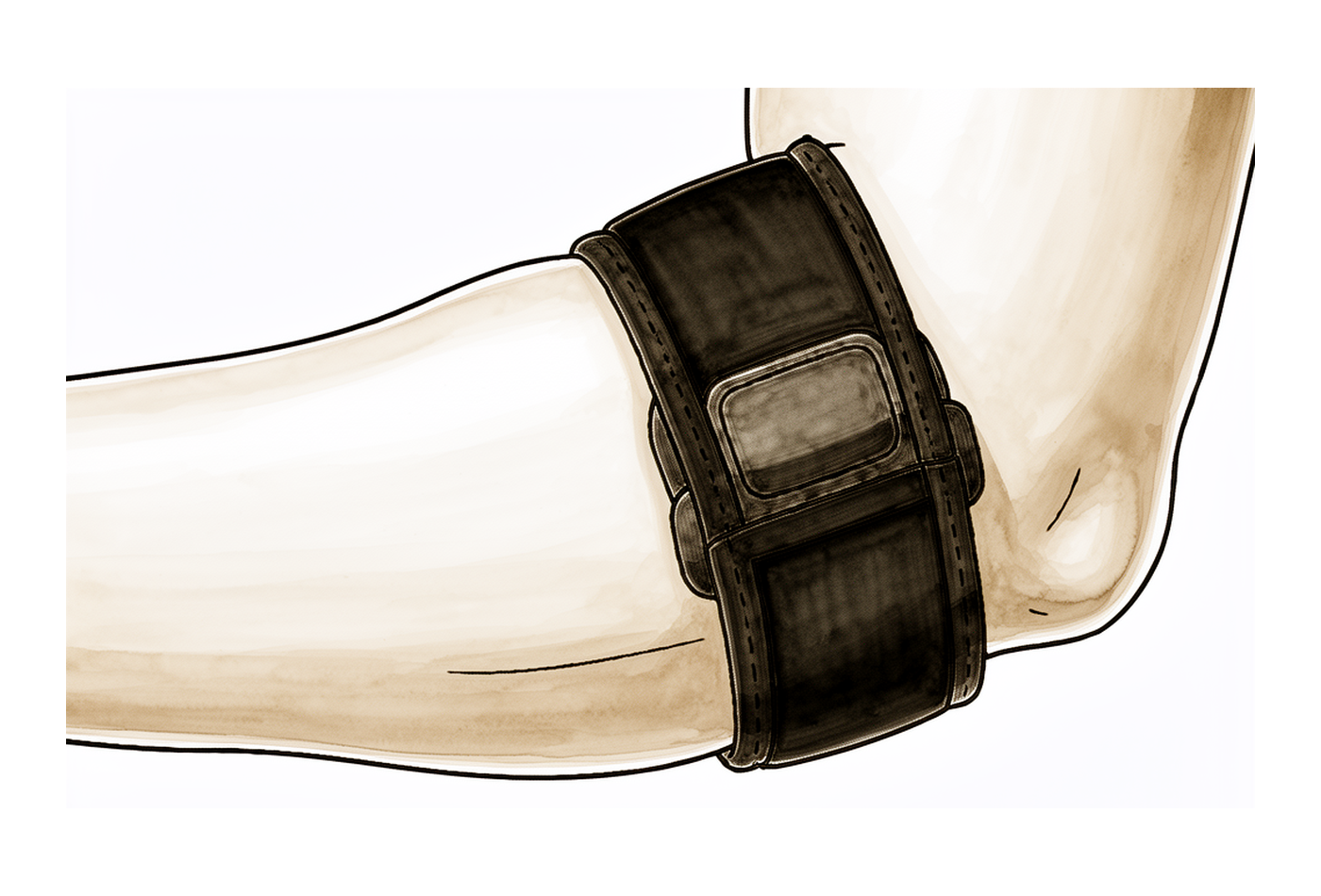
எதிர்விசைப் பட்டை
முழங்கையின் உட்புறத்துக்குச் சில சென்டிமீட்டர் கீழே, தசைத் திரளின் மேல், உங்கள் முன்கையைச் சுற்றி இந்தப் பட்டையை அணியுங்கள் — எலும்புப் புடைப்பின் மேல் அல்ல. அது உறுதியாக உணரப்பட வேண்டும்; ஆனால் உங்கள் கையில் கூச்சமோ உணர்விழப்போ ஏற்படும் அளவுக்கு இறுக்கமாக இருக்கக் கூடாது. ஆரம்ப வாரங்களில், அறிகுறிகளை அதிகரிக்கும் செயல்களின்போது (பிடித்தல், தூக்குதல், விளையாட்டு) அதைப் பயன்படுத்துங்கள்; உங்கள் அறிகுறிகள் தணியும்போது படிப்படியாக அதை நிறுத்துங்கள்.
அறிகுறிகளை அதிகரிக்கும் செயல்களின்போது; அறிகுறிகள் அனுமதிக்கும்போது படிப்படியாகக் குறைக்கவும்
Kieran Hirpara 4.0
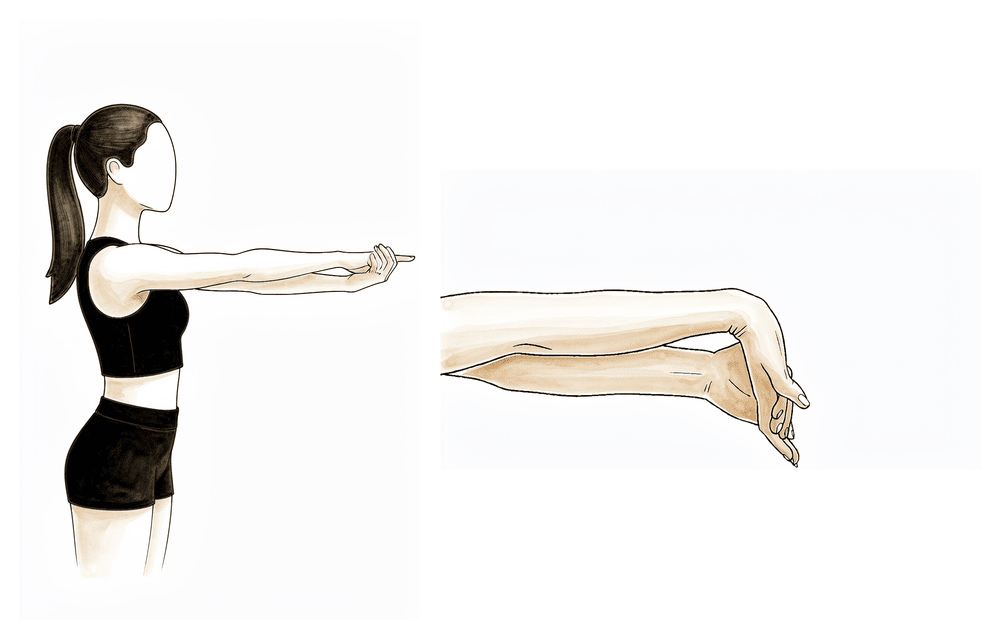
மணிக்கட்டு மடக்குத் தசை நீட்சி
பாதிக்கப்பட்ட கையை உங்களுக்கு முன்னால் நேராக நீட்டி, உள்ளங்கையை மேல்நோக்கி வைக்கவும். மறு கையால், முன்கையின் உட்புறத்தில் வசதியான நீட்சியை உணரும் வரை, உங்கள் விரல்களையும் மணிக்கட்டையும் மென்மையாகத் தரையை நோக்கிக் கீழிழுக்கவும். ஆரம்பத்தில் முழங்கையைச் சுமார் 90° மடங்கிய நிலையில் வைத்திருங்கள்; நீங்கள் முன்னேறும்போது முழங்கையை நேராக்கி இந்த நீட்சியைச் செய்யுங்கள். குதிக்காமல் பிடித்து வைக்கவும்.
20–30 வினாடிகள் பிடித்து வைக்கவும், 3–5 முறை, நாளொன்றுக்கு 2–3 முறை
Kieran Hirpara 4.0
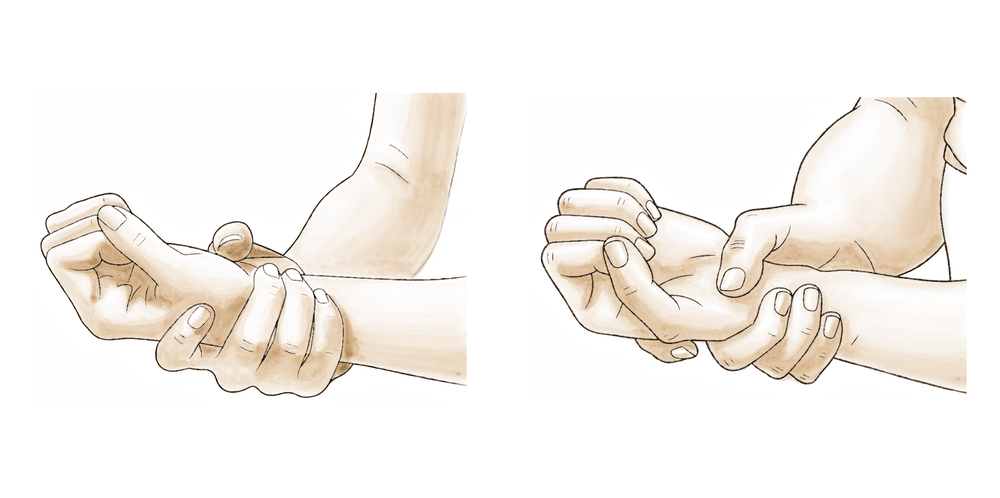
புரோனேட்டர் நீட்சி
முழங்கையை உங்கள் விலாவோடு சேர்த்து வைத்துக்கொண்டு, உள்ளங்கையைத் தரையை நோக்கித் திருப்புங்கள். முன்கையின் உட்புறத்தில் லேசான நீட்சியை உணரும் வரை, மறு கையால் முன்கையை மென்மையாக இன்னும் சிறிது உள்ளங்கை-கீழ்நோக்கிய நிலைக்குத் திருப்புங்கள். மென்மையாகவும் வலியின்றியும் வைத்திருங்கள்.
20–30 வினாடிகள் பிடித்து வைக்கவும், 3–5 முறை, நாளொன்றுக்கு 2–3 முறை
Kieran Hirpara 4.0
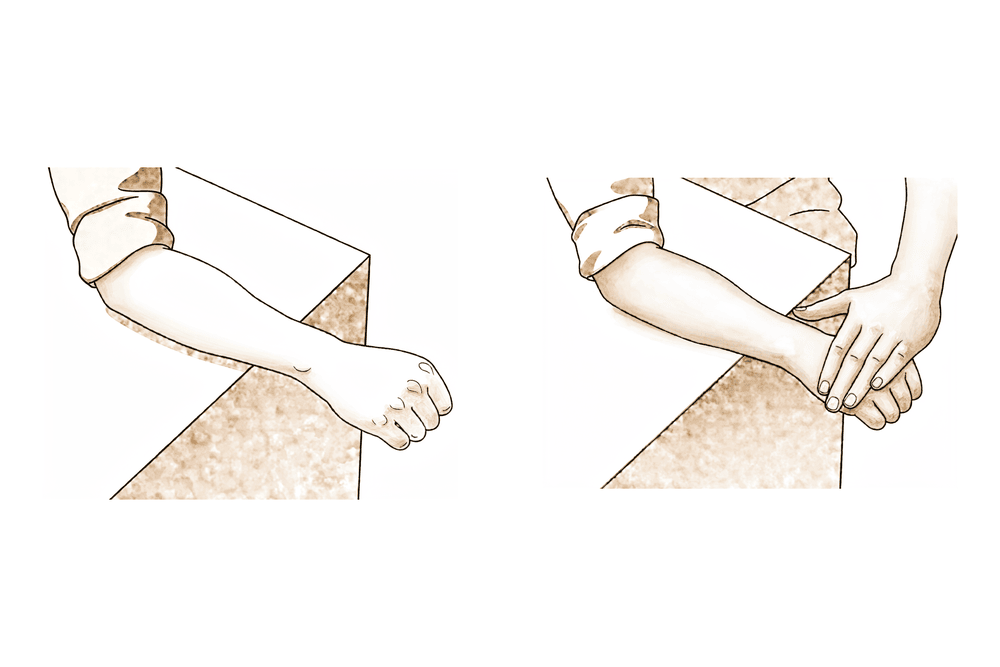
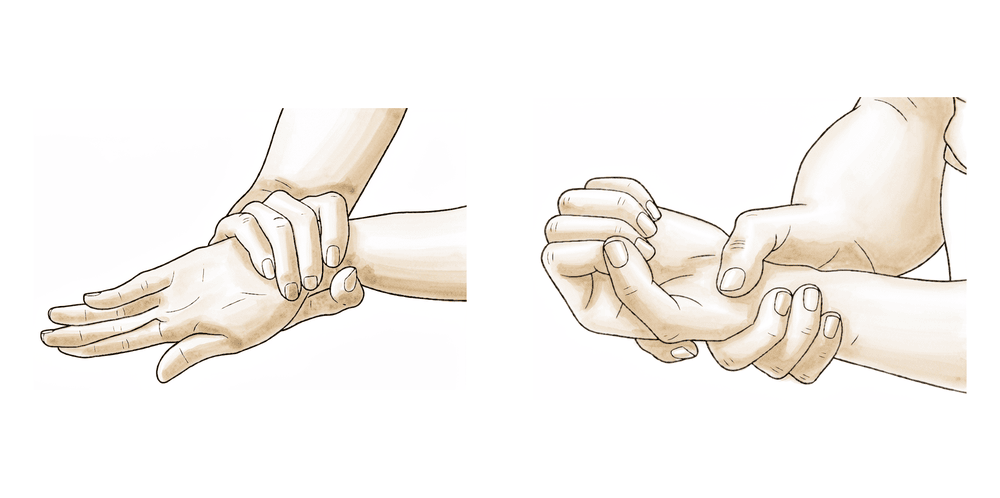
மணிக்கட்டு ஐசோமெட்ரிக் (மடக்குத் தசை) சுமை
உள்ளங்கையை மேல்நோக்கி வைத்து, முன்கையை ஒரு மேசையின் மேல் ஓய்வாக வைக்கவும். மறு கையின் உள்ளங்கையை உங்கள் விரல்களுக்கு எதிராக அழுத்தி, மணிக்கட்டை மேல்நோக்கி மடக்க முயலுங்கள்; ஆனால் மணிக்கட்டு உண்மையில் அசையாதபடி அதை அசையாமல் பிடித்து வைத்திருங்கள் — எதிர்ப்புக்கு எதிரான நிலையான பிடிப்பு. இது தசைநாணுக்கு மென்மையாகச் சுமை தந்து வலியைத் தணிக்கும் ஆரம்பக் கட்டப் பயிற்சி.
30–45 வினாடிகள் பிடித்து வைக்கவும், 5 முறை, நாளொன்றுக்கு 1–2 முறை
Kieran Hirpara 4.0
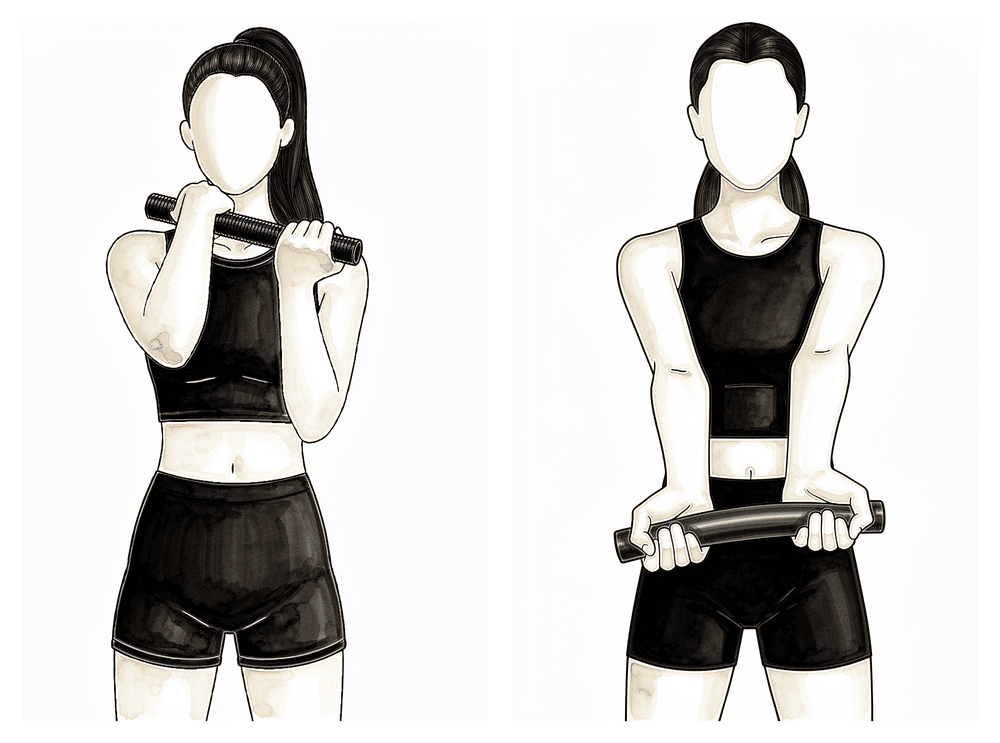
ரிவர்ஸ் டைலர் ட்விஸ்ட் (எக்சென்ட்ரிக் மடக்குத் தசைச் சுமை)
ஒரு ரப்பர் பயிற்சிக் கம்பியை (FlexBar) பாதிக்கப்பட்ட கையில், மணிக்கட்டை மேல்நோக்கி மடக்கிய நிலையில் (உள்ளங்கை உங்களை நோக்கி) பிடித்துக்கொண்டு, நல்ல கையால் அந்தக் கம்பியைத் திருகுங்கள். கம்பியை உங்களுக்கு முன்னால் கொண்டு வாருங்கள்; பின்னர் 3–4 வினாடிகளில், பாதிக்கப்பட்ட மணிக்கட்டு கட்டுப்பாட்டுடன் மெதுவாக விரியட்டும் — திருகுவது உங்கள் நல்ல கை, மெதுவான, கட்டுப்படுத்தப்பட்ட விடுவிப்பைச் செய்வது உங்கள் பாதிக்கப்பட்ட மணிக்கட்டு (இதுவே 'எக்சென்ட்ரிக்' பகுதி). கோல்ஃபர் முழங்கைக்கான முக்கிய வலுப்படுத்தும் பயிற்சி இதுவே; ஆரம்பகால வலி தணிந்தவுடன் (சுமார் 4-ஆவது வாரத்திலிருந்து) இது அறிமுகப்படுத்தப்படுகிறது.
15 முறை கொண்ட 3 தொகுப்புகள், நாளொன்றுக்கு ஒரு முறை
Kieran Hirpara 4.0
முன்கைச் சுழற்சி
முழங்கையை உங்கள் விலாவோடு சேர்த்து வைத்துக்கொண்டு, முழங்கையை அசைக்காமல், உங்கள் உள்ளங்கையை மெதுவாக மேல்நோக்கி உச்சவரையை நோக்கியும், பின்னர் கீழ்நோக்கித் தரையை நோக்கியும் திருப்புங்கள். இது முன்கையின் சுழற்சித் தசைகளை அசைவில் வைத்திருக்கிறது; நீங்கள் முன்னேறும்போது புரோனேட்டர் தசைகளுக்கு மென்மையாகச் சுமை தருகிறது.
ஒவ்வொரு திசையிலும் 10 முறை, நாளொன்றுக்கு 2–3 முறை
Kieran Hirpara 4.0
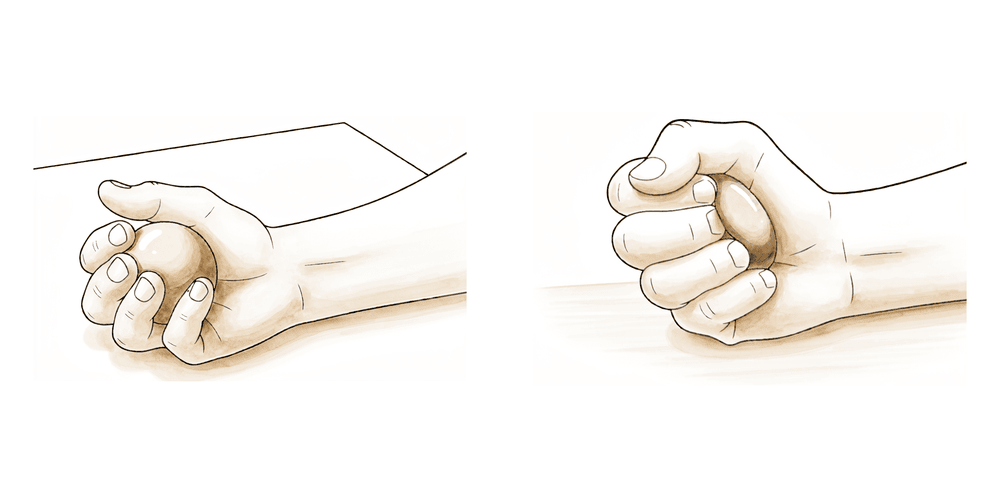
பிடி வலுப்படுத்துதல்
ஒரு மென்மையான பந்தையோ சிகிச்சைப் பட்டியையோ (putty) பிழிந்து, சிறிது நேரம் பிடித்து வைத்து, பின்னர் தளர்த்துங்கள். உங்கள் நீட்சிப் பயிற்சியும் எக்சென்ட்ரிக் சுமைப் பயிற்சியும் வசதியாக ஆனவுடன் இதைச் சேருங்கள் — அன்றாட வேலைகளுக்கும் விளையாட்டுக்கும் உங்களுக்குத் தேவையான பிடி வலிமையையும் முன்கை வலிமையையும் இது கட்டியெழுப்புகிறது. கூரிய வலி வருவதற்கு முன்பே நிறுத்துங்கள்.
10–15 முறை பிழிதல், நாளொன்றுக்கு 2–3 முறை
Kieran Hirpara 4.0
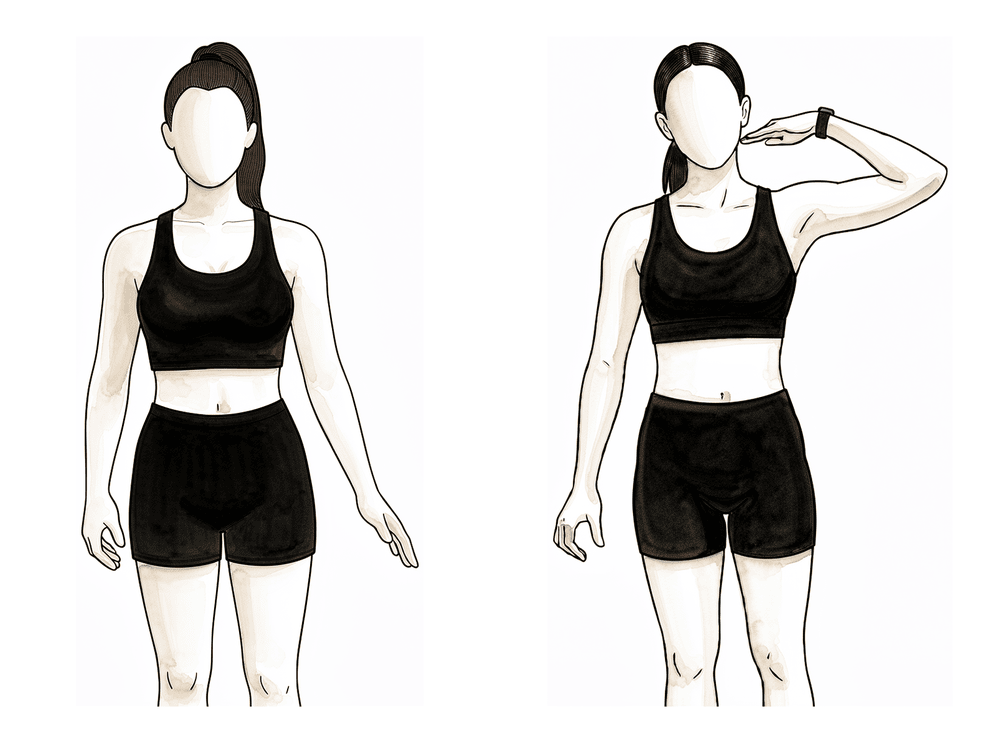
அல்நார் நரம்பு நழுவல் பயிற்சி
அல்நார் நரம்பு, முழங்கையின் உட்புறத்தில் உள்ள எலும்புப் புடைப்புக்கு நேர் பின்னால் உள்ள ஒரு பள்ளத்தில் செல்கிறது; கோல்ஃபர் முழங்கையில் அது பெரும்பாலும் எரிச்சலடைந்திருக்கும். அது சுதந்திரமாக நழுவிச் செல்ல: உங்கள் கட்டைவிரலாலும் ஆள்காட்டி விரலாலும் ஓர் 'OK' வளையம் செய்து, முழங்கையை மடக்கி, உள்ளங்கையை உங்களை நோக்கி வைத்து, அந்த வளையம் உங்கள் கண்ணைச் சுற்றி அமையும்படி அதை முகத்தை நோக்கி உயர்த்துங்கள். அந்த நிலைக்குள் மென்மையாக நுழைந்து வெளியே வாருங்கள். ஊசி குத்துவது போன்ற கூச்சமோ உணர்விழப்போ வரும் அளவுக்குத் தள்ள வேண்டாம் — உங்கள் சுண்டு விரலிலும் மோதிர விரலிலும் கூச்சம் ஏற்பட்டால் பின்வாங்குங்கள்; நரம்பு அறிகுறிகள் மோசமடைந்து வந்தால் உங்கள் சிகிச்சையாளரிடமோ கிளினிக்கிடமோ சொல்லுங்கள்.
5–10 மென்மையான நழுவல்கள், நாளொன்றுக்கு 2–3 முறை
இவை உங்கள் கையேட்டில் உள்ள பயிற்சிகள். டாக்டர் ஹிர்பராவும் உங்கள் சிகிச்சையாளரும் வழிகாட்டும்படி அவற்றைத் தொடங்குங்கள். ஆரம்ப வாரங்களில் வலியைத் தணிப்பது, மென்மையான அசைவு, ஐசோமெட்ரிக் (isometric) பிடித்து வைத்தல் ஆகியவற்றுக்கே முக்கியத்துவம்; நீங்கள் முன்னேறும்போது எக்சென்ட்ரிக் (eccentric) ரிவர்ஸ் டைலர் ட்விஸ்ட்டும் பிடி வலுப்படுத்துதலும் சேர்க்கப்படுகின்றன. முழங்கையின் உட்புறத்தில் இந்த நரம்பு அடிக்கடி சம்பந்தப்படுவதால் அல்நார் நரம்பு நழுவல் பயிற்சியும் சேர்க்கப்பட்டுள்ளது; அதை மென்மையாகவே செய்யுங்கள்.
உங்கள் மருத்துவ நெறிமுறை
இந்தப் பக்கத்தின் மீதிப் பகுதி மருத்துவ மறுவாழ்வுப் பயிற்சி நெறிமுறை. இந்தப் பகுதி உங்கள் இயன்முறை சிகிச்சையாளரிடமோ கை சிகிச்சையாளரிடமோ தரப்பட வேண்டியது. இது வெறும் கால அடிப்படையிலானது அல்ல, அளவுகோல் அடிப்படையிலானது: ஒரு கட்டத்திலிருந்து அடுத்த கட்டத்துக்குச் செல்வது, நாட்காட்டியை மட்டும் பொறுத்ததல்ல — பட்டியலிடப்பட்ட இலக்குகளை எட்டுவதைப் பொறுத்தது. ஒவ்வொரு சந்திப்பிலும் அல்நார் நரம்பு பரிசோதிக்கப்படுகிறது (Tinel அறிகுறி, இடப்பெயர்வு); ஏனெனில் உட்புற முழங்கை வழக்குகளில் தோராயமாக 50–60% பேருக்கு உடன்நிகழ் அல்நார் நரம்பு அறிகுறிகள் உள்ளன; அறுவை சிகிச்சையற்ற சிகிச்சை தோல்வியடைவதற்கு அவையே முதன்மைக் காரணம்.
கீழே இரண்டு வழிமுறைகள் உள்ளன: அறுவை சிகிச்சையற்ற திட்டம் (முதல் நிலைச் சிகிச்சை; பெரும்பான்மையானோருக்கு) மற்றும் அறுவை சிகிச்சைக்குப் பிந்தைய திட்டம் (அறுவை சிகிச்சையற்ற சிகிச்சை பலனளிக்காமல் அறுவை சிகிச்சைக்குச் செல்லும் சிறுபான்மையினருக்கு).
அறுவை சிகிச்சையற்ற வழிமுறை
கட்டம் I: கடுமையான நிலை / வலிக் கட்டுப்பாடு (வாரம் 0–2)
இலக்குகள்: வலியைத் தணித்தல்; சுமை இல்லாத முழு அசைவு வரம்பை மீட்டெடுத்தல்.
- ஒப்பீட்டளவிலான ஓய்வும் செயல் மாற்றமும்: வலியையே வரம்பாகக் கொள்ளவும்; அசையாமல் வைப்பதைத் தவிர்க்கவும். கோல்ஃப், எறிதல், நீச்சல், ராக்கெட் விளையாட்டுகள், எடை தூக்குதல், திரும்பத் திரும்பப் பிடித்தல் ஆகியவற்றை மாற்றியமைக்கவும்.
- விருப்பப்படி, பொது மடக்குத் தசைத் திரளின் மேல் எதிர்விசைப் பட்டை; கடுமையான வலி இருந்தால் மணிக்கட்டுச் சிம்பு (wrist splint) பயன்படுத்தப்படலாம்.
- வலிக் கட்டுப்பாட்டுக்கான துணைச் சிகிச்சைகள்: ஐஸ், மென் திசுச் சிகிச்சை / IASTM, மென்மையான, வலியற்ற சுய அசைவு வரம்பு (AROM), நரம்பு நழுவல் பயிற்சிகள்.
- அல்நார் நரம்பைப் பரிசோதிக்கவும் (Tinel, இடப்பெயர்வு).
- அடுத்த கட்டத்துக்குச் செல்வதற்கான அளவுகோல்கள்: வலியின்றி, சுமை இல்லாத முழு AROM; சுயமாகச் செய்யும் வீட்டுப் பயிற்சித் திட்டம்.
கட்டம் II: அரை-கடுமையான நிலை / ஆரம்பகாலச் சுமை (வாரம் 2–4)
இலக்குகள்: மடக்கு-புரோனேட்டர் சுமையைத் தொடங்குதல்; அண்மைச் சங்கிலியைக் (proximal chain) கவனத்தில் கொள்ளுதல்.
- ஐசோமெட்ரிக் மணிக்கட்டு மடக்குத் தசை மற்றும் புரோனேட்டர் சுமை (இலகுவானது).
- முழங்கை 90° மடங்கிய நிலையில், மணிக்கட்டு மடக்குத் தசைகளின் படிப்படியான நீட்சி.
- அண்மை இயக்கச் சங்கிலி: தோள்பட்டை எலும்பை நிலைப்படுத்தும் தசைகள் (serratus anterior, நடு/கீழ் trapezius) மற்றும் சுழற்சி தசைநாண் பட்டை; உட்புற முழங்கைச் சுமை வால்கஸ் விசையால் ஏற்படும் எறிபவர்களுக்கு இது மிக முக்கியம்.
- அடுத்த கட்டத்துக்குச் செல்வதற்கான அளவுகோல்கள்: முழு அசைவு வரம்பு தக்கவைக்கப்படுதல்; 90° நீட்சியைத் தாங்குதல்; எதிர்ப்பக்க வலிமையில் ~70%.
கட்டம் III: வலுப்படுத்துதல் / திரும்புதல் (வாரம் 4–6+)
இலக்குகள்: சுமை தாங்குதிறனை மீட்டெடுத்தல்; செயல்பாட்டுக்கும் விளையாட்டுக்கும் திரும்புதல்.
- மணிக்கட்டு மடக்குதல் மற்றும் முன்கைப் புரோனேஷனுக்கான எக்சென்ட்ரிக்-கான்சென்ட்ரிக் சுமை: Tyler ட்விஸ்ட்டின் உட்புற முழங்கைக்கான இணையானது "ரிவர்ஸ் டைலர் ட்விஸ்ட்" (FlexBar-இல் எக்சென்ட்ரிக் மணிக்கட்டு மடக்குதல்). எக்சென்ட்ரிக்-கான்சென்ட்ரிக் இரண்டையும் இணைத்த சுமையே விரும்பத்தக்கது; ஆரம்பகால வலி நிவாரணத்துக்கு ஐசோமெட்ரிக் பயிற்சிகள் தொடர்ந்து பயனுள்ளவையாக இருக்கின்றன.
- அசைவுடன் கூடிய மூட்டு அசைவூட்டல் (mobilisation-with-movement); முழங்கை நீட்டப்பட்ட நிலையை நோக்கி நீட்சியை முன்னேற்றவும்.
- பிடி வலுப்படுத்துதல், பின்னர் விளையாட்டுக்கே உரிய சுமை; எறிபவர்களுக்கு இடைவெளி எறிதல் திட்டம் (interval throwing program); ப்ளையோமெட்ரிக்ஸ் (plyometrics) கடைசியாக.
- முழங்கை அறிகுறியற்றதாக மாறும்போது எதிர்விசைப் பட்டையைப் படிப்படியாகக் குறைக்கவும்; உபகரணங்களையும் நுட்பத்தையும் கவனத்தில் கொள்ளவும்.
- விளையாட்டுக்குத் திரும்புவதற்கான அளவுகோல்கள்: எதிர்ப்பக்க வலிமையில் ~90%, வலியற்ற செயல்பாடு, சுய மேலாண்மை.
அறுவை சிகிச்சைக்குப் பிந்தைய வழிமுறை (மடக்கு-புரோனேட்டர் திசு அகற்றல் ± பழுதுபார்ப்பு ± அல்நார் நரம்பு சிகிச்சை)
≥6 மாதங்கள் அறுவை சிகிச்சையற்ற சிகிச்சை பலனளிக்காத சிறுபான்மையினருக்கே அறுவை சிகிச்சை ஒதுக்கப்படுகிறது. திறந்த Nirschl வகை அறுவை சிகிச்சை, நோயுற்ற மடக்கு-புரோனேட்டர் இணைப்பிடத்தை அகற்றி, பொதுவாக அதைப் பழுதுபார்த்து மீண்டும் இணைக்கிறது; அல்நார் நரம்பு மதிப்பிடப்பட்டுப் பாதுகாக்கப்படுகிறது; ஒரு பகுதி வழக்குகளில் அழுத்த நீக்கமோ (decompression) முன்புற இடமாற்றமோ (anterior transposition) அதே நேரத்தில் செய்யப்படுகிறது.
கட்டம் 1: பாதுகாத்தல் (வாரம் 0–2)
- பின்புற நீள-கைச் சிம்பு (முழங்கை + மணிக்கட்டு) 10–14 நாட்களுக்கு; வெளியே செல்லும்போது கைத்தாங்கி (sling).
- உயர்த்தி வைத்தலும் வீக்கக் கட்டுப்பாடும்; விரல்/தசைநாண் நழுவல் AROM; தோள்பட்டைச் சுய அசைவு வரம்பு; மென்மையான கழுத்துச் சுய அசைவு வரம்பு.
- முன்னெச்சரிக்கைகள்: தூக்குதல், தள்ளுதல், இழுத்தல், வலுவாகப் பிடித்தல் ஆகியவை கூடாது: பழுதுபார்ப்பைப் பாதுகாக்கவும்.
கட்டம் 2: அசைவு வரம்பை மீட்டெடுத்தல் (வாரம் 2–6)
- ~2-ஆம் வாரச் சந்திப்பில்: தையல் அகற்றல்; நடுநிலை மணிக்கட்டு ஆர்த்தோசிஸுக்கு (neutral wrist orthosis) முழு நேரமாக மாறுதல் (சுத்தம் செய்யக் கழற்றலாம்); வீக்கத்துக்கு முழங்கையில் Tubigrip.
- முழங்கைச் சுய அசைவு வரம்பை — மடக்குதல்/நீட்டல் — தொடங்கவும் (வாரம் 2–4); பின்னர் 4-திசை மணிக்கட்டு AROM + முன்கைச் சுழற்சி மற்றும் விரல்/கட்டைவிரல் AROM (வாரம் 4–6).
- அல்நார் நரம்பு நழுவல் பயிற்சிகள் வாரம் 4–6-இல் அறிமுகப்படுத்தப்படுகின்றன (உட்புற முழங்கைக்கே உரிய கூடுதல் அம்சம்).
- தோள்பட்டை எலும்பை நிலைப்படுத்துதல் (புவியீர்ப்பை எதிர்த்து). 6 வாரங்களுக்குப் பிறகே எதிர்ப்புச் சுமையுடன் வலுப்படுத்துதல்; அதற்கு முன் கூடாது.
கட்டம் 3: வலுப்படுத்துதல் (வாரம் 6–12)
- தாங்கக்கூடிய அளவுக்கு ஆர்த்தோசிஸைப் படிப்படியாகக் குறைக்கவும் (ஆரம்பத்தில் இரவுப் பயன்பாடு தொடரலாம்).
- மணிக்கட்டுக்கும் முன்கைக்கும் படிப்படியாக அதிகரிக்கும் எதிர்ப்புச் சுமை வலுப்படுத்துதல். ஆரம்பத்தில் எதிர்ப்புடன் கூடிய சுபினேஷன்/புரோனேஷன் கூடாது; சுபினேஷன்/நடுநிலை நிலையில் தூக்குவதைத் தொடங்கவும், ~9-ஆம் வாரத்திலிருந்து புரோனேஷன் நிலையில் இலகுவாகத் தூக்குதல்.
கட்டம் 4: செயல்பாட்டுக்கும் விளையாட்டுக்கும் திரும்புதல் (வாரம் 12–16+)
- தாங்கக்கூடிய அளவுக்கு அனைத்து முன்கை நிலைகளிலும் தூக்குவதை முன்னேற்றவும்; ~12–16 வாரங்களுக்குள் செயல்பாட்டுக்கு முழுமையாகத் திரும்புதல்; விளையாட்டு வீரர்களுக்கு விளையாட்டுக்கே உரிய / இடைவெளி எறிதல் திட்டம். முழு மீட்சிக்குப் பொதுவாக 3–6 மாதங்கள் ஆகும்.
அல்நார் நரம்பு முன்னெச்சரிக்கைகள்: முன்புற இடமாற்றம் செய்யப்பட்டிருந்தால், ஆரம்பத்தில் முழங்கையை வரம்பின் எல்லை வரை மடக்குவதைக் கட்டுப்படுத்தவும்; நரம்பின் நகர்வைப் படிப்படியாக முன்னேற்றவும். அல்நார் அறிகுறிகள் நீடித்தாலோ மோசமடைந்தாலோ, சுமையை அதிகரிப்பதற்கு முன் அறுவை சிகிச்சை நிபுணரின் மறுபரிசோதனை தேவை.
வேலைக்கும் செயல்பாடுகளுக்கும் திரும்புதல்
நீங்கள் எவ்வளவு விரைவாகத் திரும்புவீர்கள் என்பது, நீங்கள் எந்த வழிமுறையில் இருக்கிறீர்கள் என்பதையும், உங்கள் வேலையும் விளையாட்டும் கோரும் தேவைகளையும் பொறுத்தது.
அறுவை சிகிச்சையற்ற வழி. பொதுவாக இந்தக் காலம் முழுவதும் நீங்கள் வேலை செய்துகொண்டும் சுறுசுறுப்பாகவும் இருக்கலாம்; முழங்கையை அதிகரிக்கச் செய்யும் வேலைகளை முற்றிலும் நிறுத்தாமல் மாற்றியமைத்துக் கொள்ளுங்கள். உங்கள் வலிமை மறு பக்கத்தின் தோராயமாக 90%-ஐ எட்டி, செயல்பாடு வலியற்றதாக ஆனவுடன், வலுப்படுத்தும் கட்டத்தில் கோல்ஃப், எறிதல் விளையாட்டுகள், நீச்சல், ராக்கெட் விளையாட்டுகள் படிப்படியாக மீண்டும் சேர்க்கப்படுகின்றன. கோல்ஃபர் முழங்கை தானாகவே தணியும் நிலை என்பதால், அன்றாடச் செயல்பாடு இதைவிட மிக விரைவாக மேம்பட்டாலும், முற்றிலும் தீர 6 முதல் 18 மாதங்கள் வரை ஆகலாம்.
அறுவை சிகிச்சைக்குப் பிந்தைய வழி. இலகுவான, கட்டுப்படுத்தப்பட்ட பயன்பாடு ஆரம்பத்திலேயே தொடங்குகிறது; ஆனால் பழுதுபார்ப்பைப் பாதுகாக்கக் கனமாகத் தூக்குவதும் பிடிப்பதும் தள்ளிவைக்கப்படுகின்றன. பெரும்பாலானோர் சுமார் 12 முதல் 16 வாரங்களுக்குள் முழுச் செயல்பாட்டுக்குத் திரும்புகிறார்கள்; முழு மீட்சிக்குப் பொதுவாக 3 முதல் 6 மாதங்கள் ஆகும். எறிதல் விளையாட்டு வீரர்கள் போட்டிக்குத் திரும்புவதற்கு முன், படிப்படியான இடைவெளி எறிதல் திட்டத்தைப் பின்பற்றுகிறார்கள்.
வாகனம் ஓட்டுதல்: நீங்கள் சிம்பிலோ கைத்தாங்கியிலோ இருக்கும்போது, அல்லது வாகனத்தைப் பாதுகாப்பாகக் கட்டுப்படுத்த முடியாத அளவுக்கு முழங்கை வலிக்கும்போது, வாகனம் ஓட்டுவதைத் தவிருங்கள். சிம்பு கழற்றப்பட்டு, கையை வசதியாக அசைக்க முடியும் நிலை வந்தவுடன், உங்கள் மறுபரிசோதனையில் உறுதிப்படுத்தப்பட்டபடி, மீண்டும் தொடங்குங்கள்.
உங்கள் நெறிமுறைக்குப் பிறகு
இந்த நெறிமுறை கிளினிக்கின் பொதுவான மீட்சி ஆலோசனைகளுடன் இணைந்து செயல்படுகிறது; அறுவை சிகிச்சைக்குப் பிந்தைய வலியைக் கையாளுதல், காயப் பராமரிப்பு, கை சிகிச்சையின் அடிப்படைகள் பக்கங்களைப் பாருங்கள். கோல்ஃபர் முழங்கை, அதன் வெளிப்புற முழங்கை இணையான டென்னிஸ் முழங்கையுடன் சுமையை அடிப்படையாகக் கொண்ட அணுகுமுறையைப் பகிர்ந்துகொள்கிறது; அதற்கு இணையான லேட்டரல் எபிகாண்டிலைட்டிஸ் வழிகாட்டல் வேண்டுமானால் உங்கள் சிகிச்சையாளரிடம் கேளுங்கள். உங்கள் முழங்கை எப்படி முன்னேறுகிறது என்பதைப் பொறுத்து, உங்கள் தொடர் மீட்சிக்கு உங்கள் இயன்முறை சிகிச்சையாளரோ கை சிகிச்சையாளரோ தனிப்பட்ட முறையில் வழிகாட்டுவார்.
Evidence & references
This is the clinical evidence summary written for health professionals. It is technical, and it lists the research this page was built from. You do not need to read it to understand your treatment or to make a decision about it.
Topic scope: (A) the loading-based non-operative rehabilitation of medial epicondylitis — a degenerative tendinopathy of the flexor-pronator origin (chiefly flexor carpi radialis and pronator teres) at the medial epicondyle — with mandatory ulnar-nerve screening; and (B) post-operative rehabilitation after open flexor-pronator debridement (± repair, ± concurrent ulnar nerve decompression/transposition), reserved for the minority failing ≥6 months of quality conservative care.
Defining principle: medial epicondylitis is not an inflammatory condition but a degenerative tendinosis, so the treatment is graded tendon loading, not rest. The protocol mirrors lateral elbow tendinopathy but with two practice-defining differences Dr Hirpara emphasises: (1) the loaded group is the wrist flexors/pronators (hence the eccentric "reverse Tyler twist" rather than the lateral Tyler twist), and (2) the ulnar nerve lies immediately behind the medial epicondyle, so concomitant ulnar neuritis (~50–60% of cases) is screened at every visit and is the leading reason conservative care fails. Surgery is a last resort after ≥6 months.
Medial epicondylitis is far less studied than its lateral counterpart — it is ~5–10× less common (prevalence ~0.4% vs 1.3%; ~10–20% of all epicondylitis). Most evidence is extrapolated from lateral elbow tendinopathy and from older operative case series; dedicated medial RCTs are sparse. Phase timelines below come from institutional Standard-of-Care protocols (Mass General Brigham combined medial/lateral; UVA medial debridement; Campbell's / Nirschl) plus operative series.
A. NON-OPERATIVE REHABILITATION (phased)
First-line; the majority resolve without surgery. Largely the SAME phased structure as the lateral elbow (Mass General Brigham publishes ONE combined medial/lateral protocol), with the loading target shifted to the flexor-pronator mass. Expected resolution 6–18 months (self-limited).
Phase I — Acute / pain control (~0–2 weeks). Relative rest + activity modification using pain as the limiter (avoid immobilisation). Aggravators to modify: golf, throwing (esp. late-cocking / acceleration valgus load), swimming, bowling, racquet sports, weightlifting, repetitive gripping. Optional counterforce brace over the common flexor mass; wrist splint if acutely painful. Pain-control adjuncts: ice, soft-tissue / IASTM, gentle pain-free AROM, dry needling, nerve glides. Screen the ulnar nerve (Tinel, subluxation). Criterion to progress: full unloaded AROM without pain; independent home program.
Phase II — Sub-acute / early loading (~2–4 weeks). Isometric wrist-flexor and pronator loading (minimal load). Progressive stretching of the wrist flexors at 90° elbow flexion. Proximal kinetic chain: scapular stabilisers and rotator cuff — critical in throwers, where medial elbow overload is valgus-driven. Criteria to progress: full ROM maintained; tolerates the 90° stretch; ~70% contralateral strength.
Phase III — Late / strengthening & return (~4–6+ weeks). Eccentric and concentric loading of wrist flexion and forearm pronation — the medial analogue of the Tyler twist is a "reverse Tyler twist" (eccentric wrist flexion on the FlexBar). Combined eccentric-concentric loading is favoured; isometrics for early analgesia. Mobilisation-with-movement; progress stretching to the elbow-extended position. Grip strengthening, then sport-specific loading; for throwers, an interval throwing program; plyometrics last. Wean counterforce brace as asymptomatic; equipment/technique modification. Return-to-sport criteria: ~90% contralateral strength, pain-free function, self-management.
B. POST-OPERATIVE REHABILITATION (flexor-pronator debridement ± repair, ± ulnar nerve procedure)
Surgery is for the minority failing ≥6 months of conservative care. The open Nirschl-type operation debrides the pathologic flexor-pronator origin (incision posterior to the medial epicondyle to spare the medial antebrachial cutaneous nerve), with repair/reattachment commonly by suture anchor. The ulnar nerve must be assessed and protected: ulnar neuritis is addressed concurrently (decompression or anterior transposition) in roughly 20–50% of operative series. The phase timeline blends the UVA "Golfer's Elbow Debridement (with tendon repair)" protocol and the Verma / Midwest-Orthopaedics-at-Rush medial/lateral debridement protocol.
Phase 1 — Protect / immobilise (Weeks 0–2). Posterior long-arm splint (elbow + wrist) for 10–14 days; sling for community use. Elevation; oedema control; finger/tendon-glide AROM; unaffected-joint motion; active shoulder ROM; gentle cervical AROM. Precautions: NO lifting / pushing / pulling / forceful gripping; protect the repair.
Phase 2 — ROM restoration (Weeks 2–6). At the 2-wk visit: suture removal; transition to a wrist orthosis in neutral full-time (off for hygiene); Tubigrip at the elbow for swelling. Begin AROM elbow flexion/extension (2–4 wk), then 4-way wrist AROM + forearm rotation, finger/thumb AROM (4–6 wk). Ulnar nerve glides introduced ~weeks 4–6 (the explicit medial-specific addition). Scapular stabilisation (gravity-resisted). No resistance strengthening until after 6 weeks.
Phase 3 — Strengthening (Weeks 6–12). Wean the orthosis as tolerated (consider night use early). Progressive resistive strengthening of wrist and forearm; per Verma, no resisted supination/pronation early, lifting begun in supination/neutral, with light pronated lifting from ~week 9.
Phase 4 — Return to activity / sport (Weeks 12–16+). Progress lifting in all forearm positions as tolerated; full return to activity by ~12–16 weeks; sport-specific / interval throwing program for athletes. Full recovery commonly 3–6 months.
Ulnar nerve precautions: if an anterior transposition was performed, limit end-range elbow flexion early and progress nerve excursion gradually; persistent or worsening ulnar symptoms warrant surgeon review before advancing loading.
C. PHASED TIMELINE SUMMARY
| Pathway | Phase | Window | Immobilisation | Loading / key actions | Criteria / milestone |
|---|---|---|---|---|---|
| Non-op | I — Pain control | 0–2 wk | None (avoid casting); optional counterforce brace | Activity modification; pain-free AROM; nerve glides; ulnar screen | Full unloaded AROM, pain-free |
| Non-op | II — Early loading | 2–4 wk | None | Isometric flexor/pronator load; 90° wrist-flexor stretch; scapular/cuff | ~70% contralateral strength |
| Non-op | III — Strengthen / return | 4–6+ wk | Wean brace | Reverse Tyler twist (eccentric); grip; sport-specific; throwers' interval program | ~90% strength, pain-free → RTS |
| Post-op | 1 — Protect | 0–2 wk | Posterior long-arm splint 10–14 d + sling | Finger glides, shoulder ROM; oedema control | No resistance; repair protected |
| Post-op | 2 — ROM restore | 2–6 wk | Neutral wrist orthosis | Elbow AROM → 4-way wrist + forearm rotation; ulnar glides wk 4–6 | No resistance until >6 wk |
| Post-op | 3 — Strengthen | 6–12 wk | Wean orthosis | Progressive resistance; supinated/neutral lifting → light pronated ~wk 9 | Restored strength in safe positions |
| Post-op | 4 — Return | 12–16+ wk | None | Lifting all forearm positions; interval throwing | Full return ~12–16 wk; recovery 3–6 mo |
D. KEY CONTROVERSIES / EVIDENCE QUALITY
- Sparse high-level evidence. Almost no medial-specific RCTs; recommendations are extrapolated from lateral elbow and from retrospective operative series (Kurvers & Verhaar 1995 remains a cornerstone). Strength of evidence is materially weaker than for lateral epicondylitis.
- Ulnar nerve is the dominant modifier. Concomitant ulnar neuropathy (reported 23–60%) worsens prognosis and is the leading reason conservative care fails; whether and how to address it surgically (decompression vs transposition vs medial epicondylectomy) is debated. Outcomes are reliably worse when ulnar symptoms coexist and are untreated.
- PRP may rival surgery for type-1 disease. Bohlen et al (OJSM 2020) found 2 leukocyte-rich PRP injections matched surgery for recalcitrant type-1 medial epicondylitis (29/33 success each) with faster recovery (pain-free ~56 vs ~108 days; full ROM ~42 vs ~96 days) — the surgical delay partly attributed to post-op bracing. Small evidence base.
- Corticosteroid: short-term only. As with the lateral elbow, steroid gives transient relief without durable benefit and risks recurrence; repeated injections show diminishing returns.
- Eccentric vs concentric. Same unsettled debate as the lateral elbow; combined eccentric-concentric flexor-pronator loading is the pragmatic standard, but direct medial trial data are minimal.
- Surgical technique. Open Nirschl debridement with repair is reliable in case series; arthroscopic medial debridement is emerging (claimed ulnar-nerve protection) but is technically demanding and under-evidenced. Debridement alone vs with repair remains unsettled.
E. EVIDENCE STRENGTH FLAGS (summary)
- MODERATE (non-operative rehab): the phased loading program — extrapolated largely from lateral elbow tendinopathy and combined medial/lateral institutional protocols; combined eccentric-concentric flexor-pronator loading is the pragmatic standard.
- LOW–MODERATE (post-operative rehab): phase timelines from institutional debridement protocols (UVA; Verma/Rush) and operative case series; no defining post-op rehab RCT.
- MODERATE (PRP for type-1 disease): single comparative study (Bohlen OJSM 2020) matching surgery with faster recovery; small sample.
- CONSENSUS / EXPERT: ulnar-nerve screening at every visit, ulnar-glide timing (wk 4–6 post-op), and the forearm-position lifting progression — drawn from surgeon-guidance protocols and operative practice rather than trial data.
CITATIONS
RAG corpus (180,000+ Orthopaedic articles)
- Kurvers H, Verhaar J. The results of operative treatment of medial epicondylitis. J Bone Joint Surg Am. 1995. (ulnar neuritis coexistence 23–50%)
- Bohlen HL, et al. Platelet-rich plasma is an equal alternative to surgery in the treatment of type 1 medial epicondylitis. Orthop J Sports Med. 2020. DOI: 10.1177/2325967120908952
- Platelet-rich plasma versus Tenex in the treatment of medial and lateral epicondylitis. J Shoulder Elbow Surg. 2019.
- Ellenbecker TS, Nirschl R, Renstrom P. Current concepts in examination and treatment of elbow tendon injury. Sports Health. 2012.
- Rehabilitation of the thrower's elbow. Clin Sports Med. 2004.
- Nirschl surgical technique for concomitant lateral and medial elbow tendinosis. Am J Sports Med. 2011.
- Imaging of the elbow in the overhead throwing athlete. Am J Sports Med. 2003. (ulnar neuritis in ~60% of throwers with medial epicondylitis)
- Outcome of partial medial epicondylectomy for cubital tunnel syndrome. Clin Orthop Relat Res. 2006.
- Coonrad RW, Hooper WR. Tennis elbow: its course, natural history, conservative and surgical management (includes medial). J Bone Joint Surg Am. 1973.
- Green's Operative Hand Surgery. 2021. (medial vs lateral prevalence; combined treatment chapter; Nirschl technique)
- Campbell's Operative Orthopaedics. 2020. (Box 46.3 Rehabilitation Protocol for Epicondylitis [Wilk/Arrigo/Andrews]; Nirschl medial technique, posterior incision sparing the MABC nerve)
Published protocols (URLs)
- University of Virginia Orthopaedics — Medial Epicondyle (Golfer's Elbow) Debridement (with tendon repair), Rehabilitation Guidelines. https://med.virginia.edu/orthopaedic-surgery/wp-content/uploads/sites/242/2024/09/Medial-Epicondyle-Golfers-Elbow-Debridement-with-tendon-repair.pdf
- Midwest Orthopaedics at Rush (Nikhil Verma, MD) — Post-Operative Rehabilitation Guidelines for Medial/Lateral Epicondyle Debridement. https://www.sportssurgerychicago.com/patient-resources/rehab-manuals/mediallateral-epicondyle-debridement/
- Mass General Brigham Sports Medicine — Rehabilitation Protocol for Medial/Lateral Epicondylalgia (non-operative), rev. April 2021. https://www.massgeneral.org/assets/MGH/pdf/orthopaedics/sports-medicine/physical-therapy/rehabilitation-protocol-for-medial-lateral-epicondylitis.pdf