

肱骨内上髁炎(高尔夫球肘) 资料
本页面指导您在 Mater Private Hospital Rockhampton 的 Kieran Hirpara 医生监护下,从肱骨内上髁炎(俗称高尔夫球肘)中康复。大多数人无需手术即可完全康复,治疗的核心是持续、基于负荷的锻炼计划,而非休息。康复始于您的家庭锻炼计划,随后是专为您的物理治疗师或手部治疗师编写的结构化临床方案;请在首次治疗就诊时携带此页面或其 PDF 文件,以确保您的康复过程协调一致。您的治疗师可能会根据康复进展调整计划。
如果您出现小指和无名指的针刺感、麻木或无力,请告知诊所或您的治疗师;尺神经紧贴肘部内侧后方走行,有时需要单独处理。
预期情况
高尔夫球肘是肘部内侧肌腱的一种磨损(退行性)问题:即屈肌-旋前肌肌腱,该肌腱负责屈曲手腕并使手掌向下旋转,其附着于称为内上髁的骨性突起处。尽管旧称“上髁炎”,但它实际上并非炎症;肌腱因过度负荷而变得薄弱且结构紊乱。因此,现代治疗方法并非休息和抗炎药,而是一个分级训练计划,以温和地逐步加载肌腱,使其恢复至完全强度。
恢复需要耐心。高尔夫球肘通常具有自限性,但完全稳定可能需要6至18个月。好消息是,绝大多数患者通过良好的保守治疗方案即可康复,无需手术。只有在至少六个月的高质量治疗失败后,才会考虑手术。
使肘部内侧与外侧(网球肘)不同的一个特征是尺神经(即“麻筋”神经),它走行于内上髁正后方的沟槽中。约半数高尔夫球肘患者同时伴有该神经的一定程度刺激,因此治疗师会在每次就诊时检查该神经,并可能增加特定的神经滑动练习。
注意事项与限制
应做:
- 在舒适的限度内,继续将手臂用于正常的日常活动。
- 修改而非完全停止那些会诱发症状的活动。
- 如果有帮助,在进行加重症状的活动时,在前臂肌肉上佩戴反力支具。
- 定期进行拉伸和负荷练习;一致性比强度更重要。
不应做:
- 不要完全休息肘部或将其置于石膏中;肌腱需要温和的负荷才能愈合。
- 早期避免重度外翻负荷活动:高尔夫、投掷(尤其是后引和加速阶段)、游泳和球拍运动,直到力量重建。
- 任何练习都不要做到出现锐痛,神经滑动练习也不要做到出现针刺感或麻木。
- 如果您的尺神经症状(小指和环指的刺痛或麻木)加重,请放缓进度并在增加负荷前寻求复查。
您的练习
Kieran Hirpara 4.0
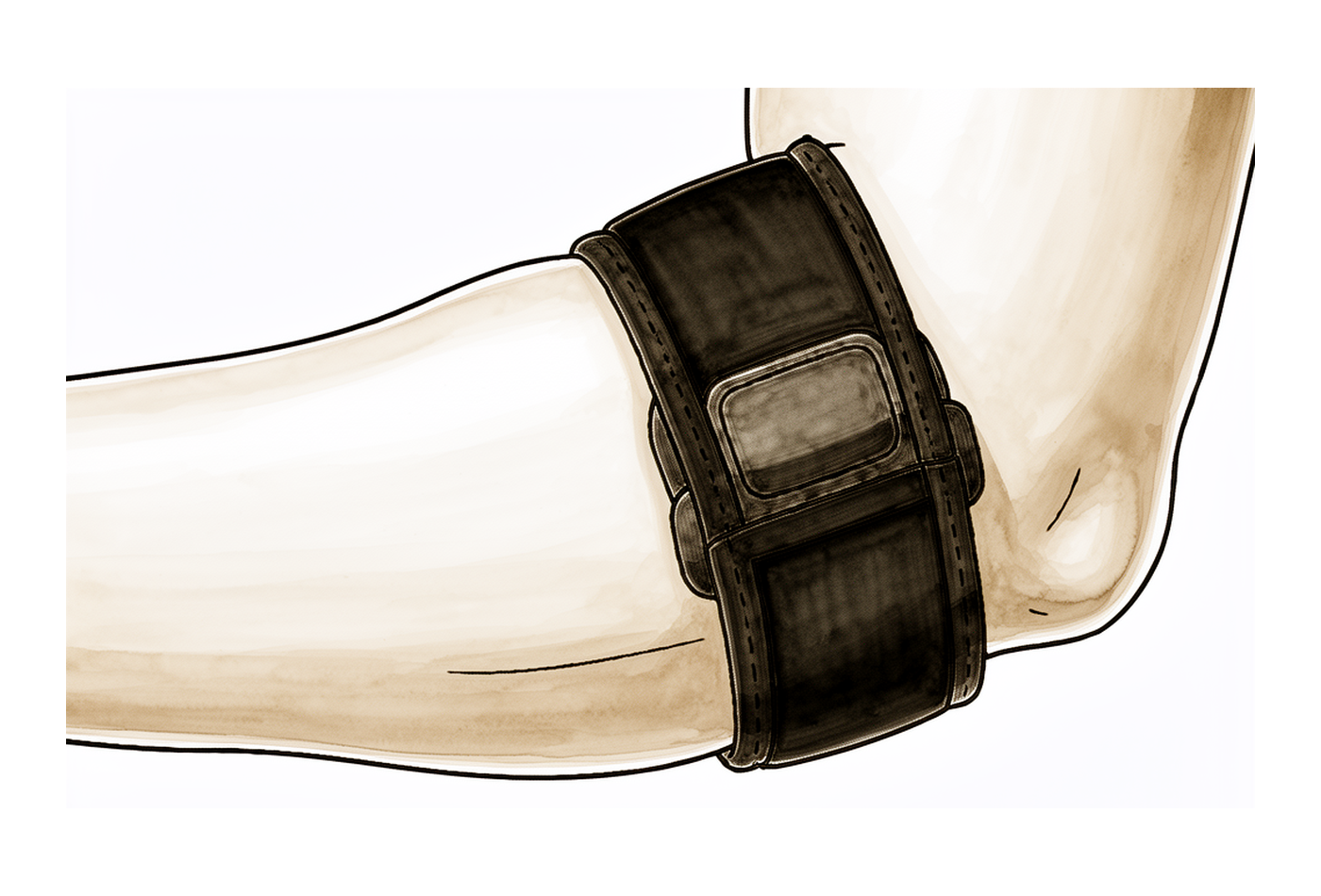
反力支具
将护具环绕佩戴在前臂上、肘内侧下方几厘米处,置于肌肉隆起部位——而非骨性突起本身。佩戴时应感觉稳固,但不可过紧以致引起手部麻木或刺痛感。在早期数周内,于诱发症状的活动(如抓握、提举、运动)期间使用,并随着症状缓解逐步停用。
在加重症状的活动期间;随着症状允许而逐步减量
Kieran Hirpara 4.0
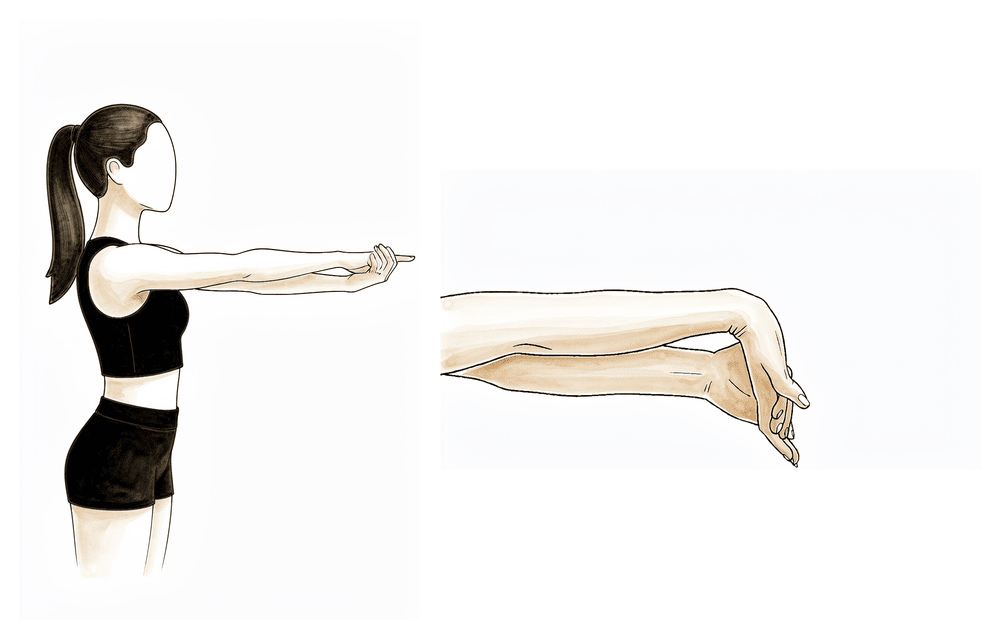
腕部屈肌拉伸
将患侧手臂向前伸直,掌心朝上。用另一只手轻轻将手指和手腕向下拉向地面,直到您感到前臂内侧有舒适的拉伸感。初期,请将肘部弯曲至约90°;随着改善,可在肘部伸直的状态下进行拉伸。保持拉伸姿势,不要弹动。
保持 20–30 秒,3–5 次,每日 2–3 次
Kieran Hirpara 4.0
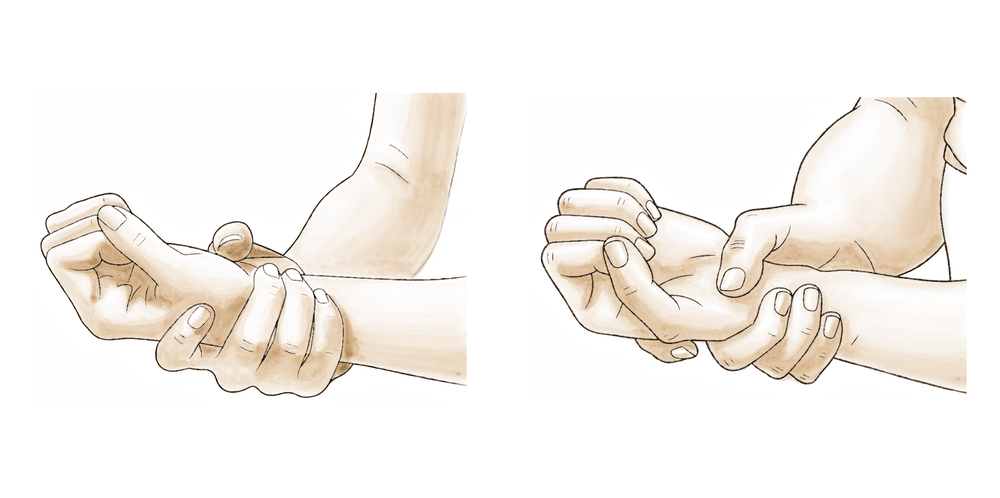
旋前肌拉伸
将肘部贴紧身体一侧,手掌朝向地面。用另一只手轻轻将前臂进一步旋至掌心向下的位置,直到感到前臂内侧有轻微牵拉感。动作需轻柔且无痛。
保持 20–30 秒,3–5 次,每日 2–3 次
Kieran Hirpara 4.0
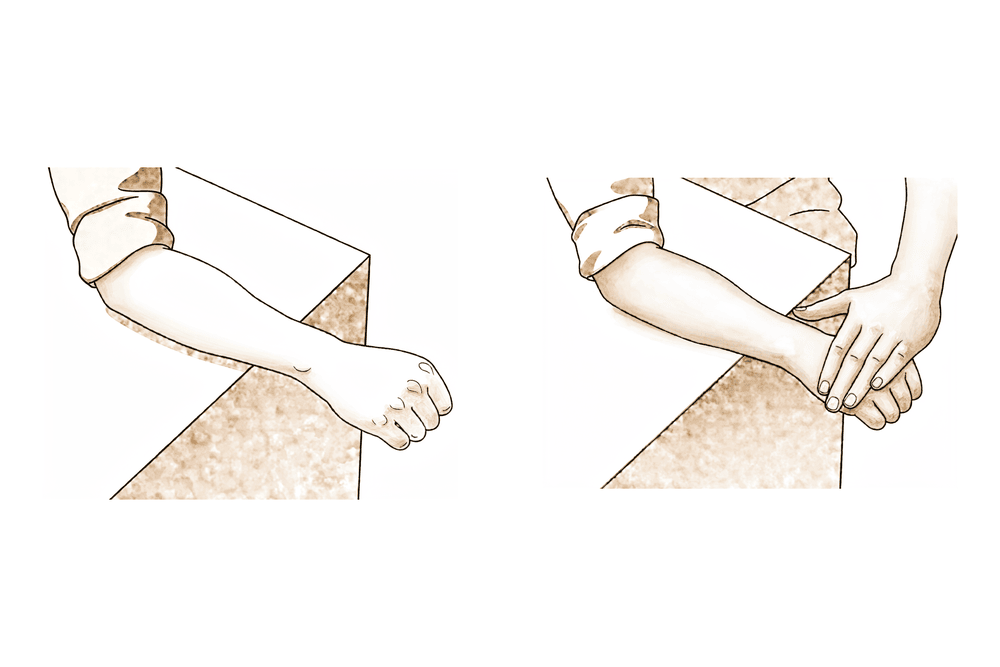
腕部等长(屈肌)负荷
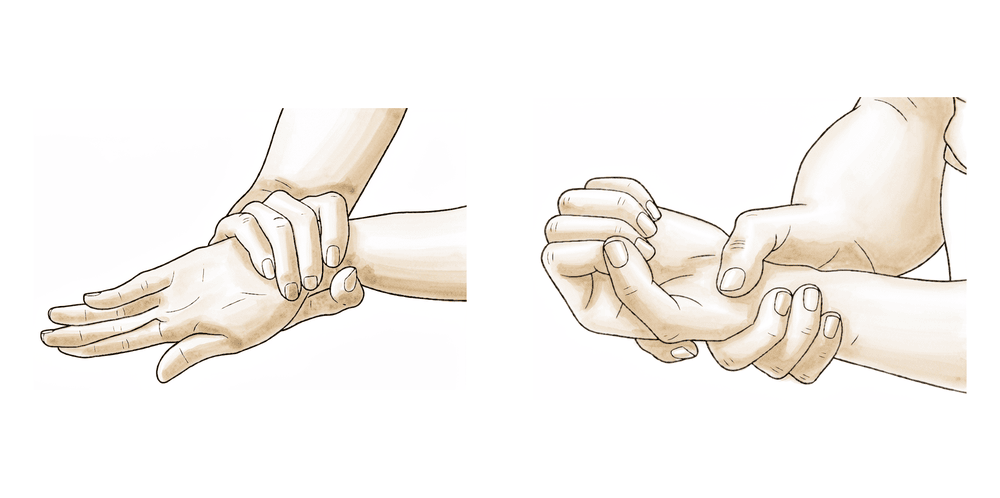
将前臂平放在桌面上,掌心朝上。用另一只手的掌根抵住手指,尝试将手腕向上弯曲,但保持手腕静止不动——即在阻力下保持稳定的等长收缩。这是一种早期阶段的练习,旨在轻柔地加载肌腱并缓解疼痛。
每次保持 30–45 秒,共 5 次,每日 1–2 次
Kieran Hirpara 4.0
反向泰勒扭转(离心屈肌负荷)
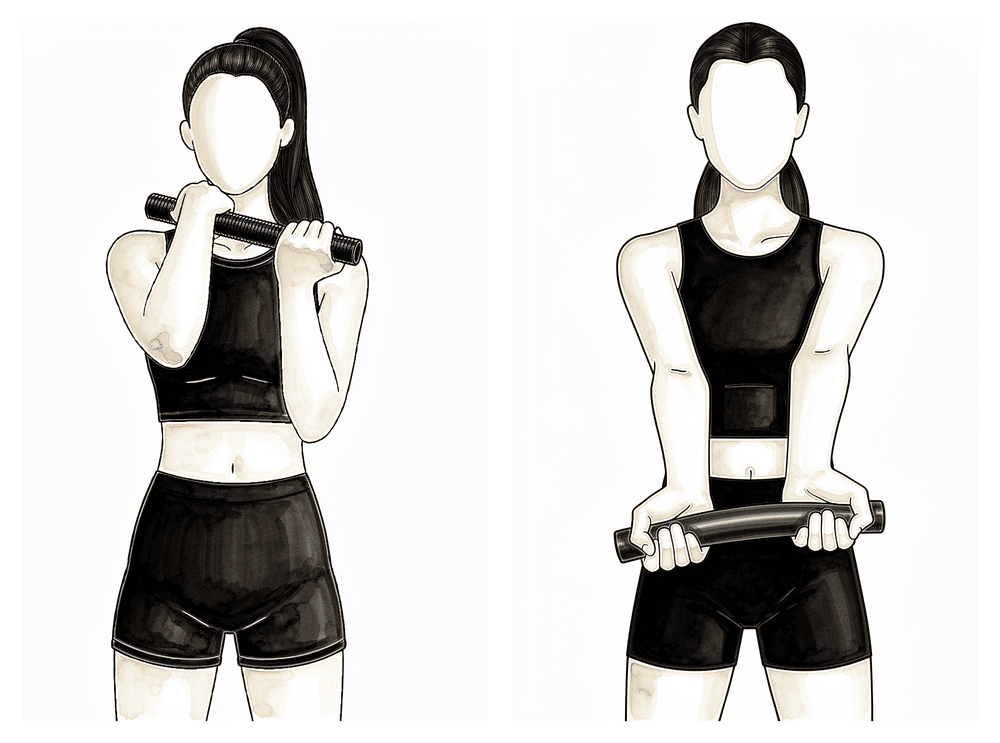
用患手握持橡胶训练棒(FlexBar),手腕向上弯曲(掌心朝向自己),用健手扭转训练棒。将训练棒移至身体前方,然后在3–4秒内缓慢、有控制地让患侧手腕伸展(即放松弯曲状态)——健手负责扭转,患侧手腕负责缓慢、有控制的释放(即“离心”部分)。这是高尔夫球肘的关键强化练习,通常在早期疼痛缓解后(约第4周起)开始进行。
每日一次,每组15次,共3组
Kieran Hirpara 4.0
前臂旋转
将肘部贴紧身体一侧,缓慢将手掌向上转向天花板,再向下转向地面,同时保持肘部静止。此动作可使前臂旋转肌群保持活动,并随着康复进程逐步轻柔地负荷旋前肌群。
每个方向10次,每天2–3次
Kieran Hirpara 4.0
握力强化
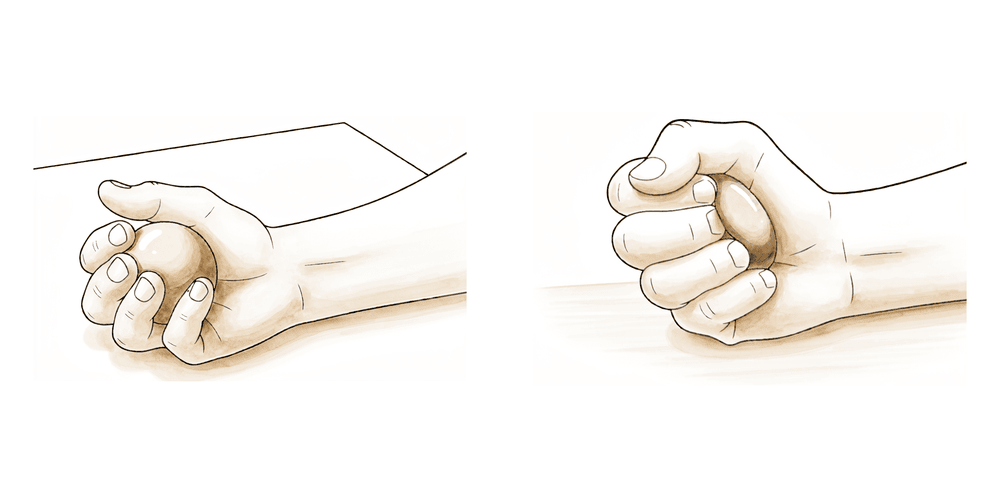
挤压软球或治疗用橡皮泥,短暂保持后放松。待您的拉伸和离心负荷训练已能舒适进行时,再引入此动作——它有助于增强日常活动和运动所需的握力及前臂力量。动作幅度应控制在未出现锐痛之前。
挤压 10–15 次,每日 2–3 次
Kieran Hirpara 4.0
尺神经滑动
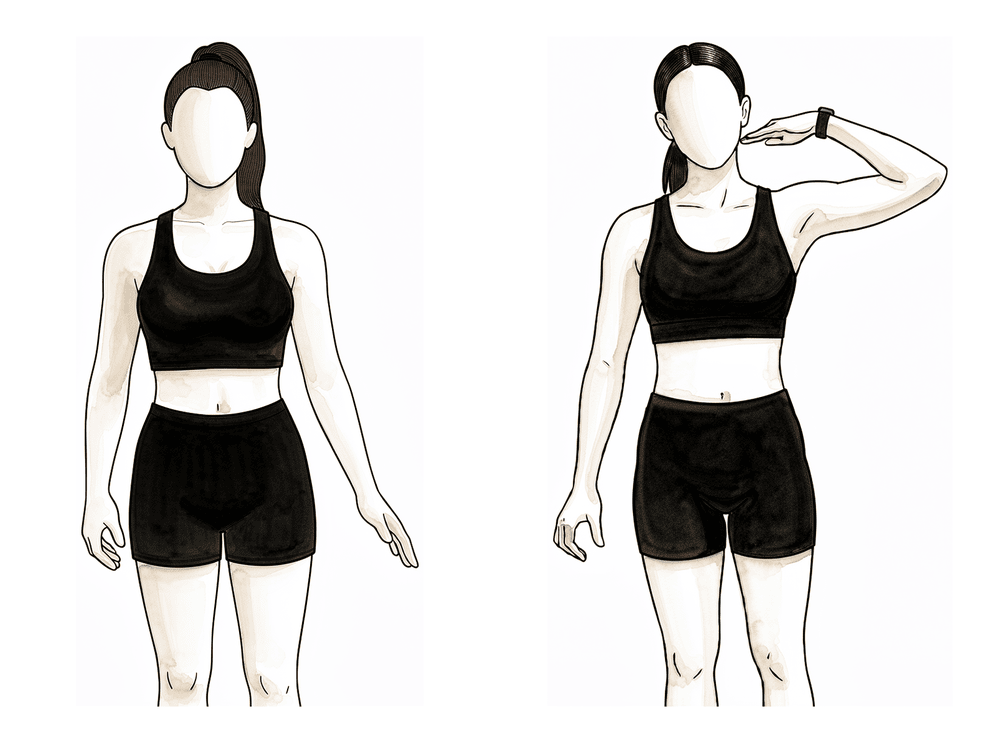
尺神经走行于肘内侧骨性突起(内上髁)后方的沟槽内,在高尔夫球肘中常处于易激惹状态。为保持其自由滑动:用拇指和食指做出“OK”手势,然后将该手势移向面部,使指环套在眼睛周围,此时肘关节屈曲,掌心朝向自己。轻柔地进出该体位。切勿推压至出现针刺感或麻木——若小指和无名指出现刺痛感,请退后;若神经症状加重,请告知您的治疗师或诊所。
轻柔滑动 5–10 次,每日 2–3 次
这些是您的练习手册中的练习。请按照Hirpara医生和治疗师的指导开始进行。在早期几周,重点在于缓解疼痛、轻柔活动以及等长收缩保持;随着您的改善,将加入离心反向Tyler扭转和握力强化训练。包含尺神经滑动练习是因为该神经在内侧肘部经常受累;请保持动作轻柔。
您的临床方案
本页其余部分为临床康复方案。本部分应提供给您的物理治疗师或手部治疗师。该方案以标准达标为门槛,而非单纯基于时间:各阶段之间的进展取决于是否达到所列目标,而非仅取决于日历时间。每次就诊时均需筛查尺神经(Tinel征、半脱位),因为大约50–60%的内侧病例伴有尺神经症状,而尺神经症状是保守治疗失败的主要原因。
下方有两条路径:非手术方案(一线方案,适用于绝大多数患者)和术后方案(适用于少数在保守治疗失败后选择手术的患者)。
非手术路径
第一阶段:急性期 / 疼痛控制(0–2 周)
目标: 缓解疼痛;恢复完全无负荷的关节活动度。
- 相对休息与活动调整:以疼痛为限制因素;避免固定。调整高尔夫、投掷、游泳、球拍类运动、举重及重复性抓握活动。
- 可选在共同屈肌群上佩戴反力支具;若急性疼痛明显,可使用腕部夹板。
- 疼痛控制辅助措施:冰敷、软组织处理 / 器械辅助软组织松解(IASTM)、轻柔的无痛主动关节活动度(AROM)、神经滑动练习。
- 筛查尺神经(Tinel 征、半脱位)。
- 晋级标准: 完全无负荷的 AROM 且无痛;可独立执行家庭训练计划。
第二阶段:亚急性期 / 早期负荷(2–4 周)
目标: 开始屈肌-旋前肌负荷训练;处理近端运动链。
- 等长腕屈肌和旋前肌负荷训练(轻负荷)。
- 在肘关节屈曲 90° 位置进行腕屈肌的渐进性拉伸。
- 近端运动链: 肩胛骨稳定肌(前锯肌、中/下斜方肌)和肩袖肌群,对于内侧肘部过载由外翻力驱动的投掷运动员至关重要。
- 晋级标准: 维持完全关节活动度;能耐受 90° 拉伸;力量达到对侧的约 70%。
第三阶段:强化 / 回归(4–6+ 周)
目标: 恢复负荷耐受能力,回归功能及运动。
- 腕屈曲和前臂旋前的离心-向心负荷训练:Tyler 扭转的内侧对应动作是“反向 Tyler 扭转”(在 FlexBar 上进行离心腕屈曲)。优先采用离心-向心联合负荷训练;等长训练在早期镇痛方面仍有实用价值。
- 运动中的松动术;将拉伸练习逐步过渡至肘关节伸直位。
- 握力强化,随后进行运动特异性负荷训练;对于投掷运动员,实施间歇性投掷计划;最后进行增强式训练。
- 随着肘部症状消失,逐步撤除反力支具;处理装备及技术问题。
- 回归运动标准: 力量达到对侧的约 90%,无痛功能活动,自我管理能力。
术后路径(屈肌-旋前肌清创 ± 修复 ± 尺神经手术)
手术仅保留给少数保守治疗≥6个月仍失败的患者。开放式Nirschl型手术清创病理性屈肌-旋前肌起点,并通常对其进行修复/再附着;评估并保护尺神经,在部分病例中同时执行减压或前方移位术。
第1阶段:保护(0–2 周)
- 后侧长臂夹板(肘部 + 腕部)固定 10–14 天;外出时使用悬吊带。
- 抬高患肢并控制水肿;手指/肌腱滑动主动活动范围(AROM);肩部主动活动范围(ROM);颈部轻柔主动活动范围(AROM)。
- 注意事项: 禁止提举、推、拉或用力抓握:保护修复部位。
第2阶段:活动范围恢复(2–6 周)
- 在约2周复诊时:拆线;全天过渡至腕部中立位支具(清洁时取下);肘部使用Tubigrip以控制肿胀。
- 开始肘部主动活动范围(AROM)屈曲/伸展(2–4 周),随后进行四方向腕部主动活动范围 + 前臂旋转以及手指/拇指主动活动范围(4–6 周)。
- 在4–6 周引入尺神经滑动(内侧特异性添加项目)。
- 肩胛骨稳定训练(抗重力)。6 周之前不进行抗阻强化训练。
第3阶段:强化训练(6–12 周)
- 根据耐受情况逐步停用支具(早期可能需夜间继续使用)。
- 进行腕部和前臂的渐进性抗阻强化训练。早期避免抗阻旋后/旋前;从旋后/中立位开始提举,约第9周开始轻度旋前位提举。
第4阶段:恢复活动 / 运动(12–16+ 周)
- 根据耐受情况在所有前臂位置进行提举训练;约12–16 周完全恢复活动;运动员进行专项/间歇性投掷计划。完全恢复通常为3–6 个月。
尺神经注意事项: 如果进行了前方移位术,早期限制肘部屈曲终末范围,并逐渐增加神经滑动范围。持续或加重的尺神经症状需在增加负荷前由外科医生评估。
恢复工作与活动
您恢复的速度取决于您所处的治疗路径以及工作和运动的要求。
非手术。 您通常可以在整个过程中继续工作和保持活动,通过调整那些诱发肘部症状的任务,而不是完全停止。高尔夫、投掷类运动、游泳和球拍类运动将在强化阶段逐步恢复,前提是您的力量达到对侧的约 90%,且功能无疼痛。由于高尔夫球肘具有自限性,尽管日常功能会提前改善,但完全恢复可能需要 6 到 18 个月。
术后。 早期开始轻度、受限的使用,但需推迟较重的提举和抓握以保护修复部位。大多数人约在 12 到 16 周时恢复完全活动,完全恢复通常需要 3 到 6 个月。投掷类运动员在重返比赛前需遵循渐进式间歇投掷计划。
驾驶:在佩戴支具或悬吊带期间,或当肘部疼痛严重至无法安全控制车辆时,请避免驾驶。一旦拆除支具且手臂活动自如(经复查确认),即可恢复驾驶。
方案实施后
本方案与本诊所的总体康复建议配合使用;请参阅术后疼痛管理、伤口护理和手部治疗基础。高尔夫球肘与其外侧肘部对应病症——网球肘——共享基于负荷的训练方法;如果您希望获得等效的肱骨外上髁炎指导,请咨询您的治疗师。您的持续康复将由物理治疗师或手部治疗师根据您肘部的恢复进展进行个体化指导。
Evidence & references
This is the clinical evidence summary written for health professionals. It is technical, and it lists the research this page was built from. You do not need to read it to understand your treatment or to make a decision about it.
Topic scope: (A) the loading-based non-operative rehabilitation of medial epicondylitis — a degenerative tendinopathy of the flexor-pronator origin (chiefly flexor carpi radialis and pronator teres) at the medial epicondyle — with mandatory ulnar-nerve screening; and (B) post-operative rehabilitation after open flexor-pronator debridement (± repair, ± concurrent ulnar nerve decompression/transposition), reserved for the minority failing ≥6 months of quality conservative care.
Defining principle: medial epicondylitis is not an inflammatory condition but a degenerative tendinosis, so the treatment is graded tendon loading, not rest. The protocol mirrors lateral elbow tendinopathy but with two practice-defining differences Dr Hirpara emphasises: (1) the loaded group is the wrist flexors/pronators (hence the eccentric "reverse Tyler twist" rather than the lateral Tyler twist), and (2) the ulnar nerve lies immediately behind the medial epicondyle, so concomitant ulnar neuritis (~50–60% of cases) is screened at every visit and is the leading reason conservative care fails. Surgery is a last resort after ≥6 months.
Medial epicondylitis is far less studied than its lateral counterpart — it is ~5–10× less common (prevalence ~0.4% vs 1.3%; ~10–20% of all epicondylitis). Most evidence is extrapolated from lateral elbow tendinopathy and from older operative case series; dedicated medial RCTs are sparse. Phase timelines below come from institutional Standard-of-Care protocols (Mass General Brigham combined medial/lateral; UVA medial debridement; Campbell's / Nirschl) plus operative series.
A. NON-OPERATIVE REHABILITATION (phased)
First-line; the majority resolve without surgery. Largely the SAME phased structure as the lateral elbow (Mass General Brigham publishes ONE combined medial/lateral protocol), with the loading target shifted to the flexor-pronator mass. Expected resolution 6–18 months (self-limited).
Phase I — Acute / pain control (~0–2 weeks). Relative rest + activity modification using pain as the limiter (avoid immobilisation). Aggravators to modify: golf, throwing (esp. late-cocking / acceleration valgus load), swimming, bowling, racquet sports, weightlifting, repetitive gripping. Optional counterforce brace over the common flexor mass; wrist splint if acutely painful. Pain-control adjuncts: ice, soft-tissue / IASTM, gentle pain-free AROM, dry needling, nerve glides. Screen the ulnar nerve (Tinel, subluxation). Criterion to progress: full unloaded AROM without pain; independent home program.
Phase II — Sub-acute / early loading (~2–4 weeks). Isometric wrist-flexor and pronator loading (minimal load). Progressive stretching of the wrist flexors at 90° elbow flexion. Proximal kinetic chain: scapular stabilisers and rotator cuff — critical in throwers, where medial elbow overload is valgus-driven. Criteria to progress: full ROM maintained; tolerates the 90° stretch; ~70% contralateral strength.
Phase III — Late / strengthening & return (~4–6+ weeks). Eccentric and concentric loading of wrist flexion and forearm pronation — the medial analogue of the Tyler twist is a "reverse Tyler twist" (eccentric wrist flexion on the FlexBar). Combined eccentric-concentric loading is favoured; isometrics for early analgesia. Mobilisation-with-movement; progress stretching to the elbow-extended position. Grip strengthening, then sport-specific loading; for throwers, an interval throwing program; plyometrics last. Wean counterforce brace as asymptomatic; equipment/technique modification. Return-to-sport criteria: ~90% contralateral strength, pain-free function, self-management.
B. POST-OPERATIVE REHABILITATION (flexor-pronator debridement ± repair, ± ulnar nerve procedure)
Surgery is for the minority failing ≥6 months of conservative care. The open Nirschl-type operation debrides the pathologic flexor-pronator origin (incision posterior to the medial epicondyle to spare the medial antebrachial cutaneous nerve), with repair/reattachment commonly by suture anchor. The ulnar nerve must be assessed and protected: ulnar neuritis is addressed concurrently (decompression or anterior transposition) in roughly 20–50% of operative series. The phase timeline blends the UVA "Golfer's Elbow Debridement (with tendon repair)" protocol and the Verma / Midwest-Orthopaedics-at-Rush medial/lateral debridement protocol.
Phase 1 — Protect / immobilise (Weeks 0–2). Posterior long-arm splint (elbow + wrist) for 10–14 days; sling for community use. Elevation; oedema control; finger/tendon-glide AROM; unaffected-joint motion; active shoulder ROM; gentle cervical AROM. Precautions: NO lifting / pushing / pulling / forceful gripping; protect the repair.
Phase 2 — ROM restoration (Weeks 2–6). At the 2-wk visit: suture removal; transition to a wrist orthosis in neutral full-time (off for hygiene); Tubigrip at the elbow for swelling. Begin AROM elbow flexion/extension (2–4 wk), then 4-way wrist AROM + forearm rotation, finger/thumb AROM (4–6 wk). Ulnar nerve glides introduced ~weeks 4–6 (the explicit medial-specific addition). Scapular stabilisation (gravity-resisted). No resistance strengthening until after 6 weeks.
Phase 3 — Strengthening (Weeks 6–12). Wean the orthosis as tolerated (consider night use early). Progressive resistive strengthening of wrist and forearm; per Verma, no resisted supination/pronation early, lifting begun in supination/neutral, with light pronated lifting from ~week 9.
Phase 4 — Return to activity / sport (Weeks 12–16+). Progress lifting in all forearm positions as tolerated; full return to activity by ~12–16 weeks; sport-specific / interval throwing program for athletes. Full recovery commonly 3–6 months.
Ulnar nerve precautions: if an anterior transposition was performed, limit end-range elbow flexion early and progress nerve excursion gradually; persistent or worsening ulnar symptoms warrant surgeon review before advancing loading.
C. PHASED TIMELINE SUMMARY
| Pathway | Phase | Window | Immobilisation | Loading / key actions | Criteria / milestone |
|---|---|---|---|---|---|
| Non-op | I — Pain control | 0–2 wk | None (avoid casting); optional counterforce brace | Activity modification; pain-free AROM; nerve glides; ulnar screen | Full unloaded AROM, pain-free |
| Non-op | II — Early loading | 2–4 wk | None | Isometric flexor/pronator load; 90° wrist-flexor stretch; scapular/cuff | ~70% contralateral strength |
| Non-op | III — Strengthen / return | 4–6+ wk | Wean brace | Reverse Tyler twist (eccentric); grip; sport-specific; throwers' interval program | ~90% strength, pain-free → RTS |
| Post-op | 1 — Protect | 0–2 wk | Posterior long-arm splint 10–14 d + sling | Finger glides, shoulder ROM; oedema control | No resistance; repair protected |
| Post-op | 2 — ROM restore | 2–6 wk | Neutral wrist orthosis | Elbow AROM → 4-way wrist + forearm rotation; ulnar glides wk 4–6 | No resistance until >6 wk |
| Post-op | 3 — Strengthen | 6–12 wk | Wean orthosis | Progressive resistance; supinated/neutral lifting → light pronated ~wk 9 | Restored strength in safe positions |
| Post-op | 4 — Return | 12–16+ wk | None | Lifting all forearm positions; interval throwing | Full return ~12–16 wk; recovery 3–6 mo |
D. KEY CONTROVERSIES / EVIDENCE QUALITY
- Sparse high-level evidence. Almost no medial-specific RCTs; recommendations are extrapolated from lateral elbow and from retrospective operative series (Kurvers & Verhaar 1995 remains a cornerstone). Strength of evidence is materially weaker than for lateral epicondylitis.
- Ulnar nerve is the dominant modifier. Concomitant ulnar neuropathy (reported 23–60%) worsens prognosis and is the leading reason conservative care fails; whether and how to address it surgically (decompression vs transposition vs medial epicondylectomy) is debated. Outcomes are reliably worse when ulnar symptoms coexist and are untreated.
- PRP may rival surgery for type-1 disease. Bohlen et al (OJSM 2020) found 2 leukocyte-rich PRP injections matched surgery for recalcitrant type-1 medial epicondylitis (29/33 success each) with faster recovery (pain-free ~56 vs ~108 days; full ROM ~42 vs ~96 days) — the surgical delay partly attributed to post-op bracing. Small evidence base.
- Corticosteroid: short-term only. As with the lateral elbow, steroid gives transient relief without durable benefit and risks recurrence; repeated injections show diminishing returns.
- Eccentric vs concentric. Same unsettled debate as the lateral elbow; combined eccentric-concentric flexor-pronator loading is the pragmatic standard, but direct medial trial data are minimal.
- Surgical technique. Open Nirschl debridement with repair is reliable in case series; arthroscopic medial debridement is emerging (claimed ulnar-nerve protection) but is technically demanding and under-evidenced. Debridement alone vs with repair remains unsettled.
E. EVIDENCE STRENGTH FLAGS (summary)
- MODERATE (non-operative rehab): the phased loading program — extrapolated largely from lateral elbow tendinopathy and combined medial/lateral institutional protocols; combined eccentric-concentric flexor-pronator loading is the pragmatic standard.
- LOW–MODERATE (post-operative rehab): phase timelines from institutional debridement protocols (UVA; Verma/Rush) and operative case series; no defining post-op rehab RCT.
- MODERATE (PRP for type-1 disease): single comparative study (Bohlen OJSM 2020) matching surgery with faster recovery; small sample.
- CONSENSUS / EXPERT: ulnar-nerve screening at every visit, ulnar-glide timing (wk 4–6 post-op), and the forearm-position lifting progression — drawn from surgeon-guidance protocols and operative practice rather than trial data.
CITATIONS
RAG corpus (180,000+ Orthopaedic articles)
- Kurvers H, Verhaar J. The results of operative treatment of medial epicondylitis. J Bone Joint Surg Am. 1995. (ulnar neuritis coexistence 23–50%)
- Bohlen HL, et al. Platelet-rich plasma is an equal alternative to surgery in the treatment of type 1 medial epicondylitis. Orthop J Sports Med. 2020. DOI: 10.1177/2325967120908952
- Platelet-rich plasma versus Tenex in the treatment of medial and lateral epicondylitis. J Shoulder Elbow Surg. 2019.
- Ellenbecker TS, Nirschl R, Renstrom P. Current concepts in examination and treatment of elbow tendon injury. Sports Health. 2012.
- Rehabilitation of the thrower's elbow. Clin Sports Med. 2004.
- Nirschl surgical technique for concomitant lateral and medial elbow tendinosis. Am J Sports Med. 2011.
- Imaging of the elbow in the overhead throwing athlete. Am J Sports Med. 2003. (ulnar neuritis in ~60% of throwers with medial epicondylitis)
- Outcome of partial medial epicondylectomy for cubital tunnel syndrome. Clin Orthop Relat Res. 2006.
- Coonrad RW, Hooper WR. Tennis elbow: its course, natural history, conservative and surgical management (includes medial). J Bone Joint Surg Am. 1973.
- Green's Operative Hand Surgery. 2021. (medial vs lateral prevalence; combined treatment chapter; Nirschl technique)
- Campbell's Operative Orthopaedics. 2020. (Box 46.3 Rehabilitation Protocol for Epicondylitis [Wilk/Arrigo/Andrews]; Nirschl medial technique, posterior incision sparing the MABC nerve)
Published protocols (URLs)
- University of Virginia Orthopaedics — Medial Epicondyle (Golfer's Elbow) Debridement (with tendon repair), Rehabilitation Guidelines. https://med.virginia.edu/orthopaedic-surgery/wp-content/uploads/sites/242/2024/09/Medial-Epicondyle-Golfers-Elbow-Debridement-with-tendon-repair.pdf
- Midwest Orthopaedics at Rush (Nikhil Verma, MD) — Post-Operative Rehabilitation Guidelines for Medial/Lateral Epicondyle Debridement. https://www.sportssurgerychicago.com/patient-resources/rehab-manuals/mediallateral-epicondyle-debridement/
- Mass General Brigham Sports Medicine — Rehabilitation Protocol for Medial/Lateral Epicondylalgia (non-operative), rev. April 2021. https://www.massgeneral.org/assets/MGH/pdf/orthopaedics/sports-medicine/physical-therapy/rehabilitation-protocol-for-medial-lateral-epicondylitis.pdf





