

மணிக்கட்டு கேங்க்லியான் அகற்றல் தகவல்
Mater Private Hospital Rockhampton-இல் டாக்டர் கியரன் ஹிர்பரா செய்யும், மணிக்கட்டு கேங்க்லியானை — மணிக்கட்டு மூட்டிலிருந்து வளரும், நீர் நிரம்பிய ஒரு நீர்க்கட்டி — அறுவை சிகிச்சை மூலம் நீக்கிய (அகற்றல் — excision) பிறகு உங்கள் மீட்சிக்கு இந்த நெறிமுறை (protocol) வழிகாட்டுகிறது. இது உங்கள் வீட்டுப் பயிற்சித் திட்டத்துடன் தொடங்குகிறது; அதைத் தொடர்ந்து உங்கள் கை சிகிச்சையாளருக்காக (hand therapist) எழுதப்பட்ட, கட்டமைக்கப்பட்ட மருத்துவ நெறிமுறை வருகிறது; உங்கள் மறுவாழ்வுப் பயிற்சி ஒருங்கிணைந்து இருக்க, இந்தப் பக்கத்தையோ அதன் PDF-ஐயோ உங்கள் முதல் சிகிச்சை சந்திப்புக்குக் கொண்டு வாருங்கள். உங்கள் மீட்சி எப்படி முன்னேறுகிறது என்பதைப் பொறுத்து உங்கள் சிகிச்சையாளர் இந்தத் திட்டத்தை மாற்றியமைக்கலாம்.
அறுவை சிகிச்சைக்குப் பிறகு உங்கள் காயம் பற்றி ஏதேனும் கவலை இருந்தால், கிளினிக்கைத் தொடர்பு கொள்ளுங்கள். காயத்தைப் புகைப்படம் எடுத்து, பார்வையிடுவதற்காக மின்னஞ்சலில் அனுப்புவது பெரும்பாலும் உதவியாக இருக்கும்.
என்ன எதிர்பார்க்கலாம்
மணிக்கட்டு கேங்க்லியான் என்பது பலூன் போன்ற, நீர் நிரம்பிய ஒரு நீர்க்கட்டி; அது ஒரு குறுகிய காம்பால் (stalk) மணிக்கட்டு மூட்டின் உள்ளுறையுடன் இணைக்கப்பட்டிருக்கும். பெரும்பாலானவை மணிக்கட்டின் பின்பக்கத்தில் தோன்றுகின்றன (பின்பக்க — dorsal — கேங்க்லியான்); சில முன்பக்கத்தில், கட்டைவிரல் பக்கத்தில் தோன்றுகின்றன (வோலார் — volar — கேங்க்லியான்). அறுவை சிகிச்சையின்போது, டாக்டர் ஹிர்பரா அந்த நீர்க்கட்டியை அதன் காம்புடன் சேர்த்து, மணிக்கட்டு மூட்டு உறை வரை நீக்குகிறார் — கட்டியை மட்டுமல்ல, அதன் வேரையும் சேர்த்து எடுக்கிறார்; ஏனெனில் காம்பை விட்டுவிடுவதே கேங்க்லியான் மீண்டும் வரக்கூடியதற்கான முதன்மைக் காரணம். இந்த அறுவை சிகிச்சையைத் திறந்த முறையிலும் (ஒரு சிறிய வெட்டின் வழியாக) செய்யலாம், அல்லது துளை வழி (ஆர்த்ரோஸ்கோபிக் — arthroscopic) கருவிகளைக் கொண்டும் செய்யலாம்.
எதுவும் சரிசெய்யப்படவோ மறுகட்டமைக்கப்படவோ இல்லை என்பதால் (ஒரு நீர்க்கட்டி வெறுமனே நீக்கப்பட்டுள்ளது), வாரக்கணக்கில் பாதுகாக்கப்பட வேண்டிய, குணமாகி வரும் தசைநாணோ தசைநாரோ எதுவும் இல்லை. எனவே இந்த மீட்சி ஒரு ஆரம்ப அசைவு (early-motion) திட்டம்; மணிக்கட்டை விரைவாக அசையச் செய்வதே அதன் முழு நோக்கம்:
- இந்த அறுவை சிகிச்சைக்குப் பிறகு மிகவும் பொதுவான பிரச்சினை விறைப்பே — நீர்க்கட்டி மீண்டும் வருவதை விட அது மிக அதிகம். கேங்க்லியான் அகற்றலுக்குப் பிறகு மிக நீண்ட காலம் ஓய்வில் வைக்கப்படும் மணிக்கட்டு அசைவை இழக்கக்கூடும்.
- எனவே அசையாமல் வைத்திருப்பது குறைந்தபட்சமாகவே வைக்கப்படுகிறது: ஒரு மென்மையான கட்டு, சில சமயங்களில் வசதிக்காக மட்டும் ஒரு லேசான மணிக்கட்டுச் சிம்புடன் (splint) — சில நாட்களிலிருந்து ஒன்று அல்லது இரண்டு வாரங்கள் வரை மட்டுமே. பிறகு நீங்கள் மணிக்கட்டை ஆரம்பத்திலேயே, எல்லாத் திசைகளிலும் அசைக்கிறீர்கள்.
அறுவை சிகிச்சை செய்யப்படாத உங்கள் விரல்கள், முதல் நாளிலிருந்தே முழுமையாக அசைந்துகொண்டே இருக்கின்றன. காயம் சீரடையும்போது மணிக்கட்டின் அசைவு விரிவுபடுத்தப்படுகிறது; பிறகு பிடியும் சுமையும் படிப்படியாக மீண்டும் கட்டியெழுப்பப்படுகின்றன. பெரும்பாலானோர் சுமார் நான்கு முதல் ஆறு வாரங்களுக்குள் வழக்கமான செயல்பாட்டுக்குத் திரும்பிவிடுகிறார்கள்.
முன்னெச்சரிக்கைகளும் கட்டுப்பாடுகளும்
- உங்கள் விரல்கள், கட்டைவிரல், முழங்கை ஆகியவற்றை முதல் நாளிலிருந்தே முழுமையாக அசைத்துக்கொண்டே இருங்கள்; மணிக்கட்டுக்கு மட்டுமே படிப்படியாகப் பழக்கப்படுத்துதல் தேவை.
- மென்மையான கட்டையோ வசதிக்கான சிம்பையோ அறிவுறுத்தப்பட்ட காலம் வரை மட்டுமே அணியுங்கள் (பொதுவாகச் சில நாட்களிலிருந்து ஒன்று முதல் இரண்டு வாரங்கள் வரை). அது வசதிக்காகவே; மணிக்கட்டை நீண்ட காலம் அசையாமல் வைத்திருப்பதற்காக அல்ல. இங்கு இலக்கு ஆரம்ப அசைவே, ஓய்வு அல்ல.
- காயம் மூடிவிட்டது என்று உங்களிடம் சொல்லப்படும் வரை, காயத்தைத் தண்ணீரில் ஊற வைக்கவோ கட்டை நனைக்கவோ வேண்டாம்; அதைச் சுத்தமாகவும் உலர்வாகவும் வைத்திருங்கள்.
- முதல் சில வாரங்களுக்குப் பலமாகப் பிடிப்பதையும், தூக்குவதையும், மணிக்கட்டின் வழியே எடை தாங்குவதையும் ஒத்திவையுங்கள்; அவற்றை ஒரே சமயத்தில் அல்லாமல் படிப்படியாக மீண்டும் கட்டியெழுப்புங்கள்.
- உங்களுக்கு வோலார் (மணிக்கட்டின் முன்பக்க) கேங்க்லியான் இருந்திருந்தால், அந்த நீர்க்கட்டி ரேடியல் தமனிக்கு (radial artery) அருகில் இருந்திருக்கலாம் (மணிக்கட்டின் முன்பக்கத்தில் நீங்கள் உணரக்கூடிய நாடித்துடிப்பு); கையில் வழக்கத்துக்கு மாறான வீக்கம், குளிர்ச்சி, அல்லது நிற மாற்றம் ஏதேனும் கண்டால், உடனடியாகக் கிளினிக்குக்குத் தெரிவியுங்கள்.
- ஸ்டியரிங் சக்கரத்தை வசதியாகக் கட்டுப்படுத்த முடியும் வரையிலும், சிம்பு எதுவும் இல்லாத நிலைக்கு வரும் வரையிலும் — உங்கள் மறுபரிசோதனையின்போது உறுதிப்படுத்தப்பட்டபடி — வாகனம் ஓட்ட வேண்டாம்.
காயம், வீக்கம், வடு ஆகியவற்றை நிர்வகிப்பது குறித்து, கிளினிக்கின் காயப் பராமரிப்பு வழிகாட்டுதலைப் பாருங்கள்.
உங்கள் பயிற்சிகள்
Kieran Hirpara 4.0
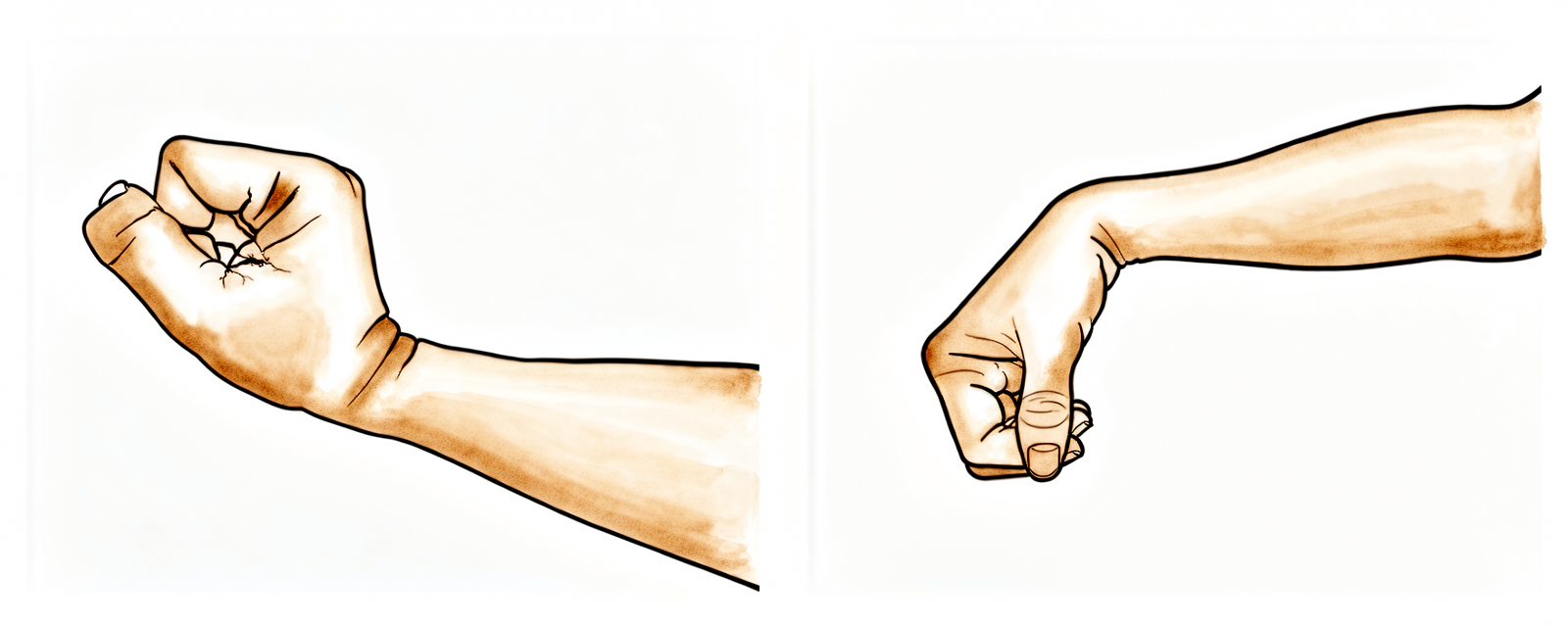
மணிக்கட்டு அசைவு (எல்லாத் திசைகளிலும்)
உங்கள் மணிக்கட்டை எல்லாத் திசைகளிலும் மெதுவாக அசையுங்கள் — அதைப் பின்னோக்கி (மேலே) வளையுங்கள், முன்னோக்கி (கீழே) வளையுங்கள், பக்கவாட்டில் ஒரு பக்கமும் மறு பக்கமும் சாய்த்து அசையுங்கள் — ஒவ்வொரு திசையிலும் வசதியாக இருக்கும் அளவுக்கு அசையுங்கள். இதுவே மிக முக்கியமான ஆரம்பப் பயிற்சி; ஏனெனில் இந்த அறுவை சிகிச்சைக்குப் பிறகு மணிக்கட்டு விறைத்துப்போகும் போக்கு உண்டு; ஆரம்பத்திலேயே அசைப்பது அதை நெகிழ்வாக வைத்திருக்கிறது. மெதுவாகச் செய்யுங்கள், வசதிக்குள்ளேயே இருங்கள்; அது கூர்மையான வலியை ஏற்படுத்தக் கூடாது.
ஒவ்வொரு திசையிலும் 10 முறை, நாளொன்றுக்கு 4-5 முறை, முதல் சில நாட்களிலிருந்து
Kieran Hirpara 4.0
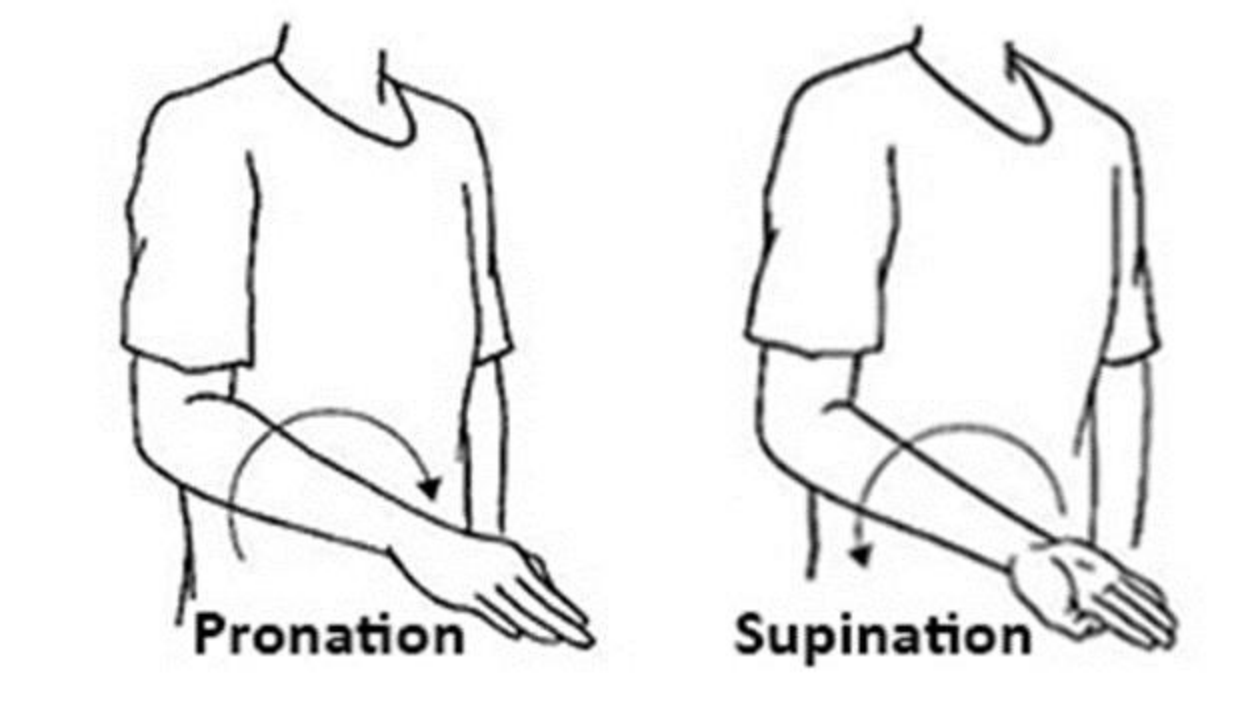
முன்கைச் சுழற்சி (உள்ளங்கை மேல்நோக்கி / உள்ளங்கை கீழ்நோக்கி)
உங்கள் முழங்கையை விலாவோடு ஒட்டி வைத்து, அதைச் செங்கோணத்தில் மடக்குங்கள். உங்கள் உள்ளங்கையை மெதுவாக மேல்நோக்கிக் கூரையை நோக்கித் திருப்புங்கள்; பிறகு கீழ்நோக்கித் தரையை நோக்கித் திருப்புங்கள். அசைவு முன்கையிலிருந்து வரும்படி முழங்கையை அசையாமல் வைத்திருங்கள். காயம் சீரடையும் காலத்தில் இது முன்கையையும் மணிக்கட்டையும் சுதந்திரமாகத் திரும்பிக்கொண்டிருக்கச் செய்கிறது.
ஒவ்வொரு திசையிலும் 10 முறை, நாளொன்றுக்கு 3-4 முறை
Kieran Hirpara 4.0
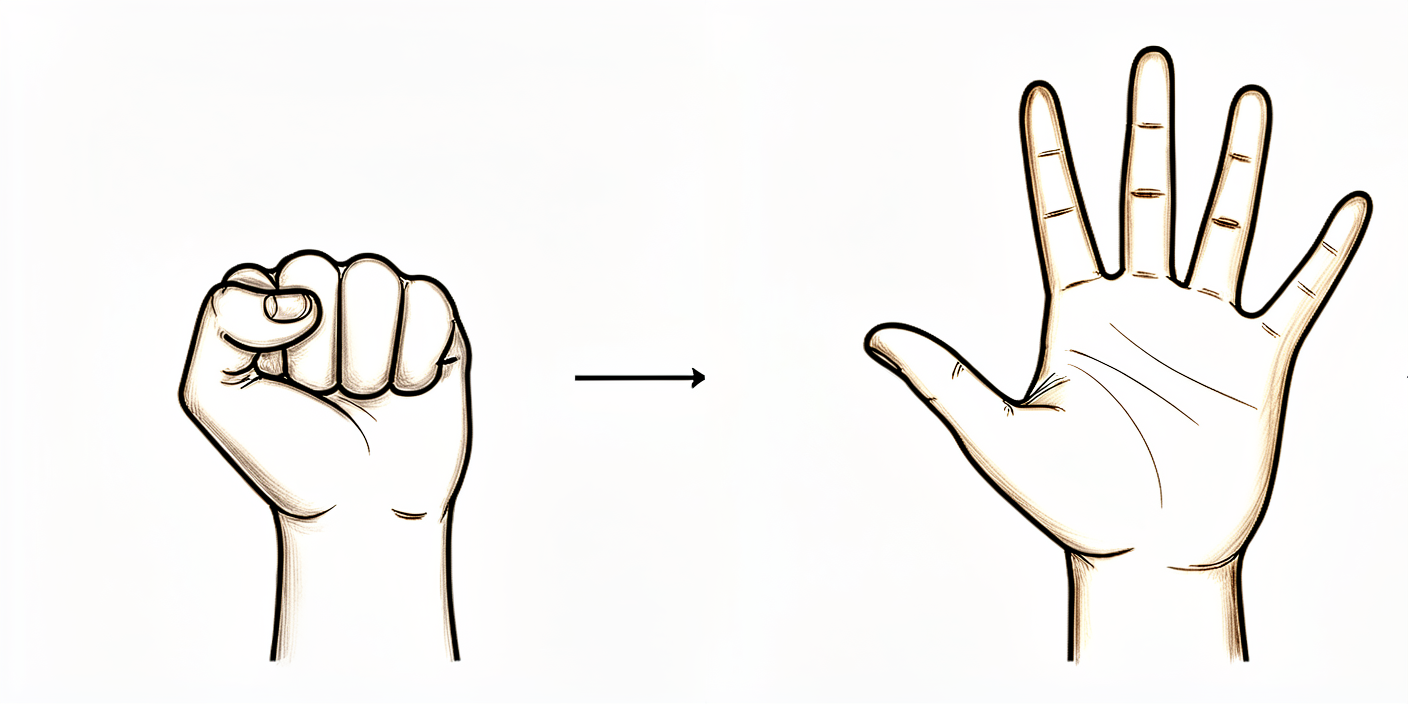
விரல் அசைவு
விரல் நுனிகள் உள்ளங்கைக்குள் சுருளும்படி, முழுமையான ஒரு முஷ்டியை மெதுவாகக் கட்டுங்கள்; பிறகு கையைத் திறந்து விரல்களை முற்றிலும் நேராக நீட்டுங்கள். விரல்களுக்கு அறுவை சிகிச்சை செய்யப்படவில்லை; எனவே முதல் நாளிலிருந்தே அவற்றை முழுமையாக அசைத்துக்கொண்டே இருங்கள் — இது கை விறைத்துப்போவதைத் தடுக்கிறது, வீக்கம் வடிந்துபோகவும் உதவுகிறது.
10 முறை, நாளொன்றுக்குப் பல முறை, முதல் நாளிலிருந்து
Kieran Hirpara 4.0
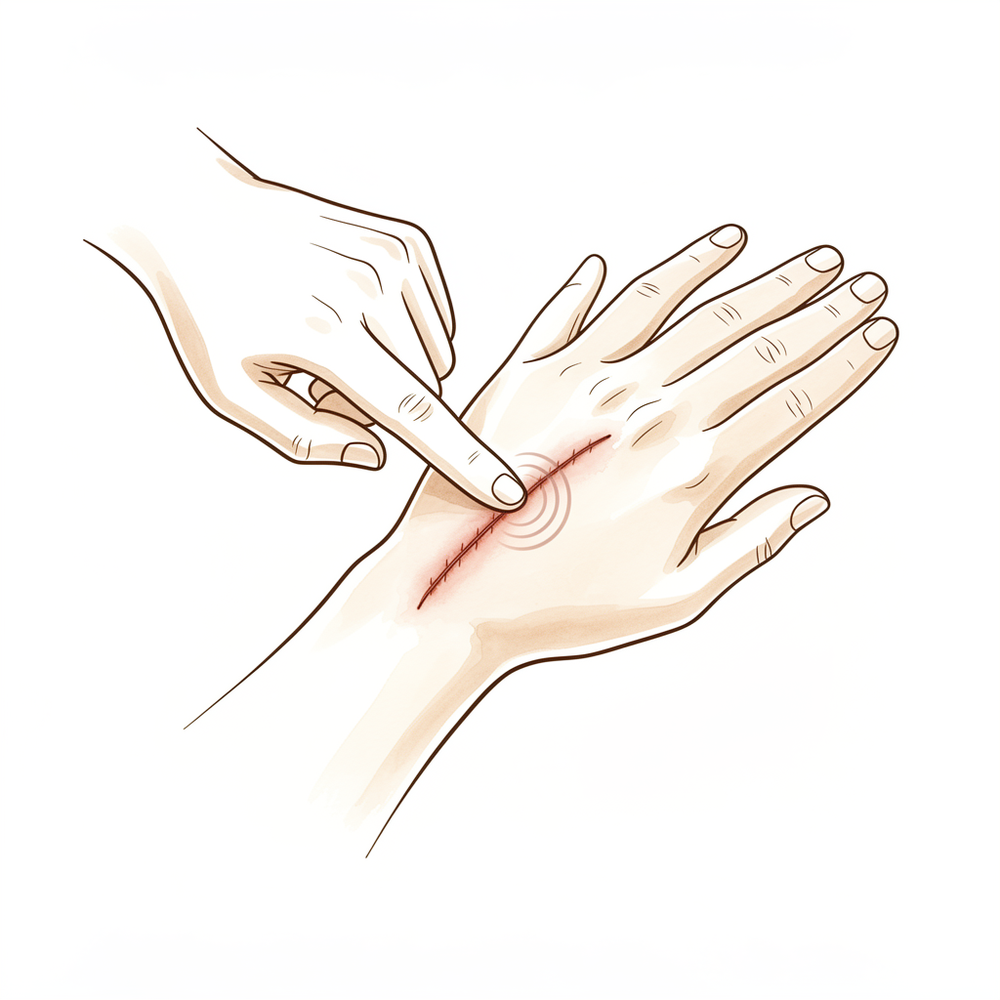
வடு மசாஜ்
காயம் முழுமையாகக் குணமாகிக் கட்டுகள் அகற்றப்பட்டதும் (பொதுவாகச் சுமார் இரண்டு வாரங்களில்), கொஞ்சம் சாதாரண ஈரப்பதக் களிம்பை உங்கள் விரல் நுனியால், சிறிய உறுதியான வட்ட அசைவுகளில், சில நிமிடங்களுக்கு வடுவில் தேய்த்து விடுங்கள். இது வடுவை மென்மையாகவும் அசையக்கூடியதாகவும் வைத்திருக்கிறது; அதற்கு அடியில் உள்ள திசுக்களுடன் அது ஒட்டிக்கொள்வதைத் தடுக்கிறது — இல்லையெனில் அது மணிக்கட்டைத் தடுத்து நிறுத்தக்கூடும். குணமாகாத அல்லது நீர் வடியும் காயத்தில் இதைத் தொடங்க வேண்டாம்.
சில நிமிடங்கள், நாளொன்றுக்கு இரண்டு முறை, காயம் முழுமையாகக் குணமானதும்
Kieran Hirpara 4.0
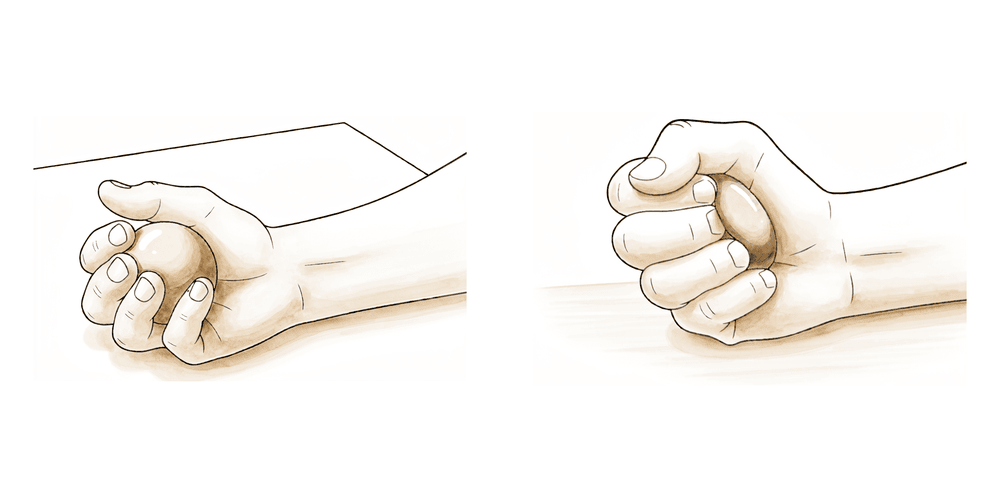
பிடி வலுப்படுத்துதல்
இது ஒரு பிந்தைய பயிற்சி; பொதுவாகச் சுமார் மூன்று முதல் நான்கு வாரங்களிலிருந்து, காயம் சீரடைந்து அசைவு வசதியாக இருக்கும்போது. ஒரு மென்பந்தையோ சிகிச்சைப் பட்டியையோ உங்கள் உள்ளங்கையில் வைத்து அழுத்தி, சில வினாடிகள் பிடித்திருந்து, பிறகு தளர்த்துங்கள். படிப்படியாக அதை அதிகரியுங்கள். அறுவை சிகிச்சைக்குப் பிறகு சில வாரங்களுக்குப் பெரும்பாலும் குறையும் பிடி வலிமையை இது மீட்டெடுக்கிறது.
10-15 முறை அழுத்துதல், நாளொன்றுக்கு 2-3 முறை, சுமார் 3-4 வாரங்களிலிருந்து
இவை உங்கள் கையேட்டில் உள்ள பயிற்சிகள். டாக்டர் ஹிர்பராவும் உங்கள் கை சிகிச்சையாளரும் வழிகாட்டும்படி அவற்றைத் தொடங்குங்கள். ஆரம்பப் பயிற்சிகள் (எல்லாத் திசைகளிலும் மணிக்கட்டு அசைவு, முன்கைச் சுழற்சி, விரல் அசைவு) இந்த மீட்சியின் இதயம்; அவை முதல் சில நாட்களுக்குள்ளேயே தொடங்குகின்றன — ஏனெனில், இல்லையெனில் இந்த அறுவை சிகிச்சையைத் தொடர்ந்து வரும் விறைப்பைத் தடுப்பது, மணிக்கட்டை ஆரம்பத்திலேயே அசைப்பதுதான். காயம் முழுமையாகக் குணமானதும் வடு மசாஜ் தொடங்குகிறது; வசதி அனுமதிக்கும் அளவுக்குச் சற்றுப் பிறகு பிடி வலுப்படுத்துதல் சேர்க்கப்படுகிறது. இவற்றில் எதுவும் கூர்மையான வலியை ஏற்படுத்தக் கூடாது; அப்படி இருந்தால் அதைக் குறையுங்கள்.
உங்கள் மருத்துவ நெறிமுறை
இந்தப் பக்கத்தின் மீதமுள்ள பகுதி, மணிக்கட்டு கேங்க்லியான் அகற்றலுக்குப் பிறகான மறுவாழ்வுப் பயிற்சிக்கான, கட்டம் கட்டமான மருத்துவ நெறிமுறை. இந்தப் பகுதி உங்கள் கை சிகிச்சையாளரிடம் வழங்கப்பட வேண்டியது; ஒவ்வொரு கட்டமும் என்ன நடக்கிறது என்பதை எளிய மொழியில் விளக்குவதுடன் தொடங்குகிறது. இது ஒரு அகற்றல், சரிசெய்தல் அல்ல: பாதுகாக்க வேண்டிய அமைப்பு எதுவும் இல்லை; எனவே வழிநடத்தும் கோட்பாடு — குறைந்தபட்ச அசைவின்மை, அதைத் தொடர்ந்து அகற்றலுக்குப் பிந்தைய விறைப்பைத் தடுக்க எல்லாத் தளங்களிலும் ஆரம்பச் சுய மணிக்கட்டு அசைவு — என்பதே; இந்த நடைமுறைக்குப் பிறகு மிகவும் பொதுவான சிக்கல் அந்த விறைப்பே.
சிகிச்சைக்கு முன், நோயாளியின் அறுவை சிகிச்சை அறிக்கையையும் கடந்த கால மருத்துவ வரலாற்றையும் பரிசோதியுங்கள்; அமைவிடம் (பின்பக்கமா அல்லது வோலாரா), அறுவை சிகிச்சை அணுகுமுறை (திறந்ததா அல்லது ஆர்த்ரோஸ்கோபிக்கா), பின்பக்க/வோலார் மூட்டு உறையின் நிலைமை, உடன் காணப்பட்ட வேறு எந்தக் கண்டுபிடிப்பும் ஆகியவை குறித்து சிகிச்சையளிக்கும் அறுவை சிகிச்சை நிபுணருடன் கலந்தாலோசியுங்கள். டாக்டர் ஹிர்பரா நீர்க்கட்டியை அதன் காம்புடன் சேர்த்து மூட்டு உறை வரை அகற்றுகிறார். வோலார் கேங்க்லியான்களுக்கு, ரேடியல் தமனி அருகில் இருப்பதைக் கவனத்தில் கொள்ளுங்கள். பாதுகாக்கப்பட வேண்டிய அசைவு வீச்சு எதுவும் இல்லை; சுமை குறைக்கப்பட வேண்டிய அமைப்பும் இல்லை; வேண்டுமென்றே விதிக்கப்படும் ஒரே கட்டுப்பாடு, மென்திசுக்கள் சீரடையும் வரை கனமான பிடி/சுமையைத் தவிர்க்கும் ஒரு குறுகிய கால அளவே.
கட்டம் I — குறைந்தபட்ச அசைவின்மையும் ஆரம்ப அசைவும் (நாள் 0 முதல் ~14 வரை)
முதல் கட்டம், காயத்தைப் பாதுகாத்துக்கொண்டே மணிக்கட்டை ஆரம்பத்திலேயே அசைய வைக்கிறது. அசையாமல் வைத்திருப்பது வேண்டுமென்றே குறுகியதாக இருக்கிறது (ஒரு மென்மையான கட்டு; தேவைப்பட்டால் மட்டும், வசதிக்காக ஒரு லேசான மணிக்கட்டுச் சிம்பு); முதல் சில நாட்களுக்குள் மணிக்கட்டு எல்லாத் திசைகளிலும் சுய அசைவைத் தொடங்குகிறது. இரண்டு வாரங்கள் அல்லது அதற்குக் குறைவான வரையறுக்கப்பட்ட அசைவின்மையோ, அல்லது அசைவின்மையே இல்லாததோ, விளைவைக் குறிப்பிடத்தக்க அளவுக்கு மாற்றுவதில்லை; ஆனால் நீண்ட ஓய்வு விறைப்பின் அபாயத்தை ஏற்படுத்துகிறது — இதுவே முறையான ஆய்வு மதிப்பாய்வின் (systematic review) சான்று.
உங்கள் கை சிகிச்சையாளருக்கு:
கல்வியும் முன்னெச்சரிக்கைகளும் - மென்மையான கட்டு; விருப்பத்துக்கேற்ப, வசதிக்காக மட்டும் ஒரு லேசான மணிக்கட்டுச் சிம்பு; வாரக்கணக்கில் அல்ல, நாட்களுக்குள் படிப்படியாக நிறுத்தவும் - நீண்டகால இறுக்கமான அசைவின்மை கூடாது: சிம்பு அணிவதை ≤2 வாரங்களுக்குள் வரையறுக்கவும் (பொதுவாகச் சில நாட்கள்) - காயம் மூடும் வரை அதைச் சுத்தமாகவும் உலர்வாகவும் வைத்திருக்கவும்; முதல் நாளிலிருந்தே முழு விரல், கட்டைவிரல், முழங்கை அசைவு வரம்பு (ROM) - வோலார் வழக்குகள்: ரேடியல் தமனி குறித்து விழிப்பாக இருக்கவும்; இரத்தக் குழாய் தொடர்பான கவலைகளை உடனடியாகத் தெரிவிக்கவும்
சிகிச்சை மேலாண்மை - காயம்: அறிவுறுத்தப்பட்டபடி அறுவை சிகிச்சைக் கட்டுகள்; தொற்று ஏற்படுகிறதா எனக் கண்காணிக்கவும் - வீக்கம்: உயர்த்தி வைத்தல், மென்மையான கை இயக்கம் (pumping), தேவைக்கேற்பப் பனிக்கட்டி ஒத்தடம் - பயிற்சிகள்: வசதிக்குள், எல்லாத் தளங்களிலும் சுய மணிக்கட்டு அசைவு வரம்பு (மடக்குதல்/நீட்டுதல், ரேடியல்/அல்நார் பக்கவாட்டுச் சாய்வு) — முதல் சில நாட்களில் தொடங்கப்படுகிறது; சுய/பிறர் அசைக்கும் முன்கை ப்ரோனேஷன்–சுப்பினேஷன்; முழுச் சுய விரல் மற்றும் கட்டைவிரல் அசைவு வரம்பு; மென்மையான தோள்பட்டை அசைவு வரம்பு
அடுத்த கட்டத்துக்குச் செல்வதற்கான அளவுகோல்கள் - காயம் குணமாகி வருதல்; வீக்கம் தணிதல்; மேம்பட்டு வரும், வசதியான மணிக்கட்டு அசைவு வீச்சு; சிம்பு (பயன்படுத்தப்பட்டிருந்தால்) ~2 வாரங்களுக்குள் நிறுத்தப்படுதல்
கட்டம் II — முழு அசைவை மீட்டெடுத்தலும் வடு மேலாண்மையும் (வாரம் ~2 முதல் 4 வரை)
சுமார் இரண்டு வாரங்களிலிருந்து கட்டுகள் அகற்றப்பட்டு, காயம் குணமாகியிருக்கும். விறைப்பு ஏற்பட வாய்ப்புக் கிடைக்கும் முன்பே முழுமையான, சமச்சீரான மணிக்கட்டு அசைவை மீண்டும் பெறுவதிலும், வடு அசையக்கூடியதாக இருந்து மணிக்கட்டைக் கட்டிப்போடாமல் இருக்க வடுப் பணியைத் தொடங்குவதிலும் கவனம் செலுத்தப்படுகிறது.
உங்கள் கை சிகிச்சையாளருக்கு:
மதிப்பீடுகள் - சுய மற்றும் பிறர் அசைக்கும் மணிக்கட்டு அசைவு வரம்பு (ROM) (மறுபக்கத்துடன் ஒப்பிடவும்); முன்கைச் சுழற்சி; வீக்கம்; காயம்/வடு மறுபரிசோதனை
கல்வியும் முன்னெச்சரிக்கைகளும் - எல்லாத் தளங்களிலும் முழு மணிக்கட்டு அசைவு வரம்பை நோக்கி முன்னேறவும்; ஆரம்பத்தில் ஏற்படும் எந்த இழப்பையும் சுய மற்றும் மென்மையான பிறர் அசைக்கும் பயிற்சியால் உடனடியாகச் சரிசெய்யவும் - காயம் முழுமையாகக் குணமானதும் வடு மேலாண்மையைத் தொடங்கவும் (மசாஜ், சிலிகான்/ஈரப்பதக் களிம்பு, தேவைக்கேற்ப உணர்திறன் குறைப்பு) - லேசான செயல்பாட்டுக் கைப் பயன்பாடு ஊக்குவிக்கப்படுகிறது; கனமான பிடித்தலையும் சுமையையும் தள்ளிப்போடவும்
சிகிச்சை மேலாண்மை - பயிற்சிகள்: முழுச் சுய மற்றும் மென்மையான பிறர் அசைக்கும் மணிக்கட்டு அசைவு வரம்புக்கு முன்னேறவும்; முன்கைச் சுழற்சியைத் தொடரவும்; வடு மசாஜையும் உணர்திறன் குறைப்பையும் தொடங்கவும்; வசதி அனுமதிக்கும் அளவுக்கு, இந்தக் கட்டத்தின் முடிவை நோக்கி லேசான பட்டி (putty)/பிடிப் பயிற்சி அறிமுகப்படுத்தப்படுகிறது
அடுத்த கட்டத்துக்குச் செல்வதற்கான அளவுகோல்கள் - முழு அல்லது கிட்டத்தட்ட முழு, வலியற்ற மணிக்கட்டு அசைவு வரம்பு (ROM); குணமான, அசையக்கூடிய வடு; படிநிலைச் சுமைக்குத் தயார்
கட்டம் III — வலுப்படுத்துதலும் செயல்பாட்டுக்குத் திரும்புதலும் (வாரம் ~4 முதல் 6 வரை, அதற்குப் பிறகும்)
அசைவு மீட்டெடுக்கப்பட்டதும், பிடியும் சுமையும் படிப்படியாக மீண்டும் கட்டியெழுப்பப்படுகின்றன. பெரும்பாலான நோயாளிகளுக்கு வழக்கமான செயல்பாடு சுமார் நான்கு முதல் ஆறு வாரங்களுக்குள் திரும்புகிறது; கனமான உடல் உழைப்புத் தேவைகள் அளவுகோல் சார்ந்த முன்னேற்றத்தைப் பின்பற்றுகின்றன.
உங்கள் கை சிகிச்சையாளருக்கு:
மதிப்பீடுகள் - மறுபக்கத்துடன் ஒப்பிடும்போது பிடி மற்றும் கிள்ளிப் பிடிக்கும் வலிமை; மணிக்கட்டு அசைவு வரம்பு (ROM); படிநிலைச் சுமைக்கான பதில்; தேவைக்கேற்பச் செயல்பாட்டு/வேலை சார்ந்த சோதனை
கல்வியும் முன்னெச்சரிக்கைகளும் - வசதி அனுமதிக்கும் அளவுக்கு பிடி மற்றும் மணிக்கட்டு வலுப்படுத்துதலை முன்னேற்றவும் (பட்டி (putty), பந்து, படிநிலை எதிர்ப்பு) - தூக்குதலையும் மணிக்கட்டின் வழியே எடை தாங்குதலையும் படிப்படியாக மீண்டும் அறிமுகப்படுத்தவும்; முழுமையாகத் திரும்புவது காலண்டரால் அல்ல, அறிகுறிகளால் வழிநடத்தப்படுகிறது
சிகிச்சை மேலாண்மை - பயிற்சிகள்: படிப்படியான பிடி/கிள்ளிப் பிடித்தல் மற்றும் மணிக்கட்டு வலுப்படுத்துதல்; படிநிலைச் சுமையும் பணி சார்ந்த பயிற்சியும்; எஞ்சியிருக்கும் எந்த அசைவுப் பணியையும் வடுப் பணியையும் தொடரவும் - அசைவு வரம்பு முழுமையடைந்து, வலிமை கிட்டத்தட்டச் சமச்சீராகி, செயல்பாடு திரும்பியதும் சிகிச்சையை நிறைவு செய்வதைப் பரிசீலிக்கவும் - மணிக்கட்டு விறைப்பாகவே தேங்கிவிட்டால், அல்லது மீண்டும் ஒரு வீக்கம் தோன்றினால், சிகிச்சையளிக்கும் மருத்துவரிடம் மீண்டும் பரிந்துரைப்பதைப் பரிசீலிக்கவும்
முழுச் செயல்பாட்டுக்குத் திரும்புவதற்கான அளவுகோல்கள் - முழுமையான, வலியற்ற மணிக்கட்டு அசைவு வரம்பு (ROM); கிட்டத்தட்டச் சமச்சீரான பிடி; பணி மற்றும் வேலை சார்ந்த சுமையில் வசதியாக இருத்தல்
வேலைக்கும் செயல்பாடுகளுக்கும் திரும்புதல்
லேசான அன்றாடக் கைப் பயன்பாடு (சாப்பிடுவது, எழுதுவது, லேசான சுய பராமரிப்பு) தொடக்கத்திலிருந்தே, வசதிக்குள், ஊக்குவிக்கப்படுகிறது; உங்கள் விரல்கள் முதல் நாளிலிருந்தே முழுமையாகச் செயல்பட வேண்டும். மேசை வேலையும் லேசான பணிகளும் பெரும்பாலும் சில நாட்களுக்குள் அல்லது சுமார் ஒரு வாரத்துக்குள் சாத்தியம் — குறிப்பாக, அதிகம் பயன்படுத்தும் கை சுதந்திரமாக இருக்கும்போது; பலமாகப் பிடித்தல், தூக்குதல், அல்லது திரும்பத் திரும்ப வலுக்கட்டாயமாக மணிக்கட்டை அசைத்தல் ஆகியவற்றை உள்ளடக்கிய வேலைகளுக்கு அதிக காலம் ஆகும்; அவை முதல் சில வாரங்களில் படிப்படியாக மீண்டும் கட்டியெழுப்பப்படுகின்றன. கேங்க்லியான் அகற்றலுக்குப் பிறகு வேலையிலிருந்து விலகி இருக்கும் காலம் குறைவே (சுமார் இரண்டு வாரங்கள் அளவுக்கு) என்று வெளியிடப்பட்ட தொடர் ஆய்வுகள் தெரிவிக்கின்றன; இருப்பினும், அறுவை சிகிச்சை செய்யப்பட்ட பக்கத்தையும் உங்கள் வேலையின் தேவைகளையும் பொறுத்து இது மாறுபடும்.
ஸ்டியரிங் சக்கரத்தை வசதியாகக் கட்டுப்படுத்த முடிந்த நிலையிலும், சிம்பு எதுவும் இல்லாத நிலையிலும் நீங்கள் இருக்க வேண்டும் என்பதால், ஆரம்ப நாட்களில் போக்குவரத்துக்கு உதவி கிடைக்கத் திட்டமிடுங்கள்; நீங்கள் வசதியாகவும் பாதுகாப்பாகவும் ஆனதும் — உங்கள் மறுபரிசோதனையின்போது உறுதிப்படுத்தப்பட்டபடி — வாகனம் ஓட்டுவது மீண்டும் தொடங்குகிறது. பெரும்பாலானோர் சுமார் நான்கு முதல் ஆறு வாரங்களுக்குள் வழக்கமான செயல்பாட்டுக்குத் திரும்பிவிடுகிறார்கள்; கனமான உடல் உழைப்பு வேலையும் விளையாட்டும், அசைவும் பிடியும் திரும்பும்போது படிப்படியாக மீண்டும் கட்டியெழுப்பப்படுகின்றன — காலண்டரை மட்டும் வைத்து அல்லாமல், மணிக்கட்டு எப்படி இருக்கிறது என்பதை வைத்து மதிப்பிடப்படுகிறது.
உங்கள் நெறிமுறைக்குப் பிறகு
இந்த நெறிமுறை, கிளினிக்கின் பொதுவான மீட்சி ஆலோசனையுடன் இணைந்து செயல்படுகிறது: அறுவை சிகிச்சைக்குப் பிந்தைய வலியை நிர்வகித்தல், காயப் பராமரிப்பு, வடு மேலாண்மை ஆகியவற்றைப் பாருங்கள். மேலே உள்ள கட்டம் கட்டமான திட்டம், மணிக்கட்டு கேங்க்லியான் அகற்றலுக்குப் பிறகு வெளியிடப்பட்ட வழிகாட்டுதலை எதிரொலிக்கிறது; அங்கு முன்னுரிமை, விறைப்பைத் தடுக்க ஆரம்ப அசைவே. உங்கள் மணிக்கட்டு எப்படி முன்னேறுகிறது என்பதற்கு ஏற்ப, டாக்டர் ஹிர்பராவும் உங்கள் கை சிகிச்சையாளரும் உங்கள் தொடர் மீட்சிக்குத் தனிப்பட்ட முறையில் வழிகாட்டுவார்கள்.
Evidence & references
This is the clinical evidence summary written for health professionals. It is technical, and it lists the research this page was built from. You do not need to read it to understand your treatment or to make a decision about it.
Topic scope: post-operative rehabilitation after surgical excision of a wrist ganglion — removal of the cyst together with its capsular stalk down to the wrist joint, performed open or arthroscopically, for a dorsal (scapholunate-origin) or volar (radiocarpal/scaphotrapezial) ganglion. This is an excision, not a reconstruction: nothing is repaired or tightened, so the rehab is an early-motion pathway built around minimal immobilisation, prompt wrist movement in all planes, and scar care — not months of protected healing.
Defining principle of the rehab here: ganglion excision removes a cyst and its stalk; it does not create a construct that needs protecting. The most frequent adverse outcome is therefore not failure of any repair but wrist stiffness / loss of motion, which prolonged immobilisation makes worse. So the deliberate stance is minimal immobilisation (soft dressing ± brief comfort splint, ≤2 weeks) followed by early active wrist motion in every plane, with the only restraint a short window of heavy-grip/load avoidance while the soft tissues settle. The principal branch points are (1) dorsal vs volar (volar ganglia sit adjacent to the radial artery and carry a higher neurovascular-complication profile) and (2) open vs arthroscopic access (similar recurrence; arthroscopic may have a gentler early course). Importantly, the recurrence and outcome literature is far better developed than the rehabilitation literature, which is largely expert-consensus and low-level.
A. PROCEDURE OUTCOMES (open vs arthroscopic; dorsal vs volar)
Ganglion excision is a reliable, low-morbidity operation. The principal outcome debate is over recurrence and over access (open vs arthroscopic), not over whether excision works.
- Excision markedly out-performs aspiration for durable cure. Pooled across treatments, mean recurrence is roughly 6% arthroscopic, ~20–21% open, ~59% aspiration; surgical excision confers a large reduction in recurrence versus aspiration. Reported open-excision recurrence is wide (0–31%), the lowest classic series (Angelides & Wallace) reporting <1% with meticulous stalk excision [Zoller 2023 JAAOS review; Gant 2011 review]. Moderate (reviews of heterogeneous series).
- Removing the stalk down to the capsule is the key technical determinant of recurrence. Leaving the capsular stalk behind is the main reason a ganglion recurs; stalk resection is repeatedly advocated as the critical step [Gant 2011; Rizzo 2004]. Mechanistic / consensus.
- Open and arthroscopic excision give similar recurrence. A retrospective comparison and a systematic review found no significant difference once low-quality/high-bias studies are excluded (pooled ~8% arthroscopic vs ~10% open); a prospective randomised dorsal-ganglion trial (Kang) reported 11% vs 9%. Arthroscopic access may offer a cosmetic/early-recovery edge but is not proven superior for recurrence [Konigsberg 2023 HAND; Crawford 2018 SR; Gant 2011 citing Kang]. Moderate (SR + retrospective + one RCT).
- Wrist stiffness is the most common complication after carpal ganglion excision, ahead of recurrence; other risks are infection, scar problems, neurovascular injury and (rarely) injury to the scapholunate ligament [Gant 2011]. Moderate (review).
- Volar ganglia carry a distinct neurovascular risk. They are adherent to / immediately adjacent to the radial artery; radial-artery injury during volar excision is described as "quite common," and an MRI-based study identifies anatomical position as a risk factor for operation-related complications after arthroscopic volar ganglionectomy [Rocchi 2008; Oh 2025 BMC; operative-technique texts]. Moderate (cohort + anatomical).
B. REHABILITATION / THERAPY EVIDENCE
The central rehab questions are (1) should the wrist be immobilised afterwards, and (2) does a particular therapy regimen change the outcome. The best available evidence — a systematic review of post-excision immobilisation — answers that brief or no immobilisation is appropriate, with early motion the means of preventing the dominant complication (stiffness). There is no high-level trial evidence for any specific exercise protocol; rehab content is consensus.
- Limited or no immobilisation does not worsen outcome — and protects against stiffness. A systematic review and surgeon survey of dorsal ganglion excision found practice split roughly evenly between rigid splinting and soft dressings; immobilisation durations ranged from 48 hours to 2 weeks (open) and 5 days to 3 weeks (arthroscopic). The explicit conclusion: "limited immobilization of 2 weeks or less or no immobilization after surgery does not meaningfully affect patient outcome." Prolonged rigid immobilisation is the avoidable driver of stiffness (one 2-week bulky-dressing series reported 11.5% with ≥20° ROM loss, versus normal ROM in 100% of a short-immobilisation series) [Wong 2023 HAND SR]. Moderate (systematic review of low-level studies).
- Early active wrist motion in all planes is the core of the programme. Because there is no repair to protect and stiffness is the commonest problem, the consensus is to move the wrist early through flexion/extension and radial/ulnar deviation, with full finger and forearm motion from day one. The adhesion/stiffness-prevention rationale is mechanistic and consensus rather than trial-proven. Weak–moderate (mechanism strong, outcome data absent).
- Recovery is usually quick and time off work short. Series report on the order of ~2 weeks off work after open wrist ganglion excision (longer for volar than dorsal, and longer than aspiration), with most patients back to ordinary activity by ~4–6 weeks [Suen 2013 citing Dias 2007]. Moderate (cohort).
- Recurrent ganglia are re-excisable with good function, and physical therapy is routinely recommended in re-excision series — underlining that therapy here is supportive (motion + scar), not a construct-protecting protocol [re-excision outcome series]. Low (small series).
Recovery trajectory (expected, evidence-anchored)
| Phase | Window | Restraint | Hand use / therapy focus | Strength / load | Notes |
|---|---|---|---|---|---|
| I — Minimal immobilisation & early motion | Days 0–~14 | Soft dressing ± comfort splint only (≤2 wk) | Full finger/thumb/elbow ROM from day 1; active wrist ROM in all planes within the first few days; forearm rotation; elevation for oedema | Light functional use only | Brief or no immobilisation does not worsen outcome; prolonged rest → stiffness |
| II — Restore full motion & scar care | Week ~2–4 | None routine (splint weaned) | Drive to full wrist ROM; scar massage once wound healed; desensitisation | Light grip/putty toward end | Stiffness is the complication to pre-empt; address early ROM loss promptly |
| III — Strengthening & return | Week ~4–6+ | Restrictions lifted | Progress grip/pinch + wrist strengthening; task-specific loading | Graded grip and load to symmetry | Most back to ordinary activity ~4–6 wk; manual/volar cases a little longer |
(Phase windows mirror the precautions in the patient protocol; they are typical guides, not trial-derived deadlines.)
C. KEY CONTROVERSIES / EVIDENCE QUALITY
- To splint or not. Practice is genuinely split, but the systematic-review evidence is that limited (≤2 weeks) or no immobilisation does not change outcome — and that prolonged rigid immobilisation is the avoidable cause of stiffness. This page's brief-immobilisation, early-motion default reflects that finding. Moderate (SR of low-level data).
- Open vs arthroscopic. Similar recurrence once bias is accounted for; arthroscopic may give a cosmetic/early-recovery edge. Choice is largely surgeon/patient preference. Moderate.
- What drives recurrence. Incomplete stalk excision, not rehab, is the main recurrence determinant; no mobilisation regimen has been shown to affect recurrence. Consensus / mechanistic.
- Stiffness is the real enemy, not the cyst coming back. Wrist stiffness is the commonest complication; framing recovery around early motion (rather than protective rest) is the evidence-aligned stance. Moderate.
- Volar ganglia are different. Radial-artery proximity raises the neurovascular-complication profile of volar excision; this is an operative/anatomical caution rather than a rehab variable, but it shapes early monitoring. Moderate.
- Rehab evidence is thin. Recurrence and procedure outcomes are well studied; the specific exercise programme is expert-consensus with no controlled trials. The defensible position is a simple early-motion + scar home programme with selective hand therapy. Weak / consensus.
D. EVIDENCE STRENGTH FLAGS (summary)
- STRONG (RCT / SR): none specific to rehab. (Procedure-side: superiority of excision over aspiration for recurrence is robust across reviews.)
- MODERATE: systematic-review evidence that ≤2-week or no immobilisation does not worsen outcome (Wong 2023); similar recurrence open vs arthroscopic (Crawford SR, Konigsberg, Kang RCT); stiffness as the commonest complication; volar radial-artery risk; short time off work.
- WEAK / CONSENSUS: the specific early-motion, all-plane wrist ROM + scar therapy programme (mechanistically rationalised — stiffness prevention — with no controlled outcome trials); exact phase timings (typical, not trial-derived).
CITATIONS
RAG corpus (180,000+ Orthopaedic articles)
- Gant J, Ruff M, Janz BA. Wrist ganglions. J Hand Surg Am. 2011;36(3):510–512. DOI: 10.1016/j.jhsa.2010.11.048
- Zoller SD, Benner NR, Iannuzzi NP. Ganglions in the Hand and Wrist: Advances in 2 Decades. J Am Acad Orthop Surg. 2023;31(2). DOI: 10.5435/JAAOS-D-22-00105
- Rizzo M, Berger RA, Steinmann SP, et al. Arthroscopic resection in the management of dorsal wrist ganglions: results with a minimum 2-year follow-up period. J Hand Surg Am. 2004;29(1):59–62. DOI: 10.1016/j.jhsa.2003.10.018
- Konigsberg MW, Tedesco LJ, Mueller JD, et al. Recurrence Rates of Dorsal Wrist Ganglion Cysts After Arthroscopic Versus Open Surgical Excision: A Retrospective Comparison. Hand (N Y). 2023;18(1). DOI: 10.1177/15589447211003184
- Crawford C, Keswani A, Lovy AJ, et al. Arthroscopic versus open excision of dorsal ganglion cysts: a systematic review. J Hand Surg Eur Vol. 2018;43(6). DOI: 10.1177/1753193417734428
- Mathoulin C, Gras M. Arthroscopic Management of Dorsal and Volar Wrist Ganglion. Hand Clin. 2017;33(4). DOI: 10.1016/j.hcl.2017.07.012
- Oh W, Kim H, Kim D, et al. Anatomical location of volar wrist ganglion in preoperative MRI is a risk factor for operation-related complications after arthroscopic ganglionectomy. BMC Musculoskelet Disord. 2025;26(1). DOI: 10.1186/s12891-025-08766-x
- Gray J, Zuhlke T, Eizember S, et al. Dry Arthroscopic Excision of Dorsal Wrist Ganglion. Arthrosc Tech. 2017;6(2). DOI: 10.1016/j.eats.2016.09.018
Wrist ganglion excision & post-operative care literature (URLs)
- Wong CR, Karpinski M, Hatchell AC, et al. Immobilization of the Wrist After Dorsal Wrist Ganglion Excision: A Systematic Review and Survey of Current Practice. Hand (N Y). 2023;18(2):254–263. DOI: 10.1177/15589447211014631. https://pmc.ncbi.nlm.nih.gov/articles/PMC10035098/
- Suen M, Fung B, Lung CP. Treatment of Ganglion Cysts. ISRN Orthop. 2013;2013:940615. DOI: 10.1155/2013/940615. https://pmc.ncbi.nlm.nih.gov/articles/PMC4045351/
- Rocchi L, Canal A, Fanfani F, et al. Articular ganglia of the volar aspect of the wrist: arthroscopic resection compared with open excision — a prospective randomised study. Scand J Plast Reconstr Surg Hand Surg. 2008;42(5):253–259. DOI: 10.1080/02844310802210897. https://pubmed.ncbi.nlm.nih.gov/18791910/
- Ganglions — Treatment & Management (recurrence by treatment modality; surgical technique). Medscape Reference. https://emedicine.medscape.com/article/1243525-treatment