

关节囊松解 资料
本方案涵盖在 Mater Private Hospital Rockhampton 由 Kieran Hirpara 医生进行关节镜下关节囊松解术后的康复过程,包括住院期间的安排以及术后数周至数月内的康复进展。请在首次物理治疗就诊时携带本页面或其 PDF 文件,以确保您的康复过程协调一致。您的物理治疗师将根据肩部活动情况,通过以下各阶段为您个体化地推进康复进程。
如果您对术后伤口有任何疑虑,请联系诊所。通常,拍摄伤口照片并通过电子邮件发送以供审阅会很有帮助。
预期情况
关节囊松解术是针对肩关节僵硬(冻结肩)的手术,这从根本上改变了康复方式。大多数肩部手术旨在修复某些结构,如肌腱或撕裂的韧带,因此早期的任务是保护这些修复部位,您需要佩戴悬吊带并将活动范围限制在一定范围内。而本手术恰恰相反。没有需要保护的缝合修复部位。外科医生在您麻醉状态下松解了关节内紧绷、瘢痕化的衬里,并使肩关节完成了全范围活动,因此手术的结果就是活动度。从您苏醒的那一刻起,康复的任务就是保持这种活动度,防止肩关节再次僵硬。
这意味着没有保护期,也不需要刻意限制。您需要立即开始活动肩关节,包括自主活动以及用另一只手臂推动肩关节,并在每天多次、各个方向上持续推动活动范围。
您的锻炼包含三种类型的运动,医疗团队会标注哪些适用于您:
- 被动运动是指肩关节完全放松,由另一只手臂、棍棒或滑轮完成所有动作。
- 主动辅助运动是指您自主移动手臂,同时借助另一只手臂或物体的帮助。
- 主动运动是指您依靠自身力量移动手臂,无需任何帮助。
为何不使用悬吊带
关节囊松解术后,没有修复结构需要悬吊带保护,且保持肩部静止反而有害。若任其休息,松解后的肩部会再次僵硬。再次僵硬是此手术令人失望的主要原因,通过早期且频繁的活动在很大程度上可以预防。
因此,与修复手术不同,您不需要佩戴悬吊带睡觉,您不需要保持手臂静止,也没有任何动作是被禁止的。我们鼓励您自由使用手臂,并在第一天起就向各个方向推动活动范围,包括将手臂向外旋转。仅提供简单的悬吊带用于短期舒适,并防止外出时手臂受到碰撞;请尽可能取下悬吊带,不要让它诱使您保持肩部静止。
关键点
- 保持活动。 从一开始,就将手臂用于正常的日常任务,如洗漱、穿衣和进食。活动可维持手术中获得的关节活动范围。
- 在各个方向上推动活动范围。 拉伸至出现坚实的不适感,而非剧烈疼痛,并在每个平面将肩部活动至极限,包括将手臂向外旋转。此手术后没有“不要超过此处”的禁忌。
- 少量多次地拉伸。 每天进行多次短时间的家庭拉伸计划,优于一次长时间的拉伸。在两次拉伸之间会发生再僵硬,因此频率至关重要。
- 控制疼痛以便能够活动。 在锻炼和物理治疗预约之前服用止痛药。良好的疼痛控制是使拉伸成为可能的关键。许多人发现拉伸前热敷和拉伸后冷敷有帮助。
- 经常进行物理治疗。 前六周的目标是每周至少两次。请在首次就诊时携带此页。
- 六周内禁止驾驶。 这适用于任何肩部手术,尽管您几乎可以立即取下悬吊带;您的外科医生通常会允许您驾驶,通常在六周复查时。
通常会在手术时向关节内注射类固醇,以减轻炎症并减少再僵硬的趋势。
住院期间——您的初始锻炼
Kieran Hirpara 4.0
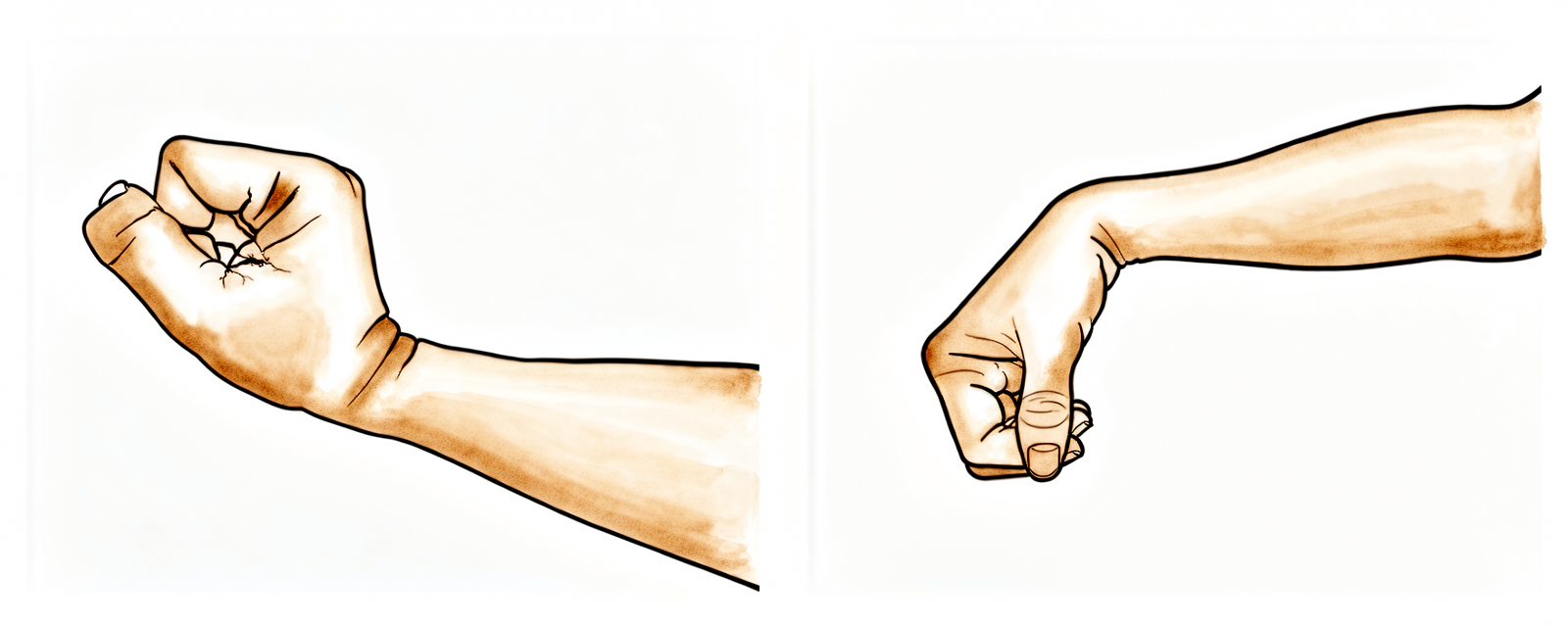
腕部运动
通过向前、向后及左右弯曲手腕来保持手部活动。
10次,每日3次
Kieran Hirpara 4.0
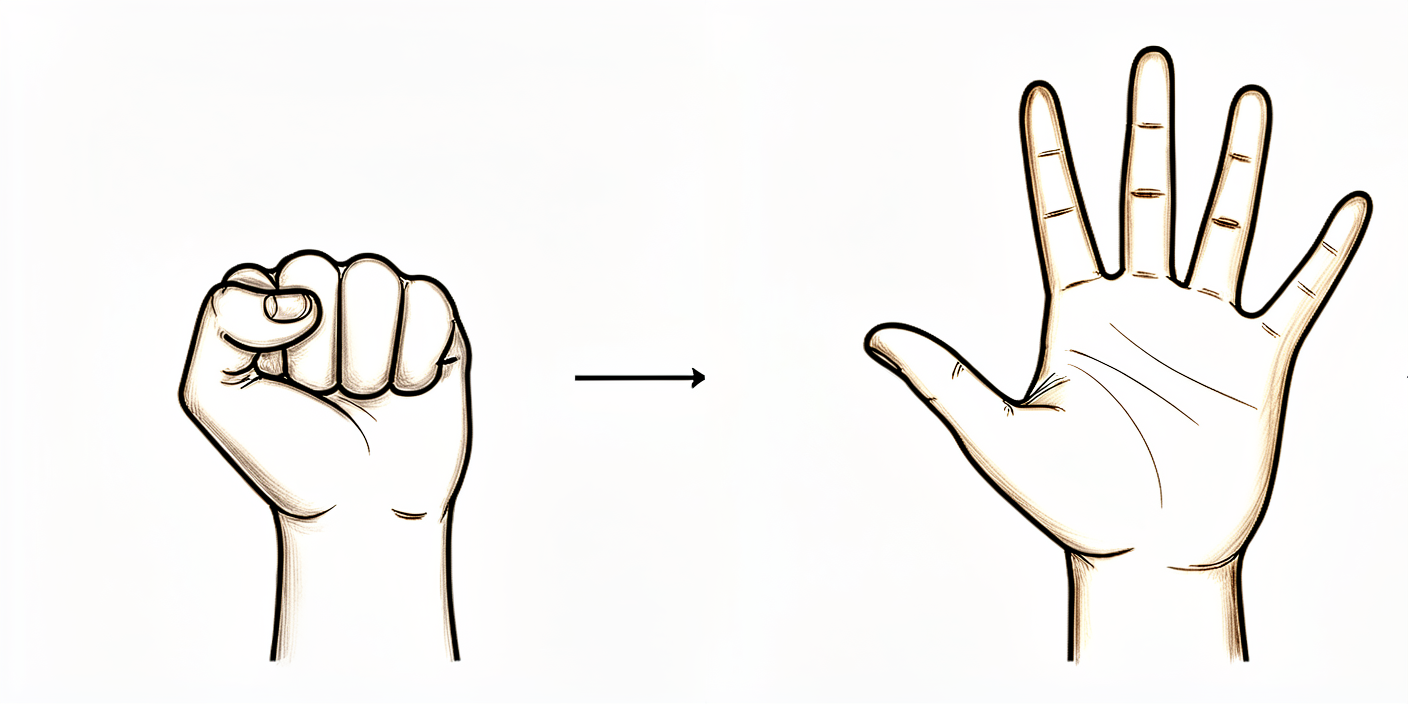
张开和握紧手
通过张开和闭合手部及手指,或挤压一个软球,保持手和手指的活动。
10次,每日3次
Kieran Hirpara 4.0
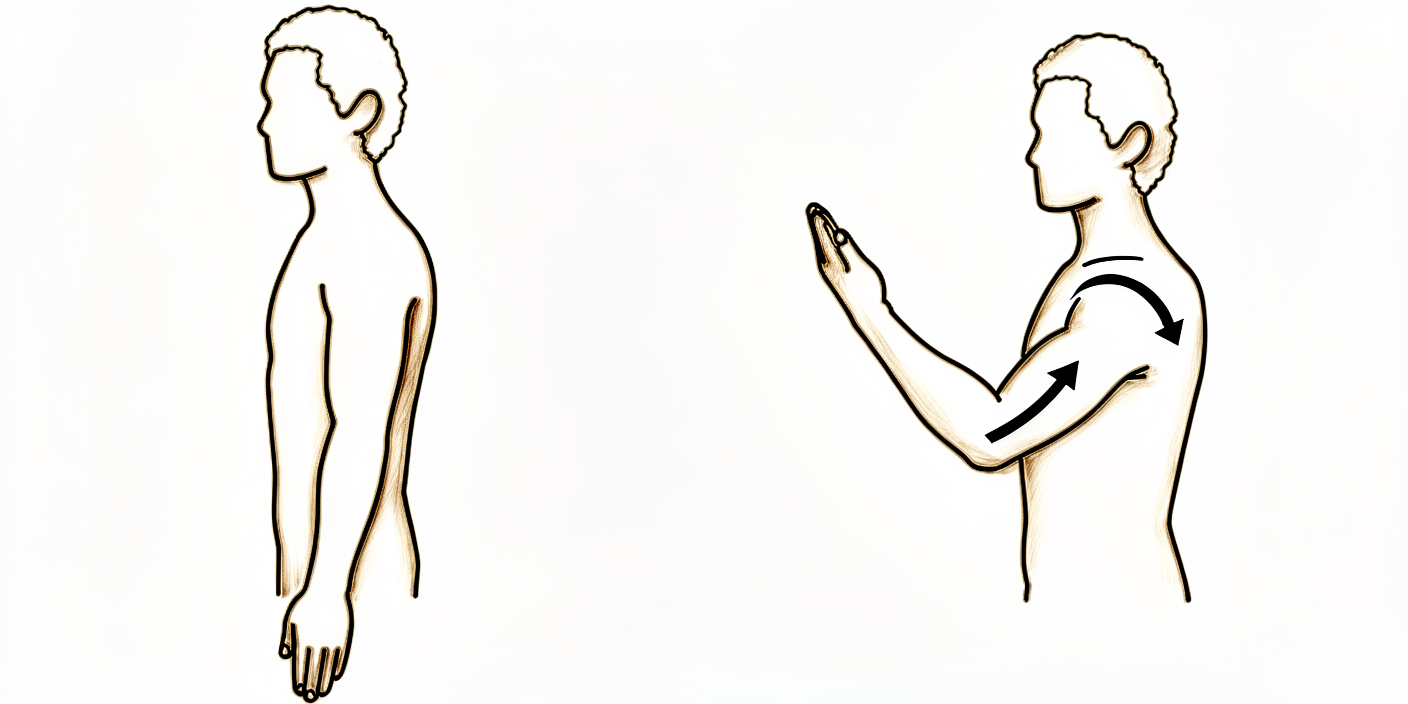
肘部弯曲
弯曲并伸直您的肘部。
10次,每日3次
Kieran Hirpara 4.0
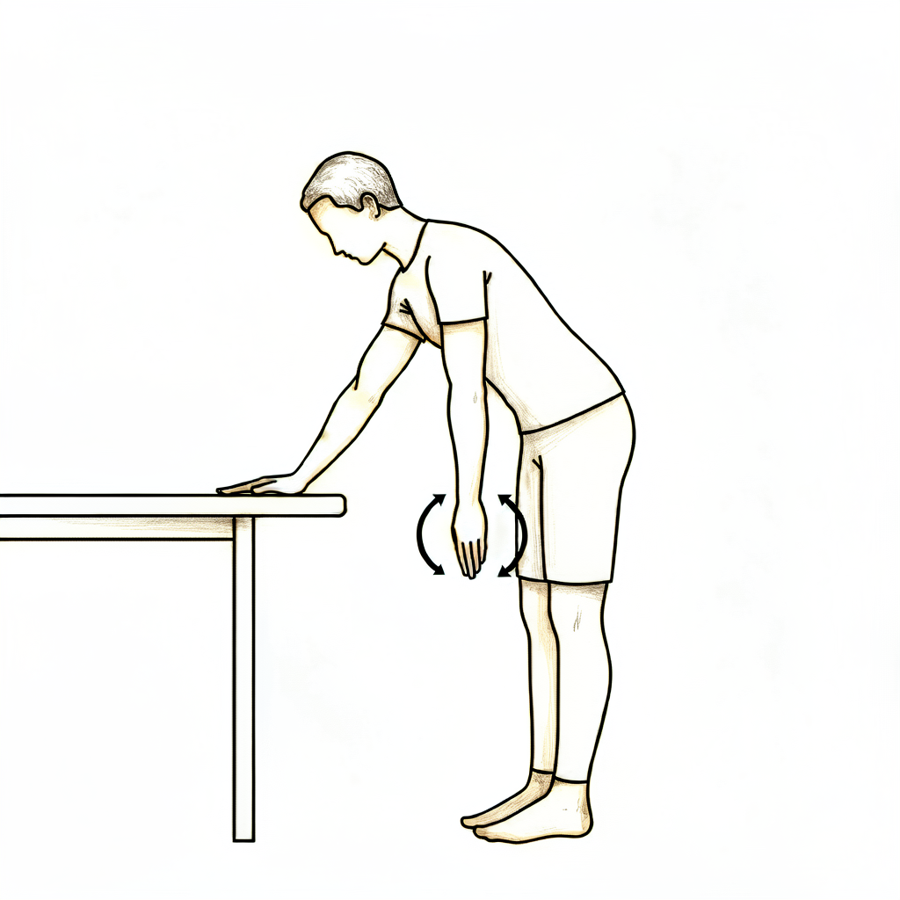
钟摆
这是一种放松的被动练习。身体前倾,让手臂自然下垂并保持放松。利用身体带动手臂轻轻做小范围的圆周摆动,顺时针和逆时针方向,以及前后摆动。让手臂的重量完成动作,肩部肌肉保持放松。
每个方向约30秒,每天3次
Kieran Hirpara 4.0
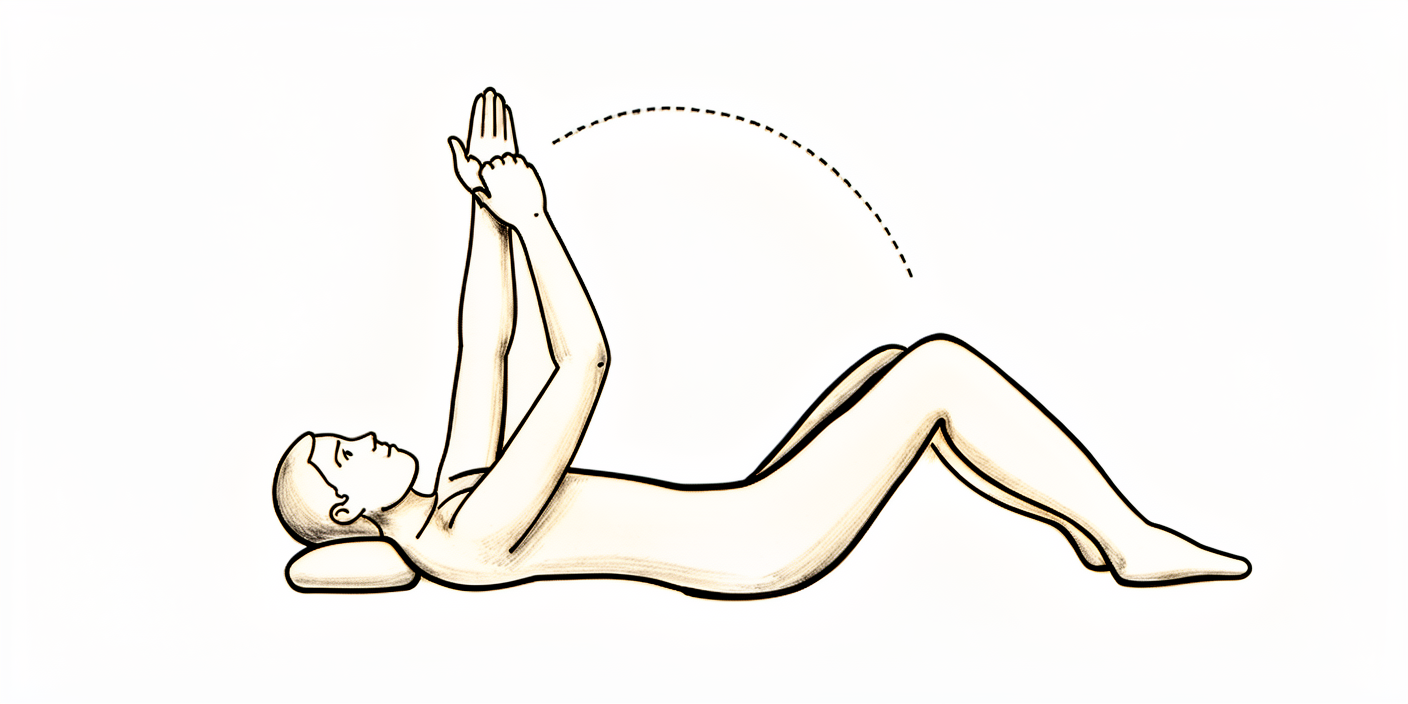
辅助前屈(仰卧位)
如果您愿意,可以仰卧,双手握住一根棍子(或卷起的毛巾)。用健侧手臂将患侧手臂向上推过头顶,直到舒适的最大范围,然后缓慢放下。每次都要推至产生稳固的拉伸感。
10次,每日3次
Kieran Hirpara 4.0
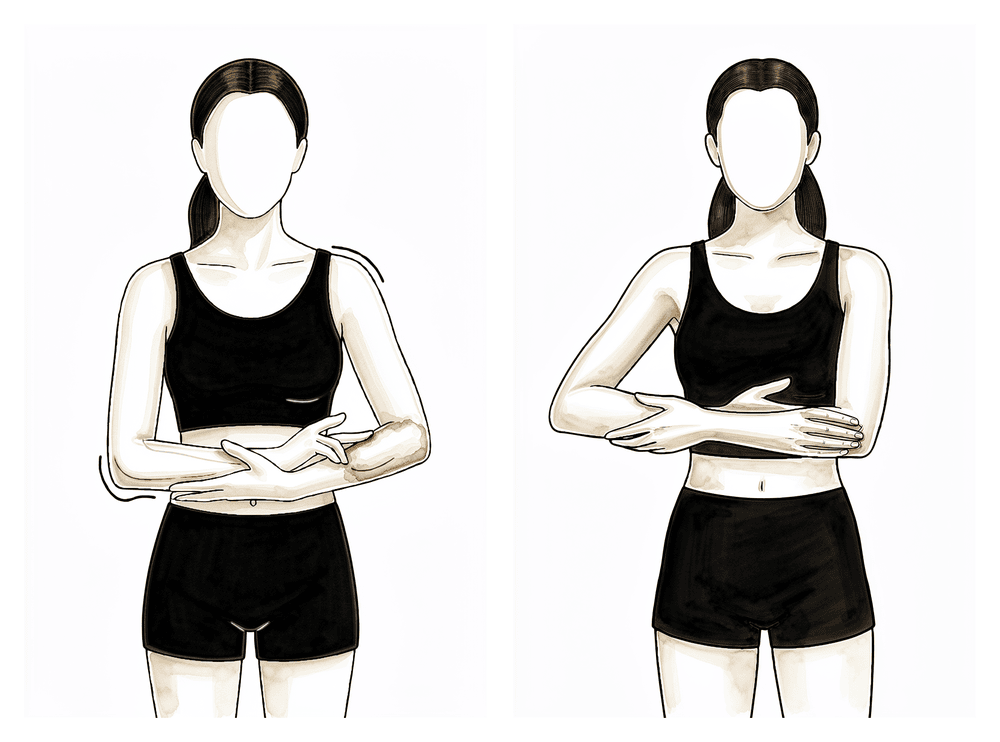
辅助外展(摇篮位)
用另一只手臂托住手术侧手臂,在肘部下方提供支撑,并像哄婴儿一样轻轻向侧后方摇晃。每次都要将其向侧方拉伸至有明确牵拉感的位置。
10次,每日3次
Kieran Hirpara 4.0
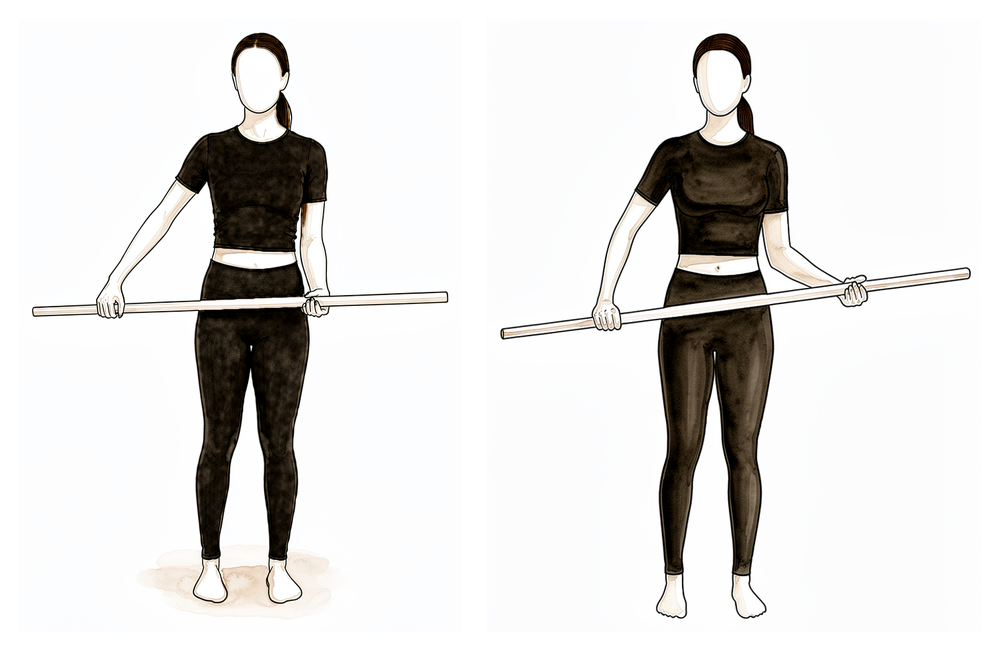
借助棍棒辅助外旋
仰卧,肘部贴紧体侧并屈曲至90度。双手握住一根棍棒,用健侧手臂将术侧手臂的手向外推,使肩关节旋转。一直推到产生明显牵拉感:此手术后向外旋转的幅度没有限制,因此请尽量扩大活动范围。
10次,每日3次
Kieran Hirpara 4.0
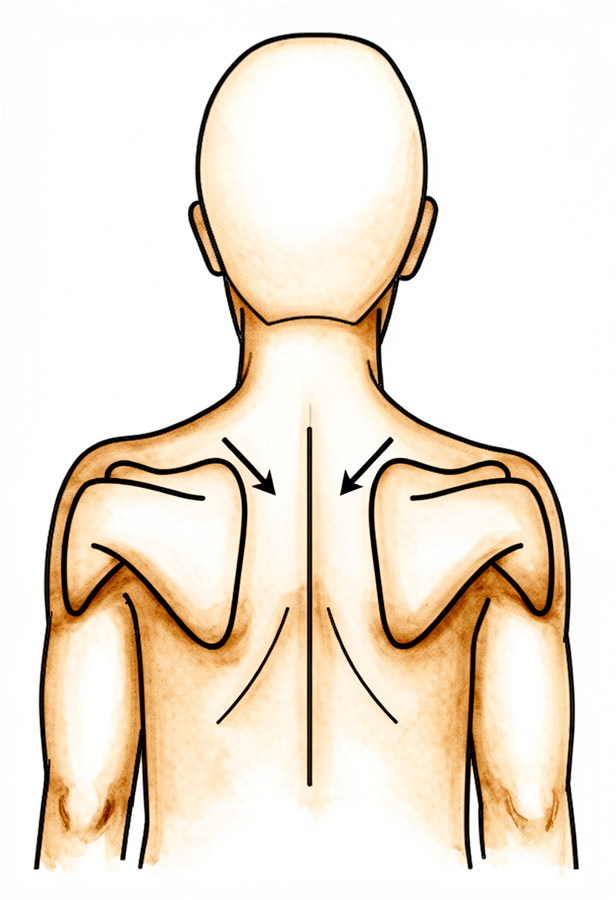
下斜方肌收缩训练
将肩胛骨向下并向内挤压,保持该姿势,然后放松。
保持5秒,重复5次;每日重复3次
Kieran Hirpara 4.0
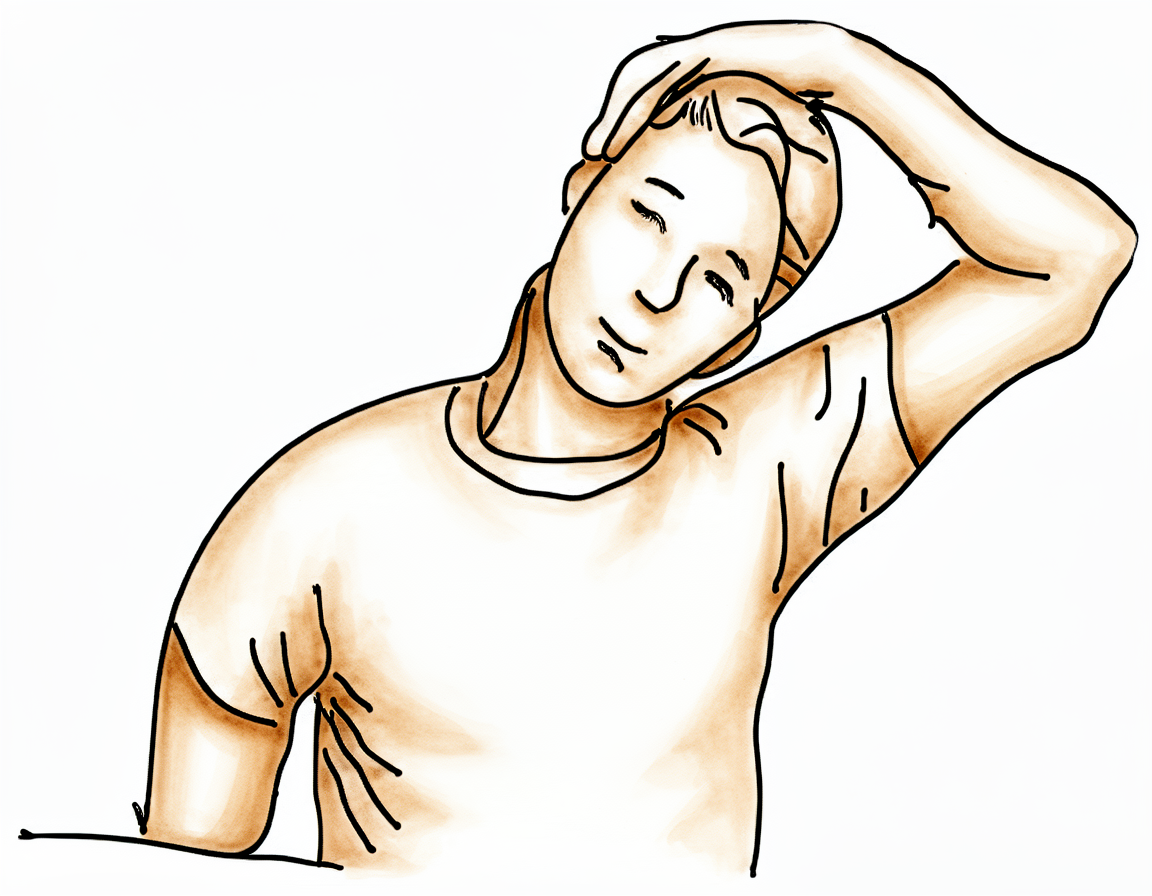
上斜方肌拉伸
用您的健侧手臂,将耳朵轻轻向远离手术侧的肩部方向靠近,直到您感到颈部外侧有牵拉感。
保持10秒,重复3次;每天重复3次
Kieran Hirpara 4.0
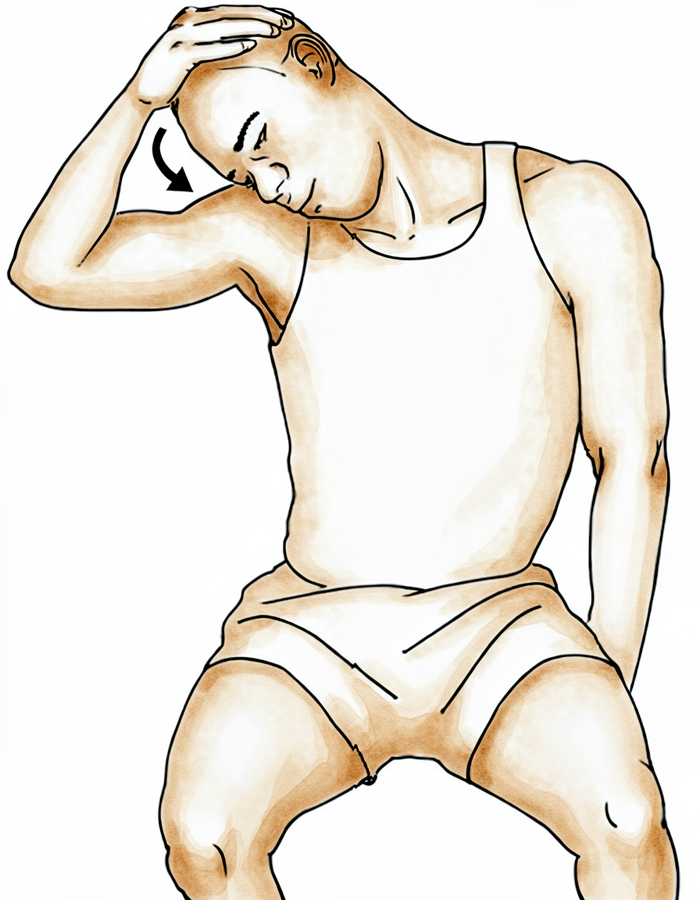
肩胛提肌拉伸
用您的健侧手臂将鼻子向对侧腋窝方向下压,直至感到颈部根部有牵拉感。
保持10秒,重复3次;每天重复3次
物理治疗师将在医院接诊您,并在您出院前指导您开始进行以下锻炼。这些锻炼旨在保持手部、肘部和肩部的活动,并立即开始推动肩关节的活动范围。请提前服用止痛药,以便能够自由活动。按照医疗团队的指示进行这些锻炼,并在回家后继续坚持。
您的门诊康复
在关节囊松解术后,康复方向与肌腱修复手术相反:没有需要保护的结构,因此所有努力都集中在保持活动度上。肩部在最初几周最容易再次僵硬,因此物理治疗需立即开始,保持高频次,并持续数月直至您的活动范围稳定。以下阶段遵循该手术已发表的康复方案模式。周数范围是典型值而非固定值:您的物理治疗师将根据肩部的活动情况而非日历来推进您的康复进程。
康复旅程概览:
- 第一阶段 — 早期康复: 大约最初两周
- 第二阶段 — 保持和恢复活动范围: 第 2 周至第 6 周
- 第三阶段 — 强化训练: 第 6 周至第 12 周
- 第四阶段 — 恢复完全活动: 第 12 周以后
大约三周时,肩部高度以下的活动通常变得更加舒适,大部分活动范围得以恢复,尽管手臂在过头位置时往往仍感不适。大约三个月后,大多数人发现症状已基本稳定,改善通常持续六至九个月,有时可达一年。
第一阶段 — 早期康复(第 0–2 周)
Kieran Hirpara 4.0
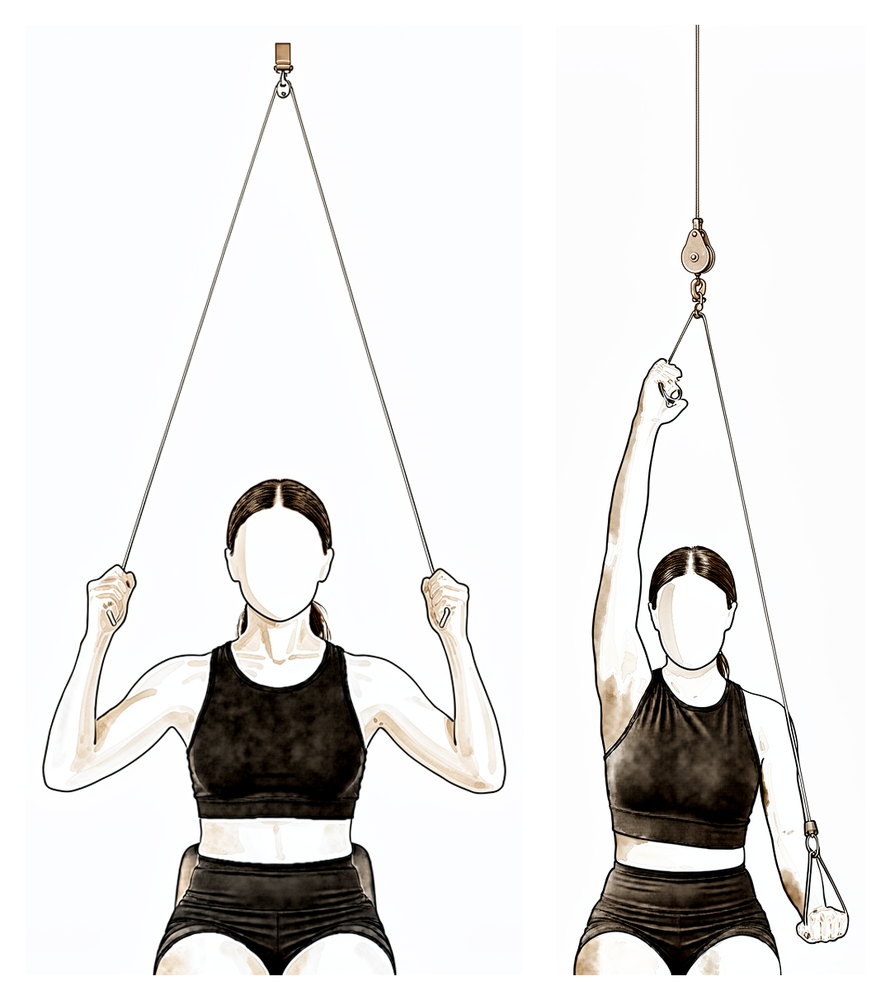
门顶滑轮
坐在门后滑轮装置下方,双手各握一个手柄。用健侧手臂向下拉,将患侧手臂尽可能高举过头顶,然后缓慢放下。每次动作均应推至产生明显牵拉感,但避免剧烈疼痛。
10次,每日3至4次
Kieran Hirpara 4.0
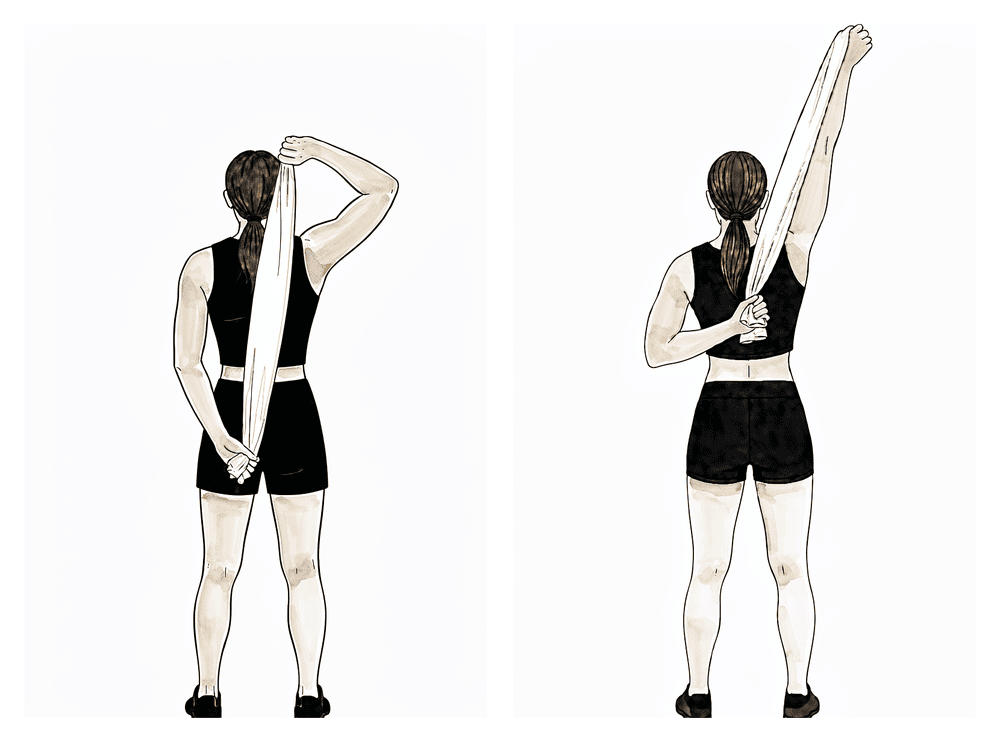
毛巾背后拉伸
用患手在下方,将毛巾置于背后,用上方的手将下方的手沿背部向上拉动,直至达到最大活动范围。拉伸至有紧绷感后松开:随后拉伸感应很快缓解。
10次,每日3至4次
Kieran Hirpara 4.0
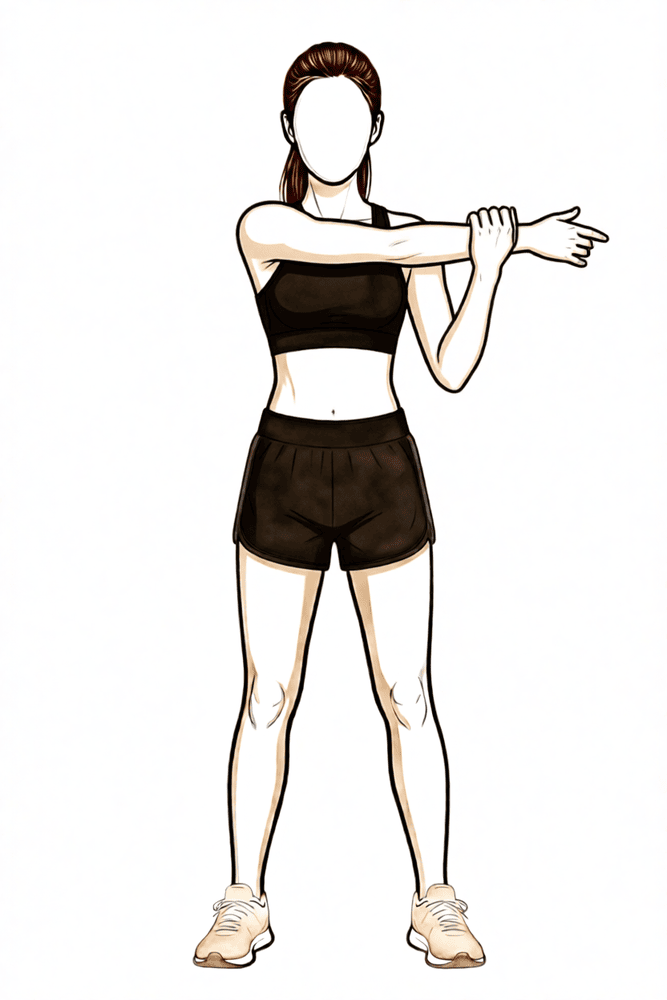
跨体拉伸
用健侧手将患侧手臂横过胸前,直至感到肩部后方有紧绷的牵拉感,然后松开。
10次,每日3至4次
Kieran Hirpara 4.0
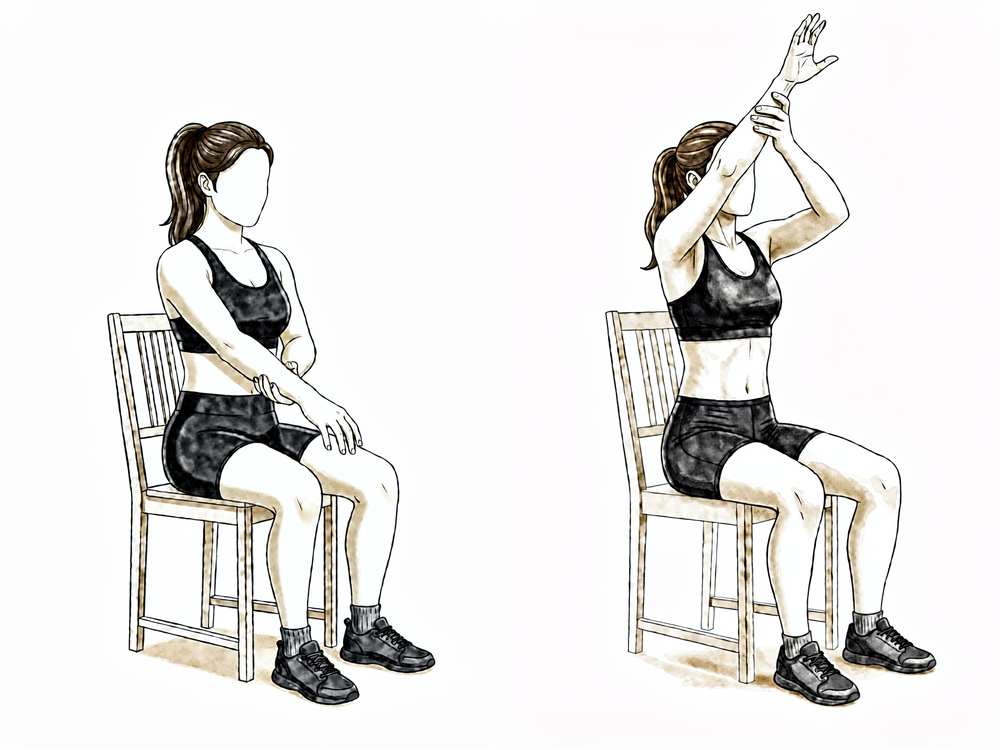
辅助前屈上举(坐位)
坐直并略微前倾,用健侧手托住患侧前臂,借助健侧手的力量将患侧手臂向前上方抬起至舒适的最大范围,然后缓慢放下。让健侧手臂承担主要动作,使患侧肩部保持放松。
在您的物理治疗师指导下
最初两周的目标很简单:不要失去手术时获得的关节活动范围。 请在家中继续进行医院教授的锻炼,每天多次,并增加将肩部推向各个方向极限的拉伸动作。良好的疼痛控制是实现这一目标的关键,因此请在锻炼和物理治疗前服用止痛药,并在拉伸前使用热敷、拉伸后使用冰敷(如果有帮助的话)。将手臂用于正常的轻度日常活动,如洗漱、穿衣和进食。将每个拉伸动作推至产生明显不适感(而非剧烈疼痛)的程度,请记住,没有需要刻意保留的活动平面。
满足以下条件即可进入下一阶段…… 您能够自信且独立地每天多次执行家庭锻炼计划,疼痛控制良好,足以拉伸至目标活动范围,并且您保持了手术时肩部的活动度。
第二阶段 — 保持并恢复活动范围(第 2–6 周)
Kieran Hirpara 4.0
棍棒辅助外旋(全范围)
继续从医院开始的棍棒辅助外旋,随着活动范围逐渐松开,现在进一步用力。将肘部置于体侧,将前臂向外旋转至最大范围。持续将其推至极限:推动这一活动范围正是手术的全部目的。
10次,每日3至4次
Kieran Hirpara 4.0
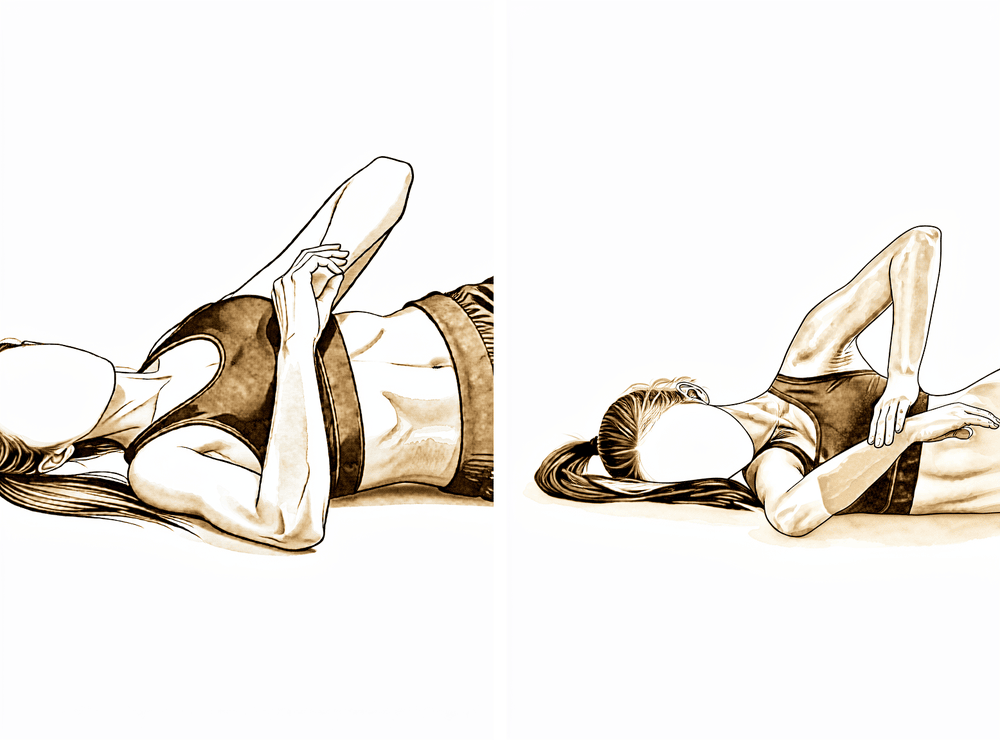
睡眠者拉伸
侧卧于手术侧,手臂向前伸出,肘部弯曲。用健侧手轻轻将前臂向床面方向下压,直至感到肩部深处有牵拉感,然后放松。
保持20至30秒,重复3次;每日3至4次
此阶段继续进行频繁的理疗和每日多次的家庭拉伸计划,以确保手术中获得的运动能力不会丧失,且活动范围持续增加。您的锻炼将从辅助运动逐渐过渡到在所有方向上主动活动手臂,理疗师可能会加入手法关节松动术以提供辅助。请在所有平面(包括外旋)持续推动活动范围至其极限。将手臂正常用于轻度日常活动。
满足以下条件即可进入下一阶段…… 手术中获得的范围得以保持或仍在改善,肩部以下高度的活动舒适无痛,且疼痛已充分缓解,可开始轻柔的抗阻训练。
第三阶段 — 强化训练(第 6–12 周)
Kieran Hirpara 4.0
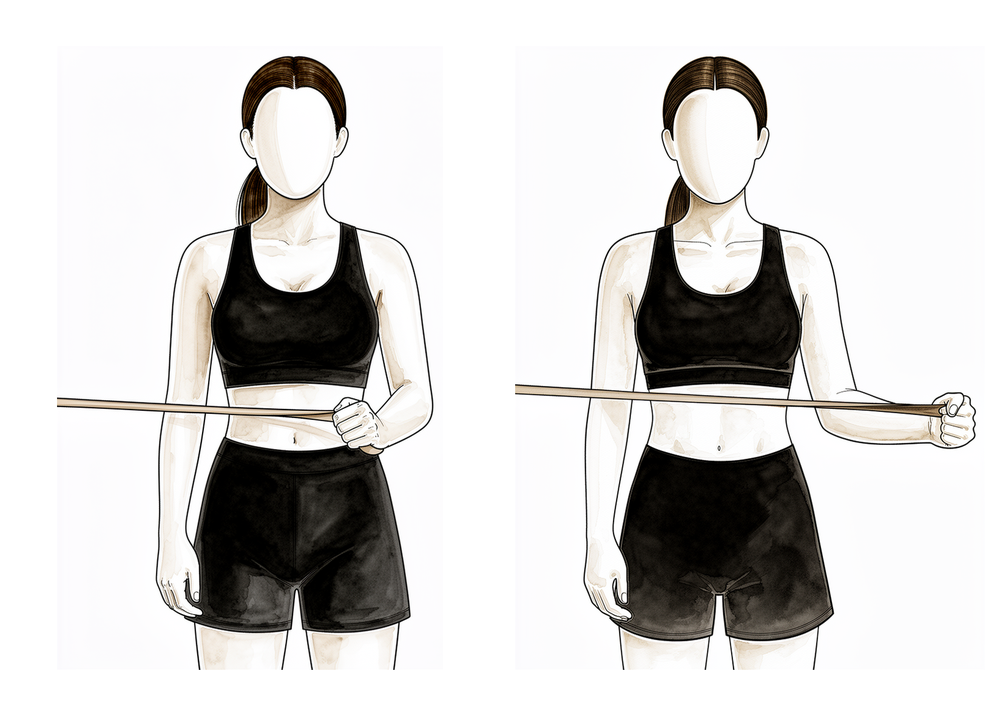
弹力带外旋
将肘部贴紧体侧并屈曲至90度,手持一条固定在腰部高度的橡皮筋。保持肘部贴于体侧,对抗橡皮筋阻力将前臂向外旋转,然后缓慢复位。
每周5天,每组10至15次,共2至3组
Kieran Hirpara 4.0
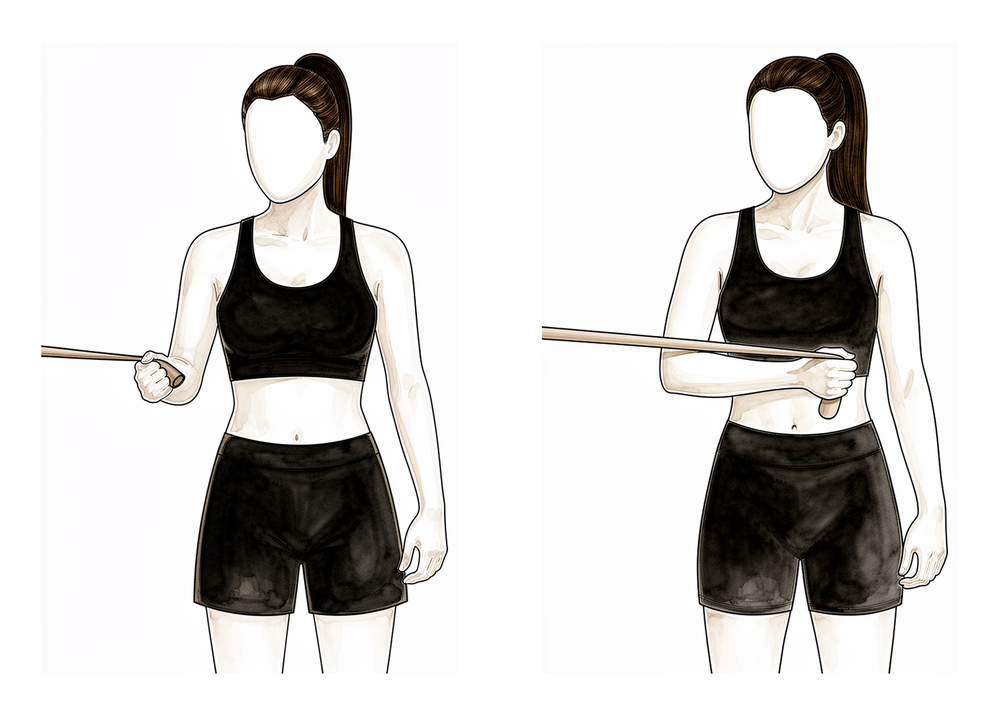
弹力带内旋
将肘部紧贴身体一侧,握住固定在一侧的弹力带,将前臂向内旋转并横过身体以对抗弹力带,然后缓慢复位。
每周5天,每组10至15次,共2至3组
Kieran Hirpara 4.0
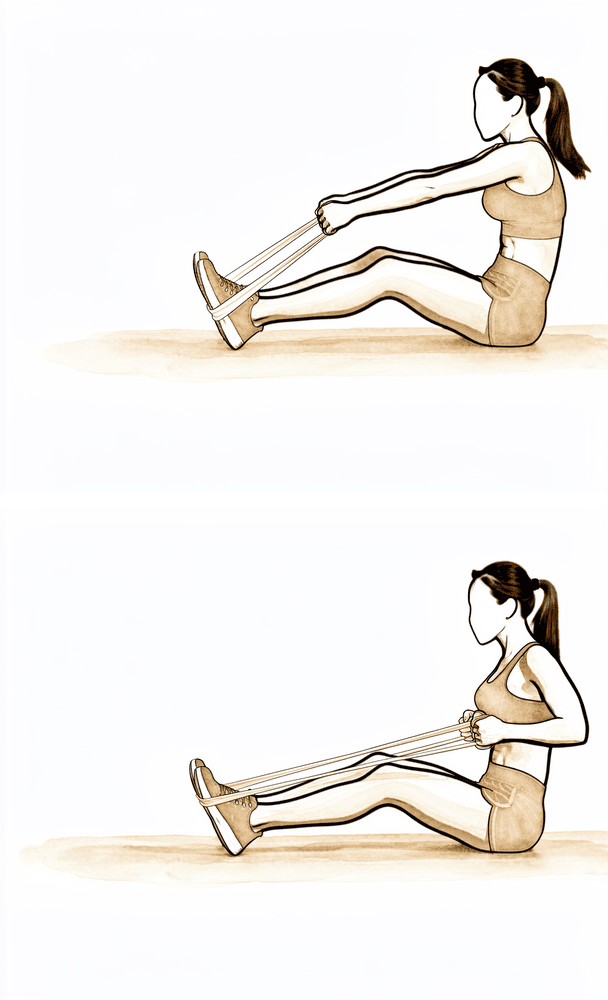
低位划船
握住一条固定在您前方腰部高度的弹力带。保持手臂相对伸直,将其向后下方拉向髋部,同时收紧肩胛骨使其向下、向后移动,然后缓慢还原。
每周5天,每组10至15次,共2至3组
Kieran Hirpara 4.0
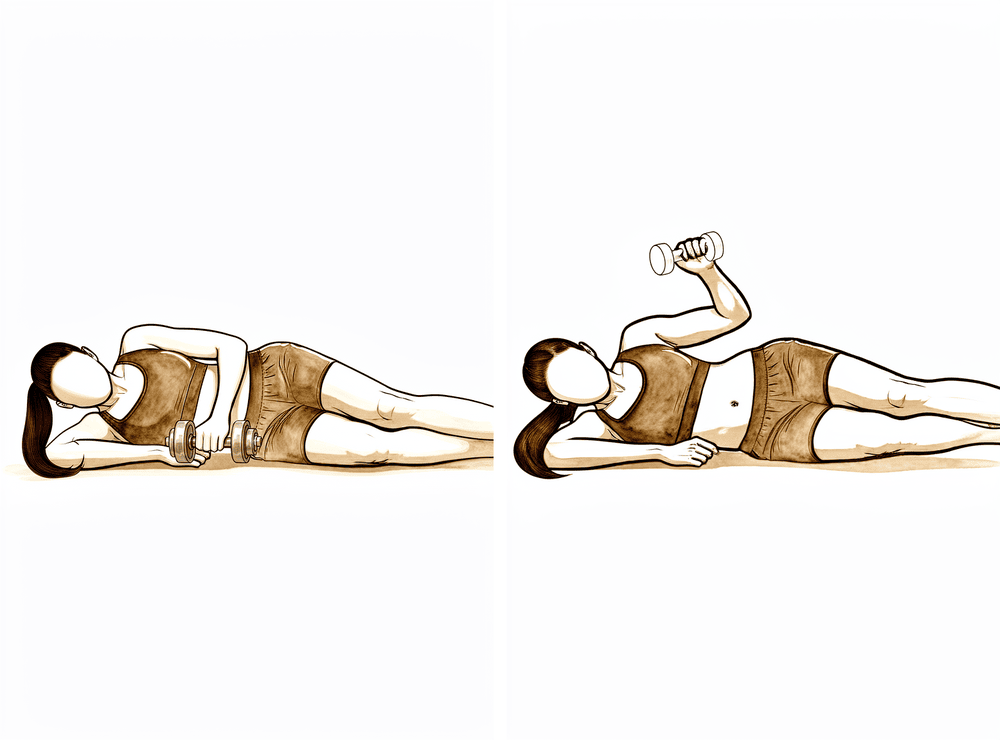
侧卧位外旋(轻重量)
侧卧于健侧,术侧肘关节屈曲90度并贴紧体侧,手持轻重量(约0.5至1.5公斤)。将前臂向上旋转,然后缓慢放下:缓慢下放是重要部分。保持动作在肩部高度以下。
2至3组,每组10至15次,低负荷
当您的活动范围稳定后,重点将转向重建肩部力量。本阶段全程需坚持每日拉伸,因为强化训练绝不能以牺牲您辛苦争取到的活动范围为代价。抗阻训练从轻柔开始,针对肩袖和肩胛骨肌肉,使用弹力带和轻重量,采用低负荷、高次数的训练方式。日常活动应基本恢复正常,较轻的休闲活动通常在本阶段恢复,具体请遵循物理治疗师的指导。
满足以下条件即可进入下一阶段…… 您在所有方向上均能实现完全或接近完全的无痛活动,且在进行强化训练时不会引发疼痛加剧或活动范围丧失。
第四阶段 — 恢复完全活动(第12周起)
最后阶段是逐步恢复较重的体力劳动、过头动作和体育运动。正式的康复疗程通常总共持续三到四个月,且肩关节在该阶段之后仍会持续改善:大多数人会在六到九个月内继续获得舒适感和信心,有时甚至长达一年。在肩关节活动范围无需正式锻炼即可自行维持之前,值得坚持进行简短的拉伸练习。进展以您的感受为指导,因此如果僵硬或疼痛开始复发,应对方法是放缓进度并恢复活动范围,而不是让肩关节休息。
恢复活动
大多数人可在四至六周内恢复正常日常活动及多种类型的工作,因为此处的恢复关键在于维持关节活动范围,而非等待组织愈合。较重、体力要求更高的工作及过头运动将在随后的数周至数月内逐步恢复,随着您的力量回归。若在任何阶段肩部再次出现僵硬,应将其视为需加强拉伸并咨询物理治疗师的信号,而非休息的信号。
您的锻炼
这些是您的手册中列出的锻炼项目。请按照Hirpara医生和您的物理治疗师的指导开始进行。关节囊松解术后没有需要保护的修复组织,因此保持肩部静止对您不利——松解后的肩部会在两次治疗之间再次变得僵硬。这就是为什么锻炼清单较长,以及为什么少量多次优于单次长时间锻炼:早期的腕部、手部和肘部活动加上钟摆运动可保持整个手臂的灵活性;辅助拉伸(仰卧屈曲、摇篮式外展、棍棒外旋)可维持手术获得的关节活动范围;弹力带和肩胛骨训练稍后加入以建立控制力。频率比力度更重要。停止任何引起锐痛而非拉伸感的动作。
您的方案之后
上述门诊阶段改编自已发表的关节镜关节囊松解术康复方案,恢复里程碑亦源自相同文献。周数范围通常为参考值而非固定标准,您的持续康复将由物理治疗师根据您肩部活动的恢复情况,在诊所的配合下为您进行个性化指导。本页面与诊所的一般术后恢复建议相辅相成:请参阅 术后疼痛管理 和 伤口护理。关于手术本身及其治疗的疾病,请参阅 关节囊松解术 和 冻结肩。
Evidence & references
This is the clinical evidence summary written for health professionals. It is technical, and it lists the research this page was built from. You do not need to read it to understand your treatment or to make a decision about it.
Topic scope: Both (A) non-operative staged management of primary/secondary adhesive capsulitis (freezing -> frozen -> thawing), including physiotherapy, intra-articular steroid and hydrodilatation; and (B) post-operative rehabilitation after arthroscopic capsular release (ACR).
Defining principle of surgical rehab here (the inversion): Unlike virtually every other shoulder operation -- where a repair (cuff, labrum, pec major, instability) must be protected with a sling and ROM is restricted to avoid disrupting healing tissue -- frozen-shoulder release rehab is the OPPOSITE: the goal is to prevent re-formation of the capsular contracture. So the protocol is immediate, aggressive ROM, usually NO sling, passive + active ROM starting the same day or day 1, with stretching to the end of the freshly gained range. Delay or immobilisation is the enemy (re-stiffening), not the protector. This is the single most important point distinguishing this protocol from the others in this audit.
A. NON-OPERATIVE STAGED MANAGEMENT
Natural history / staging (consensus, weak evidence -- descriptive, no RCT)
Frozen shoulder is self-limiting in most but typically lasts 12-18 months across 3 clinical stages (Reeves' classic model; staging boundaries overlap and are not sharply separable in practice -- flagged as weak/consensus evidence; the original Reeves model was a single prospective cohort of 49 patients, not an RCT) [Brigham SOC; Chan 2017; Reeves 1975 via Willmore 2020]:
| Stage | Name | Typical duration | Clinical picture | Management emphasis |
|---|---|---|---|---|
| 1 | Freezing (painful/inflammatory) | 2-9 months | Diffuse constant pain, worse at night; progressive ROM loss in a capsular pattern (ER > ABD > flexion > IR); loss of passive ER with arm at side is the hallmark | Pain control; intra-articular steroid; gentle ROM within pain limits -- do NOT force end-range while highly inflamed |
| 2 | Frozen (adhesive/stiff) | 4-12 months | Pain subsides to dull ache; stiffness dominant; marked functional loss | Restore motion: stretching, joint mobilisation grades III-IV, hydrodilatation; consider surgery if recalcitrant |
| 3 | Thawing | 6-9 months (Brigham) | Gradual spontaneous return of motion | Progressive ROM + strengthening; PT 2-3x/week |
(Stage durations from Brigham Standard of Care 2010 and Chan 2017: freezing 2-9 mo, frozen 4-12 mo, thawing 6-9 mo.)
Stepped non-operative interventions
- Education / "supervised neglect" + analgesia -- many resolve with reassurance, activity modification and analgesia alone (Codman; Hsu 2011 review). Weak (cohort/expert).
- Physiotherapy -- pendulum, PROM/AAROM/AROM, capsular stretching, joint mobilisation (grades I-II early for pain, III-IV later for tissue extensibility), scapular/posture work. Brigham: PT 1-2x/week in early stages (mainly HEP instruction), 2-3x/week in thawing. PT is best supported as an adjunct to mobilisation/injection/distension, not as a stand-alone cure (Itoi 2016 Current Concepts; Kelley/McClure/Leggin JOSPT 2009 guidance). Moderate; intensity/timing debated. Intensity caveat: end-range/high-intensity stretching is appropriate in the frozen/thawing phase but can be counter-productive in the acutely inflamed freezing phase -- match intensity to irritability (Kelley 2009).
- Intra-articular corticosteroid (glenohumeral) -- superior to placebo and to physiotherapy for short-term (up to 4-12 weeks) pain and function; benefit wanes after ~3 months. Strong for short term (multiple RCTs; Koh 2016 systematic review of 10 RCTs; Cochrane Buchbinder shoulder injection review). BESS pathway: GH steroid recommended for short-term symptom control; long-term (>3 mo) benefit not demonstrated (Rupani/Gwilym BESS 2025). Earlier injection (freezing phase) is the rationale -- steroid targets the inflammatory component.
- Hydrodilatation (distension arthrography) -- distends/ruptures the contracted capsule with saline +/- steroid +/- LA. A controlled, image-guided alternative to surgery. RCT/meta-analytic evidence is mixed: generally produces a transient functional/ROM gain, with no clear superiority over IA steroid alone in several network meta-analyses (Wu 2017 SR/MA of RCTs; Lin 2018 network MA). Some evidence hydrodilatation + steroid > steroid alone in refractory cases (Lee 2017 RCT). Low rate of needing later surgery after distension arthrogram (Nicholson 2020). Moderate; conflicting.
B. POST-OPERATIVE REHABILITATION (the "immediate aggressive ROM" protocols)
Surgery is reserved for cases recalcitrant to >=3-6 months of adequate non-operative care (Struyf 2024; Mullen 2025).
Arthroscopic capsular release (ACR)
- Controlled, direct-vision release of the contracted capsule (rotator interval, CHL, anterior +/- inferior +/- 360 degree capsulotomy; care re axillary nerve inferiorly). Allows graded release with a low risk of iatrogenic fracture or cuff tear (Kanbe 2018, n=255; Jerosch 2001 360 degree release). Achieves reliable gains in final forward elevation and may shorten recovery (most improved by ~4 months -- McAllister/CORR Insights 2025; Saade 2023 MA favoured ACR for AFE). A gentle, controlled manipulation is often performed as part of the arthroscopic release to confirm the gained range.
Consensus POST-OP phased timeline (applies after arthroscopic capsular release)
The hallmark is immediate motion, no protective sling, same-day/day-1 ROM to hold the range just won in theatre.
| Phase | Window | Sling | ROM | Active ROM | Strengthening | Notes |
|---|---|---|---|---|---|---|
| 0 -- Immediate | Day 0-1 (same day) | NO sling (or sling only briefly for comfort/analgesia, discarded fast) | Full passive ROM immediately; PT-assisted forward flexion + ER begun day 1; +/- continuous passive motion (CPM); pendulums; patient does HEP several times/day | AAROM/AROM started day 1 alongside PROM (no protected period) | -- | Intra-articular steroid often injected at time of release to damp post-op inflammatory re-stiffening |
| 1 -- Early | Week 0-2 | None | Aggressive PROM/AAROM to maintain gained range; stretch into end-range daily; hold ER/ABD/flexion | Active motion continued | Light scapular/rotator-cuff activation as pain allows | Pain control critical to allow the patient to move -- adequate analgesia / interscalene block / oral steroid taper |
| 2 -- Strengthening | Week 2-6 | None | Continue to full ROM | Full AROM goal | Rotator cuff + scapular strengthening begins ~week 2 (Kanbe protocol) | Most back to normal daily activity / work by 4-6 weeks |
| 3 -- Return to function | ~6 weeks-3 months | None | Maintain full ROM | Full | Progressive strengthening to full | Recurrence of stiffness is the main failure mode -> continued HEP emphasised |
Representative published protocol (Kanbe 2018, J Orthop Surg Res, n=255, ACR): "passive, assisted-active and stooping (pendulum) exercises for forward flexion and external rotation commenced 1 day after surgery... after 2 weeks of passive exercise, patients began active exercise to strengthen the rotator cuff and scapular stabilisers... after 4-6 weeks patients returned to normal work without limitation." Many ACR series add an intra-articular steroid + controlled manipulation at the index procedure (Filip Struyf 2024; PMC5137660).
Post-surgical physiotherapy is universally agreed to be essential but is under-standardised -- there is no high-level RCT defining the optimal post-release regimen; protocols are consensus/expert and vary widely (Willmore 2020 Shoulder & Elbow, "Post-surgical physiotherapy in frozen shoulder: a review"). Weak/consensus.
KEY CONTROVERSIES
- Evidence base for arthroscopic release. ACR gives a controlled, direct-vision release with a low iatrogenic fracture/cuff-tear risk and reliable gains in final elevation. Systematic reviews show consistently acceptable results, though there is no definitive RCT defining the optimal technique (Saade 2023 MA; McAllister 2025). Weak/moderate evidence (large cohorts).
- Steroid timing. Strong short-term benefit (<12 wk) but no durable >3-month benefit; debate over injecting early (freezing/inflammatory phase) vs reserving for refractory cases (Koh 2016; Rupani/Gwilym BESS 2025; Lin 2018).
- Aggressive vs gentle physiotherapy. High-intensity end-range stretching helps in the frozen/thawing phases but may worsen pain and prolong the condition if applied to the acutely inflamed freezing phase -- "intensity should match irritability" (Kelley/McClure 2009; Itoi 2016). Post-operatively, by contrast, aggressive immediate ROM is mandatory to prevent re-stiffening.
- Hydrodilatation worth it? Transient benefit only and not clearly better than IA steroid alone in pooled RCT data (Wu 2017; Lin 2018), though some refractory-case RCT support (Lee 2017) and a low rate of needing later surgery (Nicholson 2020).
- Does anything change the natural history? No intervention is proven to shorten the overall 12-18 month course in the highest-quality reviews; most accelerate symptom relief rather than alter end-point (Rookmoneea 2010 JBJS Br; Hsu 2011). Strong (negative).
EVIDENCE STRENGTH FLAGS (summary)
- STRONG (RCT / SR-MA): IA corticosteroid short-term benefit (Koh 2016 SR of 10 RCTs; Cochrane); hydrodilatation = transient, not superior to steroid (Wu 2017 SR-MA of RCTs; Lin 2018 network MA).
- MODERATE: end-range/scapular mobilisation (Yang 2012 RCT); ACR clinical outcomes (large cohorts -- Kanbe 2018 n=255; Jerosch 2001).
- WEAK / CONSENSUS ONLY: 3-stage natural-history model & stage durations (Reeves cohort, descriptive); the post-operative rehab protocol itself (no defining RCT; expert/consensus -- Willmore 2020); optimal ACR technique (published series are heterogeneous).
CITATIONS
RAG corpus (180,000+ Orthopaedic articles)
- Guyver P, Bruce D, Rees J. Frozen shoulder -- a stiff problem that requires a flexible approach. Maturitas. 2014.
- Kim J, Gahlot N, Park HB. Frozen shoulder: a narrative review of current treatment concepts and the underlying scientific evidence. Clinics in Shoulder and Elbow. 2025;28(4).
- Hsu JE, Anakwenze OA, Warrender WJ, et al. Current review of adhesive capsulitis. J Shoulder Elbow Surg. 2011;20(3):502-514.
- Koh KH. Corticosteroid injection for adhesive capsulitis in primary care: a systematic review of randomised clinical trials. Singapore Med J. 2016.
- Rupani N, Gwilym SE. British Elbow and Shoulder Society patient care pathway: Frozen shoulder. Shoulder & Elbow. 2025;17(4).
- Sheridan MA, Hannafin JA. Upper Extremity: Emphasis on Frozen Shoulder. Orthop Clin North Am. 2006.
- Chan H, Pua P, How C. Physical therapy in the management of frozen shoulder. Singapore Med J. 2017.
- Willmore EG, Millar NL, van der Windt D. Post-surgical physiotherapy in frozen shoulder: a review. Shoulder & Elbow. 2020;14(4).
- Lamplot JD, Lillegraven O, Brophy RH. Outcomes from conservative treatment of shoulder idiopathic adhesive capsulitis... Orthop J Sports Med. 2018.
- Itoi E, Arce G, Bain GI, et al. Shoulder Stiffness: Current Concepts and Concerns. Arthroscopy. 2016;32(7).
- Kanbe K. Clinical outcome of arthroscopic capsular release for frozen shoulder: essential technical points in 255 patients. J Orthop Surg Res. 2018;13(1). (post-op protocol: day-1 ROM, 4-6 wk RTW)
- Jerosch J. 360 degree arthroscopic capsular release in patients with adhesive capsulitis... Knee Surg Sports Traumatol Arthrosc. 2001;9(3).
- McAllister NB. CORR Insights: Releasing forces in adhesive capsulitis... Clin Orthop Relat Res. 2025.
- Saade F, van Rooij F, Saffarini M, et al. Management of shoulder stiffness following rotator cuff repair: a systematic review and meta-analysis. JSES Rev Rep Tech. 2023.
- Wu W, Chang K, Han D, et al. Effectiveness of glenohumeral joint dilatation for treatment of frozen shoulder: a systematic review and meta-analysis of RCTs. Sci Rep. 2017. (SR-MA of RCTs)
- Lin M, Hsiao M, Tu Y, et al. Comparative efficacy of intra-articular steroid injection and distension... a systematic review and network meta-analysis. Arch Phys Med Rehabil. 2018. (network MA)
- Lee D, Yoon S, Lee MY, et al. Capsule-preserving hydrodilatation with corticosteroid vs corticosteroid alone in refractory adhesive capsulitis: a randomized controlled trial. Arch Phys Med Rehabil. 2017. (RCT)
- Nicholson JA, Slader B, Martindale A, et al. Distension arthrogram in the treatment of adhesive capsulitis has a low rate of repeat intervention. Bone Joint J. 2020;102-B(5).
- Uppal HS. Frozen shoulder: a systematic review of therapeutic options. World J Orthop. 2015.
- Mullen JP, Hauer TM, Lau EN, et al. Adhesive capsulitis of the shoulder. Arthroscopy. 2025;41(7).
- Yang J, Jan M, Chang C, et al. Effectiveness of the end-range mobilization and scapular mobilization approach... a randomized control trial. Manual Therapy. 2012. (RCT)
- Rookmoneea M, et al. The effectiveness of interventions in the management of patients with primary frozen shoulder. J Bone Joint Surg Br. 2010;92-B(9).
- Struyf F. Frozen Shoulder. 2024 (surgical indication & post-op steroid + controlled manipulation).
Published rehab protocols (URLs)
- Brigham & Women's Hospital -- Standard of Care: Shoulder Adhesive Capsulitis (Dept of Rehabilitation Services, 2010): https://www.brighamandwomens.org/assets/BWH/patients-and-families/rehabilitation-services/pdfs/shoulder-adhesive-capsulitis.pdf (source for the 12-18 mo / 3-stage durations, capsular pattern, PT frequency 1-2x/wk early & 2-3x/wk thawing, mobilisation grades, steroid 4-6 wk short-term benefit).
- BESS (British Elbow & Shoulder Society) Frozen Shoulder patient care pathway -- Rupani & Gwilym, Shoulder & Elbow 2025 (GH steroid short-term only, no >3 mo benefit).
- Kanbe 2018 ACR open-access (post-op day-1 ROM protocol): https://pmc.ncbi.nlm.nih.gov/articles/PMC5857121/
- ChoosePT / APTA patient guide to frozen shoulder (lay phased overview): https://www.choosept.com/guide/physical-therapy-guide-frozen-shoulder-adhesive-capsulitis





