

桡骨远端骨折(切开复位内固定术) 资料
本方案指导您在 Mater Private Hospital Rockhampton 接受 Kieran Hirpara 医生进行远端桡骨(腕部)骨折切开复位内固定术(ORIF)后的康复过程。方案首先介绍您的居家锻炼计划,随后是为您物理治疗师或手部治疗师撰写的结构化临床方案:请在首次治疗就诊时携带此页面或其 PDF 文件,以确保您的康复过程协调一致。您的治疗师可能会根据康复进展调整计划。
如果您对术后伤口有任何疑虑,请联系诊所。通常,拍摄伤口照片并通过电子邮件发送以供审阅会很有帮助。
预期情况
关于伤口、肿胀和疤痕管理,请参阅本诊所的伤口护理指南。
手术后,您可能会被转诊至手部治疗师以制作热塑性夹板。在这种情况下,夹板将暂时佩戴以提供舒适感和保护,您仍需取下夹板以进行家庭锻炼计划。如果您被转诊制作夹板,您将收到有关佩戴和护理的更多信息。
以下练习对于恢复手指、手腕和前臂的活动范围至关重要。热敷和冷敷是常用于恢复活动、恢复功能和改善舒适度的良好物理治疗手段。伤口愈合后,您可以在锻炼前进行热敷;锻炼后可使用冰袋以防止或平息炎症。
远端桡骨手术后的疤痕管理(特别是按摩)非常重要,以确保切口下方的肌腱保持自由滑动,而不与愈合中的疤痕粘连。
掌侧锁定钢板旨在牢固固定骨折,以便早期开始活动,本方案即以此为基础。比较掌侧钢板固定后早期腕部活动与数周固定时间的研究显示,早期开始活动可在不损害骨折位置的情况下改善短期活动度、握力和舒适度 [1][2]。同时,比较在约两周时开始腕部活动与在约六周时开始活动的试验发现,两组在三个月至六个月时相似 [3],因此虽然早期活动有好处,但无需急于求成,以下列出的稳步进展方案有充分支持。无论手腕感觉如何,骨骼愈合都遵循其自身的时间表,这就是为什么即使活动变得舒适,仍需遵守后期的注意事项(骨折后12周内禁止负重、提重物或进行对抗性运动)。
注意事项与限制
鼓励手部进行轻度功能性活动,以完成日常生活动作,如自我护理、进食、穿衣、书写和打字。
在术后最初几周,务必保护腕部,避免提重物、抓握及冲击;在骨折后12周内,避免通过该手臂承重、提举重物及进行对抗性运动。从第4周左右开始,逐步引入温和的强化训练,从轻度手指活动和腕部等长运动开始,并谨慎逐步增加强度,以确保不会破坏早期的保护效果。
以下是您手册中的练习,旨在恢复手指、手腕和前臂的活动度。如果您佩戴了支具,请在进行练习时将其取下。请按照Hirpara医生和治疗师的指导开始这些练习。
您的锻炼
Kieran Hirpara 4.0
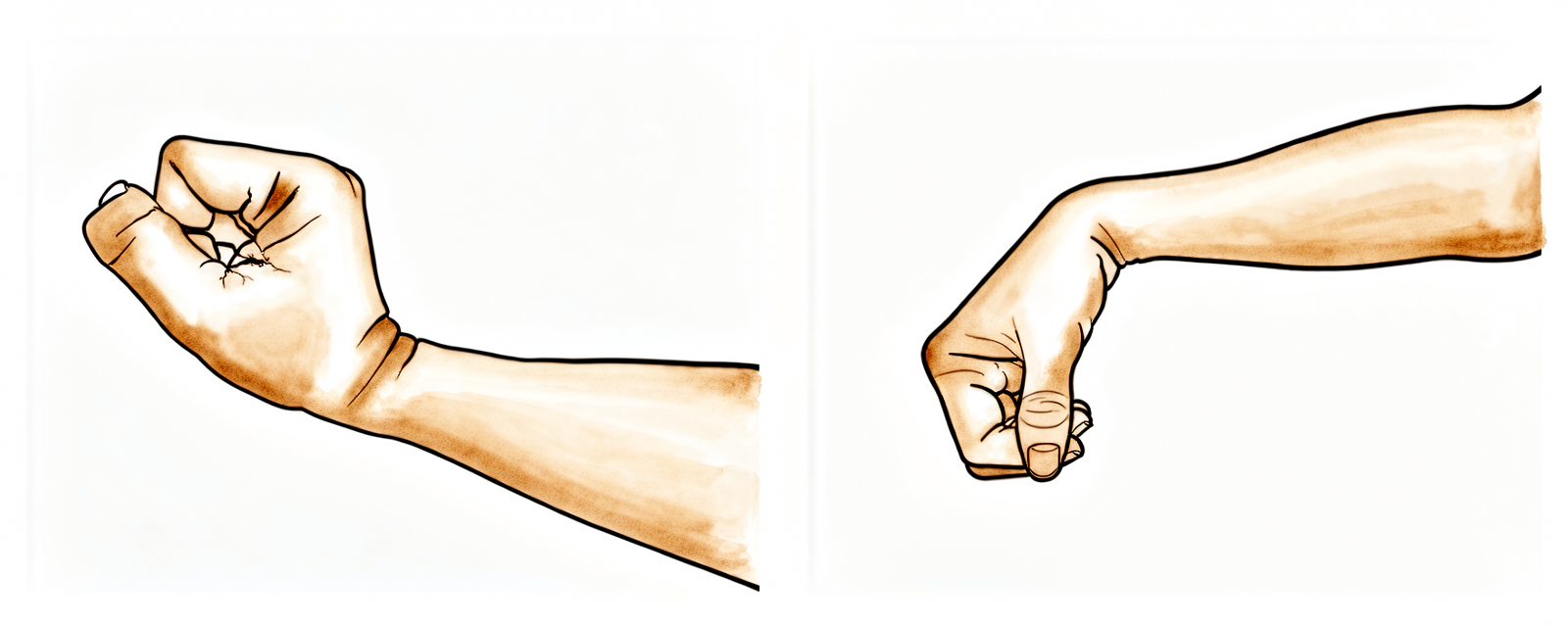
腕关节屈曲/伸展
将肘部支撑在桌面上,轻轻前后摆动手腕(或如图所示,将手腕悬空置于桌边或扶手椅边缘)。待感觉更舒适后,用另一只手的手掌推压手腕使其向后伸展(手指指向天花板),然后反向伸展(手指指向地面),保持手指放松。每个拉伸动作保持15秒。
每个方向10次,每日4次
Kieran Hirpara 4.0
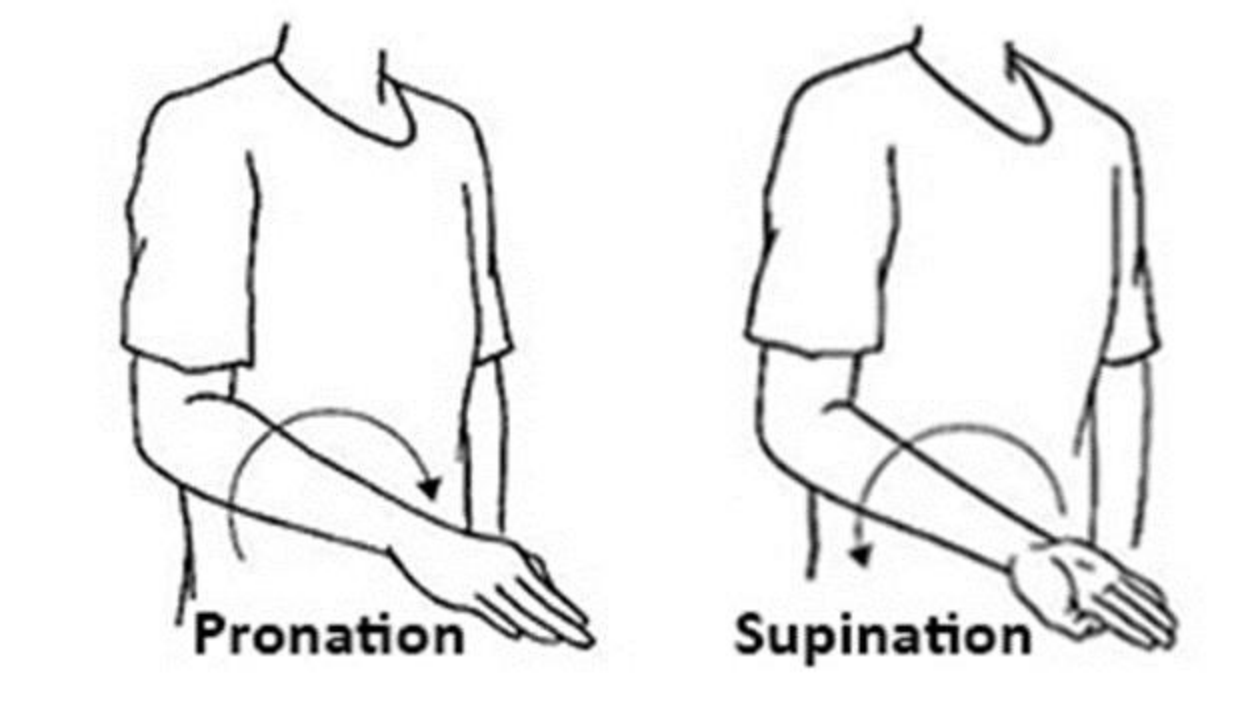
前臂旋转(旋前 / 旋后)
将肘部置于体侧,前臂保持中立位(拇指朝上),轻轻将手掌向上旋转朝向天花板(旋后),保持3–5秒,然后回到中立位。重复将手掌向下旋转朝向地板(旋前)。不要让肘部离开身体。您可以使用另一只手在手腕水平处辅助完成该动作。
每个方向10次,每日4次
Kieran Hirpara 4.0
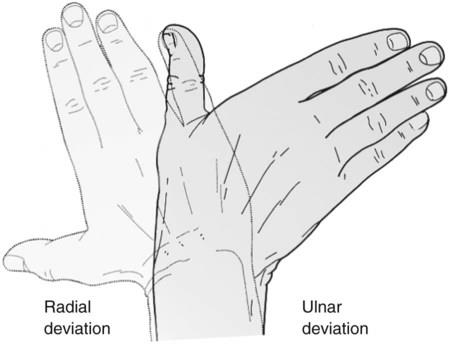
尺偏 / 桡偏
将您的手和前臂平放在平坦的表面上。保持前臂不动,轻轻地将手腕和手从一侧移动到另一侧(如图所示)。
10次,每日4次
Kieran Hirpara 4.0
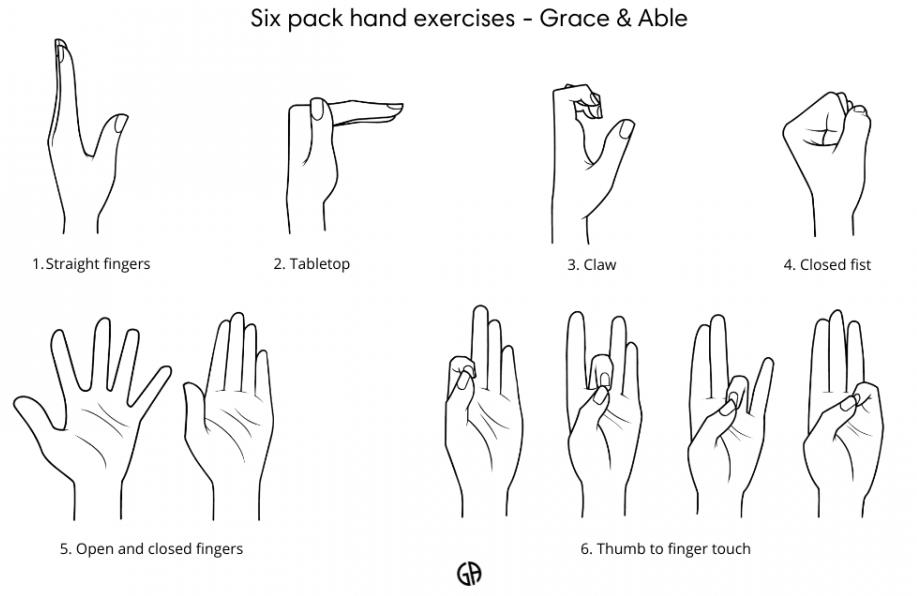
六组手部锻炼
将手置于身前,保持手腕伸直,依次完成图中所示的六个动作:手指伸直;“桌面”位(在掌指关节处弯曲,手指保持伸直);“钩”位(弯曲指尖,指关节向上);拇指压在手指上的紧握拳;手指张开后再并拢;以及拇指依次触碰从食指到小指的每个指尖。
每种5–10,每日2–3次;根据耐受情况逐步调整
请仅在Hirpara医生和您的手部治疗师的指导下开始进行下面这些锻炼动作,并严格保持在您被允许的范围内和限制内。由于骨折由钢板固定,手腕可以早期开始活动,而无需等待骨愈合。手腕屈伸、前臂旋转和侧向活动可防止关节僵硬,而“六项”手部锻炼可保持手指、拇指和指间关节的活动——在此手术后,手指僵硬比骨骼问题更为常见。请少量多次地进行。如果任何动作在骨折部位引起剧烈疼痛,请立即停止。
您的临床方案
本页其余部分为针对采用掌侧锁定钢板进行切开复位内固定术治疗的远端桡骨骨折的加速临床方案。本节内容应提供给您的物理治疗师或手部治疗师,以下每个阶段均以通俗易懂的语言说明当前正在发生的情况。
术后 1–4 天
在最初几天,重点在于保护内固定、控制肿胀,并保持手指、手腕、前臂、肘部和肩部的活动。手术敷料需保留至第 3 天,届时需减少敷料并重新换药。休息时请抬高患手,在舒适范围内用于轻度日常活动(重量低于 1–2 公斤),并避免通过手臂承重、用力抓握或提重物。通常无需使用夹板,但若需返回工作岗位或手腕疼痛较剧烈,可安排使用夹板。
致物理治疗师:
在治疗前,请查看患者的 X 光片、手术报告及既往病史(PMHx),并与主刀医生沟通骨折内固定的稳定性及可能的预后。
健康教育与注意事项
- 避免通过手臂承重、用力抓握或提重物
- 鼓励在疼痛限制及正常运动模式下,将患手用于轻度(低于 1–2 公斤)的日常活动(ADL)
管理措施
- 夹板:无需常规使用,但若患者需返回工作岗位或疼痛加剧时可考虑使用;可考虑使用热塑夹板或现成的支撑具
- 伤口:手术敷料/绷带需保持完整至第 3 天;术后第 3 天起减少绷料并重新换药;提供伤口管理教育
- 水肿:提供抬高患肢的教育;根据需要提供加压治疗和逆向按摩
- 练习:提供主动六肌群(six pack)练习以维持手指活动范围(ROM);提供主动手腕、前臂和手指活动范围练习;鼓励定期进行主动肘部和肩部活动范围练习
术后第 2–4 周
您的缝合线将在第 10–14 天拆除,一旦伤口愈合程度足够,即可开始瘢痕按摩。锻炼计划继续进行(一旦手指恢复完全活动,即停止六组肌群锻炼),并开始温和的肌肉激活(等长)腕部强化训练。在此阶段,手腕仍应仅依靠自身肌肉力量活动:目前尚不应由任何人(包括您自己)进行被动推压或拉伸,因为骨折仍在愈合中。请继续避免负重、紧握及提重物;鼓励进行重量低于 1–2 公斤的轻度日常任务。当手腕佩戴支具时,您不得驾驶;一旦拆除支具,经复诊确认后,即可恢复驾驶。
致您的物理治疗师:
评估
- 自评量表:患者评定腕部评估(PRWE)、上肢、肩部及手部功能障碍量表(DASH)
- 水肿周径测量
- 视觉模拟疼痛量表(VAS)或数字评分量表
- 主动活动范围(AROM)量角器测量:手部、腕部
- 主观复诊,包括患者对方案的依从性、手部在日常活动(ADL)任务中的功能使用,以及存在的问题/顾虑
教育与注意事项
- 避免通过手臂负重、紧握或提重物
- 禁止腕部被动活动
- 鼓励在疼痛限制及正常运动模式内,使用患手进行轻度(小于 1–2 公斤)的日常活动(ADL)任务
- 佩戴支具期间禁止驾驶;拆除支具后,经复诊确认即可恢复驾驶
处理
- 伤口/瘢痕:第 10–14 天拆除缝合线;根据愈合进展,适时开始瘢痕管理
- 水肿:如有需要,考虑使用加压包扎、逆向按摩、手动水肿动员(MEM)、对比浴和/或抬高患肢
- 锻炼:一旦手指达到完全活动范围,即停止主动六组肌群锻炼;若手部主动活动范围未达完全,考虑进行手指和拇指的被动锻炼,包括放置/保持(place/hold);继续主动腕部活动范围锻炼;鼓励规律进行主动肘部和肩部活动范围锻炼;开始腕部等长强化训练
问题排查
- 监测伤口感染迹象、手部感觉变化,或复杂区域疼痛综合征(CRPS)的早期迹象
- 识别异常运动模式,并根据需要进行干预
术后第 4–6 周
此阶段开始温和地进行强化训练:从第4周开始进行低阻力手指强化训练,同时继续进行等长腕部训练并逐步升级。如果X光片结果令人满意且内固定稳定,可在 4–6 周时开始温和的被动腕部拉伸(即借助另一只手或治疗师的帮助移动腕部)。恢复活动度仍优先于力量建设。继续避免通过手臂承重和提重物,同时继续用手进行轻度的日常任务。
致您的物理治疗师:
评估
- 水肿周径测量
- 视觉模拟疼痛量表或数字评分量表
- 主动活动度(AROM)量角器测量及运动模式质量
- 主观评估,包括患者对方案的依从性、手在日常生活活动(ADL)任务中的功能使用,以及存在的问题/担忧
- 使用握力计测量握力(每侧肢体3次)
教育与注意事项
- 避免通过手臂承重或提重物
- 鼓励在疼痛限制和正常运动模式内,使用患手进行轻度(小于 1–2 kg)的日常生活活动(ADL)任务
管理
- 瘢痕:根据需要继续瘢痕管理
- 水肿:根据需要继续加压治疗、逆向按摩、多向挤压(MEM)和抬高;停止冷热交替浴
- 练习:如果活动度(ROM)未完全恢复,继续被动手指和拇指练习;继续主动腕部活动度练习;第4周开始对抗低阻力的手指强化练习;如果切开复位内固定(ORIF)稳定且X光片令人满意,第 4–6 周开始温和的被动腕部练习;鼓励规律进行主动肘部和肩部活动度练习;继续/升级等长腕部强化练习
问题排查
- 评估复杂性区域疼痛综合征(CRPS)及肩部疼痛的迹象
- 考虑家庭计划中练习的量,并优先恢复活动度而非力量
- 如果腕部活动度显著受限,在外科医生批准的情况下,考虑在视觉模拟评分(VAS)4/10以内开始温和的被动活动度(PROM)腕部练习
术后第 6–8 周
此阶段在接下来的 3 周内开始逐步恢复至完全活动。腕部强化训练逐步增加至轻重量(0.5–1.0 公斤)或低阻力治疗带,指部强化训练的阻力增加。仍有两项严格限制:骨折后 12 周内禁止负重、重物搬运或对抗性运动。一旦您拥有完全的活动度和适当的功能恢复,您的治疗师将考虑让您出院。
致您的物理治疗师:
评估
- 根据需要测量水肿周径
- 视觉模拟疼痛量表或数字评分量表
- 主动活动范围(AROM)量角器测量
- 握力
- 主观评估
教育与注意事项
- 在接下来的 3 周内逐步恢复至完全活动
- 骨折后 12 周内避免负重、重物搬运和对抗性运动
管理
- 瘢痕:根据需要继续瘢痕管理
- 水肿:根据需要继续水肿管理
- 练习:若活动范围(ROM)未达完全,继续被动手指和拇指练习;若需要,继续主动和被动腕部活动范围练习;增加指部强化练习的阻力;开始使用 0.5–1.0 公斤重量或低阻力治疗带进行腕部强化练习;根据耐受情况升级腕部强化计划中使用的重量和阻力
问题排查
- 若活动范围改善缓慢,考虑/开始夜间连续渐进式夹板、拳击手套或动态夹板
- 监测任何腕部不稳定的迹象,并酌情处理
- 当活动范围完全且功能恢复适当时,考虑出院
- 若病情停滞和/或预后不佳,考虑转回主治医生
本方案由 Sarah Farrell, BOccThy AHT 和 Kristy Gerlach, BOccThy AHT 协助撰写。
您的方案之后
本方案与诊所的总体康复建议配合使用;请参阅 术后疼痛管理、伤口护理 和 手部治疗基础。关于手术本身及其治疗的损伤,请参阅 远端桡骨固定(切开复位内固定术) 和 远端桡骨骨折。上述分阶段计划与掌侧锁定钢板固定术后康复的已发表证据相符,您的持续康复将根据腕部恢复情况,由您的物理治疗师或手部治疗师进行个体化指导。
参考文献
[1] Quadlbauer S, Pezzei C, Jurkowitsch J, et al. Immediate mobilization of distal radius fractures stabilized by volar locking plate results in a better short-term outcome than a five week immobilization: a prospective randomized trial. Arch Orthop Trauma Surg. 2022;142(5):1–11. https://pubmed.ncbi.nlm.nih.gov/34852677/ [2] Gutiérrez-Espinoza H, Araya-Quintanilla F, Olguín-Huerta C, et al. Effectiveness of early versus delayed motion in patients with distal radius fracture treated with volar locking plate: a systematic review and meta-analysis. Hand Surg Rehabil. 2020;39(4):261–271. https://www.sciencedirect.com/science/article/abs/pii/S2468122920302231 [3] Lozano-Calderón SA, Souer S, Mudgal C, Jupiter JB, Ring D. Wrist mobilization following volar plate fixation of fractures of the distal part of the radius. J Bone Joint Surg Am. 2008;90(6):1297–1304. https://pubmed.ncbi.nlm.nih.gov/18519324/ [4] Miller LK, Jerosch-Herold C, Shepstone L. Effectiveness of edema management techniques for subacute hand edema: a systematic review. J Hand Ther. 2017;30(4):432–446. https://pubmed.ncbi.nlm.nih.gov/28807598/
Evidence & references
This is the clinical evidence summary written for health professionals. It is technical, and it lists the research this page was built from. You do not need to read it to understand your treatment or to make a decision about it.
Topic scope: post-operative rehabilitation after open reduction and internal fixation (ORIF) of a distal radius fracture with a volar locking plate. This brief backs an early-motion-but-protected hand/wrist pathway delivered with hand therapy, where wrist motion begins early while bone-dependent loading (weight-bearing, heavy lifting, contact sport) is deferred until ~12 weeks. It does not cover the indications for surgery vs casting, nor fragment-specific/dorsal/bridge-plate constructs (which carry their own loading rules).
Defining principle of the rehab here: a volar locking plate is a fixed-angle construct stable enough to permit immediate wrist motion — the screws lock to the plate and hold the articular reduction independent of the cast. So (unlike a cast-treated fracture, and unlike a tendon or ligament repair) the wrist does not need weeks of immobilisation to protect the reduction: the rehab is an early-movement pathway — finger/forearm/wrist active motion and oedema control from day one, splint for comfort only, isometric then progressive strengthening from ~weeks 4–6. The one timeline that is not negotiable is bone healing: union takes ~6–12 weeks regardless of how the wrist feels, which is why weight-bearing, heavy lifting and impact are held to 12 weeks even once motion is comfortable.
A. PROCEDURE & CONSTRUCT — what the rehab is protecting
Volar locking plate fixation is the dominant operative construct for displaced distal radius fractures and is the reference standard against which other techniques are compared. Key surgical-outcome facts that shape the rehab:
- Volar locking plates restore and hold articular reduction reliably, and across randomised comparisons give equivalent or better functional outcomes than non-operative care and competing fixation methods (dorsal plating, intramedullary nailing, fragment-specific), with most differences favouring early function rather than final endpoint [JAAOS controversies review 2014; Hand Clinics plate-fixation review 2021; IM-nail-vs-volar-plate RCTs].
- The fixed-angle construct is the rationale for early motion. Because the locking screws hold the subchondral fragments rigidly, the plate — not a cast — maintains the reduction, so wrist motion can start before union without displacing the fracture [Hand Clinics 2021; accelerated-rehab RCT, JBJS 2014].
- In older patients the operative-vs-conservative outcome gap is small. A 3-year RCT in patients >70 found volar plating and non-operative care converged on similar patient-reported function — context that keeps post-operative rehab pragmatic and patient-centred rather than aggressive [BMC Musculoskelet Disord 2022; Hand Clinics geriatric review 2021].
- Recovery is gradual. Range, grip and patient-reported scores improve steadily over the first 3–6 months; the construct permits early motion but does not accelerate the biology of healing or the return of grip strength.
B. REHABILITATION / HAND-THERAPY EVIDENCE
The central rehab questions for this construct are (1) when to start wrist motion, (2) how much supervised therapy is needed, and (3) what the strengthening timeline should be. The evidence is clear on the first, nuanced on the second, and consensus-driven on the third.
- Early motion is safe and gives a short-term advantage. Multiple RCTs and a systematic review show that starting wrist motion early after volar plating improves short-term ROM, grip and comfort without compromising the radiographic reduction [accelerated-rehab RCT, JBJS 2014; early-vs-late motion RCT, HAND 2018; Hand Therapy systematic review 2020]. This is the direct warrant for the day-1 finger/forearm/wrist program in this protocol.
- "Early" need not mean "immediate," and the advantage washes out by 3–6 months. The landmark trial comparing wrist mobilisation at ~2 weeks vs ~6 weeks found the two groups equivalent by 3–6 months [Lozano-Calderón / JBJS 2008]. So there is a genuine early benefit but no penalty for a measured, comfort-led progression — which is exactly why this protocol can be unhurried.
- Routine supervised physiotherapy adds little over a coached home program for most patients. Systematic reviews and RCTs repeatedly find that a structured home exercise program preceded by instruction/coaching performs as well as formal supervised therapy for uncomplicated cases, and that prescribed exercise programs add limited benefit over advice for impairment/activity outcomes [HEP-vs-supervised SR, J Hand Ther 2014; J Physiother SR 2017; Hand Clinics "is therapy needed?" 2021; Arch Orthop Trauma Surg 2020]. This supports a home-program-first model with hand-therapy review, escalating supervision for stiffness, oedema or slow progress — the structure of this protocol.
- Oedema control and scar/tendon-glide management are standard therapy elements. Elevation, retrograde massage, manual oedema mobilisation and (early) compression are the evidence-informed oedema toolkit [edema-management SR, J Hand Ther 2017]; scar massage to keep the flexor tendons gliding under the volar incision is consensus hand-therapy practice rather than RCT-derived.
Phased post-op timeline (volar locking plate, early-motion pathway)
Phases match this topic's synthesis.md. Timings are post-operative weeks; the 12-week
loading limit is referenced to the fracture (injury) date.
| Phase | Window | Splint | Motion / use | Strengthening | Notes |
|---|---|---|---|---|---|
| I — Protect & move | Days 1–4 | Comfort only, not routine | Active finger (six-pack), wrist, forearm, elbow & shoulder ROM from day 1; light ADL < 1–2 kg within pain limits | — | Surgical bandage to day 3, then redress. Oedema control + elevation. No weight-bearing, gripping or lifting |
| II — Active range & oedema | Week 2–4 | Comfort/work only (no driving while splinted) | Continue active wrist ROM (no passive yet); six-pack stops once fingers full | Isometric wrist activation begins | Sutures out day 10–14; start scar massage once healed. Watch for CRPS. PRWE/DASH baseline |
| III — Passive range & light load | Week 4–6 | Off | Add gentle passive wrist stretches at 4–6 wk if x-ray satisfactory & fixation stable | Finger strengthening (low resistance) from wk 4; upgrade isometrics | Movement still prioritised over strength |
| IV — Graded strengthening & return | Week 6–8 | Off | Restore/maintain full active & passive ROM | Wrist strengthening with 0.5–1.0 kg / light theraband, progress as tolerated | Graded return over ~3 wk. No weight-bearing, heavy lifting or contact sport until 12 weeks post-fracture. Discharge on full ROM + functional return |
The phase structure mirrors published surgeon/hand-therapy ORIF protocols (early ROM → scar + oedema → passive range + light resistance → progressive strengthening, with heavy load/sport held to ~12–16 weeks) [Physiopedia Colles' ORIF protocol; institutional ORIF rehab guidelines].
C. KEY CONTROVERSIES / EVIDENCE QUALITY
- How early to mobilise. Early motion (immediate–2 wk) gives a real short-term ROM/grip/comfort advantage that equalises by 3–6 months vs starting at ~6 weeks. The evidence therefore supports early motion but does not mandate aggression — a measured progression is fully defensible. Moderate–strong (multiple RCTs + SR).
- Supervised therapy vs coached home program. For uncomplicated fractures the best available evidence finds no consistent benefit of routine formal physiotherapy over a well-instructed home program; supervision is best targeted to stiffness, oedema, CRPS risk or slow progress. Moderate (SRs/RCTs), but heterogeneous.
- Strengthening and return-to-load timing. The week-by-week strengthening ramp and the 12-week loading hold are construct- and biology-based consensus, drawn from surgeon/hand- therapy protocols rather than a strengthening-timing RCT. Weak/consensus.
- Whether the wrist needs any immobilisation at all. Some trials report that omitting post-op immobilisation does not worsen outcomes after volar plating, supporting the "splint for comfort only" stance here. Moderate.
D. EVIDENCE STRENGTH FLAGS (summary)
- STRONG / MODERATE–STRONG (RCT / SR): early wrist motion after volar plating is safe and improves short-term ROM/grip/comfort without loss of reduction (accelerated-rehab RCT JBJS 2014; early-vs-late RCT HAND 2018; Hand Therapy SR 2020); ~2-wk vs ~6-wk mobilisation equivalent by 3–6 months (Lozano-Calderón JBJS 2008).
- MODERATE: volar locking plate is a reliable fixed-angle construct with equivalent/favourable outcomes vs alternatives (JAAOS 2014; Hand Clinics 2021); operative-vs-conservative outcomes converge in the elderly (BMC 2022); coached home program ≈ supervised therapy for uncomplicated cases (J Hand Ther 2014; J Physiother 2017; Hand Clinics 2021); evidence-based oedema management (J Hand Ther 2017).
- WEAK / CONSENSUS: the detailed strengthening ramp and 12-week loading limit (surgeon & hand-therapy protocols; biology- and construct-based, not trial-derived); scar/tendon-glide massage practice.
CITATIONS
RAG corpus (180,000+ Orthopaedic articles)
- Accelerated rehabilitation compared with a standard protocol after distal radial fractures treated with volar open reduction and internal fixation. J Bone Joint Surg Am. 2014. DOI: 10.2106/jbjs.m.00860
- Wrist mobilization following volar plate fixation of fractures of the distal part of the radius. J Bone Joint Surg Am. 2008. DOI: 10.2106/jbjs.g.01368
- Early versus late motion following volar plating of distal radius fractures. HAND. 2018. DOI: 10.1177/1558944718787880
- A systematic review of how daily activities and exercises are recommended following volar plating of distal radius fractures and the efficacy and safety of early versus late mobilisation. Hand Therapy. 2020. DOI: 10.1177/1758998320967032
- AAOS/ASSH Clinical Practice Guideline Summary: Management of Distal Radius Fractures. J Am Acad Orthop Surg. 2022. DOI: 10.5435/jaaos-d-21-00719
- Controversies in the management of distal radius fractures. J Am Acad Orthop Surg. 2014. DOI: 10.5435/jaaos-22-09-566
- Plate fixation of distal radius fractures. Hand Clinics. 2021. DOI: 10.1016/j.hcl.2021.02.008
- Non-operative treatment or volar locking plate fixation for dorsally displaced distal radius fractures in patients over 70 years — a three-year follow-up of a randomized controlled trial. BMC Musculoskelet Disord. 2022. DOI: 10.1186/s12891-022-05394-7
- Distal radius fracture: HEP versus supervised therapy — a systematic review. J Hand Ther.
- DOI: 10.1016/j.jht.2013.08.017
- Prescribed exercise programs may not be effective in reducing impairments and improving activity during upper limb fracture rehabilitation: a systematic review. J Physiother. 2017. DOI: 10.1016/j.jphys.2017.08.009
- Is therapy needed after distal radius fracture treatment — what is the evidence? Hand Clinics.
- DOI: 10.1016/j.hcl.2021.02.012
- Rehabilitation after distal radius fractures: is there a need for immobilization and physiotherapy? Arch Orthop Trauma Surg. 2020. DOI: 10.1007/s00402-020-03367-w
- Management of complications of distal radius fractures. Hand Clinics. 2015. DOI: 10.1016/j.hcl.2014.12.002
- A comparison of the accuracy of two sets of diagnostic criteria in the early detection of complex regional pain syndrome following surgical treatment of distal radial fractures. J Hand Surg Eur Vol. 2012. DOI: 10.1177/1753193412469142
Distal radius / rehabilitation literature (URLs)
- AAOS/ASSH Clinical Practice Guideline Summary: Management of Distal Radius Fractures (full summary). PMC. https://pmc.ncbi.nlm.nih.gov/articles/PMC9196973/
- Practical application of the 2020 distal radius fracture AAOS/ASSH clinical practice guideline: a clinical case. PMC. https://pmc.ncbi.nlm.nih.gov/articles/PMC9035062/
- Rehabilitation for distal radial fractures in adults (Cochrane-style review). PMC. https://pmc.ncbi.nlm.nih.gov/articles/PMC9250132/
- Rehabilitation after distal radius fractures: opportunities for improvement. PMC. https://pmc.ncbi.nlm.nih.gov/articles/PMC10569825/
- Rehabilitation following surgically treated distal radius fractures: do immobilization and physiotherapy affect the outcome? PMC. https://www.ncbi.nlm.nih.gov/pmc/articles/PMC8343619/
Published rehab protocols (surgeon / hand-therapy — basis for the phase structure)
- British Society for Surgery of the Hand / British Association of Hand Therapists — Distal Radius Fractures Working Group rehabilitation guidance (2024). https://www.hand-therapy.co.uk/_userfiles/pages/files/distal_radius_fractures_working_group_2024.pdf
- Colles' Fracture Post-Operative Rehabilitation Protocol. Physiopedia. https://www.physio-pedia.com/Colles%E2%80%99_Fracture_Post_Operative_Rehabilitation_Protocol
- Distal Radius ORIF Rehabilitation Guidelines. University of Virginia Department of Orthopaedic Surgery. https://med.virginia.edu/orthopaedic-surgery/wp-content/uploads/sites/242/2024/09/Distal-radius-ORIF.pdf
- Distal Radius ORIF Rehabilitation. Jared Lee, MD. https://jaredleemd.com/pdf/distal-radius-orif-rehabilitation/





