
DIP மூட்டு இணைப்பு (DIP Joint Fusion) தகவல்
Mater Private Hospital Rockhampton-இல் டாக்டர் கியரன் ஹிர்பரா செய்யும் DIP மூட்டு இணைப்பு (arthrodesis) — உங்கள் விரலின் நுனியில், நகத்துக்கு மிக அருகில் உள்ள சிறிய மூட்டை நிரந்தரமாக இணைக்கும் அறுவை சிகிச்சை — அதற்குப் பிறகு உங்கள் மீட்சிக்கு இந்த நெறிமுறை (protocol) வழிகாட்டுகிறது. இது உங்கள் வீட்டுப் பயிற்சித் திட்டத்துடன் தொடங்குகிறது; அதைத் தொடர்ந்து உங்கள் கை சிகிச்சையாளருக்காக எழுதப்பட்ட முறைப்படுத்தப்பட்ட மருத்துவ நெறிமுறை வருகிறது: உங்கள் மறுவாழ்வுப் பயிற்சி ஒருங்கிணைந்து இருக்க, இந்தப் பக்கத்தையோ அதன் PDF-ஐயோ உங்கள் முதல் சிகிச்சை வருகைக்குக் கொண்டு வாருங்கள். உங்கள் மீட்சி எப்படி முன்னேறுகிறது என்பதைப் பொறுத்து உங்கள் சிகிச்சையாளர் இந்தத் திட்டத்தை மாற்றியமைக்கலாம்.
அறுவை சிகிச்சைக்குப் பிறகு உங்கள் காயம் பற்றி ஏதேனும் கவலை இருந்தால், கிளினிக்கைத் தொடர்பு கொள்ளுங்கள். காயத்தைப் புகைப்படம் எடுத்து, பார்வையிடுவதற்காக மின்னஞ்சலில் அனுப்புவது பெரும்பாலும் உதவியாக இருக்கும்.
என்ன எதிர்பார்க்கலாம்
நகத்துக்கு மிக அருகில் உள்ள சிறிய மூட்டு தேய்ந்து வலிமிகுந்ததாக இருக்கும்போது — பொதுவாக மூட்டழற்சியால் (Heberden's nodes எனப்படும் எலும்புக் கட்டிகள்) — அல்லது தொந்தரவு தரும் சளிப் பை நீர்க்கட்டியை (mucous cyst) அதன் அடியிலுள்ள எலும்பு முள்ளுடன் சேர்த்து நீக்குவதற்காக, DIP மூட்டு இணைப்பு செய்யப்படுகிறது. வலிமிகுந்த, சேதமடைந்த ஒரு மூட்டை அசைந்துகொண்டே இருக்கச் செய்ய முயற்சிப்பதற்குப் பதிலாக, இந்த அறுவை சிகிச்சை அதைச் சற்று வளைந்த, செயல்பாட்டுக்கு உகந்த நிலையில் (சுமார் 35° வரை) திடமாக இணைத்துவிடுகிறது. வடிவமைப்பின்படியே அந்த மூட்டு மீண்டும் ஒருபோதும் அசையாது; அதற்குப் பதிலாக வலி போய்விடும், விரல் நுனி நிலையானதாகவும் கிள்ளுவதற்கு வலுவானதாகவும் ஆகும். பொருத்துதல் பொதுவாக ஒரு சிறிய புதைக்கப்பட்ட தலையில்லாத திருகு (buried headless screw); அது நிரந்தரமாக உள்ளேயே இருக்கும் (அதை நீக்க வேண்டியதில்லை); அல்லது சில நேரங்களில் ஒரு K-கம்பி (K-wire), அது சுமார் ஆறு வாரங்களில் வெளியே எடுக்கப்படும். சளிப் பை நீர்க்கட்டி நீக்கப்பட்டிருந்தால், அந்தப் பகுதி குணமாகும்போது தோல் அல்லது நக மடிப்புப் பராமரிப்பையும் நீங்கள் செய்ய வேண்டியிருக்கும்.
உங்கள் மறுவாழ்வுப் பயிற்சி முழுவதும் ஒரே எளிய கருத்தை அடிப்படையாகக் கொண்டது: எலும்பு இணையும் வரை இணைப்பைப் பாதுகாக்கவும், ஆனால் மற்ற எல்லாவற்றையும் அசைந்துகொண்டே இருக்கச் செய்யவும். எலும்பு பொதுவாகச் சுமார் ஆறு முதல் எட்டு வாரங்களுக்குள் இணைந்ததாக உணரப்படும்; எக்ஸ்-ரேயில் அது சுமார் பத்து வாரங்களுக்குள் தெரியவரும். அதுவரை:
- குணமாகும் எலும்பு தொந்தரவு செய்யப்படாமல் இருக்க, இணைக்கப்பட்ட விரல் நுனி சிம்பில் வைக்கப்பட்டுப் பாதுகாக்கப்படுகிறது.
- மற்ற எல்லா மூட்டுகளும் அசைந்துகொண்டே இருக்கின்றன: விரலின் நடு மூட்டு, கணு மூட்டு, கட்டைவிரல், மணிக்கட்டு, மற்றும் உங்கள் மற்ற எல்லா விரல்களும் — இதனால் கை விறைத்துப் போவதில்லை.
- விரல் வசதியாகவும் நெகிழ்வாகவும் இருக்க, வீக்கம் கட்டுப்படுத்தப்படுகிறது, வடு கையாளப்படுகிறது.
- எலும்பு இணைந்ததும், கிள்ளும் திறனும் பிடியும் ஒரே சமயத்தில் அல்லாமல் படிப்படியாக மீண்டும் கட்டியெழுப்பப்படுகின்றன.
முன்னெச்சரிக்கைகளும் கட்டுப்பாடுகளும்
- உங்கள் விரல் நுனி சிம்பை அறிவுறுத்தப்பட்டபடி அணியுங்கள். ஆரம்பத்தில் அது தொடர்ந்து அணியப்படுகிறது; பின்னர் செயல்பாட்டுக்கு மட்டுமே அணியப்படுகிறது. அது இணைக்கப்பட்ட மூட்டை அசையாமல் வைத்திருக்கிறது, ஆனால் விரலின் நடு மூட்டை (PIP) அசையச் சுதந்திரமாக விட்டுவிடுகிறது.
- இணைப்பு ஒட்டி, உங்களுக்கு அனுமதி கிடைக்கும் வரை, அறுவை சிகிச்சை செய்யப்பட்ட விரலால் வலுவாகப் பிடிக்கவோ, கடினமாகக் கிள்ளவோ, கனமாகத் தூக்கவோ வேண்டாம்; முதல் ஆறு வாரங்களில் சுமார் 1 kg (≈2 lb) அளவுக்குள் வைத்திருங்கள்.
- ஆரம்பத்திலிருந்தே மற்ற எல்லா மூட்டுகளையும் அசைத்துக்கொண்டே இருங்கள்: விரலின் நடு மூட்டும் கணு மூட்டும், கட்டைவிரல், மணிக்கட்டு, மற்றும் உங்கள் மற்ற எல்லா விரல்களும்.
- வீக்கம் தணிய, முதல் 10–14 நாட்களில் கட்டை உலர்வாகவும் கையை உயர்த்தியும் வைத்திருங்கள்; சளிப் பை நீர்க்கட்டி நீக்கப்பட்டிருந்தால், நக மடிப்பு அல்லது நீர்க்கட்டி இருந்த இடத்தின் பராமரிப்பைப் பின்பற்றுங்கள்.
- உங்களுக்கு K-கம்பி இருந்தால், சுமார் ஆறு வாரங்களில் அது நீக்கப்படும் வரை அதைப் பாதுகாத்து, அந்தப் பகுதியைச் சுத்தமாக வைத்திருங்கள்; புதைக்கப்பட்ட திருகை நீக்க வேண்டியதில்லை.
- பருமனான சிம்பிலிருந்து வெளிவந்து, ஸ்டியரிங்கைப் பாதுகாப்பாகப் பிடித்துக் கட்டுப்படுத்த முடியும் வரை வாகனம் ஓட்ட வேண்டாம் — பொதுவாக இது சுமார் ஆறு வாரங்கள், உங்கள் அறுவை சிகிச்சை நிபுணரின் தீர்மானத்துக்கு உட்பட்டு.
காயம், வீக்கம் மற்றும் வடு மேலாண்மை குறித்து, கிளினிக்கின் காயப் பராமரிப்பு வழிகாட்டுதலைப் பாருங்கள்.
உங்கள் பயிற்சிகள்
Kieran Hirpara 4.0
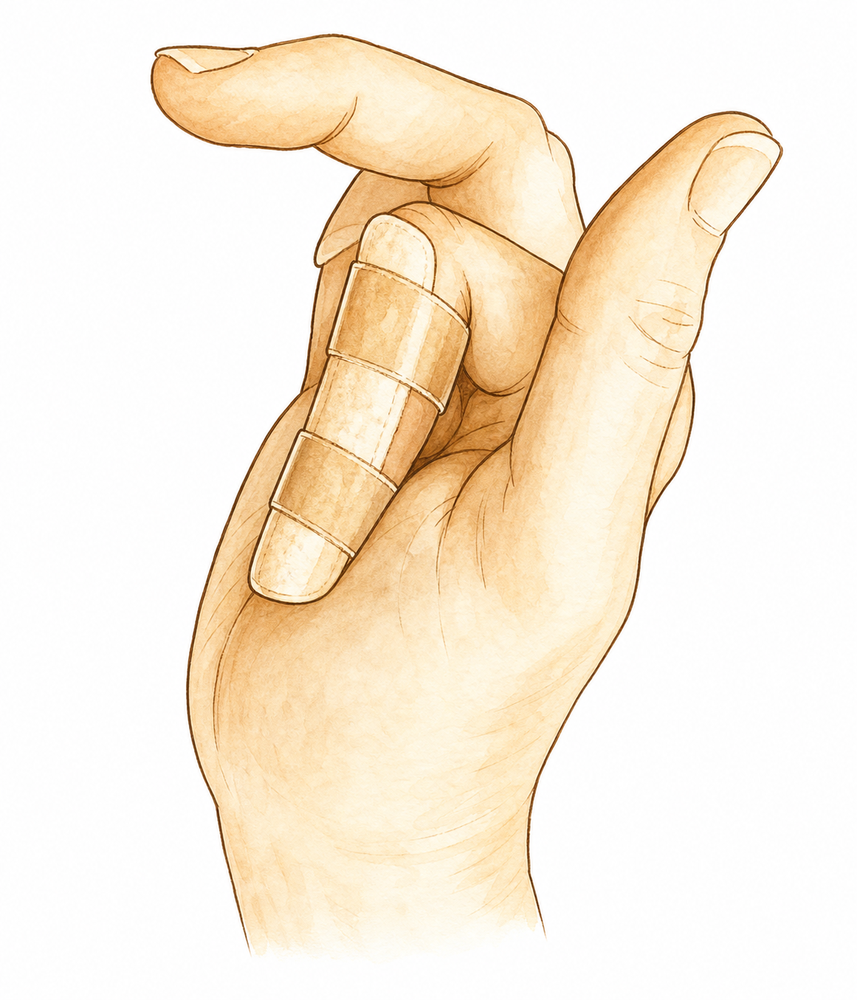
PIP மற்றும் MCP அசைவு (இணைப்புக்கு இரு பக்கமும் உள்ள மூட்டுகள்)
உங்கள் DIP சிம்பு அணிந்திருக்கும்போது (அது விரல் நுனி மூட்டை மட்டுமே அசையாமல் வைத்திருக்கிறது), விரலின் நடு மூட்டையும் அதன் அடிப்பகுதியில் உள்ள பெரிய கணு மூட்டையும் வளைத்து நேராக்குங்கள்; மென்மையாக ஒரு முஷ்டி மூடி, முழுமையாக விரியுங்கள். இணைக்கப்பட்ட நுனி அசையக்கூடாது; ஆனால் விரல் விறைத்துப் போகாமல் இருக்க, அதற்கு இரு பக்கமும் உள்ள மூட்டுகள் தளர்வாகவே இருக்க வேண்டும். சீராகவும் வசதிக்கு உட்பட்டும் அசையுங்கள்.
10 முறை, நாளொன்றுக்கு 3–4 முறை
Kieran Hirpara 4.0
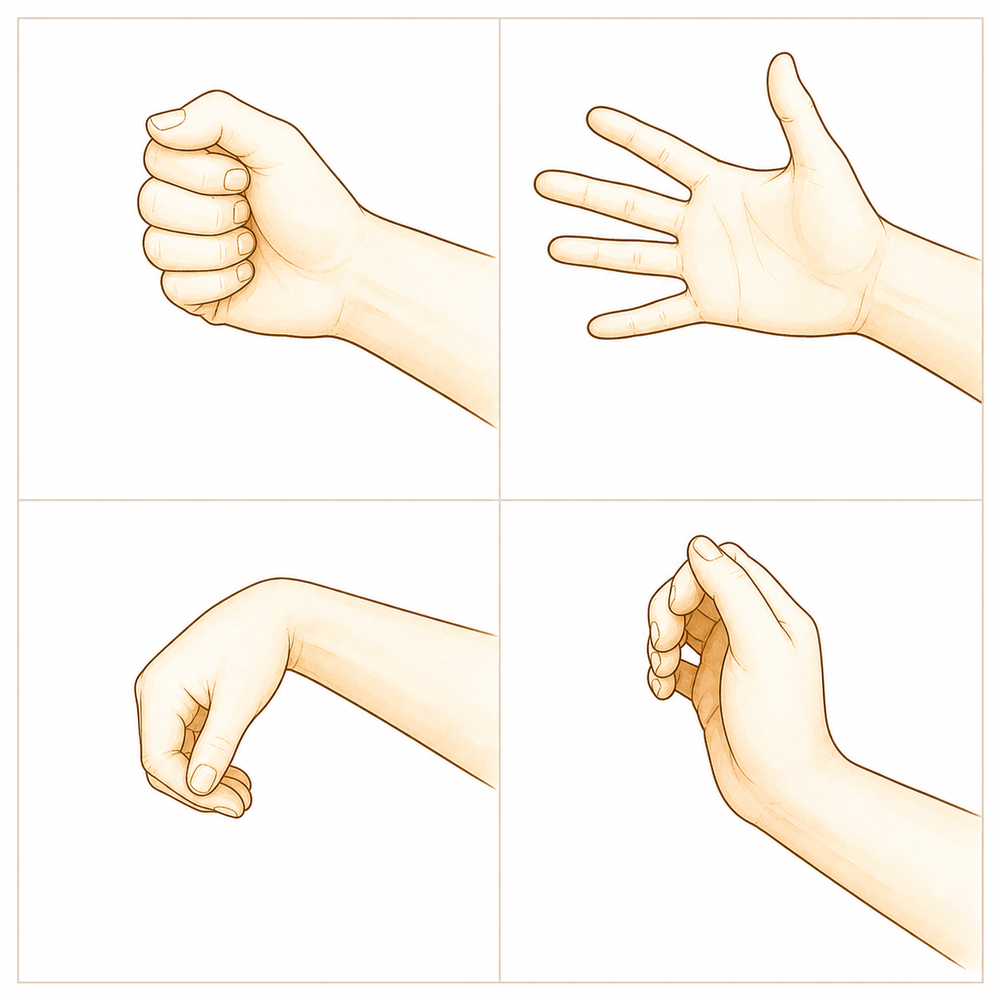
உங்கள் மற்ற எல்லா விரல்களையும், கட்டைவிரலையும், மணிக்கட்டையும் அசையுங்கள்
அறுவை சிகிச்சை செய்யப்படாத எல்லாவற்றையும் முதல் நாளிலிருந்தே சுதந்திரமாக அசைத்துக்கொண்டே இருங்கள்: முழு முஷ்டி மூடி முழுமையாக விரியுங்கள், உங்கள் கட்டைவிரலால் ஒவ்வொரு விரல் நுனியையும் தொடுங்கள், மணிக்கட்டை மென்மையாக மேலும் கீழும் வளையுங்கள். இணைக்கப்பட்ட விரல் நுனி மட்டுமே கட்டுப்படுத்தப்படுகிறது — கையின் மீதிப் பகுதி விறைத்துப் போகாமலும் பலவீனமாகாமலும் இருக்க, வசதி அனுமதிக்கும் அளவுக்கு இயல்பாகவே செயல்பட வேண்டும்.
ஒவ்வொன்றும் 10 முறை, நாளொன்றுக்குப் பல முறை
Kieran Hirpara 4.0
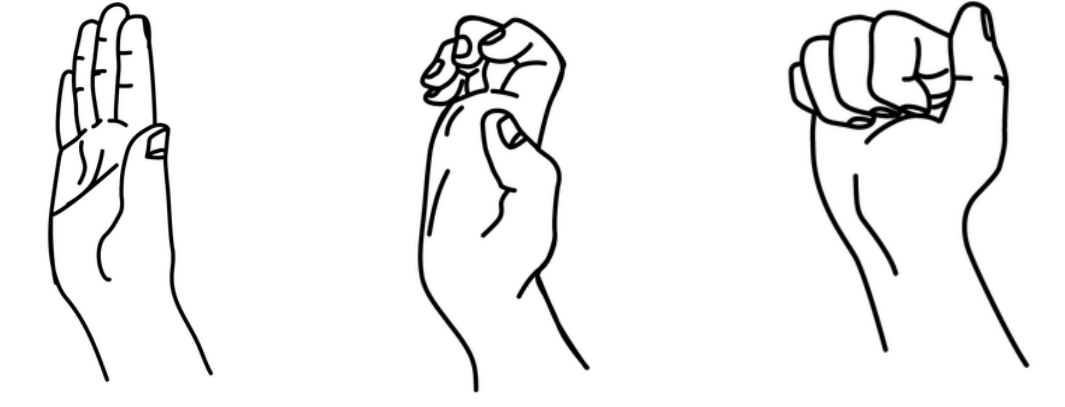
தசைநாண் நழுவல்கள் (கொக்கி, முஷ்டி, நேராக)
உங்கள் விரல்களை மூன்று நிலைகளின் வழியாக நகர்த்துங்கள் — ஒரு கொக்கி (நுனி மற்றும் நடு மூட்டுகளை வளைத்து, கணுக்களை நேராக வைத்து), ஒரு முழு முஷ்டி, பின்னர் தட்டையான நேரான கை — ஒவ்வொன்றிலும் சிறிது நேரம் நிறுத்துங்கள். இது குணமாகும் பகுதியின் வழியாகத் தசைநாண்கள் சீராக நழுவிக்கொண்டே இருக்கச் செய்கிறது; இதனால் அவை ஒட்டிக்கொள்வதில்லை. இதற்கிடையில் சிம்பில் உள்ள விரல் நுனி வசதியாக இருக்கட்டும்; இந்த நழுவல் விரலின் மீதிப் பகுதிக்கானது.
ஒவ்வொரு நிலையும் 5–10 முறை, நாளொன்றுக்கு 3 முறை
Kieran Hirpara 4.0
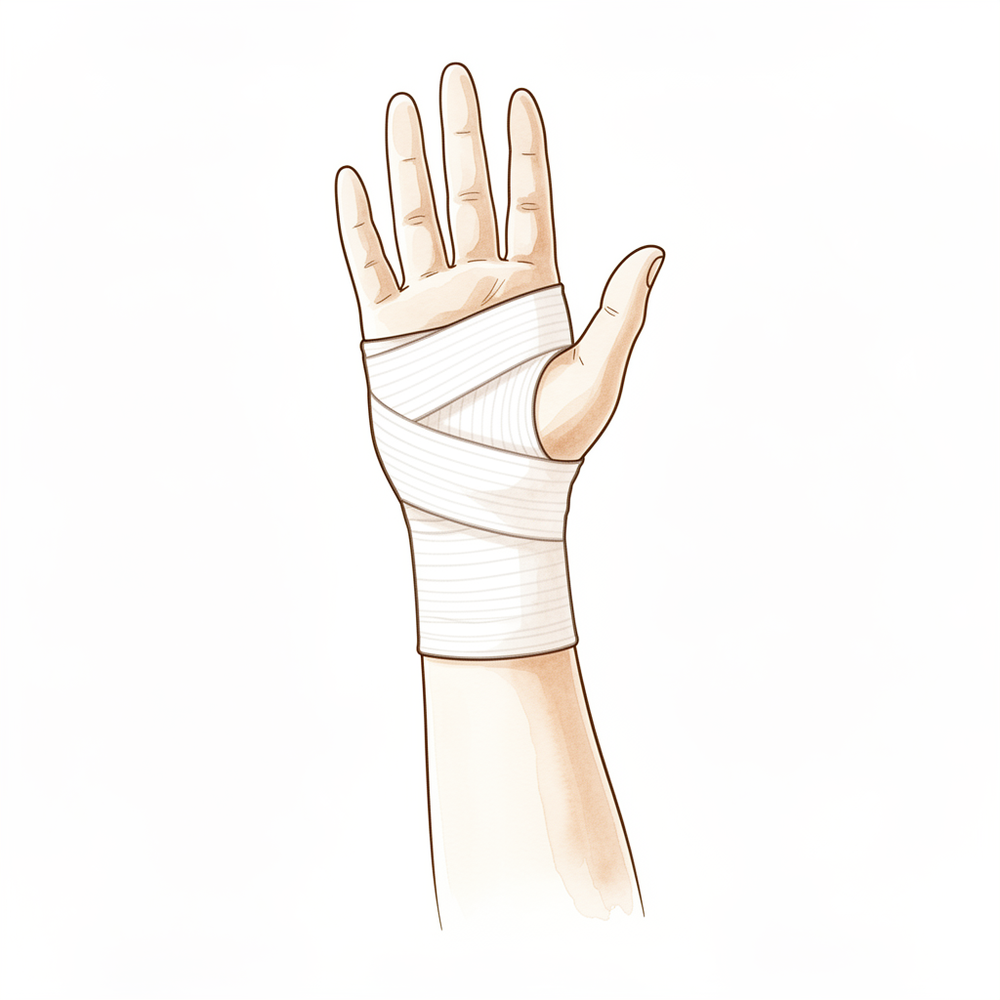
வீக்கக் கட்டுப்பாடு (உயர்த்தி வைத்தலும் அழுத்தமும்)
முதல் சில வாரங்களில் முடிந்தவரை உங்கள் கையை இதயத்தின் மட்டத்துக்கு மேலே உயர்த்தி வையுங்கள் — ஒரு தலையணையிலோ மெத்தையிலோ சாய்த்து வையுங்கள். காயம் அனுமதித்ததும், விரலில் ஓர் இலகுவான அழுத்த உறையோ தானாக ஒட்டும் (Coban) சுற்றுக்கட்டோ வீக்கம் தணிய உதவும். வீக்கம் குறைவாக இருந்தால் கை இலகுவாகவும் அதிகச் சுதந்திரமாகவும் அசையும்.
நாள் முழுவதும் அடிக்கடி உயர்த்தி வையுங்கள்; உங்கள் கை சிகிச்சையாளர் பொருத்தித் தரும்படி அழுத்தம்
Kieran Hirpara 4.0
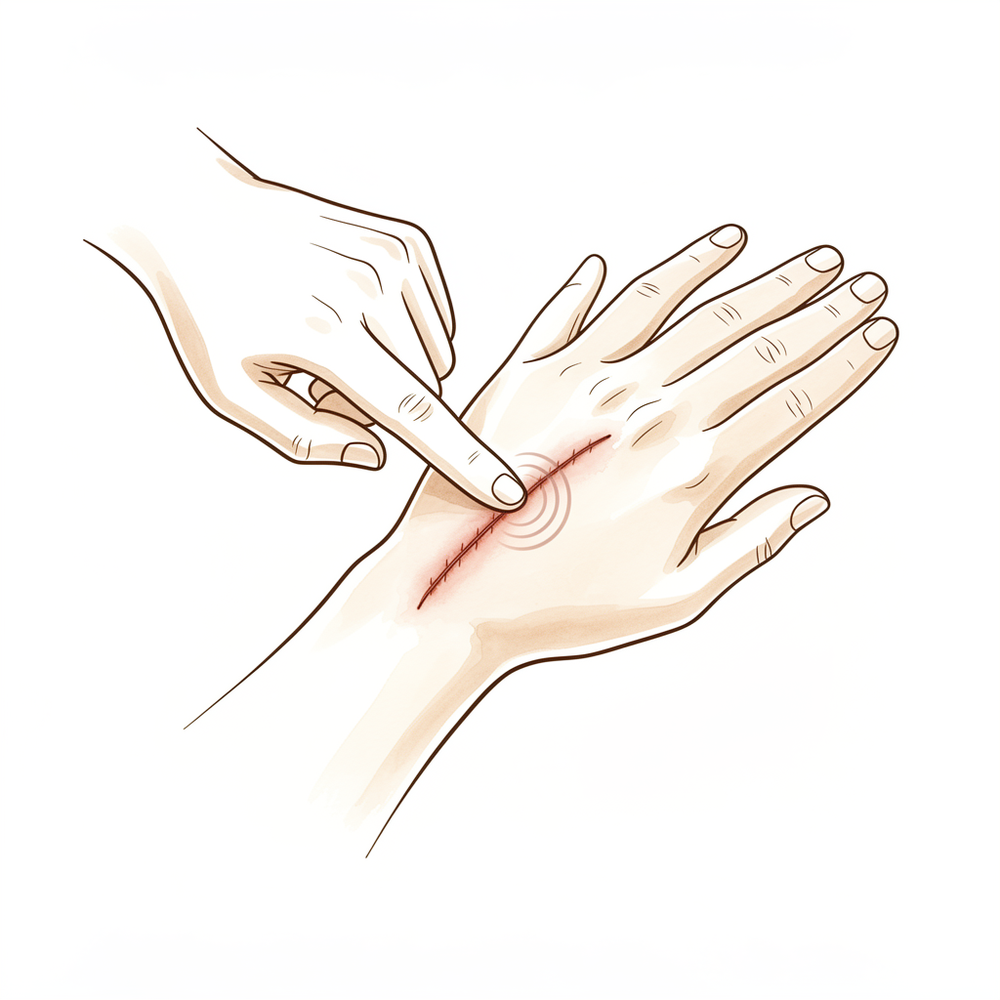
வடு மசாஜ்
காயம் முழுமையாகக் குணமாகி, உங்கள் கை சிகிச்சையாளர் அனுமதி அளித்ததும், சிறிது சாதாரண ஈரப்பதக் கிரீமை வடுவின் மீது சிறிய, உறுதியான வட்டங்களாக ஒன்று அல்லது இரண்டு நிமிடங்கள் தேய்த்து விடுங்கள். சளிப் பை நீர்க்கட்டி நீக்கப்பட்டிருந்தால், நக மடிப்பையும் சுற்றியுள்ள தோலையும் பராமரிப்பது பற்றியும் உங்கள் சிகிச்சையாளர் வழிகாட்டுவார். இது வடுவை மென்மையாகவும் குறைந்த உணர்திறனுடனும் வைத்திருக்கிறது.
1–2 நிமிடங்கள், நாளொன்றுக்கு 2–3 முறை, காயம் குணமானதும்
Kieran Hirpara 4.0
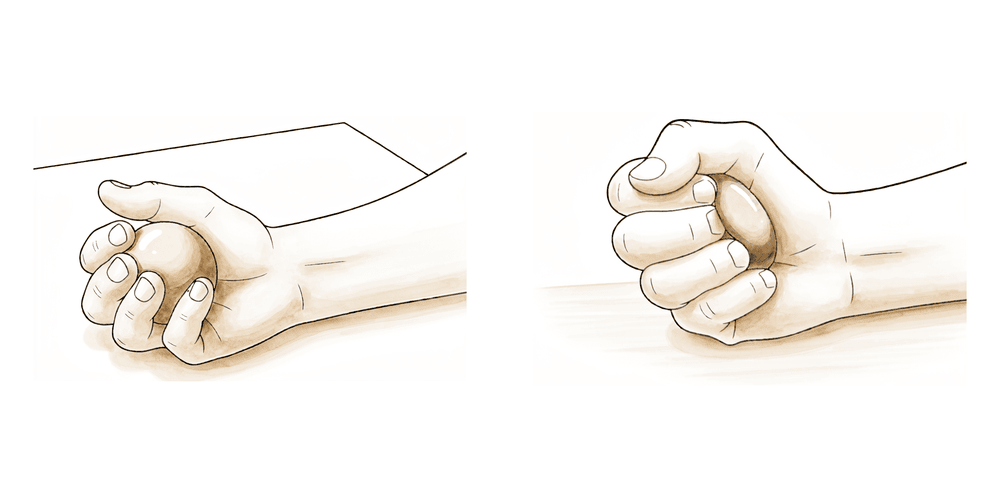
பிடி மற்றும் கிள்ளும் வலிமைப் பயிற்சி (இணைவுக்குப் பிறகு)
இது பிற்பாடு செய்யும் பயிற்சி — எக்ஸ்-ரேயில் இணைப்பு ஒட்டியிருப்பது தெரிந்து, உங்கள் கை சிகிச்சையாளர் தொடங்கினால் மட்டுமே (பொதுவாகச் சுமார் 6–8 வாரங்களிலிருந்து). சிகிச்சைப் பட்டியை மென்மையாக அழுத்துவதையும், கட்டைவிரலுக்கும் விரல் நுனிக்கும் இடையே இலகுவாகக் கிள்ளுவதையும் தொடங்குங்கள்; பின்னர் அடுத்த வாரங்களில் முயற்சியை மெதுவாக அதிகரியுங்கள். உங்களுக்கு அனுமதி கிடைப்பதற்கு முன் வலுவாகப் பிடிக்கவோ கடினமாகக் கிள்ளவோ வேண்டாம் — விரல் நுனியில் மிக விரைவாகச் சுமை ஏற்றுவது குணமாகும் எலும்பைத் தொந்தரவு செய்யலாம்.
உங்கள் கை சிகிச்சையாளர் வழிகாட்டும்படி, படிப்படியாக அதிகரித்து (~6–8 வாரங்களிலிருந்து)
இவை உங்கள் கையேட்டில் உள்ள பயிற்சிகள். டாக்டர் ஹிர்பராவும் உங்கள் கை சிகிச்சையாளரும் வழிகாட்டும்படி மட்டுமே இவற்றைத் தொடங்குங்கள்; உங்களுக்குத் தரப்பட்ட வரம்புகளுக்கு உட்பட்டு இருங்கள். ஆரம்பப் பயிற்சிகள், இணைக்கப்பட்ட விரல் நுனியைத் தொந்தரவு செய்யாமல் கையின் மற்ற பகுதிகளைச் சுதந்திரமாக அசையவைக்கின்றன: இணைப்புக்கு இரு பக்கமும் உள்ள மூட்டுகளின் அசைவு, உங்கள் மற்ற எல்லா விரல்களும், கட்டைவிரலும் மணிக்கட்டும், தசைநாண் நழுவல்கள், மற்றும் வீக்கக் கட்டுப்பாடு. பிடி மற்றும் கிள்ளும் வலிமைப் பயிற்சி பிற்கால கட்டத்தைச் சேர்ந்தது; எக்ஸ்-ரேயில் இணைப்பு ஒட்டியிருப்பது தெரிந்து, உங்களுக்குத் தனிப்பட்ட முறையில் அனுமதி கிடைக்கும் வரை அதைத் தொடங்கக் கூடாது. விரல் நுனியில் கூரிய வலியை ஏற்படுத்தும் எதையும் நிறுத்திவிடுங்கள்.
உங்கள் மருத்துவ நெறிமுறை
இந்தப் பக்கத்தின் மீதி, DIP மூட்டு (distal interphalangeal) இணைப்புக்குப் பிந்தைய மறுவாழ்வுப் பயிற்சிக்கான கட்டம் கட்டமான மருத்துவ நெறிமுறையாகும். இந்தப் பகுதி உங்கள் கை சிகிச்சையாளரிடம் வழங்கப்பட வேண்டியது; ஒவ்வொரு கட்டமும் என்ன நடக்கிறது என்பதை எளிய மொழியில் விளக்குவதுடன் தொடங்குகிறது. கொள்கை இதுதான்: எலும்பு இணைவு ஏற்படும் வரை இணைப்பு இடத்தைப் பாதுகாக்கவும், அதே சமயம் மற்ற ஒவ்வொரு மூட்டிலும் முழு அசைவைத் தக்கவைக்கவும்: PIP-ஐச் சுதந்திரமாக விடும் ஒரு P2–P3 சிம்பில் DIP அசையாமல் வைக்கப்படுகிறது; வீக்கமும் வடுவும் கையாளப்படுகின்றன; இணைவுக்குப் பிறகு மட்டுமே கிள்ளும் திறனுக்கும் பிடிக்கும் படிப்படியாகச் சுமை ஏற்றப்படுகிறது.
சிகிச்சைக்கு முன், நோயாளியின் அறுவை சிகிச்சை அறிக்கையையும் கடந்த கால மருத்துவ வரலாற்றையும் பரிசோதித்து, பொருத்துதல் பற்றி (தலையில்லாத அழுத்தத் திருகு, புதைக்கப்பட்டது, நீக்கப்படாதது — அல்லது K-கம்பி, ~6 வாரங்களில் நீக்கப்படுவது), இணைப்பு நிலை பற்றி (சற்று மடங்கிய நிலை, ~35° வரை), மற்றும் தோல்/நக மடிப்பு நீக்கத்துடன் கூடிய சளிப் பை நீர்க்கட்டி அறுவை சிகிச்சை செய்யப்பட்டதா என்பது பற்றி, சிகிச்சை அளித்த அறுவை சிகிச்சை நிபுணருடன் கலந்தாலோசியுங்கள். மருத்துவ ரீதியான இணைவு பொதுவாகச் சுமார் 6–8 வாரங்களில் எதிர்பார்க்கப்படுகிறது; எக்ஸ்-ரே இணைவு சுமார் 10 வாரங்களில். கீழே உள்ள மறுவாழ்வுப் பயிற்சி காலவரிசை குறைந்த மட்ட நிபுணர் ஒருமித்த கருத்தை அடிப்படையாகக் கொண்டது; சிம்பைப் படிப்படியாகக் குறைப்பதற்கும் சுமை ஏற்றுவதற்கும் முன், அறுவை சிகிச்சை நிபுணரின் தீர்மானத்துக்கும் இணைவை எக்ஸ்-ரே உறுதிப்படுத்துவதற்கும் இது உட்பட்டது.
கட்டம் 1 — பாதுகாத்தலும் சீரடைதலும் (வாரங்கள் 0 முதல் 2 வரை)
முதல் இரண்டு வாரங்கள், புதிதாகப் பொருத்தப்பட்ட இணைப்பைப் பாதுகாத்து, வீக்கத்தையும் காயத்தையும் சீரடையச் செய்கின்றன; அதே சமயம் எதுவும் விறைத்துப் போகாமல் இருக்க, சம்பந்தப்படாத ஒவ்வொரு மூட்டையும் அசைந்துகொண்டே இருக்கச் செய்கின்றன.
உங்கள் கை சிகிச்சையாளருக்கு:
அறிவுறுத்தலும் முன்னெச்சரிக்கைகளும் - முதல் 10–14 நாட்களுக்கு பருமனான அறுவை சிகிச்சைக் கட்டு/சிம்புடன் உயர்த்தி வைத்தல்; கட்டை உலர்வாக வைத்திருங்கள் - இணைப்பு இடத்தைப் பாதுகாக்கவும்; அறுவை சிகிச்சை செய்யப்பட்ட விரல் நுனியில் சுமை ஏற்ற வேண்டாம் - K-கம்பி இருந்தால், கம்பி நுழைந்த இடத்தைப் பாதுகாக்கவும்; பொருந்தும் இடத்தில் நக மடிப்பு/நீர்க்கட்டி நீக்கக் காயத்தைப் பரிசோதிக்கவும்
சிகிச்சை மேலாண்மை - காயம்: அறிவுறுத்தப்பட்டபடி அறுவை சிகிச்சைக் கட்டுகள்; தொற்று ஏற்படுகிறதா எனக் கண்காணியுங்கள் - வீக்கம்: உயர்த்தி வைத்தல், மென்மையாகக் கையைப் பிடித்து விடுதல் (hand pumping), பொருத்தமான இடத்தில் ஐஸ் - பயிற்சிகள்: சம்பந்தப்படாத எல்லா மூட்டுகளின் சுய அசைவு வரம்பு (AROM): அறுவை சிகிச்சை செய்யப்பட்ட விரலின் PIP மற்றும் MCP, கட்டைவிரல், மணிக்கட்டு, மற்ற எல்லா விரல்களும்; வசதி அனுமதிக்கும்போது தசைநாண் நழுவல்களைத் தொடங்குங்கள்
அடுத்த கட்டத்துக்குச் செல்வதற்கான அளவுகோல்கள் - காயம் சீரடைந்து; வீக்கம் கட்டுப்பாட்டில்; சுமார் இரண்டு வாரங்களில் தனிப்பயனாக்கப்பட்ட, கழற்றக்கூடிய DIP-தடுப்புச் சிம்புக்கு மாறத் தயாராக இருத்தல்
கட்டம் 2 — செயல்பாட்டுடன் கூடிய DIP-தடுப்புச் சிம்பு (வாரங்கள் 2 முதல் 6 வரை)
சுமார் இரண்டு வாரங்களிலிருந்து, பருமனான கட்டுக்குப் பதிலாக ஒரு தனிப்பயனாக்கப்பட்ட, கழற்றக்கூடிய DIP-தடுப்புச் சிம்பு (P2–P3 வரை நீளும் Stax/mallet வகை சாதனம்) பயன்படுத்தப்படுகிறது; அது விரல் நுனி மூட்டை மட்டுமே அசையாமல் வைத்து, PIP-ஐச் சுதந்திரமாக விடுகிறது. இந்தக் கட்டம் முழுவதும் அது தொடர்ந்து அணியப்படுகிறது. மற்ற எல்லா இடங்களிலும் முழு சுய அசைவு ஊக்குவிக்கப்படுகிறது; வீக்கமும் வடுவும் கையாளப்படுகின்றன; விரல் நுனியில் சுமை ஏற்றப்படுவதில்லை.
உங்கள் கை சிகிச்சையாளருக்கு:
அறிவுறுத்தலும் முன்னெச்சரிக்கைகளும் - தனிப்பயனாக்கப்பட்ட, கழற்றக்கூடிய DIP-தடுப்புச் சிம்பு (P2–P3, PIP சுதந்திரமாக) இந்தக் கட்டம் முழுவதும் தொடர்ந்து அணியப்பட வேண்டும் - வலுவான பிடிப்போ கிள்ளுதலோ வேண்டாம்; செயல்பாட்டுச் சுமை வரம்பு ~2 lb (≈1 kg)
சிகிச்சை மேலாண்மை - பயிற்சிகள்: PIP, MCP, கட்டைவிரல் மற்றும் மணிக்கட்டு சுய அசைவு, மற்றும் மற்ற எல்லா விரல்களின் அசைவு; தசைநாண் நழுவல்கள் (கொக்கி, முழு முஷ்டி, நேராக) - வீக்கம்: உயர்த்தி வைப்பதைத் தொடர்ந்து, தாங்கக்கூடிய அளவுக்கு அழுத்தத்தை (Coban/இலகுவான உறை) சேருங்கள் - வடு: காயம் முழுமையாகக் குணமானதும் வடு மசாஜைத் தொடங்குங்கள்; சளிப் பை நீர்க்கட்டி நீக்கப்பட்ட இடத்தில் நக மடிப்புப் பராமரிப்பு
அடுத்த கட்டத்துக்குச் செல்வதற்கான அளவுகோல்கள் - PIP/MCP அசைவு தக்கவைக்கப்பட்டு; வீக்கம் கட்டுப்பாட்டில்; காயம் குணமாகி; சுமார் ஆறு வாரங்களில் மருத்துவ ரீதியான இணைவு தென்படுதல் (இணைவை எக்ஸ்-ரே உறுதிப்படுத்தினால் மட்டுமே சிம்பைப் படிப்படியாகக் குறைக்கத் தொடங்குங்கள்)
கட்டம் 3 — சிம்பைப் படிப்படியாகக் குறைத்தல், மென்மையான வலுப்படுத்துதலைத் தொடங்குதல் (வாரங்கள் 6 முதல் 8 வரை)
எக்ஸ்-ரேயில் இணைப்பு ஒட்டிவிட்டதும் (மருத்துவ ரீதியாக ~6–8 வாரங்கள்), சிம்பு படிப்படியாகக் குறைக்கப்படுகிறது (செயல்பாட்டுக்கு/பாதுகாப்புக்கு மட்டுமே அணியப்படுகிறது); K-கம்பி பயன்படுத்தப்பட்டிருந்தால், அது சுமார் ஆறு வாரங்களில் நீக்கப்படுகிறது. கிள்ளும் திறனுக்கும் பிடிக்கும் மென்மையான வலுப்படுத்தும் பயிற்சி தொடங்குகிறது.
உங்கள் கை சிகிச்சையாளருக்கு:
அறிவுறுத்தலும் முன்னெச்சரிக்கைகளும் - இணைவு உறுதிப்படுத்தப்பட்டதும் DIP சிம்பைப் படிப்படியாகக் குறையுங்கள்: தேவைக்கேற்ப பாதுகாப்புக்கு/செயல்பாட்டுக்கு மட்டும் தொடர்ந்து அணிதல்; K-கம்பி ~6 வாரங்களில் நீக்கப்படுகிறது - சுமையைப் படிப்படியாக அதிகரியுங்கள்; சுமார் 8 வாரங்களிலிருந்து செயல்பாட்டு வரம்பு ~5 lb (≈2 kg)
சிகிச்சை மேலாண்மை - பயிற்சிகள்: மென்மையான பிடி மற்றும் கிள்ளும் வலிமைப் பயிற்சியைத் தொடங்குங்கள்: சிகிச்சைப் பட்டி, இலகுவான கிள்ளுதல் மற்றும் பிடித்தல் பயிற்சி; மற்ற எல்லா மூட்டுகளிலும் முழு அசைவைத் தொடருங்கள்; வடு மேலாண்மையைத் தொடருங்கள் - மீதமுள்ள வீக்கத்தையோ PIP/MCP விறைப்பையோ மறுமதிப்பீடு செய்து, தேவைக்கேற்பக் கையாளுங்கள்
அடுத்த கட்டத்துக்குச் செல்வதற்கான அளவுகோல்கள் - எக்ஸ்-ரேயில் இணைவு உறுதிப்படுத்தப்பட்டு; விரல் நுனி வசதியாக இருந்து; இணைப்பு இடத்தில் வலியின்றி மென்மையான சுமையைத் தாங்குதல்
கட்டம் 4 — படிப்படியான வலுப்படுத்துதலும் சிகிச்சையிலிருந்து விடுவிப்பும் (வாரங்கள் 8 முதல் 12 வரை)
இணைப்பு திடமானதும், இயல்பான கைச் செயல்பாட்டை நோக்கி வலுப்படுத்தும் பயிற்சி முன்னேற்றப்படுகிறது; சுமார் பன்னிரண்டு வாரங்களுக்குள் கட்டுப்பாடுகள் நீக்கப்படுகின்றன.
உங்கள் கை சிகிச்சையாளருக்கு:
அறிவுறுத்தலும் முன்னெச்சரிக்கைகளும் - படிப்படியான பிடி மற்றும் கிள்ளும் வலிமைப் பயிற்சி; சுமார் 10 வாரங்களில் செயல்பாட்டு வரம்பு ~10 lb (≈4.5 kg) - அறுவை சிகிச்சை நிபுணரின் மறுபரிசோதனைக்கு உட்பட்டு, சுமார் 12 வாரங்களிலிருந்து கட்டுப்பாடு எதுவும் இல்லை
சிகிச்சை மேலாண்மை - பயிற்சிகள்: படிப்படியான எதிர்ப்புடன் கூடிய பிடி மற்றும் கிள்ளுதல் (பட்டி → பிடிப்புக் கருவிகள் → பணி சார்ந்த சுமை ஏற்றுதல்); கையின் முழு செயல்பாட்டுப் பயன்பாட்டை மீட்டெடுங்கள் - நிலையான, வலியற்ற விரல் நுனியுடன் கிட்டத்தட்ட இயல்பான கைச் செயல்பாடும் வலிமையும் அடையப்பட்டதும் சிகிச்சையிலிருந்து விடுவிப்பதைக் கருதுங்கள் - இணைப்பின் மீது வலி இருந்தாலோ, இணைவு பற்றிக் கவலை இருந்தாலோ, செயல்பாட்டு விளைவு மோசமாக இருந்தாலோ, சிகிச்சை அளித்த அறுவை சிகிச்சை நிபுணரிடம் திருப்பி அனுப்புங்கள்
சிகிச்சையிலிருந்து விடுவிப்பதற்கான அளவுகோல்கள் - இணைந்த, வலியற்ற இணைப்பு; இணைக்கப்படாத எல்லா மூட்டுகளிலும் முழு அசைவு; செயல்பாட்டுக் கிள்ளும் திறனும் பிடியும் மீட்டெடுக்கப்பட்டிருத்தல்
வேலைக்கும் செயல்பாடுகளுக்கும் திரும்புதல்
வசதிக்கு உட்பட்டு, உங்கள் மற்ற விரல்களையும் கையின் மீதிப் பகுதியையும் அன்றாடம் இலகுவாகப் பயன்படுத்துவது ஆரம்பத்திலிருந்தே ஊக்குவிக்கப்படுகிறது; இணைக்கப்பட்ட விரல் நுனி மட்டுமே கட்டுப்படுத்தப்படுகிறது. பருமனான சிம்பிலிருந்து வெளிவந்து, ஸ்டியரிங்கைப் பாதுகாப்பாகப் பிடித்துக் கட்டுப்படுத்த முடிந்ததும், வாகனம் ஓட்டுவது பொதுவாகச் சுமார் ஆறு வாரங்களில் மீண்டும் தொடங்குகிறது; இது உங்கள் மறுபரிசோதனையின்போது டாக்டர் ஹிர்பராவின் தீர்மானத்துக்கு உட்பட்டது; எனவே ஆரம்ப வாரங்களில் போக்குவரத்துக்கு உதவி கிடைக்கத் திட்டமிடுங்கள். மென்மையான கிள்ளுதலும் இலகுவான பிடியும் பொதுவாகச் சுமார் ஆறு வாரங்களில் தொடங்கி, எலும்பு இணைந்ததும் சுமார் எட்டு வாரங்களிலிருந்து அதிகரிக்கப்படுகின்றன. கையின் முழுமையான, கனமான அல்லது விளையாட்டுப் பயன்பாடு பொதுவாகச் சுமார் பன்னிரண்டு வாரங்களுக்குள் அடையப்படுகிறது. இந்தக் காலவரிசைகள் நிர்ணயிக்கப்பட்ட கெடுக்கள் அல்ல, நிபுணர் ஒருமித்த கருத்தின் அடிப்படையிலான வழிகாட்டுதல்களே: உங்கள் அறுவை சிகிச்சை நிபுணரின் தீர்மானமும், உங்கள் எக்ஸ்-ரேயும் (எலும்பு இணைந்துவிட்டதை உறுதிப்படுத்துவது) முதன்மையானவை.
உங்கள் நெறிமுறைக்குப் பிறகு
இந்த நெறிமுறை கிளினிக்கின் பொதுவான மீட்சி ஆலோசனைகளுடன் இணைந்து செயல்படுகிறது; அறுவை சிகிச்சைக்குப் பிந்தைய வலியைக் கையாளுதல், காயப் பராமரிப்பு மற்றும் வடு மேலாண்மை பக்கங்களையும் பாருங்கள். மேலே உள்ள கட்டம் கட்டமான திட்டம், DIP மூட்டு இணைப்புக்குப் பிறகு வெளியிடப்பட்ட மறுவாழ்வுப் பயிற்சி வழிகாட்டுதலைப் பிரதிபலிக்கிறது; உங்கள் விரல் எப்படிக் குணமாகிறது என்பதைப் பொறுத்து, தொடர்ந்து நடக்கும் உங்கள் மீட்சிக்கு டாக்டர் ஹிர்பராவும் உங்கள் கை சிகிச்சையாளரும் தனிப்பட்ட முறையில் வழிகாட்டுகிறார்கள்.
Evidence & references
This is the clinical evidence summary written for health professionals. It is technical, and it lists the research this page was built from. You do not need to read it to understand your treatment or to make a decision about it.
Topic scope: post-operative rehabilitation after arthrodesis (fusion) of the distal interphalangeal (DIP) joint — most often for end-stage osteoarthritis (Heberden's nodes), or to excise a mucous cyst together with its underlying osteophyte. This is a fusion, not a reconstruction: the joint is deliberately and permanently abolished and set in a slightly flexed, functional position, so the rehabilitation is a protect-to-union pathway built around oedema control, scar/nail-fold management, and preservation of motion at every adjacent joint, followed by progressive reloading — not restoration of DIP motion.
Defining principle of the rehab here: a DIP arthrodesis is meant to stop moving. The single therapeutic goal is to deliver a solid, pain-free, well-aligned bony union while keeping the rest of the hand fully mobile. The fingertip is immobilised in a P2–P3 (Stax/mallet-type) orthosis that blocks the DIP but leaves the PIP free; the deliberate restraints are protection of the fixation and avoidance of pinch/grip loading until union. The principal branch points are the fixation method (buried headless compression screw — no removal — versus K-wire, removed at ~6 weeks) and whether a mucous cyst with skin/nail-fold excision was performed, which adds soft-tissue/scar care. Union, not the calendar, gates splint weaning and loading.
A. PROCEDURE OUTCOMES (fusion union, position, fixation)
DIP arthrodesis is a reliable pain-relieving operation; the principal technical debates are over fixation method and fusion position, not whether to fuse a painful, end-stage joint.
- High union rates with headless compression screw fixation. A series of 64 joints fused with a Herbert-type headless compression screw reported reliable bony union with a low complication profile, supporting the buried-screw construct that requires no later removal [Hand 2010, DOI: 10.1007/s11552-010-9295-3]. Moderate (observational case series).
- Radiographic union averages around ten weeks. A review of DIP arthrodesis techniques reports a mean time to radiographic fusion of approximately 10 weeks, with reported union rates such as ~85% in the Brutus cohort, underlining that clinical comfort precedes full radiographic consolidation [J Hand Surg Am 2013, DOI: 10.1016/j.jhsa.2013.06.010]. Moderate (review of case series).
- Fusion position is a consensus, not a controversy. Technique descriptions place the DIP in slight flexion in a functional position for pinch; dorsal-plate and screw techniques are described with attention to setting and holding this position during fixation [J Hand Surg Am 2018, DOI: 10.1016/j.jhsa.2018.03.049]. Mechanistic / consensus.
- Screw fit depends on bony dimensions. Anatomical sizing work shows the headless screw must be matched to the medullary dimensions of the distal phalanx, informing implant selection and reducing fixation-related complications [Hand 2014, DOI: 10.1007/s11552-014-9679-x]. Mechanistic.
- Fixation choice carries differing complication patterns. Comparative data on K-wire versus headless (Herbert) screw fixation describe differences in infection and hardware-related events, relevant to the protective pin care needed when a K-wire is used and removed at ~6 weeks [J Hand Surg Am 2013, DOI: 10.1016/j.jhsa.2013.01.017]. Moderate (comparative series).
- Acute arthrodesis is an established option in trauma. Primary IP-joint arthrodesis for acute injury is a recognised technique, supporting fusion as a durable solution beyond degenerative disease [J Hand Surg / Thieme 2017, DOI: 10.1055/s-0037-1608691]. Moderate (case series).
B. REHABILITATION / THERAPY EVIDENCE
There are no randomised trials of rehabilitation after DIP arthrodesis. The rehab pathway is built from surgical-outcome timing data (union ~6–8 weeks clinical, ~10 weeks radiographic) plus published hand-therapy protocols and standard hand-therapy practice. The therapeutic logic is to immobilise only the fused joint, keep every other joint moving, control swelling and scar, and reload pinch/grip only after union.
- Immobilise the DIP, free the PIP. Published finger-fusion therapy protocols use a custom removable DIP-blocking (Stax/mallet-type) orthosis spanning P2–P3 that holds the fingertip joint while leaving the PIP free for active motion — continual early wear, weaning to activity-only after X-ray union [TCO; Hand Wisconsin; Alaska Ortho; Melbourne Arm Clinic protocols, URLs below]. Weak (consensus / published protocols).
- Preserve motion at all uninvolved joints from day one. Active motion of the PIP, MCP, thumb, wrist and all other digits, plus tendon glides, is standard hand-therapy practice to prevent stiffness while the DIP consolidates [published protocols, URLs below]. Consensus / standard practice.
- Oedema and scar control are routine adjuncts. Elevation and compression for swelling, and scar massage once healed (with nail-fold care after mucous-cyst excision), follow standard hand-therapy practice rather than trial evidence. Consensus / standard practice.
- Loading is gated by union, not by date. Protocols withhold power grasp/pinch until the fusion is radiographically united, then progress strengthening gradually — reflecting the ~10-week mean radiographic union from the outcome literature [J Hand Surg Am 2013, DOI: 10.1016/j.jhsa.2013.06.010]. Weak–moderate (timing anchored to outcome series; rehab schedule consensus).
Recovery trajectory (expected, evidence-anchored)
| Phase | Window | Restraint | Hand use / therapy focus | Strength / load | Notes |
|---|---|---|---|---|---|
| 1 — Protect & settle | Week 0–2 | Bulky dressing/splint; DIP unloaded | Elevation; AROM of all uninvolved joints (PIP, MCP, thumb, wrist, other digits); begin tendon glides | None to the fingertip | Keep dressing dry; review pin/cyst-excision wound |
| 2 — DIP-blocking splint with activity | Week 2–6 | Custom P2–P3 DIP-block, PIP free, worn continually | Active PIP/MCP/thumb/wrist + all-other-digit motion; tendon glides; oedema (Coban/sleeve); scar massage once healed | No power grasp/pinch; ~2 lb (≈1 kg) limit | Clinical union emerging ~6 wk |
| 3 — Wean splint & gentle strengthening | Week 6–8 | Splint weaned once united on X-ray; K-wire out ~6 wk | Begin gentle grip/pinch (putty, light pinch/grip); continue full motion elsewhere; continue scar care | ~5 lb (≈2 kg) from 8 wk | Buried screw needs no removal |
| 4 — Progressive strengthening & discharge | Week 8–12 | Restrictions lifting | Progressive grip/pinch strengthening; restore full hand use | ~10 lb (≈4.5 kg) at 10 wk; no restriction ~12 wk | Discharge when fusion solid + pain-free |
(Phase windows mirror the precautions and recovery-curve structure in the patient protocol; clinical union ~6–8 weeks and radiographic union ~10 weeks are anchored to the outcome series, while the exact phase timings are low-level expert consensus, not trial-derived deadlines, and are subject to surgeon discretion and X-ray confirmation of union.)
C. KEY CONTROVERSIES / EVIDENCE QUALITY
- Fixation method. Buried headless compression screw (no removal) versus K-wire (removed ~6 weeks) — both achieve union; the comparative literature describes differing infection and hardware-event profiles, and the choice drives whether pin-site protection is needed in rehab [DOI: 10.1007/s11552-010-9295-3; DOI: 10.1016/j.jhsa.2013.01.017]. Moderate.
- Fusion position. Slight flexion (up to ~35°) in a functional pinch position is a settled consensus across technique descriptions, not a live controversy [DOI: 10.1016/j.jhsa.2018.03.049]. Consensus.
- Union timing. Clinical comfort (~6–8 weeks) precedes radiographic union (~10 weeks mean), so splint weaning and loading should follow the X-ray rather than the calendar [DOI: 10.1016/j.jhsa.2013.06.010]. Moderate.
- Rehabilitation schedule. No RCTs exist for DIP-fusion rehab; phase timings are derived from published therapy protocols and standard hand-therapy practice anchored to surgical union data. Low-level expert consensus.
- Mucous-cyst cases. Excision of a mucous cyst with its osteophyte adds skin/nail-fold and scar care to the standard fusion rehab; this is a soft-tissue management addition rather than a change to the bony-union pathway. Consensus / standard practice.
D. EVIDENCE STRENGTH FLAGS (summary)
- MODERATE (observational case series / reviews): reliable bony union with headless compression screw fixation; mean radiographic union ~10 weeks (~85% union, Brutus); differing complication profiles by fixation method; acute IP arthrodesis as an established trauma option.
- CONSENSUS / MECHANISTIC: slight-flexion functional fusion position; screw sizing to phalangeal dimensions; immobilise-the-DIP / free-the-PIP splinting principle.
- WEAK / LOW-LEVEL CONSENSUS: the specific phased rehabilitation schedule (no RCTs; derived from published therapy protocols + standard hand-therapy practice, anchored to union timing); exact phase timings and load limits (typical guides, not trial-derived); oedema/scar adjuncts (standard practice).
CITATIONS
RAG corpus (180,000+ Orthopaedic articles)
- Distal interphalangeal joint arthrodesis using a dorsal plate: technique and fusion position. J Hand Surg Am. 2018. DOI: 10.1016/j.jhsa.2018.03.049
- Distal interphalangeal joint arthrodesis with the Herbert headless compression screw: union and complications in 64 joints. Hand (N Y). 2010. DOI: 10.1007/s11552-010-9295-3
- Distal interphalangeal joint arthrodesis: review of techniques and outcomes (mean ~10-week radiographic fusion; Brutus ~85% union). J Hand Surg Am. 2013. DOI: 10.1016/j.jhsa.2013.06.010
- K-wire versus Herbert screw fixation for distal interphalangeal joint arthrodesis: infection and hardware events. J Hand Surg Am. 2013. DOI: 10.1016/j.jhsa.2013.01.017
- Anatomical sizing of headless compression screws for distal phalangeal fixation. Hand (N Y). 2014. DOI: 10.1007/s11552-014-9679-x
- Acute interphalangeal joint arthrodesis in trauma. J Hand Surg / Thieme. 2017. DOI: 10.1055/s-0037-1608691
DIP-fusion rehabilitation literature (URLs)
- Twin Cities Orthopedics — Distal Interphalangeal (DIP) Joint Fusion post-op protocol. https://www.tcomn.com/wp-content/uploads/2016/06/Distal-Interphalangeal-DIP-Joint-Fusion.pdf
- Hand Wisconsin — Finger-joint fusion therapy protocol. https://handwisconsin.com/wp-content/uploads/2016/09/fusion-finger-joint-therapy-protocol.pdf
- Alaska Orthopaedics — Arthrodesis (DIP / PIP or MCP) joint fusion protocol. https://www.akortho.com/wp-content/uploads/Arthrodesis-DIP-PIP-or-MCP-Joint-Fusion.pdf
- Melbourne Arm Clinic — PIP / DIP arthrodesis rehabilitation protocol. https://melbournearmclinic.com.au/orthopaedic-rehabilitation/shoulder-rehabilitation/pip-dip-arthrodesis-protocol/