

远端指间关节融合术 资料
本方案指导您在 Mater Private Hospital Rockhampton 由 Kieran Hirpara 医生进行远端指间关节融合术(关节固定术)后的康复过程。该手术将永久融合手指最末端、靠近指甲处的小关节。方案从您的居家锻炼计划开始,随后是专为您的手部治疗师撰写的结构化临床方案:请在首次治疗就诊时携带此页面或其 PDF 文件,以确保您的康复过程协调一致。您的治疗师可能会根据康复进展调整计划。
如果您对术后伤口有任何疑虑,请联系病房。通常,拍摄伤口照片并通过电子邮件发送以供审阅会很有帮助。
预期情况
远端指间关节(DIP)融合术适用于指甲附近的小关节因磨损和疼痛(通常由骨关节炎引起,即所谓的赫伯登结节骨赘)或为了连同其下方的骨刺一起切除令人困扰的黏液囊肿时进行。与其试图保留一个疼痛且受损的关节的活动度,手术会将其牢固融合在一个略微弯曲的功能位(约35°以内)。按设计,该关节将不再活动,作为交换,疼痛消失,指尖变得稳定且有力,可用于捏取。固定物通常是一枚小型埋入式无头螺钉,永久保留(无需取出),有时也可能是克氏针(K-wire),在约六周时取出。如果切除了黏液囊肿,您还需要在区域愈合期间进行皮肤或甲皱襞护理。
您的整个康复过程都围绕一个简单理念构建:在骨骼愈合前保护融合部位,但保持其他部位的活动。 骨骼通常在六到八周时感觉愈合,X光片显示愈合情况则在约十周时跟上。在此之前:
- 融合后的指尖需夹板固定和保护,以免干扰正在愈合的骨骼。
- 其他所有关节保持活动: 手指的中节关节、掌指关节、拇指、手腕以及您其他所有手指,以防止手部僵硬。
- 控制肿胀并管理瘢痕,以保持手指舒适和灵活。
- 一旦骨骼愈合,捏取和抓握功能将逐步重建,而非一次性完成。
注意事项与限制
- 按指示佩戴指尖夹板。 早期需持续佩戴;后期仅在活动时佩戴。夹板用于固定融合关节,但允许手指中间关节(近端指间关节,PIP)自由活动。
- 在骨融合愈合且医生许可之前,切勿用手术侧手指进行强力抓握、用力捏取或提重物;前六周内负重请限制在约 1 公斤(≈2 磅) 以内。
- 从一开始就保持其他所有关节活动:包括手指的中间关节和掌指关节、拇指、手腕以及其余所有手指。
- 在最初的 10–14 天内,保持敷料干燥并抬高患手以减轻肿胀;若曾切除黏液囊肿,请遵循针对甲沟或囊肿部位的护理说明。
- 如果使用了克氏针(K-wire),请予以保护并保持该区域清洁,直至约 六周 时取出;埋入式螺钉无需取出。
- 在脱离厚重夹板且能够安全抓握并控制方向盘之前,切勿驾驶车辆,通常约为 六周,具体由您的外科医生决定。
有关伤口、肿胀及瘢痕管理,请参阅本诊所的伤口护理指南。
您的练习
Kieran Hirpara 4.0
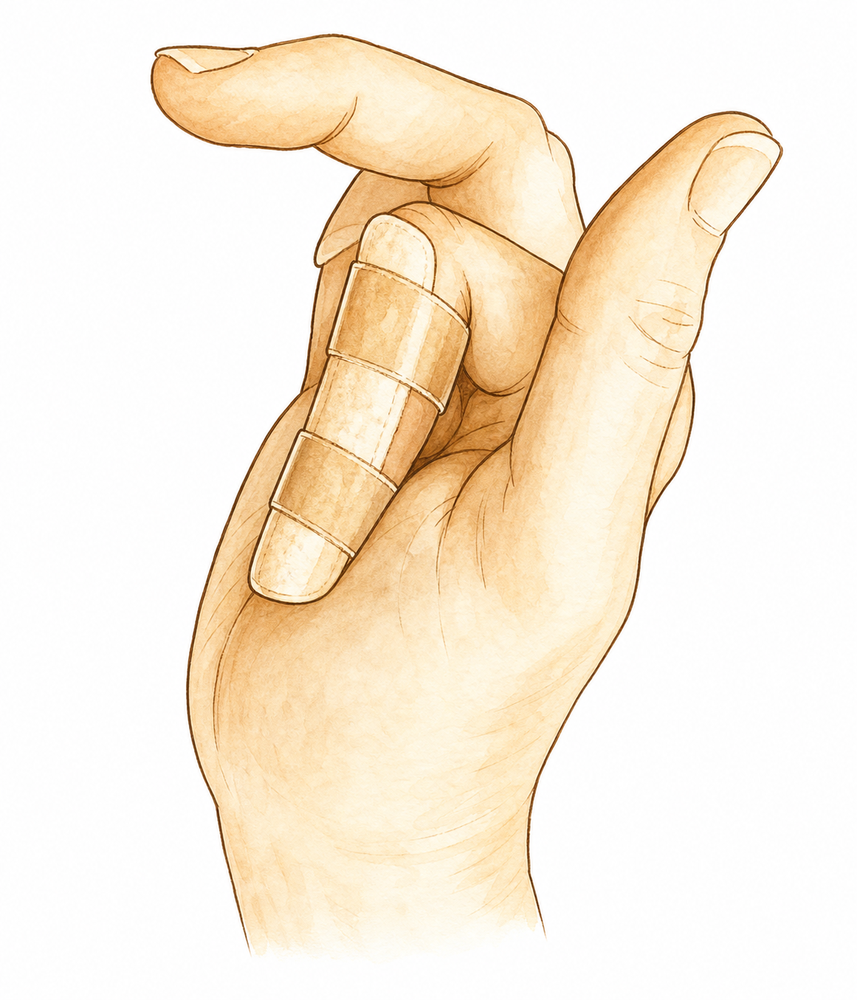
掌指关节(MCP)和近端指间关节(PIP)的活动度(融合关节两侧的关节)
佩戴您的远端指间关节(DIP)夹板(该夹板仅固定指尖关节),弯曲并伸直手指的中节关节(近端指间关节)以及其基部的掌指关节(大关节),轻柔地握拳并完全张开。融合后的指尖不应活动,但其两侧的关节必须保持灵活,以防止手指僵硬。动作应平稳且在舒适范围内进行。
10次,3–4次/天
Kieran Hirpara 4.0
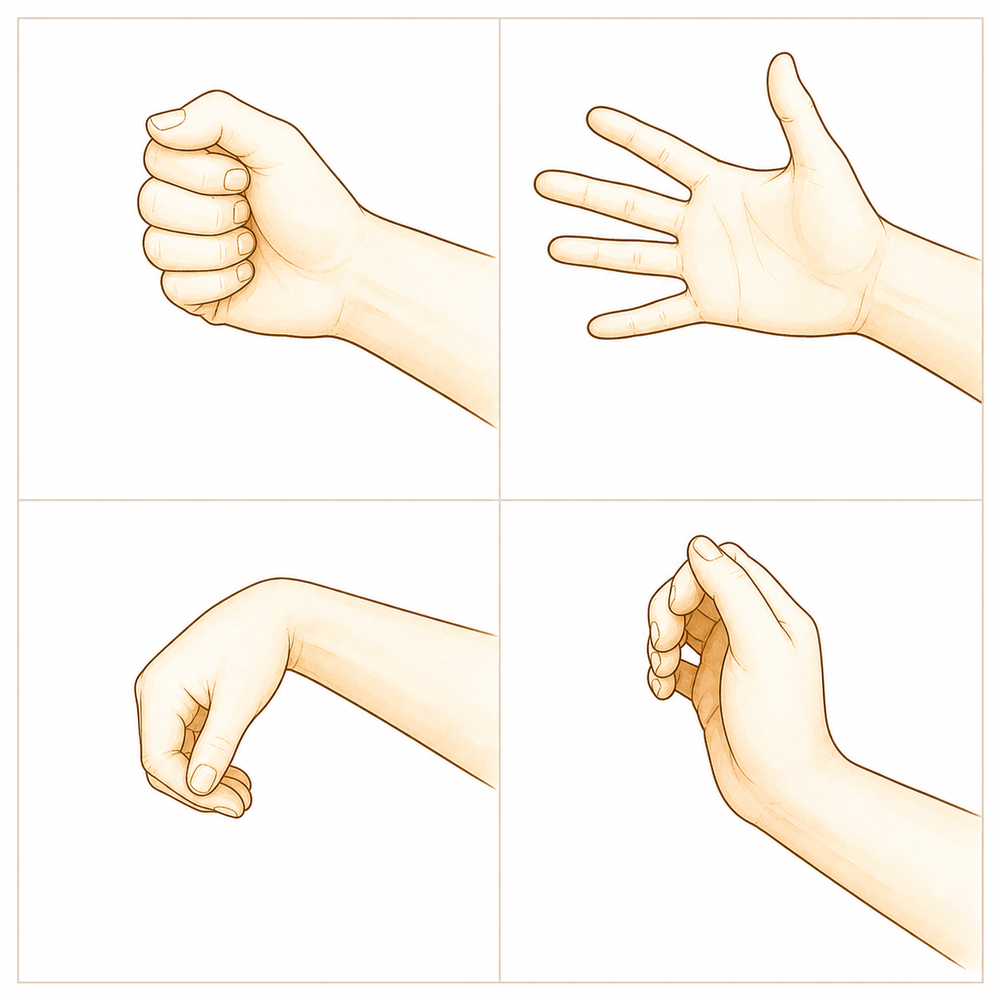
活动您的其他手指、拇指和手腕
从第一天起,保持所有未手术部位自由活动:完全握拳并完全张开,用拇指依次触碰每个指尖,并轻轻上下弯曲手腕。只有融合的指尖活动受限——手部其余部分应在舒适允许的范围内尽可能正常活动,以防止僵硬或无力。
每项10次,每日数次
Kieran Hirpara 4.0
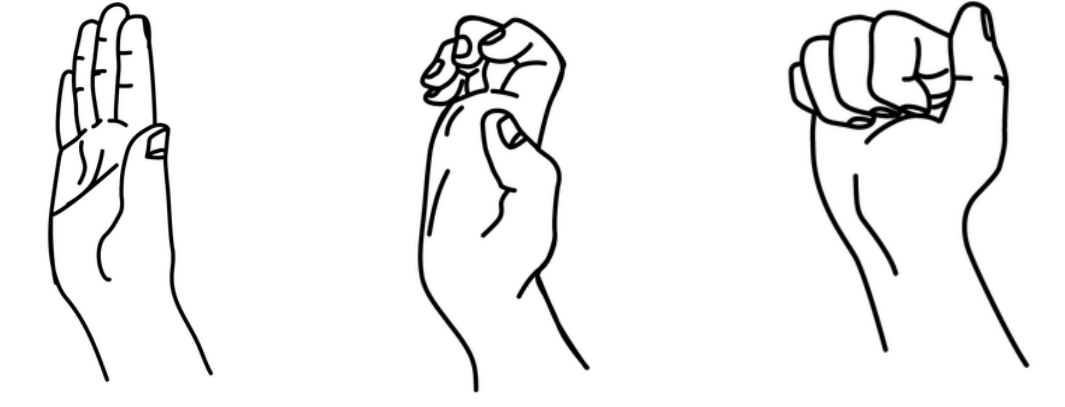
腱滑动(钩状、握拳、伸直)
将手指依次做三种形状的动作——钩状(弯曲指尖关节和中间关节,掌指关节伸直)、完全握拳、然后平直伸直的手——每种形状短暂停顿。这可使肌腱在愈合区域平滑滑动,防止其粘连。在整个过程中保持夹板固定的指尖舒适;滑动练习是针对该手指其余部分进行的。
每种形状5–10,每日3次
Kieran Hirpara 4.0
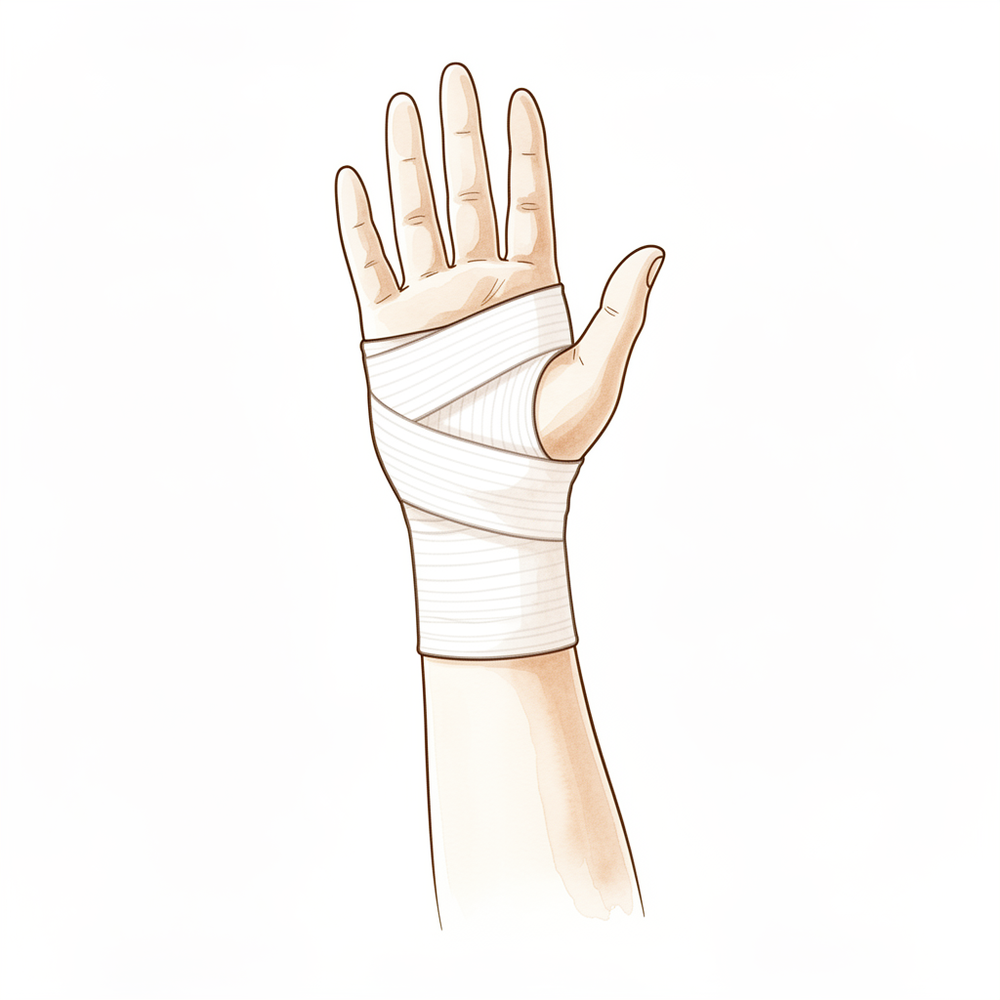
肿胀控制(抬高和加压)
在最初的一两周内,尽可能将手保持在高于心脏的水平——用枕头或靠垫垫高。一旦伤口条件允许,在手指上使用轻压缩袖套或自粘绷带(Coban)有助于减轻肿胀。肿胀越少,手部活动就越轻松自如。
白天经常抬高患肢;按您的手部治疗师所配置的方式佩戴压力装置
Kieran Hirpara 4.0
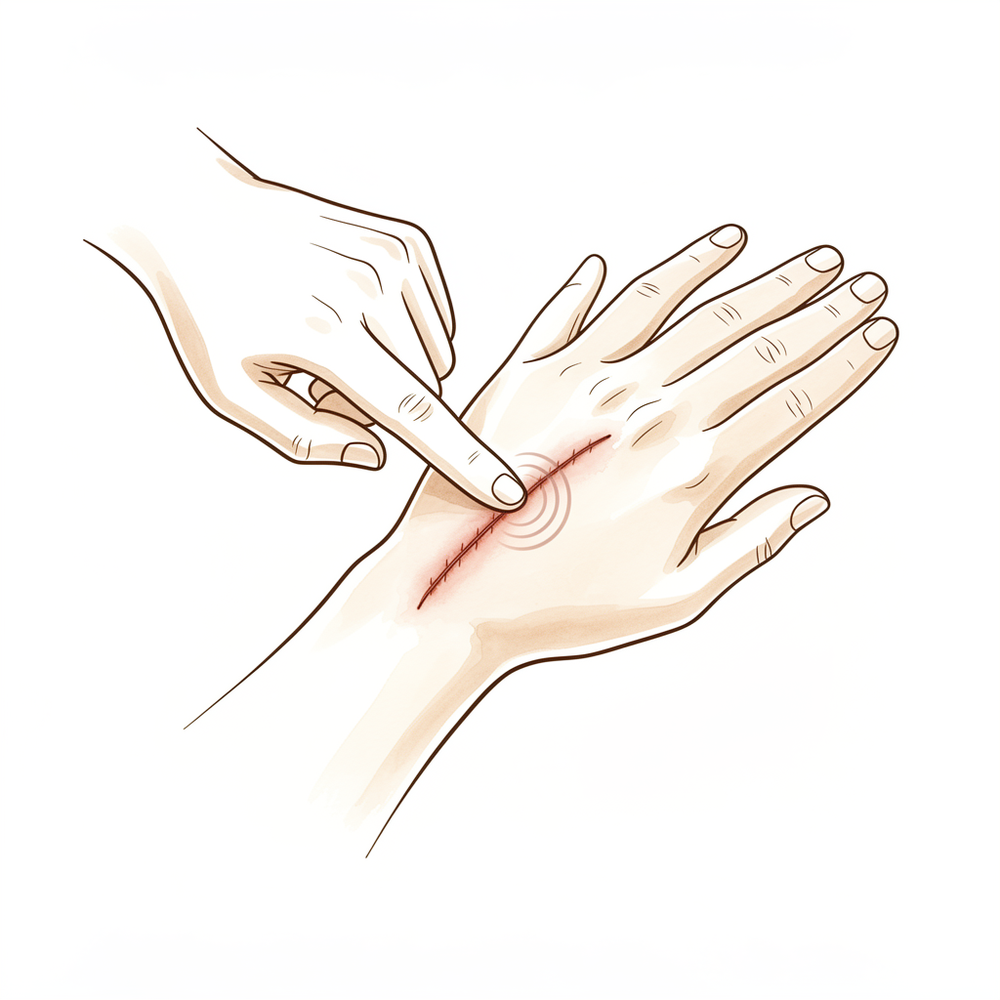
瘢痕按摩
待伤口完全愈合且手部治疗师许可后,用少量无添加润肤霜以小而坚定的圆圈在瘢痕上按摩一两分钟。若已切除黏液囊肿,治疗师还将指导甲沟及周围皮肤的护理。这有助于保持瘢痕柔软并降低敏感度。
1–2 分钟,每天 2–3 次,待伤口愈合后
Kieran Hirpara 4.0
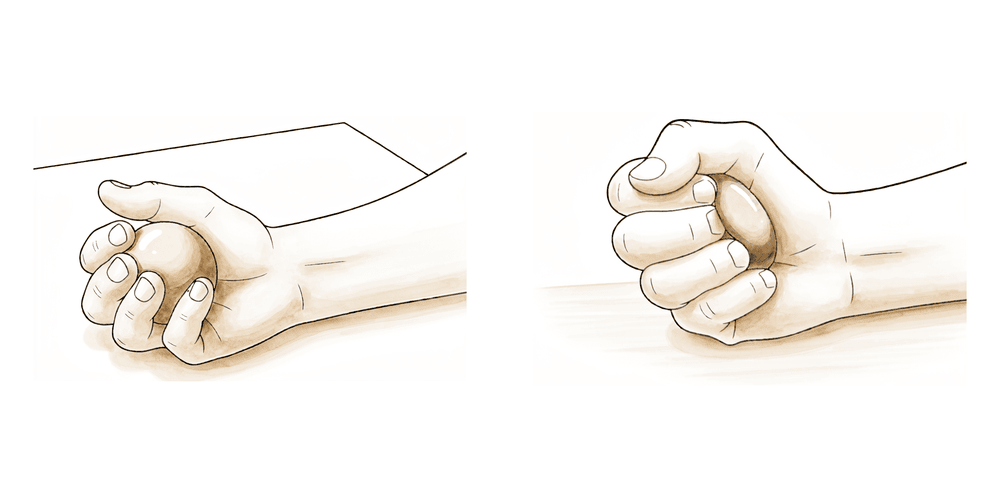
握力与捏力强化训练(骨性融合后)
后期锻炼——仅在X光片显示融合已愈合且手部治疗师开始指导时进行(通常从约6–8周开始)。开始时轻轻挤压治疗用橡皮泥,并在拇指与指尖之间进行轻度捏合,随后在接下来的几周内逐渐增加力度。在获得许可之前,切勿用力抓握或用力捏合——过早对指尖施加负荷可能会干扰骨骼愈合。
在手部治疗师的指导下,逐步进行(从约6–8周开始)
这些是您的手册中列出的练习。请仅在Hirpara医生和您的手部治疗师的指导下开始,并严格保持在您被允许的限制范围内。早期练习旨在保持手部其余部分自由活动,同时不干扰已融合的指尖:包括融合关节两侧关节的活动、您其他所有手指、拇指和手腕的活动、肌腱滑动以及肿胀控制。握力和捏力强化属于后期阶段,在X光显示融合已愈合且您获得明确许可之前,不应开始。停止任何在指尖引起剧烈疼痛的动作。
您的临床方案
本页其余部分为远指间关节(DIP)关节融合术后康复的分阶段临床方案。本节内容需提供给您的手部治疗师,每个阶段均以通俗语言解释当前发生的情况。原则是在骨性愈合前保护关节融合部位,同时保留其他所有关节的完整活动度:DIP 关节使用 P2–P3 支具固定,使 PIP 关节保持自由活动,管理水肿和瘢痕,且仅在骨性愈合后逐步重新加载捏握和抓握功能。
在治疗前,请查阅患者的手术报告及既往病史,并与主刀医生沟通固定方式(无头加压螺钉,埋入式,无需取出,或克氏针,约 6 周后取出)、融合位置(轻度屈曲,最大约 35°),以及是否进行了伴皮肤/甲沟切除的黏液囊肿切除术。临床愈合通常在 6–8 周左右预期出现,影像学愈合约为 10 周;以下康复时间表属于低级别专家共识,具体执行需视外科医生酌情决定,并在支具撤除和负重前通过 X 线确认骨性愈合。
第一阶段 — 保护与稳定(第0至2周)
最初两周旨在保护新固定的融合部位,控制肿胀和伤口愈合,同时保持所有未受累关节的活动,以防止僵硬。
致您的手部治疗师:
教育与注意事项 - 前 10–14 天 使用厚实的术后敷料/夹板并配合抬高;保持敷料干燥 - 保护关节融合部位;禁止对手术指尖施加负荷 - 若存在克氏针,请保护针道;如适用,检查甲沟/囊肿切除伤口
管理 - 伤口:按医嘱使用手术敷料;监测感染迹象 - 水肿:抬高患肢、轻柔手部泵动、酌情冰敷 - 练习:所有未受累关节的主动活动范围(AROM):手术手指的PIP和MCP关节、拇指、腕部及所有其他手指;在舒适度允许的情况下开始进行肌腱滑动练习
晋级标准 - 伤口稳定;肿胀得到控制;约两周时准备好过渡至定制的可拆卸DIP阻挡夹板
第二阶段 — 带活动的DIP阻挡夹板(第2至6周)
大约从两周开始,用定制可拆卸DIP阻挡夹板(跨越P2–P3的Stax/锤状指型矫形器)替换臃肿的敷料,该夹板仅固定指尖关节,并保持PIP关节自由活动。在此阶段需持续佩戴。鼓励其他部位进行完全主动活动,管理肿胀和瘢痕,并保持指尖无负重。
致您的手部治疗师:
教育与注意事项 - 在此阶段持续佩戴定制可拆卸DIP阻挡夹板(P2–P3,PIP自由活动) - 禁止强力抓握或捏持;功能性负荷限制约为2磅(≈1公斤)
管理 - 练习:主动PIP、MCP、拇指和腕部活动,加上其余手指活动;肌腱滑动(钩状位、全握拳、伸直位) - 水肿:继续抬高患肢,并根据耐受情况增加加压包扎(Coban/轻度袖套) - 瘢痕:伤口完全愈合后开始瘢痕按摩;若曾切除黏液囊肿,需进行甲沟护理
进展标准 - 维持PIP/MCP关节活动度;肿胀受控;伤口愈合;约六周时出现临床愈合迹象(仅在X线确认骨愈合后方可进入脱夹板阶段)
第 3 阶段 — 逐步停用夹板并开始温和强化训练(第 6 至 8 周)
一旦融合在 X 光片上显示愈合(临床上约 6–8 周),夹板将逐步停用(仅用于活动/保护),若使用了克氏针,则于约六周时取出。开始进行捏握和抓握的温和强化训练。
致您的手部治疗师:
教育与注意事项 - 确认愈合后逐步停用 DIP 夹板: 根据需要继续保护性/仅限活动时佩戴;克氏针于约 6 周时取出 - 逐步增加负荷;功能性限制约为 5 磅(≈2 公斤),从约 8 周 开始
管理 - 练习:开始 温和的抓握和捏握强化训练:治疗用橡皮泥、轻度捏握和抓握练习;继续其他所有关节的全范围活动;继续瘢痕管理 - 重新评估任何残留肿胀或 PIP/MCP 僵硬,并酌情处理
进展标准 - 影像学确认愈合;指尖舒适;融合部位在温和负荷下无痛
第4阶段——渐进性强化与出院(第8至12周)
随着融合固位,强化训练逐步推进至正常手部功能,并在约12周时解除限制。
致您的手部治疗师:
教育与注意事项 - 渐进性抓握与捏握强化;在约10周时,功能性限制约为10磅(≈4.5千克) - 约12周起无限制,具体以外科医生评估为准
管理 - 练习:分级抗阻抓握与捏握(治疗泥 → 握力器 → 任务特异性负荷);恢复手部全功能使用 - 一旦达到稳定的、无痛的指尖状态,且手部功能与力量接近正常,可考虑出院 - 若融合部位出现疼痛、对骨愈合存在疑虑或功能预后不佳,请转回主诊外科医生处
出院标准 - 融合愈合且无痛;所有未融合关节活动度正常;功能性捏握与抓握已恢复
重返工作与活动
从初期开始,在舒适范围内鼓励其他手指及手部其余部分的轻度日常使用;仅限制融合指尖的活动。驾驶通常在六周左右恢复,此时您已脱离笨重的夹板,并能安全地抓握和控制方向盘;这由Hirpara医生在复诊时酌情决定,因此请提前安排早期几周的交通协助。轻柔的捏握和轻度抓握通常在六周左右开始,并在骨愈合后(约八周起)逐步加强。手部的完全、重度或运动性使用通常在十二周左右达到。这些时间线是专家共识指南,而非固定截止日期:您的外科医生的判断以及X光片(确认骨已愈合)具有优先权。
方案实施后
本方案与诊所的总体康复建议相辅相成;另请参阅 术后疼痛管理、伤口护理 和 瘢痕管理。上述分阶段计划反映了指间关节(DIP)融合术后已发表的康复指南,您的持续康复将由 Hirpara 医生和您的手部治疗师根据您手指的愈合情况进行个体化指导。
Evidence & references
This is the clinical evidence summary written for health professionals. It is technical, and it lists the research this page was built from. You do not need to read it to understand your treatment or to make a decision about it.
Topic scope: post-operative rehabilitation after arthrodesis (fusion) of the distal interphalangeal (DIP) joint — most often for end-stage osteoarthritis (Heberden's nodes), or to excise a mucous cyst together with its underlying osteophyte. This is a fusion, not a reconstruction: the joint is deliberately and permanently abolished and set in a slightly flexed, functional position, so the rehabilitation is a protect-to-union pathway built around oedema control, scar/nail-fold management, and preservation of motion at every adjacent joint, followed by progressive reloading — not restoration of DIP motion.
Defining principle of the rehab here: a DIP arthrodesis is meant to stop moving. The single therapeutic goal is to deliver a solid, pain-free, well-aligned bony union while keeping the rest of the hand fully mobile. The fingertip is immobilised in a P2–P3 (Stax/mallet-type) orthosis that blocks the DIP but leaves the PIP free; the deliberate restraints are protection of the fixation and avoidance of pinch/grip loading until union. The principal branch points are the fixation method (buried headless compression screw — no removal — versus K-wire, removed at ~6 weeks) and whether a mucous cyst with skin/nail-fold excision was performed, which adds soft-tissue/scar care. Union, not the calendar, gates splint weaning and loading.
A. PROCEDURE OUTCOMES (fusion union, position, fixation)
DIP arthrodesis is a reliable pain-relieving operation; the principal technical debates are over fixation method and fusion position, not whether to fuse a painful, end-stage joint.
- High union rates with headless compression screw fixation. A series of 64 joints fused with a Herbert-type headless compression screw reported reliable bony union with a low complication profile, supporting the buried-screw construct that requires no later removal [Hand 2010, DOI: 10.1007/s11552-010-9295-3]. Moderate (observational case series).
- Radiographic union averages around ten weeks. A review of DIP arthrodesis techniques reports a mean time to radiographic fusion of approximately 10 weeks, with reported union rates such as ~85% in the Brutus cohort, underlining that clinical comfort precedes full radiographic consolidation [J Hand Surg Am 2013, DOI: 10.1016/j.jhsa.2013.06.010]. Moderate (review of case series).
- Fusion position is a consensus, not a controversy. Technique descriptions place the DIP in slight flexion in a functional position for pinch; dorsal-plate and screw techniques are described with attention to setting and holding this position during fixation [J Hand Surg Am 2018, DOI: 10.1016/j.jhsa.2018.03.049]. Mechanistic / consensus.
- Screw fit depends on bony dimensions. Anatomical sizing work shows the headless screw must be matched to the medullary dimensions of the distal phalanx, informing implant selection and reducing fixation-related complications [Hand 2014, DOI: 10.1007/s11552-014-9679-x]. Mechanistic.
- Fixation choice carries differing complication patterns. Comparative data on K-wire versus headless (Herbert) screw fixation describe differences in infection and hardware-related events, relevant to the protective pin care needed when a K-wire is used and removed at ~6 weeks [J Hand Surg Am 2013, DOI: 10.1016/j.jhsa.2013.01.017]. Moderate (comparative series).
- Acute arthrodesis is an established option in trauma. Primary IP-joint arthrodesis for acute injury is a recognised technique, supporting fusion as a durable solution beyond degenerative disease [J Hand Surg / Thieme 2017, DOI: 10.1055/s-0037-1608691]. Moderate (case series).
B. REHABILITATION / THERAPY EVIDENCE
There are no randomised trials of rehabilitation after DIP arthrodesis. The rehab pathway is built from surgical-outcome timing data (union ~6–8 weeks clinical, ~10 weeks radiographic) plus published hand-therapy protocols and standard hand-therapy practice. The therapeutic logic is to immobilise only the fused joint, keep every other joint moving, control swelling and scar, and reload pinch/grip only after union.
- Immobilise the DIP, free the PIP. Published finger-fusion therapy protocols use a custom removable DIP-blocking (Stax/mallet-type) orthosis spanning P2–P3 that holds the fingertip joint while leaving the PIP free for active motion — continual early wear, weaning to activity-only after X-ray union [TCO; Hand Wisconsin; Alaska Ortho; Melbourne Arm Clinic protocols, URLs below]. Weak (consensus / published protocols).
- Preserve motion at all uninvolved joints from day one. Active motion of the PIP, MCP, thumb, wrist and all other digits, plus tendon glides, is standard hand-therapy practice to prevent stiffness while the DIP consolidates [published protocols, URLs below]. Consensus / standard practice.
- Oedema and scar control are routine adjuncts. Elevation and compression for swelling, and scar massage once healed (with nail-fold care after mucous-cyst excision), follow standard hand-therapy practice rather than trial evidence. Consensus / standard practice.
- Loading is gated by union, not by date. Protocols withhold power grasp/pinch until the fusion is radiographically united, then progress strengthening gradually — reflecting the ~10-week mean radiographic union from the outcome literature [J Hand Surg Am 2013, DOI: 10.1016/j.jhsa.2013.06.010]. Weak–moderate (timing anchored to outcome series; rehab schedule consensus).
Recovery trajectory (expected, evidence-anchored)
| Phase | Window | Restraint | Hand use / therapy focus | Strength / load | Notes |
|---|---|---|---|---|---|
| 1 — Protect & settle | Week 0–2 | Bulky dressing/splint; DIP unloaded | Elevation; AROM of all uninvolved joints (PIP, MCP, thumb, wrist, other digits); begin tendon glides | None to the fingertip | Keep dressing dry; review pin/cyst-excision wound |
| 2 — DIP-blocking splint with activity | Week 2–6 | Custom P2–P3 DIP-block, PIP free, worn continually | Active PIP/MCP/thumb/wrist + all-other-digit motion; tendon glides; oedema (Coban/sleeve); scar massage once healed | No power grasp/pinch; ~2 lb (≈1 kg) limit | Clinical union emerging ~6 wk |
| 3 — Wean splint & gentle strengthening | Week 6–8 | Splint weaned once united on X-ray; K-wire out ~6 wk | Begin gentle grip/pinch (putty, light pinch/grip); continue full motion elsewhere; continue scar care | ~5 lb (≈2 kg) from 8 wk | Buried screw needs no removal |
| 4 — Progressive strengthening & discharge | Week 8–12 | Restrictions lifting | Progressive grip/pinch strengthening; restore full hand use | ~10 lb (≈4.5 kg) at 10 wk; no restriction ~12 wk | Discharge when fusion solid + pain-free |
(Phase windows mirror the precautions and recovery-curve structure in the patient protocol; clinical union ~6–8 weeks and radiographic union ~10 weeks are anchored to the outcome series, while the exact phase timings are low-level expert consensus, not trial-derived deadlines, and are subject to surgeon discretion and X-ray confirmation of union.)
C. KEY CONTROVERSIES / EVIDENCE QUALITY
- Fixation method. Buried headless compression screw (no removal) versus K-wire (removed ~6 weeks) — both achieve union; the comparative literature describes differing infection and hardware-event profiles, and the choice drives whether pin-site protection is needed in rehab [DOI: 10.1007/s11552-010-9295-3; DOI: 10.1016/j.jhsa.2013.01.017]. Moderate.
- Fusion position. Slight flexion (up to ~35°) in a functional pinch position is a settled consensus across technique descriptions, not a live controversy [DOI: 10.1016/j.jhsa.2018.03.049]. Consensus.
- Union timing. Clinical comfort (~6–8 weeks) precedes radiographic union (~10 weeks mean), so splint weaning and loading should follow the X-ray rather than the calendar [DOI: 10.1016/j.jhsa.2013.06.010]. Moderate.
- Rehabilitation schedule. No RCTs exist for DIP-fusion rehab; phase timings are derived from published therapy protocols and standard hand-therapy practice anchored to surgical union data. Low-level expert consensus.
- Mucous-cyst cases. Excision of a mucous cyst with its osteophyte adds skin/nail-fold and scar care to the standard fusion rehab; this is a soft-tissue management addition rather than a change to the bony-union pathway. Consensus / standard practice.
D. EVIDENCE STRENGTH FLAGS (summary)
- MODERATE (observational case series / reviews): reliable bony union with headless compression screw fixation; mean radiographic union ~10 weeks (~85% union, Brutus); differing complication profiles by fixation method; acute IP arthrodesis as an established trauma option.
- CONSENSUS / MECHANISTIC: slight-flexion functional fusion position; screw sizing to phalangeal dimensions; immobilise-the-DIP / free-the-PIP splinting principle.
- WEAK / LOW-LEVEL CONSENSUS: the specific phased rehabilitation schedule (no RCTs; derived from published therapy protocols + standard hand-therapy practice, anchored to union timing); exact phase timings and load limits (typical guides, not trial-derived); oedema/scar adjuncts (standard practice).
CITATIONS
RAG corpus (180,000+ Orthopaedic articles)
- Distal interphalangeal joint arthrodesis using a dorsal plate: technique and fusion position. J Hand Surg Am. 2018. DOI: 10.1016/j.jhsa.2018.03.049
- Distal interphalangeal joint arthrodesis with the Herbert headless compression screw: union and complications in 64 joints. Hand (N Y). 2010. DOI: 10.1007/s11552-010-9295-3
- Distal interphalangeal joint arthrodesis: review of techniques and outcomes (mean ~10-week radiographic fusion; Brutus ~85% union). J Hand Surg Am. 2013. DOI: 10.1016/j.jhsa.2013.06.010
- K-wire versus Herbert screw fixation for distal interphalangeal joint arthrodesis: infection and hardware events. J Hand Surg Am. 2013. DOI: 10.1016/j.jhsa.2013.01.017
- Anatomical sizing of headless compression screws for distal phalangeal fixation. Hand (N Y). 2014. DOI: 10.1007/s11552-014-9679-x
- Acute interphalangeal joint arthrodesis in trauma. J Hand Surg / Thieme. 2017. DOI: 10.1055/s-0037-1608691
DIP-fusion rehabilitation literature (URLs)
- Twin Cities Orthopedics — Distal Interphalangeal (DIP) Joint Fusion post-op protocol. https://www.tcomn.com/wp-content/uploads/2016/06/Distal-Interphalangeal-DIP-Joint-Fusion.pdf
- Hand Wisconsin — Finger-joint fusion therapy protocol. https://handwisconsin.com/wp-content/uploads/2016/09/fusion-finger-joint-therapy-protocol.pdf
- Alaska Orthopaedics — Arthrodesis (DIP / PIP or MCP) joint fusion protocol. https://www.akortho.com/wp-content/uploads/Arthrodesis-DIP-PIP-or-MCP-Joint-Fusion.pdf
- Melbourne Arm Clinic — PIP / DIP arthrodesis rehabilitation protocol. https://melbournearmclinic.com.au/orthopaedic-rehabilitation/shoulder-rehabilitation/pip-dip-arthrodesis-protocol/