

மடக்குத் தசைநாண் சரிசெய்தல் (Flexor Tendon Repair) தகவல்
Mater Private Hospital Rockhampton-இல் டாக்டர் கியரன் ஹிர்பரா செய்யும், விரலில் உள்ள மடக்குத் தசைநாணை (flexor tendon) — விரலின் உள்ளங்கைப் பக்கத்தில் ஓடி, விரலை உள்ளங்கையை நோக்கி மடக்கும் கயிறு — அறுவை சிகிச்சை மூலம் சரிசெய்த பிறகு உங்கள் மீட்சிக்கு இந்த நெறிமுறை (protocol) வழிகாட்டுகிறது. இது உங்கள் வீட்டுப் பயிற்சித் திட்டத்துடன் தொடங்குகிறது; அதைத் தொடர்ந்து உங்கள் கை சிகிச்சையாளருக்காக (hand therapist) எழுதப்பட்ட, கட்டமைக்கப்பட்ட மருத்துவ நெறிமுறை வருகிறது: உங்கள் மறுவாழ்வுப் பயிற்சி ஒருங்கிணைந்து இருக்க, இந்தப் பக்கத்தையோ அதன் PDF-ஐயோ உங்கள் முதல் சிகிச்சை சந்திப்புக்குக் கொண்டு வாருங்கள். உங்கள் மீட்சி எப்படி முன்னேறுகிறது என்பதைப் பொறுத்து உங்கள் கை சிகிச்சையாளர் இந்தத் திட்டத்தை மாற்றியமைக்கலாம்.
அறுவை சிகிச்சைக்குப் பிறகு உங்கள் காயம் பற்றி ஏதேனும் கவலை இருந்தால், கிளினிக்கைத் தொடர்பு கொள்ளுங்கள். காயத்தைப் புகைப்படம் எடுத்து, பார்வையிடுவதற்காக மின்னஞ்சலில் அனுப்புவது பெரும்பாலும் உதவியாக இருக்கும்.
என்ன எதிர்பார்க்கலாம்
மடக்குத் தசைநாண் சரிசெய்தல், வெட்டுப்பட்ட தசைநாணின் இரு முனைகளையும் மீண்டும் ஒன்றாகத் தைக்கிறது; அதனால் விரல் மீண்டும் மடங்க முடியும். உடனடியாக மென்மையாக அசைக்கும் அளவுக்குச் சரிசெய்யப்பட்ட பகுதி வலிமையாக இருக்கிறது; ஆனால் தசைநாண் ஒன்றிணையும் முதல் சில வாரங்களில் அது மிகவும் பலவீனமாக இருக்கிறது. எனவே, தையல்கள் அறுந்துவிடும் அளவுக்கு ஒருபோதும் சுமை ஏற்றாமல், தசைநாண் நழுவிக்கொண்டே இருக்கத் தேவையான அளவுக்கு மட்டும் அதை அசைப்பதையே முழுத் திட்டமும் மையமாகக் கொண்டுள்ளது.
இதைச் செய்ய, மான்செஸ்டர் குட்டைச் சிம்பு (Manchester short splint) எனப்படும் சிறப்பான, இலகுவான ஒரு சிம்பில் உங்கள் கை ஓய்வாக வைக்கப்படுகிறது. பழைய, திரட்சியான சிம்புகளைப் போலன்றி, இது குட்டையானது; மணிக்கட்டு மடிப்பிலேயே முடிந்துவிடுகிறது; எனவே உங்கள் மணிக்கட்டு சுதந்திரமாக விடப்படுகிறது. இது உங்கள் மணிக்கட்டு முழுமையாக முன்னோக்கி வளையவும், பின்னோக்கிச் சுமார் 45 டிகிரி வரை நகரவும் அனுமதிக்கிறது; அதே நேரத்தில் ஒரு சிறிய தடுப்பு, உங்கள் பெரிய விரல் கணுக்கள் சுமார் 30 டிகிரிக்கு மேல் நேராவதைத் தடுத்து, உங்கள் விரல் மூட்டுகளை அசையச் சுதந்திரமாக விடுகிறது. இதை ஆறு வாரங்களுக்கு முழு நேரமும் அணிய வேண்டும்; பயிற்சிகளுக்கும் கழுவுவதற்கும் அறிவுறுத்தப்பட்டபடி மட்டுமே கழற்ற வேண்டும்.
மணிக்கட்டு எப்படிப் பயன்படுத்தப்படுகிறது என்பதுதான் இதில் புத்திசாலித்தனமான பகுதி. நீங்கள் மணிக்கட்டை முன்னோக்கி வளைக்கும்போது, உங்கள் விரல் கிட்டத்தட்டத் தானாகவே நேராகிறது (இது டெனோடெசிஸ் விளைவு — tenodesis effect — எனப்படுகிறது); உங்கள் சொந்தத் தசைகள் வலுக்கட்டாயமாக இழுக்காமலேயே விரலை முழுமையாகத் திறக்க இது வழி செய்கிறது. நீங்கள் மணிக்கட்டைப் பின்னோக்கி வளைக்கும்போது, விரலை மென்மையாகச் சுருட்டுவது எளிதாகவும் பாதுகாப்பாகவும் ஆகிறது. இந்த முறையில் அசைப்பது தசைநாணை நழுவிக்கொண்டே இருக்க வைக்கிறது; மிக முக்கியமாக, விரல் விறைப்பான, வளைந்த நிலையில் சுருண்டுபோவதைத் தடுக்கிறது — இந்த வகைச் சரிசெய்தலுக்குப் பிறகு ஏற்படும் மிகப் பொதுவான பிரச்சினை அதுவே.
ஆரம்பப் பயிற்சிகள் (சுமார் 4–5ஆம் நாளிலிருந்து) மென்மையானவை, குறிப்பிட்டவை: முதலில் மற்றொரு கையால் விரலை மடக்குவது, பிறகு விரல் நுனியிலிருந்து தொடங்கும் லேசான, சுய 'கொக்கி' சுருட்டல், பிறகு மணிக்கட்டை வளைத்தபடி விரலை நேராக்குவது. ஆறு வாரங்களுக்குப் பலமாகப் பிடிப்பதோ வலுக்கட்டாய அசைவோ கிடையாது. ஆறு வாரங்களில் சிம்பு கழற்றப்படுகிறது; லேசான வலுப்படுத்துதல் தொடங்குகிறது; பெரும்பாலானோர் பத்து முதல் பன்னிரண்டு வாரங்களுக்குள் கையை முழுமையாக, கட்டுப்பாடின்றிப் பயன்படுத்தும் நிலைக்குத் திரும்புகிறார்கள்.
முன்னெச்சரிக்கைகளும் கட்டுப்பாடுகளும்
- மான்செஸ்டர் குட்டைச் சிம்பை ஆறு வாரங்களுக்கு முழு நேரமும் அணியுங்கள்: அறிவுறுத்தப்பட்டபடி, உங்கள் பயிற்சிகளுக்கும் கழுவுவதற்கும் மட்டுமே அதைக் கழற்றுங்கள்.
- முதல் ஆறு வாரங்களுக்கு, இறுக்கமான, பலமான முஷ்டி மூட வேண்டாம்; அறுவை சிகிச்சை செய்யப்பட்ட கையால் எதையும் பிடிக்கவோ, தூக்கவோ, இழுக்கவோ, சுமக்கவோ வேண்டாம்: கனமான சுமை சரிசெய்யப்பட்ட பகுதியை அறுத்துவிடக்கூடும்.
- விரலை வலுக்கட்டாயமாக நேராக்கவோ வலுக்கட்டாயமாக மடக்கவோ வேண்டாம்; உங்களுக்குக் காட்டப்பட்ட வரம்புக்குள், ஒவ்வொரு அசைவையும் மென்மையாக வைத்திருங்கள்.
- எதுவும் அதை இழுக்கவோ அழுத்தவோ செய்யாத வரை, காயமடைந்த விரலைத் தவிர்த்து, மிக லேசான, பாதுகாப்பான வேலைகளுக்குக் கையைப் பயன்படுத்தலாம்.
- படக்கென்ற ஒரு சத்தம் அல்லது திடீர் 'விட்டுக்கொடுத்தல்' உணர்வுடன் விரலை மடக்கும் திறன் போய்விட்டால், தசைநாண் அறுந்திருக்கலாம்: இப்படி நேர்ந்தால் உடனடியாகக் கிளினிக்கைத் தொடர்பு கொள்ளுங்கள்.
- சிம்பில் இருக்கும் வரை வாகனம் ஓட்ட வேண்டாம்; சிம்பு கழற்றப்பட்ட பிறகு (சுமார் ஆறு வாரங்கள்), உங்கள் பிடியும் கட்டுப்பாடும் போதுமானதாக இருந்து, உங்களுக்கு அனுமதி வழங்கப்பட்டதும், வாகனம் ஓட்டுவது மீண்டும் தொடங்குகிறது.
காயம், வீக்கம், வடு ஆகியவற்றை நிர்வகிப்பது குறித்து, கிளினிக்கின் காயப் பராமரிப்பு வழிகாட்டுதலைப் பாருங்கள்.
உங்கள் பயிற்சிகள்
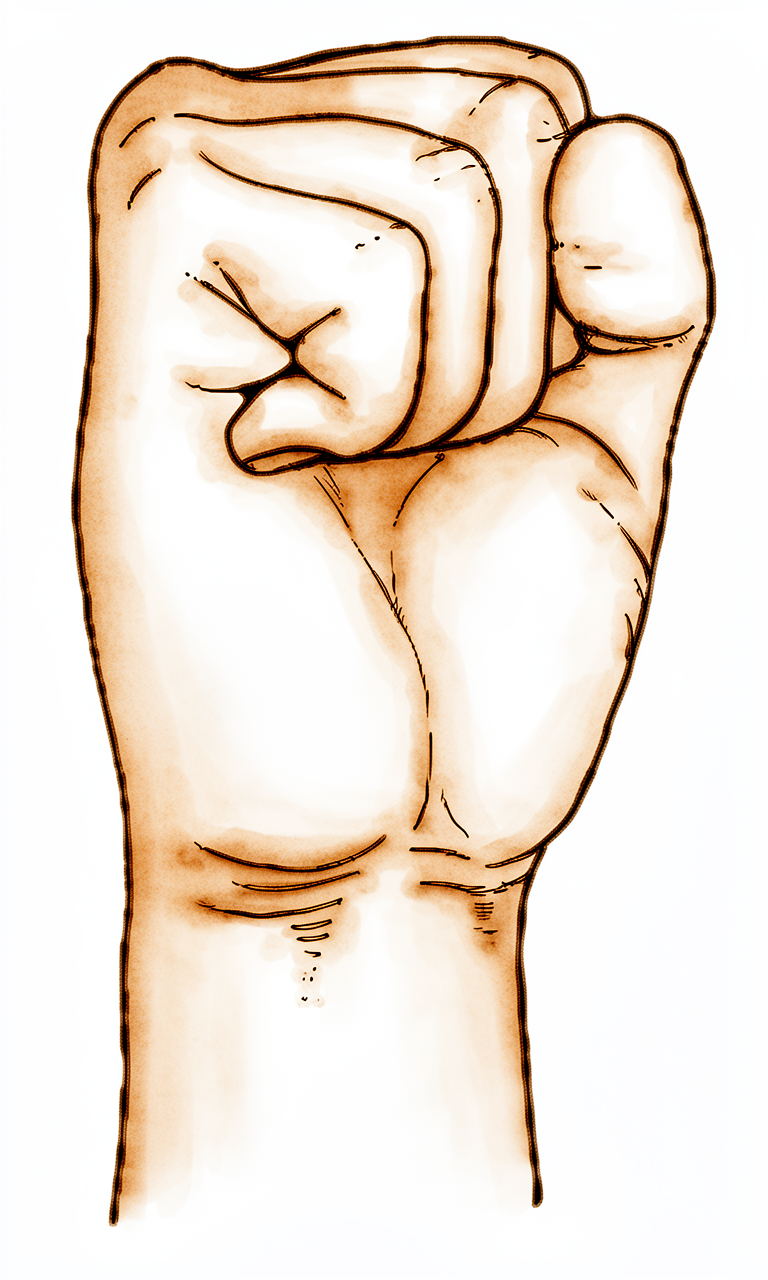
பிறர் அசைக்கும் முஷ்டி நீட்சி (IP மடக்குதல்)
அறுவை சிகிச்சை செய்யப்பட்ட விரலை மற்றொரு கையால் மெதுவாக முழுமையாக முஷ்டிக்குள் சுருட்டுங்கள்; விரல் மூட்டுகளை முழுமையாக மடக்குங்கள் — விரலை முற்றிலும் தளர்வாக வைத்திருங்கள், அதனால் வேலை முழுவதையும் உங்கள் மற்றொரு கையே செய்யும். விரல் மூட்டுகள் நெகிழ்வாகவும் அசையத் தயாராகவும் இருக்க, ஒவ்வொரு அமர்விலும் இதுவே முதலில் செய்யப்படுகிறது. உங்கள் சொந்தத் தசை செயல்படாமல் இருப்பதால், இது சரிசெய்யப்பட்ட பகுதியை இழுப்பதில்லை. மெதுவாக அசையுங்கள்; வலி வருவதற்கு முன்பே நிறுத்துங்கள்.
10 முறை, ஒவ்வொரு அமர்வின் தொடக்கத்திலும், நாளொன்றுக்குப் பல அமர்வுகள்
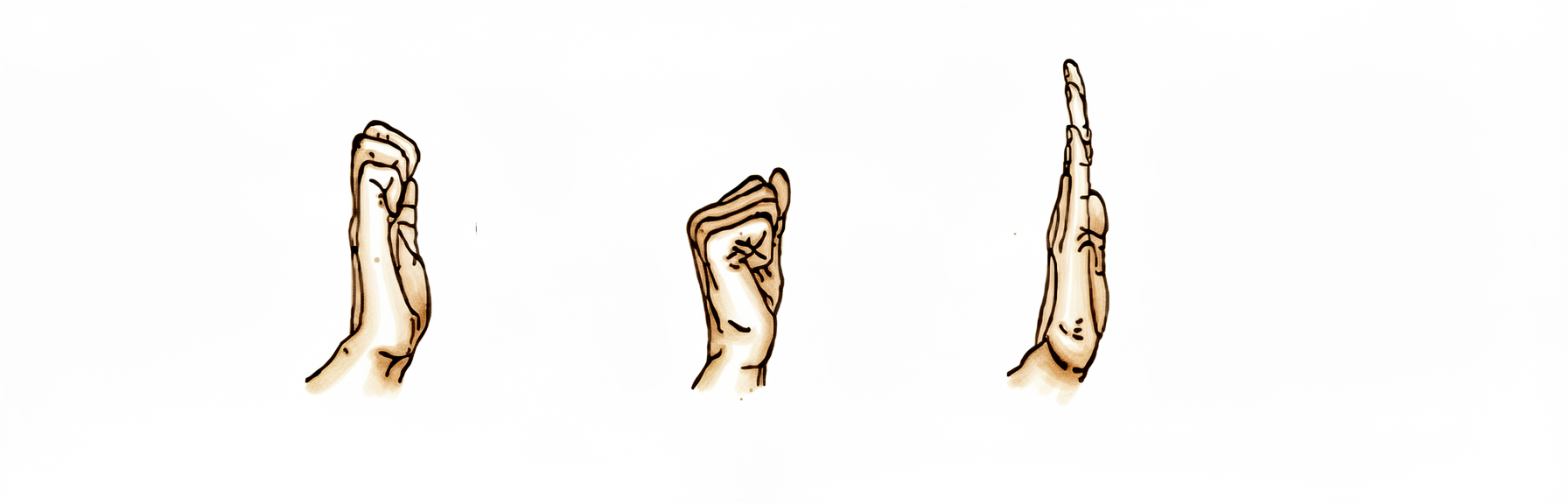
DIP-இலிருந்து தொடங்கும் சுய கொக்கி முஷ்டி
சிம்புக்குள்ளோ வெளியேயோ, உங்கள் மணிக்கட்டைப் பின்னோக்கி வளைத்த (நீட்டிய) நிலையில், முதலில் விரல் நுனியைக் கீழே சுருட்டி ஒரு 'கொக்கி' செய்யுங்கள் — பெரிய விரல் கணுவை நேராக வைத்திருந்தபடியே, நுனி மூட்டையும் நடு மூட்டையும் மடக்குங்கள். மென்மையாகப் பிடித்து, பிறகு விடுங்கள். விரல் நுனியில் சுருட்டலைத் தொடங்குவது, குணமாகும் தசைநாணை அதற்குத் தேவையான விதத்தில் நழுவச் செய்கிறது. மென்மையான முயற்சியை மட்டுமே பயன்படுத்துங்கள் — ஒருபோதும் அதை வலுக்கட்டாயமாகச் செய்ய வேண்டாம்; ஒருபோதும் இறுக்கமான, பலமான முஷ்டி மூட வேண்டாம்.
10 முறை, வழிகாட்டப்படும்படி நாளொன்றுக்குப் பல அமர்வுகள்
Kieran Hirpara 4.0
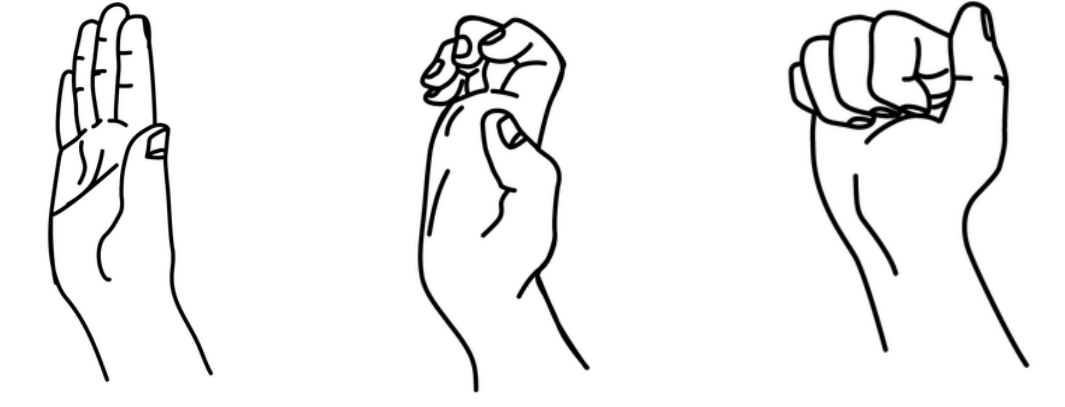
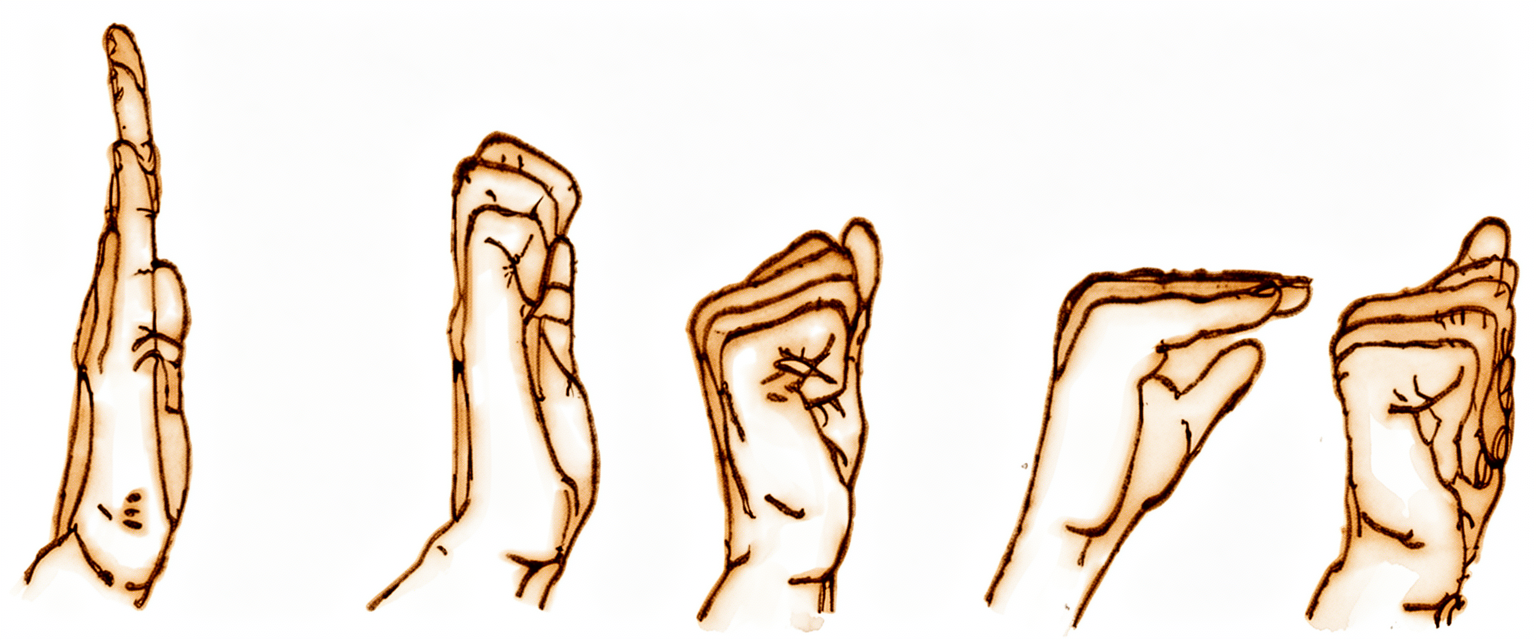
தசைநாண் நழுவல் (கொக்கியிலிருந்து நேருக்கு, பிறகு முழு முஷ்டிக்கு)
தசைநாண் நழுவல் வரிசை வழியாக மெதுவாக அசையுங்கள்: விரல்கள் நேராக, பிறகு ஒரு கொக்கி முஷ்டி (விரல் நுனிச் சுருட்டல்), பிறகு ஒரு மென்மையான முழு முஷ்டி, பிறகு மீண்டும் நேராக. இது இரு மடக்குத் தசைநாண்களும் ஒன்றையொன்று கடந்தும், சுற்றியுள்ள திசுவைக் கடந்தும் சீராக நழுவ வைக்கிறது; அதனால் அவை ஒட்டிக்கொள்வதில்லை. ஒவ்வொரு நிலையையும் லேசாகவும் எளிதாகவும் வைத்திருங்கள் — இவை நழுவல் அசைவுகள், வலுப்படுத்தும் பயிற்சிகள் அல்ல; எனவே எந்த அழுத்தமும் இருக்கக் கூடாது.
ஒவ்வொரு நிலையும் 5 முறை, வழிகாட்டப்படும்படி நாளொன்றுக்குப் பல அமர்வுகள்
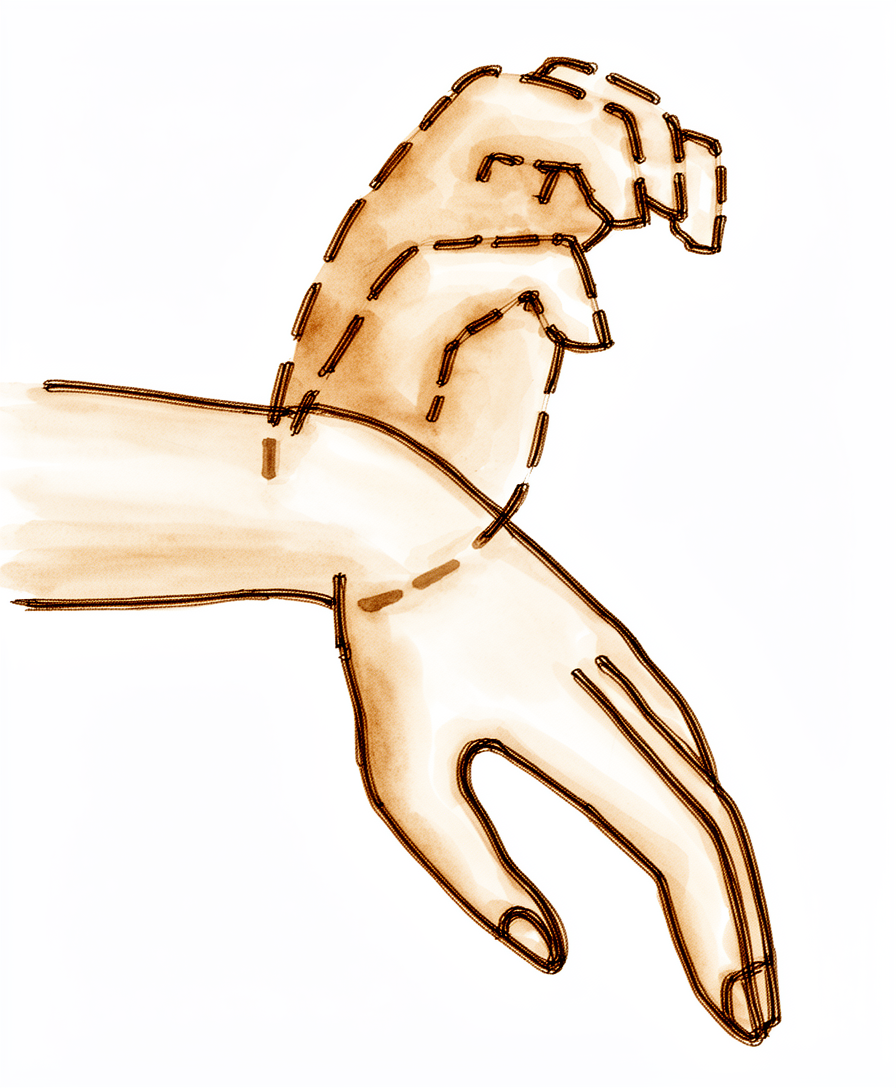
மணிக்கட்டை வளைத்தபடி விரலை நேராக்குதல் (ஒருங்கிணைந்த அசைவு)
உங்கள் மணிக்கட்டை முன்னோக்கித் தாழ விடுங்கள் (மடங்கிய நிலை); பிறகு உங்கள் விரலை நீங்களே நேராக்குங்கள். இப்படி மணிக்கட்டை வளைப்பது விரல் நேராவதற்கு இயற்கையாகவே உதவுகிறது; எனவே வலுக்கட்டாயம் இல்லாமலேயே விரல் எளிதாக நீள்கிறது. விரல் நிரந்தரமாக வளைந்த நிலையில் சுருண்டுபோவதைத் தடுக்கும் முக்கியமான அசைவு இதுவே — இதைத் தவறாமல் செய்யுங்கள். மணிக்கட்டின் உதவியுடன் வசதியாக எவ்வளவு தூரம் செல்கிறதோ அவ்வளவு மட்டுமே நேராக்குங்கள்; நெம்புகோல் போல அதை வலுக்கட்டாயமாக நேராக்க வேண்டாம்.
10 முறை, வழிகாட்டப்படும்படி நாளொன்றுக்குப் பல அமர்வுகள்
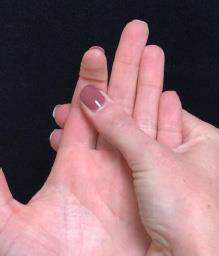
வைத்துப் பிடித்தல் (place-and-hold)
அறுவை சிகிச்சை செய்யப்பட்ட விரலை மற்றொரு கையால் மெதுவாக ஒரு லேசான முஷ்டி நிலையில் வையுங்கள்; பிறகு அந்தக் கையை விலக்கி, உங்கள் சொந்தத் தசையின் மிகச் சிறிய முயற்சியால் மட்டும் அந்த நிலையைப் பிடித்திருங்கள் — விரலை அங்கேயே வைத்திருக்கப் போதுமான அளவு மட்டுமே. மடக்கும் கடின வேலையை உங்கள் மற்றொரு கை செய்வதாலும், உங்கள் சொந்தத் தசை இழுக்காமல் பிடித்திருந்தால் மட்டும் போதும் என்பதாலும், இது சரிசெய்யப்பட்ட தசைநாணைப் பாதுகாப்பாக விழிப்படையச் செய்கிறது. முயற்சியை மிகச் சிறிதாகவே வைத்திருங்கள்; ஒவ்வொரு முறைக்கும் இடையில் முழுமையாகத் தளர்த்துங்கள்.
சில வினாடிகள் பிடியுங்கள், 5–10 முறை, உங்கள் கை சிகிச்சையாளர் வழிகாட்டும்படி மட்டுமே
Kieran Hirpara 4.0
தடுத்துப் பிடித்தல் (பிந்தைய கட்டம், ஒட்டுதல்கள் இருந்தால்)
இது பிந்தைய கட்டப் பயிற்சி — உங்கள் தசைநாண் ஒட்டிக்கொண்டிருந்து, உங்கள் கை சிகிச்சையாளர் இதைத் தொடங்கினால் மட்டுமே. நீங்கள் அசைக்க விரும்பும் மூட்டுக்குச் சற்றுக் கீழே உள்ள எலும்பைப் பிடித்து விரலை உறுதியாக வைத்துக்கொண்டு, பிறகு அந்த ஒரு மூட்டை மட்டும் நீங்களே மடக்குங்கள் (எடுத்துக்காட்டாக, விரலின் நடுப்பகுதியை அசையாமல் பிடித்துக்கொண்டு, விரல் நுனியை மட்டும் சுருட்டுங்கள்). இது நழுவலை ஒரே ஒரு மூட்டில் குவித்து, ஒட்டிக்கொண்ட தசைநாணை விடுவிக்கிறது. தடுத்துப் பிடித்தலை நீங்களாகவே தொடங்க வேண்டாம் — இது அதிகக் கடினமானது; உங்கள் சிகிச்சையாளர் இது பாதுகாப்பானது என்று தீர்மானிக்கும்போது மட்டுமே சேர்க்கப்படுகிறது.
உங்கள் கை சிகிச்சையாளர் வழிகாட்டும்படி (பிந்தைய கட்டம், தேவைப்பட்டால் மட்டுமே)
இவை உங்கள் கையேட்டில் உள்ள பயிற்சிகள். டாக்டர் ஹிர்பராவும் உங்கள் கை சிகிச்சையாளரும் வழிகாட்டும்படி மட்டுமே, உங்களுக்குக் கொடுக்கப்பட்ட வரம்புக்கும் எல்லைகளுக்கும் உள்ளேயே இருந்து, அவற்றைத் தொடங்குங்கள். ஒவ்வொரு அமர்வும் ஒரே பாதுகாப்பான வரிசையையே பின்பற்றுகிறது: முதலில் மற்றொரு கையால் விரலை மென்மையாக மடக்குங்கள், பிறகு உங்கள் சுய 'கொக்கி' சுருட்டலையும் தசைநாண் நழுவலையும் செய்யுங்கள், பிறகு விரல் சுருண்டு விறைத்துப்போகாமல் இருக்க மணிக்கட்டை வளைத்தபடி விரலை நேராக்குங்கள். இவை அனைத்தையும் லேசாகவே வைத்திருங்கள்: இது நழுவச் செய்வது, வலுப்படுத்துவது அல்ல. வைத்துப் பிடித்தல் (place-and-hold) மற்றும் தடுத்துப் பிடித்தல் (blocking) ஆகியவை பிந்தைய கட்டங்களுக்கு உரியவை; உங்கள் கை சிகிச்சையாளர் அவற்றை அறிமுகப்படுத்தும்போது மட்டுமே அவற்றைத் தொடங்க வேண்டும். சரிசெய்யப்பட்ட பகுதியின் மேல் கூர்மையான வலியை ஏற்படுத்தும் எதையும் நிறுத்துங்கள்; உங்களுக்கு அனுமதி கிடைக்கும் முன் ஒருபோதும் பலமான முஷ்டி மூட வேண்டாம்.
உங்கள் மருத்துவ நெறிமுறை
இந்தப் பக்கத்தின் மீதமுள்ள பகுதி, மான்செஸ்டர் குட்டைச் சிம்பையும் ஆரம்பகாலச் செயலூக்க அசைவு (early-active-motion, EAM) முறையையும் பயன்படுத்தி, மடக்குத் தசைநாண் சரிசெய்தலுக்குப் பிறகான மறுவாழ்வுப் பயிற்சிக்கான, கட்டம் கட்டமான மருத்துவ நெறிமுறை. இந்தப் பகுதி உங்கள் கை சிகிச்சையாளரிடம் வழங்கப்பட வேண்டியது; ஒவ்வொரு கட்டமும் என்ன நடக்கிறது என்பதை எளிய மொழியில் விளக்குவதுடன் தொடங்குகிறது. சரிசெய்யப்பட்ட பகுதி ஆரம்ப வாரங்களில் மிகவும் பலவீனமாக இருக்கிறது; சுய மற்றும் எதிர்ப்புக்கு எதிரான விரல் மடக்குதலே (பலமான முஷ்டி) அதன் மீது சுமை ஏற்றுகிறது. எனவே இந்த நெறிமுறை, வலுக்கட்டாயமான மடக்குதலிலிருந்து பாதுகாக்கிறது; அதே நேரத்தில், முக்கியத் தொல்லையாக அமையும் சிக்கலான மடக்கு நிலைச் சுருக்கத்தை (flexion contracture) தடுக்கும் பொருட்டு, தசைநாண் நகர்வையும் (excursion) சுய IP நீட்டலையும் வேண்டுமென்றே தூண்டுகிறது.
சிகிச்சைக்கு முன், நோயாளியின் அறுவை சிகிச்சை அறிக்கையையும் கடந்தகால மருத்துவ வரலாற்றையும் பரிசோதியுங்கள்; காயத்தின் மண்டலம், உள்ளகத் தையலின் (core suture) அமைப்பு மற்றும் சரிசெய்தலின் வலிமை, புல்லி திறக்கப்பட்டதா (pulley venting), அதே நேரத்தில் விரல் நரம்பு சரிசெய்யப்பட்டதா ஆகியவை குறித்து சிகிச்சை அளிக்கும் அறுவை சிகிச்சை நிபுணருடன் கலந்தாலோசியுங்கள். டாக்டர் ஹிர்பராவின் மடக்குத் தசைநாண் சரிசெய்தல்கள், மான்செஸ்டர் குட்டை முதுகுப்புறச் சிம்பில் (மணிக்கட்டு மடிப்பில் முடிவது) பராமரிக்கப்படுகின்றன; இது முழு மணிக்கட்டு மடக்குதலையும், 45° வரை நீட்டலையும் அனுமதிக்கிறது; MCP மூட்டுகள் 30° மடக்கு நிலையில் தடுக்கப்பட்டிருக்கும்; IP மூட்டுகள் சுதந்திரமாக இருக்கும்; இது ஆறு வாரங்களுக்கு முழு நேரமும் அணியப்படுகிறது. IP மடக்கு நிலை உருக்குலைவு (deformity) உருவானால் மட்டுமே இரவுநேர நீட்டு நிலைச் சிம்புகள் (extension gutters) சேர்க்கப்படுகின்றன.
கட்டம் I — மான்செஸ்டர் குட்டைச் சிம்பில் ஆரம்பகாலச் செயலூக்க அசைவு (வாரம் 0 முதல் 6 வரை)
முதல் ஆறு வாரங்கள், ஒன்றிணைந்து வரும் சரிசெய்யப்பட்ட பகுதியைப் பாதுகாக்கின்றன; அதே நேரத்தில் தசைநாணை நழுவிக்கொண்டே இருக்க வைத்து, விரல் மடக்கு நிலைச் சுருக்கமாக விறைத்துப்போவதைத் தடுக்கின்றன. கை, மான்செஸ்டர் குட்டைச் சிம்பில் முழு நேரமும் வைக்கப்படுகிறது (முழு மணிக்கட்டு மடக்குதல், 45° வரை நீட்டல், MCP 30°-இல் தடுக்கப்படுதல், IP மூட்டுகள் சுதந்திரம்). சுய அசைவு சுமார் 4–5ஆம் நாளில் தொடங்குகிறது. ஒவ்வொரு அமர்வும் ஒரு நிர்ணயிக்கப்பட்ட வரிசையில் நடக்கிறது: முதலில் பிறர் அசைக்கும் IP மடக்குதல், பிறகு மணிக்கட்டு நீட்டிய நிலையில் DIP-இலிருந்து தொடங்கும் சுய கொக்கி முஷ்டி, பிறகு மணிக்கட்டு மடங்கிய நிலையில் சுய IP நீட்டல் (ஒருங்கிணைந்தது — synergistic —, சுருக்கத்தை எதிர்ப்பது). வலுக்கட்டாயமான இறுதி வரம்பு கூடாது; எதிர்ப்புக்கு எதிரான மடக்குதலும் கூடாது.
உங்கள் கை சிகிச்சையாளருக்கு:
கல்வியும் முன்னெச்சரிக்கைகளும் - மான்செஸ்டர் குட்டைச் சிம்பில் முழு நேரமும் சிம்பு: முழு மணிக்கட்டு மடக்குதல், 45° வரை நீட்டல், MCP 30°-இல் தடுக்கப்படுதல், IP மூட்டுகள் சுதந்திரம்; பயிற்சிகளுக்கும் சுகாதாரப் பராமரிப்புக்கும் மட்டுமே கழற்றுதல் - 4–5ஆம் நாளில் EAM-ஐத் தொடங்கவும் - வலுக்கட்டாயமான இறுதி-வரம்பு மடக்குதல் கூடாது; எதிர்ப்புக்கு எதிரான மடக்குதலும் கூடாது; பிடிப்பது, தூக்குவது, இழுப்பது கூடாது - காயமடைந்த விரலைத் தவிர்த்து, கையை லேசாக, "பாதுகாப்பாகப்" பயன்படுத்துதல் - IP மடக்கு நிலை உருக்குலைவு உருவாகத் தொடங்கினால் மட்டுமே இரவுநேர நீட்டு நிலைச் சிம்பு
சிகிச்சை மேலாண்மை - காயம்: அறிவுறுத்தப்பட்டபடி அறுவை சிகிச்சைக் கட்டுகள்; தொற்று ஏற்படுகிறதா எனக் கண்காணிக்கவும் - வீக்கம்: உயர்த்தி வைத்தல், மென்மையான விரல் வீக்கக் கட்டுப்பாடு, ஒட்டுதல் ஏற்படும் அபாயத்தை நிர்வகித்தல் - ஒவ்வொரு அமர்விலும் பயிற்சி வரிசை: (1) முதலில் முழுமையான, பிறர் அசைக்கும் IP மடக்குதல்; (2) மணிக்கட்டு 45° வரை நீட்டிய நிலையில், DIP-இலிருந்து தொடங்கும் சுய கொக்கி முஷ்டி; (3) மணிக்கட்டு மடங்கிய நிலையில் சுய விரல் நீட்டல் (ஒருங்கிணைந்தது / டெனோடெசிஸ், சுருக்கத்தை எதிர்ப்பது); வழிகாட்டப்படும்படி, லேசான முஷ்டி வரை வைத்துப் பிடித்தலைச் சேர்க்கவும் - இந்தக் கட்டம் முழுவதும் வாரந்தோறும் கை சிகிச்சை மறுபரிசோதனை
அடுத்த கட்டத்துக்குச் செல்வதற்கான அளவுகோல்கள் - காயம் குணமானது; ஆறு வாரங்களில் சரிசெய்யப்பட்ட பகுதி அப்படியே உள்ளது; தசைநாண் நழுவல் தக்கவைக்கப்பட்டுள்ளது; குறிப்பிடத்தக்க IP மடக்கு நிலைச் சுருக்கம் இல்லை
கட்டம் II — சிம்பிலிருந்து வெளியே, மென்திசு மற்றும் வடுப் பணி (வாரம் 6)
ஆறு வாரங்களில் சிம்பு கழற்றப்படுகிறது. கவனம், முழுமையான பிறர் அசைக்கும் மற்றும் சுய வரம்பை மீட்டெடுப்பது, ஆரம்பகால இறுக்கம் ஏதேனும் இருந்தால் அதைத் தளர்த்துவது, வடுவை நிர்வகிப்பது ஆகியவற்றுக்கு மாறுகிறது. வலுப்படுத்துதல் இன்னும் தொடங்கவில்லை; எஞ்சிய மடக்கு நிலை உருக்குலைவு இருந்தால் மட்டுமே இரவுநேர நீட்டு நிலைச் சிம்பு பயன்படுத்தப்படுகிறது.
உங்கள் கை சிகிச்சையாளருக்கு:
மதிப்பீடுகள் - MCP/PIP/DIP மூட்டுகளில் சுய மற்றும் பிறர் அசைக்கும் அசைவு வரம்பு (ROM); IP மடக்கு நிலைச் சுருக்கம் ஏதேனும் உள்ளதா; தசைநாண் நழுவலின் தரம் (ஒட்டுதல் உள்ளதா என மதிப்பிடவும்); வடு மற்றும் காயப் பரிசோதனை
கல்வியும் முன்னெச்சரிக்கைகளும் - ஆறு வாரங்களில் சிம்பு நிறுத்தப்படுகிறது (எஞ்சிய IP மடக்கு நிலை உருக்குலைவுக்கு மட்டுமே இரவுநேர நீட்டு நிலைச் சிம்பு) - லேசான செயல்பாட்டுப் பயன்பாட்டை முன்னேற்றவும்; இன்னும் எதிர்ப்புக்கு எதிரான பிடிப்போ சுமையோ கூடாது
சிகிச்சை மேலாண்மை - முழுமையான ஒட்டுமொத்த மடக்குதலையும் நீட்டலையும் மீட்டெடுக்க மென்திசு நீட்சி; குணமானதும் வடு மேலாண்மையைத் தொடங்கவும் - தசைநாண் நழுவலைத் தொடரவும்; ஒட்டுதல்கள் தசைநாண்களுக்கு இடையேயான வேறுபட்ட நழுவலைக் கட்டுப்படுத்தினால் தடுத்துப் பிடித்தலை அறிமுகப்படுத்தவும் - கையின் லேசான செயல்பாட்டுப் பயன்பாட்டை முன்னேற்றவும்
அடுத்த கட்டத்துக்குச் செல்வதற்கான அளவுகோல்கள் - காயமும் வடுவும் சீரடைந்துள்ளன; கிட்டத்தட்ட முழுமையான, பிறர் அசைக்கும் அசைவு வரம்பு; நழுவல் தக்கவைக்கப்பட்டுள்ளது; படிநிலை வலுப்படுத்துதலுக்குத் தயார்
கட்டம் III — வலுப்படுத்துதலும் திரும்புதலும் (வாரம் 6 முதல் 12 வரை)
சரிசெய்யப்பட்ட பகுதி மேலும் முதிர்ச்சியடைந்ததும், படிநிலை நீட்சியும் படிப்படியான வலுப்படுத்துதலும் தொடங்கி, கட்டுப்பாடற்ற பயன்பாட்டை நோக்கி நிலையாகக் கட்டியெழுப்பப்படுகின்றன. முழுமையான, கட்டுப்பாடற்ற செயல்பாட்டுக்குத் திரும்புவது சுமார் பத்து முதல் பன்னிரண்டு வாரங்களில் எதிர்பார்க்கப்படுகிறது; இது அளவுகோல்களின் அடிப்படையில் தீர்மானிக்கப்படுகிறது.
உங்கள் கை சிகிச்சையாளருக்கு:
மதிப்பீடுகள் - ஒட்டுமொத்த அசைவு வரம்பும், எஞ்சிய சுருக்கம் ஏதேனும் உள்ளதா என்பதும்; மறுபக்கத்துடன் ஒப்பிடும்போது பிடியும் கிள்ளிப் பிடிப்பும்; படிநிலைச் சுமைக்குச் சரிசெய்யப்பட்ட பகுதியின் எதிர்வினை
கல்வியும் முன்னெச்சரிக்கைகளும் - சுமார் ஆறு வாரங்களிலிருந்து படிநிலை நீட்சியையும் படிப்படியான வலுப்படுத்துதலையும் தொடங்கவும்; சுமையைப் படிப்படியாக அதிகரிக்கவும் - வலிமை மீண்டும் கட்டியெழுப்பப்படும் வரை, திடீர் அதிகபட்சப் பிடியையோ எதிர்ப்புக்கு எதிரான சுமையையோ தவிர்க்கவும்
சிகிச்சை மேலாண்மை - படிப்படியான பிடி மற்றும் கிள்ளிப் பிடிக்கும் வலுப்படுத்துதல் (பட்டி → படிநிலை எதிர்ப்பு); எஞ்சிய இறுக்கம் ஏதேனும் இருந்தால் நீட்சியைத் தொடரவும்; தேவைக்கேற்ப வடுப் பணியைத் தொடரவும் - 10–12 வாரங்களில் முழுமையான / கட்டுப்பாடற்ற செயல்பாட்டை நோக்கி முன்னேறவும் - அசைவு வரம்பும் வலிமையும் செயல்பாட்டுக்குப் போதுமானதாகி, பொருத்தமான அளவுக்குச் செயல்பாடு திரும்பியதும் சிகிச்சையை நிறைவு செய்வதைப் பரிசீலிக்கவும்; மீட்சி ஒரே இடத்தில் தேங்கினாலோ மடக்கு நிலைச் சுருக்கம் நீடித்தாலோ, சிகிச்சை அளிக்கும் அறுவை சிகிச்சை நிபுணரிடம் மீண்டும் பரிந்துரைக்கவும்
முழுச் செயல்பாட்டுக்குத் திரும்புவதற்கான அளவுகோல்கள் - செயல்பாட்டுக்குப் போதுமான ஒட்டுமொத்த அசைவு வரம்பு; போதுமான, கிட்டத்தட்டச் சமச்சீரான பிடி மற்றும் கிள்ளிப் பிடிக்கும் வலிமை; வலியற்ற, கட்டுப்பாடற்ற பயன்பாடு — பொதுவாக 10–12 வாரங்களுக்குள்
வேலைக்கும் செயல்பாடுகளுக்கும் திரும்புதல்
சரிசெய்யப்பட்ட பகுதியை எதுவும் இழுக்கவோ, பிடிக்கவோ, அழுத்தவோ செய்யாத வரை, சிம்புக்குள் இருந்தபடியே தொடக்கத்திலிருந்தே கையை லேசாகவும் பாதுகாப்பாகவும் பயன்படுத்துவது (காயமடைந்த விரலைத் தவிர்த்து) ஊக்குவிக்கப்படுகிறது. ஆரம்ப வாரங்களில் உதவிக்கு ஏற்பாடு செய்துகொள்ளுங்கள்; ஏனெனில் முதல் ஆறு வாரங்களுக்கு அறுவை சிகிச்சை செய்யப்பட்ட கையால் பிடிப்பதோ, தூக்குவதோ, சுமப்பதோ கிடையாது. சுமார் ஆறு வாரங்களில் சிம்பு கழற்றப்படுகிறது; அதிலிருந்து லேசான வலுப்படுத்துதல் தொடங்குகிறது.
முதுகுப்புறச் சிம்பில் இருக்கும் வரை நீங்கள் வாகனம் ஓட்டக் கூடாது என்பதால், முதல் ஆறு வாரங்களுக்குப் போக்குவரத்துக்கு ஏற்பாடு செய்துகொள்ளுங்கள். உங்கள் பிடியும் விரல் கட்டுப்பாடும் போதுமானதாக இருந்து, உங்கள் மறுபரிசோதனையின்போது அனுமதி வழங்கப்பட்டதும், சிம்பு கழற்றப்பட்ட பிறகு (சுமார் ஆறு வாரங்கள்) வாகனம் ஓட்டுவது மீண்டும் தொடங்குகிறது. உறுதியாகப் பிடிப்பது, கனமான வேலைகள் உள்ளிட்ட முழுமையான, கட்டுப்பாடற்ற செயல்பாட்டுக்குத் திரும்புவது சுமார் பத்து முதல் பன்னிரண்டு வாரங்களில் எதிர்பார்க்கப்படுகிறது; இது படிப்படியாகக் கட்டியெழுப்பப்படுகிறது; நாட்காட்டியை மட்டும் வைத்து அல்லாமல், விரல் எப்படி அசைகிறது, எவ்வளவு வலிமையாக உள்ளது என்பதை வைத்தே டாக்டர் ஹிர்பராவும் உங்கள் கை சிகிச்சையாளரும் இதைத் தீர்மானிக்கிறார்கள்.
உங்கள் நெறிமுறைக்குப் பிறகு
இந்த நெறிமுறை, கிளினிக்கின் பொதுவான மீட்சி ஆலோசனையுடன் இணைந்து செயல்படுகிறது; அறுவை சிகிச்சைக்குப் பிந்தைய வலியை நிர்வகித்தல், காயப் பராமரிப்பு, வடு மேலாண்மை ஆகியவற்றையும் பாருங்கள். மேலே உள்ள கட்டம் கட்டமான திட்டம், மடக்குத் தசைநாண் சரிசெய்தலுக்குப் பிறகு வெளியிடப்பட்ட ஆரம்பகாலச் செயலூக்க அசைவு மறுவாழ்வுப் பயிற்சி வழிகாட்டுதலை எதிரொலிக்கிறது; உங்கள் விரல் எப்படி முன்னேறுகிறது என்பதற்கு ஏற்ப, டாக்டர் ஹிர்பராவும் உங்கள் கை சிகிச்சையாளரும் உங்கள் தொடர் மீட்சிக்குத் தனிப்பட்ட முறையில் வழிகாட்டுவார்கள்.
Evidence & references
This is the clinical evidence summary written for health professionals. It is technical, and it lists the research this page was built from. You do not need to read it to understand your treatment or to make a decision about it.
Topic scope: post-operative rehabilitation after primary surgical repair of a flexor tendon in the finger (especially zone II) with a robust multi-strand core repair, mobilised on an early-active-motion (EAM) regimen using the Manchester short splint. This is a repair of a divided structure that is at its weakest in the first weeks, so — unlike a decompression — the rehab is a carefully graded protected-but-moving pathway: enough controlled tendon excursion to prevent adhesion and flexion contracture, without the forceful flexion that ruptures the construct.
Defining principle of the rehab here: a repaired flexor tendon must glide to heal well but must not be loaded hard while it is weak. The two competing failures are rupture (from forceful or resisted flexion) and adhesion / PIP flexion contracture (from too little controlled motion). The Manchester short splint resolves this tension by leaving the wrist free: holding the wrist in 45° of extension minimises the work of flexion (Savage) so a gentle active hook fist glides the tendon at low tension, while permitting wrist flexion harnesses the extensor tenodesis effect to drive active IP extension — the single most effective lever against the PIP flexion contracture that is the characteristic nuisance complication of zone II repair. The deliberate sequence each session (passive IP flexion → active hook fist from the DIP, wrist extended → active IP extension, wrist flexed) is what makes the regimen safe and anti-contracture.
A. PROCEDURE / REPAIR OUTCOMES (early active motion vs passive mobilisation)
Flexor tendon repair is technically demanding and historically complication-prone (rupture and adhesion). Modern multi-strand core repairs combined with early active motion have shifted outcomes decisively toward better motion, with the central trade-off being a small rupture risk against markedly better range and function.
- Early active motion gives better finger motion than passive mobilisation, at a small rupture cost. A systematic review of controlled mobilisation after zone II repair found EAM regimens produced better total active motion than passive (Kleinert/Duran) protocols, with a modest increase in rupture (~5% vs ~4%) [Starr 2013]. The contemporary consensus favours active regimens with robust repairs. Moderate–strong (SR).
- The Manchester short splint specifically improves IP extension without increasing rupture. A clinical audit comparing the Manchester short splint (MSS) with a traditional full-length dorsal splint in uncomplicated zone II repairs found less PIP extension deficit (median 15° vs 28° at 6 weeks, p=0.003; 6° vs 18° at 12 weeks), a greater DIP flexion arc (59° vs 30°), and more excellent/good Strickland grades with the MSS. Rupture was not significantly different (2/45, 4.4% MSS vs 3/76, 3.9% traditional) [Peck 2014]. The headline advantage is the reduction in PIP flexion contracture. Moderate (single-centre non-randomised audit, Level III–IV).
- Forearm-based (wrist-blocking) splints constrain the very motion that prevents contracture. A comparison of splint designs found the Manchester short splint allowed greater PIP extension than forearm-based splints [Newington 2021], consistent with the mechanistic rationale that freeing the wrist enables the synergistic IP-extension move. Moderate.
- Mechanistic basis. Positioning the wrist in ~45° extension minimises the work of flexion required for active digital flexion, lowering the tension on the repair during the active hook fist [Savage 1988]; allowing wrist flexion recruits the extensor tenodesis effect to achieve full active IP extension at low cost — the anti-contracture engine of the regimen. Mechanistic.
B. REHABILITATION / THERAPY EVIDENCE
The rehab questions are (1) active vs passive early mobilisation, (2) splint design, and (3) how to structure the session to prevent both rupture and contracture. The evidence supports a robust repair mobilised with early active motion, a short wrist-free splint, and a fixed safe exercise sequence delivered through formal hand therapy.
- Early active motion is the modern default for robust repairs. Active regimens (partial-range combined passive/active, place-and-hold, true active flexion) outperform passive-only protocols on motion and are now standard where the core repair is strong enough to tolerate active glide [Tang 2021; Starr 2013]. Moderate–strong.
- A defined, low-tension active sequence is what makes EAM safe. Therapy guidance emphasises passive flexion first (preconditioning the joints), place-and-hold / active hook fist to glide the tendon at minimal tension, and synergistic wrist-flexion finger-extension to recover IP extension — the explicit structure of the Manchester regimen [Neiduski & Powell 2019; Saint John protocol]. Moderate (consensus + protocol cohorts).
- Splint design materially changes the contracture outcome. Shorter, wrist-free splinting that permits the synergistic extension move yields greater PIP extension than traditional or forearm-based dorsal splints [Peck 2014; Newington 2021]. Moderate.
- All flexor repairs are routed through formal hand therapy. The regimen is exercise-order- and tension-sensitive and is delivered with weekly hand-therapy review through the six-week splinted phase; it is not a self-directed pathway. Consensus / standard of care.
Recovery trajectory (expected, evidence-anchored)
| Phase | Window | Restraint | Hand use / therapy focus | Strength / load | Notes |
|---|---|---|---|---|---|
| I — Early active motion (in MSS) | Week 0–6 | Manchester short splint full-time (full wrist flexion, extension to 45°, MCP block 30°, IPs free) | Start day 4–5; each session: passive IP flexion → active hook fist from the DIP (wrist extended) → active IP extension (wrist flexed); place-and-hold as guided; weekly therapy | No resisted flexion, no gripping/lifting; light safe use excluding the injured finger | EAM drives glide + anti-contracture; rupture risk highest now |
| II — Splint off, soft-tissue / scar | Week 6 | Splint discontinued (night extension gutter only for residual IP flexion deformity) | Restore full passive/active ROM; scar management; tendon glides; blocking if adhesions | Still no resisted loading | PIP flexion contracture is the complication to chase down here |
| III — Strengthen / return | Week 6–12 | Restrictions progressively lifted | Graded stretching; progressive grip/pinch strengthening (putty → resistance) | Build grip/pinch gradually | Return to full / unrestricted activity 10–12 weeks, criterion-based |
(Phase windows mirror the precautions in the patient protocol; they are typical guides, not trial-derived deadlines.)
C. KEY CONTROVERSIES / EVIDENCE QUALITY
- Active vs passive early mobilisation. EAM gives better motion than passive Kleinert/Duran regimens at a small rupture-rate cost (~5% vs ~4%); it is the contemporary default for strong core repairs [Starr 2013; Tang 2021]. Moderate–strong.
- Manchester short splint vs traditional dorsal splint. The MSS audit shows clearly better IP extension and DIP flexion arc with no significant increase in rupture, but it is a single-centre, non-randomised audit (Level III–IV) — the authors themselves call for an RCT. The improvement is consistent with the mechanism (wrist-free synergistic extension), which raises confidence above the study design alone. Moderate; RCT recommended.
- The PIP flexion contracture is the outcome that discriminates protocols. Rupture rates are broadly similar across modern regimens; what separates them is residual PIP extension loss, and that is where the short, wrist-free splint and the synergistic-extension move earn their place [Peck 2014; Newington 2021]. Moderate.
- Repair strength gates the regimen. EAM is only safe with a robust multi-strand core repair; the protocol assumes that and is surgeon-confirmed per case (zone, suture configuration, pulley venting, concurrent nerve repair). Consensus.
D. EVIDENCE STRENGTH FLAGS (summary)
- MODERATE–STRONG (SR): early active motion produces better finger motion than passive mobilisation after zone II repair, at a small rupture-rate increase (~5% vs ~4%) [Starr 2013]; modern partial-range active regimens are the contemporary standard [Tang 2021].
- MODERATE: the Manchester short splint reduces PIP extension deficit (15° vs 28° at 6 wk, p=0.003) and improves DIP flexion arc without significantly increasing rupture (4.4% vs 3.9%) [Peck 2014]; greater PIP extension than forearm-based splints [Newington 2021]; defined low-tension exercise sequence [Neiduski & Powell 2019; Saint John].
- MECHANISTIC / CONSENSUS: wrist 45° extension minimises work of flexion [Savage 1988]; wrist flexion harnesses the extensor tenodesis effect for active IP extension (anti-contracture); exact phase timings are typical guides, not trial-derived; single-centre non-randomised MSS evidence — an RCT is recommended.
CITATIONS
RAG corpus (180,000+ Orthopaedic articles)
- Peck FH, et al. A comparative study of two methods of controlled mobilization of flexor tendon repairs in zone 2 (the Manchester short splint). Hand Ther. 2014. DOI: 10.1177/1758998314533306
- Starr HM, et al. Flexor tendon repair rehabilitation protocols: a systematic review. J Hand Surg Am. 2013. DOI: 10.1016/j.jhsa.2013.06.025
- Neiduski RL, Powell RK. Flexor tendon rehabilitation in the 21st century: a systematic review. J Hand Ther. 2019. DOI: 10.1016/j.jht.2018.06.001
- Tang JB. Rehabilitation after flexor tendon repair and others: a safe and efficient update. J Hand Surg Eur Vol. 2021. DOI: 10.1177/17531934211037112
- Tang JB, et al. (IFSSH flexor tendon committee report). J Hand Surg Eur Vol. 2014. DOI: 10.1177/1753193413500768
- Newington L, et al. Splinting after flexor tendon repair: comparison of the Manchester short splint with forearm-based splinting on PIP joint extension. Hand Ther. 2021. DOI: 10.1177/17589983211017584
Flexor tendon rehabilitation literature (URLs)
- Saint John flexor tendon protocol — early active motion regimen for zone II repair (protocol description and outcomes). PMC. https://www.ncbi.nlm.nih.gov/pmc/articles/PMC5142498/
- Savage R. The influence of wrist position on the minimum force required for active movement of the interphalangeal joints. J Hand Surg Br. 1988 (mechanistic basis: wrist extension minimises the work of flexion). https://doi.org/10.1016/0266-7681(88)90258-2





