

屈肌腱修复 资料
本方案指导您在 Mater Private Hospital Rockhampton 接受 Kieran Hirpara 医生进行的手指屈肌腱手术修复后的康复过程(屈肌腱是沿手指掌侧走行并使手指屈曲至掌心的肌腱)。方案首先介绍您的居家锻炼计划,随后是专为您的手部治疗师撰写的结构化临床方案:请在首次治疗就诊时携带本页面或其 PDF 文件,以确保您的康复过程协调一致。您的手部治疗师可能会根据康复进展调整计划。
如果您对术后伤口有任何疑虑,请联系诊室。通常,拍摄伤口照片并通过电子邮件发送以供审阅会很有帮助。
预期情况
屈肌腱修复术是将腱的切断端缝合在一起,使手指能够再次弯曲。修复后的强度足以立即进行轻柔活动,但在腱愈合(“编织”)的最初几周内最为脆弱,因此整个康复计划的核心在于:活动量恰到好处,以保持腱的滑动,同时避免施加足以导致缝线断裂的负荷。
为此,您的手部将佩戴一种名为曼彻斯特短夹板的特殊轻质夹板。与旧式笨重的夹板不同,它较短,末端止于腕横纹处,因此腕部保持自由活动。它允许您的腕部向前和向后完全活动至约 45 度,同时一个小挡板限制您的掌指关节(大关节)伸直超过约 30 度,并让您的指间关节自由活动。您需要连续佩戴六周,仅在指示下进行练习和清洗时取下。
巧妙之处在于如何利用腕部。当您将腕部向前弯曲时,手指几乎会自动伸直(这被称为腱固定效应),这使您无需肌肉主动发力即可完全张开手指。当您将腕部向后弯曲时,轻柔地卷曲手指会变得更加容易和安全。以这种方式活动可保持腱的滑动,关键在于防止手指卷曲成僵硬弯曲的位置,这是此类修复术后最常见的问题。
早期练习(从约第 4–5 天开始)是温和且具体的:首先被动弯曲手指,然后从指尖开始进行轻柔的主动“钩状”卷曲,最后通过弯曲腕部来伸直手指。六周内严禁用力抓握和强制活动。夹板在六周时取下,开始轻度强化训练,大多数人可在十至十二周内恢复手部的完全无限制使用。
注意事项与限制
- 曼彻斯特短夹板需连续佩戴六周:仅按指示在锻炼和清洗时取下。
- 前六周内,切勿用力紧握拳头,也切勿用手术侧手抓握、提举、拉拽或搬运任何物品:过重负荷可能导致修复处断裂。
- 切勿强行将手指伸直或弯曲;保持所有动作轻柔,在您被示范的活动范围内进行。
- 只要没有牵拉或使受伤手指受力,您可以用手进行非常轻微且安全的任务,但需排除受伤的手指。
- 若出现“啪”的一声或突然的“松动”感,并伴随手指弯曲功能丧失,可能意味着肌腱已断裂:若发生此情况,请立即联系诊室。
- 佩戴夹板期间切勿驾驶;在夹板拆除后(约六周),一旦您的抓握力和控制力足够且获得许可,方可恢复驾驶。
关于伤口、肿胀及疤痕管理,请参阅本诊所的伤口护理指南。
您的练习

被动握拳拉伸(指间关节屈曲)
用另一只手轻轻将手术手指完全握成拳头,使指关节充分屈曲——保持该手指完全放松,让另一只手承担全部动作。每次练习时首先进行此动作,以保持指关节柔韧并处于可活动状态。由于您自身的肌肉保持松弛状态,此动作不会对修复部位产生牵拉。动作应缓慢进行,并在接近疼痛前停止。
10次,每组练习开始时进行,每天数组

源自远端指间关节的主动钩状拳
将手腕向后弯曲(伸展),无论是否在支具内,首先将指尖向下卷曲以形成“钩状”——弯曲末节和中间指间关节,同时保持掌指关节(大关节)伸直。轻轻保持该姿势,然后放松。从指尖开始卷曲可使愈合中的肌腱以所需的方式滑动。仅使用轻柔的力度——切勿强行用力,也切勿紧握成拳。
10次,每天数次,按指导进行

Kieran Hirpara 4.0
肌腱滑动(从钩状位到伸直位再到全握拳)
轻柔地完成肌腱滑动序列:手指伸直,然后做钩状拳(指尖弯曲),接着做柔和的全握拳,最后回到伸直位。这可使屈肌腱彼此及与周围组织之间平滑滑动,避免粘连。每个体位都应保持轻松、省力——这些是滑动动作,而非力量训练,因此不应有任何费力感。
每个姿势5次,每天多次,按指导进行
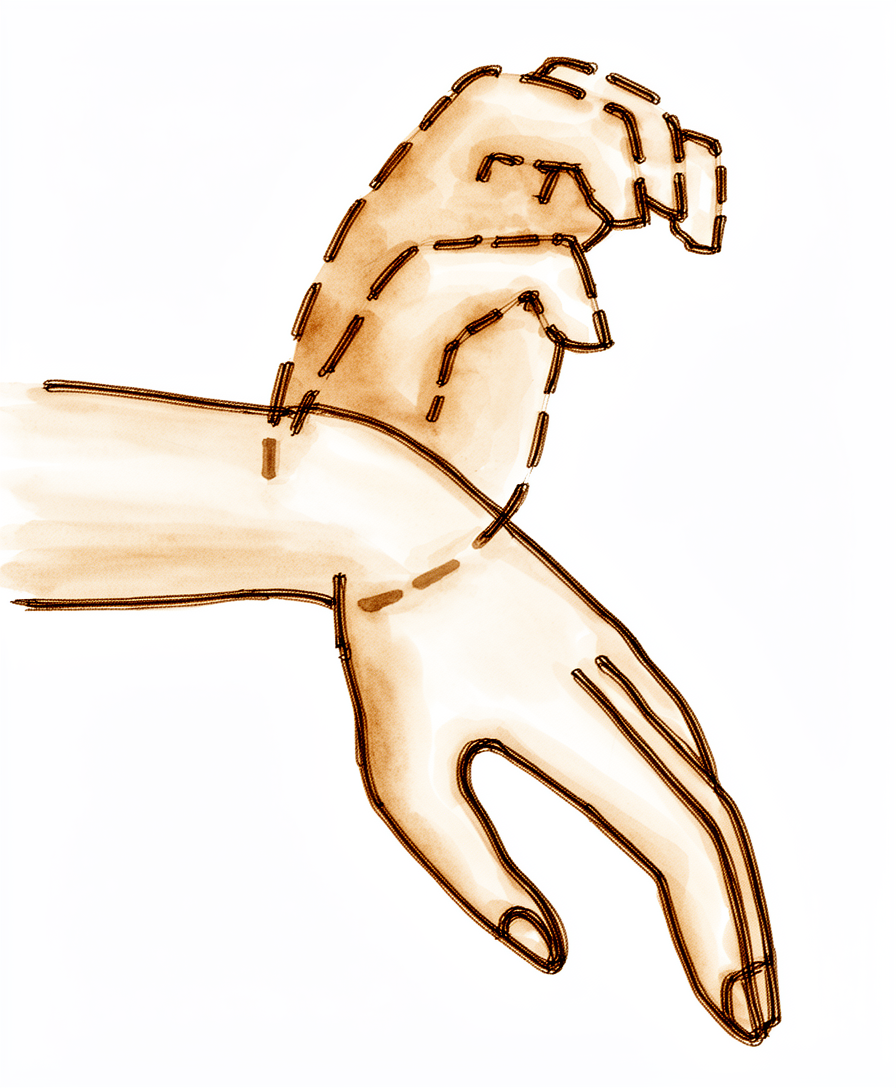
腕关节屈曲时手指伸直(协同运动)
让手腕向前下垂(屈曲),然后主动将手指伸直。以这种方式弯曲手腕会自然帮助手指伸直,因此手指可以轻松伸直而无需强行用力。这是防止手指卷曲成永久性弯曲的关键动作——请忠实执行。仅在手腕辅助下,将手指舒适地伸直至其可达范围;不要利用杠杆原理强行将其拉直。
10次,每天数次,按指导进行

放置并保持
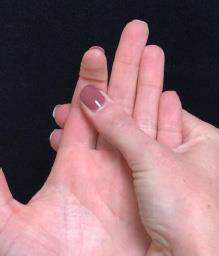
用另一只手轻轻将手术后的手指放入轻度握拳位置,然后松开,仅用极轻微的自身肌肉力量维持该姿势——刚好足以保持手指在该位置即可。这能安全地激活修复后的肌腱,因为弯曲的费力工作由另一只手完成,而自身肌肉只需维持,无需发力。保持力度极小;每次重复之间完全放松。
保持几秒钟,5–10 次,仅在手部治疗师的指导下进行
Kieran Hirpara 4.0
阻挡练习(后期,若出现粘连)
后期练习——仅当您的肌腱出现粘连且手部治疗师开始指导时进行。按住您想要活动的那个关节正下方的骨骼以固定手指,然后主动单独弯曲该关节(例如,保持手指中段静止,仅卷曲指尖)。此练习将滑动集中于单一关节,以松解已发生粘连的肌腱。请勿自行开始阻挡练习——该练习要求更高,仅在您的治疗师判断安全时才会添加。
根据您的手部治疗师指导(后期阶段,仅在必要时)
这些是您手册中的练习。仅在Hirpara医生和您的手部治疗师的指导下开始进行,并严格保持在您被允许的活动范围和限制之内。每次练习都遵循相同的安全顺序:首先轻柔地被动弯曲手指,然后进行主动的“钩状”屈曲和肌腱滑动,最后在手腕弯曲的情况下伸直手指,以防止其僵硬成屈曲状态。保持所有动作轻柔:这是滑动练习,而非力量训练。放置保持(place-and-hold)和阻挡(blocking)属于后期阶段,应仅在手部治疗师引入时才开始进行。如果任何动作在修复部位引起剧烈疼痛,请立即停止,且在未获许可前切勿用力握拳。
您的临床方案
本页其余部分为采用曼彻斯特短夹板及早期主动活动(EAM)方案进行屈肌腱修复术后康复的分阶段临床方案。本节内容应提供给您的手部治疗师,每个阶段均以通俗易懂的语言解释正在发生的情况。修复处在早期数周时最为薄弱,并承受主动及抗阻手指屈曲(紧握拳头)的负荷;因此,该方案在保护免受强力屈曲的同时,刻意促进肌腱滑动和主动指间关节(IP)伸展,以防止屈曲挛缩这一主要不良并发症。
在治疗前,请查阅患者的手术报告及既往病史,并与主刀医生就损伤区域、核心缝合方式及修复强度、任何滑车减压以及并发的指神经修复进行沟通。Hirpara 医生的屈肌腱修复采用曼彻斯特短背侧夹板(末端止于腕横纹)进行管理,允许腕关节完全屈曲和伸展至 45°,掌指关节(MCP)在屈曲 30° 处被固定,指间关节(IP)自由活动,需全天佩戴六周。仅当出现指间关节屈曲畸形时,才添加夜间伸展槽。
第一阶段——曼彻斯特短夹板下的早期主动活动(第0至6周)
前六周旨在保护缝合修复部位,同时保持肌腱滑动并防止手指僵硬形成屈曲挛缩。手部需全天佩戴曼彻斯特短夹板(腕关节完全屈曲,伸展至45°,MCP关节在30°处固定,IP关节自由活动)。主动活动约从第4–5天开始。每次训练均按固定顺序进行:首先进行被动IP屈曲,然后以腕关节伸展状态从DIP关节起始进行主动钩拳,最后以腕关节屈曲状态进行主动IP伸展(协同/腱止机制,抗挛缩)。禁止强制终末范围活动,禁止抗阻屈曲。
致您的手部治疗师:
健康教育与注意事项 - 全天佩戴曼彻斯特短夹板:腕关节完全屈曲,伸展至45°,MCP关节在30°处固定,IP关节自由活动;仅在锻炼和清洁时取下 - 于第4–5天开始EAM(早期主动活动) - 禁止强制终末范围屈曲及抗阻屈曲;禁止抓握、提重物或拉拽 - 手部进行轻度“安全”使用,但排除受伤手指 - 仅当开始出现IP屈曲畸形时,夜间佩戴伸展沟槽夹板
管理 - 伤口:按医嘱进行外科敷料处理;监测感染迹象 - 水肿:抬高患肢,轻柔的手指水肿控制,管理粘连风险 - 每次训练的运动顺序:(1) 首先进行完全被动IP屈曲;(2) 以腕关节伸展至45°状态从DIP关节起始进行主动钩拳;(3) 以腕关节屈曲状态进行主动手指伸展(协同/腱止机制,抗挛缩);根据指导添加放置-保持至轻度握拳动作 - 本阶段内每周进行手部治疗复查
晋级标准 - 伤口愈合;六周时修复完整;肌腱滑动保持良好;无显著IP屈曲挛缩
第二阶段——脱离夹板,软组织与瘢痕处理(第6周)
第六周时拆除夹板。重点转向恢复完全的被动产动范围和主动活动范围,解除早期僵硬,并管理瘢痕。此时尚未开始强化训练;仅当存在残余屈曲畸形时,才使用夜间伸直夹板。
致您的手部治疗师:
评估 - MCP/PIP/DIP关节的主动和被动活动范围(ROM);是否存在任何指间关节屈曲挛缩;肌腱滑动质量(评估粘连情况);瘢痕和伤口复查
教育与注意事项 - 第六周停止使用夹板(仅对残余指间关节屈曲畸形使用夜间伸直夹板) - 逐步过渡到轻度功能性使用;仍禁止抗阻抓握或负重
管理 - 进行软组织牵伸以恢复完全的复合屈曲和伸展;愈合后开始瘢痕管理 - 继续肌腱滑动练习;若粘连限制了差异性滑动,则引入阻挡技术 - 逐步过渡到手部的轻度功能性使用
晋级标准 - 伤口和瘢痕稳定;接近完全的被动产动范围;滑动功能维持良好;准备进行分级强化训练
第三阶段——强化与恢复(第6至12周)
随着修复组织更加成熟,开始进行分级牵伸和渐进性强化训练,并稳步建立直至无限制使用。预计在第10至12周左右,基于标准即可恢复完全、无限制的活动。
致您的手部治疗师:
评估 - 综合活动度(ROM)及任何残留挛缩;与健侧对比的握力和捏力;修复组织对分级负荷的反应
教育与注意事项 - 从第6周左右开始进行分级牵伸和渐进性强化;逐渐增加负荷 - 在力量重建之前,避免突然的最大握力或抗阻负荷
管理 - 渐进性握力和捏力强化(治疗泥 → 分级阻力);继续对任何残留紧张进行牵伸;根据需要继续进行瘢痕处理 - 在第10–12周时,逐步过渡至完全/无限制活动 - 一旦活动度和力量达到功能性水平,且实现了适当的活动恢复,可考虑出院;如果恢复停滞或屈曲挛缩持续存在,请转回主刀医生处
恢复完全活动的标准 - 功能性综合活动度;充足且接近对称的握力和捏力;无疼痛的无限制使用,通常在第10–12周时实现
恢复工作与活动
鼓励从治疗初期开始,在支具保护下对患手进行轻度、安全的使用(但需排除受伤手指),前提是任何动作均不得牵拉、抓握或使修复部位承受张力。请提前安排早期数周的协助,因为术后前六周内,手术侧手部严禁抓握、提举或搬运物品。支具通常在约六周时拆除,此后开始进行轻度肌力训练。
由于佩戴背侧支具期间严禁驾驶,请提前安排前六周的出行交通。驾驶需在拆除支具后(约六周)恢复,且须待您的抓握力与手指控制能力达到充分水平,并在复诊时获得许可后方可进行。预计十至十二周左右可恢复完全、无限制的活动,包括牢固抓握及较重的任务。恢复过程应循序渐进,由Hirpara医生及手部治疗师根据手指的活动度与肌力状况进行评估判断,而非仅依据时间推算。
方案之后
本方案与本诊所的一般康复建议相辅相成;另请参阅术后疼痛管理、伤口护理和瘢痕管理。上述分阶段计划反映了屈肌腱修复后早期主动运动康复的已发表指南,您的持续康复将由Hirpara医生和您的手部治疗师根据您手指的进展情况提供个体化指导。
Evidence & references
This is the clinical evidence summary written for health professionals. It is technical, and it lists the research this page was built from. You do not need to read it to understand your treatment or to make a decision about it.
Topic scope: post-operative rehabilitation after primary surgical repair of a flexor tendon in the finger (especially zone II) with a robust multi-strand core repair, mobilised on an early-active-motion (EAM) regimen using the Manchester short splint. This is a repair of a divided structure that is at its weakest in the first weeks, so — unlike a decompression — the rehab is a carefully graded protected-but-moving pathway: enough controlled tendon excursion to prevent adhesion and flexion contracture, without the forceful flexion that ruptures the construct.
Defining principle of the rehab here: a repaired flexor tendon must glide to heal well but must not be loaded hard while it is weak. The two competing failures are rupture (from forceful or resisted flexion) and adhesion / PIP flexion contracture (from too little controlled motion). The Manchester short splint resolves this tension by leaving the wrist free: holding the wrist in 45° of extension minimises the work of flexion (Savage) so a gentle active hook fist glides the tendon at low tension, while permitting wrist flexion harnesses the extensor tenodesis effect to drive active IP extension — the single most effective lever against the PIP flexion contracture that is the characteristic nuisance complication of zone II repair. The deliberate sequence each session (passive IP flexion → active hook fist from the DIP, wrist extended → active IP extension, wrist flexed) is what makes the regimen safe and anti-contracture.
A. PROCEDURE / REPAIR OUTCOMES (early active motion vs passive mobilisation)
Flexor tendon repair is technically demanding and historically complication-prone (rupture and adhesion). Modern multi-strand core repairs combined with early active motion have shifted outcomes decisively toward better motion, with the central trade-off being a small rupture risk against markedly better range and function.
- Early active motion gives better finger motion than passive mobilisation, at a small rupture cost. A systematic review of controlled mobilisation after zone II repair found EAM regimens produced better total active motion than passive (Kleinert/Duran) protocols, with a modest increase in rupture (~5% vs ~4%) [Starr 2013]. The contemporary consensus favours active regimens with robust repairs. Moderate–strong (SR).
- The Manchester short splint specifically improves IP extension without increasing rupture. A clinical audit comparing the Manchester short splint (MSS) with a traditional full-length dorsal splint in uncomplicated zone II repairs found less PIP extension deficit (median 15° vs 28° at 6 weeks, p=0.003; 6° vs 18° at 12 weeks), a greater DIP flexion arc (59° vs 30°), and more excellent/good Strickland grades with the MSS. Rupture was not significantly different (2/45, 4.4% MSS vs 3/76, 3.9% traditional) [Peck 2014]. The headline advantage is the reduction in PIP flexion contracture. Moderate (single-centre non-randomised audit, Level III–IV).
- Forearm-based (wrist-blocking) splints constrain the very motion that prevents contracture. A comparison of splint designs found the Manchester short splint allowed greater PIP extension than forearm-based splints [Newington 2021], consistent with the mechanistic rationale that freeing the wrist enables the synergistic IP-extension move. Moderate.
- Mechanistic basis. Positioning the wrist in ~45° extension minimises the work of flexion required for active digital flexion, lowering the tension on the repair during the active hook fist [Savage 1988]; allowing wrist flexion recruits the extensor tenodesis effect to achieve full active IP extension at low cost — the anti-contracture engine of the regimen. Mechanistic.
B. REHABILITATION / THERAPY EVIDENCE
The rehab questions are (1) active vs passive early mobilisation, (2) splint design, and (3) how to structure the session to prevent both rupture and contracture. The evidence supports a robust repair mobilised with early active motion, a short wrist-free splint, and a fixed safe exercise sequence delivered through formal hand therapy.
- Early active motion is the modern default for robust repairs. Active regimens (partial-range combined passive/active, place-and-hold, true active flexion) outperform passive-only protocols on motion and are now standard where the core repair is strong enough to tolerate active glide [Tang 2021; Starr 2013]. Moderate–strong.
- A defined, low-tension active sequence is what makes EAM safe. Therapy guidance emphasises passive flexion first (preconditioning the joints), place-and-hold / active hook fist to glide the tendon at minimal tension, and synergistic wrist-flexion finger-extension to recover IP extension — the explicit structure of the Manchester regimen [Neiduski & Powell 2019; Saint John protocol]. Moderate (consensus + protocol cohorts).
- Splint design materially changes the contracture outcome. Shorter, wrist-free splinting that permits the synergistic extension move yields greater PIP extension than traditional or forearm-based dorsal splints [Peck 2014; Newington 2021]. Moderate.
- All flexor repairs are routed through formal hand therapy. The regimen is exercise-order- and tension-sensitive and is delivered with weekly hand-therapy review through the six-week splinted phase; it is not a self-directed pathway. Consensus / standard of care.
Recovery trajectory (expected, evidence-anchored)
| Phase | Window | Restraint | Hand use / therapy focus | Strength / load | Notes |
|---|---|---|---|---|---|
| I — Early active motion (in MSS) | Week 0–6 | Manchester short splint full-time (full wrist flexion, extension to 45°, MCP block 30°, IPs free) | Start day 4–5; each session: passive IP flexion → active hook fist from the DIP (wrist extended) → active IP extension (wrist flexed); place-and-hold as guided; weekly therapy | No resisted flexion, no gripping/lifting; light safe use excluding the injured finger | EAM drives glide + anti-contracture; rupture risk highest now |
| II — Splint off, soft-tissue / scar | Week 6 | Splint discontinued (night extension gutter only for residual IP flexion deformity) | Restore full passive/active ROM; scar management; tendon glides; blocking if adhesions | Still no resisted loading | PIP flexion contracture is the complication to chase down here |
| III — Strengthen / return | Week 6–12 | Restrictions progressively lifted | Graded stretching; progressive grip/pinch strengthening (putty → resistance) | Build grip/pinch gradually | Return to full / unrestricted activity 10–12 weeks, criterion-based |
(Phase windows mirror the precautions in the patient protocol; they are typical guides, not trial-derived deadlines.)
C. KEY CONTROVERSIES / EVIDENCE QUALITY
- Active vs passive early mobilisation. EAM gives better motion than passive Kleinert/Duran regimens at a small rupture-rate cost (~5% vs ~4%); it is the contemporary default for strong core repairs [Starr 2013; Tang 2021]. Moderate–strong.
- Manchester short splint vs traditional dorsal splint. The MSS audit shows clearly better IP extension and DIP flexion arc with no significant increase in rupture, but it is a single-centre, non-randomised audit (Level III–IV) — the authors themselves call for an RCT. The improvement is consistent with the mechanism (wrist-free synergistic extension), which raises confidence above the study design alone. Moderate; RCT recommended.
- The PIP flexion contracture is the outcome that discriminates protocols. Rupture rates are broadly similar across modern regimens; what separates them is residual PIP extension loss, and that is where the short, wrist-free splint and the synergistic-extension move earn their place [Peck 2014; Newington 2021]. Moderate.
- Repair strength gates the regimen. EAM is only safe with a robust multi-strand core repair; the protocol assumes that and is surgeon-confirmed per case (zone, suture configuration, pulley venting, concurrent nerve repair). Consensus.
D. EVIDENCE STRENGTH FLAGS (summary)
- MODERATE–STRONG (SR): early active motion produces better finger motion than passive mobilisation after zone II repair, at a small rupture-rate increase (~5% vs ~4%) [Starr 2013]; modern partial-range active regimens are the contemporary standard [Tang 2021].
- MODERATE: the Manchester short splint reduces PIP extension deficit (15° vs 28° at 6 wk, p=0.003) and improves DIP flexion arc without significantly increasing rupture (4.4% vs 3.9%) [Peck 2014]; greater PIP extension than forearm-based splints [Newington 2021]; defined low-tension exercise sequence [Neiduski & Powell 2019; Saint John].
- MECHANISTIC / CONSENSUS: wrist 45° extension minimises work of flexion [Savage 1988]; wrist flexion harnesses the extensor tenodesis effect for active IP extension (anti-contracture); exact phase timings are typical guides, not trial-derived; single-centre non-randomised MSS evidence — an RCT is recommended.
CITATIONS
RAG corpus (180,000+ Orthopaedic articles)
- Peck FH, et al. A comparative study of two methods of controlled mobilization of flexor tendon repairs in zone 2 (the Manchester short splint). Hand Ther. 2014. DOI: 10.1177/1758998314533306
- Starr HM, et al. Flexor tendon repair rehabilitation protocols: a systematic review. J Hand Surg Am. 2013. DOI: 10.1016/j.jhsa.2013.06.025
- Neiduski RL, Powell RK. Flexor tendon rehabilitation in the 21st century: a systematic review. J Hand Ther. 2019. DOI: 10.1016/j.jht.2018.06.001
- Tang JB. Rehabilitation after flexor tendon repair and others: a safe and efficient update. J Hand Surg Eur Vol. 2021. DOI: 10.1177/17531934211037112
- Tang JB, et al. (IFSSH flexor tendon committee report). J Hand Surg Eur Vol. 2014. DOI: 10.1177/1753193413500768
- Newington L, et al. Splinting after flexor tendon repair: comparison of the Manchester short splint with forearm-based splinting on PIP joint extension. Hand Ther. 2021. DOI: 10.1177/17589983211017584
Flexor tendon rehabilitation literature (URLs)
- Saint John flexor tendon protocol — early active motion regimen for zone II repair (protocol description and outcomes). PMC. https://www.ncbi.nlm.nih.gov/pmc/articles/PMC5142498/
- Savage R. The influence of wrist position on the minimum force required for active movement of the interphalangeal joints. J Hand Surg Br. 1988 (mechanistic basis: wrist extension minimises the work of flexion). https://doi.org/10.1016/0266-7681(88)90258-2