

மேற்கை எலும்பின் மேல் முனை நிலைநிறுத்தல் (Proximal Humerus Fixation, ORIF) தகவல்
Mater Private Hospital Rockhampton-இல் டாக்டர் கியரன் ஹிர்பரா செய்யும், மேற்கை எலும்பின் மேல் முனை முறிவுக்கான அறுவை சிகிச்சை நிலைநிறுத்தலுக்குப் (proximal humerus fracture fixation — தோள்பட்டைக்கு அருகில் ஏற்படும் மேற்கை எலும்பு முறிவு; பூட்டும் தகடு (locking plate) மற்றும் திருகுகளால் சரிசெய்யப்படுகிறது; திறந்த முறை சீரமைப்பும் உள்ளக நிலைநிறுத்தலும், open reduction and internal fixation, ORIF) பிறகான மறுவாழ்வுப் பயிற்சியை இந்த நெறிமுறை (protocol) விளக்குகிறது. உங்கள் மறுவாழ்வுப் பயிற்சி ஒருங்கிணைந்து இருக்க, இந்தப் பக்கத்தையோ அதன் PDF-ஐயோ உங்கள் முதல் இயன்முறை சிகிச்சைச் சந்திப்புக்குக் கொண்டு வாருங்கள். உங்கள் முறிவு எப்படிக் குணமடைகிறது என்பதைப் பொறுத்து, கீழே உள்ள கட்டங்கள் வழியாக உங்கள் இயன்முறை சிகிச்சையாளர் (physiotherapist) உங்கள் மறுவாழ்வுப் பயிற்சியைத் தனிப்பட்ட முறையில் முன்னேற்றுவார்.
அறுவை சிகிச்சைக்குப் பிறகு உங்கள் காயம் பற்றி ஏதேனும் கவலை இருந்தால், கிளினிக்கைத் தொடர்பு கொள்ளுங்கள். காயத்தைப் புகைப்படம் எடுத்து, பார்வையிடுவதற்காக மின்னஞ்சலில் அனுப்புவது பெரும்பாலும் உதவியாக இருக்கும்.
என்ன எதிர்பார்க்கலாம்
முறிவு நிலைநிறுத்தலுக்குப் பிறகான மறுவாழ்வுப் பயிற்சி, திட்டமிட்டுச் செய்யப்படும் பெரும்பாலான தோள்பட்டை அறுவை சிகிச்சைகளுக்குப் பிறகான மறுவாழ்வுப் பயிற்சியிலிருந்து வேறுபட்ட முறையில் செயல்படுகிறது. தகடும் திருகுகளும் உடைந்த எலும்பை அதன் இடத்தில் பிடித்து வைக்கின்றன; ஆனால் எலும்பு தானாகக் குணமடையவே வேண்டும், அந்தக் குணமடைதலின் வேகம் ஒருவருக்கு ஒருவர் கணிசமாக வேறுபடுகிறது. அந்தக் காரணத்தால், கீழே உள்ள கால அட்டவணை நிலையான திட்டம் அல்ல, வழக்கமான ஒரு வழிகாட்டியே: உங்கள் திட்டத்தில் ஒவ்வொரு படி முன்னேற்றமும், அறுவை சிகிச்சைக்குப் பிறகு கடந்த வாரங்களின் எண்ணிக்கையையும், டாக்டர் ஹிர்பராவுடனான உங்கள் மறுபரிசோதனைகளில் உறுதிசெய்யப்படுவதைப் போல உங்கள் எக்ஸ்-கதிர் படங்களில் முறிவு எப்படிக் குணமடைந்து வருகிறது என்பதையும் ஆகிய இரண்டையும் சார்ந்தது. நாட்காட்டியை மட்டும் வைத்துக்கொண்டு நீங்களாகவே அடுத்த கட்டத்துக்குச் செல்ல வேண்டாம்; உங்கள் மறுபரிசோதனைக்காகக் காத்திருங்கள்.
இந்த அறுவை சிகிச்சையை வேறுபடுத்தும் இன்னொரு விஷயமும் உள்ளது. மேற்கை எலும்பின் உச்சியில் உள்ள எலும்பு மேடுகளில் (tuberosities) தான் சுழற்சி தசைநாண் பட்டையின் (rotator cuff) தசைநாண்கள் ஒட்டியிருக்கின்றன; பல மேற்கை எலும்பு மேல் முனை முறிவுகளில் இந்தத் துண்டுகளும் முறிவின் ஒரு பகுதியாக இருந்து, தகட்டாலோ தையல்களாலோ மீண்டும் நிலைநிறுத்தப்படுகின்றன. இந்தத் துண்டுகள் குணமடைவதற்கு முன்பே, சுழற்சி தசைநாண் பட்டைத் தசைகளை மிக அதிகமாக, மிக விரைவாக வேலை வாங்கினால், அது அந்தத் துண்டுகளை இழுக்கக்கூடும். நவீன பூட்டும் தகட்டுடன் முதல் நாளிலிருந்தே பொருத்தம் உறுதியாக இருக்கிறது; எனவே மென்மையான ஆரம்பகால அசைவு ஊக்குவிக்கப்படுகிறது: ஆரம்பத்திலிருந்தே, வசதிக்குள், தோள்பட்டையை உதவியுடன் கூடிய சுய அசைவாகவும் மென்மையாகச் சுய அசைவாகவும் நீங்கள் அசைக்கலாம் — வலியில்லாத வரம்புக்குள் கையை உயர்த்தலாம். கவனமாக இருக்க வேண்டிய பகுதி சுழற்சி தசைநாண் பட்டையின் மீதான சுமை: எலும்பு மேட்டுத் துண்டுகள் முறிவின் பகுதியாக இல்லாதபோது, அல்லது உறுதியாக நிலைநிறுத்தப்பட்டிருக்கும்போது, சுய சுழற்சியையும் சுழற்சி தசைநாண் பட்டைப் பயிற்சியையும் விரைவில் தொடங்க உங்கள் அறுவை சிகிச்சை நிபுணர் அனுமதி தரலாம்; எலும்பு மேடுகள் முறிவில் அடங்கியிருந்து குணமடைந்து வரும்போது, சுய சுழற்சி தசைநாண் பட்டைப் பயிற்சியும் வலுக்கட்டாயமான வெளிப்புறச் சுழற்சியும் இன்னும் சிறிது காலம் தள்ளிவைக்கப்படுகின்றன. உங்களுக்கு எது பொருந்தும் என்பதை டாக்டர் ஹிர்பரா உங்களிடம் சொல்வார்.
உங்கள் பயிற்சித் திட்டம் மூன்று வகையான அசைவுகளைப் பயன்படுத்துகிறது; உங்களுக்கு எவை பொருந்தும் என்பதை உங்கள் குழு குறிப்பிடும்:
- சுய அசைவு வரம்பு (active range of motion): உதவியோ ஆதரவோ இல்லாமல் நீங்களே அசைப்பது அனுமதிக்கப்படுகிறது.
- உதவியுடன் கூடிய சுய அசைவு வரம்பு (active-assisted range of motion): கையை அசைப்பதற்கு மற்றொரு கையையோ ஒரு பொருளையோ துணையாகப் பயன்படுத்துதல்.
- பிறர் அசைக்கும் அசைவு வரம்பு (passive range of motion): கை முற்றிலும் தளர்வாக இருக்க, வேலையில் 100% மற்றொரு கையாலோ வெளிப்புற விசையாலோ செய்யப்படுகிறது.
அறுவை சிகிச்சையிலிருந்து நீங்கள் விழிக்கும்போது உங்கள் கை கைத்தாங்கியில் (sling) இருக்கும். முதல் மூன்று வாரங்கள் அளவுக்கு அதை முழு நேரமும் அணியுங்கள்; பிறகு, வசதி அனுமதிக்கும்படி அடுத்த சில வாரங்களில் படிப்படியாக அதைக் குறைத்து நிறுத்துங்கள். வெளியிடப்பட்ட நெறிமுறைகள் சராசரியாகச் சுமார் மூன்று வாரங்கள் அசைவின்றி வைத்திருக்கச் சொல்கின்றன; கைத்தாங்கியில் நீண்ட காலம் இருப்பதை விட முன்கூட்டிய அசைவையே மருத்துவச் சான்றுகள் ஆதரிக்கின்றன. அதை அணிந்துகொண்டு தூங்க வேண்டிய அவசியம் இல்லை. உங்கள் பயிற்சிகளுக்காகவும், குளிப்பதற்கும் உடை மாற்றுவதற்கும் நாளொன்றுக்குப் பல முறை அதைக் கழற்றுங்கள்; வீட்டில் அமைதியாக அமர்ந்திருக்கும்போது கையைக் கைத்தாங்கியிலிருந்து வெளியே எடுத்து ஓய்வாக வைக்கலாம். எந்தத் தோள்பட்டை அறுவை சிகிச்சைக்குப் பிறகும் குறைந்தது ஆறு வாரங்களுக்கு வாகனம் ஓட்ட வேண்டாம்; வாகனம் ஓட்ட உங்கள் அறுவை சிகிச்சை நிபுணர் அனுமதி தருவார், பொதுவாக ஆறு வார மறுபரிசோதனையில்.
பயணம் ஒரே பார்வையில்:
- கட்டம் I — பாதுகாப்பும் ஆரம்பகால அசைவும்: வாரங்கள் 0–6
- கட்டம் II — சுய அசைவை மீட்டெடுத்தல்: வாரங்கள் 6–12
- கட்டம் III — வலுப்படுத்துதல்: சுமார் 3 முதல் 4½ மாதங்கள் வரை
- கட்டம் IV — முழுச் செயல்பாட்டுக்குத் திரும்புதல்: சுமார் 4½–6 மாதங்களிலிருந்து
கட்டம் I — பாதுகாப்பும் ஆரம்பகால அசைவும் (வாரம் 0–6)
Kieran Hirpara 4.0
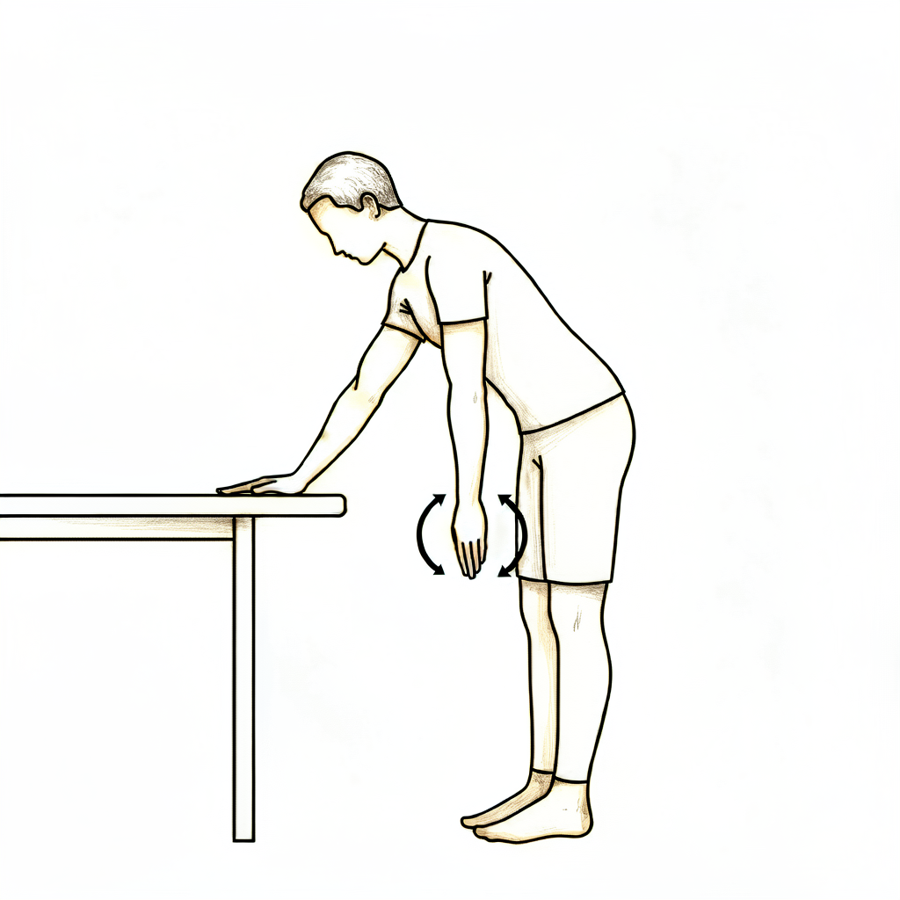
ஊசல் (pendulum) பயிற்சிகள்
முன்னோக்கிக் குனிந்து, மற்றொரு கையால் ஒரு மேசையில் ஊன்றி உங்களைத் தாங்கிக்கொண்டு, அறுவை சிகிச்சை செய்த கையைத் தளர்வாகக் கீழே தொங்க விடுங்கள். உடலை மென்மையாக ஆட்டுவதன் மூலம் சிறிய வட்டங்களை — கடிகாரத் திசையில், பின்னர் எதிர்த் திசையில் — உருவாக்குங்கள். கை தானாக அல்லாமல் ஆடுகிறது; அசைவு உங்கள் உடலிலிருந்து வருகிறது, தோள்பட்டைத் தசைகளிலிருந்து அல்ல.
நாளொன்றுக்குப் பல முறை
Kieran Hirpara 4.0
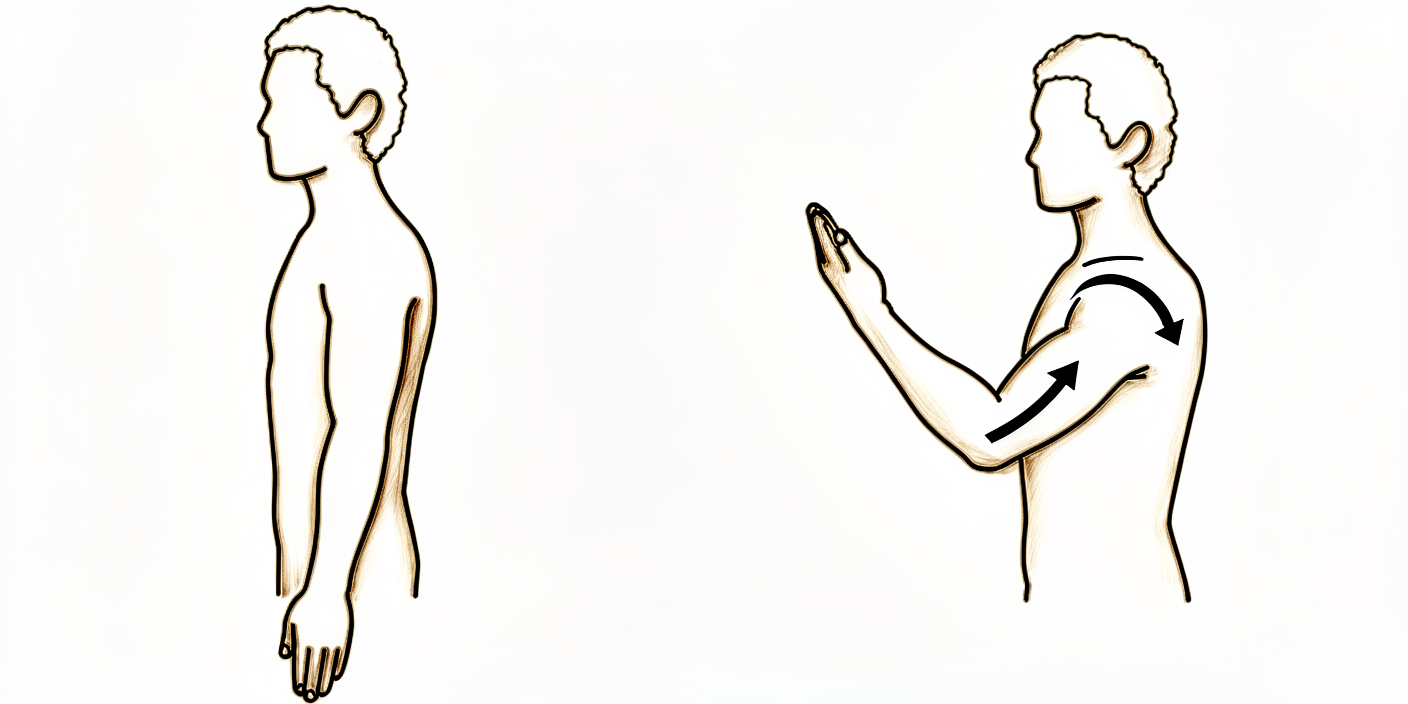
முழங்கையைச் சுய சக்தியால் மடக்குதல்
கையைக் கைத்தாங்கியிலிருந்து வெளியே எடுத்து, மேற்கையை உடலின் பக்கவாட்டில் ஓய்வாக வைத்தபடி, முழங்கையை வசதியாக முடிந்த அளவு மடக்கி, பின்னர் முழுமையாக நேராக்குங்கள். முழங்கை மட்டுமே அசைகிறது — தோள்பட்டையை அசைக்காமல், கையை உடலின் பக்கவாட்டிலேயே வையுங்கள்.
நாளொன்றுக்குப் பல முறை
Kieran Hirpara 4.0
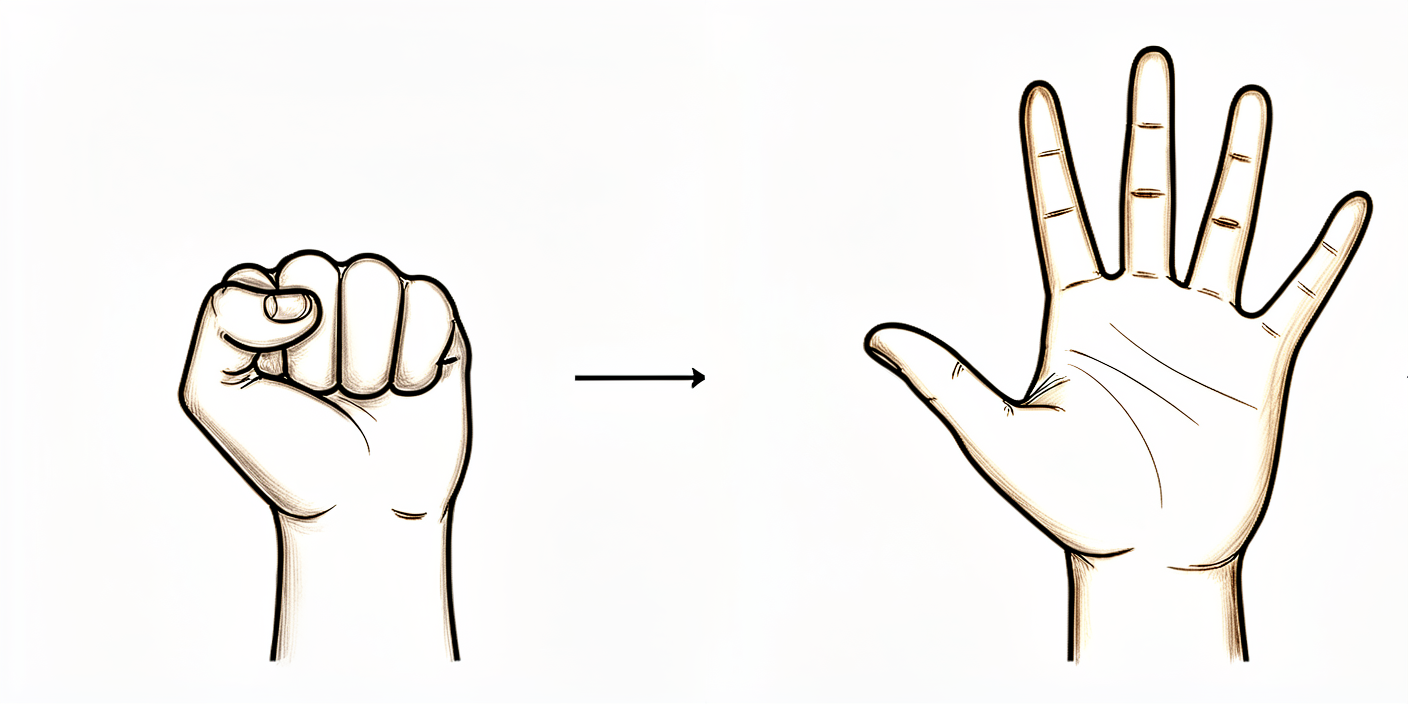
பந்தை அழுத்துதல்
கைக்கு ஆதரவு கொடுத்தபடி, ஒரு மென்மையான பந்தை அழுத்துங்கள் அல்லது இறுக்கமாக முஷ்டி பிடியுங்கள்; பின்னர் கையை முழுமையாக விரியுங்கள். கை கைத்தாங்கியிலிருந்து வெளியே இருக்கும் ஒவ்வொரு முறையும், விரல்கள், மணிக்கட்டு, கை ஆகியவற்றை அசைத்துக்கொண்டே இருங்கள்.
நாளொன்றுக்குப் பல முறை
Kieran Hirpara 4.0
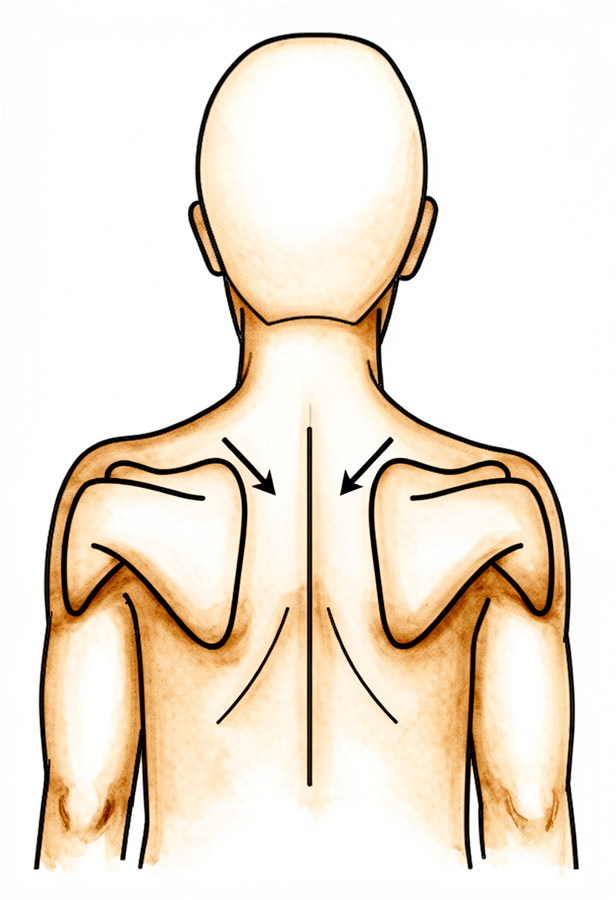
தோள்பட்டை எலும்பை நிலைப்படுத்துதல்
நேராக அமர்ந்தோ நின்றோ, கைகளை அசைக்காமல், உங்கள் தோள்பட்டை எலும்புகளை மென்மையாகக் கீழ்நோக்கியும் பின்னோக்கியும் ஒன்றாக இழுத்து, சில விநாடிகள் பிடித்திருந்து, பின்னர் தளர்த்துங்கள். உங்கள் காதுகள், தோள்பட்டைகள், இடுப்பு ஆகியவை ஒரே நேர்கோட்டில் இருக்கட்டும்.
உங்கள் இயன்முறை சிகிச்சையாளர் வழிகாட்டியபடி
Kieran Hirpara 4.0
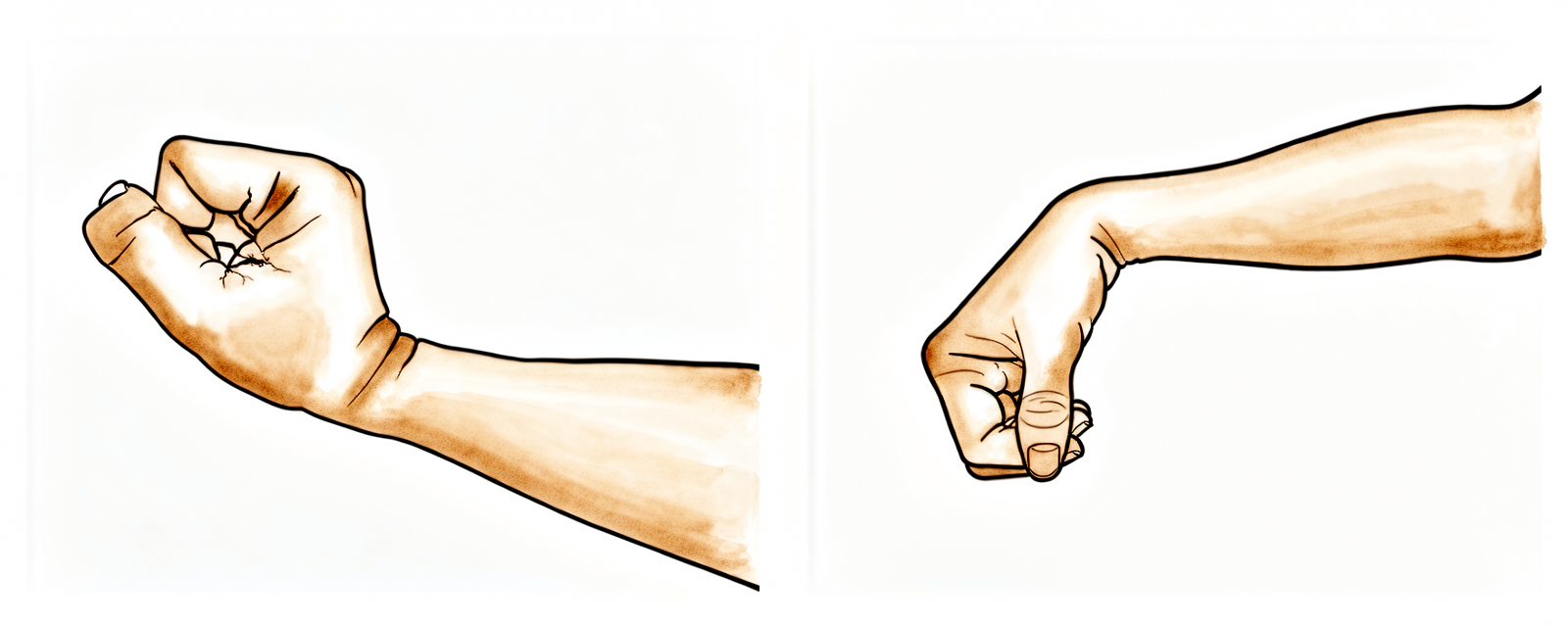
மணிக்கட்டு அசைவுகள்
கையைக் கைத்தாங்கியிலிருந்து வெளியே எடுத்து, மணிக்கட்டை முன்னோக்கியும் பின்னோக்கியும், மேலும் மென்மையாகப் பக்கத்திலிருந்து பக்கமும் வளைத்து அசைத்துக்கொண்டே இருங்கள். தோள்பட்டை பாதுகாக்கப்படும்போது இது கை முழுவதையும் இயக்கத்தில் வைத்திருக்கிறது.
நாளொன்றுக்குப் பல முறை
Kieran Hirpara 4.0
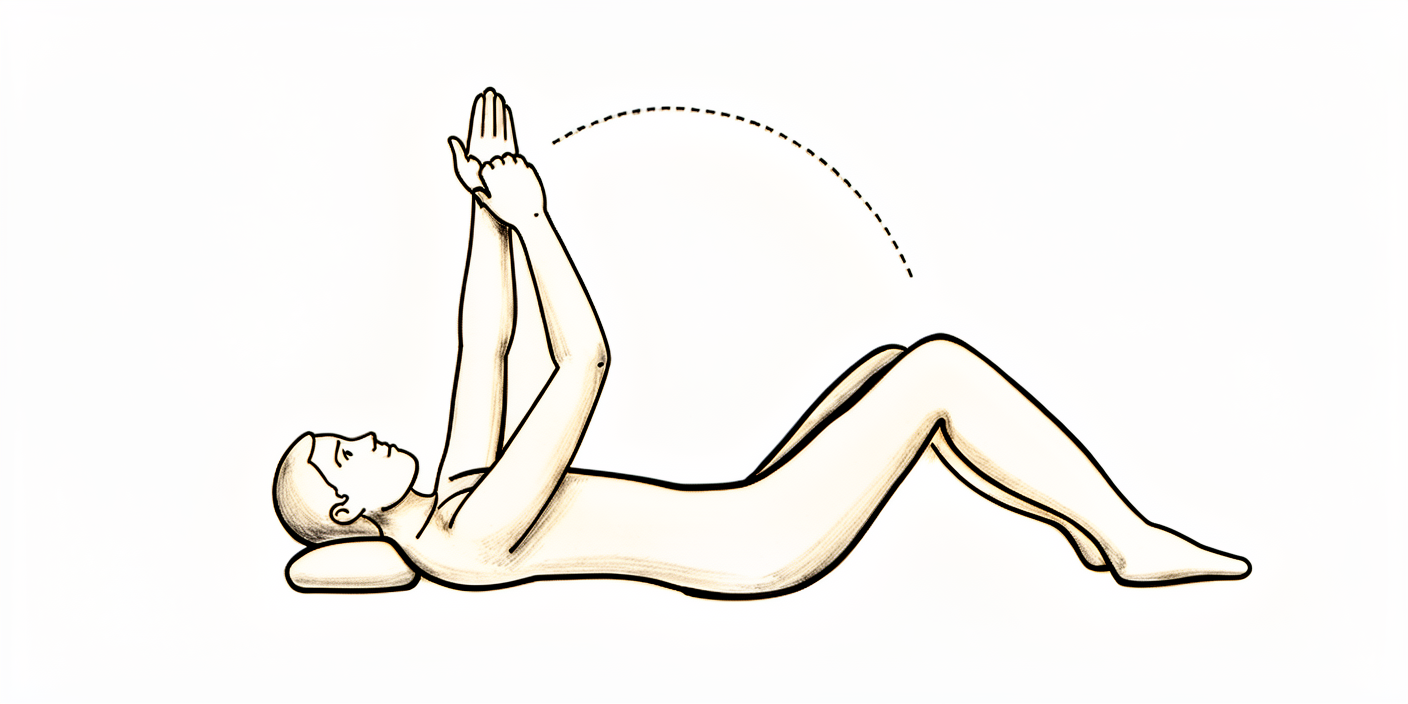
உதவியுடன் முன்னோக்கி உயர்த்துதல் (படுத்த நிலையில்)
மல்லாந்து படுத்து, உங்கள் நல்ல கையால் அறுவை சிகிச்சை செய்த கையை உங்களுக்கு முன்னால் மேலே உயர்த்த உதவுங்கள்; பின்னர் நல்ல கை உதவியுடனேயே அதை மென்மையாகக் கீழே இறக்குங்கள். மல்லாந்து படுத்துத் தொடங்குவது புவியீர்ப்பு விசையை உதவியாக்கி, ஆரம்பகால உயர்த்துதலை எளிதாக்குகிறது. வசதியான, வலியில்லாத வரம்புக்குள் இருங்கள்; இழுப்பது தொடங்கும் இடத்தில் நிறுத்துங்கள் — வலுக்கட்டாயமாகச் செய்ய வேண்டாம்.
நாளொன்றுக்குப் பல முறை, வலியில்லாத வரம்புக்குள்
Kieran Hirpara 4.0
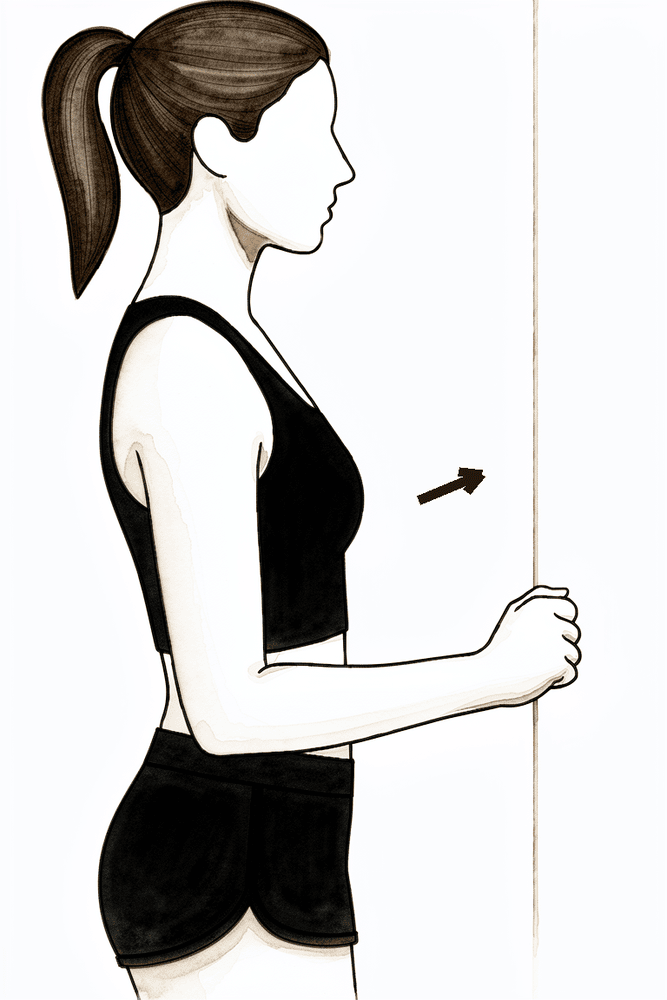
மென்மையான முன்னோக்கி உயர்த்தும் ஐசோமெட்ரிக் (isometric) பயிற்சி
அறுவை சிகிச்சை செய்த கையை உடலின் பக்கவாட்டில் வைத்து, உங்களுக்கு முன்னால் உள்ள சுவரில் மெதுவாக முஷ்டி வைத்து, சுவரை நோக்கி நில்லுங்கள். கை அசையாமல், கையை மென்மையாக முன்னோக்கிச் சுவரில் அழுத்தி, சில விநாடிகள் பிடித்திருந்து, பின்னர் தளர்த்துங்கள். இது குணமடையும் முறிவுக்கு அழுத்தம் கொடுக்காமல் தோள்பட்டையை உயர்த்தும் தசைகளை விழிப்படையச் செய்கிறது. உங்கள் இயன்முறை சிகிச்சையாளர் இதைத் தொடங்கி வைத்திருந்தால் மட்டுமே செய்யுங்கள்.
உங்கள் இயன்முறை சிகிச்சையாளர் வழிகாட்டியபடி
முதல் ஆறு வாரங்கள், நிலைநிறுத்தப்பட்ட முறிவைப் பாதுகாப்பதற்கும், அதே நேரத்தில் கையின் மற்றப் பகுதிகள் (மற்றும் தோள்பட்டை மூட்டே) விறைத்துப் போகாமல் தடுப்பதற்கும் ஆனவை. பூட்டும் தகடு தொடக்கத்திலிருந்தே எலும்பை உறுதியாகப் பிடித்து வைப்பதால், ஆறு வாரங்கள் காத்திருப்பதை விட மென்மையான ஆரம்பகால அசைவே ஊக்குவிக்கப்படுகிறது. நீங்கள் வீடு திரும்பும் முன் ஓர் இயன்முறை சிகிச்சையாளர் மென்மையான பயிற்சிகளைத் தொடங்கி வைப்பார்: ஊசல் (pendulum) பயிற்சிகள் (கையைக் கீழே தொங்க விட்டு, உடலை ஆட்டுவதன் மூலம் மென்மையாக அதை ஆட்டுவது), மேலும் நாளொன்றுக்குப் பல முறை கைத்தாங்கியிலிருந்து வெளியே எடுத்து முழங்கை, மணிக்கட்டு, கை ஆகியவற்றை அசைத்துக்கொண்டே இருப்பது. ஆரம்பத்திலிருந்தே, வசதியான வலியில்லாத வரம்புக்குள், உங்கள் மற்றொரு கையின் உதவியுடன் (உதவியுடன் கூடிய சுய அசைவு) கையை அசைக்கவும், மென்மையாக அதன் சொந்த சக்தியால் (சுய அசைவு) அசைக்கவும் தொடங்கலாம் — வசதி அனுமதிக்கும்படி கையை உங்களுக்கு முன்னால் உயர்த்தலாம். கவனமாக இருக்க வேண்டிய பகுதி சுழற்சி தசைநாண் பட்டையின் மீதான சுமை: உங்கள் எலும்பு மேடுகள் குணமடைந்துவிட்டன என்று டாக்டர் ஹிர்பரா உறுதிசெய்யும் வரை, கையை வலுக்கட்டாயமாக வெளிப்புறமாகத் திருப்புவதையும் (வெளிப்புறச் சுழற்சி), எதிர்ப்புக்கு எதிரான சுழற்சி தசைநாண் பட்டைப் பயிற்சியையும் தவிருங்கள். வலி நிவாரணத்துக்கு ஐஸ் பயன்படுத்துங்கள்; உங்கள் பயிற்சிகளுக்கும் இயன்முறை சிகிச்சைச் சந்திப்புகளுக்கும் முன் வலி நிவாரணிகளை எடுத்துக்கொள்ளுங்கள்.
உங்கள் இயன்முறை சிகிச்சையாளருக்கு:
இலக்குகள்
- பொருத்தத்தைப் பாதுகாத்து, எலும்பு குணமடைவதைச் சிறந்ததாக்குதல்
- வலியையும் வீக்கத்தையும் தணித்தல்
- வலியில்லாத வரம்புக்குள், உதவியுடன் கூடிய சுய உயர்த்தலை ஆரம்பத்திலேயே நிறுவி, சுய உயர்த்தலுக்கு முன்னேற்றுதல்
- கழுத்து, முழங்கை, மணிக்கட்டு, கை ஆகியவற்றின் முழு அசைவைப் பராமரித்தல்
சிகிச்சை மேலாண்மை
- ~3 வாரங்களுக்கு முழு நேரக் கைத்தாங்கி, பின்னர் வசதி அனுமதிக்கும்படி படிப்படியாகக் குறைத்தல் (ஆய்வு இலக்கிய வழக்கம்); பயிற்சிகளுக்கும் சுத்தம் செய்துகொள்வதற்கும் நாளொன்றுக்குப் பல முறை கழற்றப்படுகிறது; படுக்கையில் தேவையில்லை
- நாளொன்றுக்குப் பல முறை ஊசல் / கோட்மேன் (Codman) பயிற்சிகள்
- உறுதியான பொருத்தத்துக்கு, தொடக்கத்திலிருந்தே வசதியான வலியில்லாத வரம்புக்குள் ஆரம்பகால உதவியுடன் கூடிய சுய மற்றும் மென்மையான சுய முன்னோக்கிய உயர்த்தல்; மல்லாந்து படுத்த நிலையில் தொடங்கி, கட்டுப்பாடு அனுமதிக்கும்படி நிமிர்ந்த நிலையை நோக்கி முன்னேற்றுதல்; வசதி அனுமதிக்கும்படி வரம்பை விரிவாக்குதல்
- சுய அசைவை இன்னும் தாங்க முடியாத இடங்களில் தேவைக்கேற்ப பிறர் அசைக்கும் அசைவு வரம்பு: தோள்பட்டை எலும்புத் தளத்தில் சுமார் 90° வரை முன்னோக்கிய உயர்த்தல், வயிற்றை நோக்கி உட்புறச் சுழற்சி (முதுகுக்குப் பின்னால் அல்ல)
- கையைப் பக்கவாட்டில் வைத்து, வெளிப்புறச் சுழற்சி ஆரம்பத்தில் மென்மையான இயல்புநிலையான சுமார் 30–40°-க்குள் வைக்கப்படுகிறது; எலும்பு மேடுகள் முறிவில் அடங்காதபோதோ உறுதியாக நிலைநிறுத்தப்பட்டிருக்கும்போதோ அறுவை சிகிச்சை நிபுணர் இதை அதிகரிக்கலாம்
- கைத்தாங்கியிலிருந்து வெளியே எடுத்து, கழுத்து, முழங்கை, மணிக்கட்டு, கை ஆகியவற்றின் சுய அசைவு வரம்பு; பிடிப்பு வலிமைக்குப் பந்தை அழுத்துதல்
- தோள்பட்டை எலும்பை நிலைப்படுத்துதல் மற்றும் தோள்பட்டை எலும்பின் அசைவுத் திறன் பயிற்சி (உயர்த்தல், கீழிறக்கம், பின்னிழுத்தல், முன்னிழுத்தல்)
- வசதி அனுமதிக்கும்படி, மென்மையான டெல்டாய்டு (deltoid) மற்றும் தோள்பட்டை எலும்பைச் சுற்றியுள்ள தசைகளுக்கான ஐசோமெட்ரிக் (isometric) பயிற்சிகளைத் தொடங்கலாம்
- அமர்வுகளுக்கு முன் குளிர்ச் சிகிச்சையும் (cryotherapy) வலி நிவாரணியும்; காயம் ஆறியதும் தழும்பை அசைவூட்டுதலும் உணர்வுத்திறன் மிகுதியைக் குறைத்தலும்
முன்னெச்சரிக்கைகள்
- எலும்பு மேடுகள் குணமடைந்தது உறுதிசெய்யப்படும் வரை (அறுவை சிகிச்சை நிபுணரின் வழிகாட்டலின்படி), வலுக்கட்டாயமான அல்லது எதிர்ப்புக்கு எதிரான வெளிப்புறச் சுழற்சியையும், சுழற்சி தசைநாண் பட்டையின் மீதான கனமான சுமையையும் தவிர்க்கவும்; வலியில்லாத வரம்புக்குள் சுய உயர்த்தல் அனுமதிக்கப்படுகிறது
- முதுகுக்குப் பின்னால் உட்புறச் சுழற்சி கூடாது; முன்பக்கத் தளத்தில் (coronal plane) கையைப் பக்கவாட்டில் விரிப்பதைத் தவிர்க்கவும்
- ஆரம்பகால அசைவை வலியில்லாமல் வைத்திருங்கள்: மென்மையாக, வசதிக்குள்; வலுக்கட்டாயமாக அல்ல
- அறுவை சிகிச்சை செய்த கையால் சுமார் 0.5–1 kg-க்கு மேல் எதையும் தூக்கக் கூடாது
- அறுவை சிகிச்சை செய்த கையின் வழியாக எடை தாங்கக் கூடாது (நாற்காலியிலிருந்தோ படுக்கையிலிருந்தோ அதை ஊன்றி எழக் கூடாது)
- ஆறு வாரங்களுக்கு வாகனம் ஓட்டக் கூடாது (இது எந்தத் தோள்பட்டை அறுவை சிகிச்சைக்கும் பொருந்தும்)
- வலுக்கட்டாயமான அல்லது வலிமிகுந்த இறுதி வரம்பு அசைவு கூடாது
அடுத்த கட்டத்துக்குச் செல்வதற்கான அளவுகோல்கள்
- சுமார் 6 வாரங்களில் டாக்டர் ஹிர்பராவுடனான மறுபரிசோதனையில் உறுதிசெய்யப்படுவதைப் போல, குணமடைதல் முன்னேறி வருவதற்கான எக்ஸ்-கதிர் சான்று
- வலி நன்கு கட்டுப்பாட்டில் இருத்தல்
- முழங்கை, மணிக்கட்டு, கை ஆகியவற்றின் முழு அசைவு பராமரிக்கப்படுதல்
- வலியில்லாத வரம்புக்குள், உதவியுடன் கூடிய சுய உயர்த்தல் முதல் சுய உயர்த்தல் வரை வசதியாகச் செய்ய முடிதல்
கட்டம் II — சுய அசைவை மீட்டெடுத்தல் (வாரம் 6–12)
Kieran Hirpara 4.0
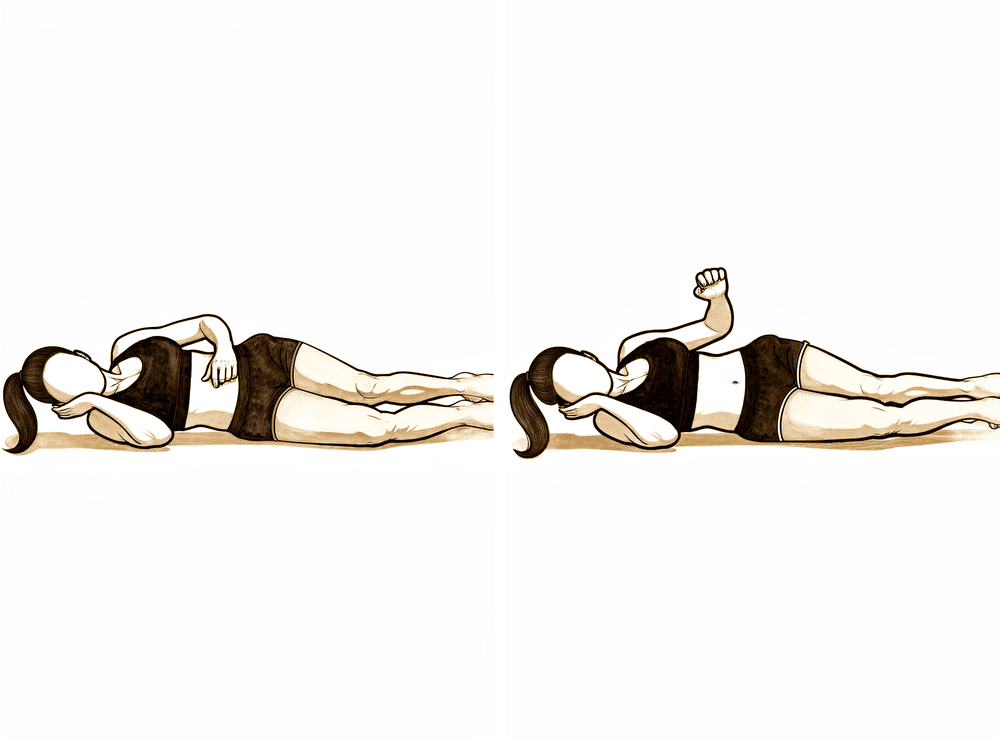
ஒருபக்கமாகப் படுத்து வெளிப்புறச் சுழற்சி
அறுவை சிகிச்சை செய்யாத பக்கமாகப் படுத்து, அறுவை சிகிச்சை செய்த கையை மேலே வையுங்கள்; முழங்கையை 90 டிகிரி மடக்கி உடலோடு ஒட்டியபடி வையுங்கள். முழங்கையை உள்ளேயே வைத்தபடி, முன்கையை வயிற்றிலிருந்து விலகி மேல்நோக்கி வசதியான அளவு வரை சுழற்றி, பின்னர் கட்டுப்பாட்டுடன் இறக்குங்கள். கூடுதல் எடை வேண்டாம் — கை அதன் சொந்த சக்தியால் அசைகிறது.
உங்கள் இயன்முறை சிகிச்சையாளர் வழிகாட்டியபடி
Kieran Hirpara 4.0
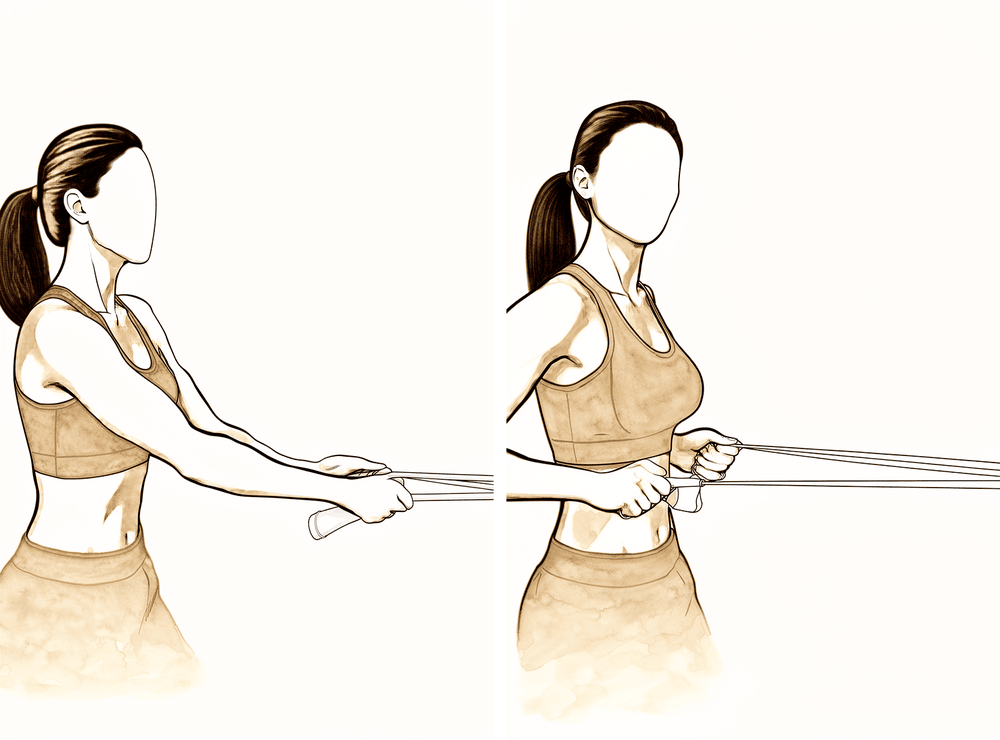
எலாஸ்டிக் பட்டையுடன் தாழ்வான ரோ (low row)
உங்களுக்கு முன்னால் இடுப்பு உயரத்தில் ஒரு எலாஸ்டிக் பட்டையைக் கட்டி வையுங்கள். நேராக நின்று, தோள்பட்டை எலும்பை மென்மையாகக் கீழ்நோக்கியும் பின்னோக்கியும் இழுத்தபடி, பட்டையை உங்களை நோக்கி இழுத்து, பின்னர் கட்டுப்பாட்டுடன் விடுங்கள். எதிர்ப்பை இலகுவாக வையுங்கள்.
உங்கள் இயன்முறை சிகிச்சையாளர் வழிகாட்டியபடி
Kieran Hirpara 4.0
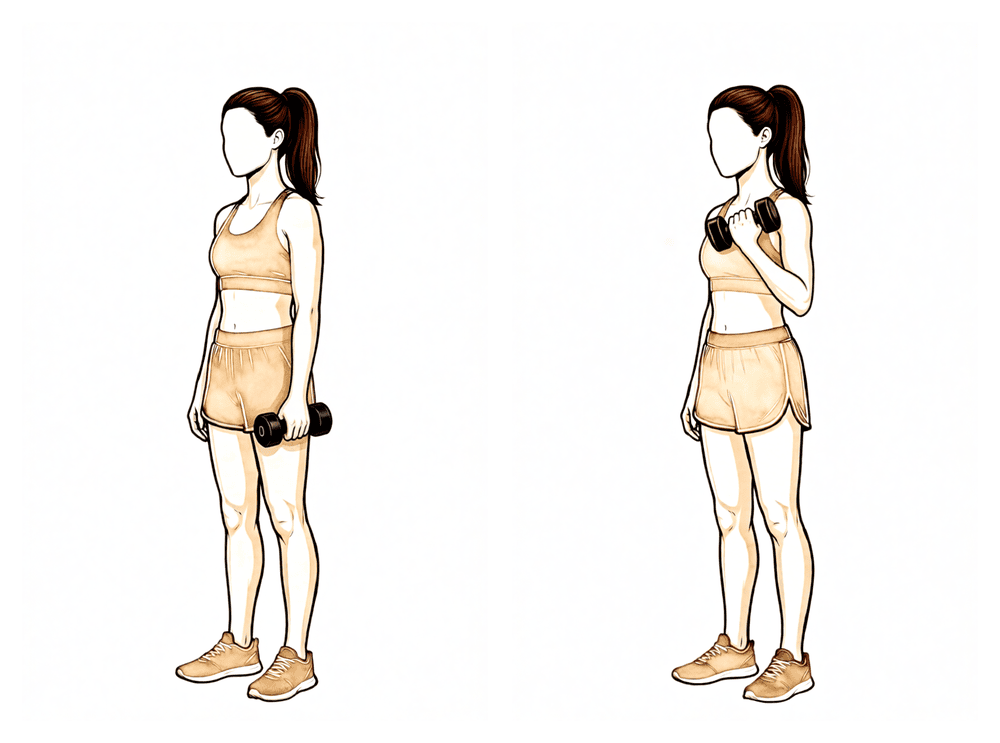
பைசெப்ஸ் கர்ள் (biceps curl)
உள்ளங்கை மேல்நோக்கி இருக்க ஓர் இலகுவான எடையைப் பிடித்து, முழங்கையை மடக்கி எடையை உங்கள் தோள்பட்டையை நோக்கிக் கொண்டு வந்து, பின்னர் மெதுவாக இறக்குங்கள். மேற்கையை உடலின் பக்கவாட்டில் அசைக்காமல் வையுங்கள்; எடையை இலகுவாக வையுங்கள் — இந்தக் கட்டத்தில் சுமார் 1–2 kg-க்கு மேல் வேண்டாம்.
உங்கள் இயன்முறை சிகிச்சையாளர் வழிகாட்டியபடி
Kieran Hirpara 4.0
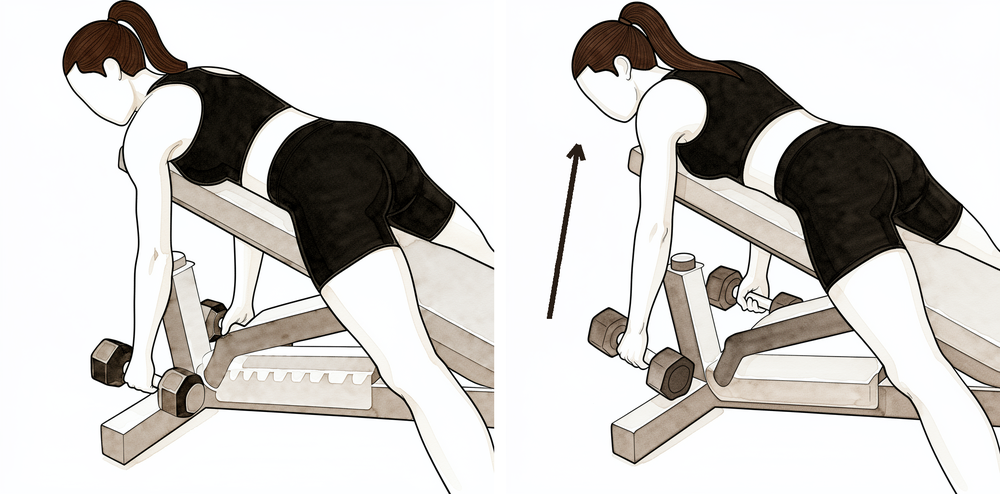
ஆதரவுடன் ரோ (row) பயிற்சி
உங்கள் நல்ல கையை ஒரு மேசையில் ஊன்றி முன்னோக்கிக் குனிந்து, அறுவை சிகிச்சை செய்த கையை ஓர் இலகுவான எடையுடன் தொங்க விடுங்கள். தோள்பட்டை எலும்பைப் பின்னோக்கி இழுத்து, எடையை உங்கள் இடுப்பை நோக்கி மேலே இழுத்து, பின்னர் கட்டுப்பாட்டுடன் இறக்குங்கள். உடற்பகுதியை அசைவின்றி வையுங்கள் — அசைவு முதுகிலிருந்து அல்ல, தோள்பட்டை எலும்பிலிருந்தும் கையிலிருந்தும் வர வேண்டும்.
உங்கள் இயன்முறை சிகிச்சையாளர் வழிகாட்டியபடி
Kieran Hirpara 4.0
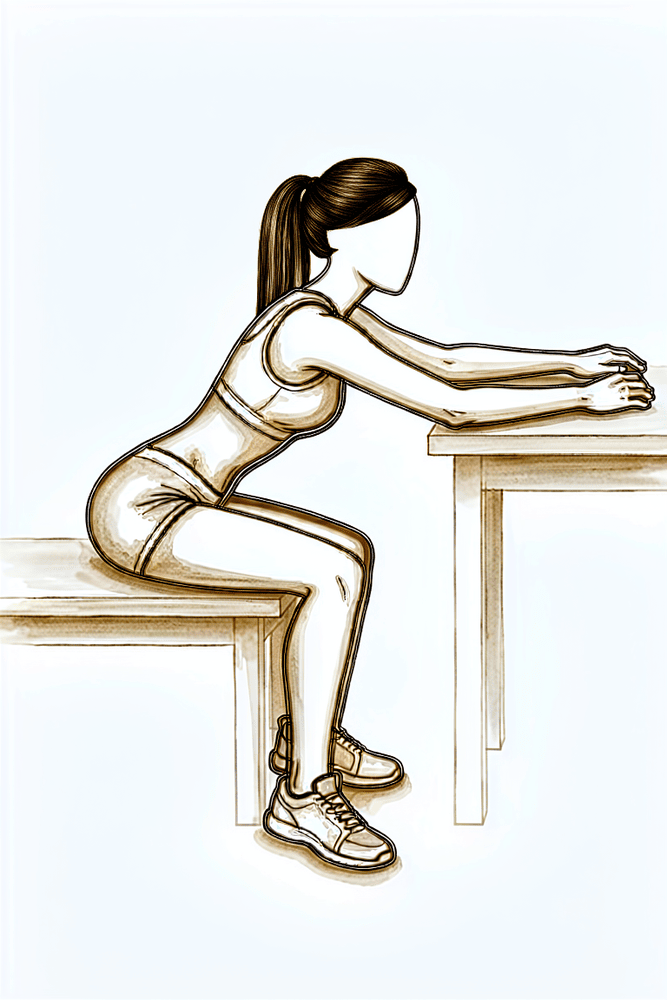
மேசையில் கையை நழுவவிடுதல்
ஒரு துண்டின் மீதோ துணியின் மீதோ கையை வைத்து மேசையில் அமருங்கள். முன்னோக்கிச் சாய்ந்து, மேசையின் மேல் கையை உங்களிடமிருந்து விலகி நழுவ விடுங்கள் — கை உங்களுக்கு முன்னால் மேலும் தூரம் நீளட்டும்; பின்னர் அதை மீண்டும் பின்னோக்கி நழுவ விடுங்கள். மேசை கையின் எடையைத் தாங்குவதால், முன்னோக்கிய அசைவை மீட்டெடுக்க இது ஒரு மென்மையான வழி.
உங்கள் இயன்முறை சிகிச்சையாளர் வழிகாட்டியபடி
Kieran Hirpara 4.0
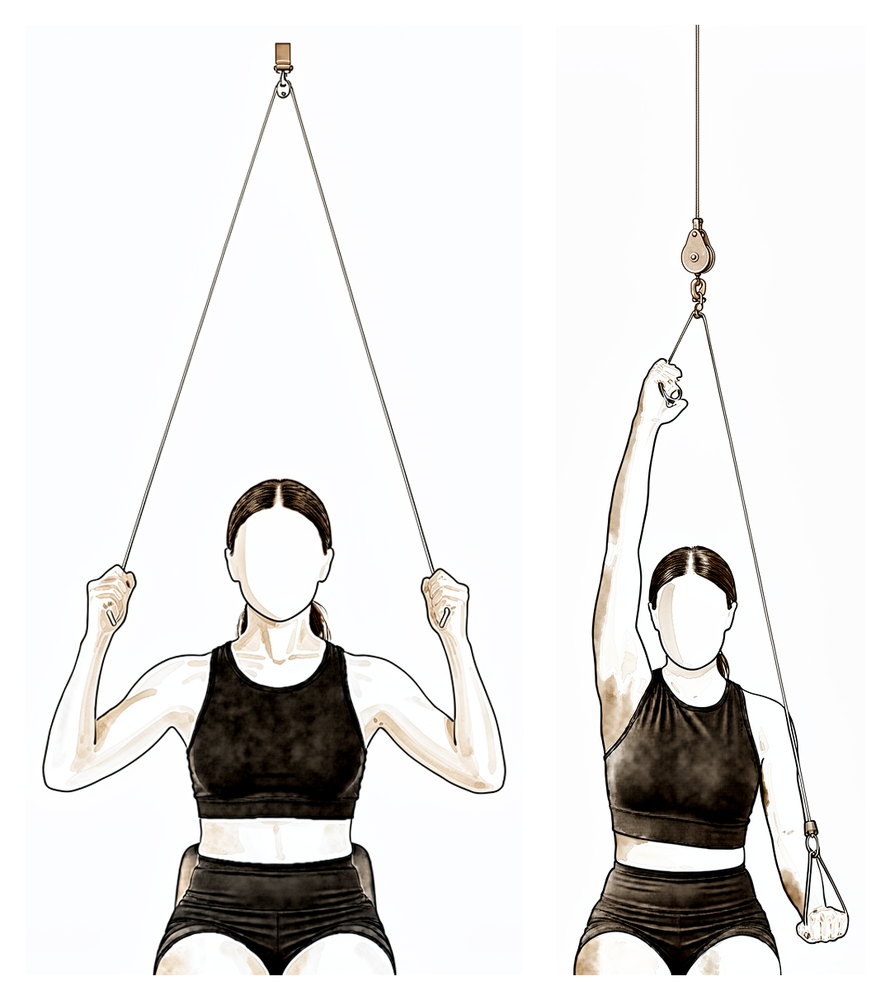
கதவின் மேல் கப்பி (pulley)
ஒவ்வொரு கையிலும் ஒரு கைப்பிடியுடன், கதவின் மேல் பொருத்தப்பட்ட கப்பியின் கீழே அமருங்கள். உங்கள் நல்ல கையால் கீழே இழுத்து, அறுவை சிகிச்சை செய்த கையை வசதியாக முடிந்த அளவு உயர்த்தி, பின்னர் மெதுவாக இறக்குங்கள். வேலையை நல்ல கை செய்யட்டும்; வசதியான வரம்புக்குள் இருங்கள்.
உங்கள் இயன்முறை சிகிச்சையாளர் வழிகாட்டியபடி
Kieran Hirpara 4.0
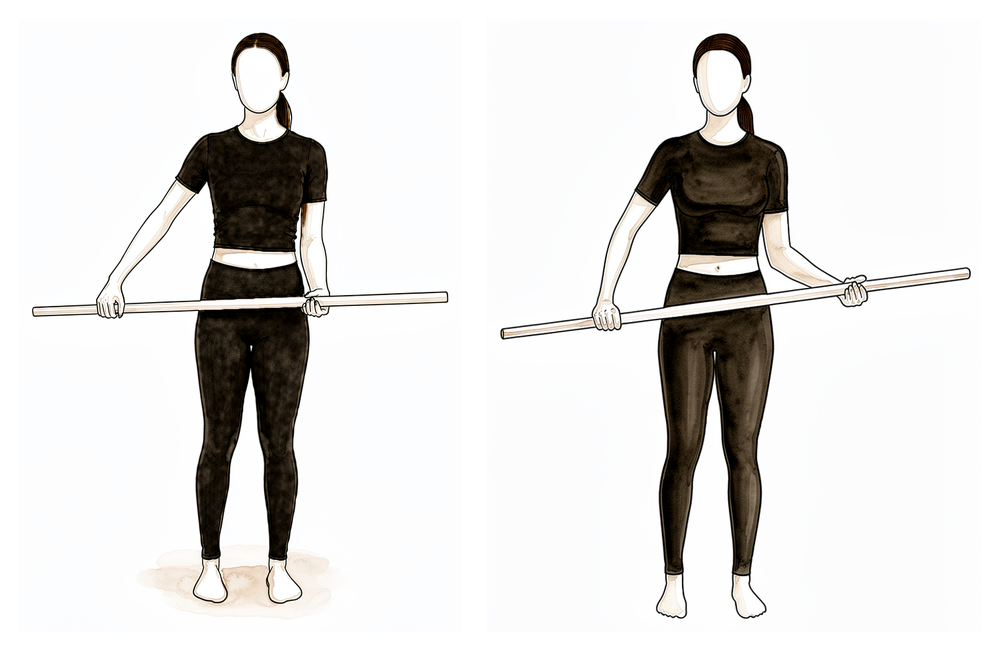
குச்சியுடன் உதவியுடன் கூடிய வெளிப்புறச் சுழற்சி
மல்லாந்து படுத்து, முழங்கையை உடலின் பக்கவாட்டில் ஒட்டியபடி செங்கோணத்தில் மடக்கி வையுங்கள். ஒரு குச்சியை இரு கைகளாலும் பிடித்து, உங்கள் நல்ல கையால் அறுவை சிகிச்சை செய்த கையை வெளிப்புறமாகத் திருப்புங்கள். உங்கள் குணமடைதல் உறுதிசெய்யப்பட்டதும், வெளிப்புறச் சுழற்சியை மென்மையாகச் சிறிது அதிகமாகப் பயிற்சி செய்யுங்கள் — ஆனால் உங்கள் அறுவை சிகிச்சை நிபுணரும் இயன்முறை சிகிச்சையாளரும் நிர்ணயித்த வரம்புக்குள்ளேயே இருங்கள்.
உங்கள் இயன்முறை சிகிச்சையாளர் வழிகாட்டியபடி
Kieran Hirpara 4.0
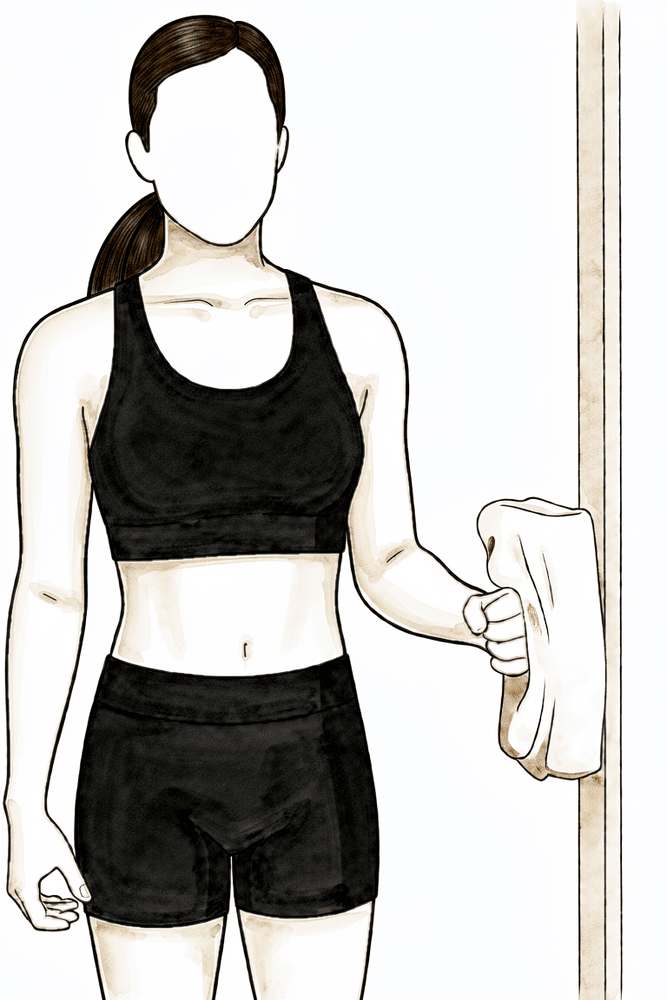
ஐசோமெட்ரிக் (isometric) வெளிப்புறச் சுழற்சி
முழங்கையை உடலின் பக்கவாட்டில் ஒட்டியபடி செங்கோணத்தில் மடக்கி, புறங்கையை ஒரு சுவரிலோ கதவு நிலையிலோ வைத்து நில்லுங்கள். கை அசையாமல், மென்மையாக வெளிப்புறமாக அதில் அழுத்தி, சில விநாடிகள் பிடித்திருந்து, பின்னர் தளர்த்துங்கள். இது எந்த அசைவும் இல்லாமல் சுழற்சி தசைநாண் பட்டையை விழிப்படையச் செய்யத் தொடங்குகிறது — டாக்டர் ஹிர்பரா உங்கள் குணமடைதலை உறுதிசெய்த பிறகே இதைத் தொடங்குங்கள்.
உங்கள் இயன்முறை சிகிச்சையாளர் வழிகாட்டியபடி
Kieran Hirpara 4.0
டிரைசெப்ஸ் நீட்டல் (triceps extension)
ஓர் இலகுவான எடையைப் பிடித்து, மேற்கையின் பின்புறத் தசைக்கு வேலை கொடுக்க முழங்கையை மடக்கி, பின்னர் நேராக்குங்கள். மேற்கையை அசைவின்றி வையுங்கள்; எடையை இலகுவாக வையுங்கள் — இந்தக் கட்டத்தில் சுமார் 1–2 kg-க்கு மேல் வேண்டாம்.
உங்கள் இயன்முறை சிகிச்சையாளர் வழிகாட்டியபடி
Kieran Hirpara 4.0
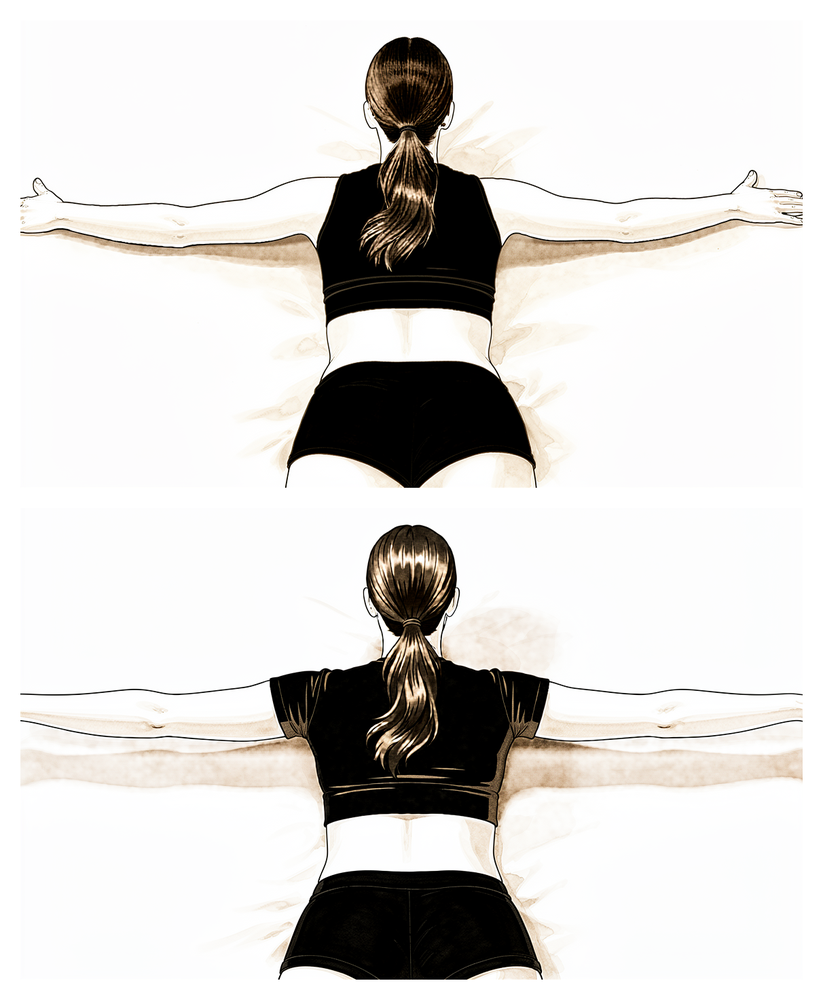
குப்புறப் படுத்துத் தோள்பட்டை எலும்பு ரோ
ஒரு படுக்கையின் அல்லது பெஞ்சின் விளிம்பில் கையைத் தொங்க விட்டு, குப்புறப் படுங்கள். தோள்பட்டை எலும்பைப் பின்னோக்கி இழுத்து, தோள்பட்டை எலும்புகளை ஒன்றாக இறுக்கியபடி கையைப் பக்கவாட்டில் சிறிது தூரம் உயர்த்தி, பின்னர் கட்டுப்பாட்டுடன் இறக்குங்கள். இது தோள்பட்டை எலும்பை நிலையாக வைத்திருக்கும் தசைகளை வலுப்படுத்துகிறது.
உங்கள் இயன்முறை சிகிச்சையாளர் வழிகாட்டியபடி
சுமார் ஆறு வாரங்களில் நடக்கும் உங்கள் மறுபரிசோதனையில், டாக்டர் ஹிர்பரா உங்கள் எக்ஸ்-கதிர் படங்களைப் பரிசோதிப்பார். எதிர்பார்த்தபடி குணமடைதல் முன்னேறி வந்தால், மீதமுள்ள கைத்தாங்கிப் பயன்பாடு நிறுத்தப்படும்; நீங்கள் கையை நீங்களே அசைக்கத் தொடங்குவீர்கள் — முதலில் உதவியுடன் (மற்றொரு கை, ஒரு குச்சி அல்லது ஒரு கப்பியைப் பயன்படுத்தி), பின்னர் சொந்த சக்தியால். புவியீர்ப்பு விசை குறைவாக எதிர்க்கும் மல்லாந்து படுத்த நிலையில் கையைச் சொந்த சக்தியால் உயர்த்தத் தொடங்கி, கட்டுப்பாடு மேம்படும்போது அமர்ந்த நிலைக்கும் நின்ற நிலைக்கும் முன்னேறுவதே பொதுவாகச் சிறப்பாகப் பலனளிக்கிறது. டாக்டர் ஹிர்பரா குணமடைதலை உறுதிசெய்தவுடன், சுழற்சி தசைநாண் பட்டைக்கான மென்மையான தசை-இறுக்க (ஐசோமெட்ரிக், isometric) பயிற்சிகள் இந்தக் கட்டத்தில் தொடங்குகின்றன; எதிர்ப்புக்கு எதிரான பயிற்சிகள் பின்னர் வரும். கைத்தாங்கியிலிருந்து வெளியே வந்து, பாதுகாப்பாக வாகனம் ஓட்டப் போதுமான அசைவும் கையின் மீது கட்டுப்பாடும் இருந்து, வலிமையான வலி நிவாரணிகளை நீங்கள் இனி எடுத்துக்கொள்ளாத நிலையில், நீங்கள் மீண்டும் வாகனம் ஓட்டத் தொடங்கலாம்; சந்தேகம் இருந்தால், உங்கள் மறுபரிசோதனையின்போது அதைப் பேசுங்கள்.
உங்கள் இயன்முறை சிகிச்சையாளருக்கு:
இலக்குகள்
- முழு பிறர் அசைக்கும் அசைவு வரம்பை மீட்டெடுத்தல்
- எல்லாத் தளங்களிலும் உதவியுடன் கூடிய சுய அசைவு வரம்பிலிருந்து சுய அசைவு வரம்புக்கு முன்னேறுதல்
- இயல்பான தோள்பட்டை எலும்பு–மேற்கை எலும்பு இயக்க ஒத்திசைவை (scapulohumeral rhythm) மீண்டும் நிறுவி, ஈடுகட்டும் அசைவு முறைகளைக் குறைத்தல்
- இயல்பான இலகுவான அன்றாடச் செயல்களுக்குத் திரும்புதல்
சிகிச்சை மேலாண்மை
- தாமதமாகக் கணக்கிட்டாலும் 6 வார மறுபரிசோதனைக்குள் கைத்தாங்கி முற்றிலும் கைவிடப்படுகிறது
- உதவியுடன் கூடிய சுய அசைவு வரம்பு: லான்-சேர் (lawn-chair) படிநிலை, மேசை / சுவரில் கையை நழுவவிடுதல், கப்பிகள், குச்சிப் பயிற்சிகள்; வசதி அனுமதிக்கும்படி கட்டம் I-இன் வரம்புகளைத் தாண்டி முன்னேறுதல்
- சுமார் 6–8 வாரங்களிலிருந்து சுய அசைவு வரம்பு: மல்லாந்து படுத்த நிலையில் முன்னோக்கி மடக்குதல், நிமிர்ந்த நிலையில் உயர்த்துவதற்கு முன்னேறுதல்; ஒருபக்கமாகப் படுத்து வெளிப்புறச் சுழற்சியும் முன்னோக்கி மடக்குதலும்; தாழ்வான ரோ (low row) / தாழ்வான குத்து (low punch)
- குணமடைதல் உறுதிசெய்யப்பட்டதும், சுமார் 6–8 வாரங்களிலிருந்து, கையைப் பக்கவாட்டில் வைத்து, அதிகபட்சத்துக்குக் குறைவான சுழற்சி தசைநாண் பட்டை மற்றும் டெல்டாய்டு ஐசோமெட்ரிக் பயிற்சிகள்
- இலகுவான முழங்கை ஐசோடானிக் (isotonic) பயிற்சிகள் (பைசெப்ஸ் கர்ள், டிரைசெப்ஸ் நீட்டல்) மற்றும் தோள்பட்டை எலும்பு வலுப்படுத்துதல் (பின்னிழுத்தல், குப்புறப் படுத்து ரோ)
- தேவைக்கேற்ப மூட்டுக் குழி–மேற்கை எலும்பு (glenohumeral) மற்றும் தோள்பட்டை எலும்பு–விலா எலும்புக்கூடு (scapulothoracic) அசைவூட்டல்; குணமடைதலுக்கு ஏற்ப நிலைகளை முன்னேற்றுதல்
- உடல்நிலைத் திருத்தம்; விருப்பப்படி அமர்வுகளைச் சுற்றி வெப்பம் / ஐஸ் மற்றும் வலி நிவாரணியைத் தொடர்தல்
முன்னெச்சரிக்கைகள்
- எலும்பு இணைந்தது உறுதிசெய்யப்படும் வரை, எதிர்ப்புக்கு எதிரான (ஐசோடானிக்) சுழற்சி தசைநாண் பட்டை வலுப்படுத்துதல் கூடாது; பொதுவாக 8–12 வாரங்களுக்கு முன் அல்ல
- இறுதி வரம்பில் வலுவான கூடுதல் அழுத்தமோ, கடுமையான பிறர் செய்யும் நீட்சியோ கூடாது
- அறுவை சிகிச்சை செய்த கையால் தூக்குவது சுமார் 1–2 kg-க்கு வரம்பிடப்படுகிறது
- உயர்த்தும்போது தோள்பட்டையைக் குலுக்கி உயர்த்துவதையும், உடலைச் சாய்த்து ஈடுகட்டுவதையும் கவனித்துத் திருத்தவும்
அடுத்த கட்டத்துக்குச் செல்வதற்கான அளவுகோல்கள்
- முழு, அல்லது கிட்டத்தட்ட முழு, பிறர் அசைக்கும் அசைவு வரம்பு
- நல்ல இயக்க முறையுடன் சுய உயர்த்தல், குறைந்தபட்சம் தோள்பட்டை உயரத்துக்குக் கீழே
- வலி திடீரென அதிகரிக்காமல் ஐசோமெட்ரிக் பயிற்சிகளை நன்கு தாங்க முடிதல்
- டாக்டர் ஹிர்பராவுடனான உங்கள் மறுபரிசோதனையில் உறுதிசெய்யப்படுவதைப் போல, எக்ஸ்-கதிர் படத்தில் எலும்பு இணைதல் முன்னேறி வருதல்
கட்டம் III — வலுப்படுத்துதல் (சுமார் 3 முதல் 4½ மாதங்கள் வரை)
Kieran Hirpara 4.0
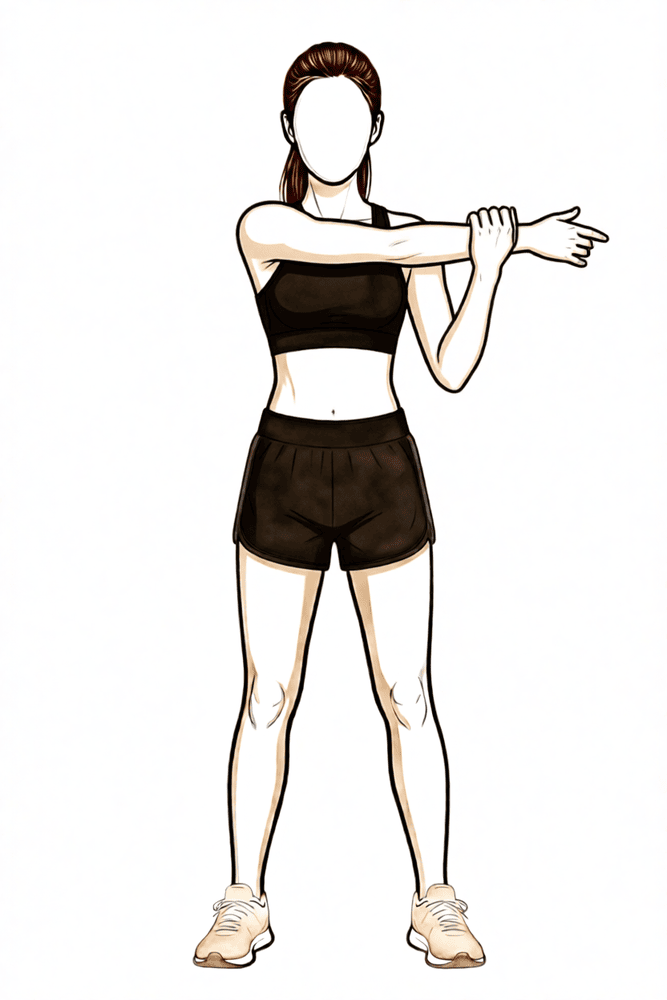
உடலின் குறுக்கே நீட்சி
தோள்பட்டையின் பின்புறத்தில் ஒரு நீட்சியை உணரும் வரை, உங்கள் மற்றொரு கையால் அறுவை சிகிச்சை செய்த கையை மார்பின் குறுக்கே இழுங்கள். சிறிது நேரம் பிடித்திருந்து, பின்னர் விடுங்கள். உறுதியான அசௌகரியம் வரை மட்டுமே நீட்டுங்கள் — ஒருபோதும் கூர்மையான வலிக்குள் அல்ல.
உங்கள் இயன்முறை சிகிச்சையாளர் வழிகாட்டியபடி
Kieran Hirpara 4.0
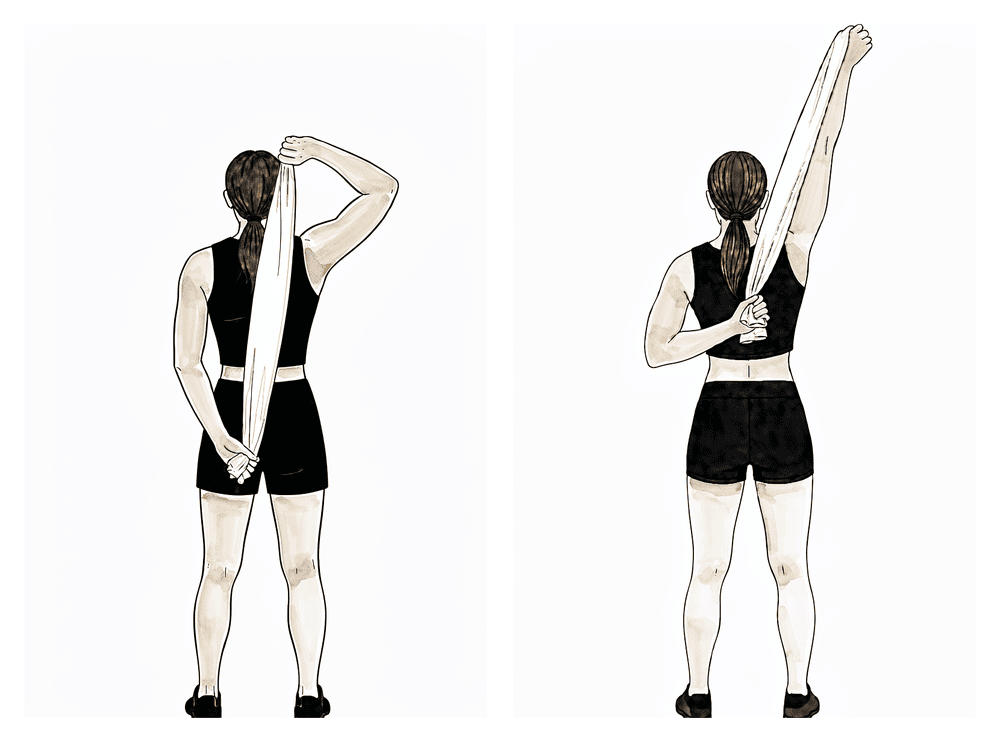
முதுகுக்குப் பின்னால் நீட்சி
நல்ல கை மேலேயும் அறுவை சிகிச்சை செய்த கை கீழேயும் இருக்குமாறு, ஒரு துண்டை முதுகுக்குப் பின்னால் பிடியுங்கள். வசதியான ஒரு நீட்சியை உணரும் வரை, மேலே உள்ள கையால் கீழே உள்ள கையை முதுகில் மென்மையாக மேல்நோக்கி இழுத்து, பிடித்திருந்து, பின்னர் விடுங்கள். வரம்பைப் படிப்படியாக வளர்த்துக்கொள்ளுங்கள் — ஒருபோதும் நீட்சியை வலுக்கட்டாயமாகச் செய்யவோ கூர்மையான வலிக்குள் தள்ளவோ வேண்டாம்.
உங்கள் இயன்முறை சிகிச்சையாளர் வழிகாட்டியபடி
Kieran Hirpara 4.0
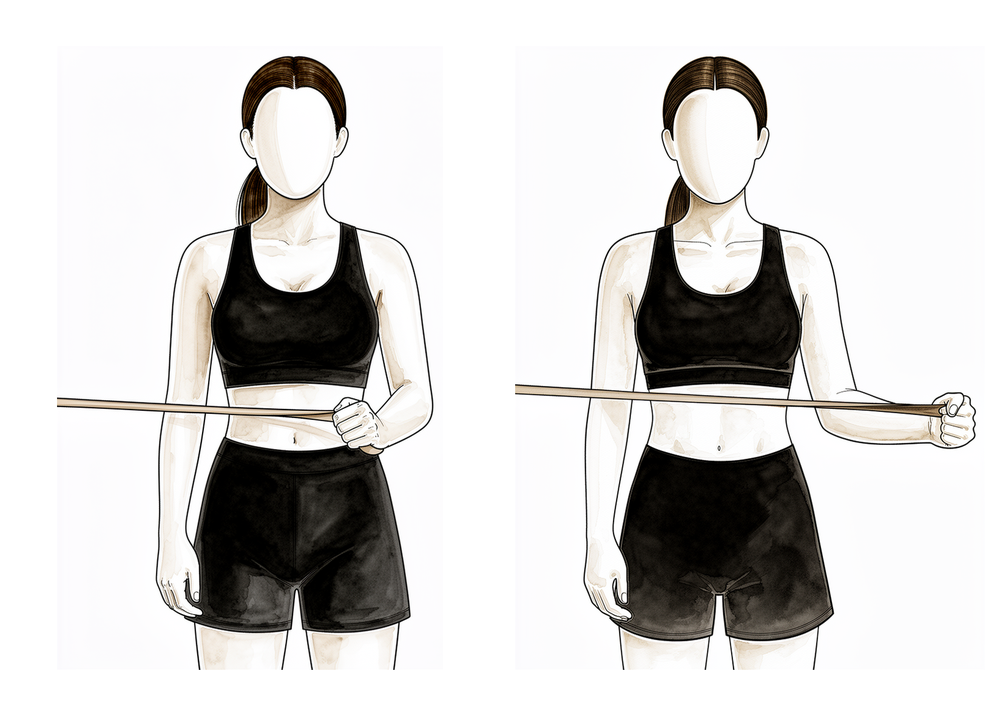
பட்டையுடன் வெளிப்புறச் சுழற்சி
முழங்கையை உடலின் பக்கவாட்டில் ஒட்டியபடி செங்கோணத்தில் மடக்கி, இடுப்பு உயரத்தில் கட்டப்பட்ட ஒரு எலாஸ்டிக் பட்டையைப் பிடித்து நில்லுங்கள். முழங்கையைப் பக்கவாட்டிலேயே வைத்தபடி, பட்டையின் எதிர்ப்புக்கு எதிராக முன்கையை வெளிப்புறமாகச் சுழற்றி, பின்னர் மெதுவாகத் திரும்புங்கள். இது கையைப் பக்கவாட்டில் வைத்துச் சுழற்சி தசைநாண் பட்டையைக் கட்டியெழுப்புகிறது; சுழற்சி வலுப்படுத்துதலின் தொடக்கப் புள்ளி இதுதான்.
2 முதல் 3 தொகுதிகள், தலா 8 முதல் 12 முறை, குறைந்த எதிர்ப்பு
Kieran Hirpara 4.0
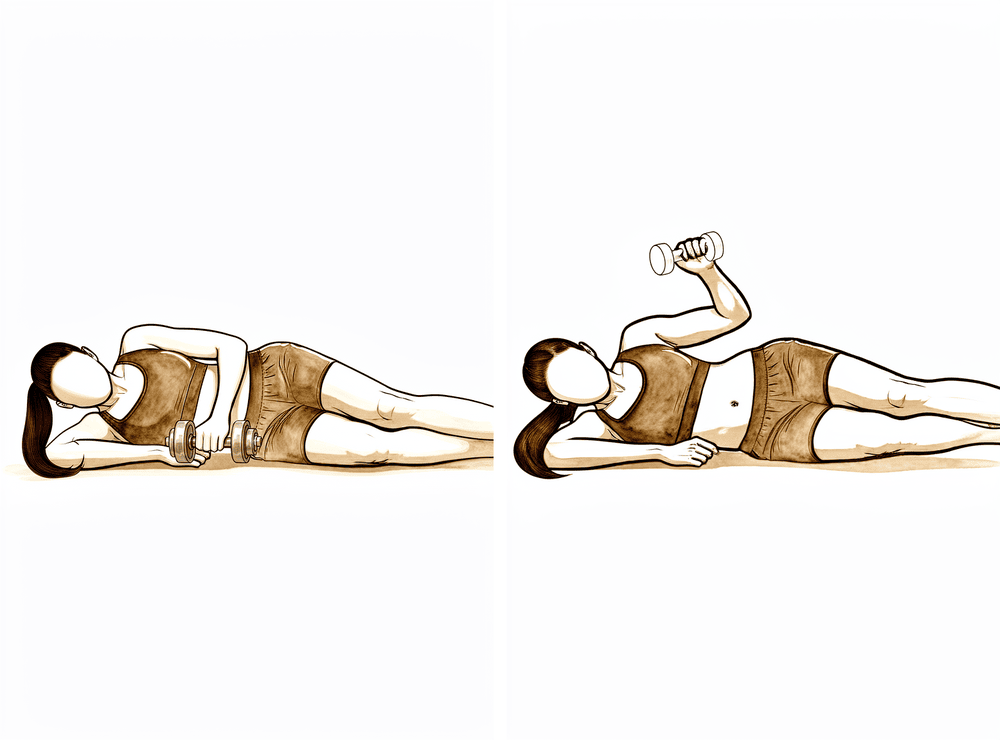
எடையுடன் ஒருபக்கமாகப் படுத்து வெளிப்புறச் சுழற்சி
அறுவை சிகிச்சை செய்யாத பக்கமாகப் படுத்து, மேலே உள்ள முழங்கையைச் செங்கோணத்தில் மடக்கி உடலோடு ஒட்டியபடி வையுங்கள். ஓர் இலகுவான எடையைப் பிடித்து, முன்கையை மேல்நோக்கிக் கூரையை நோக்கிச் சுழற்றி, பின்னர் மெதுவாக இறக்குங்கள். உங்கள் சுழற்சி தசைநாண் பட்டையின் வலிமை மீண்டும் கட்டியெழுப்பப்படும்போது, சுமையை இலகுவாகவும் மறுசெய்கைகளை அதிகமாகவும் வையுங்கள்.
2 முதல் 3 தொகுதிகள், தலா 8 முதல் 12 முறை, குறைந்த சுமை
Kieran Hirpara 4.0
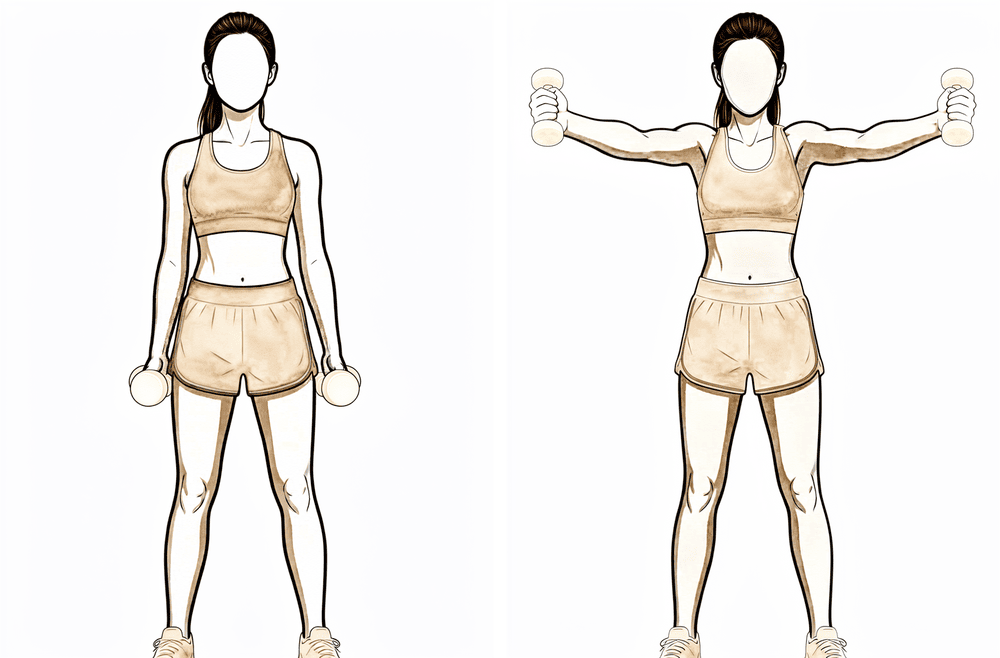
ஃபுல்-கேன் உயர்த்தல் (full-can raise, scaption)
கட்டைவிரல் மேல்நோக்கி இருக்க ஓர் இலகுவான எடையைப் பிடித்து, கையை நேராகப் பக்கவாட்டில் அல்ல — முன்னோக்கியும் வெளிப்புறமாகவும் ஒரு குறுக்குத் திசையில் — சுமார் தோள்பட்டை உயரம் வரை உயர்த்தி, பின்னர் மெதுவாக இறக்குங்கள். இது தோள்பட்டையின் முன்புறத்தையும் சுழற்சி தசைநாண் பட்டையையும் ஒன்றாக வேலை வாங்குகிறது. எடையை இலகுவாக வையுங்கள்; நீடித்து நிற்கும் வலியை அது ஏற்படுத்தினால் நிறுத்துங்கள்.
2 முதல் 3 தொகுதிகள், தலா 8 முதல் 12 முறை, குறைந்த சுமை
Kieran Hirpara 4.0
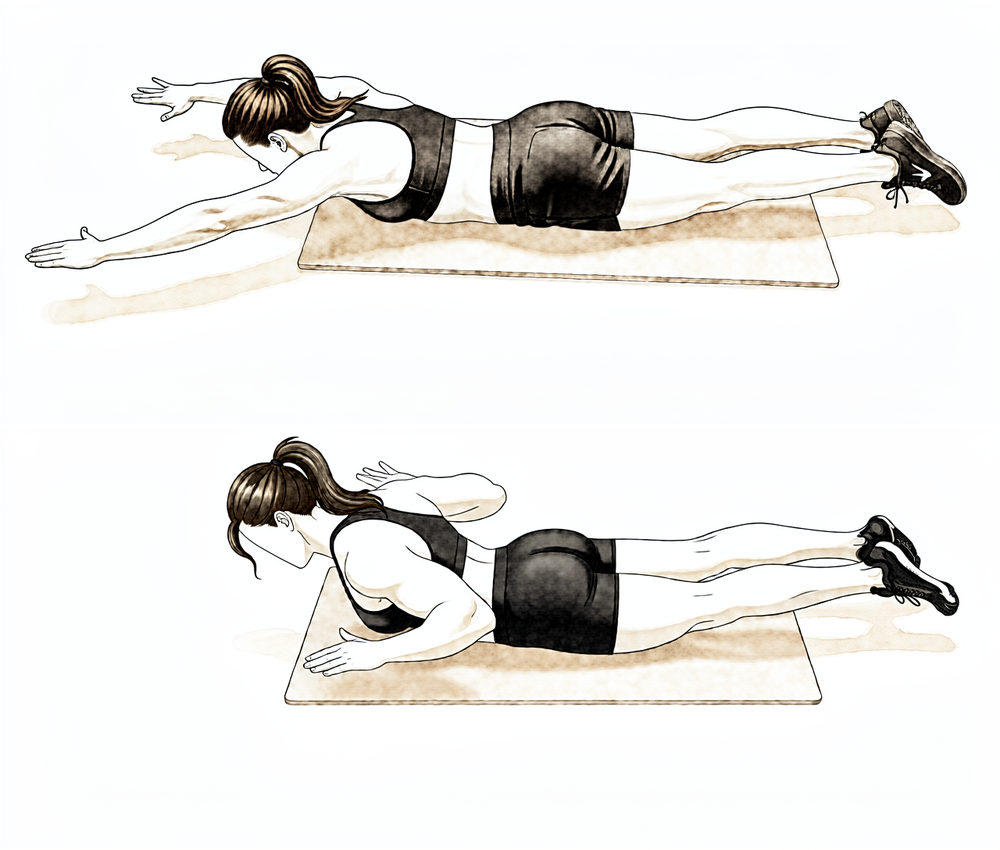
குப்புறப் படுத்து ரோ (prone row)
அறுவை சிகிச்சை செய்த கையைத் தரையை நோக்கிக் கீழே தொங்க விட்டு, குப்புறப் படுங்கள். உங்கள் முழங்கையைக் கூரையை நோக்கி மேலே இழுத்து, தோள்பட்டை எலும்பை முதுகெலும்பை நோக்கி இறுக்கி, பின்னர் மெதுவாக இறக்குங்கள். எடை இல்லாமல் தொடங்குங்கள்; அசைவைக் கட்டுப்பாட்டுடன் வையுங்கள்.
உங்கள் இயன்முறை சிகிச்சையாளர் வழிகாட்டியபடி
Kieran Hirpara 4.0
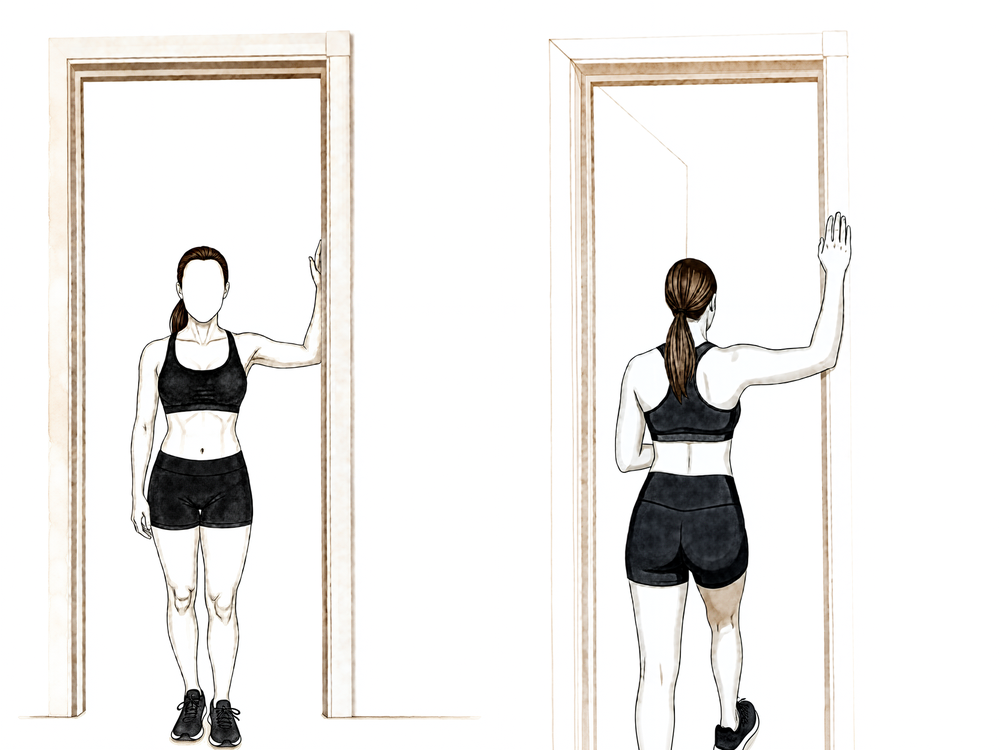
கதவு நிலை மார்பு நீட்சி
கதவு நிலையில், முன்கைகளைச் சட்டத்தின் மீது வைத்து, முழங்கைகள் சுமார் தோள்பட்டை உயரத்தில் இருக்குமாறு நில்லுங்கள். ஒரு காலை முன்னால் வைத்து, மார்பின் முன்புறத்தில் ஒரு நீட்சியை உணரும் வரை மென்மையாக முன்னோக்கிச் சாய்ந்து, பின்னர் அப்படியே பிடித்திருங்கள். மென்மையாகவே வையுங்கள்; ஒருபோதும் வலுக்கட்டாயமாகச் செய்ய வேண்டாம்.
~20–30 விநாடிகள் பிடித்திருங்கள், உங்கள் இயன்முறை சிகிச்சையாளர் வழிகாட்டியபடி
Kieran Hirpara 4.0
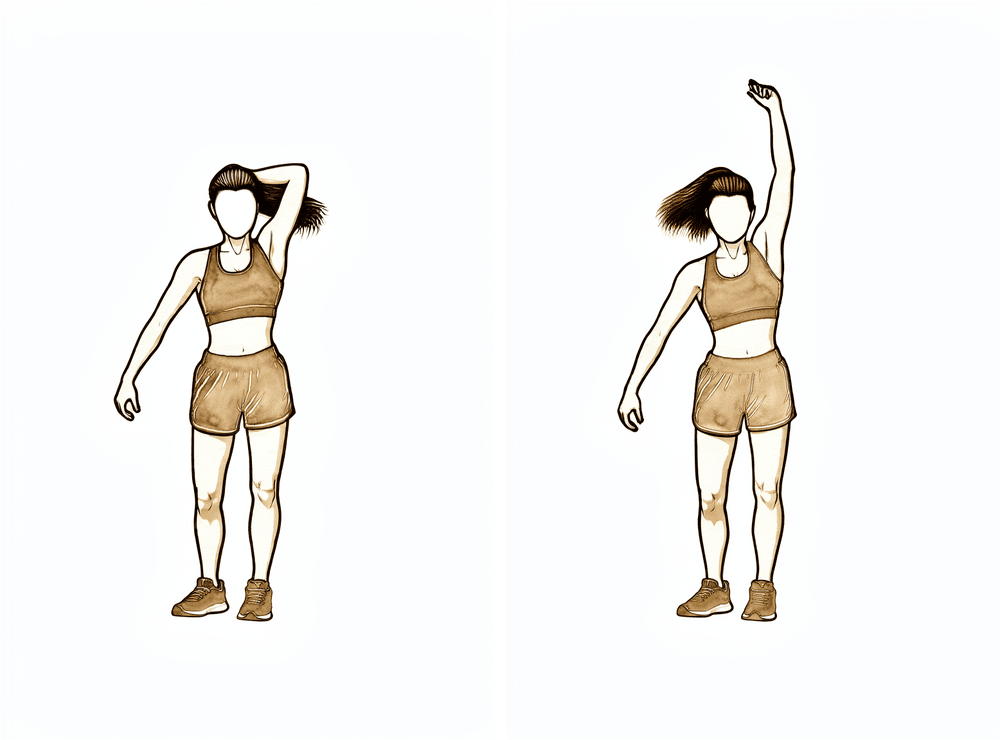
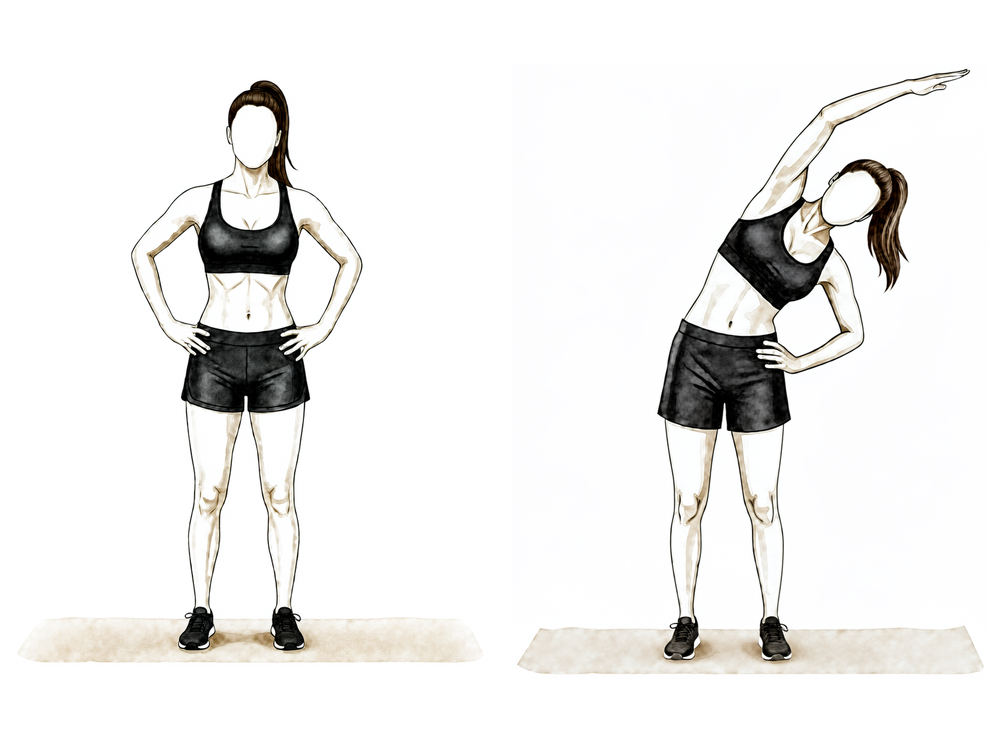
லேட்டிஸிமஸ் (முதுகின் பக்கவாட்டு) நீட்சி
அறுவை சிகிச்சை செய்த கையைத் தலைக்கு மேல் நீட்டுங்கள் — தேவைப்பட்டால் உங்கள் நல்ல கையால் அதை வழிநடத்துங்கள் — முதுகின் பக்கவாட்டில் கீழ்நோக்கி ஒரு நீட்சியை உணரும் வரை மென்மையாக எதிர்ப் பக்கமாகச் சாய்ந்து, பின்னர் அப்படியே பிடித்திருங்கள். வசதியாகவும் உங்கள் வரம்புக்குள்ளும் வையுங்கள்.
~20–30 விநாடிகள் பிடித்திருங்கள், உங்கள் இயன்முறை சிகிச்சையாளர் வழிகாட்டியபடி
முறிவு இணைந்து, உங்கள் சுய அசைவு திரும்பி வரும் நிலையில், கவனம் வலிமையை மீண்டும் கட்டியெழுப்புவதற்கு மாறுகிறது. எதிர்ப்புக்கு எதிரான பயிற்சி மென்மையாகத் தொடங்கி (சுழற்சி தசைநாண் பட்டை, டெல்டாய்டு, தோள்பட்டை எலும்புத் தசைகளுக்கு எலாஸ்டிக் பட்டைகளும் இலகுவான எடைகளும்) படிப்படியாக முன்னேறுகிறது. அதனுடன் சேர்ந்து நீட்சிப் பயிற்சிகளும் தொடர்கின்றன; முதுகுக்குப் பின்னால் கையைக் கொண்டு செல்வது உட்பட, எல்லாத் திசைகளிலும் முழு அசைவை நோக்கிப் பணி நடக்கிறது. இந்தக் கட்டத்தில் இயல்பான அன்றாடச் செயல்கள் பெரும்பாலும் வழக்கம்போல் திரும்பியிருக்க வேண்டும்; உங்கள் இயன்முறை சிகிச்சையாளரின் வழிகாட்டலின்படி, இலகுவான பொழுதுபோக்குச் செயல்களும் பொதுவாக மீண்டும் தொடங்குகின்றன.
உங்கள் இயன்முறை சிகிச்சையாளருக்கு:
இலக்குகள்
- இயல்பான இயக்க முறையுடன் எல்லாத் தளங்களிலும் முழு சுய அசைவு வரம்பு
- சுழற்சி தசைநாண் பட்டை, டெல்டாய்டு, தோள்பட்டை எலும்புத் தசைகளின் வலிமையையும் சகிப்புத்தன்மையையும் படிப்படியாக மீட்டெடுத்தல்
சிகிச்சை மேலாண்மை
- சுழற்சி தசைநாண் பட்டை, டெல்டாய்டு, தோள்பட்டை எலும்பை நிலைப்படுத்தும் தசைகளுக்கு, ஐசோமெட்ரிக் பயிற்சிகளிலிருந்து எலாஸ்டிக் பட்டைக்கும், பின்னர் இலகுவான தனி எடைகளுக்கும் (சுமார் 0.5–2 kg) வலுப்படுத்துதலை முன்னேற்றுதல்: குறைந்த சுமை, அதிக மறுசெய்கைகள் (எடுத்துக்காட்டாக 8–12 முறை கொண்ட 2–3 தொகுதிகள்); அளவுக்கு அதிகச் சுமையைத் தவிர்க்க, எதிர்ப்புப் பயிற்சி அமர்வுகள் வாரத்துக்குச் சுமார் 3 முறை
- சுழற்சி வலுப்படுத்துதல், தொடக்கத்தில் கையைப் பக்கவாட்டில் வைத்து, தோள்பட்டை உயரத்துக்குக் கீழே
- நிலையான தோள்பட்டை எலும்பு அடித்தளத்துக்கு, முன்புற டெல்டாய்டு மற்றும் ட்ரெப்பீசியஸ்–செரேட்டஸ் ஆன்டீரியர் (trapezius–serratus anterior) இணை-விசைத் தசைகளுக்கு முக்கியத்துவம் தருதல்
- எல்லாத் தளங்களிலும் இறுதி வரம்புக்கான நெகிழ்வுத்திறன் திட்டம்: பின்புற மூட்டுறை (உடலின் குறுக்கே) நீட்சி, முதுகுக்குப் பின்னால் உட்புறச் சுழற்சி, முன்புற மார்புச் சுவர் / பெக்டோரலிஸ் மைனர் நீட்சிகள், கதவு நிலை நீட்சி
- வரம்பு அனுமதிக்கும்படி, முதுகுக்குப் பின்னால் உட்புறச் சுழற்சியையும் III–IV நிலை அசைவூட்டல்களையும் தொடங்குதல்
- குறைந்த எதிர்ப்புடன் மேல் உடல் எர்கோமீட்டர் (upper-body ergometer); பொதுவான ஏரோபிக் உடற்தகுதிப் பயிற்சி
முன்னெச்சரிக்கைகள்
- வலுப்படுத்துதல் வசதியான வரம்புக்குள்ளேயே இருக்க வேண்டும்; நீடித்து நிற்கும் வலியை அது ஏற்படுத்தக் கூடாது
- இந்தக் கட்டத்தில் அறுவை சிகிச்சை செய்த கையால் சுமார் 4–5 kg-க்கு மேல் எதையும் தூக்கக் கூடாது
- கையின் வழியாக அளவுக்கு அதிகமான எடை தாங்குவதைத் தவிர்க்கவும் (புஷ்-அப்ஸும் அது போன்றவையும் பின்னர் வரும்)
அடுத்த கட்டத்துக்குச் செல்வதற்கான அளவுகோல்கள்
- ஈடுகட்டும் உத்திகள் எதுவுமின்றி முழு சுய அசைவு வரம்பு
- வலி திடீரென அதிகரிக்காமலும் அசைவு வரம்பு குறையாமலும் வலுப்படுத்தும் திட்டத்தைத் தாங்க முடிதல்
கட்டம் IV — முழுச் செயல்பாட்டுக்குத் திரும்புதல் (சுமார் 4½–6 மாதங்களிலிருந்து)
இறுதிக் கட்டம், கனமான பொருள்களைத் தூக்குதல், உடல் உழைப்பு வேலை, தலைக்கு மேல் செய்யும் வேலைகள், விளையாட்டு ஆகியவற்றுக்குப் படிப்படியாகத் திரும்புவதாகும். வலிமைப் பயிற்சி கனமான எதிர்ப்புக்கும் கூட்டு அசைவுகளுக்கும் முன்னேறுகிறது; உங்கள் வேலைக்கோ விளையாட்டுக்கோ பொருத்தமான இடங்களில், வேகமான, அதிக விறுவிறுப்பான பயிற்சிகளுக்கும் முன்னேறுகிறது. பெரும்பாலானோர் சுமார் ஆறு மாதங்களுக்குள் தங்கள் வழக்கமான செயல்களுக்குத் திரும்பிவிடுகிறார்கள்; இருப்பினும் வலிமையும் தன்னம்பிக்கையும் பொதுவாக ஒரு வருடம் வரை மேம்பட்டுக்கொண்டே இருக்கும். சரியான இலக்கு எல்லை, கையால் நீங்கள் என்ன செய்ய வேண்டும் என்பதைப் பொறுத்தது; எனவே கனமான உடல் உழைப்பு வேலைக்கோ, உடல் உரசும் மற்றும் தலைக்கு மேல் கையைப் பயன்படுத்தும் விளையாட்டுக்கோ திரும்புவது நாட்காட்டியால் நிர்ணயிக்கப்படுவதில்லை; டாக்டர் ஹிர்பராவுடனும் உங்கள் இயன்முறை சிகிச்சையாளருடனும் பேசி ஒப்புக்கொள்ளப்படுகிறது.
உங்கள் இயன்முறை சிகிச்சையாளருக்கு:
இலக்குகள்
- முழு வேலை, பொழுதுபோக்கு மற்றும் விளையாட்டுச் செயல்பாட்டுக்குத் திரும்புதல்
- அறுவை சிகிச்சை செய்த கையின் வலிமை மறுபக்கக் கையின் வலிமையை நெருங்குதல்
சிகிச்சை மேலாண்மை
- பட்டைகள், தனி எடைகள், உடற்பயிற்சிக் கூடத்தில் செய்யும் கூட்டு அசைவுகள் மூலம் படிப்படியாக அதிகரிக்கும் எதிர்ப்புப் பயிற்சி
- தாங்கக்கூடிய அளவுக்குப் புஷ்-அப் படிநிலை (சுவர் → பெஞ்ச் → முழங்கால் → முழுமையானது) மற்றும் மூடிய-சங்கிலி (closed-chain) நிலைப்புத்தன்மைப் பயிற்சி
- சுமார் 4½ மாதங்களிலிருந்து: எக்செண்ட்ரிக் (eccentric) சுமை, பிளையோமெட்ரிக்ஸ் (எடைப் பந்துப் பயிற்சி), பொருத்தமான இடங்களில் உடல்நிலை உணர்திறன் (proprioceptive) மற்றும் தாள நிலைப்படுத்தல் பயிற்சிகள்
- 90° உயர்த்திய நிலையில் எதிர்ப்புக்கு எதிரான சுழற்சி; பொருத்தமான வகையில் இடைவெளிமுறை விளையாட்டு சார்ந்த அல்லது தொழில் சார்ந்த திட்டங்கள்
முன்னெச்சரிக்கைகள்
- முன்னேற்றம் அறிகுறிகளை வைத்தே வழிநடத்தப்படுகிறது: வலியோ அசைவு வரம்பு இழப்போ மீண்டும் ஏற்பட்டால், பின்வாங்கி, முதலில் வசதியான அசைவை மீட்டெடுக்கவும்
சிகிச்சையை முடிப்பதற்கான அளவுகோல்கள்
- அளவிடப்படும் இடங்களில், அறுவை சிகிச்சை செய்த கையின் வலிமை மறுபக்கக் கையின் வலிமையில் குறைந்தது சுமார் 80% இருத்தல்
- படிப்படியாக அதிகரிக்கும் வலுப்படுத்துதலின்போது வலி இல்லாதிருத்தல்
- பராமரிப்புக்கான வீட்டுப் பயிற்சித் திட்டத்தைச் சுயமாகச் செய்ய முடிதல்
உங்கள் நெறிமுறைக்குப் பிறகு
மேலே உள்ள கட்டங்கள், மேற்கை எலும்பின் மேல் முனை முறிவு நிலைநிறுத்தலுக்காக வெளியிடப்பட்ட மறுவாழ்வு நெறிமுறைகளிலிருந்து தழுவி எடுக்கப்பட்டவை: Massachusetts General Brigham Sports Medicine, Twin Cities Orthopedics, the UConn Musculoskeletal Institute, NYU Langone Orthopedic Center மற்றும் South Bend Orthopaedics; இவற்றுடன், மேற்கை எலும்பின் மேல் முனை முறிவுக்குப் பிறகான மறுவாழ்வுப் பயிற்சி குறித்த ஒரு முறையான மதிப்பாய்வும் (systematic review) சேர்ந்தது. இந்த அறுவை சிகிச்சைக்கு வெளியிடப்பட்ட நெறிமுறைகள், பெரும்பாலான தோள்பட்டை அறுவை சிகிச்சைகளுக்கானவற்றை விட அதிகமாக வேறுபடுகின்றன; ஏனெனில் சரியான வேகம், தனிப்பட்ட முறிவு எப்படி நிலைநிறுத்தப்பட்டது, அது எப்படிக் குணமடைகிறது என்பதைப் பொறுத்தது. எனவே கட்டங்கள் வழியாக உங்கள் முன்னேற்றத்தை உங்கள் மறுபரிசோதனைகளில் டாக்டர் ஹிர்பரா வழிநடத்துகிறார்; அவற்றுக்கு இடையில் உங்கள் இயன்முறை சிகிச்சையாளர் அதைச் சரிசெய்கிறார். இந்தப் பக்கம் கிளினிக்கின் பொதுவான மீட்சி ஆலோசனைகளுடன் இணைந்து செயல்படுகிறது; அறுவை சிகிச்சைக்குப் பிந்தைய வலியைக் கையாளுதல் மற்றும் காயப் பராமரிப்பு பக்கங்களைப் பாருங்கள். அறுவை சிகிச்சை பற்றி அறிய, மேற்கை எலும்பின் மேல் முனை நிலைநிறுத்தல் பக்கத்தைப் பாருங்கள்.
இந்த நெறிமுறைக்குப் பின்னால் உள்ள மருத்துவச் சான்றுகளை நீங்கள் படிக்க விரும்பினால் (தகடு கொண்டு பொருத்தியதற்குப் பிறகு முன்கூட்டிய அசைவுக்கும் தாமதமான அசைவுக்கும் இடையிலான ஆய்வுகள், அறுவை சிகிச்சைக்கும் கைத்தாங்கிக்கும் இடையிலான விவாதம், மேலும் இந்தப் படிநிலை முன்னேற்றம் எந்தச் சிக்கல்களைத் தவிர்க்கும் நோக்கத்துடன் வடிவமைக்கப்பட்டுள்ளது என்பது), முழுமையாக மேற்கோள்கள் இணைக்கப்பட்ட ஒரு சான்றுச் சுருக்கம் இந்தப் பக்கத்துடன் PDF-ஆகக் கிடைக்கிறது.
Evidence & references
This is the clinical evidence summary written for health professionals. It is technical, and it lists the research this page was built from. You do not need to read it to understand your treatment or to make a decision about it.
Topic scope: Post-operative rehabilitation after open reduction and internal fixation (ORIF) of a proximal humerus fracture with a locking (angular-stable) plate and screws. This page covers the evidence behind the phased rehabilitation program — early protected/passive motion, deferred active and resisted motion, and graded strengthening — and the surgical-outcome facts that shape it. It does not cover the separate pathways of non-operative fracture management, intramedullary nailing, hemiarthroplasty or reverse total shoulder arthroplasty, although the operative-versus-non-operative debate is summarised because it frames who is offered this operation at all.
Defining principle of the rehab here (mobilise early, protect the tuberosities): A locking plate is an angular-stable construct — the screws lock into the plate, so the fixation holds even in osteoporotic bone without relying on bone-to-screw friction. Because that stability is present from day one, this protocol now permits early active (and active-assisted) shoulder elevation in a pain-free range for stable fixation, consistent with the early-active-motion RCT evidence (Loew 2025), rather than holding the shoulder passive-only for six weeks. The element still keyed to biological healing is rotation and rotator-cuff loading: where the tuberosity fragments to which the rotator cuff attaches are part of the fracture, active/resisted rotation and cuff work are held back until those fragments unite, whereas where the tuberosities are uninvolved or solidly fixed the surgeon may clear cuff loading sooner. The brake is therefore biological, not mechanical — the plate is strong immediately — and it is now selective (rotation/cuff), not a blanket movement ban. Progression of cuff loading remains governed by fracture stability and radiographic healing, not the calendar. This places the protocol close to the early-active-movement end of the spectrum while still being more tuberosity-aware than a pure debridement/decompression, and far less tuberosity-dependent than a fracture arthroplasty, where healing of the tuberosities to the prosthesis dictates a slower, stricter cuff-loading timetable.
The operation
A proximal humerus fracture is a break of the upper end of the arm bone, near the shoulder. In ORIF the fragments are realigned (reduced) and held with a pre-contoured locking plate on the outer surface of the bone, fixed with multiple locking screws into the humeral head. Where the tuberosities (the bony knobs carrying the rotator-cuff attachments) are part of the fracture, they are reduced and secured to the plate, often reinforced with heavy sutures through the cuff. The plate provides immediate mechanical stability; the rehabilitation then protects the biological healing of the fracture and the tuberosity fragments.
Evidence by theme
1. Modern locking plates permit early active motion — supported by RCT evidence and adopted here for stable fixation
The historical "restrictive" protocol kept the arm immobilised with no active movement for ~6 weeks, with passive limits of flexion to ~90°, external rotation to ~20° and internal rotation to the belly. The rationale for early motion is to prevent the shoulder stiffening (adhesive capsulitis is a recognised complication of these fractures) while still protecting the bone. Because an angular-stable locking plate is mechanically strong from day one, early active elevation can be permitted for stable fixation; the element kept keyed to biological healing is rotation and rotator-cuff loading, because that is what pulls on the tuberosity fragments.
The more aggressive question — can patients move actively from the start? — has now been tested. A prospective randomised controlled trial (Loew et al., J Orthop, 2025) compared a conventional 4-week sling-immobilisation group against an early functional group with no movement or force restrictions after locking-plate ORIF (both groups avoided heavy lifting and impact for 3 months). At 24 months there was no significant difference in DASH or Constant score: Constant score averaged 81.3 (conventional) vs 78.4 (early functional), with relative Constant score 89.8% of the uninjured side in both groups — i.e. early active motion was non-inferior. Moderate (single RCT). This is consistent with the broader signal that early intensive mobilisation yields similar outcomes to conventional later mobilisation after operative treatment. In line with this evidence, Dr Hirpara's protocol now permits early active elevation in a pain-free range for stable fixation; the literature still has no consensus on the optimal regimen, so the one element kept deliberately cautious and keyed to radiographic healing is active/resisted rotation and rotator-cuff loading, because that is the movement that stresses the healing tuberosity fragments.
2. Post-operative protocols are highly heterogeneous, but converge on short immobilisation and early passive ROM
The best summary of practice is a systematic review of 45 cohorts (40 articles, 3,507 patients, 3,519 fractures) (Budharaju et al., Shoulder Elbow, 2024). Across studies:
- Sling immobilisation averaged 3.1 weeks (most commonly 3 weeks; range 0–6).
- Passive ROM began at ~0.9 weeks on average (most commonly at 2 days).
- Active ROM began at ~2.5 weeks on average (most commonly at 3 weeks).
- Strengthening began at ~5.5 weeks on average (most commonly at 6 weeks).
The authors emphasised substantial variability regardless of management, concluded that this heterogeneity limits cross-study comparison, and noted that early mobilisation may produce superior function — supporting consideration of shorter immobilisation. The synthesis page's "~3 weeks in the sling, then wean" reflects this averaged convention, not a trial-proven optimum. Moderate for the descriptive pattern; weak/consensus for any specific timetable.
3. Progression is governed by fracture stability and healing, not the calendar — because of the tuberosities and biological complications
The locking plate is strong immediately; what limits the rehab is the bone. Two facts anchor the "wait-for-healing" rule:
- Tuberosity / cuff loading. When the tuberosities are part of the fracture, loading the rotator cuff (forced/resisted external rotation and resisted cuff work) too early risks displacing fragments before they unite. This is the explicit reason the early phases keep rotation cautious and defer cuff loading until healing, even though early active elevation in a pain-free range is permitted; where the tuberosities are uninvolved or solidly fixed, the surgeon may clear cuff loading sooner.
- The major complications of locking-plate ORIF are largely biological and mechanical, and several are loading- and reduction-sensitive. A systematic review (Thanasas / Brorson-class series) reports the commonest complications as intra-articular screw perforation (~9–12%), varus collapse (~6.8%), loss of reduction, avascular necrosis of the humeral head (~4.6%, reported range 0–15%), subacromial impingement (~5%), adhesive capsulitis (~4%), nonunion (~1.5%) and deep infection (~1.4%). Screw perforation and avascular necrosis frequently coincide, because a head that collapses or undergoes AVN lets fixed-length locked screws migrate into the joint. Moderate (pooled observational series).
This complication profile is why progression waits on radiographs: premature loading risks tipping a borderline reduction into varus collapse or screw cut-out. Some surgeons even advocate early planned plate removal to avoid secondary screw penetration once the head shows AVN/collapse (Dimitriou et al., J Orthop, 2019) — a salvage strategy, not part of routine rehab, but it illustrates how mechanical and biological failure interact.
4. Who is offered ORIF at all — the operative-versus-non-operative debate (PROFHER and after)
The single most influential trial is PROFHER (Rangan et al., JAMA, 2015; 250 patients, 32 UK centres, displaced fractures involving the surgical neck): surgery showed no important difference in Oxford Shoulder Score versus sling-based non-operative care over 2 years, and was more expensive. The 5-year follow-up (Handoll/Keding et al., Bone Joint J, 2017) confirmed no significant difference in shoulder function or quality of life persisting to 5 years. A smaller RCT in displaced 3-part fractures in the elderly (Fjalestad et al., J Shoulder Elbow Surg, 2012) similarly found no functional advantage to internal fixation over non-operative care in that group, and a systematic review and meta-analysis (Beks et al., J Shoulder Elbow Surg, 2018) found no clear superiority of operative treatment across observational and randomised data combined. Strong (multiple RCTs + SR-MA).
The clinical upshot — and the reason this matters to a rehab page — is that ORIF is selectively indicated, typically in younger patients, in fractures where reduction and stable fixation are achievable and worthwhile, and where the alternative (non-operative care or arthroplasty) is judged less favourable. The decision is individualised; "difficulty in decision-making" for displaced fractures is itself documented as affecting outcomes (Okike et al., J Shoulder Elbow Surg, 2018). Patients should understand that being offered ORIF is a considered judgement, not an automatic consequence of the fracture.
5. Adjacent rehabilitation evidence (non-operative immobilisation duration)
Although it concerns non-operatively treated fractures, a relevant randomised controlled trial (Tanji et al., J Bone Joint Surg Am, 2021) compared 1 versus 3 weeks of immobilisation and supports the broad theme that earlier movement is at least as good as longer immobilisation for many proximal humerus fractures. It does not directly govern the post-ORIF protocol but reinforces the same direction-of-travel away from prolonged slings. Moderate (RCT, non-operative population).
Phased post-operative timeline (consistent with the synthesis page)
| Phase | Window | Sling | Shoulder motion | Strengthening | Governing rule |
|---|---|---|---|---|---|
| I — Protection & early passive motion | Weeks 0–6 | Full-time ~3 weeks, then weaned; off for exercises/hygiene; not in bed | Early active-assisted/active elevation permitted in a pain-free range from the outset (supine-start → upright); passive as needed; pendulums; elbow/wrist/hand active. ER kept to a gentle ~30–40° default; rotation cautious — defer active/resisted cuff work until tuberosities heal (surgeon-guided) | None at the shoulder (deltoid/periscapular isometrics as comfort allows) | Protect fixation + tuberosities; settle pain/swelling |
| II — Regaining active movement | Weeks 6–12 | Discarded by the 6-week review at the latest | Active-assisted → active in all planes (supine-start elevation); submaximal cuff/deltoid isometrics once healing confirmed | Light elbow/scapular work; no resisted cuff work until union (typically not before 8–12 weeks) | Radiographic healing at the ~6-week review gates active motion |
| III — Strengthening | ~Months 3–4½ | Off | Full active ROM in all planes, including behind-the-back | Graded bands → light free weights (~0.5–2 kg) for cuff, deltoid, scapula | Union confirmed; symptom-guided load progression |
| IV — Return to full activity | ~4½–6 months | Off | Full, with dynamic/overhead drills as relevant | Heavier resistance, compound + sport/work-specific | Return-to-task agreed with surgeon/physio, not the calendar |
The phase boundaries are individualised at Dr Hirpara's reviews on the basis of X-ray healing — this is the operative consequence of the "stability- and healing-governed, not calendar-governed" principle.
Key controversies / evidence quality
-
Early active versus delayed (protected) mobilisation after ORIF. A single RCT (Loew 2025) found unrestricted early active motion non-inferior to 4-week immobilisation at 24 months, and the broader literature leans toward shorter immobilisation. The protocol here aligns with that early-active-motion evidence: early active and active-assisted elevation in a pain-free range is permitted for stable fixation, rather than holding the shoulder passive-only for six weeks. Because there is still no consensus and no large confirmatory trial (protocols remain heterogeneous — Budharaju 2024), the protocol keeps one deliberate, evidence-aware caution: active/resisted rotation and cuff loading is keyed to radiographic tuberosity healing rather than released wholesale on day one. Moderate evidence, unsettled.
-
Operative versus non-operative treatment of displaced fractures. PROFHER (2015) and its 5-year follow-up (2017), plus an elderly-3-part RCT (Fjalestad 2012) and a meta-analysis (Beks 2018), found no clear functional benefit of surgery on average — which is why ORIF is selectively, not routinely, offered. The trials enrolled broad/older populations; the subgroup most likely to benefit from fixation (younger patients, good bone, reconstructable head-preserving fractures) is exactly where this operation is concentrated. Strong evidence overall; subgroup benefit remains debated.
-
The post-operative rehab protocol itself is consensus/expert. No high-level RCT defines the optimal phase structure, ROM limits or strengthening onset after ORIF. The timings here are drawn from published surgeon protocols and the systematic-review averages, individualised at review. Weak/consensus.
Evidence-strength flags (summary)
- STRONG (RCT / SR-MA): operative versus non-operative equivalence on average for displaced fractures (PROFHER 2-yr JAMA 2015 + 5-yr Bone Joint J 2017; Fjalestad 2012 RCT; Beks 2018 SR-MA).
- MODERATE (single RCT / pooled series): early active motion non-inferior to immobilisation after ORIF at 24 months (Loew 2025 RCT); 1-vs-3-week immobilisation non-operatively (Tanji 2021 RCT); locking-plate complication profile — screw perforation, varus collapse, AVN, etc. (pooled observational series); descriptive practice pattern of short sling + early passive ROM (Budharaju 2024 SR of 45 cohorts).
- WEAK / CONSENSUS: the specific phased rehabilitation timetable after ORIF (no defining rehab RCT; published surgeon protocols + systematic-review averages; progression individualised by radiographic healing).
Citations
RAG corpus (180,000+ Orthopaedic articles) — real DOIs
- Five-year follow-up results of the PROFHER trial comparing operative and non-operative treatment of adults with a displaced fracture of the proximal humerus. Bone Joint J. 2017. DOI: 10.1302/0301-620x.99b3.bjj-2016-1028
- Operative versus nonoperative treatment of proximal humeral fractures: a systematic review, meta-analysis, and comparison of observational studies and randomized controlled trials. J Shoulder Elbow Surg. 2018. DOI: 10.1016/j.jse.2018.03.009
- Internal fixation versus nonoperative treatment of displaced 3-part proximal humeral fractures in elderly patients: a randomized controlled trial. J Shoulder Elbow Surg. 2012. DOI: 10.1016/j.jse.2010.12.018
- One Versus 3-Week Immobilization Period for Nonoperatively Treated Proximal Humeral Fractures: a randomized controlled trial. J Bone Joint Surg Am. 2021. DOI: 10.2106/jbjs.20.02137
- Contemporary Management of Proximal Humeral Fractures. J Am Acad Orthop Surg. 2024. DOI: 10.5435/jaaos-d-24-01073
- The Use of Precontoured Humeral Locking Plates in the Management of Displaced Proximal Humerus Fracture. J Am Acad Orthop Surg. 2009. DOI: 10.5435/00124635-200909000-00005
- Use of locking plates in the treatment of proximal humerus fractures. J Shoulder Elbow Surg. 2010. DOI: 10.1016/j.jse.2010.01.001
- Functional results and unfavorable events after treatment of proximal humerus fractures using a new locking plate system. BMC Musculoskelet Disord. 2023. DOI: 10.1186/s12891-023-06176-5
- Fracture site augmentation with calcium phosphate cement reduces screw penetration after open reduction–internal fixation of proximal humeral fractures. J Shoulder Elbow Surg. 2012. DOI: 10.1016/j.jse.2011.09.017
- Difficulty in decision making in the treatment of displaced proximal humerus fractures: the effect of uncertainty on surgical outcomes. J Shoulder Elbow Surg. 2018. DOI: 10.1016/j.jse.2017.09.033
Literature (URLs)
- Loew M, et al. Postoperative treatment of proximal humerus fractures with an early active motion protocol: a prospective randomized controlled trial. J Orthop. 2025. https://www.sciencedirect.com/science/article/pii/S1058274625001867 (Constant 81.3 conventional vs 78.4 early-functional at 24 months; early active motion non-inferior)
- Budharaju A, Hones KM, Hao KA, et al. Rehabilitation protocols in proximal humerus fracture management: a systematic review. Shoulder Elbow. 2024;16(4):449–458. https://pmc.ncbi.nlm.nih.gov/articles/PMC11437559/ (45 cohorts; sling 3.1 wk, passive 0.9 wk, active 2.5 wk, strengthening 5.5 wk; early mobilisation may improve function)
- Rangan A, et al. (PROFHER). Surgical vs nonsurgical treatment of adults with displaced fractures of the proximal humerus: the PROFHER randomized clinical trial. JAMA. 2015;313(10):1037–1047. https://pubmed.ncbi.nlm.nih.gov/25756440/ (250 patients; no important difference in Oxford Shoulder Score at 2 years)
- Complications associated with locking plate of proximal humerus fractures (systematic review of complication rates). PMC. https://pmc.ncbi.nlm.nih.gov/articles/PMC5858203/ (screw perforation ~9–12%, varus collapse ~6.8%, AVN ~4.6%)
- Avascular necrosis and posttraumatic arthritis after proximal humerus fracture internal fixation: evaluation and management. PMC. https://pmc.ncbi.nlm.nih.gov/articles/PMC9889581/ (AVN reported range 0–15%)
- Late screw-related complications in locking plating of proximal humerus fractures: a systematic review. Injury. https://www.sciencedirect.com/science/article/abs/pii/S0020138319306989
- Dimitriou D, et al. Early locking plate removal following ORIF of proximal humeral fractures could prevent secondary implant-related complications. J Orthop. 2019;17:106–109. https://pmc.ncbi.nlm.nih.gov/articles/PMC6919395/
Published rehabilitation protocols (patient-guidance — basis for the phase structure)
- Massachusetts General Brigham Sports Medicine. Rehabilitation Protocol for Proximal Humeral Fracture Open Reduction Internal Fixation (ORIF). https://www.massgeneral.org/assets/MGH/pdf/orthopaedics/sports-medicine/physical-therapy/rehabilitation-protocol-for-proximal-humeral-fracture-with-ORIF.pdf
- LaPrade CM. Post-Surgical Physical Therapy Protocol: Proximal Humerus Fracture ORIF. Twin Cities Orthopedics. https://tcomn.com/wp-content/uploads/2024/08/CML_Proximal-Humerus-ORIF-PT_10-2024.pdf
- Coyner KJ. ORIF Proximal Humerus Fractures Protocol. UConn Musculoskeletal Institute. https://www.drcoyner.com/pdf/orif-proximal-humerus-fractures-protocol.pdf
- Jazrawi LM. Rehabilitation Protocol: Proximal Humerus Open Reduction & Internal Fixation (ORIF). NYU Langone Orthopedic Center. https://www.newyorkortho.com/pdf/proximal-humerus-fracture-orif-post-op-instructions-and-rehab.pdf
- South Bend Orthopaedics. ORIF Proximal Humerus Fracture Rehab Protocol. https://www.sbortho.com/wp-content/uploads/2023/09/br-pt-fracture-orif-proximal-humerus.pdf





