

தோள்பட்டை மேல் நரம்பு அழுத்த நீக்கம் (Suprascapular Nerve Decompression) தகவல்
Mater Private Hospital Rockhampton-இல் டாக்டர் கியரன் ஹிர்பரா செய்யும் தனித்த ஆர்த்ரோஸ்கோபிக் (arthroscopic; சாவித்துளை) தோள்பட்டை மேல் நரம்பு அழுத்த நீக்கத்துக்குப் (suprascapular nerve decompression) பிந்தைய மறுவாழ்வுப் பயிற்சியை இந்த நெறிமுறை (protocol) விளக்குகிறது: வேறு எந்தப் பழுதுபார்ப்பும் இல்லாமல், சுப்ராஸ்கேபுலர் பள்ளத்திலும் (suprascapular notch) மற்றும்/அல்லது ஸ்பைனோகிளினாய்டு பள்ளத்திலும் (spinoglenoid notch) அந்த நரம்பை விடுவிப்பது. உங்கள் மறுவாழ்வுப் பயிற்சி (rehabilitation) ஒருங்கிணைந்து இருக்க, இந்தப் பக்கத்தையோ அதன் PDF-ஐயோ உங்கள் முதல் இயன்முறை சிகிச்சைச் (physiotherapy) சந்திப்புக்குக் கொண்டு வாருங்கள். உங்கள் தோள்பட்டை எப்படி மீள்கிறது என்பதைப் பொறுத்து, கீழே உள்ள கட்டங்கள் வழியாக உங்கள் இயன்முறை சிகிச்சையாளர் உங்கள் மறுவாழ்வுப் பயிற்சியைத் தனிப்பட்ட முறையில் முன்னேற்றுவார்.
முக்கியம்: இதை முதலில் படியுங்கள். தோள்பட்டை மேல் நரம்பு அழுத்த நீக்கம் பெரும்பாலும் சுழற்சி தசைநாண் பட்டை (rotator cuff) பழுதுபார்ப்புடன் சேர்த்தே செய்யப்படுகிறது. இந்த நெறிமுறை தனித்த அழுத்த நீக்கத்துக்கு மட்டுமே உரியது. உங்கள் அறுவை சிகிச்சையில் சுழற்சி தசைநாண் பட்டை பழுதுபார்ப்பும் அடங்கியிருந்தால், அதற்குப் பதிலாக சுழற்சி தசைநாண் பட்டை பழுதுபார்ப்பு நெறிமுறையைப் பின்பற்றுங்கள்: பழுதுபார்க்கப்பட்ட தசைநாண் மெதுவான வேகத்தையே நிர்ணயிக்கிறது; இந்த நெறிமுறையைவிட அந்த நெறிமுறைக்கே முன்னுரிமை. உங்களுக்கு எந்த அறுவை சிகிச்சை செய்யப்பட்டது என்பது உறுதியாகத் தெரியவில்லை என்றால், தொடங்குவதற்கு முன் கிளினிக்கைக் கேளுங்கள்.
அறுவை சிகிச்சைக்குப் பிறகு உங்கள் காயம் பற்றி ஏதேனும் கவலை இருந்தால், கிளினிக்கைத் தொடர்பு கொள்ளுங்கள். காயத்தைப் புகைப்படம் எடுத்து, பார்வையிடுவதற்காக மின்னஞ்சலில் அனுப்புவது பெரும்பாலும் உதவியாக இருக்கும்.
என்ன எதிர்பார்க்கலாம்
நரம்பு மட்டும் தனியாக விடுவிக்கப்படும்போது, பாதுகாக்க வேண்டிய தசைநாண் பழுதுபார்ப்பு எதுவும் இல்லை; எனவே மறுவாழ்வுப் பயிற்சி விரைவாக முன்னேற முடியும். கைத்தாங்கி (sling) வசதிக்காக மட்டுமே, குறுகிய காலத்துக்கே அணியப்படுகிறது (பொதுவாகச் சுமார் முதல் வாரம் வரை, அதிகபட்சமாக இரண்டு வாரங்கள் வரை); தோள்பட்டை அமைதியடைந்ததும் அதை முடிந்தவரை கழற்றியே வைக்க வேண்டும். வசதி அனுமதிக்கும்படி மென்மையான அசைவு தொடக்கத்திலேயே ஆரம்பிக்கிறது; பெரும்பாலானோர் சில வாரங்களுக்குள் தங்கள் இயல்பான அன்றாடச் செயல்களுக்குத் திரும்பிவிடுகிறார்கள்.
நரம்பின் மீட்சி, தோள்பட்டையின் அசைவிலிருந்து தனியாக, அதற்கே உரிய கால அட்டவணையைப் பின்பற்றுகிறது. அறுவை சிகிச்சை நரம்பின் மீதான அழுத்தத்தை நீக்குகிறது; அந்த அழுத்தத்தால் ஏற்பட்ட வலி பெரும்பாலும் ஒப்பீட்டளவில் விரைவாகவே குறைகிறது. அந்த நரம்பு இயக்கும் தசைகளின் — தோள்பட்டை எலும்பின் மீது அமைந்துள்ள சுப்ராஸ்பைனேட்டஸ் (supraspinatus) மற்றும் இன்ஃப்ராஸ்பைனேட்டஸ் (infraspinatus) தசைகளின் — வலிமையும் திணிவும் மீள்வது மெதுவானது; அது மாதக் கணக்கில் நடக்கிறது. வலிமையும் தசைத் திணிவும் எந்த அளவுக்கு முழுமையாகத் திரும்பும் என்பது ஒருவருக்கு ஒருவர் மாறுபடும்: சிலருக்கு மீட்சி முழுமையானதாக இருக்கும், சிலருக்குப் பகுதியளவே; நீண்ட காலமாக இருந்துவரும் ஒரு நரம்புப் பிரச்சினை முழுமையாக மீளாமலும் போகலாம். நரம்பு மீளும்போது இந்தத் தசைகளை மீண்டும் செயல்படுத்துவதற்கான குறிப்பிட்ட பயிற்சிகளும் உங்கள் இயன்முறை சிகிச்சையில் அடங்கும். உங்கள் விஷயத்தில் என்ன எதிர்பார்க்கலாம் என்பதை உங்கள் இயன்முறை சிகிச்சையாளரும் கிளினிக்கும் உங்களுக்கு வழிகாட்டுவார்கள்.
கட்டம் I — ஆரம்ப அசைவு (வாரம் 0–2)
Kieran Hirpara 4.0
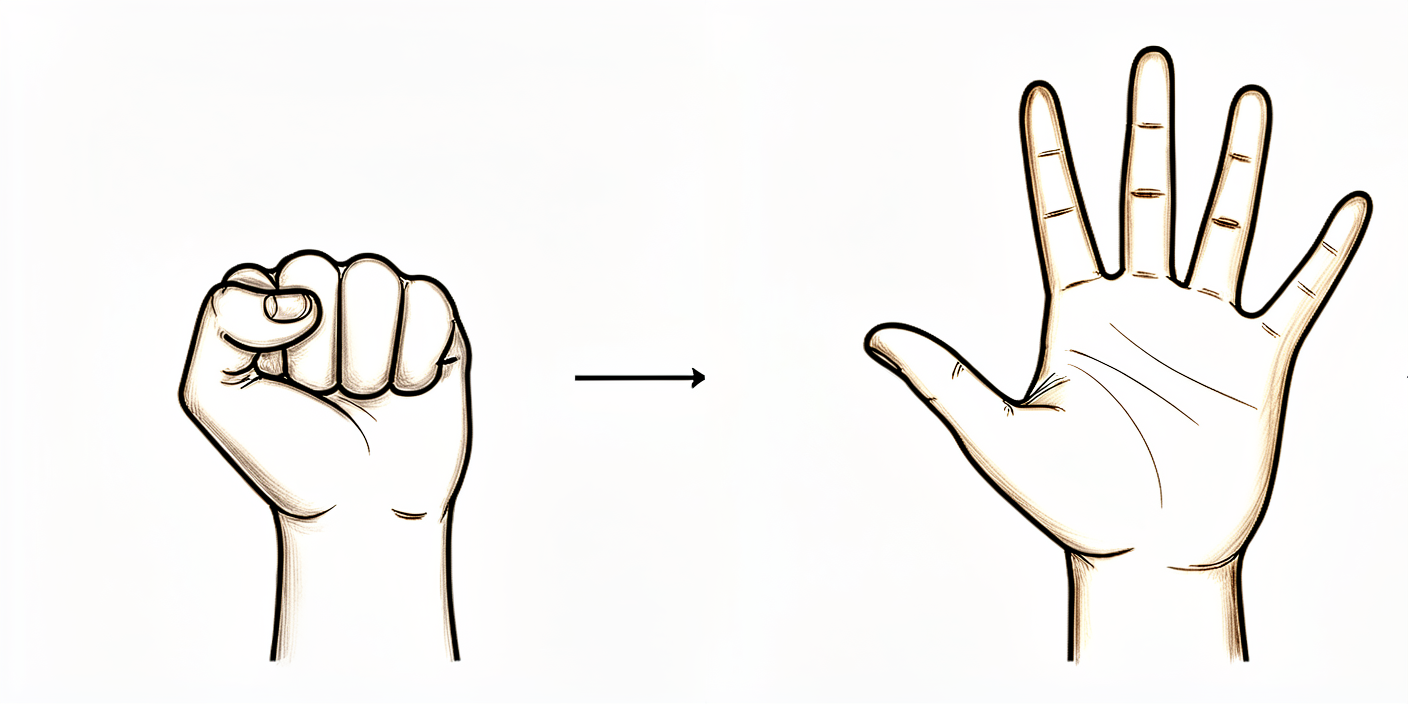
கையைத் திறந்து மூடுதல்
உங்கள் கையையும் விரல்களையும் திறந்து மூடுவதன் மூலம், அல்லது ஒரு மென்மையான பந்தை அழுத்துவதன் மூலம், அவற்றை அசைத்துக்கொண்டே இருங்கள். தோள்பட்டை அமைதியடையும் வரை கை இயங்கிக்கொண்டிருக்க, இதை உடனடியாகத் தொடங்குங்கள்.
உங்கள் இயன்முறை சிகிச்சையாளர் வழிகாட்டுவதுபோல
Kieran Hirpara 4.0
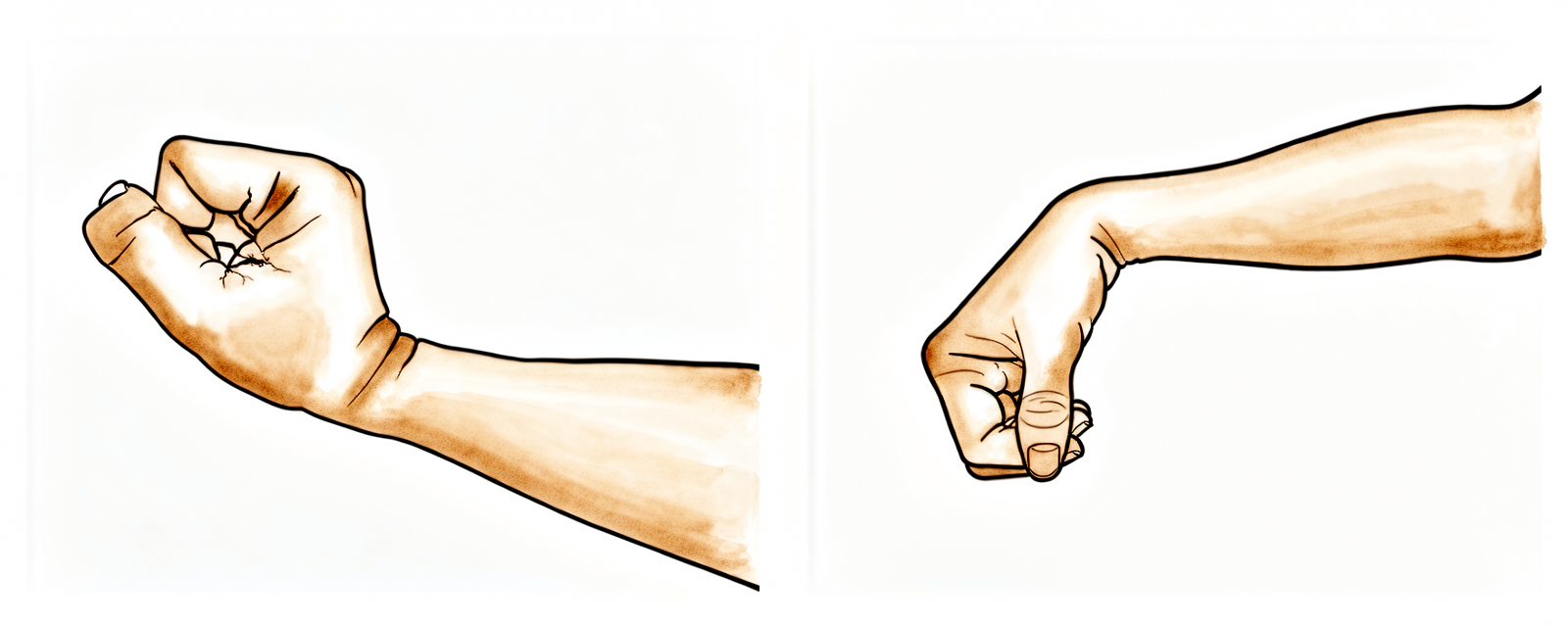
மணிக்கட்டு அசைவு
உங்கள் மணிக்கட்டை முன்னோக்கியும், பின்னோக்கியும், பக்கவாட்டிலும் வளைத்து அசைத்துக்கொண்டே இருங்கள். கையைக் கைத்தாங்கியிலிருந்து வெளியே எடுத்து, உங்கள் கை மற்றும் முழங்கை அசைவுகளுடன் சேர்த்து இதைச் செய்யுங்கள்.
உங்கள் இயன்முறை சிகிச்சையாளர் வழிகாட்டுவதுபோல
Kieran Hirpara 4.0
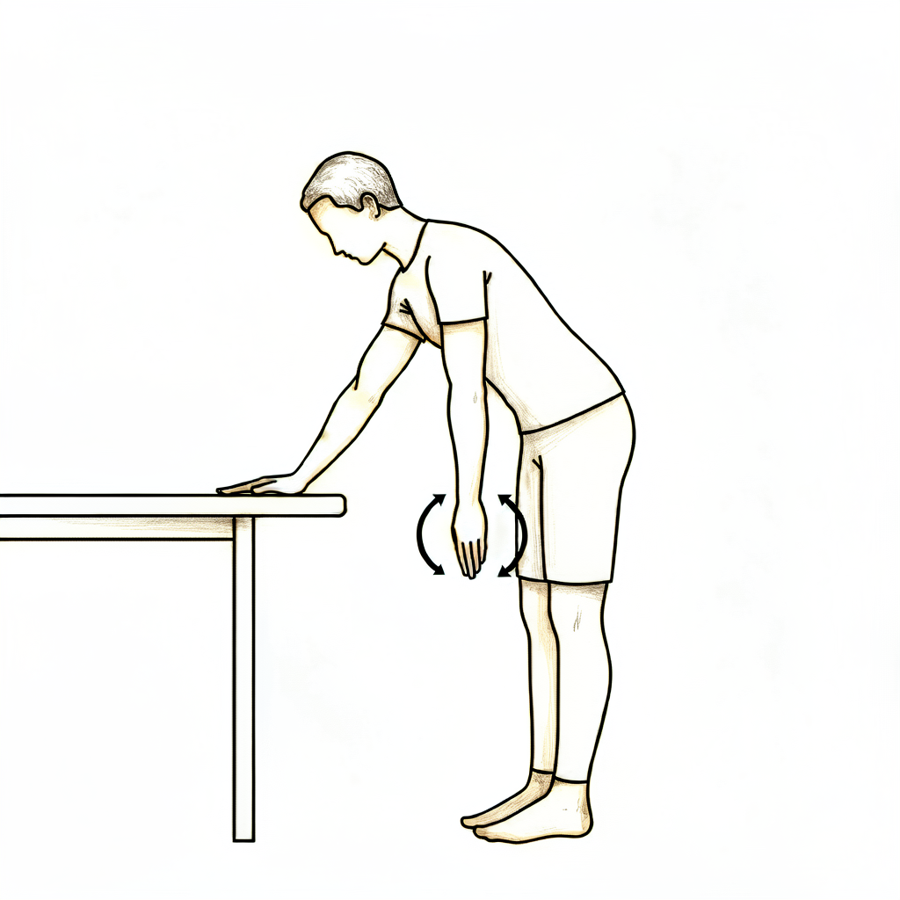
ஊசல் (pendulum) பயிற்சி
இடுப்பில் முன்னோக்கிக் குனிந்து, அறுவை சிகிச்சை செய்யப்பட்ட கையை உடலிலிருந்து விலகி மென்மையாகத் தொங்கவிடுங்கள். கை சிறிய, தளர்வான வட்டங்களில் ஆடட்டும் — அசைவு உங்கள் உடலிலிருந்து வர வேண்டும், தோள்பட்டைத் தசைகளிலிருந்து அல்ல. வசதியான, வலியில்லாத வரம்புக்குள்ளேயே இருங்கள்.
உங்கள் இயன்முறை சிகிச்சையாளர் வழிகாட்டுவதுபோல
Kieran Hirpara 4.0
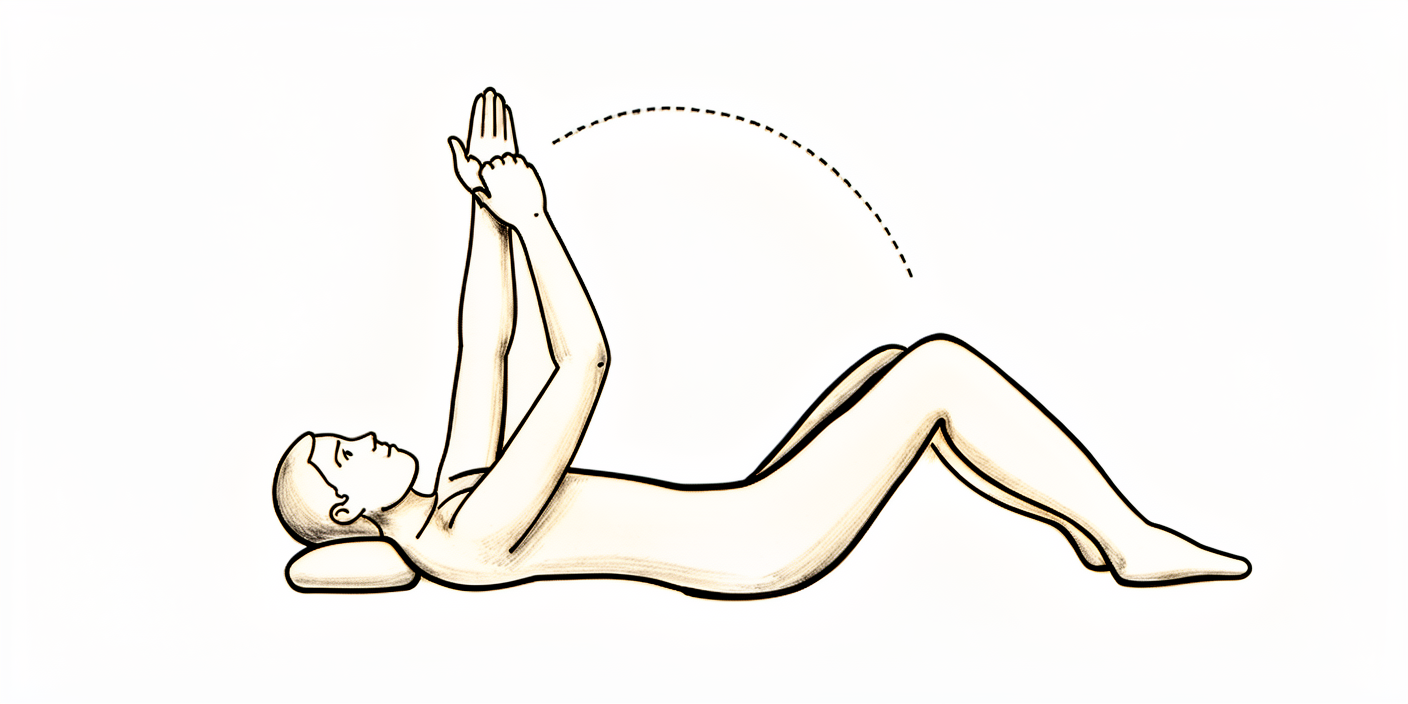
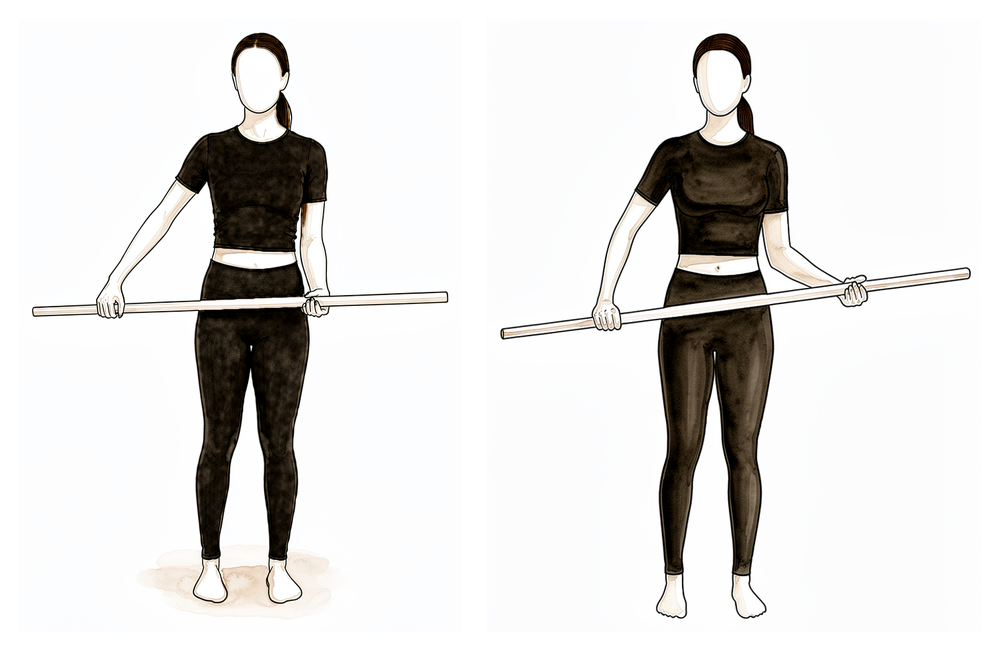
உதவியுடன் கூடிய உயர்த்தல் (படுத்தபடி)
மல்லாந்து படுத்துக்கொண்டு, அறுவை சிகிச்சை செய்யப்பட்ட கையை மேல்நோக்கித் தூக்க உங்கள் நல்ல கையால் உதவுங்கள்; பிறகு நல்ல கை உதவிக்கொண்டிருக்கும்போதே அதை மீண்டும் கீழே இறக்குங்கள். வசதியான, வலியில்லாத வரம்புக்குள் மட்டுமே அசையுங்கள் — எந்த விலை கொடுத்தேனும் அசைவு வரம்பைப் பெறுவது அல்ல, மென்மையான ஆரம்ப அசைவே இதன் நோக்கம்.
உங்கள் இயன்முறை சிகிச்சையாளர் வழிகாட்டுவதுபோல
Kieran Hirpara 4.0
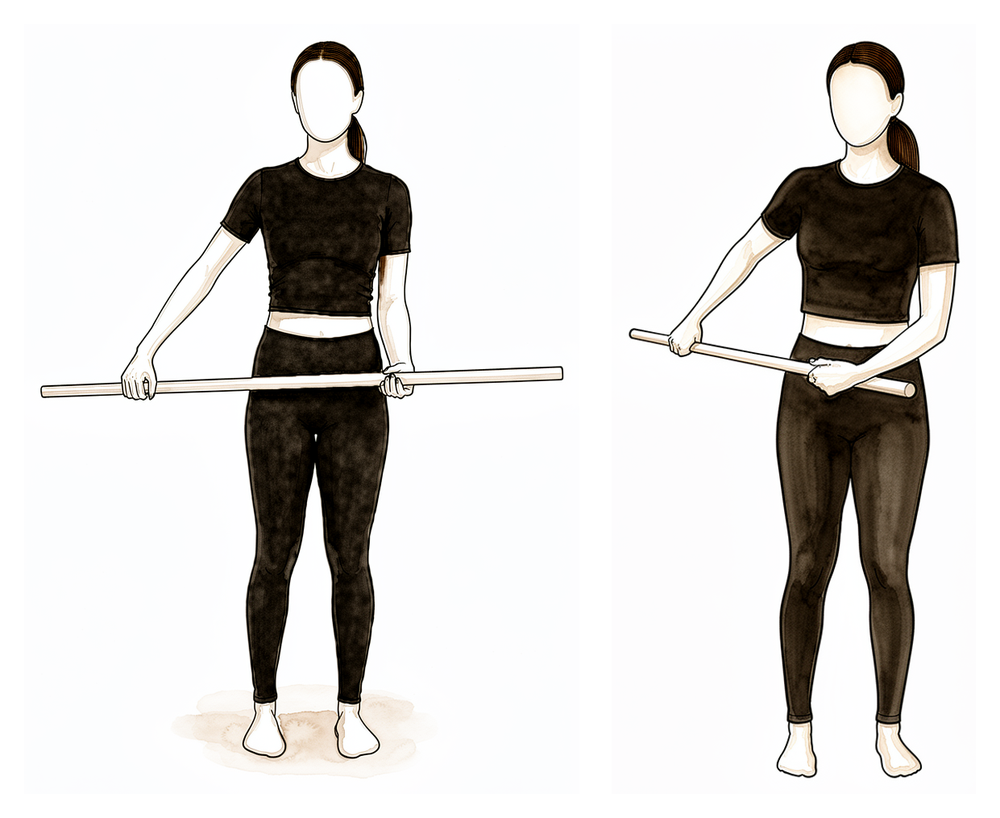
கம்பின் உதவியுடன் வெளிப்புறச் சுழற்சி
மல்லாந்து படுத்துக்கொண்டு, முழங்கைகளைச் செங்கோணத்தில் மடக்கி உடலின் பக்கங்களில் ஒட்டியபடி வைத்து, ஒரு குச்சியையோ கைத்தடியையோ இரு கைகளாலும் பிடியுங்கள். அறுவை சிகிச்சை செய்யப்பட்ட முன்கையை உடலிலிருந்து விலகி வெளிப்புறமாக மென்மையாகத் தள்ள நல்ல கையைப் பயன்படுத்துங்கள்; பிறகு திரும்ப வாருங்கள். அசைவு வசதியாகவும் வலியில்லாமலும் இருக்கட்டும்.
உங்கள் இயன்முறை சிகிச்சையாளர் வழிகாட்டுவதுபோல
Kieran Hirpara 4.0
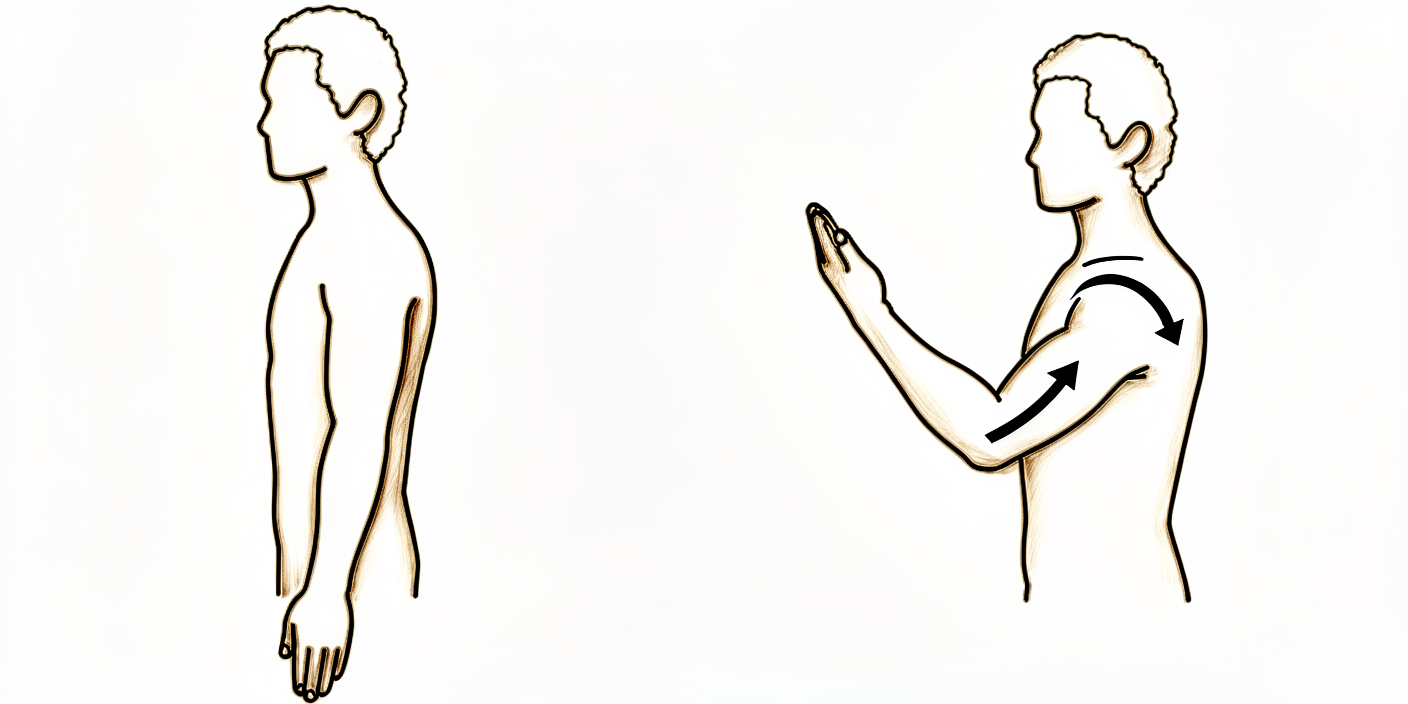
கம்பின் உதவியுடன் உட்புறச் சுழற்சி
ஒரு குச்சியை உங்கள் முதுகுக்குப் பின்னால் இரு கைகளாலும் பிடியுங்கள். அறுவை சிகிச்சை செய்யப்பட்ட கையை முதுகில் மேல்நோக்கி மென்மையாக நகர்த்த நல்ல கையைப் பயன்படுத்துங்கள்; பிறகு மெதுவாகக் கீழே இறக்குங்கள். இது வசதியான உட்புறச் சுழற்சியைத் தொடக்கத்திலேயே மீட்டெடுக்கிறது — வலியில்லாத வரம்புக்குள்ளேயே இருங்கள்.
உங்கள் இயன்முறை சிகிச்சையாளர் வழிகாட்டுவதுபோல
Kieran Hirpara 4.0
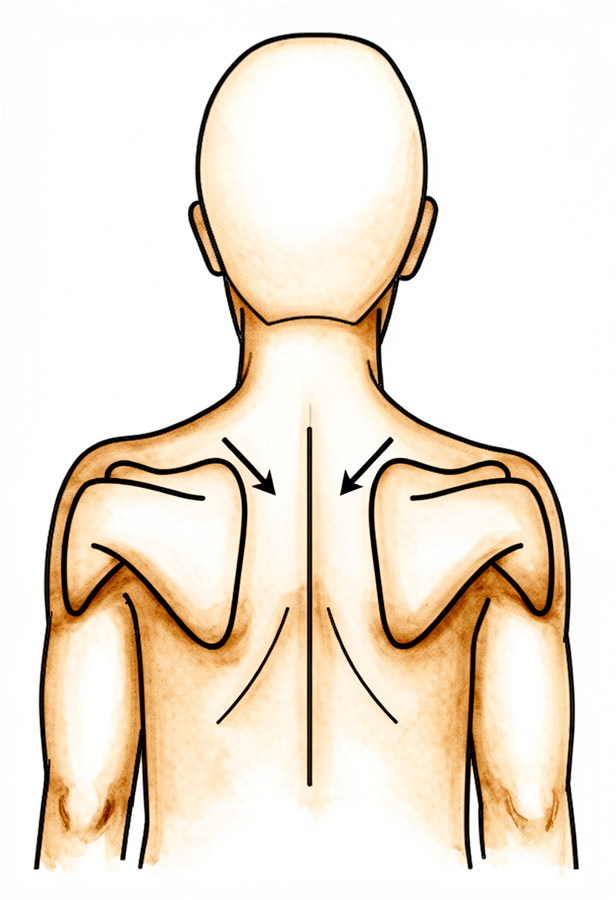
முழங்கை மடக்குதல்
முழங்கையை அதன் முழு வரம்பிலும் மடக்கி நேராக்குங்கள். தோள்பட்டை அமைதியடையும் வரை கையின் மற்ற பகுதிகள் நெகிழ்வாக இருக்க, தொடக்கத்திலிருந்தே கை, மணிக்கட்டு, முழங்கை ஆகியவற்றை அசைத்துக்கொண்டே இருங்கள்.
உங்கள் இயன்முறை சிகிச்சையாளர் வழிகாட்டுவதுபோல
Kieran Hirpara 4.0
தோள்பட்டை எலும்பு நிலைப்படுத்தல்
நிமிர்ந்து அமர்ந்தோ நின்றோ, உங்கள் தோள்பட்டை எலும்புகளை மென்மையாகப் பின்னோக்கி ஒன்றுசேர்த்து, காதுகளிலிருந்து விலகிக் கீழ்நோக்கி இழுங்கள். சில நொடிகள் அப்படியே வைத்திருந்து, பிறகு தளர்த்துங்கள். ஆரம்ப நாட்களில் வசதி அனுமதிக்கும்படி இதைச் செய்யுங்கள்.
உங்கள் இயன்முறை சிகிச்சையாளர் வழிகாட்டுவதுபோல
Kieran Hirpara 4.0
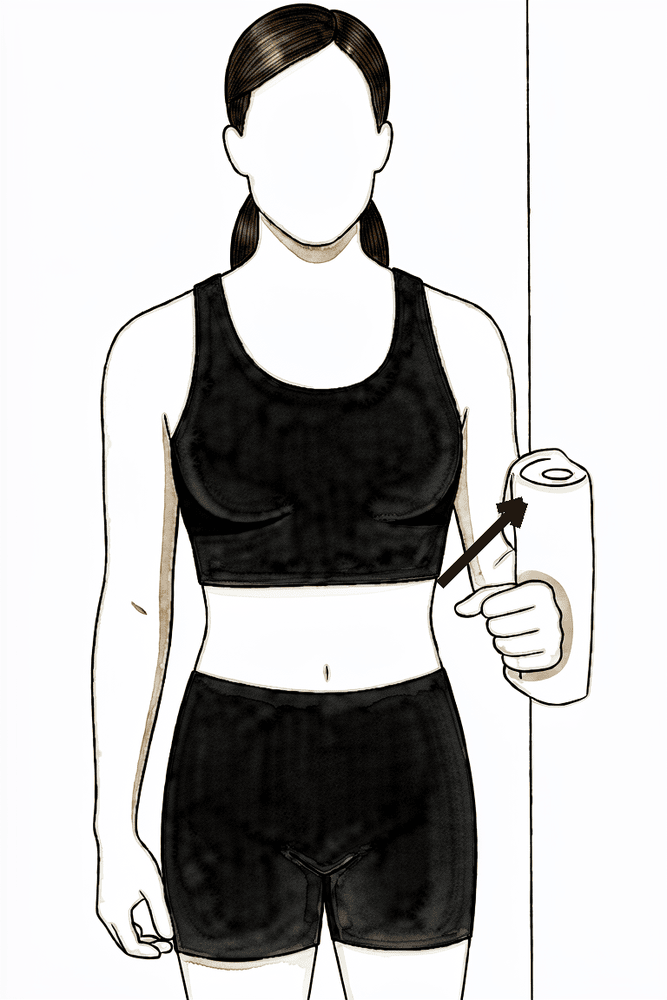
ஐசோமெட்ரிக் டெல்டாய்டு நிலைப்படுத்தல்
அறுவை சிகிச்சை செய்யப்பட்ட முழங்கையை உடலின் பக்கத்தில் வைத்து, ஒரு சுவருக்குப் பக்கவாட்டாக நில்லுங்கள். கையைப் பக்கவாட்டில் தூக்குவதுபோல, கையின் வெளிப்புறத்தைச் சுவரில் மென்மையாக அழுத்துங்கள்; ஆனால் கை உண்மையில் அசைய விடாதீர்கள். சில நொடிகள் அப்படியே வைத்திருந்து, பிறகு தளர்த்துங்கள். இது எந்த அசைவும் இல்லாமல், வசதி அனுமதிக்கும்படி டெல்டாய்டை மென்மையாக விழிப்படையச் செய்கிறது.
உங்கள் இயன்முறை சிகிச்சையாளர் வழிகாட்டுவதுபோல
முதல் நோக்கம் வசதியும், மென்மையான ஆரம்ப அசைவும். கைத்தாங்கி வசதிக்காக மட்டுமே; தோள்பட்டை அமைதியடைந்ததும் அதை முடிந்தவரை கழற்றியே வைக்க வேண்டும்; அதை அணிந்தபடி தூங்க வேண்டிய அவசியமில்லை. எந்தத் தோள்பட்டை அறுவை சிகிச்சைக்குப் பிறகும் குறைந்தது ஆறு வாரங்களுக்கு வாகனம் ஓட்ட வேண்டாம், கைத்தாங்கி கழற்றப்பட்ட பிறகும் கூட; உங்கள் அறுவை சிகிச்சை நிபுணர், பொதுவாக ஆறு வார மறுபரிசோதனையில், வாகனம் ஓட்ட அனுமதி தருவார். கையை அசைக்கத் தொடங்க முடியும் வகையில், ஆரம்ப நாட்களில் உங்கள் வலி நிவாரணிகளை முறையாக எடுத்துக்கொள்ளுங்கள். தொடக்கத்திலிருந்தே உங்கள் கை, மணிக்கட்டு, முழங்கை ஆகியவற்றை அசைத்துக்கொண்டே இருங்கள்; அறிவுறுத்தப்பட்டபடி, வசதியான வரம்புக்குள் மென்மையான தோள்பட்டை அசைவைத் தொடங்குங்கள்.
உங்கள் இயன்முறை சிகிச்சையாளருக்கு:
இலக்குகள்
- வசதியும் காயப் பாதுகாப்பும்
- வலியில்லாத வரம்புகளுக்குள் ஆரம்ப மென்மையான அசைவு வரம்பு
- கை, மணிக்கட்டு, முழங்கை ஆகியவற்றின் அசைவைப் பராமரித்தல்
சிகிச்சை மேலாண்மை
- கைத்தாங்கி வசதிக்காக மட்டுமே; பொதுவாக அறுவை சிகிச்சைக்குப் பிந்தைய 7-ஆம் நாள் வரை (வசதிக்குத் தேவைப்பட்டால் இரண்டு வாரங்கள் வரை), அறிகுறிகள் அனுமதிக்கும்படி படிப்படியாகக் குறைத்து நிறுத்துதல்
- வசதி அனுமதிக்கும்படி ஆரம்ப மென்மையான அசைவு வரம்பு: ஊசல் (pendulum) பயிற்சிகள், பிறர் அசைக்கும் (passive) மற்றும் உதவியுடன் கூடிய சுய (active-assisted) உயர்த்தல், வெளிப்புற மற்றும் உட்புறச் சுழற்சி, முழங்கை மடக்குதல்/நீட்டுதல்
- வசதிக்கேற்ப ஐசோமெட்ரிக் (isometric) டெல்டாய்டு நிலைப்படுத்தலும் தோள்பட்டை எலும்பு நிலைப்படுத்தலும்
- பயிற்சிக்கு முன் வலி நிவாரணி; தேவைக்கேற்ப வலி நிவாரணத்துக்குக் குளிர் சிகிச்சை (cryotherapy)
முன்னெச்சரிக்கைகள்
- ஆரம்ப அசைவை வசதியான, வலியில்லாத வரம்புக்குள் வைத்திருத்தல்
- கனமாகத் தூக்குதல், வலுக்கட்டாயமாகத் தள்ளுதல் அல்லது இழுத்தல் வேண்டாம்
- ஆறு வாரங்களுக்கு வாகனம் ஓட்ட வேண்டாம் (இது எந்தத் தோள்பட்டை அறுவை சிகிச்சைக்கும் பொருந்தும்)
அடுத்த கட்டத்துக்குச் செல்வதற்கான அளவுகோல்கள்
- வசதியான நிலை; வலி தணிந்து வருதல்
- காயம் திருப்திகரமாக ஆறி வருதல்
- ஆரம்ப அசைவு வரம்பைத் தாங்க முடிதல்
கட்டம் II — அசைவு வரம்பும் தசை மறுசெயல்படுத்தலும் (வாரம் 2–6)
Kieran Hirpara 4.0
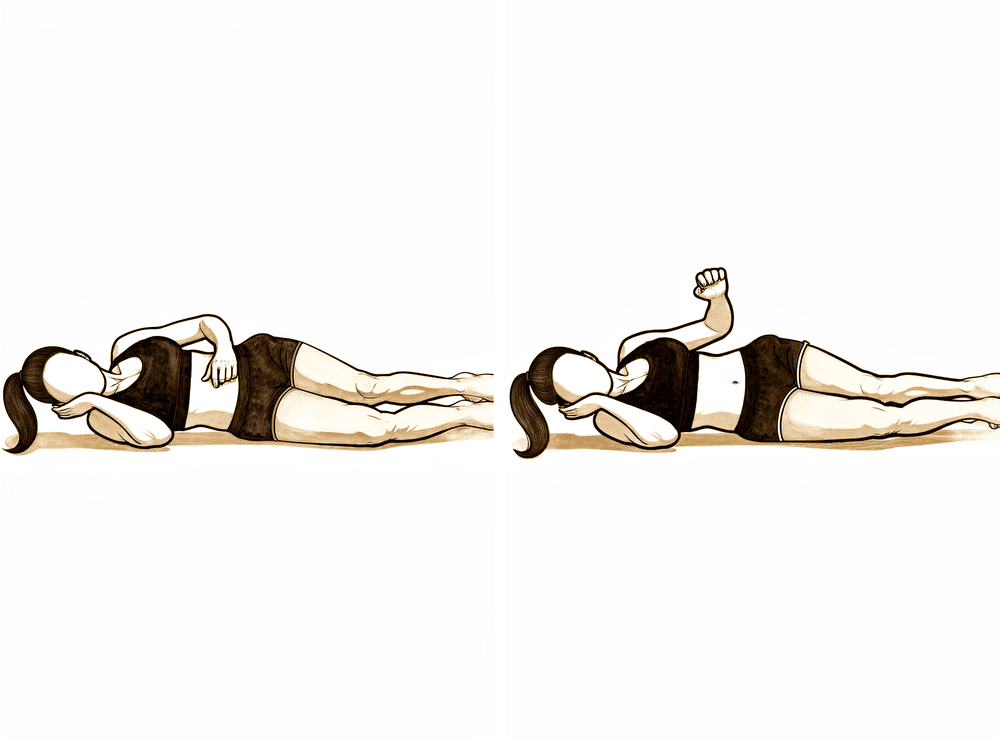
ஒருபக்கமாகப் படுத்துச் செய்யும் வெளிப்புறச் சுழற்சி
அறுவை சிகிச்சை செய்யப்படாத பக்கமாகப் படுத்து, மேற்புற முழங்கையைச் செங்கோணத்தில் மடக்கி உடலோடு ஒட்டி வையுங்கள். முழங்கையை உடலின் பக்கத்திலேயே வைத்தபடி, முன்கையை மேல்நோக்கி உச்சவரையை நோக்கிச் சுழற்றி, பிறகு கட்டுப்பாட்டுடன் இறக்குங்கள். இதுபோன்ற வலியில்லாத வெளிப்புறச் சுழற்சி, அந்த நரம்பு இயக்கும் தசைகளை மீண்டும் செயல்படுத்த உதவுகிறது.
உங்கள் இயன்முறை சிகிச்சையாளர் வழிகாட்டுவதுபோல
Kieran Hirpara 4.0
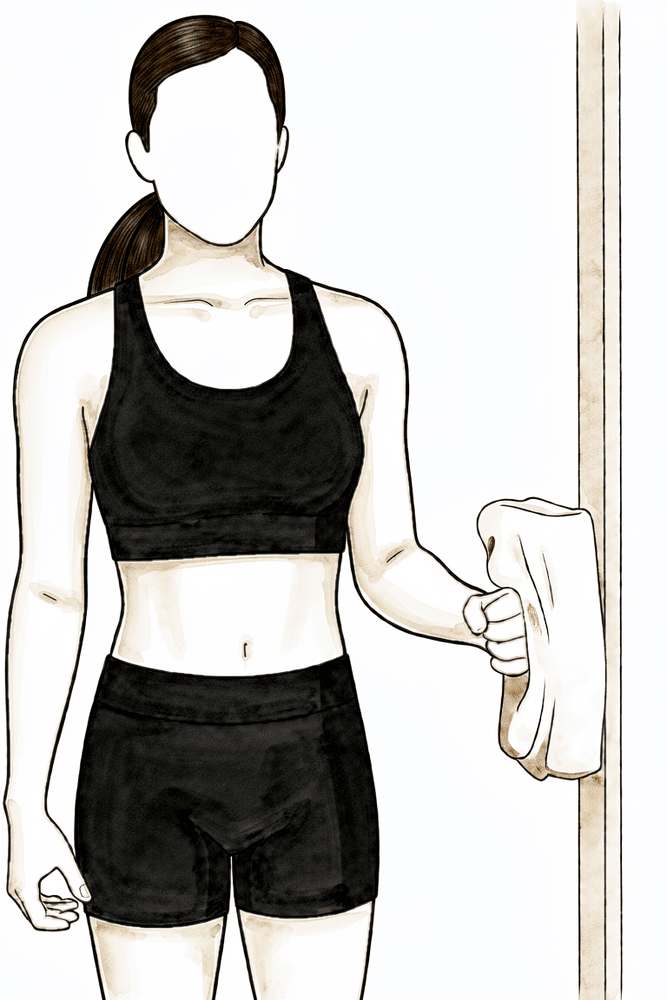
ஐசோமெட்ரிக் வெளிப்புறச் சுழற்சி
முழங்கையை உடலின் பக்கத்தில் ஒட்டி வைத்து, செங்கோணத்தில் மடக்கி, புறங்கையை ஒரு சுவரிலோ கதவு நிலையிலோ வைத்து நில்லுங்கள். கை அசைய விடாமல், அதில் மென்மையாக வெளிப்புறமாக அழுத்தி, சில நொடிகள் அப்படியே வைத்திருந்து, பிறகு தளர்த்துங்கள். பட்டையைச் சேர்ப்பதற்கு முன், அந்த நரம்பு இயக்கும் தசைகளை மீண்டும் செயல்படுத்துவதற்கான தொடக்கப் புள்ளி இதுவே.
உங்கள் இயன்முறை சிகிச்சையாளர் வழிகாட்டுவதுபோல
Kieran Hirpara 4.0
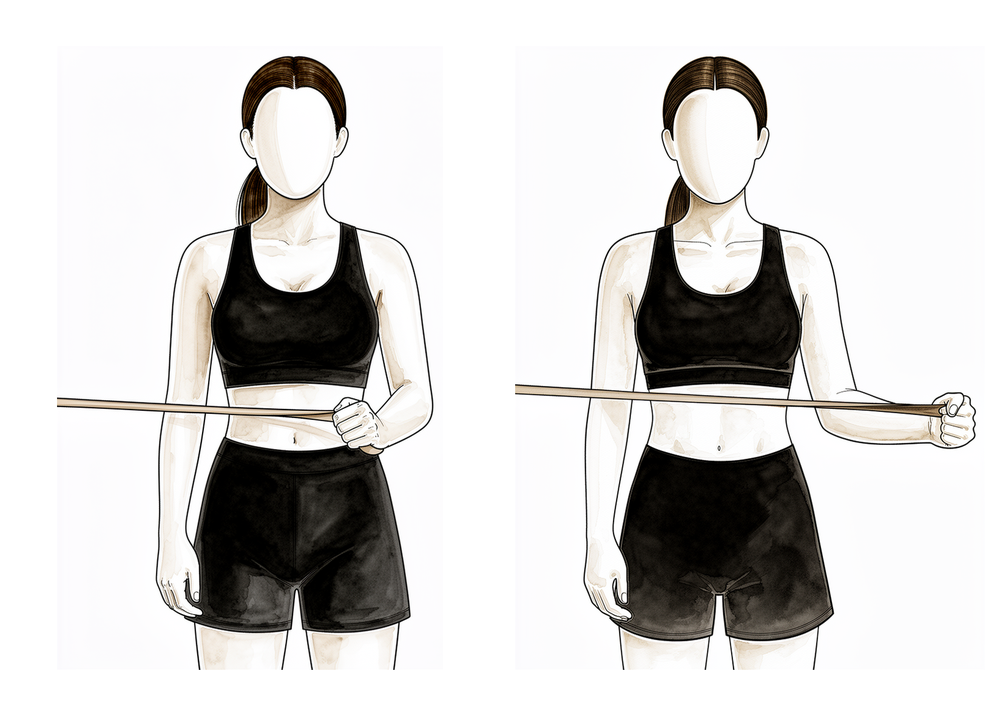
பட்டையுடன் வெளிப்புறச் சுழற்சி
முழங்கையை உடலின் பக்கத்தில் ஒட்டி வைத்து, செங்கோணத்தில் மடக்கி, இடுப்பு உயரத்தில் கட்டப்பட்ட ஒரு எலாஸ்டிக் பட்டையைப் பிடித்து நில்லுங்கள். முழங்கையை உடலின் பக்கத்திலேயே வைத்தபடி, பட்டையின் எதிர்ப்புக்கு எதிராக முன்கையை வெளிப்புறமாகச் சுழற்றி, பிறகு மெதுவாகத் திரும்புங்கள். குறைந்த எதிர்ப்பும் அதிக எண்ணிக்கையும் — நரம்பு மீளும்போது இன்ஃப்ராஸ்பைனேட்டஸை மீண்டும் செயல்படுத்துவதற்கான முக்கியமான வெளிப்புறச் சுழற்சிப் பயிற்சி இதுவே.
குறைந்த சுமை, அதிக எண்ணிக்கை; உங்கள் இயன்முறை சிகிச்சையாளர் வழிகாட்டுவதுபோல
Kieran Hirpara 4.0
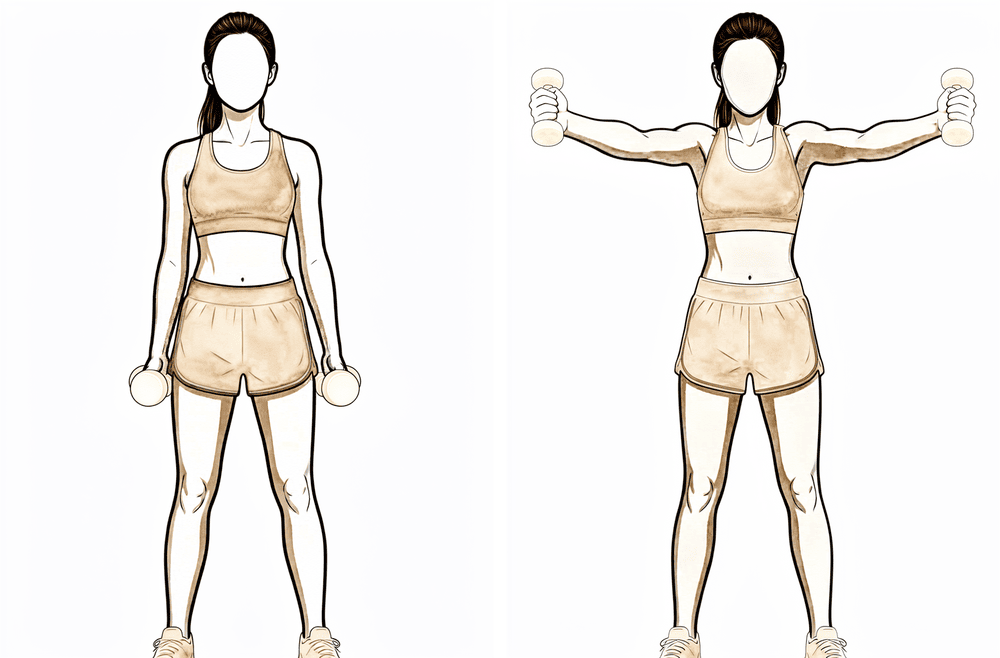
ஃபுல்-கேன் ஸ்கேப்ஷன் (full-can scaption)
நின்றபடி, அறுவை சிகிச்சை செய்யப்பட்ட கையை முன்னால், சற்றுப் பக்கவாட்டாக, நிரம்பிய ஒரு டப்பாவைப் பிடித்திருப்பதுபோல கட்டைவிரல் மேல்நோக்கிச் சுட்டியபடி, தோள்பட்டை உயரம் வரை உயர்த்தி, பிறகு கட்டுப்பாட்டுடன் இறக்குங்கள். இது அந்த நரம்பு இயக்கும் தசைகளில் ஒன்றான சுப்ராஸ்பைனேட்டஸை இலக்காகக் கொண்டது; அதன் மீட்சிக்கு ஏற்ற வேகத்திலேயே இது செய்யப்படுகிறது, வலுக்கட்டாயமாக அல்ல.
குறைந்த சுமை, அதிக எண்ணிக்கை; உங்கள் இயன்முறை சிகிச்சையாளர் வழிகாட்டுவதுபோல
கைத்தாங்கி கழற்றப்பட்ட நிலையில், இந்தக் கட்டம் முழு அசைவை மீட்டெடுத்து, இலகுவான வலுப்படுத்துதலைத் தொடங்குகிறது; நரம்பு மீளும்போது சுப்ராஸ்பைனேட்டஸையும் இன்ஃப்ராஸ்பைனேட்டஸையும் மீண்டும் செயல்படுத்துவதற்கான குறிப்பிட்ட பயிற்சியும் இதில் அடங்கும். பெரும்பாலானோர் இந்தக் கட்டத்தில் தங்கள் இயல்பான அன்றாடச் செயல்களுக்குத் திரும்புகிறார்கள். முன்னேற்றம் நாட்காட்டியை வைத்து அல்ல, வசதியை வைத்தே வழிநடத்தப்படுகிறது.
உங்கள் இயன்முறை சிகிச்சையாளருக்கு:
இலக்குகள்
- எல்லாத் தளங்களிலும் முழு சுய அசைவு வரம்பு
- இலகுவான வலுப்படுத்துதலையும், சுழற்சி தசைநாண் பட்டையின் (சுப்ராஸ்பைனேட்டஸ்/இன்ஃப்ராஸ்பைனேட்டஸ்) மறுசெயல்படுத்தலையும் தொடங்குதல்
- அன்றாட வாழ்க்கைச் செயல்களில் சுயசார்பு
சிகிச்சை மேலாண்மை
- எல்லாத் திசைகளிலும் முழு சுய அசைவு வரம்புக்கு முன்னேற்றுதல்
- சுமார் வாரம் 2 முதல் இலகுவான வலுப்படுத்துதலைத் தொடங்குதல்: சுழற்சி தசைநாண் பட்டை, டெல்டாய்டு, தோள்பட்டை எலும்பை நிலைப்படுத்தும் தசைகள் ஆகியவற்றுக்கு ஐசோமெட்ரிக் பயிற்சிகளிலிருந்து எலாஸ்டிக் பட்டைப் பயிற்சிக்கு முன்னேற்றுதல்; குறைந்த சுமை, அதிக எண்ணிக்கை
- வலியில்லாத வெளிப்புறச் சுழற்சியின் மீதும், நரம்பு மீளும்போது சுப்ராஸ்பைனேட்டஸையும் இன்ஃப்ராஸ்பைனேட்டஸையும் மீண்டும் செயல்படுத்துவதன் மீதும் சிறப்புக் கவனம்
- இயல்பான அன்றாடச் செயல்களுக்குப் படிப்படியாகத் திரும்புதல்; பொதுவாகச் சுமார் நான்கு வாரங்களுக்குள்
முன்னெச்சரிக்கைகள்
- வலுப்படுத்துதல் வசதியான வரம்புக்குள்ளேயே இருக்க வேண்டும்; நீடித்து நிற்கும் வலியைத் தூண்டக் கூடாது
- வலிமை மீளும் வரை, வலுக்கட்டாயமாகத் தள்ளுதல், இழுத்தல், கனமாகத் தூக்குதல் ஆகியவற்றைத் தவிர்த்தல்
- வலிமை படிப்படியாகவே திரும்பும் என்று எதிர்பார்க்கவும்: மறுசெயல்படுத்தும் பயிற்சி நரம்பின் மீட்சிக்கு ஏற்ற வேகத்திலேயே நடக்கிறது, வலுக்கட்டாயமாக அல்ல
அடுத்த கட்டத்துக்குச் செல்வதற்கான அளவுகோல்கள்
- முழு, அல்லது கிட்டத்தட்ட முழு, வலியில்லாத சுய அசைவு வரம்பு
- அறிகுறிகள் மீண்டும் தூண்டப்படாமல் இலகுவான வலுப்படுத்துதலைத் தாங்க முடிதல்
கட்டம் III — வலுப்படுத்துதலும் செயல்பாட்டுக்குத் திரும்புதலும் (வாரம் 6–12 மற்றும் அதற்குப் பிறகும்)
Kieran Hirpara 4.0
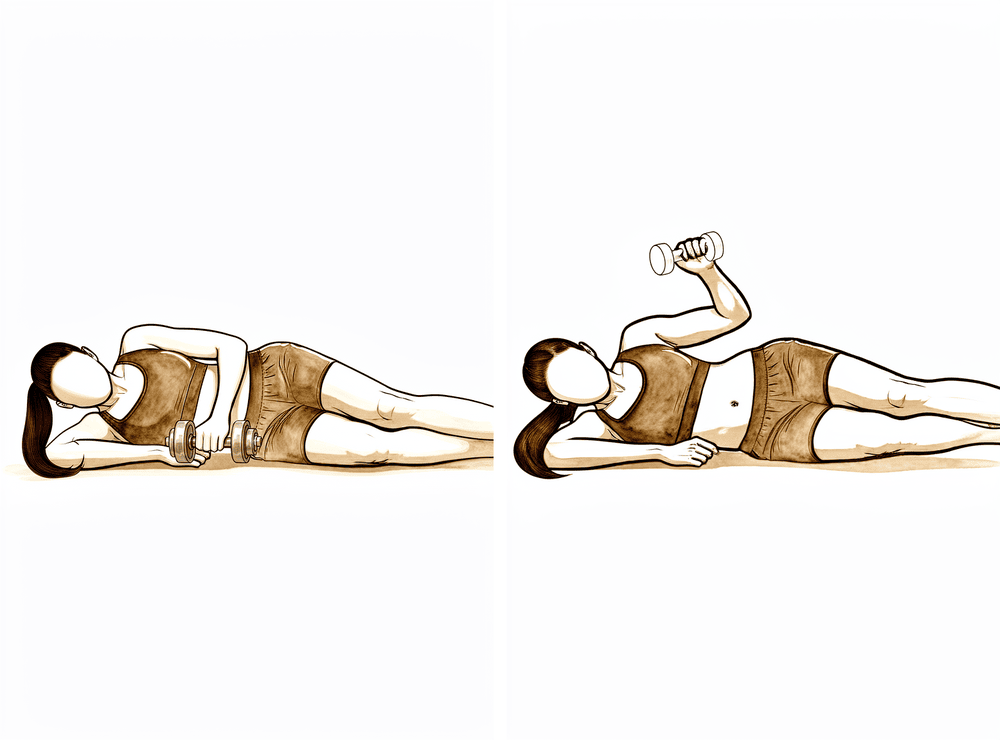
எடையுடன் ஒருபக்கமாகப் படுத்துச் செய்யும் வெளிப்புறச் சுழற்சி
சுமார் வாரம் 12 முதல், இதே ஒருபக்கமாகப் படுத்துச் செய்யும் சுழற்சி ஓர் இலகுவான எடையைப் பிடித்தபடி செய்யப்படுகிறது: முழங்கையைச் செங்கோணத்தில் மடக்கி உடலின் பக்கத்தில் ஒட்டி வைத்து, முன்கையை மேல்நோக்கி உச்சவரையை நோக்கிச் சுழற்றி, பிறகு மெதுவாக இறக்குங்கள். நரம்பு மீண்டு வரும்போது, அது இயக்கும் தசைகளை இது தனிமைப்படுத்திப் பயிற்றுவிக்கிறது — முன்னேற்றம் நரம்பின் வேகத்துக்கு ஏற்பவே அமைகிறது, வலுக்கட்டாயமாக அல்ல.
உங்கள் இயன்முறை சிகிச்சையாளர் வழிகாட்டுவதுபோல
Kieran Hirpara 4.0
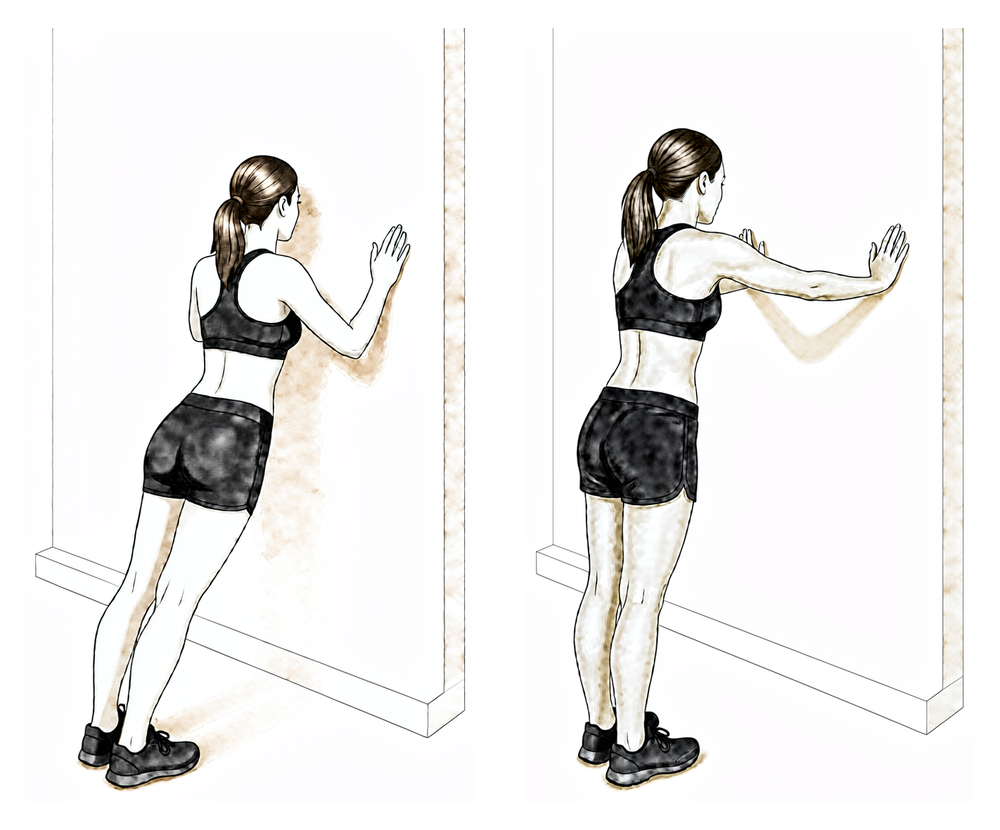
புஷ்-அப் பிளஸ் (push-up plus)
சுமார் ஆறு வாரங்களிலிருந்து, நீங்கள் படிப்படியாக முன்னேறும்போது சுவரிலோ பெஞ்சிலோ தரையிலோ புஷ்-அப் நிலையில் இருந்து, முழுமையாக மேலே தள்ளி, பிறகு உங்கள் மேல் முதுகு வளைந்து தோள்பட்டை எலும்புகள் விரியும் அளவுக்குச் சற்று மேலும் அழுத்துங்கள். இது ஒரு மூடிய சங்கிலிப் பயிற்சி; சுழற்சி தசைநாண் பட்டைக்கு ஆதரவளிக்கும் தோள்பட்டை எலும்புக் கட்டுப்பாட்டை இது உருவாக்குகிறது.
உங்கள் இயன்முறை சிகிச்சையாளர் வழிகாட்டுவதுபோல
Kieran Hirpara 4.0
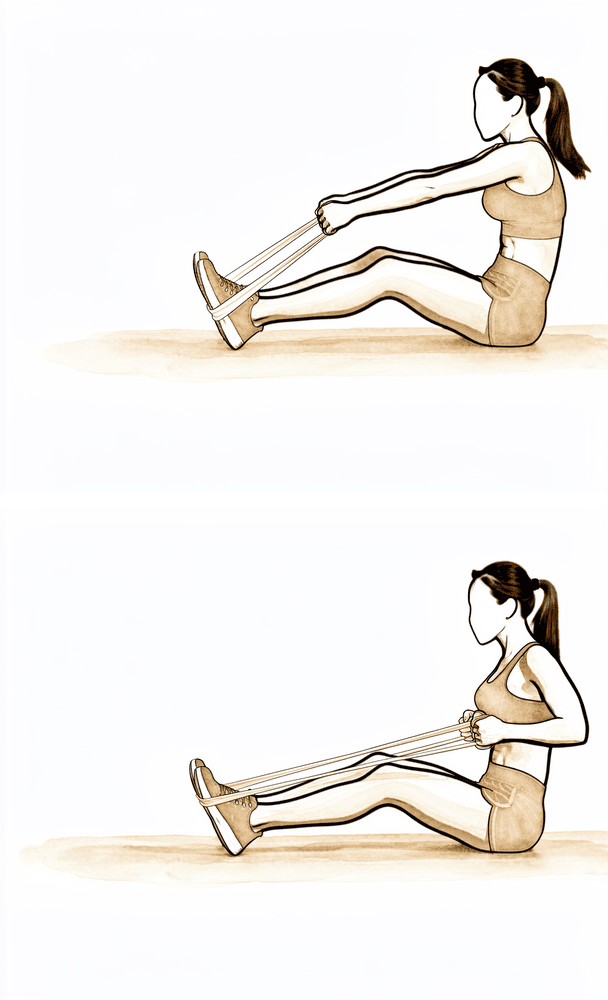
தாழ்வான இழுப்பு (low row)
உங்கள் முன்னால் இடுப்பு உயரத்தில் கட்டப்பட்ட ஒரு பட்டையைப் பிடியுங்கள். கையை ஓரளவு நேராக வைத்தபடி, தோள்பட்டை எலும்பைக் கீழ்நோக்கியும் பின்னோக்கியும் இறுக்கியபடி, கையை உங்கள் இடுப்பை நோக்கிப் பின்னோக்கிக் கீழே இழுத்து, பிறகு மெதுவாகத் திரும்புங்கள். இது படிப்படியாக அதிகரிக்கும் எதிர்ப்புப் பயிற்சி; சுழற்சி தசைநாண் பட்டைக்கு ஆதரவளிக்கும் தோள்பட்டை எலும்புத் தசைகளை இது வலுப்படுத்துகிறது.
உங்கள் இயன்முறை சிகிச்சையாளர் வழிகாட்டுவதுபோல
சுமார் ஆறு வாரங்களிலிருந்து, குறிப்பிட்ட கட்டுப்பாடு எதுவும் இல்லாமல் வலுப்படுத்துதல் முன்னேறுகிறது; தலைக்கு மேலான வேலைகள், கனமான வேலை, விளையாட்டு ஆகியவற்றுக்குத் திரும்புவதை நோக்கி அது கட்டமைக்கப்படுகிறது. நரம்பு தொடர்ந்து மீண்டு வரும்போது, சுப்ராஸ்பைனேட்டஸ் மற்றும் இன்ஃப்ராஸ்பைனேட்டஸ் தசைகளின் தனித்த வலுப்படுத்துதல் முன்னேற்றப்படுகிறது; இது பொதுவாகப் பல மாதங்களுக்குத் தொடர்கிறது.
உங்கள் இயன்முறை சிகிச்சையாளருக்கு:
இலக்குகள்
- கட்டுப்பாடின்றி முழு வலுப்படுத்துதல்
- தலைக்கு மேலான செயல்பாடு, கனமான வேலை, விளையாட்டு ஆகியவற்றுக்குப் படிப்படியாகத் திரும்புதல்
- நரம்பு மீளும்போது சுழற்சி தசைநாண் பட்டையின் வலிமை தொடர்ந்து மீள்தல்
சிகிச்சை மேலாண்மை
- சுமார் வாரம் 6 முதல், மூடிய சங்கிலி (closed-chain) மற்றும் படிப்படியாக அதிகரிக்கும் எதிர்ப்புப் பயிற்சி உட்பட, முழு வலுப்படுத்துதலுக்கு முன்னேற்றுதல்
- சுமார் வாரம் 12 முதல், சுப்ராஸ்பைனேட்டஸ் மற்றும் இன்ஃப்ராஸ்பைனேட்டஸ் தசைகளின் தனித்த வலுப்படுத்துதலை முன்னேற்றுதல்
- தலைக்கு மேலான வேலைக்கும் விளையாட்டுக்கும் திரும்புவதைக் கட்டம் கட்டமாக அமைத்தல்; இலகுவான தலைக்கு மேலான வேலைகளுக்குத் திரும்புவது பொதுவாக இந்தக் கட்டத்திலேயே நிகழ்கிறது; வலிமை அனுமதிக்கும்போதும் வலி இல்லாத நிலை வந்த பிறகும், அதைத் தொடர்ந்து வரும் வாரங்கள் முதல் மாதங்கள் வரையிலான காலத்தில் விளையாட்டுக்குப் படிப்படியாகத் திரும்புதல்
- நரம்பும் தசைகளும் தொடர்ந்து மீண்டு வரும்போது, பராமரிப்புத் திட்டத்தைத் தொடர்தல்
முன்னெச்சரிக்கைகள்
- முன்னேற்றம் அறிகுறிகளை வைத்தே வழிநடத்தப்படுகிறது
- பாதிக்கப்பட்ட தசைகளின் வலிமையும் திணிவும் பல மாதங்களுக்குத் தொடர்ந்து மீண்டு வரலாம்; மீட்சி பகுதியளவாகவும் இருக்கலாம்: அதற்கேற்ப எதிர்பார்ப்புகளை அமைத்துக்கொள்ளுங்கள்; வலிமை முழுமையடையாத நிலையில் அளவுக்கு மீறிய அழுத்தம் கொடுப்பதைத் தவிர்க்கவும்
உங்கள் நெறிமுறைக்குப் பிறகு
மேலே உள்ள கட்டங்கள், ஆர்த்ரோஸ்கோபிக் தோள்பட்டை மேல் நரம்பு அழுத்த நீக்கம் குறித்து வெளியிடப்பட்ட நுட்பக் கட்டுரைகளிலிருந்தும் மருத்துவ ஆய்வுகளிலிருந்தும் தழுவி எடுக்கப்பட்டவை. வார வரம்புகள் நிலையானவை அல்ல, வழக்கமானவை; உங்கள் தோள்பட்டையும் நரம்பும் எப்படி மீள்கின்றன என்பதன் அடிப்படையில், கிளினிக்குடன் இணைந்து பணியாற்றும் உங்கள் இயன்முறை சிகிச்சையாளர் உங்கள் தொடர் மறுவாழ்வுப் பயிற்சிக்குத் தனிப்பட்ட முறையில் வழிகாட்டுவார். இந்தப் பக்கம் கிளினிக்கின் பொதுவான மீட்சி ஆலோசனைகளுடன் இணைந்து செயல்படுகிறது; அறுவை சிகிச்சைக்குப் பிந்தைய வலியைக் கையாளுதல் மற்றும் காயப் பராமரிப்பு பக்கங்களைப் பாருங்கள். அறுவை சிகிச்சை பற்றியும் அது சிகிச்சையளிக்கும் நிலை பற்றியும் அறிய, தோள்பட்டை மேல் நரம்பு அழுத்த நீக்கம் பக்கத்தைப் பாருங்கள். இந்த நெறிமுறைக்குப் பின்னால் உள்ள சான்றுகள் (நரம்பு அழுத்த நீக்கம் குறித்த வலி நிவாரணம் மற்றும் வலிமை மீட்சி தொடர்பான இலக்கியம்) சான்றுகள் பகுதியில் சுருக்கமாகத் தரப்பட்டுள்ளன; அது இந்தப் பக்கத்தின் மேலே PDF-ஆகக் கிடைக்கிறது.
Evidence & references
This is the clinical evidence summary written for health professionals. It is technical, and it lists the research this page was built from. You do not need to read it to understand your treatment or to make a decision about it.
Topic scope: Post-operative rehabilitation after an isolated arthroscopic suprascapular nerve decompression / release — release of the nerve at the suprascapular notch (division of the transverse/superior scapular ligament) and/or the spinoglenoid notch, performed for nerve entrapment, often with excision of an associated paralabral / spinoglenoid ganglion cyst. This page covers the isolated decompression only; when the procedure is combined with a rotator cuff repair the slower, protected rotator-cuff-repair pathway takes precedence.
Defining principle of the rehab here: decompression relieves pressure on a nerve and creates no construct that needs months of protection — there is no tendon repair or capsular reconstruction to safeguard. So (like a debridement/decompression, and unlike a cuff repair or labral repair) this is an early-movement pathway: a short sling for comfort only (about the first week, two at most), early range of motion as comfort allows, and return to daily activities within a few weeks. The crucial separate timeline is the nerve itself: the compression pain often settles relatively quickly, but recovery of strength and bulk in the muscles the nerve supplies (supraspinatus and infraspinatus) is paced over weeks to months and is frequently only partial — functional recovery follows the nerve, not the calendar. The single branch point is whether a rotator cuff repair was also performed — if so, the recovery converts to the protected rotator-cuff-repair pathway.
The procedure
The suprascapular nerve can be entrapped at two fibro-osseous tunnels as it crosses the scapula: the suprascapular notch (under the superior transverse scapular ligament — entrapment here affects both supraspinatus and infraspinatus) and the spinoglenoid notch (under the spinoglenoid ligament — entrapment here is more selective for the infraspinatus). A paralabral ganglion cyst, often arising from a posterosuperior labral tear, is a common space-occupying cause at the spinoglenoid notch.
Arthroscopic decompression releases the offending ligament (and decompresses/excises any cyst); where the cyst arises from a labral tear, the labral source may be addressed at the same sitting. Because the operation removes a compressive lesion rather than creating a repair, there is no healing construct that dictates a protected immobilisation period — the rehab is governed by comfort and by the nerve's own recovery.
Evidence by theme
Pain relief is the most reliable benefit
Across cohorts and a systematic review, decompression gives good pain relief and functional improvement in the majority. In a retrospective series of 112 arthroscopic decompressions, VAS pain fell from a mean of 6.5 to 2.9 (p < 0.0001) at a mean follow-up of ~9 months, with no neurovascular injuries, infections or fractures [112-patient series, PMC6994808]. A 2018 systematic review of decompression outcomes reported broad improvements in patient-reported scores and high rates of return to sport/duty [systematic review, JSES 2018, DOI 10.1016/j.jse.2017.09.025]. A volleyball-player cohort and a spinoglenoid-notch technique series likewise report reliable return of arm function [Brzoska 2023; Plancher 2021]. Moderate (cohorts + SR of level III–IV studies).
Strength recovery follows the nerve — slower, and often incomplete
This is the key counselling point. The same 112-patient series showed measurable strength gains (supraspinatus 3.3 → 4.9; infraspinatus 3.3 → 4.8 on the 0–5 scale) but over months, not weeks [PMC6994808]. A systematic review of motor recovery after notch decompression found that full strength was NOT regained in the majority (~60%) of reported cases, and that established fatty (structural) muscle degeneration generally did not reverse — "patients should be informed about this" [motor-recovery SR, PubMed 32392599]. Open spinoglenoid-notch series report better external- rotation strength figures (e.g. ~66% regaining full ER strength) for cyst-related entrapment, where the lesion is discrete and recovery potential higher [open decompression, PubMed 23664748]. Earlier diagnosis and decompression, and a discrete compressive cause (cyst) rather than chronic idiopathic entrapment, predict more complete muscular recovery. Moderate–weak; consistent direction across studies.
Ganglion-cyst vs idiopathic entrapment
Cyst-related entrapment (a removable, space-occupying cause) tends to do well — decompression removes the cause and electrodiagnostic recovery of the nerve has been documented post- decompression [Feinberg 2019, Muscle Nerve]. Chronic idiopathic entrapment, longstanding denervation, and established fatty infiltration carry a more guarded prognosis for strength return. This distinction underlies the variable, partly-incomplete recovery seen in the pooled literature. Weak (case series / mechanistic).
The rehabilitation protocol itself is consensus/expert
The phased post-op programme below is drawn from published technique papers and patient-guidance protocols, not from a rehabilitation RCT — there is no trial defining the optimal post- decompression regimen. Phase timings are typical, not trial-derived. Weak/consensus.
Phased post-op timeline (isolated decompression — no cuff repair)
| Phase | Window | Sling | ROM / use | Strengthening | Notes |
|---|---|---|---|---|---|
| I — Early movement | Week 0–2 | Comfort only, ~first week (up to 2 wk), off ASAP; not worn to sleep | Early gentle ROM as comfort allows — pendulums, passive/active-assisted elevation, ER/IR, elbow flexion/extension; keep hand/wrist/elbow moving from day 1 | Isometric deltoid + scapular setting as comfortable | Settle post-op flare; no driving while in sling; no heavy lifting/forceful push-pull |
| II — Range & muscle reactivation | Week 2–6 | Off | Progress to full active ROM in all planes | Light strengthening from ~wk 2 (isometric → band), low-load/high-rep cuff, deltoid, scapular stabilisers; particular attention to pain-free ER and to reactivating supraspinatus/infraspinatus as the nerve recovers | Most return to normal daily activities (~wk 4); progress guided by comfort, not calendar |
| III — Strengthening / return | Week 6–12 and beyond | Off | Full ROM maintained | Full strengthening without restriction from ~wk 6; isolated supraspinatus/infraspinatus strengthening advanced from ~wk 12; staged return to overhead work and sport | Strength + muscle bulk may keep recovering over several months and may be only partial — pace expectations to the nerve |
Branch point — if a rotator cuff repair was also performed: recovery converts to the protected rotator-cuff-repair pathway (sling ~6 weeks, ROM restrictions, strengthening deferred). The surgeon confirms which pathway applies.
Key controversies / evidence quality
- Strength recovery is the honest weak point. Decompression reliably relieves pain but does not reliably restore full strength — a systematic review found ~60% of cases fell short of full strength recovery, and fatty muscle degeneration generally did not reverse [PubMed 32392599]. This is the single most important thing to counsel before surgery. Moderate (SR of level III–IV).
- Evidence is small cohorts and case series. The largest single series is ~112 patients; most are < 30; the systematic reviews pool level III–IV studies. There is no RCT for isolated decompression rehab, and no rehab trial at all. Weak overall evidence base — stated honestly.
- Indication / patient selection. When to decompress (especially for asymptomatic or mildly symptomatic cysts, or chronic idiopathic entrapment with established atrophy) remains debated — reflected in editorial commentary in the corpus ("should you have the nerve to do it?", Arthroscopy 2021, DOI 10.1016/j.arthro.2020.12.192). Consensus/expert.
- The rehab protocol is consensus, drawn from technique papers and surgeon patient-guidance documents rather than a rehab trial — phase timings are typical, not trial-derived.
Evidence-strength flags (summary)
- MODERATE (cohorts + SR): decompression relieves pain and improves function in the majority (112-patient series VAS 6.5→2.9; 2018 JSES SR; volleyball-player cohort).
- MODERATE–WEAK (SR of level III–IV): strength recovery is slower and often incomplete (~60% short of full strength; fatty degeneration usually does not reverse — motor-recovery SR).
- WEAK (case series / mechanistic): cyst-related entrapment outperforms chronic idiopathic entrapment; earlier decompression predicts fuller recovery; documented electrodiagnostic nerve recovery post-release.
- WEAK / CONSENSUS: the post-operative rehabilitation protocol itself (technique papers + surgeon patient-guidance; no defining rehab RCT).
Citations
RAG corpus (180,000+ Orthopaedic articles)
- Clinical outcomes of suprascapular nerve decompression. J Shoulder Elbow Surg. 2011. DOI: 10.1016/j.jse.2010.10.032
- Clinical outcomes of suprascapular nerve decompression: a systematic review. J Shoulder Elbow Surg. 2018. DOI: 10.1016/j.jse.2017.09.025
- Arthroscopic Decompression of the Suprascapular Nerve at the Spinoglenoid Notch and Suprascapular Notch Through the Subacromial Space. Arthroscopy. 2009. DOI: 10.1016/j.arthro.2008.10.024
- Arthroscopic suprascapular nerve decompression: indications and surgical technique. J Shoulder Elbow Surg. 2010. DOI: 10.1016/j.jse.2010.01.006
- Suprascapular neuropathy: what does the literature show? J Shoulder Elbow Surg. 2012. DOI: 10.1016/j.jse.2011.11.033
- The Evaluation and Management of Suprascapular Neuropathy. J Am Acad Orthop Surg. 2020. DOI: 10.5435/jaaos-d-19-00526
- Suprascapular Neuropathy. J Bone Joint Surg Am. 2010. DOI: 10.2106/jbjs.i.01743
- Outcomes of Arthroscopic Nerve Release in Patients Treated for Large or Massive Rotator Cuff Tears and Associated Suprascapular Neuropathy: A Prospective, Randomized, Double-Blinded Clinical Trial. Am J Sports Med. 2021. DOI: 10.1177/03635465211021834
- Editorial Commentary: Suprascapular Nerve Decompression Can Be Effective, But Should You Have the Nerve to Do It? Arthroscopy. 2021. DOI: 10.1016/j.arthro.2020.12.192
- Complete Fatty Infiltration of Intact Rotator Cuffs Caused by Suprascapular Neuropathy. Arthroscopy. 2014. DOI: 10.1016/j.arthro.2014.01.010
Literature (URLs)
- A retrospective review of 112 patients undergoing arthroscopic suprascapular nerve decompression (VAS 6.5→2.9; supraspinatus/infraspinatus strength gains; no neurovascular/infective/fracture complications). PMC. https://pmc.ncbi.nlm.nih.gov/articles/PMC6994808/
- Motor Recovery of the Suprascapular Nerve after Arthroscopic Decompression in the Scapular Notch — a Systematic Review (~60% do not regain full strength; fatty degeneration generally not reversed). PubMed. https://pubmed.ncbi.nlm.nih.gov/32392599/
- Suprascapular nerve entrapment isolated to the spinoglenoid notch: surgical technique and results of open decompression (~66% regained full ER strength). PubMed. https://pubmed.ncbi.nlm.nih.gov/23664748/
- Arthroscopic release of suprascapular nerve entrapment at the suprascapular notch: technique and preliminary results. PubMed. https://pubmed.ncbi.nlm.nih.gov/17210425/
- Compression of the suprascapular nerve by a ganglion cyst of the spinoglenoid notch: the arthroscopic solution. PubMed. https://pubmed.ncbi.nlm.nih.gov/14595536/
Published protocols / technique papers (basis for the phase structure)
- Plancher KD, Evely TB, Brite JE, Briggs KK, Petterson SC. Endoscopic/arthroscopic decompression of the suprascapular nerve at the spinoglenoid notch: indications and surgical technique. JSES Rev Rep Tech. 2021;1(3):198-206. https://www.sciencedirect.com/science/article/pii/S2666639121000250
- Harkin WE, Kerzner B, Scanaliato J, et al. Open Suprascapular Nerve Decompression at the Spinoglenoid Notch. Arthrosc Tech. 2024;13(9):103051. https://pmc.ncbi.nlm.nih.gov/articles/PMC11411363/
- Brzoska R, Laprus H, Klaptocz P, et al. Arm Function After Arthroscopic Decompression of the Suprascapular Nerve at the Spinoglenoid Notch and Suprascapular Notch in Volleyball Players. Orthop J Sports Med. 2023;11(2):23259671221147892. https://pmc.ncbi.nlm.nih.gov/articles/PMC9974621/
- Feinberg JH, Mehta P, Gulotta LV, et al. Electrodiagnostic evidence of suprascapular nerve recovery after decompression. Muscle Nerve. 2019;59(2):247-249. https://pubmed.ncbi.nlm.nih.gov/30291636/





