

腕管松解术 资料
本方案指导您在 Mater Private Hospital Rockhampton 接受 Kieran Hirpara 医生腕管松解术后的康复过程。它说明了伤口愈合期间的预期情况、最初几周的注意事项,以及有助于神经和肌腱在组织稳定期间自由滑动的锻炼计划。请将此页面或其 PDF 文件带给您的物理治疗师或手部治疗师,以确保您的康复过程协调一致。
如果您对术后伤口有任何疑虑,请联系诊所。拍摄伤口照片并通过电子邮件发送以供审阅通常很有帮助。
预期情况
您的伤口护理说明详见本诊所的伤口护理指南。在手腕处,神经和肌腱紧密并行,恰好位于手术愈合区域,因此本页面上的练习至关重要:保持神经和肌腱滑动,可防止它们在伤口稳定过程中与愈合组织粘连。
被松解韧带的愈合边缘至少会持续四到六周的压痛。手掌两侧(韧带附着于骨骼处)的压痛也很常见;这被称为“支柱痛”,并会逐渐消退。韧带本身并不旨在重新连接:瘢痕组织会形成“假韧带”来执行相同的功能,这就是为什么松解手术能释放神经而不导致手腕不稳定的原因。
跟踪腕管松解术后患者的研究表明,这种压痛消退的规律性如何:大约十分之四的患者在术后一个月仍能注意到支柱型不适,三个月时约为四分之一,到十二个月时,几乎所有手部都已消退(Povlsen & Tegnell, 1996)。因此,如果术后几周手掌两侧仍有压痛,这是愈合过程中的正常现象,并非手术出现问题的迹象。
手部力量遵循一条描述明确的恢复曲线。在一项常被引用的研究中,术后三周握力约为术前水平的四分之一,六周时约为四分之三,三个月时恢复至术前水平,并在六周后超过术前水平;捏力恢复得更快,在六周时接近术前水平(Gellman et al., 1989)。因此,早期握力暂时下降是预期内的;这反映的是韧带和手掌的愈合情况,而非手术本身的问题,并会随着支柱压痛的消退而恢复。
早期活动是有意为之的,且有证据支持。目前的临床指南指出,腕管松解术后不应常规使用夹板固定手腕(AAOS, 2024),已发表的手外科中心方案建议立即开始手指、拇指和手腕的主动活动,以在伤口愈合期间保持肌腱和正中神经的滑动。一项关于腕管松解术后康复的Cochrane综述发现,恢复通常很顺利,且没有任何单一附加治疗具有强有力的证据支持,这就是为什么该方案保持简单,以及为什么您的手部治疗师会根据您自身手部的恢复情况进行个性化调整(Peters et al., 2016)。
在第一周内,尽可能将手抬高至心脏水平以上;肿胀减少意味着疼痛减轻,神经活动更自由。您的治疗师也可能应用加压敷料或胶带(Coban、Tubigrip或肌内效贴)来控制肿胀并支撑手掌弓。
一旦伤口愈合,在进行这些练习前,请对您的手部进行20分钟的热敷。完成练习后,可应用冰敷以防止炎症。
有时手部或伤口会变得敏感。这是正常的,可以通过每日脱敏来预防或缓解:轻轻拍打和摩擦伤口(或敷料)及手掌,从手术后立即开始。这种“感觉反馈”重新训练神经以正常读取触觉和纹理。短而频繁的疗程效果最佳(例如每小时2–3分钟),您的治疗师可能会提供硅胶垫或手套,以帮助稳定瘢痕和敏感性。
一旦伤口完全愈合,开始瘢痕按摩:在切口上进行有力的环形按摩。伤口护理页面提供了更多关于瘢痕管理的信息。
重返工作与活动
大多数人在腕管松解术后数周内即可重返工作岗位,具体时间主要取决于您的工作对手部的要求。一项涵盖56项研究的系统综述发现,从事办公或非体力工作的人员在术后中位时间为三周时重返工作岗位(报告范围为一至六周),而从事体力工作的人员中位时间约为五周半(报告范围约为三至十四周);许多人在恢复完全职责之前,先通过调整或减轻的工作职责提前返回(Newington et al., 2018)。请将这些数据视为参考指南而非截止日期:适合您的具体时间取决于您的伤口愈合情况、舒适度以及以下注意事项。
作为实用指南,通常在满足以下条件时,您即可准备恢复某项特定任务:
- 您的伤口已愈合,并能耐受该任务所涉及的压迫或接触;
- 您能够舒适地使用手部完成该任务实际所需的操作,且符合以下注意事项;以及
- 您工作中涉及的任何较重抓握、提举或振动暴露,需等待注意事项解除后再进行。
如果您的工作繁重、重复性强或涉及振动工具,请在术后复查时提出,以便与您的雇主共同规划重返工作的日期以及在此期间可能需要的调整职责。
注意事项与限制
鼓励在日常生活动作(如自我护理、进食、穿衣、书写和打字)中轻度功能性使用手部。除此之外,术后早期几周的限制如下:
- 术后最多 6 周内,禁止提重物、抓握、承重或使用振动机械(例如电动工具或割草机)。
- 驾驶限制在最初 1–2 周内,或直至您能做出完全握拳动作。
致您的物理治疗师:
管理
- 伤口护理遵循本机构的伤口护理指南
- 术后第一周尽可能将患肢抬高至心脏水平以上;根据需要使用加压敷料/胶带(Coban、Tubigrip、肌内效贴布)以控制肿胀并提供腕横弓支撑
- 按照以下练习卡进行肌腱滑动和正中神经滑动训练,以防止伤口愈合期间神经和肌腱粘连
- 伤口愈合后:锻炼前对患手热敷 20 分钟;锻炼后冰敷以防止炎症
- 术后立即开始每日脱敏训练:轻轻拍打/摩擦伤口(敷料处)和手掌,以使神经正常化触觉和纹理感知
- 伤口完全愈合后,进行瘢痕按摩(在切口处用力画圈)
注意事项
- 鼓励在日常生活动作(自我护理、进食、穿衣、书写、打字)中轻度功能性使用手部
- 术后最多 6 周内,禁止提重物、抓握、承重或使用振动机械(例如电动工具、割草机)
- 驾驶限制在最初 1–2 周内,或直至能做出完全握拳动作
循证笔记
- 固定:中等证据反对腕管切开术后常规使用术后夹板(AAOS 临床实践指南,2024);早期主动运动(按照练习卡进行)是预期的默认方案
- 康复辅助手段:Cochrane 综述发现,针对腕管切开术后(CTR)个体化康复治疗手段的证据有限且确定性低(Peters 等,2016);应根据患者情况定制方案,而非将辅助手段标准化
- 力量恢复:预计 3 周时握力约为术前水平的 28%,6 周时约为 73%,3 个月时恢复至术前水平,6 个月时超过术前水平;捏力恢复更快(6 周时约为 96%)(Gellman 等,1989)
- 重返工作:非体力工作平均 21 天(范围 7–41),体力工作平均 39 天(范围 18–101);可更早从事调整后的工作(Newington 等,2018)
- 支柱痛:开放入路术后 1 个月报告率约为 41%,3 个月约为 25%,12 个月约为 6%(Povlsen & Tegnell,1996)
这些是您手册中的练习,请按每张卡片上的说明进行。本练习方案由 Sarah Farrell(职业治疗师及认证手部治疗师,BOccThy AHT)合作编写,并得到 Ruby Doolan(认证手部治疗师,Extend Rehabilitation)提供的额外术后指导。
您的练习
Kieran Hirpara 4.0
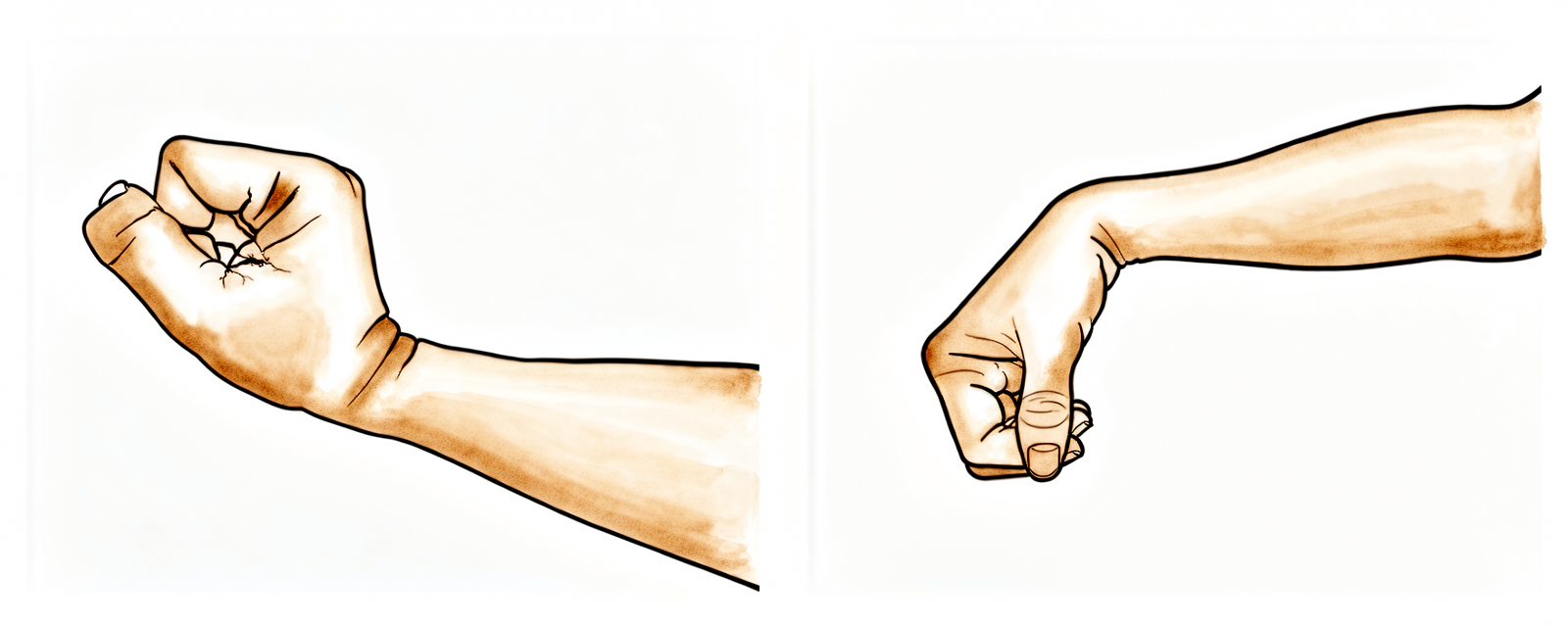
腕关节屈曲/伸展拉伸
将肘部支撑在桌面上(或将手腕悬于桌沿或扶手椅边缘),轻轻前后摆动手腕。待感觉更舒适后,用另一只手握住手掌,将手腕向后推(手指放松,指向天花板)——保持15秒;然后反向进行(手指放松,指向地面)——保持15秒。每个方向重复5次。
10次(每个方向5次,保持15秒),4–5 次/日
Kieran Hirpara 4.0
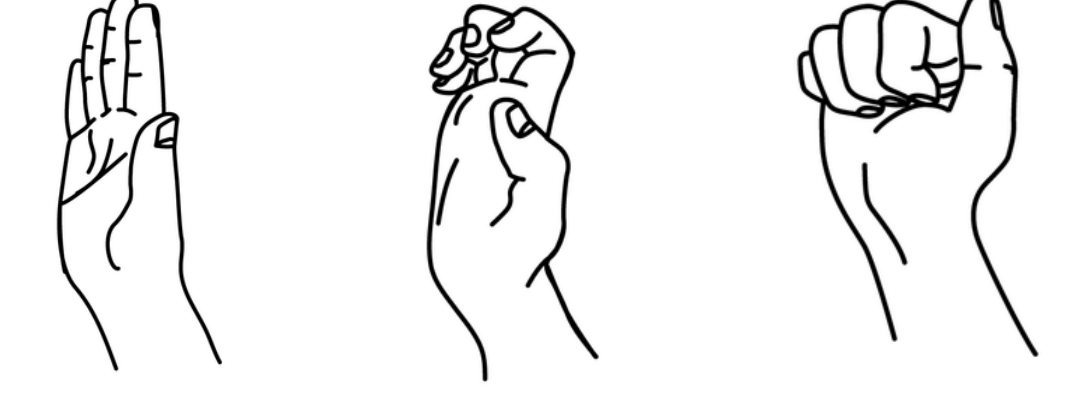
肌腱滑动 — A 系列
将手置于身前,手腕保持伸直,完全伸直所有手指(1)。将指尖弯曲至“钩”状位置,指关节朝上(2)。握紧拳头,拇指置于手指之上(3)。
5–10 次,每天 2–3 次
Kieran Hirpara 4.0
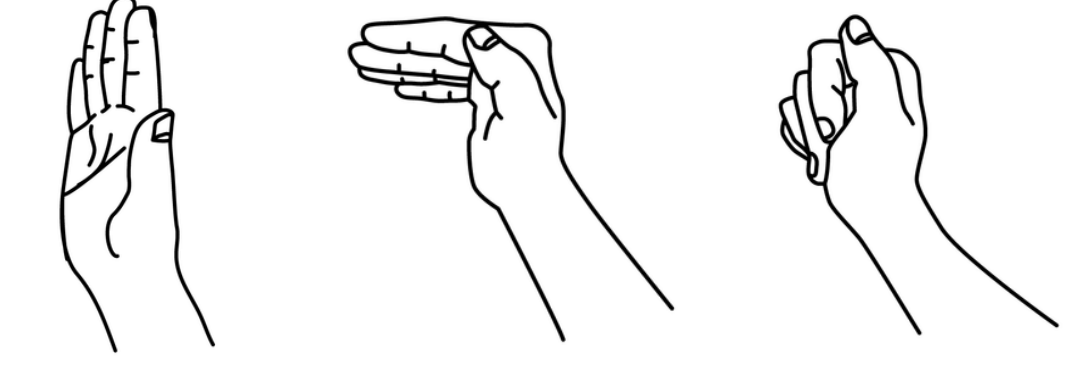
腱滑动——B系列
将手置于身前,手腕保持伸直,完全伸直所有手指(1)。在手指根部关节(掌指关节)处弯曲、保持手指其余部分伸直,使手指呈“桌面”状——确保手腕不向前下垂(2)。在手指中间关节处弯曲,使手指触碰手掌(3)。
5–10 次,每天 2–3 次
Kieran Hirpara 4.0
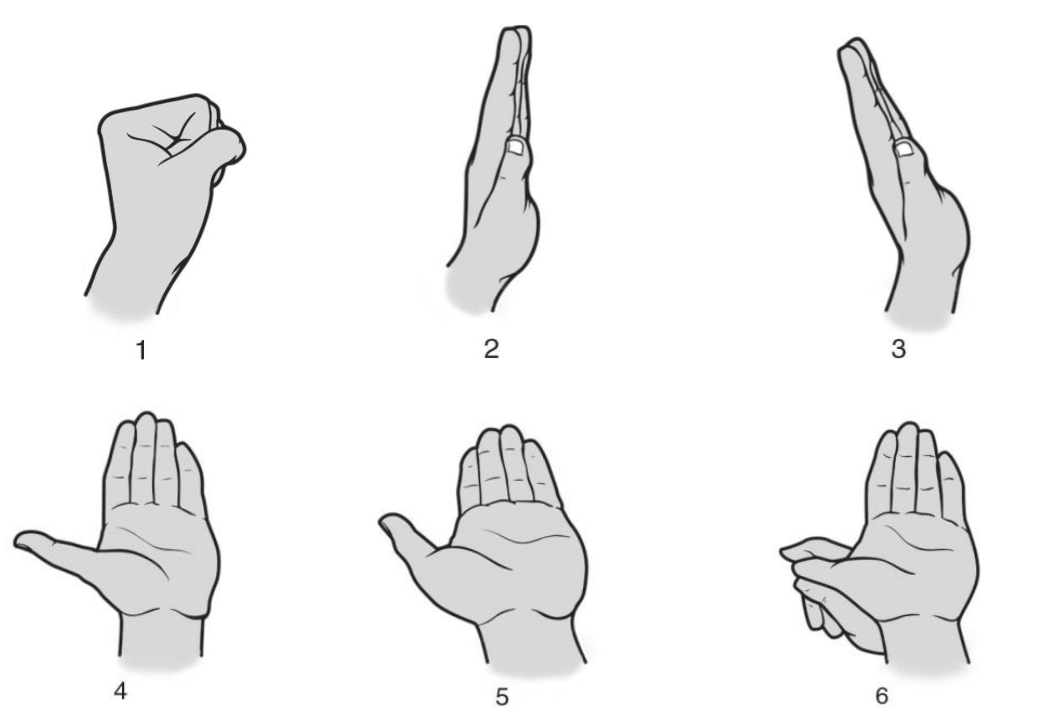
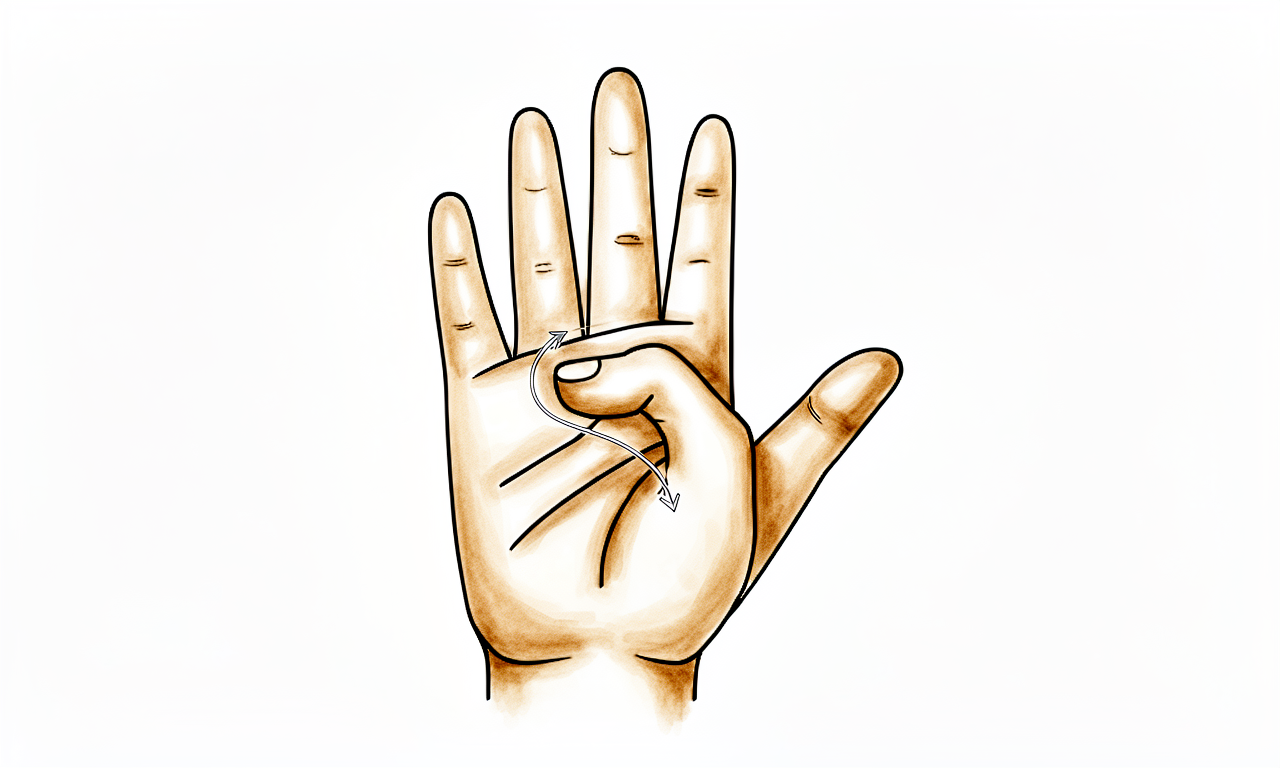
正中神经滑动
将手依次摆出图示的六个姿势,每个姿势保持3–7秒。在第6个姿势时不要对拇指施加过大压力。然后加上神经拉伸:将手臂向前伸直,掌心向上,手腕向后弯曲,使手指指向下方。用另一只手轻轻将手指向后扳,直到感觉前臂掌侧有轻微的牵拉感。保持15秒,重复5次。动作要轻柔:如果刺痛感加重,请减小力度。
每天10–15次,每个姿势保持3–7秒
Kieran Hirpara 4.0
拇指对掌
将拇指横过手掌向小指根部移动,然后将其伸直。
5–10 次,每天 2–3 次,每日
请仅在Hirpara医生和您的手部治疗师的指导下开始下面这些练习,并严格保持在您被允许的活动范围和限制之内。腕部拉伸和两组肌腱滑动练习旨在保持肌腱和已松解的神经自由移动,防止其在愈合的瘢痕组织中粘连;这些练习应在舒适范围内尽早开始。正中神经滑动练习的加入是为了保持神经的滑动而非牵拉固定,拇指对掌练习则用于重建术前常较无力的捏握功能。手掌瘢痕正上方的压痛在数周内属于预期现象。若任何动作导致手指出现尖锐或电击样疼痛,请立即停止。
术后方案
本方案与诊所的一般康复建议配合使用:请参阅 术后疼痛管理、伤口护理 和 手部治疗基础。关于手术本身,请参阅 腕管松解术。
参考文献
[1] Peters S, Page MJ, Coppieters MW, Ross M, Johnston V. Rehabilitation following carpal tunnel release. Cochrane Database of Systematic Reviews. 2016;2:CD004158. https://pubmed.ncbi.nlm.nih.gov/26884379/ [2] American Academy of Orthopaedic Surgeons. Management of Carpal Tunnel Syndrome — Evidence-Based Clinical Practice Guideline. 2024 update. https://www.aaos.org/quality/quality-programs/upper-extremity-programs/carpal-tunnel-syndrome/ [3] Newington L, Stevens M, Warwick D, Adams J, Walker-Bone K. Sickness absence after carpal tunnel release: a systematic review of the literature. Scand J Work Environ Health. 2018;44(6):557–567. https://pmc.ncbi.nlm.nih.gov/articles/PMC6215485/ [4] Gellman H, Kan D, Gee V, Kuschner SH, Botte MJ. Analysis of pinch and grip strength after carpal tunnel release. J Hand Surg Am. 1989;14(5):863–864. https://pubmed.ncbi.nlm.nih.gov/2794407/ [5] Brigham and Women's Hospital Department of Rehabilitation Services. Standard of Care: Carpal Tunnel Release. 2007 (pillar pain natural-history figures after Povlsen & Tegnell, 1996). https://www.brighamandwomens.org/assets/BWH/patients-and-families/rehabilitation-services/pdfs/wrist-carpal-tunnel-release-pt.pdf
Evidence & references
This is the clinical evidence summary written for health professionals. It is technical, and it lists the research this page was built from. You do not need to read it to understand your treatment or to make a decision about it.
Topic scope: post-operative rehabilitation after surgical decompression of the median nerve at the wrist by division of the transverse carpal ligament — open or endoscopic carpal tunnel release. This is a decompression, not a reconstruction: nothing is repaired or tightened, so the rehab is an early-motion pathway built around oedema control, scar/desensitisation work, and tendon + median-nerve gliding rather than months of protected healing.
Defining principle of the rehab here: carpal tunnel release relieves nerve compression and does not create a construct that needs protection. The divided ligament is meant to stay divided — a scar "pseudo-ligament" reconstitutes the carpal arch without re-tethering the nerve. So (unlike a tendon or ligament repair) immediate, unrestricted light use is the default, and the only deliberate restraint is a short window of heavy-load/grip/vibration avoidance while the palm and ligament edges heal. The therapy programme exists to keep the median nerve and flexor tendons gliding through the healing surgical bed so they do not adhere — not to immobilise. The single branch point is whether a concurrent procedure (e.g. flexor tenosynovectomy, revision with a fat-pad flap) was performed, which can extend the protected/oedema phase.
A. PROCEDURE OUTCOMES (open vs endoscopic)
Carpal tunnel release is one of the most reliable operations in upper-limb surgery: the great majority of patients obtain durable symptom relief, and the principal debate is over access (open vs endoscopic), not whether to decompress.
- Both open and endoscopic release give equivalent long-term outcomes. Randomised comparisons and meta-analyses find no meaningful difference in symptom relief, function or patient satisfaction at long-term follow-up between open and single- or dual-portal endoscopic release. Endoscopic release offers a modestly faster early recovery and earlier return to work at the cost of a small increase in transient nerve-related events; by 5 years the two converge [HAND meta-analysis 2022; J Hand Surg 5-year RCT 2009; J Bone Joint Surg RCT 1994]. Strong (RCTs/SR).
- Symptom relief is high and durable. Night symptoms and paraesthesiae typically resolve early; numbness and thenar weakness recover more slowly and may be incomplete where compression was long-standing. Five-year and elderly-cohort series confirm sustained benefit, including in patients over 65 [J Hand Surg 5-yr follow-up; elderly cohorts]. Moderate–strong.
- Division of the transverse carpal ligament alters carpal-tunnel biomechanics (canal volume increases; the flexor tendons shift volarly), which is the anatomical basis for pillar pain and the transient grip-strength dip — both expected, self-limiting consequences of the decompression rather than complications [Clinical Biomechanics 2003]. Mechanistic.
B. REHABILITATION / THERAPY EVIDENCE
The central rehab questions are (1) should the wrist be immobilised afterwards, and (2) does routine formal hand therapy change the outcome. The evidence answers no to routine splinting and no to mandatory protocolised therapy — while supporting a simple, early-motion, glide-based home programme.
- Routine post-operative splinting is NOT recommended. Moderate-quality evidence (AAOS 2024 CPG; supporting systematic reviews) finds wrist immobilisation by sling/orthosis after release does not improve pain, grip or function and may delay recovery. Early active motion is the intended default. Moderate (CPG + SR).
- No single rehab adjunct has strong supporting evidence. The Cochrane review of rehabilitation following carpal tunnel release found only limited, low-certainty evidence for any individual add-on — orthoses, dressings, exercise, cold/ice, multimodal hand therapy, laser, electrotherapy, scar desensitisation or arnica. Recovery is usually straightforward; the implication is to keep the programme simple and individualise it rather than protocolise adjuncts [Peters et al., Cochrane 2016]. Moderate (Cochrane SR — of low-certainty primary evidence).
- Tendon- and nerve-gliding exercises are biologically and clinically rationalised. The rationale is that wrist/digit motion produces longitudinal excursion of the median nerve through the surgical bed, preventing adhesion of nerve to flexor tendons; ultrasound studies confirm measurable nerve excursion during gliding exercises, and comparative-effectiveness work supports tendon/nerve gliding and neural mobilisation as low-risk adjuncts [Am J Phys Med Rehabil 2011; J Hand Therapy 2008 (excursion; neural mobilisation)]. The benefit is modest and the adhesion-prevention purpose is mechanistic/consensus rather than proven by hard outcome trials. Weak–moderate (mechanism strong, outcome modest).
- Supervised therapy is not required for most patients. Outcome series using a standard protocol with a single hand-therapy visit and a home programme report good patient-reported outcomes, supporting selective rather than universal formal therapy. Moderate (cohort).
Recovery trajectory (expected, evidence-anchored)
| Phase | Window | Restraint | Hand use / therapy focus | Strength / load | Notes |
|---|---|---|---|---|---|
| I — Early motion & oedema control | Week 0–1 | None routine (no splint) | Elevate above heart level; immediate active finger/thumb/wrist motion; tendon + median-nerve glides; desensitisation from day 1; compressive dressing/taping for swelling | Light functional use only | Less swelling → freer nerve. Grip is expected to be low |
| II — Wound & ligament healing | Week 1–6 | Heavy-load avoidance | Continue glides; add scar massage once wound healed; heat before / ice after exercises | No lifting, gripping, weight-bearing or vibrating-tool use up to 6 weeks; driving from ~1–2 weeks (once a full fist is achievable) | Pillar tenderness peaks then settles; grip ≈¼ pre-op at 3 wk, ≈¾ by 6 wk |
| III — Return to load & work | Week 6–12+ | Restrictions lifted | Progress gripping, lifting and task-specific loading | Grip back to pre-op by ~3 months, exceeding it by ~6 months; pinch recovers sooner (≈ pre-op by 6 wk) | Non-manual work median ~3 wk; manual work median ~5–6 wk, earlier on modified duties |
(Phase windows mirror the precautions and recovery-curve figures in the patient protocol; they are typical guides, not trial-derived deadlines.)
C. KEY CONTROVERSIES / EVIDENCE QUALITY
- Open vs endoscopic. Equivalent long-term outcomes; endoscopic buys a faster early recovery for a small transient-complication trade-off. Choice is largely surgeon/patient preference and cost. Strong evidence of equivalence.
- To splint or not. Older practice favoured post-operative wrist splinting; current moderate-quality evidence and the AAOS 2024 CPG advise against routine immobilisation. This page's no-splint, early-motion default reflects the current guideline. Moderate.
- Does formal therapy change outcomes? No rehab adjunct has high-certainty benefit (Cochrane). Gliding exercises rest on a sound mechanistic (adhesion-prevention, nerve-excursion) rationale but modest outcome data. The defensible position is a simple home programme + selective therapy, not universal supervised rehab. Weak–moderate.
- Pillar pain & grip dip are expected, not failure. Both follow predictably from dividing the transverse carpal ligament and resolve on a well-described curve; mislabelling them as complications drives unnecessary anxiety. Strong natural-history data.
- Recurrence/revision is uncommon but real; persistent symptoms warrant assessment for incomplete release, the wrong diagnosis, or a second compression site rather than more of the same therapy [JAAOS recalcitrant-CTS review; revision-rate series]. Moderate.
D. EVIDENCE STRENGTH FLAGS (summary)
- STRONG (RCT / SR): equivalence of open vs endoscopic release at long-term follow-up (faster early recovery with endoscopic); high, durable symptom relief from decompression.
- MODERATE: AAOS 2024 CPG against routine post-operative splinting; Cochrane review (limited, low-certainty evidence for any single rehab adjunct → keep it simple); biomechanical basis of pillar pain / grip dip; uncommon but defined revision rate.
- WEAK / CONSENSUS: the specific early-motion, glide-based therapy programme (mechanistically rationalised, outcome benefit modest; surgeon/hand-therapist protocols); exact phase timings (typical, not trial-derived).
CITATIONS
RAG corpus (180,000+ Orthopaedic articles)
- Open versus single- or dual-portal endoscopic carpal tunnel release: a meta-analysis of randomized controlled trials. HAND. 2022. DOI: 10.1177/15589447221075665
- Open compared with 2-portal endoscopic carpal tunnel release: a 5-year follow-up of a randomized controlled trial. J Hand Surg Am. 2009. DOI: 10.1016/j.jhsa.2008.10.026
- Carpal tunnel release: a randomized comparison of three surgical methods. J Hand Surg (Eur Vol). 2013. DOI: 10.1177/1753193412475247
- Carpal tunnel release. A prospective, randomised assessment of open and endoscopic methods. J Bone Joint Surg. 1994. DOI: 10.2106/00004623-199408000-00020
- Five-year follow-up of carpal tunnel release in patients over age 65. J Hand Surg Am. 2010. DOI: 10.1016/j.jhsa.2009.10.020
- Carpal tunnel syndrome (clinical review). BMJ. 2014. DOI: 10.1136/bmj.g6437
- Biomechanical and anatomical consequences of carpal tunnel release. Clin Biomech. 2003. DOI: 10.1016/s0268-0033(03)00052-4
- The comparative effectiveness of tendon and nerve gliding exercises in patients with carpal tunnel syndrome. Am J Phys Med Rehabil. 2011. DOI: 10.1097/phm.0b013e318214eaaf
- The effects of neural mobilization in addition to standard care in persons with carpal tunnel syndrome. J Hand Ther. 2008. DOI: 10.1197/j.jht.2007.12.001
- The excursion of the median nerve during nerve gliding exercise: an observation with high-resolution ultrasonography. J Hand Ther. 2008. DOI: 10.1197/j.jht.2007.11.001
- Effective self-stretching of carpal ligament for the treatment of carpal tunnel syndrome: a double-blinded randomized controlled study. J Hand Ther. 2020. DOI: 10.1016/j.jht.2019.12.002
- Use of conservative therapy before and after surgery for carpal tunnel syndrome. BMC Musculoskelet Disord. 2021. DOI: 10.1186/s12891-021-04378-3
- Power grip, pinch grip, manual muscle testing or thenar atrophy — which should be assessed as a motor outcome after carpal tunnel decompression? A systematic review. BMC Musculoskelet Disord. 2007. DOI: 10.1186/1471-2474-8-114
- Management of recalcitrant carpal tunnel syndrome. J Am Acad Orthop Surg. 2019. DOI: 10.5435/jaaos-d-18-00004
- The rate and timing of revision carpal tunnel release with long-term follow-up. J Hand Surg Am. 2026. DOI: 10.1016/j.jhsa.2026.02.006
- Does aging matter? The efficacy of carpal tunnel release in the elderly. Arch Plast Surg. 2015. DOI: 10.5999/aps.2015.42.3.278
Carpal tunnel rehabilitation literature (URLs)
- Peters S, et al. Rehabilitation following carpal tunnel release. Cochrane Database Syst Rev. 2016;2:CD004158. https://www.cochranelibrary.com/cdsr/doi/10.1002/14651858.CD004158.pub3/full
- O'Connor D, et al. Rehabilitation treatments following carpal tunnel surgery (original Cochrane review). 2003. https://www.cochranelibrary.com/cdsr/doi/10.1002/14651858.CD004158/full
- American Academy of Orthopaedic Surgeons. Management of Carpal Tunnel Syndrome — Evidence-Based Clinical Practice Guideline (2024 update; moderate evidence against routine post-operative immobilisation). https://www.aaos.org/quality/quality-programs/upper-extremity-programs/carpal-tunnel-syndrome/
- Wrist immobilization after surgical decompression of the median nerve in carpal tunnel syndrome: a systematic review. PMC. 2024. https://www.ncbi.nlm.nih.gov/pmc/articles/PMC11374399/
- Sensory nerve conduction velocity predicts improvement of hand function with nerve gliding exercise following carpal tunnel release surgery. PMC. https://www.ncbi.nlm.nih.gov/pmc/articles/PMC8470096/
- Patient-reported outcomes after open carpal tunnel release using a standard protocol with 1 hand therapy visit. J Hand Ther / ScienceDirect. https://www.sciencedirect.com/science/article/abs/pii/S089411301630031X
Published rehab protocols (patient-guidance — basis for the early-motion phase structure)
- Bakker — Carpal Tunnel Release Post-op Protocol (Twin Cities Orthopedics). https://tcomn.com/wp-content/uploads/2017/11/Carpal-tunnel-release-protocol.pdf
- University of Virginia — Carpal Tunnel Release Open Protocol and Home Exercise Program. https://med.virginia.edu/orthopaedic-surgery/wp-content/uploads/sites/242/2015/11/copy_of_CTROPENProtocolandHEP.pdf
- Brigham and Women's Hospital, Department of Rehabilitation Services. Standard of Care: Carpal Tunnel Release (pillar-pain natural history after Povlsen & Tegnell 1996; grip-recovery after Gellman 1989). https://www.brighamandwomens.org/assets/BWH/patients-and-families/rehabilitation-services/pdfs/wrist-carpal-tunnel-release-pt.pdf





