

综合关节镜管理(CAM) 资料
本方案涵盖在 Mater Private Hospital Rockhampton 由 Kieran Hirpara 医生进行综合关节镜管理(CAM)手术后的康复,包括住院期间以及术后数周和数月内的情况。请在首次物理治疗就诊时携带此页面或其 PDF 文件,以确保您的康复过程协调一致。您的物理治疗师将根据您的肩部活动情况以及手术时具体实施的操作,通过以下阶段为您个体化地推进康复进程。
如果您在术后对伤口有任何疑虑,请联系诊所。通常,拍摄伤口照片并通过电子邮件发送以供审阅会很有帮助。
预期情况
CAM手术是一种针对磨损、关节炎性肩关节的微创(关节镜)手术。它并非替换关节,而是旨在清理并松解关节,使其活动更顺畅、疼痛更少:外科医生会磨平粗糙的软骨,移除松散的碎片和骨刺,松解紧绷的关节囊以使肩关节能够再次旋转,并松解紧贴关节下方走行的神经(腋神经)。目标是为您争取数年更舒适、活动度更好的肩关节状态,从而推迟或避免关节置换手术。
这种手术组合决定了您的康复方式。由于外科医生已松解了紧绷、僵硬的肩关节并努力恢复您的旋转功能,术后最重要的任务是保持这种活动度:如果此类肩关节保持静止,它会再次变得僵硬。但由于外科医生也处理了磨损的关节面,早期的活动需以有控制、分阶段的方式进行:您需要早期且频繁地活动,但在进行拉伸时应循序渐进,而非强行用力,以便关节稳定而非出现炎症反应。因此,康复过程以活动为主导,类似于冻结肩松解术,但更为温和且渐进。
您的练习包含三种类型的运动,您的医疗团队将标记哪些适用于您:
- 被动运动是指肩关节保持完全放松,由您的另一只手臂、棍棒或滑轮完成动作。
- 主动辅助运动是指您自己移动手臂,同时借助另一只手臂或物体的帮助。
- 主动运动是指您依靠自身力量移动手臂,无需任何帮助。
关于您的吊带
在最初的一到两周内,您通常会使用吊带以获得舒适感。其作用是让手臂得到休息,并在关节稳定期间保护其免受撞击;它并不用于固定修复部位。关键信息与肌腱或韧带修复相反:吊带仅用于提供舒适感,且肩部不得因制动而僵硬。 从第一天起,您就应取出吊带进行锻炼,在舒适允许的范围内使用手臂进行轻度日常活动,并在早期疼痛缓解后尽可能长时间地取下吊带。
如果外科医生在手术过程中重新固定了您的肱二头肌肌腱(肱二头肌肌腱固定术),您的医疗团队会要求您在愈合期间避免提举重物及肘部用力弯曲约六周,并会告知您此要求是否适用于您。
关键点
- 保持活动。 从一开始就使用手臂进行轻度日常活动,如洗漱、穿衣和进食。温和且规律的活动是防止肩部再次僵硬的关键。
- 锻炼旋转。 手臂向外旋转(外旋)是此手术恢复的主要动作之一,因此要持续练习。恢复并维持这一动作是一个关键目标。
- 循序渐进地进行拉伸,切勿强行。 拉伸至感到轻微牵拉感即可,切勿造成剧烈疼痛。由于关节面已接受手术处理,强行进行剧烈且疼痛的拉伸可能会引起肩部炎症并导致病情倒退。少量多次优于长时间强力练习。
- 控制疼痛以便活动。 在锻炼和物理治疗预约之前服用止痛药。许多人发现拉伸前热敷、拉伸后冷敷很有帮助。
- 定期参加物理治疗。 目标是在前六周内保持定期就诊。请在首次就诊时携带此页面。
住院期间——您的初始练习
Kieran Hirpara 4.0
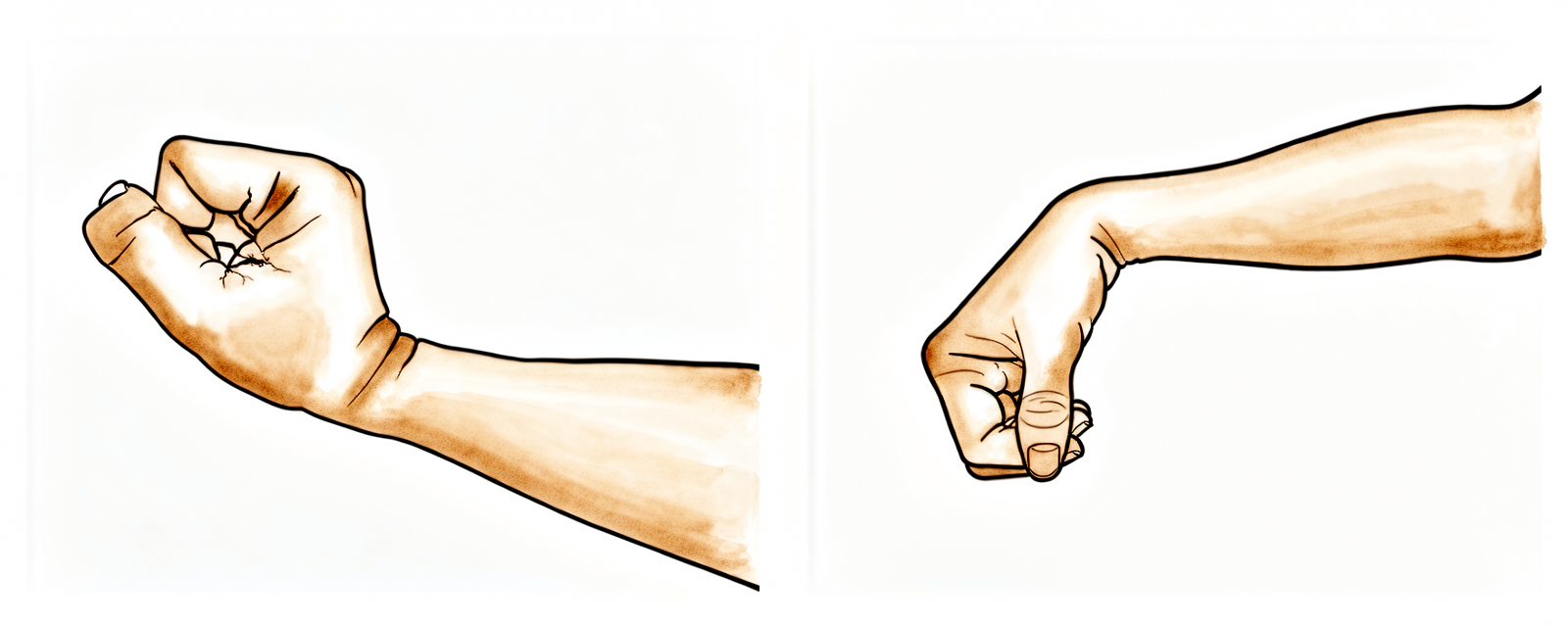
腕部运动
通过向前、向后及左右弯曲手腕来保持手部活动。
10次,每日3次
Kieran Hirpara 4.0
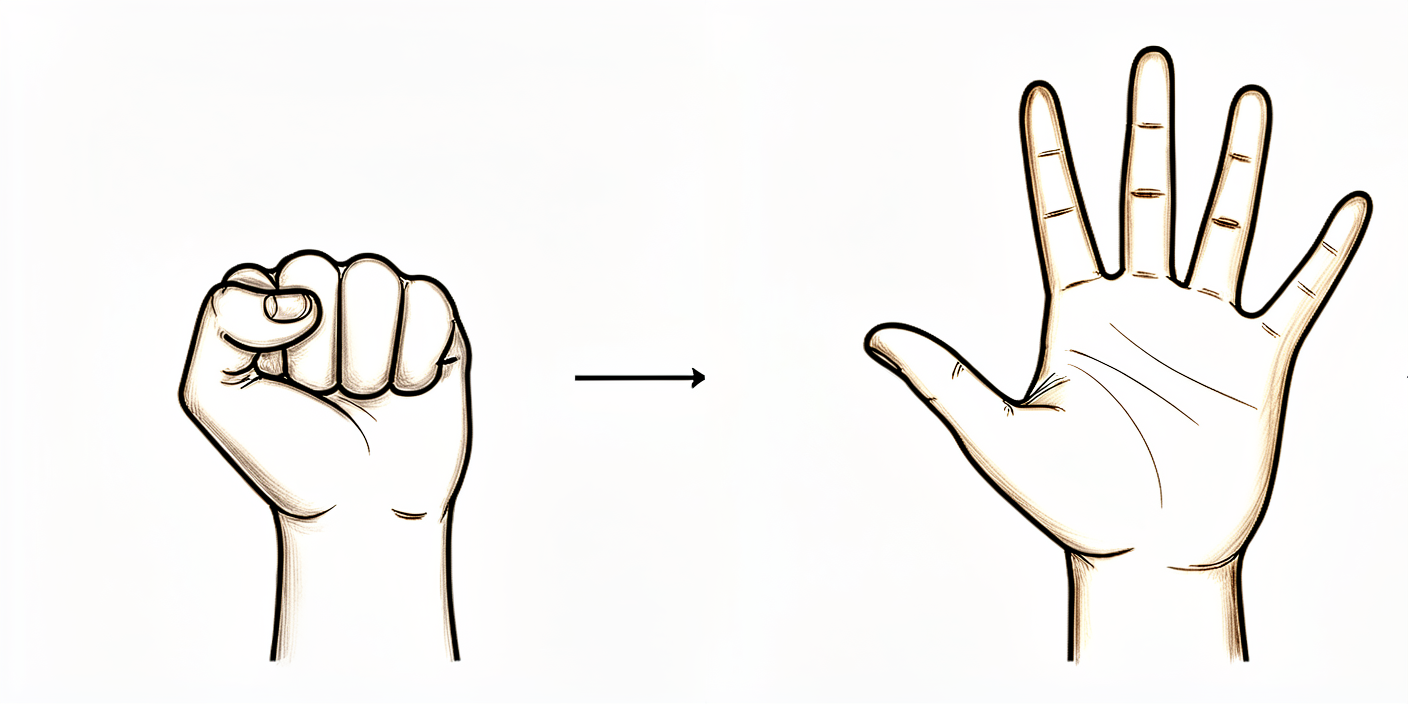
张开和握紧手
通过张开和闭合手部及手指,或挤压一个软球,保持手和手指的活动。
10次,每日3次
Kieran Hirpara 4.0
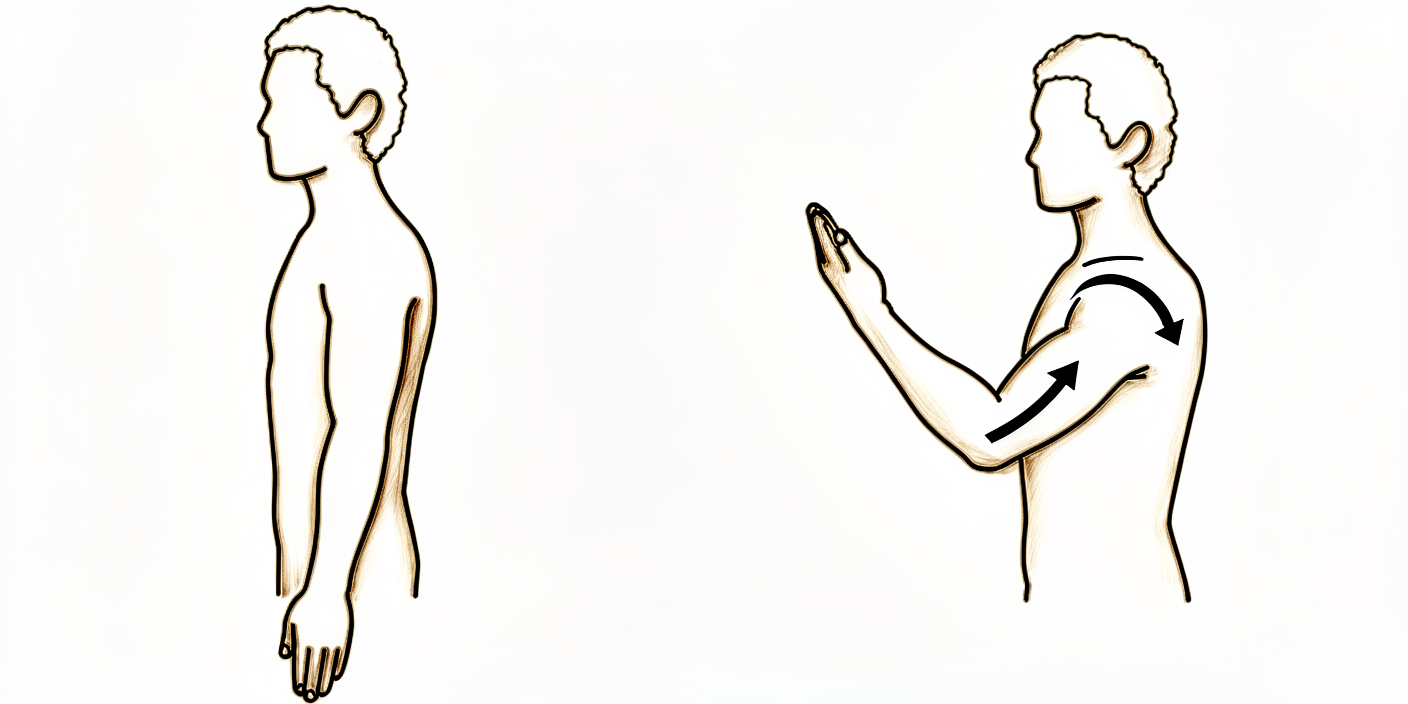
肘部弯曲
弯曲并伸直您的肘部。如果手术中重新接合了您的肱二头肌腱,医疗团队会告诉您轻柔地进行此动作,并在最初几周内避免用该手臂提重物。
10次,每日3次
Kieran Hirpara 4.0
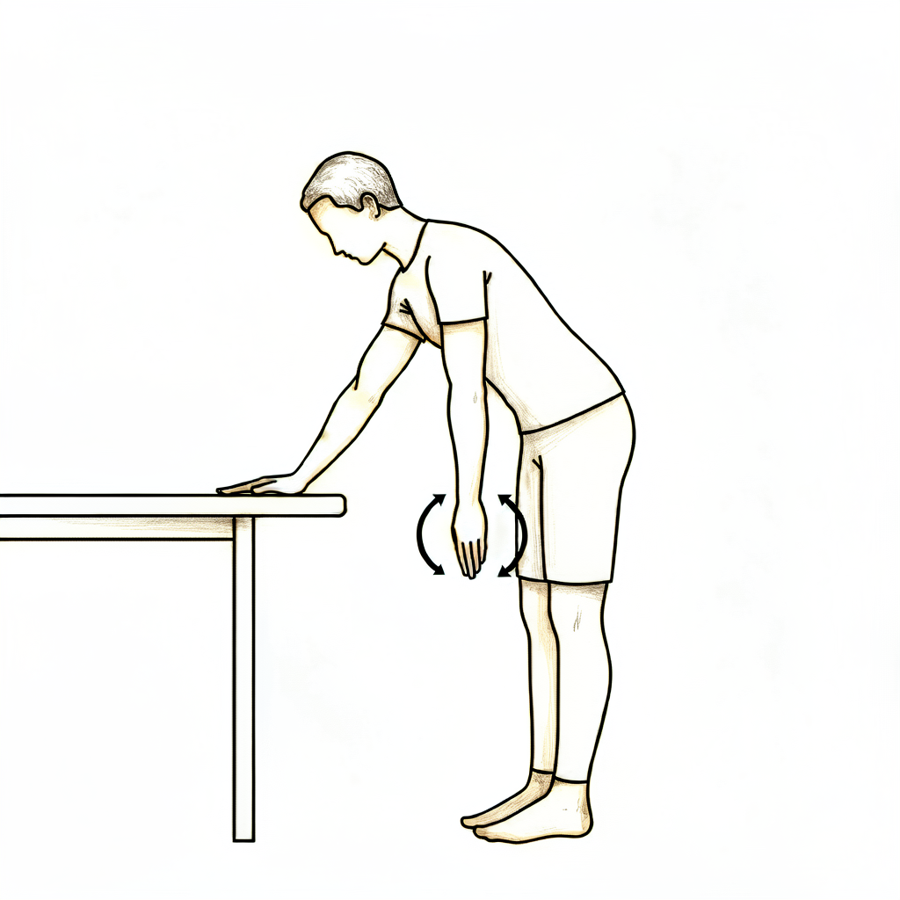
钟摆
这是一种放松的被动练习。身体前倾,让手臂自然下垂并保持放松。利用身体带动手臂轻轻做小范围的圆周摆动,顺时针和逆时针方向,以及前后摆动。让手臂的重量发挥作用,肩部肌肉保持放松。
每个方向约30秒,每日3次
Kieran Hirpara 4.0
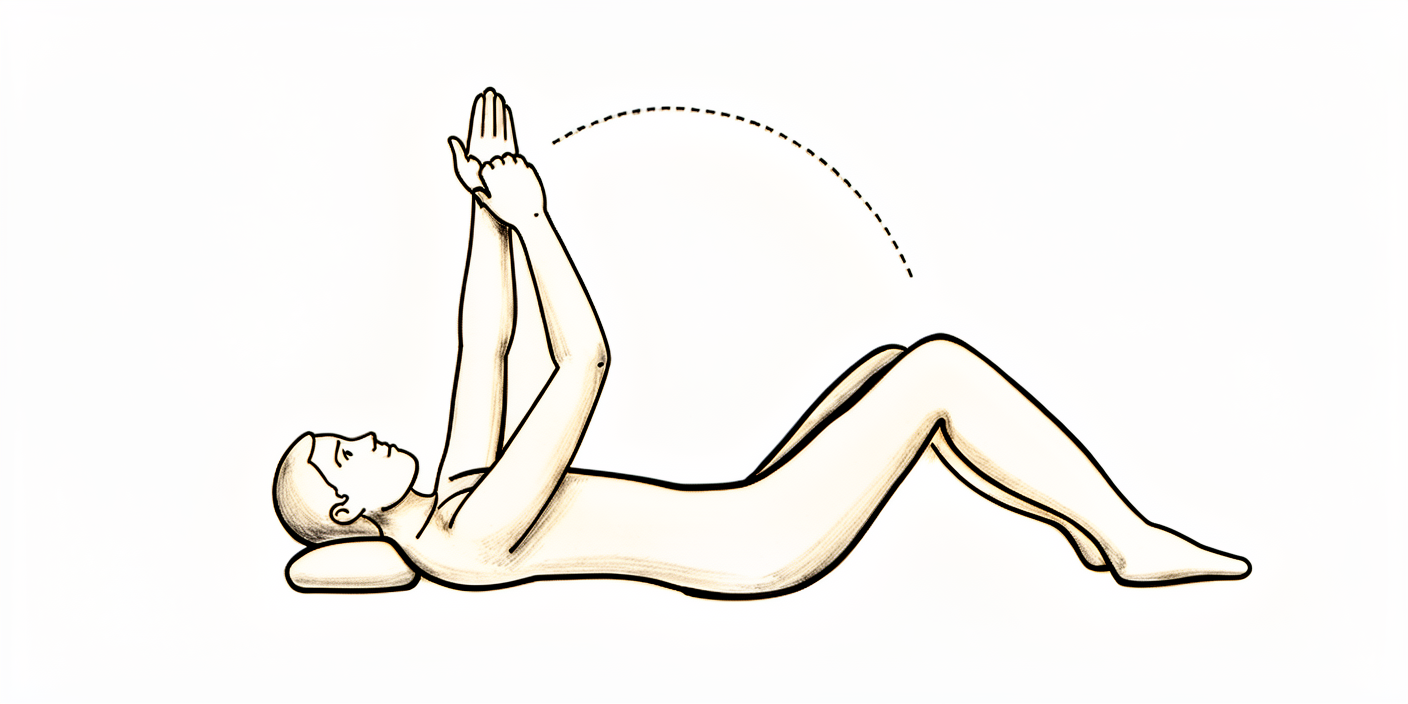
辅助前屈(仰卧位)
如果您愿意,可以仰卧,双手握住一根棍子(或卷起的毛巾)。用健侧手臂引导手术侧手臂向上越过头顶,直至舒适的最大范围,然后缓慢放下。
10次,每日3次
Kieran Hirpara 4.0
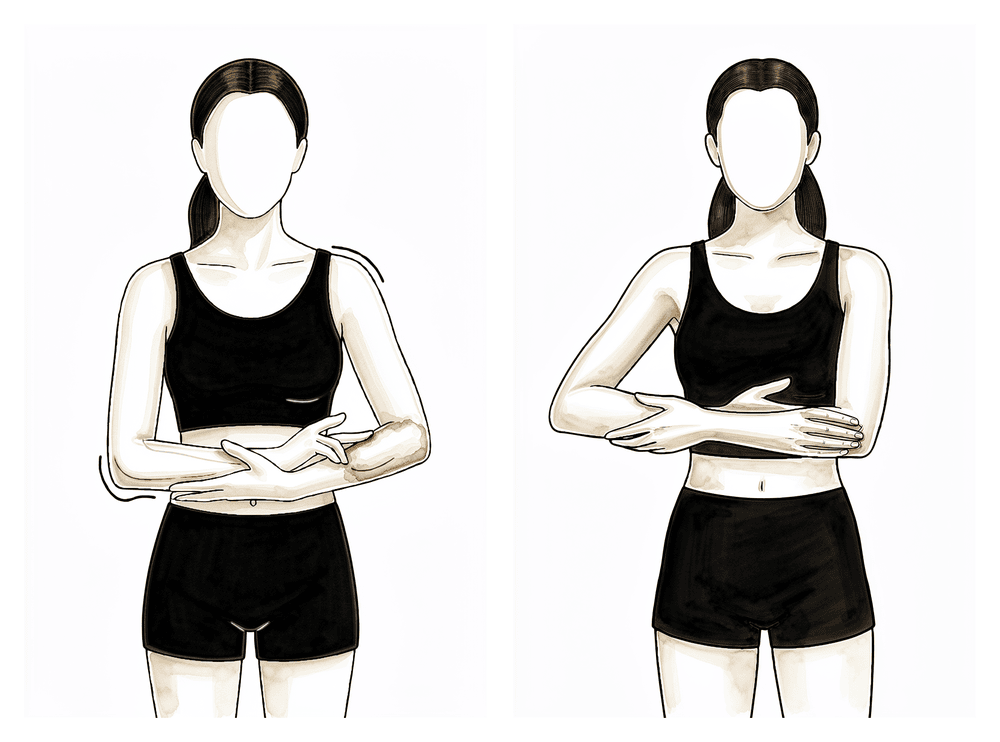
辅助外展(摇篮位)
用另一只手臂托住手术侧手臂,在肘部下方提供支撑,像哄婴儿一样轻轻将其向外侧摇出再摇回。每次都将其向侧方伸展至舒适的拉伸程度。
10次,每日3次
Kieran Hirpara 4.0
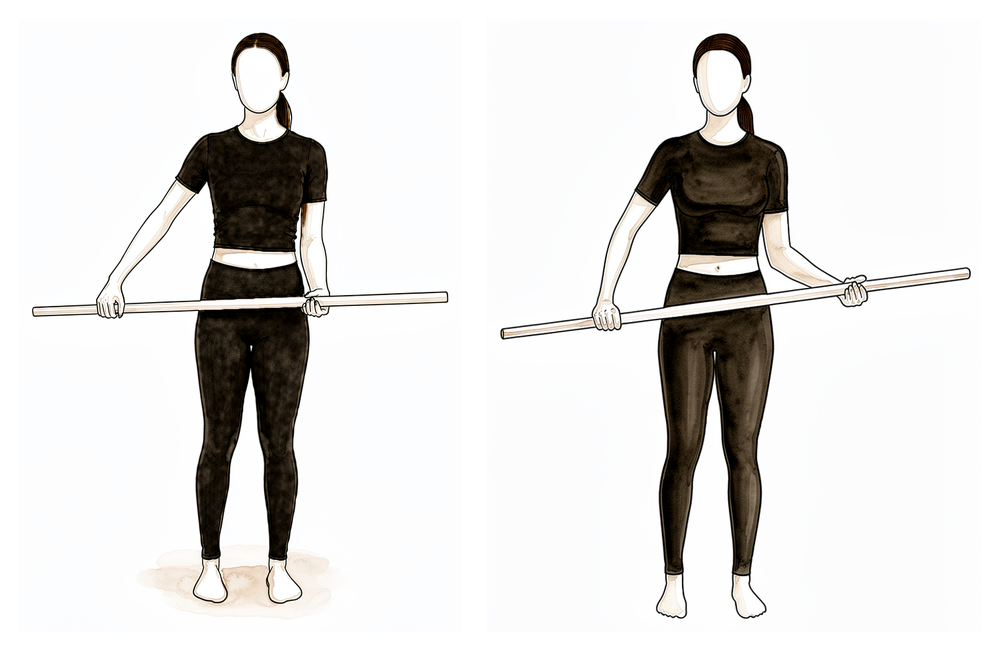
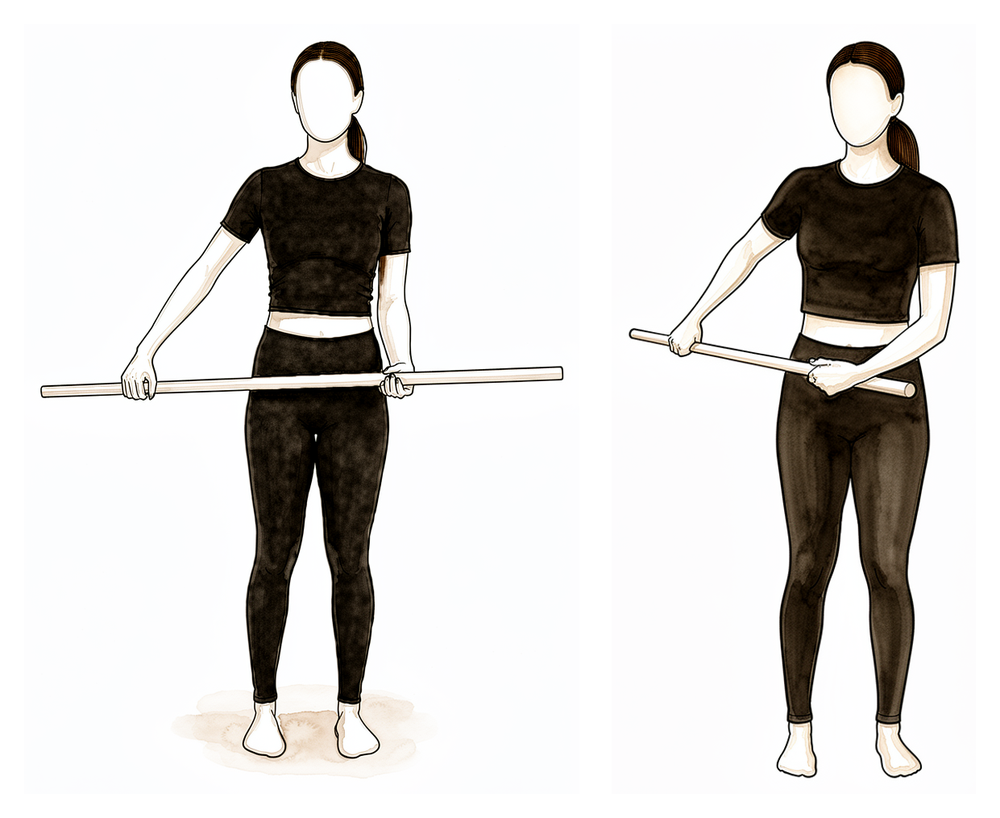
借助棍棒辅助外旋
仰卧,肘部贴紧体侧并屈曲至90度。双手握住一根棍棒,用健侧手臂将术侧手臂的手向外旋转,带动肩部外旋。外旋是此手术后需要恢复的重要动作,因此请持续轻柔地练习,并随着周数增加逐渐增加活动范围。
10次,每日3次
Kieran Hirpara 4.0
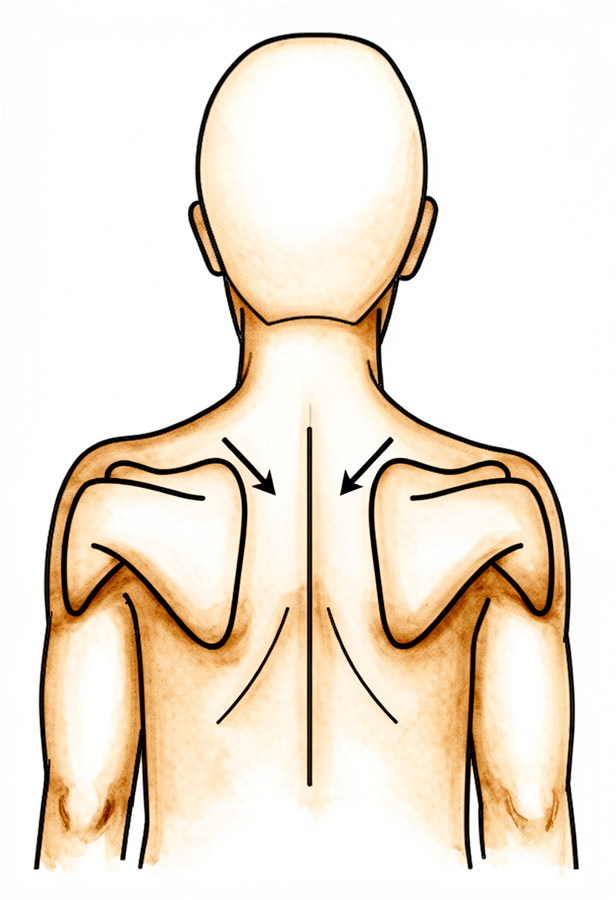
下斜方肌激活
将肩胛骨向下并向内挤压,保持该姿势,然后放松。
保持5秒,重复5次;每日重复3次
物理治疗师将在医院内为您进行指导,并在您出院前开始指导您进行以下练习。这些练习旨在保持手部、肘部和肩部的活动,并立即开始恢复肩关节的活动范围。请提前服用止痛药,以便能够舒适地活动。按照医疗团队的指示进行这些练习,并在回家后继续坚持。
您的门诊康复
CAM 手术后的康复以运动为主导:由于肩关节曾僵硬且已得到松解,早期的重点在于保持并重建关节活动度,防止其再次僵硬,但需循序渐进,以尊重手术中处理过的关节面。物理治疗应尽早开始,保持规律性,并持续数月。以下各阶段遵循该手术已发表的康复方案模式。周数范围仅为典型参考,并非固定标准:您的物理治疗师将根据肩关节的活动情况,而非日历时间,来推进您的康复进程。门诊复查通常安排在术后约 2 周、6 周以及 3 至 4 个月时。
康复历程概览:
- 第一阶段 — 早期运动:大致为术后最初两周
- 第二阶段 — 恢复活动度:第 2 周至第 6 周
- 第三阶段 — 强化训练:第 6 周至第 12 周
- 第四阶段 — 恢复完全活动:第 12 周起(约三个月)
大多数患者在术后一至三个月内会注意到疼痛显著缓解及活动更加轻松,且改善通常会在六至十二个月内持续增强。
第一阶段 — 早期活动(第 0–2 周)
最初两周的目标是让肩部开始活动,并维持手术中已恢复的活动范围,同时避免过度刺激关节。您需在家中每天多次继续执行住院期间教授的练习:被动及主动辅助运动、钟摆运动,以及向各个方向的轻柔拉伸,包括手臂外旋。吊带仅用于提供舒适感,在进行练习和轻度日常活动时请取下。良好的疼痛控制是实现活动的前提,因此请在练习前按时服用止痛药,若有帮助,可在练习前热敷、练习后冰敷。每个拉伸动作应循序渐进至产生轻微牵拉感,而非锐痛。
满足以下条件即可进入下一阶段…… 您能自信地每天多次执行家庭康复计划,疼痛正在缓解,且肩部可在早期活动范围内自由活动。
第二阶段 — 恢复活动范围(第 2–6 周)
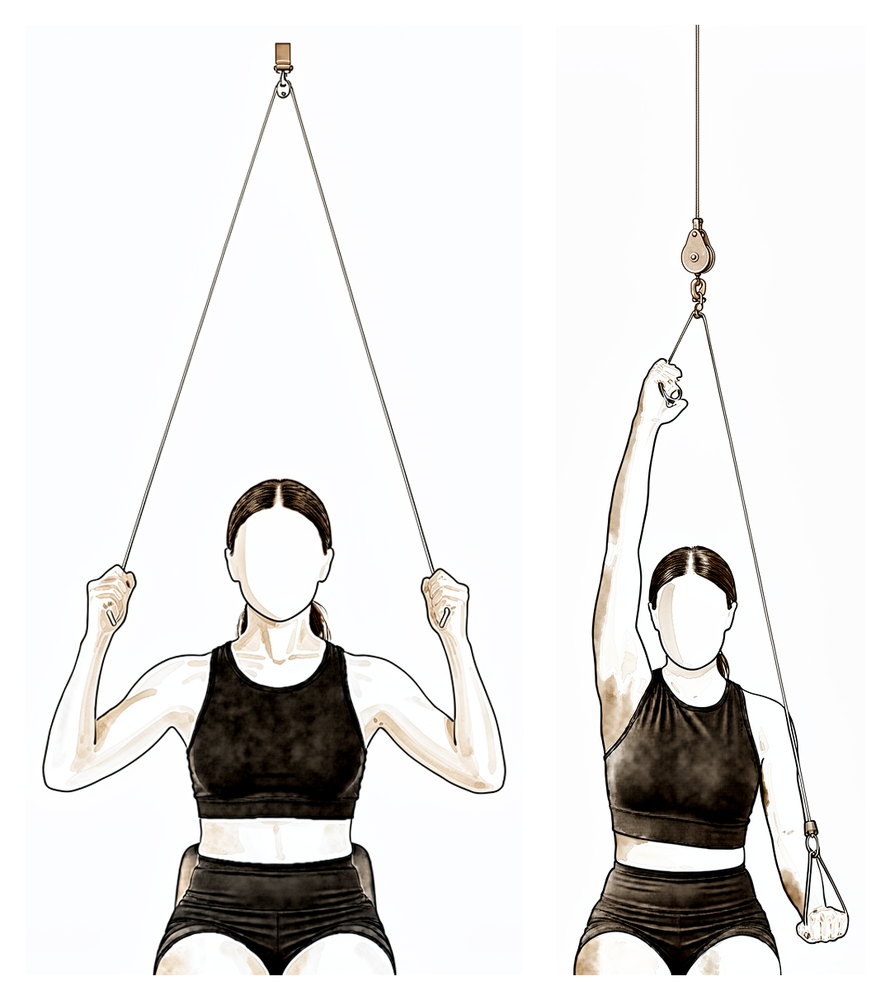
Kieran Hirpara 4.0
门顶滑轮
坐在门后滑轮装置下方,双手各握一个把手。用健侧手臂向下拉,将手术侧手臂尽可能舒适地举过头顶,然后缓慢放下。动作应达到轻柔的拉伸感,而非剧烈疼痛。
10次,每日3至4次
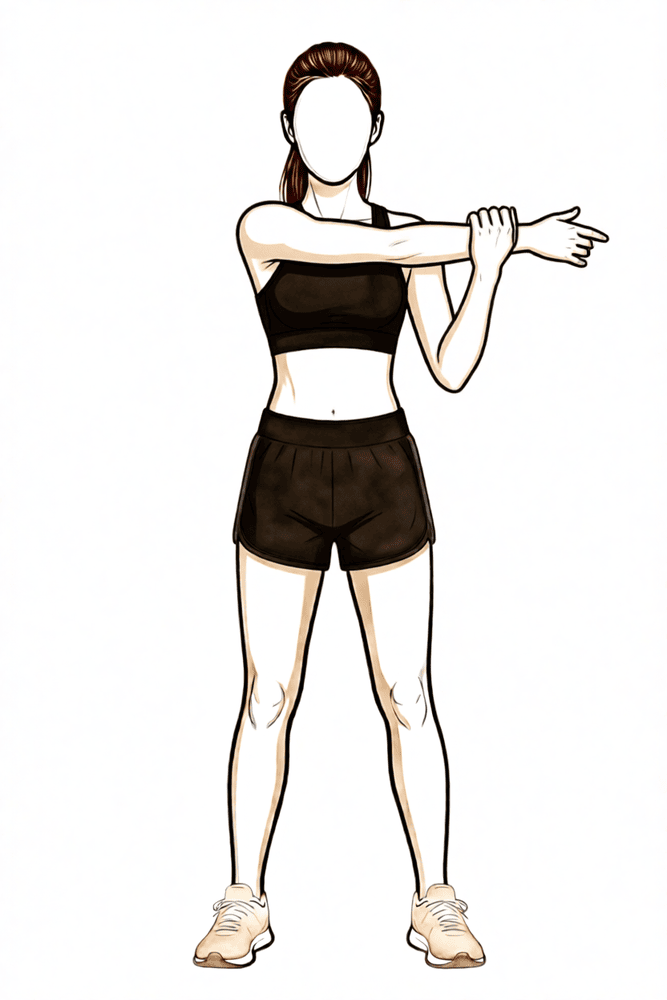
Kieran Hirpara 4.0
跨体拉伸
用健侧手将患侧手臂横过胸前,直至肩后部感到轻微牵拉感,然后放松。
10次,每日3至4次
Kieran Hirpara 4.0
棍棒外旋
继续从医院开始的棍棒辅助外旋练习,随着活动范围逐渐恢复,稍微增加幅度。将肘部置于体侧,将前臂向外旋转至舒适的最大范围,然后复位。
10次,每日3至4次
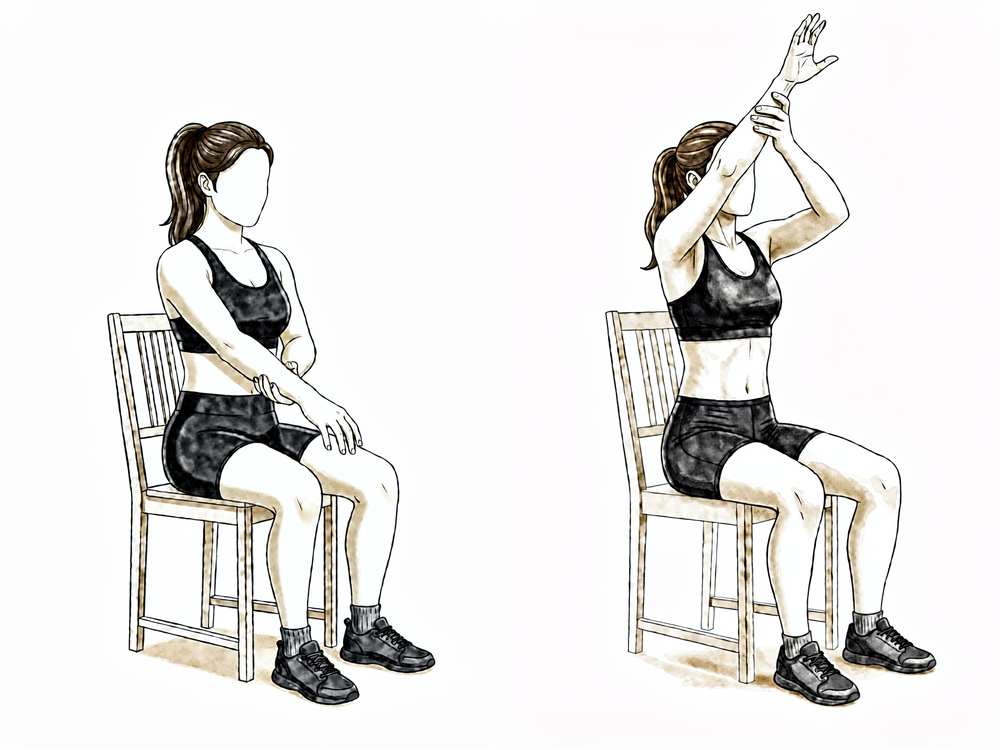
Kieran Hirpara 4.0
辅助前举(坐位)
坐直并略微前倾,用健侧手托住患侧前臂,借助健侧手的力量将患侧手臂向前上方抬起至舒适的最大范围,然后缓慢放下。让健侧手臂承担主要动作,使患侧肩部保持放松。
在您的物理治疗师指导下
此阶段继续维持常规物理治疗和家庭锻炼计划,随着肩关节允许,进一步拓展活动范围。您的锻炼将从辅助运动逐步过渡到在所有方向上主动活动手臂;物理治疗师可能会增加手法关节松动术;您需持续进行外旋练习。拉伸训练保持分级进行,力度比第一周稍强,但仍以渐进适应为主,避免强行拉伸。在此阶段,大多数人已脱离悬吊带,并能正常活动手臂以完成轻度日常活动。
满足以下条件即可进入下一阶段…… 您的活动范围持续改善,肩部以下高度的活动舒适无痛,且疼痛已稳定至可开始进行轻柔抗阻训练的程度。
第三阶段 — 强化训练(第 6–12 周)
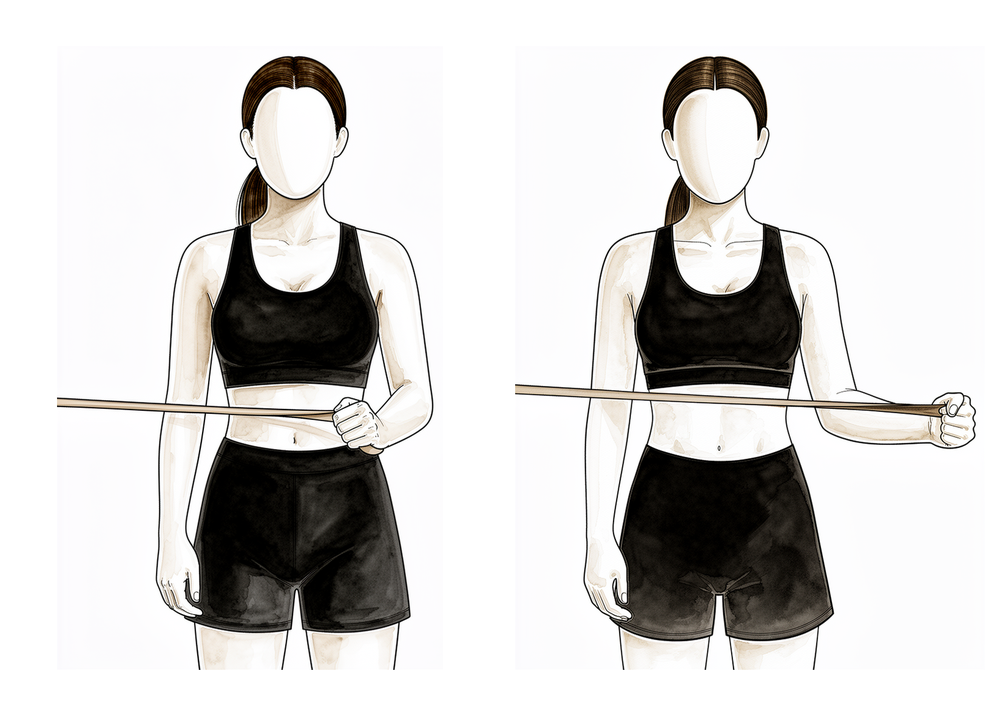
Kieran Hirpara 4.0
弹力带外旋
将肘部紧贴体侧并屈曲至90度,手握一根固定在腰部高度的橡皮筋。保持肘部紧贴体侧,对抗橡皮筋阻力将前臂向外旋转,然后缓慢复位。
每周5天,每组10至15次,共2至3组
Kieran Hirpara 4.0
弹力带内旋
将肘部紧贴身体一侧,握住固定在一侧的弹力带,前臂向内横跨身体方向对抗弹力带进行旋转,然后缓慢复位。
每周5天,每组10至15次,共2至3组
Kieran Hirpara 4.0
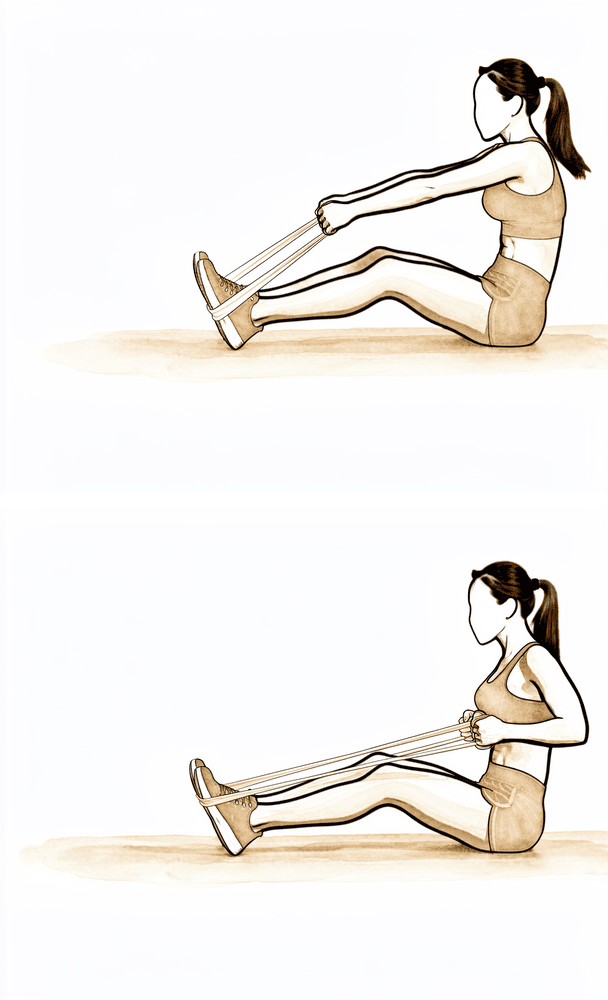
低位划船
手握一条固定在身前腰部高度的弹力带。保持手臂相对伸直,将其向后下方拉向髋部,同时收紧肩胛骨使其向下向后移动,然后缓慢还原。
每周5天,每组10至15次,共2至3组
Kieran Hirpara 4.0
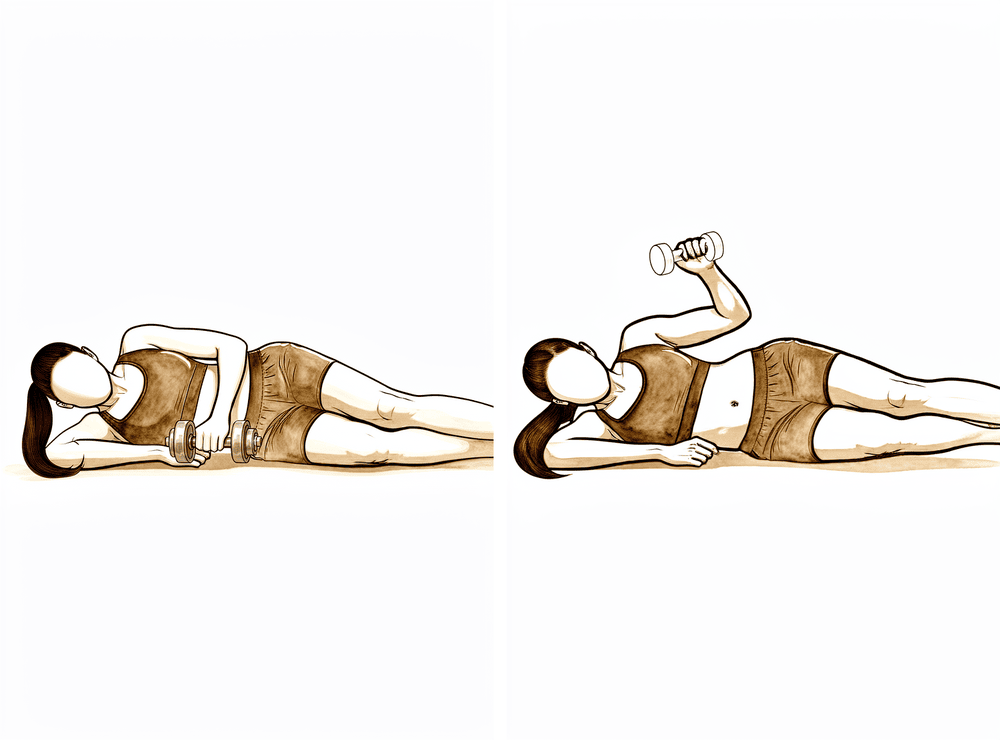
侧卧位外旋(轻重量)
健侧在下侧卧,手术侧肘关节屈曲90度并贴紧体侧,手持轻重量(约0.5至1.5公斤)。将前臂向上旋转,然后缓慢放下:缓慢下放是关键部分。保持动作在肩部高度以下。
2至3组,每组10至15次,低负荷
随着活动范围改善,重点转向重建肌力。继续轻柔拉伸,以免丧失已获得的关节活动度。阻力训练约在六周时开始,强度较轻,使用弹力带和轻重量器械锻炼肩袖及肩胛骨肌肉,采用低负荷、高重复次数。日常活动应基本恢复正常,较轻的休闲活动通常在此阶段恢复,具体以物理治疗师的指导为准。
满足以下条件即可进入下一阶段…… 在所有方向上均能舒适地实现完全或接近完全的活动度,且进行强化训练时未出现疼痛加剧。
第四阶段 — 恢复完全活动(第12周起)
最后阶段,从大约三个月开始,是逐步恢复较重的体力劳动、过头动作和体育运动,并进行更高级的强化训练。肩关节在此之后仍会持续改善:大多数人会在六到十二个月内继续获得舒适度和信心。进展仍以您的感受为指导:如果僵硬或疼痛开始加剧,请放缓进度,恢复活动范围并稳定关节,而不是强行推进。
恢复活动
大多数人会在最初几周内,待其感到舒适且不再佩戴悬吊带后,重返办公室工作并进行轻度日常活动。较重、体力要求更高的工作以及过头顶的运动将在随后的数周至数月内逐步恢复,通常从术后约三个月开始,随着肌力的恢复而进行。任何肩部手术后的驾驶均遵循本诊所的标准政策,而非本协议中的固定时间节点:请参阅 上肢手术后的驾驶,并在复诊时与您的外科医生确认。
您的锻炼
这些是您的手册中的锻炼项目。请按照Hirpara医生和您的物理治疗师的指导开始进行。早期锻炼——手腕活动、手部开合、肘部屈伸和钟摆运动——旨在让手臂其余部分保持活动,同时让肩部稳定下来。辅助拉伸(仰卧屈曲、摇篮式外展、棍棒外旋)可在不增加关节负荷的情况下恢复活动范围。一旦活动变得舒适,稍后会加入弹力带、低位划船和侧卧训练。首先增加活动范围,其次再增强力量。停止任何引起锐痛而非拉伸感的动作。
您的术后方案
上述门诊阶段改编自已发表的CAM手术康复方案,恢复里程碑亦源自相同文献。周数范围仅为典型参考而非固定标准,您的持续康复将由物理治疗师根据肩部恢复情况及手术具体操作内容,与诊所协作进行个体化指导。本页面与诊所的通用恢复建议相辅相成:请参阅术后疼痛管理和伤口护理。关于手术本身及其治疗的疾病,请参阅综合关节镜管理和肩关节炎。
Evidence & references
This is the clinical evidence summary written for health professionals. It is technical, and it lists the research this page was built from. You do not need to read it to understand your treatment or to make a decision about it.
Topic scope: Post-operative rehabilitation after the Comprehensive Arthroscopic Management (CAM) procedure — a joint-preserving arthroscopic treatment for advanced glenohumeral osteoarthritis in young, active patients who wish to avoid or defer arthroplasty.
Defining principle of CAM rehab (a hybrid): CAM is not a repair, so — like a capsular release for frozen shoulder — there is no healing construct to protect and the priority is to keep the motion that was restored at surgery, especially external rotation freed by the capsular release and axillary nerve neurolysis. BUT, unlike a pure capsular release, CAM also resurfaces and reshapes the articular surfaces themselves (chondroplasty, microfracture, humeral osteoplasty). So the rehab is motion-led but graded: early and frequent passive/active-assisted ROM, short sling for comfort only, stretching eased to end-range rather than forced — Millett's own protocol instructs the patient to "proceed with caution while stretching to avoid joint inflammation and pain." Re-stiffening is the failure mode to prevent; joint flare from over-aggressive forcing is the one to avoid.
A. THE PROCEDURE (what is being rehabilitated)
CAM is a systematic, inclusive arthroscopic approach to the multiple pathologies of early-to-advanced glenohumeral OA, described by Millett and colleagues. It bundles, in one sitting, as many of the following as the joint requires [Millett 2013; Millett EATS 2015]:
- Debridement, chondroplasty, synovectomy and loose-body removal — smoothing frayed cartilage and clearing mechanical debris.
- Capsular release — to restore range, particularly external rotation, lost to the arthritic contracture.
- Inferior humeral osteoplasty — excision of the inferior humeral "goat's-beard" osteophyte that tethers the axillary nerve and blocks motion.
- Axillary nerve neurolysis — freeing the nerve adjacent to that osteophyte (a defining CAM step; note a validated CAM variant deliberately omits axillary nerve release and subacromial decompression with satisfactory durable results [Mahmoud/KSSTA 2023]).
- Subacromial decompression ± biceps tenodesis ± microfracture of focal chondral defects, where indicated.
Patient selection (drives prognosis, not the rehab itself): best results with > 2 mm of joint space and glenohumeral congruity without significant deformity; less joint space and abnormal posterior glenoid shape (Walch B2/C) predict early failure [Millett 2016 predictors]. Survivorship (freedom from arthroplasty): 76.9% at minimum 5 years, 63.2% at minimum 10 years in suitable candidates [Mitchell 2016; Spiegl/Horan 2020].
B. POST-OPERATIVE PHASED TIMELINE
The published protocol is a 3-phase, individually-tailored program (Millett group; mirrored in clinic patient materials). Mapped here onto the practice's standard 4-phase patient structure. Clinic follow-up at 2 weeks, 6 weeks, and 3–4 months.
| Phase | Window | Sling | ROM | Strengthening | Notes |
|---|---|---|---|---|---|
| I — Early motion | Week 0–2 | Comfort only, ~1–2 wk, off for exercise from day 0 | Passive + active-assisted ROM immediately; pendulums; gentle stretch in all planes incl. external rotation; caution — ease to end-range, do not force | Hand/elbow/scapular setting only | Goal: maintain the motion gained at surgery + prevent scar/re-contracture; pain control to permit motion |
| II — Restoring range | Week 2–6 | Off | Progress AAROM → AROM all planes; keep working external rotation; add joint mobilisation; stretching graded (firmer, still not forced) | Light scapular/cuff activation as pain allows | Most back to light daily activity/work by this window |
| III — Strengthening | Week 6–12 | Off | Maintain full/near-full ROM | Elastic-resistance + light-weight cuff & scapular strengthening from ~6 wk, low load / higher reps; continued stretching | Lighter recreation resumes |
| IV — Return to function/sport | ~3 months + | Off | Full | Advanced strengthening; graduated return to sport/heavy work | Outcomes continue to improve over 6–12 months |
Procedure-specific modifiers (surgeon-dependent): - Biceps tenodesis performed → avoid resisted elbow flexion / lifting ~6 weeks. - Microfracture of a focal chondral defect → early passive motion is beneficial for the marrow-stimulation clot (as in knee microfracture), but avoid heavy axial loading in the early weeks; favour motion over load. - Axillary nerve neurolysis performed → prioritise early external-rotation ROM to hold the gain; transient axillary nerve paraesthesia is recognised and usually settles.
Recovery milestones (from CAM outcome series, not a rehab trial): meaningful pain/function improvement within the first 1–3 months; sustained patient-reported improvement and satisfaction by 6–12 months [Outcomes/Survivorship series].
C. KEY CONTROVERSIES / EVIDENCE QUALITY
- No rehabilitation RCT exists for CAM. The post-operative regimen is expert/consensus from the originating group (Millett), not a tested protocol. Intensity and timing are reasoned from the procedure's components, not from comparative data. Weak/consensus.
- The evidence base for the operation is itself debated. CAM outcome series are predominantly Level IV (case series from a small number of high-volume centres); systematic reviews conclude arthroscopic debridement for GHOA lacks high-quality evidence for routine use, and isolated debridement + capsular release "may not provide substantial benefit" in most patients [Kelly 2014; van der Bracht 2013 critical review]. CAM's value is strongest in carefully selected young, high-demand patients with preserved joint space.
- Motion vs protection balance. The capsular-release component argues for aggressive early motion (re-stiffening is the enemy); the cartilage/microfracture/osteoplasty components argue for graded loading (joint flare is the enemy). The published protocol resolves this as early but cautious motion — the central rehab judgement.
- CAM is a family of procedures, not one operation. Exactly which steps were done (axillary nerve release, microfracture, biceps tenodesis) legitimately shifts the rehab — hence the per-patient modifiers above. A validated variant omits axillary nerve release/SAD entirely [Mahmoud 2023].
D. EVIDENCE STRENGTH FLAGS (summary)
- MODERATE (large/long-term cohorts): CAM mid- and long-term survivorship + PRO improvement (Mitchell 2016 n-series, 76.9% @5 yr; Spiegl/Horan 2020, 63.2% @10 yr); preoperative predictors of failure (Morrison/Millett 2016).
- WEAK / CONSENSUS ONLY: the post-operative rehabilitation protocol itself (no defining RCT; expert protocol from the originating group); debridement-based arthroscopy for GHOA (systematic reviews: low-quality evidence, Kelly 2014; van der Bracht 2013).
- EXTRAPOLATED: early-motion rationale borrowed from arthroscopic capsular-release rehab; microfracture early-motion / load-caution rationale borrowed from marrow-stimulation cartilage literature.
CITATIONS
RAG corpus (180,000+ Orthopaedic articles) — CAM clinical evidence base
- Millett PJ, Gobezie R, Boykin RE. Comprehensive Arthroscopic Management (CAM) procedure for treatment of glenohumeral osteoarthritis. Arthroscopy Techniques. 2015. (technique + post-op rehab description) DOI: 10.1016/j.eats.2015.04.003
- Millett PJ, et al. Comprehensive Arthroscopic Management (CAM) Procedure: clinical results of a joint-preserving arthroscopic treatment for young, active patients with advanced shoulder osteoarthritis. Arthroscopy. 2013. DOI: 10.1016/j.arthro.2012.10.028
- Mitchell JJ, et al. Survivorship and patient-reported outcomes after CAM of glenohumeral osteoarthritis (minimum 5 years; 76.9% survivorship). Am J Sports Med. 2016. DOI: 10.1177/0363546516656372
- Morrison/Millett, et al. CAM of glenohumeral osteoarthritis: preoperative factors predictive of treatment failure. Am J Sports Med. 2016. DOI: 10.1177/0363546516668823
- Survivorship and PROs after CAM, minimum 10-year follow-up (63.2% survivorship). Am J Sports Med. 2020. DOI: 10.1177/0363546520962756 / OJSM 2021. DOI: 10.1177/2325967121s00213
- Comprehensive arthroscopic management without axillary nerve release or subacromial decompression — satisfactory durable results in young patients. Knee Surg Sports Traumatol Arthrosc. 2023. DOI: 10.1007/s00167-023-07377-0
- Arthroscopic Management of Glenohumeral Arthritis: a joint-preservation approach. JAAOS. 2018. DOI: 10.5435/jaaos-d-17-00214
- Outcomes and survivorship after arthroscopic treatment of glenohumeral arthritis: a systematic review (ROM + PRO improvement, minimal complications). Arthroscopy. 2020. DOI: 10.1016/j.arthro.2020.02.036
- Kelly EW, et al. Arthroscopic debridement and capsular release for the treatment of shoulder osteoarthritis (may not justify routine use). Arthroscopy. 2014. DOI: 10.1016/j.arthro.2014.08.025
- van der Bracht H, et al. What is the role of arthroscopic debridement for glenohumeral arthritis? A critical examination of the literature (lacks high-quality evidence). Arthroscopy. 2013. DOI: 10.1016/j.arthro.2013.02.022
- CAM vs total shoulder arthroplasty and hemiarthroplasty in patients < 50 years. EFORT Open Reviews. 2026. DOI: 10.1530/eor-2023-0156
Published rehab protocol (URLs)
- Dr Peter Millett — Comprehensive Arthroscopic Management of Glenohumeral Osteoarthritis (procedure + components incl. inferior humeral osteoplasty, axillary nerve neurolysis, biceps tenodesis, microfracture): https://drmillett.com/wp-content/uploads/2017/02/comprehensive-arthroscopic-management-glenohumeral-osteoarthritis.pdf
- The Upper Limb Clinic — Comprehensive Arthroscopic Management (3-phase rehab description: sling few weeks; Phase 1 passive/active-assisted ROM + cautious stretching; Phase 2 strengthening ~6 wk; Phase 3 advanced/return-to-sport ~3 mo; follow-up 2 wk / 6 wk / 3–4 mo): https://theupperlimbclinic.co.uk/comprehensive-arthroscopic-management-a-joint-preserving-solution-for-shoulder-arthritis/
- Millett PJ, et al. CAM clinical results (open journal record): https://www.arthroscopyjournal.org/article/S0749-8063(12)01801-4/fulltext
- CAM (EATS technique record, PubMed): https://pubmed.ncbi.nlm.nih.gov/26697301/
Note on the rehab evidence: there is no CAM-specific rehabilitation trial in the corpus or the literature. The phased protocol above is the originating group's expert protocol (Millett, mirrored in clinic patient materials), with the early-motion and load-caution rationale extrapolated from arthroscopic-capsular-release and cartilage marrow-stimulation rehab respectively. Treat phase timings as typical, surgeon-adjustable defaults — not as trial-derived prescriptions.





