

远端肱三头肌腱修复 资料
本方案指导您在 Mater Private Hospital Rockhampton 由 Kieran Hirpara 医生进行远端肱三头肌腱(将肱三头肌——负责伸直肘关节的肌肉——固定于肘尖部位的肌腱)手术修复后的康复过程。方案从您的家庭锻炼计划开始,随后是为您的物理治疗师或手部治疗师编写的结构化临床方案;请在首次治疗就诊时携带此页面或其 PDF 文件,以确保您的康复过程协调一致。您的治疗师可能会根据康复进展调整计划。
如果您对术后伤口有任何疑虑,请联系诊室。通常,拍摄伤口照片并通过电子邮件发送以供审阅会很有帮助。
预期情况
远端肱三头肌修复术将撕裂的肌腱重新附着于肘部骨骼上的附着点(鹰嘴突)。手术结束时,Hirpara 医生会将肘关节屈曲至直角(90°),以检查修复部位是否安全且完整。因此,您的肘部将置于约 90° 的简易悬吊带中,这是一种舒适且标准的体位。不使用铰链式支具,肘关节也不会被固定于接近伸直的位置。在进行锻炼和清洗时,需取下悬吊带。
肌腱通过两种方式承受负荷(受力),早期的康复计划旨在同时保护这两种情况:
- 屈曲肘关节会牵拉修复部位。 因此,在最初约六周内,屈曲角度限制在 90°(直角)。另一方面,伸直肘关节会使肌腱松弛,因此在舒适范围内完全伸直是自由且被鼓励的。
- 主动伸直肘关节会锻炼肱三头肌,从而牵拉修复部位。 因此,在最初约六周内,您不应依靠自身力量主动伸直肘关节;该方向的运动应轻柔且借助外力完成,而非由肱三头肌本身发力。
随后,活动范围将分阶段谨慎恢复:约六周后允许更大角度的屈曲,约六周后允许主动伸直,约十二周后开始抗阻(负重)强化训练。修复部位需要数月时间才能完全成熟,因此较重的负荷和重返运动需逐步恢复,而非一次性完成。
注意事项与限制
- 在术后最初约六周内,切勿将肘关节弯曲超过直角(90°),因为弯曲会拉伸并牵拉修复部位。完全伸直肘关节是可以的,且被鼓励。
- 在术后最初约六周内,切勿仅靠自身肌肉力量主动伸直肘关节;应借助外力轻柔地将其伸直,而非通过锻炼肱三头肌来实现。
- 在术后约十二周内,切勿进行任何抗阻伸直动作,或用手臂进行推/压动作:禁止做肱三头肌后踢(triceps kickbacks)、卧推或过头推举,也禁止用患侧手臂从椅子或床上撑起身体。
- 按照指示佩戴屈肘90°的悬吊带(非支具,也不保持手臂完全伸直),且在佩戴悬吊带期间或手臂无法安全控制方向盘时,切勿驾驶车辆。
- 从开始起保持手、腕和肩关节的活动,并在舒适范围内使用手部进行轻微的日常生活任务,只要这些任务不涉及推、提或肘关节的强行弯曲。
关于伤口、肿胀及疤痕管理,请参阅本诊所的伤口护理指南。
您的锻炼
Kieran Hirpara 4.0
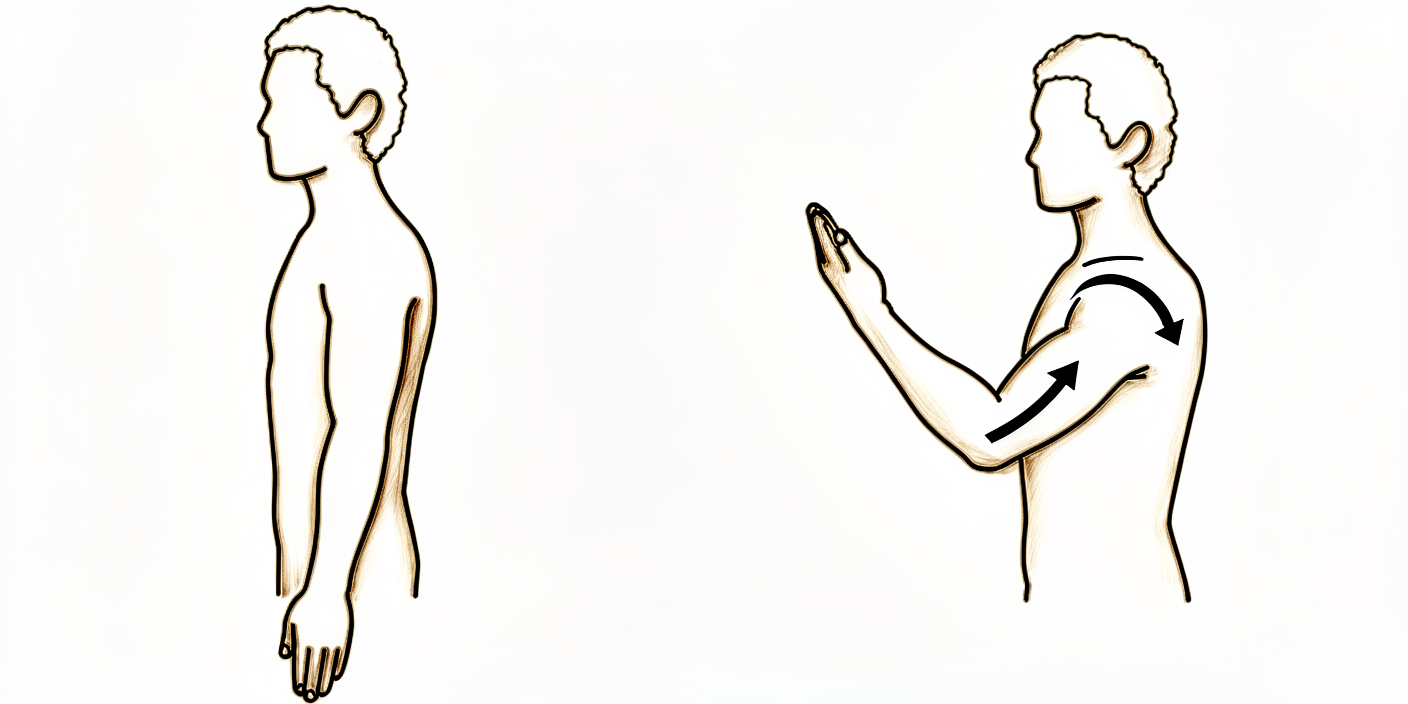
保护性肘关节活动(0–90° 范围)
脱出悬吊带后,在安全范围内轻柔地活动肘关节:您可以完全伸直(伸展不受限制,以舒适为度),但切勿弯曲超过直角(90°)——大约相当于将手机举到耳边听电话时的弯曲程度。动作要缓慢,并保持在上述活动范围内。弯曲超过90°会牵拉正在愈合的肌腱,因此在前六周左右需避免此动作。
10次,每天2–3次,在0–90°弧内
Kieran Hirpara 4.0
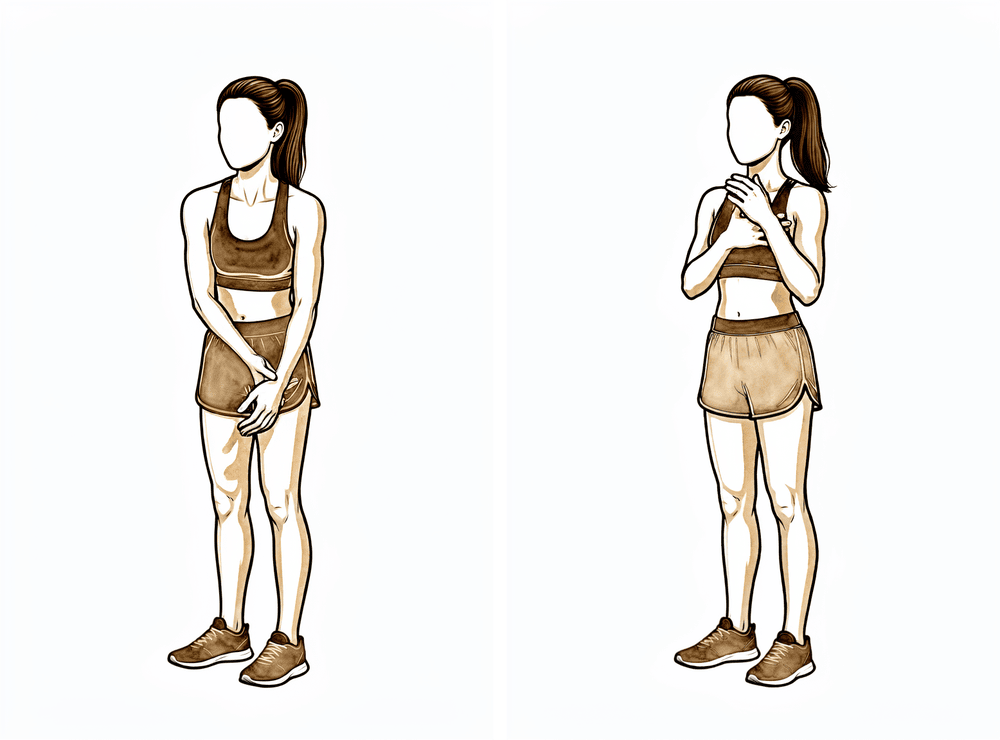
辅助(被动)肘关节屈曲
用另一只手将手术侧肘关节轻柔地向上弯向肩部,保持肱三头肌完全放松——不要借助手术侧手臂发力。在设定的极限处停止(早期约为90°)。这有助于保持肘关节灵活,同时无需肱三头肌发力。
10 次,2–3 次/天,仅至您的设定上限
Kieran Hirpara 4.0
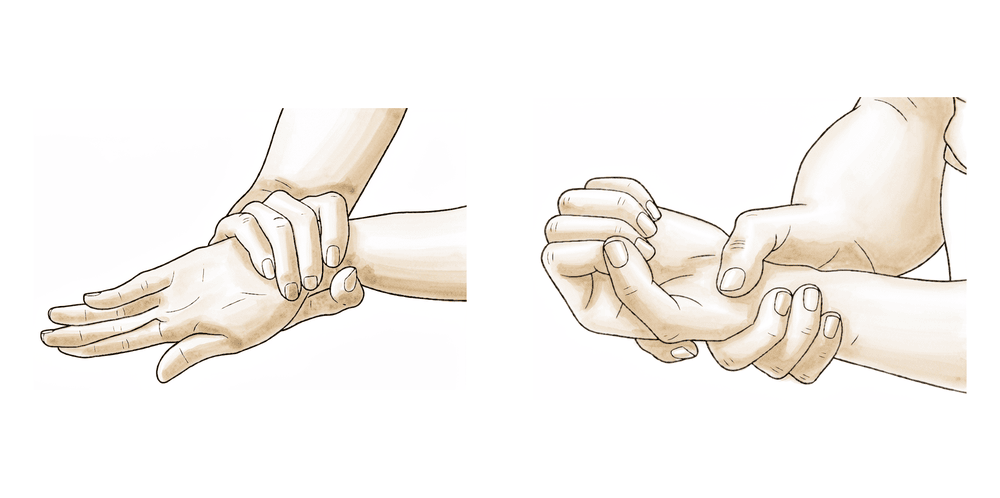
前臂旋转(掌心向上 / 掌心向下)
将肘部贴紧体侧并舒适地弯曲,轻轻将手掌向上转向天花板,然后向下转向地板。动作保持缓慢轻松。此动作可保持前臂柔韧,且不会对肱三头肌修复部位施加负荷,因此可早期开始。
每个方向10次,每天2–3次
Kieran Hirpara 4.0
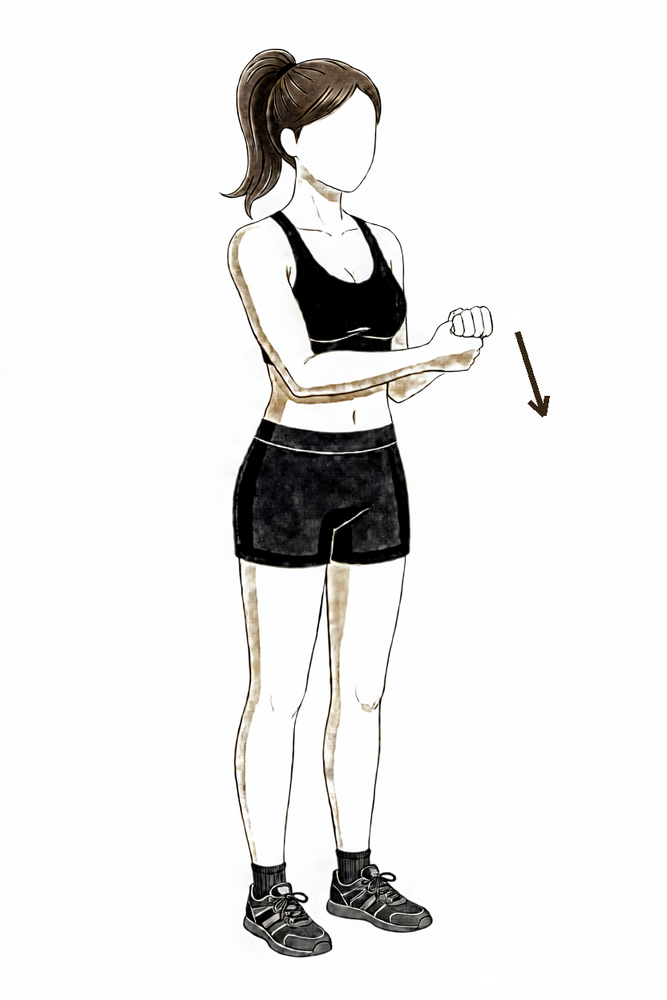
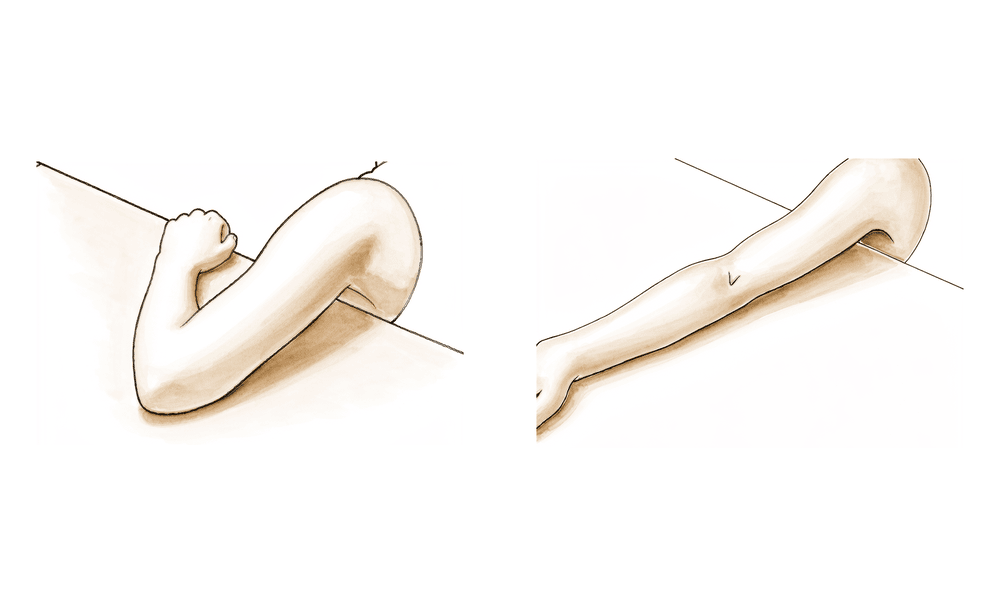
肱三头肌静力收缩(轻柔,无运动)
后期练习——仅在物理治疗师开始指导后进行(通常从术后8周左右开始)。在肘部受支撑的情况下,轻轻收紧上臂后侧的肌肉(肱三头肌),仿佛要伸直肘关节,但不要让其实际移动——轻微用力,保持,然后放松。前六周内请勿进行此练习。
保持约5秒,5–10次,按指导进行(后期阶段)
Kieran Hirpara 4.0
肘关节主动伸直(无阻力)
后期练习——从约6周开始,经医生许可后开始。在无负重(手中无重量)的情况下,依靠自身力量轻轻伸直肘关节,然后用另一只手辅助将其放回原位(因此肱三头肌尚无需控制下放阶段)。保持无痛。前六周内不进行主动伸直动作。
10次,按指导进行(约6周后,无阻力)
Kieran Hirpara 4.0
肱三头肌对抗轻阻力静力收缩(等长伸肘)
后期练习——在指导下,约从第8周开始。将前臂轻轻抵在另一只手或固定表面上,仿佛要伸直肘关节,仅将用力程度逐渐增加至轻微且舒适的水平,并保持肘关节不动。此练习旨在允许抗阻训练之前激活肱三头肌。
保持约5秒,5–10次,按指导进行(后期阶段)
Kieran Hirpara 4.0
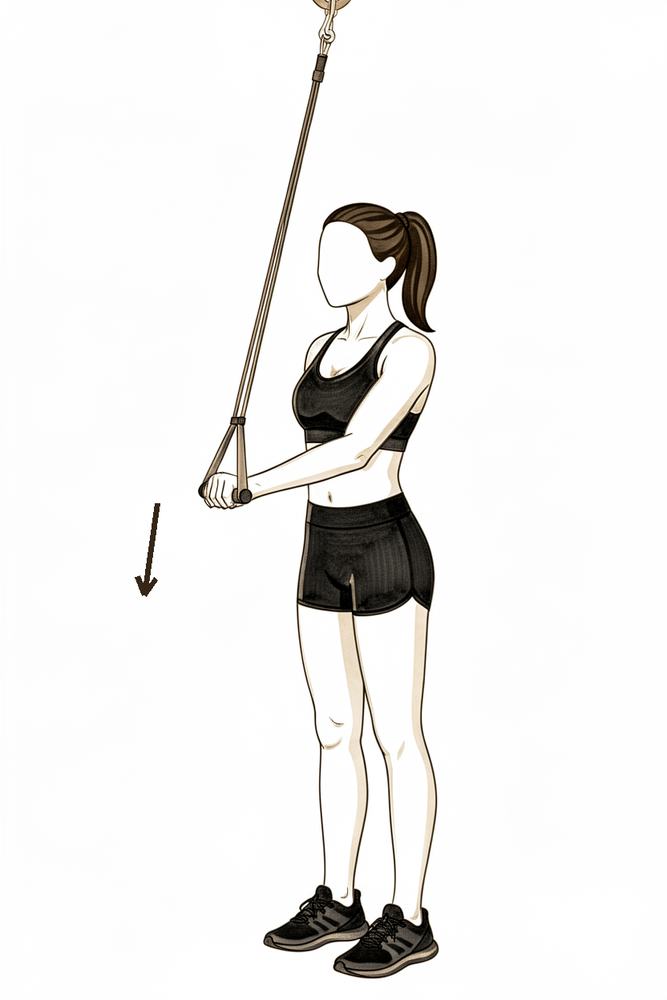
弹力带抗阻伸肘(后期强化训练)
后期锻炼——仅在抗阻训练获准后进行,通常从术后12周左右开始。用轻阻力带对抗伸直肘关节,然后缓慢控制屈曲复位。在数周内逐渐增加阻力。此动作直接对修复后的肌腱施加负荷,因此是最后开始的项目——切勿操之过急,若出现疼痛应立即停止。
仅在约12周后,在您的物理治疗师指导下进行
这些是您的手册中列出的锻炼项目。仅在Hirpara医生和您的理疗师的指导下开始进行,并严格保持在您被允许的范围内和限制内。早期锻炼旨在让肘部和前臂活动,而不牵拉或伸展修复部位:在受保护的0–90°活动范围内进行轻柔活动、辅助屈曲以及前臂旋转。肱三头肌等长收缩、主动伸直和弹力带训练属于后期阶段,在获得明确许可之前不应开始。如果肘部后方出现剧烈疼痛,请立即停止任何动作。
您的临床方案
本页其余部分为远端肱三头肌腱修复术后康复的分阶段临床方案。本节内容应提供给您的物理治疗师或手部治疗师,每个阶段均以通俗易懂的语言解释当前正在发生的情况。修复部位在肘关节屈曲(使其受到牵拉)以及主动或抗阻伸肘(使肱三头肌收缩并作用于修复部位)时承受负荷,因此该方案在恢复活动度的同时保护这两种机制,随后依次恢复主动伸肘功能,最后恢复抗阻力量。
在治疗开始前,请查阅患者的手术报告及既往病史,并与主刀医生就固定方式(骨隧道固定与缝线锚钉足印)、组织质量以及保护性活动范围进行沟通。Hirpara医生的修复术式在术中经检查确认在90°屈曲时是安全的,术后使用简易悬吊带将肘关节置于90°位休息(不使用铰链支具,也不保持伸肘位);保护性活动范围为0–90°,伸肘可自由至舒适位,屈曲限制在90°以内。
第一阶段 — 90°悬吊带保护下的活动(第0至6周)
前六周旨在保护修复部位,同时防止肘关节僵硬。手臂在简单的悬吊带中保持90°位置,仅在锻炼和清洁时取下。肘关节仅在受保护的0–90°活动范围内活动,可完全伸直至舒适程度,但弯曲不得超过直角,且绝不可通过主动的肱三头肌力量进行活动。
致您的物理治疗师:
健康教育与注意事项 - 使用90°简单悬吊带固定(不使用铰链支具,切勿保持在接近伸直位);锻炼和清洗时取下 - 仅允许0–90°保护性活动范围:伸直至完全/舒适位;屈曲不得超过90° - 禁止主动或抗阻肘关节伸直(主动肱三头肌收缩会对修复部位产生负荷) - 手术侧手臂禁止负重或推压;在舒适范围内可进行轻度的无负荷手部使用 - 早期保持肩关节被动活动范围(PROM)轻柔(保护跨越肩关节的长头肌腱)
管理措施 - 伤口:按指示使用外科敷料;监测感染迹象 - 水肿:抬高患肢、轻柔手部泵动、按需冰敷 - 锻炼:在0–90°范围内进行肘关节主动辅助/被动活动(伸直至舒适位,屈曲上限为90°);主动腕部、手部及抓握活动范围;轻柔肩关节活动范围;轻柔前臂旋转;禁止主动伸直
晋级标准 - 伤口愈合;约六周时,在舒适且受控的0–90°活动范围内活动
第二阶段——推进屈曲并启动主动伸展(第6至12周)
大约从第6周起,解除屈曲角度限制,屈曲活动逐渐超过90°并趋向全范围。引入无阻力的主动伸直(伸展),并通过等长收缩温和地重新激活肱三头肌。仍禁止抗阻伸展和负重。
致您的物理治疗师:
评估 - 主动和被动关节活动度(屈曲现正超过90°,伸展);疼痛与肿胀;伤口/瘢痕检查
健康教育与注意事项 - 从大约第6周起,逐渐将屈曲推进至超过90°直至全范围 - 直至第12周,禁止抗阻伸展及通过手臂负重
管理 - 练习:第6–8周开始无阻力的主动向心伸展,在无痛范围内进行(用另一只手臂辅助降低/离心阶段);第8周进行轻度次最大肱三头肌等长收缩;继续全范围活动度和前臂旋转;愈合后开始瘢痕管理
进阶标准 - 全范围无痛关节活动度;主动伸展达到全范围且控制良好;疼痛≤3/10
第三阶段——强化与恢复(第12至16周及以后)
一旦运动功能恢复且获得抗阻训练许可(约12周时),强化训练开始并逐步增加:抗阻肱三头肌训练(先向心后离心),随后进行轻度闭链负重,最后进行有限范围的推压训练。重返运动基于标准评估,最早约为5至6个月。
致您的物理治疗师:
评估 - 肱三头肌力量与对侧对比;负荷下的疼痛/肿胀反应;根据情况适当进行功能性及运动/工作特异性测试
教育与注意事项 - 从约12周开始进行抗阻肱三头肌强化(向心 → 离心);逐步增加负荷 - 从约12周开始进行闭链负重(起始负荷轻,活动范围小);从约14周开始进行轻度推压(俯卧撑,有限范围)
管理 - 练习:渐进性抗阻肘关节伸展(弹力带 → 轻重量);分级闭链负荷;有限范围推压;继续任何残余的活动度训练 - 当力量接近对称且达到适当的功能恢复时,考虑出院 - 如果恢复停滞或预后不佳,考虑转回主治医生
重返运动标准 - 肱三头肌力量5/5;无疼痛的高速及运动特异性控制
恢复工作与活动
鼓励从初期开始进行轻度日常手部使用(如进食、书写和轻度自我护理),以舒适为度,前提是避免推、提或弯曲肘部超过其活动极限。由于手臂佩戴悬吊带期间或无法安全操控方向盘时不得驾驶,请在早期几周内安排交通协助;待您取下悬吊带且能操控车辆后(经复查确认),方可恢复驾驶。
抗阻负荷及通过手臂承重(推、压、提和拉)需等待至约十二周,随后逐步增加负荷。恢复运动最早约为五至六个月,其标准是恢复完全无痛的活动度以及充分且对称的肱三头肌力量,由Hirpara医生和您的物理治疗师评估判定,而非仅依据时间。较重的体力劳动遵循相同的基于标准的渐进原则。
方案实施后
本方案与本诊所的总体康复建议配合使用:请参阅术后疼痛管理、伤口护理和重返运动。上述分阶段计划反映了远端肱三头肌腱修复术后已发表的康复指南,您的持续康复将由Hirpara医生和您的物理治疗师根据肘部恢复情况提供个体化指导。
Evidence & references
This is the clinical evidence summary written for health professionals. It is technical, and it lists the research this page was built from. You do not need to read it to understand your treatment or to make a decision about it.
Topic scope: post-operative rehabilitation after surgical reattachment of the avulsed distal triceps tendon to the olecranon (transosseous bone tunnels or suture-anchor footprint repair; best performed within ~3 weeks of injury). The extension mechanism is loaded by elbow flexion (passive stretch of the repair) and by active/resisted extension (triceps contraction), so the rehab cadence is built around protecting both, then restoring motion, then active extension, then resisted strength.
Defining principle: the repair is loaded in flexion and by triceps contraction, so early rehab limits flexion and blocks active/resisted extension while motion is restored, then releases active extension (~6 wk) and resisted extension (~12 wk) in steps, with return to sport at ~5–6 months. Dr Hirpara's stance: the repair is checked intra-operatively to be safe at 90° of flexion, so the elbow is rested in a simple sling at 90° (a standard, comfortable position — no hinged brace, and NOT held near extension) with a protected 0–90° arc (extension free to comfort, flexion capped at 90°) for ~6 weeks. This is deliberately less restrictive on early flexion than the published near-extension / 20°-flexion-lock guidelines, while keeping the key loading rules identical (no active extension to 6 wk, no resisted extension to 12 wk).
Evidence base and corpus note
No RCT and no large prospective cohort defines the rehab cadence for distal triceps repair. The phased timeline rests on a published institutional clinical-care guideline (Ohio State Sports Medicine, 2021), which itself cites the core review literature, corroborated by several surgeon and physiotherapy phased protocols. The local RAG corpus is thin on triceps-specific phased rehab (rotator-cuff and biceps content dominates), but it does contain the key biomechanical repair-strength papers, which inform how early and how aggressively one can mobilise. The week-by-week timeline is therefore carried by the published clinical-care guideline, with the corpus supplying the repair-strength evidence that justifies the cadence.
Key principles and controversies
- Early motion vs prolonged immobilisation. Classic teaching favours protective immobilisation (splint 2–6 wk, flexion-limited brace) because the triceps insertion is loaded in flexion. A counter-trend pushes accelerated early ROM where fixation is strong — a cadaveric study comparing dynamic-tape with standard suture fixation under an intense early-rehab protocol found the novel construct biomechanically superior, i.e. fixation strength is the rate-limiter for how early one can mobilise.
- Suture-anchor vs transosseous (bone-tunnel) repair strength. Carpenter et al. (JSES 2018) found no difference in tendon displacement between transosseous cruciate tunnels and suture-anchor repair when the number of sutures is equalised; the technique by Sarokhan & Leung (Arthrosc Tech 2019) cites Clark et al. (2014) finding anatomic (knotless) footprint repair superior to transosseous cruciate repair. Stronger anatomic footprint fixation is the lever that justifies earlier/more aggressive flexion and earlier resisted extension.
- Flexion-limit progression. No consensus on the exact ramp — the OSU guideline locks at 20° then advances ~15°/5 days; others use ~10°/week or an open 0–60° arc. All converge on full passive flexion by ~6 weeks, with active extension deferred to ~6 weeks and resisted extension to ~12 weeks. KH's variant keeps the elbow at 90° in a simple sling with a free 0–90° arc — less restrictive on early flexion, same loading deferrals.
- Strength athletes / high demand. Retrospective series in strength athletes report satisfactory return to sport but underline that resisted extension and pressing loads are the highest-risk re-rupture activities, supporting the firm 12-week resisted-extension / pressing block.
Phased timeline
| Phase | Window | Sling / ROM ceiling | Exercises | Criteria to progress |
|---|---|---|---|---|
| I — Protected motion | Weeks 0–6 | Simple sling at 90° (no hinged brace, not near extension), off for exercises. Protected arc 0–90°: extension free to comfort, flexion capped at 90°. No active extension. | AAROM/PROM elbow within 0–90°; wrist/hand/grip AROM; gentle shoulder ROM; forearm rotation | Wound healed; comfortable, controlled 0–90° arc at ~6 wk |
| II — Advance flexion + active extension | Weeks 6–12 | Release flexion cap; progress flexion past 90° toward full. No resisted extension / weight-bearing. | Wk 6–8 active concentric extension no resistance (assist eccentric with other arm); wk 8 light submaximal triceps isometrics | Full painless ROM; full active extension with good control; pain ≤3/10 |
| III — Strengthening & return | Weeks 12–16+ | Resisted triceps strengthening (concentric → eccentric) from ~12 wk; CKC weight-bearing from ~12 wk (light, small range); limited-range pressing ~wk 14 | Progressive resisted extension; graded loading; sport-/work-specific progression | 5/5 triceps strength; pain-free high-velocity / sport-specific control |
| Return to sport | ~5–6 months | Criterion-based, at the earliest | — | Full pain-free ROM + symmetrical triceps strength |
Evidence strength flags
- MODERATE (protocol cadence): the phased timeline (no active extension to ~6 wk, resisted extension to ~12 wk, return to sport ~5–6 mo) — anchored to the OSU Sports Medicine clinical-care guideline and corroborating surgeon/PT protocols. No defining rehab RCT.
- MODERATE (repair-strength biomechanics): suture-anchor vs transosseous equivalence with equalised sutures (Carpenter 2018); anatomic footprint superiority (Clark, via Sarokhan & Leung); insertional footprint anatomy (Whitaker 2022) — these justify the mobilisation cadence.
- LOW–MODERATE (KH's 90°-sling / flexion-capped-at-90° variant): biomechanically sound (flexion is the repair-tensioning motion; intra-op tensioning at 90° defines the safe arc) and less restrictive on early flexion than published near-extension guidance, while preserving the key extension-loading deferrals. Consensus / expert rather than trial-derived; corpus gap — no RCT or large cohort defines this exact variant.
CITATIONS
RAG corpus (180,000+ Orthopaedic articles)
- Keener JD, Sethi PM. Distal triceps tendon injuries. Hand Clin. 2015;31(4):641–650. DOI: 10.1016/j.hcl.2015.06.012
- Carpenter SR, Stroh DA, Melvani R, et al. Distal triceps transosseous cruciate versus suture anchor repair using equal constructs: a biomechanical comparison. J Shoulder Elbow Surg. 2018;27(11):2052–2056. DOI: 10.1016/j.jse.2018.07.005
- Sarokhan AK, Leung NL. Acute triceps tendon repair: a technique utilizing 3 curved tunnels and proximal knots. Arthrosc Tech. 2019;8(11):e1325–e1330. DOI: 10.1016/j.eats.2019.07.001
- Ng T, Rush LN, Savoie FH. Arthroscopic distal triceps repair. Arthrosc Tech. 2016;5(6):e1107–e1112. DOI: 10.1016/j.eats.2016.06.011
- Whitaker JJ, Hartke J, Hawayek BJ, et al. Histologic evaluation of the triceps brachii tendon insertion: implications for triceps-sparing surgery. J Hand Surg Am. 2022. DOI: 10.1016/j.jhsa.2022.03.020
Published rehabilitation protocols & literature (URLs)
- Ohio State University Sports Medicine. Distal Triceps Repair — Clinical Care Guideline (G. Hock PT DPT OCS; rev. M. Salsbery PT DPT SCS; Dec 2021). https://medicine.osu.edu/-/media/files/medicine/departments/sports-medicine/medical-professionals/shoulder-and-elbow/distaltricepsrepair.pdf (NB: its near-extension / 20°-flexion-lock immobilisation differs from Dr Hirpara's 90°-sling approach; the loading deferrals are shared.)
- Cadaveric study of dynamic-tape vs standard suture fixation in distal triceps repair under an intense early-rehab protocol. PMC. https://www.ncbi.nlm.nih.gov/pmc/articles/PMC12423150/
- Distal triceps tendon repair in strength athletes — satisfactory return to sport (22 cases). PMC. https://www.ncbi.nlm.nih.gov/pmc/articles/PMC11355401/
Note on corpus gap: the RAG corpus lacks a dedicated distal-triceps phased rehab article; the week-by-week timeline is carried by the OSU clinical-care guideline (and corroborating surgeon protocols), with the corpus papers supplying the repair-strength evidence that justifies the cadence. Flagged accordingly.





