

Latarjet 手术 资料
本方案指导您在 Mater Private Hospital Rockhampton 接受 Kieran Hirpara 医生实施的 Latarjet 手术 后的康复过程。该方案将每个阶段的通俗解释与一份结构化康复计划相结合,您可以将此计划分享给您的物理治疗师;请在首次复诊时携带此页面或其 PDF 文件,以确保您的康复过程协调一致。您的物理治疗师可能会根据您的康复进展调整计划。
如果您对术后伤口有任何疑虑,请联系诊所。通常,拍摄伤口照片并通过电子邮件发送以供审阅会很有帮助。
预期情况
Latarjet 手术是一种针对反复向前脱位的肩关节的骨块移植手术。由于该手术使用螺钉固定的实心骨块(而非仅缝合软组织),修复结构在早期非常稳固,因此您的恢复速度通常快于软组织稳定手术(Bankart 修复)。平均而言,患者在约 20 周后重返运动,而 Bankart 修复后大约需要 32 周。
但“更快”并不意味着“可以随意活动”。您恢复速度的决定性因素只有一个:移植骨与肩胛盂的愈合。这种骨性连接(称为骨性愈合)通常需要 6 到 8 周。在您的外科医生确认骨性愈合之前,无论手臂感觉多么良好,都会限制对肩关节的负荷。此外,Latarjet 手术还有两个 Bankart 手术所没有的额外结构需要保护,这就是为什么以下早期限制中的某些特定于该手术。
手术过程
在Latarjet手术中,一块名为喙突(肩胛骨前部的骨性突起)的小块骨骼被转移并用螺钉固定在肩关节盂的前缘,即骨质缺损的部位。这补充了缺失的骨质,并在肩部前方形成一种“吊带”效应,有助于防止脱位。
为了将该骨骼移位到指定位置,外科医生必须使其穿过肩胛下肌(肩部前方的肌肉),该肌肉会被切开,或部分松解后修复。因此,在愈合过程中需要保护两样东西:
- 骨块及其螺钉,必须与关节盂长合(骨愈合,约需 6–8 周);以及
- 前方的肩胛下肌,在转移骨块周围进行修复。
部分患者可能会遗留外旋活动范围(手部向外旋转)的轻微永久性丧失,幅度约为 7–8 度。这是预期内的结果,并非并发症;对大多数人而言,这不会对日常生活造成影响。
佩戴吊带
您将佩戴简易吊带,而非外展枕或楔形吊带。Hirpara 医生在稳定手术中使用简易吊带,因为骨骼固定牢固,保护主要来自于将手臂保持在安全位置,而非吊带的形状。
- 白天佩戴吊带约 3 周以提供支撑和舒适感(从第 3 周左右开始逐步停用)。骨性 Latarjet 手术相比软组织修复,需要更短的吊带佩戴时间。
- 睡觉时不佩戴吊带。 睡觉时请取下吊带;在睡眠期间保持手臂处于安全位置:不要让手臂向外侧下垂并外旋(这是手术旨在预防的位置)。将手臂支撑在横跨身体的枕头上或放在身体一侧平躺,既舒适又安全。
- 淋浴和进行锻炼(在您已学会正确方法后)时请取下吊带。每当吊带取下时,请保持手臂放松并垂于身体一侧。
- 如果肩部肿胀或疼痛,尤其是锻炼后,请使用冰敷。
使用吊带时请注意您的姿势:保持耳朵、肩膀和髋部在一条直线上,避免含胸驼背。
关键注意事项 — 切勿
这些措施旨在保护骨块、其螺钉以及前方肌肉在愈合期间的安全。
- 切勿早期强行将手臂进行外旋(手向外转动)。在前 2 周内,外旋角度在支撑位下保持在约 25 度,此后仅逐渐增加,且始终在您的外科医生设定的范围内进行。
- 切勿将手臂向后推至身体后方(肩关节后伸),并避免手臂向外转动且向后伸展的复合体位。这会牵拉附着于移植骨上的肌腱。
- 切勿早期进行抗阻内旋强化训练(手在阻力作用下用力向身体内侧按压)。这会锻炼正在愈合的前方肌肉(肩胛下肌),需待您的外科医生同意后方可进行。
- 在您的外科医生确认骨已愈合(约 6–8 周)之前,切勿通过手臂或手承重,切勿用手臂从椅子上撑起身体,也切勿提起、推动或拉动任何重物。决定何时可以开始较大负荷的是骨性愈合情况,而非日历时间。
- 切勿早期进行高强度的胸部或过头健身动作:在康复后期之前,禁止进行夹胸、宽握卧推、军式(过头)推举、颈后高位下拉或双杠臂屈伸。
- 避免手臂受到任何突然的猛拉、抓扯,或跌倒时手臂着地。
第一阶段 — 即刻保护期(第 0–2 周)
Kieran Hirpara 4.0
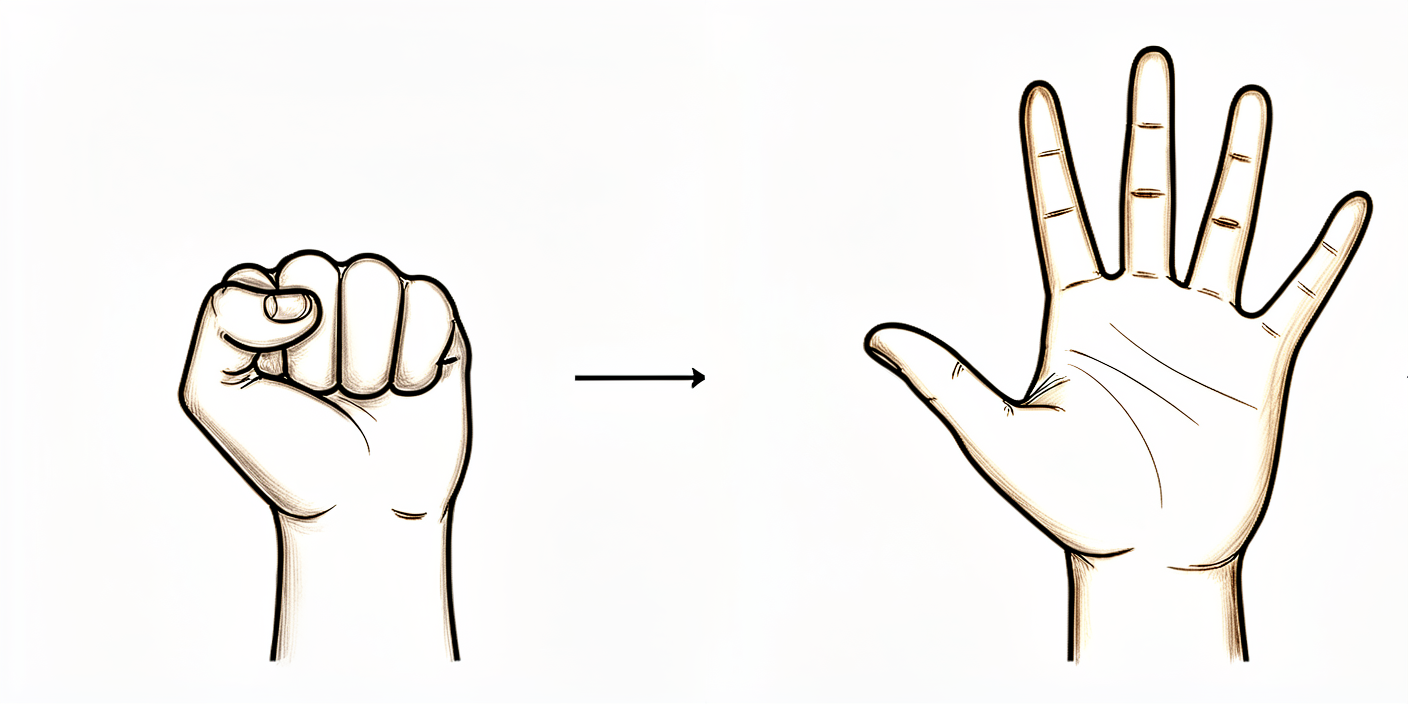
张开和握紧手
握紧拳头,然后完全张开。这有助于保持手部活动,帮助预防僵硬和肿胀。
每小时10次
Kieran Hirpara 4.0
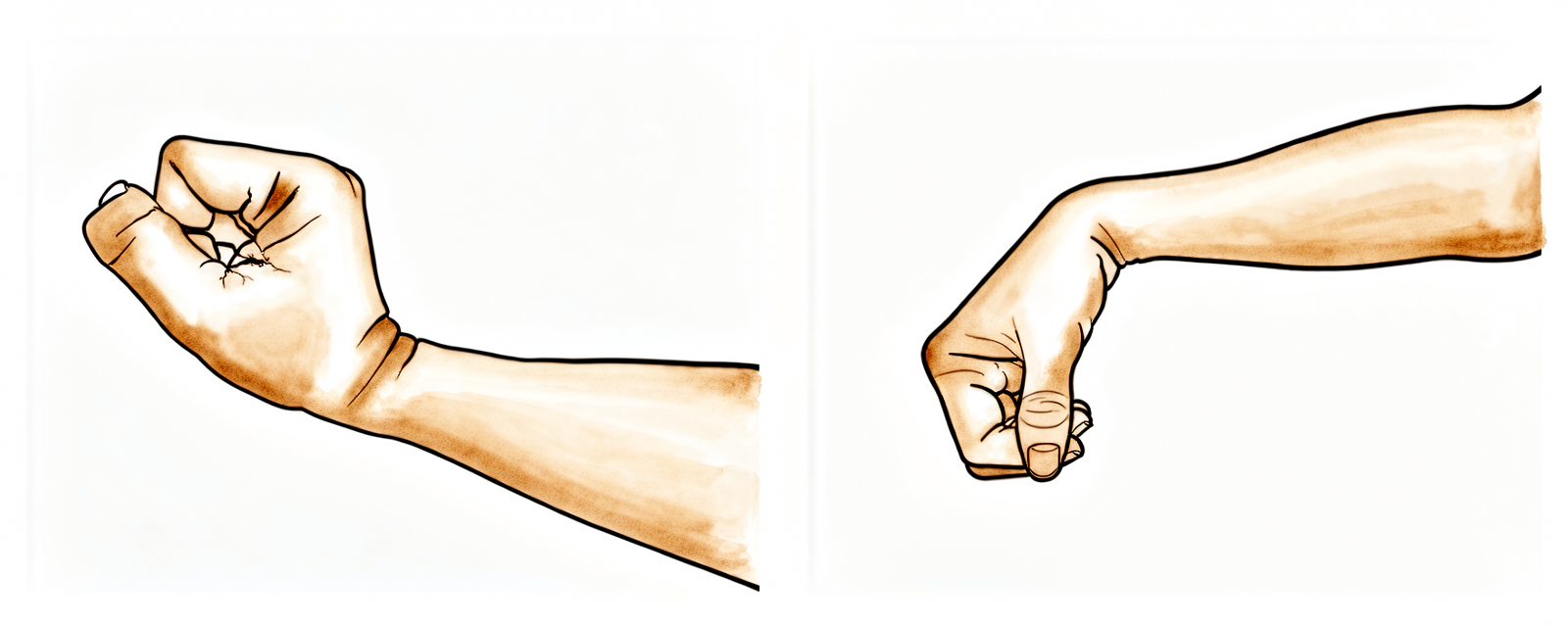
主动腕关节屈伸
轻轻将手腕向前弯曲,然后向后弯曲,以舒适为度。
10–15 次/小时
Kieran Hirpara 4.0
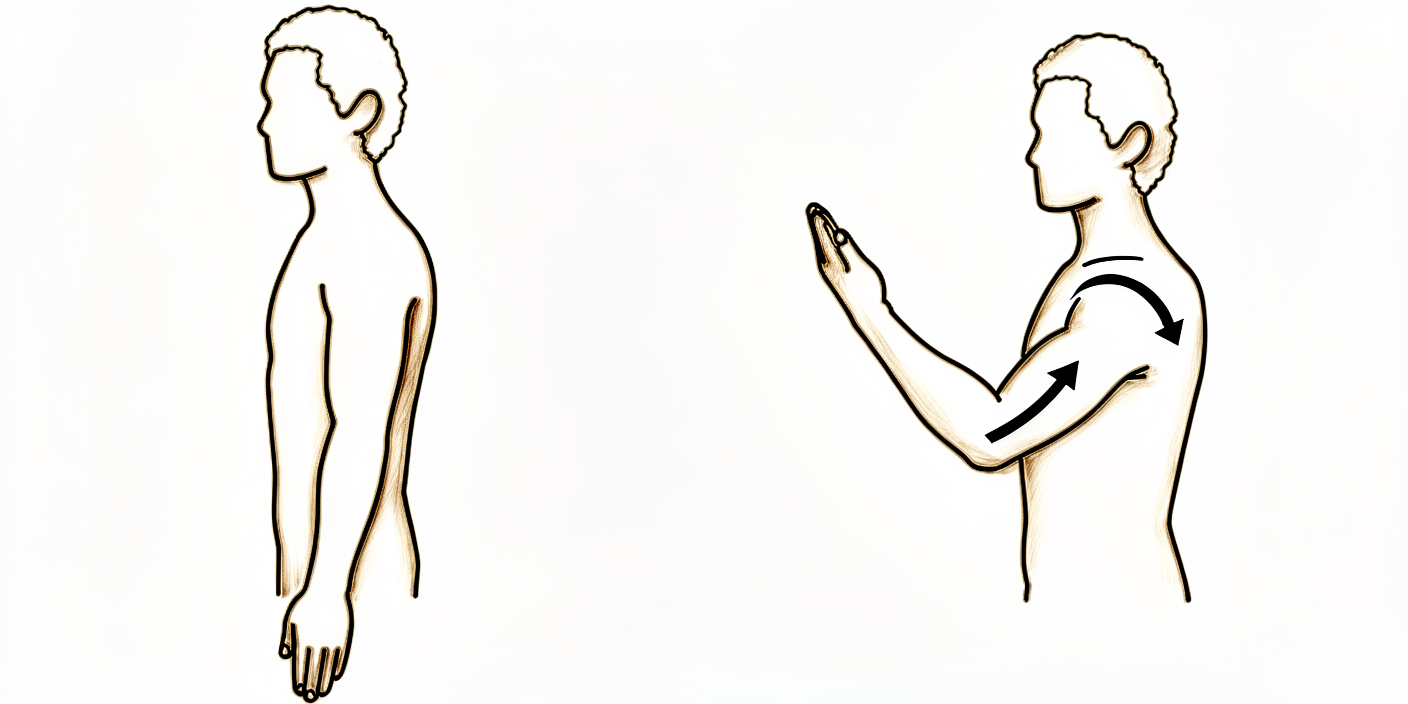
主动肘关节屈曲
掌心向上,尽可能轻柔地弯曲肘部,然后再次伸直手臂。保持上臂紧贴身体一侧。切勿让手臂向后摆动至身体后方。
10–15 次,每天 2–3 次
Kieran Hirpara 4.0
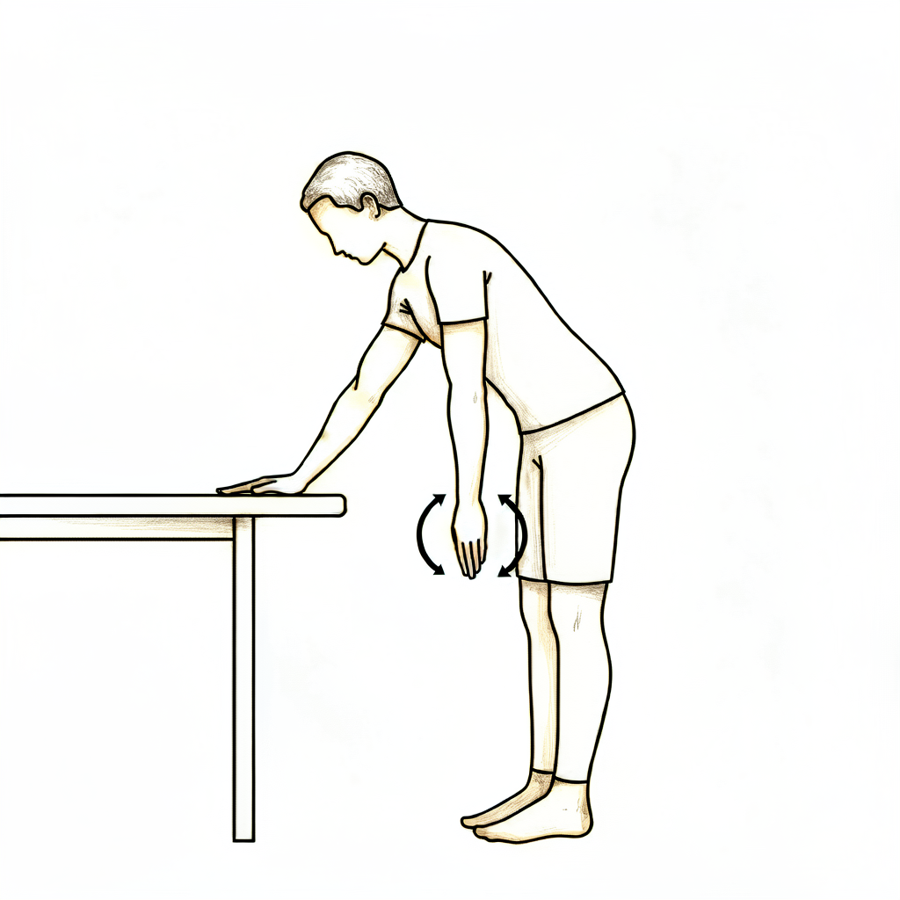
钟摆摆动
身体前倾,让手术侧手臂自然下垂,完全放松。通过身体摆动(而非使用肩部肌肉)做小幅度画圈动作——先顺时针,再逆时针。保持画圈幅度较小(直径约20厘米以内)。整个过程中,手术侧手臂始终保持放松状态——您并未抬起该手臂。切勿让手臂向后漂移到身体后方。
每个方向10次,每天2–3次
Kieran Hirpara 4.0
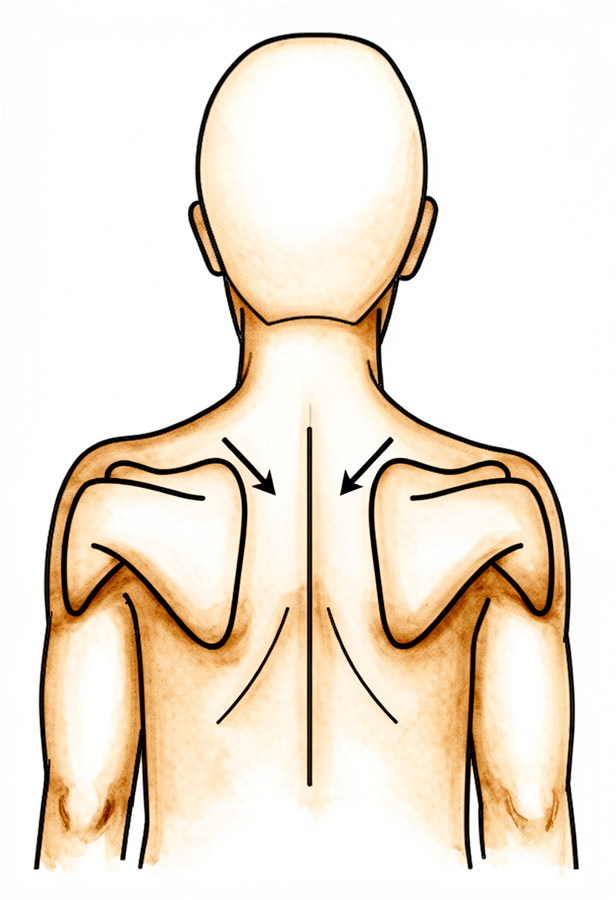
肩胛骨定位练习
轻轻将肩胛骨向下并向内收拢,保持该姿势,然后放松。这是一项轻度的肌肉激活练习——手臂不移动。
保持5秒,5次,每天2–3次
Kieran Hirpara 4.0
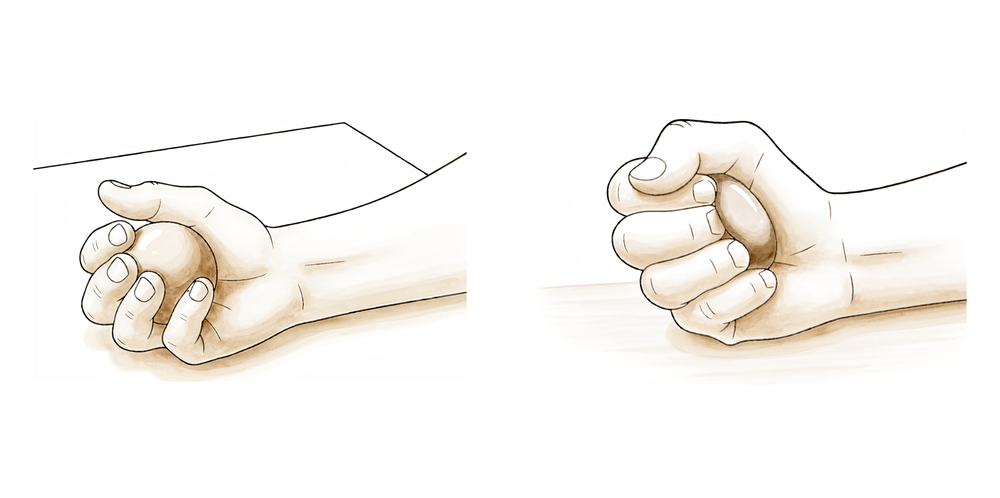
握球
手中握一个软球或卷起的袜子,轻轻挤压,然后放松。这能让手和前臂保持活动,同时让肩部得到休息。
10次,2–3次/天
最初两周的重点在于保护新移植的骨块和修复后的前侧肌肉,直至肿胀消退。白天佩戴简易吊带,睡觉时取下(保持手臂处于安全位置),并进行轻柔的练习,以保持手、腕和肘部的活动,同时避免对肩部造成应力。肩部本身仅进行轻柔的被动活动;目前尚不能依靠自身力量抬起手臂。
- 吊带: 白天佩戴简易吊带以提供支撑和舒适感;睡觉时取下吊带,保持手臂处于安全位置;进行锻炼和清洁时取下。
- 允许的活动: 仅限轻柔的辅助和被动活动;不得依靠自身肩部力量抬起手臂。前屈上举和向侧方伸展以舒适为度;在支撑位下,外旋角度保持在约 25度;不要将手臂向后推至身体后方。
- 锻炼: 肩胛骨定位练习;握球练习;轻柔的手、腕和肘部活动;钟摆运动(手臂放松,不要向后漂移)。
进入下一阶段的条件: 疼痛正在消退并通过简单止痛药得到控制;伤口已愈合且无异常迹象;脱离吊带时感到舒适;且轻柔的活动范围保持在外科医生设定的安全范围内。
第二阶段 — 恢复活动度(第 3–9 周)
Kieran Hirpara 4.0
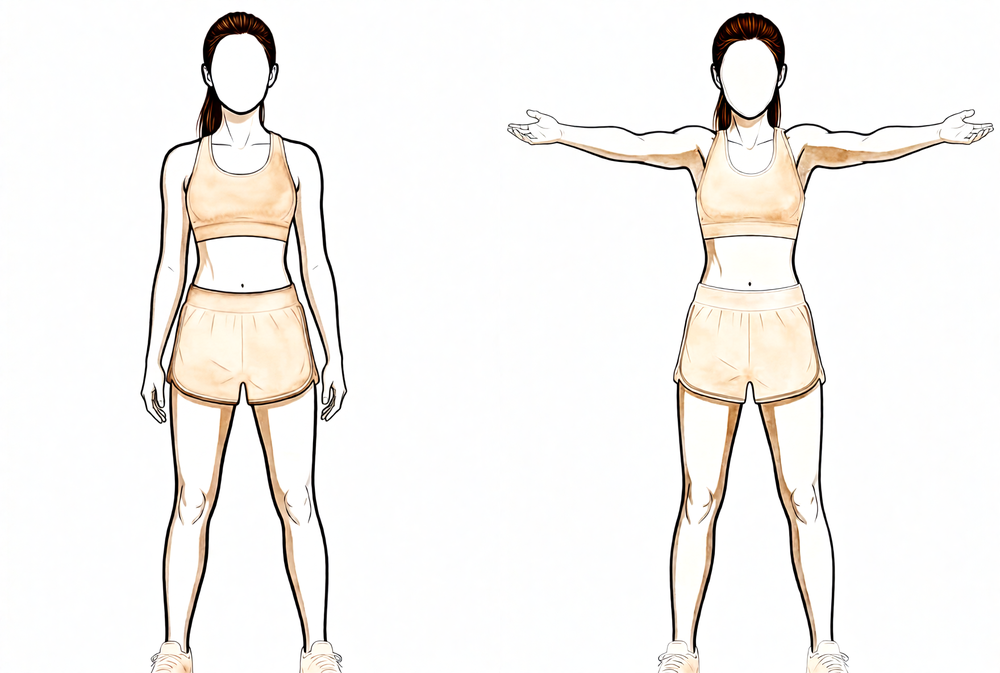
满罐式举臂至肩高
大约从第6周开始,当您能够自主活动手臂时。将手臂向前并略微向侧方抬起,**拇指朝上**——即“满罐”(full can)姿势——起初仅抬至肩部高度(90°)左右,然后有控制地放下。不使用负重或使用极轻的负重(约 1–1.5 kg),并进行多次重复。
在您的物理治疗师指导下
Kieran Hirpara 4.0
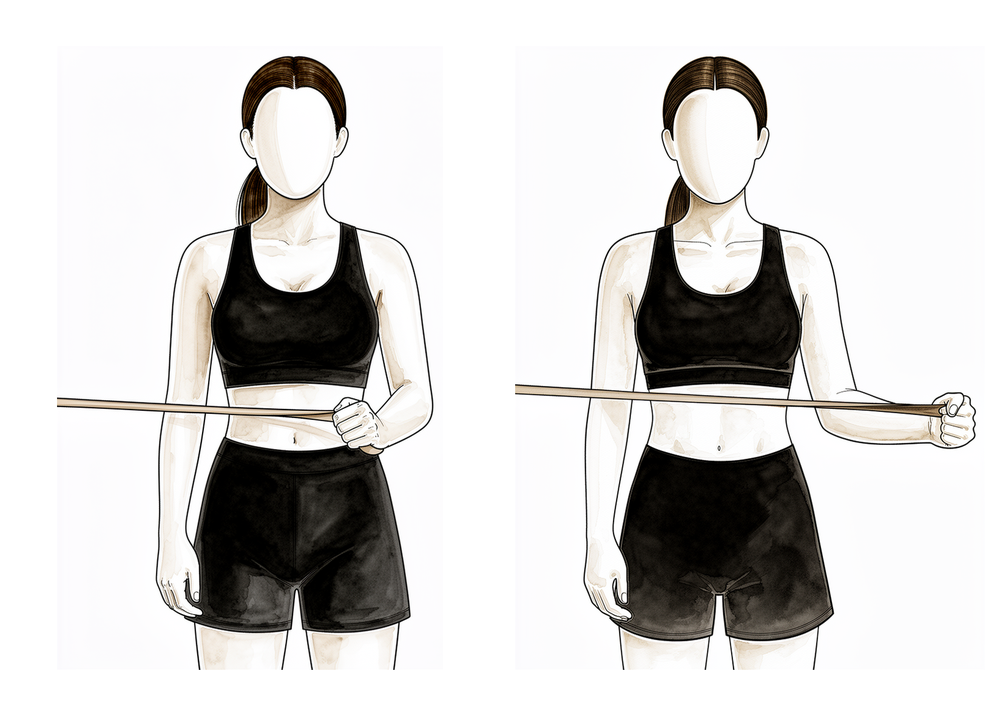
体侧外旋(弹力带)
从大约第6周开始,在您的外科医生设定的外旋活动范围内进行。将肘部贴于体侧,肘部与身体之间夹一条卷起的毛巾,肘关节屈曲至90°。用前臂轻轻向外旋转,对抗一条轻阻力带,然后有控制地回位。始终保持在安全活动范围内,切勿强行用力。使用轻阻力带并进行多次重复,而非使用大阻力。
在您的物理治疗师指导下
Kieran Hirpara 4.0
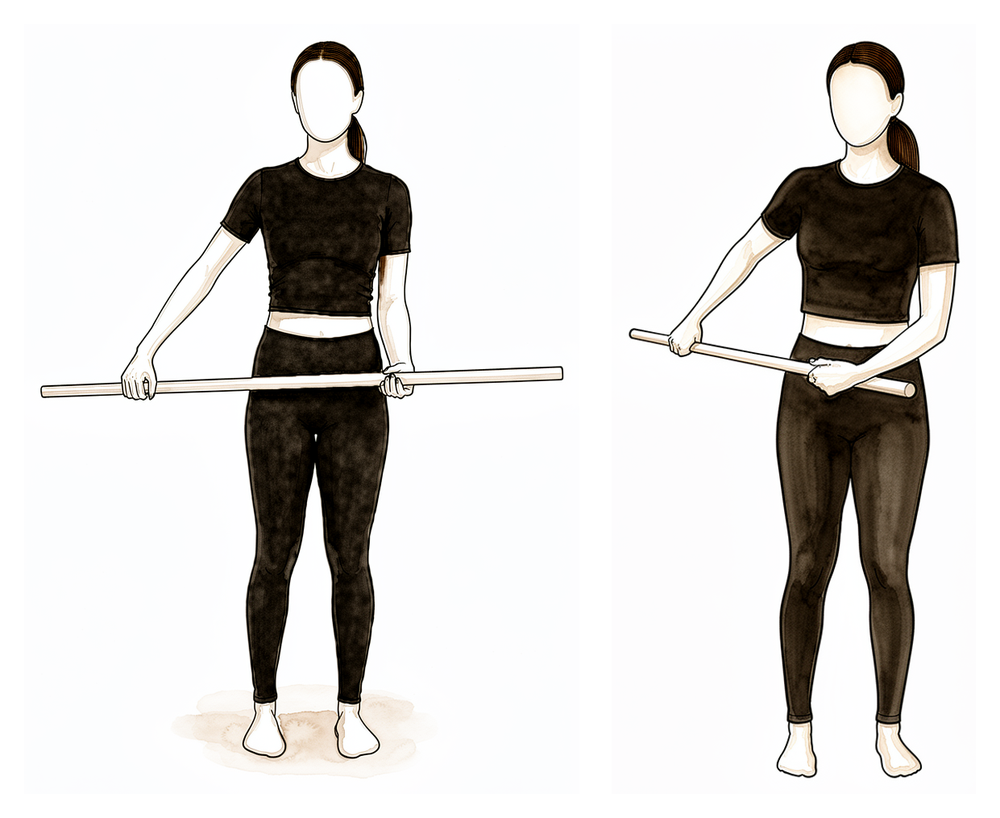
持棍内旋
从大约第6周开始,轻柔地且仅在指导下进行。将肘部紧贴身体一侧,用健侧手握持一根棍棒,轻柔地将手术侧前臂向内旋转越过腹部,然后复位。此动作仅为轻柔活动——切勿用力过猛或在早期增加阻力,因为肩部前方(肩胛下肌)仍在愈合中。
在您的物理治疗师指导下
Kieran Hirpara 4.0
低位划船(肩胛骨定位)
约从第6周开始。将手放在身体一侧的固定表面上,向下并向后按压,以将肩胛骨向下、向内拉动,并短暂保持。此动作可稳定肩胛骨。
在您的物理治疗师指导下
Kieran Hirpara 4.0
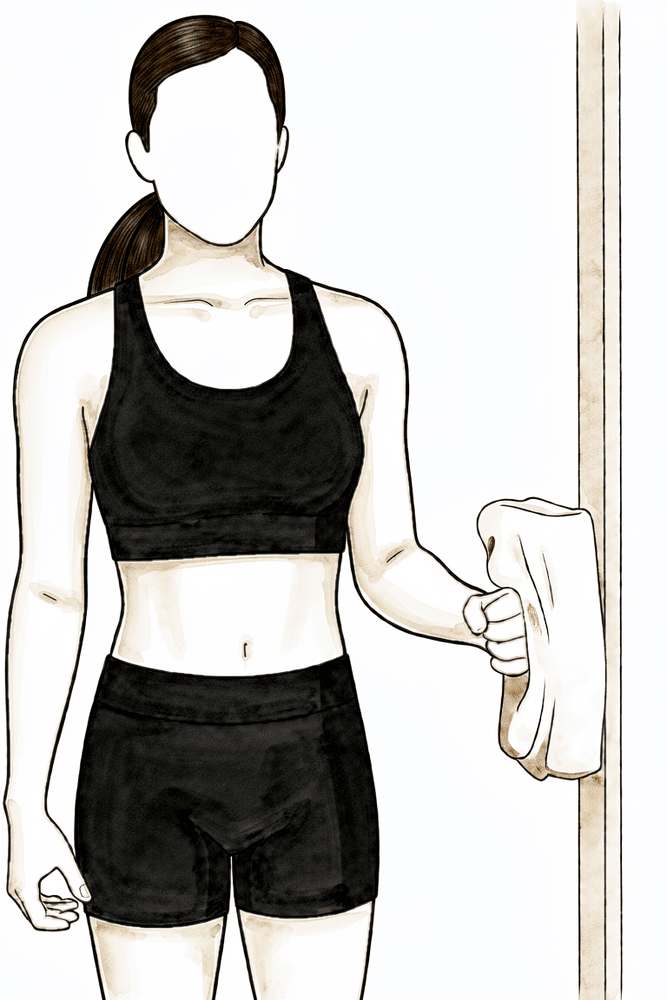
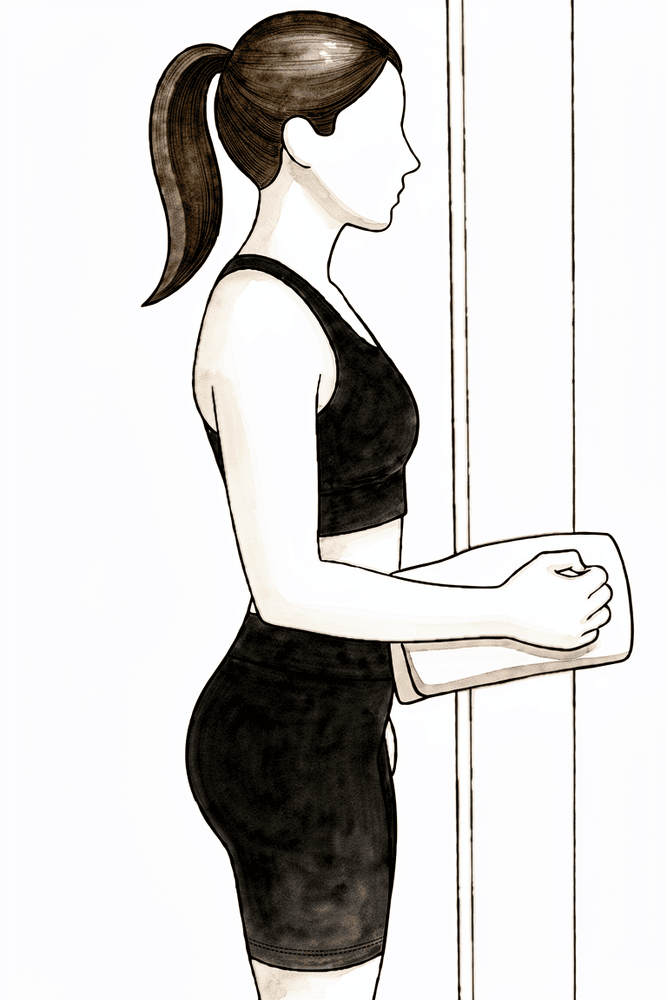
等长外旋
从大约第6周开始,若您的物理治疗师同意,且仅在您的安全活动范围内进行。站立,肘部贴紧体侧并屈曲至90°,手背靠近墙壁或门框。将手背轻轻向外推压至该表面,同时保持手臂不动——动作轻柔,力度约为最大力量的四分之一,且无疼痛感。保持该姿势片刻,然后放松。
保持约5秒,力度轻柔(约25%的用力程度),并遵循您的物理治疗师的指导。
Kieran Hirpara 4.0
等长内旋
推迟至后期进行(通常在移植物愈合且您的外科医生同意后),因为向内按压会牵动正在愈合的前部肌肉(肩胛下肌)。获得许可后,站立,肘部贴紧身体一侧,手掌抵住墙壁,轻轻向内推压手掌,同时确保手臂不移动——力度约为四分之一,无疼痛感。保持该姿势,然后放松。
保持约5秒,力度轻柔(约25%的用力程度),并遵循您的物理治疗师的指导
Kieran Hirpara 4.0
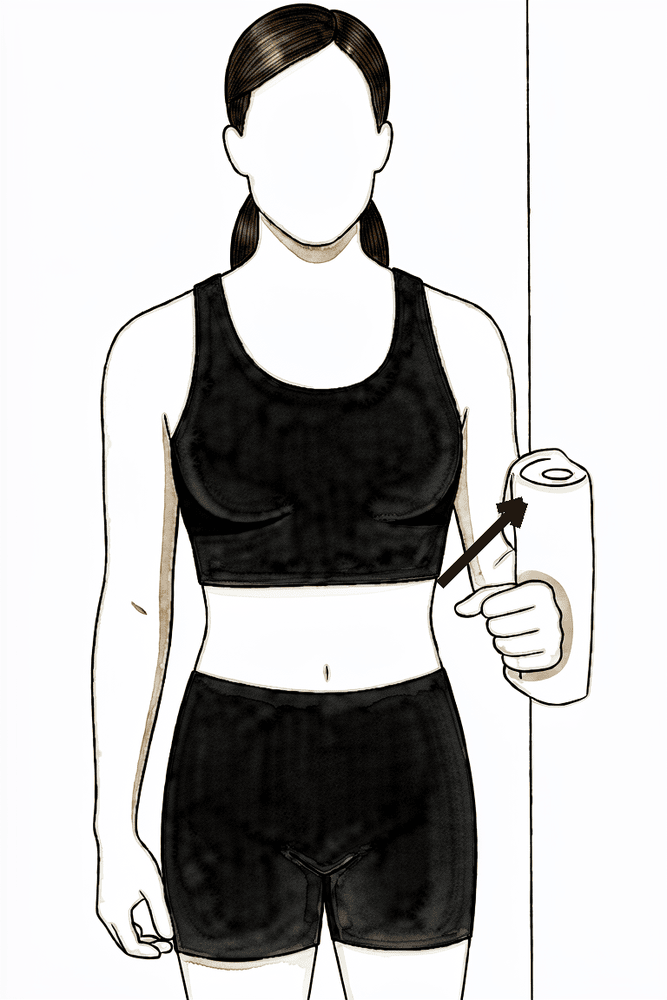
等长外展
从大约第6周开始,若您的物理治疗师同意。侧身站立,使上臂外侧靠近墙壁,肘部置于体侧。将手臂轻轻向外推压向墙壁,但**不要**让手臂移动——力度约为四分之一,无疼痛感。保持该姿势,然后放松。
保持约5秒,力度轻柔(约25%的用力程度),并遵循您的物理治疗师的指导。
目前的重点是活动度,而非力量。吊带大约从第 3 周开始逐步停用。您将从辅助活动过渡到自主活动,外旋活动度逐渐增加;早期在支撑位下约 45 度,随后从第 6 周左右逐渐增加至耐受范围,始终在您的外科医生设定的限制范围内。加入轻度的等长收缩(静力性)练习,保持内旋力度轻柔以保护前方肌肉。负重仍需等待;骨块在此阶段仅刚开始愈合。
- 吊带: 从第 3 周开始逐步停用。
- 允许的活动: 辅助活动逐渐过渡到约第 6 周时的自主活动(朝向约 90–110° 的上举角度)。外旋活动度逐渐增加;早期在支撑下约 45 度,后期增加至耐受范围,在您外科医生设定的范围内。内旋轻柔地达到约 45 度。
- 练习: 满罐式举臂(full-can)至肩高;用毛巾卷进行轻柔的外旋弹力带练习;用棍棒进行轻柔的内旋(无用力);低位划船;从第 6 周左右开始进行轻柔的外旋和外展等长收缩练习(内旋等长收缩练习留待后期)。您的物理治疗师可能还会加入轻柔的节律性稳定训练(保持稳定的练习,治疗师轻推您的手臂,您进行抵抗)以重新训练控制能力;这是手法操作,无图示。
进入下一阶段的条件: 您的外科医生已确认(通常在约 6–8 周的复查时)骨块已愈合;您能够自主活动手臂且控制良好;您的辅助和被动活动度完全或接近完全且舒适;且轻柔的等长收缩练习后无疼痛加剧。在确认愈合之前不开始强化训练:这取决于骨骼愈合情况,由您的外科医生确认,而非日历时间。
第三阶段 — 强化训练(第 10–15 周)
Kieran Hirpara 4.0
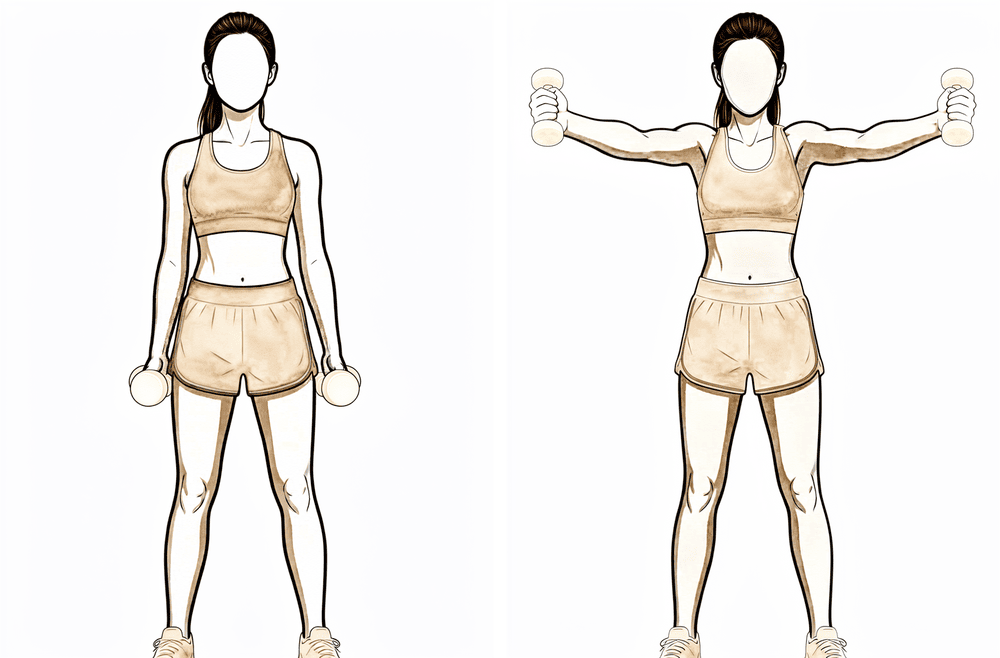
持轻重量满罐式举臂
从第10周左右开始,一旦您的外科医生确认骨块已愈合。按之前的方式进行满罐式举臂,现在逐渐增加高度并添加轻重量。保持拇指向上。如果肩部疼痛或之后肿胀,请停止。
在您的物理治疗师指导下
Kieran Hirpara 4.0
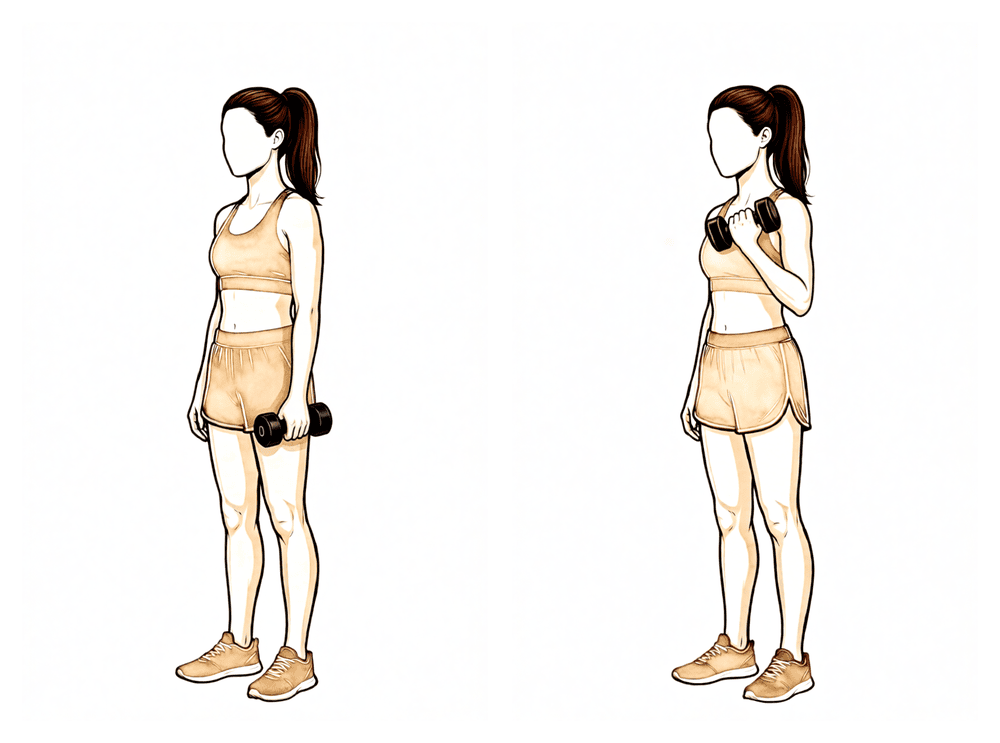
轻重量肱二头肌弯举
大约从第10周开始,一旦确认骨性愈合。将上臂贴紧身体一侧,弯曲肘部以卷起轻重量,然后有控制地放下。逐渐增加重量。肱二头肌腱附着点靠近骨块,因此从轻重量开始并缓慢进阶。
在您的物理治疗师指导下
Kieran Hirpara 4.0
沿背部进行内旋,使用棍棒(选项 1)
大约从第12周开始,一旦您的外科医生和物理治疗师确认前侧肌肉(肩胛下肌)已愈合。将一根棍子置于背后,用健侧手轻柔地将患侧手沿背部向上拉动,然后有控制地放下。保持动作舒适,并在物理治疗师规定的活动范围内进行。
在您的物理治疗师指导下
Kieran Hirpara 4.0
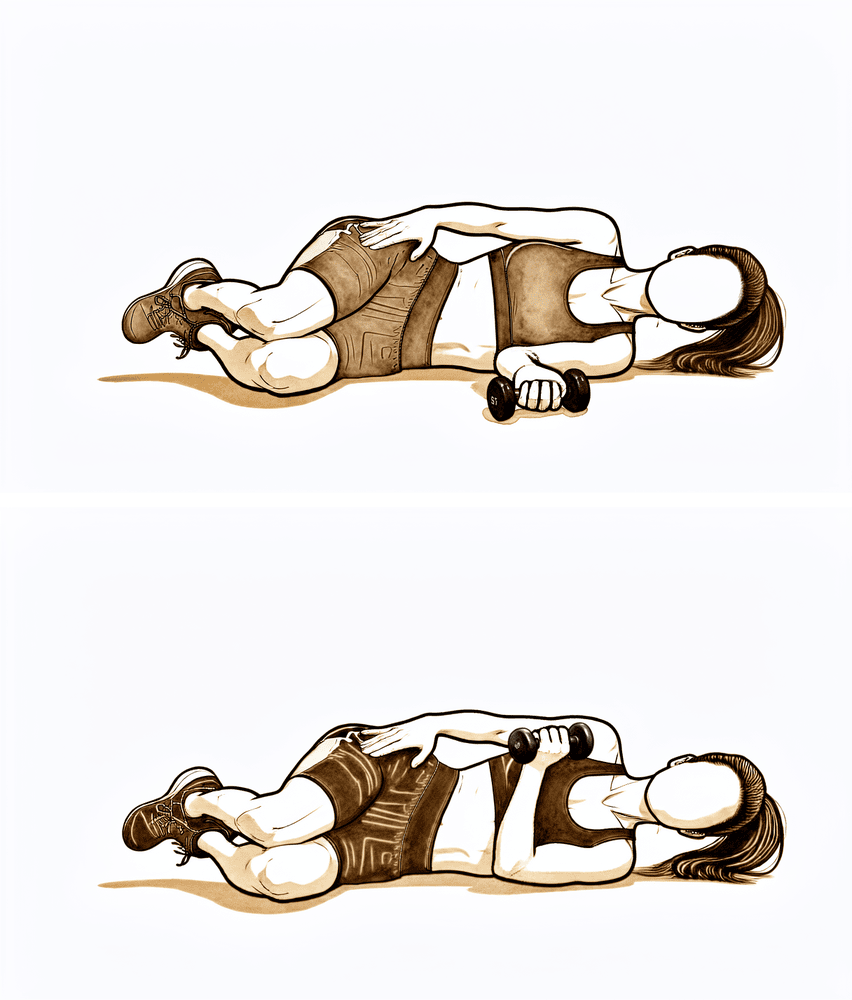
持轻重量侧卧位内旋(选项2)
棒式练习的替代方案,时机相同(约第12周起,待前侧肌肉愈合后)。侧卧于手术侧,肘部贴紧腰部并屈曲至90°;前臂旋转,使手部抬起轻重量物朝向腹部,然后有控制地放下。您的物理治疗师会选择适合您的版本——两者均能锻炼相同的内旋力量。
在您的物理治疗师指导下
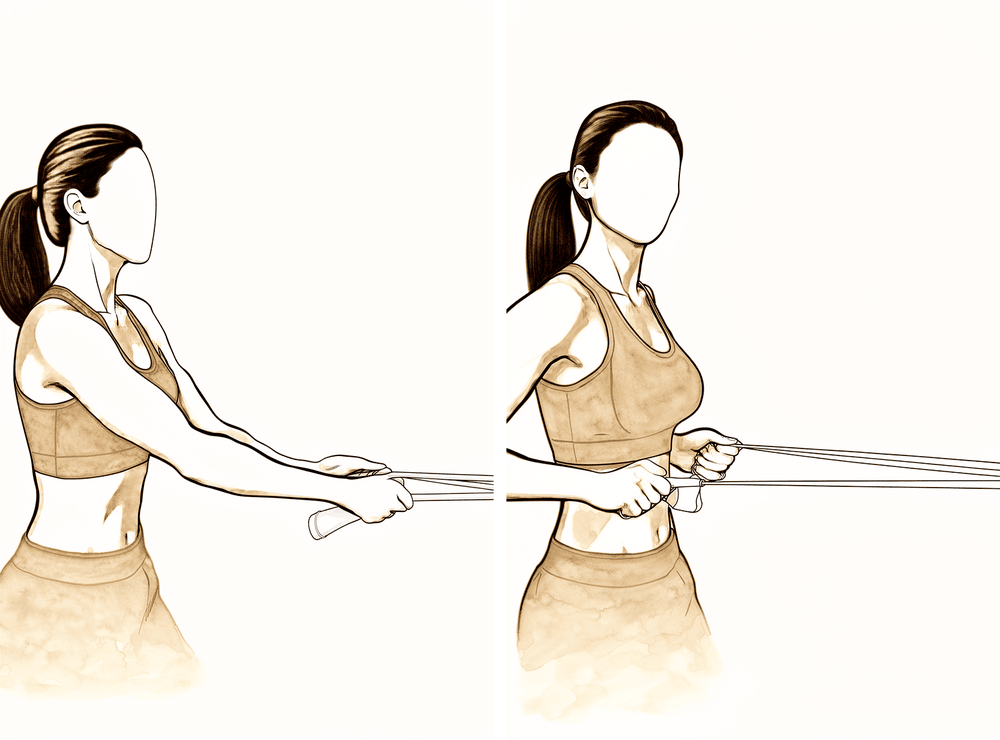
Kieran Hirpara 4.0
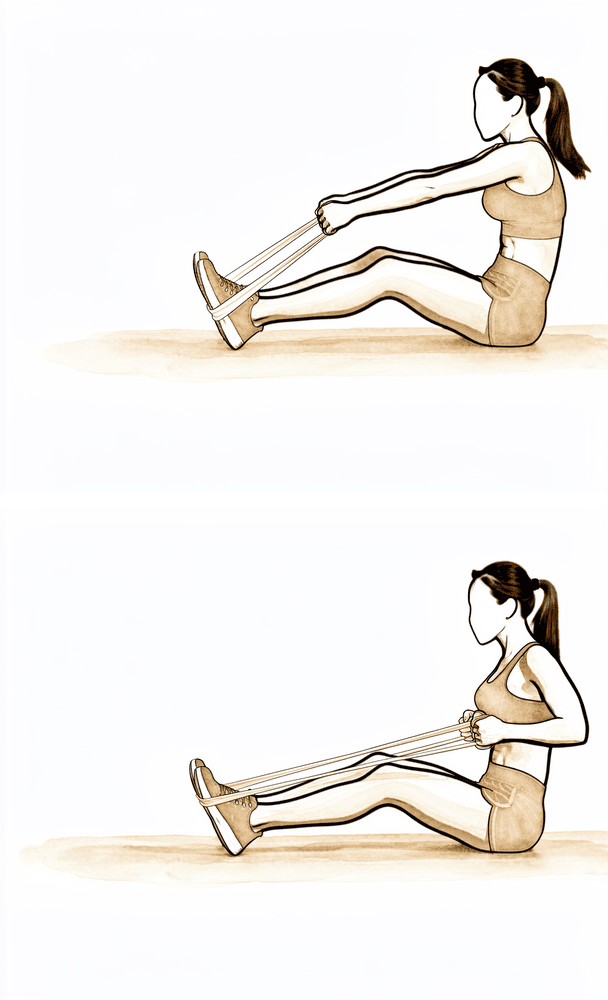
弹力带划船
约第10周起,在确认骨愈合后。将弹力带固定于身前,将手柄拉向自己,使肘部向后并挤压肩胛骨,然后有控制地还原。使用轻阻力弹力带,进行高次数重复;若肩部出现疼痛,立即停止。
在您的物理治疗师指导下
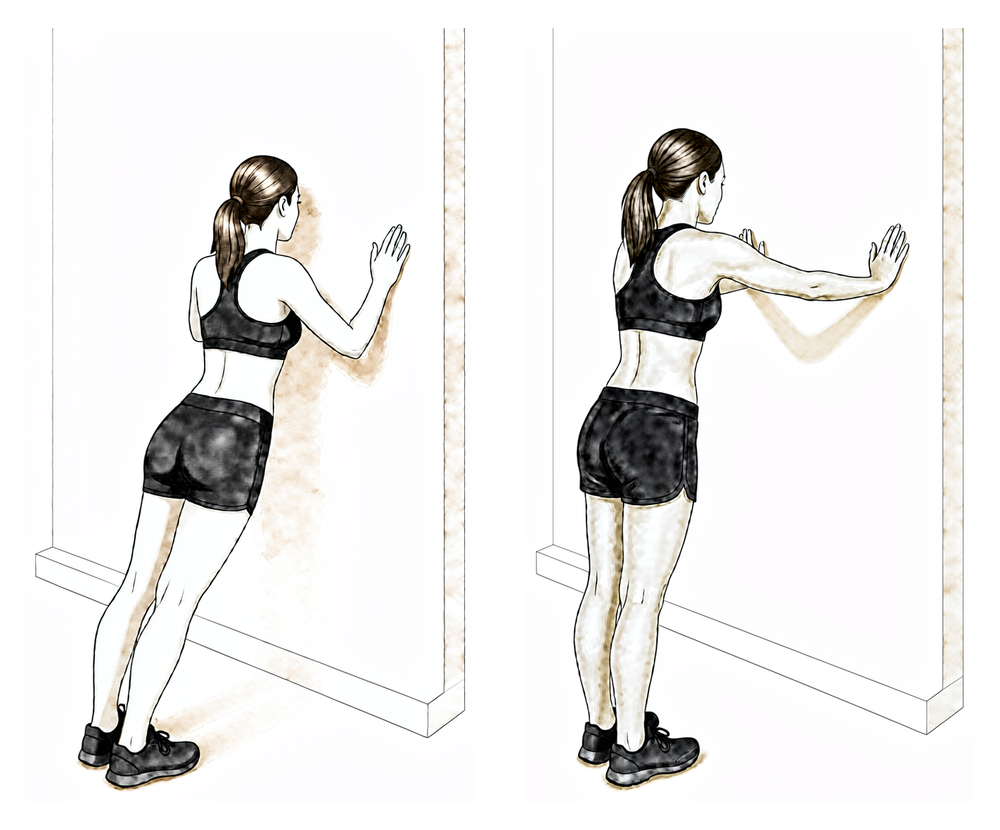
Kieran Hirpara 4.0
墙面俯卧撑加(push-up-plus)
大约从第10周开始,一旦确认骨性愈合。请靠墙进行(不要靠地面)。做一个缓慢的俯卧撑;在顶端位置,再向前推一点,使肩胛骨相互分开,上背部略微拱起。保持肘部不要向后超过肩部的水平。此动作锻炼前侧肌肉(肩胛下肌)——保持力度轻柔且无痛。
在您的物理治疗师指导下
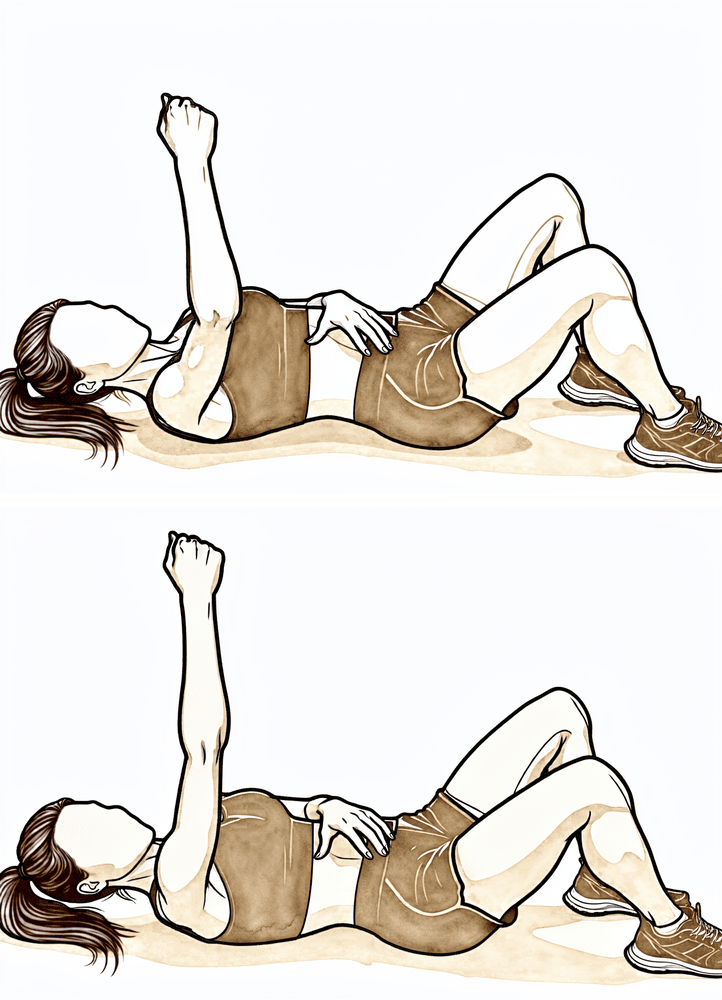
Kieran Hirpara 4.0
仰卧位前冲拳
大约从第10周开始,一旦确认骨愈合。仰卧,手臂向上指向天花板,手持轻重量或不持重量。将手进一步向上伸向天花板,使肩胛骨离开床面,然后有控制地放下。轻柔的肩胛下肌训练——保持力度轻柔。
在您的物理治疗师指导下
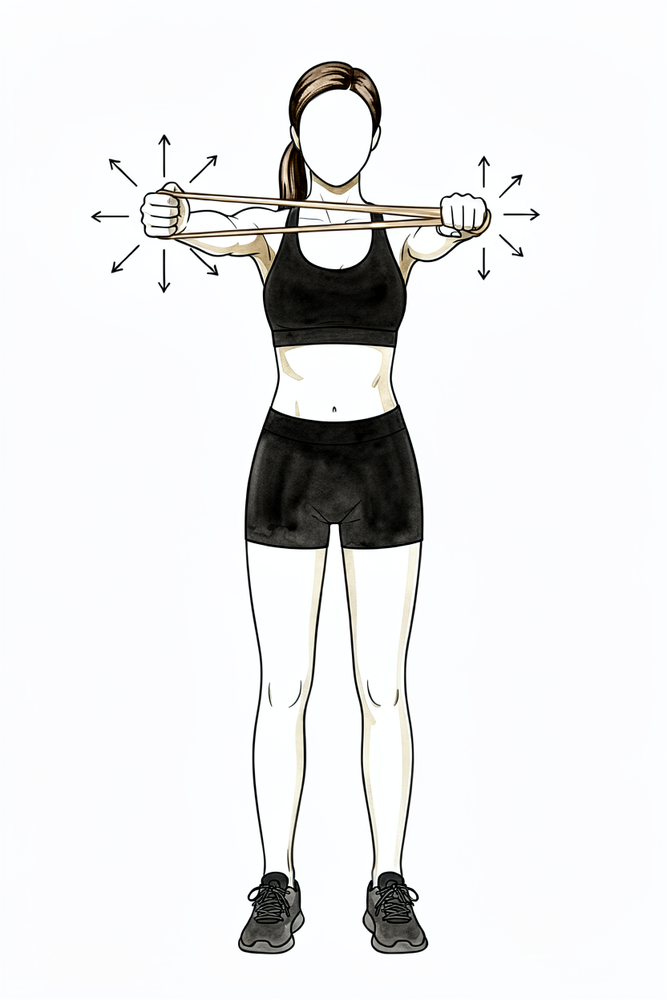
Kieran Hirpara 4.0
节律性稳定
将手臂支撑在身体前方,高度约与肩部齐平,请您的物理治疗师(或您的健侧手)从不同方向施加小而轻柔的推力,同时您保持手臂静止且稳定——不要让其移动。这旨在训练肩部的稳定肌群做出反应。所有用力动作均需保持轻柔。
在您的物理治疗师指导下
一旦您的外科医生确认骨骼已愈合,您即可开始对肩部进行负重训练。强化训练初期使用轻阻力带和轻重量:高次数、低负荷,并逐步增加。黄金法则是一次只针对一个方向:只有在某个方向拥有舒适且接近全范围的关节活动度后,才可对该方向进行强化。内旋及前侧肌肉(肩胛下肌)的强化训练仍需谨慎且延后引入,因为该肌肉在您的手术中接受了修复。
- 吊带: 无需佩戴;在针对某一方向进行负重前,预期该方向已具备接近全范围且舒适的活动度。
- 练习: 使用逐渐增加的轻重量进行满罐式举臂(full-can);轻重量二头肌弯举;阻力带划船;针对前侧肌肉进行墙面俯卧撑加(push-up-plus)及仰卧前冲拳;使用棍棒沿背部进行内旋训练(轻柔进行,约在第12周前侧肌肉愈合后开始)。逐步增加负荷,若肩部出现疼痛或肿胀则立即停止。
进入下一阶段的条件: 您能在自身力量控制下实现全范围、无痛的活动,且肩胛骨控制良好;强化训练后无疼痛或肿胀;在肩高以下进行抗阻抬举时感觉舒适;且外旋力量正在向健侧水平发展。
第四阶段——过头动作与重返运动(第 16–20 周)
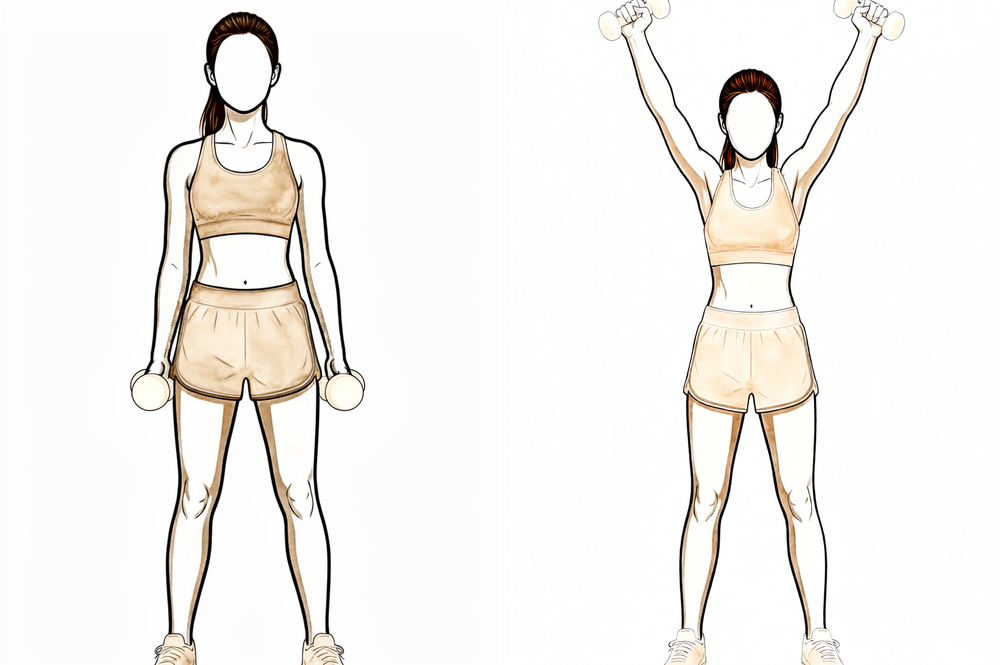
Kieran Hirpara 4.0
过头满罐式举臂
大约从第16周开始,当您在肩部高度以下的力量恢复良好时。将手臂向前并略向侧方抬起,保持拇指朝上,现在逐渐过渡到肩部高度以上,使用较轻且逐渐增加的重量。如果肩部疼痛或之后出现肿胀,请停止。
在您的物理治疗师指导下
Kieran Hirpara 4.0
渐进式弹力带划船
继续弹力带训练,逐步增加阻力和重复次数,为更大强度的训练和专项运动体能储备奠定基础。保持良好的肩胛骨控制。
在您的物理治疗师指导下
本阶段是恢复肩部完全功能以及逐步重返运动和重体力工作的桥梁。您需保持已获得的关节活动度,并建立自信使用(包括过头动作)所需的肌力、爆发力和耐力。恢复过程是分阶段的,而非突然进行;对于运动而言,采用逐步增加训练量和强度的间歇训练计划是重返运动最安全的途径。
- 吊带: 无需使用。
- 练习: 当肩部以下高度的肌力良好后,使用轻重量并逐渐增加重量进行过头满罐式举臂练习;渐进式弹力带划船;针对特定运动和工作的体能训练,以及在阶段后期,视情况适当进行受控的高速度(增强式)训练。可加入俯卧撑,但需避免肘部过度后移。
重返运动的标准: 您的外旋肌力与健侧相差约 8–10% 以内,且整体旋转肌力均衡增强;在较大负荷下,您拥有完全且无痛的活动度,且无反应性肿胀;并通过针对您特定运动或工作的专项测试。重返运动通常在 20 周左右,而对抗性或碰撞类运动往往稍晚(约 5–6 个月),这基于满足上述标准以及 Hirpara 医生和您的物理治疗师的许可,而非仅依据日历时间。
重返运动与工作
您的恢复标准基于以下条件:无疼痛、活动范围、肌力和耐力均达到要求,并经Hirpara医生和您的物理治疗师共同确认,而非仅由时间决定。由于Latarjet手术使用坚固的骨块,恢复通常比软组织修复更快,但所有比轻柔活动更重的动作都需等待骨块愈合(大约6–8周,由您的外科医生确认)。
- 轻度、胸部高度的活动大约从10–15周开始恢复。
- 过头及投掷类活动大约从4个月开始。
- 重返运动的平均时间约为20周;完全接触性或碰撞性运动通常需要约5–6个月,且必须满足力量和活动范围标准后方可进行。
您的方案之后
本方案与诊所的一般康复建议配合使用;请参阅术后疼痛管理和伤口护理。
Evidence & references
This is the clinical evidence summary written for health professionals. It is technical, and it lists the research this page was built from. You do not need to read it to understand your treatment or to make a decision about it.
Topic: Open Latarjet / Bristow-Latarjet coracoid transfer for anterior glenohumeral instability with glenoid bone loss (>~20% glenoid, or off-track Hill-Sachs / failed soft-tissue repair). Compiled: 2026-06-16. Sources: local RAG Orthopaedic corpus + published fellowship/PT "standard of care" protocols.
How Latarjet rehab DIFFERS from arthroscopic Bankart
- It is a BONY procedure (coracoid autograft screw-fixed to the antero-inferior glenoid). Fixation is rigid -> the structural construct is stronger than soft-tissue suture anchors, so AROM and return to sport are generally FASTER than Bankart (Beletsky 2020: mean RTS ~19.6 wk Latarjet vs ~32.4 wk Bankart, p<0.001).
- BUT two distinct soft-tissue structures must be protected that Bankart does not involve: (1) the subscapularis (split, or taken down and repaired, to pass the graft); (2) the coracoid graft osseous union (~6-8 weeks to unite) plus the conjoint-tendon (biceps short head + coracobrachialis) "dynamic sling" still attached to the graft.
- Graft-protection precautions: avoid aggressive shoulder extension and combined extension + external rotation stretching early (tensions the conjoint origin on the graft). Progress biceps/coracobrachialis strengthening gradually. If subscapularis was taken down & repaired, slow ER progression and avoid aggressive IR strengthening until subscap healed - get an intra-operative "safe-zone" ER from the surgeon.
- Expect a permanent mild ER deficit (Hovelius: mean loss ~7.4 deg in adduction, ~8 deg in abduction) - this is accepted, not a complication.
Consensus phased timeline (BWH Latarjet standard of care)
| Phase | Week window | Sling/brace | ROM allowed & restrictions | AROM / strengthening | RTS |
|---|---|---|---|---|---|
| I - Immediate post-surgical | 0-2 wk | Sling at all times (remove only to shower, arm at side); towel under elbow to prevent hyperextension (graft protection); sleep in sling | No AROM. PROM only, no forcing: flexion/elevation & scaption to tolerance; IR to 45 deg at 30 deg abd; ER 0-25 deg in scapular plane at 30-40 deg abd (open-packed); respect anterior capsule; use intra-op ER measurements | Scapular isometrics, ball squeezes; cryotherapy | None |
| II - Intermediate / ROM | 3-9 wk | Wean from sling beginning wk 3 | Early (wk 3-4): ER to 0-45 deg at 30-40 deg abd, IR 45 deg at 30 deg abd. Late (wk 6): ER to tolerance, progress to multiple abd angles once >=35 deg; IR multi-angle. AAROM from wk 3 -> AROM by ~wk 6 (good mechanics, up to 90-110 deg elevation) | Begin balanced AROM/strengthening late phase II (~wk 6): high-rep/low-load (1-3 lb), full-can scaption to 90 deg, ER/IR tubing at 0 deg abd (towel roll), prone rows, rhythmic stabilisation. Subscap-specific work (upper+lower fibres) | None |
| III - Strengthening | 10-15 wk | None | Continue A/PROM; near-full ROM before loading a plane | Biceps curls light; progressive pec major/minor (avoid anterior-capsule-stress positions); subscap strengthening (push-up plus, cross-body diagonals, IR band 0/45/90, forward punch) | Chest-level functional activities |
| IV - Overhead / return to activity | 16-20 wk | None | Full pain-free ROM | Overhead strengthening once sub-90 strength good; progressive weightlifting (15-25 reps); plyometrics/interval program if cleared; push-ups allowed but elbows not past 90 deg | Throwing/overhead not before 4 months; pre-injury sport when cleared by MD |
Active ROM start: AAROM wk 3, AROM ~wk 6. Strengthening start: scapular isometrics immediately; isotonic/RC strengthening ~wk 6. RTS: chest-level ~10-15 wk; overhead/throwing >=4 months; full/contact sport typically ~5-6 months (RAG cohorts: open Latarjet RTS averages ~6 months; bone-block soft-tissue/graft healing requires the 3-month minimum). ER milestones to advance: PE >=155 deg, ER within 8-10 deg of contralateral at 20 deg abd and >=75 deg at 90 deg abd.
Graft-protection summary (the Latarjet-specific precautions): no aggressive extension or extension+ER stretch early; protect conjoint tendon/biceps origin; protect subscapularis (slower ER + delayed IR strengthening if taken down); no pec flys/wide-grip bench/military press/behind-neck lat pulls; tricep dips avoided; osseous union ~6-8 wk gates heavier loading.
Key controversies & evidence flags
-
Is a sling even necessary after open Latarjet? An RCT (Kourimpetis/PMC9969622, "Is sling immobilization necessary after open Latarjet surgery...") challenges routine immobilisation - because rigid bony fixation may not need the soft-tissue protection a Bankart does. This is the leading edge of "accelerated Latarjet." Evidence: STRONG (single RCT) - emerging, not yet standard.
-
Accelerated Latarjet rehab / faster RTS. Multiple comparative studies (Beletsky 2020; Delgado 2025 matched-pair; Rogowski 2025 JSES) confirm Latarjet RTS is earlier than Bankart and that bony union (~3 months) - not soft-tissue - is the rate limiter. Rogowski (JSES 2025) argues functional dominant/non-dominant testing at 4.5 months predicts successful RTS better than time alone, supporting criteria-based acceleration. Evidence: MODERATE (good cohorts, no large RCT on the rehab pace itself).
-
Contact/collision-sport return & procedure choice. Latarjet is often preferred in collision athletes (rugby) precisely because of bone block + dynamic sling. Tanaka 2022 / Hirose 2026 (Bristow vs Latarjet in rugby) and Gowd 2021 (JSES, RTS after Latarjet) inform RTS rates and timing; subluxation/pain after RTS more frequent in some Latarjet vs Bristow series. Contact RTS still generally ~5-6 months and criteria-based. Evidence: MODERATE cohort-level.
-
Subscapularis split vs takedown-and-repair changes ER progression: takedown demands slower ER and delayed IR strengthening. Protocol explicitly defers to an intra-operative surgeon-defined ER "safe zone." Evidence: consensus / biomechanical rationale.
CITATIONS
Published rehabilitation protocols (URLs)
- Brigham & Women's Hospital, Dept. of Rehabilitation Services - Anterior Stabilization of the Shoulder: Latarjet Protocol (orig. 2009, updated May 2016): https://www.brighamandwomens.org/assets/BWH/patients-and-families/rehabilitation-services/pdfs/shoulder-latarjet.pdf
- Rehabilitation Guidelines for Latarjet/Coracoid Process Transfer (Eichinger, MD): https://www.josefeichingermd.com/pdf/rehab-guideline-for-latarjet.pdf
- Rehabilitation Protocol - Latarjet (Coracoid Transfer/Eden-Hybinette), Lindsay Sports Med (2025): https://www.lindsaysportsmed.com/pdf/laterjet-and-edenhybinette-center-2025.pdf
- Rehabilitation Protocol: Latarjet Coracoid Process Transfer (Utz, MD): https://www.christopherutzmd.com/pdfs/latarjet-protocol.pdf
- Latarjet Procedure overview - Physiopedia: https://www.physio-pedia.com/Latarjet_Procedure
Local RAG corpus (article / journal / year)
- Beletsky A, Cancienne JM, Manderle BJ, et al. A Comparison of Physical Therapy Protocols Between Open Latarjet Coracoid Transfer and Arthroscopic Bankart Repair. Sports Health. 2020. [protocol comparison - Latarjet RTS ~19.6 wk vs Bankart ~32.4 wk, p<0.001; AAROM ~6-8 wk]
- Matache BA, Hurley ET, Wong I, et al. Anterior Shoulder Instability Part III - Revision Surgery, Rehabilitation and Return to Play - An International Consensus Statement. Arthroscopy. 2021;38(2). (Poses the open questions on immobilisation duration after coracoid transfer vs Bankart vs glenoid bone grafting.) [consensus]
- Gowd AK, Liu JN, Polce EM, et al. Return to sport following Latarjet glenoid reconstruction for anterior shoulder instability. Journal of Shoulder and Elbow Surgery. 2021;30(11):2549-2559. [systematic review - RTS]
- Rogowski I, Nove-Josserand L, Godeneche A, et al. Are the dominant-nondominant functional differences at 4.5 months after open Latarjet better predictors for successful RTS at 1 year than operated-nonoperated differences? Journal of Shoulder and Elbow Surgery. 2025;34(10):2338-2349. (3-month delay needed for graft healing; RTS ~6 months; criteria-based prediction.) [prospective cohort]
- Delgado C, Calvo E, Valencia M, et al. Arthroscopic Bankart Repair Versus Arthroscopic Latarjet for Anterior Shoulder Instability: A Matched-Pair Long-Term Follow-up Study. Orthopaedic Journal of Sports Medicine. 2025. [matched-pair comparative]
- Tanaka M, Hanai H, Kotani Y, et al. Open Bristow Versus Open Latarjet for Anterior Shoulder Instability in Rugby Players. Orthopaedic Journal of Sports Medicine. 2022. [comparative - contact athletes]
- Hirose T, Tanaka M, Nakai H, et al. Comparing Bristow and Latarjet procedures for anterior shoulder instability in competitive rugby players. Journal of Shoulder and Elbow Surgery. 2026;35(4). [within-subject comparative]
- Bonnevialle N, Girard M, Dalmas Y, et al. Short-Term Bone Fusion With Arthroscopic Double-Button Latarjet Versus Open-Screw Latarjet. The American Journal of Sports Medicine. 2021. [fixation/union]
- Salem HS, Vasconcellos AL, Sax OC, et al. Intra-articular Versus Extra-articular Coracoid Grafts: A Systematic Review of Capsular Repair Techniques During the Latarjet Procedure. Orthopaedic Journal of Sports Medicine. 2022. (Documents post-Latarjet ER loss ~4.5-6.3 deg.) [systematic review]
Additional online RCT/evidence
- "Is sling immobilization necessary after open Latarjet surgery for anterior shoulder instability? A randomized controlled trial." PMC9969622: https://www.ncbi.nlm.nih.gov/pmc/articles/PMC9969622/ [STRONG - RCT challenging routine immobilisation]
- "Latarjet procedure enables 73% to return to play within 8 months depending on preoperative SIRSI and Rowe scores." PMC8298242: https://www.ncbi.nlm.nih.gov/pmc/articles/PMC8298242/ [cohort - RTS rate/timing]
Overall evidence grade for the phased protocol itself: CONSENSUS / institutional standard-of-care (Level V). The "sling necessary?" question is the only RCT-level datapoint; accelerated/criteria-based RTS rests on good comparative cohorts (Level III).





