

桡骨头置换术 资料
本方案指导您在 Mater Private Hospital Rockhampton 接受 Kieran Hirpara 医生进行的桡骨头置换术(即用小型金属植入物替换粉碎性骨折的桡骨头)后的康复过程。方案首先介绍您的居家锻炼计划,随后是为您手部治疗师撰写的结构化临床方案;请在首次治疗就诊时携带此页面或其 PDF 文件,以确保您的康复过程协调一致。您的治疗师可能会根据您的康复进展以及手术中具体修复的内容对计划进行调整。
如果您对术后伤口有任何疑虑,请联系诊所前台。通常,拍摄伤口照片并通过电子邮件发送以供审阅会很有帮助。
预期情况
桡骨头是前臂两根骨头之一(桡骨)的圆形顶端,位于其与肘关节交汇处。当骨折碎片过多而无法修复时,将植入一枚小型金属假体,以恢复肘关节的稳定性和关节面匹配度,并重建前臂平滑的旋转轴。这通常作为更复杂损伤修复的一部分进行,例如一种有时被称为“恐怖三联征”的骨折脱位,其中桡骨头、冠状突的一部分以及肘关节侧方韧带同时受损。
由于假体恢复了稳定性,康复的重点是早期保护性活动以防止僵硬;此类损伤后肘关节极易发生僵硬,而预防僵硬的最佳方法就是尽早开始活动。在练习间隙,您的肘部会佩戴简易吊带以提供舒适感(而非铰链式支具),进行练习和清洗时需取下吊带。
以下两点决定了您开始活动的时机和活动范围:
- 已修复的韧带需要保护。 如果肘关节外侧韧带(外侧副韧带)已修复,早期需将前臂保持并练习于掌心向下(旋前)位;如果内侧韧带(内侧副韧带)已修复,则需保持掌心向上(旋后)位;若两者均修复,则保持中立中间位。您的治疗师会告知您适用哪种情况。
- 如果肘关节不稳定,必须保护其免受侧向(内翻)应力,且在早期避免完全伸直。 这就是为什么活动范围需分阶段逐步开放,而非一次性完全开放。
活动将稳步进展,强化训练通常从约六周开始,完全恢复活动约在三个月左右。假体和愈合过程会在数月内持续稳定,因此较重的负荷需逐步恢复。
注意事项与限制
- 按指示佩戴简易吊带以提供舒适支撑;它并非铰链式支具,需在进行锻炼和清洗时取下。
- 在早期锻炼期间,保持前臂处于治疗师指定的位置(若外侧韧带修复则掌心向下,若内侧韧带修复则掌心向上,若两者均修复则保持中立位),以保护修复部位。
- 切勿对肘部施加侧向(内翻)应力;早期应避免倚靠肘部或让手臂在无支撑的情况下悬垂于身体前方。
- 若被告知肘部不稳定,切勿在早期强行完全伸直;仅在允许的活动范围内伸直。
- 在获得许可前(通常为六周左右),切勿通过手术侧手臂进行提举、推、拉或承重;早期手部使用应保持轻微。
- 从一开始就保持肩部、腕部和手指的活动,且切勿在手臂佩戴吊带或无法安全控制方向盘时驾驶。
关于伤口、肿胀和瘢痕管理,请参阅本诊所的伤口护理指南。
您的锻炼
Kieran Hirpara 4.0
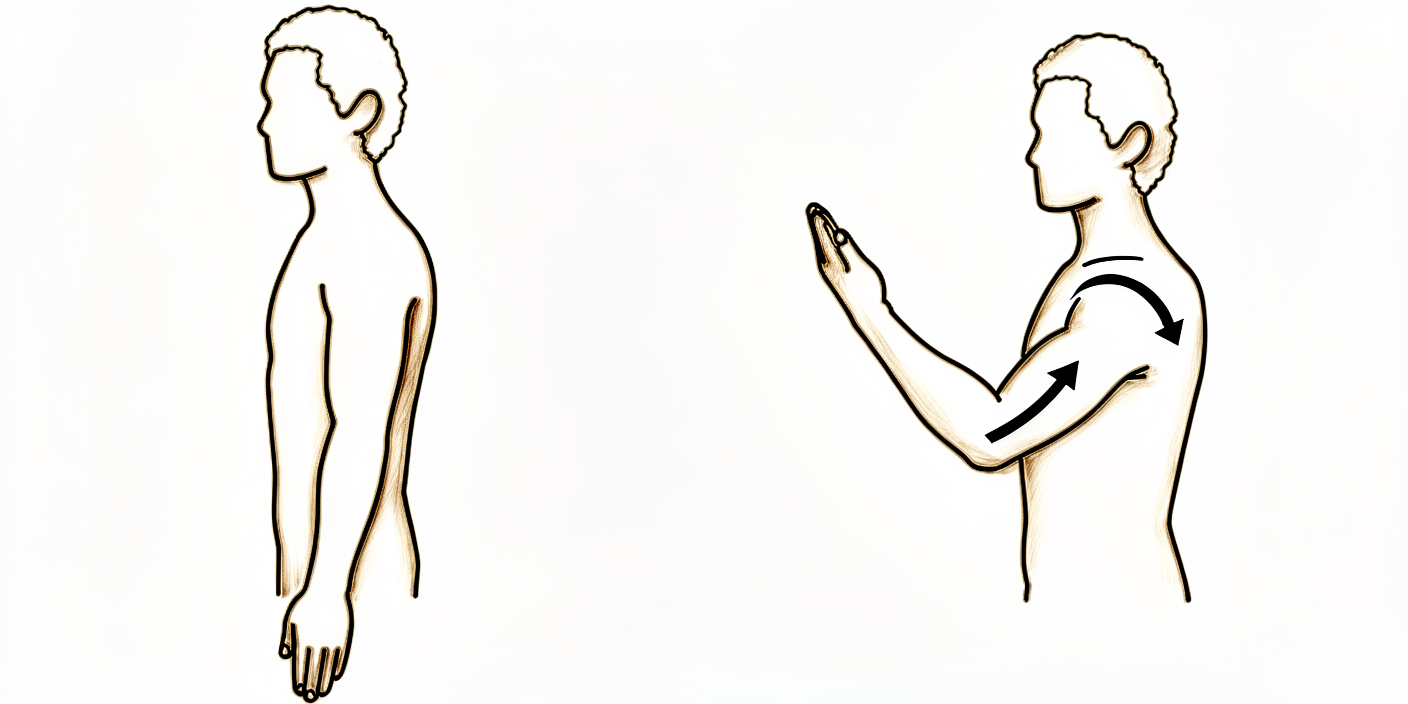
肘关节屈伸(主动辅助)
将手臂从悬吊带中取出,在您被允许的活动范围内,轻柔地弯曲和伸直手术侧的肘关节,用另一只手辅助引导,以免手臂过度用力。早期活动是此处最关键的事项——金属植入物已恢复了肘关节的稳定性,因此活动是安全的,早期活动正是防止肘关节僵硬的关键。如果医生对您完全伸直肘关节有限制,请严格遵守该限制。
10次,3–4次/天,在您允许的范围内
Kieran Hirpara 4.0
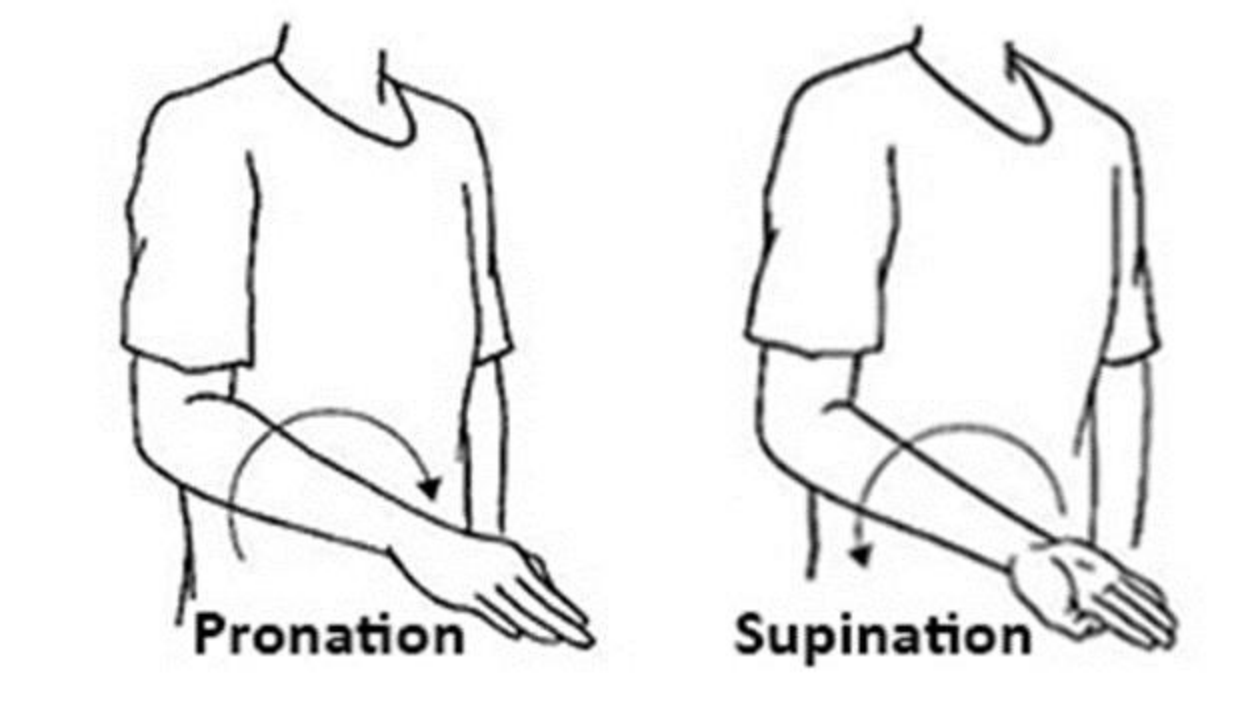
前臂旋转(掌心向上 / 掌心向下)
将肘部贴紧身体一侧并屈曲至直角,轻轻将手掌向上转向天花板,然后向下转向地面。保持肘部静止,仅让前臂旋转。早期,您可能会被要求偏向某一方向(掌心向下或掌心向上),以保护修复后的韧带——请遵循治疗师指示的方向。这有助于保持前臂的柔韧性,因为前臂僵硬是此类损伤后最早出现的症状之一。
每个允许方向各10次,每天3–4次
Kieran Hirpara 4.0
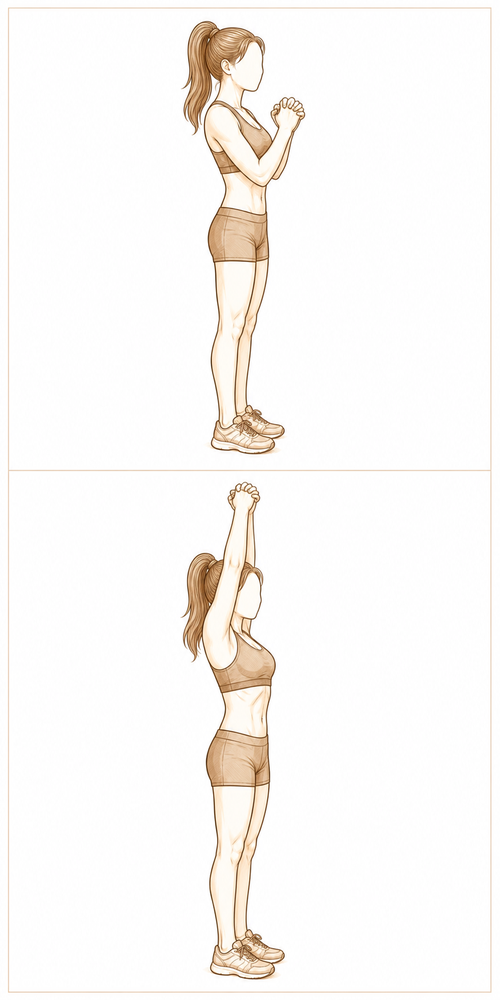
肩部和手部运动
从第一天起,请保持肩部、腕部和手指的自由活动,以防止肘部恢复期间出现僵硬。握紧拳头并伸展手指,环绕活动手腕,并轻柔地活动肩部。在舒适范围内,用手进行轻微的日常生活活动。这些动作均不会对肘部修复部位造成负荷。
各10次,每天数次
Kieran Hirpara 4.0
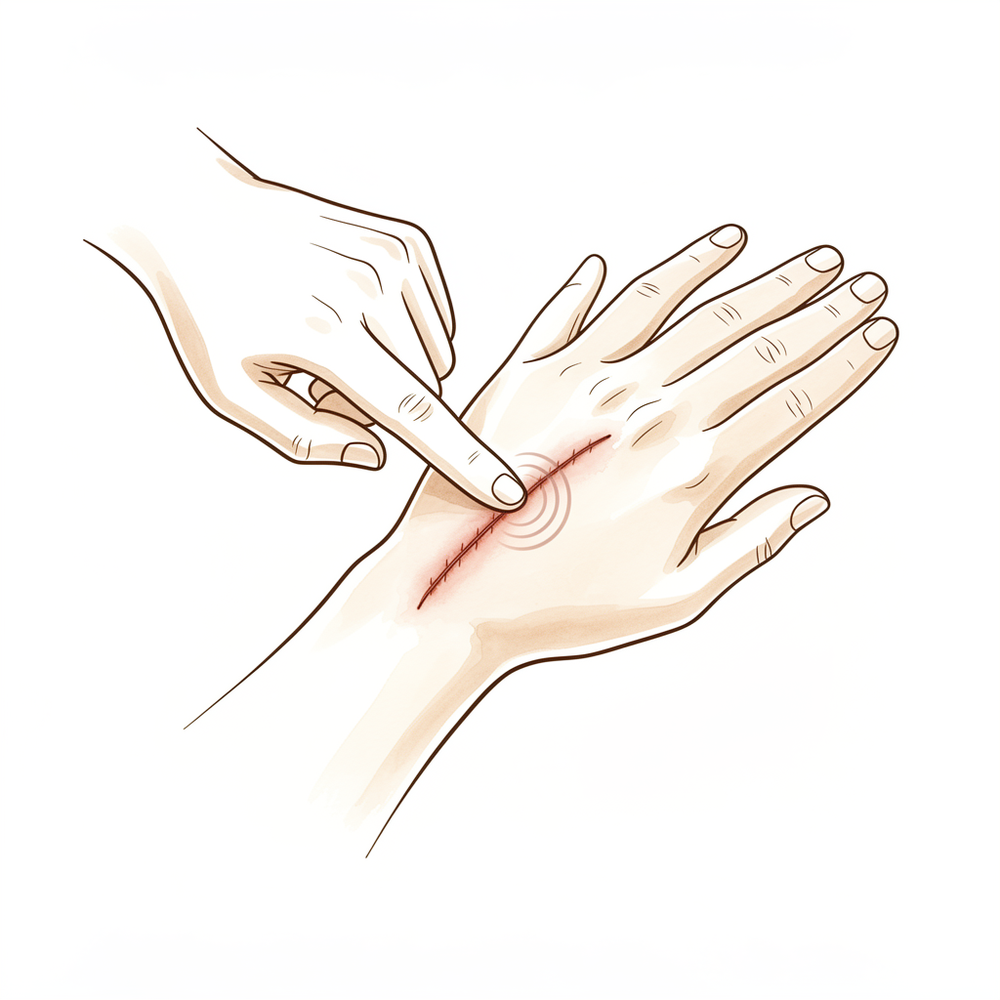
瘢痕护理
待伤口完全愈合且经外科医生或治疗师许可后,使用少量润肤霜以画小圈的方式按摩疤痕数分钟。这有助于保持疤痕柔软并降低其敏感度。在伤口完全闭合前请勿开始按摩。
几分钟,每天 2–3 次,愈合后
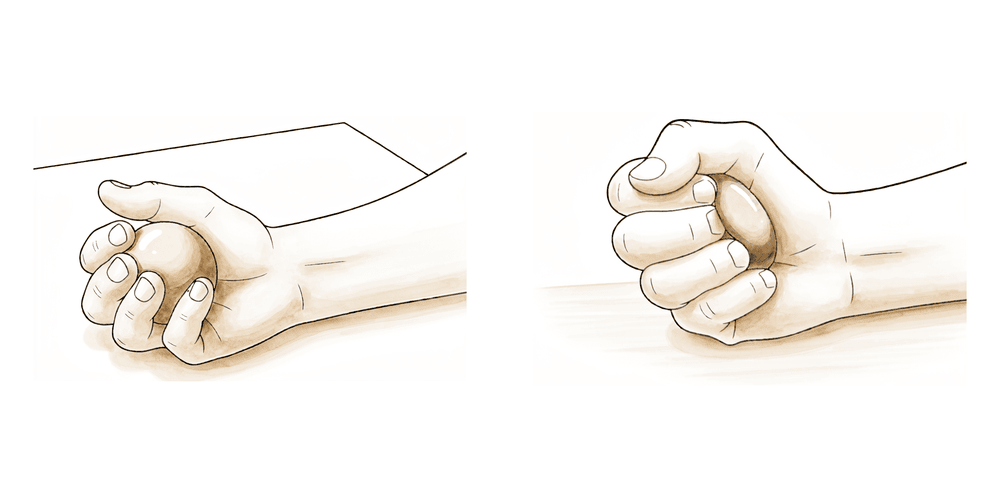
Kieran Hirpara 4.0
6周后开始强化训练
后期锻炼——仅在获得许可后开始,通常从术后六周左右开始。开始轻柔地强化肘部、前臂和抓握力——例如挤压软球,然后进行轻度的抗阻屈伸练习——并在随后的几周内逐渐增加强度。切勿急于进行较大负荷的训练;肘部在数月内仍在继续成熟。
根据您的手部治疗师指导(仅从约6周开始)
这些是您手册中的锻炼项目。仅在Hirpara医生和您的手部治疗师的指导下开始,并严格保持在您被允许的关节活动范围和前臂位置内。早期锻炼旨在保持肘部和前臂的活动,以防止僵硬,同时避免对任何修复部位造成过度牵拉:包括主动辅助的肘关节屈曲和伸直、在您允许方向上的轻柔前臂旋转,以及保持肩部和手部自由活动。强化训练和瘢痕护理属于后期阶段,在您获得明确许可之前不应开始。如果任何动作引起剧烈疼痛或感觉肘关节不稳,请立即停止。
您的临床方案
本页其余部分为桡骨头置换术(桡骨头关节成形术)后的分阶段康复临床方案。该手术通常用于治疗无法重建的粉碎性桡骨头骨折,且常作为恐怖三联征骨折脱位的一部分进行处理。本节内容应提供给手部治疗师,每个阶段均以通俗易懂的语言解释当前正在发生的情况。植入物恢复了稳定且匹配的桡桡关节,因此指导原则是早期保护性活动,以防止这些肘关节易出现的僵硬,其活动弧度和前臂旋转取决于任何侧副韧带和冠状突修复的完整性。
在治疗前,请查阅患者的手术报告及麻醉下检查的稳定性评估,并与主刀医生沟通以下事项:修复了哪些侧副韧带和/或冠状突、术中演示的稳定弧度以及保护性前臂旋转。Hirpara 医生使用简单吊带以提供舒适感(不使用铰链式支具),并在稳定性允许的情况下倾向于加速、早期活动的方案。前臂位置规则:外侧副韧带(LCL)修复 → 在旋前位进行锻炼/休息;内侧副韧带(MCL)修复 → 旋后位;两者均修复 → 中立中间位;避免内翻应力,且若肘关节曾不稳定,早期应避免终末伸展。
第一阶段 — 早期保护性活动(第 0 至 2 周)
在伤口稳定性允许的情况下(通常在第一周内),前两周即开始温和的保护性活动,以预防僵硬。手臂佩戴简易吊带以提供舒适感,进行锻炼和清洁时取下。肘关节在安全活动范围内活动,前臂保持针对所修复韧带的保护性旋转位置。
致您的手部治疗师:
健康教育与注意事项 - 佩戴简易吊带以提供舒适感(无需铰链式支具);进行锻炼和清洗时取下 - 在术中演示的稳定活动范围内开始主动辅助/主动肘关节屈伸;若肘关节不稳定,避免终末伸展 - 前臂旋转至保护性位置:若修复了外侧副韧带(LCL)则旋前,若修复了内侧副韧带(MCL)则旋后,若两者均修复则保持中立位 - 任何时间禁止内翻应力;若关节不稳定,仰卧位进行过头顶练习以中和内翻应力,并利用重力使关节对合 - 禁止通过手术侧手臂进行负重或推压
管理 - 伤口:按医嘱使用外科敷料;开始活动前确认伤口稳定性 - 水肿:抬高患肢、温和的手部泵动、必要时冰敷 - 锻炼:在稳定活动范围内进行主动辅助/主动肘关节屈伸;肘关节屈曲 90° 时,前臂向保护方向进行旋前/旋后;肩、腕、手及握力全范围主动活动
晋级标准 - 伤口趋于稳定;在保护性活动范围内可舒适、受控地活动
第二阶段——推进肘关节活动范围与前臂旋转(第 2 至 6 周)
从大约第 2 周至第 6 周,受保护的活动范围逐渐向完全伸直方向扩大,前臂旋转在两个方向上均逐步开放,目标是在约第 8 周时实现完全旋前/旋后。在此期间,仍暂缓进行强化训练和负重练习。
致您的手部治疗师:
评估 - 主动和被动肘关节屈伸及前臂旋转;疼痛与肿胀;伤口/瘢痕复查;稳定性症状
健康教育与注意事项 - 在稳定性允许的情况下,逐步推进至完全伸直(逐渐解除早期的伸直受限) - 逐步推进前臂双向旋转至完全范围,在此阶段早期仍需注意已修复韧带的保护 - 继续避免内翻应力及任何经手臂传导的负重
处理方案 - 练习:将肘关节屈伸活动范围扩大至完全;逐步推进旋前/旋后至完全活动范围(目标在约 8 周时达到完全);伤口愈合后开始瘢痕管理;继续肩关节/腕关节/手部活动范围训练 - 若存在残余不稳定性顾虑,过头(仰卧位)运动方案仍具实用性
晋级标准 - 接近完全无痛活动范围;无不稳定症状;疼痛 ≤3/10
第三阶段——强化与恢复(第6至12周及以后)
一旦活动度恢复且修复部位被认为稳固(通常在六周左右),即开始强化训练并逐步增加强度(先进行握力训练,随后进行抗阻肘部和前臂训练),并在随后的几周中持续进展。恢复较重活动的标准基于具体指标,通常在三个月左右。
致您的手部治疗师:
评估 - 肘部和前臂力量与对侧对比;负重时的疼痛/肿胀反应;视情况适当进行功能性及工作/运动特异性测试
教育与注意事项 - 从大约六周开始进行温和的抗阻强化训练(握力 → 抗阻肘屈伸及前臂旋前/旋后);逐步增加负荷 - 在可耐受范围内进展至功能性及工作特异性负荷;早期避免突然的重负荷或冲击负荷
管理 - 练习:渐进性抗阻肘部/前臂强化训练(弹力带 → 轻重量);握力强化;分级功能性负荷;继续任何残留的活动度训练 - 注意并报告持续或加重的疼痛、机械性症状或活动度丧失(可能为植入物过度填充/松动或滑车磨损),若恢复停滞或预后不佳,则转回主治医生 - 一旦活动度达到功能性水平且力量接近对称,可考虑出院
恢复完全活动的标准 - 功能性无痛活动范围;力量接近对称;负重下肘关节自信且稳定
恢复工作与活动
鼓励从术后初期开始进行轻度的日常手部活动(如进食、书写、轻度自我护理),以舒适为度,前提是肘部不涉及推、提或承重。由于手臂佩戴悬吊带期间或无法安全操控方向盘时不得驾驶,请在术后早期几周安排他人协助交通;待您取下悬吊带且能操控车辆后,经复诊确认方可恢复驾驶。
强化训练通常从术后约六周开始,并逐步增加强度。恢复较重体力劳动、提重物及体育运动通常在术后三个月左右,具体取决于肘部恢复无痛全范围活动、具备充分且对称的力量且肘关节稳定,由Hirpara医生及您的手部治疗师评估判定,而非仅依据时间。较重的体力劳动及对抗性运动遵循相同的基于标准的渐进恢复原则。
您的方案之后
本方案与诊所的总体康复建议相辅相成;请参阅术后疼痛管理、伤口护理和瘢痕管理。上述分阶段计划反映了桡骨头置换术及恐怖三联征重建术后已发表的康复指南,您的持续康复将由Hirpara医生和您的手部治疗师根据肘关节的进展情况以及具体修复内容,为您进行个体化指导。
Evidence & references
This is the clinical evidence summary written for health professionals. It is technical, and it lists the research this page was built from. You do not need to read it to understand your treatment or to make a decision about it.
Topic scope: post-operative rehabilitation after radial head arthroplasty (RHA) — replacement of an unreconstructable comminuted radial head with a metallic implant — performed either in isolation or, more commonly, as one component of reconstructing a fracture-dislocation (the "terrible triad": radial head + coronoid + lateral collateral ligament ± medial collateral ligament). The radial head is a key secondary stabiliser of the elbow against valgus and axial (posterolateral rotatory) load, so the implant exists to restore a stable, congruent radiocapitellar articulation and forearm axis — not merely to fill a defect.
Defining principle of the rehab here: the implant restores stability, so the dominant clinical enemy is stiffness, to which these elbows are strongly predisposed. The rehab is therefore an early protected-motion pathway — start moving within days to a week — explicitly gated by the integrity of the collateral-ligament and coronoid repairs done at the same operation. The two deliberate restraints are (1) the forearm rotation position that offloads the repaired ligament (pronation protects a repaired LCL; supination protects a repaired MCL; neutral mid-range when both), and (2) avoidance of varus stress and, where the elbow was unstable, early terminal extension. A simple sling is worn for comfort — not a hinged brace. The single biggest branch point is how much residual instability was demonstrated on examination under anaesthesia, which determines how fast the arc and forearm rotation are released.
A. PROCEDURE OUTCOMES (radial head arthroplasty; repair-vs-replace context)
Metallic RHA is a reliable reconstruction for the unreconstructable radial head, and — critically for rehab — it restores enough stability to permit early motion even in the setting of associated dislocation, provided the ligaments and coronoid are addressed.
- RHA restores elbow stability and kinematics when the native head is unreconstructable, but ligament repair is required to fully restore stability. Cadaveric work shows radial head excision alters kinematics and stability, arthroplasty restores them in the ligament-intact elbow, and in the ligament-disrupted elbow arthroplasty plus LCL repair is needed to correct varus–valgus laxity [Beingessner et al., J Bone Joint Surg Am 2004, DOI 10.2106/00004623-200408000-00018]. Strong (mechanistic/biomechanical).
- RHA gives functional, durable ROM in unstable elbow injuries equivalent to stable injuries. A 15-year single-surgeon series (68 patients) found patients with unstable radial head fractures plus dislocation achieved flexion and rotational arcs similar to stable injuries, with no difference in complication rate or implant survivorship — though supination loss was ~10° greater in the unstable group [Lott et al., J Shoulder Elbow Surg 2018, DOI 10.1016/j.jse.2017.10.011]. Moderate (Level II cohort).
- Long-term monopolar implant survival is good, with stiffness/sizing the main failure modes. A 15-year follow-up of the Acumed anatomical (press-fit, monopolar) implant for Mason III–IV fractures confirms durable function and survival, with the principal complications being joint stiffness, malpositioning and improper sizing [Tarallo et al., J Shoulder Elbow Surg 2026, DOI 10.1016/j.jse.2025.05.038]. Moderate (long-term cohort).
- Implant failure/revision risk is real, especially with associated instability. In a young active (military) cohort, RHA carried higher implant-failure rates than ORIF (20% vs 2.9%), and dislocation, coronoid fracture and concomitant ligament repair each predicted complications — underscoring that the injury complex, not just the implant, drives outcome [Kusnezov et al., HAND 2017, DOI 10.1177/1558944717715136]. Moderate.
- Terrible-triad reconstruction aims explicitly to restore stability sufficient for early motion. Comprehensive reviews frame the entire surgical sequence (LCL repair, radial head fix/replace, ± coronoid, ± MCL/fixator) as a means to permit early ROM and pre-empt stiffness, posttraumatic arthrosis and instability [Fahs et al., J Am Acad Orthop Surg 2024, DOI 10.5435/jaaos-d-24-00310]. Moderate–strong (narrative review).
B. REHABILITATION / THERAPY EVIDENCE
The rehab evidence base is built on biomechanics + surgical-series protocols rather than RCTs: there is strong agreement on early protected motion and on forearm-position-based ligament protection, but the exact arc and timing are individualised to intra-operative stability.
- Early motion is the consensus priority to prevent stiffness. Across operative series and textbook protocols, formal active and active-assisted ROM is begun within the first week once wound stability is confirmed, with splinting between sessions usually discontinued by 2–3 weeks and strengthening from ~6 weeks [Monica & Mudgal, Hand Clin 2010, DOI 10.1016/j.hcl.2010.04.008; Duckworth et al., Clin Orthop Relat Res 2014, DOI 10.1007/s11999-014-3516-y]. Moderate (consensus/series).
- Motion is gated by stability, with varus stress avoided at all times. Where instability is a concern, an overhead (supine) rehabilitation protocol begun ~10–14 days post-op achieves early motion while gravity coapts the joint and neutralises varus; "a stiff stable elbow is preferred over a loose incongruous one" [Rockwood and Green's Fractures in Adults, 2019]. Moderate (textbook consensus).
- Forearm rotation is positioned to protect the repaired ligament. Published RHA protocols position and exercise the forearm in pronation when the LCL was repaired, supination when the MCL was repaired, and neutral mid-range when both were repaired, progressing to full rotation as the repair consolidates [single-centre RHA protocol & narrative review, ResearchGate 2018; UVA / Christ Hospital RHA PT protocols — see URLs]. Weak–moderate (protocol consensus).
- A coronoid fracture treated without fixation does not preclude early motion in selected triads. Where the LCL and radial head are addressed and intra-operative fluoroscopic stability is confirmed, type I–II coronoid fractures can be left unfixed and still rehabilitated with early motion to good ROM and DASH scores [Papatheodorou et al., Clin Orthop Relat Res 2014, DOI 10.1007/s11999-014-3471-7]. Moderate (Level IV series).
- Restoring radiocapitellar contact (by replacement) is what permits the early-motion pathway in the unstable elbow; conservative or excision pathways are reserved for stable patterns and depend on the same early-mobilisation principle [Charalambous et al., J Shoulder Elbow Surg 2011, DOI 10.1016/j.jse.2011.02.013]. Moderate.
Recovery trajectory (expected, evidence-anchored)
| Phase | Window | Restraint | Therapy focus | Strength / load | Notes |
|---|---|---|---|---|---|
| I — Early protected motion | Week 0–2 (often start <1 wk) | Simple sling for comfort (no hinged brace); stable-arc only; forearm in ligament-protective rotation; no varus stress | Active/active-assisted elbow flexion–extension within the intra-operative stable arc; forearm pro/sup in the protected direction; full shoulder/wrist/hand ROM; supine overhead programme if unstable | None | Wound stability confirmed before motion; "stiff-stable > loose-incongruous" |
| II — Arc & rotation progression | Week 2–6 | Release extension block / forearm rotation gradually as stability allows | Progress elbow arc to full extension; open forearm rotation both directions; scar management once healed | None | Aim full pronation/supination by ~8 weeks; supination is the slowest to recover (~10° residual loss common) |
| III — Strengthening & return | Week 6–12+ | Restrictions lifted as repairs consolidate | Grip → resisted elbow/forearm strengthening; graded functional and work-specific loading | Begin ~6 wk, build gradually | Return to heavier work/sport criterion-based ~3 months; watch for overstuffing/loosening/capitellar wear |
(Phase windows mirror the precautions in the patient protocol; they are typical, stability-gated guides, not trial-derived deadlines.)
C. KEY CONTROVERSIES / EVIDENCE QUALITY
- Repair (ORIF) vs replace (RHA) the radial head. For reconstructable heads, ORIF is generally preferred and no prosthesis equals the native head biomechanically; for unreconstructable comminution (Mason III–IV) or in the unstable/dislocated elbow, RHA is the more reliable option because fixation constructs fail under the higher stresses [Kusnezov et al. 2017; Charalambous et al. 2011; Leigh & Ball, J Shoulder Elbow Surg 2012, DOI 10.1016/j.jse.2012.03.005]. Moderate; selection-dependent.
- Terrible-triad early motion vs protected immobilisation. Modern practice favours restoring enough stability (LCL ± radial head ± coronoid ± MCL/fixator) to permit early motion and avoid stiffness; the supine/overhead protocol exists precisely to reconcile early motion with residual instability. The trade-off ("stiff-stable preferred over loose-incongruous") is consensus, not RCT-settled [Rockwood and Green 2019; Fahs et al. 2024]. Moderate (consensus).
- Monopolar vs bipolar implants. Both are used; bipolar designs were intended to self-align and tolerate sizing imperfection, while monopolar anatomical implants show good long-term survival. No clear superiority is established, and overstuffing/sizing error harms either design more than the bearing type does [Tarallo et al. 2026; Doornberg et al., J Bone Joint Surg 2007, DOI 10.2106/jbjs.e.01340]. Weak (no head-to-head superiority).
- Implant-related complications. Overstuffing the radiocapitellar joint, malsizing and stem loosening cause capitellar erosion/osteopenia, pain and stiffness; capitellar erosion is reported from metal-on-cartilage articulation, and accurate head height/diameter is the key technical guard [Van Riet et al., J Bone Joint Surg 2004, DOI 10.2106/00004623-200405000-00028; Monica & Mudgal 2010]. Rehab cannot fix a malsized implant — persistent loading pain/stiffness warrants surgical review. Moderate.
- Supination is the laggard. Across series, forearm supination is the motion most likely to remain mildly deficient (≈10° loss), partly from scarring and partly from MCL-protective early positioning; patients should be counselled accordingly [Lott et al. 2018]. Moderate natural-history.
D. EVIDENCE STRENGTH FLAGS (summary)
- STRONG (biomechanical / mechanistic): RHA restores elbow stability and kinematics only in concert with collateral-ligament repair (varus–valgus laxity corrected by RHA + LCL repair, not RHA alone).
- MODERATE: functional ROM after RHA in unstable injuries equivalent to stable injuries with good implant survivorship (Level II–IV cohorts); long-term monopolar implant survival with stiffness/sizing as main failure modes; early-motion-to-prevent-stiffness as the governing rehab principle; supine/overhead protocol for the unstable elbow; supination as the slowest-recovering arc.
- WEAK / CONSENSUS: the specific forearm-position-by-repaired-ligament rehab rule (pronation for LCL, supination for MCL, neutral for both) and the exact phase timings (protocol-derived, stability-gated, not RCT-validated); monopolar-vs-bipolar bearing choice (no proven superiority).
CITATIONS
RAG corpus (180,000+ Orthopaedic articles)
- The Effect of Radial Head Excision and Arthroplasty on Elbow Kinematics and Stability. J Bone Joint Surg Am. 2004. DOI: 10.2106/00004623-200408000-00018
- Radial Head Arthroplasty. Hand Clin. 2010. DOI: 10.1016/j.hcl.2010.04.008
- Results after radial head arthroplasty in unstable fractures. J Shoulder Elbow Surg. 2018. DOI: 10.1016/j.jse.2017.10.011
- Long-term survival of Acumed anatomical radial head implant for Mason type III-IV fractures: a 15-year follow-up. J Shoulder Elbow Surg. 2026. DOI: 10.1016/j.jse.2025.05.038
- Operative Management of Unstable Radial Head Fractures in a Young Active Population. HAND. 2017. DOI: 10.1177/1558944717715136
- Management of Elbow Terrible Triad Injuries: A Comprehensive Review and Update. J Am Acad Orthop Surg. 2024. DOI: 10.5435/jaaos-d-24-00310
- Terrible Triad Injuries of the Elbow: Does the Coronoid Always Need to Be Fixed? Clin Orthop Relat Res. 2014. DOI: 10.1007/s11999-014-3471-7
- Radial Head Replacement for Acute Complex Fractures: What Are the Rate and Risk Factors for Revision or Removal? Clin Orthop Relat Res. 2014. DOI: 10.1007/s11999-014-3516-y
- Radial head reconstruction versus replacement in the treatment of terrible triad injuries of the elbow. J Shoulder Elbow Surg. 2012. DOI: 10.1016/j.jse.2012.03.005
- Comminuted radial head fractures: aspects of current management. J Shoulder Elbow Surg. 2011. DOI: 10.1016/j.jse.2011.02.013
- Radial Head Arthroplasty with a Modular Metal Spacer to Treat Acute Traumatic Elbow Instability. J Bone Joint Surg Am. 2007. DOI: 10.2106/jbjs.e.01340
- Capitellar Erosion Caused by a Metal Radial Head Prosthesis. J Bone Joint Surg Am. 2004. DOI: 10.2106/00004623-200405000-00028
- Comparative study of radial head resection and prosthetic replacement in surgical release of stiff elbows. Int Orthop. 2014. DOI: 10.1007/s00264-014-2594-5
- Rockwood and Green's Fractures in Adults (terrible-triad surgical pitfalls; overhead/early-motion protocol; "stiff-stable preferred"). Wolters Kluwer, 2019.
Radial head replacement rehabilitation literature (URLs)
- Rehabilitation protocol after radial head arthroplasty — a single-centre experience and narrative review of the literature. ResearchGate (2018). https://www.researchgate.net/publication/326168570
- University of Virginia, Department of Orthopaedic Surgery — Radial Head Replacement Rehabilitation Guidelines (forearm-position-by-ligament; arc progression). https://med.virginia.edu/orthopaedic-surgery/wp-content/uploads/sites/242/2024/09/Radial-head-replacement.pdf
- The Christ Hospital — Radial Head Replacement Physical Therapy Protocol (Rao). https://www.thechristhospital.com/landingpages/Documents/Rao%20PT%20Protocols/Operative/Elbow/Rao%20Radial%20Head%20Replacement%20r1.pdf
- Cheshire Arm Clinic — Physiotherapy Protocol for Radial Head Replacement. https://cheshirearmclinic.co.uk/wp-content/uploads/2021/09/Radial-Head-Replacement.pdf
- Denver Shoulder — Rehabilitation Protocol: Radial Head Replacement. https://www.denvershouldersurgeon.com/pdf/radial-head-replacement-protocol.pdf





