

肘关节僵硬松解术(关节松解术) 资料
本方案指导您在 Mater Private Hospital Rockhampton 接受 Kieran Hirpara 医生进行肘关节僵硬松解术(即松解术或关节松解术)后的康复过程。方案首先介绍您的居家锻炼计划,随后是专为您的物理治疗师或手部治疗师编写的结构化临床方案;请在首次治疗就诊时携带此页面或其 PDF 文件,以确保您的康复过程协调一致。您的治疗师可能会根据您的康复进展调整计划。
如果您对术后伤口有任何疑虑,请联系诊室。通常,拍摄伤口照片并通过电子邮件发送以供审阅会很有帮助。
预期情况
既往损伤或手术后肘关节僵硬,是由于关节内衬(关节囊)增厚并挛缩,有时还会形成额外的骨赘,导致肘关节无法在完整范围内屈伸。在松解手术中,无论采用关节镜(微创)手术还是开放切口,外科医生都会切除挛缩的关节囊(以及任何额外的骨赘或嵌顿的瘢痕),使肘关节在手术台上恢复自由活动。
最需要理解的一点是,这种康复过程与修复手术截然相反。没有缝合或固定的组织需要数周的休息来愈合。相反,外科医生在手术中建立了接近全范围的关节活动度,而康复的全部任务就是保持这种活动度,因为肘关节术后的自然趋势是再次僵硬。这就是为什么没有悬吊和保护期:您从第一天开始活动肘关节,并且需要用力且频繁地活动。这里的敌人是再次僵硬,而非组织失效。
关于伤口、肿胀和瘢痕管理,请参阅诊所的伤口护理指南。在早期,肿胀和疼痛是限制活动的主要因素,因此通过抬高患肢、冰敷和服用止痛药来控制它们是保持关节活动范围的重要组成部分。
您的大部分改善发生在术后约6周至3个月之间,肘关节通常在4个月左右达到最佳且稳定的活动范围。为了保持甚至增加活动范围,夜间和休息时间会使用支具固定程序,并持续至少3个月。
注意事项与局限性
- 务必从第一天开始活动肘关节,并在全天内少量多次地进行活动:这是您康复的核心。
- 务必轻柔地推至每个拉伸动作的末端;与修复手术不同,此处没有需要保护的修复结构,因此达到活动范围是目标。
- 务必通过抬高患肢、冰敷以及您处方中的止痛药来控制肿胀和疼痛:限制您活动的是这些因素,而非手术本身。
- 务必如果Hirpara医生已开具抗炎药物(如吲哚美辛)以抑制额外骨形成,请严格按照处方服用。
- 务必按照指示佩戴夜间/休息支具,至少3个月,以维持并巩固您获得的活动范围。
- 切勿让肘部休息或“轻松对待”以使其稳定:这正是僵硬复发的原因。
- 切勿对小指和无名指出现针刺感或麻木感感到惊慌;随着弯曲度改善,肘内侧的神经(尺神经)可能会变得更加敏感,因此请告知Hirpara医生或您的治疗师以便进行评估。
您的锻炼
Kieran Hirpara 4.0
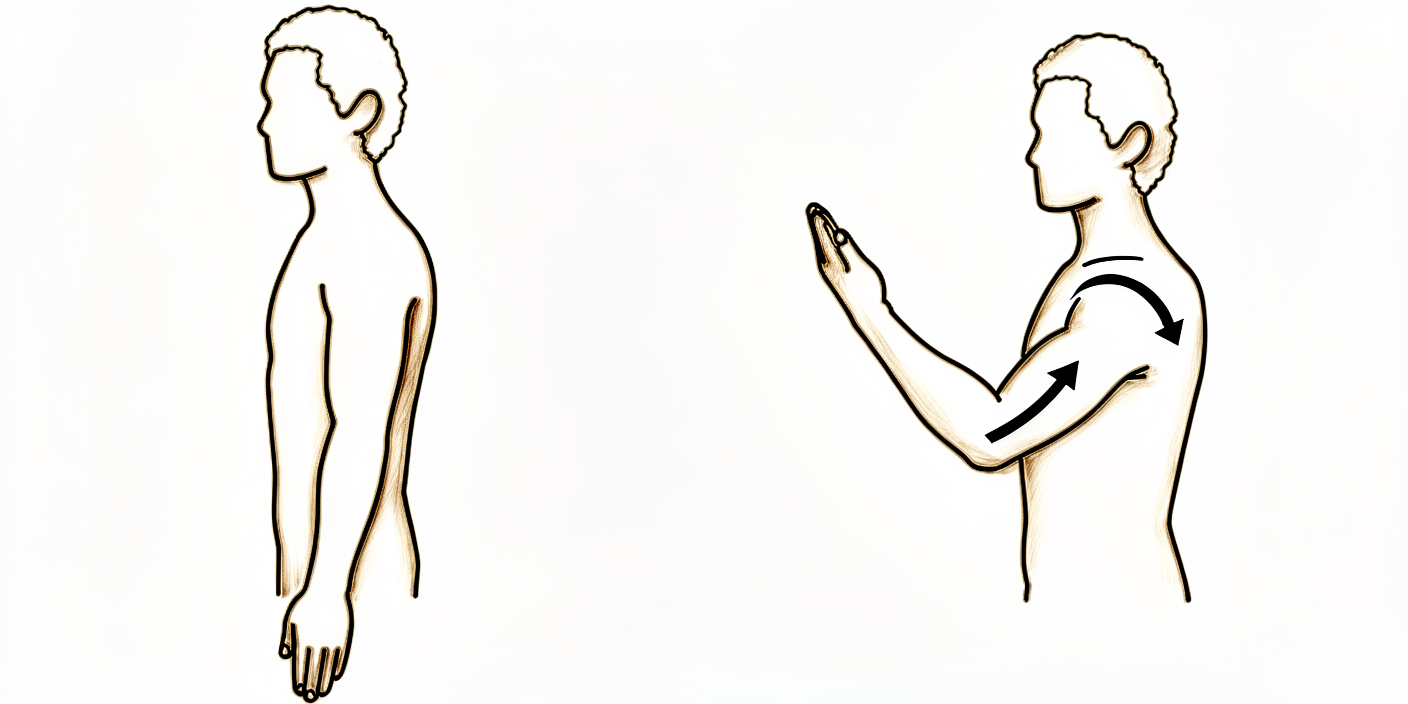
肘关节主动屈伸(屈曲和伸直)
利用自身肌肉,将肘关节尽量向肩部方向弯曲,然后尽可能伸直。在动作的每个末端轻轻用力推进,并尝试达到外科医生在手术中获得的相同活动范围。这是最重要的一项练习——肘关节会很快再次僵硬,因此需要在一天中少量多次地进行。
每个方向 10–15 次,清醒时每 1–2 小时一次
Kieran Hirpara 4.0
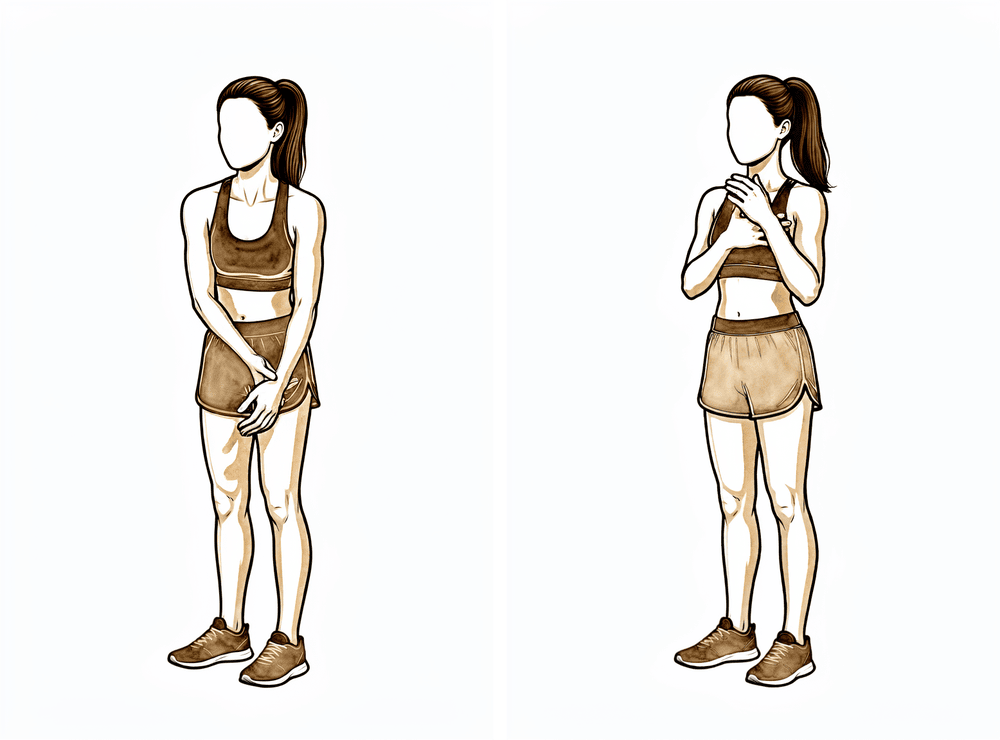
辅助(被动)肘关节屈曲
在手术侧手臂完全放松的状态下,用另一只手轻轻将肘关节推至比其自身能达到的更弯曲的位置,并在感到明显牵拉感的末端保持。由于没有需要保护的修复组织,因此鼓励您轻柔地推入牵拉——保持住,深呼吸,让肘关节再多弯曲一点。在出现锐痛之前停止。
每个拉伸动作保持20–30秒,重复3–5次,每天多次
Kieran Hirpara 4.0
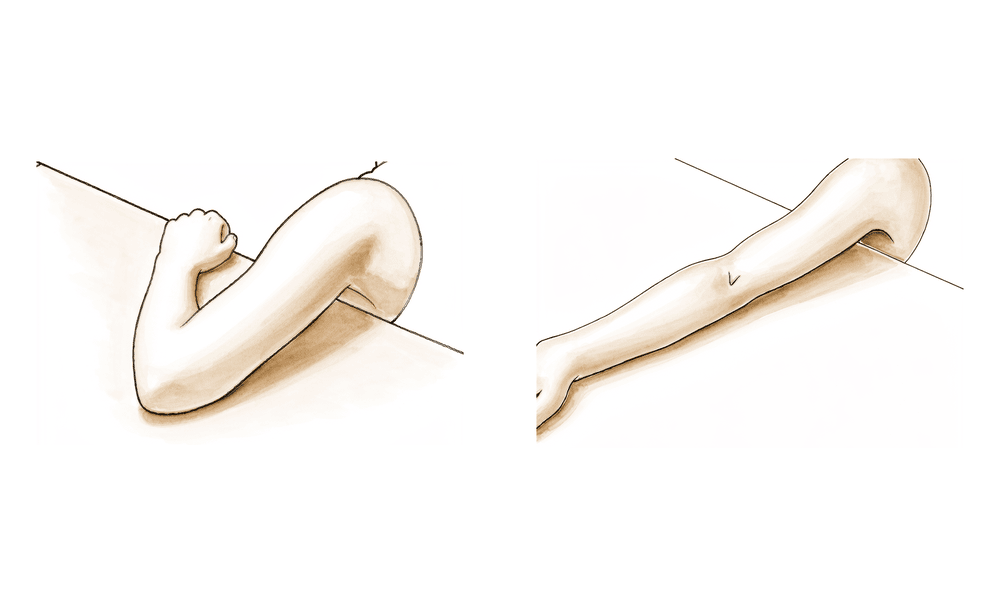
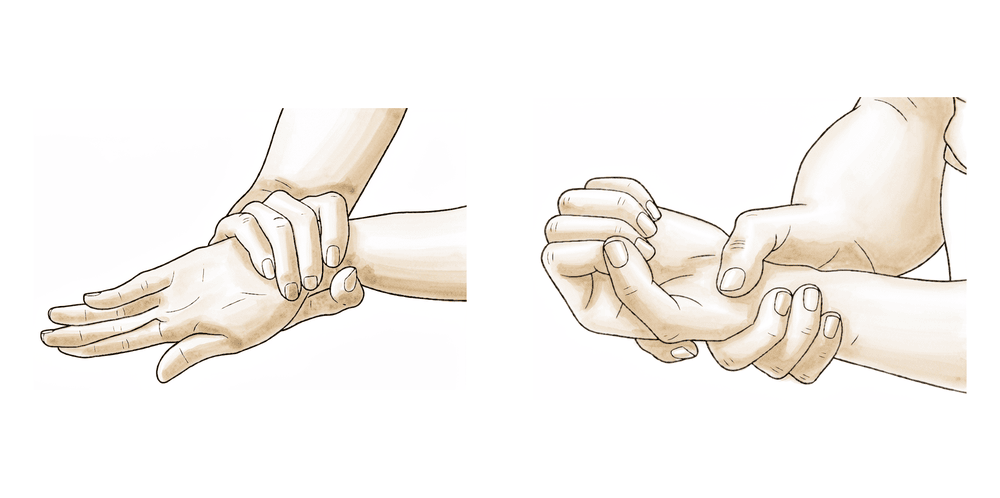
肘关节主动伸直
努力将肘关节伸直至最大程度——伸直(伸展)是最常丢失的活动度,因此需格外关注。将上臂后侧置于稳固的表面上,利用重力,然后借助另一只手的轻柔辅助,使肘关节逐渐趋向完全伸直。在拉伸的末端保持该姿势。
保持 20–30 秒,5 次,每天数次
Kieran Hirpara 4.0
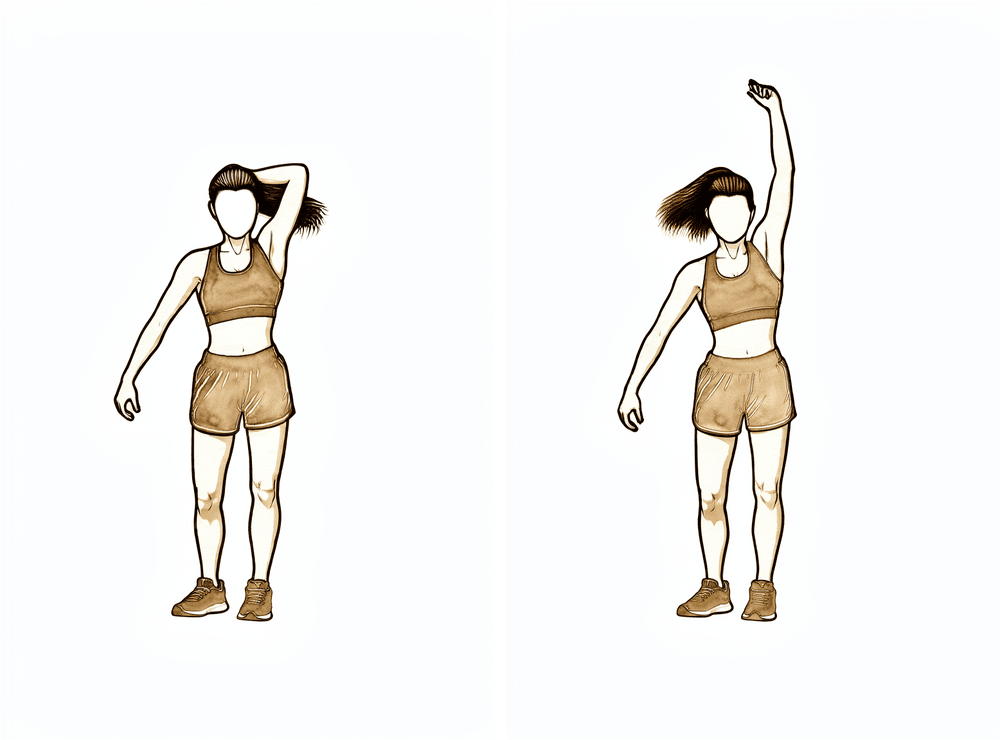
过头肱三头肌拉伸(末端伸直)
将手术侧手臂举过头顶,用另一只手轻轻将肘关节推向完全伸直位,以拉伸上臂后侧。这是一个针对伸直方向的强烈末端范围拉伸——请保持静止,避免弹震式动作。
保持 20–30 秒,重复 3–5 次,每天数次
Kieran Hirpara 4.0
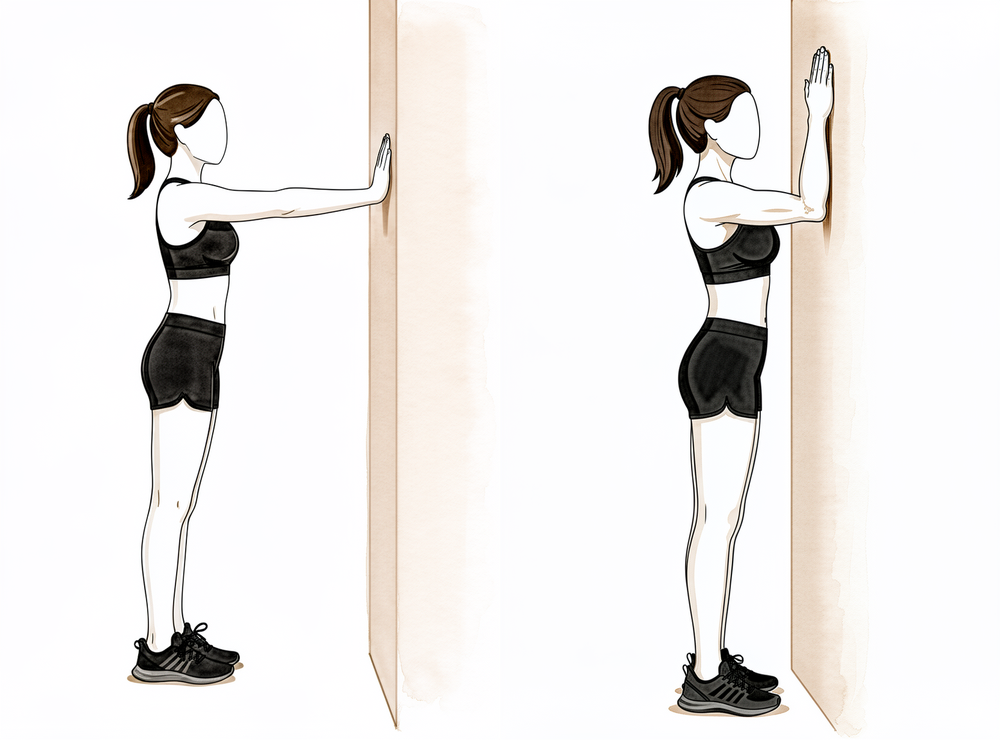
沿墙行走至弯曲位(屈曲终末位)
面对墙壁,用手指沿墙面向上移动,随着手部上移,让肘关节逐渐弯曲。持续向上移动,直到感到肘部深处有明显的牵拉感,保持该姿势,然后再稍微向上移动一点。这有助于恢复肘关节屈曲的最后部分。
在顶部保持 20–30 秒,重复 5 次,每天数次
Kieran Hirpara 4.0
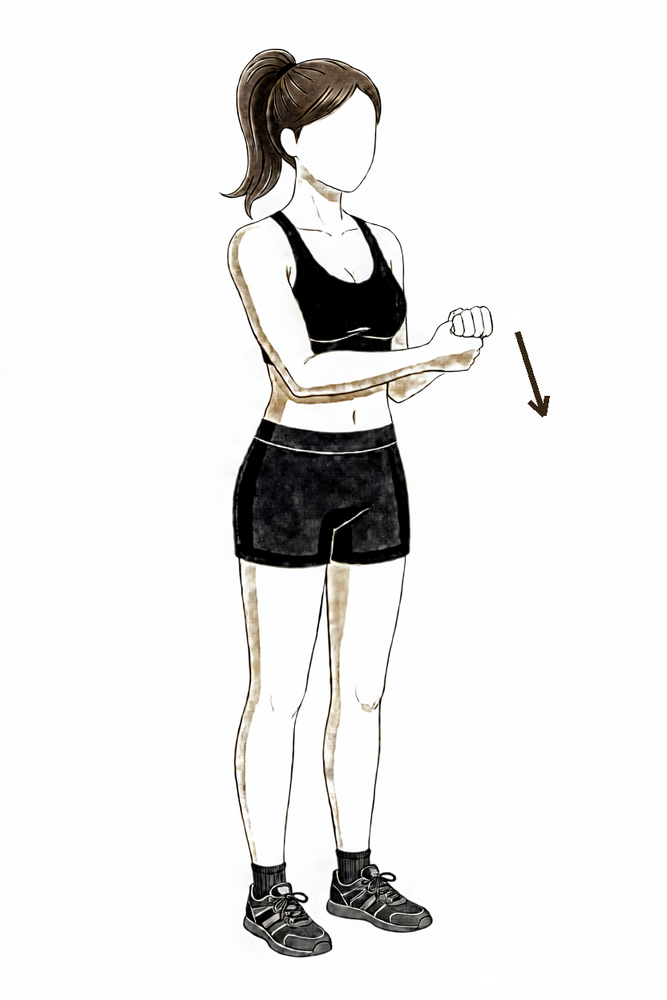
前臂旋转(掌心向上 / 掌心向下)
将肘部贴紧身体一侧并弯曲至约90°,将手掌向上转向天花板,然后向下转向地板,每个方向都尽量做到极限。松解手术通常能同时恢复旋转和屈伸功能,因此在练习屈伸的同时,请保持此旋转动作充分进行。您可以使用另一只手在两端轻轻推压,以进一步增加活动范围。
每个方向 10–15 次,每天数次
Kieran Hirpara 4.0
肱三头肌收缩练习(轻柔保持)
早期激活练习。在手臂得到支撑的情况下,轻轻收紧上臂后侧的肌肉(即肱三头肌),仿佛要将肘关节伸直,以帮助维持并巩固您已获得的伸直状态。动作请保持轻柔,并严格遵循您的物理治疗师的指导。
保持约5秒,5–10次,按指导进行
Kieran Hirpara 4.0
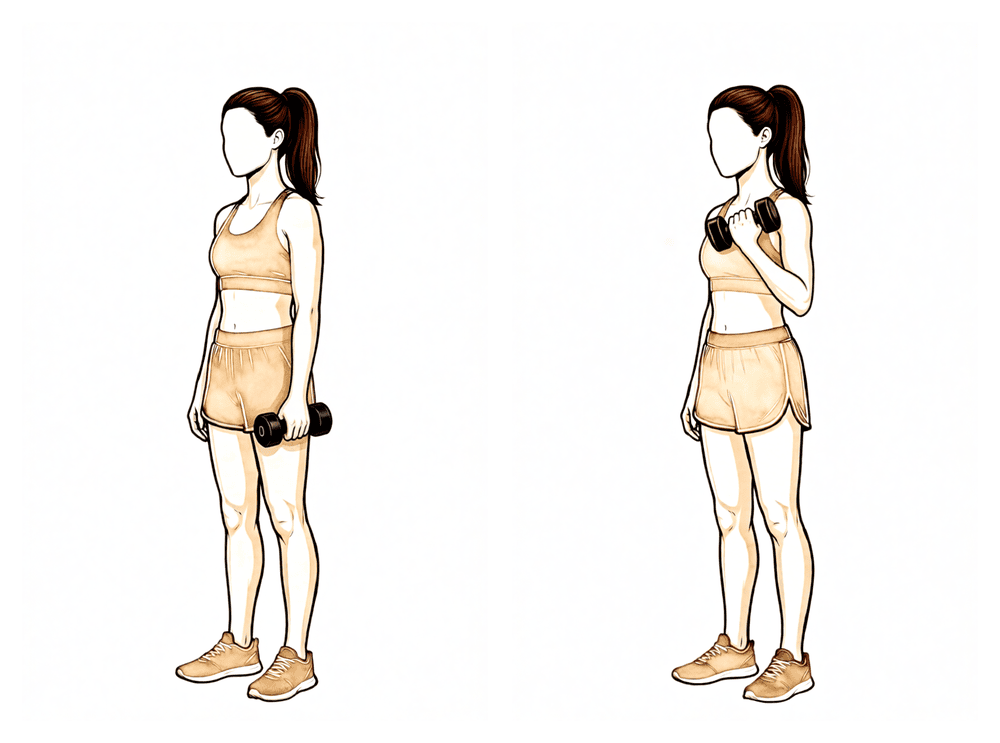
肱二头肌弯举(后期强化)
后期锻炼——强化训练仅在您的活动度稳定后开始,通常从第6周左右开始。掌心向上,将轻重量向肩部方向弯举,然后缓慢、有控制地放下。在物理治疗师的指导下,逐渐增加重量。
在物理治疗师的指导下(约从第6周开始)
这些是您在手册中用于恢复并保持肘部及前臂活动的锻炼。请按照Hirpara医生和治疗师的指导开始进行;在本方案中,需立即开始。这些锻炼需坚定且频繁地进行,因为您通过每天这些锻炼所保持的活动范围,正是您实际使用的活动范围。
您的临床方案
本页其余部分为僵硬肘关节手术松解(关节松解术)后的康复临床方案。本节内容应提供给您的物理治疗师或手部治疗师,且以下每个阶段均以通俗易懂的语言解释当前发生的情况。核心原则是:外科医生在手术台上建立接近完整的活动范围;康复的目标是维持这一范围而不丢失。由于无需保护固定装置,因此不存在保护期:疼痛和水肿的控制是限制因素,而非组织愈合。
术后第 0 至 2 天
在术后最初的一两天内,肘部需短暂休息,手臂保持抬高,并通过冰敷和加压控制肿胀。肘部通常被支撑在完全伸直(伸展)位,因为伸直是最常丧失的动作,也是应优先偏向恢复的动作。如果担心异位骨化(例如在切除多余骨骼后,或原始损伤能量较高时),Hirpara 医生可能会立即开始使用抗炎药物以抑制其发生。
致您的物理治疗师:
在治疗前,请查阅患者的影像学资料、手术报告及既往病史(PMHx),并与主刀医生沟通术中实现的关节活动范围、是否进行了尺神经手术,以及是否已开始异位骨化(HO)预防治疗。
体位与水肿
- 在衬垫夹板中于完全伸直位进行短暂固定;手臂抬高;采用冷疗/加压控制水肿
- 引流管通常在术后第 1 天(POD1)拔除
异位骨化(HO)预防(如适用)
- 如适用,使用吲哚美辛(例如 25 mg 每日三次,或 75–100 mg/天),疗程为 3–6 周,特别是在异位骨化切除术后或高能量创伤后;在选定的高危病例中,可联合单次围手术期放疗(由医生决定)
术后第1天起——立即进行积极的关节活动度训练
这是该方案的核心。术后第一天即拆除夹板,并开始坚定且频繁的活动:主动辅助及被动屈曲、伸直和前臂旋转,旨在恢复术者在手术台上达到的完整活动范围。没有活动度上限:目标是恢复术中达到的完整活动弧。
致您的物理治疗师:
活动度上限
- 无。 恢复术中达到的完整活动弧。术后第1天(POD1)拆除夹板。
练习
- 屈曲、伸直、旋前和旋后的主动辅助及被动关节活动度训练;将拉伸偏向最紧张的方向(通常为伸直方向)
- 可选持续被动活动(CPM):若使用,应在院内术后第1–2天以最大可用范围开始(通常引用0–145°,肘部后方垫有支撑垫),并在家继续至约4周,作为物理治疗的补充。CPM仅为辅助手段,未证明其优于监督下的物理治疗;是否使用由术者酌情决定。
- 频率:术后第一周每日进行监督下的物理治疗,随后每周2–3次,持续约6周
进展标准
- 维持术中达到的活动弧;水肿和疼痛得到控制
第2至6周——维持活动范围并引入支具固定
继续坚定地进行活动。为了保持并扩大活动范围,在夜间及休息时段增加支具固定方案:在关节活动末端进行低负荷、持续性的牵伸,并在屈曲与伸直之间交替进行。
致您的物理治疗师:
练习与支具固定
- 继续积极进行主动/主动辅助/被动关节活动度(ROM)训练
- 增加静态渐进式(或动态/系列静态/绞盘式)支具固定,用于低负荷、持续性的末端关节活动度牵伸:在夜间/休息时段交替进行屈曲和伸直的固定方案。对于肘关节屈曲挛缩,静态渐进式(无弹性、由患者调节的增量扭矩)是首选的治疗方式。
- 水肿与瘢痕管理
进展标准
- 活动范围得以维持或超越;约在第6周时准备好进行负重训练
第6至12周——强化训练与持续支具固定
一旦活动度稳定,通常在术后6周左右,开始强化训练,根据耐受情况逐步进行抗阻练习。支具固定方案继续执行。
致您的物理治疗师:
练习与支具固定
- 一旦关节活动度稳定(通常约6周),开始逐步进行抗阻强化训练
- 术后至少持续支具固定约3个月,以获得最佳的最终关节活动范围(ROM)
约16周 — 平台期
已发表的系列报告指出,患者在平均约16周时达到最大活动弧,且大部分恢复发生在6周至3个月之间。应在术前设定此预期。在弯曲/伸直和旋转弧方面最终维持的改善通常可长期保持(大型队列研究中约为15个月的随访)。
致您的物理治疗师:
- 平均约16周时达到最大活动弧;告知患者术前活动范围阈值无法可靠预测恢复轨迹;对所有患者应用相同的约16周时间线
重返工作与活动
由于没有内固定物需要保护,重返日常活动的节奏取决于您的舒适度、肿胀程度以及您目前维持的活动范围,而非等待组织愈合。从治疗初期起,就鼓励将手臂用于日常任务的轻度使用;事实上,白天正常活动肘关节本身就是治疗的一部分。
强化训练,以及随之而来的更重、要求更高的任务,通常在术后约 6 周开始,前提是您的关节活动度已趋于稳定,并根据您的力量和活动范围逐步增加强度。大多数人到术后约 4 个月时即可达到稳定的活动范围和功能水平,且所获得的改善通常能长期保持。重返驾驶、工作职责和体育运动取决于您是否恢复了特定任务所需足够的活动度、力量和控制力;由于具体情况因职业和手术范围而异,请与 Hirpara 医生及您的治疗师讨论适合您的时间安排。最重要的信息是,在整个康复过程中坚持进行活动度训练和夜间/休息支具固定方案,因为这是保护您辛苦恢复的活动范围的关键。
您的方案之后
本方案与诊所的总体康复建议配合使用:请参阅术后疼痛管理和伤口护理。肩关节的对应方案(松解僵硬肩关节的关节囊)请参阅关节囊松解术。上述分阶段计划与肘关节挛缩松解术后康复的已发表证据相符,您的持续康复将由物理治疗师或手部治疗师根据您肘部的进展情况提供个性化指导。
Evidence & references
This is the clinical evidence summary written for health professionals. It is technical, and it lists the research this page was built from. You do not need to read it to understand your treatment or to make a decision about it.
Topic scope: rehabilitation after surgical release of the post-traumatic / post-surgical stiff elbow — open or arthroscopic arthrolysis, anterior + posterior capsulectomy, ± heterotopic ossification (HO) excision, ± ulnar nerve decompression. The focus here is the post-operative rehabilitation philosophy and timeline, not the indications for or technique of the release itself.
Defining principle: the surgeon establishes a near-full arc of motion on the operating table; rehabilitation's single job is to not lose it. There is no fixation to protect, so — unlike a fracture fixation or a tendon repair — there is no protection phase. Motion starts essentially Day 1 (or even in-hospital CPM from Day 1–2), pushed firmly and often. Pain and oedema control are the rate-limiters, not tissue healing. This is the opposite philosophy to olecranon ORIF or a distal biceps repair. Dr Hirpara's stance: no sling and no immobilisation phase; immediate aggressive active-assisted and passive ROM from POD1; static-progressive (or dynamic) night/rest splinting continued for at least 3 months; HO prophylaxis where indicated; and a frank pre-operative conversation that the elbow reaches its plateau at a mean of ~16 weeks.
Consensus phased timeline (week windows)
| Phase | Window | Immobilisation / "ceiling" | Movement & adjuncts | Strengthening | Criteria to progress |
|---|---|---|---|---|---|
| Immediate | Day 0–2 | Brief splint in full extension; arm elevated, cryotherapy/compression | HO prophylaxis decision made now (see below); drains out POD1 | — | Splint off POD1 |
| Immediate aggressive ROM (core) | Day 1 onward | No ROM ceiling — recover the full intra-operative arc | Active-assisted + passive flexion / extension / pronation / supination; bias toward tightest direction (usually extension). Optional CPM 0–145° with bolster, in-hospital POD1–2, home to ~4 wk. Daily PT first week → 2–3×/wk for ~6 wk | — | On-table arc maintained; oedema/pain controlled |
| Hold the arc + splinting | Weeks 2–6 | None | Continue aggressive A/AAROM/PROM. Add static-progressive (or dynamic / serial-static / turnbuckle) splinting — low-load prolonged end-range stretch, night/rest, alternating flexion/extension | — | Arc maintained or exceeded; ready for loading ~wk 6 |
| Strengthening + continued splinting | Weeks 6–12 | None | Continue splinting | Progressive resistive strengthening once motion stable (~wk 6); continue splinting ≥3 months | Stable, strengthening motion |
| Plateau | ~16 weeks (≈4 months) | None | — | Maintain gains; long-term hold | Maximum arc reached; most recovery occurred 6 wk–3 mo |
Evidence summary by theme
Immediate aggressive motion — the agreed principle (Strong consensus)
Large, consistent retrospective case series and review articles agree that the elbow re-stiffens without immediate motion, and that rehabilitation exists to hold the intra-operative arc. Motion begins POD1; the splint (when used) is removed POD1 and active-assisted + passive ROM is started in all planes, biased toward the tightest direction (usually extension). This is strong consensus across the literature.
Which specific rehab protocol is best (Moderate — genuine equipoise)
The best specific rehab protocol is genuinely unknown. No completed RCT shows superiority of CPM vs PT vs delayed PT — the SET-Study (Stiff Elbow Trial) was designed precisely because this question is unresolved, with three real-world arms (in-hospital CPM + early PT / in-hospital early PT / outpatient PT from POD7–10). CPM is cited in protocols (home use to ~4 weeks) and one arthroscopic- release series reports very good 3-year outcomes with a 4-week CPM rail plus PT, but CPM has never been shown superior to supervised PT alone. So: strong consensus on aggressive early motion; weak/equipoise evidence on which adjunct.
Splinting modality (Moderate — no clear winner)
Static-progressive, dynamic, serial-static and turnbuckle splinting all deliver low-load prolonged end-range stretch. The Lindenhovius RCT found no difference between dynamic orthoses and static-progressive splinting (similar DASH). Static-progressive (inelastic, patient-adjusted incremental torque) is the favoured modality for elbow flexion contractures. Reviews recommend the splinting program run for at least ~3 months post-operatively for optimal final ROM. Bracing alone can rival surgery for non-osseous stiffness with far lower neurovascular risk.
HO prophylaxis (Consensus — extrapolated evidence)
Indomethacin (commonly 25 mg TID, or 75–100 mg/day, for 3–6 weeks) ± single-dose perioperative radiotherapy is widely used after release, especially with HO excision or high-energy trauma. Most HO-prophylaxis RCT evidence is extrapolated from acetabular/hip surgery, not elbow-specific. Recurrent HO / arthrofibrosis responds to repeat excision + release.
Recovery trajectory and plateau (Moderate — cohort data)
Published series report patients reach their maximum arc of motion at a mean of ~16 weeks, with most recovery occurring between 6 weeks and 3 months, and maintained gains at ~15-month follow-up in large cohorts. Growth-mixture modelling found no pre-operative ROM threshold or factor reliably predicted the recovery trajectory — so all patients are counselled on the same ~16-week timeline pre-operatively.
Ulnar nerve (Consensus)
As flexion improves post-release, the ulnar nerve sees increased stress — there should be a low threshold for review, and for concomitant ulnar nerve decompression/transposition at the time of surgery. Tobacco use predicts poorer outcomes and higher complication rates after open arthrolysis.
Evidence strength flags (summary)
- STRONG (consensus across case series/reviews): immediate aggressive active-assisted + passive motion from POD1 to hold the intra-operative arc — no protection phase.
- MODERATE (RCT/cohort, equipoise): which adjunct is best — CPM vs PT vs delayed PT (SET-Study, no completed superiority data); splinting modality (Lindenhovius RCT: no difference dynamic vs static-progressive); ~16-week plateau and maintained gains (growth-mixture-modelling and large open-release cohorts).
- CONSENSUS / EXTRAPOLATED: HO prophylaxis (indomethacin ± single-dose RT; most evidence extrapolated from acetabular/hip surgery); ≥3-month splinting program duration.
Overall topic flag: MODERATE — strong consensus on the principle (aggressive early motion + adjunct splinting + HO prophylaxis), weak/equipoise evidence on the specific adjunct.
CITATIONS
RAG corpus (180,000+ Orthopaedic articles)
- Sun Z, Wang W, Fan C. Tobacco use predicts poorer clinical outcomes and higher post-operative complication rates after open elbow arthrolysis. Arch Orthop Trauma Surg. 2019.
- Open elbow release for post-traumatic stiffness — growth-mixture-modelling cohort: maximum arc of motion at a mean of ~16 weeks, most recovery between 6 weeks and 3 months.
- 103-patient open capsular release series — significant, maintained flexion/extension and supination/pronation arc gains at a mean of 15 months.
- Papatheodorou LK, Sotereanos DG (University of Pittsburgh) — elbow contracture release techniques review.
- Lindenhovius et al. RCT — no difference between dynamic orthoses and static-progressive splinting (cited within a retrieved review).
- Retrieved technique text: indomethacin 25 mg TID for ~6 weeks for HO prophylaxis; CPM continued at home up to 4 weeks, full range 0–145° with a bolster behind the elbow.
- Northwestern series — HO excision + contracture release: ROM gains and complications.
- Arthroscopic release + 4-week CPM rail series — very good ROM, function and quality of life at a mean of 3 years.
Published protocols / reviews (URLs)
- Papadopoulos et al. Elbow contracture release. Annals of Joint (PT from POD1; flexion bias the first 2 weeks then full ROM over 2–3 months; dynamic / static-progressive splinting ≥3 months; CPM optional). https://aoj.amegroups.org/article/view/6083/html
- SET-Study (Stiff Elbow Trial) protocol — CPM vs PT vs delayed PT RCT; documents that the best rehab protocol is unknown. https://www.ncbi.nlm.nih.gov/pmc/articles/PMC5700741/
- Analysis of Long-Term Outcomes Following Surgical Contracture Release of the Elbow — immediate splint in full extension, splint off POD1, AAROM started POD1, OT/PT-guided self-directed program, no CPM. https://www.ncbi.nlm.nih.gov/pmc/articles/PMC8152451/





