
全肘关节置换术(关节成形术) 资料
本方案指导您在 Mater Private Hospital Rockhampton 接受 Kieran Hirpara 医生进行的肘关节置换术(全肘关节置换术)后的康复过程。方案首先介绍您的居家锻炼计划,随后是为您的物理治疗师或手部治疗师编写的结构化临床方案:请在首次治疗就诊时携带此页面或其 PDF 文件,以确保您的康复过程协调一致。您的治疗师可能会根据康复进展调整计划。
如果您对术后伤口有任何疑虑,请联系诊所。通常,拍摄伤口照片并通过电子邮件发送以供审阅会很有帮助。
预期情况
全肘关节置换术会移除肘部磨损或受损的关节面,并用金属和塑料假体进行替换。假体的两部分(一部分固定在上臂骨即肱骨上,另一部分固定在前臂骨即尺骨上)通常通过一个小铰链连接,因此被称为半约束或“铰接式”置换。该手术最常用于治疗严重的类风湿性关节炎、终末期骨关节炎,或某些老年患者中骨骼无法修复的肘部骨折。
康复的目标是稳定肘关节,保护愈合中的组织,并恢复舒适、无痛的功能活动范围(足以完成进食、洗漱和穿衣等日常任务所需的屈曲和伸直幅度),而不是让肘关节尽可能强壮。关于伤口、肿胀和疤痕的管理,请参阅本诊所的伤口护理指南。
需要理解的最重要的一点是:该假体旨在实现舒适的日常生活,而非用于重体力劳动。其长期威胁是塑料轴承的磨损以及假体在骨骼中的逐渐松动,而这两者均由重负荷驱动。因此,全肘关节置换术后不适合进行高强度的强化训练,并且终身(而不仅仅是愈合期间)都需要遵守提重限制。遵守这一限制是延长新肘关节使用寿命的最关键措施。
术后,您将在简单吊带中保持舒适,而非使用刚性夹板或支具。轻柔的辅助运动将在第一周内开始,并在此基础上缓慢、谨慎地逐步推进。
注意事项与限制
应做:
- 佩戴简易三角巾以提供舒适感,并遵医嘱使用。
- 在赫拉帕拉医生(Dr Hirpara)和治疗师的指导下,于第一周内开始进行以下温和的辅助活动。
- 保持手部、手腕和肩部的活动,以防止僵硬。
- 康复后,请终身遵守以下提重限制。
禁止:
- 术后前6周内,手术侧手臂不得提举超过约一杯茶(1磅 / 0.45公斤)重量的物品。
- 不要强行弯曲肘部,也不要猛力或推压使其伸直。
- 不要通过手术侧手臂推撑身体离开椅子,不要通过该手臂提物、推物或承重,也不要让他人拉扯或扭转该手臂。
- 如果手术中剥离了肱三头肌,在外科医生许可之前(通常为 6–12 周),不要主动对抗阻力伸直肘部。
- 永久性、终身限制: 不要反复提举超过约 2公斤 的重量,单次提举不要超过约 4.5–5 公斤。这些限制是永久的,终身有效。永远不要进行网球、投掷或对抗性运动。
您的练习
Kieran Hirpara 4.0
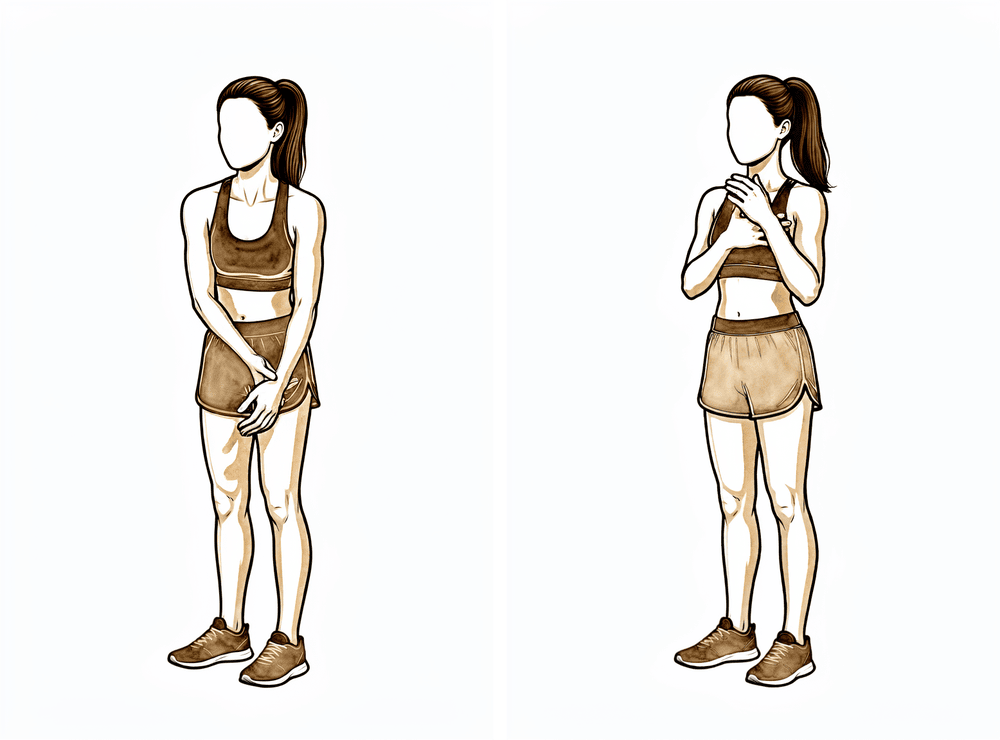
辅助肘部弯曲(被动屈曲)
将上臂贴紧身体一侧,用另一只手轻柔地协助将手术侧肘关节向上弯曲至靠近肩部的位置,仅弯曲至舒适范围即可。切勿强行用力。缓慢放下手臂。您的治疗师会告知您弯曲的具体幅度。
5–10 次,每天数次,以舒适为度
Kieran Hirpara 4.0
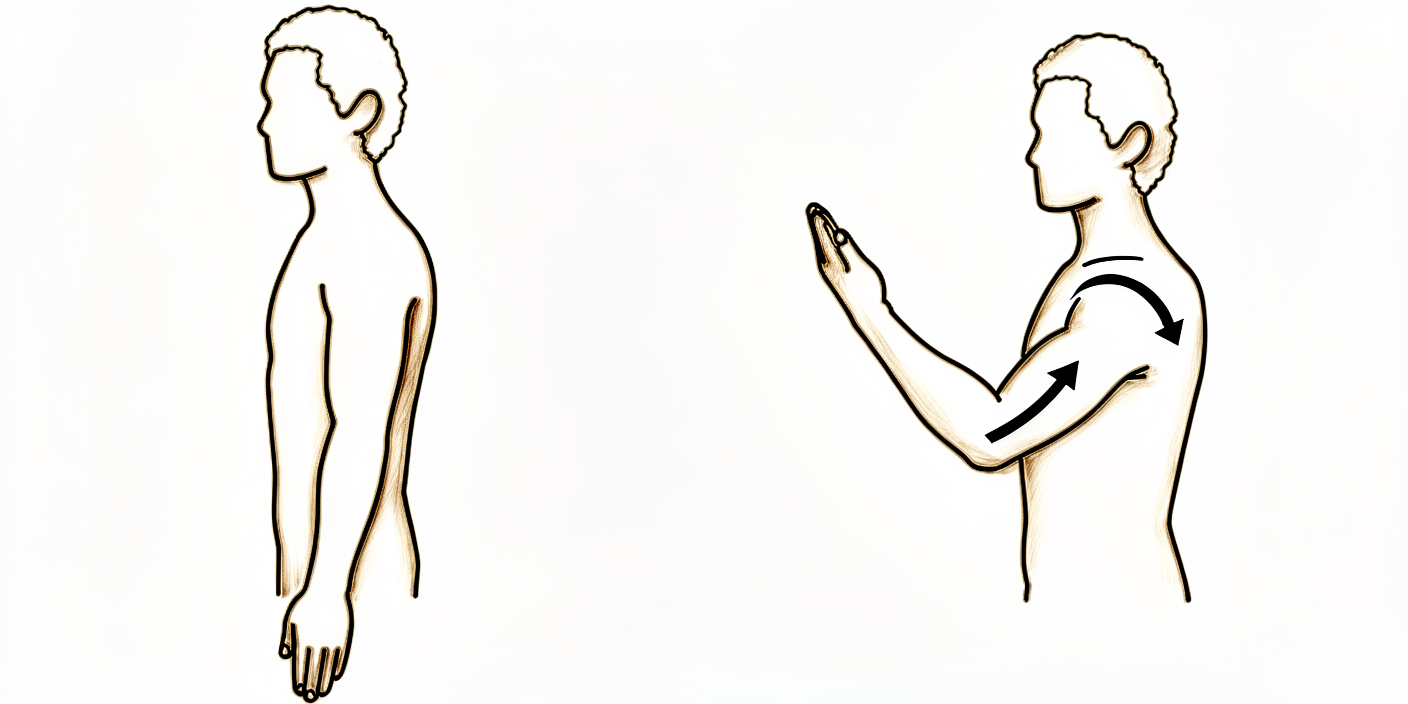
轻柔的肘部屈伸
掌心向上,上臂贴于体侧,轻柔地屈曲肘关节至舒适的最大范围,随后借助重力让手臂缓慢伸直。保持动作缓慢且自然,让手臂自主完成运动,切勿用力强行达到活动范围的极限。
5–10 次,每日数次
Kieran Hirpara 4.0
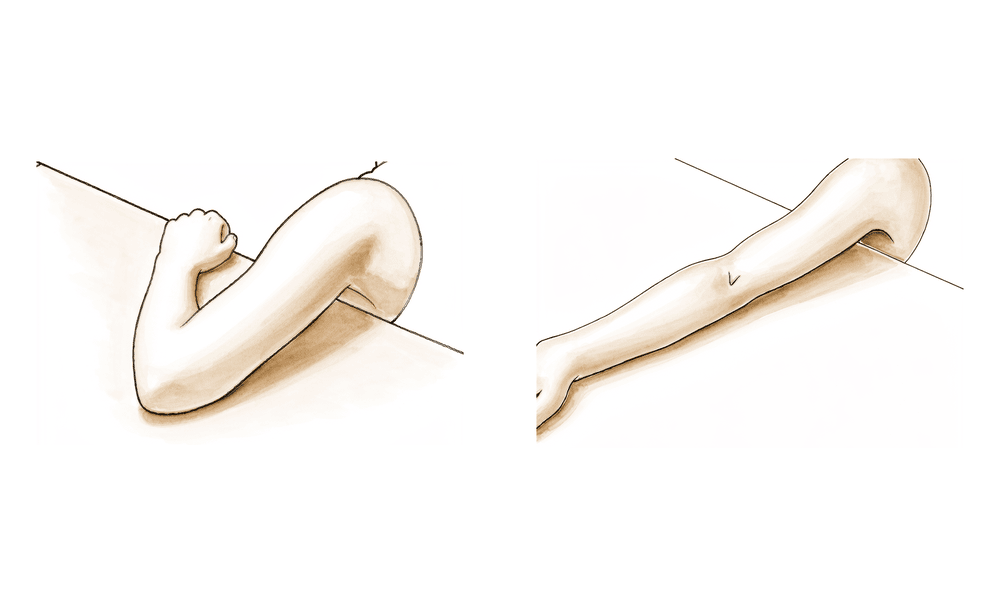
重力辅助肘关节伸直(主动伸展)
将上臂置于支撑物上(例如靠垫或椅子扶手),让前臂自然下垂,借助重力使肘关节轻柔地伸直。切勿猛力或强行将肘关节伸直。如果您的外科医生告知您手术中曾掀起过肱三头肌,请保持动作轻柔,并在获得医生许可前,避免主动用力将肘关节推直。
5–10 次,每日数次,以舒适为度
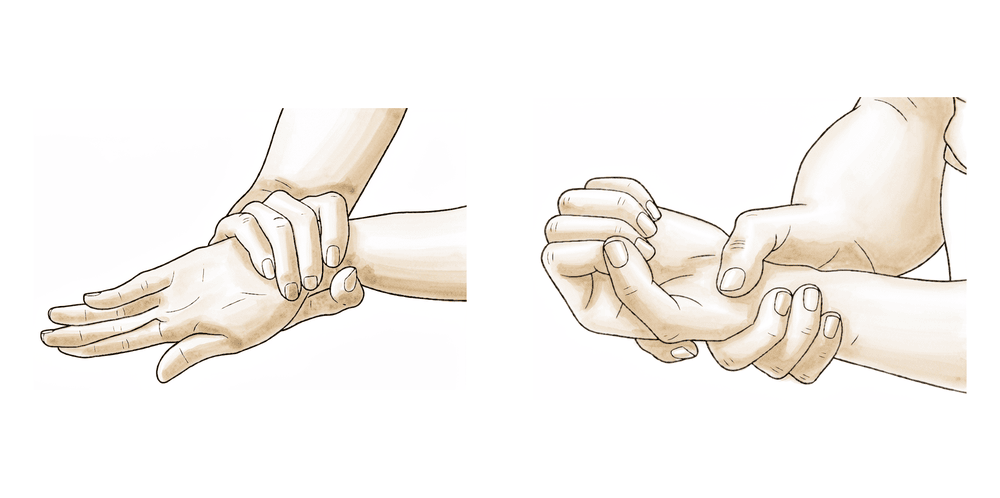
Kieran Hirpara 4.0
前臂旋转(掌心向上 / 掌心向下)
屈肘并将肘部贴紧身体一侧,轻轻将手掌向上转向天花板,保持片刻,然后将手掌向下转向地面。保持上臂静止,使动作仅由前臂完成。
每个方向10次,每天数次
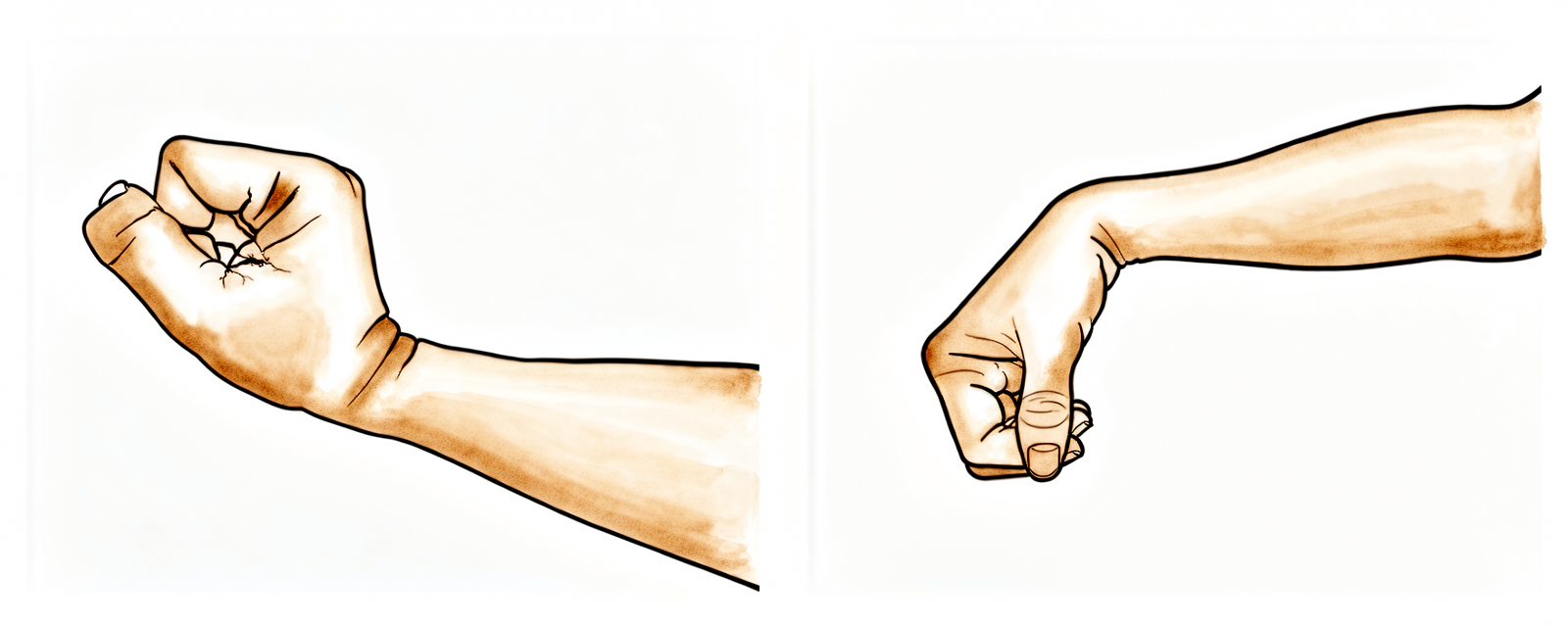
Kieran Hirpara 4.0
腕部运动
轻轻将手腕向前弯曲,然后向后弯曲,以舒适范围为限。这有助于保持手腕和手部的活动,并在肘部愈合期间帮助防止僵硬和肿胀。
10–15 次,每日数次
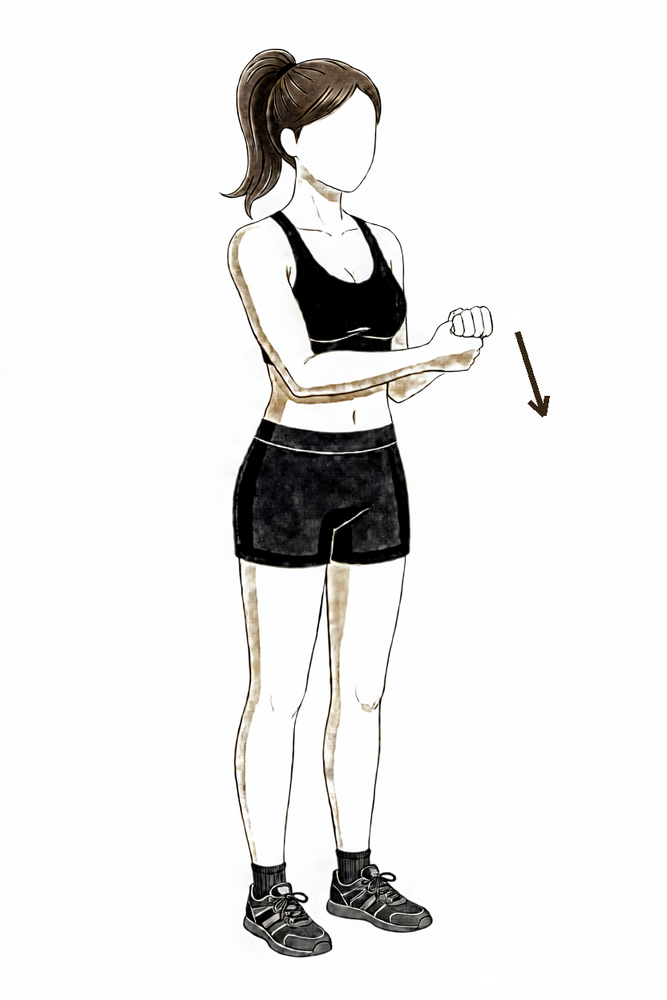
Kieran Hirpara 4.0
肱三头肌收紧(等长收缩)
这是一项后期练习——仅在您的外科医生或治疗师告知您的肱三头肌已准备好时才开始,通常在6周或更晚。将肘关节保持在舒适的屈曲位置并固定不动,轻轻收紧上臂后侧的肌肉,仿佛要伸直肘关节,但实际上不要移动它。轻柔地保持该姿势,然后放松。
保持5秒,重复10次,获准后进行
这些是手册中列出的练习,旨在温和地恢复肘部、前臂、手腕和手部的活动度。请按照Hirpara医生和治疗师的指导开始进行。保持每个动作轻柔且无强迫;早期阶段的目标是轻松、辅助性的运动,而非用力或拉伸。
您的临床方案
本页其余部分为半限制性全肘关节置换术(后路入路,假设采用三头肌保留术式)后的康复临床方案。本节内容应提供给您的物理治疗师或手部治疗师,且以下每个阶段均以通俗易懂的语言解释正在发生的情况。
在治疗前,请查阅患者的手术报告及既往病史,并与主刀医生就手术入路进行沟通,特别是三头肌是保留、牵开还是重新缝合(Bryan–Morrey 术式),因为这决定了早期的伸肘限制及休息位姿势。
第一阶段 — 术后即刻,第 0–6 周
在前六周内,重点在于保护愈合中的软组织及肱三头肌,使伤口和肿胀得到控制,并开始轻柔的辅助运动,以防止肘关节僵硬。Hirpara 医生使用简单的吊带以提供舒适感,而非后侧夹板或支具。轻柔的辅助(主动辅助)肘关节屈曲和伸直运动在 第 1 至 7 天 之间开始,此时肘部贴于体侧,前臂保持中立位至旋前位,利用重力辅助伸直。手术侧手臂 禁止提举超过 1 磅(0.45 公斤) 的重物,且禁止通过该手臂进行负重或推压。
致您的物理治疗师:
固定与注意事项
- 使用简单吊带以提供舒适感(KH 实践:不使用后侧夹板或支具)。如果外科医生因软组织顾虑而使用了支具或夹板,请遵循该指示;否则,简单吊带应佩戴约六周,在进行锻炼和清洁时取下。
- 肱三头肌反射/再附着病例(例如 Bryan–Morrey): 固定位置应更接近伸直位,早期应避免主动及抗阻肘关节伸直,以保护修复部位(参见远端肱三头肌修复逻辑)。
- 禁止强制屈曲(会对肱三头肌修复部位产生应力)以及突然或强制的伸直。
- 禁止上肢负重,禁止对抗阻力推压,禁止内翻/外翻应力。
- 手术侧手臂禁止提举重量 > 1 磅(0.45 公斤)的物体。
练习
- 从第 1–7 天开始,进行轻柔的主动辅助关节活动度(AAROM)肘关节屈曲/伸直运动,肘部内收贴于体侧,前臂保持中立位至旋前位;重力辅助的伸直牵伸。
- 进行手部、腕部和肩部的主动关节活动度练习,以防止僵硬。
进入第二阶段的指征: 伤口愈合,疼痛得到控制,且已建立轻柔的主动辅助关节活动度。在 6 周之前,不得进入强化训练阶段。
第二阶段——功能性活动,从6周开始(不得早于此时)
本阶段开始进行温和的肌肉激活,随后进行非常轻度的强化训练,但绝不进行剧烈训练。活动范围逐步建立至功能性活动弧,阻力谨慎引入并保持轻度。负重限制在整个阶段持续有效。
致您的物理治疗师:
第二阶段内的时间线
- 6周: 在所有平面内,于中位范围开始次最大、无痛的等长收缩。如果肱三头肌曾进行翻折/重新附着,在添加伸肌等长收缩前,请确认其已获许可。
- 8周: 进展至多角度次最大等长收缩,避免末端范围。
- 10–12周: 引入轻度等张强化训练(不使用重量或阻力 > 5磅 (2.3公斤)),先单平面,后复合平面。
关节活动度目标
- 功能性活动弧:30–120/130°屈曲,伴60°旋前和60°旋后。
- 若至10–12周时屈曲 < 120°,考虑使用动态或静态渐进夹板。
注意事项
- 继续避免重负荷、推压和冲击。
- 强化训练理念(原文): “全肘关节置换术后,进行剧烈强化训练的需求是不恰当的。”
进展标准: 达到并维持无痛的功能性活动弧。
晚期 II 期及终身期,自 12 周起
大约从 12 周开始,肘部进入维持性家庭计划,以保持无痛的功能活动范围。永远没有正式的重负荷强化训练。 以下终身活动和负重限制现永久适用。
致您的物理治疗师:
- 执行维持无痛功能活动范围的家庭计划。
- 向患者强调永久性的活动限制。
- 一旦达到稳定、舒适的功能活动范围及适当的日常功能恢复,可考虑出院。
重返工作与活动
您的新肘关节旨在提供舒适的日常生活,以下限制是永久性的;正是这些限制确保了植入物的持久性。
- 提重物(终身限制): 切勿反复提起超过约 2 公斤(相当于两个满杯)的重量,也切勿用手术侧手臂一次性提起超过约 4.5–5 公斤(相当于一个满水壶)的重量。在前 6 周内,限制更为严格:不得提起超过约 1 磅(0.45 公斤)的重量。
- 运动与冲击: 终身禁止网球、投掷或任何冲击性负荷。一旦获得许可,鼓励进行温和、低负荷的活动,但肘关节绝不应承受重负荷或受到震动。
- 驾驶: 仅在您感到舒适、驾驶时已取下悬吊带,且能安全操控方向盘时方可恢复。请在复查时与希拉帕医生(Dr Hirpara)确认具体时间。
- 工作: 轻松的基于桌面的工作和自我护理任务可在舒适范围内尽早恢复。任何涉及提重物、搬运、推挤或手臂重复性负荷的职位,均需与希拉帕医生(Dr Hirpara)单独讨论,因为终身限制同样适用于工作场景。
严格遵守这些限制是保护您的置换关节、避免多年后出现松动或磨损的最重要措施。
您的方案之后
本方案与诊所的总体康复建议配合使用;请参阅术后疼痛管理和伤口护理。您的持续康复将由物理治疗师或手部治疗师根据肘部恢复情况提供个体化指导,且在每次复诊时都应牢记您终身的活动限制。
Evidence & references
This is the clinical evidence summary written for health professionals. It is technical, and it lists the research this page was built from. You do not need to read it to understand your treatment or to make a decision about it.
Topic scope: post-operative rehabilitation after semi-constrained (linked/hinged) total elbow replacement — most commonly for rheumatoid arthritis, end-stage osteoarthritis, or a non-reconstructable distal humerus fracture in an elderly patient. This brief covers the phased rehabilitation timeline, the early triceps-protection rationale, the functional-arc goal, and — critically — the lifelong lifting restriction that exists to protect the implant against polyethylene wear and aseptic loosening.
Defining principle: unlike most joint replacements, the goal of TEA rehabilitation is a pain-free functional arc (~30–130° flexion, 60°/60° rotation), not maximal strength. The implant's long-term enemies are polyethylene wear and aseptic loosening, both driven by load, so heavy loading is restricted permanently, not just during healing — "the need for a vigorous strengthening program is not appropriate following total elbow arthroplasty." Dr Hirpara's practice: a simple sling for comfort (not a posterior splint or brace), gentle active-assisted motion from day 1–7, isometrics from ~6 weeks, light isotonic (≤ 5 lb) from 10–12 weeks, triceps protection where the triceps was reflected or detached, and a lifelong lifting limit (no repetitive lift > ~2.3 kg; no single lift > ~4.5–5 kg; no tennis/throwing/impact ever).
Consensus phased timeline (week windows)
Anchored to the Brigham & Women's Hospital (BWH) Total Elbow Arthroplasty Protocol (Thornhill; semi-constrained, hinged/linked prosthesis; posterior triceps-sparing approach assumed) and cross-checked against the primary literature. Dr Hirpara's practice substitutes a simple sling for comfort in place of BWH's 60° posterior resting splint; the ROM and strengthening cadence and the lifelong limits are retained.
| Phase | Window | Sling / immobilisation | ROM and use | Strengthening | Lifting |
|---|---|---|---|---|---|
| I — Immediate post-surgical | Weeks 0–6 | Simple sling for comfort (KH — no posterior splint/brace); triceps-reflected cases immobilised nearer extension | Gentle AAROM flexion/extension from day 1–7, elbow adducted, forearm neutral-to-pronated, gravity-assisted extension; hand/wrist/shoulder AROM | None | No lifting > 1 lb (0.45 kg); no weight-bearing/pushing |
| II — Functional activity | From 6 weeks (not before) | Sling weaned | 6 wk: submaximal mid-range isometrics, all planes · 8 wk: multi-angle submaximal isometrics (avoid end-range) · target functional arc 30–120/130°, 60°/60° | 10–12 wk: light isotonic, no resistance > 5 lb (2.3 kg), single-plane → composite | Restriction continues |
| Late II / lifelong | 12 weeks onward | — | Maintain pain-free functional arc | No vigorous strengthening — ever | Lifelong limits apply (see below) |
Triceps-protection note. Where the triceps is reflected (Bryan–Morrey) rather than spared, early rehabilitation is stricter — immobilisation nearer extension and delayed/limited active and resisted extension to protect the reattachment (cf. distal-triceps-repair logic). Wiesel keeps the elbow in full extension ~24–36 h then begins active-assisted ROM, and adds no pushing/overhead for 3 months to protect the triceps; Wolfe & Ranawat's osteo-anconeus flap is immobilised ~16 days. Triceps insufficiency is a recognised TEA complication.
CRITICAL — lifelong lifting restriction numbers + sources
| Source | Repetitive limit | Single-event limit | Lifelong? |
|---|---|---|---|
| BWH Standard of Care (Thornhill) | no repetitive lifts > 5 lb | no single lift > 15 lb | yes — "no heavier than 15 lb for life"; "no tennis or throwing for life" |
| Wiesel, Operative Techniques in Orthopaedic Surgery (2011) | > 5 lb (~2.3 kg) | > 10 lb (~4.5 kg) | yes (also no pushing/overhead × 3 months to protect triceps) |
| Toulemonde et al., Int Orthop 2015 (100 semi-constrained TEA) | > 1 kg | 5 kg | yes; all weight-lifting avoided entirely for the first 3 months |
| Kumar & Mahanta, Indian J Orthop 2013 | — | 5 kg | permanent restriction of strenuous activity |
Bottom line / patient-facing range: the canonical teaching is a lifelong restriction of roughly ~5 lb (2.3 kg) repetitive and ~10–15 lb (4.5–5 kg) single event. The exact ceiling varies by source: BWH allows up to 15 lb once; Wiesel caps single lift at 10 lb; the European series (Toulemonde) is most conservative at 1 kg repetitive / 5 kg single. Dr Hirpara quotes the conservative patient-facing range: do not repetitively lift more than ~2 kg, or lift more than ~5 kg in a single event, for life; no tennis/throwing/impact ever.
Key controversies / evidence quality
- Lifting-limit variation. Numbers range from 1 kg / 5 kg (Toulemonde 2015) to 5 lb / 15 lb (BWH). The restriction exists to protect against polyethylene wear and aseptic loosening, the dominant long-term failure mode — hence its permanence.
- Triceps-sparing vs reflected approach. Surgical handling of the triceps dictates early rehab: triceps-sparing (BWH default) permits earlier gentle AAROM; reflected approaches require protecting the reattachment with immobilisation nearer extension and delayed active/resisted extension. Triceps insufficiency/weakness is a recognised complication.
- Longevity and compliance. TEA was historically reserved for elderly low-demand patients owing to implant-longevity concerns (survivorship ~85–96% at 5 y, ~70–92% at 10 y in RA). As indications expand to younger, more active and post-traumatic patients, non-compliance with activity limits drives higher complication and failure rates — which is precisely why the lifelong limit is emphasised to every patient.
Evidence strength flags
- MODERATE–STRONG (published protocol + restriction numbers): the BWH institutional Standard of Care provides an explicit phased timeline with verbatim lifting limits, independently corroborated by multiple peer-reviewed primary sources (JBJS, JHS, JSES, Int Orthop, JAAOS) for the lifelong restriction and the triceps-protection rationale.
- MODERATE (ROM / strengthening cadence): phase timings and the isometric → light-isotonic progression are consensus/expert-driven; no high-level RCT dictates the rehab cadence. The exact lifting ceiling varies by source.
- CONSENSUS: the simple-sling (vs posterior-splint) choice and the precise functional-arc targets reflect surgeon practice and institutional protocols rather than trial data.
CITATIONS
RAG corpus (180,000+ Orthopaedic articles)
- Toulemonde J, Ancelin D, Azoulay V, et al. Complications and revisions after semi-constrained total elbow arthroplasty: a mono-centre analysis of 100 cases. Int Orthop. 2015. (1 kg repetitive / 5 kg single; no weight-lifting first 3 months)
- Kumar S, Mahanta S. Primary total elbow arthroplasty. Indian J Orthop. 2013. (5-kg weight-lifting restriction)
- Schoch B, Wong J, Abboud J, et al. Results of total elbow arthroplasty in patients less than 50 years old. J Hand Surg Am. 2017. (longevity/survivorship driving the restriction)
- Seitz WH, Evans PJ, Bismar H, Peers S. Complications of total elbow arthroplasty in nonrheumatoid patients. J Hand Surg Am. 2014. (active patients, poor compliance → complications)
- Baghdadi YM, Veillette CJ, Malone AA, et al. Total elbow arthroplasty in obese patients. J Bone Joint Surg Am. 2014;96(9). (higher failure with high BMI)
- Barlow JD, Morrey BF, O'Driscoll SW, et al. Activities after total elbow arthroplasty. J Shoulder Elbow Surg. 2013;22(6):787–791.
- You D, King G, Dehghan N, et al. Optimizing outcomes in total elbow arthroplasty. J Am Acad Orthop Surg (JAAOS). 2025. (modern failure-reduction review)
- Burnier M, Nguyen NTV, Morrey ME, et al. Revision elbow arthroplasty using a proximal ulnar allograft with allograft triceps for combined ulnar bone loss and triceps insufficiency. J Bone Joint Surg Am. 2020;102(22). (triceps insufficiency complication)
- Na K, Song S, Lee Y, et al. Modified triceps fascial tongue approach for primary total elbow arthroplasty. J Shoulder Elbow Surg. 2018;27(5):887–893. (triceps weakness after TEA; approach effect)
- Wolfe SW, Ranawat CS. The osteo-anconeus flap: an approach for total elbow arthroplasty. J Bone Joint Surg Am. 1990;72(5). (triceps-continuity-preserving approach; ~16-day immobilisation)
- Ring D. Instability after total elbow arthroplasty. Hand Clin. 2008. (triceps/LCL reattachment and stability)
- Wiesel SW. Operative Techniques in Orthopaedic Surgery. 2011. (5 lb repetitive / 10 lb single; full-extension splint 24–36 h; no pushing/overhead × 3 months to protect triceps)
Published protocol (web)
- Brigham & Women's Hospital, Department of Rehabilitation Services. Total Elbow Arthroplasty Protocol (J. Sayles OTR/L, R.B. Wilcox III PT; reviewer T.S. Thornhill MD; 2010). https://www.brighamandwomens.org/assets/bwh/patients-and-families/rehabilitation-services/pdfs/elbow-total-elbow-arthroplasty-bwh.pdf
- Brigham & Women's Hospital — Physical Therapy Standards of Care index. https://www.brighamandwomens.org/patients-and-families/rehabilitation-services/physical-therapy-protocols