

தோள்பட்டை ஆர்த்ரோஸ்கோபி (Shoulder Arthroscopy) தகவல்
Mater Private Hospital Rockhampton-இல் டாக்டர் கியரன் ஹிர்பரா செய்யும் எளிய அல்லது நோயறிதல் தோள்பட்டை ஆர்த்ரோஸ்கோபி (shoulder arthroscopy) அறுவை சிகிச்சைக்குப் பிந்தைய மறுவாழ்வுப் பயிற்சியை இந்த நெறிமுறை (protocol) விளக்குகிறது: மூட்டைப் பரிசோதித்து, கழுவி, அல்லது சுத்தம் செய்து ஒழுங்குபடுத்திய (debrided) சிறு துளை (keyhole) அறுவை சிகிச்சை; அதில் எதுவும் பழுதுபார்க்கப்படவில்லை. பாதுகாக்க வேண்டிய பழுதுபார்ப்பு எதுவும் இல்லாததால், மிக விரைவாக மீளக்கூடிய தோள்பட்டை அறுவை சிகிச்சைகளில் இதுவும் ஒன்று: ஆரம்பகால அசைவும், இயல்பு வாழ்க்கைக்கு விரைவாகத் திரும்புவதுமே இதன் நோக்கம். உங்கள் மறுவாழ்வுப் பயிற்சி ஒருங்கிணைந்து இருக்க, இந்தப் பக்கத்தையோ அதன் PDF-ஐயோ உங்கள் முதல் இயன்முறை சிகிச்சைச் சந்திப்புக்குக் கொண்டு வாருங்கள்.
ஆர்த்ரோஸ்கோபியில் எந்தப் பழுதுபார்ப்பும் செய்யப்படாதபோது — சுத்தம் செய்து ஒழுங்குபடுத்துதல் (debridement), கழுவுதல் அல்லது நோயறிதல் மதிப்பீடு மட்டுமே செய்யப்பட்டபோது — இந்த நெறிமுறை பொருந்தும். உங்கள் ஆர்த்ரோஸ்கோபியின்போது ஏதேனும் பழுதுபார்க்கப்பட்டிருந்தால், அழுத்தம் குறைக்கப்பட்டிருந்தால் அல்லது நிலைப்படுத்தப்பட்டிருந்தால், அதற்குப் பதிலாக அந்தச் சிகிச்சைக்கான நெறிமுறையைப் பின்பற்றுங்கள்: எடுத்துக்காட்டாக, உங்கள் சுழற்சி தசைநாண் பட்டை பழுதுபார்க்கப்பட்டிருந்தால் சுழற்சி தசைநாண் பட்டை பழுதுபார்ப்பு நெறிமுறையைப் பின்பற்றுங்கள். என்ன செய்யப்பட்டது என்பது உங்களுக்குத் தெரியவில்லை என்றால், முன்னேறுவதற்கு முன் உங்கள் அறுவை சிகிச்சைக் குறிப்பைப் பாருங்கள் அல்லது கிளினிக்கைக் கேளுங்கள்.
அறுவை சிகிச்சைக்குப் பிறகு உங்கள் காயம் பற்றி ஏதேனும் கவலை இருந்தால், கிளினிக்கைத் தொடர்பு கொள்ளுங்கள். காயத்தைப் புகைப்படம் எடுத்து, பார்வையிடுவதற்காக மின்னஞ்சலில் அனுப்புவது பெரும்பாலும் உதவியாக இருக்கும்.
என்ன எதிர்பார்க்கலாம்
பழுதுபார்ப்பு எதுவும் இல்லாத ஆர்த்ரோஸ்கோபிக்குப் பிறகு, தோள்பட்டைக்குள் பாதுகாக்க வேண்டியது எதுவும் இல்லை; எனவே அசைவுக்குக் கடுமையான கட்டுப்பாடுகள் எதுவும் இல்லை. நாட்காட்டியை வைத்து அல்லாமல், வசதியை வைத்தே உங்கள் தோள்பட்டை ஆரம்பத்திலிருந்தே அசைக்கப்பட்டு முன்னேற்றப்படுகிறது. கைத்தாங்கி (sling) வசதிக்காக மட்டுமே தரப்படுகிறது: பெரும்பாலானோர் முதல் ஒன்றிரண்டு நாட்களுக்கு அதைப் பயன்படுத்தி, முதல் வாரத்துக்குள் அதை முற்றிலும் கழற்றிவிடுகிறார்கள். எந்தத் தோள்பட்டை அறுவை சிகிச்சைக்குப் பிறகும் குறைந்தது ஆறு வாரங்களுக்கு வாகனம் ஓட்ட வேண்டாம், அதற்கு வெகு முன்பே கைத்தாங்கியிலிருந்து விடுபட்டிருந்தாலும் கூட; உங்கள் அறுவை சிகிச்சை நிபுணர், பொதுவாக ஆறு வார மறுபரிசோதனையில், வாகனம் ஓட்ட அனுமதி தருவார்.
பயணம் ஒரே பார்வையில்:
- கட்டம் I — ஆரம்ப அசைவும் தணிதலும் — தோராயமாக முதல் இரண்டு வாரங்கள்
- கட்டம் II — முழு அசைவை மீட்டெடுத்தலும் வலிமையைத் தொடங்குதலும் — வாரம் 2–6
- கட்டம் III — முழுச் செயல்பாட்டுக்குத் திரும்புதல் — வாரம் 6 முதல்
பெரும்பாலானோர் சில நாட்கள் முதல் ஒரு வாரத்துக்குள் மேசை வேலைக்குத் திரும்பிவிடுகிறார்கள். உங்கள் அறுவை சிகிச்சை நிபுணர் அனுமதி தந்த பிறகு, ஆறு வாரங்களிலிருந்து வாகனம் ஓட்டுவது மீண்டும் தொடங்கும். கனமான உடலுழைப்பு வேலைக்கும் விளையாட்டுக்கும் பொதுவாக அதிக காலம் ஆகும் — தோள்பட்டையின் மீதான தேவைகளைப் பொறுத்து, வழக்கமாக ஆறு முதல் பன்னிரண்டு வாரங்களுக்கு இடையில். மூட்டு அடங்கும்வரை தோள்பட்டை சில வாரங்களுக்கு லேசாக வலிப்பது வழக்கம்; இது இயல்பானது, அசைவும் வலிமையும் திரும்பும்போது மேம்படும்.
கட்டம் I — ஆரம்ப அசைவும் தணிதலும் (வாரம் 0–2)
Kieran Hirpara 4.0
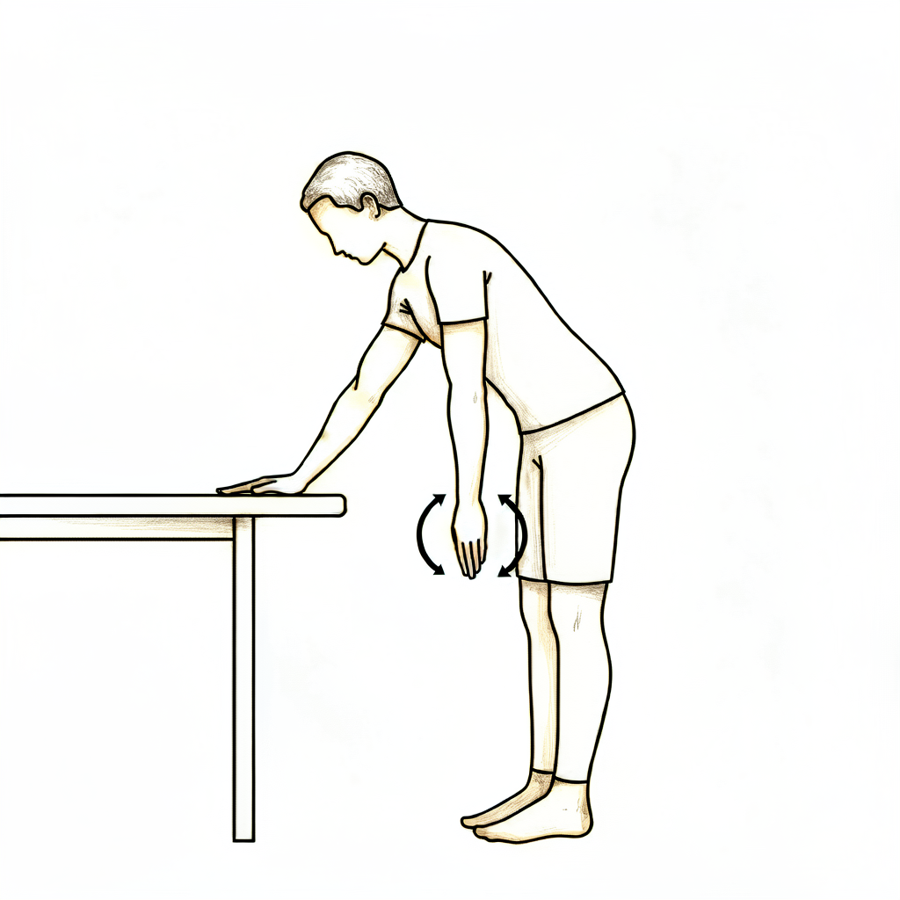
ஊசல் (pendulum) பயிற்சிகள்
மற்றொரு கையால் ஒரு மேசையில் ஊன்றிக்கொண்டு முன்னோக்கிக் குனிந்து, அறுவை சிகிச்சை செய்த கையைத் தளர்வாகத் தொங்க விடுங்கள். உங்கள் உடலை மெதுவாக ஆட்டி, சிறிய வட்டங்களை — கடிகாரத் திசையில், பின்னர் எதிர்க் கடிகாரத் திசையில் — உருவாக்குங்கள். கை தளர்வாகவே இருக்க வேண்டும்; அசைவு தோள்பட்டையிலிருந்து அல்ல, உங்கள் உடலிலிருந்து வருகிறது.
உங்கள் இயன்முறை சிகிச்சையாளர் வழிகாட்டியபடி
Kieran Hirpara 4.0
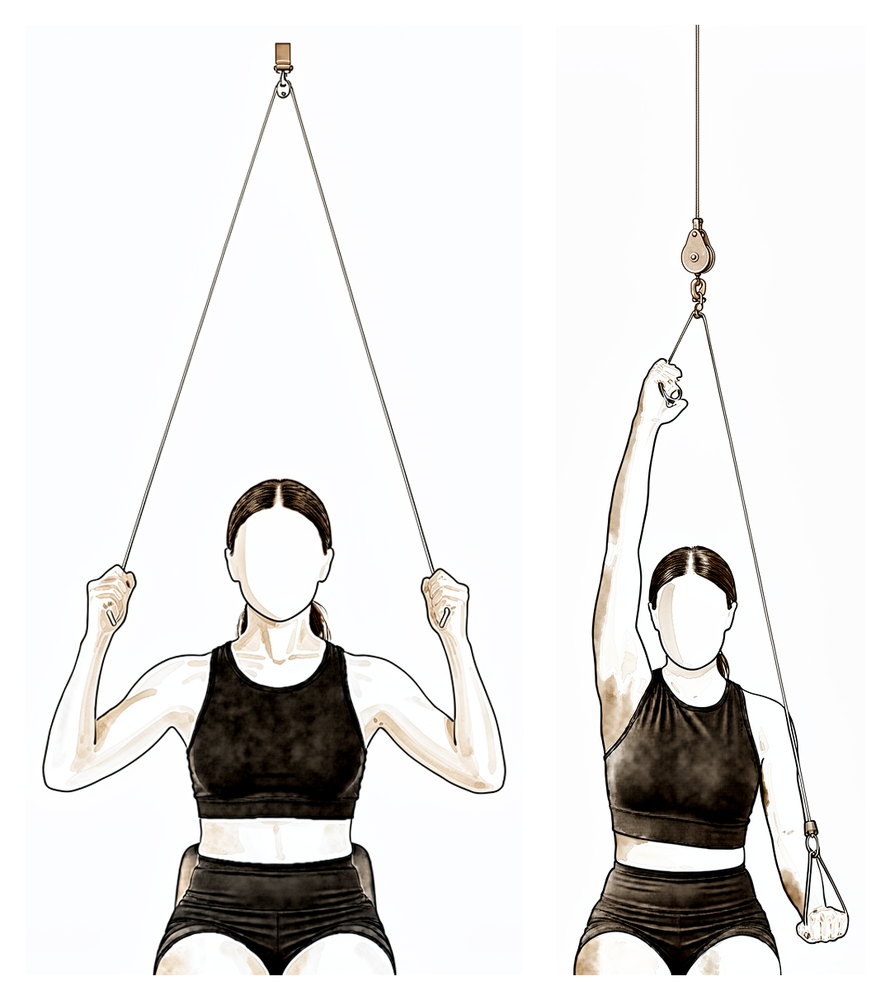
கப்பி (pulley) உதவியுடன் கூடிய அசைவு
கதவின் மேல் பொருத்தப்பட்ட கப்பிக்குக் கீழே அமருங்கள். அறுவை சிகிச்சை செய்த கையைத் தளர்வாக வைத்தபடி, மற்றொரு கையால் கீழ்நோக்கி இழுங்கள்; கயிறு அறுவை சிகிச்சை செய்த கையை மென்மையாக உயர்த்தும்; பின்னர் அதை மெதுவாக இறக்குங்கள். வசதியை வைத்தே முன்னேறுங்கள் — கூர்மையான அல்லது நீடிக்கும் வலியைப் பொருட்படுத்தாமல் தொடராமல், சற்றுப் பின்வாங்குங்கள்.
உங்கள் இயன்முறை சிகிச்சையாளர் வழிகாட்டியபடி
Kieran Hirpara 4.0
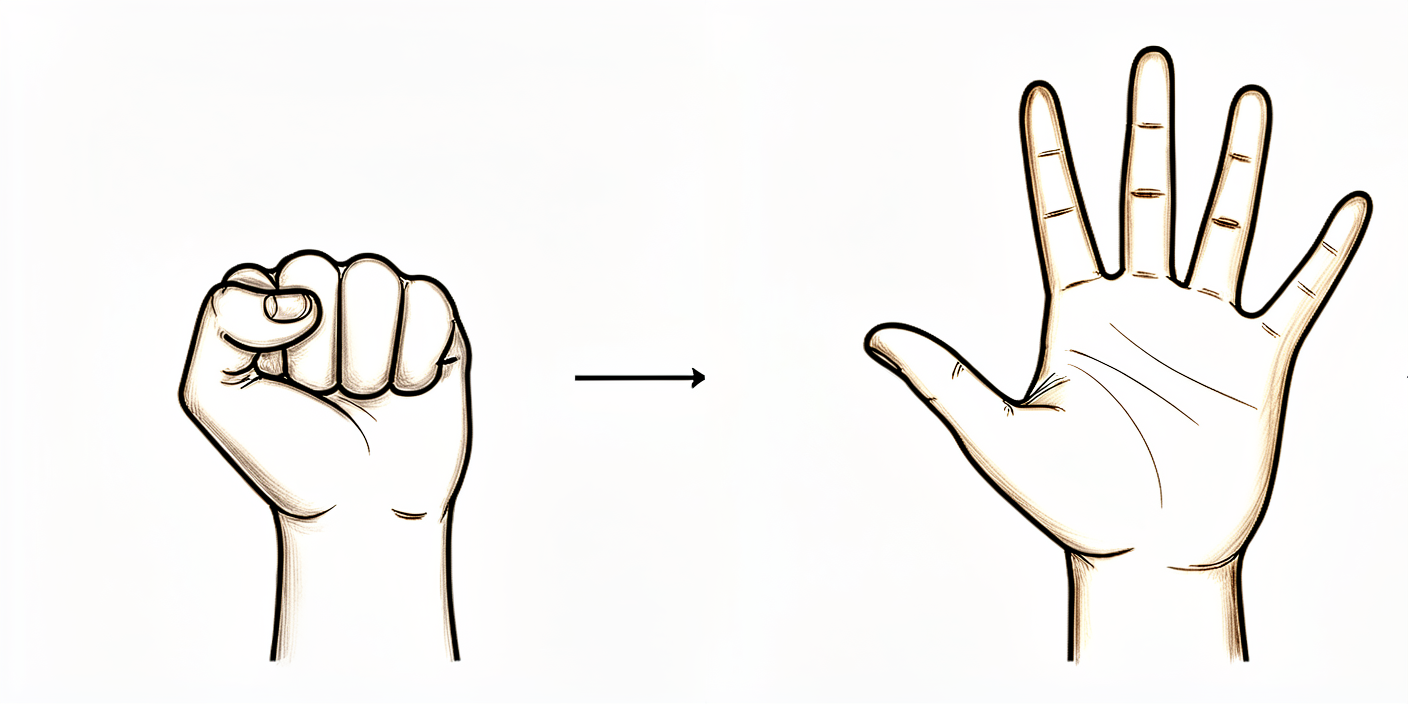
கையை விரித்து மூடுதல்
இறுக்கமாக முஷ்டி பிடியுங்கள் அல்லது ஒரு மென்மையான பந்தை அழுத்துங்கள்; பின்னர் கையை முழுமையாக விரியுங்கள். தொடக்கத்திலிருந்தே உங்கள் கை, மணிக்கட்டு, முழங்கை ஆகியவற்றைத் தாராளமாக அசையுங்கள்; வசதி அனுமதிக்கும் அளவுக்கு இலகுவான அன்றாட வேலைகளுக்குக் கையைப் பயன்படுத்துங்கள்.
உங்கள் இயன்முறை சிகிச்சையாளர் வழிகாட்டியபடி
Kieran Hirpara 4.0
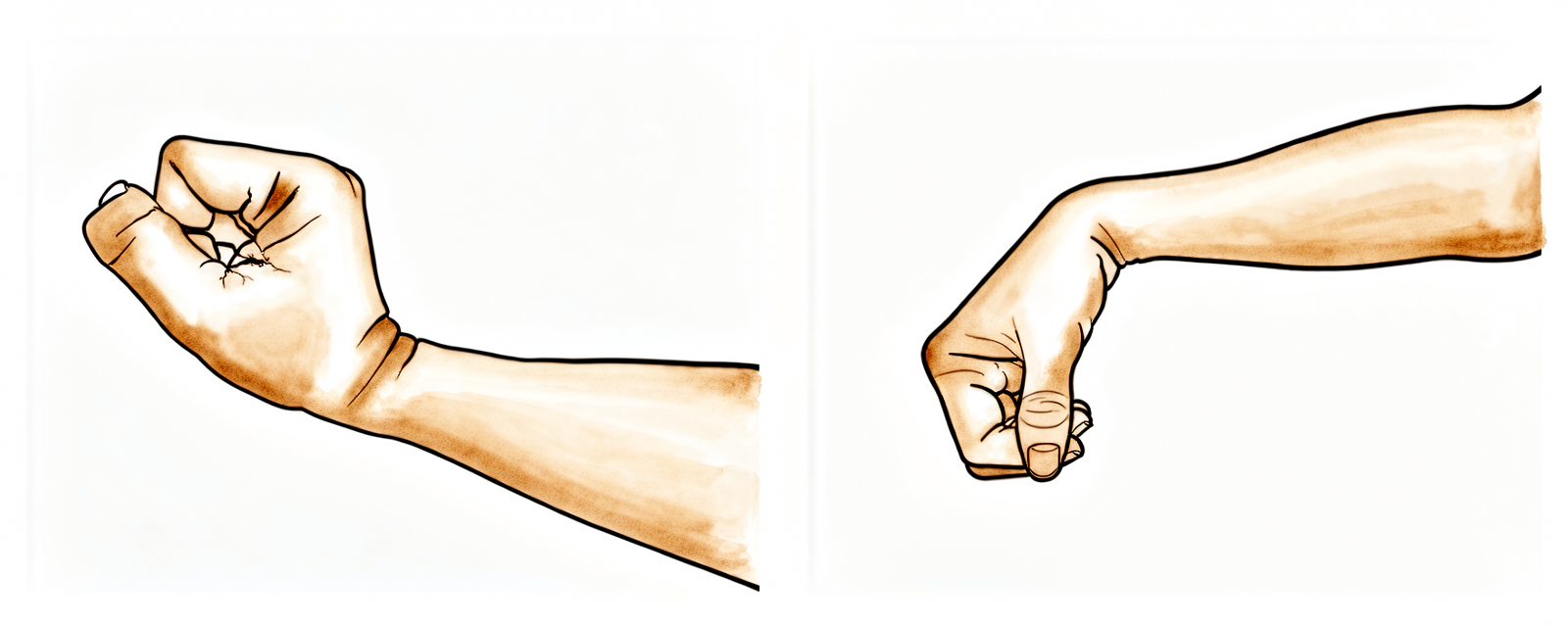
மணிக்கட்டு அசைவு
மணிக்கட்டை முன்னோக்கியும், பின்னோக்கியும், பக்கவாட்டில் இருபுறமும் வளைத்து அசைத்துக்கொண்டே இருங்கள். தோள்பட்டை அடங்கும்போது முழுக் கையும் இயங்கிக்கொண்டிருக்க, தொடக்கத்திலிருந்தே கை, மணிக்கட்டு, முழங்கை ஆகியவற்றைத் தாராளமாக அசையுங்கள்.
உங்கள் இயன்முறை சிகிச்சையாளர் வழிகாட்டியபடி
Kieran Hirpara 4.0
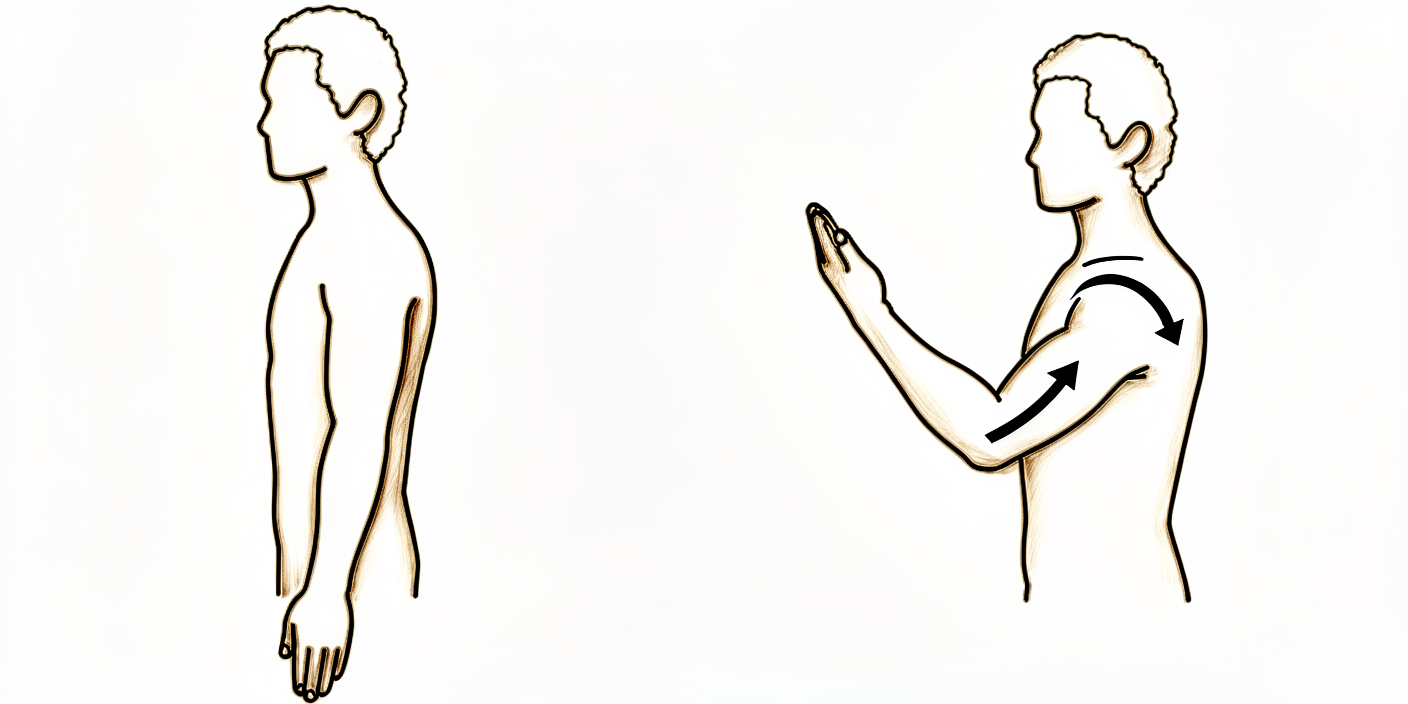
முழங்கையை மடக்குதல்
மேற்கை உங்கள் உடலின் பக்கவாட்டில் ஓய்வாக இருக்க, முழங்கையை வசதியாக முடிந்த அளவு மடக்கி, பின்னர் முழுமையாக நேராக்குங்கள். முழங்கை மட்டுமே அசைய வேண்டும் — தோள்பட்டையைத் தளர்வாக வையுங்கள்.
உங்கள் இயன்முறை சிகிச்சையாளர் வழிகாட்டியபடி
Kieran Hirpara 4.0
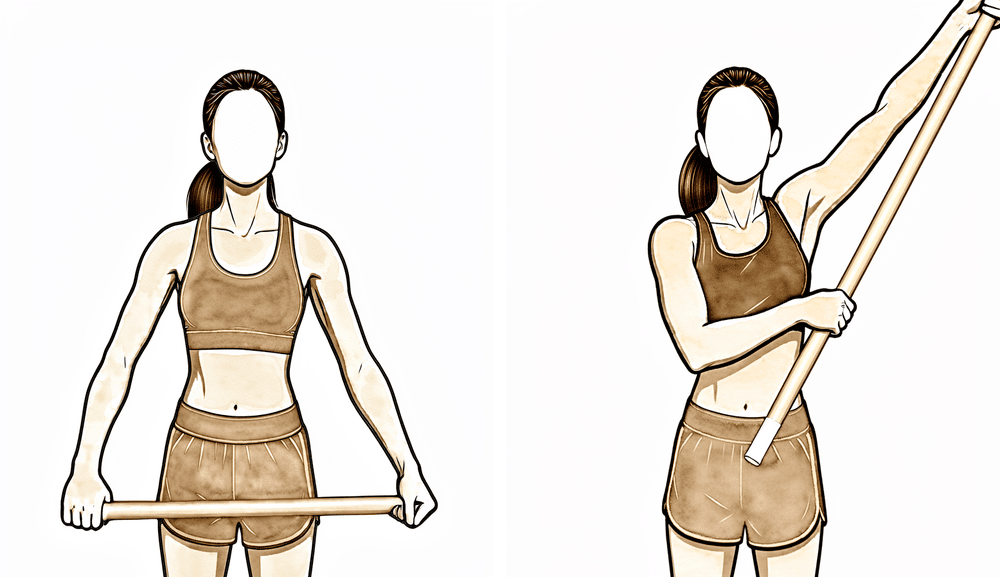
குச்சியின் உதவியுடன் அசைவு
இரு கைகளிலும் ஒரு குச்சியைப் (கைத்தடி அல்லது கோல்) பிடித்து, உங்கள் நல்ல கை அறுவை சிகிச்சை செய்த கையைப் பக்கவாட்டிலும் முன்னோக்கியும் வழிநடத்தட்டும்; வசதி அனுமதிக்கும் அளவுக்கு அதைக் கொண்டு சென்று, பின்னர் கட்டுப்பாட்டுடன் இறக்குங்கள். உதவியுடன் கூடிய இந்தச் சுய அசைவு, தோள்பட்டை அடங்கும்போது அதை ஆரம்பத்திலிருந்தே அசைந்துகொண்டிருக்கச் செய்கிறது.
உங்கள் இயன்முறை சிகிச்சையாளர் வழிகாட்டியபடி
Kieran Hirpara 4.0
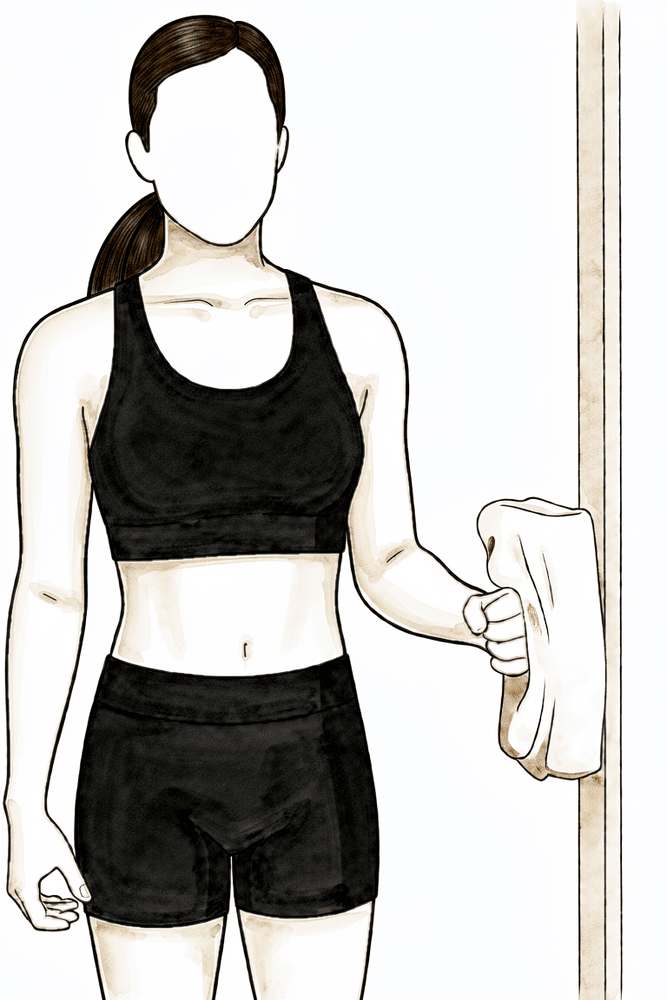
ஐசோமெட்ரிக் (isometric) வெளிப்புறச் சுழற்சி
முழங்கை உடலின் பக்கவாட்டில் ஒட்டியபடி செங்கோணத்தில் மடங்கியிருக்க, உங்கள் புறங்கை ஒரு சுவரிலோ கதவுச் சட்டத்திலோ பட்டபடி நில்லுங்கள். கை அசையாதபடி அதை நோக்கி வெளிப்புறமாக மென்மையாக அழுத்தி, சில விநாடிகள் பிடித்து, பின்னர் தளர்த்துங்கள். வசதி அனுமதிக்கும்படி, அசைவு எதுவும் இல்லாமல் இது சுழற்சி தசைநாண் பட்டையை மென்மையாகச் செயல்பட வைக்கிறது.
உங்கள் இயன்முறை சிகிச்சையாளர் வழிகாட்டியபடி
Kieran Hirpara 4.0
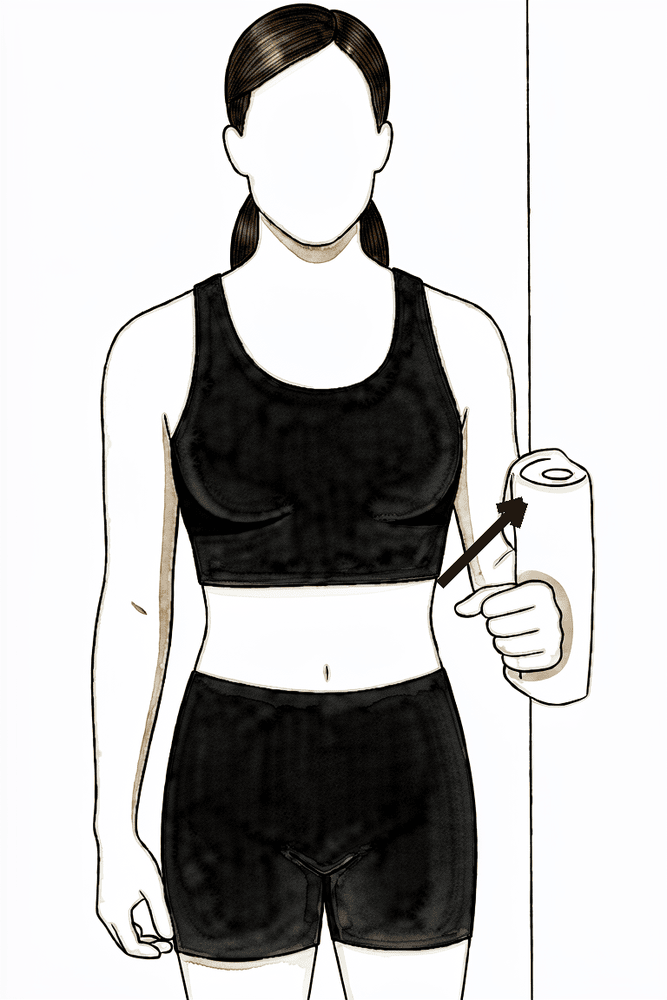
ஐசோமெட்ரிக் பக்கவாட்டு உயர்த்தல் (abduction)
ஒரு சுவருக்குப் பக்கவாட்டாக, முழங்கை உங்கள் உடலின் பக்கத்தில் இருக்க நில்லுங்கள்; கையைப் பக்கவாட்டில் உயர்த்துவது போல, அது அசையாதபடி உங்கள் மேற்கையின் வெளிப்புறத்தைச் சுவரில் மென்மையாக அழுத்துங்கள். சில விநாடிகள் பிடித்து, பின்னர் தளர்த்துங்கள். வசதி அனுமதிக்கும்படி, அசைவு எதுவும் இல்லாமல் இது டெல்டாய்டு (deltoid) தசைக்கு மென்மையாக வேலை கொடுக்கிறது.
உங்கள் இயன்முறை சிகிச்சையாளர் வழிகாட்டியபடி
Kieran Hirpara 4.0
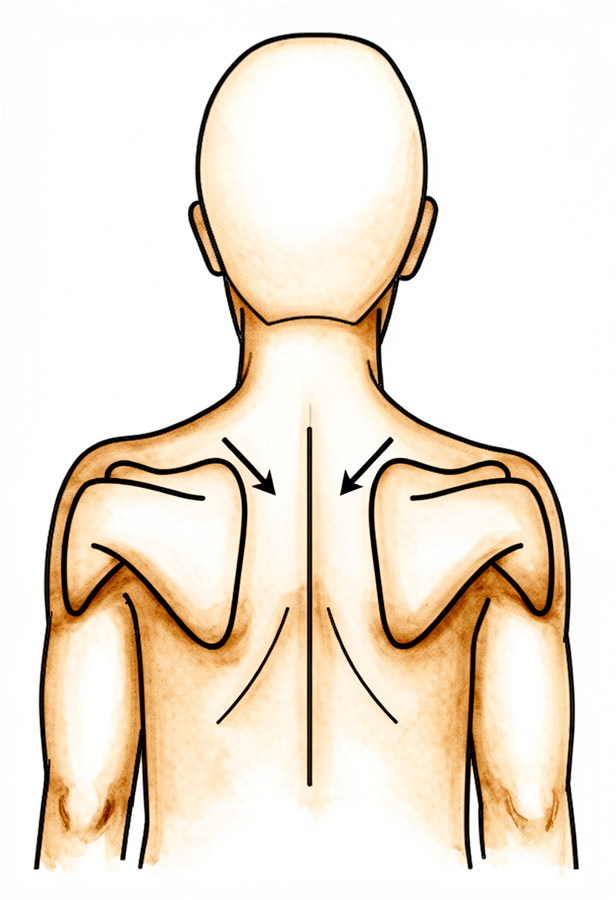
தோள்பட்டை எலும்பை நிலைப்படுத்துதல் (scapular setting)
நிமிர்ந்து அமர்ந்தோ நின்றோ, கைகளை அசைக்காமல் உங்கள் தோள்பட்டை எலும்புகளைக் கீழ்நோக்கியும் பின்னோக்கியும் ஒன்றாக மென்மையாக இழுங்கள்; சில விநாடிகள் பிடித்து, பின்னர் தளர்த்துங்கள். உங்கள் காதுகள், தோள்கள், இடுப்பு ஆகியவை ஒரே நேர்கோட்டில் இருக்கட்டும்.
உங்கள் இயன்முறை சிகிச்சையாளர் வழிகாட்டியபடி
முதல் இரண்டு வாரங்கள், தோள்பட்டையை அசைத்துக்கொண்டே இருக்கும் அதே நேரத்தில் அது அடங்க விடுவதற்கானவை. கைத்தாங்கி வசதிக்கு உதவும்வரை மட்டுமே (பொதுவாக முதல் ஒன்றிரண்டு நாட்கள்) அதைப் பயன்படுத்துங்கள்; முடிந்தவரை அதைக் கழற்றியே வையுங்கள்; அதை அணிந்தபடி தூங்க வேண்டிய அவசியமில்லை. தொடக்கத்திலிருந்தே உங்கள் கை, மணிக்கட்டு, முழங்கை ஆகியவற்றைத் தாராளமாக அசையுங்கள்; வசதி அனுமதிக்கும் அளவுக்கு, சாப்பிடுவது, கழுவுவது, உடை அணிவது போன்ற இலகுவான அன்றாட வேலைகளுக்குக் கையைப் பயன்படுத்துங்கள். மென்மையான தோள்பட்டை அசைவு உடனடியாகத் தொடங்குகிறது: ஊசல் (pendulum) பயிற்சிகளும் உதவியுடன் செய்யும் அசைவுகளும், தோள்பட்டை அனுமதிக்கும்போது சுய அசைவுக்கு முன்னேறுகின்றன. ஐஸும் எளிய வலி நிவாரணியும் பயிற்சிகளை வசதியாகச் செய்ய உதவுகின்றன. உங்கள் காயக் கட்டுகள் நீர்புகா வகை: நாள் 1 முதல் நீங்கள் குளிக்கலாம், அவற்றின் மீது தண்ணீர் ஓடலாம் (அந்தப் பகுதியை ஊற வைக்கவோ தேய்க்கவோ வேண்டாம்). அறுவை சிகிச்சைக்குச் சுமார் பத்து முதல் பன்னிரண்டு நாட்களுக்குப் பிறகு அவை அகற்றப்படும்.
உங்கள் இயன்முறை சிகிச்சையாளருக்கு:
இலக்குகள்
- வலியையும் வீக்கத்தையும் தணித்தல்
- தாங்கக்கூடிய அளவுக்கு, உதவியுடன் கூடிய அசைவிலிருந்து சுய அசைவுக்கு முன்னேறும் ஆரம்பகால அசைவு வரம்பு
- இலகுவான அன்றாட வாழ்க்கைச் செயல்களைச் சுயமாகச் செய்தல்
- முதல் சில நாட்களுக்குள் கைத்தாங்கியைப் படிப்படியாகக் குறைத்து விடுதல்
சிகிச்சை மேலாண்மை
- கைத்தாங்கி வசதிக்காக மட்டும்: முதல் சில நாட்களில் படிப்படியாகக் குறைக்கவும், தாமதமானாலும் முதல் ஒன்று முதல் இரண்டு வாரங்களுக்குள் முற்றிலும் நிறுத்தவும் ஊக்குவித்தல்
- ஊசல் பயிற்சிகள்; உதவியுடன் கூடிய சுய அசைவு வரம்பு (கப்பி, கைத்தடி அல்லது கோல்), தாங்கக்கூடிய அளவுக்கு எல்லாத் தளங்களிலும் சுய அசைவு வரம்புக்கு முன்னேற்றுதல்
- கை, மணிக்கட்டு, முழங்கை ஆகியவற்றின் தடையற்ற அசைவு; வசதியான அளவுக்குப் பிடிப் பயிற்சி
- தோள்பட்டை எலும்பை நிலைப்படுத்துதல் (scapular setting) மற்றும் உடல்நிலைப் பயிற்சி
- வசதி அனுமதிக்கும்படி, சுழற்சி தசைநாண் பட்டை மற்றும் டெல்டாய்டு (deltoid) தசைகளுக்கு மென்மையான ஐசோமெட்ரிக் (isometric) பயிற்சிகள்
- பயிற்சித் திட்டத்துக்கு ஆதரவாகக் குளிர் சிகிச்சை (cryotherapy) மற்றும் வலி நிவாரணி
முன்னெச்சரிக்கைகள்
- ஆறு வாரங்களுக்கு வாகனம் ஓட்ட வேண்டாம் (இது எந்தத் தோள்பட்டை அறுவை சிகிச்சைக்கும் பொருந்தும்)
- வசதியை வைத்தே அசைவு முன்னேற்றப்படுகிறது: கூர்மையான அல்லது நீடிக்கும் வலி என்பது, வலியைப் பொருட்படுத்தாமல் தொடர வேண்டும் என்பதல்ல, சற்றுப் பின்வாங்க வேண்டும் என்பதே
- காயக் கட்டுகள் நீர்புகா வகை (அவற்றின் மீது குளிப்பது பரவாயில்லை); சுமார் 10–12 நாட்களில் அகற்றப்படும். அதிகப்படியான சிவப்போ சீழ் வடிதலோ இருந்தால் தெரிவியுங்கள்
அடுத்த கட்டத்துக்குச் செல்வதற்கான அளவுகோல்கள்
- கைத்தாங்கியிலிருந்து விடுபட்டு, இலகுவான அன்றாடச் செயல்களை வசதியாகச் செய்ய முடிதல்
- அசைவு வரம்பைச் சுயமாகச் செயற்படுத்தும் அளவுக்கு வலி தணிந்திருத்தல்
கட்டம் II — முழு அசைவை மீட்டெடுத்தலும் வலிமையைத் தொடங்குதலும் (வாரம் 2–6)
Kieran Hirpara 4.0
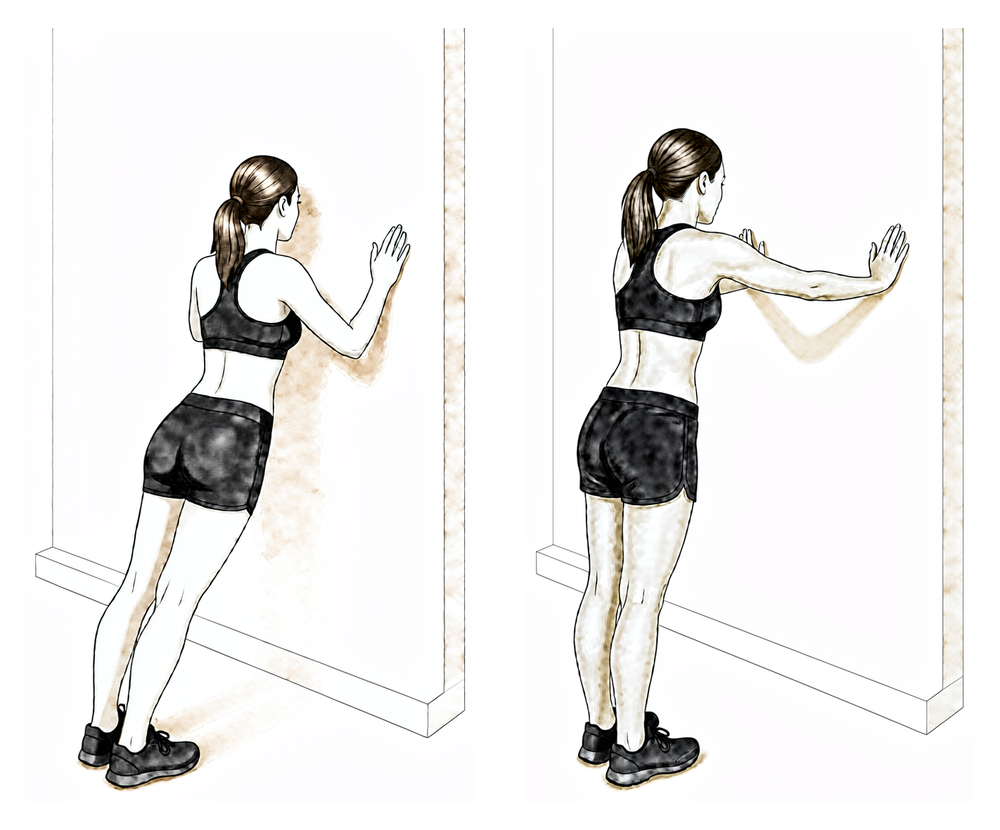
சுவரில் முன்னிழுப்பு (protraction)
மார்பு உயரத்தில் சுவரில் உள்ளங்கைகளைத் தட்டையாக வைத்து, கைகள் நேராக இருக்க நில்லுங்கள். முழங்கைகளை மடக்காமல் சுவரைத் தள்ளுங்கள்; இதனால் உங்கள் மேல் முதுகு வளைவாகி, தோள்பட்டை எலும்புகள் விலகி நகரும்; பின்னர் கட்டுப்பாட்டுடன் திரும்புங்கள்.
உங்கள் இயன்முறை சிகிச்சையாளர் வழிகாட்டியபடி
Kieran Hirpara 4.0
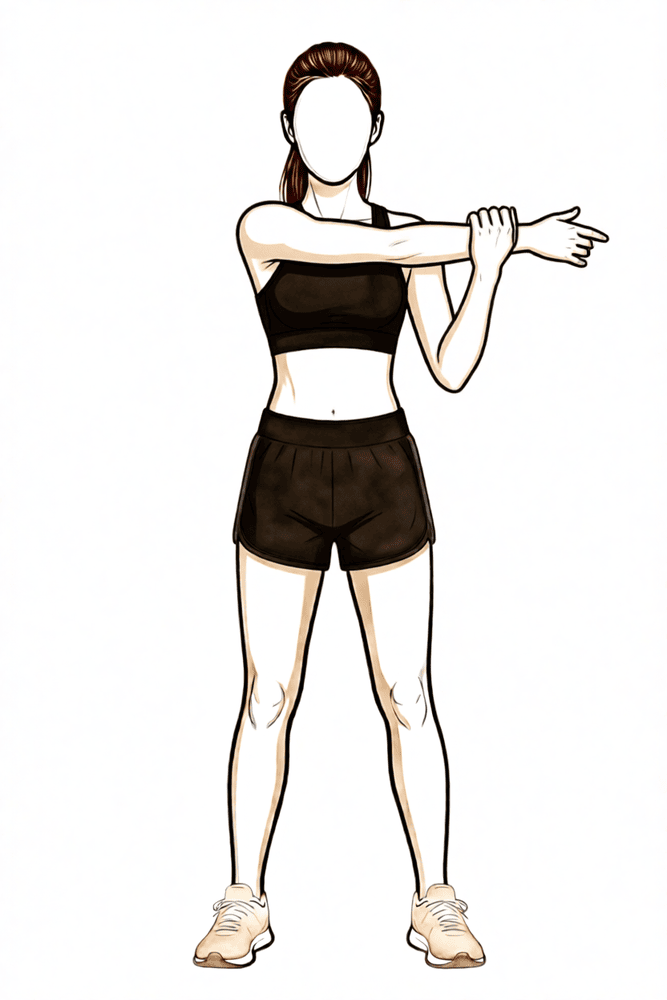
உடலின் குறுக்கே நீட்சி
தோள்பட்டையின் பின்புறம் இறுக்கமாகவே இருந்தால், தோள்பட்டையின் பின்புறத்தில் நீட்சியை உணரும் வரை, மற்றொரு கையால் அறுவை சிகிச்சை செய்த கையை மார்பின் குறுக்கே இழுங்கள். சிறிது நேரம் பிடித்து, பின்னர் விடுங்கள். உறுதியான அசௌகரியம் வரை மட்டுமே நீட்டுங்கள் — அது நீடிக்கும் வலியைத் தூண்டக் கூடாது.
உங்கள் இயன்முறை சிகிச்சையாளர் வழிகாட்டியபடி
Kieran Hirpara 4.0
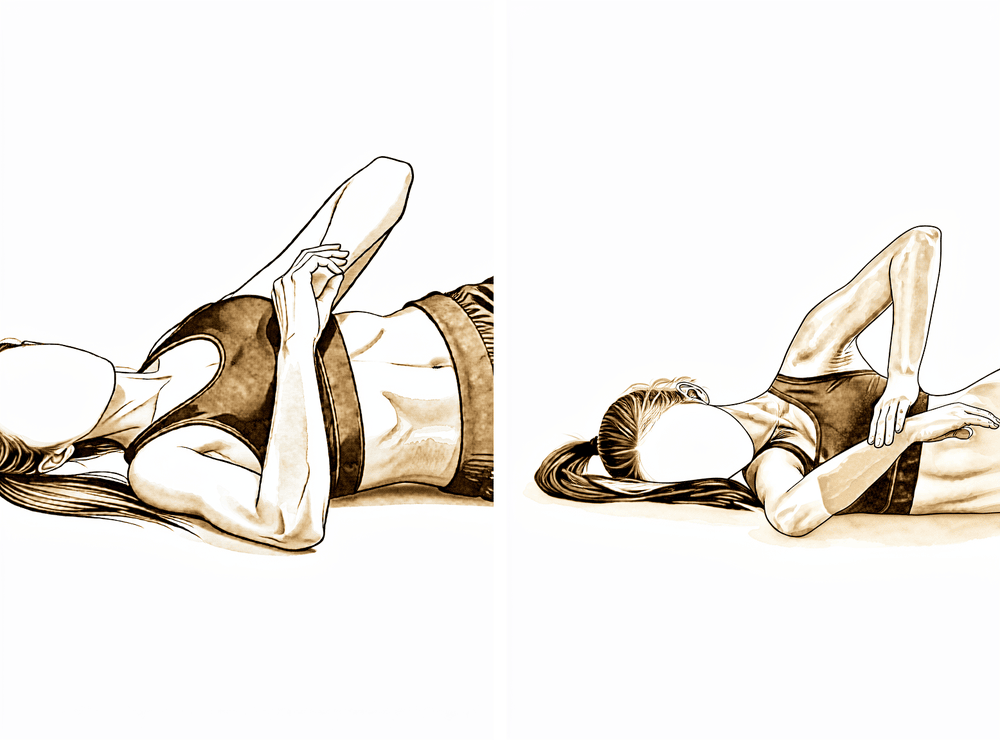
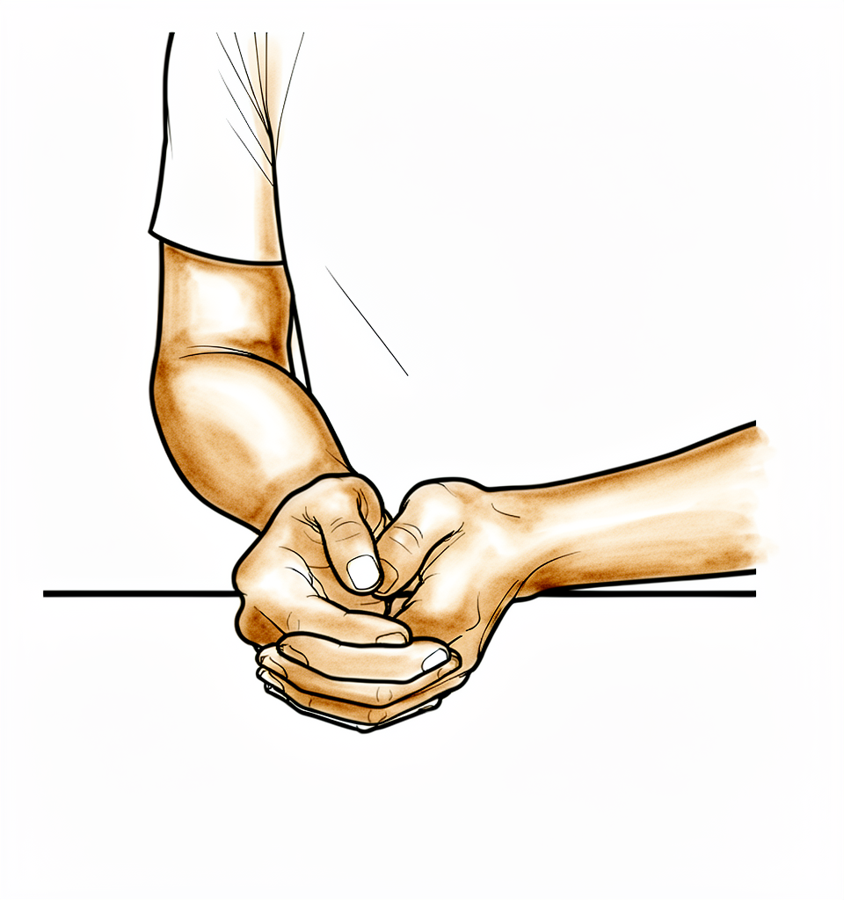
ஸ்லீப்பர் நீட்சி (sleeper stretch)
அறுவை சிகிச்சை செய்த பக்கமாகப் படுத்து, அந்தக் கையை முன்னால் நீட்டி, முழங்கையை மடக்குங்கள். தோள்பட்டைக்குள் ஆழமாக நீட்சியை உணரும் வரை, உங்கள் நல்ல கையால் முன்கையைப் படுக்கையை நோக்கி மென்மையாக அழுத்தி, பின்னர் தளர்த்துங்கள். தோள்பட்டையின் பின்புறத்தில் மீதமுள்ள இறுக்கத்தை இது தணிக்கிறது.
உங்கள் இயன்முறை சிகிச்சையாளர் வழிகாட்டியபடி
Kieran Hirpara 4.0
மீள்பட்டையுடன் வெளிப்புறச் சுழற்சி (நடுநிலைக்கு அருகில்)
இடுப்பு உயரத்தில் உங்கள் உடலின் குறுக்கே கட்டப்பட்ட ஒரு மீள்பட்டையைப் பிடித்தபடி, முழங்கை உடலின் பக்கவாட்டில் ஒட்டியபடி செங்கோணத்தில் மடங்கியிருக்க நில்லுங்கள். முழங்கையைப் பக்கவாட்டிலேயே வைத்தபடி, பட்டையின் எதிர்ப்புக்கு எதிராக முன்கையை வெளிப்புறமாக ஏறக்குறைய உடலின் நடுக்கோடு வரை சுழற்றி, பின்னர் மெதுவாகத் திரும்புங்கள். ஐசோமெட்ரிக் பிடிப்புகளிலிருந்து முன்னேறும்போது, இது சுழற்சி தசைநாண் பட்டை வலுப்படுத்துதலைத் தொடங்குகிறது.
குறைந்த எதிர்ப்பு; உங்கள் இயன்முறை சிகிச்சையாளர் வழிகாட்டியபடி
Kieran Hirpara 4.0
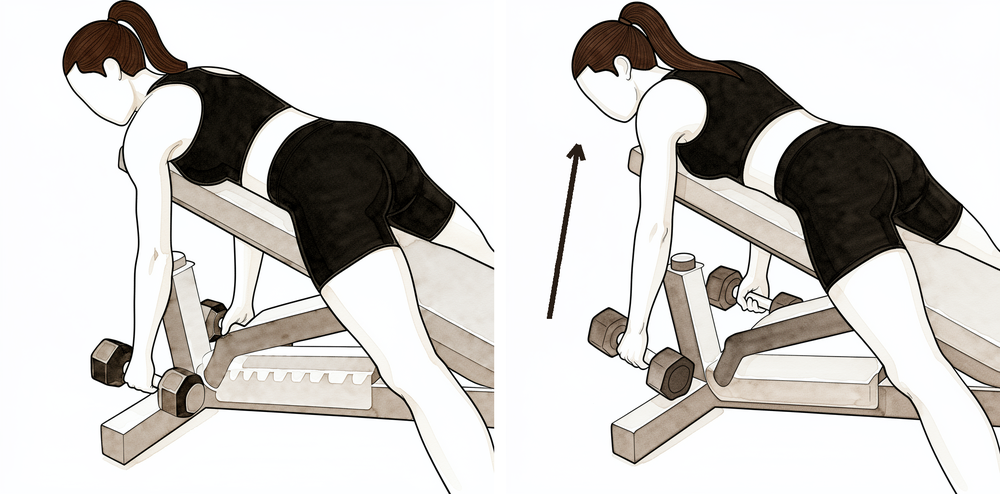
பட்டையுடன் தோள்பட்டை எலும்புகளை ஒன்றாக அழுத்துதல்
உங்களுக்கு முன்னால் கட்டப்பட்ட ஒரு பட்டையைப் பிடித்தபடி, முழங்கைகளைப் பின்னோக்கி இழுத்து, தோள்பட்டை எலும்புகளை ஒன்றாகவும் கீழ்நோக்கியும் அழுத்துங்கள்; பின்னர் மெதுவாகத் திரும்புங்கள். இந்தக் கட்டத்தில் எதிர்ப்பு சேர்க்கப்படும்போது, தோள்பட்டை எலும்பை நிலையாக வைத்திருக்கும் தசைகளை இது வலுப்படுத்துகிறது.
உங்கள் இயன்முறை சிகிச்சையாளர் வழிகாட்டியபடி
Kieran Hirpara 4.0
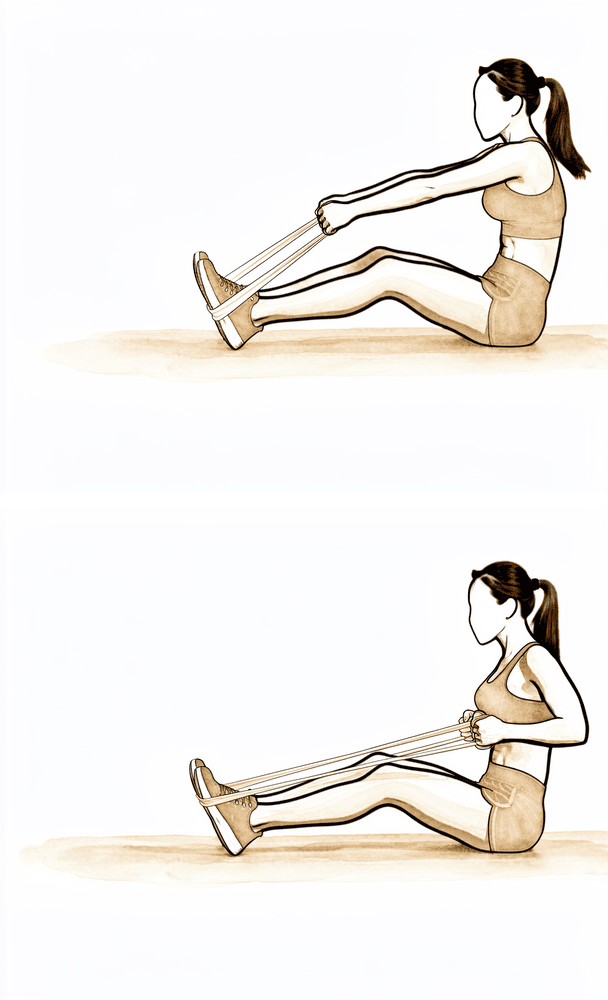
தாழ்வான இழுப்பு (low row)
உங்களுக்கு முன்னால் இடுப்பு உயரத்தில் கட்டப்பட்ட ஒரு பட்டையைப் பிடியுங்கள். கையை ஓரளவு நேராக வைத்தபடி, அதைப் பின்னோக்கியும் கீழ்நோக்கியும் உங்கள் இடுப்பை நோக்கி இழுத்து, தோள்பட்டை எலும்பைக் கீழேயும் பின்னேயும் அழுத்துங்கள்; பின்னர் மெதுவாகத் திரும்புங்கள். சுழற்சி தசைநாண் பட்டைக்கு ஆதரவளிக்கும், தோள்பட்டை எலும்பைக் கீழிறக்கும் தசைகளை இது கட்டியெழுப்புகிறது.
உங்கள் இயன்முறை சிகிச்சையாளர் வழிகாட்டியபடி
Kieran Hirpara 4.0
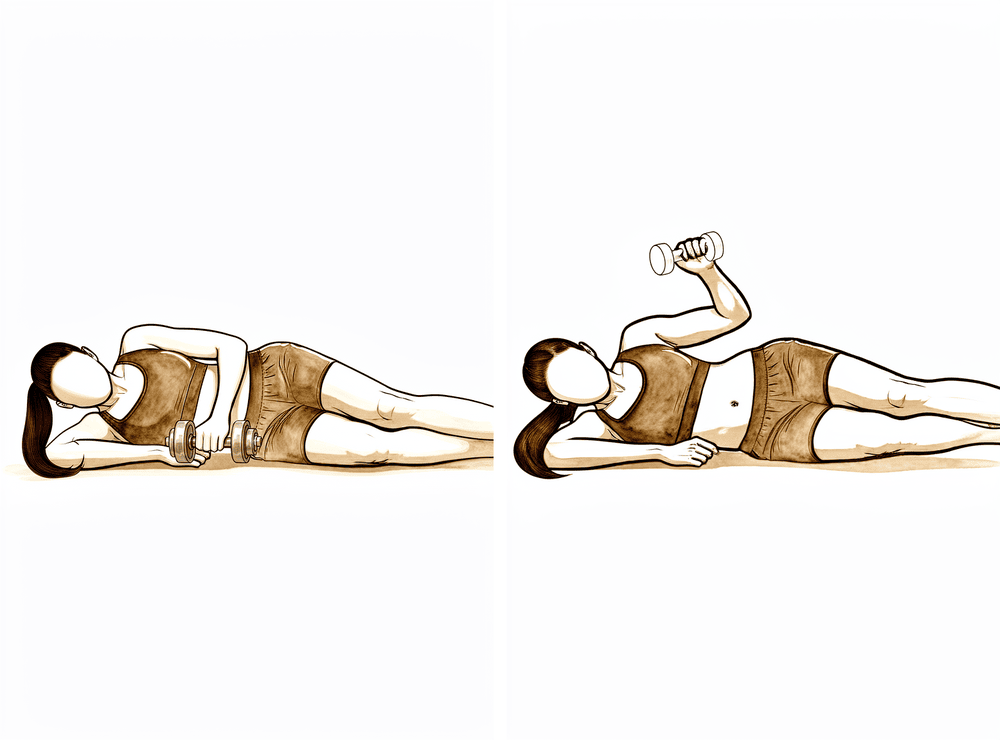
எடையுடன் பக்கவாட்டில் படுத்து வெளிப்புறச் சுழற்சி
அறுவை சிகிச்சை செய்யாத பக்கமாகப் படுத்து, மேலுள்ள முழங்கையைச் செங்கோணத்தில் மடக்கி உடலோடு ஒட்டி வையுங்கள். இலகுவான எடையைப் பிடித்தபடி, முன்கையைக் கூரையை நோக்கி மேல்நோக்கிச் சுழற்றி, பின்னர் மெதுவாக இறக்குங்கள். இது இலகுவான ஐசோடோனிக் (isotonic) சுழற்சி தசைநாண் பட்டைப் பயிற்சி — குறைந்த எடை, அதிக எண்ணிக்கை — வசதி அனுமதிக்கும்படி சுமார் நான்காவது வாரத்திலிருந்து தொடங்குகிறது.
குறைந்த சுமை, அதிக எண்ணிக்கை; உங்கள் இயன்முறை சிகிச்சையாளர் வழிகாட்டியபடி
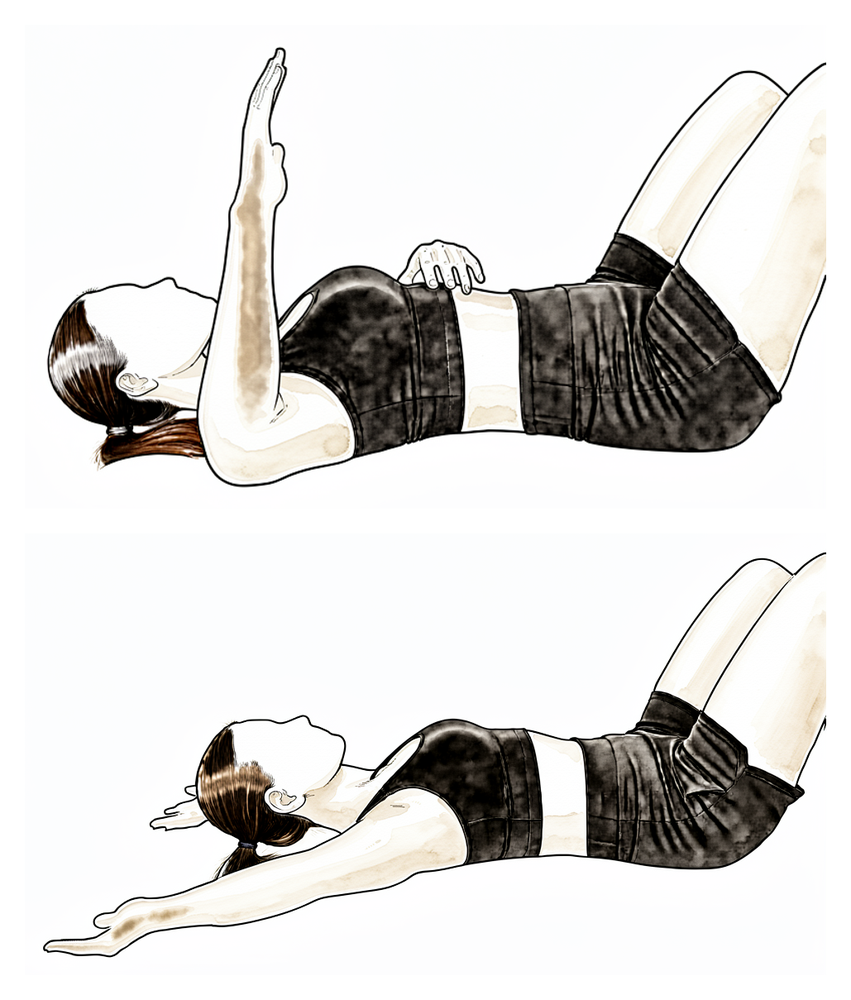
Kieran Hirpara 4.0
90/90 நிலையில் வெளிப்புறச் சுழற்சி (படுத்த நிலையில்)
மல்லாந்து படுத்து, கை தோள்பட்டை உயரத்தில் பக்கவாட்டில் நீட்டி, முழங்கை செங்கோணத்தில் மடங்கி, ஒரு தலையணையின் மேல் தாங்கப்பட்டிருக்கட்டும். வசதியான அளவு வரை முன்கையைத் தலையை நோக்கிப் பின்னோக்கி மெதுவாகச் சுழற்றி, பின்னர் கட்டுப்பாட்டுடன் திரும்புங்கள். இது உயர்த்திய நிலையில் சுழற்சியை மீட்டெடுக்கிறது.
10 முறை, உங்கள் இயன்முறை சிகிச்சையாளர் வழிகாட்டியபடி
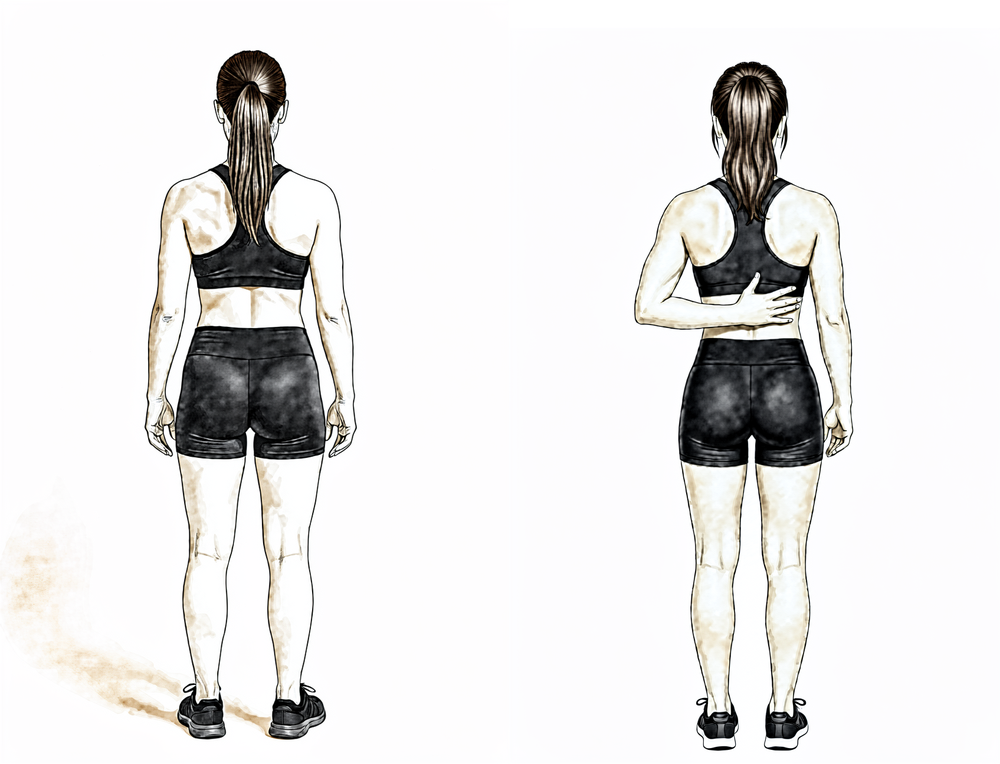
Kieran Hirpara 4.0
கையை முதுகுக்குப் பின்னால் கொண்டு செல்லுதல்
நின்றபடி, அறுவை சிகிச்சை செய்த கையின் புறங்கையை உங்கள் கீழ் முதுகில் வைத்து, உங்கள் சொந்தத் தசைகளைப் பயன்படுத்தி வசதியான அளவு வரை முதுகெலும்பின் மேல்நோக்கி மென்மையாக நகர்த்தி, பின்னர் இறக்குங்கள். வசதியான வரம்புக்குள் மட்டுமே அசையுங்கள்; ஒருபோதும் வலுக்கட்டாயமாகச் செய்ய வேண்டாம்.
உங்கள் இயன்முறை சிகிச்சையாளர் வழிகாட்டியபடி
தோள்பட்டை அடங்கி வரும் நிலையில், முழு அசைவை மீண்டும் பெறுவதிலும் வலுப்படுத்துதலைத் தொடங்குவதிலும் கவனம் திரும்புகிறது. சுய அசைவு எல்லாத் திசைகளிலும் முழு வரம்பை நோக்கி முன்னேற்றப்படுகிறது; எதிர்ப்புப் பயிற்சி மென்மையாகத் தொடங்குகிறது — வசதி அனுமதிக்கும்படி, ஐசோமெட்ரிக் பிடிப்புகளிலிருந்து சுழற்சி தசைநாண் பட்டை மற்றும் தோள்பட்டை எலும்புத் தசைகளுக்கான மீள்பட்டைப் (elastic band) பயிற்சிகளுக்கு முன்னேறுகிறது. ஏற்கெனவே திரும்பியிராதவர்களில் பெரும்பாலானோர் முதல் ஓரிரு வாரங்களில் மேசை வேலைக்குத் திரும்புகிறார்கள். ஆறு வார மறுபரிசோதனையில் உங்கள் அறுவை சிகிச்சை நிபுணர் அனுமதி தரும்வரை வாகனம் ஓட்டுவது காத்திருக்கிறது. உங்கள் இயன்முறை சிகிச்சையாளர் வழிகாட்டியபடி, இலகுவான பொழுதுபோக்குச் செயல்கள் இந்தக் கட்டத்தில் மீண்டும் தொடங்குகின்றன.
உங்கள் இயன்முறை சிகிச்சையாளருக்கு:
இலக்குகள்
- எல்லாத் தளங்களிலும் முழு அல்லது கிட்டத்தட்ட முழு சுய அசைவு வரம்பு
- சுழற்சி தசைநாண் பட்டை மற்றும் தோள்பட்டை எலும்பை நிலைப்படுத்தும் தசைகளின் படிப்படியான வலுப்படுத்துதலைத் தொடங்குதல்
- இயல்பான அன்றாடச் செயல்களுக்கும் வேலைக்கும் திரும்புதல் (ஆறு வார மறுபரிசோதனையில் அறுவை சிகிச்சை நிபுணர் அனுமதி தந்த பிறகே வாகனம் ஓட்டுதல்)
சிகிச்சை மேலாண்மை
- எல்லாத் தளங்களிலும் சுய அசைவு வரம்பை முழுமையை நோக்கி முன்னேற்றுதல்; வழக்கமான இடைக்கால இலக்குகள், 140–160°-ஐத் தாண்டிய முன்னோக்கிய உயர்த்தலும் (forward flexion) 40–60°-ஐத் தாண்டிய வெளிப்புறச் சுழற்சியும் (external rotation)
- ஐசோமெட்ரிக் பயிற்சிகளிலிருந்து மீள்பட்டை மூலம் சுழற்சி தசைநாண் பட்டைப் பயிற்சிக்கு முன்னேற்றுதல் (நடுநிலைக்கு அருகில் உட்புற மற்றும் வெளிப்புறச் சுழற்சி); தாங்கக்கூடிய அளவுக்கு அதிகரித்தல்
- தோள்பட்டை எலும்பு வலுப்படுத்துதல்: தோள்களை உயர்த்துதல் (shrugs), பின்னிழுத்தல், முன்னிழுத்தல், கீழிறக்குதல் ஆகிய பயிற்சிகள், எதிர்ப்புடன் செய்வதற்கு முன்னேறுதல்
- வசதி அனுமதிக்கும்படி, சுமார் 4-ஆம் வாரத்திலிருந்து குறைந்த எடைகளுடனும் அதிக எண்ணிக்கையுடனும் இலகுவான ஐசோடோனிக் (isotonic) வலுப்படுத்துதல்
- மீதமுள்ள மூட்டுறை (capsule) இறுக்கத்துக்குக் கைமுறை சிகிச்சையும் (manual therapy) நீட்சியும்; தேவைப்படும் இடங்களில் பின்புற மூட்டுறை நீட்சி உட்பட
முன்னெச்சரிக்கைகள்
- வலுப்படுத்துதல் வசதியான வரம்புக்குள்ளேயே இருக்க வேண்டும்; அதன் பிறகு நீடிக்கும் வலியைத் தூண்டக் கூடாது
- பக்கவாட்டு உயர்த்தலில் சுமையுடன் கூடிய சுழற்சியைப் (90/90 நிலைகள்) படிப்படியாகக் கட்டியெழுப்புதல்: நடுநிலைச் சுழற்சிப் பயிற்சி வசதியானதும் அதைத் தொடங்குதல்
- வலிமை திரும்பும்வரை கனமான பொருட்களைத் தூக்குவதையும், தலைக்கு மேல் வலுக்கட்டாயமாக வேலை செய்வதையும் தவிர்த்தல்
அடுத்த கட்டத்துக்குச் செல்வதற்கான அளவுகோல்கள்
- மிகக் குறைந்த வலியுடன் முழு அல்லது கிட்டத்தட்ட முழு சுய அசைவு வரம்பு
- வலி மீண்டும் தூண்டப்படாமல் பட்டை மற்றும் இலகுவான எடை வலுப்படுத்துதலைத் தாங்க முடிதல்
கட்டம் III — முழுச் செயல்பாட்டுக்குத் திரும்புதல் (வாரம் 6 முதல்)
Kieran Hirpara 4.0
புஷ்-அப் பிளஸ் (push-up plus)
புஷ்-அப் நிலையிலிருந்து — சுவருக்கு எதிராகவோ, முழங்கால்களை ஊன்றியோ, வலிமை அனுமதித்தால் முழுமையாகவோ — புஷ்-அப்பை முடித்து, பின்னர் சற்று மேலும் தள்ளுங்கள்; இதனால் உங்கள் மேல் முதுகு வளைவாகி, தோள்பட்டை எலும்புகள் விலகி விரியும்; பின்னர் திரும்புங்கள். முழுச் செயல்பாட்டுக்கு நீங்கள் திரும்பும்போது, மூடிய சங்கிலி (closed-chain) வகையான இந்தப் பயிற்சி கட்டுப்பாட்டையும் வலிமையையும் கட்டியெழுப்புகிறது.
உங்கள் இயன்முறை சிகிச்சையாளர் வழிகாட்டியபடி
இறுதிக் கட்டம், கனமான பொருட்களைத் தூக்குதல், உடலுழைப்பு வேலை, ஜிம் பயிற்சி, விளையாட்டு ஆகியவற்றுக்குப் படிப்படியாகத் திரும்புவது. வழக்கமான எடைப் பயிற்சியை, இலகுவாகத் தொடங்கி நிலையாக முன்னேற்றி, பொதுவாகச் சுமார் ஆறு வாரங்களிலிருந்து மீண்டும் தொடங்கலாம்; தலைக்கு மேலான அல்லது உடல் மோதல் உள்ள விளையாட்டு, விளையாட்டைப் பொறுத்தும் தோள்பட்டை எப்படிச் செயல்படுகிறது என்பதைப் பொறுத்தும், பொதுவாக ஆறு முதல் பன்னிரண்டு வாரங்களுக்கு இடையில் மீண்டும் தொடங்குகிறது. மறுவாழ்வுப் பயிற்சியை முடிப்பதற்கான அளவுகோல், முழு அசைவும் நம்பிக்கையான வலிமையும் கொண்ட வசதியான தோள்பட்டைதான்; பெரும்பாலானோர் சுமார் மூன்று மாதங்களுக்குள் தாங்கள் செய்ய விரும்பும் அனைத்துக்கும் திரும்பிவிடுகிறார்கள், மீதமுள்ள எந்த வலியும் அதற்குப் பிறகும் தொடர்ந்து தணிந்துகொண்டே வரும்.
உங்கள் இயன்முறை சிகிச்சையாளருக்கு:
இலக்குகள்
- முழு, வலியில்லாத அசைவு வரம்பு
- வேலைக்கும் விளையாட்டுக்குமான வலிமை, தாங்குதிறன், நம்பிக்கை ஆகியவற்றை மீட்டெடுத்தல்
- கனமான உடலுழைப்பு வேலை, ஜிம் பயிற்சி, விளையாட்டு ஆகியவற்றுக்குப் படிப்படியாகத் திரும்புதல்
சிகிச்சை மேலாண்மை
- சுமார் 6-ஆம் வாரத்திலிருந்து வழக்கமான எதிர்ப்புப் பயிற்சிக்கு முன்னேறுதல்; கட்டுப்பாடு அனுமதிக்கும்படி, இயந்திரப் பயிற்சியிலிருந்து தனி எடைகளுக்கு (free weights) முன்னேறுதல்
- தாங்கக்கூடிய அளவுக்குத் தசை நீளும்போது செய்யும் (eccentric) பயிற்சியும் மூடிய சங்கிலி (closed-chain) பயிற்சியும்
- விளையாட்டுக்கே உரிய உடற்தகுதிப் பயிற்சி; பொருத்தமான இடங்களில் கட்டம் கட்டமான எறிதல் அல்லது தலைக்கு மேலான பயிற்சித் திட்டம் உட்பட
- அளவுக்கு அதிகமான சுமையால் ஏற்படும் தசைநாண் பாதிப்பைத் (tendinopathy) தவிர்க்க, கனமான சுழற்சி தசைநாண் பட்டை வலுப்படுத்துதலை வாரத்துக்குச் சுமார் மூன்று அமர்வுகளுக்குள் வரம்பிடுதல்
முன்னெச்சரிக்கைகள்
- முன்னேற்றம் தொடர்ந்து அறிகுறிகளின் வழிகாட்டலிலேயே: சுமையுடன் கூடும் வலி, அல்லது அதன் பிறகு நீடிக்கும் வலி என்பது, சுமையைக் குறைக்க வேண்டும் என்பதே
- உடல் மோதல் உள்ள அல்லது தலைக்கு மேலான விளையாட்டுக்குத் திரும்புவது, முழு, வலியில்லாத அசைவு வரம்பும் போதுமான வலிமையும் வரும்வரை காத்திருக்கும்
அடுத்த கட்டத்துக்குச் செல்வதற்கான அளவுகோல்கள்
- முழு, வலியில்லாத அசைவு வரம்பு; நோக்கிய செயலுக்கு மற்றப் பக்கத்துக்கு ஒப்பிடத்தக்க வலிமை
- விளையாட்டுக்கே உரிய அல்லது வேலைக்கே உரிய பணிகளை அறிகுறிகள் தூண்டப்படாமல் செய்ய முடிதல்
உங்கள் நெறிமுறைக்குப் பிறகு
மேலே உள்ள கட்டங்கள், எளிய மற்றும் நோயறிதல் தோள்பட்டை ஆர்த்ரோஸ்கோபிக்காக வெளியிடப்பட்ட மறுவாழ்வு நெறிமுறைகளிலிருந்து — Dr Jorge Chahla (Rush University Medical Center), Dr Benedict Nwachukwu (Hospital for Special Surgery), Dr Blake Obrock (எலும்பியல் விளையாட்டு மருத்துவம், Amarillo) ஆகியோரின் நெறிமுறைகள் மற்றும் நோயறிதல் தோள்பட்டை ஆர்த்ரோஸ்கோபி குறித்த Royal National Orthopaedic Hospital-இன் நோயாளி வழிகாட்டி — தழுவி எடுக்கப்பட்டவை. வார வரம்புகள் நிலையானவை அல்ல, வழக்கமானவை; உங்கள் தோள்பட்டை எப்படி மீள்கிறது என்பதன் அடிப்படையில், கிளினிக்குடன் இணைந்து பணியாற்றும் உங்கள் இயன்முறை சிகிச்சையாளர் உங்கள் மறுவாழ்வுப் பயிற்சிக்குத் தனிப்பட்ட முறையில் வழிகாட்டுவார். இந்தப் பக்கம் கிளினிக்கின் பொதுவான மீட்சி ஆலோசனைகளுடன் இணைந்து செயல்படுகிறது: அறுவை சிகிச்சைக்குப் பிந்தைய வலியைக் கையாளுதல் மற்றும் காயப் பராமரிப்பு பக்கங்களைப் பாருங்கள். அறுவை சிகிச்சை பற்றி அறிய, தோள்பட்டை ஆர்த்ரோஸ்கோபி பக்கத்தைப் பாருங்கள். இந்த நெறிமுறைக்குப் பின்னால் உள்ள சான்றுகள் (ஆரம்பகால அசைவுக்கான காரணம், போலிச் சிகிச்சையுடன் (placebo) ஒப்பிடப்பட்ட அறுவை சிகிச்சைச் சோதனைகள், மற்றும் இது அடிப்படையாகக் கொண்ட வெளியிடப்பட்ட மறுவாழ்வு நெறிமுறைகள்) சான்றுகள் பகுதியில் சுருக்கமாகத் தரப்பட்டுள்ளன; அது இந்தப் பக்கத்தின் மேலே PDF-ஆகக் கிடைக்கிறது.
Evidence & references
This is the clinical evidence summary written for health professionals. It is technical, and it lists the research this page was built from. You do not need to read it to understand your treatment or to make a decision about it.
Topic scope: Post-operative rehabilitation after a generic keyhole shoulder arthroscopy in which nothing was repaired — diagnostic assessment, washout (lavage), debridement of degenerate tissue, removal of loose bodies, and isolated subacromial decompression or distal clavicle excision. Specific repair or reconstruction procedures have their own protocols that take priority — rotator-cuff repair, labral/instability stabilisation (anterior-Bankart, posterior-stabilisation, Latarjet), capsular release, biceps tenodesis and AC-joint stabilisation each convert to a slower, construct-protecting pathway. This page is the default keyhole pathway used only when the operation note confirms no repair was performed.
Defining principle of the rehab here: when nothing is repaired there is no construct to protect, so the rehab is an early-motion pathway — a sling for comfort only (days, not weeks), unrestricted use below shoulder height from day one, motion progressed on comfort rather than the calendar, and strengthening as soon as range and pain allow. The single branch point is whether anything was actually repaired or stabilised; if it was, recovery converts to that procedure's protected protocol. Unlike a cuff repair or a labral repair, there is no healing tissue that early movement can disrupt, so the usual risks of early motion (re-tear, construct failure) do not apply — the main thing early motion prevents here is post-operative stiffness.
The operation and why the rehab is fast
A keyhole (arthroscopic) shoulder operation in this scope involves looking inside the joint and subacromial space through small portals and doing one or more of: confirming a diagnosis, washing out the joint, trimming (debriding) frayed labrum, degenerate cuff or inflamed bursa, removing loose bodies, or shaving bone in a subacromial decompression or distal clavicle excision. None of these creates a repair that must heal under protection. That is the central fact that separates this pathway from cuff repair, stabilisation and the other audited protocols: the tissue is either removed or simply inspected, so the post-operative soreness — not a healing construct — is what paces recovery.
Because of this, recovery is among the quickest of any shoulder operation. Most people are back to desk-based work within days to a week, out of the sling within the first week, driving within one to three weeks once the sling is off and they can control the car confidently, and back to heavier manual work and sport somewhere between six and twelve weeks depending on the demands placed on the shoulder.
Evidence by theme
1. Early motion is the goal — there is no construct to protect
The case for early movement here is largely a mechanistic one rather than one settled by a dedicated trial: with no repair to disrupt, the only thing prolonged immobilisation achieves is avoidable stiffness, discomfort and delayed return to activity. The closest high-quality evidence comes by analogy from the cuff-repair literature, where — even with a real construct to protect — randomised trials and meta-analyses show early controlled motion does not increase re-tear and tends to reduce stiffness (number-needed-to-harm for re-tear in the order of several hundred). If early motion is safe when a repair is present, it is plainly safe when there is nothing to protect. Mechanistic + analogous moderate evidence; no debridement-specific RCT.
2. The procedures themselves: a candid note on efficacy
Two landmark placebo-controlled surgical trials bear directly on the commonest reason a no-repair arthroscopy is done — subacromial pain:
- FIMPACT (BMJ 2018) — a double-blind trial of 210 patients randomised to arthroscopic subacromial decompression, diagnostic arthroscopy (placebo surgery), or exercise therapy. At 24 months decompression gave no benefit over diagnostic arthroscopy; both surgical arms improved, but no more than each other. Strong (placebo-controlled RCT).
- CSAW (Lancet 2018) — a three-arm placebo-controlled UK trial reaching the same conclusion: decompression was no better than investigational (diagnostic) arthroscopy, and the small edge of either over no-treatment was not clinically important. Strong (placebo-controlled RCT).
The honest reading is that for subacromial pain the surgical element adds little over diagnostic arthroscopy or structured exercise — which reinforces why, when this operation is done, the rehabilitation (early motion, restoring strength and confidence) carries much of the recovery. A longer-term single RCT (Magnussen-class, 10-year follow-up, in the corpus) did favour decompression over therapy alone, so practice remains individualised — but the placebo-controlled data are the higher tier.
3. Debridement of degenerate tissue — limited, old evidence
Arthroscopic debridement of irreparable degenerative cuff lesions (Burkhart, J Bone Joint Surg 1995, in the corpus) can relieve pain and restore functional "force-couple" mechanics in selected patients, but the evidence base is small, old and uncontrolled. Debridement and washout are best understood as symptom-directed measures, not structural repairs — which again places the weight of recovery on rehabilitation rather than on a healing construct. Weak (historical case series).
4. The phased protocol is consensus, drawn from published surgeon protocols
The phase structure below is expert/consensus, compiled from published patient-guidance protocols for general/diagnostic shoulder arthroscopy and debridement (Chahla – Rush; Nwachukwu – HSS; Obrock; Royal National Orthopaedic Hospital). There is no rehabilitation RCT defining the optimal regimen for a no-repair arthroscopy; the week ranges are typical, not trial-derived. Weak/consensus.
Phased post-op timeline (no repair performed)
| Phase | Window | Sling | ROM / use | Strengthening | Notes |
|---|---|---|---|---|---|
| I — Early movement & settling | Week 0–2 | Comfort only, days (rarely > 1–2 wk), off ASAP; no sleeping in it | Free hand/wrist/elbow + light ADLs from day 1; pendulums and assisted ROM progressing to active ROM as comfort allows | Scapular setting; gentle cuff/deltoid isometrics as comfort allows | Settle the post-op flare. No driving while in the sling. Dressings off ~10–12 days |
| II — Restore movement, start strength | Week 2–6 | Off | Progress active ROM in all planes toward full (interim targets ~140–160° flexion, 40–60° ER) | Isometric → elastic-band cuff + scapular work; light isotonic from ~wk 4 | Desk work + driving once sling off, pain settled, confident to control the car (typically wk 1–3) |
| III — Return to full activity | Week 6 onward | Off | Maintain full, pain-free ROM | Conventional resistance training from ~wk 6; eccentric/closed-chain; sport-specific conditioning. Cap heavy cuff loading at ~3×/week | Heavier manual work & sport return ~6–12 wk by demand; most back to everything by ~3 months |
Branch point — if anything was repaired or stabilised: recovery converts to that procedure's protected protocol (e.g. rotator-cuff repair — sling ~6 weeks, restricted ROM, deferred strengthening, ~5 months total; or the relevant stabilisation/capsular-release pathway). The operation note and the rooms confirm which pathway applies.
Key controversies / evidence quality
- Does the surgery help at all (for subacromial pain)? Two placebo-controlled RCTs (FIMPACT, CSAW) found decompression no better than diagnostic arthroscopy, and arthroscopy little better than exercise. This is the strongest evidence in the topic — and it argues that, where a no-repair arthroscopy is performed, good rehabilitation is doing much of the work. Strong.
- Debridement evidence is thin and dated. The supportive data (e.g. Burkhart 1995) are small, uncontrolled case series; debridement is symptom-directed, not curative. Weak.
- The rehab protocol itself is consensus, not trial-derived. No RCT defines the optimal regimen after a no-repair arthroscopy; phase timings are typical surgeon-protocol values, and recovery is individualised by the treating physiotherapist. Weak/consensus.
- Safety of early motion is inferred, not directly tested here. It rests on a sound mechanism (nothing to protect) reinforced by analogy to the cuff-repair early-motion trials, rather than a debridement-specific RCT. Mechanistic + analogous moderate.
The evidence base for this generic pathway is genuinely limited. The high-quality data (placebo-controlled trials) speak to whether the operation helps, not to how best to rehabilitate it; the rehabilitation guidance is consensus-level. This is stated plainly because it is the honest position.
Evidence-strength flags (summary)
- STRONG (placebo-controlled RCT): subacromial decompression gives no benefit over diagnostic arthroscopy — FIMPACT (BMJ 2018), CSAW (Lancet 2018).
- MODERATE (analogous RCT/MA): safety of early controlled motion (extrapolated from cuff-repair early-motion trials — early motion does not raise re-tear and reduces stiffness even when a construct is present).
- WEAK (historical case series): arthroscopic debridement of irreparable degenerative cuff lesions (Burkhart 1995).
- WEAK / CONSENSUS: the post-operative rehabilitation protocol itself (published surgeon patient-guidance documents; no defining rehab RCT).
- SAFETY NOTE (rare complication): glenohumeral chondrolysis has been linked to post-arthroscopic intra-articular continuous bupivacaine infusion and to thermal capsulorrhaphy — a reason such adjuncts are avoided, not a reflection on standard debridement.
CITATIONS
RAG corpus (180,000+ Orthopaedic articles)
- Burkhart SS. Débridement of degenerative, irreparable lesions of the rotator cuff. J Bone Joint Surg Am. 1995. DOI: 10.2106/00004623-199506000-00006
- Magnussen R, et al. Subacromial decompression yields a better clinical outcome than therapy alone: a prospective randomized study with minimum 10-year follow-up. Am J Sports Med. 2018. DOI: 10.1177/0363546518755759
- Bailie DS, Ellenbecker TS. Severe chondrolysis after shoulder arthroscopy associated with continuous bupivacaine infusion. Arthroscopy. 2009. DOI: 10.1016/j.arthro.2009.08.024
- (The corpus is thin on no-repair / diagnostic-arthroscopy rehabilitation specifically; the higher-tier evidence below comes from the placebo-controlled surgical trials and published surgeon protocols.)
Literature (URLs)
- FIMPACT — Paavola M, et al. Subacromial decompression versus diagnostic arthroscopy for shoulder impingement: randomised, placebo surgery controlled clinical trial. BMJ. 2018. https://pmc.ncbi.nlm.nih.gov/articles/PMC6052435/
- CSAW — Beard DJ, et al. Arthroscopic subacromial decompression for subacromial shoulder pain: a multicentre, pragmatic, placebo-controlled, three-group, randomised surgical trial. Lancet. 2018. https://www.thelancet.com/journals/lancet/article/PIIS0140-6736(17)32457-1/fulltext
Published rehab protocols (patient-guidance — basis for the phase structure)
- Chahla J. Shoulder Arthroscopy Debridement — Rehab Protocol. Rush University Medical Center. https://www.jorgechahlamd.com/wp-content/uploads/2021/08/Shoulder-Arthroscopy-Debridement.pdf
- Nwachukwu BU. Post-Operative Shoulder Arthroscopy Debridement Rehab Protocol. Hospital for Special Surgery. https://manhattansportsdoc.com/post-operative-shoulder-arthroscopy-debridement-rehab-protocol/
- Obrock B. Post-operative Rehabilitation Protocol — General Shoulder Arthroscopy (Debridement, Subacromial Decompression, and/or Distal Clavicle Resection). https://www.drblakeobrock.com/pdf/obrock-shoulder-arthroscopy-general.pdf
- Royal National Orthopaedic Hospital. A Patient's Guide to Diagnostic Shoulder Arthroscopy. https://www.rnoh.nhs.uk/patients-and-visitors/patient-information-guides/diagnostic-shoulder-arthroscopy-patients-guide





