

肩关节镜 资料
本方案涵盖在 Mater Private Hospital Rockhampton 由 Kieran Hirpara 医生进行的简单或诊断性肩关节镜术后的康复:这是一种微创手术,术中仅对关节进行检查、冲洗或清理(清创),未进行任何修复。由于无需保护修复部位,这是恢复最快的肩关节手术之一:目标是早期活动并尽快恢复正常生活。请在首次物理治疗就诊时携带此页面或其 PDF 文件,以确保您的康复过程协调一致。
本方案适用于关节镜术中未进行任何修复的情况:仅进行清创、冲洗或诊断性评估。 如果在您的关节镜手术中进行了修复、减压或稳定化操作,请遵循相应手术的方案:例如,如果您的肩袖进行了修复,请遵循肩袖修复方案。如果您不确定进行了何种操作,请在继续之前查看手术记录或咨询手术室。
如果您对术后伤口有任何疑虑,请联系手术室。拍摄伤口照片并通过电子邮件发送以供审查通常很有帮助。
预期情况
若关节镜手术未进行修复,肩关节内部无需保护的结构,因此没有严格的活动限制;肩关节会早期活动,并根据舒适度而非日历时间逐步推进。提供吊带仅用于舒适:大多数人仅在前一两天使用,并在第一周内完全停用。任何肩部手术后至少六周内请勿驾驶,尽管您会远早于此时停用吊带;您的外科医生会在通常的六周复查时批准您驾驶。
康复历程概览:
- 第一阶段 — 早期活动与稳定 — 大约前两周
- 第二阶段 — 恢复全范围活动并开始力量训练 — 第 2–6 周
- 第三阶段 — 恢复完全活动 — 第 6 周起
大多数人可在几天到一周内恢复基于办公桌的工作。驾驶在六周后恢复,前提是外科医生已批准。较重的体力劳动和体育运动通常需要更长时间,通常介于六到十二周之间,具体取决于肩关节所承受的需求。在关节稳定期间,肩部可能会持续数周轻微酸痛;这是正常的,随着活动和力量的恢复而改善。
第一阶段 — 早期活动与稳定期(第 0–2 周)
Kieran Hirpara 4.0
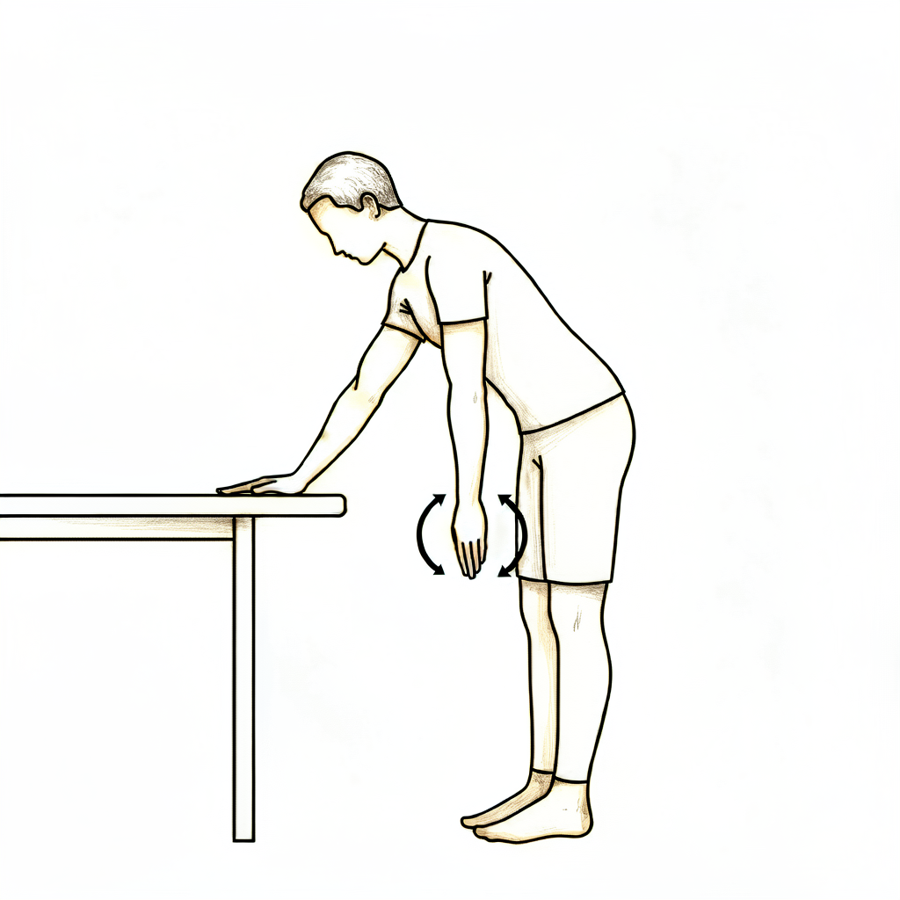
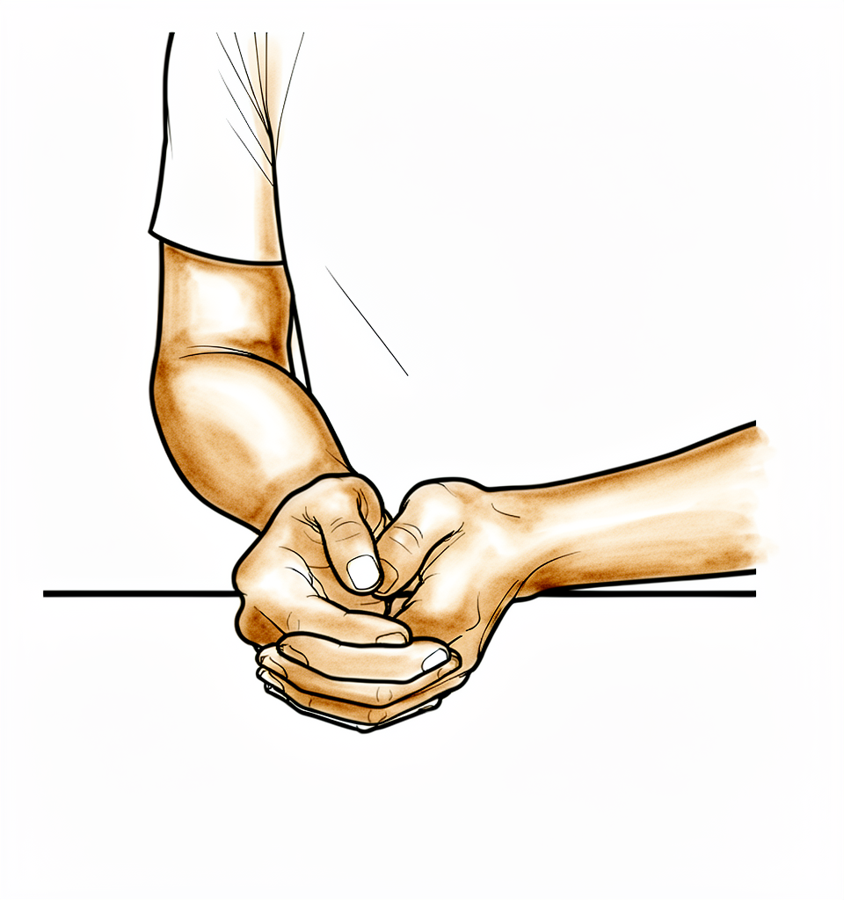
钟摆运动
身体前倾,用另一只手支撑在桌面上,让患侧手臂自然放松下垂。通过轻轻晃动身体,做小幅度的画圈动作——先顺时针,再逆时针。手臂保持放松;动作来源于身体,而非肩部。
在您的物理治疗师指导下
Kieran Hirpara 4.0
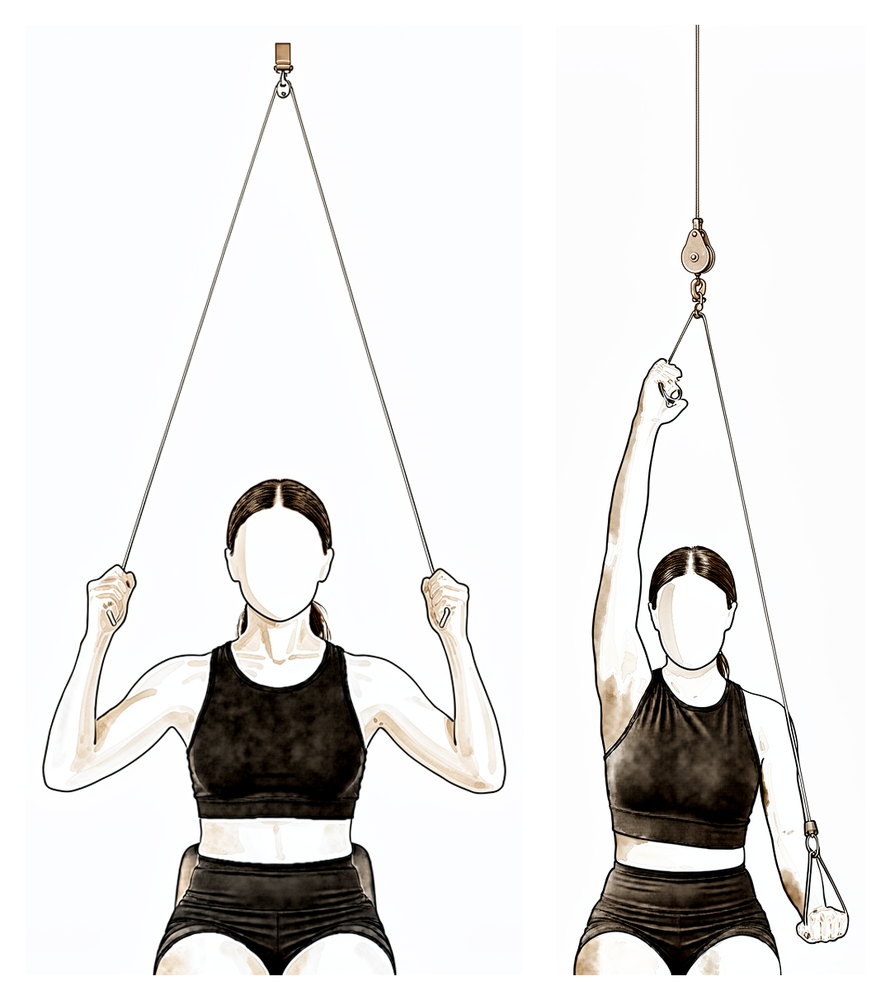
滑轮辅助运动
坐在门顶滑轮装置下方。让手术侧手臂保持放松,用另一只手向下拉绳,使绳索轻柔地抬起手术侧手臂,然后缓慢放下。根据舒适度循序渐进——若出现尖锐或持续疼痛,应减轻动作幅度,切勿强行忍受。
在您的物理治疗师指导下
Kieran Hirpara 4.0
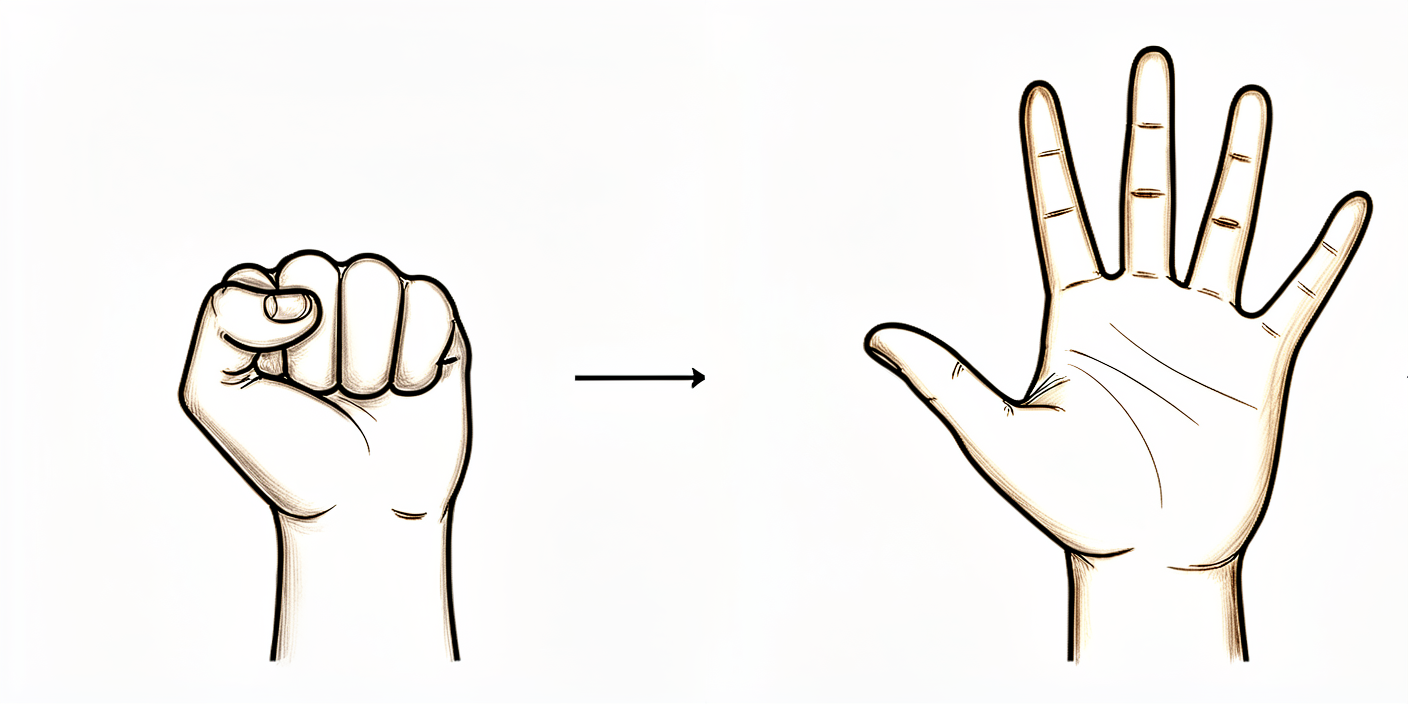
张开和握紧手
握紧拳头或挤压一个软球,然后完全张开手。从开始起,自由活动手、手腕和肘部,并根据舒适度允许的情况,用该手臂进行轻度的日常活动。
在您的物理治疗师指导下
Kieran Hirpara 4.0
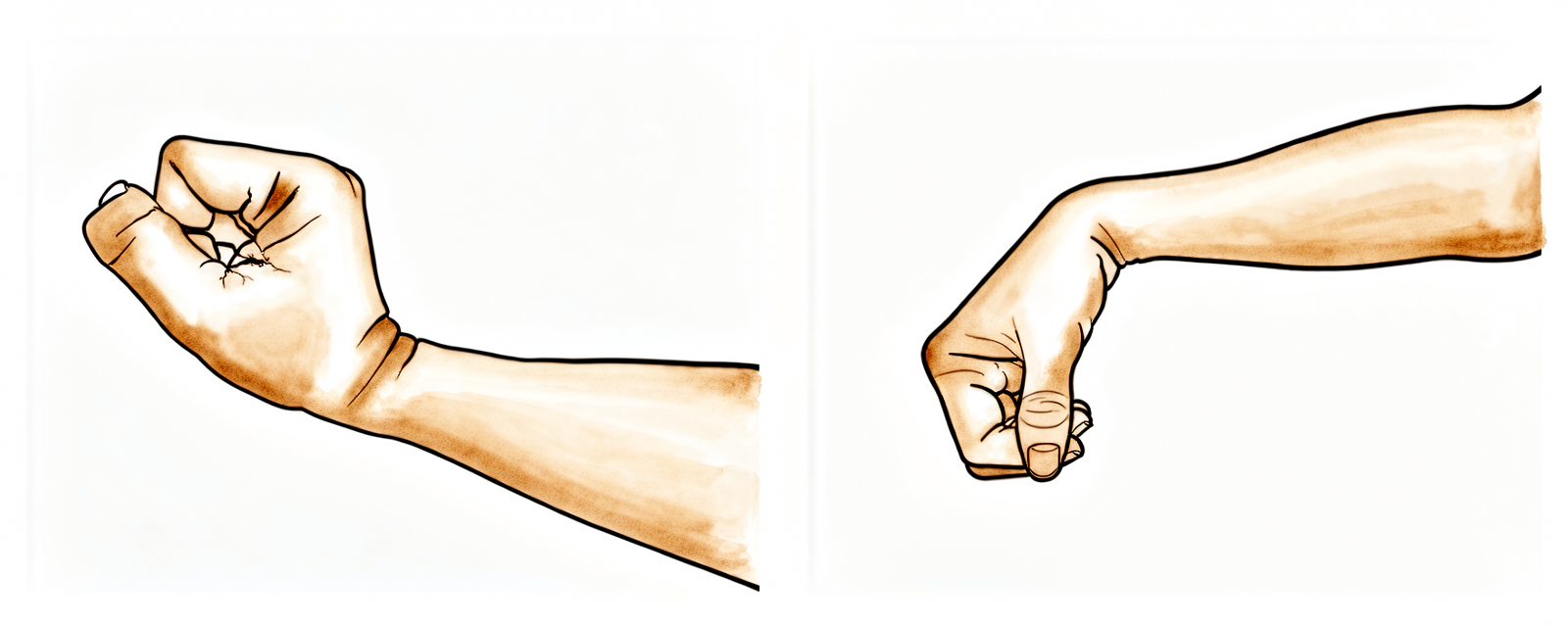
腕部运动
通过向前、向后及左右弯曲手腕来保持手腕活动。从一开始就让手、腕和肘部自由活动,以便在肩部恢复期间整个手臂保持功能状态。
在您的物理治疗师指导下
Kieran Hirpara 4.0
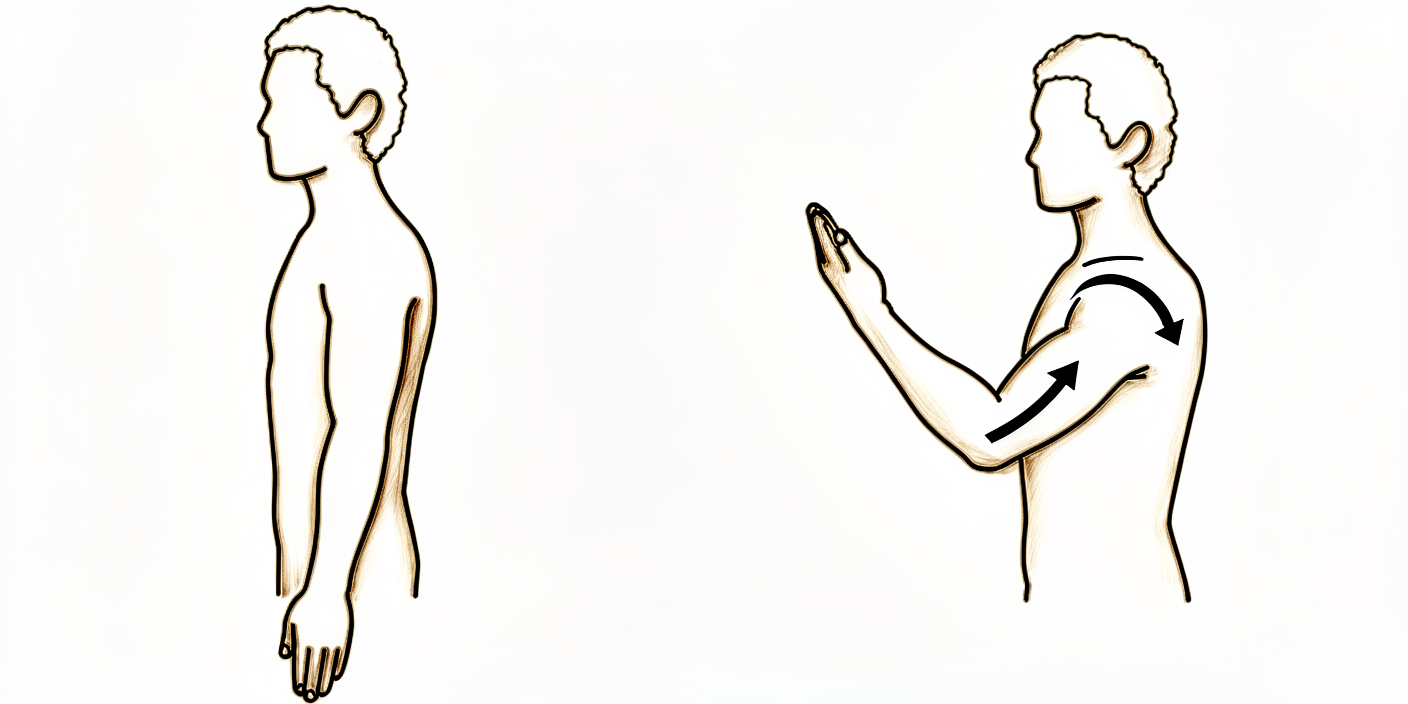
肘部弯曲
上臂自然垂放于体侧,将肘关节弯曲至舒适的最大范围,然后完全伸直。仅肘部活动——保持肩部放松。
在您的物理治疗师指导下
Kieran Hirpara 4.0
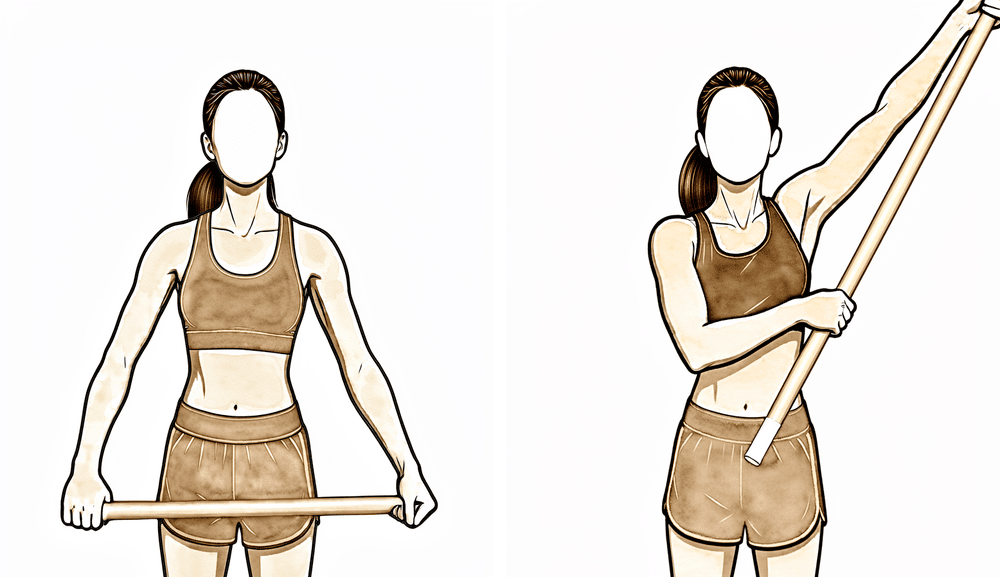
借助棍棒辅助活动
双手握住一根棍棒(手杖或体操棒),让健侧手臂引导患侧手臂向侧方和前方移动,在舒适范围内尽可能伸展,然后有控制地放下。这种主动辅助运动可在肩部恢复期间早期保持肩关节活动。
在您的物理治疗师指导下
Kieran Hirpara 4.0
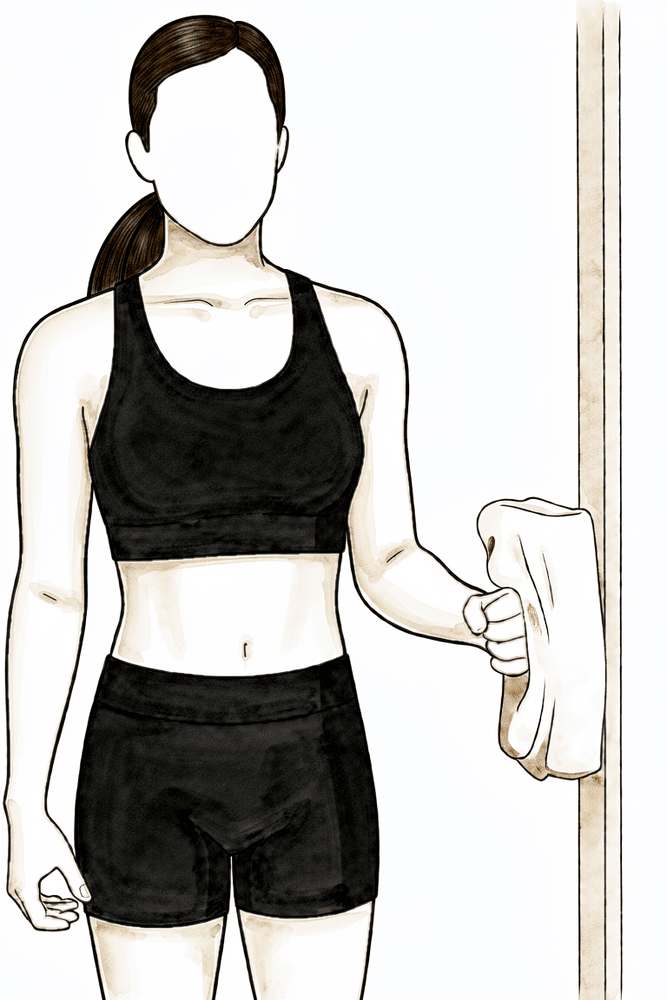
等长外旋
将肘部贴紧体侧并屈曲成直角,手背抵住墙壁或门框。轻轻向外推压,保持手臂不动,维持数秒,然后放松。此动作可在无痛范围内,通过静态方式温和地激活肩袖。
在您的物理治疗师指导下
Kieran Hirpara 4.0
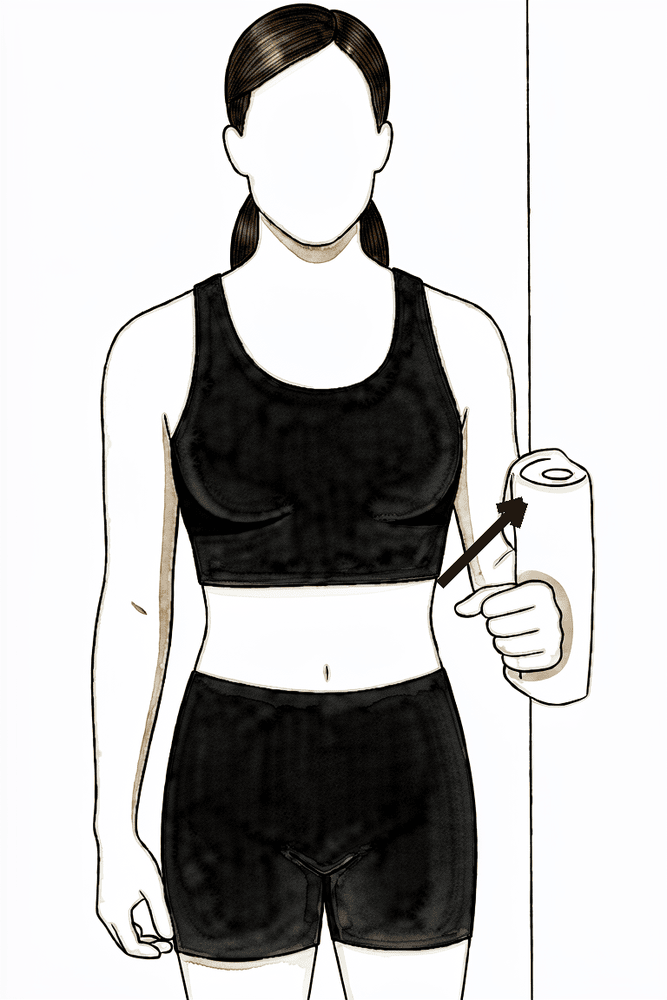
等长外展
侧身站立面对墙壁,肘部置于体侧,轻轻将上臂外侧压向墙壁,如同将手臂向侧方抬起,但保持不动。保持数秒,然后放松。此动作可在无痛范围内,以无运动的方式轻柔锻炼三角肌。
在您的物理治疗师指导下
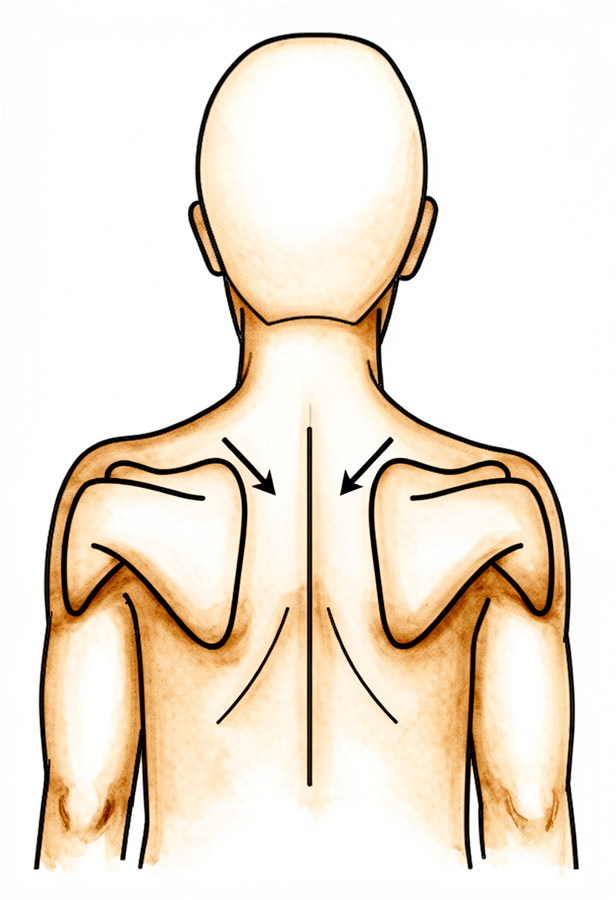
Kieran Hirpara 4.0
肩胛骨稳定练习
坐直或站直,在不移动手臂的情况下,轻轻将肩胛骨向下并向后收拢,保持几秒钟,然后放松。保持耳朵、肩膀和臀部在一条直线上。
在您的物理治疗师指导下
最初两周的重点在于让肩部得以稳定,同时保持其活动能力。仅在吊带有助于提升舒适度时使用(通常为术后第一或第二天),并尽可能长时间地取下吊带;您无需佩戴吊带入睡。从术后即刻起,请自由活动手部、腕部和肘部,并在舒适度允许的范围内,将手臂用于进食、洗漱和穿衣等轻度日常任务。肩部温和活动应即刻开始:进行钟摆练习和辅助运动,并随着肩部的耐受情况逐步过渡到主动运动。冰敷和简单的止痛措施有助于保持练习的舒适度。您的伤口敷料具有防水功能:您可以从第 1 天开始淋浴,并让水流过敷料(请勿浸泡或搓洗该区域)。敷料通常在术后十至十二天后移除。
致您的物理治疗师:
目标
- 缓解疼痛和肿胀
- 早期活动度训练,在耐受范围内从辅助运动逐步过渡到主动运动
- 在轻度日常生活活动中实现独立
- 在最初几天内逐步停用吊带
管理措施
- 吊带仅用于缓解不适:鼓励在最初几天内逐步停用,最迟在术后一至两周内完全停用
- 钟摆练习;辅助主动活动度训练(使用滑轮、手杖或训练棒),在耐受范围内逐步过渡到所有平面的主动活动度训练
- 手部、腕部和肘部自由活动;在舒适范围内进行抓握训练
- 肩胛骨定位及姿势训练
- 在舒适度允许的范围内,进行温和的肩袖和三角肌等长收缩训练
- 冷疗和镇痛以支持运动方案
注意事项
- 六周内禁止驾驶(此规定适用于任何肩部手术)
- 运动强度根据舒适度逐步增加:出现尖锐或持续疼痛时,应减轻强度,而非强行坚持
- 敷料防水(淋浴时水流过敷料无碍);约在 10–12 天后移除。若出现过度发红或分泌物,请报告
晋级标准
- 已停用吊带,且能舒适地进行轻度日常活动
- 疼痛已得到足够控制,可进行主动活动度训练
第二阶段 — 恢复完全活动度并开始力量训练(第 2–6 周)
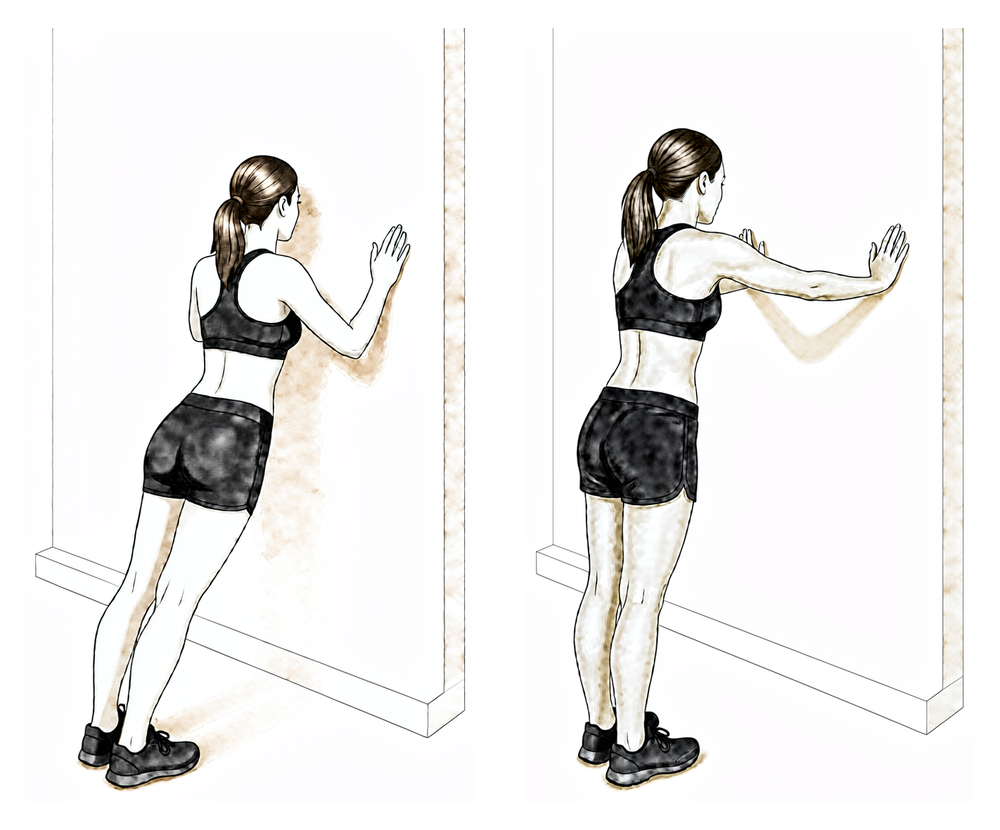
Kieran Hirpara 4.0
靠墙肩胛前伸
双手平贴于墙面,高度与胸部齐平,双臂伸直。在不弯曲肘关节的情况下,将墙面推离,使上背部呈拱形,肩胛骨相互分离,随后有控制地回到起始位置。
在您的物理治疗师指导下
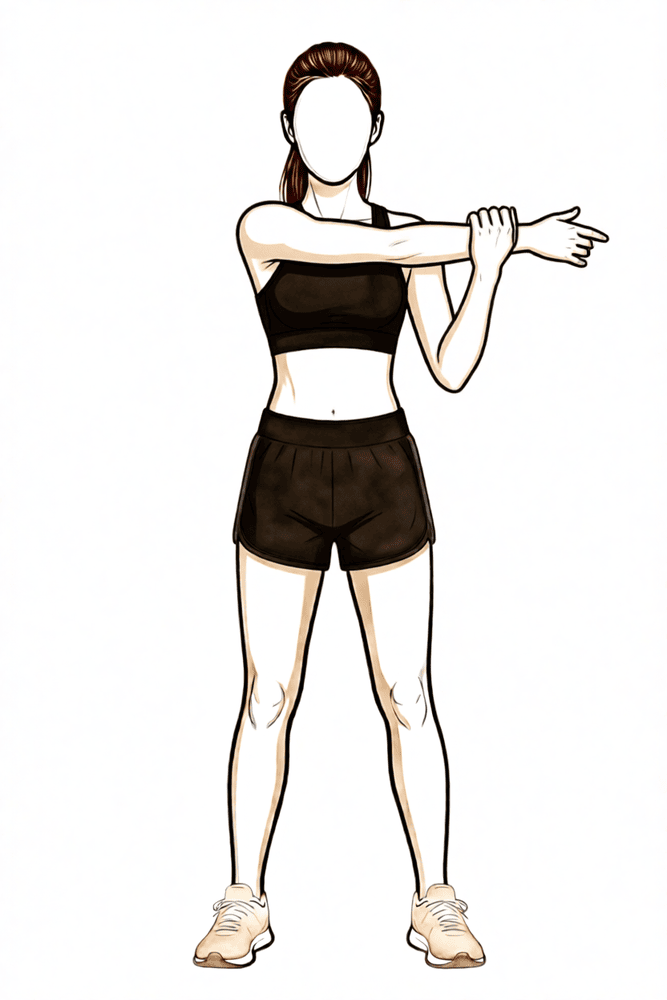
Kieran Hirpara 4.0
跨体拉伸
若肩后部仍感紧绷,用另一只手将术侧手臂横过胸前,直至感到肩后部有牵拉感。短暂保持后放松。仅拉伸至明显不适的程度——不应引发持续疼痛。
在您的物理治疗师指导下
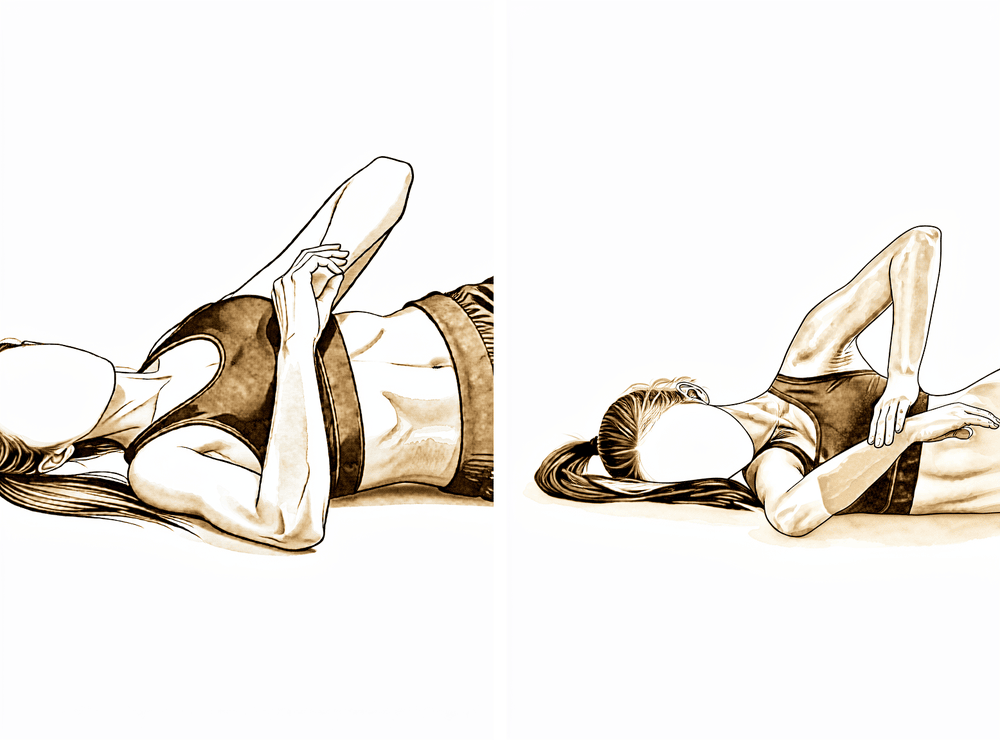
Kieran Hirpara 4.0
睡姿拉伸
手术侧在下侧卧,手臂向前伸出,肘部弯曲。用健侧手轻轻将前臂向下压向床面,直至感到肩部深处有牵拉感,然后放松。此动作可缓解肩后部的残余紧张。
在您的物理治疗师指导下
Kieran Hirpara 4.0
弹力带外旋(接近中立位)
将肘部紧贴体侧并屈曲成直角,手持一条横跨身体、固定在腰部高度的橡皮筋。保持肘部贴于体侧,对抗橡皮筋阻力将前臂向外旋转至约身体中线位置,然后缓慢复位。随着您从等长收缩练习过渡,此动作开始强化肩袖肌群。
低阻力,遵循您的物理治疗师的指导
Kieran Hirpara 4.0
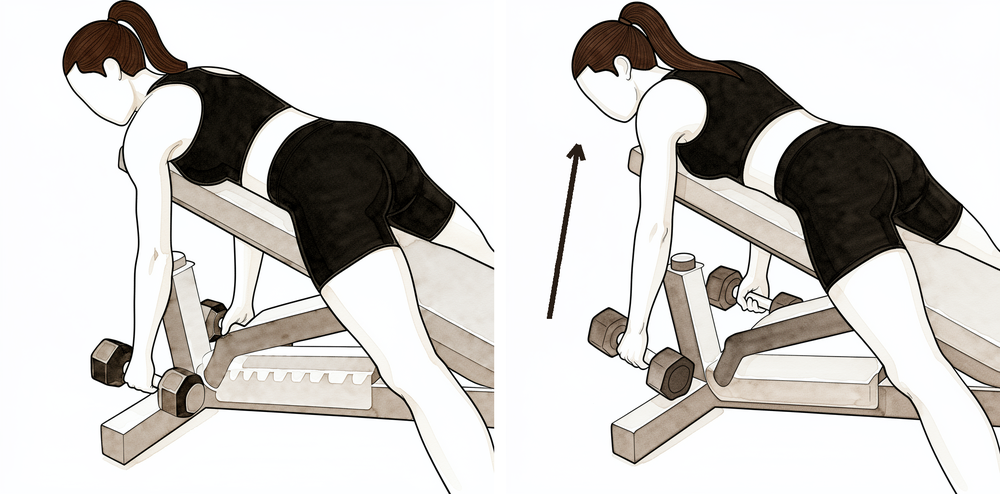
弹力带肩胛骨挤压
手持一条固定于身前的弹力带,将双肘向后拉,同时使肩胛骨相互靠拢并向下收紧,然后缓慢复位。随着此阶段阻力的增加,该动作可增强稳定肩胛骨的肌肉力量。
在您的物理治疗师指导下
Kieran Hirpara 4.0
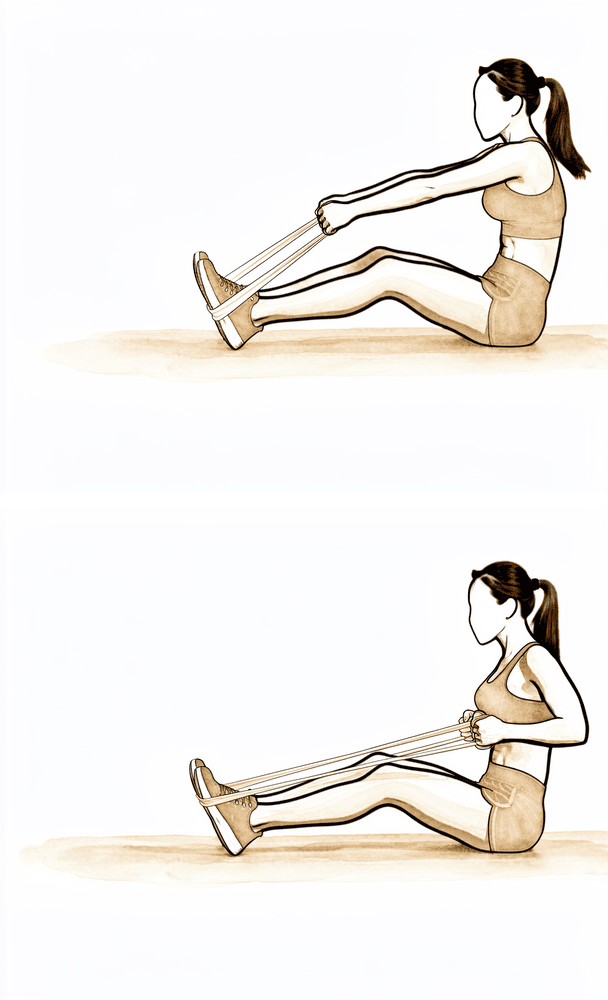
低位划船
将一条弹力带固定在身前腰部高度。保持手臂相对伸直,向后下方拉向髋部,同时收缩肩胛骨使其向下、向后移动,然后缓慢还原。此动作可锻炼肩胛骨下沉肌群,以支撑肩袖。
在您的物理治疗师指导下
Kieran Hirpara 4.0
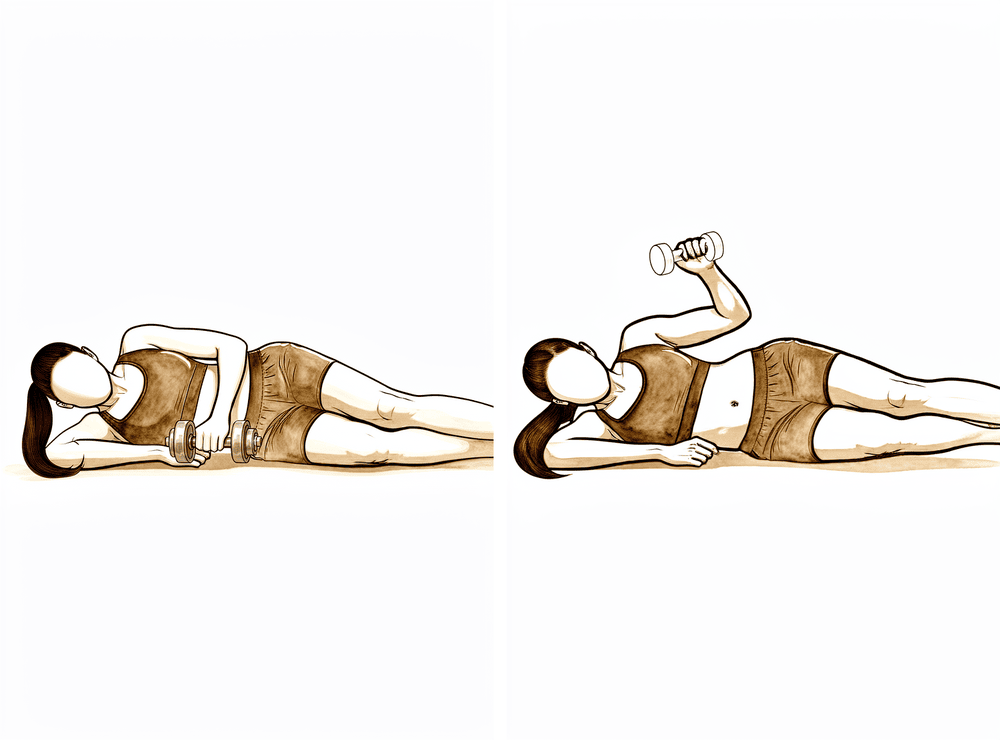
侧卧位负重外旋
非手术侧在下侧卧,上方肘关节屈曲成直角并贴紧身体。手持轻重量,将前臂向上旋转朝向天花板,然后缓慢放下。这是轻负荷等张肩袖训练——低重量、高次数——从术后第四周左右开始,以舒适度允许为准。
低负荷、高次数,以您的物理治疗师指导为准
Kieran Hirpara 4.0
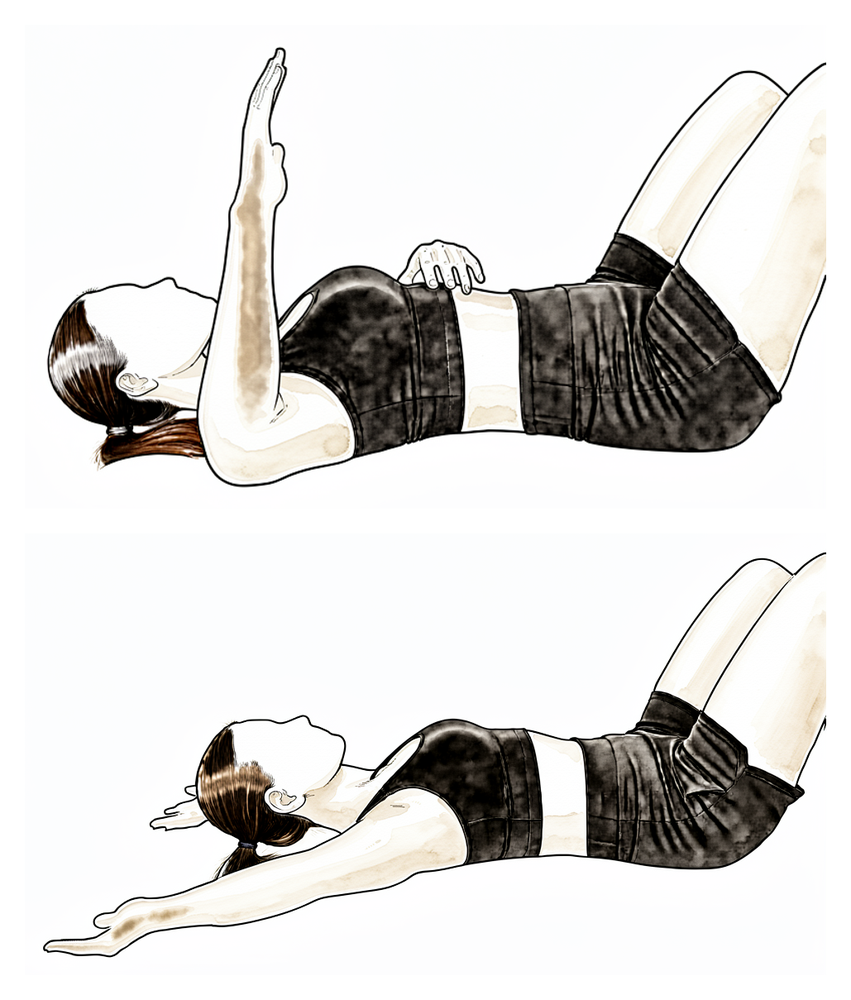
仰卧位90/90外旋
仰卧,手臂向侧方伸展至肩部高度,肘关节屈曲成直角,并用枕头支撑。缓慢将前臂向头部方向旋转至舒适的最大范围,然后有控制地返回原位。此动作可恢复抬举位下的旋转功能。
10次,按照您的物理治疗师的指导
Kieran Hirpara 4.0
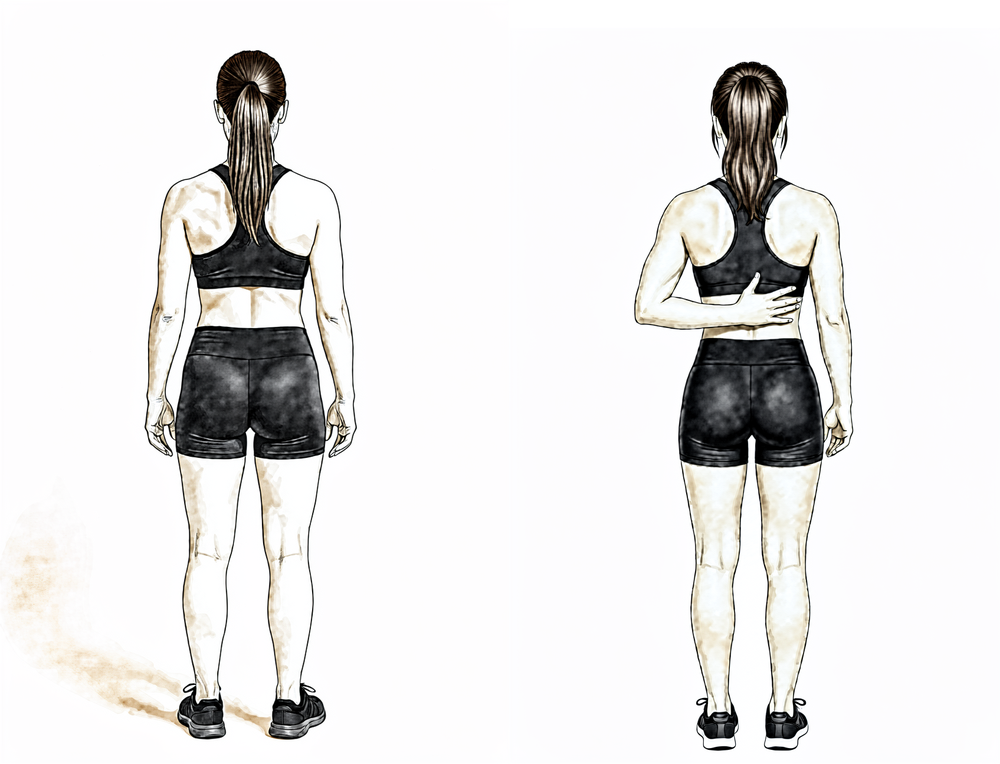
手背后向上够
站立时,将手术侧手的手背贴于下背部,依靠自身肌肉轻柔地沿脊柱向上滑动至舒适的最大范围,然后放下。仅在舒适范围内活动,切勿强行用力。
在您的物理治疗师指导下
随着肩部趋于稳定,重点转向恢复完全活动度并开始强化训练。主动活动度在所有方向上逐步推进至全范围,阻力训练温和启动,随着舒适度允许,从等长收缩保持逐步过渡到针对肩袖和肩胛骨肌肉的弹力带练习。如果尚未返回,大多数人会在第一或第二周回到基于办公桌的工作岗位。驾驶需等待外科医生在六周复查时批准后方可进行。此阶段期间,在物理治疗师的指导下恢复较轻的休闲活动。
致您的物理治疗师:
目标
- 在所有平面上实现完全或接近完全的主动活动度
- 开始对肩袖和肩胛骨稳定肌进行渐进性强化
- 恢复正常日常活动和工作(驾驶须待外科医生在六周复查时批准后方可恢复)
管理
- 在所有平面上逐步推进主动活动度至全范围;典型的阶段性目标为前屈超过 140–160° 和外旋超过 40–60°
- 从等长收缩过渡到弹力带肩袖训练(中立位附近的内旋和外旋),根据耐受情况逐步推进
- 肩胛骨强化:耸肩、后缩、前伸和下沉练习,逐步过渡到阻力训练
- 从第 4 周左右开始,在舒适度允许的情况下,进行轻负荷、高重复次数的轻度等张强化
- 针对任何残留的关节囊紧张进行手法治疗和拉伸,包括在指征明确时进行后关节囊拉伸
注意事项
- 强化训练应保持在舒适范围内,不应引发持续性的疼痛
- 逐步建立外展状态下的负重旋转(90/90 位置):在中立位旋转训练舒适后再引入
- 在力量恢复期间,避免重物搬运和剧烈的过头动作
晋级标准
- 主动活动度完全或接近完全,且疼痛轻微
- 弹力带和轻重量强化训练可耐受,无疼痛加剧
第三阶段 — 恢复完全活动(第6周起)
Kieran Hirpara 4.0
俯卧撑加肩胛前伸(push-up plus)
从俯卧撑姿势开始——靠墙、跪姿或根据力量进行标准俯卧撑——完成俯卧撑动作,然后继续向前推送少许,使上背部呈弓形且肩胛骨相互分离,随后返回。这种闭链运动有助于在恢复完全活动能力时增强控制力和力量。
在您的物理治疗师指导下
最后阶段是逐步恢复较重的负重、体力劳动、健身房训练和体育运动。传统力量训练通常可在约六周后重新开始,从轻量开始并稳步进阶;过头动作或对抗性运动通常在六至十二周之间恢复,具体取决于运动项目及肩关节的功能表现。康复完成的基准是肩关节活动自如、无痛且力量自信;大多数人约在三个月后即可恢复所有期望的活动,任何残留的酸痛感在此之后会继续逐渐消退。
致您的物理治疗师:
目标
- 完全且无痛的活动范围
- 恢复工作所需的及运动所需的肌力、耐力与信心
- 逐步恢复重体力劳动、健身房训练和体育运动
管理
- 从第6周左右开始进阶至传统抗阻训练,随着控制能力的提高,从器械训练过渡到自由重量训练
- 在可耐受范围内进行离心运动和闭链运动
- 运动特异性体能训练,包括在相关情况下实施分阶段的投掷或过头动作计划
- 将重型冈上肌强化训练限制在每周约三次,以避免过度负荷导致的肌腱病
注意事项
- 进阶过程仍以症状为导向:若疼痛随负荷增加而加剧或在负荷后持续存在,则需降低负荷
- 恢复对抗性或过头运动需等待达到完全且无痛的活动范围及足够的肌力
进阶标准
- 针对预定活动,具备完全且无痛的活动范围,且肌力与健侧相当
- 运动或工作特异性任务执行时无诱发疼痛
您的方案之后
上述阶段改编自已发表的针对简单及诊断性肩关节镜手术的康复方案,来源包括:Jorge Chahla 医生(拉什大学医学中心)、Benedict Nwachukwu 医生(特种外科医院)、Blake Obrock 医生(骨科运动医学,阿马里洛)以及皇家国家骨科医院关于诊断性肩关节镜手术的患者指南。周数范围通常为典型值而非固定值,您的康复将由您的物理治疗师在诊所的配合下,根据您肩部的恢复情况进行个体化指导。本页面与诊所的一般术后恢复建议配合使用:请参阅 术后疼痛管理 和 伤口护理。关于手术本身,请参阅 肩关节镜手术。本方案背后的证据(包括早期活动原理、安慰剂对照手术试验以及所参考的已发表康复方案)在证据部分进行了总结,可从本页面顶部获取 PDF 版本。
Evidence & references
This is the clinical evidence summary written for health professionals. It is technical, and it lists the research this page was built from. You do not need to read it to understand your treatment or to make a decision about it.
Topic scope: Post-operative rehabilitation after a generic keyhole shoulder arthroscopy in which nothing was repaired — diagnostic assessment, washout (lavage), debridement of degenerate tissue, removal of loose bodies, and isolated subacromial decompression or distal clavicle excision. Specific repair or reconstruction procedures have their own protocols that take priority — rotator-cuff repair, labral/instability stabilisation (anterior-Bankart, posterior-stabilisation, Latarjet), capsular release, biceps tenodesis and AC-joint stabilisation each convert to a slower, construct-protecting pathway. This page is the default keyhole pathway used only when the operation note confirms no repair was performed.
Defining principle of the rehab here: when nothing is repaired there is no construct to protect, so the rehab is an early-motion pathway — a sling for comfort only (days, not weeks), unrestricted use below shoulder height from day one, motion progressed on comfort rather than the calendar, and strengthening as soon as range and pain allow. The single branch point is whether anything was actually repaired or stabilised; if it was, recovery converts to that procedure's protected protocol. Unlike a cuff repair or a labral repair, there is no healing tissue that early movement can disrupt, so the usual risks of early motion (re-tear, construct failure) do not apply — the main thing early motion prevents here is post-operative stiffness.
The operation and why the rehab is fast
A keyhole (arthroscopic) shoulder operation in this scope involves looking inside the joint and subacromial space through small portals and doing one or more of: confirming a diagnosis, washing out the joint, trimming (debriding) frayed labrum, degenerate cuff or inflamed bursa, removing loose bodies, or shaving bone in a subacromial decompression or distal clavicle excision. None of these creates a repair that must heal under protection. That is the central fact that separates this pathway from cuff repair, stabilisation and the other audited protocols: the tissue is either removed or simply inspected, so the post-operative soreness — not a healing construct — is what paces recovery.
Because of this, recovery is among the quickest of any shoulder operation. Most people are back to desk-based work within days to a week, out of the sling within the first week, driving within one to three weeks once the sling is off and they can control the car confidently, and back to heavier manual work and sport somewhere between six and twelve weeks depending on the demands placed on the shoulder.
Evidence by theme
1. Early motion is the goal — there is no construct to protect
The case for early movement here is largely a mechanistic one rather than one settled by a dedicated trial: with no repair to disrupt, the only thing prolonged immobilisation achieves is avoidable stiffness, discomfort and delayed return to activity. The closest high-quality evidence comes by analogy from the cuff-repair literature, where — even with a real construct to protect — randomised trials and meta-analyses show early controlled motion does not increase re-tear and tends to reduce stiffness (number-needed-to-harm for re-tear in the order of several hundred). If early motion is safe when a repair is present, it is plainly safe when there is nothing to protect. Mechanistic + analogous moderate evidence; no debridement-specific RCT.
2. The procedures themselves: a candid note on efficacy
Two landmark placebo-controlled surgical trials bear directly on the commonest reason a no-repair arthroscopy is done — subacromial pain:
- FIMPACT (BMJ 2018) — a double-blind trial of 210 patients randomised to arthroscopic subacromial decompression, diagnostic arthroscopy (placebo surgery), or exercise therapy. At 24 months decompression gave no benefit over diagnostic arthroscopy; both surgical arms improved, but no more than each other. Strong (placebo-controlled RCT).
- CSAW (Lancet 2018) — a three-arm placebo-controlled UK trial reaching the same conclusion: decompression was no better than investigational (diagnostic) arthroscopy, and the small edge of either over no-treatment was not clinically important. Strong (placebo-controlled RCT).
The honest reading is that for subacromial pain the surgical element adds little over diagnostic arthroscopy or structured exercise — which reinforces why, when this operation is done, the rehabilitation (early motion, restoring strength and confidence) carries much of the recovery. A longer-term single RCT (Magnussen-class, 10-year follow-up, in the corpus) did favour decompression over therapy alone, so practice remains individualised — but the placebo-controlled data are the higher tier.
3. Debridement of degenerate tissue — limited, old evidence
Arthroscopic debridement of irreparable degenerative cuff lesions (Burkhart, J Bone Joint Surg 1995, in the corpus) can relieve pain and restore functional "force-couple" mechanics in selected patients, but the evidence base is small, old and uncontrolled. Debridement and washout are best understood as symptom-directed measures, not structural repairs — which again places the weight of recovery on rehabilitation rather than on a healing construct. Weak (historical case series).
4. The phased protocol is consensus, drawn from published surgeon protocols
The phase structure below is expert/consensus, compiled from published patient-guidance protocols for general/diagnostic shoulder arthroscopy and debridement (Chahla – Rush; Nwachukwu – HSS; Obrock; Royal National Orthopaedic Hospital). There is no rehabilitation RCT defining the optimal regimen for a no-repair arthroscopy; the week ranges are typical, not trial-derived. Weak/consensus.
Phased post-op timeline (no repair performed)
| Phase | Window | Sling | ROM / use | Strengthening | Notes |
|---|---|---|---|---|---|
| I — Early movement & settling | Week 0–2 | Comfort only, days (rarely > 1–2 wk), off ASAP; no sleeping in it | Free hand/wrist/elbow + light ADLs from day 1; pendulums and assisted ROM progressing to active ROM as comfort allows | Scapular setting; gentle cuff/deltoid isometrics as comfort allows | Settle the post-op flare. No driving while in the sling. Dressings off ~10–12 days |
| II — Restore movement, start strength | Week 2–6 | Off | Progress active ROM in all planes toward full (interim targets ~140–160° flexion, 40–60° ER) | Isometric → elastic-band cuff + scapular work; light isotonic from ~wk 4 | Desk work + driving once sling off, pain settled, confident to control the car (typically wk 1–3) |
| III — Return to full activity | Week 6 onward | Off | Maintain full, pain-free ROM | Conventional resistance training from ~wk 6; eccentric/closed-chain; sport-specific conditioning. Cap heavy cuff loading at ~3×/week | Heavier manual work & sport return ~6–12 wk by demand; most back to everything by ~3 months |
Branch point — if anything was repaired or stabilised: recovery converts to that procedure's protected protocol (e.g. rotator-cuff repair — sling ~6 weeks, restricted ROM, deferred strengthening, ~5 months total; or the relevant stabilisation/capsular-release pathway). The operation note and the rooms confirm which pathway applies.
Key controversies / evidence quality
- Does the surgery help at all (for subacromial pain)? Two placebo-controlled RCTs (FIMPACT, CSAW) found decompression no better than diagnostic arthroscopy, and arthroscopy little better than exercise. This is the strongest evidence in the topic — and it argues that, where a no-repair arthroscopy is performed, good rehabilitation is doing much of the work. Strong.
- Debridement evidence is thin and dated. The supportive data (e.g. Burkhart 1995) are small, uncontrolled case series; debridement is symptom-directed, not curative. Weak.
- The rehab protocol itself is consensus, not trial-derived. No RCT defines the optimal regimen after a no-repair arthroscopy; phase timings are typical surgeon-protocol values, and recovery is individualised by the treating physiotherapist. Weak/consensus.
- Safety of early motion is inferred, not directly tested here. It rests on a sound mechanism (nothing to protect) reinforced by analogy to the cuff-repair early-motion trials, rather than a debridement-specific RCT. Mechanistic + analogous moderate.
The evidence base for this generic pathway is genuinely limited. The high-quality data (placebo-controlled trials) speak to whether the operation helps, not to how best to rehabilitate it; the rehabilitation guidance is consensus-level. This is stated plainly because it is the honest position.
Evidence-strength flags (summary)
- STRONG (placebo-controlled RCT): subacromial decompression gives no benefit over diagnostic arthroscopy — FIMPACT (BMJ 2018), CSAW (Lancet 2018).
- MODERATE (analogous RCT/MA): safety of early controlled motion (extrapolated from cuff-repair early-motion trials — early motion does not raise re-tear and reduces stiffness even when a construct is present).
- WEAK (historical case series): arthroscopic debridement of irreparable degenerative cuff lesions (Burkhart 1995).
- WEAK / CONSENSUS: the post-operative rehabilitation protocol itself (published surgeon patient-guidance documents; no defining rehab RCT).
- SAFETY NOTE (rare complication): glenohumeral chondrolysis has been linked to post-arthroscopic intra-articular continuous bupivacaine infusion and to thermal capsulorrhaphy — a reason such adjuncts are avoided, not a reflection on standard debridement.
CITATIONS
RAG corpus (180,000+ Orthopaedic articles)
- Burkhart SS. Débridement of degenerative, irreparable lesions of the rotator cuff. J Bone Joint Surg Am. 1995. DOI: 10.2106/00004623-199506000-00006
- Magnussen R, et al. Subacromial decompression yields a better clinical outcome than therapy alone: a prospective randomized study with minimum 10-year follow-up. Am J Sports Med. 2018. DOI: 10.1177/0363546518755759
- Bailie DS, Ellenbecker TS. Severe chondrolysis after shoulder arthroscopy associated with continuous bupivacaine infusion. Arthroscopy. 2009. DOI: 10.1016/j.arthro.2009.08.024
- (The corpus is thin on no-repair / diagnostic-arthroscopy rehabilitation specifically; the higher-tier evidence below comes from the placebo-controlled surgical trials and published surgeon protocols.)
Literature (URLs)
- FIMPACT — Paavola M, et al. Subacromial decompression versus diagnostic arthroscopy for shoulder impingement: randomised, placebo surgery controlled clinical trial. BMJ. 2018. https://pmc.ncbi.nlm.nih.gov/articles/PMC6052435/
- CSAW — Beard DJ, et al. Arthroscopic subacromial decompression for subacromial shoulder pain: a multicentre, pragmatic, placebo-controlled, three-group, randomised surgical trial. Lancet. 2018. https://www.thelancet.com/journals/lancet/article/PIIS0140-6736(17)32457-1/fulltext
Published rehab protocols (patient-guidance — basis for the phase structure)
- Chahla J. Shoulder Arthroscopy Debridement — Rehab Protocol. Rush University Medical Center. https://www.jorgechahlamd.com/wp-content/uploads/2021/08/Shoulder-Arthroscopy-Debridement.pdf
- Nwachukwu BU. Post-Operative Shoulder Arthroscopy Debridement Rehab Protocol. Hospital for Special Surgery. https://manhattansportsdoc.com/post-operative-shoulder-arthroscopy-debridement-rehab-protocol/
- Obrock B. Post-operative Rehabilitation Protocol — General Shoulder Arthroscopy (Debridement, Subacromial Decompression, and/or Distal Clavicle Resection). https://www.drblakeobrock.com/pdf/obrock-shoulder-arthroscopy-general.pdf
- Royal National Orthopaedic Hospital. A Patient's Guide to Diagnostic Shoulder Arthroscopy. https://www.rnoh.nhs.uk/patients-and-visitors/patient-information-guides/diagnostic-shoulder-arthroscopy-patients-guide





