

远端锁骨切除术 资料
本方案指导您在 Mater Private Hospital Rockhampton 接受 Kieran Hirpara 医生进行的关节镜下远端锁骨切除术(也称为肩锁关节切除术或 Mumford 手术)后的康复过程。以下每个阶段均以通俗易懂的语言说明最关键的事项,随后是供您的物理治疗师使用的结构化方案;请在首次物理治疗就诊时携带此页面或其 PDF 文件,以确保您的康复过程协调一致。您的物理治疗师将根据您肩部的恢复情况,而非日历时间,来推进您进入各个阶段。
本方案仅适用于单纯的远端锁骨切除术。如果您的手术还包括了肩袖修复,请遵循肩袖修复方案,因为修复后的肌腱会使恢复节奏变慢。(远端锁骨切除术也常与肩峰下减压术联合进行;在这种情况下,以下方案同样适用。)
如果您对术后伤口有任何疑虑,请联系诊所。通常,拍摄伤口照片并通过电子邮件发送以供审查会很有帮助。
预期情况
远端锁骨切除术会从锁骨末端切除几毫米的骨骼,使肩锁关节(位于肩部上方的小关节)磨损的表面不再相互摩擦。由于没有需要保护愈合的修复部位,康复进程较快:吊带仅用于提供舒适感,大多数人会在第一或第二周内停止使用;活动立即开始;且该手术的所有已发表方案均强调早期活动而非休息。
有两点特定于该手术并决定了康复方案:
- 跨越身体的动作恢复最慢。 跨体(水平内收)动作会压迫骨骼被切除的区域,因此这些动作通常是最晚感觉舒适的。早期会刻意避免这些动作,随后逐渐重新引入。
- 重度推压动作最后恢复。 对肩锁关节施加重负荷的练习(如卧推、双杠臂屈伸和俯卧撑)是最后恢复的项目,通常需要三到四个月。大多数其他活动在此之前很久即可恢复。
康复历程概览:
- 第一阶段 — 早期恢复与活动 — 第 0–2 周
- 第二阶段 — 恢复活动范围 — 第 2–6 周
- 第三阶段 — 强化训练与活动回归 — 第 6–12 周
- 第四阶段 — 回归完全活动 — 第 12 周起
大多数人在最初的一两周内即可用手臂进行轻度日常任务,四到六周时恢复大多数正常活动,八到十二周之间恢复运动及较重的体力工作。从事重复性过头顶运动(如投掷、游泳、网球)的运动员通常需要稍长时间,范围在二到四个月之间。
第一阶段 — 早期恢复与活动(第 0–2 周)
Kieran Hirpara 4.0
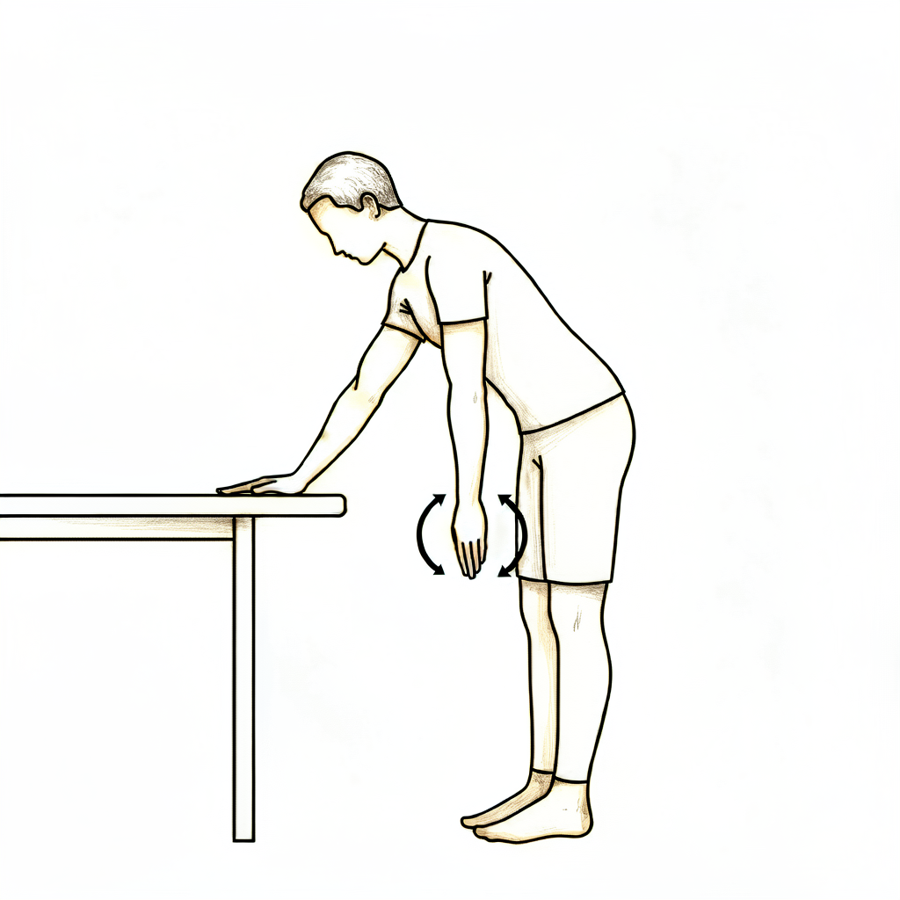
钟摆运动
弯腰前倾,让手术侧手臂自然下垂,远离身体。让手臂做小而放松的圆周摆动——动作应源自躯干,而非肩部肌肉。从术后第一天开始,并在舒适范围内进行。
家庭方案 每日 3–5 次
Kieran Hirpara 4.0
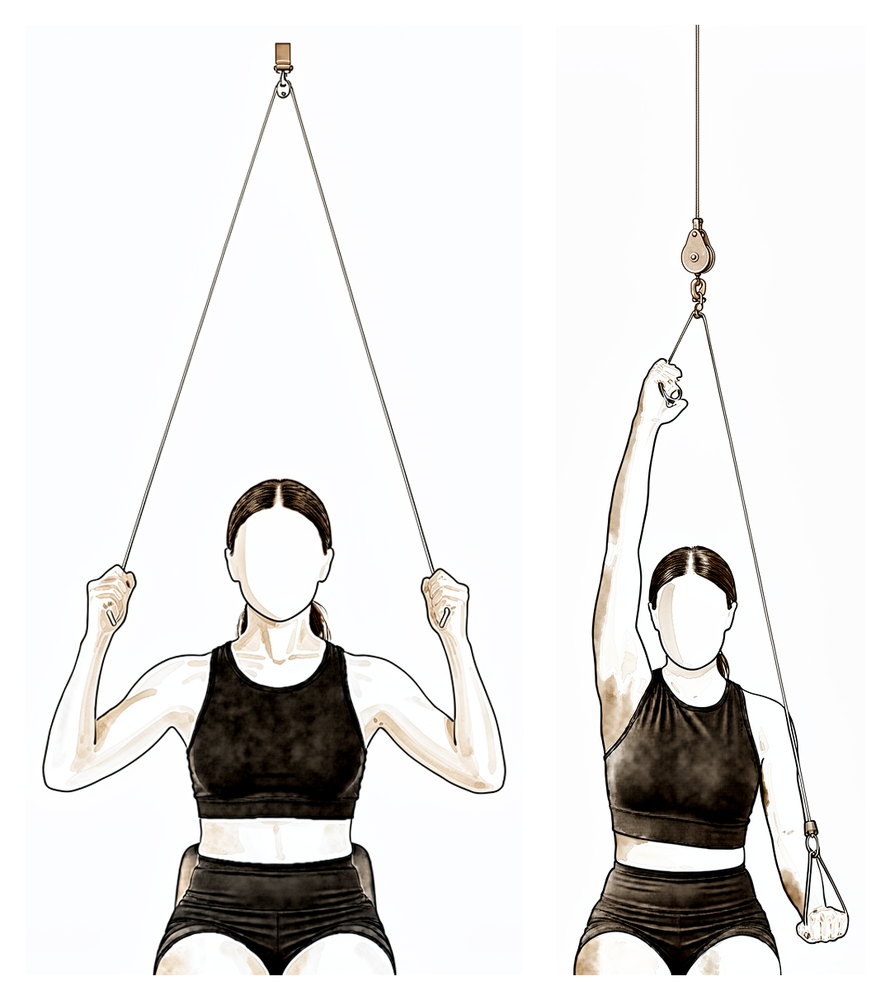
滑轮辅助提升
坐在门后滑轮装置下方,双手各握一个手柄。用健侧手臂向下拉,带动患侧手臂向上抬起,使其保持放松状态,然后有控制地将其放下。在舒适范围内活动,并根据耐受程度逐步增加抬举高度。
家庭方案 3–5 次/日
Kieran Hirpara 4.0
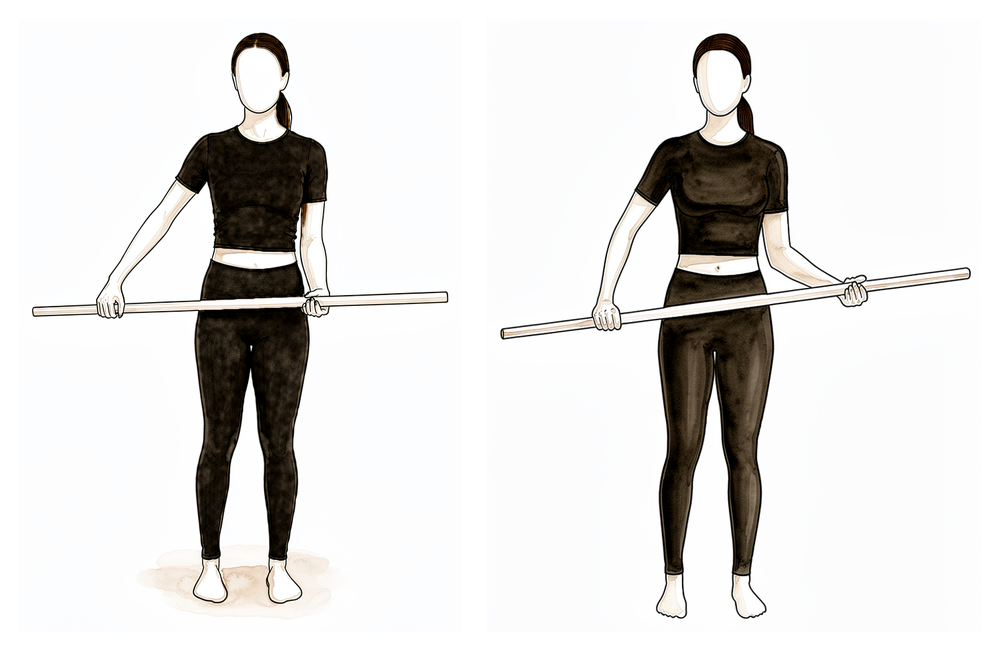
带杆辅助外旋
仰卧,双手握住一根棍子或拐杖,双肘弯曲成直角并贴于身体两侧。用健侧手臂轻轻将患侧前臂向外推离身体,然后复位。患侧手臂保持放松,让棍子完成动作。
家庭方案 3–5 次/日
Kieran Hirpara 4.0
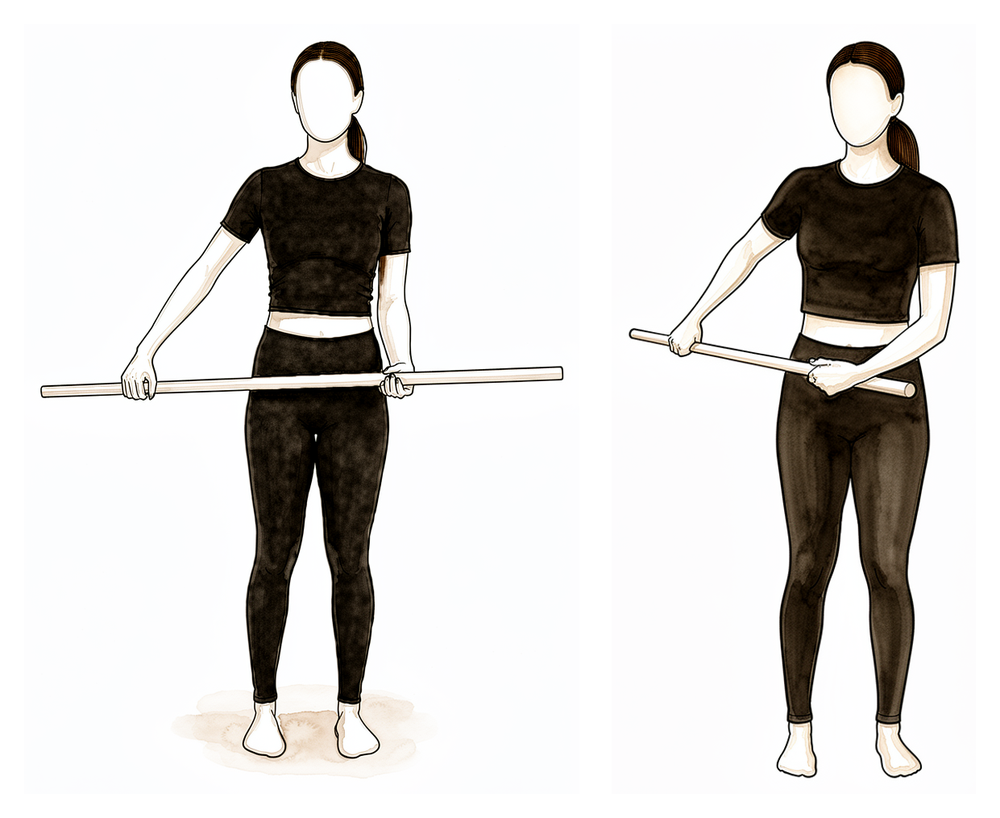
背后内旋
将一根棍子或拐杖置于背后,手术侧手位置较低,健侧手位置较高。用健侧手臂轻轻将手术侧手沿背部向上拉动,然后放下。在舒适范围内活动——此方向的活动度会逐渐恢复。
家庭方案 每日 3–5 次
Kieran Hirpara 4.0
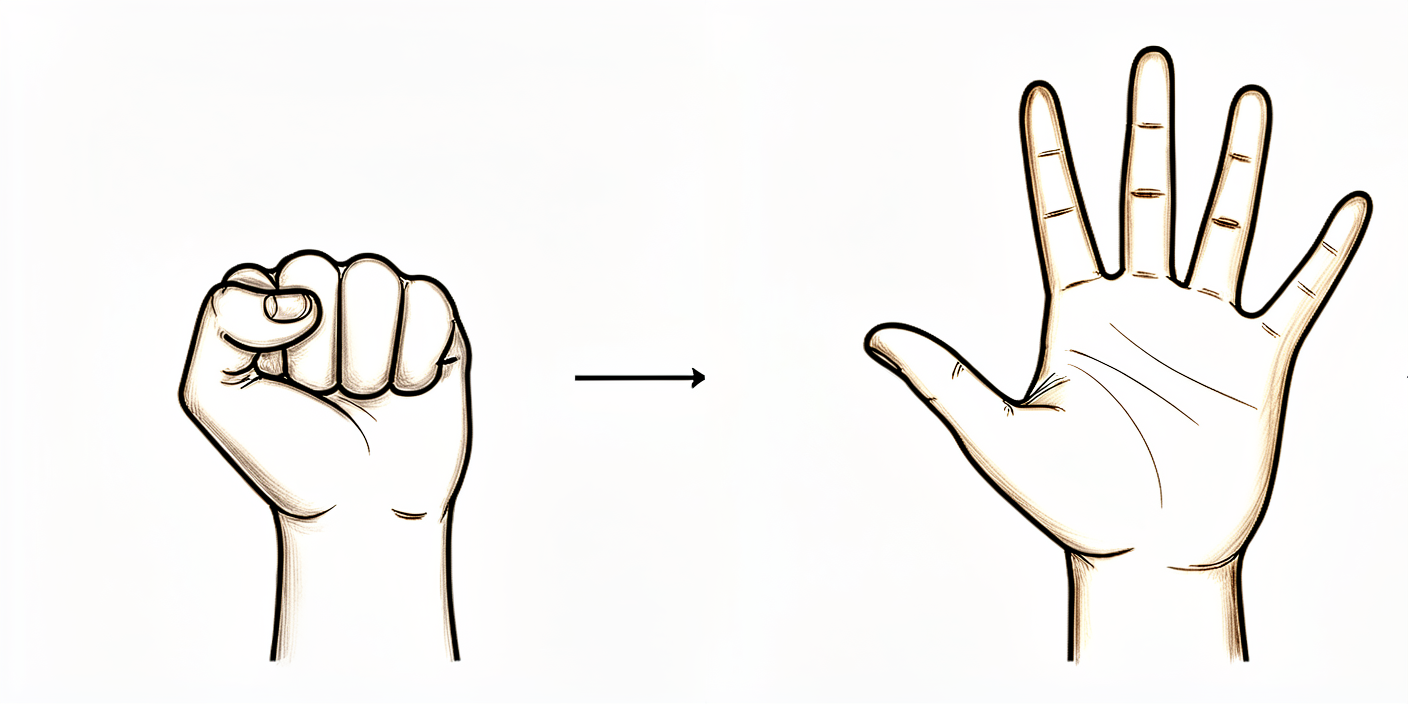
握力强化
握紧拳头,然后将手指伸直。可挤压软球或卷起的袜子进行抓握训练。从第一天起,保持肘部、手腕和手部活动。
在您的物理治疗师指导下
Kieran Hirpara 4.0
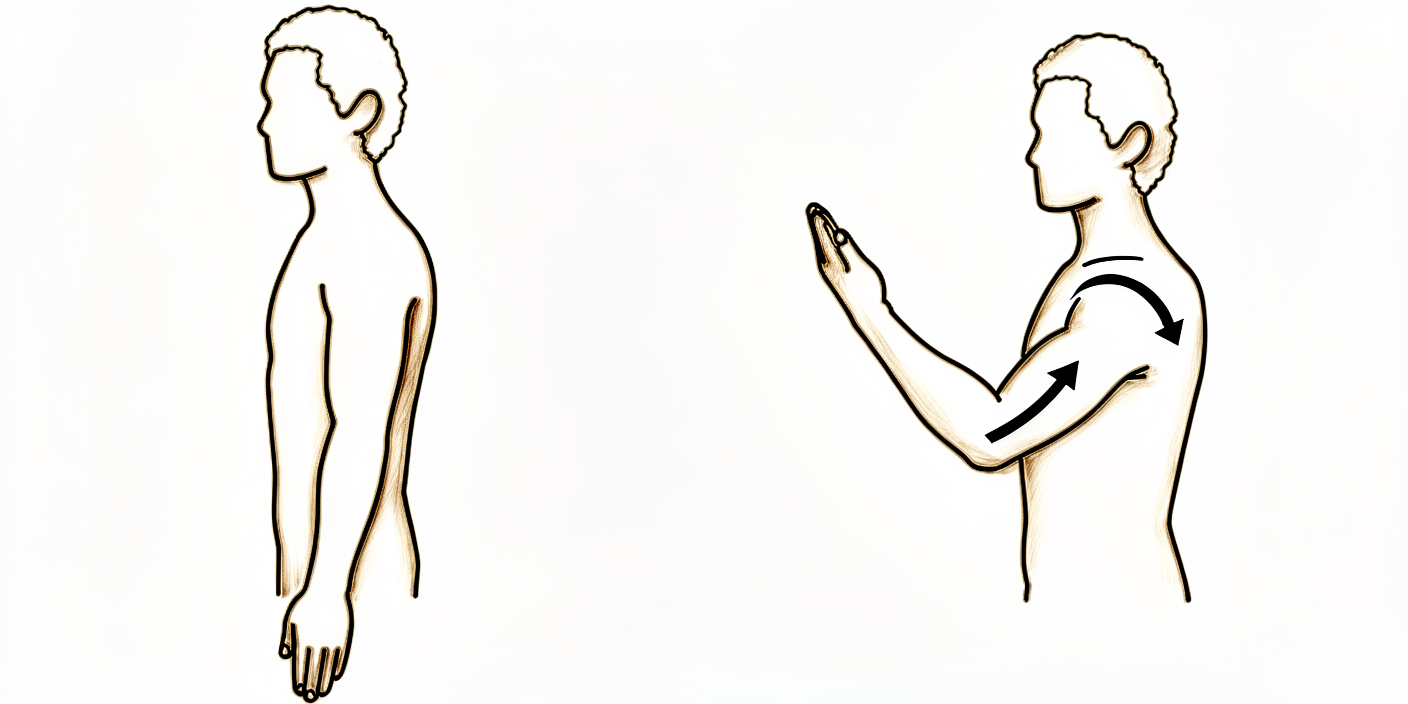
肘部弯曲
上臂自然垂放于体侧,将肘关节弯曲至舒适的最大范围,然后完全伸直。仅肘关节活动——保持肩部放松。从第一天起,保持肘关节、前臂、腕关节和手部的活动。
在您的物理治疗师指导下
Kieran Hirpara 4.0
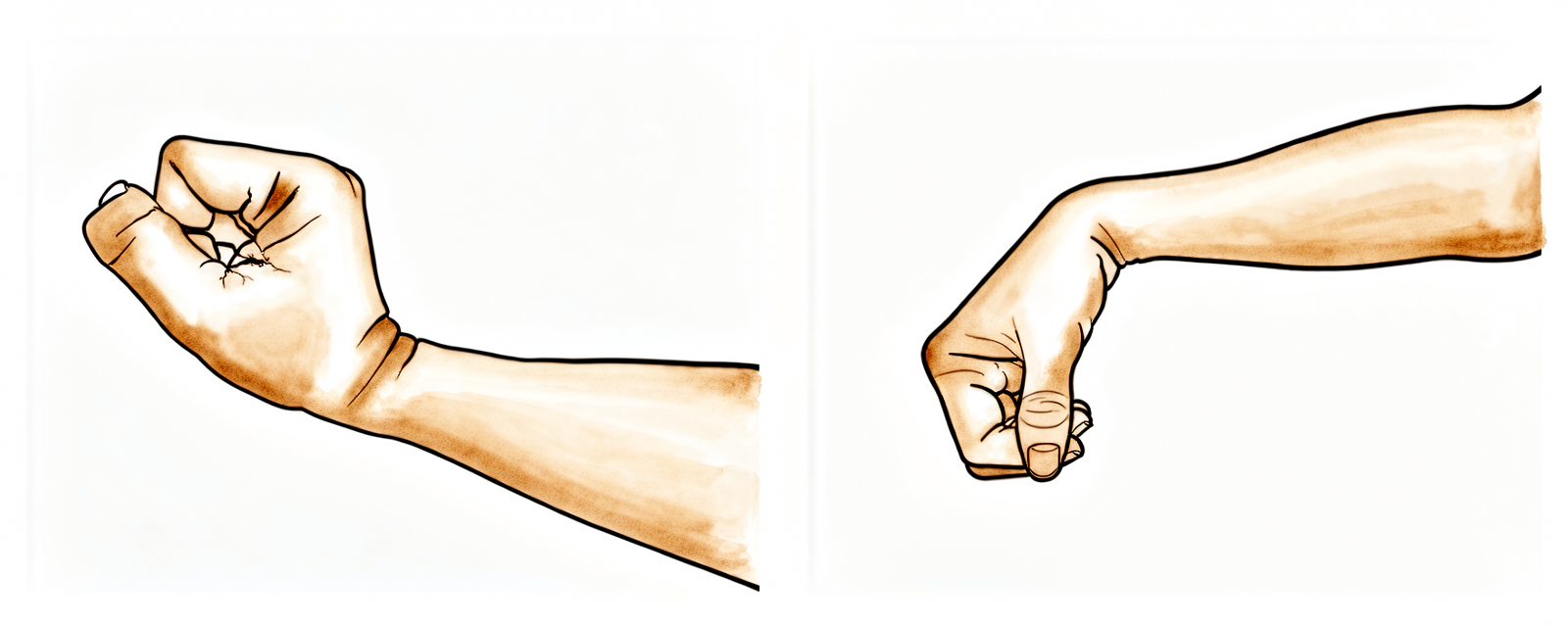
腕部运动
将手臂移出悬吊带,通过向前、向后及左右弯曲手腕来保持手腕活动。从第一天起保持整条手臂的活动有助于肩部稳定。
在您的物理治疗师指导下
Kieran Hirpara 4.0
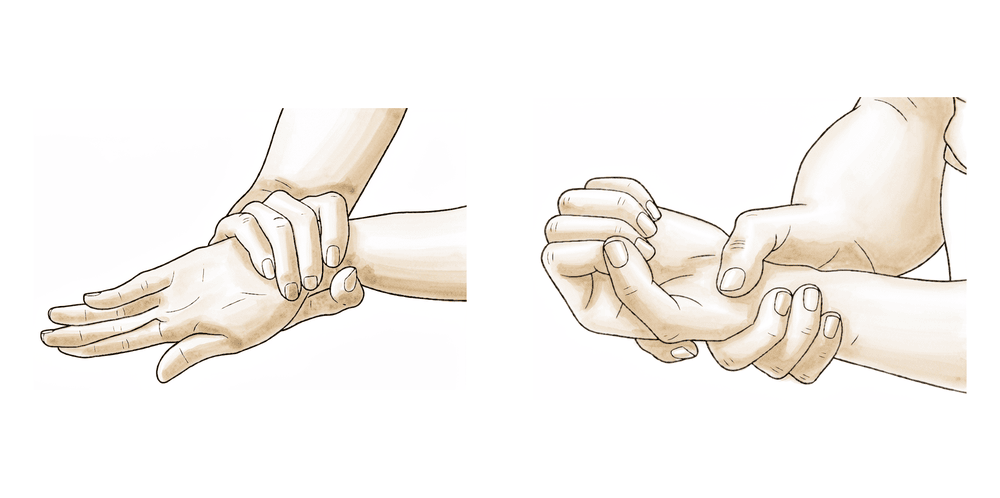
前臂旋转
将肘部贴紧身体一侧并屈曲至直角,将手掌向上转向天花板,然后向下转向地板。从第一天起,在肩部休息的同时,持续活动前臂。
在您的物理治疗师指导下
Kieran Hirpara 4.0
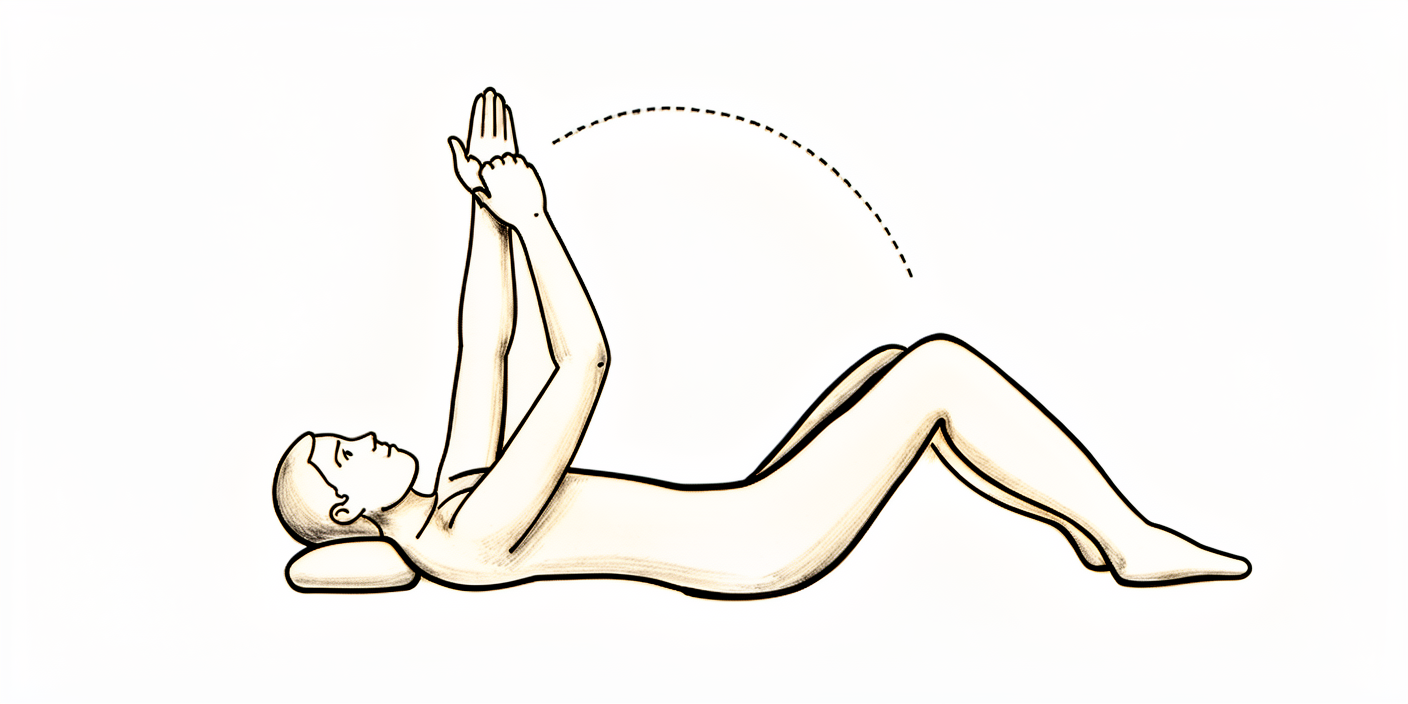
仰卧位辅助前屈
仰卧,用健侧手臂协助将患侧手臂向上举过头顶,进行轻柔的拉伸,然后在健侧手臂的辅助下将其放下。仰卧位可借助重力,使肩部肌肉保持放松。请在舒适范围内进行。
家庭方案 3–5 次/日
Kieran Hirpara 4.0
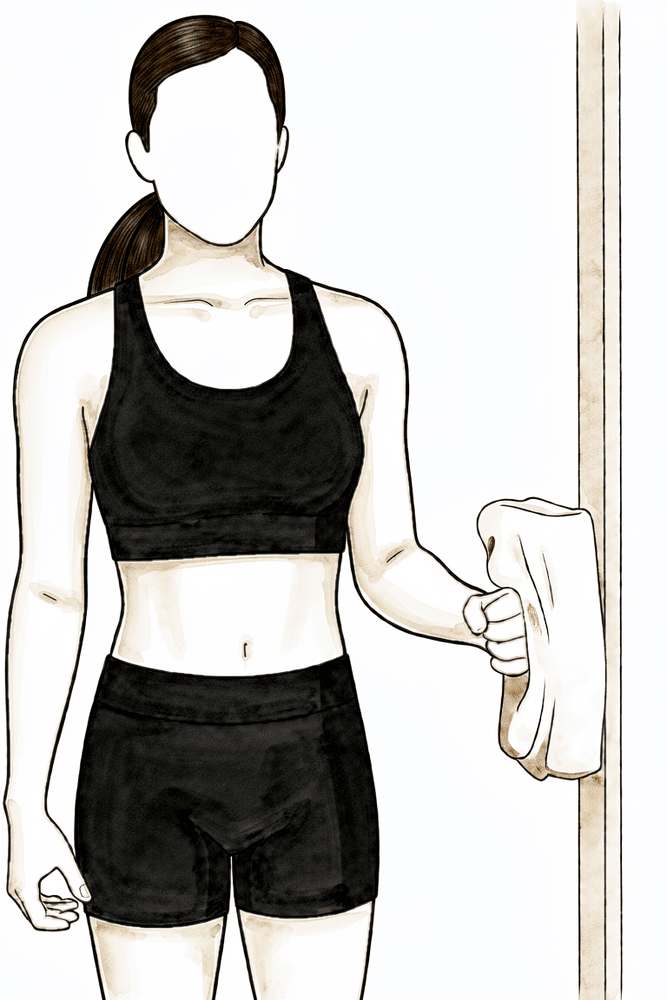
等长外旋
将肘部紧贴体侧并屈曲成直角,手背贴靠墙壁或门框。轻轻向外推压,同时保持手臂不动,维持数秒,然后放松。这是一种温和的等长收缩练习——不应有任何移动或过度用力。保持在舒适范围内。
在您的物理治疗师指导下
Kieran Hirpara 4.0
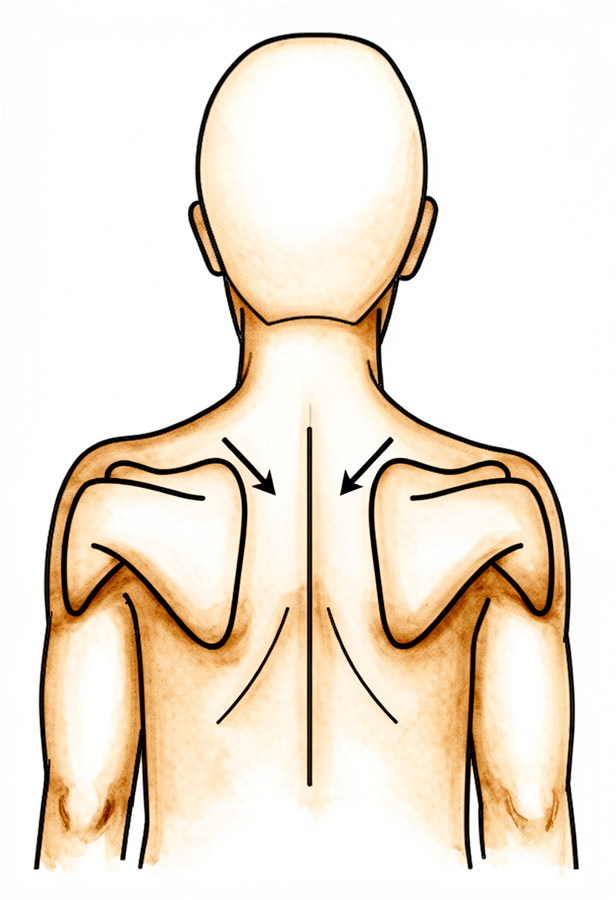
肩胛骨定位练习
坐直或站直,轻轻将肩胛骨向后、向下收拢,使其远离耳朵。保持几秒钟,然后放松。从一开始就保持正确的肩胛骨运动节律,能让后续的训练计划发挥更好的效果。
在您的物理治疗师指导下
最初两周的重点在于缓解疼痛和肿胀,同时开始活动肩部。请规律使用冰敷:在第一或第二周内,通常每天冰敷三到四次。悬吊带仅用于提供舒适感:根据其对您的帮助程度,可多戴或少戴,经常将手臂取出,一旦在没有悬吊带时感到舒适,即应停止使用。许多人发现它在外出时最有用,可防止他人碰撞到手臂。任何肩部手术后,至少六周内请勿驾驶,即使已不再使用悬吊带;您的外科医生会在复查时(通常为第六周复查)确认您可以驾驶。
立即开始活动:您的肘部、腕部和手部应从第一天起就开始活动,同时进行轻柔的钟摆运动和辅助肩部活动(使用另一只手臂、拐杖或滑轮帮助手术侧手臂向上和向外移动)。请在锻炼和物理治疗预约前服用止痛药。目前唯一需要避免的动作是向对侧肩部方向进行跨身体伸展。
致您的物理治疗师:
目标
- 缓解疼痛和肿胀
- 早期活动范围:至该阶段结束时,前屈约 140°,体侧外旋约 40°
- 独立执行家庭锻炼计划
管理措施
- 悬吊带仅用于提供舒适感:在舒适允许的范围内,于第一 1–2 周内逐步撤除并停用
- 每天冷疗 3–4 次,尤其是锻炼后
- 颈部、肘部、前臂、腕部和手部立即进行主动活动范围训练
- 从第一天起进行钟摆运动
- 在可耐受范围内进行肩关节被动和主动辅助活动范围训练:前举、外旋及背后内旋,使用滑轮、训练棒或拐杖,以及仰卧位重力辅助体位
- 肩胛骨定位及肩胛周围活动范围训练;从一开始即关注肩肱节律
- 握力强化训练;在疼痛允许的情况下进行轻柔的肩部等长收缩训练
- 锻炼和物理治疗课程前给予镇痛
- 家庭计划每天执行 3–5 次
注意事项
- 避免跨身体(水平)内收
- 禁止进行超过轻柔等长收缩的抗阻肩部锻炼
- 禁止搬运超过日常轻物的物品;禁止手臂负重(如从椅子或床上撑起身体)
- 六周内禁止驾驶(此规定适用于任何肩部手术)
晋级标准
- 已弃用悬吊带且疼痛正在缓解
- 辅助前举至约 140° 及外旋至约 40° 时感到舒适
第二阶段——恢复活动范围(第 2–6 周)
Kieran Hirpara 4.0
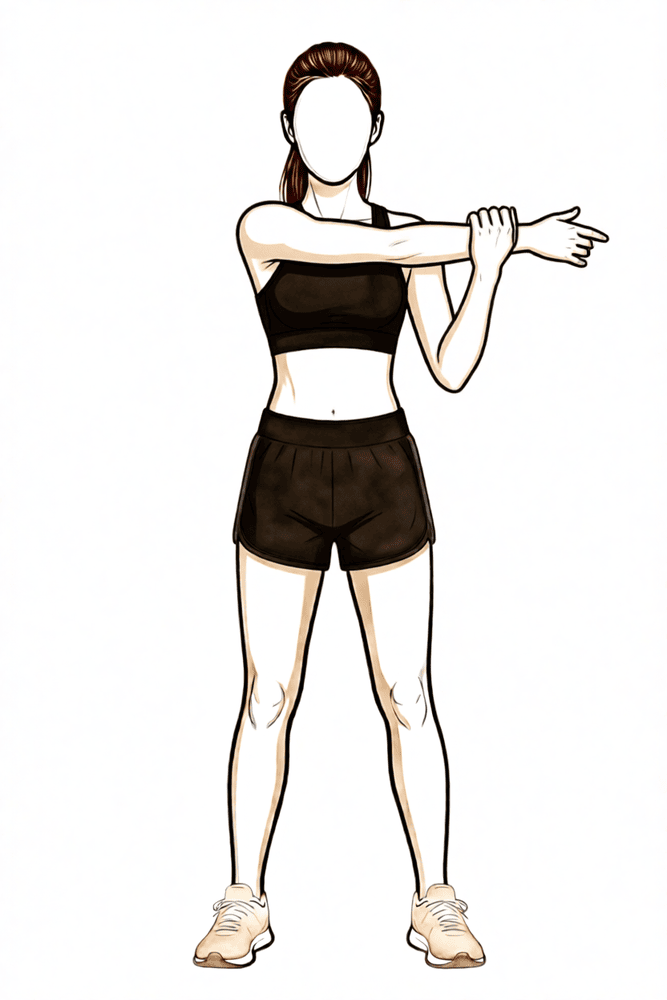
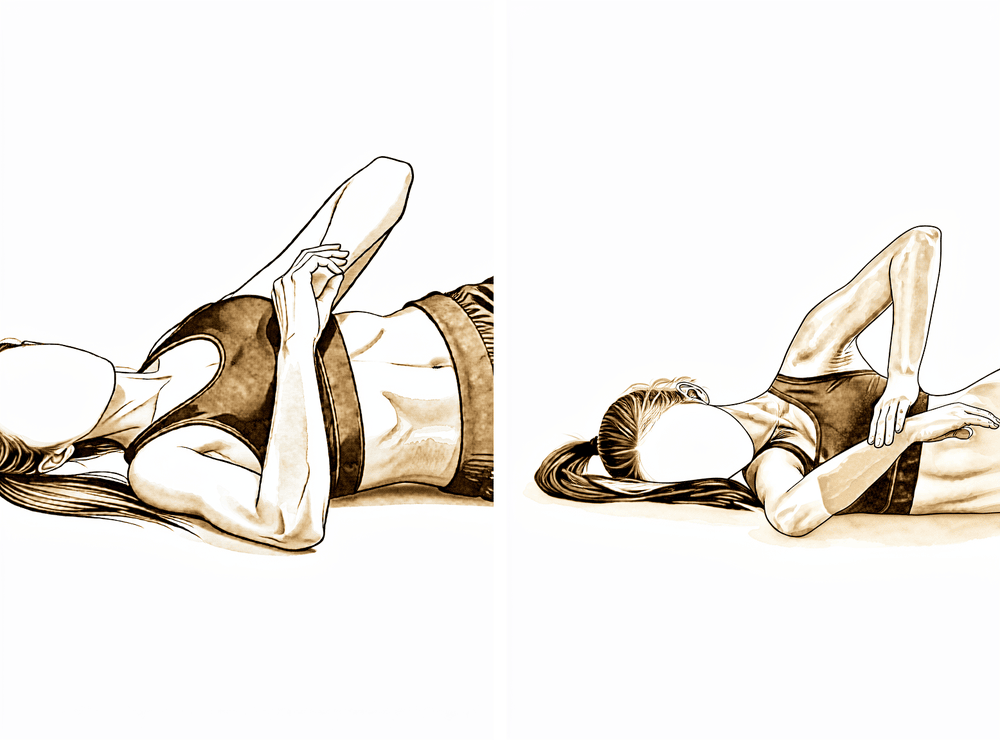
跨体拉伸
将手术侧手臂横过胸前,用另一只手置于肘部上方,轻轻将其进一步向对侧牵拉。请根据症状逐步恢复此动作——在此手术后,动作末端出现轻微的夹挤感是常见的,并会随时间推移而缓解。
在您的物理治疗师指导下
Kieran Hirpara 4.0
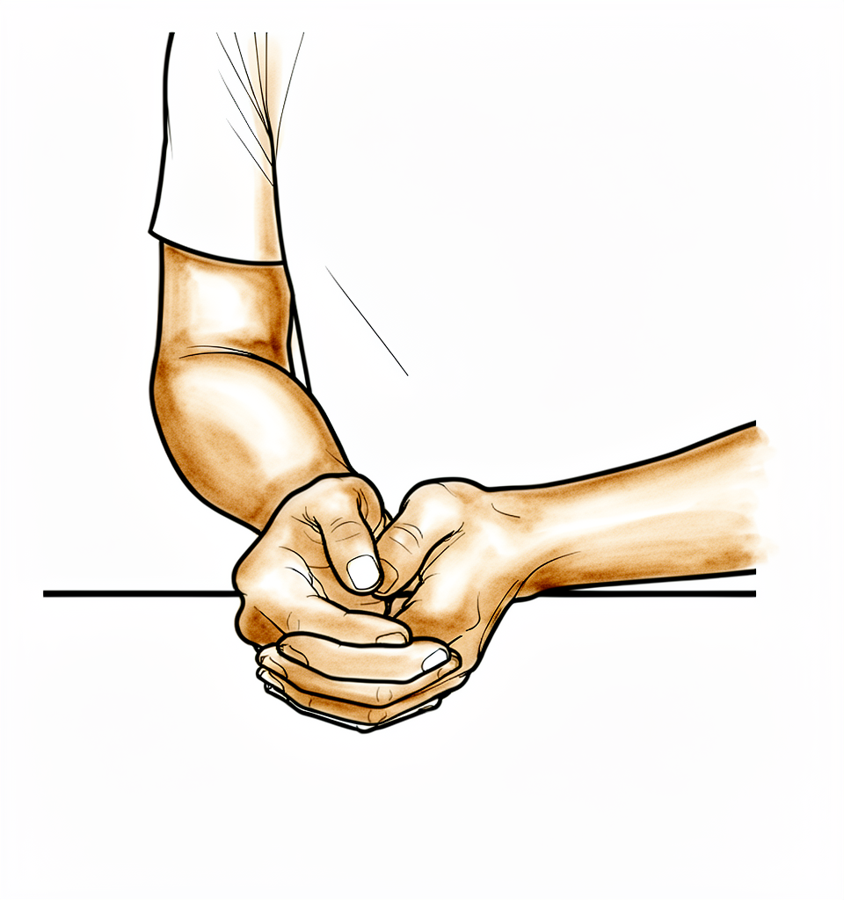
睡眠者拉伸
侧卧于手术侧,该侧手臂向前伸出,肘部屈曲成直角。用健侧手轻柔地将前臂向下压向床面,直至感觉肩后部有牵拉感,随后放松。这种轻柔的后方牵拉有助于恢复向后伸手的动作。牵拉至产生明显的牵拉感,而非锐痛。
在您的物理治疗师指导下
Kieran Hirpara 4.0
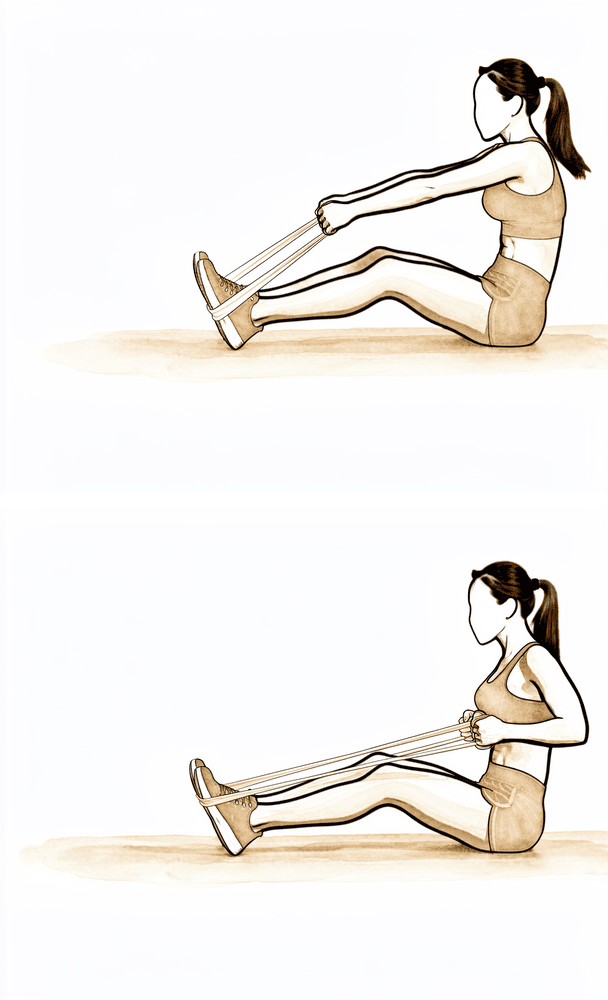
弹力带外旋
将肘部紧贴体侧并屈曲至直角,手持一端固定于身体一侧的弹力带。保持肘部贴于体侧,对抗弹力带将前臂向外旋转,然后缓慢复位。待您的动作接近全范围时开始练习——采用高次数、轻阻力。
高次数,低负荷;在您的物理治疗师指导下进行
Kieran Hirpara 4.0
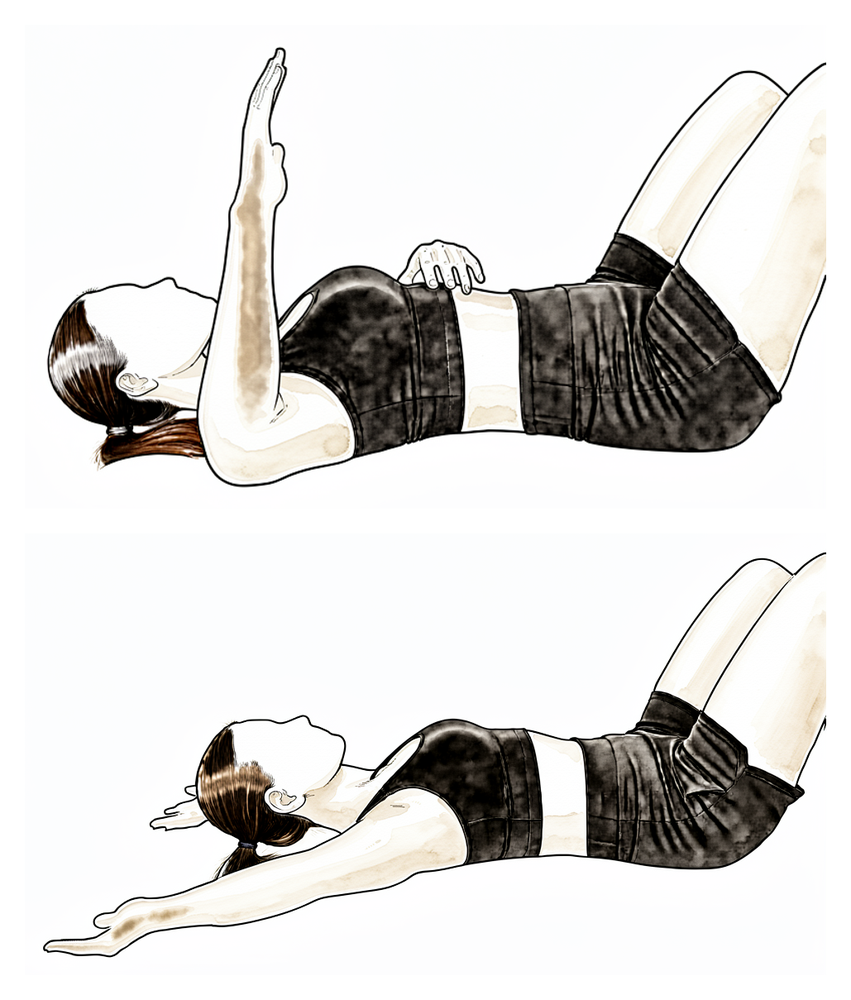
低位划船
将一条带子固定在身前,高度约在腰部。保持手臂相对伸直,将带子向后下方拉向髋部,同时收缩肩胛骨使其向下、向后移动,然后缓慢还原。此动作可锻炼肩胛骨周围的肌肉,随着力量恢复,这些肌肉有助于稳定肩部。
高次数,低负荷;在您的物理治疗师指导下进行
Kieran Hirpara 4.0
仰卧位90/90外旋
仰卧,手臂向侧方伸展至肩部高度,肘关节屈曲成直角,并用枕头支撑。缓慢将前臂向头部方向旋转,直至感到舒适的最大范围,然后有控制地返回原位。此动作旨在恢复抬举位下的旋转功能。
10次,按照您的物理治疗师的指导进行
Kieran Hirpara 4.0
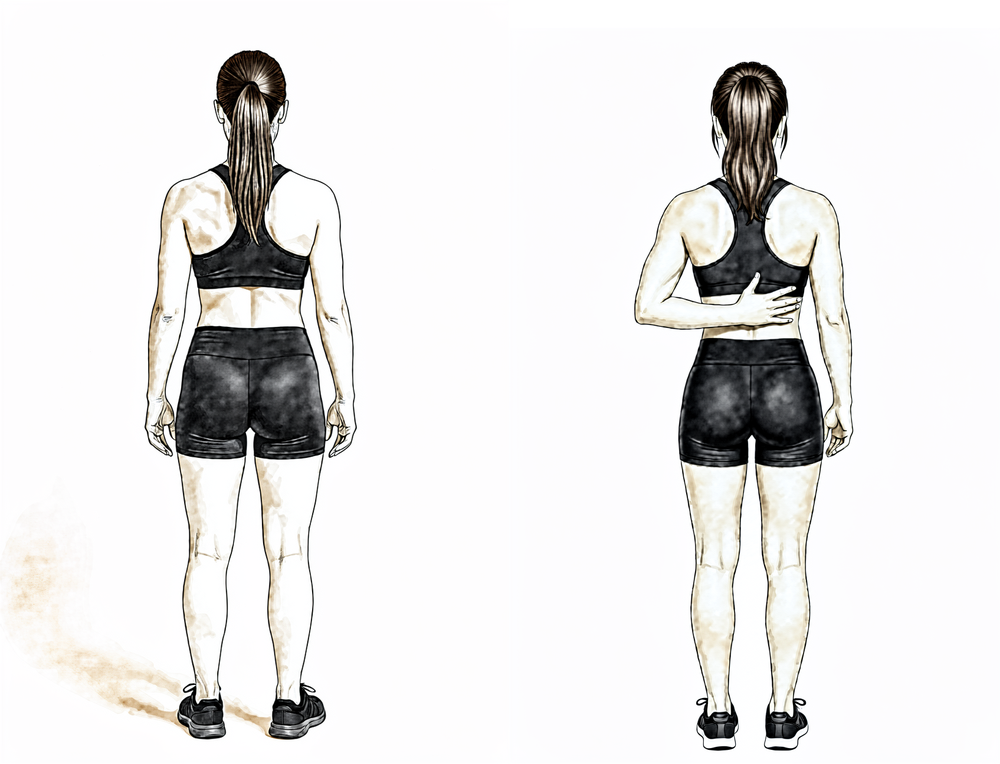
背后摸背
站立时,将手术侧手的手背贴于下背部,利用自身肌肉轻柔地沿脊柱向上滑动至舒适的最大范围,然后放下。仅在舒适范围内活动,切勿强行用力。
在您的物理治疗师指导下
随着悬吊带的移除,此阶段旨在使肩关节在所有方向上趋向完全活动:首先进行辅助运动,随后在手臂自身力量下完成。一旦活动范围接近完全,即可开始使用弹力带和轻重量对肩袖及肩胛骨肌肉进行温和强化。日常活动中可正常使用手臂,但需保持提举重量适中(不超过约 5 公斤),并避免任何对手臂施加强烈按压或负荷的动作。随着舒适度允许,本阶段将逐渐重新引入跨身体动作;在该动作末端出现轻微的夹捏感是常见的,并会随时间消退。许多人发现拉伸前热敷和拉伸后冷敷有帮助,且较轻的下肢运动(如步行、健身车或慢跑)通常从第四周左右恢复。
致您的物理治疗师:
目标
- 在阶段结束时,在所有平面实现完全或接近完全的主动活动范围
- 肩肱关节运动学正常化
- 一旦主动活动范围接近完全,即开始肩袖和肩胛周肌肉强化
管理
- 将所有平面的被动和主动辅助活动范围进展至主动活动范围:屈曲和肩胛平面抬高趋向完全,侧位及外展 90° 时的外旋以耐受为度,背后内旋并配合温和的后关节囊拉伸
- 根据症状指导,逐渐重新引入跨身体内收活动范围
- 根据指征进行手法治疗和盂肱关节松动术
- 一旦主动活动范围接近完全,从等长收缩进展至使用弹力带进行肩袖和肩胛稳定肌强化:高重复次数,低负荷
- 根据个人偏好,训练前热敷,训练后冷敷;运动前镇痛
- 逐步恢复正常日常活动;从大约第 4 周开始进行轻度的下肢体能训练(步行、固定自行车、慢跑)
注意事项
- 保持提举重量较轻:手术侧约 5 公斤或更少
- 避免负荷下的末端水平内收及撞击位姿势
- 禁止按压类运动:卧推、双杠臂屈伸、俯卧撑
- 若肩部处于激惹状态,暂缓联合外展-旋转(90/90)拉伸
进展标准
- 无显著不适的完全或接近完全的主动活动范围
- 弹力带强化训练可耐受,且未引起疼痛加剧
第三阶段 — 强化与活动恢复(第 6–12 周)
Kieran Hirpara 4.0
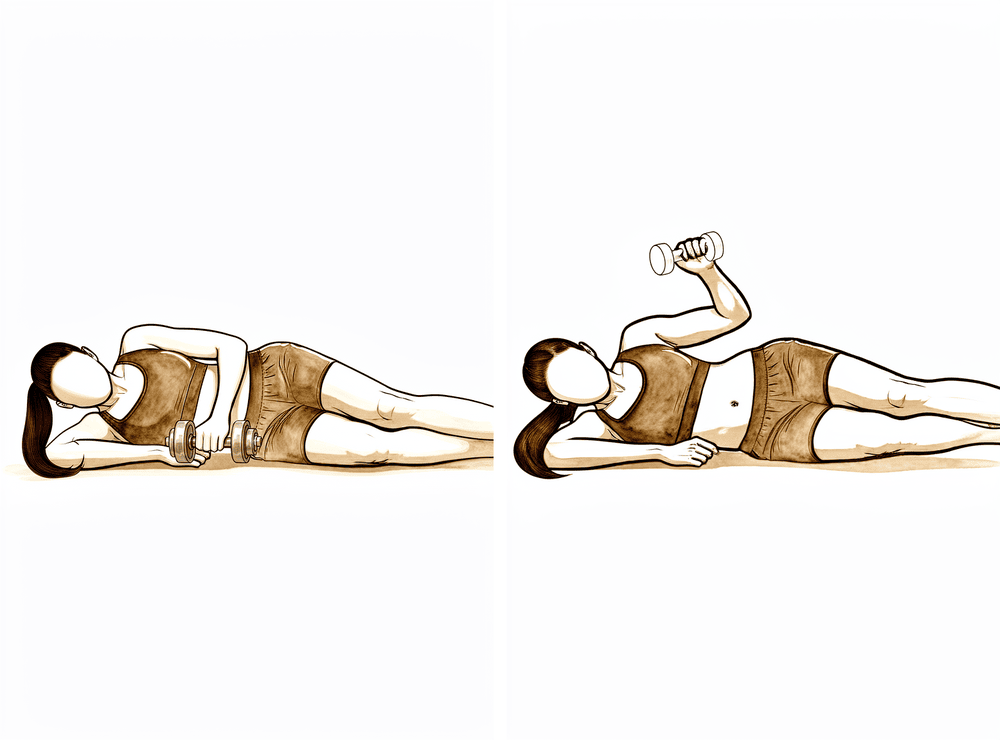
侧卧位负重外旋
侧卧于非手术侧,上方肘关节屈曲成直角并紧贴身体。手持轻重量,将前臂向上旋转朝向天花板,然后缓慢放下。此动作将您的肩袖肌群强化训练从弹力带过渡到哑铃。
2–3 组 8–15 次,低负荷
Kieran Hirpara 4.0
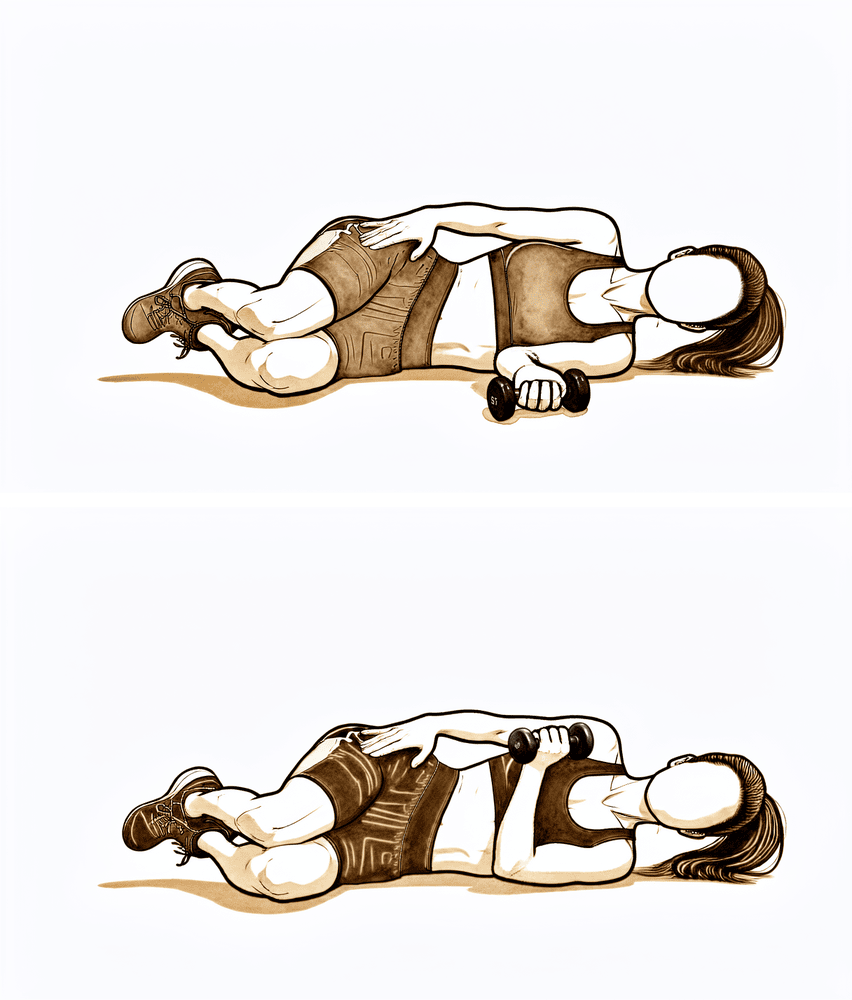
侧卧位负重内旋
侧卧于手术侧,肘关节屈曲呈直角并紧贴身体。手持轻重量,将前臂向身体方向抬起,然后缓慢放下。此动作可与外旋训练相平衡,以强化肩袖肌群。
2–3 组 8–15 次,低负荷
Kieran Hirpara 4.0
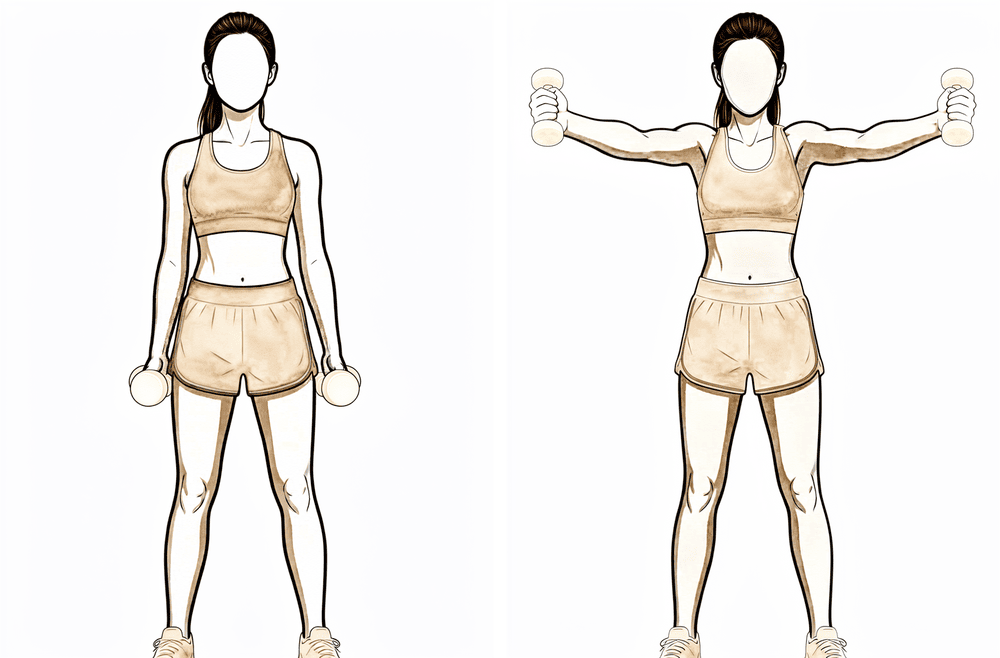
满罐肩胛平面上举
站立,双手各持轻重量,双臂在身体前方略微展开,与身体呈约30度角,拇指朝上。将双臂举至肩部高度,然后缓慢放下。此动作通过舒适的中等活动范围,协同强化三角肌和肩袖。
2–3 组 8–15 次重复,低负荷
Kieran Hirpara 4.0
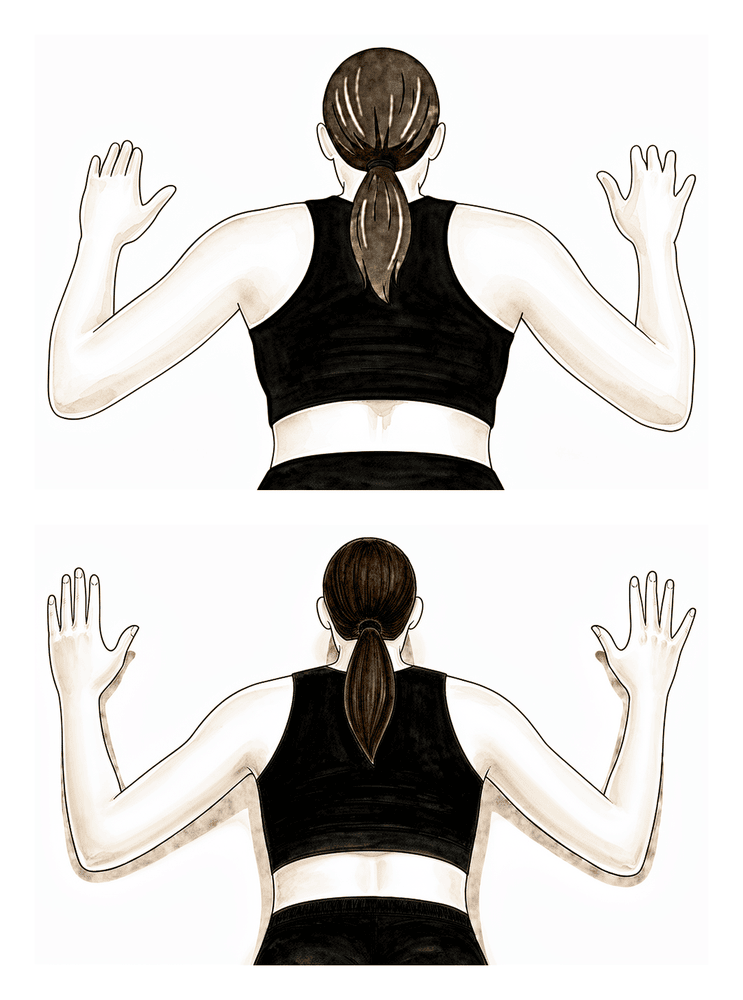
俯卧位 W
俯卧,双臂置于身体两侧。将肘部向后下方拉向髋部,形成W形,同时收紧肩胛骨,然后缓慢放下。此动作可强化支撑良好肩部力学的下肩胛肌群。
2–3 组 8–15 次
Kieran Hirpara 4.0
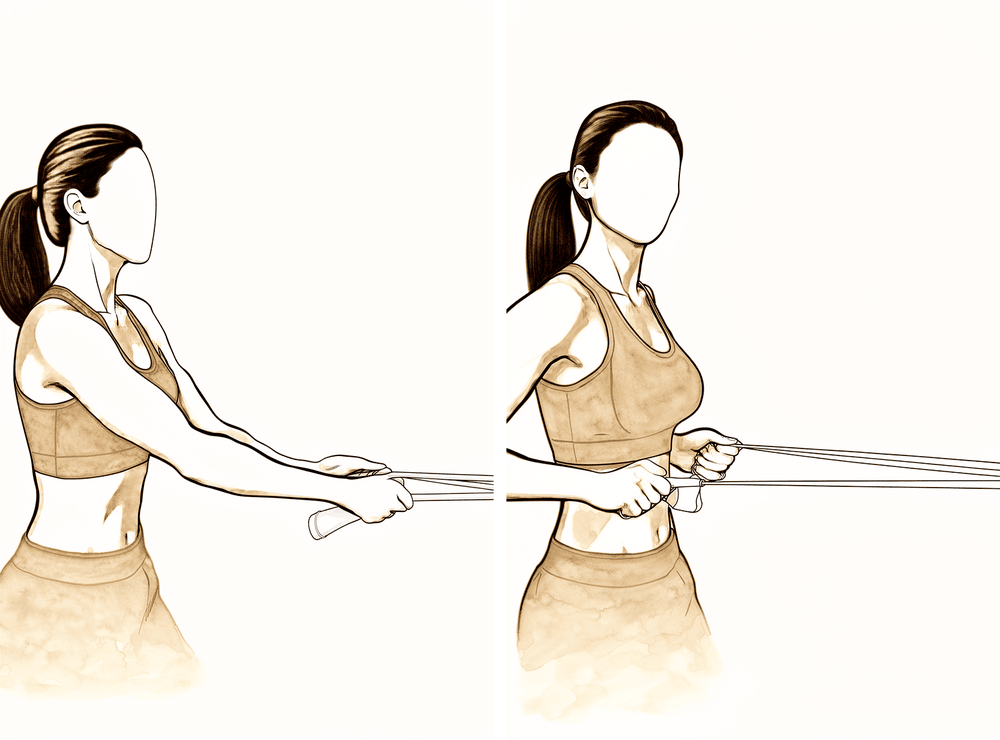
直立划船
手持弹力带或轻重量置于身前,将其向后拉向身体,使肘部向后移动并收紧肩胛骨,然后缓慢还原。此动作可增强中背部及肩胛骨力量,为恢复活动时的肩部提供支撑。
2–3 组 8–15 次
Kieran Hirpara 4.0
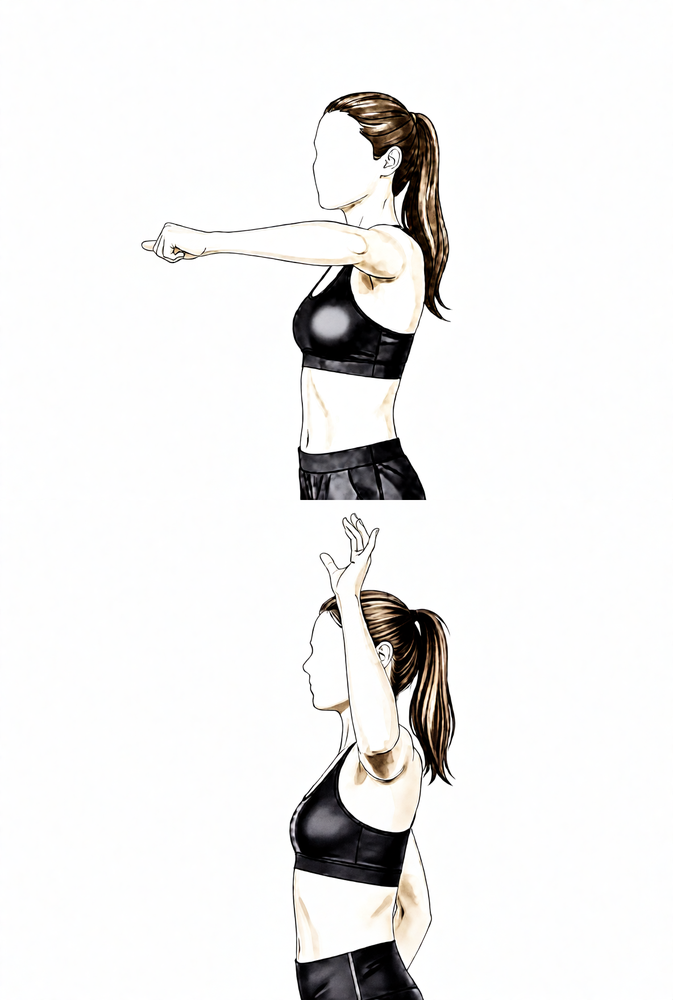
手臂上举时的外旋
将手臂向侧方抬起至肩部高度,肘关节屈曲至90°,将前臂向上并向后旋转,然后有控制地回到起始位置。保持动作平稳,并在舒适的范围内进行。此动作旨在训练抬举位的外旋。
在物理治疗师的指导下——轻柔且受控
随着活动度完全恢复,重点转向重建力量并帮助您回归日常活动。针对肩袖、三角肌和肩胛骨肌肉的抗阻训练从弹力带逐步过渡到哑铃,且练习更具功能性:健身房训练、游泳、针对投掷者的渐进式投掷计划,以及分阶段恢复工作职责和运动。大多数人会在此阶段(大约八至十二周之间)回归运动和高强度工作,这一过程以舒适度和力量为指引,而非单纯依据日历时间。对肩锁关节负荷最大的推举类练习(卧推、双杠臂屈伸和俯卧撑)是最后重新引入的,起始时采用轻负荷和小幅度。
致您的物理治疗师:
目标
- 恢复肩带的力量、耐力及神经肌肉控制
- 分阶段恢复工作职责、休闲活动及专项运动训练
管理
- 针对肩袖、三角肌及肩胛骨稳定肌的渐进抗阻训练:从弹力带过渡到轻哑铃,通常为 2–3 组,每组 8–15 次
- 加入离心训练、闭链练习,并在阶段后期,根据患者所从事运动的相关性加入增强式训练
- 功能性及专项运动训练:游泳、针对投掷者的间歇性投掷计划、在受控条件下进行的运动技巧练习
- 基于标准分阶段恢复完全工作职责和运动
注意事项
- 最后重新引入对肩锁关节负荷较大的推举动作(卧推、双杠臂屈伸、俯卧撑):起始时采用轻负荷,减小活动范围,并避免肘部降至或落后于身体中线
- 进展仍以症状为导向:若肩锁关节出现激惹,应通过短暂降低负荷来缓解,而非强行坚持
进展标准
- 完全、无痛的功能性活动范围
- 在负荷状态下,手术区域无疼痛或压痛
- 测试显示力量接近健侧水平
第四阶段 — 恢复完全活动(第12周起)
Kieran Hirpara 4.0
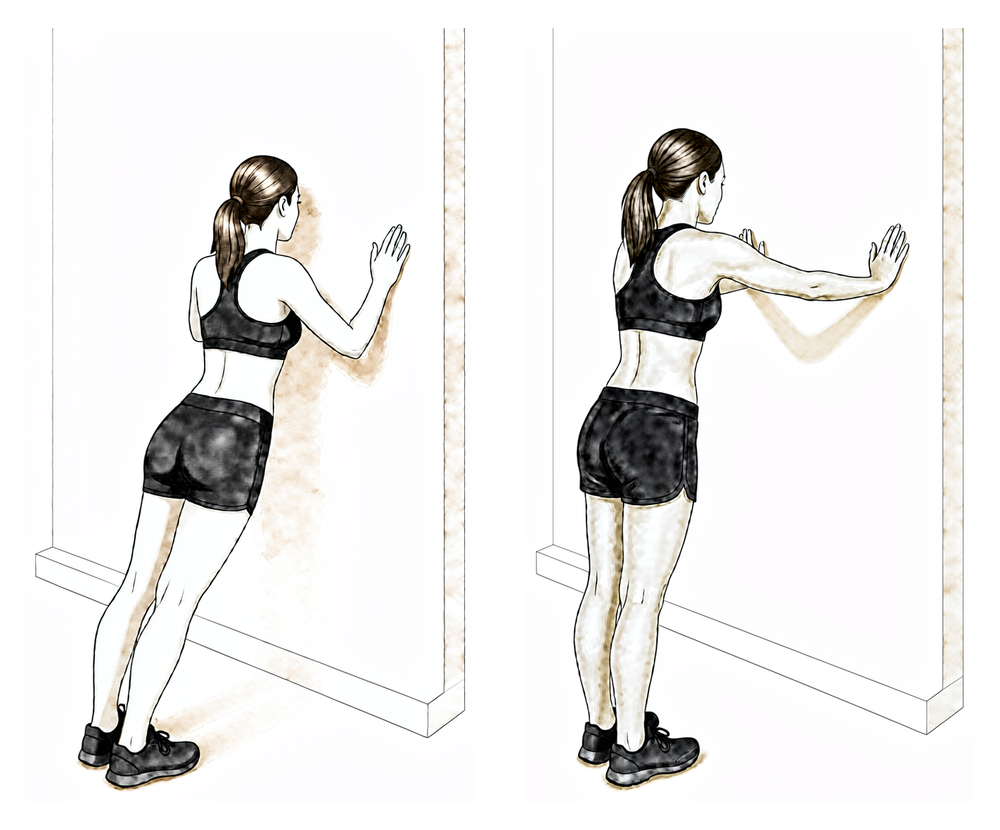
俯卧撑加强(Push-up plus)
这是分阶段恢复推举动作的一部分,因此安排在最后进行。开始时可面对墙壁或采用跪姿,采用较小的活动范围,避免肘部向后越过身体所在的平面。在每次俯卧撑的顶端,再向前多推一点以圆背(使上背部呈弧形),然后有控制地下降。仅当肩锁关节保持舒适时,才逐渐增加动作深度和负荷——若该区域再次出现酸痛,则需降低训练强度。
在您的物理治疗师指导下
最后阶段是恢复无限制活动。日常生活和大多数运动通常在此时间点之前已完全恢复;剩余的是负荷最重的部分。健身房中的推举力量逐步重建,恢复到之前的卧推表现可能需要大约四个月。从事重复性过头运动的运动员,从手术后大约需要两到四个月才能逐步恢复。完全恢复运动和重体力工作将在您的随访复查中确认,依据是活动度完全、负荷舒适且检查结果满意。
致您的物理治疗师:
目标
- 无限制地恢复工作、健身房和运动
- 长期维持肩带力量和生物力学
管理
- 在耐受范围内推进健身房和运动专项体能训练,包括渐进性大重量推举,并注意限制肩锁关节(AC关节)应变的技术(控制深度,肘部不越过身体中线后方)
- 如适用,完成间歇性投掷和过头运动的渐进训练
注意事项
- 进展仍以症状为导向:在特定举重动作中肩锁区域反复出现酸痛,是提示在继续进展前需调整负荷或技术的信号
您的康复方案之后
上述各阶段改编自已发表的远端锁骨切除术康复方案(圣路易斯大学骨科系、犹他大学运动医学、纽约运动外科、棕榈滩骨科研究所、弗吉尼亚骨科及伊利诺伊州专科医师),周数范围表述为典型值而非固定值。您的康复将由您的物理治疗师在诊所的配合下,根据您的肩部恢复情况进行个体化指导。本页面与诊所的一般康复建议配合使用;请参阅术后疼痛管理和伤口护理。关于手术本身,请参阅远端锁骨切除术。
本手术及其康复(包括开放手术与关节镜手术的对比、切除骨量及原因,以及本页面所引用的已发表方案)背后的临床证据,连同完整参考文献,已在证据部分进行总结,可从本页面顶部获取PDF文件。
Evidence & references
This is the clinical evidence summary written for health professionals. It is technical, and it lists the research this page was built from. You do not need to read it to understand your treatment or to make a decision about it.
Topic scope: the evidence underpinning distal clavicle excision (DCE) — also called distal clavicle resection, AC joint excision, or the Mumford procedure — for the two main indications (acromioclavicular [AC] joint osteoarthritis and distal clavicular osteolysis, the "weightlifter's shoulder"), and the post-operative rehabilitation that follows. Covers open vs arthroscopic technique, direct vs indirect (bursal) approach, how much bone to resect, the iatrogenic-instability risk of over-resection, and the (consensus-based) phased rehab timeline.
Defining principle of the rehab here: DCE removes a few millimetres of worn bone from the end of the collarbone and repairs nothing that needs months of protection — provided the AC ligaments and superior/posterior capsule are preserved. So (like a debridement or subacromial decompression, and unlike a cuff repair, labral repair or AC-joint stabilisation) this is an early-motion pathway: a short sling for comfort only, movement from day one, strengthening as range returns. The single important caveat runs the other way: if the surgeon resects too much bone, or the stabilising AC ligaments/capsule are violated, the joint can become iatrogenically unstable — which is why technique (resection amount, ligament preservation) matters more here than the rehab calendar. The two operation-specific quirks the rehab respects are that cross-body (horizontal adduction) movement compresses the resected area and is the slowest to settle, and heavy pressing (bench press, dips, push-ups) loads the AC joint hardest and returns last.
A. THE OPERATION & ITS INDICATIONS
DCE removes the worn or eroded outer end of the clavicle so the acromion and clavicle no longer grind at the AC joint. Two indications dominate:
- AC joint osteoarthritis — degenerative wear, often with a history of prior AC injury or simply age-related change. Surgery follows failed non-operative care (activity modification, analgesia, AC joint corticosteroid injection).
- Distal clavicular osteolysis ("weightlifter's shoulder") — atraumatic, repetitive-microtrauma resorption of the distal clavicle seen in weightlifters and overhead athletes. Activity modification and rehabilitation are first-line; injection or surgery is reserved for refractory cases or athletes unwilling to stop loading [StatPearls 2023; Charron 1998].
DCE is frequently combined with subacromial decompression (for room/co-existing impingement) and the rehab is unchanged by that addition. If a rotator cuff repair is also performed, the slower protected cuff-repair pathway takes over.
B. EVIDENCE BY THEME
1. Open vs arthroscopic — equivalent long-term outcome, faster arthroscopic recovery
A randomised, prospective trial (Robertson et al., corpus, DOI 10.1016/j.jse.2006.10.006) and a systematic review (Pensak et al., Arthroscopy 2010) found similar long-term functional outcomes for open and arthroscopic DCE, with both arthroscopic techniques exceeding 90% good/excellent results. Across measures there was a trend toward earlier or better outcomes after arthroscopic treatment — less post-operative pain and a quicker return to daily activities — without a difference in the final result [Robertson RCT; Pensak SR 2010]. A second comparative cohort reached the same conclusion (corpus, DOI 10.1177/0363546511419633). Moderate (RCT + SR + cohort).
2. Direct vs indirect (bursal) arthroscopic approach — direct is faster
Among arthroscopic techniques, the direct (superior, top-down) approach permits a quicker return to athletic activity than the indirect/bursal approach, with equivalent long-term results — one comparison reporting a mean return to sport of ~21 days (direct) vs ~42 days (indirect) [Pensak SR 2010; arthroscopic-approach comparison]. Moderate.
3. How much bone to resect — and why over-resection is dangerous
This is the central technical controversy and the reason DCE rehab cannot be reduced to a calendar:
- The stabilising superior and posterior AC ligament/capsule runs from the anterior acromion to the posterior distal clavicle, and the coracoclavicular (trapezoid) ligament inserts on the clavicle undersurface roughly 22–25 mm from the tip [Renfree; capsule/ligament-insertion cadaveric study, corpus DOI 10.1016/j.arthro.2009.04.072; clavicular-strut cadaveric study, corpus DOI 10.1016/j.jse.2013.01.004].
- Anatomic work suggests as little as ~2.3–2.6 mm of resection can begin to violate the superior AC ligament [Renfree, via PMC6930955]; biomechanical models show AC joint anteroposterior translation increases after either open or arthroscopic excision, and stability falls as the resection lengthens [Blazar; resection-length biomechanical model, corpus DOI 10.1016/j.arthro.2007.07.004; DCE-vs-symmetric-resection biomechanics, corpus DOI 10.1177/0363546512469873].
- The practical consensus is to resect enough to abolish bony contact but no more — commonly quoted as ~5 mm (sufficient to clear contact in cadaveric models) up to ~8 mm, and not beyond ~8 mm, preserving the posterior/superior capsule and AC ligaments [PMC6930955; StatPearls 2023; resection-length biomechanics, corpus DOI 10.1016/j.arthro.2007.07.004].
- Over-resection or capsular violation can produce iatrogenic AC instability — a recognised (though uncommon) cause of persistent pain after DCE that may itself require ligament reconstruction [iatrogenic-instability case, PMC6930955; Painful Conditions of the AC Joint, corpus DOI 10.5435/00124635-199905000-00004].
Moderate (cadaveric/biomechanical + anatomic + expert consensus); exact safe threshold is debated.
4. Outcomes & return to activity
DCE is a reliable, high-satisfaction operation for the right indication — arthroscopic series report >90% good/excellent results [Robertson RCT; Pensak SR 2010]. For osteolysis in weightlifters, an arthroscopic-resection series reported return to sport at a mean of ~3 days and to the preoperative weight-training program at ~9 days, remaining asymptomatic and able to progress load beyond pre-operative levels at ~19-month follow-up [Charron, Am J Sports Med 1998, PMID 9548111]. Across the literature, most everyday activity returns within weeks and heavy pressing/overhead sport over ~3–4 months, consistent with the published rehab protocols. Moderate (cohort). A noted exception: worse ("poor") results cluster in patients with pre-existing post-traumatic AC instability or Workers'-Compensation claims [Pensak SR 2010] — DCE alone does not fix an unstable joint.
C. PHASED POST-OPERATIVE TIMELINE (isolated DCE ± subacromial decompression)
Week ranges are typical, not fixed — progression is criteria-based, guided by the physiotherapist.
| Phase | Window | Sling | ROM / use | Strengthening | Operation-specific notes |
|---|---|---|---|---|---|
| I — Early recovery & movement | Week 0–2 | Comfort only; weaned/discarded within 1–2 weeks | Elbow/wrist/hand + pendulums from day 1; passive + active-assisted shoulder elevation/ER/behind-the-back IR; scapular setting | Grip; gentle isometrics as pain allows | Avoid cross-body (horizontal) adduction — it compresses the resected area. No driving in the sling; no weight-bearing through the arm |
| II — Restoring range | Week 2–6 | Off | Progress assisted → active ROM to full in all planes; reintroduce cross-body adduction gradually (end-range pinching is common, settles) | Begin cuff + scapular band work once active range near full; lifting ≤ ~5 kg | Light lower-body conditioning (walk/bike/jog) from ~wk 4 |
| III — Strengthening & return | Week 6–12 | Off | Full functional ROM | Bands → dumbbells; functional + sport-specific; most return to sport/heavier work ~8–12 wk | Reintroduce AC-loading presses (bench/dips/push-ups) last — light, shallow depth, elbows not behind the body line |
| IV — Return to full activity | Week 12+ | Off | Full | Progressive heavy pressing; return to previous bench performance can take ~4 months; overhead athletes progressed over ~2–4 months | Symptom-guided — recurrent AC ache with a lift = adjust load/technique before progressing |
The phased structure is drawn from published surgeon/physiotherapy protocols (Saint Louis University; University of Utah Sports Medicine; Sports Surgery New York; Palm Beach Orthopaedic Institute; OrthoVirginia; Specialty Physicians of Illinois — see Citations). These are consensus/expert documents; no rehab RCT defines the optimal post-DCE regimen.
D. KEY CONTROVERSIES / EVIDENCE QUALITY
- How much bone to resect is the real debate, not the rehab. Too little leaves residual bony contact; too much risks iatrogenic instability. The safe window (~5–8 mm, capsule preserved) is supported by cadaveric/biomechanical and anatomic work, not by an RCT — exact thresholds vary by source. Moderate, technique-dependent.
- Open vs arthroscopic, direct vs indirect. Long-term outcomes converge; arthroscopic (and specifically the direct approach) recovers faster. Moderate (RCT + SR).
- Patient selection matters more than approach. Pre-existing AC instability and Workers'-Compensation status predict poorer results — DCE treats a worn/eroded joint, not an unstable one. Moderate.
- The rehab protocol itself is consensus. Phase timings come from surgeon patient-guidance protocols, not a rehab trial. Weak/consensus.
E. EVIDENCE STRENGTH FLAGS (summary)
- MODERATE (RCT / SR): open vs arthroscopic equivalence with faster arthroscopic recovery (Robertson RCT; Pensak SR 2010, >90% good/excellent); direct > indirect for return speed.
- MODERATE (cadaveric / biomechanical / anatomic): resection-length vs stability relationship and the iatrogenic-instability mechanism (resection-length model, corpus DOI 10.1016/j.arthro.2007.07.004; DCE-vs-symmetric biomechanics, corpus DOI 10.1177/0363546512469873; capsule/ligament insertions, corpus DOI 10.1016/j.arthro.2009.04.072).
- MODERATE (cohort): osteolysis-in-weightlifters return-to-sport (Charron 1998); high overall satisfaction; poorer results with pre-existing instability / WorkCover.
- WEAK / CONSENSUS: the post-operative rehabilitation protocol (surgeon patient-guidance documents; no defining rehab RCT); the exact "safe" resection threshold.
CITATIONS
RAG corpus (180,000+ Orthopaedic articles)
- Robertson WJ, et al. Arthroscopic versus open distal clavicle excision: comparative results at six months and one year from a randomized, prospective clinical trial. J Shoulder Elbow Surg. 2007. DOI: 10.1016/j.jse.2006.10.006
- Arthroscopic versus open distal clavicle excision (comparative cohort). Am J Sports Med. 2011. DOI: 10.1177/0363546511419633
- The biomechanical stability of distal clavicle excision versus symmetric acromioclavicular joint resection. Am J Sports Med. 2013. DOI: 10.1177/0363546512469873
- Arthroscopic distal clavicle resection: a biomechanical analysis of resection length and joint compliance in a cadaveric model. Arthroscopy. 2007. DOI: 10.1016/j.arthro.2007.07.004
- Analysis of the capsule and ligament insertions about the acromioclavicular joint: a cadaveric study. Arthroscopy. 2009. DOI: 10.1016/j.arthro.2009.04.072
- Acromioclavicular joint ligamentous system contributing to clavicular strut function: a cadaveric study. J Shoulder Elbow Surg. 2013. DOI: 10.1016/j.jse.2013.01.004
- Painful conditions of the acromioclavicular joint. J Am Acad Orthop Surg (JAAOS). 1999. DOI: 10.5435/00124635-199905000-00004
Literature (URLs)
- Pensak M, et al. Open versus arthroscopic distal clavicle resection (systematic review; >90% good/excellent, direct > indirect return). Arthroscopy. 2010. PMID 20434670. https://pubmed.ncbi.nlm.nih.gov/20434670/
- Charron KM, et al. Arthroscopic distal clavicle resection for isolated atraumatic osteolysis in weight lifters (return to sport ~3 d, training ~9 d). Am J Sports Med. 1998. PMID 9548111. https://pubmed.ncbi.nlm.nih.gov/9548111/
- Distal clavicular osteolysis (cause, activity-modification first line, ~8 mm resection preserving AC ligaments). StatPearls. 2023. https://www.ncbi.nlm.nih.gov/books/NBK582148/
- Distal clavicular augmentation with AC and CC ligament reconstruction in iatrogenic AC instability (~5 mm safe-resection guidance; Renfree ~2.3–2.6 mm violates superior AC ligament; trapezoid 22–25 mm from tip; Blazar AP-translation increase). PMC6930955. https://pmc.ncbi.nlm.nih.gov/articles/PMC6930955/
- A sports medicine clinician's guide to the diagnosis and management of distal clavicular osteolysis. PubMed. https://pubmed.ncbi.nlm.nih.gov/37294199/
- Distal clavicular osteolysis (review). Physiopedia. https://www.physio-pedia.com/Distal_Clavicular_Osteolysis
Published rehab protocols (patient-guidance — basis for the phase structure)
- Saint Louis University Dept of Orthopaedic Surgery. Subacromial Decompression / Distal Clavicle Excision Rehab Protocol. https://www.slu.edu/medicine/orthopaedic-surgery/sports-medicine/-pdf/shoulder-subacromial-decompression-and-distal-clavicle-excision.pdf
- Burks RT. Distal Clavicle Resection/Mumford Post-Op Protocol. University of Utah Sports Medicine. https://www.robertburksmd.med.utah.edu/pdfs/distal-clavicle-resection-mumford-protocol.pdf
- Sports Surgery New York. Arthroscopic Subacromial Decompression / Distal Clavicle Excision Rehab Protocol. https://www.sportssurgerynewyork.com/pdf/arthroscopic-subacromial-decompression-distal-clavicle-excision-rehab-protocol.pdf
- Hill B. Rehabilitation Protocol: Distal Clavicle Excision. Palm Beach Orthopaedic Institute. https://www.pboi.com/pdf/hill-pt-distal-clavicle-excision.pdf
- Eastwood D. Distal Clavicle Resection Therapy Protocol. OrthoVirginia. https://www.orthovirginia.com/wp-content/uploads/2022/09/Eastwood-distal-clavicle-resection-PT-protocol.pdf
- Mahylis JM. Distal Clavicle Excision Rehabilitation Protocol. Specialty Physicians of Illinois. https://jaredmahylismd.com/pdfs/distal-clavicle-excision-rehabilitation-protocol.pdf





