

屈肌腱鞘腱鞘囊肿切除术 资料
本方案指导您在 Mater Private Hospital Rockhampton 接受 Kieran Hirpara 医生进行的小手术(切除屈肌腱鞘囊肿)后的康复。该囊肿是位于手掌侧手指根部的一种坚硬囊肿。方案首先介绍您的居家锻炼计划,随后是专为您的手部治疗师编写的结构化临床方案;请在首次治疗就诊时携带此页面或其 PDF 文件,以确保您的康复过程协调一致。您的手部治疗师可能会根据您的康复进展调整计划。
如果您对术后伤口有任何疑虑,请联系前台。通常,拍摄伤口照片并通过电子邮件发送以供审阅会很有帮助。
预期情况
屈肌腱鞘囊肿(又称掌侧腱鞘囊肿)是一种小而坚硬、常有压痛的肿块,通常直径仅几毫米,生长于屈肌腱穿行的腱鞘内,位于手指掌侧基部(常见于被称为A1滑轮的坚韧带状结构上,即手指与手掌交界处的褶皱处)。该肿块固定于腱鞘,屈曲手指时不会移动。这是一种完全良性(非癌性)的肿块,也是手部和腕部较常见的腱鞘囊肿之一。
手术为小型日间门诊切除术。Hirpara医生通过手掌上的短锯齿状切口,将囊肿连同其起源的腱鞘一小部分袖口状组织一并切除。沿手指两侧走行的两条小神经和血管会被仔细保护。腱鞘本身不予修复:保持其开放是有意为之,并不会削弱手指功能。皮肤以缝合线关闭。
由于愈合过程中无需保护手指内部结构,因此恢复迅速:以周计,而非以月计。方案很简单:保护手掌小伤口,控制肿胀,并在数天内开始轻柔的手指活动,以防止手指僵硬及肌腱粘连至愈合中的瘢痕。伤口愈合后,通过瘢痕按摩和脱敏处理使该区域恢复平静,并逐步重建握力。早期伤口周围可能出现轻微麻木或压痛,这是小皮神经恢复的常见现象,通常会在随后的几周内消退。
注意事项与限制
- 在伤口愈合且拆线之前(通常为术后第 10–14 天左右),请保持敷料清洁干燥。通常没有石膏,也一般不使用夹板,仅使用软敷料。
- 请在术后最初几天内开始轻柔的手指活动(弯曲、伸直及肌腱滑动),以防止僵硬和肌腱粘连。
- 请保持手部抬高,并在舒适范围内用于轻度的日常活动。
- 在伤口稳定之前(大约两到三周),切勿进行重度抓握、提重物或用力捏取。
- 在伤口完全愈合之前,切勿按摩疤痕或浸泡手部。
- 在敷料妨碍您安全握持方向盘期间(通常约为术后第一周),切勿驾驶车辆。
关于伤口、肿胀及疤痕管理,请参阅本诊所的伤口护理指南。
您的练习
Kieran Hirpara 4.0
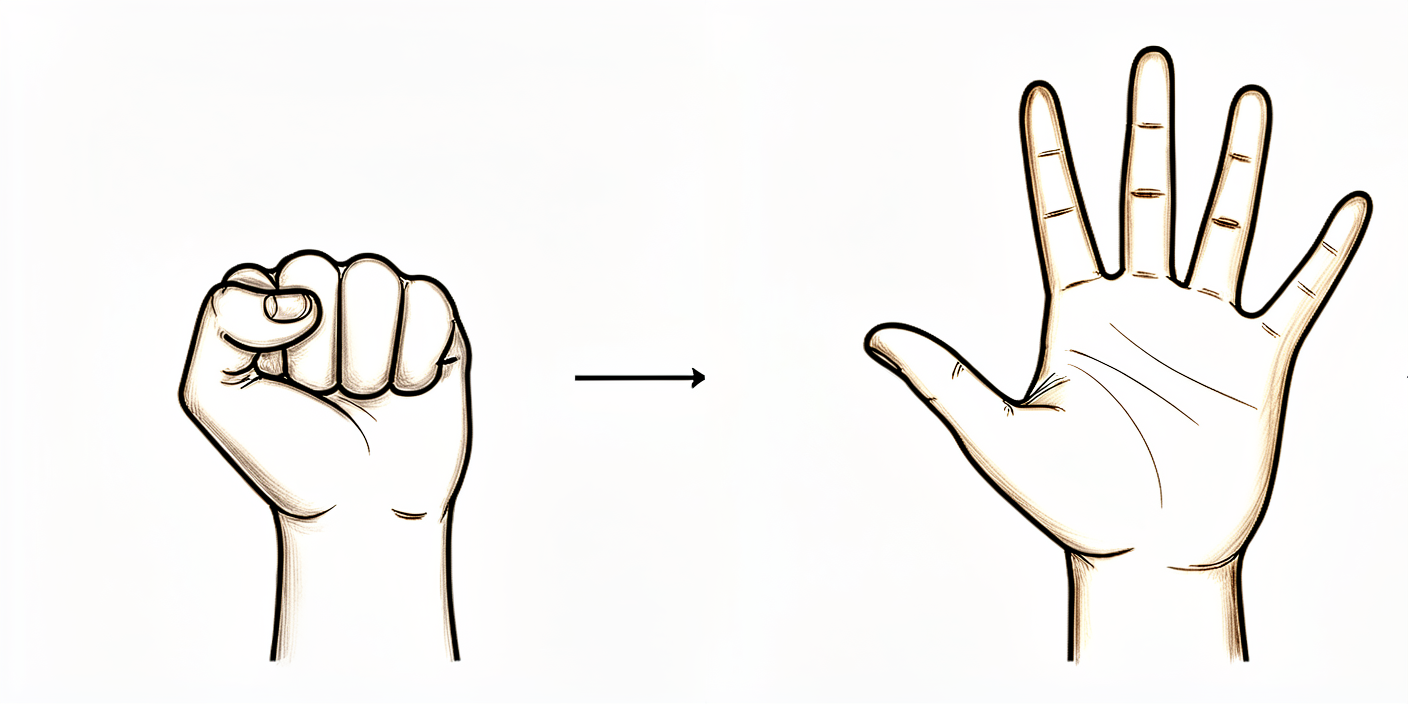
手指活动(轻柔握拳并伸直)
在最初几天内,轻轻握成柔软的拳头,然后将手指完全伸直,动作要缓慢,且仅在舒适范围内进行。早期活动可防止手指僵硬,并阻止肌腱粘连于愈合中的伤口。切勿强行用力——请以敷料和轻微不适感作为指导。
10次,3–4 次/天,以舒适为度
Kieran Hirpara 4.0
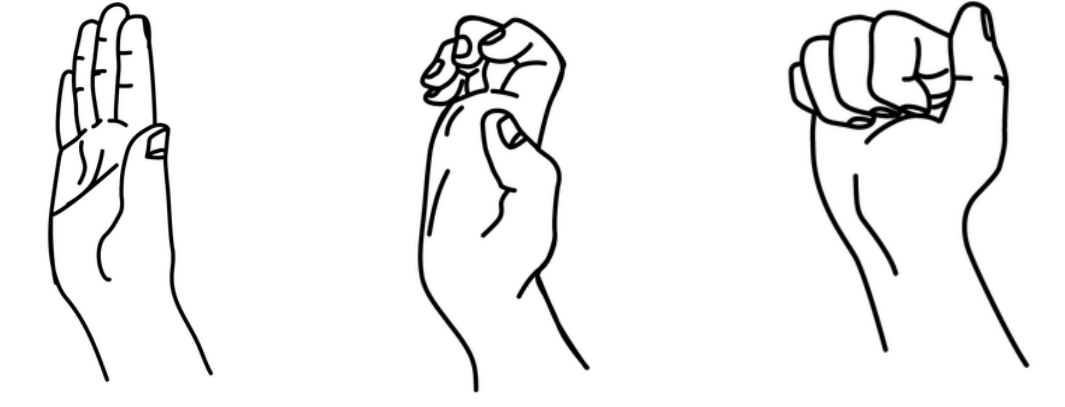
腱滑动(钩状、握拳、伸直)
将手指依次做三种形态:钩状(弯曲指尖及中间关节,但保持掌指关节伸直,形似爪状)、完全握拳,以及平直伸展的手。这些体位可使屈肌腱在手术区域滑动,从而保持其自由滑动而不发生粘连。每个动作请保持轻柔且无痛。
每个姿势5次,每天3–4次
Kieran Hirpara 4.0
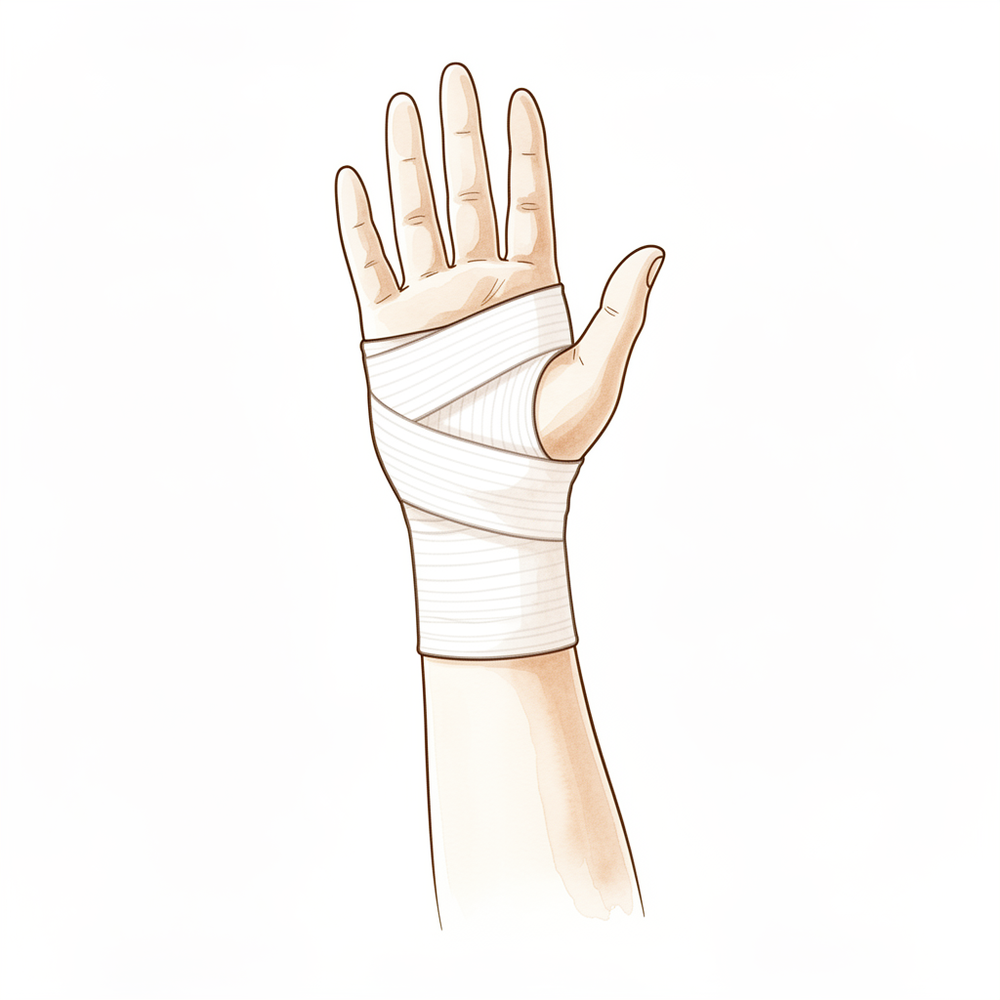
肿胀控制
在术后第一周,请尽可能将手抬高至心脏水平以上,并轻柔地屈伸手指以泵出肿胀。肿胀越少,手指越轻松舒适,恢复也越顺畅。早期手掌周围出现轻微肿胀属于正常现象。
白天经常抬高患肢;清醒时每隔约一小时进行轻柔的手指屈伸运动
Kieran Hirpara 4.0
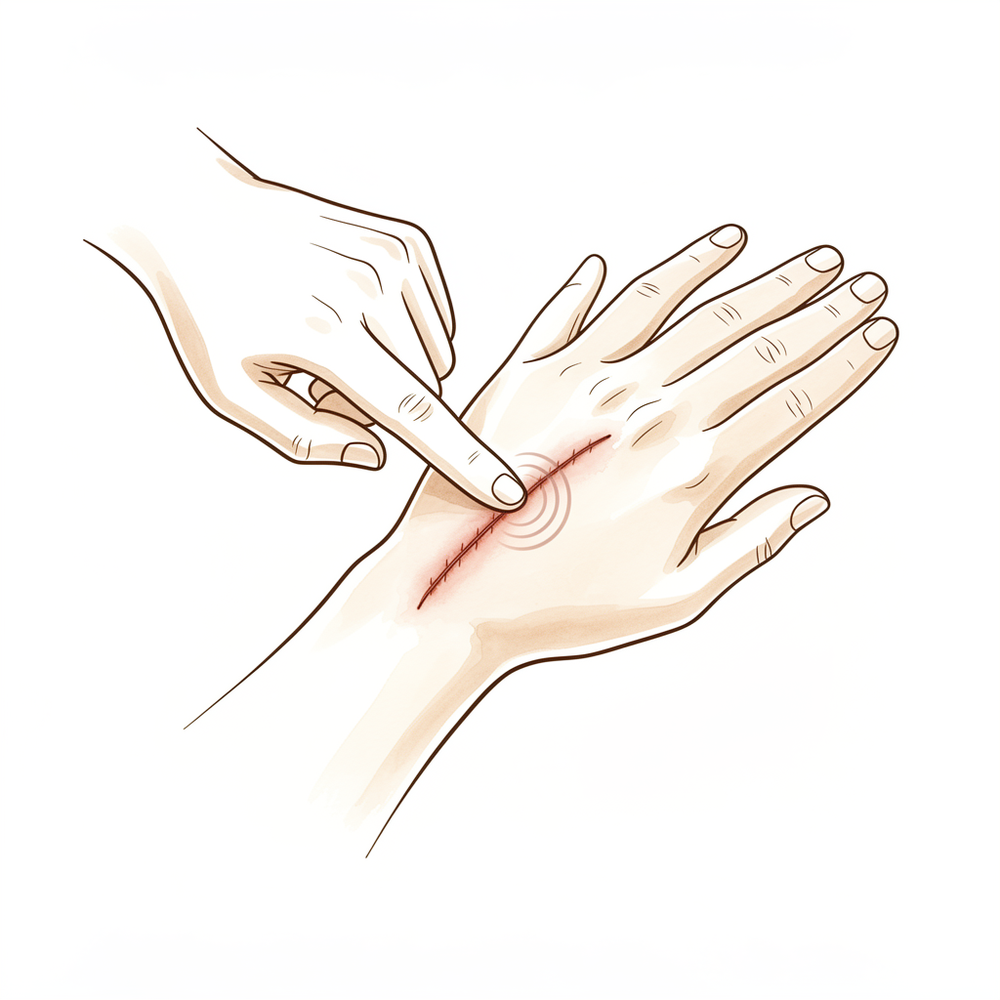
瘢痕按摩与脱敏
待伤口完全愈合且拆线后(通常约两周),用指腹以小而有力的圆圈动作在疤痕上涂抹少量润肤霜,持续数分钟,随后用不同质地的物品(先软布,后毛巾)轻抚该区域。此操作可软化疤痕,并缓解初期因细小皮肤神经恢复而常见的触痛和刺痛感。切勿按摩开放或未愈合的伤口。
每天2–3次,每次几分钟,待完全愈合后
Kieran Hirpara 4.0
握力强化
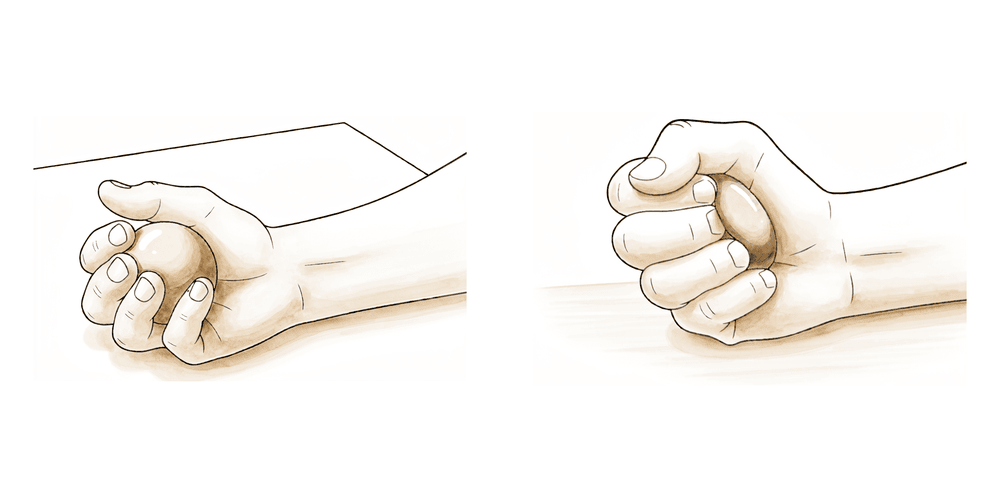
后期练习——从术后约两到三周开始,待伤口稳定且您的手部治疗师确认无碍后进行。轻轻挤压软球或治疗用橡皮泥,保持数秒,然后放松,并逐渐增加力度。此练习旨在重建抓握力,为完全使用手部做准备。若伤口处出现剧烈疼痛,请立即停止。
10–15 挤压,每天 2–3 次(从约 2–3 周开始)
这些是您手册中的练习。仅在Hirpara医生和手部治疗师的指导下开始进行,并严格保持在您被设定的限制范围内。早期练习(轻柔的握拳与伸直、肌腱滑动及肿胀控制)从术后最初几天起就能保持手指活动并促进肌腱在内部滑动,这是实现顺利康复的最重要事项。瘢痕按摩和脱敏训练在伤口完全愈合后开始,而握力强化则属于稍晚的阶段(大约从术后两到三周开始)。任何导致伤口处剧烈疼痛的动作都应立即停止。
您的临床方案
本页其余部分为切除屈肌腱鞘囊肿(掌侧腱鞘囊肿)后的分阶段康复临床方案。本节内容应提供给您的手部治疗师,每个阶段均以通俗易懂的语言解释正在发生的情况。这是一项切除术,而非修复术:腱鞘保持开放状态,没有需要保护的修复结构。该方案是一条早期活动路径,围绕伤口保护、水肿控制、防止粘连的腱滑动以及瘢痕/脱敏训练构建,而非保护性固定。
在治疗前,请查阅手术报告及既往病史,并与主刀医生沟通涉及的手指、腱鞘切除范围以及指部神经血管束的完整性。Hirpara 医生的切除术采用 A1/近端腱鞘上方的 Bruner(锯齿形)掌侧切口,连同腱鞘袖状组织一并切除囊肿;腱鞘不予修复,除软敷料外无其他固定。指部神经暂时性感觉异常常见且可自行缓解。
第一阶段 — 伤口保护与早期活动(第 0 周至约第 1 周)
第一周旨在保护小的手掌伤口,并让手指早期活动,以防止僵硬或形成肌腱粘连。手部采用无夹板的厚软敷料进行管理,保持抬高,并在数天内开始轻柔的主动手指活动。
致您的手部治疗师:
教育与注意事项 - 仅使用厚软敷料,不使用夹板;保持清洁干燥直至拆线(约第 10–14 天) - 保护伤口免受重负荷;在舒适范围内进行轻度的无负荷手部使用 - 告知患者,伤口周围出现暂时性的指神经感觉异常/感觉过敏是常见的,且会自行缓解
管理 - 伤口:按指示使用外科敷料;监测感染迹象 - 水肿:抬高至心脏水平以上,进行轻柔的手指泵动,必要时冰敷 - 练习:数天内开始轻柔的主动手指主动活动范围(AROM)(轻柔的整体握拳和完全伸展)以及肌腱滑动(钩状/拳状/伸直);未受累手指、拇指和腕关节的主动活动;轻度功能性使用
进展标准 - 伤口趋于稳定,无感染;早期主动活动范围舒适;随着伤口允许,准备好进行完全主动/轻柔被动活动
第二阶段 — 全范围活动、水肿及瘢痕处理(约第1至3周)
从大约一周开始,活动度逐渐进展至全主动及轻柔被动活动范围(完全握拳及完全伸直),且一旦伤口完全愈合且拆线后,即开始瘢痕按摩及脱敏治疗。水肿控制持续进行。
致您的手部治疗师:
评估 - 主动及被动手指活动范围(目标为完全握拳及完全伸直);伤口/瘢痕状况;肿胀;指神经敏感性
宣教及注意事项 - 在舒适度允许的情况下,进展至全主动及轻柔被动手指活动 - 仅在伤口完全愈合后开始瘢痕按摩及脱敏治疗 - 在伤口稳定前,避免用力抓握及强力捏持
管理 - 练习:完全复合握拳及完全伸直;继续肌腱滑动练习;对任何残留紧张进行轻柔被动牵伸 - 瘢痕:愈合后行瘢痕按摩 + 纹理脱敏;按需进行水肿管理
进展标准 - 全范围、无痛的主动活动;伤口愈合;瘢痕趋于稳定;准备进行负重
第三阶段——强化与恢复(约第3至6周)
一旦伤口愈合且活动度完全恢复(约三周时),抓握与捏握强化训练即开始进行,并逐步增加负荷,直至完全无限制使用。大多数患者在约四至六周时恢复全部活动,并在约两个月时进行常规随访。
致您的手部治疗师:
评估 - 与健侧对比的抓握与捏握力量;残余瘢痕压痛或感觉异常;功能性/任务特异性需求
宣教与注意事项 - 伤口稳定后,从约 2–3 周开始进行抓握与捏握强化训练;逐步增加负荷 - 随着舒适度与力量的允许,过渡至完全无限制使用
管理 - 练习:橡皮泥/软球抓握挤压、捏握强化、渐进性功能性负荷;继续处理残余瘢痕及脱敏训练 - 当活动度完全恢复,且抓握舒适、接近对称时予以出院;约2个月时进行常规外科随访 - 若恢复停滞、瘢痕持续明显高敏感,或存在复发担忧,请转回主治医生处
完全恢复标准 - 活动度完全且无痛;抓握与捏握舒适;瘢痕稳定;能够满足工作及活动需求
恢复工作与活动
鼓励从初期开始进行轻度日常手部使用(如进食、书写、轻度自我护理),以舒适为限,只要不涉及通过伤口进行重度抓握或强行捏合。大多数人可在数天内完成日常事务。驾驶通常从约一周后恢复,前提是您能够舒适地抓握并控制方向盘,且不再受敷料限制,并需在复诊时经Hirpara医生确认。
抓握和强化训练通常在伤口稳定后,即约两至三周时开始,并逐步加强。完全无限制的活动通常在约四至六周时达到。办公室工作通常可在数天至一周内恢复;较重的体力工作则遵循与抓握功能恢复相同的阶段性进程。通常会在约两个月时安排常规随访。
您的方案之后
本方案与本诊所的一般康复建议配合使用:请参阅术后疼痛管理、伤口护理和疤痕管理。由于该腱鞘囊肿位于手指基部的A1滑车上方,其康复过程与其他掌侧手指基部小手术(如扳机指松解术)有许多共同之处。上述分阶段计划反映了腱鞘囊肿切除术后已发表的指南,您的持续康复将由Hirpara医生和您的手部治疗师根据您手指的进展情况个体化指导。
Evidence & references
This is the clinical evidence summary written for health professionals. It is technical, and it lists the research this page was built from. You do not need to read it to understand your treatment or to make a decision about it.
Topic scope: post-operative rehabilitation after surgical excision of a flexor tendon sheath ganglion (volar retinacular cyst / "seed" ganglion) at the base of a finger — a small, firm, often tender cyst arising from the flexor sheath, commonly over the A1 pulley at the metacarpophalangeal crease of the middle or ring finger. This is an excision, not a reconstruction: the cyst is removed with a small cuff of sheath, the sheath is not repaired, and there is no construct to protect — so the rehab is a brief early-motion pathway built around wound protection, oedema control, tendon gliding and scar/desensitisation work rather than months of protected healing.
Defining principle of the rehab here: a flexor sheath ganglion is a benign cyst tethered to the tendon sheath; excising it (with a cuff of sheath) removes the lesion without creating anything that needs to heal under protection. The sheath is meant to be left open — partial sheath excision does not weaken the digit or cause bowstringing at this level — so immediate, unrestricted light use and early gentle finger motion are the default. The therapy programme exists to keep the flexor tendons gliding through the healing palm wound so they do not adhere, to settle the transient digital-nerve hypersensitivity that commonly follows dissection between the neurovascular bundles, and to mature the scar — not to immobilise. The single branch point is wound healing: scar massage and grip loading wait until the wound is healed and sutures are out.
A. PROCEDURE OUTCOMES (excision of flexor sheath ganglion)
Excision of a flexor sheath ganglion is a small, reliable day-case hand operation: the great majority of patients are rendered symptom-free with a low recurrence rate, and the principal trade-off is the common but self-limiting transient digital-nerve paraesthesia from dissecting the cyst out from between the digital neurovascular bundles.
- Flexor sheath (volar retinacular) ganglions are a well-defined, common entity. They account for roughly 5–16% of ganglions of the hand and wrist, presenting as a small (typically 3–8 mm), firm, often tender nodule fixed to the flexor sheath at the digit base — classically over the A1/A2 pulley region — that does not move with the tendon [JAAOS 2022; JAAOS 1999; Hand Clin 2004]. Well-established (lesion nature).
- Surgical excision gives reliable symptom relief with low recurrence. Level-IV case series of flexor sheath / volar retinacular ganglion excision report durable resolution and low recurrence after complete excision of the cyst with a cuff of sheath; recurrence is the main long-term concern and is uncommon when the lesion and its sheath origin are fully removed [Hand 2007; J Hand Surg series; PMC surgical series]. Moderate (level-IV case series).
- Transient digital-nerve paraesthesia is the principal complication. Because the cyst sits immediately deep to, and is dissected free from, the digital nerves, temporary numbness or tingling in the finger is the commonest reported post-operative event; it is typically self-limiting and settles over weeks. True nerve injury is rare with careful protection of both bundles [Hand 2007; volar retinacular series; Medscape]. Moderate (case series + expert review).
- Partial excision of the sheath is biomechanically tolerated. Removing the cyst with a small cuff of the flexor sheath at the A1 level does not produce clinically significant bowstringing or weakness, which is the anatomical basis for not repairing the sheath and for an early-motion rehab without protected immobilisation [Hand Clin 2004 (palmar digital ganglia / A1–A2 origin)]. Mechanistic.
B. REHABILITATION / THERAPY EVIDENCE
There are no randomised rehab trials specific to flexor sheath ganglion excision; the post-operative programme is low-level / expert-consensus, but it is strikingly consistent across hand-therapy and surgical sources: dressing only (no splint), early gentle finger motion within days, tendon gliding to prevent adhesion, scar massage and desensitisation once healed, and return to full use by ~4–6 weeks.
- Dressing-only, no routine splinting. Aftercare guidance for ganglion (including flexor sheath) excision describes a soft dressing with no immobilisation, with the patient encouraged to move the finger early — there is no construct to protect, so splinting is not required and would risk stiffness [MSA aftercare; Medscape]. Weak / consensus.
- Early active finger motion and tendon gliding prevent stiffness and adhesion. Starting gentle active fist/extension and tendon glides within the first few days keeps the flexor tendons gliding through the palm wound so they do not adhere to the healing scar — the same adhesion-prevention rationale that underpins early-motion hand rehab generally. The benefit is mechanistic / consensus rather than trial-proven for this lesion [hand-therapy aftercare sources]. Weak (mechanism sound).
- Scar massage and desensitisation, started once healed, settle the wound and digital-nerve hypersensitivity. Palm scars at the digit base are prone to tenderness, and the transient digital-nerve paraesthesia from the dissection responds to graded desensitisation; both begin only after the wound is fully healed and sutures are out (~day 10–14) [MSA aftercare; Medscape]. Weak / consensus.
- Grip loading and full return are early. Because nothing is repaired, gripping and strengthening begin once the wound has settled (~2–3 weeks) and full unrestricted use is typically reached by ~4–6 weeks, with routine follow-up around two months — consistent across aftercare sources [MSA aftercare; PMC series; Medscape]. Weak / consensus.
Recovery trajectory (expected, evidence-anchored)
| Phase | Window | Restraint | Hand use / therapy focus | Strength / load | Notes |
|---|---|---|---|---|---|
| I — Wound protection & early motion | Week 0–1 | Soft dressing, no splint | Elevate above heart; gentle active fist + full extension and tendon glides within a few days; protect wound; light functional use | Light unloaded use only | Transient digital-nerve tingling is expected, not a complication |
| II — Full motion, oedema & scar work | Week ~1–3 | Heavy-grip avoidance | Progress to full active + gentle passive motion (full fist, full extension); scar massage + desensitisation once wound healed; oedema control | No forceful gripping/pinching until wound settled | Sutures out ~day 10–14; scar work only after full healing |
| III — Strengthening & return | Week ~3–6 | Restrictions lifted | Progress grip/pinch loading; task-specific use | Grip/pinch strengthening from ~2–3 wk; full unrestricted use by ~4–6 wk | Routine follow-up ~2 months; driving ~1 wk once gripping the wheel comfortably (surgeon discretion) |
(Phase windows mirror the precautions and return milestones in the patient protocol; they are typical guides, not trial-derived deadlines.)
C. KEY CONTROVERSIES / EVIDENCE QUALITY
- Lesion nature is well-established. The flexor sheath / volar retinacular ganglion is a recognised, characterised entity (firm, sheath-tethered, A1-pulley region, 5–16% of hand/wrist ganglions); its diagnosis and origin are not in dispute. Strong (descriptive).
- Excision outcomes are good but evidenced at level IV. Low recurrence and reliable symptom relief come from case series, not controlled trials — adequate for a small benign lesion, but the evidence tier is modest. Moderate (level-IV).
- Transient digital-nerve paraesthesia vs true nerve injury. Temporary tingling is common and self-limiting; framing it for patients up front avoids alarm, while careful intra-operative protection of both neurovascular bundles keeps true injury rare. Moderate.
- The rehab protocol is consensus, not trial-derived. No RCTs govern post-excision therapy; the dressing-only, early-motion, scar-care, ~4–6-week-return pathway is consistent across sources but rests on expert consensus and the general principles of early-motion hand rehab. Weak / consensus.
- Recurrence is the main long-term failure mode and is uncommon after complete excision of the cyst with its sheath origin; a residual or recurrent lump warrants reassessment rather than prolonged therapy. Moderate.
D. EVIDENCE STRENGTH FLAGS (summary)
- WELL-ESTABLISHED (descriptive): the nature, location and prevalence (5–16% of hand/wrist ganglions) of flexor sheath / volar retinacular ganglions.
- MODERATE (level-IV case series): reliable symptom relief and low recurrence after excision; transient digital-nerve paraesthesia as the principal, self-limiting complication; recurrence as the main long-term failure mode.
- WEAK / CONSENSUS: the dressing-only, early-motion, scar-care rehab programme and its phase timings (consistent across aftercare sources, mechanistically rationalised, but not trial-derived); ~4–6-week full return and ~1-week driving (surgeon discretion).
CITATIONS
RAG corpus (180,000+ Orthopaedic articles)
- Ganglions of the hand and wrist. J Am Acad Orthop Surg. 2022. DOI: 10.5435/jaaos-d-22-00105
- Ganglions of the hand and wrist. J Am Acad Orthop Surg. 1999. DOI: 10.5435/00124635-199907000-00003
- Surgical excision of flexor sheath ganglions of the hand: results and outcomes. Hand (N Y). 2007. DOI: 10.1007/s11552-007-9028-4
- Volar retinacular ganglions of the hand: a clinical series. J Hand Surg Am. 2011. DOI: 10.1016/j.jhsa.2011.05.013
- Palmar digital ganglia and the A1–A2 sheath origin. Hand Clin. 2004. DOI: 10.1016/j.hcl.2004.03.015
Flexor sheath ganglion / rehabilitation literature (URLs)
- Surgical excision of flexor sheath ganglions — case series (full text). PMC. https://pmc.ncbi.nlm.nih.gov/articles/PMC2527143/
- Volar retinacular ganglions of the hand. Journal of Hand Surgery (American). https://www.jhandsurg.org/article/S0363-5023(11)00627-7/abstract
- Ganglion cyst excision — post-operative aftercare (dressing-only, early motion, scar care, ~4–6 week return). Mississippi Sports & Arthritis (MSA) Hand Center. https://msapc.com/hand-center/aftercare/ganglion-cyst-excision/
- Ganglion treatment (surgical excision, recurrence and transient digital-nerve paraesthesia). Medscape. https://emedicine.medscape.com/article/1243525-treatment





