

骨折的肩关节置换术 资料
本方案指导您在 Mater Private Hospital Rockhampton 接受 Kieran Hirpara 医生因肩部骨折(肱骨近端骨折)而进行的肩关节置换术后的康复。根据骨折情况,置换手术可能是反向肩关节置换术或半肩关节置换术(仅置换关节的球头部分)。两种术式的康复历程具有相同的结构,因为决定康复节奏的是骨碎片的愈合,而非植入物的类型。以下每个阶段均以通俗易懂的语言解释正在发生的情况以及最重要的事项,随后是为您的物理治疗师撰写的结构化方案:请在首次物理治疗就诊时携带此页面或其 PDF 文件,以确保您的康复过程协调一致。您的物理治疗师可能会根据康复进展调整计划。
如果您对术后伤口有任何疑虑,请联系诊所。通常,拍摄伤口照片并通过电子邮件发送以供审查会很有帮助。
骨折后恢复较慢的原因
当因关节炎或肩袖磨损而择期进行肩关节置换时,新关节周围的骨骼是完整的,康复进程可以随着软组织愈合的速度进行。骨折后的情况则不同。肱骨顶部的两个骨性突起(即大结节和小结节,肩袖肌肉附着于此)通常已经断裂游离,在手术过程中,这些骨块会被缝合固定在新假体周围。这些骨块必须像其他骨折一样,与骨骼及植入物愈合,这通常需要数周至数月的时间。
针对骨折性肩关节置换术的已发表康复方案在此问题上观点一致:术后肩关节的功能在很大程度上取决于结节是否在正确位置愈合,而早期或剧烈的活动(即使是被动活动)可能会牵拉修复部位,从而危及愈合过程。因此,该方案遵循与择期反向肩关节置换方案相同的路径。骨折后,同样的康复旅程进行得更慢,因为骨碎片必须首先愈合。康复中每一步的进阶都同时取决于两个条件:足够的时间流逝,以及X光片显示骨骼正在愈合,并在您与Hirpara医生的复诊中予以确认。
预期情况
醒来时您的手臂会感到麻木,感觉通常在6至12小时内恢复。极少数情况下,麻木或无力感可能持续2至3天。
手术结束后醒来时,您将佩戴悬吊带,肩部覆盖一个大垫子。该垫子将在出院前移除。垫子下方是一个防水敷料,覆盖着一条医用胶水条,可保留2周。您的缝线是可吸收的,无需拆除,但伤口两端可能会有缝线尾端,可在2周后齐平皮肤剪断。您已预约在手术后1–2周由我们的护士进行伤口检查。如果您无法参加敷料检查,可在2周后自行拆除敷料。
恢复活动的近似时间表(比择期置换手术恢复慢,且始终取决于您的骨骼愈合情况):
- 驾驶: 至少六周内禁止驾驶(此规定适用于任何肩部手术),佩戴悬吊带期间亦禁止驾驶。大多数人会在6至12周之间恢复驾驶,前提是活动度和控制力已恢复;请在复诊时讨论此事。
- 游泳: 约4个月后可进行蛙泳;自由泳稍晚,具体以复诊时的指导为准。
- 提重物: 约12周前不得提超过一杯咖啡重量的物品;12周后逐渐增加轻物提举;6个月内避免提重物。
- 工作: 久坐工作:约6周后开始,以舒适度允许为限;体力工作:由Hirpara医生指导。
尽早设定预期也很重要:骨折置换术后,肩部通常无法恢复到未受伤肩部的完整活动范围。已发表的研究结果描述,手臂在腰部及肩部高度(通常也包括过头动作)的舒适、疼痛可控的使用是通常的结果,且活动度和力量在手术后12–24个月内持续改善。
佩戴悬吊带
您的悬吊带(肩部固定器)可在骨碎片愈合期间支撑您的肩部。规则很简单:
- 佩戴6周,包括睡觉时。
- 仅在淋浴、进行锻炼(需先由医护人员示范方法)以及在家休息且手臂用枕头支撑时取下;每当悬吊带取下时,请让手臂自然垂于体侧。
- 六周内请勿驾驶,佩戴悬吊带期间亦请勿驾驶。
- 如果肩部肿胀或疼痛,尤其是锻炼后,请使用冰敷。
您的物理治疗师最初会帮助您佩戴悬吊带,并在您回家前教会您独立管理。正确佩戴至关重要:松垮的悬吊带无法提供适当的支撑。
- 佩戴悬吊带时,务必确保肘部位于悬吊带的拐角处并得到充分支撑。
- 佩戴合适的悬吊带,其末端应舒适地停在小指指关节处。如果手部伸出悬吊带过多,将无法提供足够的支撑。
- 您的悬吊带有两条魔术贴带:一条系在颈部,另一条系在腰部。
- 正确放置肘部和前臂后,用非手术侧手臂将上部带子绕过颈部至前方,并穿过悬吊带上的上部环扣固定。
- 用同样的方法将下部带子绕过腰部,穿过悬吊带上的下部环扣固定。
在佩戴悬吊带期间,请时刻注意您的姿势,避免肩部处于塌陷状态。要达到良好的姿势,请尽量保持耳朵、肩膀和臀部在一条直线上。良好的姿势对您的背部很重要,并有助于预防肩关节僵硬。坐着时,在后腰处放置一条卷起的毛巾,可以作为友好的提醒。
您在医院的前几天
在出院前,医院的物理治疗师会为您启动一个简单的训练方案。了解他们将要使用的三个术语会有所帮助。主动活动范围是指您自行完成的运动,无需任何辅助或帮助。主动辅助活动范围是指使用您的另一只手臂(或物体,如拐杖)来帮助移动手臂。被动活动范围是指手臂保持完全放松状态,而由您的另一只手臂(或他人)完成100%的工作。在骨折置换术后,手术侧肩部在前六周内仅进行被动活动,且仅限于温和的范围内;您可以主动活动的关节是肘部、腕部和手部。
关于这几天的几个实用要点:
- 您需要佩戴吊带睡觉。
- 如有需要,请使用冰敷以缓解疼痛。
- 佩戴吊带时,请放松肩部,让吊带承担手臂的重量。
- 在进行锻炼和物理治疗预约前,请服用止痛药。
- 您可以将手臂从吊带中取出以进行锻炼和淋浴。
- 您需要佩戴吊带6周,尤其是在外出时。
- 请让手术侧的手保持适度的活动:在手臂置于吊带中时,写字、进食和使用手机都是被鼓励的。
- 除非您选择自行安排物理治疗,否则已为您预约了物理治疗,具体详情见您的出院资料包。
- 如果您遇到任何问题,请联系办公室或告知您的物理治疗师。
第一阶段 — 骨骼愈合期间的保护(第 0–6 周)
Kieran Hirpara 4.0
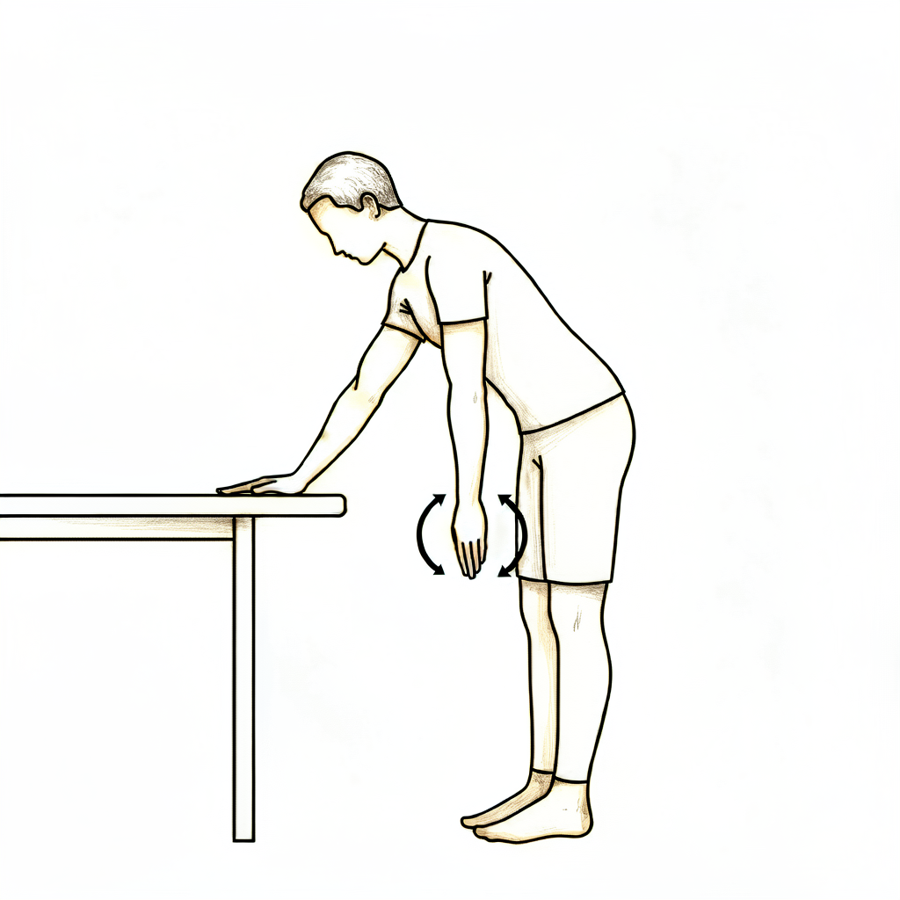
钟摆运动(完全放松)
身体前倾,用另一只手支撑在桌面上,让手术侧手臂完全放松下垂。轻轻晃动身体以画小圆圈——手臂被动摆动,肩部肌肉完全不发力。如果手臂未能保持放松,请停止操作并请您的物理治疗师检查您的动作技巧。
在您的物理治疗师指导下
Kieran Hirpara 4.0
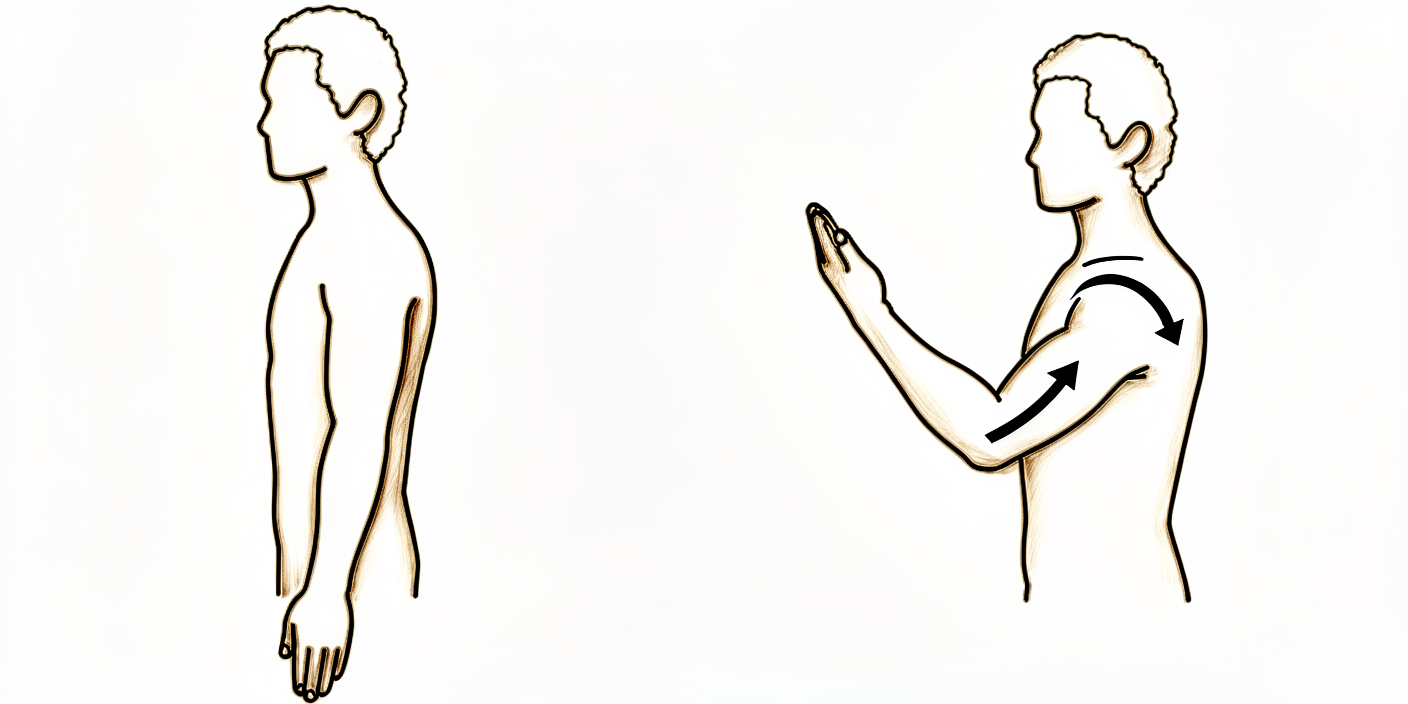
主动肘关节屈曲
将手臂从悬吊带中取出,上臂自然垂于体侧,将肘关节弯曲至舒适的最大范围,然后完全伸直。仅肘部活动——保持肩部静止,手臂置于体侧。
在您的物理治疗师指导下
Kieran Hirpara 4.0
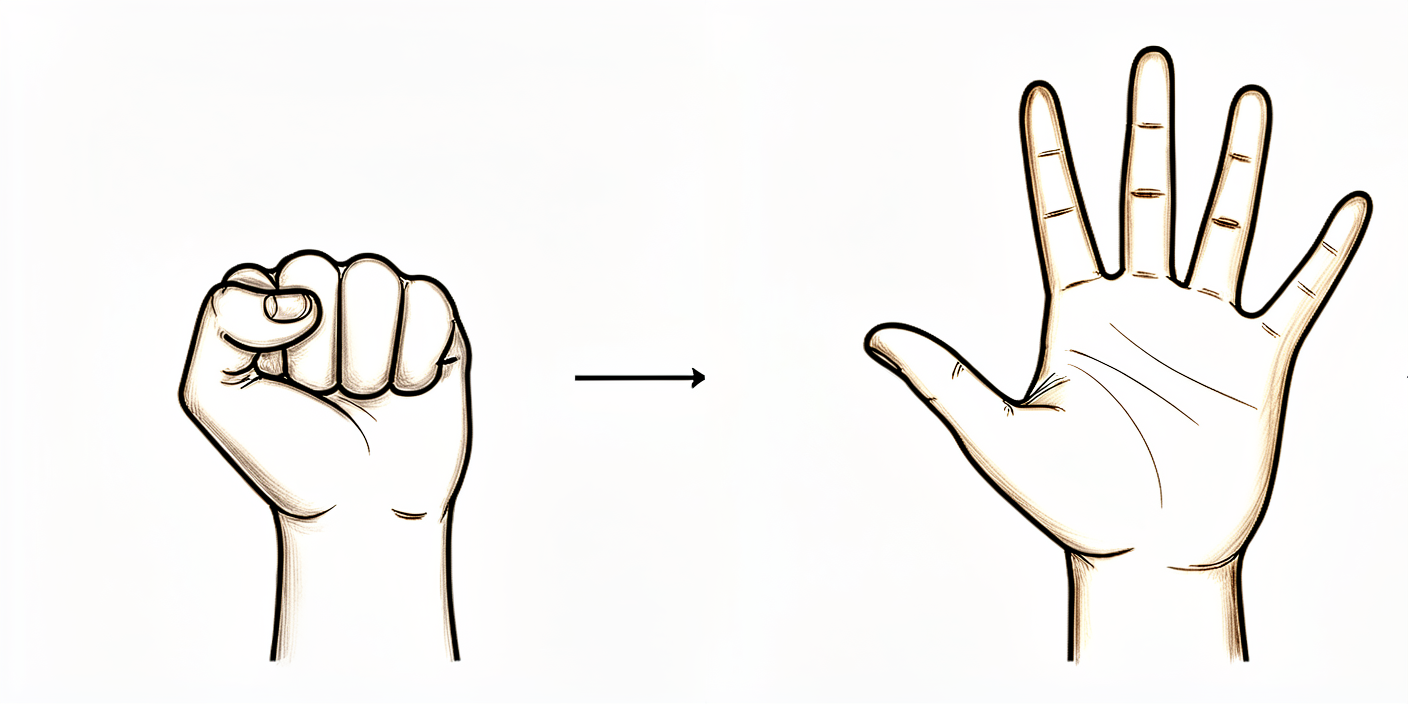
张开和握紧手
握紧拳头,然后张开手掌,将手指完全伸展。白天让手部保持轻柔的活动——在手臂佩戴悬吊带时,鼓励进行书写、进食和使用手机等活动。
在您的物理治疗师指导下
Kieran Hirpara 4.0
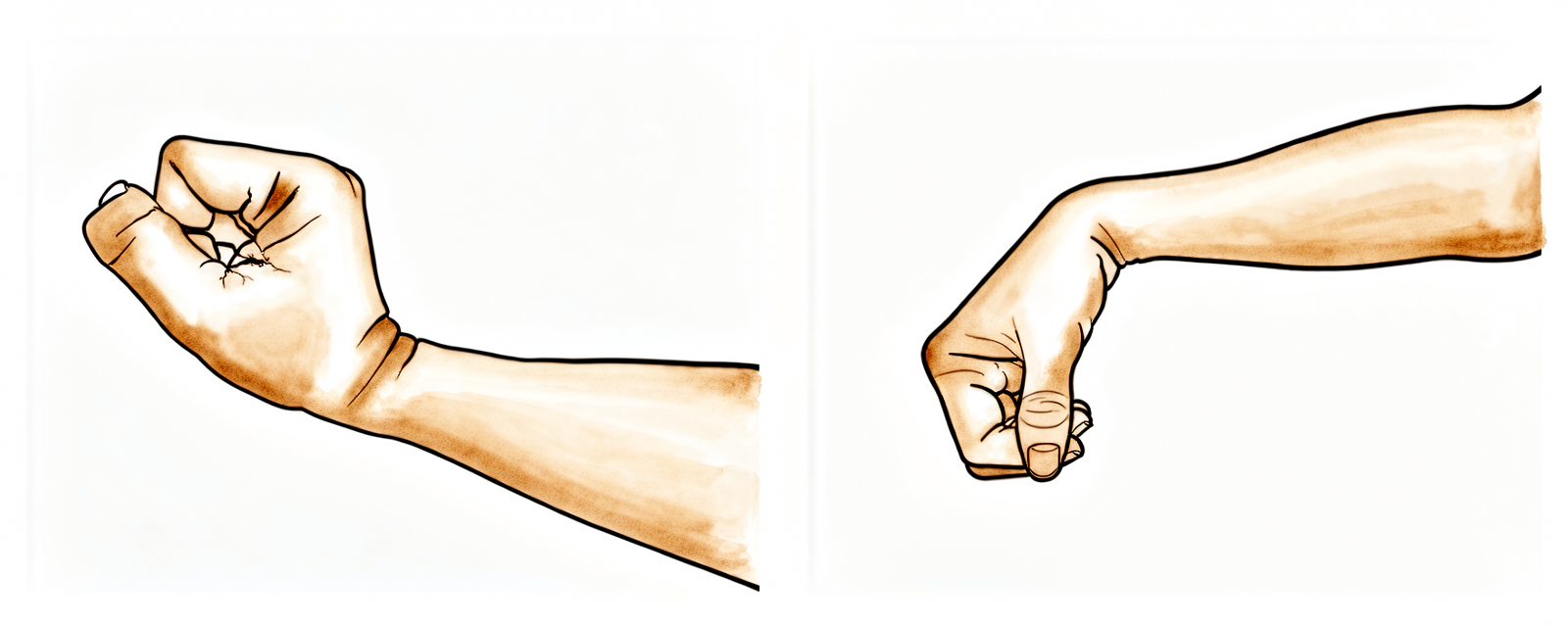
腕部运动
将手臂移出悬吊带并自然垂放于身体一侧,通过向前、向后以及轻柔地向左右侧弯曲手腕来保持手腕的活动。与肘部和手部练习一样,这有助于在保护肩关节的同时保持前臂的柔韧性。
在您的物理治疗师指导下
Kieran Hirpara 4.0
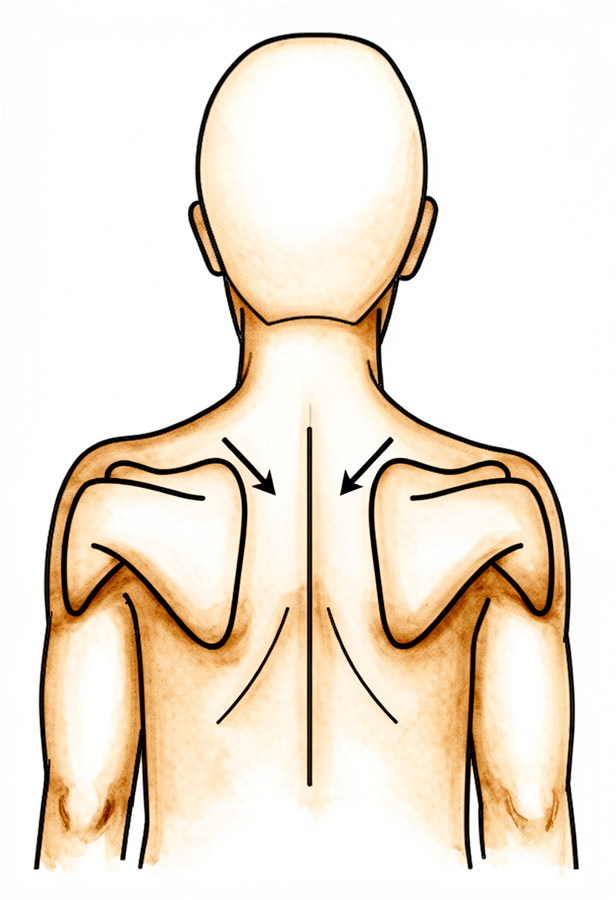
肩胛骨稳定练习与耸肩
坐直或站直,轻轻将肩胛骨向下并向内收拢,不要拱背,保持几秒钟,然后放松。加入轻柔的耸肩动作——将肩膀向耳朵方向抬起,然后让其回落。全天保持姿势矫正:耳朵、肩膀和髋部保持在一条直线上。
在您的物理治疗师指导下
最初六周的核心目标只有一个:让结节碎片在不受干扰的情况下愈合至骨骼和假体上。您需要全天候佩戴悬吊带,保持肘部、腕部和手部的活动,并让肩关节仅在以下限制范围内进行被动活动(由您的物理治疗师轻柔操作,或在手臂完全放松的状态下进行)。最重要的规则是:不要主动活动肩关节,不要将手臂向外旋转超过限制范围,不要向后伸手,不要提重物,也不要通过双手支撑身体。如果您接受的是反向置换手术,这些规则还能在软组织愈合期间保护新关节免受脱位。仰卧时,请在肘部下方放置一个小枕头或卷起的毛巾,以防止肩关节向后伸展。
致您的物理治疗师:
目标
- 保护结节修复部位和假体
- 减轻肿胀,最小化疼痛
- 维持肘部、腕部和手部的主动活动范围(ROM)
- 在安全范围内进行轻柔的保护性肩关节被动活动范围(PROM)
- 维持肩胛骨和姿势意识
- 患者教育
悬吊带
- 佩戴6周,包括睡眠时
- 仅在洗澡和锻炼时取下;取下悬吊带时,手臂应保持在身体一侧
管理
- 肿胀管理:冰敷、加压
- 活动范围 / 活动度:
- 仅限被动活动(PROM),且在安全范围内:肩胛骨平面内上举 ≤ 90度;前4周外旋(ER)至中立位(0度),之后 ≤ 30度;禁止背后内旋(IR)
- 钟摆运动,作为被动练习完全放松进行
- 主动辅助活动范围(AAROM):肩关节无
- 主动活动范围(AROM):肘部、腕部、手部及手指;颈椎
- 肩胛骨定位、耸肩及姿势矫正
- 鼓励在佩戴悬吊带时轻度使用手部(写字、进食、使用手机)
- 在锻炼和物理治疗课程前给予镇痛
注意事项
- 禁止肩关节主动活动(AROM)或主动辅助活动(AAROM)
- 禁止被动或主动外旋超过上述限制(大结节修复部位在外旋时受力)
- 禁止抗阻内旋(小结节/肩胛下肌修复部位在内旋时受力)
- 禁止向后伸手;禁止内收、内旋和伸展的组合动作(反向置换脱位位置)
- 禁止提重物;禁止通过双手支撑体重(例如从椅子或床上撑起身体)
- 仰卧时,在肘部下方放置小枕头或毛巾卷,以防止肩关节落入伸展位
- 不要强行将任何动作做到疼痛的程度
晋级标准
- 已满6周,且X光片显示结节在位愈合,并经您与Hirpara医生的复查确认
- 疼痛可通过口服镇痛药控制
- 伤口无异常,且无不稳定迹象
第二阶段 — 恢复活动(第 6–12 周)
Kieran Hirpara 4.0
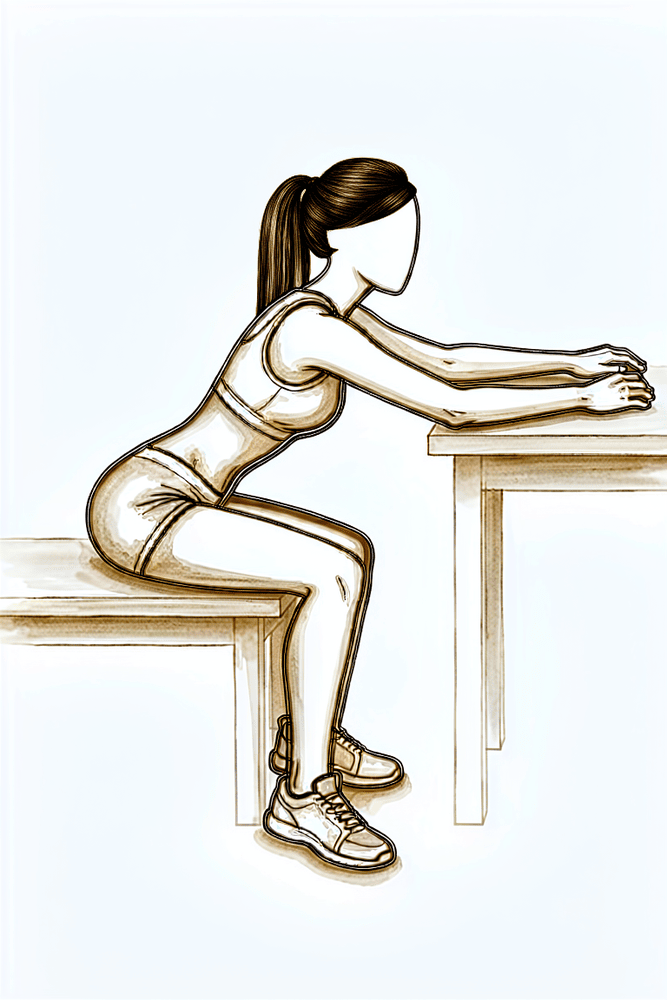
桌面滑动
坐在桌前,将前臂放在桌面上。轻轻向前倾斜,使手沿桌面滑动,让桌面支撑手臂的重量,然后坐直。在舒适范围内逐步进行——不要强行进入疼痛状态。
在您的物理治疗师指导下
Kieran Hirpara 4.0
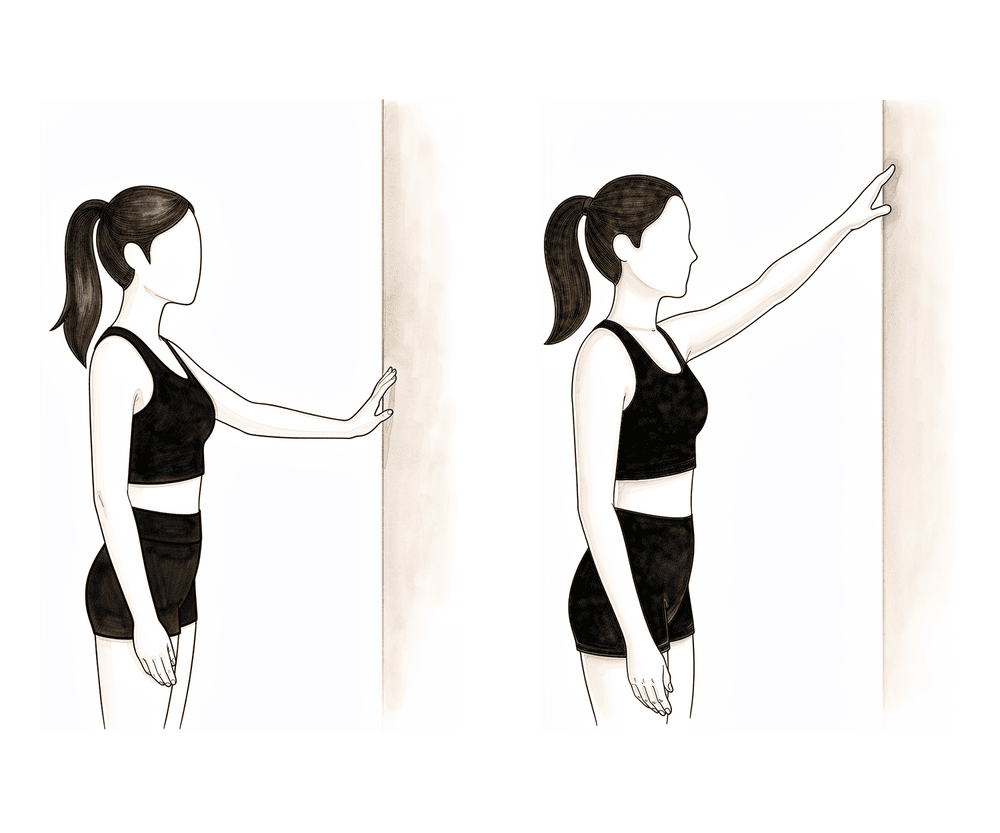
壁面攀爬(手指行走)
面向墙壁站立,缓慢地用手指沿墙壁向上爬行,让墙壁承受手臂的重量,然后有控制地沿墙壁向下爬行。仅在舒适范围内进行,不要耸肩或拱背。
在您的物理治疗师指导下
Kieran Hirpara 4.0
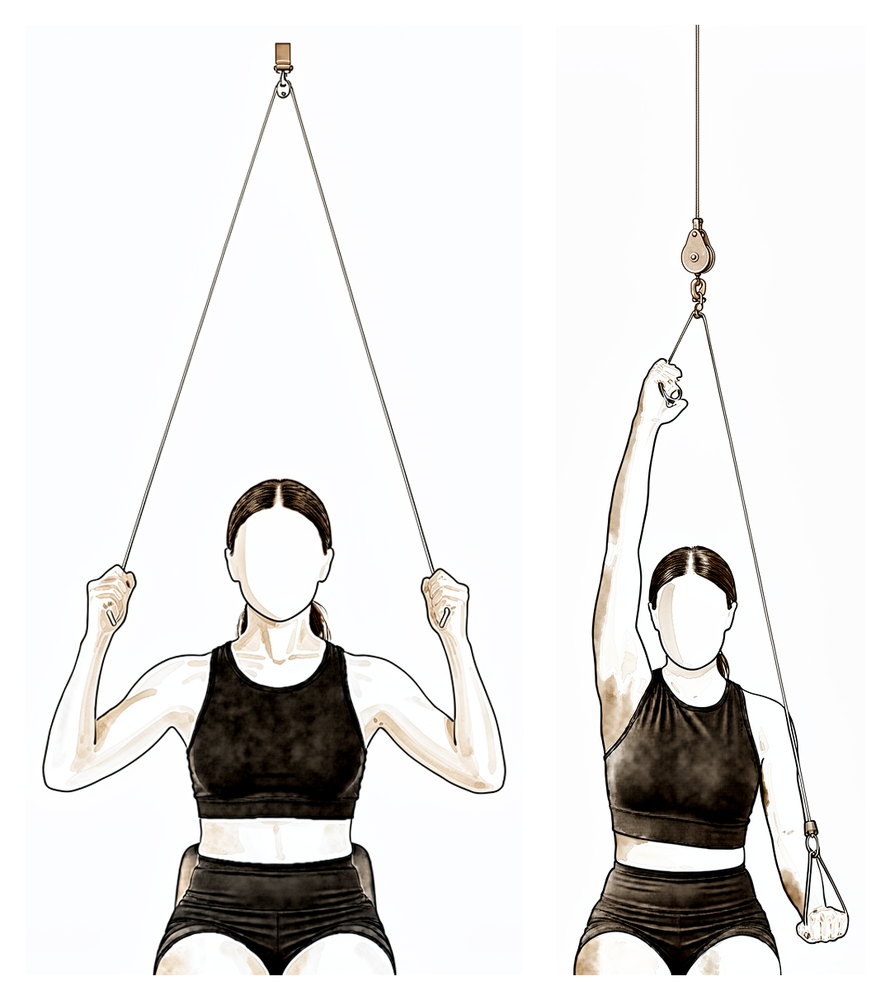
滑轮辅助屈曲
坐在门顶滑轮下方。让手术侧手臂保持放松,用另一只手向下拉绳,使绳索轻轻将手术侧手臂抬至身前,然后缓慢放下。由健侧手臂发力——切勿强行扩大活动范围。
在您的物理治疗师指导下
Kieran Hirpara 4.0
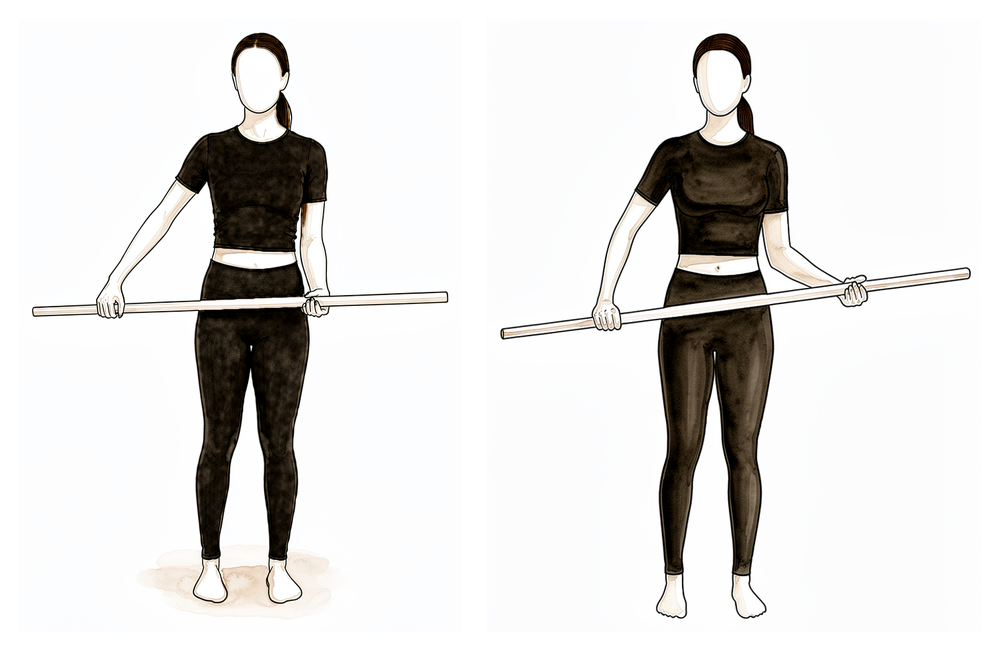
棒辅助外旋
仰卧,双手握持一根棍棒,肘关节屈曲至90度并贴紧身体两侧。用健侧手臂发力,使患侧前臂向外旋转,保持在复诊时约定的活动范围内,然后复位。患侧手臂保持放松——切勿强行活动。
在您的物理治疗师指导下
Kieran Hirpara 4.0
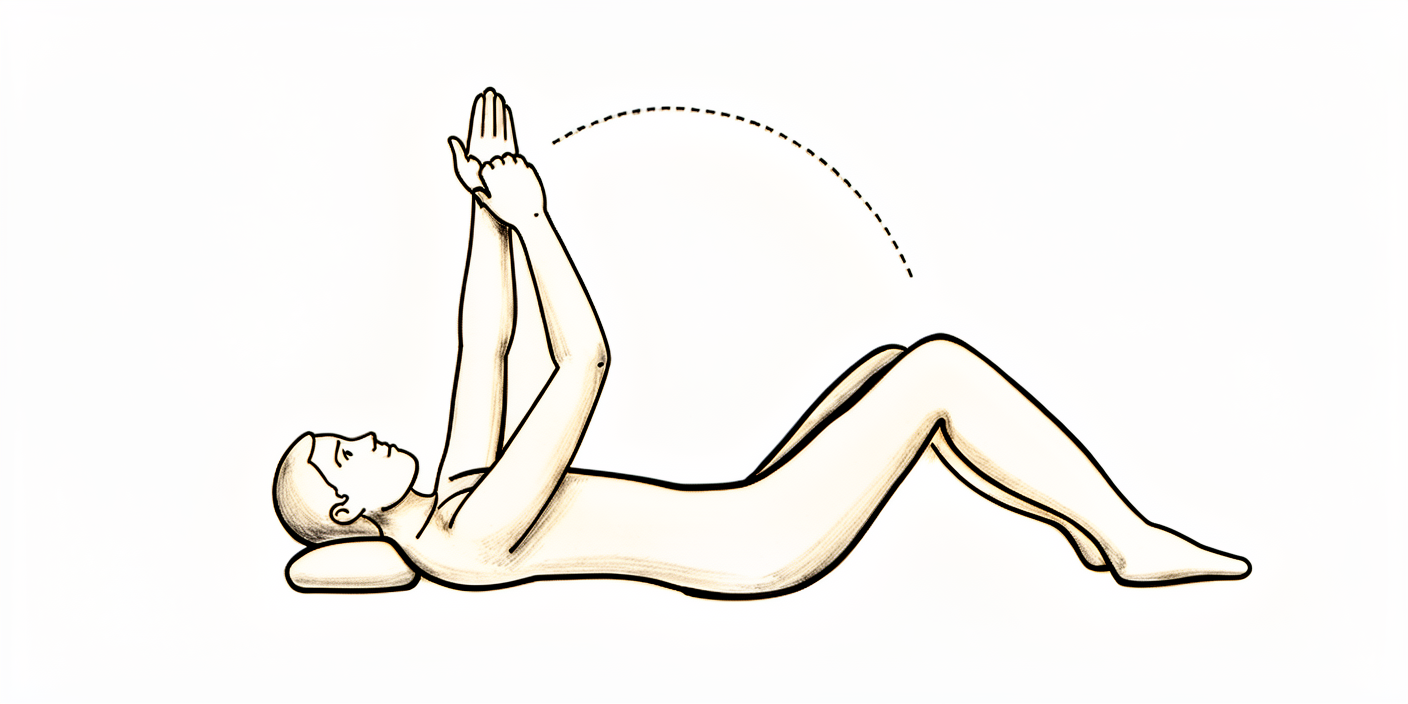
辅助屈曲(仰卧位)
仰卧,用健侧手臂——或双手握持的棍棒——协助将患侧手臂抬至身体前方,以舒适为限,随后在健侧手臂的辅助下缓慢放下。患侧肩部保持放松,由健侧手臂完成动作,在不牵拉修复组织的情况下帮助恢复关节活动度。
在您的物理治疗师指导下
Kieran Hirpara 4.0
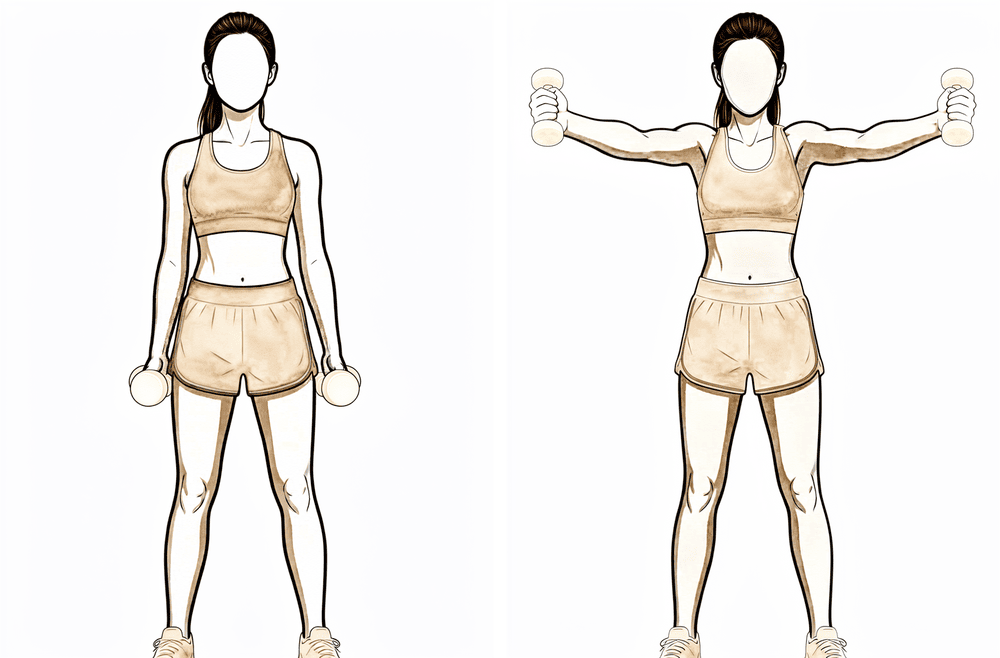
主动肩胛平面上举(满罐式)
一旦您的物理治疗师允许进行主动运动,请将手臂抬起至前方与侧方之间约45度的角度,拇指朝上,如同握着一罐满装饮料。仅抬起至您能良好控制的高度,然后缓慢放下。这是在结节开始愈合后开始主动上举——请勿提前开始。
在您的物理治疗师指导下
Kieran Hirpara 4.0
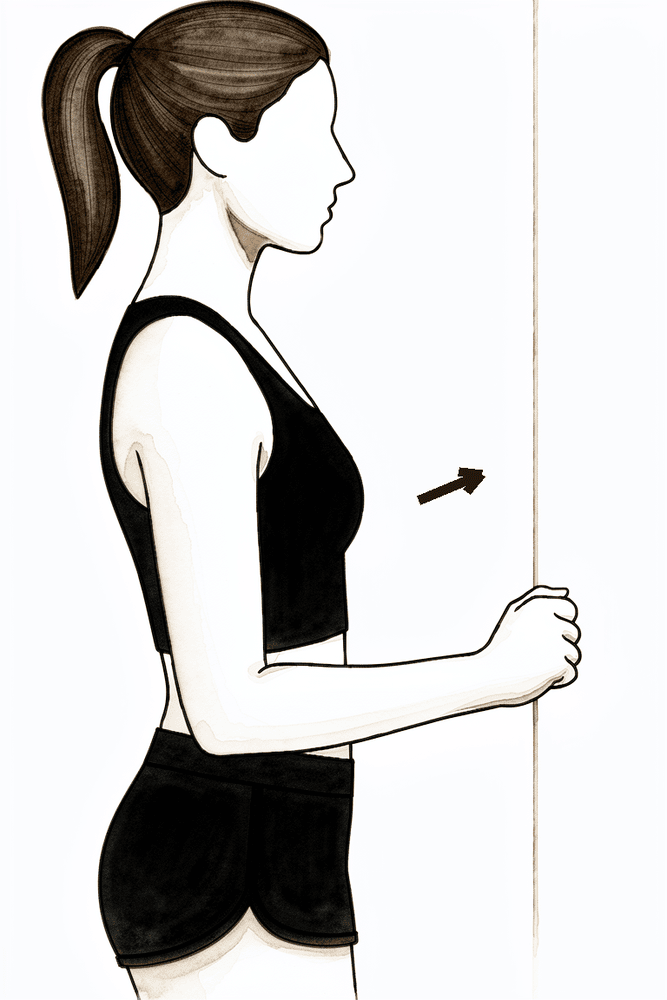
等长前推(三角肌)
面对墙壁站立,肘部弯曲,在拳头与墙壁之间放置一条折叠的毛巾。将拳头轻轻向前压向墙壁,同时保持手臂不动,保持几秒钟,然后放松。这能在无运动的情况下激活三角肌——仅在本阶段后期开始进行,动作轻柔且无痛。
在您的物理治疗师指导下
Kieran Hirpara 4.0
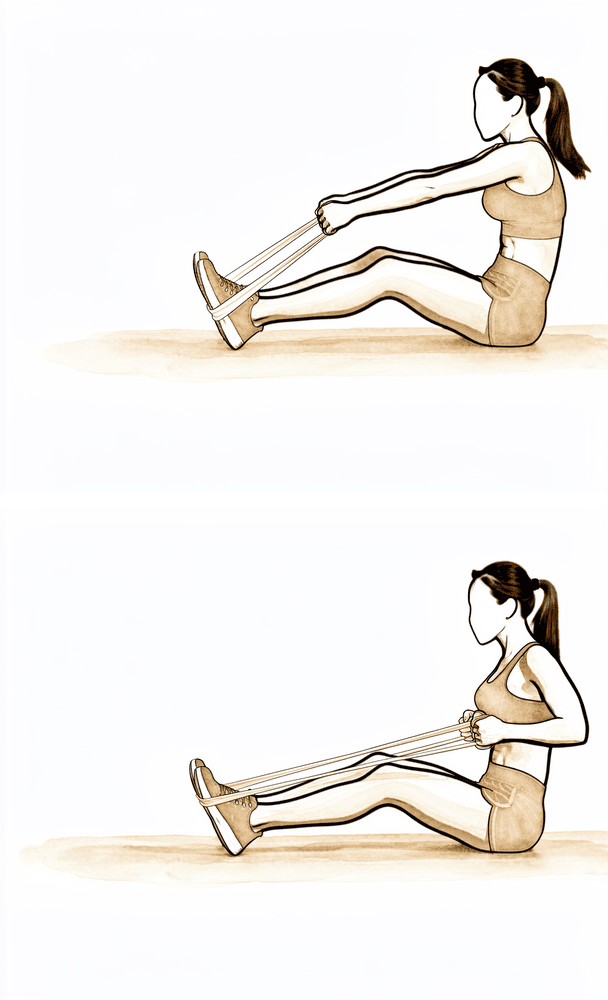
低位划船
坐直或站直,将肘部向后下方拉向髋部,同时收紧肩胛骨使其向下、向后,保持片刻,然后放松。此动作可激活支撑肩部的肩胛骨肌肉——在此阶段,动作应保持轻柔温和。
在您的物理治疗师指导下
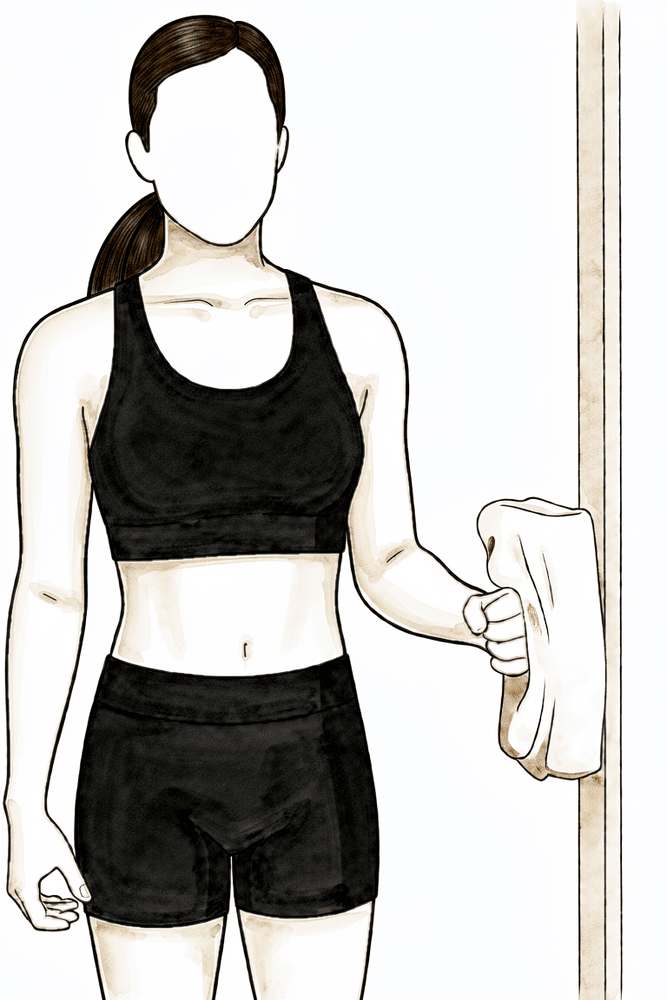
Kieran Hirpara 4.0
等长外旋
将肘部紧贴体侧并屈曲成直角,手背贴靠墙壁或门框。轻轻向外推压,保持手臂不动,维持数秒后放松。仅在本阶段后期引入此动作,且需轻柔、无痛,以肩袖修复后的耐受程度为准。
在您的物理治疗师指导下
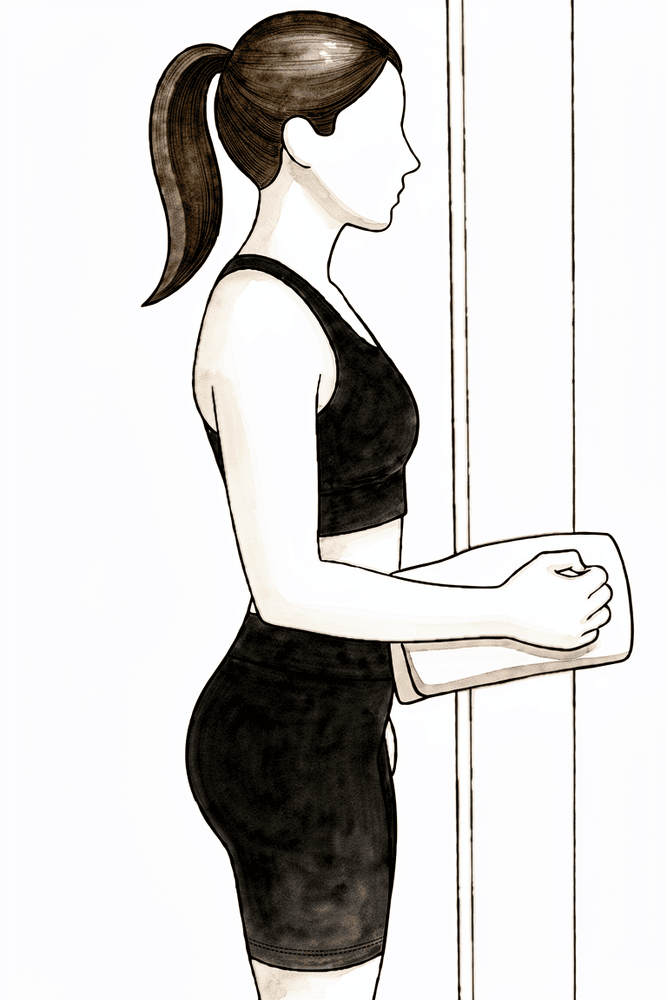
Kieran Hirpara 4.0
等长内旋
将肘部紧贴体侧并屈曲至直角,手掌抵住门框。轻轻向内推压,同时保持手臂不动,维持数秒后放松。仅在复查确认后方可开始此练习——由于内旋会牵拉小结节修复部位,因此该动作安排在最后进行。
在您的物理治疗师指导下
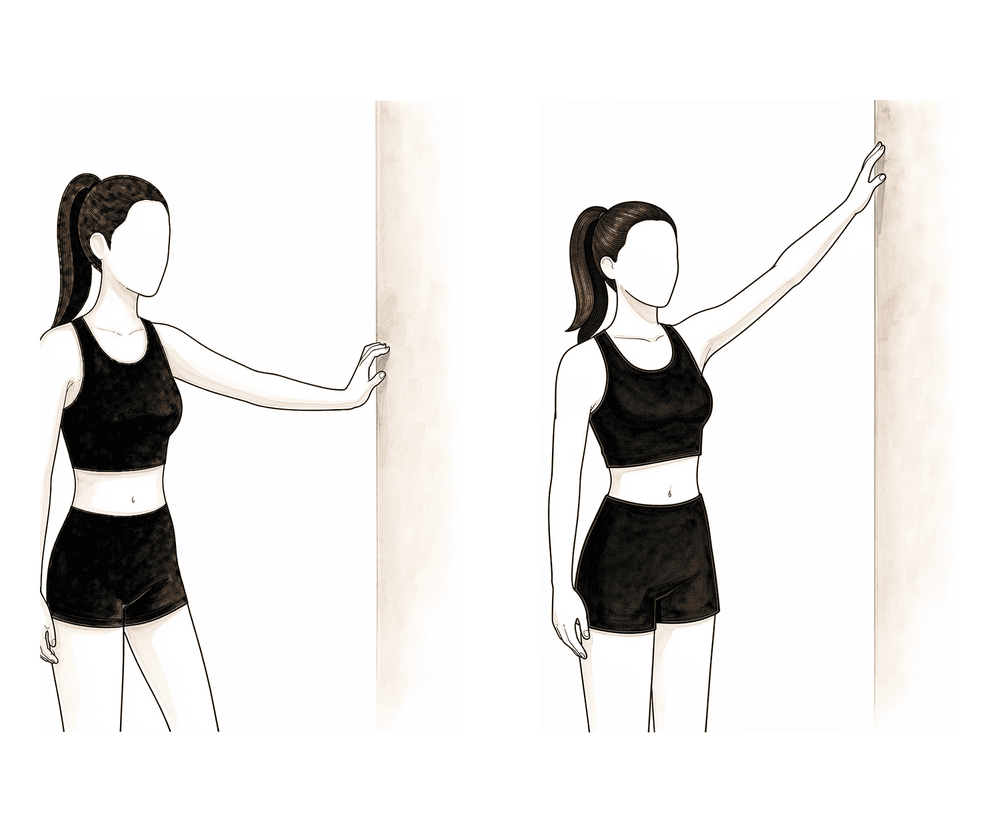
Kieran Hirpara 4.0
向侧面进行墙面行走
侧身站立面对墙壁,指尖轻触墙面。将手指沿墙壁向侧方向上滑动,将手臂抬高至舒适的最大范围,然后有控制地将手指沿墙壁向下滑动。在恢复侧方活动度时,墙壁为手臂提供支撑。
在您的物理治疗师指导下
在您的六周复查时,X 光片用于检查骨碎片是否在正确位置愈合。如果愈合良好,则取下悬吊带,肩部开始自主活动,起初借助您的另一只手臂、拐杖或滑轮辅助,随后转为主动活动。在这些周数内,被动活动范围逐渐接近全范围,旋转限制也随之缓解。针对三角肌和肩胛骨周围(肩胛周围)肌肉的初步温和肌肉激活训练开始进行。尚未开始的是强化训练:修复组织仍在巩固中,因此负重规则仍限制为不超过一杯咖啡的重量,且仍禁止通过双手向上推撑。
致您的物理治疗师:
目标
- 在六周复查后逐步脱离悬吊带
- 在舒适度允许的范围内,将肩部被动活动范围(PROM)逐步推进至全范围
- 启动肩部辅助主动活动范围(AAROM),并逐步过渡至主动活动范围(AROM)
- 启动温和的三角肌和肩胛周围肌肉激活
- 恢复手臂在腰部及胸部高度的轻度日常生活活动使用
- 患者教育
悬吊带
- 在六周复查后停用;在脱离悬吊带的头一两周内,外出时出于在拥挤人群中的保护目的,可继续佩戴
管理
- 根据需要继续第一阶段干预措施
- 活动范围 / 灵活性:
- 被动活动范围(PROM):在约第 8–10 周时,在所有平面内逐步接近全范围,同时尊重疼痛感受
- 辅助主动活动范围(AAROM):桌面滑动、爬墙、滑轮、拐杖辅助的屈曲和外旋,从仰卧位逐步过渡至坐位
- 主动活动范围(AROM):一旦 AAROM 舒适且运动质量良好即可开始,从仰卧位屈曲开始,逐步过渡至直立位屈曲和肩前举
- 外旋(ER):一旦确认愈合,在舒适度允许的范围内,逐步推进至超过 30 度
- 在本阶段后期,经批准后引入温和的功能性手背于背后动作和伸展。切勿在这些体位上进行拉伸。
- 强化训练:
- 仅限无痛的亚最大等长收缩:肩胛平面内的三角肌、肩胛周围肌群设置、低位划船、肩胛骨后缩
- 在本阶段后期进行温和的无痛肩袖等长收缩;仅在复查确认后方可引入抗阻内旋
- 运动控制:强调肩胛骨控制,避免耸肩或其他代偿模式
注意事项
- 禁止提起重于一杯咖啡的物体
- 禁止通过双手支撑体重
- 禁止进行超出温和等长收缩的抗阻或强化训练
- 避免强行扩大活动范围:仅拉伸至坚实的不适感,绝不可出现锐痛
晋级标准
- 在肩部高度以下进行舒适的主动活动,具有良好的肩胛骨控制且代偿极少
- 大结节和小结节在 X 光片上显示持续愈合,并经 Hirpara 医生在您的复查中确认
- 疼痛已稳定,足以开始抗阻训练
第三阶段 — 强化训练(第 12–24 周)
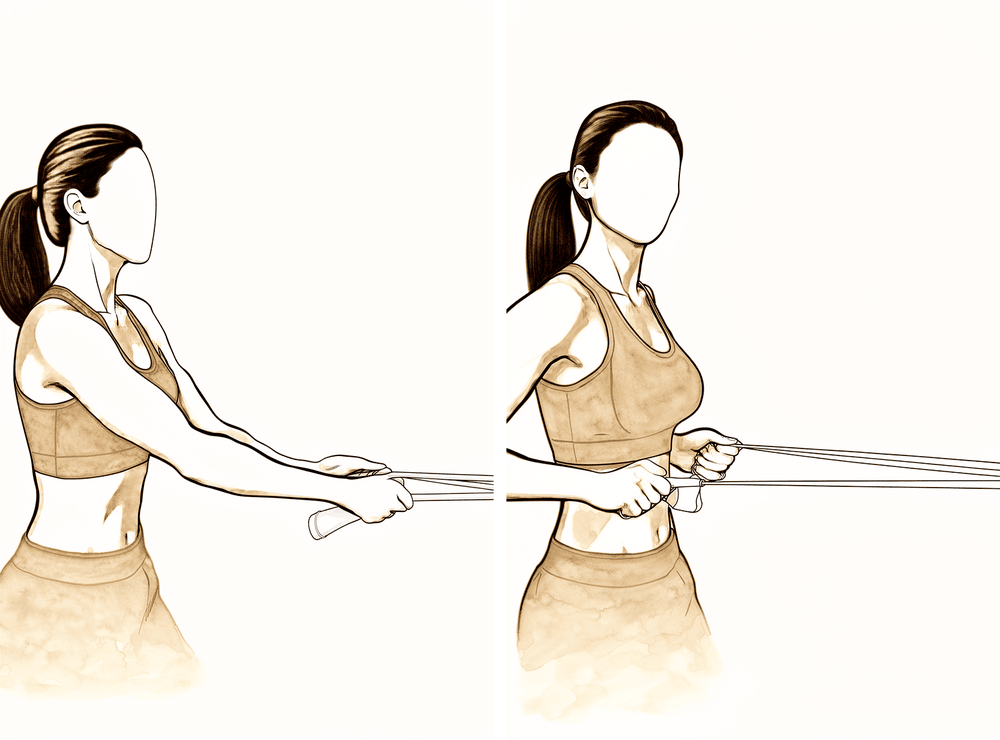
Kieran Hirpara 4.0
弹力带划船
将弹力带固定在身前腰部高度。保持直立站姿,将弹力带向身体方向拉动,使肩胛骨向下、向后移动,然后有控制地释放。从轻度阻力开始——低负荷、高次数,并按指导逐步进阶。
在您的物理治疗师指导下
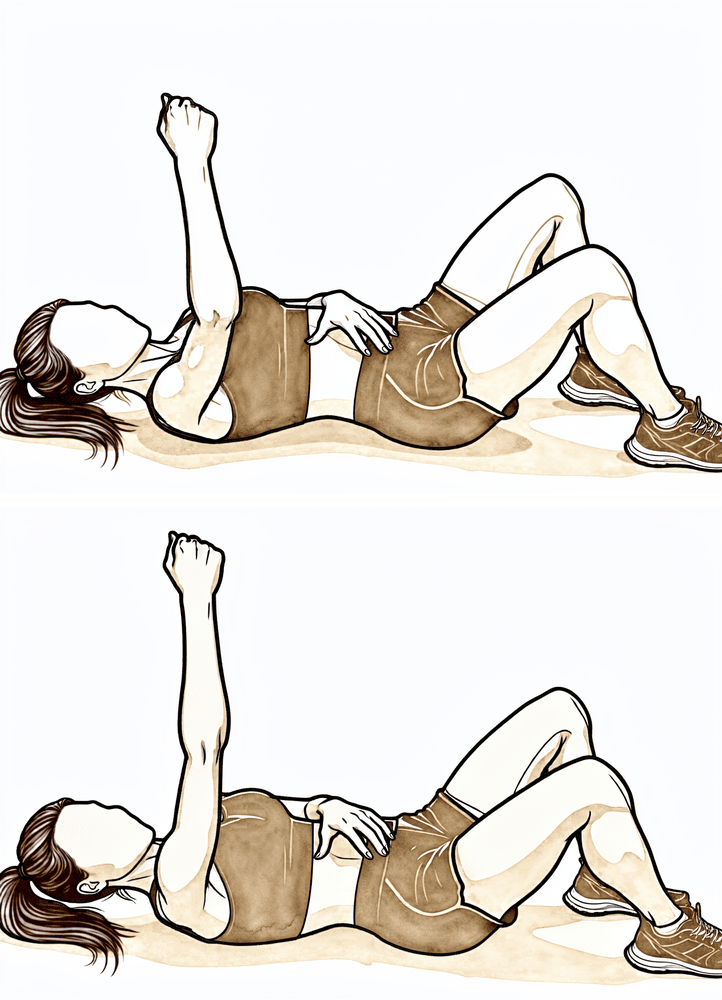
Kieran Hirpara 4.0
前锯肌前推
仰卧,手术侧手臂笔直向上伸向天花板。在不弯曲肘关节的情况下,将手再向上推一点,使肩胛骨离开床面,然后放回原位。此动作可增强将肩胛骨固定于肋骨的肌肉。
低负荷,高次数
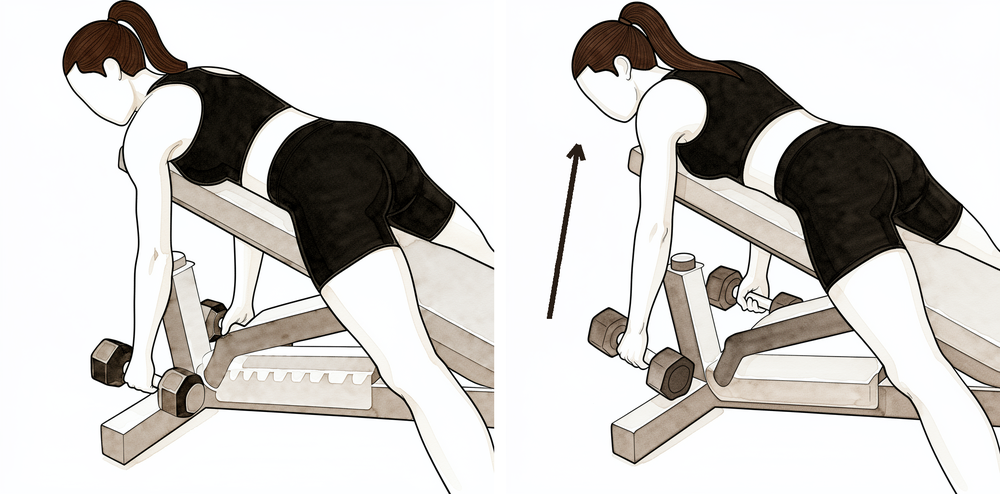
Kieran Hirpara 4.0
负重肩胛骨后缩
双手各持轻重量,从髋部向前屈身,向后拉肘并夹紧肩胛骨,然后有控制地放下。此动作通过抗阻锻炼肩胛骨肌肉——保持负荷较轻且动作平稳。
低负荷,高次数
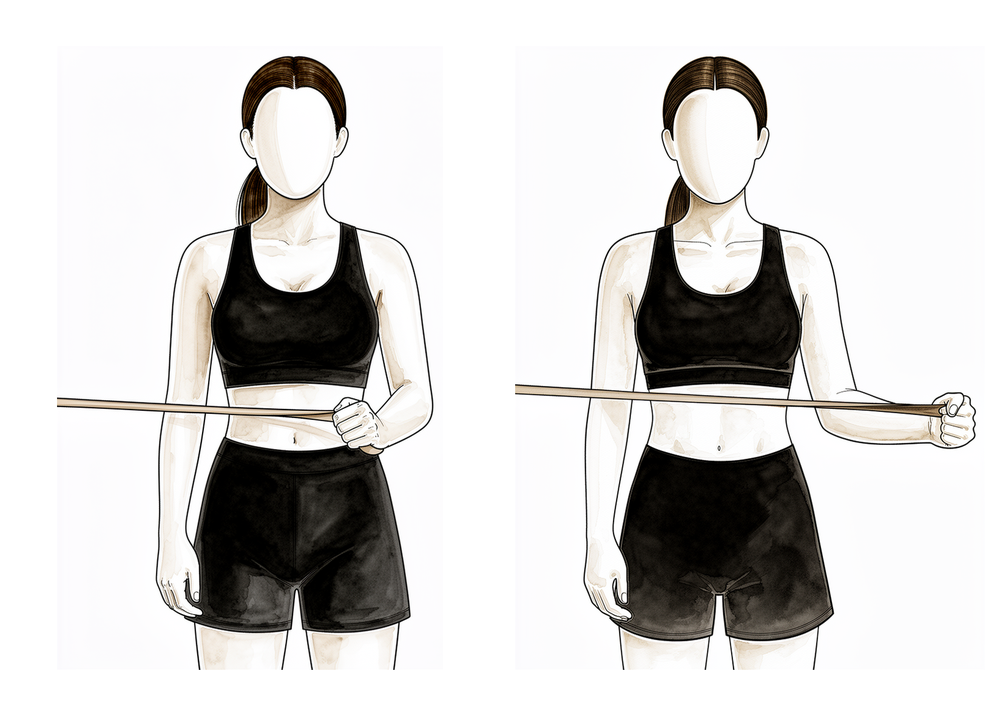
Kieran Hirpara 4.0
弹力带外旋
将肘部紧贴体侧并屈曲至直角,手持一条固定在腰部高度的橡皮筋。保持肘部贴于体侧,对抗橡皮筋阻力将前臂向外旋转,然后缓慢复位。随着愈合的结节允许,逐步加强肩袖肌群的力量。
低负荷,高次数
Kieran Hirpara 4.0
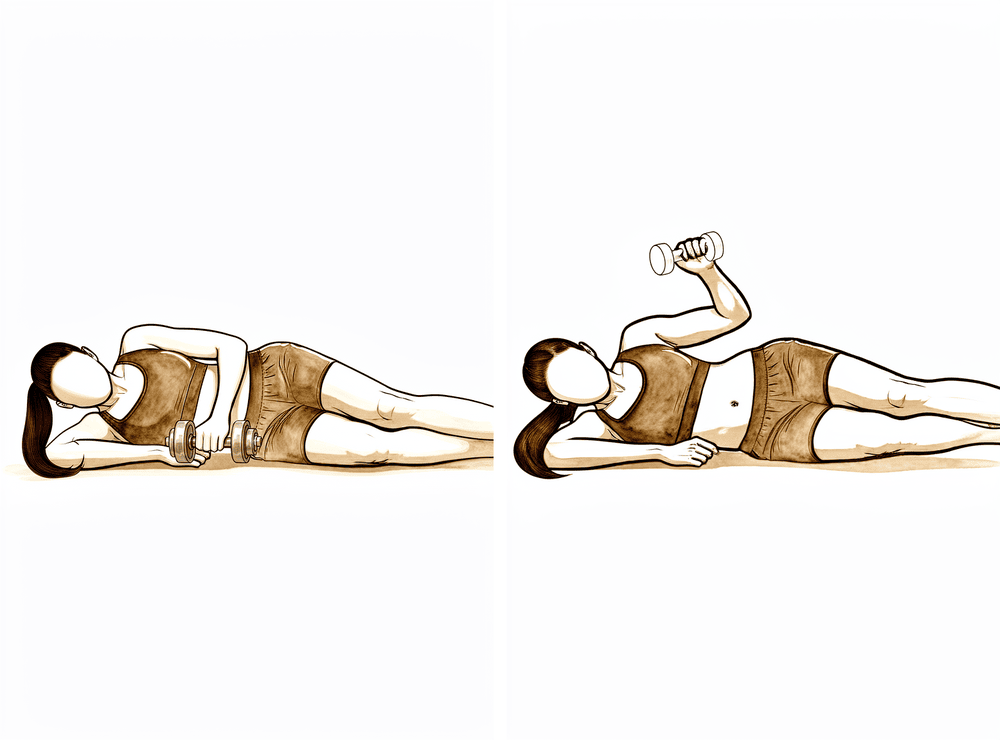
侧卧位负重外旋
非手术侧在下侧卧,手术侧肘关节屈曲成直角并贴紧身体。手持轻重量物,将前臂向上旋转朝向天花板,然后缓慢放下。这是渐进式肩袖肌群强化训练的一部分——请同时继续进行活动度训练。
低负荷,高次数
Kieran Hirpara 4.0
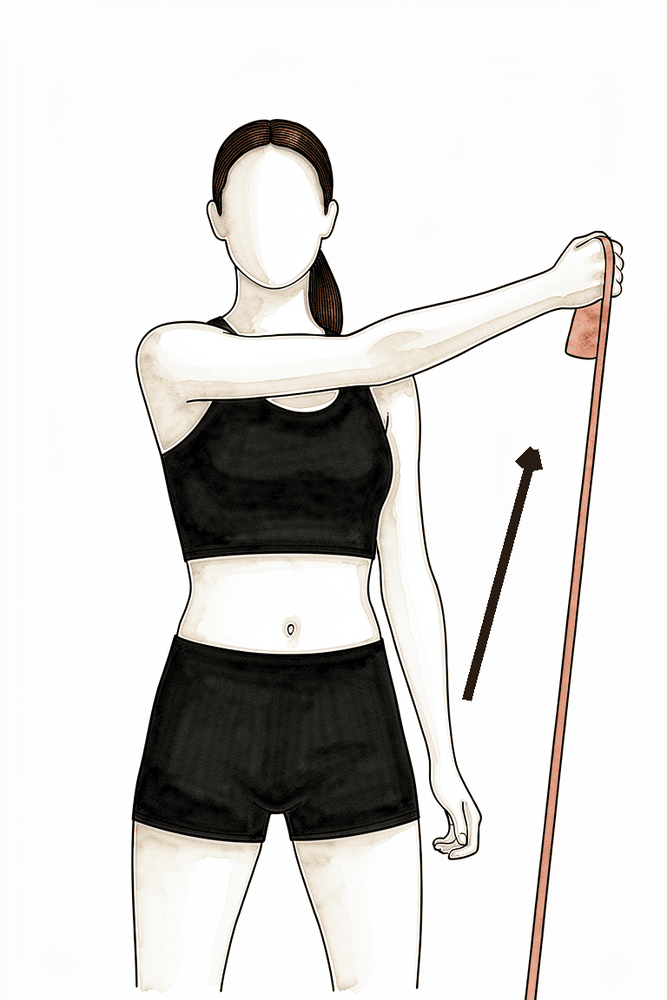
PNF 对角线抗阻带练习(上举)
将橡皮筋固定在手术侧手臂的较低且偏外侧位置。将手沿对角线方向向上并横跨身体,从对侧髋部附近向肩部移动,然后缓慢返回。这些对角线模式训练肩部在日常生活中的运动方向进行工作。
在您的物理治疗师指导下
Kieran Hirpara 4.0
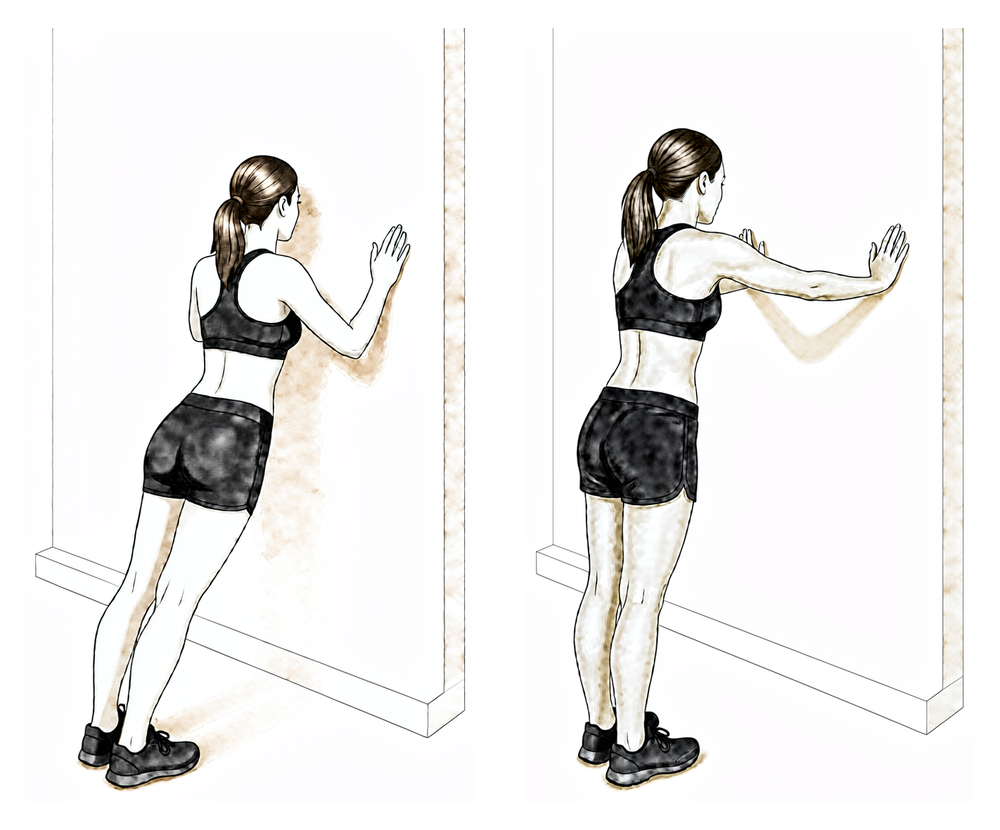
通过手臂承重
将双手置于墙面或坚固的长凳上,轻轻将上背部向外推,使肩胛骨向前卷曲,然后复位。此动作旨在重新引入通过手臂承重——仅在本阶段获得许可后方可进行,并逐步增加强度。
在您的物理治疗师指导下
Kieran Hirpara 4.0
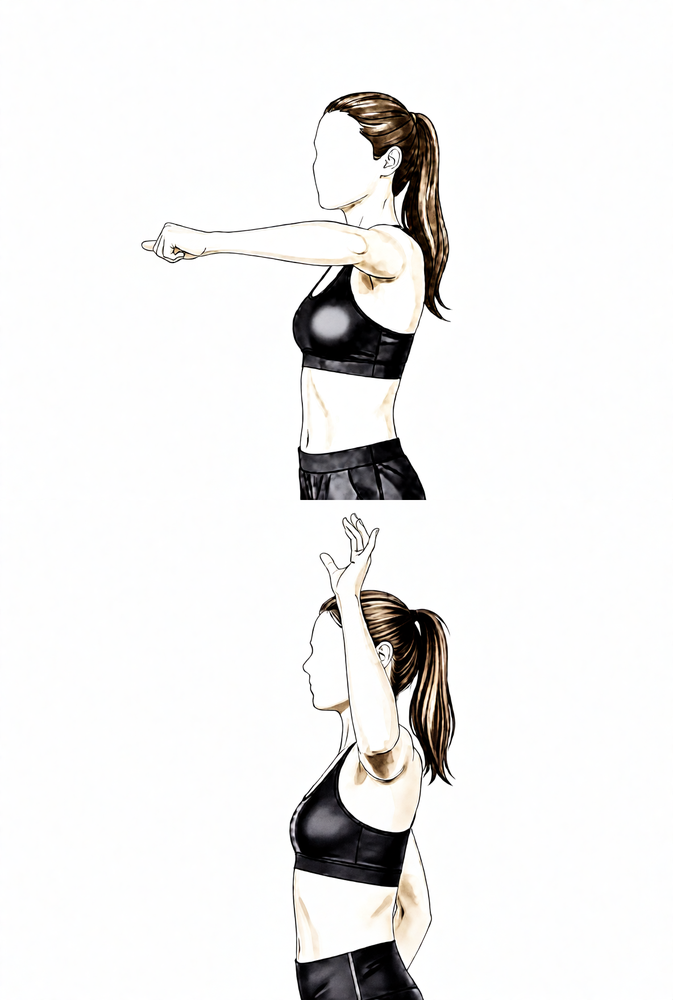
手臂上举时的外旋
将手臂向侧方抬起至肩部高度,肘关节屈曲至90°,将前臂向上并向后旋转,然后有控制地回到起始位置。保持动作平稳,并在舒适的范围内进行。此动作旨在训练抬举位的外旋功能。
在物理治疗师的指导下——轻柔且受控
大约十二周时,结节通常已朝着愈合方向良好发展,与希拉帕医生(Dr Hirpara)的复查将确认肩部是否已准备好承受负荷。随后,强化训练开始,动作轻柔,从弹力带和轻重量开始,重点锻炼驱动肩部的三角肌和肩胛骨肌肉(在反置置换术后,三角肌承担了大部分原本由肩袖完成的工作)。随着愈合结节的允许,肩袖本身也会得到强化。在此阶段,轻重量举起重物逐渐增加,日常活动应在腰部及肩部高度感觉接近正常,如果尚未恢复,驾驶通常在此阶段恢复。
致您的物理治疗师:
目标
- 维持无痛的被动活动范围(PROM),并在所有平面上推进主动活动范围(AROM)
- 逐步恢复力量和耐力:三角肌、肩胛周围肌肉,然后是肩袖
- 改善动态稳定性、运动控制和本体感觉
- 恢复大多数日常活动,包括轻重量举起重物
管理
- 继续在所有平面上进行活动范围和灵活性练习
- 强化训练,从等长收缩过渡到弹力带,再到轻重量(低负荷,高重复次数):
- 肩胛周围:划船、前锯肌冲击、抗阻肩胛骨后缩
- 三角肌:在功能性位置进行抗阻屈曲和上举,配合受控的离心下放
- 肩袖:使用弹力阻力进行外旋(ER)和内旋(IR),侧卧外旋,随着愈合结节的允许逐步推进
- 运动控制:节律性稳定训练、本体感觉神经肌肉促进(PNF)对角线模式、球体稳定训练
- 渐进式举重:从阶段早期约 2 公斤逐渐增加到阶段末期约 5 公斤,视控制能力而定
- 在此阶段,在获得许可后,逐渐重新引入通过手臂的负重(例如从椅子上推起)
注意事项
- 禁止举起重物;在此阶段保持负荷在约 5 公斤以下
- 避免强力末端范围拉伸,避免负重下的联合外展和外旋
- 进展仍以症状为导向:如果疼痛或肿胀加剧,退回到上一级别
进展标准
- 与希拉帕医生(Dr Hirpara)复查时确认结节愈合
- 日常活动无痛,强化训练可耐受且无复发
- 在可用活动范围内具有良好的运动质量
第四阶段 — 恢复完全活动(6个月起)
最后阶段是逐步恢复较重的任务、体力劳动和休闲活动,这一过程由您的力量和肌肉控制能力而非日历时间来决定。较重的家务和园艺任务将逐步恢复;体力劳动需在Hirpara医生的指导下进行;游泳和高尔夫通常在术后四至六个月左右恢复。肩关节置换术后,长期最好避免非常重的举重;已发表的方案建议将常规举重保持在约10公斤以下。肩关节在此阶段之后仍会持续改善:大多数人在术后12–24个月内仍会继续获得活动度、力量和信心的提升,因此在正式物理治疗结束后,坚持家庭锻炼计划仍然很有价值。
致您的物理治疗师:
目标
- 针对患者的日常需求,优化功能性力量和耐力
- 逐步恢复工作、休闲和运动
- 长期关节保护教育及独立家庭锻炼计划
管理
- 继续以轻量高次数进行渐进性抗阻训练,重点强化肩袖和肩胛周围肌肉
- 神经肌肉和本体感觉训练;根据需要进行功能性及工作特异性任务训练
- 在复查确认许可后,于术后四至六个月左右分阶段恢复游泳、高尔夫及其他休闲活动
- 制定定制化的家庭锻炼计划,以便在正式物理治疗完成后继续执行
注意事项
- 术后6个月内避免举重;长期将常规举重保持在约10公斤以下
- 体力劳动及对抗性或负重运动仅在Hirpara医生许可后方可进行
完成方案的评估标准
- 经Hirpara医生复查许可,并确认大结节愈合
- 疼痛得到控制,功能性活动范围满足患者的日常需求
- 能够独立执行长期家庭锻炼计划
您的康复方案之后
上述各阶段改编自针对肱骨近端骨折行肩关节置换术的已发表康复方案(包括德克萨斯健康骨科专科中心、北蒂斯与哈特尔普尔NHS基金会信托机构针对创伤性半肩关节置换术和反式肩关节置换术的方案,以及罗伯特·琼斯与艾格尼丝·亨特骨科医院的方案),其中关于大结节愈合的重点内容源自外科文献。周数范围通常为参考值而非固定标准,您的康复进程将由您的物理治疗师与诊所协作,根据您与希拉帕医生(Dr Hirpara)的复诊情况个体化推进。本页面与诊所的一般术后恢复建议配合使用;请参阅术后疼痛管理和伤口护理。关于手术本身,请参阅骨折性肩关节置换术;关于此诊疗路径的择期手术版本,请参阅反式肩关节置换术方案。本方案背后的证据(为何大结节愈合决定康复节奏、半肩关节置换术与反式肩关节置换术的比较,以及已发表的康复指南)已在证据部分进行总结,可从本页面顶部下载PDF文件获取。
Evidence & references
This is the clinical evidence summary written for health professionals. It is technical, and it lists the research this page was built from. You do not need to read it to understand your treatment or to make a decision about it.
Topic scope: The evidence underpinning rehabilitation after shoulder arthroplasty performed for an acute proximal humerus fracture — covering both the implant options used in this setting: reverse total shoulder arthroplasty (rTSA) for fracture and stemmed hemiarthroplasty for fracture. The defining feature of both, and the reason this is a slow, protected pathway, is that the greater and lesser tuberosities are broken free and stitched back around the prosthesis at operation — they must heal as fractures before the shoulder can be actively moved or loaded. This contrasts with elective arthroplasty (for arthritis or cuff arthropathy), where the bone is intact and rehabilitation can move at the pace of soft-tissue healing.
Defining principle of this rehab: Replacement-for-fracture is a PROTECT pathway driven by TUBEROSITY HEALING, not by implant type. At operation the greater tuberosity (with supraspinatus/infraspinatus) and lesser tuberosity (with subscapularis) are reattached around the stem. Until those bone fragments unite — typically the first 6 weeks, confirmed on X-ray — the shoulder is moved passively only and within a restricted arc: forward elevation kept low, external rotation limited (it loads the greater-tuberosity repair), resisted/active internal rotation avoided (it loads the lesser-tuberosity/subscapularis repair), and no reaching behind the back. Active range and strengthening are deferred, not just reduced. This is the opposite of an early-motion pathway such as capsular release (where immediate aggressive motion is the treatment) or calcific excision (early movement below shoulder height from day 1). The whole pace is set by the fractured tuberosities, not the new joint surface.
The operation, and why the tuberosities matter
A displaced three- or four-part proximal humerus fracture in an older patient may be unreconstructable with plate-and-screw fixation, and arthroplasty is then offered. Two implants are used:
- Hemiarthroplasty (HA) — replaces the ball (humeral head) only. It relies on the surgeon reconstructing the head–tuberosity–shaft relationship and, critically, on the tuberosities healing back in anatomical position so the rotator cuff can pull on them. Where the tuberosities fail to heal, function is poor.
- Reverse total shoulder arthroplasty (rTSA) — reverses the ball-and-socket so the deltoid, not the rotator cuff, drives elevation. This makes rTSA less dependent on tuberosity healing than HA, which is the main reason it has largely supplanted hemiarthroplasty for fracture in the elderly. Tuberosity healing still improves the result (it adds rotation), but a workable shoulder is achievable even when the greater tuberosity does not unite.
In both operations the surgeon repairs the tuberosities, and in both the rehabilitation protects that repair. That shared dependence — not the choice of implant — is why the protocol has one shape for both.
Evidence by theme
1. Tuberosity healing drives the functional result (the rationale for protection)
This is the best-supported principle in the topic, and the reason rehabilitation protects the repair for ~6 weeks.
- A large systematic review and meta-analysis of 21 studies (1,616 reverse arthroplasties) found a pooled greater-tuberosity non-healing rate of ~32% (anatomic healing in roughly two-thirds). Healed tuberosities had significantly better active abduction, anterior elevation and external rotation, and better functional scores, without any increase in pain — confirming that attempting and protecting the repair is worthwhile [meta-analysis, 2025; Schmalzl 2020].
- In the corpus, a dedicated study asked "can a healed tuberosity improve the functional outcomes?" after reverse arthroplasty for four-part fracture and answered yes — healing was associated with better rotation and outcome scores. DOI: 10.1016/j.jse.2016.11.034.
- For hemiarthroplasty, the dependence is even stronger: reported greater-tuberosity healing rates range widely (~30–91%), and tuberosity malunion/nonunion/migration is the dominant cause of a poor result. This is precisely why HA is now reserved and rTSA preferred in older patients [web review literature].
Strength: MODERATE–STRONG for "healing predicts outcome" (large pooled cohorts/meta-analysis); the link is consistent and direction-of-effect is not in dispute. It is observational, not randomised.
2. Hemiarthroplasty vs reverse arthroplasty for fracture
- A corpus multicentre randomised controlled trial (the SHeRPA trial) found superior functional outcome with reverse arthroplasty compared with hemiarthroplasty for displaced three- and four-part fractures in patients 65 and older. DOI: 10.1016/j.jse.2024.05.016.
- An earlier corpus comparative study (JBJS) likewise compared HA and rTSA for elderly proximal humeral fractures. DOI: 10.2106/jbjs.l.01637.
- Reverse-for-fracture does carry a caveat: one corpus study asked whether rTSA for fracture does worse than rTSA for elective indications, reflecting that the fracture setting (broken tuberosities, frailer patients) is more demanding than an elective replacement — the same reason this rehab runs more slowly than the elective pathway. DOI: 10.1016/j.jse.2020.03.053.
Strength: MODERATE–STRONG (an RCT plus comparative cohorts) that rTSA generally outperforms HA for fracture in the elderly. This is a surgeon's intra-operative decision, made per patient and per fracture pattern.
3. Early vs delayed motion, and the rehabilitation protocol itself
This is where the evidence is thinnest and least standardised — honestly, the phase timings below are consensus and protocol-derived, not RCT-derived.
- A JOSPT systematic review of proposed rehabilitation guidelines after anatomic and reverse arthroplasty found substantial heterogeneity between published protocols — sling use ranged from "comfort only" to a full 6 weeks; permitted motion ranged from none to precautionary limits; early external rotation was commonly capped (e.g. to ~30° in the scapular plane) to protect the repair. There is no single agreed regimen.
- A corpus randomised single-blinded trial of early rehabilitation vs immobilisation after reverse arthroplasty exists (DOI: 10.1016/j.jse.2019.10.005), and the 2025 Neer Award SHORT trial compared surgeon-directed home therapy with formal outpatient physiotherapy after rTSA (DOI: 10.1016/j.jse.2025.10.005) — but these are largely elective rTSA populations, where the tuberosities are not broken. They do not licence early active motion in the fracture setting, where the repair must be protected first.
- A corpus network meta-analysis explicitly examined the optimal combination of arthroplasty type, fixation method and post-operative rehabilitation protocol for complex proximal humerus fractures (DOI: 10.1016/j.jse.2024.03.040), and a corpus survey found that trauma and shoulder surgeons differ in their rehabilitation preferences (DOI: 10.1016/j.jse.2021.12.045) — both confirm that the protocol is an area of genuine, unresolved variation rather than settled science.
Strength: WEAK / CONSENSUS for the specific phase structure and week ranges. The principle "protect the tuberosity repair, defer active motion and load until union" is well grounded; the exact timings are typical, not trial-proven.
Phased post-op timeline (consistent with the patient protocol)
| Phase | Window | Sling | Shoulder ROM | Strengthening | What's healing / why |
|---|---|---|---|---|---|
| I — Protection | Weeks 0–6 | Full-time, including sleep | Passive only, within a safe zone: scapular-plane elevation ≤ 90°; external rotation to neutral (0°) for ~4 weeks then ≤ 30°; no internal rotation behind the back; pendulums (fully relaxed). Active elbow/wrist/hand. | None for the shoulder | Tuberosity fragments uniting onto bone + prosthesis; ER loads the greater-tuberosity repair, resisted IR loads the lesser-tuberosity (subscapularis) repair. In rTSA this window also protects against early dislocation. |
| II — Restoring movement | Weeks 6–12 | Wean after the 6-week X-ray review | Progress passive → active-assisted → active; ease the rotation limits as healing is confirmed | Gentle sub-maximal isometrics (deltoid, periscapular) late in phase; resisted IR only once cleared | Tuberosities consolidating; lifting still limited to ~a cup of coffee; no weight-bearing through the hands |
| III — Strengthening | Weeks 12–24 | Off | Maintain/progress active range in all planes | Banded → light weights; deltoid + periscapular first, rotator cuff as the healed tuberosities allow | Tuberosity union usually well advanced and confirmed at review before loading begins |
| IV — Return to activity | 6 months onwards | Off | Functional range for daily demands | Progressive, guided by control not the calendar; lifting kept moderate long-term | Strength/movement keep improving for 12–24 months; full uninjured-shoulder range is not expected |
The pacing is gated on two things together at each step: enough time, AND X-rays showing the tuberosities healing, confirmed at review with Dr Hirpara. Approximate functional milestones (subject to healing): driving ~6–12 weeks (never in the sling); breaststroke swimming ~4 months; nothing heavier than a cup of coffee until ~12 weeks; heavy lifting avoided for 6 months.
Key controversies / evidence quality
- Implant choice (HA vs reverse). An RCT and comparative cohorts favour reverse over hemiarthroplasty for displaced fractures in older patients, chiefly because rTSA is less hostage to tuberosity healing. This is a per-patient surgical decision — and either way the rehabilitation protects the tuberosity repair. Moderate–strong.
- Does the tuberosity actually need to heal? For hemiarthroplasty, effectively yes — non-union/malunion is the main failure mode. For reverse, healing is beneficial but not essential (the deltoid drives elevation), though healed tuberosities add rotation and reduce complications. The protection strategy is justified for both because attempting healing is worthwhile and forced early motion can disrupt it. Moderate.
- Early vs delayed motion / the protocol itself. The single weakest area. Published protocols vary widely (JOSPT review), the trials that test early motion are mostly in elective reverse populations, and surgeons genuinely disagree on the optimum. The conservative, tuberosity-led timeline used here reflects the fracture-specific protocols and the healing biology rather than a defining RCT. Weak / consensus.
Evidence-strength flags (summary)
- MODERATE–STRONG: tuberosity healing predicts better range/function after reverse arthroplasty for fracture (21-study meta-analysis, 1,616 cases; ~32% non-healing); reverse > hemiarthroplasty for elderly displaced fractures (SHeRPA RCT + comparative cohorts).
- MODERATE: hemiarthroplasty outcome is strongly tuberosity-dependent (healing ~30–91%; malunion the dominant failure mode); reverse-for-fracture more demanding than elective reverse.
- WEAK / CONSENSUS: the specific phased rehabilitation protocol and its week ranges — published guidelines are heterogeneous (JOSPT review); early-motion trials are mostly elective populations; the tuberosity-protective timeline is derived from fracture-specific protocols and healing biology, not a defining rehab RCT.
Citations
RAG corpus (180,000+ Orthopaedic articles) — real DOIs, returned by search
- Reverse shoulder arthroplasty for four-part proximal humerus fracture in elderly patients: can a healed tuberosity improve the functional outcomes? J Shoulder Elbow Surg. DOI: 10.1016/j.jse.2016.11.034
- Superior functional outcome following reverse shoulder arthroplasty compared to hemiarthroplasty for displaced three- and four-part fractures in patients 65 and older — the SHeRPA randomized controlled trial. J Shoulder Elbow Surg. 2024. DOI: 10.1016/j.jse.2024.05.016
- Comparison of Hemiarthroplasty and Reverse Shoulder Arthroplasty for the Treatment of Proximal Humeral Fractures in Elderly Patients. J Bone Joint Surg Am. DOI: 10.2106/jbjs.l.01637
- Does reverse total shoulder arthroplasty for proximal humeral fracture portend poorer outcomes than for elective indications? J Shoulder Elbow Surg. DOI: 10.1016/j.jse.2020.03.053
- A randomized single-blinded trial of early rehabilitation versus immobilization after reverse total shoulder arthroplasty. J Shoulder Elbow Surg. 2019. DOI: 10.1016/j.jse.2019.10.005
- Optimal combination of arthroplasty type, fixation method, and postoperative rehabilitation protocol for complex proximal humerus fractures in the elderly: a network meta-analysis. J Shoulder Elbow Surg. 2024. DOI: 10.1016/j.jse.2024.03.040
- Understanding postoperative rehabilitation preferences in operatively managed proximal humerus fractures: do trauma and shoulder surgeons differ? J Shoulder Elbow Surg. DOI: 10.1016/j.jse.2021.12.045
- 2025 Neer Award Part 1: The SHORT trial — surgeon-directed home therapy vs. outpatient rehabilitation after reverse total shoulder arthroplasty. J Shoulder Elbow Surg. 2025. DOI: 10.1016/j.jse.2025.10.005
- Acute versus delayed reverse total shoulder arthroplasty for proximal humeral fractures in the elderly: a systematic review and meta-analysis. J Shoulder Elbow Surg. DOI: 10.1016/j.jse.2018.10.004
- Ten-year follow-up of stemmed hemiarthroplasty for acute proximal humeral fractures. Bone Joint J. DOI: 10.1302/0301-620x.103b6.bjj-2020-1753.r1
Literature (URLs)
- Anatomic healing of greater tuberosity improves range of motion and functional outcomes after reverse total shoulder arthroplasty for proximal humerus fractures: an updated systematic review and meta-analysis on 21 studies (1,616 rTSAs; ~32% GT non-healing). PubMed. https://pubmed.ncbi.nlm.nih.gov/39914739/
- Schmalzl J, et al. Tuberosity healing improves functional outcome following primary reverse shoulder arthroplasty for proximal humeral fractures with a 135° prosthesis. Eur J Orthop Surg Traumatol. 2020. https://pubmed.ncbi.nlm.nih.gov/32162048/
- Tuberosity healing after reverse shoulder arthroplasty for proximal humerus fractures: is there clinical improvement? PubMed. https://pubmed.ncbi.nlm.nih.gov/33364654/
- Prosthesis designs and tuberosity fixation techniques in reverse total shoulder arthroplasty: influence on tuberosity healing in proximal humerus fractures. PMC. https://pmc.ncbi.nlm.nih.gov/articles/PMC8468418/
- A Systematic Review of Proposed Rehabilitation Guidelines Following Anatomic and Reverse Shoulder Arthroplasty. JOSPT 2019. https://www.jospt.org/doi/10.2519/jospt.2019.8616
Published rehab protocols (patient-guidance — basis for the phase structure)
- Frantz T. Proximal Humerus Fracture Rehabilitation Protocol (reverse shoulder arthroplasty). Texas Health Orthopedic Specialists. https://www.frantzorthopedics.com/pdf/proximal-humerus-fracture-reverse-shoulder-arthroplasty-updnew.pdf
- North Tees and Hartlepool NHS Foundation Trust. Shoulder Hemi-Arthroplasty (trauma) — post-operative protocol. Reviewed April 2023. https://www.nth.nhs.uk/resources/shoulder-hemi-arthroplasty-trauma/
- North Tees and Hartlepool NHS Foundation Trust. Reverse shoulder arthroplasty — post-operative protocol. Reviewed April 2023. https://www.nth.nhs.uk/resources/reverse-shoulder-arthroplasty/
- Maddocks C, Lloyd Evans J. Rehabilitation guide following reverse total shoulder replacement. Robert Jones and Agnes Hunt Orthopaedic Hospital NHS Foundation Trust. February 2024. https://www.rjah.nhs.uk/media/qctjsd1w/reverse-shoulder-replacement-guideline-2024.pdf





