

AC மூட்டு நிலைப்படுத்தல் (AC Joint Stabilisation) தகவல்
Mater Private Hospital Rockhampton-இல் டாக்டர் கியரன் ஹிர்பரா செய்யும் அக்ரோமியோகிளாவிகுலர் (AC) மூட்டு நிலைப்படுத்தல் (AC joint stabilisation) அறுவை சிகிச்சைக்குப் பிறகான மறுவாழ்வுப் பயிற்சியை இந்த நெறிமுறை (protocol) விளக்குகிறது; இடப்பெயர்ச்சிக்குப் (dislocation) பிறகு காறை எலும்புக்கும் (collarbone) தோள்பட்டை எலும்புக்கும் (shoulder blade) இடையிலான மூட்டின் சீரமைப்பு, ஒரு தொங்கு ஆதரவுக் கருவியால் (suspensory device) — சில சமயங்களில் ஒரு தசைநாண் ஒட்டால் (tendon graft) வலுப்படுத்தப்பட்டு — மீட்டெடுக்கப்படுகிறது. உங்கள் மறுவாழ்வுப் பயிற்சி ஒருங்கிணைந்து இருக்க, இந்தப் பக்கத்தையோ அதன் PDF-ஐயோ உங்கள் முதல் இயன்முறை சிகிச்சைச் சந்திப்புக்குக் கொண்டு வாருங்கள். உங்கள் தோள்பட்டை எப்படி முன்னேறுகிறது என்பதைப் பொறுத்து, கீழே உள்ள கட்டங்கள் வழியாக உங்கள் இயன்முறை சிகிச்சையாளர் (physiotherapist) உங்கள் மறுவாழ்வுப் பயிற்சியைத் தனிப்பட்ட முறையில் முன்னேற்றுவார்.
அறுவை சிகிச்சைக்குப் பிறகு உங்கள் காயம் பற்றி ஏதேனும் கவலை இருந்தால், கிளினிக்கைத் தொடர்பு கொள்ளுங்கள். காயத்தைப் புகைப்படம் எடுத்து, பார்வையிடுவதற்காக மின்னஞ்சலில் அனுப்புவது பெரும்பாலும் உதவியாக இருக்கும்.
என்ன எதிர்பார்க்கலாம்
பெரும்பாலான துளை வழி (keyhole) தோள்பட்டை அறுவை சிகிச்சைகளிலிருந்து AC மூட்டு நிலைப்படுத்தல் வேறுபட்டது: இங்கு குணமடையும் வரை பாதுகாக்கப்பட வேண்டிய ஒரு பழுதுபார்ப்பு உள்ளது; அதற்கு மிக அதிகச் சுமை கொடுப்பது உங்கள் சொந்தக் கையின் எடையே. புவியீர்ப்பு விசை கையை (அதனுடன் தோள்பட்டை எலும்பையும்) காறை எலும்பிலிருந்து விலகிக் கீழ்நோக்கித் தொடர்ந்து இழுக்கிறது; நிலைப்படுத்தல் எதிர்க்க வேண்டிய திசை சரியாக அதுதான். எனவே ஆரம்பகால மறுவாழ்வுப் பயிற்சி வேண்டுமென்றே பாதுகாப்பானதாக இருக்கிறது: கைத்தாங்கி (sling) கையின் எடையைத் தாங்குகிறது, அசைவு பாதுகாப்பான வரம்புகளுக்குள் வைக்கப்படுகிறது, பழுதுபார்ப்பு முதிர்ச்சியடையும் வரை வலுப்படுத்துதல் காத்திருக்கிறது.
கைத்தாங்கி பாதுகாப்புக்கானது. அதை 6 வாரங்களுக்கு அணியுங்கள்; முதல் மூன்று வாரங்களுக்கு தூங்கும்போதும் அதை அணிந்திருங்கள், ஏனெனில் படுத்திருக்கும்போதும் கையின் எடை பழுதுபார்ப்பின் மீது இழுக்கிறது. மூன்று வாரங்களுக்குப் பிறகு படுக்கையில் அதைக் கழற்றலாம். குளிப்பதற்கோ பயிற்சிகளுக்கோ கைத்தாங்கியைக் கழற்றும்போது, கைக்கு ஆதரவு கொடுத்துக்கொண்டே இருங்கள்: கையைத் தொங்க விடவோ எதையும் சுமக்க விடவோ வேண்டாம், முன்கையை ஒரு தலையணையிலோ மேசையிலோ ஓய்வாக வையுங்கள். இரவில் பெரும்பாலானோர் மல்லாந்தோ அறுவை சிகிச்சை செய்யாத பக்கமாகவோ படுப்பதையே மிகவும் வசதியாக உணர்கிறார்கள்; மல்லாந்து படுத்தால், முழங்கைக்கும் முன்கைக்கும் கீழே ஒரு சிறிய தலையணை வைத்தால் தோள்பட்டை பின்னோக்கித் தொய்வதைத் தடுக்கும். பழுதுபார்ப்பு குணமாகும் வரை, அறுவை சிகிச்சை செய்த தோள்பட்டையின் மீது படுப்பதைத் தவிருங்கள்.
எந்தத் தோள்பட்டை அறுவை சிகிச்சைக்குப் பிறகும் ஆறு வாரங்களுக்கு நீங்கள் வாகனம் ஓட்டக் கூடாது; கைத்தாங்கி அணிந்திருக்கும்போதும் வாகனம் ஓட்டக் கூடாது.
உங்கள் பயிற்சித் திட்டம் மூன்று வகையான அசைவுகளைப் பயன்படுத்துகிறது; உங்களுக்கு எவை பொருந்தும் என்பதை உங்கள் குழு குறிப்பிடும்:
- சுய அசைவு வரம்பு (active range of motion): உதவியோ ஆதரவோ இல்லாமல் நீங்களே அசைப்பது அனுமதிக்கப்படுகிறது.
- உதவியுடன் கூடிய சுய அசைவு வரம்பு (active-assisted range of motion): கையை அசைப்பதற்கு மற்றொரு கையையோ ஒரு பொருளையோ துணையாகப் பயன்படுத்துதல்.
- பிறர் அசைக்கும் அசைவு வரம்பு (passive range of motion): கை முற்றிலும் தளர்வாக இருக்க, வேலையில் 100% மற்றொரு கையாலோ வெளிப்புற விசையாலோ செய்யப்படுகிறது.
பயணம் ஒரே பார்வையில்:
- கட்டம் I: பழுதுபார்ப்பைப் பாதுகாத்தல், வாரங்கள் 0–6
- கட்டம் II: உங்கள் அசைவை மீட்டெடுத்தல், வாரங்கள் 6–12
- கட்டம் III: வலுப்படுத்துதல், வாரங்கள் 12–18
- கட்டம் IV: விளையாட்டுக்கும் கனமான வேலைக்கும் திரும்புதல், வாரம் 18 முதல்
வார வரம்புகள் நிலையானவை அல்ல, வழக்கமானவை; இந்த அறுவை சிகிச்சைக்கு வெளியிடப்பட்ட நெறிமுறைகள் வேறுபடுகின்றன. நாட்காட்டியை வைத்து அல்லாமல், பழுதுபார்ப்பும் உங்கள் அசைவும் எப்படிப் போகின்றன என்பதை வைத்தே உங்கள் இயன்முறை சிகிச்சையாளர் உங்களை முன்னேற்றுவார். பெரும்பாலானோர் சுமார் மூன்று மாதங்களுக்குள் இயல்பான அன்றாடச் செயல்களுக்குக் கையைப் பயன்படுத்துகிறார்கள். உடல் உரசும் மற்றும் மோதல் விளையாட்டுகளுக்குத் திரும்ப பொதுவாகச் சுமார் நான்கு முதல் ஆறு மாதங்கள் ஆகும்; சில விளையாட்டுகளுக்கும் தொழில்களுக்கும் இந்தப் படிப்படியான கட்டமைப்பு இன்னும் நீண்ட காலம் நீடிக்கும்.
கட்டம் I — பழுதுபார்ப்பைப் பாதுகாத்தல் (வாரம் 0–6)
Kieran Hirpara 4.0
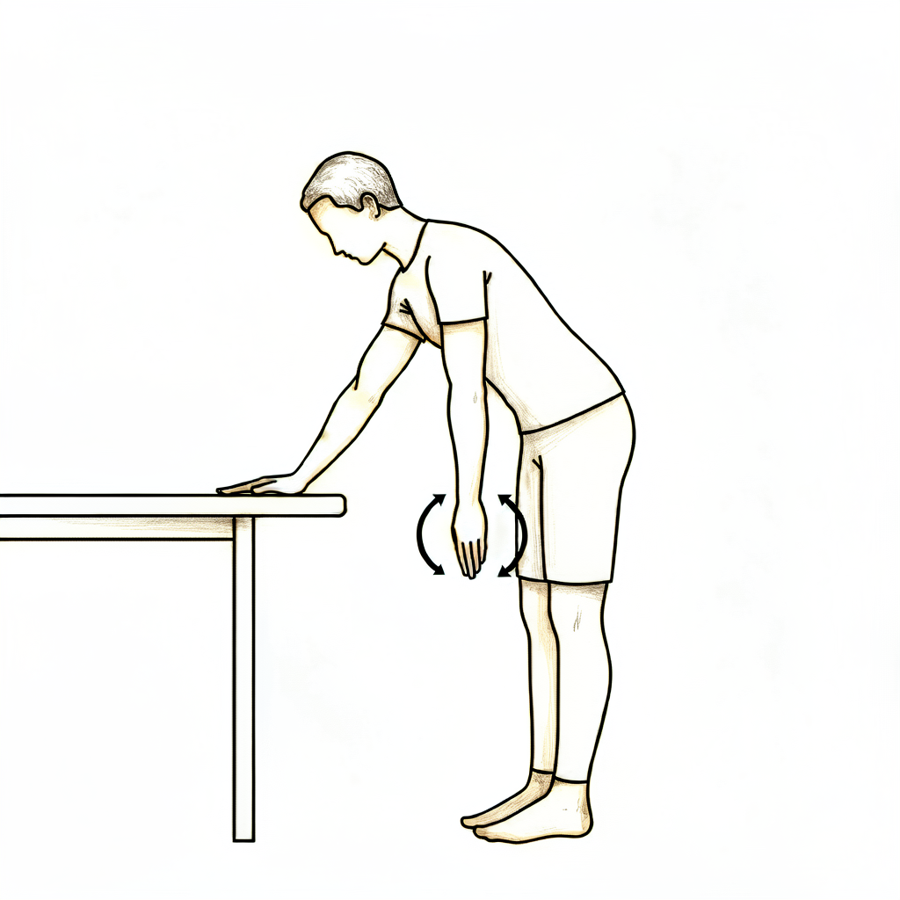
ஊசல் (pendulum) பயிற்சி
கைத்தாங்கியிலிருந்து கையை வெளியே எடுத்து, இடுப்பிலிருந்து முன்னோக்கிக் குனிந்து, அறுவை சிகிச்சை செய்த கையை உடலிலிருந்து விலகி மென்மையாகத் தொங்க விடுங்கள். கை சிறிய, தளர்வான வட்டங்களில் ஆடட்டும் — அசைவு தோள்பட்டைத் தசைகளிலிருந்து அல்ல, உங்கள் உடலிலிருந்து வர வேண்டும். வசதியான அளவுக்குள் செய்து, பின்னர் கைக்கு ஆதரவு கொடுத்து மீண்டும் கைத்தாங்கியில் வையுங்கள்.
நாளொன்றுக்குப் பல முறை
Kieran Hirpara 4.0
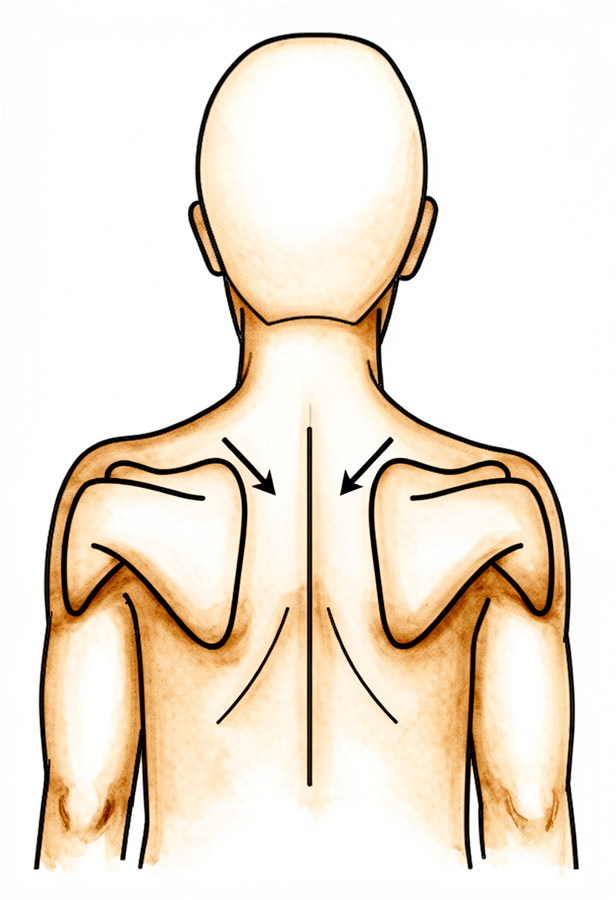
தோள்பட்டை எலும்பை நிலைப்படுத்துதல் (scapular setting)
கைக்கு ஆதரவு கொடுத்தபடி நிமிர்ந்து அமர்ந்தோ நின்றோ, உங்கள் தோள்பட்டை எலும்புகளைப் பின்னோக்கி ஒன்றாகவும், காதுகளிலிருந்து விலகிக் கீழ்நோக்கியும் மென்மையாக இழுங்கள். சில விநாடிகள் பிடித்து, பின்னர் தளர்த்துங்கள். பழுதுபார்ப்பின் மீது சுமை கொடுக்காமல் இது உடல்நிலைத் தசைகளை இயங்க வைக்கிறது.
உங்கள் இயன்முறை சிகிச்சையாளர் வழிகாட்டியபடி
Kieran Hirpara 4.0
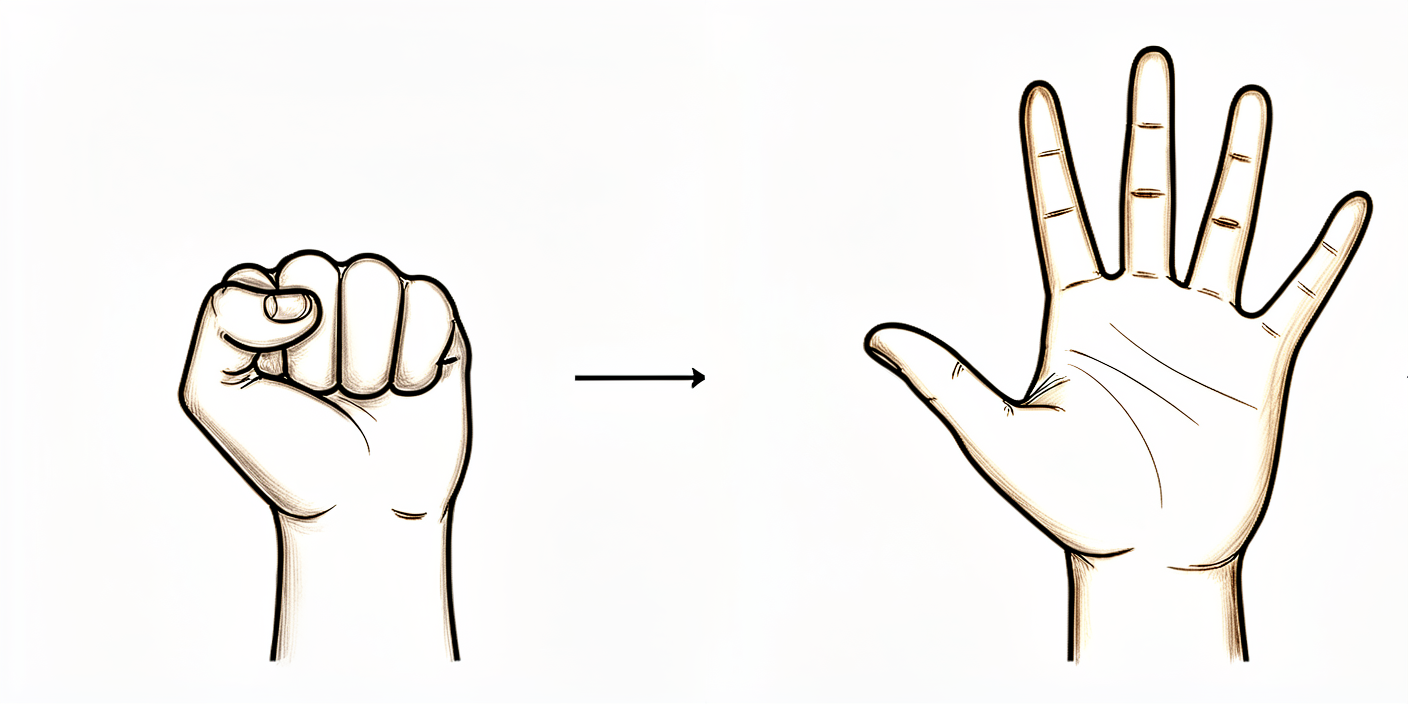
கை மற்றும் பிடிப் பயிற்சிகள்
கை கைத்தாங்கியில் ஆதரவுடன் இருக்க, முழுமையாக முஷ்டியை மடக்கி, பின்னர் விரல்களை நேராக விரியுங்கள். பிடிப் பயிற்சிக்கு ஒரு மென்மையான பந்தையோ சுருட்டிய காலுறையையோ அழுத்தலாம். முதல் நாளிலிருந்தே கை, மணிக்கட்டு, முழங்கை ஆகியவற்றை அசைத்துக்கொண்டே இருங்கள்.
உங்கள் இயன்முறை சிகிச்சையாளர் வழிகாட்டியபடி
Kieran Hirpara 4.0
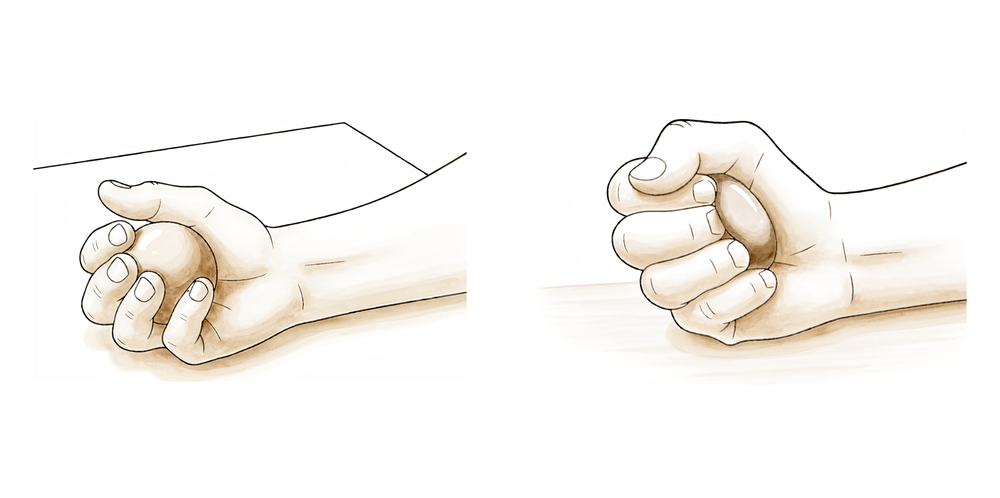
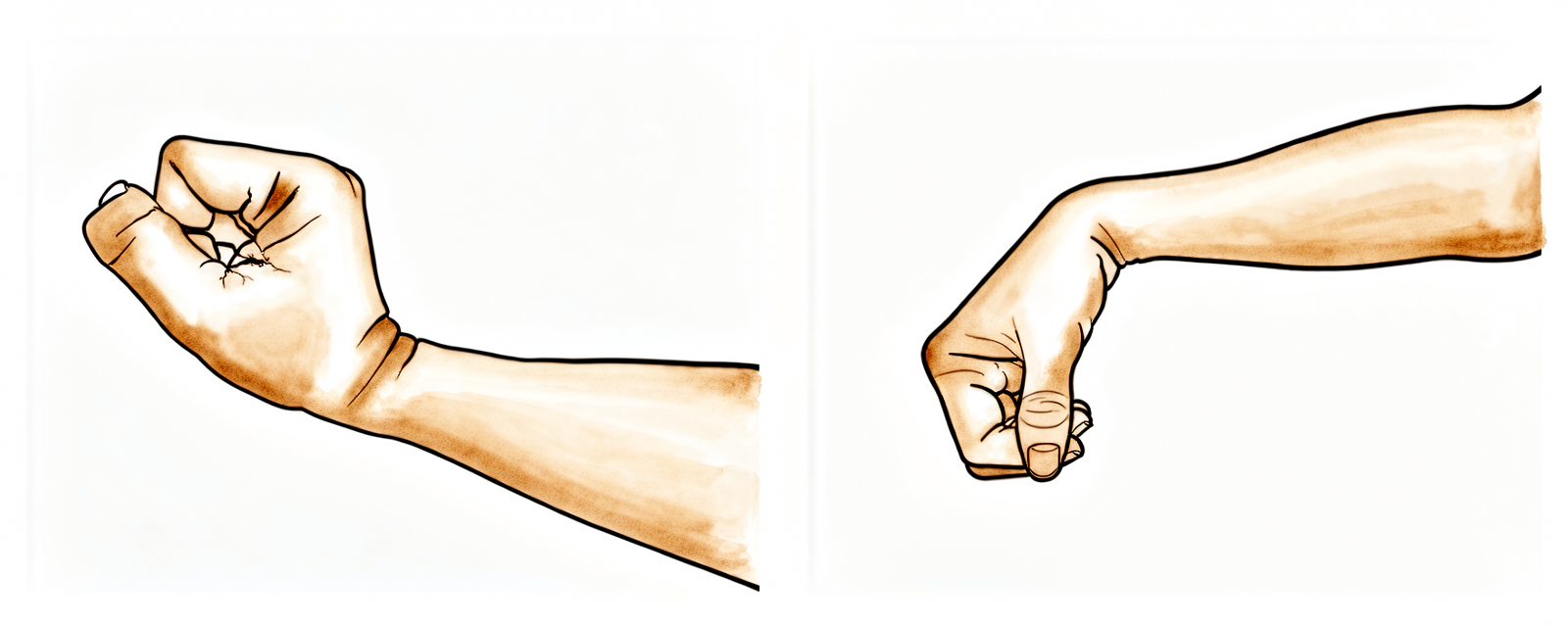
பந்தை அழுத்துதல்
கை கைத்தாங்கியில் ஆதரவுடன் இருக்க, ஒரு மென்மையான பந்தையோ சுருட்டிய காலுறையையோ பிடித்து உறுதியாக அழுத்தி, பின்னர் விடுங்கள். தோள்பட்டை பாதுகாக்கப்பட்டிருக்கும்போது இது பிடியையும் முன்கையையும் இயங்க வைக்கிறது.
உங்கள் இயன்முறை சிகிச்சையாளர் வழிகாட்டியபடி
Kieran Hirpara 4.0
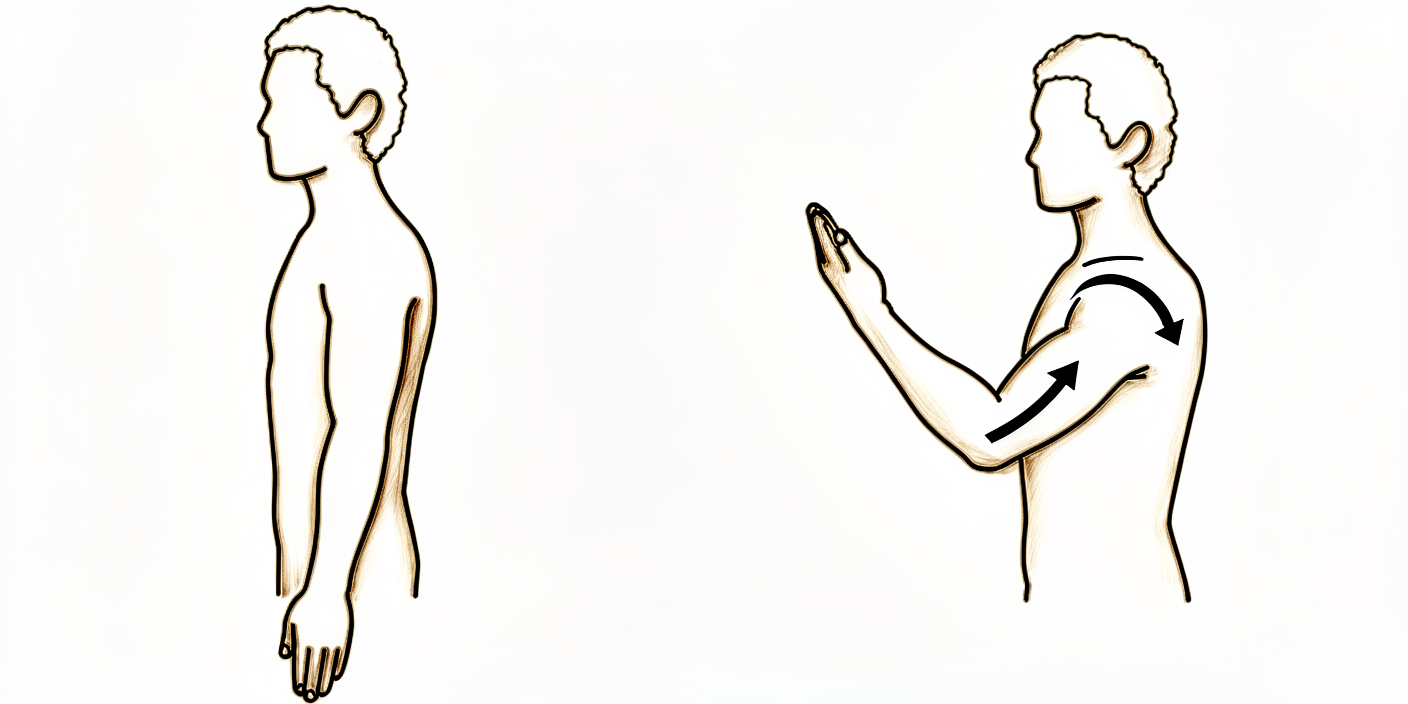
மணிக்கட்டு அசைவு
கையைக் கைத்தாங்கியிலிருந்து வெளியே எடுத்து, முன்கைக்கு ஆதரவு கொடுத்தபடி, மணிக்கட்டை முன்னோக்கியும், பின்னோக்கியும், பக்கவாட்டில் இருபுறமும் வளையுங்கள். பழுதுபார்ப்பு பாதுகாக்கப்பட்டிருக்கும்போது, முதல் நாளிலிருந்தே மணிக்கட்டை அசைத்துக்கொண்டே இருப்பது அது விறைப்பாவதைத் தடுக்கிறது.
உங்கள் இயன்முறை சிகிச்சையாளர் வழிகாட்டியபடி
Kieran Hirpara 4.0
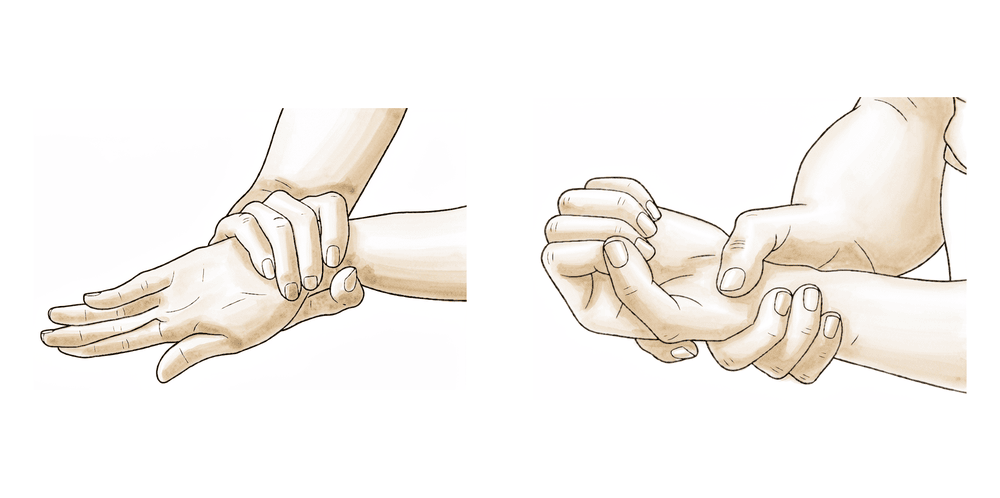
முழங்கையை மடக்குதல்
மேற்கை உங்கள் உடலின் பக்கவாட்டில் ஆதரவுடன் இருக்க, முழங்கையை வசதியாக முடிந்த அளவு மடக்கி, பின்னர் முழுமையாக நேராக்குங்கள். முழங்கை மட்டுமே அசைய வேண்டும் — பழுதுபார்ப்பின் மீது சுமை விழாதபடி தோள்பட்டையைத் தளர்வாகவும் ஆதரவுடனும் வையுங்கள்.
உங்கள் இயன்முறை சிகிச்சையாளர் வழிகாட்டியபடி
Kieran Hirpara 4.0
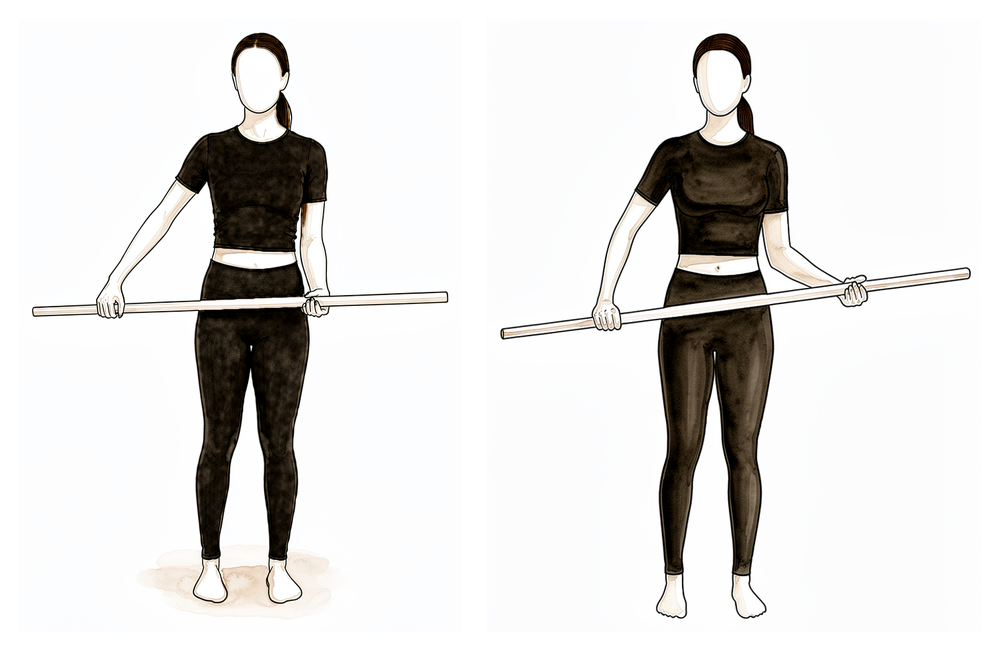
முன்கைச் சுழற்சி
முழங்கை உடலின் பக்கவாட்டில் ஒட்டியபடி செங்கோணத்தில் மடங்கியிருக்க, உள்ளங்கையை மேல்நோக்கிக் கூரையை நோக்கியும், பின்னர் கீழ்நோக்கித் தரையை நோக்கியும் திருப்புங்கள். தோள்பட்டை அசையாமல் ஆதரவுடன் இருக்க, முன்கை மட்டும் சுழல்கிறது.
உங்கள் இயன்முறை சிகிச்சையாளர் வழிகாட்டியபடி
Kieran Hirpara 4.0
குச்சி உதவியுடன் வெளிப்புறச் சுழற்சி
மல்லாந்து படுத்து, அறுவை சிகிச்சை செய்த முழங்கையை உடலின் பக்கவாட்டில் ஒட்டி வைத்து, செங்கோணத்தில் மடக்குங்கள். இரு கைகளிலும் ஒரு குச்சியைப் பிடித்து, அறுவை சிகிச்சை செய்த முன்கையை நல்ல கை மென்மையாக வெளிப்புறமாகத் திருப்பட்டும் — இந்தக் கட்டத்தில் வசதி அனுமதிக்கும் அளவுக்கு மட்டுமே. மெதுவாகத் திரும்பி, அசைவைச் சிறியதாகவும் ஆதரவுடனும் வைத்திருங்கள்.
உங்கள் இயன்முறை சிகிச்சையாளர் வழிகாட்டியபடி
Kieran Hirpara 4.0
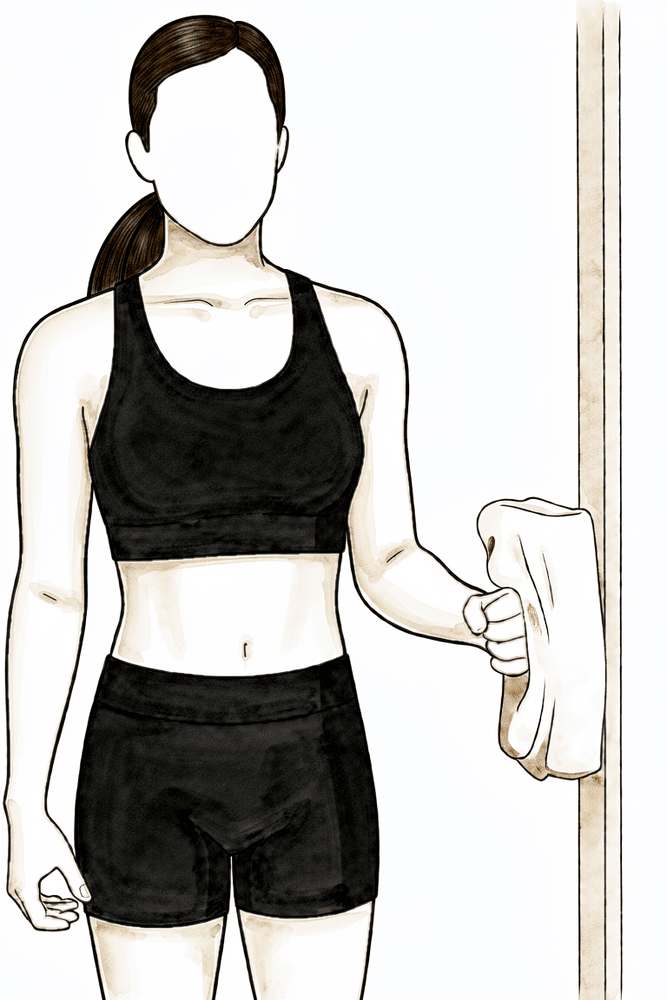
ஐசோமெட்ரிக் (isometric) வெளிப்புறச் சுழற்சி
முழங்கை உடலின் பக்கவாட்டில் ஒட்டியபடி செங்கோணத்தில் மடங்கியிருக்க, உங்கள் புறங்கை ஒரு சுவரிலோ கதவுச் சட்டத்திலோ படும்படி நில்லுங்கள். கை அசையாதபடி அதை நோக்கி வெளிப்புறமாக மென்மையாக அழுத்தி, சில விநாடிகள் பிடித்து, பின்னர் தளர்த்துங்கள். தோள்பட்டை வேலை செய்கிறது ஆனால் அசைவதில்லை; எனவே பழுதுபார்ப்பின் மீது சுமை விழுவதில்லை.
அதிகபட்சத்துக்குக் குறைவாகவும் வலியில்லாமலும்; உங்கள் இயன்முறை சிகிச்சையாளர் வழிகாட்டியபடி
Kieran Hirpara 4.0
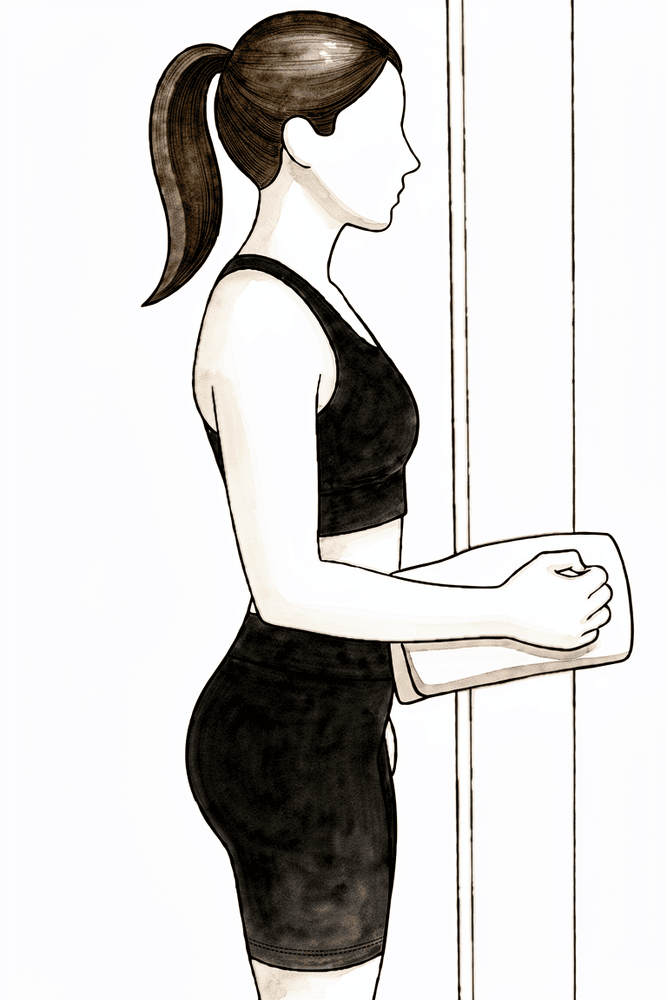
ஐசோமெட்ரிக் (isometric) உட்புறச் சுழற்சி
முழங்கை உடலின் பக்கவாட்டில் ஒட்டியபடி செங்கோணத்தில் மடங்கியிருக்க, உங்கள் உள்ளங்கை ஒரு சுவரிலோ கதவுச் சட்டத்திலோ படும்படி நில்லுங்கள். கை அசையாதபடி அதை நோக்கி உட்புறமாக மென்மையாக அழுத்தி, சில விநாடிகள் பிடித்து, பின்னர் தளர்த்துங்கள். ஆரம்பத்திலேயே சுழற்சி தசைநாண் பட்டையை (rotator cuff) இயங்க வைக்க, அசைவே இல்லாத ஒரு வழி.
அதிகபட்சத்துக்குக் குறைவாகவும் வலியில்லாமலும்; உங்கள் இயன்முறை சிகிச்சையாளர் வழிகாட்டியபடி
முதல் ஆறு வாரங்கள், கையின் மற்றப் பகுதிகளை அசைத்துக்கொண்டே பழுதுபார்ப்பு குணமடைய அனுமதிப்பதற்கானவை. நீங்கள் எழுந்து நடமாடும்போதெல்லாம் கைத்தாங்கி கையின் எடையைத் தாங்குகிறது. முதல் நாளிலிருந்தே உங்கள் கை, மணிக்கட்டு, முழங்கை ஆகியவை அசைந்துகொண்டே இருக்க வேண்டும்: கை கைத்தாங்கியில் இருக்கும்போதே, எழுதுவது, சாப்பிடுவது போன்ற இலகுவான வேலைகளுக்குக் கையைப் பயன்படுத்துங்கள். தோள்பட்டை மென்மையான ஊசல் (pendulum) பயிற்சிகளுடனும், கண்டிப்பான வரம்புகளுக்குள் உதவியுடன் செய்யும் அசைவுகளுடனும் தொடங்குகிறது: தோள்பட்டை உயரத்துக்கு மேல் எதுவும் கூடாது, உடலின் குறுக்கே கையை நீட்டக் கூடாது, முதுகுக்குப் பின்னால் கையைக் கொண்டு செல்லக் கூடாது. ஐஸும் தவறாத வலி நிவாரணமும் பயிற்சிகளைச் செய்யக்கூடியதாக ஆக்குகின்றன. உங்கள் பயிற்சிகளுக்கும் இயன்முறை சிகிச்சை அமர்வுகளுக்கும் முன் வலி நிவாரணிகளை எடுத்துக்கொள்ளுங்கள். உங்கள் காயப் பராமரிப்பு ஆலோசனை அனுமதித்தவுடன் நீங்கள் குளிக்கலாம்; அறுவை சிகிச்சை செய்த கைக்குக் கீழே கழுவுவதற்கு, இடுப்பிலிருந்து முன்னோக்கிக் குனிந்து, கையை உடலிலிருந்து விலகி மென்மையாகத் தொங்க விடுங்கள் — ஊசல் பயிற்சியின் அதே நிலைதான்.
இந்தக் கட்டத்தில், அறுவை சிகிச்சை செய்த கையால் சுமார் அரை கிலோகிராமுக்கு மேல் எதையும் தூக்க வேண்டாம், அந்தப் பக்கத்தில் பைகளைச் சுமக்க வேண்டாம், கையின் மீது சாய்ந்துகொள்ளவோ படுக்கையிலிருந்தோ நாற்காலியிலிருந்தோ எழுவதற்கு அதை ஊன்றித் தள்ளவோ வேண்டாம், ஆதரவின்றிக் கையைத் தொங்க விடவும் வேண்டாம்: இவை ஒவ்வொன்றும் தோள்பட்டை எலும்பைக் காறை எலும்பிலிருந்து விலகிக் கீழ்நோக்கி இழுத்து, பழுதுபார்ப்பின் மீது சுமை கொடுக்கின்றன.
உங்கள் இயன்முறை சிகிச்சையாளருக்கு:
இலக்குகள்
- அறுவை சிகிச்சை நிலைப்படுத்தலைப் பாதுகாத்து, மென்திசு குணமடைய அனுமதித்தல்
- வலியையும் வீக்கத்தையும் கட்டுப்படுத்துதல்; காயம் ஆறுவதைப் பாதுகாத்தல்
- பாதுகாக்கப்பட்ட வரம்புகளுக்குள் தோள்பட்டை விறைப்பைத் தடுத்தல்
- கை, மணிக்கட்டு, முழங்கை, கழுத்து ஆகியவற்றின் அசைவு வரம்பைப் பராமரித்தல்
சிகிச்சை மேலாண்மை
- எழுந்து நடமாடும்போதெல்லாம் 6 வாரங்களுக்குக் கைத்தாங்கி; கைத்தாங்கி கழற்றப்பட்டிருக்கும்போது கைக்கு ஆதரவு
- நாளொன்றுக்குப் பல முறை ஊசல் பயிற்சிகள்
- தோள்பட்டை எலும்புத் தளத்தில் பிறர் அசைக்கும் மற்றும் உதவியுடன் கூடிய சுய உயர்த்தல், 90 டிகிரிக்கு வரம்பிடப்பட்டது
- வசதி அனுமதிக்கும்படி பிறர் அசைக்கும் மற்றும் உதவியுடன் கூடிய சுய வெளிப்புறச் சுழற்சி (தொடக்கத்தில் தோராயமாக 30 டிகிரி வரை)
- கை, மணிக்கட்டு, முழங்கை, முன்கை ஆகியவற்றின் சுய அசைவு வரம்பு; பந்தை அழுத்துதல்
- தோள்பட்டை எலும்பை நிலைப்படுத்துதல் (பின்னிழுத்தலும் கீழிறக்கமும்) மற்றும் உடல்நிலைத் திருத்தம்
- தாங்கக்கூடிய அளவுக்கு, நடுநிலையில் அதிகபட்சத்துக்குக் குறைவான, வலியில்லாத ஐசோமெட்ரிக் (isometric) உட்புற மற்றும் வெளிப்புறச் சுழற்சி
- தேவைக்கேற்ப மென்திசு மற்றும் தோள்பட்டை எலும்பு–விலா எலும்புக்கூடு (scapulothoracic) அசைவூட்டல்; காயம் ஆறியதும் தழும்பு மசாஜ்
- தேவைக்கேற்ப நாளொன்றுக்குப் பல முறை, 15–20 நிமிடங்கள் ஐஸ்; பயிற்சிகளுக்கும் அமர்வுகளுக்கும் முன் வலி நிவாரணி
முன்னெச்சரிக்கைகள்
- கையின் எடை நிலைநிறுத்தப்பட்ட பொருத்தத்தின் (fixation) மீது இழுக்க விடக் கூடாது: கையைத் தொங்க விடக் கூடாது, எதையும் சுமக்கக் கூடாது, கீழ்நோக்கி இழுப்பு கூடாது
- எந்தத் தளத்திலும் 90 டிகிரிக்கு மேல் உயர்த்தல் கூடாது
- பரிந்துரைக்கப்பட்ட உதவியுடன் கூடிய திட்டத்தைத் தாண்டி சுய தோள்பட்டை அசைவு வரம்பு கூடாது
- உடலின் குறுக்கே (கிடைமட்ட) உள்நோக்கிய இழுப்பு கூடாது; முதுகுக்குப் பின்னால் உட்புறச் சுழற்சி கூடாது
- சுமார் அரை கிலோகிராமுக்கு மேல் தூக்கக் கூடாது; கையின் வழியாக உடல் எடையைத் தாங்கக் கூடாது
- ஆறு வாரங்களுக்கு வாகனம் ஓட்டக் கூடாது (இது எந்தத் தோள்பட்டை அறுவை சிகிச்சைக்கும் பொருந்தும்); கைத்தாங்கி அணிந்திருக்கும்போதும் ஓட்டக் கூடாது
அடுத்த கட்டத்துக்குச் செல்வதற்கான அளவுகோல்கள்
- தோள்பட்டை எலும்புத் தளத்தில் தோராயமாக 90 டிகிரி பிறர் அசைக்கும் முன்னோக்கிய உயர்த்தல்
- தோள்பட்டை எலும்புத் தளத்தில் தோராயமாக 30 டிகிரி பிறர் அசைக்கும் வெளிப்புறச் சுழற்சி
- வலியும் வீக்கமும் தணிந்து வர, அசைவு வரம்பு மற்றும் ஐசோமெட்ரிக் திட்டத்தைத் தாங்க முடிதல்
கட்டம் II — உங்கள் அசைவை மீட்டெடுத்தல் (வாரம் 6–12)
Kieran Hirpara 4.0
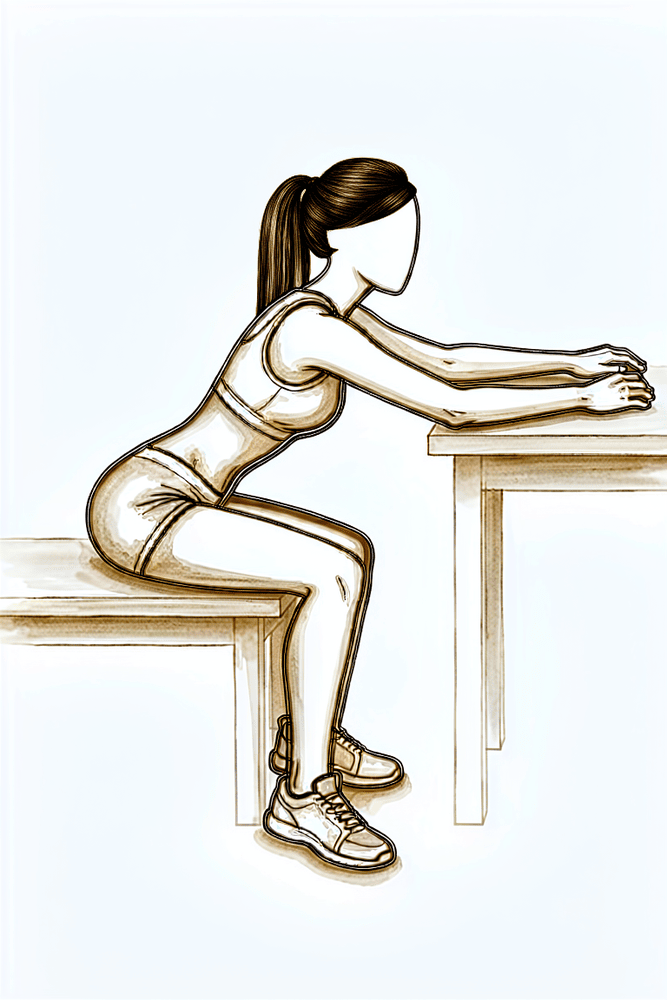
மேசையில் கைகளை நகர்த்துதல்
ஒரு மேசையிலோ பெஞ்சிலோ உங்கள் கைகளைப் பரப்பின் மீது வைத்து அமருங்கள். கைகளை முன்னோக்கி நகர்த்தி, உங்கள் உடற்பகுதி முன்னால் சாயட்டும்; இதனால் ஆதரவுடன் தோள்பட்டை மேல்நோக்கி வளையும். பின்னர் திரும்புங்கள். தோள்பட்டையைக் காதை நோக்கித் தூக்காமல், வசதியான அளவுக்குள் சீராக அசையுங்கள்.
உங்கள் இயன்முறை சிகிச்சையாளர் வழிகாட்டியபடி
Kieran Hirpara 4.0
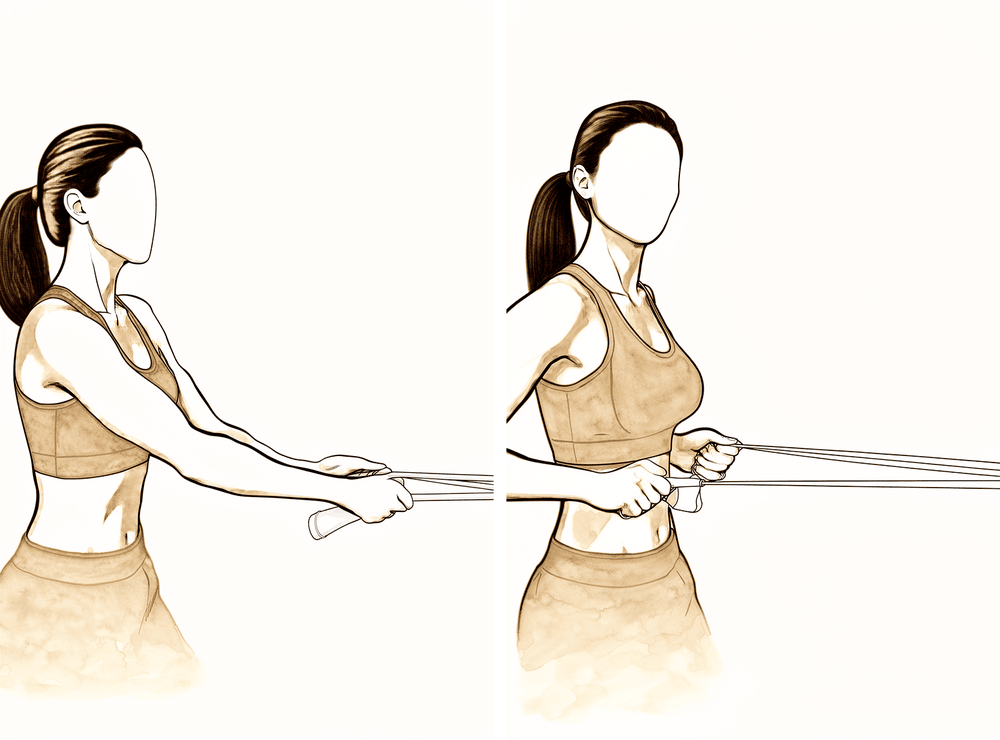
எலாஸ்டிக் பட்டையுடன் இழுப்பு (row)
உங்களுக்கு முன்னால் ஏறக்குறைய இடுப்பு உயரத்தில் ஒரு எலாஸ்டிக் பயிற்சிப் பட்டையைக் கட்டுங்கள். பட்டையை உங்களை நோக்கி இழுங்கள்; முழங்கை உடலின் பக்கவாட்டைத் தாண்டிச் செல்லும்போது தோள்பட்டை எலும்பைப் பின்னோக்கியும் கீழ்நோக்கியும் இழுங்கள். பின்னர் கட்டுப்பாட்டுடன் திரும்புங்கள். இந்தக் கட்டத்தில் எதிர்ப்பை இலகுவாக வைத்திருங்கள்.
உங்கள் இயன்முறை சிகிச்சையாளர் வழிகாட்டியபடி
Kieran Hirpara 4.0
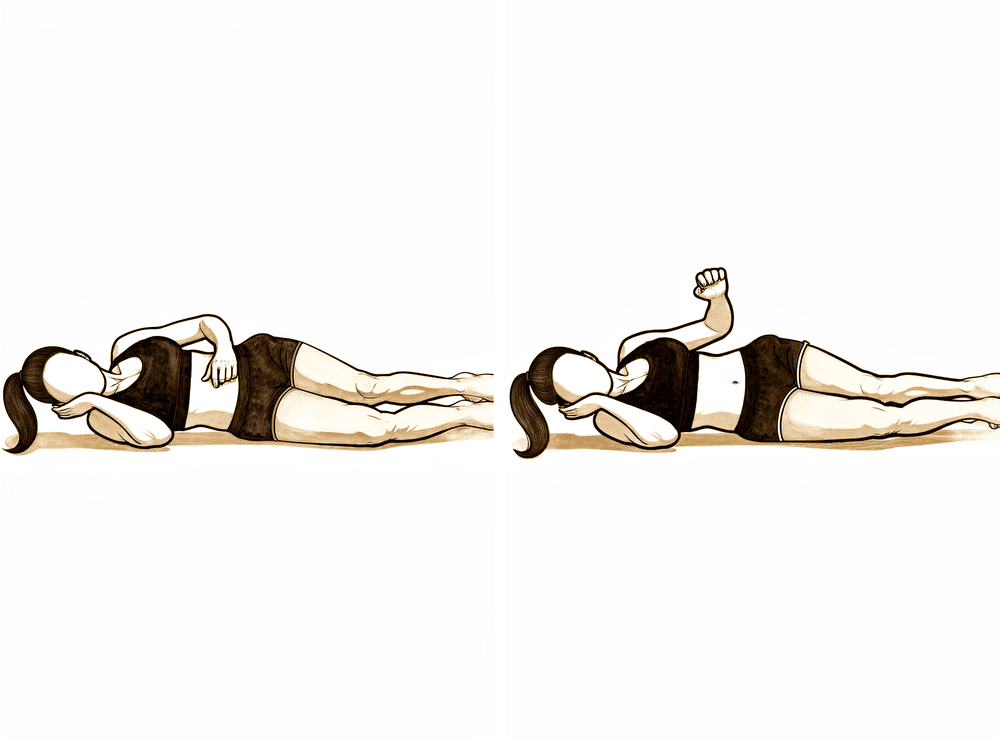
பக்கவாட்டில் படுத்து வெளிப்புறச் சுழற்சி
அறுவை சிகிச்சை செய்யாத பக்கமாகப் படுத்து, மேலுள்ள முழங்கையைச் செங்கோணத்தில் மடக்கி உடலோடு ஒட்டி வையுங்கள். முழங்கையைப் பக்கவாட்டிலேயே வைத்தபடி, முன்கையைக் கூரையை நோக்கி மேல்நோக்கிச் சுழற்றி, பின்னர் கட்டுப்பாட்டுடன் இறக்குங்கள். இந்தக் கட்டத்தில் எடை வேண்டாம் — வழிகாட்டுதலின்படி பின்னரே எடை சேர்க்கப்படும்.
உங்கள் இயன்முறை சிகிச்சையாளர் வழிகாட்டியபடி
Kieran Hirpara 4.0
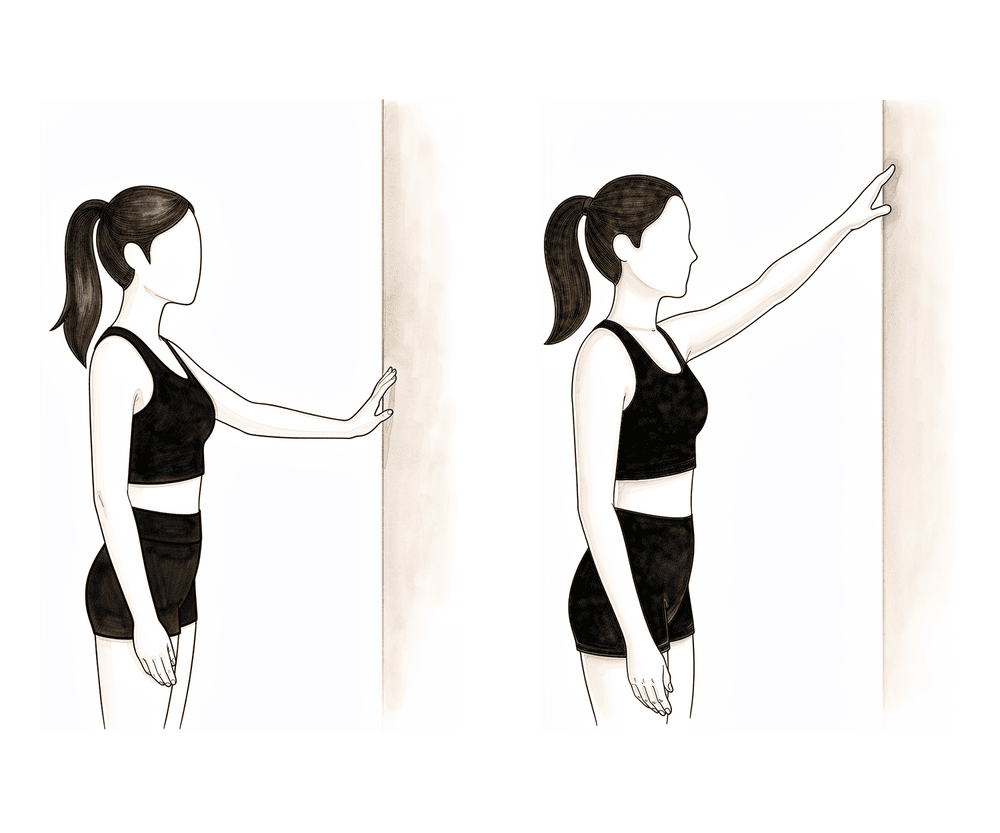
சுவரில் விரல்களால் நடத்தல்
ஒரு சுவரை நோக்கி நின்று, அறுவை சிகிச்சை செய்த கையின் விரல்களைச் சுவரில் வையுங்கள். விரல்களை மெதுவாகச் சுவரில் மேல்நோக்கி நடத்துங்கள்; தோள்பட்டை உயரும்போது கையின் எடையில் ஒரு பகுதியை அவை தாங்கட்டும். பின்னர் மீண்டும் கீழ்நோக்கி நடத்துங்கள். தோள்பட்டை எலும்பைத் தளர்வாக வையுங்கள் — காதை நோக்கித் தூக்கக் கூடாது.
உங்கள் இயன்முறை சிகிச்சையாளர் வழிகாட்டியபடி
Kieran Hirpara 4.0
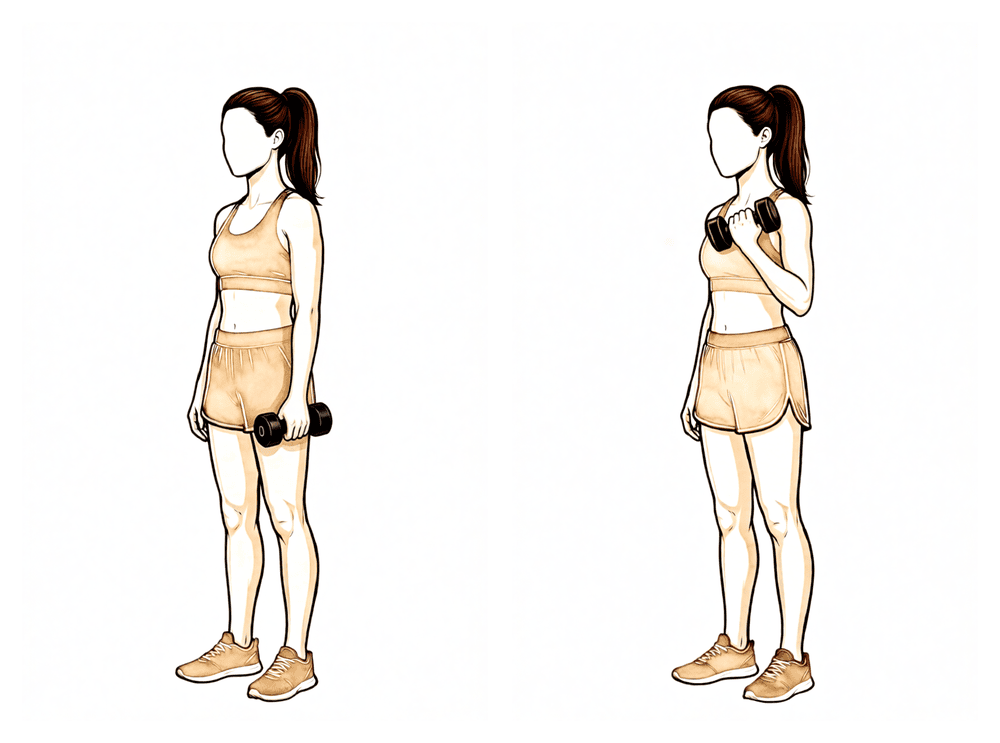
பைசெப்ஸ் கர்ல் (biceps curl)
மேற்கை உங்கள் உடலின் பக்கவாட்டில் இருக்க, முழங்கையை மடக்கி ஓர் இலகுவான எடையை உங்கள் தோள்பட்டையை நோக்கி மேலே தூக்கி, பின்னர் மெதுவாக இறக்குங்கள். இந்தக் கட்டத்தில் சுமையை இலகுவாக வையுங்கள் — பழுதுபார்ப்புக்கு அழுத்தம் கொடுக்காமல் இது கையை மீண்டும் கட்டியெழுப்புகிறது.
உங்கள் இயன்முறை சிகிச்சையாளர் வழிகாட்டியபடி
Kieran Hirpara 4.0
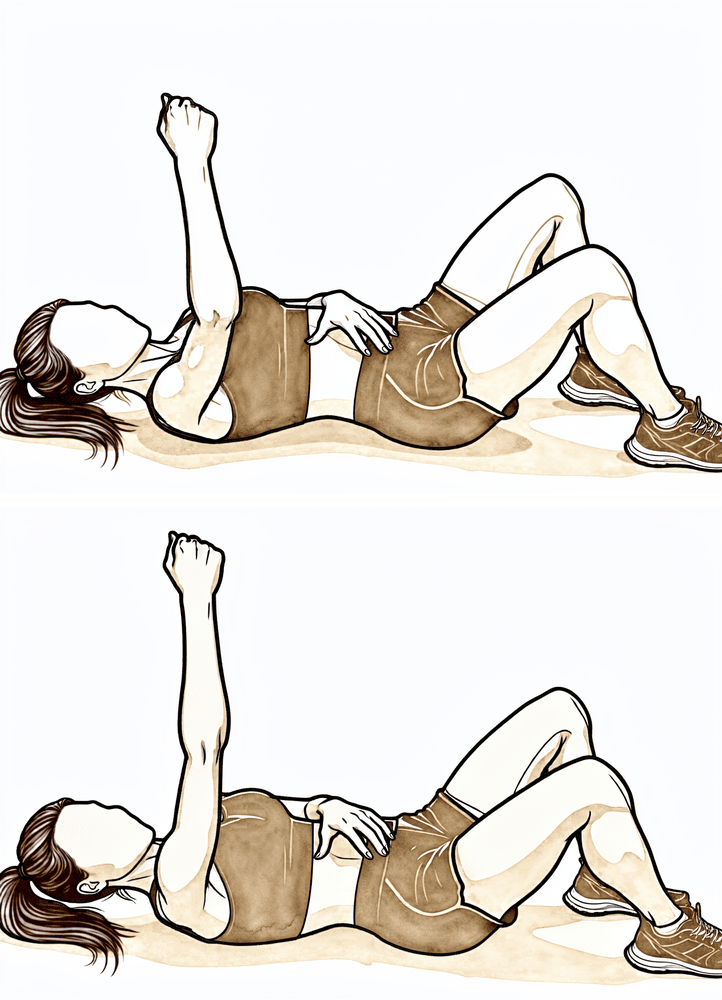
செரேட்டஸ் குத்து (serratus punch)
மல்லாந்து படுத்து, அறுவை சிகிச்சை செய்த கையைக் கூரையை நோக்கி மேல்நோக்கி நீட்டுங்கள். முழங்கையை மடக்காமல், முஷ்டியைச் சற்று மேலும் மேல்நோக்கி நீட்டுங்கள்; இதனால் தோள்பட்டை எலும்பு படுக்கையிலிருந்து சற்று உயரும். பின்னர் கட்டுப்பாட்டுடன் இறக்குங்கள். தோள்பட்டை எலும்பை விலா எலும்புகளோடு பிடித்து வைத்திருக்கும் தசையை இது விழிப்படையச் செய்கிறது.
உங்கள் இயன்முறை சிகிச்சையாளர் வழிகாட்டியபடி
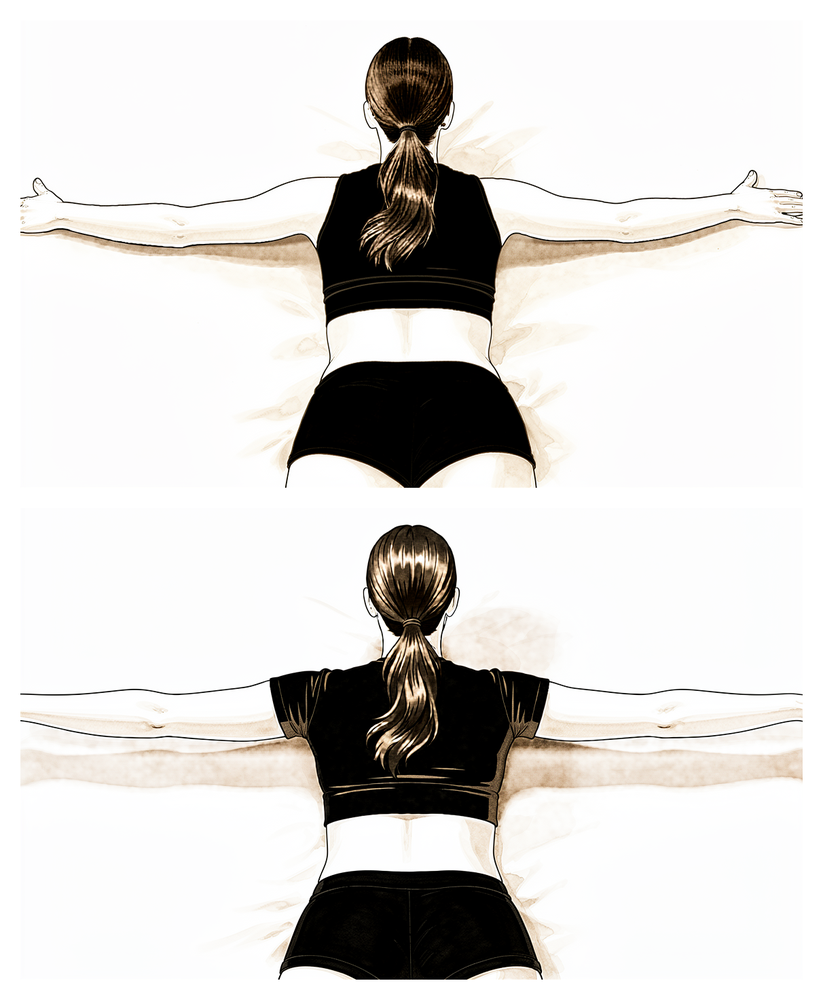
Kieran Hirpara 4.0
குப்புறப் படுத்து T
கைகள் தரையை நோக்கித் தொங்கியபடி குப்புறப் படுங்கள். தோள்பட்டை எலும்புகளை ஒன்றாக அழுத்தி, அறுவை சிகிச்சை செய்த கையைப் பக்கவாட்டில் நீட்டி 'T' வடிவமாக உயர்த்தி, பின்னர் மெதுவாக இறக்குங்கள். இலகுவாக வையுங்கள் — மூட்டுக்குக் கனமான சுமை கொடுக்காமல் இது தோள்பட்டை எலும்புத் தசைகளைப் பயிற்றுவிக்கிறது.
உங்கள் இயன்முறை சிகிச்சையாளர் வழிகாட்டியபடி
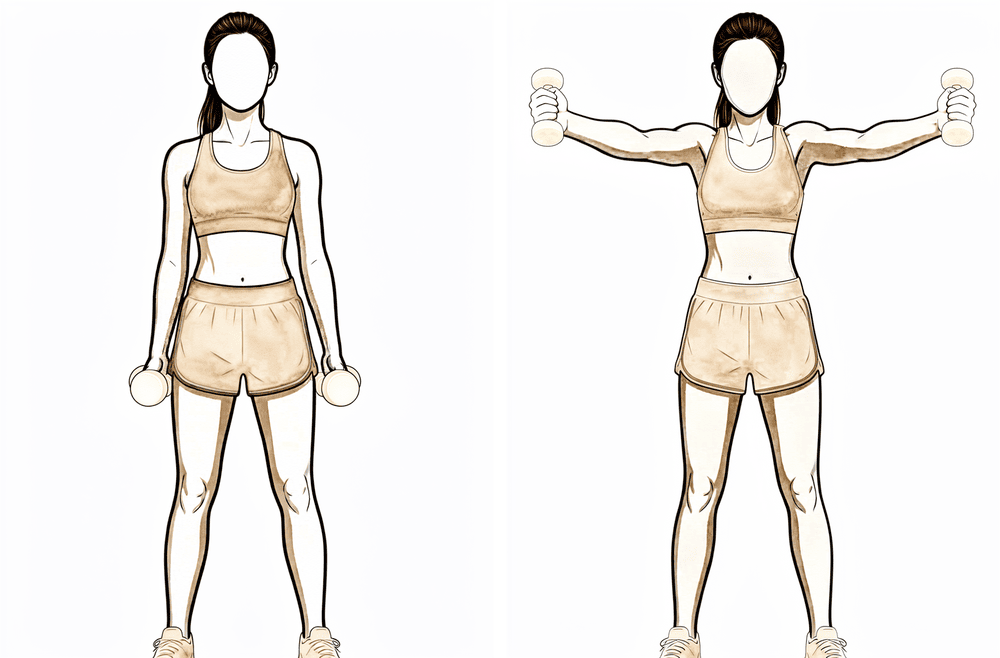
Kieran Hirpara 4.0
நின்றபடி ஸ்கேப்ஷன் (standing scaption)
கை உடலின் பக்கவாட்டில் இருக்க, கட்டைவிரல் மேல்நோக்கி இருக்கும்படி நில்லுங்கள். நேராக முன்னாலும் பக்கவாட்டிலும் நடுவில் வரும் ஒரு கோணத்தில் கையை முன்னோக்கி உயர்த்துங்கள் — வசதியாக இருக்கும் உயரத்துக்கு மேல் வேண்டாம். பின்னர் மெதுவாக இறக்குங்கள். தோள்பட்டை எலும்பை நிலையாக வைத்து, தோளைக் குலுக்கித் தூக்குவதைத் தவிருங்கள்.
உங்கள் இயன்முறை சிகிச்சையாளர் வழிகாட்டியபடி
Kieran Hirpara 4.0
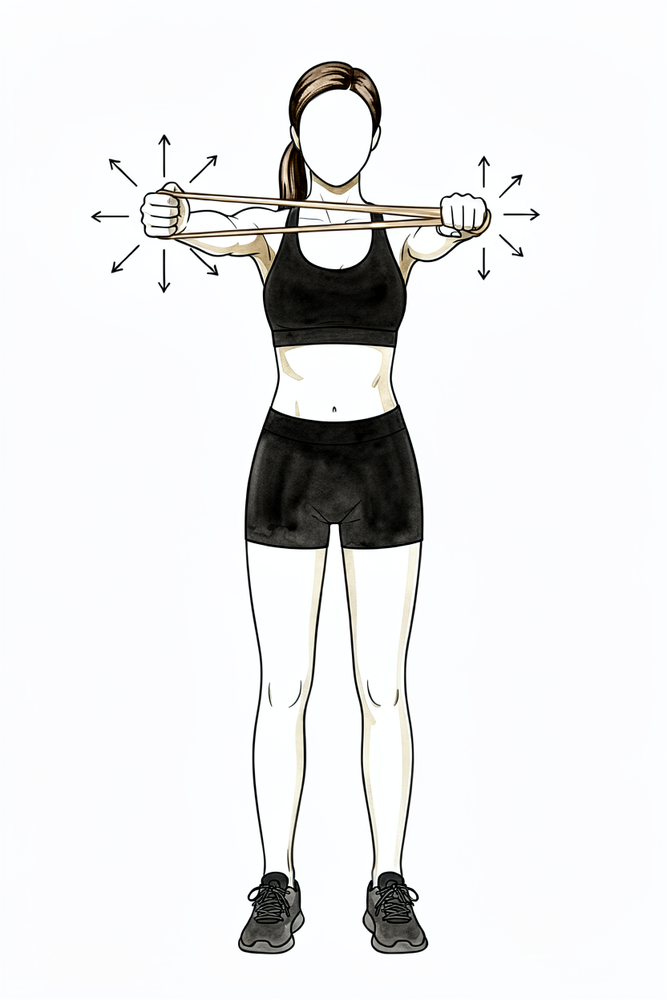
தாள ரீதியான நிலைப்படுத்தல் (rhythmic stabilisation)
உங்கள் கை உங்களுக்கு முன்னால் ஏறக்குறைய தோள்பட்டை உயரத்தில் ஆதரவுடன் இருக்க, நீங்கள் கையை அசையாமல் நிலையாகப் பிடித்திருக்கும்போது உங்கள் இயன்முறை சிகிச்சையாளர் (அல்லது உங்கள் நல்ல கை) வெவ்வேறு திசைகளிலிருந்து சிறிய, மென்மையான அழுத்தங்களைக் கொடுக்கட்டும் — கையை அசைய விடாதீர்கள். தோள்பட்டையை நிலைப்படுத்தும் தசைகள் உடனடியாகச் செயல்பட இது பயிற்சி அளிக்கிறது. எல்லா முயற்சிகளையும் மென்மையாக வையுங்கள்.
உங்கள் இயன்முறை சிகிச்சையாளர் வழிகாட்டியபடி
சுமார் ஆறு வாரங்களிலிருந்து கைத்தாங்கியைப் படிப்படியாகக் குறைத்து நிறுத்துவீர்கள்; அசைவின் மீதான வரம்புகளும் படிப்படியாக நீக்கப்படுகின்றன. உதவியுடன் செய்த அசைவுகள் சுய அசைவுகளாக மாறுகின்றன, அசைவு வரம்பு சீராக வளர்கிறது; வழிகாட்டியாக, வெளியிடப்பட்ட நெறிமுறைகள் ஒவ்வொரு வாரமும் தோராயமாக 15 டிகிரி படிகளில் வரம்பை முன்னேற்றி, சுமார் 12-ஆம் வாரத்துக்குள் முழு அசைவை இலக்காகக் கொள்கின்றன. சுழற்சி தசைநாண் பட்டை (rotator cuff) மற்றும் தோள்பட்டை எலும்புத் தசைகளுக்கான இலகுவான எலாஸ்டிக் பட்டைப் பயிற்சிகள் இந்தக் கட்டத்தில் தொடங்குகின்றன. பழுதுபார்ப்புக்கு இன்னும் மரியாதை தேவை: தூக்குவதைச் சுமார் ஒரு கிலோகிராமுக்குள் வைத்திருங்கள்; வலுவாகத் தள்ளுவதையும் இழுப்பதையும், புஷ்-அப்ஸையும், உடலின் குறுக்கேயோ தலைக்கு மேலோ எடையைத் தூக்குவதையும் தவிருங்கள். முதுகுக்குப் பின்னால் கையைக் கொண்டு செல்வதே பொதுவாகக் கடைசியாக விடுவிக்கப்படும் அசைவு.
உங்கள் இயன்முறை சிகிச்சையாளருக்கு:
இலக்குகள்
- கைத்தாங்கியைப் படிப்படியாகக் குறைத்து நிறுத்துதல்
- எல்லாத் தளங்களிலும் சுய அசைவு வரம்பைப் படிப்படியாக மீட்டெடுத்தல் (சுமார் 12-ஆம் வாரத்துக்குள் முழுமையாக அல்லது கிட்டத்தட்ட முழுமையாக)
- மென்மையான வலுப்படுத்துதலைத் தொடங்குதல்; தசைத் தேய்வைக் குறைத்தல்
- தோள்பட்டை எலும்பு–மேற்கை எலும்பு ஒத்திசைவையும் (scapulohumeral rhythm) நரம்பு–தசைக் கட்டுப்பாட்டையும் மீண்டும் நிலைநாட்டுதல்
சிகிச்சை மேலாண்மை
- உதவியுடன் கூடிய சுய உயர்த்தலிலிருந்து சுய உயர்த்தலுக்கு முன்னேற்றுதல்; முன்னோக்கிய உயர்த்தலுக்குச் சுவரில் கைகளை நகர்த்துதல் (wall slides) மற்றும் மேசையில் கைகளை நகர்த்துதல்
- தோள்பட்டை எலும்புத் தளத்தில் உயர்த்தல், தோள்பட்டை எலும்பின் இயக்கவியலில் கவனத்துடன்: தோள்பட்டையைக் காதை நோக்கித் தூக்கக் கூடாது
- முதுகுக்குப் பின்னால் உட்புறச் சுழற்சி படிப்படியாக அறிமுகப்படுத்தப்படுகிறது (தொடக்கத்தில் இடுப்புப் பட்டை மட்டம் வரை)
- கிடைமட்ட உள்நோக்கிய இழுப்பு சுயமாகக் கையை நீட்டுவதாக மட்டுமே: இன்னும் பிறர் செய்யும் நீட்சி வேண்டாம்
- தெராபேண்ட் (Theraband) உட்புற மற்றும் வெளிப்புறச் சுழற்சி, பைசெப்ஸ் கர்ல், இழுப்பு (row), செரேட்டஸ் குத்து (serratus punch)
- இயங்குநிலைத் தோள்பட்டை எலும்பு மற்றும் சுழற்சி தசைநாண் பட்டைப் பயிற்சி: பக்கவாட்டில் படுத்து வெளிப்புறச் சுழற்சி, குப்புறப் படுத்து இழுப்பு, குப்புறப் படுத்துக் கையைப் பின்னோக்கி உயர்த்துதல், குப்புறப் படுத்து 'T' மற்றும் 'Y' வடிவங்கள், நின்றபடி ஸ்கேப்ஷன் (scaption)
- உடல் நிலை உணர்வு (proprioception) மற்றும் தாள ரீதியான நிலைப்படுத்தல் (rhythmic stabilisation) பயிற்சிகள்
- தேவைக்கேற்ப கைமுறை சிகிச்சையும் (manual therapy) மூட்டு அசைவூட்டலும்
முன்னெச்சரிக்கைகள்
- அறுவை சிகிச்சை செய்த கையால் சுமார் ஒரு கிலோகிராமுக்கு மேல் தூக்கக் கூடாது
- வலுவாகத் தள்ளுவதோ இழுப்பதோ கூடாது; புஷ்-அப்ஸ் கூடாது
- எடையுள்ள பொருட்களைத் தலைக்கு மேலோ உடலின் குறுக்கேயோ தூக்கக் கூடாது
- உடலின் குறுக்கே உள்நோக்கிய இழுப்பில் இறுதி வரம்பு நீட்சியைத் தவிர்த்தல்; முதுகுக்குப் பின்னால் செல்லும் அசைவு படிப்படியாகவே முன்னேறுகிறது
அடுத்த கட்டத்துக்குச் செல்வதற்கான அளவுகோல்கள்
- தோள்பட்டை எலும்புத் தளத்தில் குறைந்தது தோராயமாக 140 டிகிரி பிறர் அசைக்கும் முன்னோக்கிய உயர்த்தலும், 60 டிகிரி பிறர் அசைக்கும் வெளிப்புறச் சுழற்சியும்
- நல்ல இயக்கவியலுடன், புவியீர்ப்புக்கு எதிராகக் குறைந்தது தோராயமாக 100 டிகிரி வரை சுய முன்னோக்கிய உயர்த்தல்
- சுய அசைவு வரம்பு மற்றும் ஆரம்பகால வலுப்படுத்துதல் திட்டத்தைத் தாங்க முடிதல்
கட்டம் III — வலுப்படுத்துதல் (வாரம் 12–18)
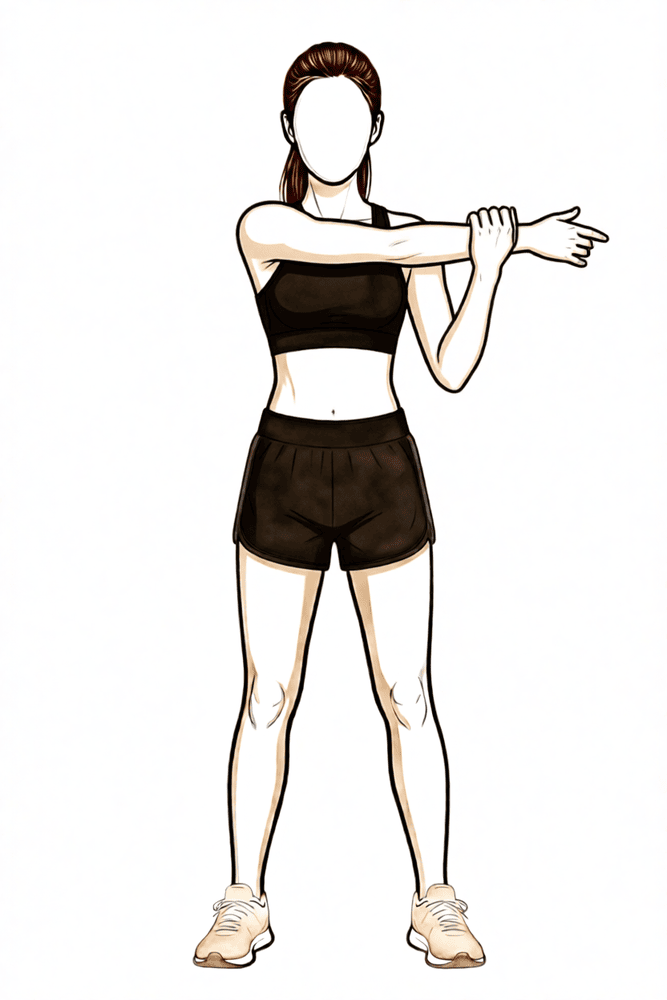
Kieran Hirpara 4.0
உடலின் குறுக்கே நீட்சி
அறுவை சிகிச்சை செய்த கையை மார்பின் குறுக்கே கொண்டு வந்து, முழங்கைக்கு மேலே வைத்த மற்றக் கையால் அதை மேலும் குறுக்கே மென்மையாக இழுங்கள் — தோள்பட்டையின் பின்புறத்தில் நீட்சியை உணரும் வரை. சிறிது நேரம் பிடித்து, பின்னர் விடுங்கள். இந்த நீட்சி முன்பு அனுமதிக்கப்படவில்லை; இப்போது அசைவு வரம்பின் இறுதி டிகிரிகளை வென்றெடுக்க இது பயன்படுத்தப்படுகிறது.
உங்கள் இயன்முறை சிகிச்சையாளர் வழிகாட்டியபடி
Kieran Hirpara 4.0
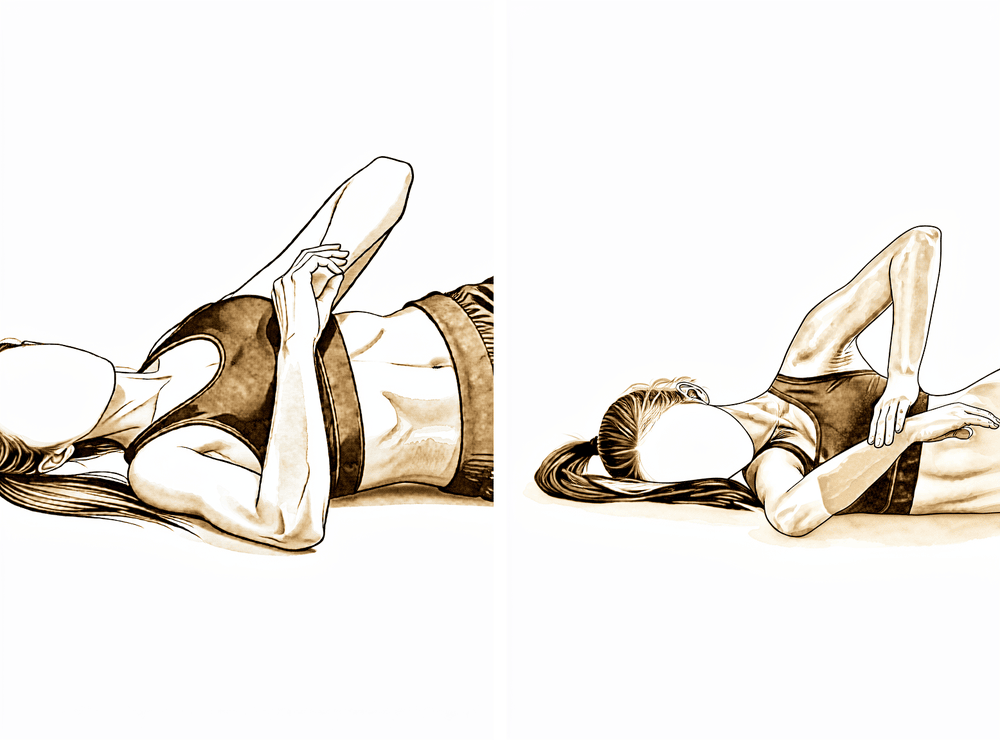
ஸ்லீப்பர் நீட்சி (sleeper stretch)
அறுவை சிகிச்சை செய்த பக்கமாகப் படுத்து, தோள்பட்டையையும் முழங்கையையும் தலா செங்கோணத்தில் மடக்குங்கள். தோள்பட்டையின் பின்புறத்தில் நீட்சி உணரும் வரை, மற்றக் கையால் முன்கையைப் படுக்கையை நோக்கி மென்மையாக அழுத்துங்கள். சிறிது நேரம் பிடித்து, பின்னர் தளர்த்துங்கள் — இது நீட்சி, வலி அல்ல.
உங்கள் இயன்முறை சிகிச்சையாளர் வழிகாட்டியபடி
Kieran Hirpara 4.0
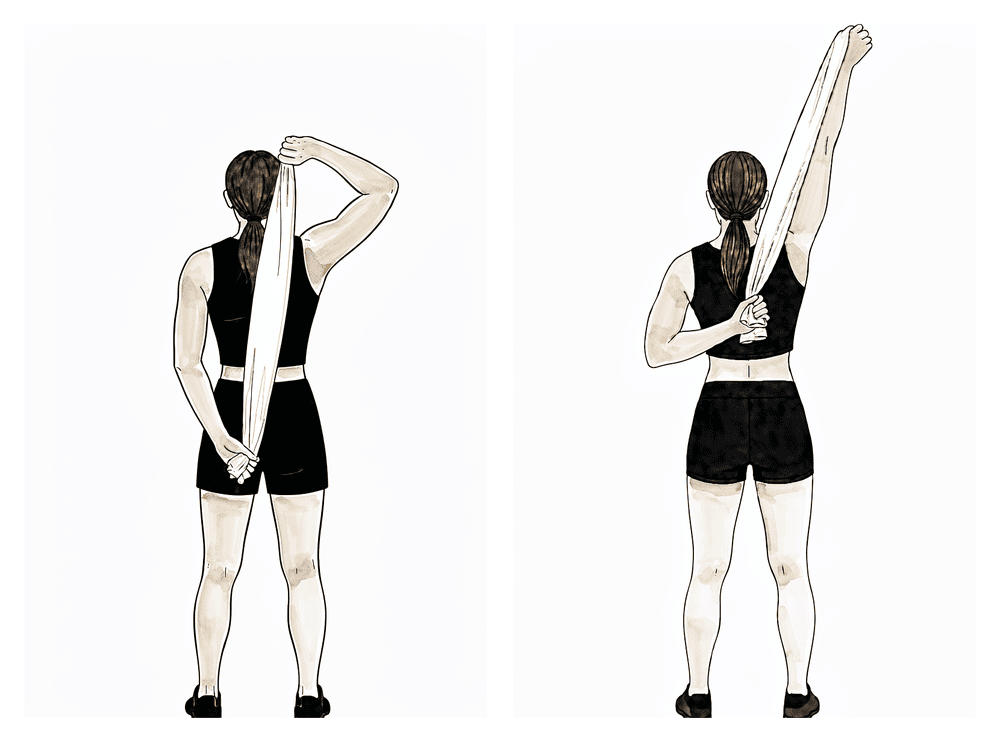
துண்டு உதவியுடன் முதுகுக்குப் பின்னால் நீட்சி
உங்கள் முதுகுக்குப் பின்னால் ஒரு துண்டைப் பிடியுங்கள்: நல்ல கை தோள்பட்டைக்கு மேலாகவும், அறுவை சிகிச்சை செய்த கை முதுகின் கீழ்ப்பகுதியிலும் இருக்க வேண்டும். நீட்சி உணரும் வரை, அறுவை சிகிச்சை செய்த கையை முதுகின் மேல்நோக்கி மெல்ல நகர்த்த, நல்ல கையால் துண்டை மேல்நோக்கி மென்மையாக இழுங்கள்; பின்னர் விடுங்கள். முதுகுக்குப் பின்னால் செல்லும் அசைவு கடைசியாகத் திரும்புபவற்றுள் ஒன்று; எனவே மென்மையாகவே முன்னேறுங்கள்.
உங்கள் இயன்முறை சிகிச்சையாளர் வழிகாட்டியபடி
Kieran Hirpara 4.0
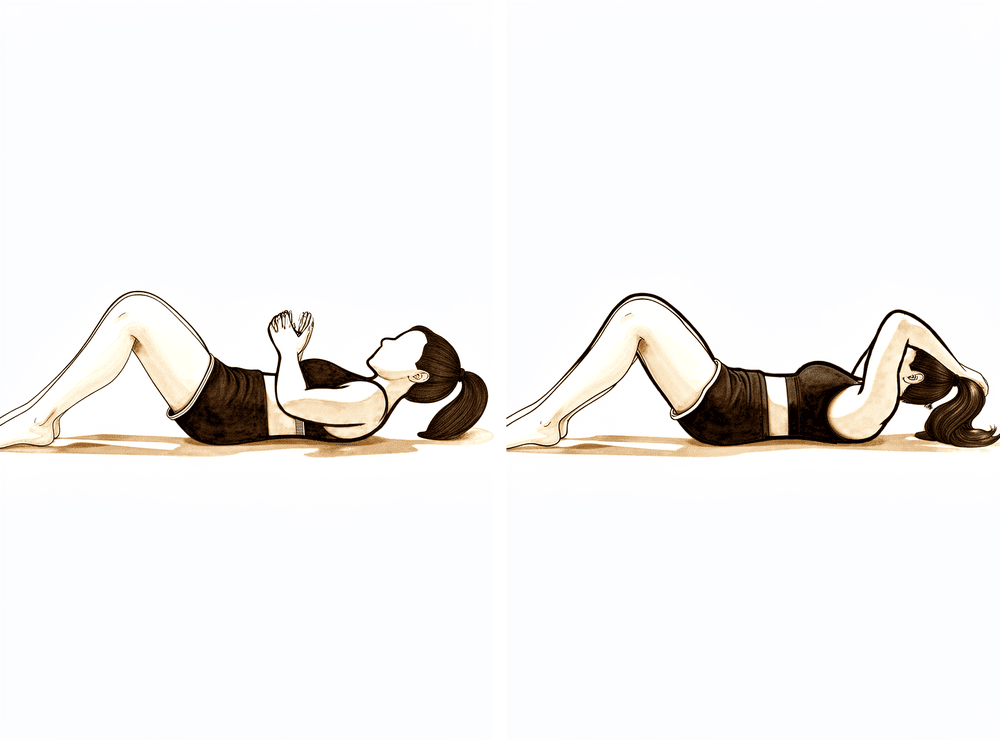
கைகளைத் தலைக்குப் பின்னால் கோர்த்தல்
இரு கைகளையும் தலைக்குப் பின்னால் கோர்த்து, தோள்பட்டையின் முன்புறத்தில் நீட்சி உணரும் வரை முழங்கைகளை வெளிப்புறமாகவும் பின்னோக்கியும் மென்மையாக விரியுங்கள். சிறிது நேரம் பிடித்து, பின்னர் தளர்த்துங்கள். கையை உயர்த்திய நிலையில் மீதமுள்ள வெளிப்புறச் சுழற்சி வரம்பை இது மீட்டெடுக்கிறது.
உங்கள் இயன்முறை சிகிச்சையாளர் வழிகாட்டியபடி
Kieran Hirpara 4.0
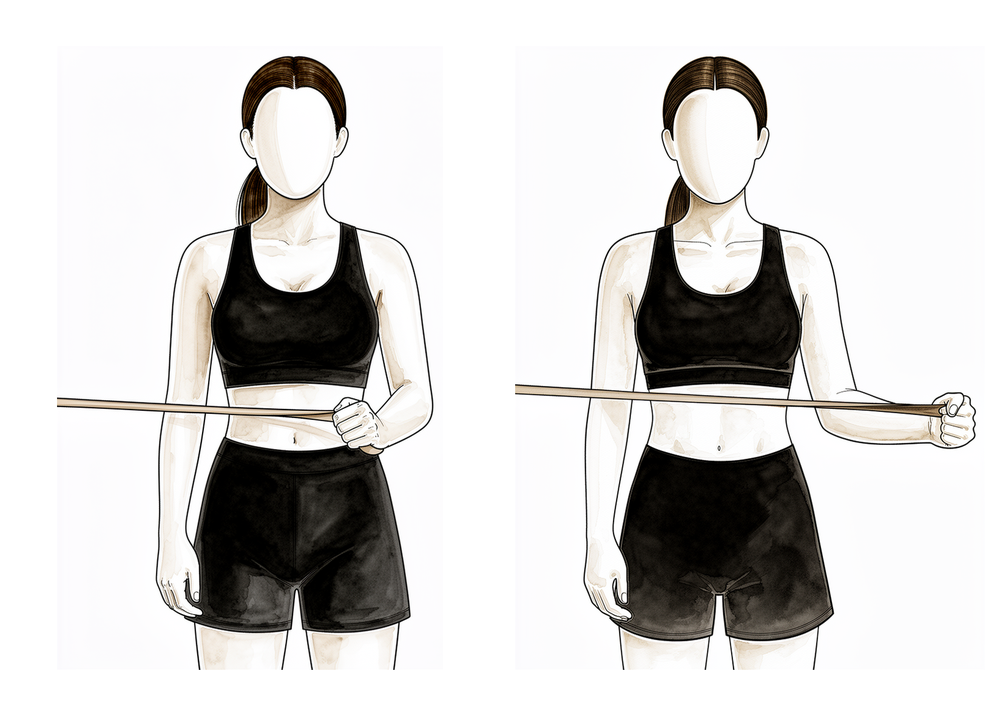
90 டிகிரியில் வெளிப்புறச் சுழற்சி
ஒரு எலாஸ்டிக் பட்டையைப் பிடித்தபடி, முழங்கையைச் செங்கோணத்தில் மடக்கி, கையைப் பக்கவாட்டில் தோள்பட்டை உயரம் வரை உயர்த்துங்கள். பட்டையின் எதிர்ப்புக்கு எதிராக முன்கையை மேல்நோக்கிச் சுழற்றுங்கள் — புறங்கை மேல்நோக்கிச் செல்லும்படி; பின்னர் மெதுவாகத் திரும்புங்கள். அசைவும் கட்டுப்பாடும் நன்றாக இருந்தால் செய்யக்கூடிய, சுழற்சி தசைநாண் பட்டைக்கான உயர்நிலைப் பயிற்சி இது.
உங்கள் இயன்முறை சிகிச்சையாளர் வழிகாட்டியபடி
Kieran Hirpara 4.0
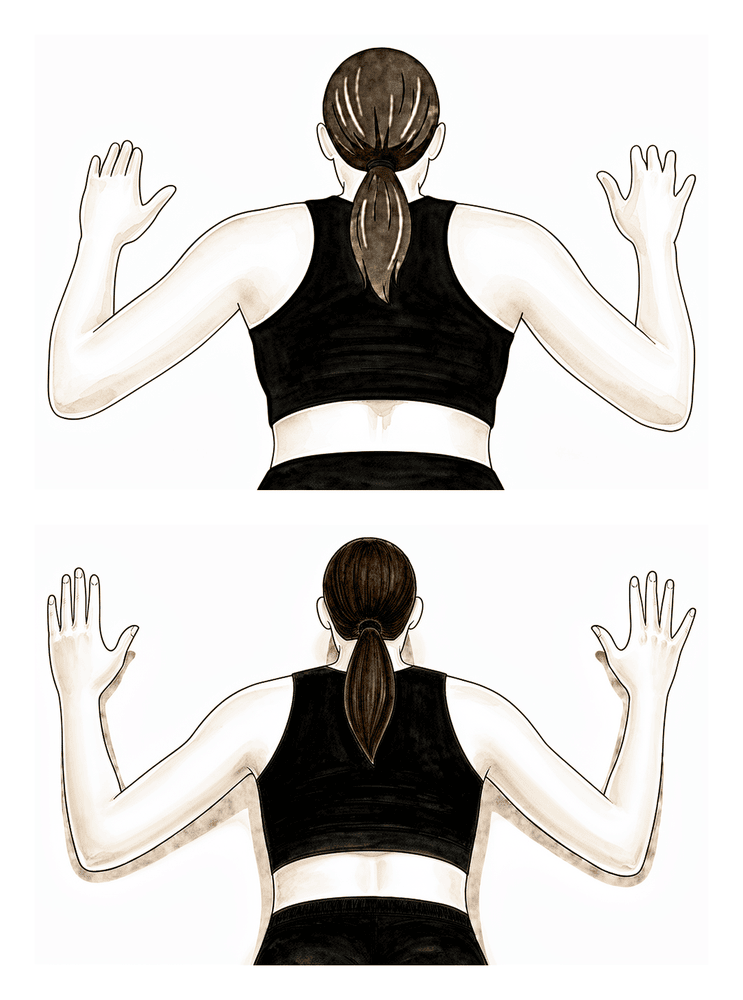
குப்புறப் படுத்து W
கைகள் தொங்கியபடி குப்புறப் படுங்கள். தோள்பட்டை எலும்புகளை ஒன்றாக அழுத்தி, முழங்கைகளைப் பின்னோக்கியும் கீழ்நோக்கியும் இழுத்துக் கைகளை 'W' வடிவமாக்குங்கள்; பின்னர் மெதுவாக இறக்குங்கள். மூட்டை நிலையாக வைத்திருக்கும் தோள்பட்டை எலும்பின் கீழ்த் தசைகளை இது வலுப்படுத்துகிறது.
உங்கள் இயன்முறை சிகிச்சையாளர் வழிகாட்டியபடி
Kieran Hirpara 4.0
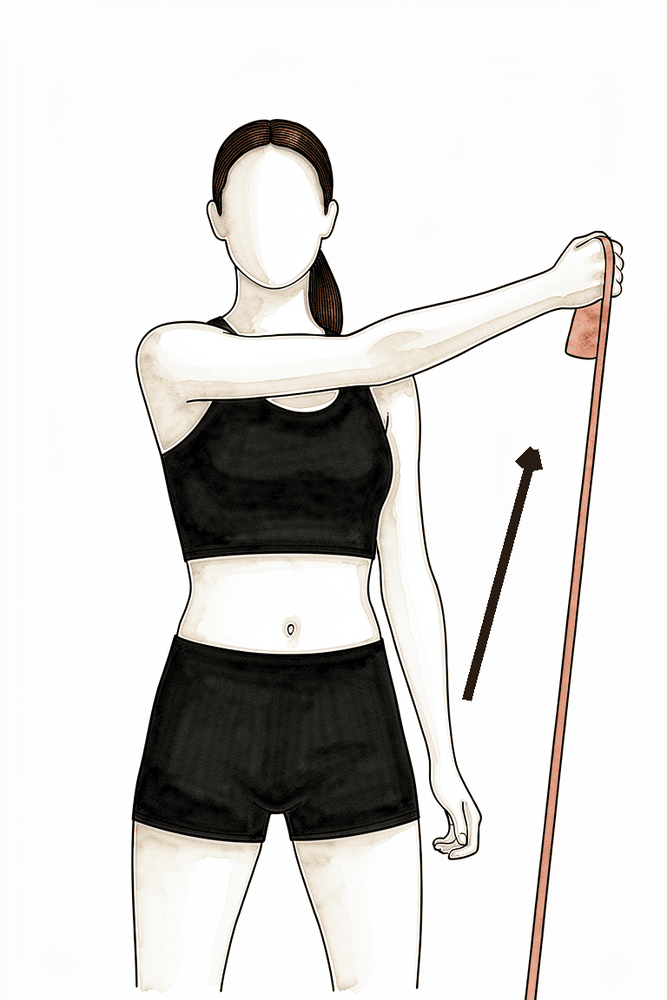
குறுக்குவாட்டுப் பட்டை அசைவு (D1)
ஒரு எலாஸ்டிக் பட்டையைப் பிடித்து, உங்கள் உடலின் முன்புறத்தின் குறுக்கிலிருந்து மேல்நோக்கியும் எதிர்ப் பக்கமாக வெளிநோக்கியும் குறுக்குவாட்டில் இழுத்து, பின்னர் மெதுவாகத் திரும்புங்கள். அன்றாடம் கையை நீட்டும்போது தோள்பட்டை எப்படி இயங்குகிறதோ அப்படியே இந்தக் குறுக்குவாட்டு அசைவுகள் அதைப் பயிற்றுவிக்கின்றன.
உங்கள் இயன்முறை சிகிச்சையாளர் வழிகாட்டியபடி
Kieran Hirpara 4.0
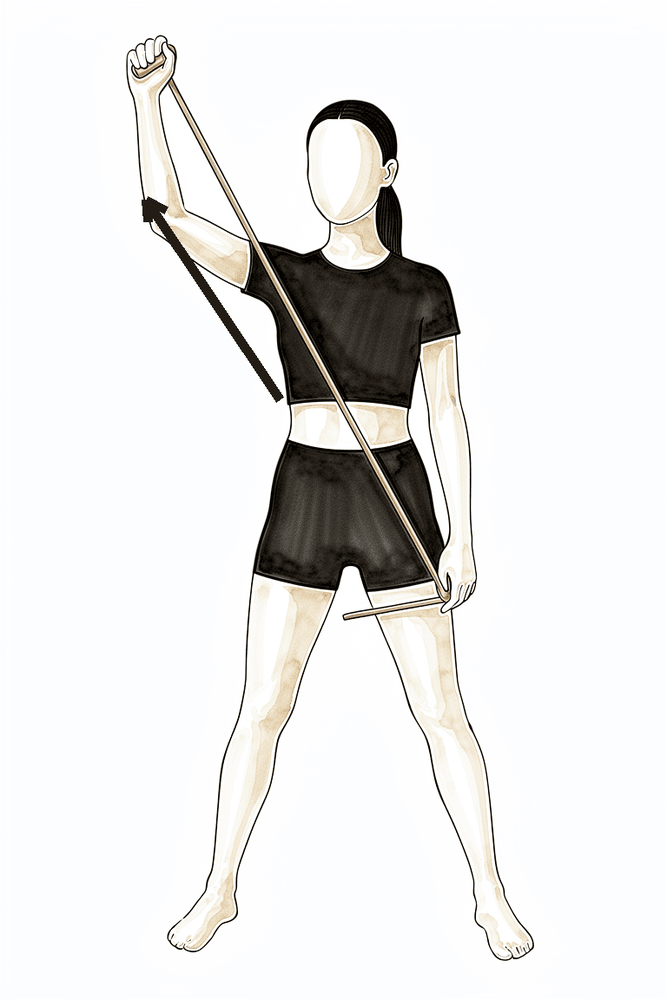
குறுக்குவாட்டுப் பட்டை அசைவு (D2)
ஒரு எலாஸ்டிக் பட்டையைத் தாழ்வாக, உங்கள் உடலின் குறுக்கே பிடித்து, பின்னர் அதைக் குறுக்குவாட்டில் மேல்நோக்கியும் பக்கவாட்டில் தலைக்கு மேலும் இழுங்கள் — கட்டைவிரல் மேல்நோக்கி இருக்கும்படி முடித்து, மெதுவாகத் திரும்புங்கள். அகன்ற வரம்பு முழுவதும் கட்டுப்பாட்டைக் கட்டியெழுப்பும் இரண்டாவது குறுக்குவாட்டு அசைவு இது.
உங்கள் இயன்முறை சிகிச்சையாளர் வழிகாட்டியபடி
Kieran Hirpara 4.0
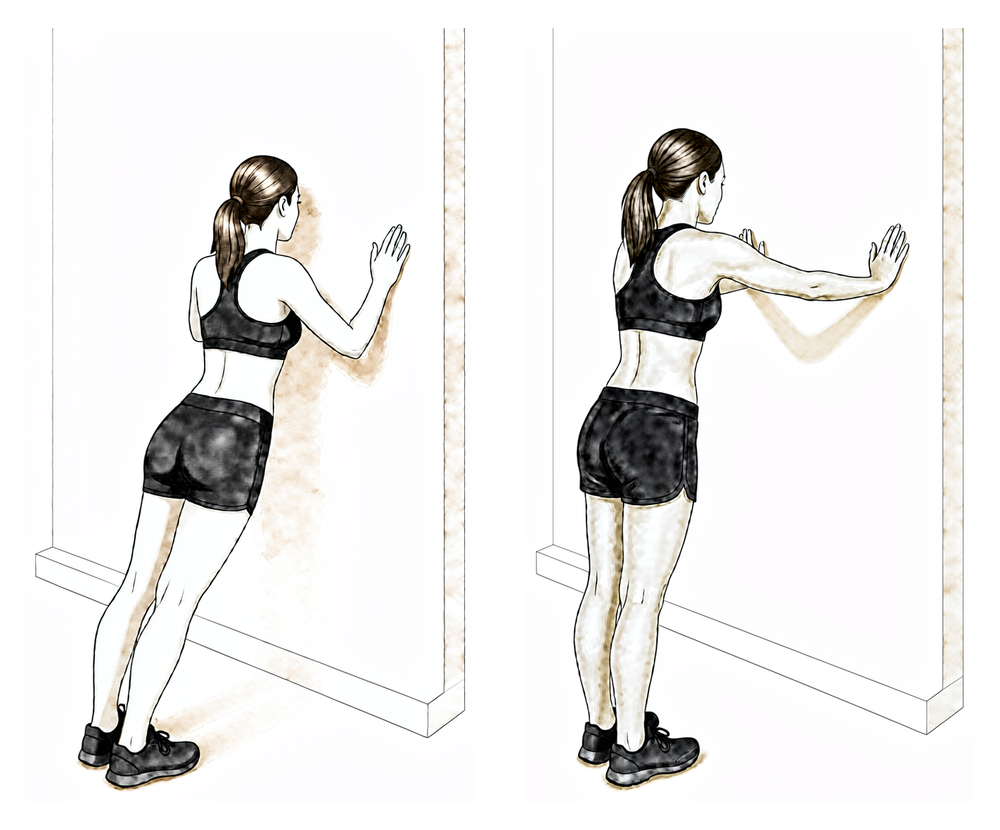
சுவர் புஷ்-அப்
ஒரு சுவரை நோக்கி நின்று, கைகளைத் தோள்பட்டை உயரத்தில் சுவரில் வையுங்கள். முழங்கைகளை மடக்கி மார்பைச் சுவரை நோக்கிக் கொண்டு சென்று, பின்னர் திரும்பத் தள்ளுங்கள்; உச்சியில், உங்கள் மேல் முதுகு சுவரிலிருந்து விலகி வளைவாகும்படி சற்று மேலும் தள்ளுங்கள். முன்னேறுவதற்கு முன் சுவரிலேயே தொடங்குங்கள் — தோள்பட்டை எலும்புகளைக் கட்டுப்பாட்டுடன் வையுங்கள்.
உங்கள் இயன்முறை சிகிச்சையாளர் வழிகாட்டியபடி
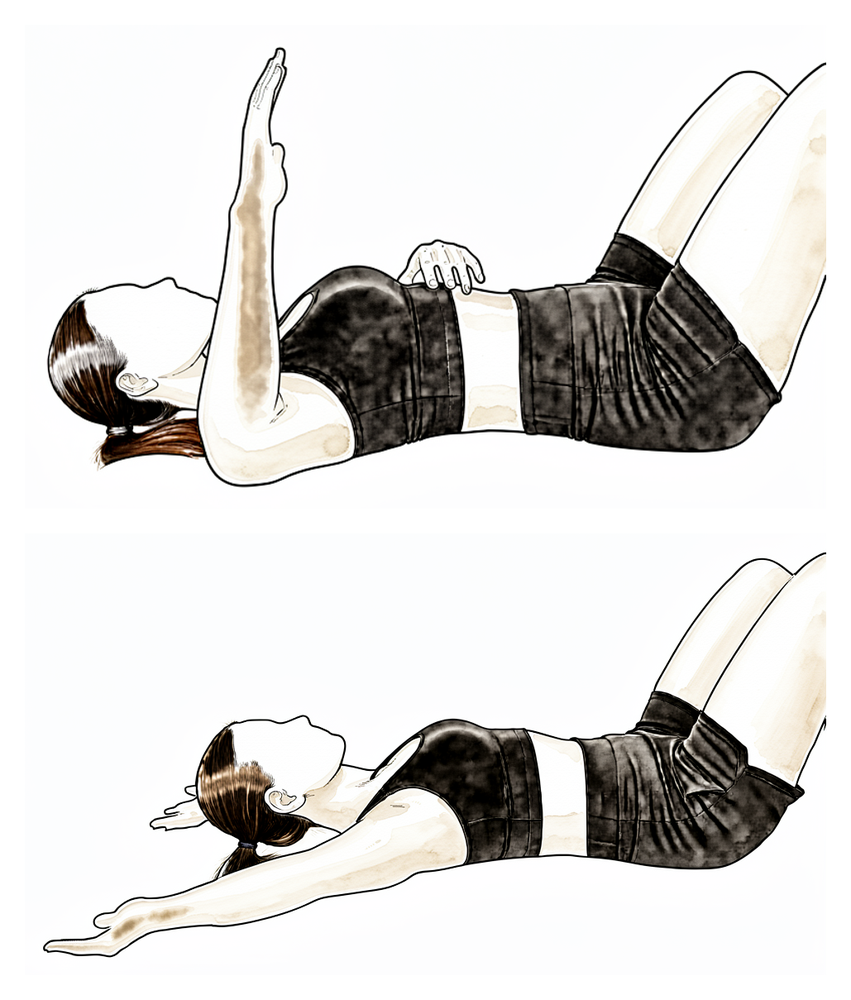
Kieran Hirpara 4.0
90/90 நிலையில் வெளிப்புறச் சுழற்சி (பட்டையுடன்)
கை பக்கவாட்டில் தோள்பட்டை உயரத்தில் நீட்டி, முழங்கை செங்கோணத்தில் மடங்கியிருக்க, ஓர் இலகுவான பட்டைக்கோ எடைக்கோ எதிராக முன்கையைப் பின்னோக்கியும் மேல்நோக்கியும் சுழற்றி, பின்னர் மெதுவாக இறக்குங்கள். உயர்த்திய (எறியும்) நிலையில் சுழற்சி தசைநாண் பட்டையின் வலிமையை இது கட்டியெழுப்புகிறது.
குறைந்த எதிர்ப்புடன், 10 முதல் 15 முறைகள் கொண்ட 2 முதல் 3 செட்கள்
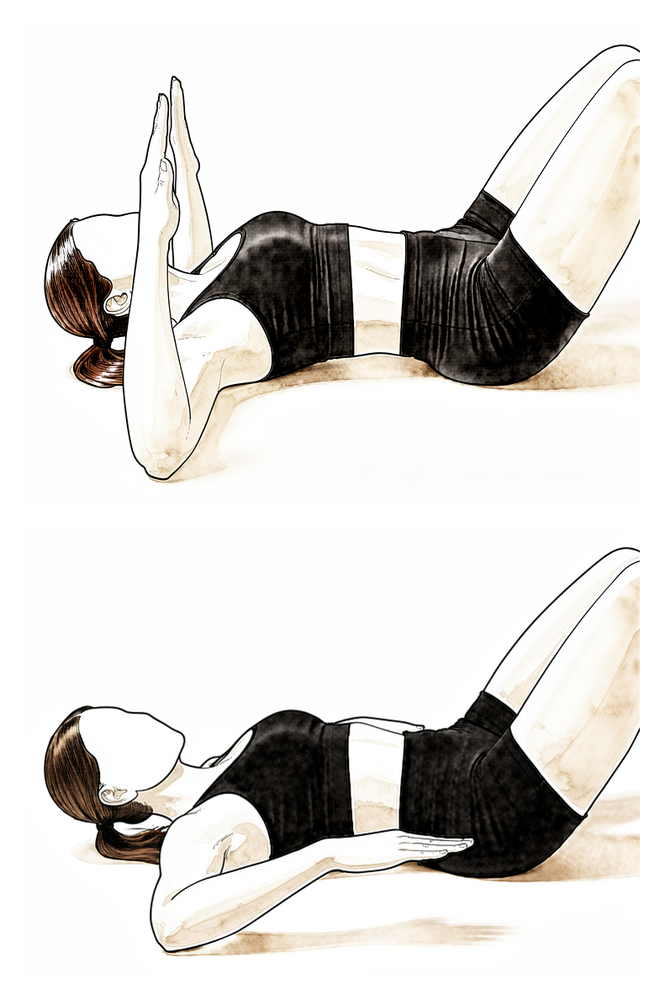
Kieran Hirpara 4.0
90/90 நிலையில் உட்புறச் சுழற்சி (பட்டையுடன்)
கை பக்கவாட்டில் தோள்பட்டை உயரத்தில் நீட்டியிருக்கும் அதே நிலையிலிருந்து, ஓர் இலகுவான பட்டைக்கோ எடைக்கோ எதிராக முன்கையை முன்னோக்கியும் உங்கள் கால்களை நோக்கிக் கீழ்நோக்கியும் சுழற்றி, பின்னர் கட்டுப்பாட்டுடன் திரும்புங்கள்.
குறைந்த எதிர்ப்புடன், 10 முதல் 15 முறைகள் கொண்ட 2 முதல் 3 செட்கள்
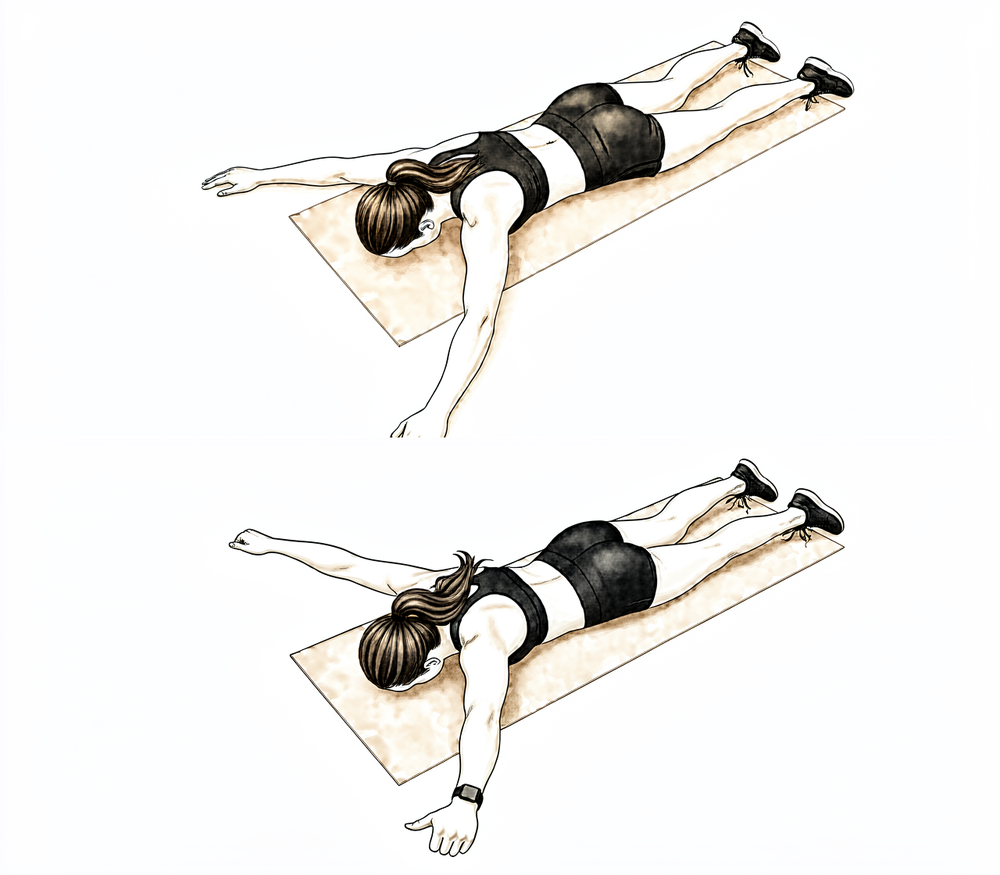
Kieran Hirpara 4.0
குப்புறப் படுத்து Y (தோள்பட்டை எலும்பின் கீழ்த் தசைகள்)
குப்புறப் படுத்து, அறுவை சிகிச்சை செய்த கையைத் தலைக்கு மேலாகவும் சுமார் 45° கோணத்தில் வெளிப்புறமாகவும் நீட்டி Y வடிவத்தை உருவாக்குங்கள்; கட்டைவிரல் மேல்நோக்கி இருக்கட்டும். தோள்பட்டை எலும்பைக் கீழ்நோக்கியும் பின்னோக்கியும் இழுத்து, கையைப் பரப்பிலிருந்து சிறிது உயர்த்தி, பின்னர் மெதுவாக இறக்குங்கள். இலகுவாக வையுங்கள் — இது தோள்பட்டை எலும்பின் கீழ்த் தசைகளை இலக்காகக் கொள்கிறது.
உங்கள் இயன்முறை சிகிச்சையாளர் வழிகாட்டியபடி — இலகுவாக, அதிக எண்ணிக்கையில்
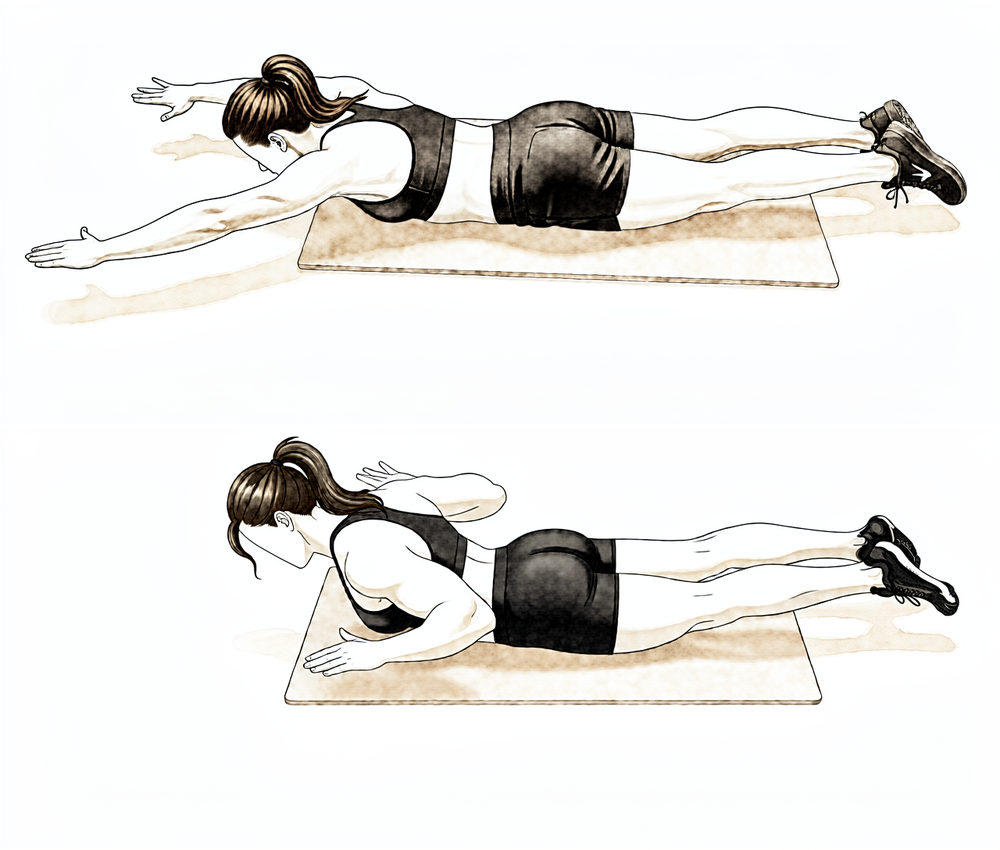
Kieran Hirpara 4.0
குப்புறப் படுத்து இழுப்பு (prone row)
அறுவை சிகிச்சை செய்த கை தரையை நோக்கிக் கீழே தொங்கியபடி குப்புறப் படுங்கள். தோள்பட்டை எலும்பை உங்கள் முதுகெலும்பை நோக்கி உள்ளிழுத்து அழுத்தியபடி, முழங்கையைக் கூரையை நோக்கி மேல்நோக்கி இழுத்து, பின்னர் மெதுவாக இறக்குங்கள். எடை இல்லாமல் தொடங்கி, அசைவைக் கட்டுப்பாட்டுடன் வையுங்கள்.
உங்கள் இயன்முறை சிகிச்சையாளர் வழிகாட்டியபடி
பழுதுபார்ப்பு முதிர்ச்சியடைந்து, அசைவு பெரும்பாலும் மீட்டெடுக்கப்பட்ட நிலையில், வலிமையை மீண்டும் கட்டியெழுப்புவதில் கவனம் திரும்புகிறது. முன்பு அனுமதிக்கப்படாத நீட்சிகள் (உடலின் குறுக்கேயும், முதுகுக்குப் பின்னால் மேல்நோக்கியும்) இப்போது அசைவு வரம்பின் இறுதி டிகிரிகளை வென்றெடுக்கப் பயன்படுத்தப்படுகின்றன. எதிர்ப்புப் பயிற்சி எலாஸ்டிக் பட்டைகளிலிருந்து இலகுவான எடைகளுக்கு முன்னேறுகிறது; புஷ்-அப்ஸ் முதலில் சுவருக்கு எதிராகத் தொடங்கி, பின்னரே முன்னேறுகிறது. ஜிம் அடிப்படையிலான எடைப் பயிற்சி பொதுவாகச் சுமார் 16-ஆம் வாரத்திலிருந்து மீண்டும் தொடங்கப்படுகிறது; தொடக்கத்தில் வரம்பிடப்பட்ட அசைவுடனும் இலகுவான சுமையுடனும். கனமான தலைக்கு மேலான தூக்குதலும், வலுவாகத் தள்ளுவதும் இழுப்பதும் இந்தக் கட்டத்திலும் தவிர்க்கப்படுகின்றன.
உங்கள் இயன்முறை சிகிச்சையாளருக்கு:
இலக்குகள்
- எல்லாத் தளங்களிலும் முழு சுய மற்றும் பிறர் அசைக்கும் அசைவு வரம்பு
- சுழற்சி தசைநாண் பட்டை மற்றும் தோள்பட்டை எலும்பை நிலைப்படுத்தும் தசைகளின் படிப்படியான வலிமை, தாங்குதிறன், நரம்பு–தசைக் கட்டுப்பாடு
- விளையாட்டுக்கே உரிய சுமைக்குக் கட்டம் கட்டமாகத் திரும்பத் தயார்படுத்துதல்
சிகிச்சை மேலாண்மை
- பல திசைகளிலும் இறுதி வரம்பு நீட்சி: உடலின் குறுக்கே நீட்சி, முதுகுக்குப் பின்னால் உட்புறச் சுழற்சி, கைகளைத் தலைக்குப் பின்னால் கோர்த்தல், ஸ்லீப்பர் நீட்சி (sleeper stretch), 90 டிகிரி பக்கவாட்டு உயர்த்தலில் (abduction) வெளிப்புறச் சுழற்சி
- இயங்குநிலைத் திட்டத்தில் படிப்படியாக அதிகரிக்கும் எதிர்ப்பு (தோராயமாக 0.5–2.5 kg) சேர்க்கப்படுகிறது: பக்கவாட்டில் படுத்து வெளிப்புறச் சுழற்சி, குப்புறப் படுத்து இழுப்பு, குப்புறப் படுத்துக் கையைப் பின்னோக்கி உயர்த்துதல், குப்புறப் படுத்து 'T' மற்றும் 'Y' வடிவங்கள், நின்றபடி ஸ்கேப்ஷன்
- தெராபேண்ட் முன்னேற்றங்கள்: 'T' வடிவங்கள், 'W' வடிவங்கள், குறுக்குவாட்டு (diagonal) அசைவுகள், 90 டிகிரியில் உட்புற மற்றும் வெளிப்புறச் சுழற்சி
- மூடிய சங்கிலி (closed-chain) பயிற்சி: சுமார் 12-ஆம் வாரத்திலிருந்து சுவர் புஷ்-அப்ஸ், தாங்கும் திறனுக்கேற்ப முன்னேற்றுதல்
- சுமார் 16-ஆம் வாரத்திலிருந்து இயந்திர அடிப்படையிலான எடைப் பயிற்சி: வரம்பிடப்பட்ட அசைவு, இலகுவான சுமை (இழுப்புகள், மேலிருந்து கீழ் இழுத்தல், பைசெப்ஸ் மற்றும் டிரைசெப்ஸ்; தள்ளும் (pressing) பயிற்சி எச்சரிக்கையுடன் மீண்டும் தொடங்கப்படுகிறது)
- தாள ரீதியான நிலைப்படுத்தல், உடல் நிலை உணர்வு, தோள்பட்டை எலும்பு–மேற்கை எலும்பு ஒத்திசைவுப் பயிற்சிகள்
முன்னெச்சரிக்கைகள்
- கனமாகத் தூக்குவதையும் — குறிப்பாகத் தலைக்கு மேல் — வலுவாகத் தள்ளுவதையும் இழுப்பதையும் தவிர்த்தல்
- வலுப்படுத்துதல் வலியில்லாமல் இருக்க வேண்டும்; அறிகுறிகளைத் தூண்டும் இறுதி வரம்புச் சுமைக்கு முன்பே நிற்க வேண்டும்
- அசைவு வரம்பு முழுவதும் தோள்பட்டை எலும்பின் கட்டுப்பாட்டைப் பராமரித்தல்: தோள்பட்டையைக் காதை நோக்கித் தூக்குதலோ ஈடுசெய்யும் அசைவோ தோன்றினால் சுமையைக் குறைத்தல்
அடுத்த கட்டத்துக்குச் செல்வதற்கான அளவுகோல்கள்
- எல்லாத் திசைகளிலும் செயல்பாட்டு வரம்புகளுக்குள் சுய மற்றும் பிறர் அசைக்கும் தோள்பட்டை அசைவு
- அறிகுறிகள் மீண்டும் தூண்டப்படாமல் படிப்படியான வலுப்படுத்துதல் திட்டத்தைத் தாங்க முடிதல்
கட்டம் IV — விளையாட்டுக்கும் கனமான வேலைக்கும் திரும்புதல் (வாரம் 18 முதல்)
இறுதிக் கட்டம், கடுமையான வேலை, தலைக்கு மேலான சுமை, விளையாட்டு ஆகியவற்றுக்குக் கட்டம் கட்டமாகத் திரும்புவது. வலுப்படுத்துதல் திட்டத்தின் மேல் பிளையோமெட்ரிக் (plyometric) மற்றும் விளையாட்டுக்கே உரிய பயிற்சிகள் அடுக்கப்படுகின்றன; எறிதல், நீச்சல், கோல்ஃப், ராக்கெட் விளையாட்டுகளுக்குத் திரும்புவதை இடைவெளித் திட்டங்கள் வழிநடத்துகின்றன. உடல் உரசும் மற்றும் மோதல் விளையாட்டுகளுக்குத் திரும்ப, அறுவை சிகிச்சையிலிருந்து பொதுவாகச் சுமார் நான்கு முதல் ஆறு மாதங்கள் ஆகும்; இது முழு அசைவு, வலிமை, கையின் மீதான நம்பிக்கை ஆகியவற்றை மீண்டும் பெறுவதைப் பொறுத்தது. மோதல் விளையாட்டு வீரர்களுக்கு வெளியிடப்பட்ட திட்டங்கள் சில சமயங்களில் நீண்ட காலம், சுமார் ஒன்பது மாதங்கள் வரை, நீடிக்கின்றன. வலிமை விளையாட்டு வீரர்களும் பொதுவாக இதே போன்ற காலவரையறைக்குள் தங்கள் வழக்கமான பயிற்சியை நோக்கி மீண்டும் கட்டியெழுப்புகிறார்கள். இறுதி அனுமதியை உங்கள் இயன்முறை சிகிச்சையாளரும் அறுவை சிகிச்சை நிபுணரும் வழிநடத்துவார்கள்; சில மோதல் விளையாட்டு வீரர்கள் திரும்பிய முதல் பருவத்தில் தோள்பட்டை ஆதரவுக் கருவி (brace) அணியத் தேர்ந்தெடுக்கிறார்கள்.
உங்கள் இயன்முறை சிகிச்சையாளருக்கு:
இலக்குகள்
- முழு அசைவு வரம்பைப் பராமரித்தல்
- நோயாளியின் வேலை மற்றும் விளையாட்டின் தேவைகளுக்கு ஏற்ப வலிமை, சக்தி, தாங்குதிறன் ஆகியவற்றை முன்னேற்றுதல்
- உடல் உரசும் மற்றும் தலைக்கு மேலான விளையாட்டுகளுக்கு, அளவுகோல்களின் அடிப்படையில் கட்டம் கட்டமாகத் திரும்புதல்
சிகிச்சை மேலாண்மை
- கட்டம் III வலுப்படுத்துதல் திட்டத்தைத் தொடர்ந்து முன்னேற்றுதல்
- மூடிய சங்கிலி முன்னேற்றங்கள்: நிலையற்ற பரப்புகளுக்குப் புஷ்-அப் முன்னேற்றம், சுவரில் பந்துப் பயிற்சி
- எறிதல் மற்றும் தலைக்கு மேலான விளையாட்டு வீரர்களுக்குப் பிளையோமெட்ரிக் பயிற்சிகள்: ரீபவுண்டரில் எறிதல், எடையுள்ள பந்துப் பயிற்சி, சுவரில் பந்தைத் தட்டுதல், வேகம் குறைக்கும் பயிற்சிகள்
- எறிதல், கோல்ஃப், டென்னிஸ், நீச்சல் ஆகியவற்றுக்கான இடைவெளி விளையாட்டுத் திட்டங்கள்
- செயல்பாட்டுக்கும் தொழிலுக்கும் உரிய இயக்கச் சங்கிலி (kinetic chain) வலிமையும் தாங்குதிறனும்
முன்னெச்சரிக்கைகள்
- முழு அசைவு வரம்பு, மீட்டெடுக்கப்பட்ட வலிமை, அறுவை சிகிச்சை நிபுணரின் அனுமதி ஆகியவை இருந்தால் மட்டுமே உடல் உரசும் மற்றும் மோதல் விளையாட்டுகளுக்குத் திரும்புதல்
- முன்னேற்றம் தொடர்ந்து அறிகுறிகளின் வழிகாட்டலிலேயே: வலியோ நிலையற்ற உணர்வோ தோன்றினால், ஒரு படி பின்வாங்குங்கள்
உங்கள் நெறிமுறைக்குப் பிறகு
மேலே உள்ள கட்டங்கள், AC மூட்டு நிலைப்படுத்தல் மற்றும் மறுகட்டமைப்புக்காக வெளியிடப்பட்ட மறுவாழ்வு நெறிமுறைகளிலிருந்து எடுக்கப்பட்டவை: Massachusetts General Brigham Sports Medicine, Massachusetts General Hospital-இன் விளையாட்டு மருத்துவ AC மூட்டு மறுகட்டமைப்புத் திட்டம், UK தோள்பட்டைப் பிரிவுகளின் ACJ நிலைப்படுத்தல் வழிகாட்டுதல்கள், மற்றும் பொதுவில் கிடைக்கும் AC மூட்டு மறுகட்டமைப்பு நெறிமுறைகளின் ஒரு முறைப்படுத்திய திறனாய்வு (systematic review). வார வரம்புகள் நிலையானவை அல்ல, வழக்கமானவை; வெளியிடப்பட்ட திட்டங்களும் வேறுபடுகின்றன. உங்கள் பழுதுபார்ப்பும் அசைவும் எப்படி மீள்கின்றன என்பதன் அடிப்படையில், கிளினிக்குடன் இணைந்து பணியாற்றும் உங்கள் இயன்முறை சிகிச்சையாளர் உங்கள் தொடர் மறுவாழ்வுப் பயிற்சிக்குத் தனிப்பட்ட முறையில் வழிகாட்டுவார். இந்தப் பக்கம் கிளினிக்கின் பொதுவான மீட்சி ஆலோசனைகளுடன் இணைந்து செயல்படுகிறது; அறுவை சிகிச்சைக்குப் பிந்தைய வலியைக் கையாளுதல் மற்றும் காயப் பராமரிப்பு பக்கங்களைப் பாருங்கள். அறுவை சிகிச்சை பற்றியும் அது சிகிச்சையளிக்கும் காயம் பற்றியும் அறிய, AC மூட்டு நிலைப்படுத்தல் பக்கத்தைப் பாருங்கள். இந்த நெறிமுறைக்குப் பின்னால் உள்ள சான்றுகள் (மறுகட்டமைப்பு, சீரமைப்பு இழப்பு (loss of reduction) குறித்த மருத்துவ இலக்கியம், மற்றும் மறுவாழ்வுப் பயிற்சி ஆய்வுகள்) சான்றுகள் பகுதியில் சுருக்கமாகத் தரப்பட்டுள்ளன; அது இந்தப் பக்கத்தின் மேலே PDF-ஆகக் கிடைக்கிறது.
Evidence & references
This is the clinical evidence summary written for health professionals. It is technical, and it lists the research this page was built from. You do not need to read it to understand your treatment or to make a decision about it.
Topic scope: Post-operative rehabilitation after acromioclavicular (AC) joint stabilisation / reconstruction for a high-grade AC joint dislocation (Rockwood type III–V) — restoring the alignment between the clavicle and scapula with a coracoclavicular (CC) suspensory device (suture-button / endobutton construct), with or without a biological tendon graft (semitendinosus / pectoralis minor) and with or without a direct AC ligament reconstruction. This page also summarises the operative/non-operative evidence that frames the rehabilitation choices. It is the clinician-facing companion to the patient protocol.
Defining principle of the surgical rehab here — PROTECT the construct. Unlike a capsular release (where the enemy is re-stiffening and rehab is immediate aggressive ROM), AC joint stabilisation is a protect-the-repair pathway, closer in spirit to a rotator-cuff or instability repair. The reconstruction has to resist the constant downward pull of gravity on the weight of the arm — the exact deforming force that displaced the joint in the first place. A suspensory suture-button or tendon graft has no early intrinsic strength; biological healing of the CC/AC ligaments and tunnel incorporation takes weeks to months, and the dominant early complication is loss of reduction before that healing matures. So the rehab is deliberately conservative: the sling carries the weight of the arm (typically ~6 weeks), active elevation and any downward traction on the arm are avoided early, ROM is restricted (no elevation > 90°, no cross-body, no reaching behind the back) for the first 6 weeks, strengthening waits until the construct has matured (~12 weeks), and return to contact/collision sport is deferred to ~4–6 months. Motion progression and protection are the two levers; the single most important point distinguishing this protocol from the capsular-release inversion is that here, time and protection are the friends, not the enemy.
A. THE OPERATION & WHY REHAB IS PROTECTIVE
A high-grade AC dislocation tears the AC and coracoclavicular (conoid + trapezoid) ligaments, allowing the clavicle to rise relative to the acromion under the weight of the arm. Surgical stabilisation aims to restore the CC distance and let the ligaments heal in a reduced position. Contemporary constructs are predominantly:
- CC suspensory fixation — a suture-button / endobutton loop passed through clavicular and coracoid tunnels (e.g. flip-button, single- or double-tunnel). Restores vertical stability.
- + Biological augmentation — a free tendon graft (semitendinosus allograft/autograft, or the pectoralis minor / coracoacromial ligament in Weaver–Dunn-type procedures) to reconstruct the CC ± AC ligaments. The anatomy of the pectoralis minor tendon has been characterised specifically for this use [pec minor anatomy, JSES 2007].
- + Direct AC reconstruction — adding an AC-level construct to the CC reconstruction improves horizontal stability; combined CC + AC reconstruction gives better radiographic reduction and lower reoperation rates than isolated CC reconstruction in pooled data.
The structural properties of the reconstructed CC complex have been measured biomechanically: reconstructions restore much, but not all, of the intact ligament's stiffness and load to failure [Structural Properties, Am J Sports Med 2000]. This is the mechanical basis for protecting the construct early — the graft/button is weaker than the native ligament until it heals and incorporates.
B. EVIDENCE BY THEME
1. Operative vs non-operative — only high grades benefit from surgery
- Type I–II AC injuries are managed non-operatively. Type III is genuinely controversial and most are treated non-operatively first; type IV–V are the usual operative indications [ACJ Injuries: Evidence-based Treatment, JAAOS 2018]. A network meta-analysis of RCTs for acute Rockwood III–V found no single surgical technique clearly superior, and that surgery's advantage over non-operative care is modest and grade-dependent [network MA, JSES 2023].
- Hook-plate fixation of acute dislocations improved radiographic but NOT clinical outcomes versus non-operative treatment [Hook-plate RCT, JBJS 2017] — a caution that radiographic reduction does not automatically translate into a better patient outcome, and a reason the hook plate (which requires removal) is not the preferred construct here.
- The Rockwood classification itself has only moderate reliability between observers [Rockwood reliability, JSES 2021], which is part of why type III decision-making is debated.
2. Loss of reduction is the dominant complication — and it shapes the rehab
- Loss of reduction (the clavicle drifting back up) is the most frequent radiographic failure after suspensory-device stabilisation. Clavicular tunnel widening correlates with post-operative loss of reduction in an implant-dependent way [tunnel widening, Arthroscopy 2023] — i.e. the construct and tunnel position matter.
- Radiographic failure and reoperation rates after ACJ reconstruction are non-trivial [radiographic failure / reoperation, Bone Joint J 2016]; one suspensory-device series reported ~10–11% revision for loss of reduction / implant failure (suture fatigue, button escape, coracoid stress fracture, deep infection) [web: suspensory-device cohort].
- Adding the AC-level reconstruction and a biological graft improves radiographic reduction and lowers reoperation versus isolated CC suture-button [web: combined CC+AC reviews].
- Complications after operative treatment of high-grade injuries are well catalogued [complications, JSES 2023] — they include loss of reduction, coracoid/clavicle fracture, hardware problems and infection.
Rehab implication: because the early failure mode is mechanical loss of reduction under arm-weight loading, the early phase forbids active elevation, lifting, downward traction on the arm and weight-bearing through the arm — the patient protects the construct while the ligaments and tunnels heal.
3. Outcomes and return to sport are generally good — but timeline is conservative
- Anatomic CC reconstruction with semitendinosus graft for chronic dislocation gives good clinical and radiological results [semitendinosus reconstruction, KSSTA 2020].
- Sports activity after anatomic flip-button stabilisation is generally restored, with most athletes returning to their pre-injury sport, though return is gradual [flip-button sport, KSSTA 2016].
- Delayed (chronic) reconstruction with a modern suspensory device does not increase fixation failure or major complications versus acute fixation [web: delayed reconstruction].
4. The rehab protocol itself is consensus/expert, not RCT-derived — and it is highly variable
A systematic review of publicly available ACJ-reconstruction rehabilitation protocols found they are widely variable: sling duration ranged 3–8 weeks (the modal recommendation was 6 weeks, in 8/18 protocols), active ROM commonly began at ~6 weeks (6/20 protocols), and heavy/strenuous shoulder use was typically prohibited for a further ~6 weeks beyond the initial 6-week protection period [Cheema et al., Arthrosc Sports Med Rehabil 2021]. There is no high-level RCT defining the optimal post-op regimen — phase timings are expert/consensus.
The patient protocol's phase boundaries (0–6 / 6–12 / 12–18 weeks, sling 6 weeks, return to contact sport ~4–6 months) sit squarely within this published range and match the Massachusetts General Brigham / MGH Sports Medicine ACJ-reconstruction guideline (Phase I 0–6 wk, Phase II 7–12 wk, Phase III 13–18 wk) and similar surgeon protocols (e.g. Dickens: 6-week sling, return to all activity months 4–6).
C. PHASED POST-OP TIMELINE (consistent with the patient protocol)
| Phase | Window | Sling | ROM | Strengthening | Notes |
|---|---|---|---|---|---|
| I — Protecting the repair | Weeks 0–6 | Yes, ~6 wk whenever up; worn for sleep weeks 0–3 (arm-weight loads the repair even lying down) | Pendulum + passive/assisted elevation to 90° max in scapular plane; assisted ER to ~30°; NO active elevation, no cross-body, no behind-the-back | Hand/wrist/elbow AROM; scapular setting; sub-maximal pain-free isometric IR/ER only | No driving while in the sling (~6 wk). No lifting > ~0.5 kg, no carrying, no leaning/pushing up on the arm, no letting the arm hang unsupported — each loads the construct |
| II — Restoring movement | Weeks 6–12 | Wean off | Progress assisted → active ROM; build toward full by ~12 wk (~15°/week as a guide); behind-the-back introduced gradually (to beltline) | Light elastic-band cuff + scapular work begins (rows, IR/ER, serratus punch); side-lying ER, prone row/T/Y | Lift to ~1 kg; avoid forceful push/pull, push-ups, overhead and cross-body lifting |
| III — Strengthening | Weeks 12–18 | Off | Full ROM goal; end-range stretches (cross-body, behind-back, sleeper) now used to win final range | Progressive resistance ~0.5–2.5 kg; wall push-ups from ~wk 12; machine weights from ~wk 16 (limited range, light load) | Construct matured; still avoid heavy overhead and forceful push/pull |
| IV — Return to sport / heavy work | Week 18 onward | Off | Maintain full ROM | Plyometrics, sport-specific & interval programs; occupation-specific kinetic-chain loading | Return to contact/collision sport ~4–6 months (collision athletes / some occupations longer, up to ~9 mo); criteria-based clearance; some wear a brace first season back |
(Phase boundaries from the MGH/Mass General Brigham ACJ-reconstruction guideline; return-to-sport windows from the flip-button sport series and surgeon protocols; all within the variability documented by Cheema et al. 2021.)
D. KEY CONTROVERSIES / EVIDENCE QUALITY
- Type III — operate or not? The most-debated grade; most are trialled non-operatively first. No clear winner in RCT-level data, compounded by only-moderate reliability of the Rockwood grade itself. Moderate / conflicting.
- Which construct? Network MA shows no single technique clearly superior for acute III–V. Combined CC + AC reconstruction (± graft) gives better radiographic reduction and lower reoperation than isolated CC suture-button, but at the cost of complexity. Hook plates improve radiographs but not clinical scores and need removal. Moderate.
- Loss of reduction vs clinical outcome. Radiographic loss of reduction is common yet often clinically well-tolerated — radiographic and patient-reported outcomes diverge. This tempers how aggressively reduction should be chased. Moderate.
- The rehab protocol is consensus, not trial-derived, and published protocols vary widely (sling 3–8 wk; Cheema 2021). The patient page's timings are typical, not RCT-validated. Weak / consensus.
E. EVIDENCE-STRENGTH FLAGS (summary)
- STRONG (RCT / SR-MA): hook-plate improves radiographic but not clinical outcomes vs non-operative (RCT, JBJS 2017); network meta-analysis of RCTs for acute III–V shows no clearly superior technique (JSES 2023).
- MODERATE (cohorts / biomechanical / SR): anatomic semitendinosus CC reconstruction outcomes (KSSTA 2020); sports return after flip-button stabilisation (KSSTA 2016); loss-of-reduction / tunnel-widening drivers (Arthroscopy 2023; Bone Joint J 2016); complications of high-grade operative treatment (JSES 2023); reconstructed-CC biomechanics (AJSM 2000); combined CC+AC > isolated CC for reduction/reoperation; delayed reconstruction safety.
- WEAK / CONSENSUS ONLY: the post-operative rehabilitation protocol itself — no defining RCT; protocols are expert/consensus and highly variable (Cheema 2021; sling 3–8 wk). Rockwood classification reliability only moderate (JSES 2021).
CITATIONS
RAG corpus (180,000+ Orthopaedic articles)
- Anatomy of the pectoralis minor tendon and its use in acromioclavicular joint reconstruction. J Shoulder Elbow Surg. 2007. DOI: 10.1016/j.jse.2006.09.007
- Clavicular tunnel widening after acromioclavicular stabilization shows implant-dependent correlation with postoperative loss of reduction. Arthroscopy. 2023. DOI: 10.1016/j.arthro.2023.05.014
- Acromioclavicular joint injuries: evidence-based treatment. J Am Acad Orthop Surg. 2018. DOI: 10.5435/jaaos-d-17-00105
- Review of Weaver and Dunn on treatment of acromioclavicular injuries, especially complete acromioclavicular separation. J ISAKOS. 2019. DOI: 10.1136/jisakos-2019-000299
- Structural properties of the intact and the reconstructed coracoclavicular ligament complex. Am J Sports Med. 2000. DOI: 10.1177/03635465000280010201
- Complications after operative treatment of high-grade acromioclavicular injuries. J Shoulder Elbow Surg. 2023. DOI: 10.1016/j.jse.2023.03.019
- Sports activity after anatomic acromioclavicular joint stabilisation with flip-button technique. Knee Surg Sports Traumatol Arthrosc. 2016. DOI: 10.1007/s00167-016-4287-7
- Anatomic reconstruction of the coracoclavicular and acromioclavicular ligaments with semitendinosus tendon graft for the treatment of chronic acromioclavicular joint dislocation provides good clinical and radiological results. Knee Surg Sports Traumatol Arthrosc. 2020. DOI: 10.1007/s00167-020-06285-x
- Hook-plate fixation in patients with acute acromioclavicular joint dislocation improved radiographic but not clinical outcomes compared with nonoperative treatment. J Bone Joint Surg Am. 2017. DOI: 10.2106/jbjs.16.00582
- Radiographic failure and rates of re-operation after acromioclavicular joint reconstruction. Bone Joint J. 2016. DOI: 10.1302/0301-620x.98b4.35935
- Treatment options for acute Rockwood type III–V acromioclavicular dislocations: a network meta-analysis of randomized controlled trials. J Shoulder Elbow Surg. 2023. DOI: 10.1016/j.jse.2023.01.039
- A relook at the reliability of Rockwood classification for acromioclavicular joint injuries. J Shoulder Elbow Surg. 2021. DOI: 10.1016/j.jse.2021.01.016
Literature (URLs)
- Cheema SG, Hermanns C, Coda RG, et al. Publicly accessible rehabilitation protocols for acromioclavicular joint reconstruction are widely variable. Arthrosc Sports Med Rehabil. 2021;3(2):e427–e433. https://doi.org/10.1016/j.asmr.2020.10.007 (sling 3–8 wk, modal 6 wk; active ROM ~6 wk; further ~6 wk before heavy use)
- Acromioclavicular joint injuries: effective rehabilitation (review). PMC. https://pmc.ncbi.nlm.nih.gov/articles/PMC8169819/
- Delayed acromioclavicular joint reconstruction using a modern tunnelled suspensory device does not increase the risk of fixation failure or major complications. PubMed. https://pubmed.ncbi.nlm.nih.gov/35781084/
- Low rate of substantial loss of reduction immediately after hardware removal following ACJ stabilization using a suspensory fixation system. KSSTA. https://link.springer.com/article/10.1007/s00167-022-06978-5
- Minimum 10-year outcomes after arthroscopically assisted anatomic coracoclavicular ligament reconstruction for type III and V AC joint injuries. ScienceDirect. https://www.sciencedirect.com/science/article/pii/S2666638325001835
Published rehab protocols (URLs — basis for the phase structure)
- Massachusetts General Brigham Sports Medicine. Rehabilitation guideline for acromioclavicular joint reconstruction (including coracoclavicular ligament reconstruction). https://www.massgeneral.org/assets/MGH/pdf/orthopaedics/sports-medicine/physical-therapy/rehabilitation-protocol-for-acromioclavicular-joint-reconstruction.pdf (Phase I 0–6 wk sling, Phase II 7–12 wk, Phase III 13–18 wk)
- Dickens JD. AC joint reconstruction protocol (Duke Sports Medicine). https://www.jondickensmd.com/pdf/ac-joint-reconstruction-protocol.pdf (6-week sling worn for sleep; return to all activity months 4–6)
- Chambler A. ACJ stabilisation rehabilitation guidelines. https://www.andrewchambler.com/post/acj-stabilisation-rehabilitation-guidelines
- North Tees and Hartlepool NHS Foundation Trust. Acromioclavicular joint stabilisation — LockDown/Weaver Dunn procedure. https://www.nth.nhs.uk/resources/acromioclavicular-joint-stabilisation-lockdown-weaver-dunn-procedure/
- Stone Clinic. Acromioclavicular (AC) joint reconstruction rehab protocol. https://www.stoneclinic.com/Acromioclavicular-AC-joint-reconstruction-rehab-protocol





