

டிரிக்கர் விரல் விடுவிப்பு (Trigger Finger Release) தகவல்
Mater Private Hospital Rockhampton-இல் டாக்டர் கியரன் ஹிர்பரா செய்யும் டிரிக்கர் விரல் விடுவிப்பு (trigger finger release) அறுவை சிகிச்சைக்குப் பிறகு உங்கள் மீட்சிக்கு இந்த நெறிமுறை (protocol) வழிகாட்டுகிறது. என்ன எதிர்பார்க்கலாம், பின்பற்ற வேண்டிய முன்னெச்சரிக்கைகள், அறுவை சிகிச்சைக்குப் பிந்தைய பயிற்சித் திட்டம் ஆகியவற்றை இது விளக்குகிறது: உங்கள் மறுவாழ்வுப் பயிற்சி (rehabilitation) ஒருங்கிணைந்து இருக்க, இந்தப் பக்கத்தையோ அதன் PDF-ஐயோ உங்கள் இயன்முறை சிகிச்சையாளரிடமோ (physiotherapist) கை சிகிச்சையாளரிடமோ (hand therapist) கொண்டு செல்லுங்கள்.
அறுவை சிகிச்சைக்குப் பிறகு உங்கள் காயம் பற்றி ஏதேனும் கவலை இருந்தால், கிளினிக்கைத் தொடர்பு கொள்ளுங்கள். காயத்தைப் புகைப்படம் எடுத்து, பார்வையிடுவதற்காக மின்னஞ்சலில் அனுப்புவது பெரும்பாலும் உதவியாக இருக்கும்.
என்ன எதிர்பார்க்கலாம்
உங்கள் காயத்தைப் பராமரிப்பது தனியாக விளக்கப்பட்டுள்ளது: இந்த நெறிமுறையின் இறுதியில் இணைக்கப்பட்டுள்ள காயப் பராமரிப்புப் பக்கத்தைப் பாருங்கள்.
உங்கள் காயம் குணமாகும்போது உங்கள் தசைநாண்கள் ஒட்டிக்கொள்வதைத் தடுப்பதற்குக் கீழே உள்ள பயிற்சிகள் மிகவும் முக்கியமானவை. இந்த அறுவை சிகிச்சைக்குப் பிறகு சில சமயங்களில் உங்கள் விரல்களில் உள்ள மூட்டுகள் விறைப்பாகிவிடலாம். இந்த விறைப்பை ஆரம்பத்திலேயே தடுப்பது முக்கியம்; எனவே (உங்கள் மறு கையைப் பயன்படுத்தி) உங்கள் விரலுக்கு உறுதியான, நீண்ட நேர நீட்சிகளைக் கொடுக்குமாறு நீங்கள் ஊக்குவிக்கப்படுகிறீர்கள் — குறிப்பாக விரலை நேராக்குவதற்கு. இந்த வகையான, பிறர் உதவியுடன் செய்யும் (passive) நீட்சி பாதுகாப்பானது; அறுவை சிகிச்சையைப் பாதிக்காது: கப்பி (pulley) ஏற்கெனவே விடுவிக்கப்பட்டுவிட்டது, எனவே ஒரு நீட்சி கலைத்துவிடக்கூடிய எதுவும் உள்ளே இல்லை.
உங்கள் காயம் குணமானதும், இந்தப் பயிற்சிகளைச் செய்வதற்கு முன் உங்கள் கைக்கு 20 நிமிடங்கள் சூடு கொடுங்கள். பயிற்சிகளை முடித்த பிறகு, அழற்சியைத் தடுக்க ஐஸ் வைப்பது உதவியாக இருக்கலாம்.
சில நேரங்களில் கையோ காயமோ உணர்திறன் மிக்கதாக (sensitive) மாறும். இது இயல்பானது; அறுவை சிகிச்சைக்குப் பிறகு உடனடியாகத் தொடங்கி, தினசரி உணர்திறன் தணிப்பு (desensitisation) செய்வதன் மூலம் இதைத் தடுக்கவோ குறைக்கவோ முடியும்: காயத்தின் மீது (கட்டு போட்டிருக்கும்போதே) மென்மையாகத் தட்டுவது அல்லது தேய்ப்பது. இந்த வகையான "உணர்வுப் பின்னூட்டம்" (sensory feedback), தொடுதலையும் மேற்பரப்பின் தன்மையையும் இயல்பாக்கத் தோலுக்கு உதவுகிறது.
முதல் 48 மணி நேரத்தில், வீக்கத்தைக் குறைவாக வைத்திருக்க முயலுங்கள்: கையை உயர்த்தி வையுங்கள், ஐஸ் பயன்படுத்துங்கள், உங்கள் சிகிச்சையாளர் அழுத்தும் கட்டைத் தந்திருந்தால் அதைப் போடுங்கள், வீக்கம் விலகிச் செல்ல விரல்களை மென்மையாக "பம்ப்" செய்யுங்கள் (திறந்து மூடுங்கள்).
வலி அனுமதிக்கும் அளவுக்கு விரைவில், இலகுவான வேலைகளுக்கு (உடை அணிதல், உணவு உண்ணுதல் போன்றவை) கையைப் பயன்படுத்தத் தொடங்குங்கள்; படிப்படியாக அதிகரியுங்கள். அளவுக்கு மீறிச் செய்யாதீர்கள்: ஒரு செயலுக்குப் பிறகு உங்கள் வலியோ வீக்கமோ தெளிவாக அதிகரித்தால், கை சீரடையும் வரை குறைத்துக்கொள்ளுங்கள்; பிறகு மீண்டும் படிப்படியாக அதிகரியுங்கள்.
காயம் முழுமையாகக் குணமானதும், வடு மசாஜ் செய்யத் தொடங்குங்கள்: அறுவைக் கீறலின் மீது உறுதியான வட்டங்கள். வடு பராமரிப்பு பற்றிய மேலும் தகவல்கள் காயப் பராமரிப்புப் பக்கத்தில் உள்ளன.
மீட்சி பற்றிச் சான்றுகள் என்ன சொல்கின்றன
A1 கப்பியைத் திறந்த முறையில் விடுவிப்பது நன்கு நிலைபெற்ற ஒரு அறுவை சிகிச்சை; வெளியிடப்பட்ட மருத்துவ இலக்கியத்தில் இதற்கு வலுவான பதிவு உள்ளது. விரல் சிக்கிக்கொள்வதும் பூட்டிக்கொள்வதும் அறுவை சிகிச்சையாலேயே சரிசெய்யப்படுகிறது: கப்பி பிரிக்கப்பட்டதும் தசைநாண் மீண்டும் சுதந்திரமாக நழுவுகிறது; டிரிக்கர் பிரச்சினை வழக்கமாகத் திரும்பி வருவதில்லை. கிட்டத்தட்ட 1,600 திறந்த முறை விடுவிப்புகள் கொண்ட ஒரு தொடரில், தொடர்ந்த அல்லது திரும்பி வந்த டிரிக்கர் பிரச்சினைக்காக இரண்டாவது அறுவை சிகிச்சை தேவைப்பட்டவர்கள் 1%-க்கும் குறைவானவர்களே; நரம்புக் காயங்களோ ஆழமான தொற்றுகளோ எதுவும் ஏற்படவில்லை [4]. மூன்று ஆண்டுகளுக்கும் மேலான பின்தொடர்தல் கொண்ட ஒரு ஒப்பீட்டு ஆய்வும் அதேபோல், திறந்த முறை விடுவிப்புக்குப் பிறகு அந்தப் பிரச்சினை மீண்டும் வந்த நிகழ்வுகள் எதுவும் இல்லை எனக் கண்டறிந்தது [5].
உள்ளங்கையில் ஏற்படும் வலி முதல் ஒன்று முதல் இரண்டு வாரங்களில் கணிசமாகத் தணிகிறது. ஒரு ஒப்பீட்டு ஆய்வில், திறந்த முறை விடுவிப்புக்குப் பிறகு வலி குறிப்பிடத்தக்க அளவு குறைய ஆன இடைநிலை நேரம் சுமார் ஒரு வாரம் [5]. அதற்குப் பிறகும், இறுக்கமாகப் பிடிக்கும்போது உள்ளங்கையில் சிறிது தொடுவலி, லேசான வீக்கம் அல்லது விரல் விறைப்பு சில வாரங்களுக்கு நீடிக்கலாம். இது இயல்பானது; வடு முதிர்ச்சியடைவதையே இது காட்டுகிறது — அதற்குச் சுமார் மூன்று மாதங்கள் ஆகும் [3]; இந்த நெறிமுறையில் உள்ள உணர்திறன் தணிப்பு, வடு மசாஜ், பயிற்சித் திட்டம் ஆகியவை சரியாக இதைக் கையாளவே வடிவமைக்கப்பட்டுள்ளன. மேலே குறிப்பிட்ட பெரிய தொடரில், இருபது விரல்களில் தோராயமாக ஒன்றுக்கு அறுவை சிகிச்சைக்குப் பிறகு ஒரு பிரச்சினை பதிவாகியிருந்தது; பெரும்பாலும் அது தற்காலிக விறைப்பு அல்லது வடுத் தொடுவலி, இவை சிகிச்சையுடன் தணிந்தன; நீரிழிவு உள்ளவர்களில் அசைவு மீள்வது மெதுவாக இருக்க வாய்ப்புள்ளது, எனவே அந்தக் குழுவில் பயிற்சித் திட்டம் இன்னும் அதிக முக்கியத்துவம் பெறுகிறது [4].
வெளியிடப்பட்ட கை சிகிச்சை நெறிமுறைகள், அறுவை சிகிச்சைக்குப் பிந்தைய முதல் சில நாட்களுக்குள்ளேயே சுய மற்றும் பிறர் உதவியுடனான விரல் அசைவையும் தசைநாண் நழுவல் பயிற்சிகளையும் தொடங்குகின்றன; காயம் குணமானதும் வடு பராமரிப்பையும் உணர்திறன் தணிப்பையும் சேர்க்கின்றன; படிப்படியான பிடி வலுப்படுத்துதலைப் பிறகு மீண்டும் அறிமுகப்படுத்துகின்றன [2][3] — இந்தப் பக்கத்தில் உள்ள திட்டமும் அதே படிநிலை அணுகுமுறையையே பின்பற்றுகிறது. பயிற்சிகளை ஆரம்பத்திலேயே தொடங்குவதுதான், காயம் குணமாகும்போது தசைநாண் நழுவிக்கொண்டே இருக்கவும் மூட்டுகள் நெகிழ்வாக இருக்கவும் வைக்கிறது.
வேலைக்குத் திரும்புவது, உங்கள் வேலை உங்கள் கையிடம் என்ன கேட்கிறது என்பதைப் பொறுத்தது. ஒரு ஒப்பீட்டு ஆய்வில், திறந்த முறை விடுவிப்புக்குச் சுமார் இரண்டு வாரங்களுக்குள் பாதி நோயாளிகள் வேலைக்குத் திரும்பியிருந்தார்கள் [5]; இலகுவான அல்லது மேசை சார்ந்த வேலைகளில் இருப்பவர்கள் பெரும்பாலும் இதைவிட விரைவாகச் சமாளிக்கிறார்கள்; கனமான உடலுழைப்பு வேலை, கீழே உள்ள தூக்குதல் மற்றும் பிடித்தல் கட்டுப்பாடு நீக்கப்படும் வரை காத்திருக்கும்.
ஒரு சமவாய்ப்புக் கட்டுப்பாட்டு ஆய்வு (randomised controlled trial), திறந்த முறை விடுவிப்புக்குப் பிறகு மூன்று மாதங்கள் மேற்பார்வையுடன் அளிக்கப்பட்ட சிகிச்சையையும், தானே செய்யும் வீட்டுப் பயிற்சித் திட்டத்தையும் ஒப்பிட்டது: ஆறு மாதங்களில் ஒட்டுமொத்தச் செயல்பாடு, அசைவு, வலி ஆகியவை இரு குழுக்களிலும் ஒரேமாதிரி இருந்தன; மேற்பார்வையுடனான சிகிச்சையில் பிடி வலிமை மேலும் அதிகமாக மீண்டது; முறையான சிகிச்சையால் தெளிவாகப் பயன் பெற்றவர்கள், அறுவை சிகிச்சைக்கு முன் பன்னிரண்டு மாதங்களுக்கும் மேலாக டிரிக்கர் பிரச்சினை இருந்தவர்களும், வீட்டு வேலை அல்லது இலகுவான வேலை செய்பவர்களுமே [1]. நடைமுறையில், நன்றாகச் செய்யப்படும் வீட்டுப் பயிற்சித் திட்டமே (இந்தப் பக்கத்தில் உள்ள பயிற்சிகள்) பெரும்பாலான நோயாளிகளை மீட்சியின் வழியே கொண்டு செல்கிறது; அறுவை சிகிச்சைக்கு முன் நீண்ட காலமாக விரல் விறைப்பாக இருந்திருந்தாலோ, முன்னேற்றம் மெதுவாக இருந்தாலோ, முறையான கை சிகிச்சை கூடுதல் பயனைத் தருகிறது.
முன்னெச்சரிக்கைகளும் கட்டுப்பாடுகளும்
சுய பராமரிப்பு, உணவு உண்ணுதல், உடை அணிதல், எழுதுதல், தட்டச்சு செய்தல் போன்ற அன்றாட வாழ்க்கைப் பணிகளுக்குக் கையை இலகுவாகச் செயல்பாட்டு ரீதியாகப் பயன்படுத்துவது ஊக்குவிக்கப்படுகிறது. முக்கியமான கட்டுப்பாடுகள்:
- அறுவை சிகிச்சைக்குப் பிறகு 4 வாரங்கள் வரை தூக்குதல், பிடித்தல், எடை தாங்குதல் ஆகியவற்றைத் தவிர்க்கவும்.
- முதல் வாரத்தில் வாகனம் ஓட்டுவது கட்டுப்படுத்தப்படுகிறது; வலி அனுமதித்து, முழு முஷ்டி மூட முடிந்து, வாகனத்தைப் பாதுகாப்பாகக் கட்டுப்படுத்த முடியும் என்றானதும் மீண்டும் தொடங்குங்கள்.
உங்கள் இயன்முறை சிகிச்சையாளருக்கு:
சிகிச்சை மேலாண்மை
- கீழே உள்ள அட்டைகளின்படி வீட்டுப் பயிற்சித் திட்டம்: மணிக்கட்டு மடக்குதல்/நீட்டுதல் நீட்சி; DIP (distal interphalangeal, விரலின் நுனி மூட்டு) மற்றும் PIP (proximal interphalangeal, விரலின் நடு மூட்டு) மூட்டுத் தனிமைப்படுத்தல் (blocking); தசைநாண் நழுவல் (தொடர் A மற்றும் தொடர் B)
- மூட்டு விறைப்பை ஆரம்பத்திலேயே தடுக்க, விரலுக்கு உறுதியான, நீண்ட நேரப் பிறர் உதவி நீட்சிகள் (passive stretches), குறிப்பாக நேராக்கும் திசையில்
- காயம் குணமானதும், பயிற்சிகளுக்கு முன் கைக்கு 20 நிமிடங்கள் சூடு; அழற்சியைத் தடுக்கப் பயிற்சிகளுக்குப் பிறகு ஐஸ்
- அறுவை சிகிச்சைக்குப் பிறகு உடனடியாகத் தொடங்கித் தினசரி உணர்திறன் தணிப்பு (காயத்தின் மீது மென்மையாகத் தட்டுதல் / தேய்த்தல், கட்டு அப்படியே இருக்கும்போது)
- முதல் 48 மணி நேரத்தில் வீக்க மேலாண்மை: உயர்த்தி வைத்தல், ஐஸ், தேவைக்கேற்ப அழுத்தம், மென்மையான விரல் பம்ப்கள்
- வலி அனுமதிக்கும் அளவுக்கு, இலகுவான செயல்பாட்டுப் பயன்பாட்டுக்குப் படிப்படியாகத் திரும்புதல்; செயலுக்குப் பிந்தைய வலி/வீக்கம் அதிகரிப்பதைக் கண்காணித்தல்
- காயம் முழுமையாகக் குணமானதும் வடு மசாஜ் (அறுவைக் கீறலின் மீது உறுதியான வட்டங்கள்)
முன்னெச்சரிக்கைகள்
- அன்றாட வாழ்க்கைப் பணிகளுக்கு (சுய பராமரிப்பு, உணவு உண்ணுதல், உடை அணிதல், எழுதுதல், தட்டச்சு) கையை இலகுவாகச் செயல்பாட்டு ரீதியாக மட்டுமே பயன்படுத்துதல்
- அறுவை சிகிச்சைக்குப் பிறகு 4 வாரங்கள் வரை தூக்குதல், பிடித்தல் அல்லது எடை தாங்குதல் வேண்டாம்
- முதல் வாரத்தில் வாகனம் ஓட்டுவது கட்டுப்படுத்தப்படுகிறது; வலி அனுமதித்து, முழு முஷ்டி மூட முடிந்து, நோயாளி வாகனத்தைப் பாதுகாப்பாகக் கட்டுப்படுத்த முடியும் என்றானதும் மீண்டும் தொடங்கலாம்
எதிர்பார்க்கப்படும் மைல்கற்கள் (அளவுகோல் சார்ந்தவை; வெளியிடப்பட்ட நெறிமுறைகளால் வழிநடத்தப்படுகின்றன [1][2][3])
- 1–2 வாரங்களுக்குள், எளிய வலி நிவாரணியுடன் வலி வசதியான அளவுக்குத் தணிதல் [5]
- 2–3 வாரங்களுக்குள் காயம் குணமாகி, வடு மசாஜும் தொடர்ந்த உணர்திறன் தணிப்பும் நடைமுறையில் இருத்தல் [2][3]
- சுமார் 3 வாரங்களுக்குள் விரலின் முழுச் சுய மடக்குதலும் நீட்டுதலும் (முழு முஷ்டியும் முழுமையான ஒருங்கிணைந்த நீட்டுதலும்), தனிமைப்படுத்தல் மற்றும் தசைநாண் நழுவல் திட்டத்தின் மூலம் மீட்கப்பட்டுப் பராமரிக்கப்படுதல் [2]
- 4 வார தூக்குதல்/பிடித்தல் முன்னெச்சரிக்கை நீங்கியதும், படிப்படியான பிடி மற்றும் கிள்ளு வலுப்படுத்துதல் (எ.கா. பட்டி, putty) அறிமுகப்படுத்தப்பட்டு, முழுச் செயல்பாட்டுப் பயன்பாட்டுக்கு முன்னேறுதல்
- அறுவை சிகிச்சைக்கு முன் 12 மாதங்களுக்கும் மேலாக டிரிக்கர் பிரச்சினை இருந்திருந்தால், நோயாளியின் பணிகள் நீடித்த இலகுவான/நுட்பமான கைப் பயன்பாட்டை உள்ளடக்கியிருந்தால், அல்லது அசைவு வரம்போ பிடி வலிமையோ மெதுவாக மீண்டால், மேற்பார்வையுடனான கை சிகிச்சைக்கு உயர்த்துவதைப் பரிசீலிக்கவும் [1]
இவை உங்கள் கையேட்டில் உள்ள பயிற்சிகள்; அறுவை சிகிச்சைக்குப் பிறகு தொடங்கப்பட்டு, உங்கள் இயன்முறை சிகிச்சையாளரோ கை சிகிச்சையாளரோ வழிகாட்டுவதற்கு ஏற்ப வீட்டில் தொடரப்படுபவை.
உங்கள் பயிற்சிகள்
Kieran Hirpara 4.0
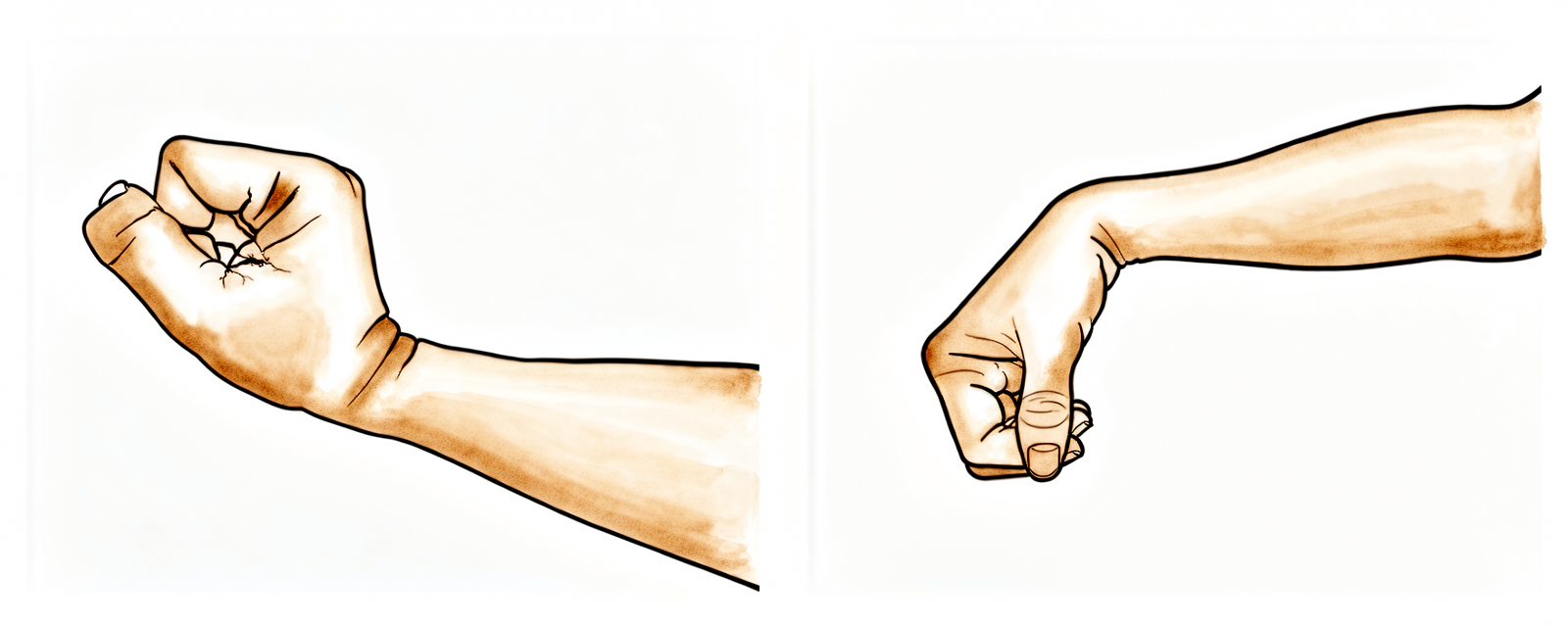
மணிக்கட்டு மடக்குதல் / நீட்டுதல் நீட்சி
உங்கள் முழங்கையை ஒரு மேசையின் மீது (அல்லது உங்கள் முன்கையை மேசையின் அல்லது சாய்வு நாற்காலியின் விளிம்பில்) ஓய்வாக வைத்து, மணிக்கட்டை மென்மையாக முன்னும் பின்னும் ஆட்டுங்கள். சற்று வசதியாக உணர்ந்ததும், மறு கையால் உங்கள் உள்ளங்கையைப் பிடித்து மணிக்கட்டைப் பின்னோக்கித் தள்ளுங்கள் (விரல்கள் தளர்வாக, கூரையை நோக்கி) — 15 வினாடிகள் பிடியுங்கள்; பிறகு மறுபக்கம் (விரல்கள் தளர்வாக, தரையை நோக்கி) — 15 வினாடிகள் பிடியுங்கள். ஒவ்வொரு திசையிலும் 5 முறை திரும்பச் செய்யுங்கள்.
10 முறை, நாளொன்றுக்கு 4–5 முறை
Kieran Hirpara 4.0
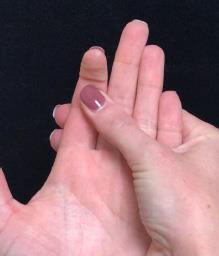
DIP மூட்டுத் தனிமைப்படுத்தல் (DIP joint blocking)
DIP (distal interphalangeal) மூட்டு என்பது உங்கள் விரலின் நுனி மூட்டு. உள்ளங்கை மேல்நோக்கி இருக்கத் தொடங்குங்கள்; பாதிக்கப்பட்ட கையை மறு கையால், நுனி மூட்டுக்குச் சற்றுக் கீழே தாங்கிப் பிடியுங்கள். நுனி மூட்டை வளைத்து நேராக்குங்கள்; ஒவ்வொரு நிலையையும் 3–5 வினாடிகள் பிடித்திருங்கள். நடு மூட்டு வளையாமல் இருக்கத் தேவையான அளவுக்கு மட்டுமே அதைத் தாங்குங்கள். இந்தப் பயிற்சியின்போது மற்ற விரல்கள் அசைந்தால் பரவாயில்லை.
10 முறை, நாளொன்றுக்கு 4 முறை, தினமும்
Kieran Hirpara 4.0
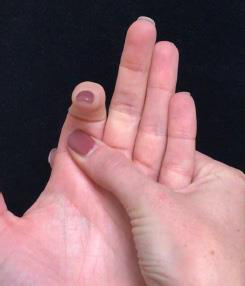
PIP மூட்டுத் தனிமைப்படுத்தல் (PIP joint blocking)
PIP (proximal interphalangeal) மூட்டு என்பது உங்கள் விரலின் நடு மூட்டு. உள்ளங்கை மேல்நோக்கி இருக்கத் தொடங்குங்கள்; பாதிக்கப்பட்ட கையை மறு கையால், இரண்டாவது மூட்டுக்குச் சற்றுக் கீழே தாங்கிப் பிடியுங்கள். நடு மூட்டில் உங்கள் விரலை வளைத்து நேராக்குங்கள்; ஒவ்வொரு நிலையையும் 3–5 வினாடிகள் பிடித்திருங்கள். மற்ற விரல்களும் அசைந்தால் பரவாயில்லை.
10 முறை, நாளொன்றுக்கு 4 முறை, தினமும்
Kieran Hirpara 4.0
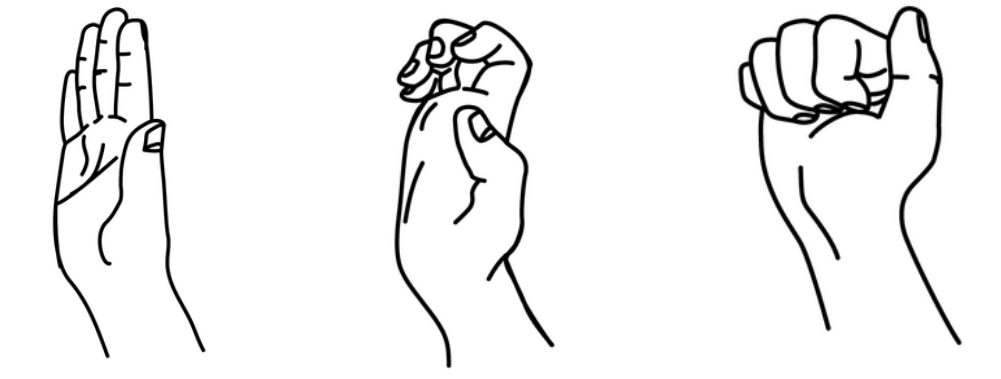
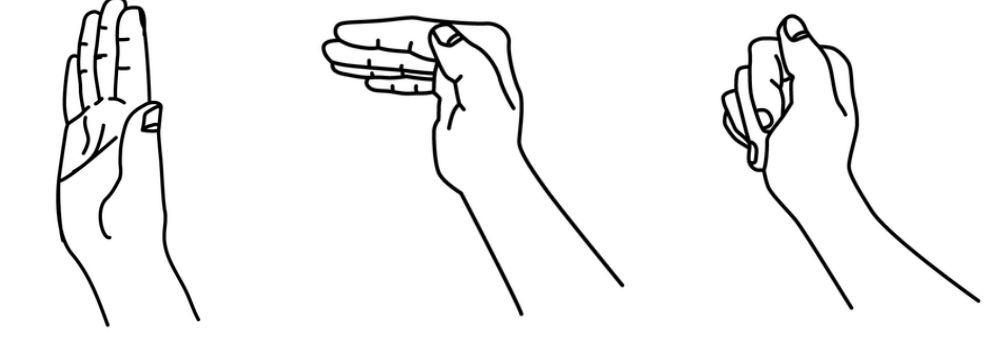
தசைநாண் நழுவல் — தொடர் A
உங்கள் கையை உங்களுக்கு முன்னால் வைத்து, மணிக்கட்டு நேராக இருக்க, எல்லா விரல்களையும் முழுமையாக நேராக்குங்கள் — விரல்கள் முழுமையாக நீளுவதை உறுதிசெய்ய மறு கையைப் பயன்படுத்தலாம் (நிலை 1). மூட்டுக் கணுக்கள் மேல்நோக்கிச் சுட்ட, விரல் நுனிகளை "கொக்கி" நிலைக்கு வளையுங்கள் (நிலை 2). பிறகு கட்டைவிரலை விரல்களின் மீது வைத்து இறுக்கமான முஷ்டி மூடுங்கள் (நிலை 3).
5–10 முறை, நாளொன்றுக்கு 2–3 முறை, தினமும்
Kieran Hirpara 4.0
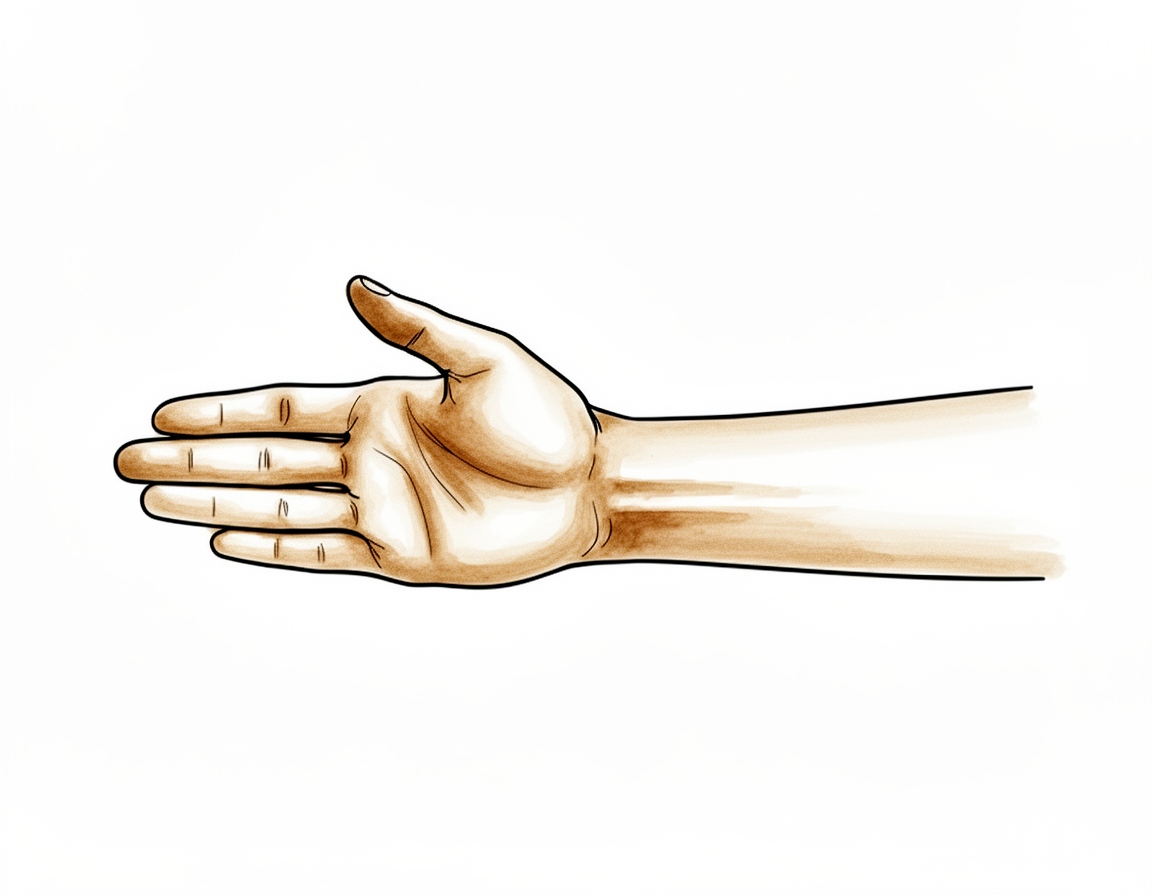
தசைநாண் நழுவல் — தொடர் B
உங்கள் கையை உங்களுக்கு முன்னால் வைத்து, மணிக்கட்டு நேராக இருக்க, எல்லா விரல்களையும் முழுமையாக நேராக்குங்கள் — விரல்கள் முழுமையாக நீளுவதை உறுதிசெய்ய மறு கையைப் பயன்படுத்தலாம் (நிலை 1). அடிப்பகுதி மூட்டுக் கணுவில் வளைத்து, விரல்களை நேராக வைத்தபடி விரல்களால் ஒரு "மேசைத் தட்டு" (tabletop) நிலையை உருவாக்குங்கள் — உங்கள் மணிக்கட்டு முன்னோக்கிச் சரியாமல் பார்த்துக்கொள்ளுங்கள் (நிலை 2). பிறகு விரல்களை நடு மூட்டில் வளைத்து, விரல்களை உள்ளங்கையில் தொடுங்கள் (நிலை 3).
5–10 முறை, நாளொன்றுக்கு 2–3 முறை, தினமும்
Kieran Hirpara 4.0
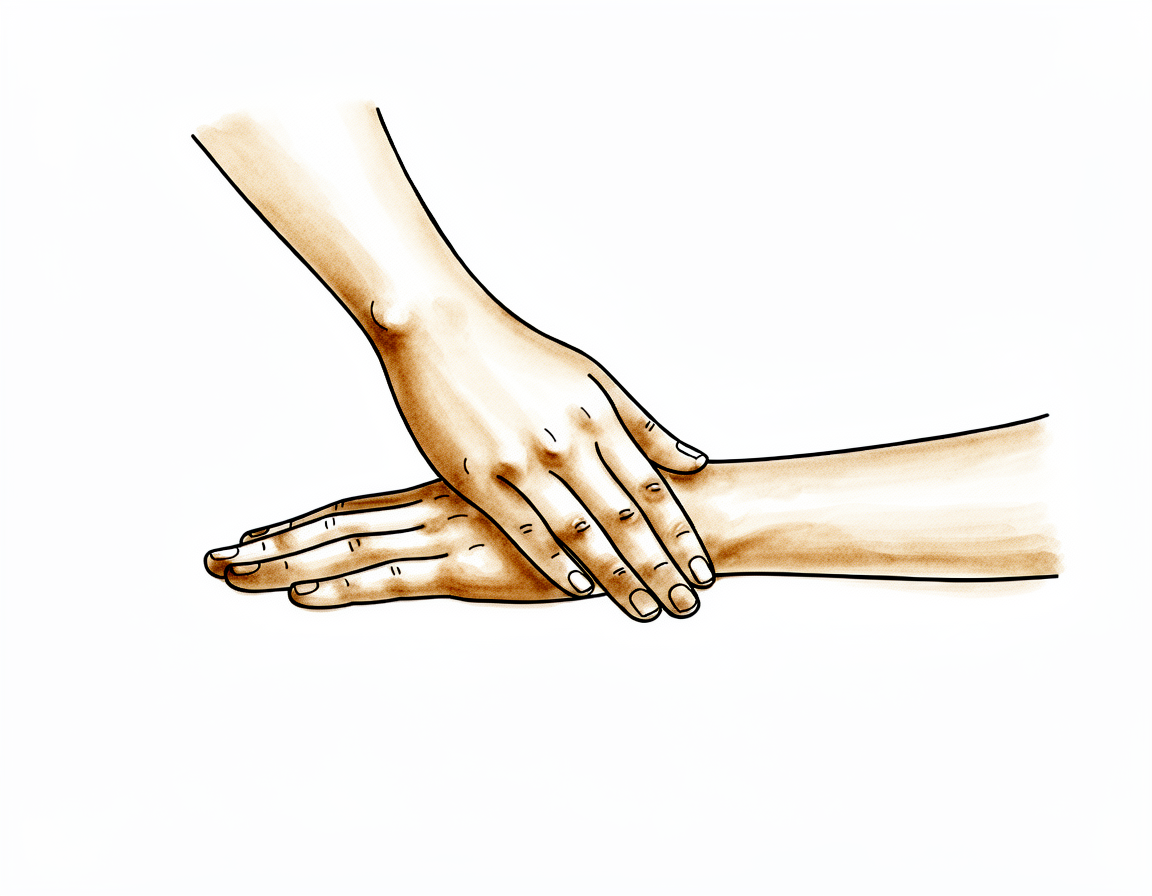
சுய ஒருங்கிணைந்த நீட்டுதல் (active composite extension)
உங்கள் முழங்கையை ஒரு மேசையின் மீது ஓய்வாக வைத்து, விரல்களை முடிந்தவரை நேராக்குங்கள்; பிறகு மறு கையால் சற்று மேலும் தள்ளுங்கள். 5 வரை எண்ணி, தளர்த்துங்கள்.
10 முறை, நாளொன்றுக்கு 3–4 முறை
Kieran Hirpara 4.0
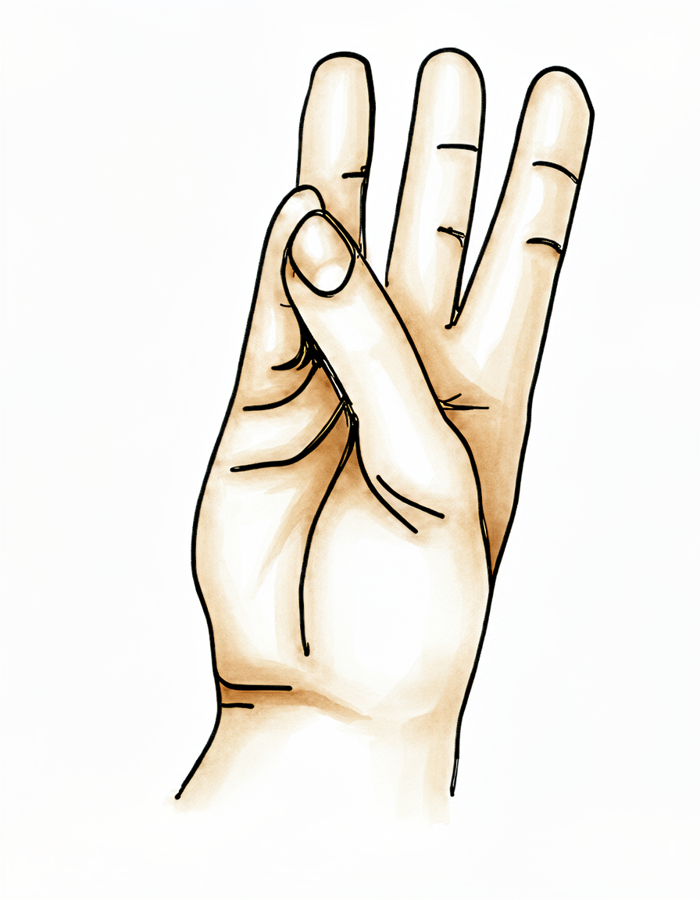
பிறர் உதவியுடனான ஒருங்கிணைந்த நீட்டுதல் (passive composite extension)
உங்கள் கையை உள்ளங்கை கீழ்நோக்கி இருக்கும்படி மேசையின் மீது தட்டையாக வையுங்கள். மறு கையால் புறங்கையின் மீது அழுத்தம் கொடுத்து, உங்கள் உடலை நோக்கி 'மசாஜ்' செய்யுங்கள். 5 வரை எண்ணி, தளர்த்துங்கள்.
10 முறை, நாளொன்றுக்கு 3–4 முறை
Kieran Hirpara 4.0
கட்டைவிரல் எதிர்நிலை (thumb opposition)
விரல்கள் நேராகவும் தளர்வாகவும் இருக்கத் தொடங்குங்கள். உங்கள் கட்டைவிரலின் நுனியை ஆள்காட்டி விரலின் நுனியுடன் தொடுங்கள். 5 வினாடிகள் பிடித்திருந்து, பிறகு தொடக்க நிலைக்குத் திரும்புங்கள்.
10 முறை, நாளொன்றுக்கு 3–4 முறை
டாக்டர் ஹிர்பராவும் உங்கள் கை சிகிச்சையாளரும் வழிகாட்டும்படி மட்டுமே கீழே உள்ள பயிற்சிகளைத் தொடங்குங்கள்; உங்களுக்குத் தரப்பட்ட அசைவு வரம்புக்கும் கட்டுப்பாடுகளுக்கும் உட்பட்டு இருங்கள். தசைநாண் நழுவல் தொடர்களும் தனிமைப்படுத்தல் பயிற்சிகளும், விடுவிக்கப்பட்ட தசைநாண் உறைக்குள் சுதந்திரமாக ஓடிக்கொண்டே இருக்கச் செய்கின்றன; இதனால் அது குணமாகும் வடுவில் ஒட்டிக்கொள்வதில்லை — டிரிக்கர் பிரச்சினை விறைப்பாக உருமாறித் திரும்பி வருவதைத் தடுப்பது இதுவே. சுய மற்றும் பிறர் உதவியுடனான ஒருங்கிணைந்த நீட்டுதல், விரல் முழுமையாக நேராவதைத் தொடர்ந்து சாத்தியமாக்குகிறது; கட்டைவிரல் எதிர்நிலை (thumb opposition) கிள்ளும் திறனை மீண்டும் கட்டியெழுப்புகிறது; மணிக்கட்டு நீட்சி, விரலில் கவனம் இருக்கும்போது மணிக்கட்டு விறைப்பாவதைத் தடுக்கிறது. உள்ளங்கையில் வடுவின் மீது நேரடியாகத் தொட்டால் வலிப்பது சில வாரங்களுக்கு எதிர்பார்க்கப்படுவதே. கூரிய வலியை ஏற்படுத்தும் எதையும் நிறுத்திவிடுங்கள்.
உங்கள் நெறிமுறைக்குப் பிறகு
இந்த நெறிமுறை, Sarah Farrell, BOccThy (தொழில்முறை சிகிச்சை இளங்கலை), அங்கீகரிக்கப்பட்ட கை சிகிச்சையாளர் அவர்களுடன் இணைந்து எழுதப்பட்டது; Extend Rehabilitation-இன் அங்கீகரிக்கப்பட்ட கை சிகிச்சையாளர் Ruby Doolan அவர்களிடமிருந்து அறுவை சிகிச்சைக்குப் பிந்தைய புதுப்பிக்கப்பட்ட மேலாண்மை வழிகாட்டுதலையும் (ஏப்ரல் 2025) இது உள்ளடக்கியுள்ளது. இது கிளினிக்கின் பொதுவான மீட்சி ஆலோசனைகளுடன் இணைந்து செயல்படுகிறது: அறுவை சிகிச்சைக்குப் பிந்தைய வலியைக் கையாளுதல், காயப் பராமரிப்பு மற்றும் கை சிகிச்சையின் அடிப்படைகள் பக்கங்களைப் பாருங்கள். அறுவை சிகிச்சை பற்றி அறிய, டிரிக்கர் விரல் விடுவிப்பு பக்கத்தைப் பாருங்கள்.
மீட்சியின் கட்டமைப்பும் மைல்கற்களும், வெளியிடப்பட்ட டிரிக்கர் விரல் விடுவிப்பு மறுவாழ்வு நெறிமுறைகளாலும் — University of Virginia Hand Center மற்றும் Twin Cities Orthopedics ஆகியவற்றின் நெறிமுறைகள் உட்பட — திறந்த முறை டிரிக்கர் விரல் விடுவிப்பின் வெளியிடப்பட்ட முடிவு ஆய்வுகளாலும் — அறுவை சிகிச்சைக்குப் பிந்தைய மறுவாழ்வு பற்றிய ஒரு சமவாய்ப்புக் கட்டுப்பாட்டு ஆய்வு (Saito et al., Journal of Clinical Medicine, 2023) மற்றும் ஒரு பெரிய பாதக நிகழ்வுத் தொடர் (Bruijnzeel et al., Journal of Hand Surgery, 2012) உட்பட — கூடுதலாக வடிவமைக்கப்பட்டுள்ளன.
மேற்கோள்கள்
[1] Saito T, Nakamichi R, Nakahara R, Nishida K, Ozaki T. The effectiveness of rehabilitation after open surgical release for trigger finger: a prospective, randomized, controlled study. J Clin Med. 2023;12(22):7187. https://pmc.ncbi.nlm.nih.gov/articles/PMC10671987/ [2] University of Virginia Hand Center. Trigger Finger Release Guidelines (post-operative therapy protocol). https://med.virginia.edu/orthopaedic-surgery/wp-content/uploads/sites/242/2015/11/Triggerfingerreleaseprotocol.pdf [3] Meletiou SD, Twin Cities Orthopedics. Post-operative Management of Trigger Release (A1 pulley release). https://tcomn.com/wp-content/uploads/2017/10/Trigger-Release-A1.pdf [4] Bruijnzeel H, Neuhaus V, Fostvedt S, Jupiter JB, Mudgal CS, Ring DC. Adverse events of open A1 pulley release for idiopathic trigger finger. J Hand Surg Am. 2012;37(8):1650–1656. https://pubmed.ncbi.nlm.nih.gov/22763058/ [5] Chanthanapodi P, Aodsup S. Comparative results of percutaneous and open surgery for trigger fingers: a propensity score analysis. Front Surg. 2025;12:1509292. https://pmc.ncbi.nlm.nih.gov/articles/PMC11922895/
Evidence & references
This is the clinical evidence summary written for health professionals. It is technical, and it lists the research this page was built from. You do not need to read it to understand your treatment or to make a decision about it.
Topic scope: (A) the place of surgery in stenosing tenosynovitis (trigger finger/thumb) after failed conservative care (splinting, corticosteroid injection), and (B) post-operative rehabilitation after surgical division of the A1 pulley — open or percutaneous. This is an early-motion pathway: nothing is reconstructed, the catching is mechanically abolished the moment the pulley is divided, and the rehab exists to keep the now-free tendon gliding and the finger joints supple while the wound heals.
Defining principle of the rehab here: A1 pulley release removes the obstruction; it does not create a construct that needs protecting. Once the pulley is divided the flexor tendon glides freely and triggering does not usually recur. So — unlike a tendon repair, and like a carpal-tunnel decompression — the pathway is immediate active motion: full active finger flexion/extension and tendon glides from the first days, oedema and scar care, early light functional use, and a quick return. Most patients need no formal hand therapy at all; supervised therapy is reserved for the minority with pre-existing joint stiffness, long-standing triggering, or slow recovery. The single branch point is whether the finger was already stiff before surgery (long-standing fixed flexion / PIP contracture) — those patients need active therapy to recover motion the release alone cannot restore.
A. WHERE SURGERY SITS IN THE PATHWAY
Trigger finger is usually managed non-operatively first: activity modification, splinting, and corticosteroid injection, which resolves a substantial proportion of digits without surgery. Surgery (A1 pulley release) is reserved for digits that fail injection, recur, or present with a fixed deformity. The corpus contains the comparative evidence underpinning this stepped approach (percutaneous release vs steroid injection; one- vs two-injection regimens; corticosteroid solution choice) — Moderate (RCT). The rehab protocol on the patient page begins after that decision has been made, so this brief concentrates on the surgical and post-surgical evidence.
B. SURGICAL OUTCOMES & RESOLUTION RATES
Open release of the A1 pulley is one of the most reliable operations in hand surgery. The mechanical problem — a thickened tendon catching under a tight pulley — is solved by dividing the pulley, and the result is durable:
- In a series of 1,598 open releases, fewer than 1% required a second operation for persistent or recurrent triggering, with no nerve injuries and no deep infections [Bruijnzeel 2012]. About one digit in twenty had a documented post-operative problem, almost all minor and self-limiting (transient stiffness, scar tenderness). Strong (large cohort).
- Recovery of motion is slower in patients with diabetes, reinforcing the value of the exercise program in that group [Bruijnzeel 2012]. Moderate.
- A propensity-matched comparison with >3 years follow-up found no recurrences after open release, with median time to significant pain reduction of about one week and roughly half of patients back at work within ~2 weeks [Chanthanapodi 2025]. Moderate.
Take-home for rehab: because the operation itself abolishes the triggering, the rehabilitation is not "earning back" a surgical result — it is preventing the two things that can go wrong during healing: tendon adhesion and joint stiffness. Early glide and early extension are the levers.
C. OPEN vs PERCUTANEOUS RELEASE
Both techniques divide the same structure and converge to the same place.
- A Level I meta-analysis of 8 RCTs (548 patients) found no significant difference between open and percutaneous release in revision, complication, or pain rates — both are appropriate options [Casey 2024, J Hand Surg Am]. Strong (meta-analysis of RCTs).
- Larger RCT syntheses show percutaneous release confers faster early functional recovery — better short/mid-term Q-DASH, ~12 days earlier return to work, and shorter analgesic use — while long-term function, grip, motion and complication/revision rates are equivalent. Strong.
- Percutaneous (including ultrasound-guided/sonographically-controlled) technique is supported by multiple corpus series for efficacy and safety, with the main theoretical risks being incomplete release and digital nerve proximity, mitigated by surface landmarks and imaging [corpus percutaneous series]. Moderate.
Rehab implication: the post-operative program is essentially the same for both approaches — early active motion, glides, oedema and scar care. The patient page applies regardless of whether the release was open or percutaneous; percutaneous patients simply tend to be comfortable and back to activity a little sooner.
D. THE ROLE — AND LIMITS — OF POST-OPERATIVE HAND THERAPY
This is the central evidence point for the protocol, and it is one where "more therapy" is not automatically better.
- A prospective RCT compared 3 months of supervised rehabilitation after open
release against a self-directed home exercise program: at six months,
overall function, motion and pain were similar between groups. Supervised
therapy added further grip-strength recovery, and the patients who clearly
benefited from formal therapy were those whose **triggering had been present
12 months pre-operatively and those in housework/lighter-work roles [Saito 2023, J Clin Med]. Moderate (single RCT).
- Published surgeon and hand-therapy protocols (e.g. University of Virginia Hand Center; Twin Cities Orthopedics) start active and passive finger motion and tendon glides within the first days, add scar massage and desensitisation once the wound is healed, and reintroduce graded grip strengthening later — precisely the staged structure of the patient page. Consensus.
Bottom line: a well-performed home program carries most patients through. Formal hand therapy is reserved, not routine — escalate it for long-standing pre-operative triggering, pre-existing joint stiffness/contracture, manual or fine-use occupational demands, or slow motion/grip recovery.
E. COMPLICATIONS
Serious complications are uncommon (roughly <1–4% across series) and most "complications" are minor, self-limiting healing phenomena:
- Digital nerve injury — the most feared complication, particularly relevant to percutaneous technique (blind division near the radial digital nerve of the thumb and index) and to scar/retraction in open release. Rare in experienced hands; transient paraesthesia is more common than true division [corpus complication series]. Moderate.
- Incomplete release / persistent triggering — failure to fully divide the A1 pulley (or an A2/FDS slip contribution); a recognised cause of revision, more often discussed with percutaneous technique. Moderate.
- Recurrent triggering — uncommon after adequate open release (<1% reoperation in the 1,598-digit series) [Bruijnzeel 2012]. Strong.
- Infection — usually superficial; deep infection rare (none in the large open series) [Bruijnzeel 2012]. Strong.
- Bowstringing — a rare complication from excessive proximal pulley loss (A1 plus encroachment on A2); largely avoided by limiting division to A1 [bowstringing case literature]. Weak (case-level).
- Stiffness / flexion contracture / "flare" — the commonest self-limiting problem; transient PIP stiffness, scar tenderness and a post-operative inflammatory flare that settle with the motion, desensitisation and scar program. Recovery is slower in diabetes. Moderate. This is the category the rehabilitation program actively targets.
F. PHASED POST-OP TIMELINE (matches the patient protocol)
| Phase | Window | Protection | Motion / use | Therapy add-ons | Notes |
|---|---|---|---|---|---|
| I — Immediate active motion & oedema control | Day 0–2 | None beyond dressing | Active finger flexion/extension and finger "pumps" from day 1; tendon glides commenced | Elevation, ice, compression if provided; desensitisation (tap/rub over dressed wound) from day 1 | Nothing reconstructed -> motion is the priority; manage swelling actively |
| II — Glide & joint motion | Week 0–2 | None | Tendon glides (Series A/B), DIP & PIP blocking, composite extension; firm passive stretch into extension | Continue desensitisation | Goal: keep tendon gliding, prevent adhesion & stiffness; pain settles substantially (~1 wk) [Chanthanapodi 2025] |
| III — Scar maturation & function | Week 2–4 | Light functional use only | Full active fist + full composite extension by ~3 wk; build light daily-living use | Scar massage (firm circles) once wound healed; heat before / ice after exercises | No lifting/gripping/weight-bearing to ~4 wk; driving limited ~first week (full fist + safe control) |
| IV — Strengthening & return | Week 4+ | None | Graded grip/pinch (e.g. putty) once 4-wk precaution lifts -> full function | Supervised therapy if indicated (long-standing trigger, stiffness, slow recovery, occupational demand) [Saito 2023] | Manual workers return later than desk/light roles |
Timings are criteria-based and drawn from published surgeon/hand-therapy protocols; they are typical, not trial-mandated.
G. KEY CONTROVERSIES / EVIDENCE QUALITY
- Is routine post-op hand therapy necessary? The best available evidence (Saito 2023 RCT) says no for most — home exercise matches supervised therapy on function/pain/motion at six months, with supervised therapy adding grip strength and benefiting a defined subgroup (long-standing trigger, lighter-work roles). The protocol's "therapy reserved, not routine" stance is evidence-aligned. Moderate.
- Open vs percutaneous. Equivalent long-term outcomes and safety (Casey 2024 meta-analysis); percutaneous offers faster early recovery. The rehab is the same either way. The live debate is technique-side (nerve safety, completeness of release), not rehab-side. Strong on equivalence.
- The rehab protocol structure itself is consensus/expert, built from surgeon patient-guidance documents plus one rehabilitation RCT — there is no large trial dictating exact phase timings.
- Diabetes modifies recovery — slower motion recovery and a lower threshold to involve a hand therapist; not a different protocol, a different pace. Moderate.
H. EVIDENCE STRENGTH FLAGS (summary)
- STRONG (meta-analysis / RCTs / large cohort): open vs percutaneous equivalence in revision/complication/pain (Casey 2024, 8 RCTs); percutaneous faster early functional recovery (RCT syntheses); durability of open release (<1% reoperation, no nerve injury/deep infection in 1,598 digits, Bruijnzeel 2012).
- MODERATE (single RCT / cohorts): home exercise ~ supervised therapy at 6 months with grip-strength edge for supervised therapy (Saito 2023); percutaneous efficacy/safety series; slower recovery in diabetes; injection-vs- surgery comparative data.
- WEAK / CONSENSUS: the post-operative rehabilitation protocol structure and exact phase timings (surgeon/hand-therapy patient-guidance documents); bowstringing risk (case-level).
CITATIONS
RAG corpus (180,000+ Orthopaedic articles)
- Open Versus Percutaneous Fixation of Trigger Finger: Meta-Analysis of Clinical Outcomes. J Hand Surg Am. 2024. DOI: 10.1016/j.jhsa.2024.03.010
- Complications of Open Trigger Finger Release. J Hand Surg Am. 2010. DOI: 10.1016/j.jhsa.2009.12.040
- Differential Pulley Release in Trigger Finger: A Prospective, Randomized Clinical Trial. Hand (N Y). 2021. DOI: 10.1177/1558944721994231
- Percutaneous A1 pulley release vs steroid injection for trigger digit. J Hand Surg Eur. 2010. DOI: 10.1177/1753193410381824
- Comparative Study of A1 Pulley Release and Ulnar Superficialis Slip Resection in Trigger Finger. J Hand Surg Am. 2022. DOI: 10.1016/j.jhsa.2022.04.021
- Risk Factors for Requiring Ulnar Superficialis Slip Resection During Trigger Finger Release. J Hand Surg Am. 2024. DOI: 10.1016/j.jhsa.2024.08.013
- Impact of Flexor Tendon Traction Tenolysis on Clinical Outcomes in Open A1 Pulley Release. J Hand Surg Glob Online. 2024. DOI: 10.1016/j.jhsg.2024.09.010
- Ultrasound-Assisted Percutaneous Trigger Finger Release: Is It Safe? Hand (N Y). 2008. DOI: 10.1007/s11552-008-9137-8
- Evaluation of Percutaneous First Annular Pulley Release: Efficacy and Complications. J Hand Surg Am. 2016. DOI: 10.1016/j.jhsa.2016.04.009
- Sonographically controlled minimally-invasive A1 pulley release using a new guide. BMC Musculoskelet Disord. 2023. DOI: 10.1186/s12891-023-06982-x
- Percutaneous A1 pulley with corticosteroid injection for trigger finger release. J Orthop Surg Res. 2025. DOI: 10.1186/s13018-025-05776-2
- A Cost and Efficiency Analysis of the WALANT Technique for the Management of Trigger Finger. Plast Reconstr Surg Glob Open. 2019. DOI: 10.1097/gox.0000000000002509
- Management of Pediatric Trigger Thumb and Trigger Finger. J Am Acad Orthop Surg. 2012. DOI: 10.5435/jaaos-20-04-206
- What's New in Hand Surgery. J Bone Joint Surg Am. 2024. DOI: 10.2106/jbjs.23.01343
Trigger finger surgical & rehabilitation literature (URLs)
- Saito T, et al. The Effectiveness of Rehabilitation after Open Surgical Release for Trigger Finger: A Prospective, Randomized, Controlled Study. J Clin Med. 2023;12(22):7187. https://pmc.ncbi.nlm.nih.gov/articles/PMC10671987/
- Bruijnzeel H, et al. Adverse Events of Open A1 Pulley Release for Idiopathic Trigger Finger. J Hand Surg Am. 2012;37(8):1650-1656. https://pubmed.ncbi.nlm.nih.gov/22763058/
- Casey JC, et al. Open Versus Percutaneous Fixation of Trigger Finger: Meta-Analysis of Clinical Outcomes. J Hand Surg Am. 2024;49(6):570-575. https://pubmed.ncbi.nlm.nih.gov/38727666/
- Chanthanapodi P, Aodsup S. Comparative results of percutaneous and open surgery for trigger fingers: a propensity score analysis. Front Surg. 2025;12:1509292. https://pmc.ncbi.nlm.nih.gov/articles/PMC11922895/
- Complications of Percutaneous Release of the Trigger Finger. PMC. https://pmc.ncbi.nlm.nih.gov/articles/PMC6485534/
- Trigger Finger. StatPearls, NCBI Bookshelf. https://www.ncbi.nlm.nih.gov/books/NBK459310/
- Bowstringing as a complication of trigger finger release. J Hand Surg Am. 1988. https://www.jhandsurg.org/article/S0363-5023(88)80097-2/abstract
- Trigger Finger (patient information). British Society for Surgery of the Hand (BSSH). https://www.bssh.ac.uk/patients/conditions/15/trigger_finger
Published rehab protocols (patient-guidance — basis for the phase structure)
- University of Virginia Hand Center. Trigger Finger Release Guidelines (post-operative therapy protocol). https://med.virginia.edu/orthopaedic-surgery/wp-content/uploads/sites/242/2015/11/Triggerfingerreleaseprotocol.pdf
- Meletiou SD, Twin Cities Orthopedics. Post-operative Management of Trigger Release (A1 pulley release). https://tcomn.com/wp-content/uploads/2017/10/Trigger-Release-A1.pdf
- EmergeOrtho. Trigger Finger Release - Post-operative Instructions. https://emergeortho.com/wp-content/uploads/2022/06/Trigger-Finger-Release.pdf





