

扳机指松解术 资料
本方案指导您在 Mater Private Hospital Rockhampton 接受 Kieran Hirpara 医生进行的扳机指松解术后的康复过程。本方案说明了预期效果、需遵守的注意事项以及术后锻炼计划:请将此页面或其 PDF 文件带给您的物理治疗师或手部治疗师,以确保您的康复过程协调一致。
如果您对术后伤口有任何疑虑,请联系诊室。通常,拍摄伤口照片并通过电子邮件发送以供审阅会很有帮助。
预期情况
您的伤口护理将在单独说明:请参阅本协议末尾链接的伤口护理页面。
以下练习对于防止伤口愈合过程中肌腱粘连非常重要。在此手术后,您的手指关节有时会变得僵硬。早期预防这种僵硬非常重要,因此建议您用另一只手对您的手指施加牢固、持久的拉伸,尤其是用于伸直手指。这种被动拉伸是安全的,不会影响手术:滑轮装置已经释放,因此内部没有任何东西会被拉伸所扰动。
一旦您的伤口愈合,在进行这些练习前,请对您的手部进行20分钟的热敷。完成练习后,冰敷可能有助于预防炎症。
有时手部或伤口会变得敏感。这是正常的,可以通过立即开始每日脱敏来预防或减轻:在手术后立即开始,轻轻拍打或摩擦伤口(在敷料覆盖下)。这种类型的“感觉反馈”有助于皮肤使触觉和纹理恢复正常。
在最初的48小时内,努力控制肿胀:保持手部抬高,使用冰敷,如果治疗师提供了压缩装置则进行加压,并轻轻“泵动”手指(张开和闭合)以移动肿胀。
一旦疼痛允许,尽早开始用手进行轻度任务(如穿衣、进食等),并逐渐增加强度。不要过度用力:如果活动后您的疼痛或肿胀明显增加,请减轻强度直到手部稳定,然后再逐渐增加。
一旦伤口完全愈合,开始疤痕按摩:在切口上进行牢固的圆形按摩。伤口护理页面提供了更多关于疤痕管理的信息。
证据关于恢复的说法
A1 滑车开放松解术是一项在已发表文献中拥有良好记录且久经考验的手术。手术本身即可纠正卡顿和交锁:一旦滑车被切断,肌腱即可再次自由滑动,且触发症状通常不会复发。在一项涉及近 1,600 例开放松解术的系列研究中,少于 1% 的患者因持续或复发的触发症状需要二次手术,且未发生神经损伤或深部感染 [4]。一项随访超过三年的对比研究同样发现,开放松解术后无复发病例 [5]。
掌部的酸痛感在最初的一到两周内会大幅缓解。在一项对比研究中,开放松解术后疼痛显著减轻的中位时间约为一周 [5]。在掌部用力抓握时出现的轻微压痛、轻度肿胀或手指僵硬可能在随后数周内持续存在。这是正常现象,反映了瘢痕的成熟过程,该过程大约需要三个月 [3];本方案中的脱敏、瘢痕按摩和锻炼计划正是为了管理这一过程而设计的。在上述大型系列研究中,约二十分之一的手指在术后出现有记录的问题,最常见的是暂时性僵硬或瘢痕压痛,经治疗后均可缓解;糖尿病患者的活动度恢复往往较慢,因此锻炼计划对该群体尤为重要 [4]。
已发表的手部治疗方案建议在术后最初几天内开始主动和被动的手指运动及肌腱滑动练习,待伤口愈合后加入瘢痕管理和脱敏训练,并在后期重新引入分级握力强化训练 [2][3],这与本页方案的分阶段方法相同。早期开始锻炼有助于在伤口愈合期间保持肌腱滑动和关节柔韧性。
重返工作的时间取决于工作对手部的要求。在一项对比研究中,约半数患者在开放松解术后两周内重返工作岗位 [5];从事较轻或基于办公桌工作的人员往往能更早恢复,而较重的体力劳动则需等待下方所述的提重和抓握限制解除后方可进行。
一项随机对照试验比较了开放松解术后三个月的督导治疗与自主家庭锻炼计划:在六个月时,两组在整体功能、活动度和疼痛方面相似;握力在督导治疗组恢复得更好;明显从正规治疗中获益的患者是那些术前触发症状持续时间超过十二个月的患者,以及从事家务或较轻工作的人员 [1]。从实际角度来看,执行良好的家庭计划(即本页的锻炼内容)足以帮助大多数患者恢复,而对于术前手指僵硬时间较长或进展缓慢的情况,正规手部治疗能增加额外价值。
注意事项与限制
鼓励手部进行轻度功能性使用,以完成日常生活任务,如自我护理、进食、穿衣、书写和打字。关键限制如下:
- 术后4周内避免提重物、抓握及承重。
- 第一周内驾驶受限;待疼痛允许、能完全握拳且能安全控制车辆时方可恢复驾驶。
致您的物理治疗师:
管理
- 家庭锻炼计划如下方卡片所示:腕关节屈曲/伸展拉伸;远端指间关节(DIP)和近端指间关节(PIP)关节阻挡;肌腱滑动(A系列和B系列)
- 对手指进行牢固且持续的被动拉伸,尤其是向伸展方向,以早期预防关节僵硬
- 伤口愈合后,锻炼前对手部热敷20分钟;锻炼后冰敷以预防炎症
- 术后立即开始每日脱敏训练(在伤口及敷料原位上进行轻柔敲击/摩擦)
- 术后48小时内的肿胀管理:抬高患肢、冰敷、按需加压、轻柔的手指泵动
- 随着疼痛允许,分级恢复轻度功能性使用,并监测活动后疼痛/肿胀加重情况
- 伤口完全愈合后,进行瘢痕按摩(在切口处进行牢固的环形按摩)
注意事项
- 仅限轻度功能性使用以完成日常生活任务(自我护理、进食、穿衣、书写、打字)
- 术后4周内禁止提重物、抓握或承重
- 第一周内驾驶受限;当疼痛允许、能完全握拳且患者能安全控制车辆时方可恢复驾驶
预期里程碑(基于标准,参考已发表方案 [1][2][3])
- 疼痛在 1–2 周内通过简单镇痛药缓解至舒适水平 [5]
- 伤口愈合,瘢痕按摩和持续脱敏训练正在进行中,至 2–3 周 [2][3]
- 约3周内实现手指完全主动屈曲和伸展(完全握拳和完全复合伸展),并通过阻挡和肌腱滑动计划恢复并维持 [2]
- 在4周提重物/抓握限制解除后,引入分级握力和捏力强化训练(例如使用治疗泥),并逐步过渡到完全功能性使用
- 若术前触发症状持续超过12个月、患者角色涉及持续轻度/精细手部使用,或关节活动度或握力恢复缓慢,则考虑升级为监督下的手部治疗 [1]
这些是您手册中的锻炼项目,术后开始,并在物理治疗师或手部治疗师的指导下在家继续。
您的练习
Kieran Hirpara 4.0
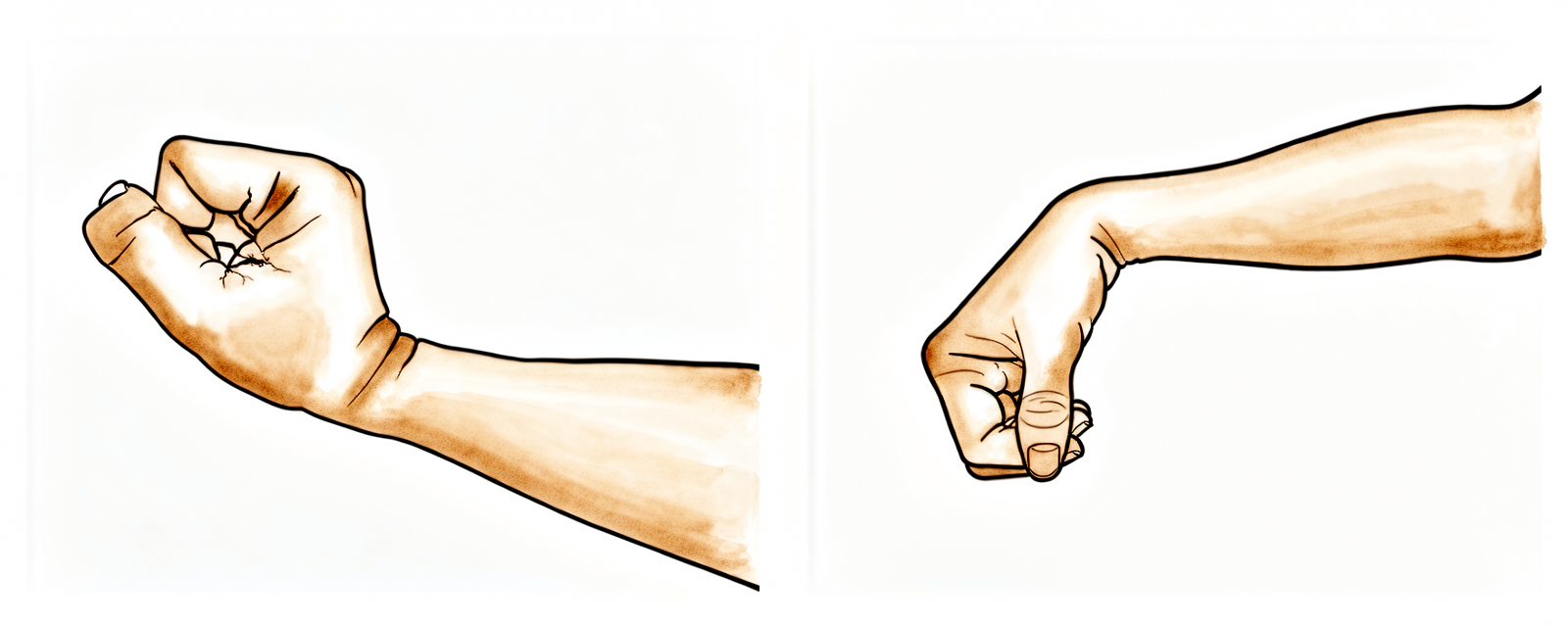
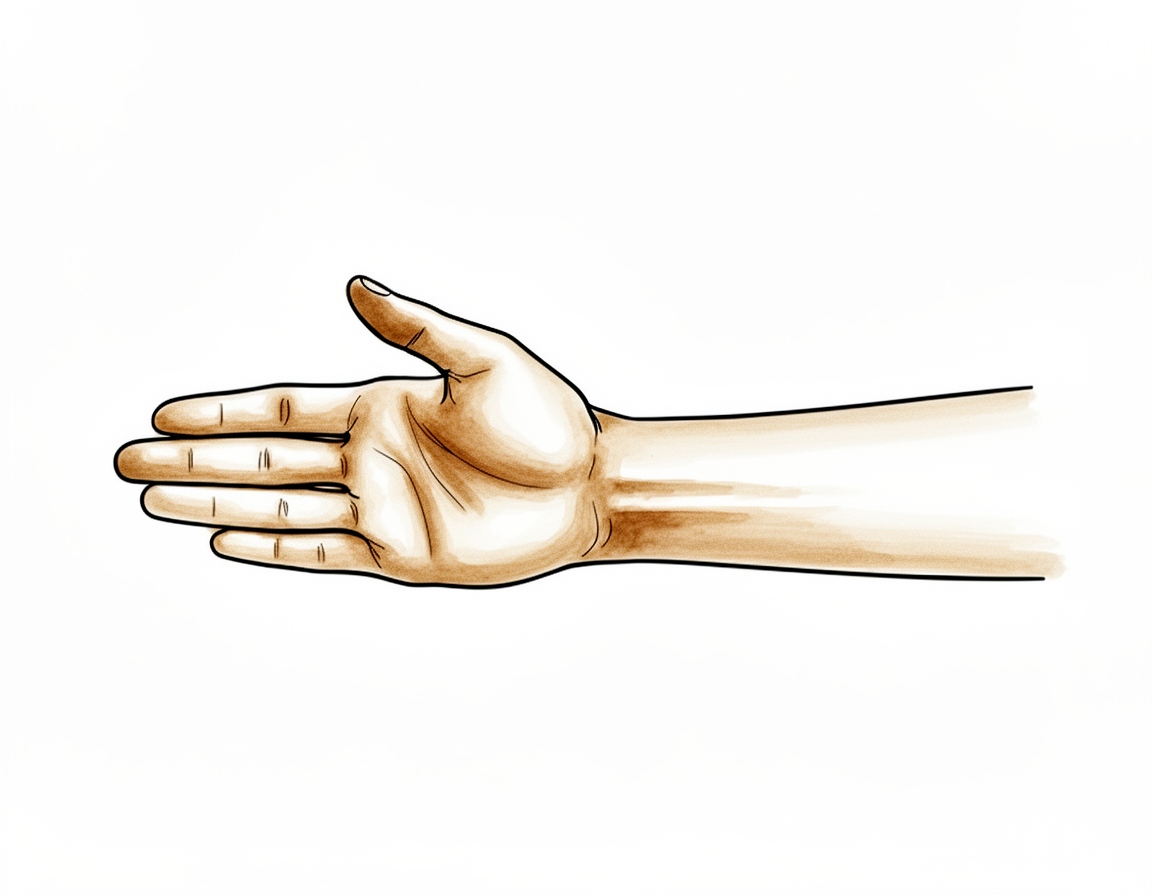
腕关节屈曲/伸展拉伸
将肘部放在桌面上(或将前臂搁在桌子或扶手椅的边缘),轻轻前后摆动手腕。待感觉更舒适后,用另一只手握住手掌,将手腕向后推(手指放松,指向天花板)——保持15秒;然后反向进行(手指放松,指向地面)——保持15秒。每个方向重复5次。
10 次,4–5 次/天
Kieran Hirpara 4.0
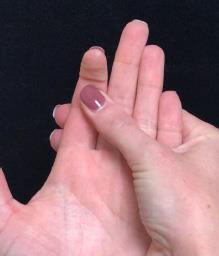
远端指间关节阻挡练习
远指间关节(DIP,distal interphalangeal)是手指的末端关节。开始时掌心向上,用另一只手在末端关节下方支撑患手。弯曲并伸直末端关节,每个姿势保持3–5秒。仅对中间关节提供足够的支撑,使其不发生弯曲。在此练习过程中,其他手指移动是可以接受的。
10次,每天4次,每日
Kieran Hirpara 4.0
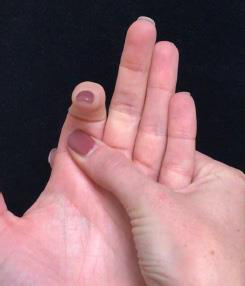
近端指间关节阻挡
近端指间关节(PIP)是手指的中关节。开始时掌心向上,用另一只手在第二关节下方支撑患手。在中关节处弯曲并伸直手指,每个姿势保持3–5秒。其他手指同时移动也是可以的。
10次,每天4次,每日
Kieran Hirpara 4.0
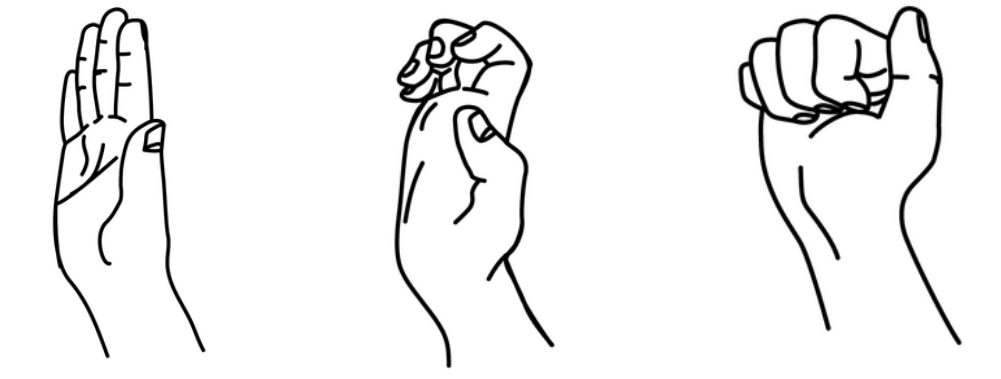
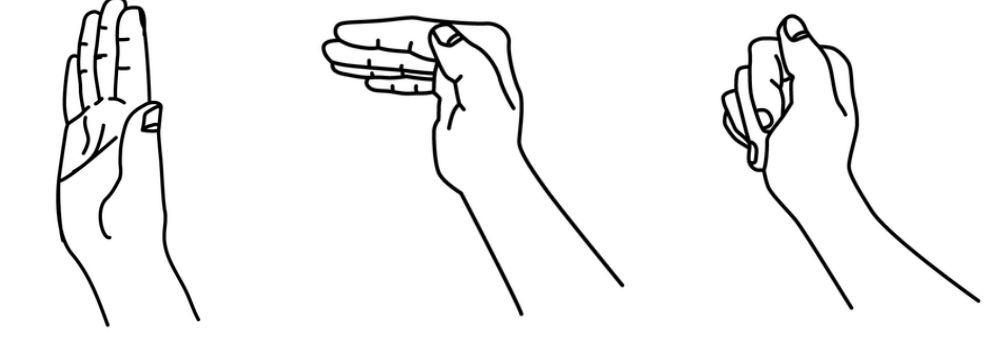
肌腱滑动 — A 系列
将手置于身前,手腕保持伸直,完全伸直所有手指——您可以用另一只手确保手指达到完全伸展(位置1)。将指尖弯成“钩”状,指关节朝上(位置2)。然后握紧拳头,拇指置于手指之上(位置3)。
5–10 次,每天 2–3 次,每日
Kieran Hirpara 4.0
腱滑动——B系列
将手置于身前,手腕保持伸直,将所有手指完全伸直——您可以用另一只手确保手指达到完全伸直(位置1)。通过弯曲手指最下方的关节(掌指关节)并保持手指其余部分伸直,使手指呈“桌面”状——确保手腕不要向前下垂(位置2)。然后弯曲手指的中间关节(近端指间关节),使手指触及手掌(位置3)。
5–10 次,每天 2–3 次,每日
Kieran Hirpara 4.0
主动复合伸指
将肘部支撑在桌面上,尽可能伸直手指,然后用另一只手再稍微用力推一下。数到5,然后放松。
10 次,3–4 次/天
Kieran Hirpara 4.0
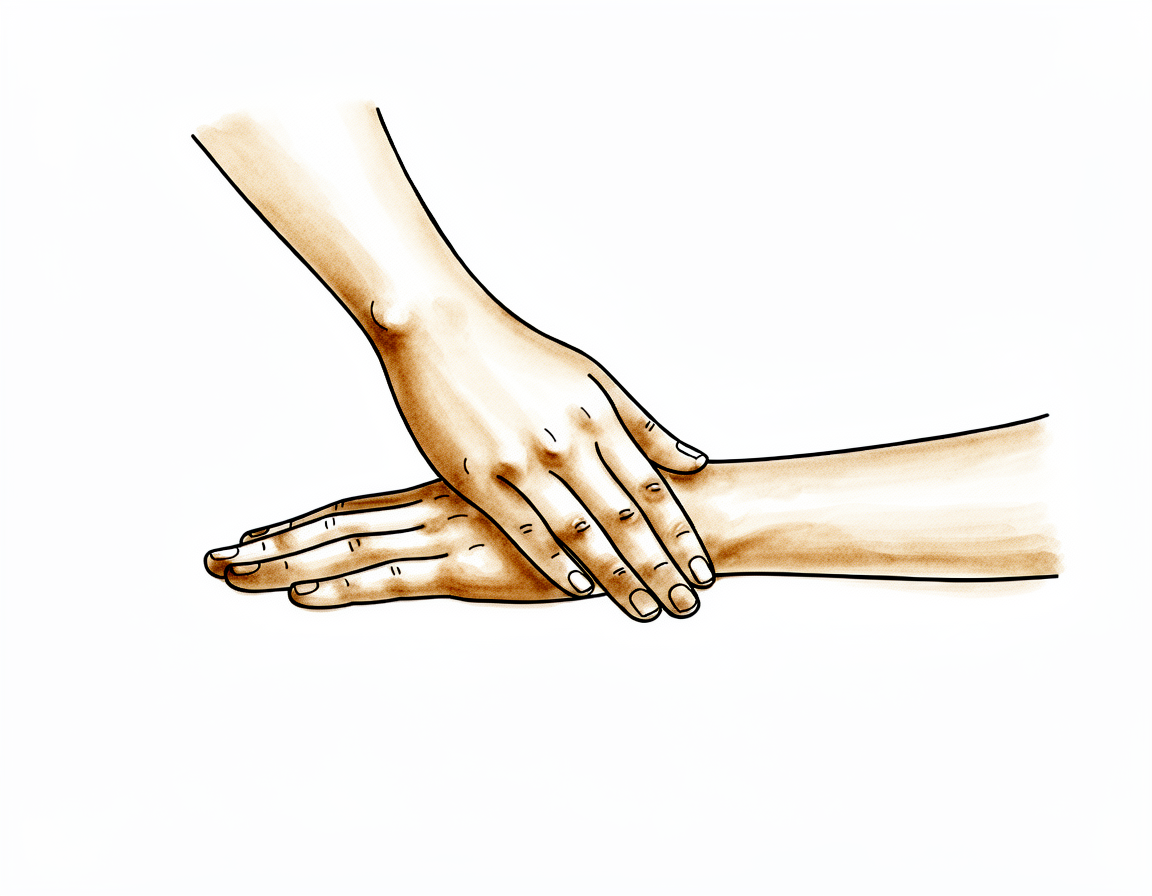
被动复合伸展
将手平放在桌面上,掌心向下。用另一只手在手背施加压力,并向身体方向“按摩”。数到5,然后放松。
10 次,3–4 次/天
Kieran Hirpara 4.0
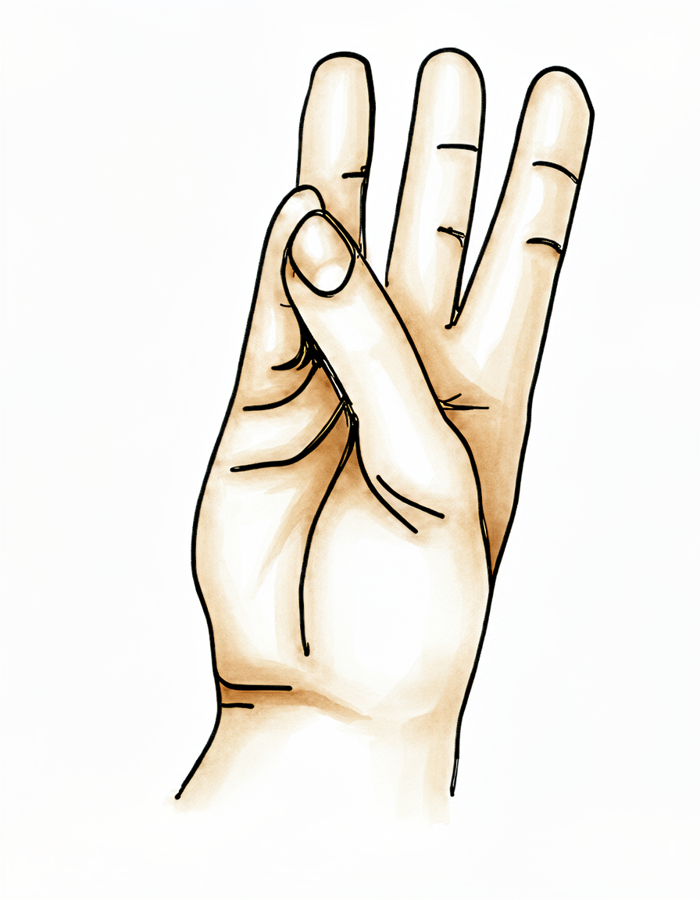
拇指对掌
起始时手指伸直并放松。将拇指指尖与食指指尖相触。保持5秒,然后回到起始位置。
10次,每日3–4次
请仅在Hirpara医生和您的手部治疗师的指导下开始下面这些练习,并严格保持在您被允许的活动范围和限制内。腱滑动系列和阻挡练习可确保已松解的肌腱在腱鞘内自由滑动,防止其在愈合的瘢痕中粘连——这能防止扳机指复发为僵硬。主动和被动复合伸指练习可确保手指完全伸直,拇指对掌练习重建捏力,腕部拉伸练习防止在关注手指时腕部僵硬。手掌瘢痕正上方的压痛在数周内是预期内的。停止任何引起剧烈疼痛的动作。
您的方案之后
本方案由职业治疗学士、认证手部治疗师 Sarah Farrell 共同撰写,并纳入了来自 Extend Rehabilitation 认证手部治疗师 Ruby Doolan 的更新版术后管理指南(2025年4月)。本方案与本诊所的通用康复建议配合使用:请参阅 术后疼痛管理、伤口护理 和 手部治疗基础。关于手术本身,请参阅 扳机指松解术。
康复框架和里程碑还参考了已发表的扳机指松解术康复方案,包括弗吉尼亚大学手部中心和双子城骨科中心的方案,以及开放性扳机指松解术的已发表结局研究,包括一项关于术后康复的随机对照试验(Saito 等,《临床医学杂志》,2023年)和一项大规模不良事件系列研究(Bruijnzeel 等,《手部外科杂志》,2012年)。
参考文献
[1] Saito T, Nakamichi R, Nakahara R, Nishida K, Ozaki T. The effectiveness of rehabilitation after open surgical release for trigger finger: a prospective, randomized, controlled study. J Clin Med. 2023;12(22):7187. https://pmc.ncbi.nlm.nih.gov/articles/PMC10671987/ [2] University of Virginia Hand Center. Trigger Finger Release Guidelines (post-operative therapy protocol). https://med.virginia.edu/orthopaedic-surgery/wp-content/uploads/sites/242/2015/11/Triggerfingerreleaseprotocol.pdf [3] Meletiou SD, Twin Cities Orthopedics. Post-operative Management of Trigger Release (A1 pulley release). https://tcomn.com/wp-content/uploads/2017/10/Trigger-Release-A1.pdf [4] Bruijnzeel H, Neuhaus V, Fostvedt S, Jupiter JB, Mudgal CS, Ring DC. Adverse events of open A1 pulley release for idiopathic trigger finger. J Hand Surg Am. 2012;37(8):1650–1656. https://pubmed.ncbi.nlm.nih.gov/22763058/ [5] Chanthanapodi P, Aodsup S. Comparative results of percutaneous and open surgery for trigger fingers: a propensity score analysis. Front Surg. 2025;12:1509292. https://pmc.ncbi.nlm.nih.gov/articles/PMC11922895/
Evidence & references
This is the clinical evidence summary written for health professionals. It is technical, and it lists the research this page was built from. You do not need to read it to understand your treatment or to make a decision about it.
Topic scope: (A) the place of surgery in stenosing tenosynovitis (trigger finger/thumb) after failed conservative care (splinting, corticosteroid injection), and (B) post-operative rehabilitation after surgical division of the A1 pulley — open or percutaneous. This is an early-motion pathway: nothing is reconstructed, the catching is mechanically abolished the moment the pulley is divided, and the rehab exists to keep the now-free tendon gliding and the finger joints supple while the wound heals.
Defining principle of the rehab here: A1 pulley release removes the obstruction; it does not create a construct that needs protecting. Once the pulley is divided the flexor tendon glides freely and triggering does not usually recur. So — unlike a tendon repair, and like a carpal-tunnel decompression — the pathway is immediate active motion: full active finger flexion/extension and tendon glides from the first days, oedema and scar care, early light functional use, and a quick return. Most patients need no formal hand therapy at all; supervised therapy is reserved for the minority with pre-existing joint stiffness, long-standing triggering, or slow recovery. The single branch point is whether the finger was already stiff before surgery (long-standing fixed flexion / PIP contracture) — those patients need active therapy to recover motion the release alone cannot restore.
A. WHERE SURGERY SITS IN THE PATHWAY
Trigger finger is usually managed non-operatively first: activity modification, splinting, and corticosteroid injection, which resolves a substantial proportion of digits without surgery. Surgery (A1 pulley release) is reserved for digits that fail injection, recur, or present with a fixed deformity. The corpus contains the comparative evidence underpinning this stepped approach (percutaneous release vs steroid injection; one- vs two-injection regimens; corticosteroid solution choice) — Moderate (RCT). The rehab protocol on the patient page begins after that decision has been made, so this brief concentrates on the surgical and post-surgical evidence.
B. SURGICAL OUTCOMES & RESOLUTION RATES
Open release of the A1 pulley is one of the most reliable operations in hand surgery. The mechanical problem — a thickened tendon catching under a tight pulley — is solved by dividing the pulley, and the result is durable:
- In a series of 1,598 open releases, fewer than 1% required a second operation for persistent or recurrent triggering, with no nerve injuries and no deep infections [Bruijnzeel 2012]. About one digit in twenty had a documented post-operative problem, almost all minor and self-limiting (transient stiffness, scar tenderness). Strong (large cohort).
- Recovery of motion is slower in patients with diabetes, reinforcing the value of the exercise program in that group [Bruijnzeel 2012]. Moderate.
- A propensity-matched comparison with >3 years follow-up found no recurrences after open release, with median time to significant pain reduction of about one week and roughly half of patients back at work within ~2 weeks [Chanthanapodi 2025]. Moderate.
Take-home for rehab: because the operation itself abolishes the triggering, the rehabilitation is not "earning back" a surgical result — it is preventing the two things that can go wrong during healing: tendon adhesion and joint stiffness. Early glide and early extension are the levers.
C. OPEN vs PERCUTANEOUS RELEASE
Both techniques divide the same structure and converge to the same place.
- A Level I meta-analysis of 8 RCTs (548 patients) found no significant difference between open and percutaneous release in revision, complication, or pain rates — both are appropriate options [Casey 2024, J Hand Surg Am]. Strong (meta-analysis of RCTs).
- Larger RCT syntheses show percutaneous release confers faster early functional recovery — better short/mid-term Q-DASH, ~12 days earlier return to work, and shorter analgesic use — while long-term function, grip, motion and complication/revision rates are equivalent. Strong.
- Percutaneous (including ultrasound-guided/sonographically-controlled) technique is supported by multiple corpus series for efficacy and safety, with the main theoretical risks being incomplete release and digital nerve proximity, mitigated by surface landmarks and imaging [corpus percutaneous series]. Moderate.
Rehab implication: the post-operative program is essentially the same for both approaches — early active motion, glides, oedema and scar care. The patient page applies regardless of whether the release was open or percutaneous; percutaneous patients simply tend to be comfortable and back to activity a little sooner.
D. THE ROLE — AND LIMITS — OF POST-OPERATIVE HAND THERAPY
This is the central evidence point for the protocol, and it is one where "more therapy" is not automatically better.
- A prospective RCT compared 3 months of supervised rehabilitation after open
release against a self-directed home exercise program: at six months,
overall function, motion and pain were similar between groups. Supervised
therapy added further grip-strength recovery, and the patients who clearly
benefited from formal therapy were those whose **triggering had been present
12 months pre-operatively and those in housework/lighter-work roles [Saito 2023, J Clin Med]. Moderate (single RCT).
- Published surgeon and hand-therapy protocols (e.g. University of Virginia Hand Center; Twin Cities Orthopedics) start active and passive finger motion and tendon glides within the first days, add scar massage and desensitisation once the wound is healed, and reintroduce graded grip strengthening later — precisely the staged structure of the patient page. Consensus.
Bottom line: a well-performed home program carries most patients through. Formal hand therapy is reserved, not routine — escalate it for long-standing pre-operative triggering, pre-existing joint stiffness/contracture, manual or fine-use occupational demands, or slow motion/grip recovery.
E. COMPLICATIONS
Serious complications are uncommon (roughly <1–4% across series) and most "complications" are minor, self-limiting healing phenomena:
- Digital nerve injury — the most feared complication, particularly relevant to percutaneous technique (blind division near the radial digital nerve of the thumb and index) and to scar/retraction in open release. Rare in experienced hands; transient paraesthesia is more common than true division [corpus complication series]. Moderate.
- Incomplete release / persistent triggering — failure to fully divide the A1 pulley (or an A2/FDS slip contribution); a recognised cause of revision, more often discussed with percutaneous technique. Moderate.
- Recurrent triggering — uncommon after adequate open release (<1% reoperation in the 1,598-digit series) [Bruijnzeel 2012]. Strong.
- Infection — usually superficial; deep infection rare (none in the large open series) [Bruijnzeel 2012]. Strong.
- Bowstringing — a rare complication from excessive proximal pulley loss (A1 plus encroachment on A2); largely avoided by limiting division to A1 [bowstringing case literature]. Weak (case-level).
- Stiffness / flexion contracture / "flare" — the commonest self-limiting problem; transient PIP stiffness, scar tenderness and a post-operative inflammatory flare that settle with the motion, desensitisation and scar program. Recovery is slower in diabetes. Moderate. This is the category the rehabilitation program actively targets.
F. PHASED POST-OP TIMELINE (matches the patient protocol)
| Phase | Window | Protection | Motion / use | Therapy add-ons | Notes |
|---|---|---|---|---|---|
| I — Immediate active motion & oedema control | Day 0–2 | None beyond dressing | Active finger flexion/extension and finger "pumps" from day 1; tendon glides commenced | Elevation, ice, compression if provided; desensitisation (tap/rub over dressed wound) from day 1 | Nothing reconstructed -> motion is the priority; manage swelling actively |
| II — Glide & joint motion | Week 0–2 | None | Tendon glides (Series A/B), DIP & PIP blocking, composite extension; firm passive stretch into extension | Continue desensitisation | Goal: keep tendon gliding, prevent adhesion & stiffness; pain settles substantially (~1 wk) [Chanthanapodi 2025] |
| III — Scar maturation & function | Week 2–4 | Light functional use only | Full active fist + full composite extension by ~3 wk; build light daily-living use | Scar massage (firm circles) once wound healed; heat before / ice after exercises | No lifting/gripping/weight-bearing to ~4 wk; driving limited ~first week (full fist + safe control) |
| IV — Strengthening & return | Week 4+ | None | Graded grip/pinch (e.g. putty) once 4-wk precaution lifts -> full function | Supervised therapy if indicated (long-standing trigger, stiffness, slow recovery, occupational demand) [Saito 2023] | Manual workers return later than desk/light roles |
Timings are criteria-based and drawn from published surgeon/hand-therapy protocols; they are typical, not trial-mandated.
G. KEY CONTROVERSIES / EVIDENCE QUALITY
- Is routine post-op hand therapy necessary? The best available evidence (Saito 2023 RCT) says no for most — home exercise matches supervised therapy on function/pain/motion at six months, with supervised therapy adding grip strength and benefiting a defined subgroup (long-standing trigger, lighter-work roles). The protocol's "therapy reserved, not routine" stance is evidence-aligned. Moderate.
- Open vs percutaneous. Equivalent long-term outcomes and safety (Casey 2024 meta-analysis); percutaneous offers faster early recovery. The rehab is the same either way. The live debate is technique-side (nerve safety, completeness of release), not rehab-side. Strong on equivalence.
- The rehab protocol structure itself is consensus/expert, built from surgeon patient-guidance documents plus one rehabilitation RCT — there is no large trial dictating exact phase timings.
- Diabetes modifies recovery — slower motion recovery and a lower threshold to involve a hand therapist; not a different protocol, a different pace. Moderate.
H. EVIDENCE STRENGTH FLAGS (summary)
- STRONG (meta-analysis / RCTs / large cohort): open vs percutaneous equivalence in revision/complication/pain (Casey 2024, 8 RCTs); percutaneous faster early functional recovery (RCT syntheses); durability of open release (<1% reoperation, no nerve injury/deep infection in 1,598 digits, Bruijnzeel 2012).
- MODERATE (single RCT / cohorts): home exercise ~ supervised therapy at 6 months with grip-strength edge for supervised therapy (Saito 2023); percutaneous efficacy/safety series; slower recovery in diabetes; injection-vs- surgery comparative data.
- WEAK / CONSENSUS: the post-operative rehabilitation protocol structure and exact phase timings (surgeon/hand-therapy patient-guidance documents); bowstringing risk (case-level).
CITATIONS
RAG corpus (180,000+ Orthopaedic articles)
- Open Versus Percutaneous Fixation of Trigger Finger: Meta-Analysis of Clinical Outcomes. J Hand Surg Am. 2024. DOI: 10.1016/j.jhsa.2024.03.010
- Complications of Open Trigger Finger Release. J Hand Surg Am. 2010. DOI: 10.1016/j.jhsa.2009.12.040
- Differential Pulley Release in Trigger Finger: A Prospective, Randomized Clinical Trial. Hand (N Y). 2021. DOI: 10.1177/1558944721994231
- Percutaneous A1 pulley release vs steroid injection for trigger digit. J Hand Surg Eur. 2010. DOI: 10.1177/1753193410381824
- Comparative Study of A1 Pulley Release and Ulnar Superficialis Slip Resection in Trigger Finger. J Hand Surg Am. 2022. DOI: 10.1016/j.jhsa.2022.04.021
- Risk Factors for Requiring Ulnar Superficialis Slip Resection During Trigger Finger Release. J Hand Surg Am. 2024. DOI: 10.1016/j.jhsa.2024.08.013
- Impact of Flexor Tendon Traction Tenolysis on Clinical Outcomes in Open A1 Pulley Release. J Hand Surg Glob Online. 2024. DOI: 10.1016/j.jhsg.2024.09.010
- Ultrasound-Assisted Percutaneous Trigger Finger Release: Is It Safe? Hand (N Y). 2008. DOI: 10.1007/s11552-008-9137-8
- Evaluation of Percutaneous First Annular Pulley Release: Efficacy and Complications. J Hand Surg Am. 2016. DOI: 10.1016/j.jhsa.2016.04.009
- Sonographically controlled minimally-invasive A1 pulley release using a new guide. BMC Musculoskelet Disord. 2023. DOI: 10.1186/s12891-023-06982-x
- Percutaneous A1 pulley with corticosteroid injection for trigger finger release. J Orthop Surg Res. 2025. DOI: 10.1186/s13018-025-05776-2
- A Cost and Efficiency Analysis of the WALANT Technique for the Management of Trigger Finger. Plast Reconstr Surg Glob Open. 2019. DOI: 10.1097/gox.0000000000002509
- Management of Pediatric Trigger Thumb and Trigger Finger. J Am Acad Orthop Surg. 2012. DOI: 10.5435/jaaos-20-04-206
- What's New in Hand Surgery. J Bone Joint Surg Am. 2024. DOI: 10.2106/jbjs.23.01343
Trigger finger surgical & rehabilitation literature (URLs)
- Saito T, et al. The Effectiveness of Rehabilitation after Open Surgical Release for Trigger Finger: A Prospective, Randomized, Controlled Study. J Clin Med. 2023;12(22):7187. https://pmc.ncbi.nlm.nih.gov/articles/PMC10671987/
- Bruijnzeel H, et al. Adverse Events of Open A1 Pulley Release for Idiopathic Trigger Finger. J Hand Surg Am. 2012;37(8):1650-1656. https://pubmed.ncbi.nlm.nih.gov/22763058/
- Casey JC, et al. Open Versus Percutaneous Fixation of Trigger Finger: Meta-Analysis of Clinical Outcomes. J Hand Surg Am. 2024;49(6):570-575. https://pubmed.ncbi.nlm.nih.gov/38727666/
- Chanthanapodi P, Aodsup S. Comparative results of percutaneous and open surgery for trigger fingers: a propensity score analysis. Front Surg. 2025;12:1509292. https://pmc.ncbi.nlm.nih.gov/articles/PMC11922895/
- Complications of Percutaneous Release of the Trigger Finger. PMC. https://pmc.ncbi.nlm.nih.gov/articles/PMC6485534/
- Trigger Finger. StatPearls, NCBI Bookshelf. https://www.ncbi.nlm.nih.gov/books/NBK459310/
- Bowstringing as a complication of trigger finger release. J Hand Surg Am. 1988. https://www.jhandsurg.org/article/S0363-5023(88)80097-2/abstract
- Trigger Finger (patient information). British Society for Surgery of the Hand (BSSH). https://www.bssh.ac.uk/patients/conditions/15/trigger_finger
Published rehab protocols (patient-guidance — basis for the phase structure)
- University of Virginia Hand Center. Trigger Finger Release Guidelines (post-operative therapy protocol). https://med.virginia.edu/orthopaedic-surgery/wp-content/uploads/sites/242/2015/11/Triggerfingerreleaseprotocol.pdf
- Meletiou SD, Twin Cities Orthopedics. Post-operative Management of Trigger Release (A1 pulley release). https://tcomn.com/wp-content/uploads/2017/10/Trigger-Release-A1.pdf
- EmergeOrtho. Trigger Finger Release - Post-operative Instructions. https://emergeortho.com/wp-content/uploads/2022/06/Trigger-Finger-Release.pdf





