

钙化性肌腱炎 资料
本方案涵盖在 Mater Private Hospital Rockhampton 由 Kieran Hirpara 医生进行的关节镜钙化灶切除术后的康复:通过微创手术从肩袖肌腱中移除钙化沉积物,有时联合肩峰下减压术以为肌腱腾出更多空间。请在首次物理治疗就诊时携带本页面或其 PDF 文件,以确保您的康复过程协调一致。您的康复将由物理治疗师根据肩部恢复情况,按以下阶段个体化推进。
如果您在术后对伤口有任何担忧,请联系诊所。通常,拍摄伤口照片并通过电子邮件发送以供审阅会很有帮助。
如果肌腱上的纵向裂口已经缝合(移除沉积物后,肌腱上常会留下一道纵向裂口,通常用几针缝合闭合),您的恢复会比单纯移除沉积物稍慢,但比标准的肩袖修复快:吊带需佩戴三至四周,活动先从辅助练习开始,约四周起过渡到完全主动活动,约十至十二周开始强化训练,通常在四至六个月时恢复健身房训练、运动和重体力工作。Hirpara 医生会在手术后告知您是否适用此情况。
预期情况
两种治疗路径都会尽早开始活动肩部。即使肌腱裂口已经缝合,这也只是轻度修复,不需要数月的保护;治疗的目标是消除疼痛来源,康复的目标是缓解治疗后的急性发作期,保持肩部活动以防止僵硬,随后重建力量。
- 关节镜下切除术后,提供吊带仅用于增加舒适度。佩戴时间较短,通常为几天,极少超过两周,并应尽可能长时间取下。您无需在睡眠时佩戴。恢复至完全无限制的活动通常需要大约三个月。
- 如果肌腱裂口已经缝合,吊带需佩戴三至四周。先进行辅助活动,约四周起进行完全主动活动,约十至十二周起开始强化训练。恢复至完全活动通常需要大约四至六个月。
任何肩部手术后,至少六周内请勿驾驶,即使吊带已取下;您的外科医生将在您获准驾驶时(通常在六周复查时)予以确认。
无论采用哪种治疗方式,肩部完全恢复稳定可能需要一段时间。不适感通常分阶段改善,而非一次性消失;手术后,可能需要数月(偶尔长达九个月)才能使治疗前的症状完全消退。持续改善,而非立即舒适,是预期的恢复模式。
这是一种通过几个小切口进行的微创日间手术。钙化沉积物位于肩袖肌腱内并被移除,通常同时执行肩峰下减压术,以给肌腱提供更多空间。敷料具有防水功能——您从术后第一天起即可在敷料上淋浴——敷料将保留至术后约一周至十天后的首次术后预约时检查伤口。
第一阶段 — 早期活动(第 0–2 周)
Kieran Hirpara 4.0
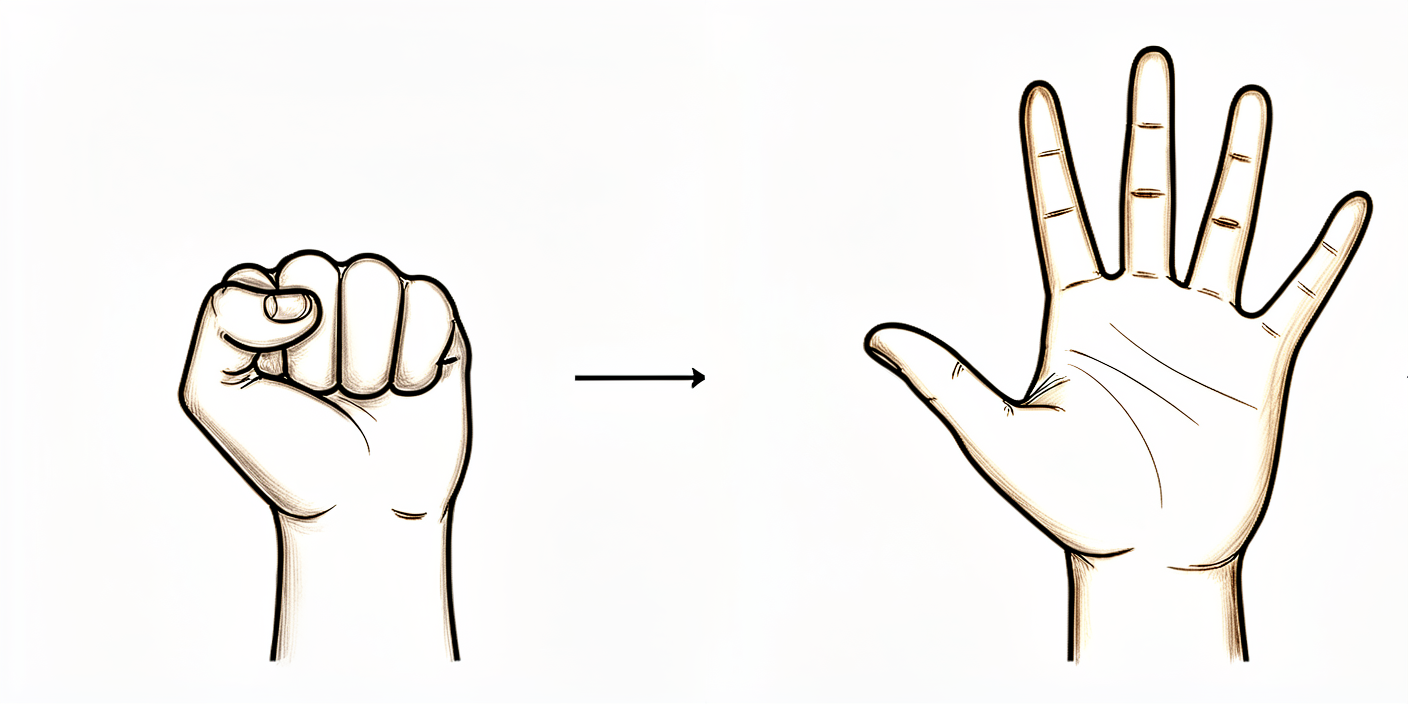
张开和握紧手
通过反复张开和握紧手部及手指,或挤压软球,保持手部和手指的活动。立即开始此练习,以便在肩部逐渐恢复稳定的过程中,维持手部和手臂的功能活动。
10 次,每日三次
Kieran Hirpara 4.0
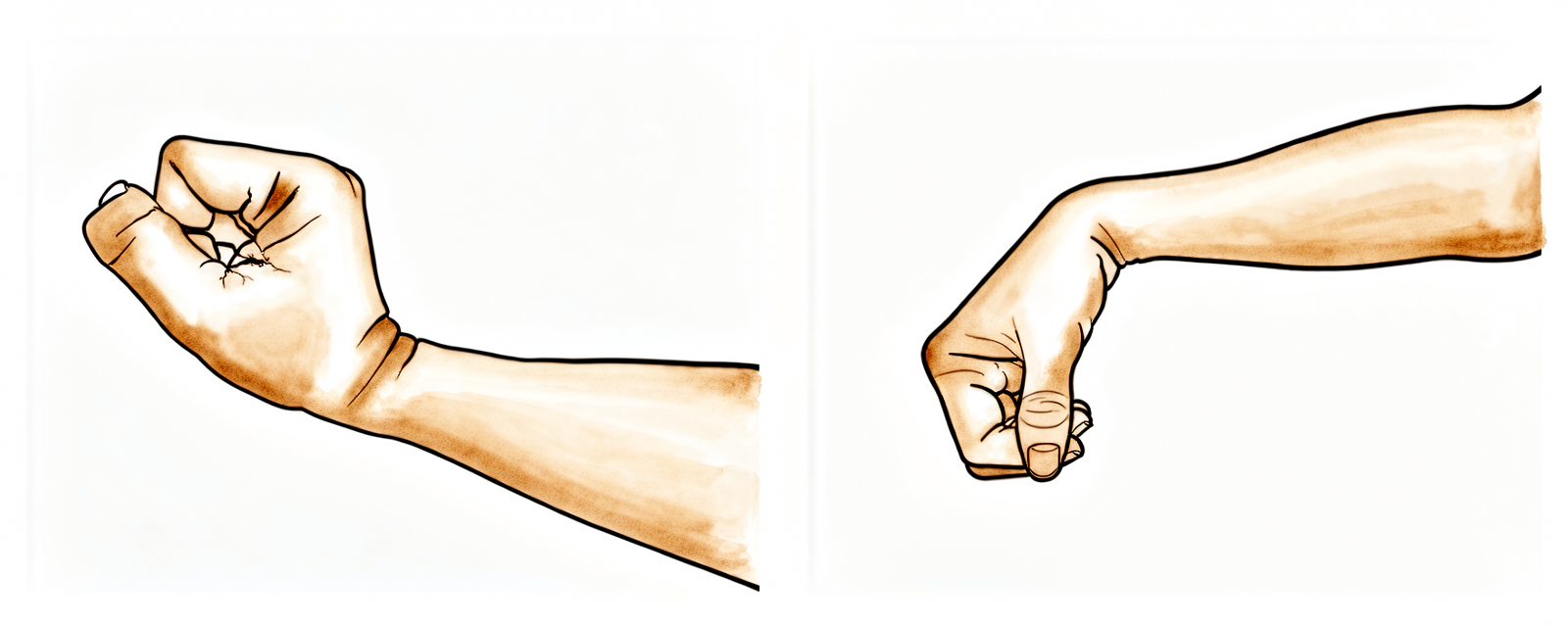
腕部运动
请通过向前、向后及左右侧向弯曲手腕来保持手腕活动。请在手臂脱离悬吊带的情况下进行此动作。
10次,每日三次
Kieran Hirpara 4.0
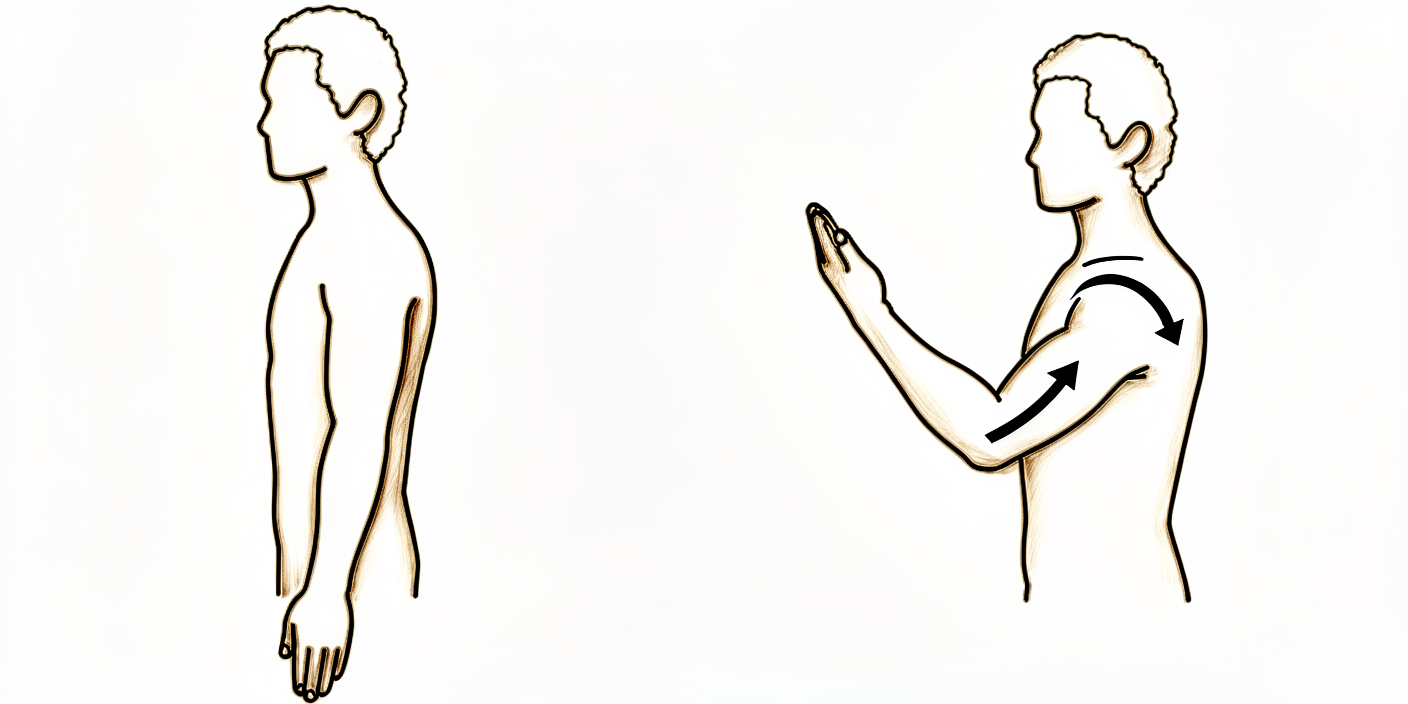
肘部弯曲
上臂自然下垂于体侧,将肘关节弯曲至舒适的最大角度,然后完全伸直。仅肘部活动——保持肩部放松。
10次,每日三次
Kieran Hirpara 4.0
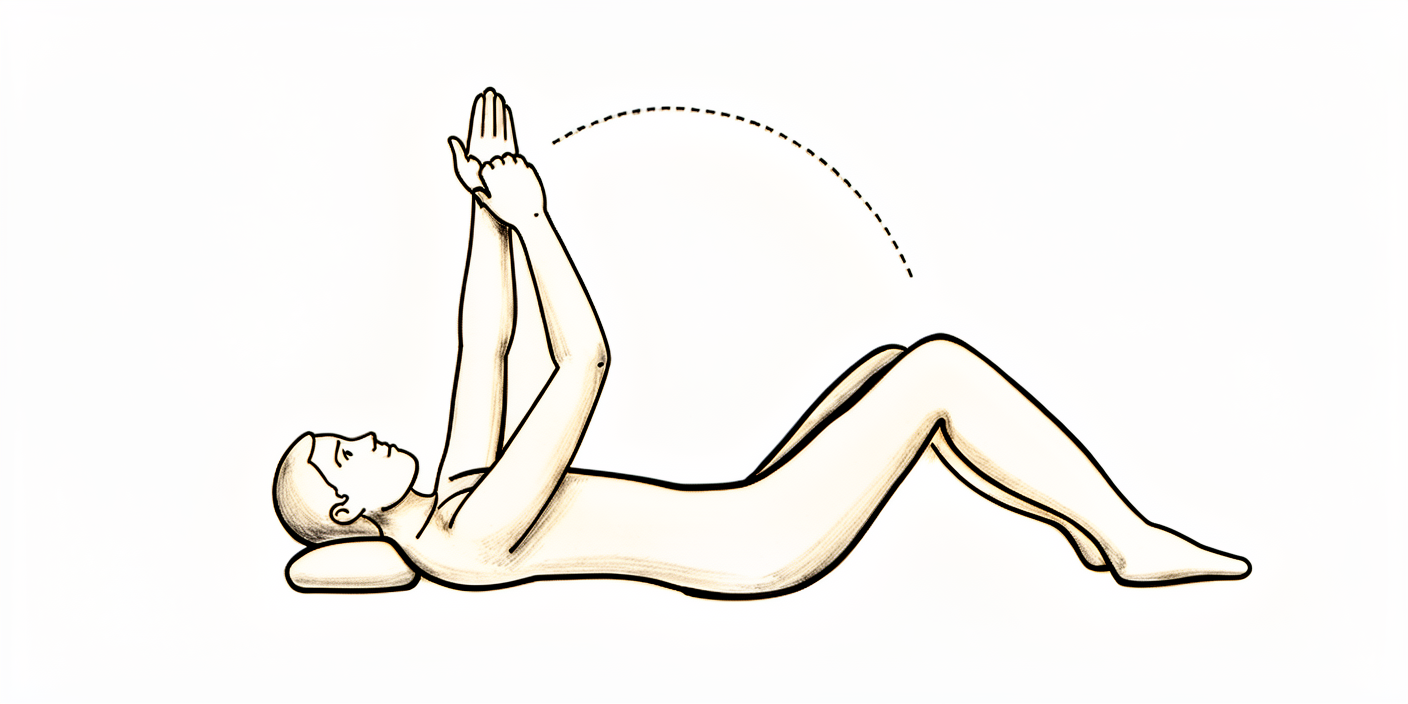
仰卧位辅助过头拉伸
仰卧,用健侧手臂协助将患侧手臂向上抬起至高于肩部的高度,进行轻柔的拉伸,然后在健侧手臂的协助下将其放回原位。起初会感到不适——这是预期内的——这是防止肩部僵硬的关键练习。
10次重复,每天三次
术后苏醒时,您的手臂将佩戴吊带,但吊带仅用于提供舒适感:请尽可能少用,大多数人几天内即可停用。从开始起,您可以在肩部高度以下无限制地使用手臂。将手臂举至肩部高度以上是允许且安全的,尽管起初会感到不适;每天多次,用您的健侧手臂协助将手术侧手臂举至肩部高度以上,进行轻柔拉伸,以防止肩部僵硬。在这些最初几周内,避免用手术侧手臂携带超过约两公斤的物品,因为这会引起疼痛。请尽早开始锻炼,目标是每个动作做十次,每天三次。锻炼前服用止痛药,并使用冰敷以缓解不适。请勿驾驶:只有在您的外科医生确认您符合条件后(通常在六周复查时)方可恢复驾驶。
致您的物理治疗师:
目标
- 控制术后疼痛和肿胀
- 早期恢复活动范围:重点在于预防僵硬,钙化性肌腱炎患者易发生此情况
- 在肩部高度以下正常活动手臂
管理
- 吊带仅用于提供舒适感;在舒适允许的情况下尽快停用,通常几天内即可
- 从第一天起,在肩部高度以下无限制地主动活动手臂
- 在可耐受范围内主动将手臂举至肩部高度以上
- 每天多次被动及主动辅助将手臂举至肩部高度以上(使用另一侧手臂),以预防僵硬
- 家庭锻炼计划:每个动作十次,每天三次
- 锻炼前服用镇痛药;必要时使用冷冻疗法缓解疼痛
注意事项
- 手术侧手臂禁止携带或提起超过约两公斤的物品
- 六周内禁止驾驶(此规定适用于任何肩部手术)
晋级标准
- 首次术后门诊伤口检查满意
- 已停用吊带,且能在肩部高度以下舒适地使用手臂
第二阶段——恢复活动范围(第2–8周)
Kieran Hirpara 4.0
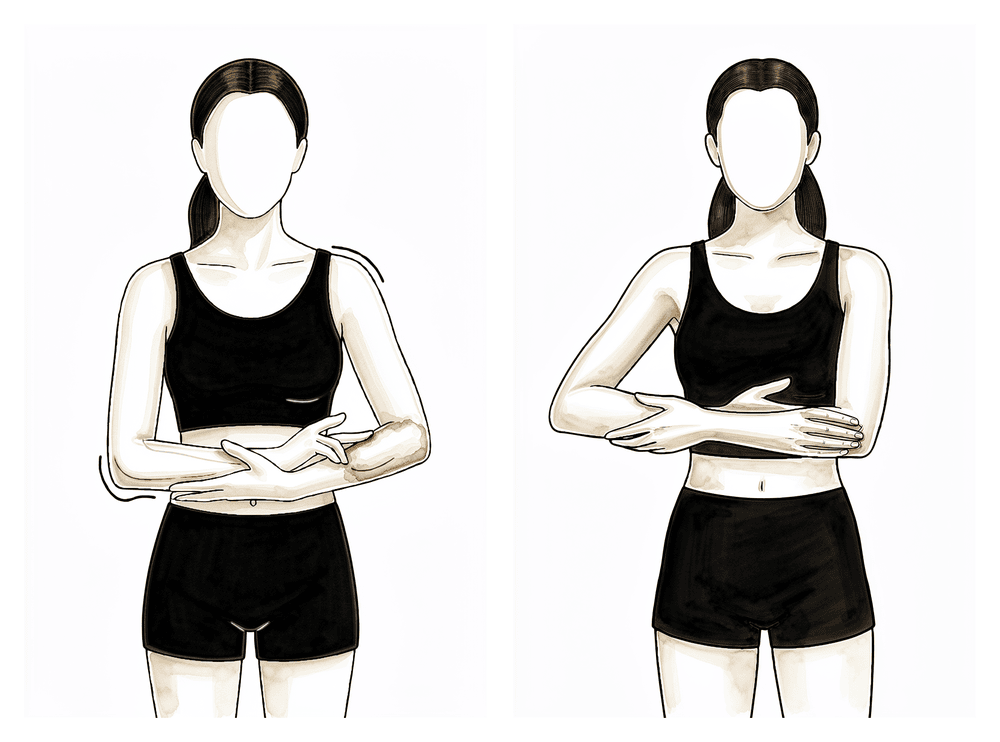
支撑外展
用另一只手臂托住术后前臂,将双臂向侧方抬起,让健侧手臂承担大部分发力,然后有控制地放下。随着舒适度提高逐步增加活动范围——拉伸至明显不适是可以接受的;强行、剧烈疼痛的拉伸则不可取。
在您的物理治疗师指导下
Kieran Hirpara 4.0
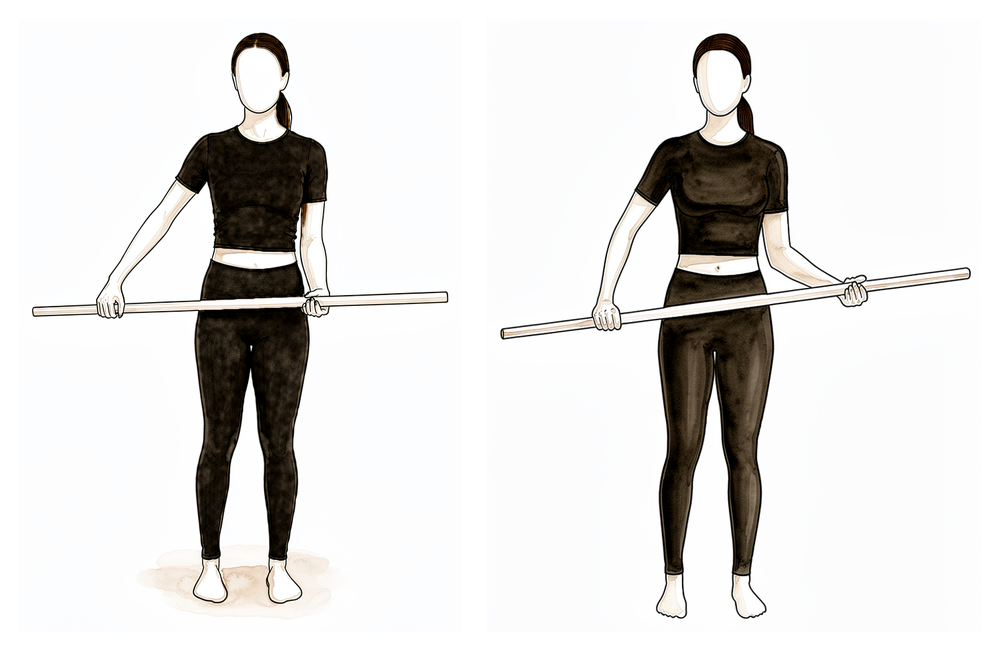
借助棍棒辅助外旋
仰卧,肘部贴紧体侧并屈曲成直角。双手握住一根棍棒,用健侧手臂带动患侧手向外旋转,使肩关节外旋。恢复外旋功能是此阶段的目标之一,因此请每周轻柔地进一步练习。
10 次,每日三次
Kieran Hirpara 4.0
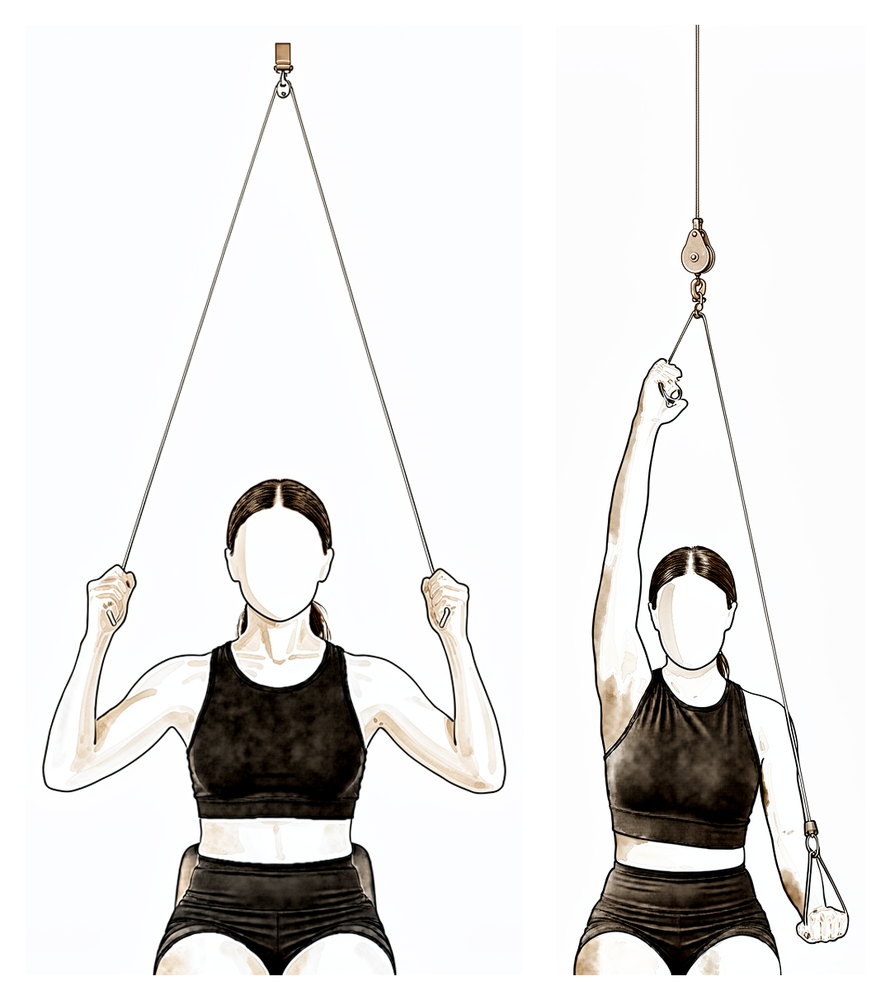
门顶滑轮
坐在门后滑轮装置下方,双手各握一个手柄。用健侧手臂向下拉,将手术侧手臂尽可能舒适地举过头顶,然后缓慢放下。动作应达到轻柔的拉伸感,而非剧烈疼痛。
10次,每日三至四次
Kieran Hirpara 4.0
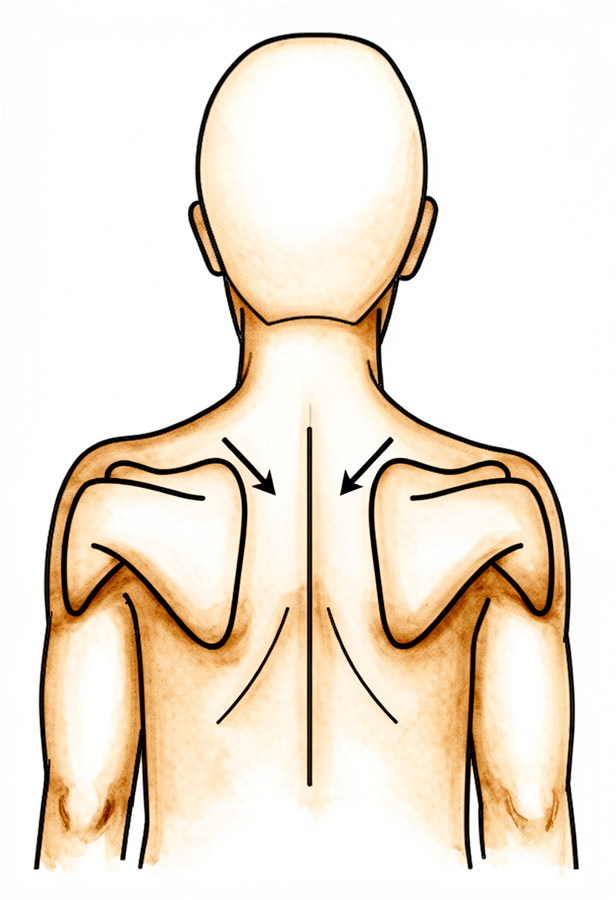
肩胛骨定位
坐直或站直,轻轻将肩胛骨向后、向下收拢,使其远离耳朵。保持几秒钟,然后放松。在恢复活动范围的过程中,将此动作与拉伸练习结合进行,以保持肩胛骨的良好活动度。
在您的物理治疗师指导下
您将在术后约两到三周时于诊室复诊,届时将检查您的伤口及被动活动范围。本阶段的重点是活动范围:在物理治疗的指导下,逐步推进前举拉伸,并增加侧向运动。典型目标是:在六周时能够主动将手臂抬至水平位置,且辅助(被动)活动范围(前举、侧向及旋转)在六周时恢复正常。驾驶可在六周后恢复,前提是您的外科医生已确认您符合标准,且您能够安全地进行紧急制动。
致您的物理治疗师:
目标
- 六周时主动前屈和外展至水平位置
- 六周时被动屈曲、外展和外旋恢复正常
- 日常活动独立
管理
- 逐步推进被动及主动辅助前屈;引入并逐步推进外展
- 在舒适度允许的范围内,逐步推进所有平面的主动活动范围
- 继续肩胛骨定位及姿势训练
- 继续在治疗前使用镇痛药,并根据个人偏好在进行拉伸前后使用热敷或冷敷
注意事项
- 在活动范围恢复期间,保持提举重量较轻;进展仍以症状为导向
- 拉伸至坚实的不适感是可以接受的;强制性的、剧烈疼痛的拉伸则不可取
进展标准
- 被动活动范围达到或接近正常
- 主动抬举至水平或更高,且疼痛趋于稳定
第三阶段 — 强化训练与恢复完全活动(第8–16周)
Kieran Hirpara 4.0
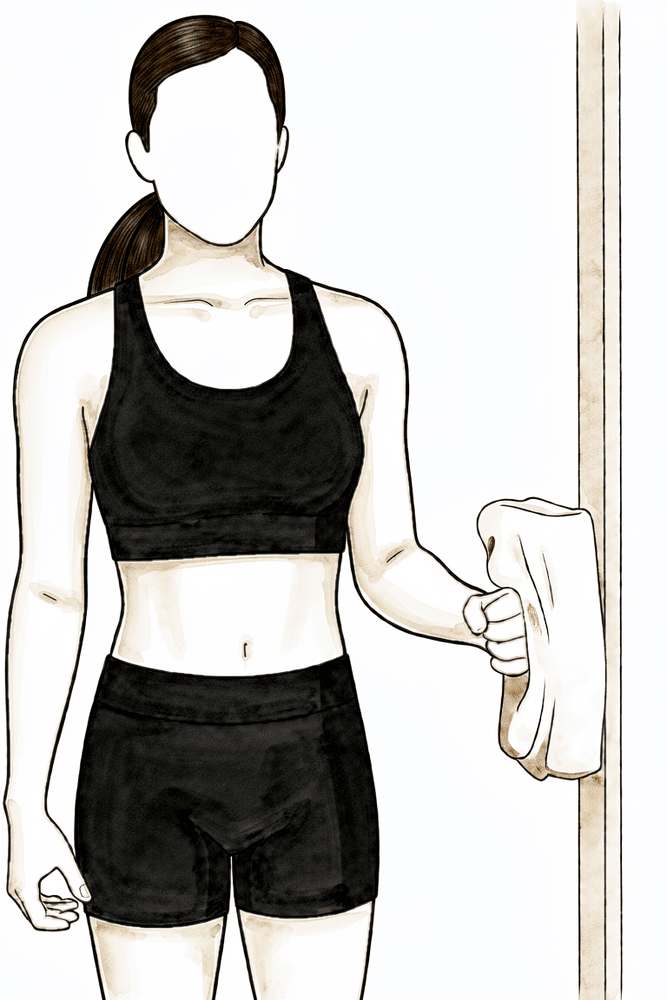
等长外旋
站立,肘部贴紧体侧并屈曲成直角,手背抵住墙壁或门框。轻轻向外推压,但不要让手臂移动,保持数秒,然后放松。此练习在不产生关节活动的情况下锻炼肩袖——是约八周起(如果肌腱裂口已经缝合,则为十至十二周起)开始强化训练的起点。
保持数秒,重复数次;请遵循您的物理治疗师的指导
Kieran Hirpara 4.0
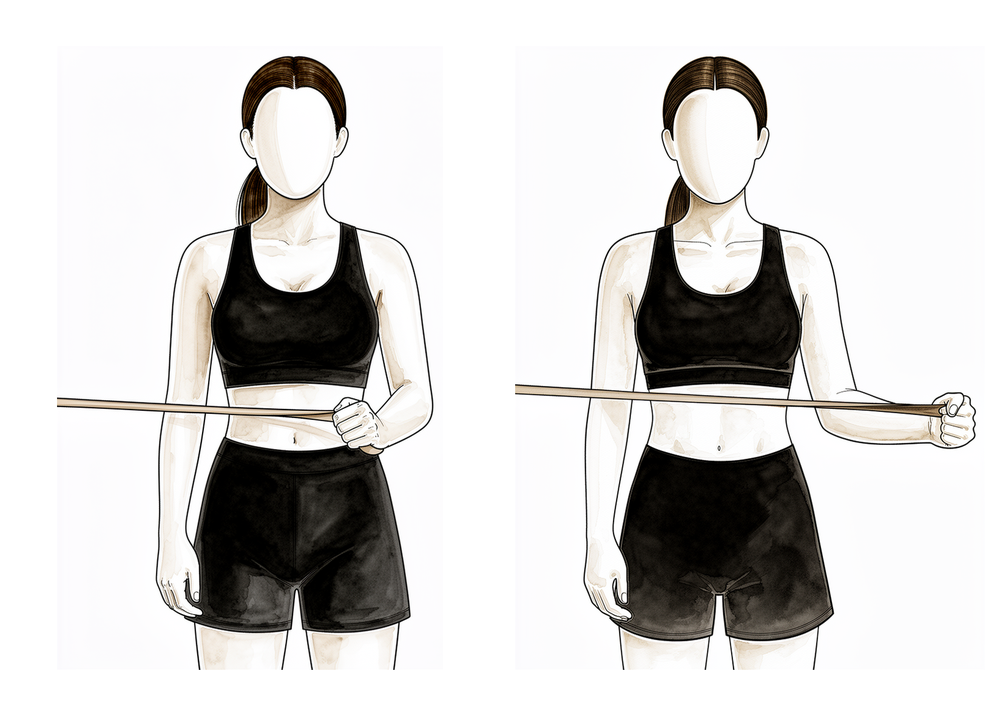
弹力带外旋
站立,肘部贴紧体侧并屈曲成直角,手持一根固定在腰部高度的弹力带。保持肘部贴于体侧,对抗弹力带阻力将前臂向外旋转,然后缓慢复位。随着力量增强,此练习是在等长训练基础上的进阶。
每组10至15次,共2至3组,低阻力
Kieran Hirpara 4.0
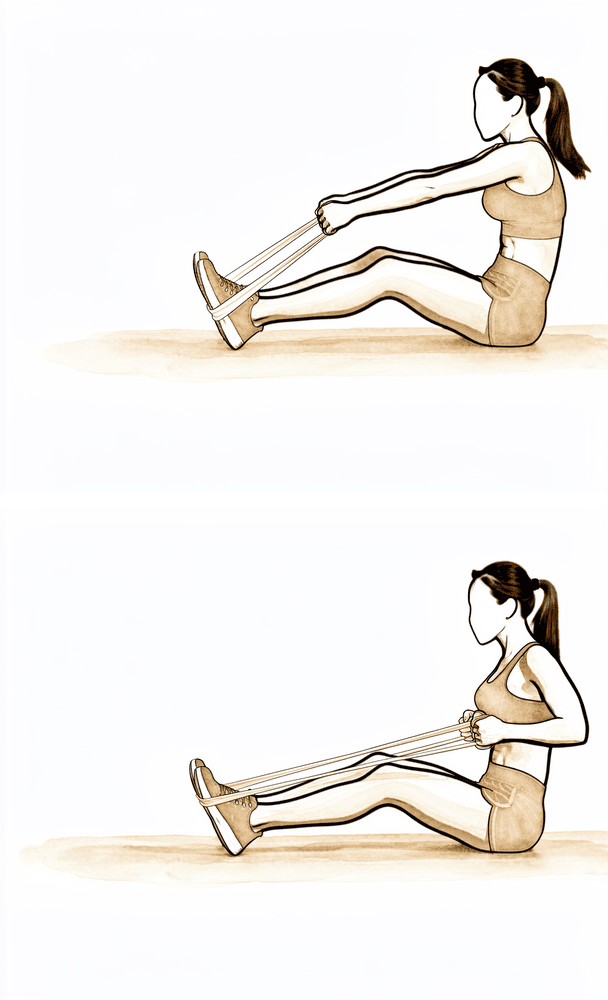
低位划船
手持一条固定于您前方腰部高度的弹力带。保持手臂相对伸直,将其向后下方拉向髋部,同时收缩肩胛骨使其向下向后移动,然后缓慢还原。此动作可锻炼支撑肩袖的肩胛骨肌肉。
2至3组,每组10至15次
Kieran Hirpara 4.0
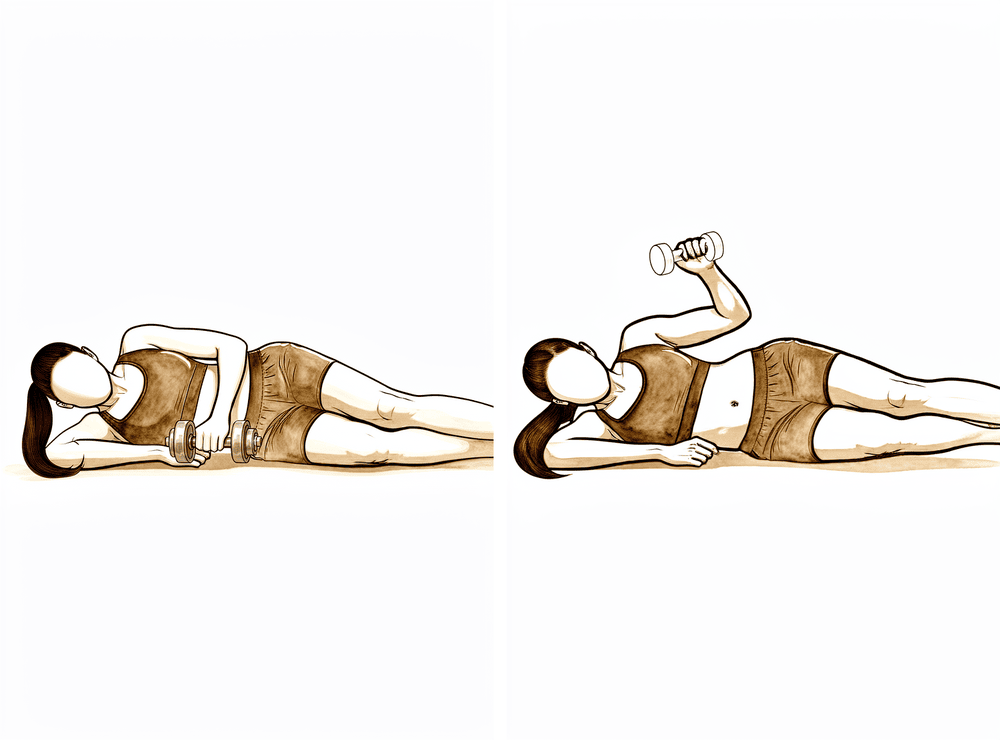
侧卧位负重外旋
侧卧于非手术侧,上方手臂的肘部屈曲成直角并贴紧身体。手持轻重量,将前臂向上朝天花板旋转,然后缓慢放下。这是约八周起(如果肌腱裂口已经缝合,则为十至十二周起)肩袖强化训练的一部分——同时继续进行活动度练习。
低负荷,高次数
您通常会在大约八周时再次接受复查。随着关节活动度的恢复,康复重点将转向在物理治疗师的监督下强化肩袖肌群,并开始在肩关节高度以上自由使用手臂。目标是在大约十二周时实现完全主动的前屈和 abduction(外展)。仅清除钙化沉积物的恢复期通常需要约三个月,此后无任何限制;如果肩袖需要修复,恢复期会更长(通常约为五个月),并遵循肩袖修复方案。如果在此时间点之后仍有轻微疼痛,请勿担心:在此手术后,术前症状可能需要长达九个月才能完全消退,且总体趋势是稳步向好的。
致您的物理治疗师:
目标
- 在大约十二周时实现完全主动的前屈和外展
- 逐步恢复肩袖和肩胛骨的力量与耐力
- 在大约三个月时恢复完全、无限制的活动
管理
- 从第八周开始进行渐进性肩袖强化训练(如果肌腱裂口已经缝合,则从第十至十二周开始):从等长收缩过渡到弹力带和轻重量训练,采用低负荷、高重复次数
- 逐步增加肩关节高度以上的手臂主动使用
- 在第十二至十六周期间,根据耐受情况逐步增加健身房、工作和运动相关的负荷
注意事项
- 强化训练不应以牺牲关节活动度为代价;应全程继续进行活动度训练
- 逐步增加重负荷和过头动作;若疼痛加剧,则需退后一步降低强度
晋级标准
- 完全主动关节活动度,力量正在恢复,且症状持续改善
- 若进展顺利,通常在第八至十六周左右可停止常规随访
您的康复方案之后
上述各阶段改编自针对该手术流程的已发表患者指南及康复方案:伦敦肩部合作组织(The London Shoulder Partnership)的钙化灶切除术康复方案、英国 ShoulderDoc 关于钙化性肌腱炎手术的患者指南,以及 Kevin Ko 医生的关节镜下切除术患者指南。周数范围通常为参考值而非固定标准,您的持续康复将由物理治疗师根据肩部恢复情况,在诊所的配合下为您进行个体化指导。本页面与诊所的一般术后恢复建议相辅相成:请参阅 术后疼痛管理 和 伤口护理。关于该疾病本身及这些治疗方式的作用机制,请参阅 钙化性肌腱炎。本方案背后的证据(自然病程、Barbotage 疗法及手术切除文献)已在证据部分进行总结,该部分可作为 PDF 文件从本页面顶部获取。
Evidence & references
This is the clinical evidence summary written for health professionals. It is technical, and it lists the research this page was built from. You do not need to read it to understand your treatment or to make a decision about it.
Topic scope: (A) the natural history and stepped non-operative management of rotator-cuff calcific tendinitis (rest/analgesia → barbotage ± subacromial steroid → ESWT), and (B) post-operative rehabilitation after arthroscopic excision of the calcific deposit (± subacromial decompression; the cuff-repair pathway defers to the rotator-cuff-repair protocol).
Defining principle of the surgical rehab here: arthroscopic excision removes the source of pain and does not, by itself, create a construct that needs months of protection — provided the rotator cuff is left intact. So (like a debridement/decompression, and unlike a cuff repair) the rehab is an early-movement pathway: short sling for comfort only, unrestricted use below shoulder height from day one, assisted elevation to prevent stiffness, strengthening from ~8 weeks. The single branch point is whether removing the deposit left a tendon defect that needed repair — if so, the recovery converts to the slower, protected rotator-cuff-repair pathway.
A. NATURAL HISTORY & NON-OPERATIVE MANAGEMENT
Natural history (self-limiting in most)
Rotator-cuff calcific tendinitis is self-limiting in the majority: after a variable quiescent period the deposit enters a resorptive phase (peripheral vascularisation + phagocytosis), and spontaneous resorption occurs in roughly two-thirds of cases within 1–2 years [Uhthoff & Loehr; Chianca 2018 review]. This underpins a non-operative-first approach and explains why post-operative residual calcium that "dissolves spontaneously" does not harm the outcome.
Stepped non-operative interventions
- Analgesia / activity modification / physiotherapy — first line; many settle as the deposit resorbs. Consensus.
- Ultrasound-guided barbotage (needling + lavage), usually + subacromial corticosteroid — the best-supported interventional option. A systematic review of 908 patients and subsequent meta-analyses favour barbotage for medium-term pain/function; barbotage + subacromial steroid improves Constant–Murley score and reduces deposit size vs steroid alone. Notably, clinical improvement is NOT dependent on how much calcium is aspirated — perforating the deposit to trigger resorption is the active mechanism. Moderate–strong (SR/RCT).
- Extracorporeal shock-wave therapy (ESWT) — reduces deposit size and pain; broadly comparable to barbotage in several comparisons. Moderate (RCT).
B. POST-OPERATIVE REHABILITATION (arthroscopic excision ± subacromial decompression)
Surgery is reserved for deposits recalcitrant to adequate non-operative care. The operation locates and removes the deposit from within the cuff tendon, often with a subacromial decompression for room. Key surgical-outcome facts that shape the rehab:
- Preserving cuff integrity while removing as much deposit as possible gives good-to-excellent results in ~90% and avoids iatrogenic tendon defects [arthroscopic excision series].
- Complete vs near-complete removal gives equivalent outcomes — residual calcium resorbs spontaneously afterwards; the surgeon need not chase every fleck at the cost of the tendon.
- Arthroscopic decompression WITHOUT cuff repair is a validated strategy with good outcomes where the residual defect is not repaired [Bone & Joint 2023].
- Symptom settling is gradual — significant pain relief and ROM gains are the norm, but the pre-operative symptoms can take up to ~9 months to fade fully; recovery to unrestricted activity after excision alone is ~3 months.
Phased post-op timeline (no cuff repair)
| Phase | Window | Sling | ROM / use | Strengthening | Notes |
|---|---|---|---|---|---|
| I — Early movement | Week 0–2 | Comfort only, days (rarely > 2 wk), off ASAP | Unrestricted use below shoulder height from day 1; assisted elevation above shoulder height several × daily to prevent stiffness | — | Settle post-op flare; calcific patients are stiffness-prone → motion is the priority. ≤ ~2 kg, no driving while in sling |
| II — Regaining range | Week 2–8 | Off | Progress active elevation; restore full passive + active ROM | Begin gentle as pain allows | Most regain comfortable range through this window |
| III — Strengthening / return | Week 8–16 | Off | Full active elevation goal by ~12 wk | Cuff + scapular strengthening from ~8 wk, isometric → band/light weight; advance work/sport loading wk 12–16 | Full unrestricted activity ~3 months; discharge ~8–16 wk |
Branch point — if a rotator cuff repair was required: recovery converts to the protected rotator-cuff-repair pathway (sling ~6 wk, ROM restrictions, strengthening deferred), typically ~5 months total. The surgeon confirms post-operatively which pathway applies.
C. KEY CONTROVERSIES / EVIDENCE QUALITY
- Surgery is a last resort — given high spontaneous-resorption rates and effective barbotage/ESWT, excision is reserved for genuinely recalcitrant cases. Strong rationale.
- How much to remove / whether to repair the defect. Equivalent outcomes for complete vs partial removal, and viable decompression-without-repair, mean the surgeon balances deposit clearance against tendon integrity intra-operatively — which in turn decides the rehab pathway. Moderate.
- The post-op rehab protocol itself is consensus/expert, drawn from surgeon patient-guidance protocols rather than a rehab RCT — phase timings are typical, not trial-derived.
D. EVIDENCE STRENGTH FLAGS (summary)
- MODERATE–STRONG (SR / RCT): barbotage ± steroid for non-operative calcific tendinitis (908-patient SR; barbotage + steroid > steroid alone); ESWT efficacy.
- MODERATE (cohorts): arthroscopic excision outcomes (~90% good-excellent; equivalence of complete vs partial removal; decompression without repair, Bone & Joint 2023); spontaneous resorption ~2/3 within 1–2 years.
- WEAK / CONSENSUS: the post-operative rehabilitation protocol (surgeon patient-guidance documents; no defining rehab RCT).
CITATIONS
RAG corpus (180,000+ Orthopaedic articles) — adjacent rotator-cuff evidence
- Predictors of failure of non-operative treatment of chronic symptomatic rotator-cuff disease (2013 Neer Award). J Shoulder Elbow Surg. 2016. DOI: 10.1016/j.jse.2016.04.030
- Arthroscopic rotator cuff repair: scientific rationale, surgical technique, early clinical results. J Shoulder Elbow Surg. 2010. DOI: 10.1016/j.jse.2009.12.012
- Early versus delayed rehabilitation after arthroscopic rotator cuff repair. Knee Surg Sports Traumatol Arthrosc. 2024. DOI: 10.1002/ksa.12129
- Speed of recovery after arthroscopic rotator cuff repair. J Shoulder Elbow Surg. 2017. DOI: 10.1016/j.jse.2016.11.002
- (The corpus is thin on calcific-tendinitis-specific rehab; the evidence base below is the calcific literature + published surgeon protocols.)
Calcific tendinitis literature (URLs)
- Ultrasound-guided barbotage for calcific tendonitis of the shoulder: a systematic review including 908 patients (DARE). https://www.ncbi.nlm.nih.gov/books/NBK241935/
- Determining the efficacy of barbotage for pain relief in calcific tendinitis. JSES Int / ScienceDirect. 2024. https://pmc.ncbi.nlm.nih.gov/articles/PMC11401591/
- Needling and lavage in rotator-cuff calcific tendinitis: ultrasound-guided technique. PMC. 2024. https://pmc.ncbi.nlm.nih.gov/articles/PMC10805427/
- Calcific tendinitis of the rotator cuff: a review (natural history, phases, resorption). PMC. https://pmc.ncbi.nlm.nih.gov/articles/PMC3749672/
- Recovery pattern after arthroscopic treatment for calcific tendinitis of the shoulder. Orthop Traumatol Surg Res. 2020. https://www.sciencedirect.com/science/article/pii/S1877056820301043
- Arthroscopic decompression of calcific tendinitis without cuff repair. Bone Joint J. 2023. https://boneandjoint.org.uk/Article/10.1302/0301-620X.105B6.BJJ-2022-1137.R1
- Arthroscopic treatment of calcific tendonitis (preserve cuff, ~90% good-excellent; residuals resorb). PMC. https://pmc.ncbi.nlm.nih.gov/articles/PMC4044535/
Published rehab protocols (patient-guidance — basis for the phase structure)
- The London Shoulder Partnership — Calcific Deposit Excision Rehabilitation. http://thelondonshoulderpartnership.co.uk/shoulder/shoulder-rehabilitation/calcific-deposit-excision-rehabilitation/
- Ko K. Arthroscopic Excision of Calcific Tendonitis — What Can I Expect? (OPA Orthopedics). https://www.kevinkomd.com/pdf/calcific-tendonitis.pdf
- Funk L. Surgery for Calcific Tendinitis. ShoulderDoc. https://shoulderdoc.co.uk/pages/surgery-for-calcific-tendinitis





