

住院期间锻炼——肩关节置换术 资料
这些是您在医院内肩关节置换术(全肩置换、反肩置换或骨折置换)后开始进行的温和锻炼。这些锻炼旨在使手部、肘部和肩部保持活动,以便修复部位稳定。
您的锻炼
Kieran Hirpara 4.0
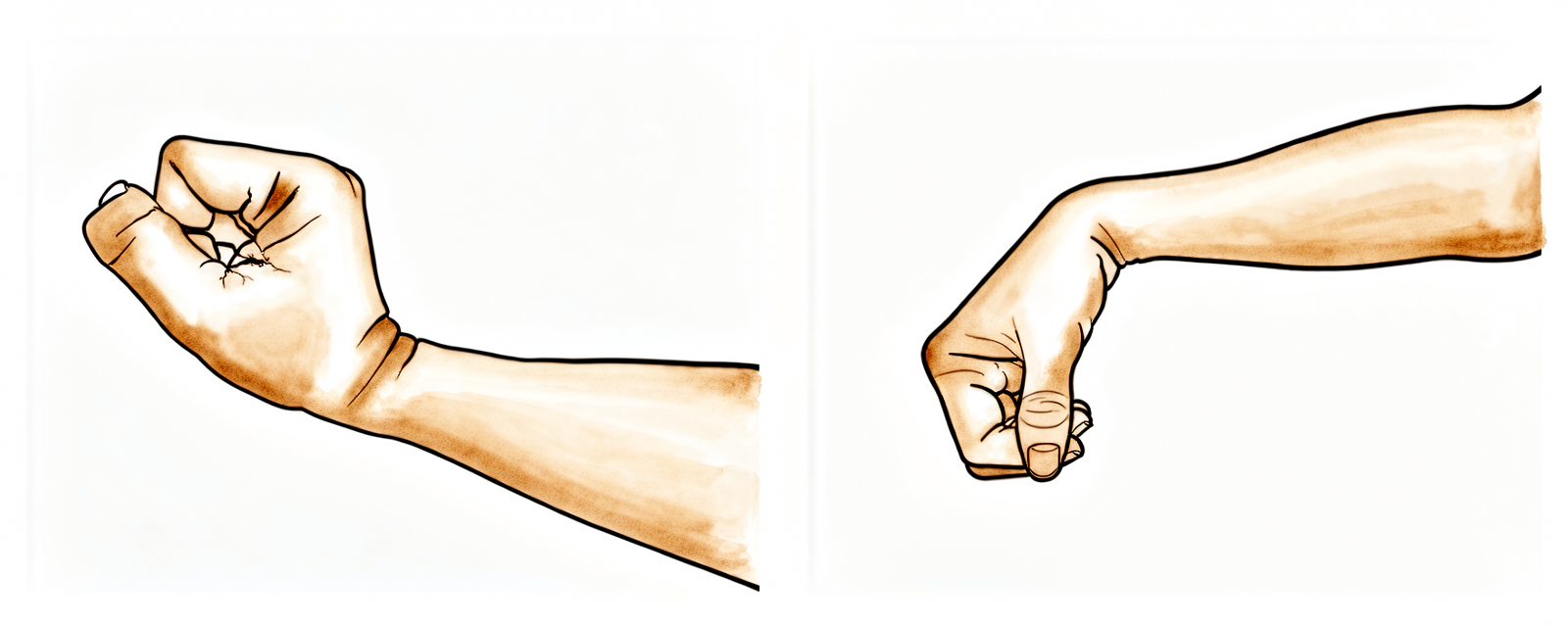
腕部运动
通过向前、向后及左右弯曲手腕来保持手部活动。
10次,每日3次
Kieran Hirpara 4.0
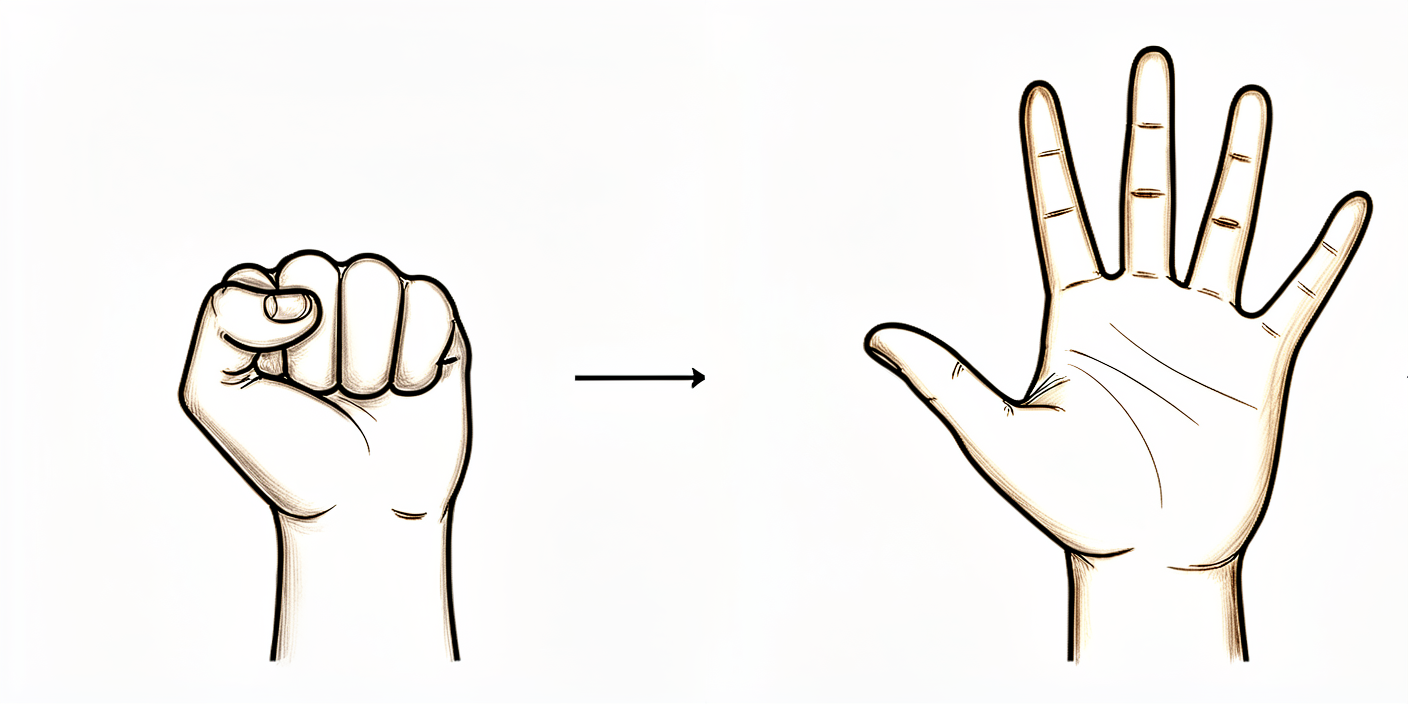
张开和握紧手
通过反复张开和握紧手部及手指,或挤压压力球,保持手部和手指的活动。
10次,每日3次
Kieran Hirpara 4.0
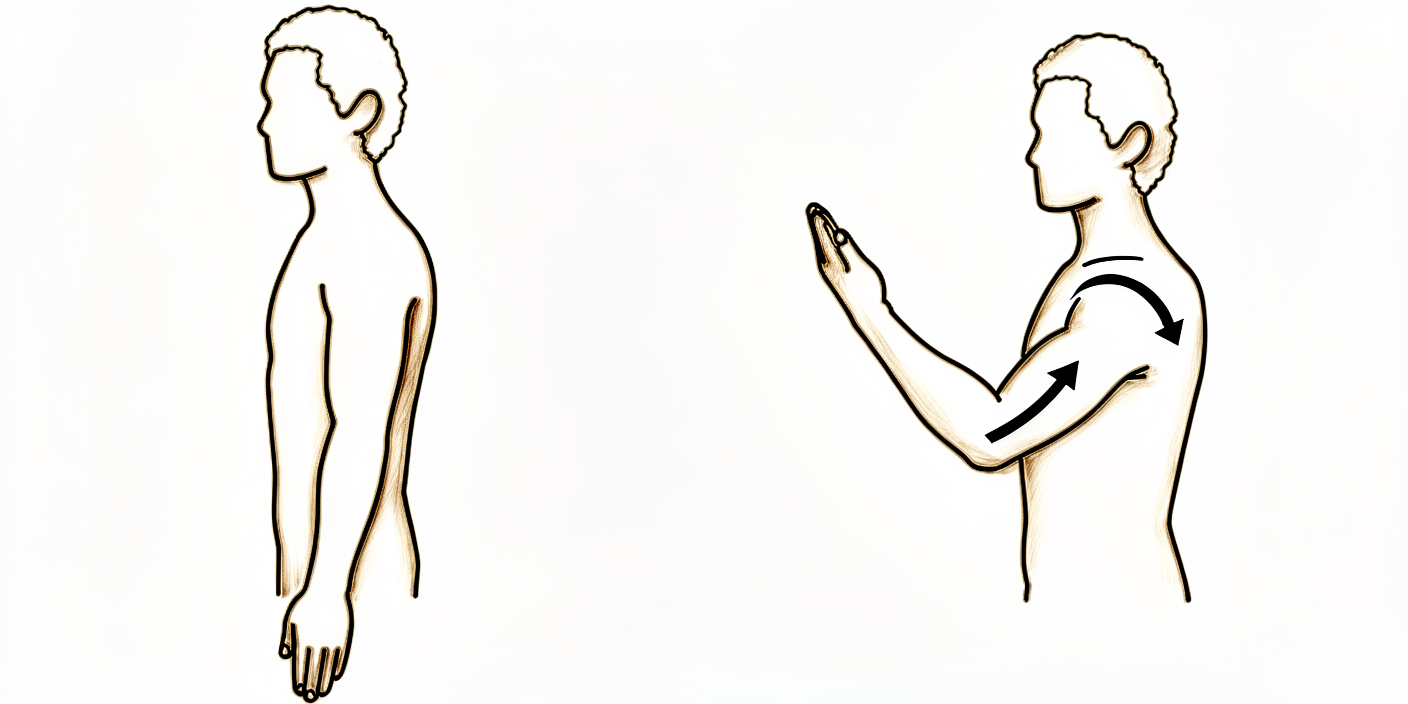
肘部弯曲
弯曲并伸直您的肘部。
10次,每日3次
Kieran Hirpara 4.0
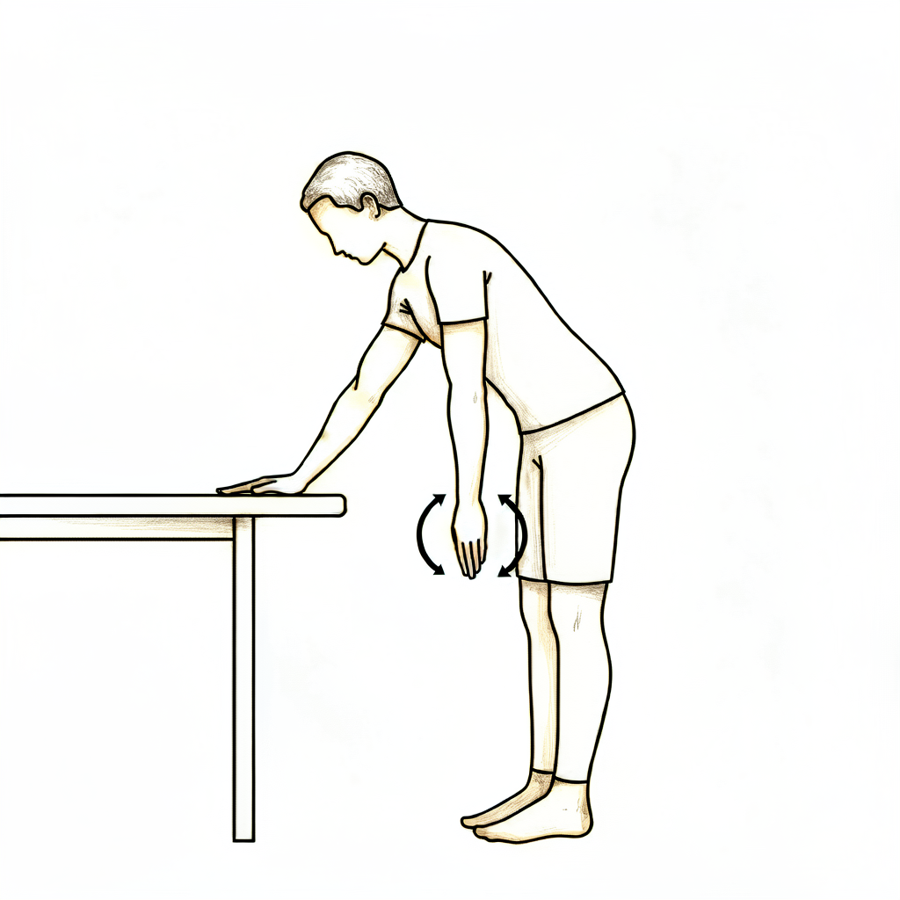
钟摆
这是一项被动练习。身体前倾,让手臂自然放松下垂。利用身体带动手臂轻柔地顺时针或逆时针转动,并配合前后及左右方向的摆动。
每个方向约30秒,每天3次
Kieran Hirpara 4.0
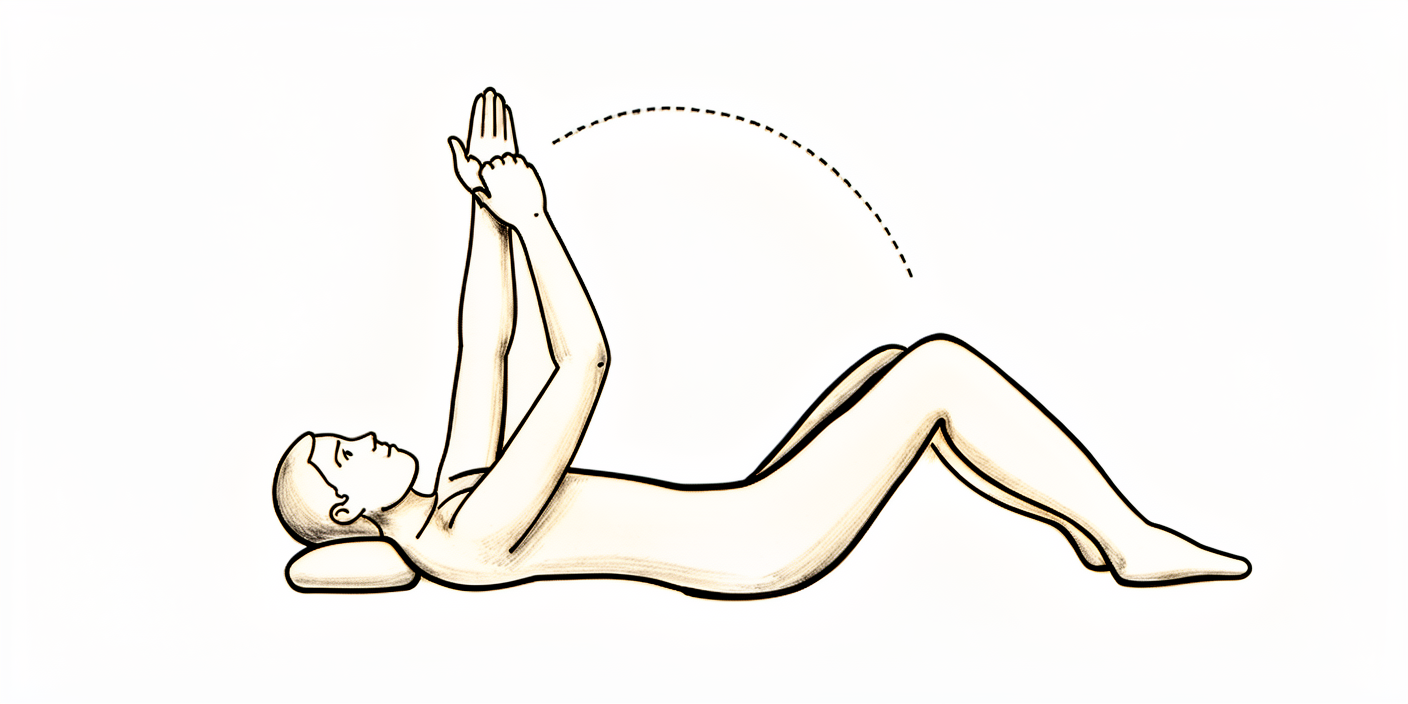
辅助前屈
坐在椅子上并身体前倾,用另一只手臂托住手术侧手臂,轻轻将其向上移动至身前。借助非手术侧手臂的帮助将其放回原位。如果您愿意,也可以仰卧在床上,协助手臂向上移动。
10次,每日3次
Kieran Hirpara 4.0
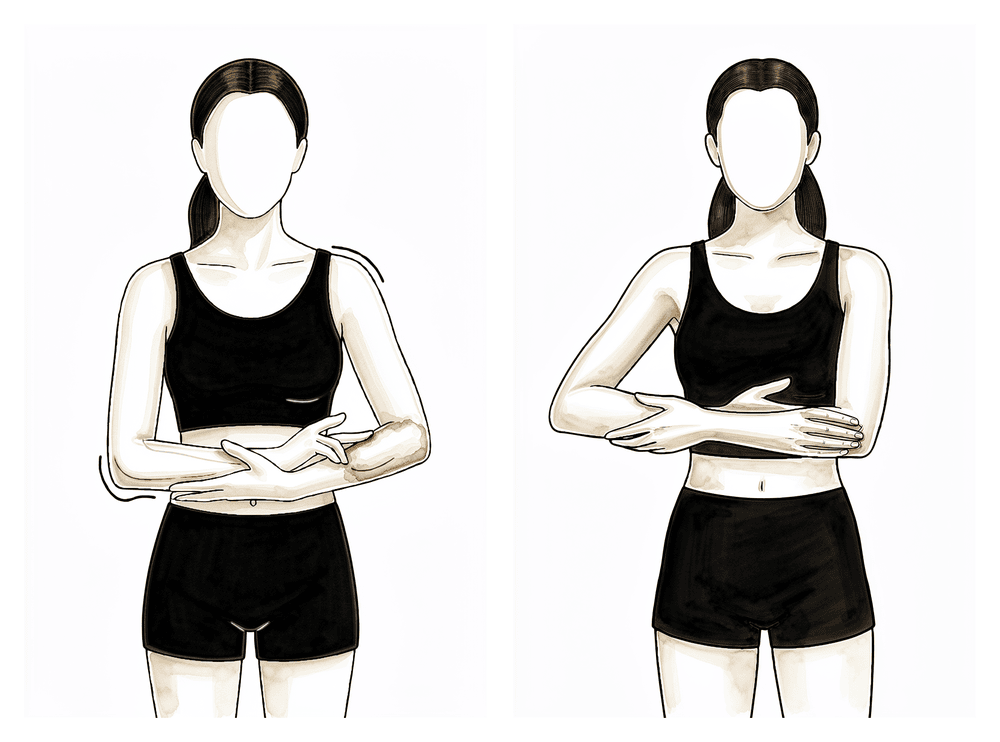
辅助外展
坐在椅子上,身体前倾,再次托住手臂,帮助其向外侧移动(如同摇动婴儿般)。
10次,每日3次
Kieran Hirpara 4.0
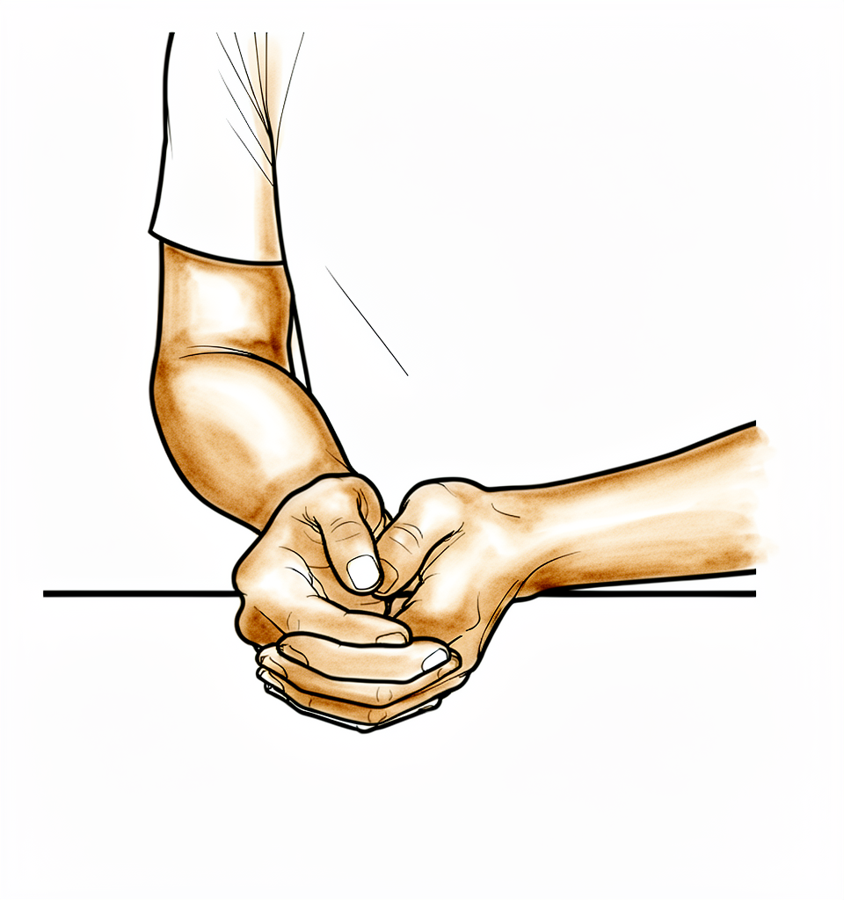
外旋
坐在椅子上,仅将手臂从悬吊带中的位置移动至正前方伸直。不要向外侧移动更多。
10次,每日3次
Kieran Hirpara 4.0
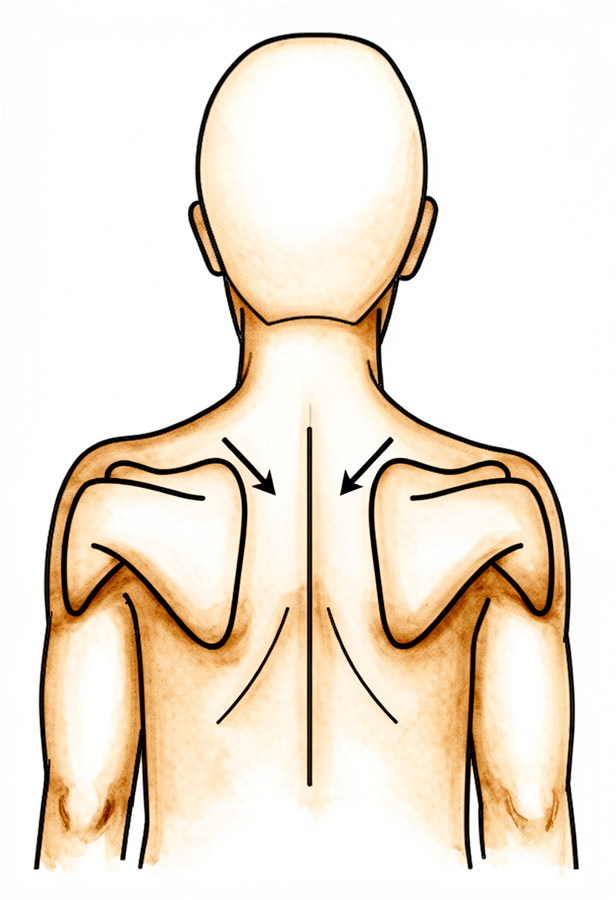
下斜方肌激活
将肩胛骨向下并向内收拢。
保持 5 秒,5 次,每天 3 次
Kieran Hirpara 4.0
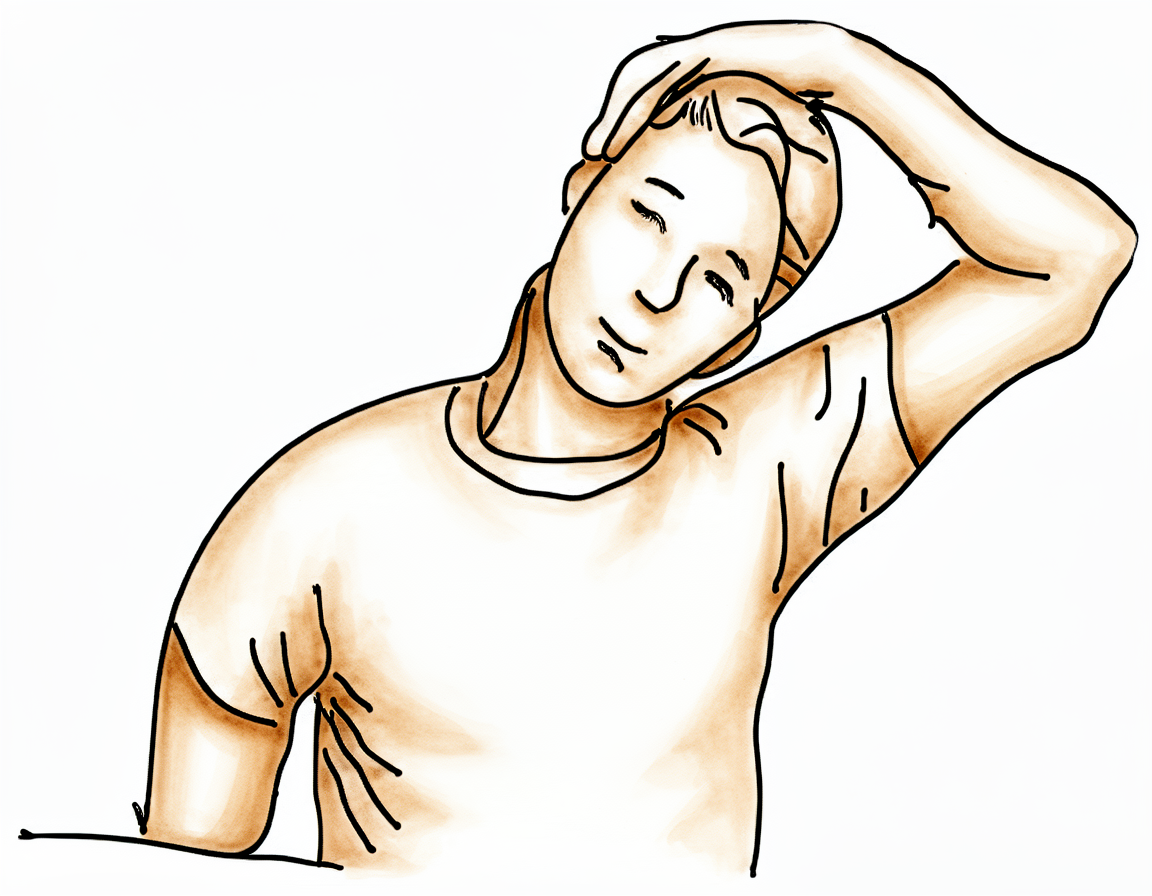
上斜方肌拉伸
用您的非手术侧手臂将耳朵向同侧肩部方向移动,远离手术侧。
保持10秒,3次,每天3次
Kieran Hirpara 4.0
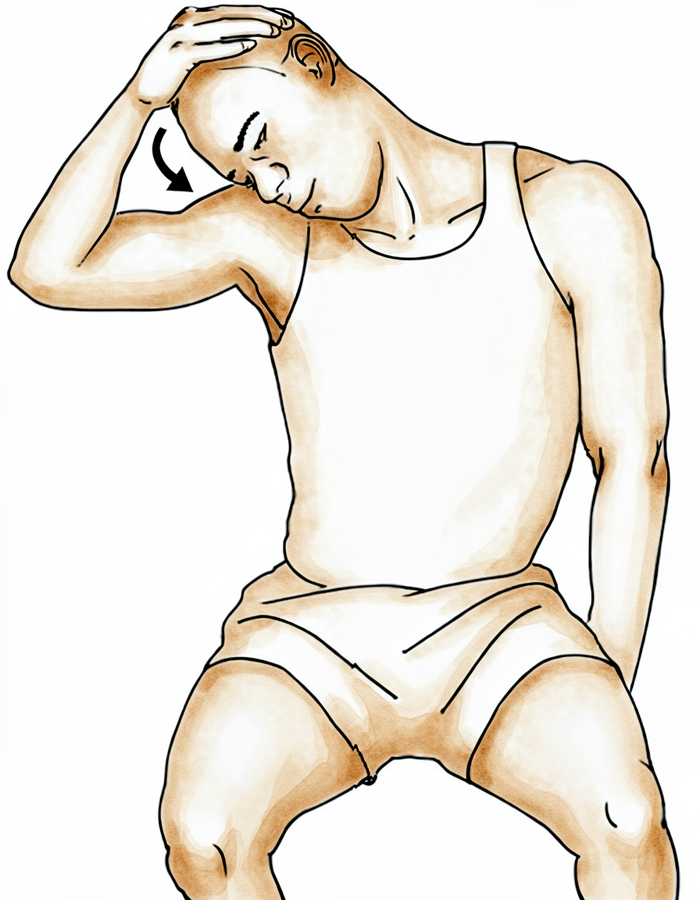
肩胛提肌拉伸
用您的非手术侧手臂将鼻子移向腋窝区域,远离手术侧。
保持10秒,3次,每天3次
Kieran Hirpara 4.0
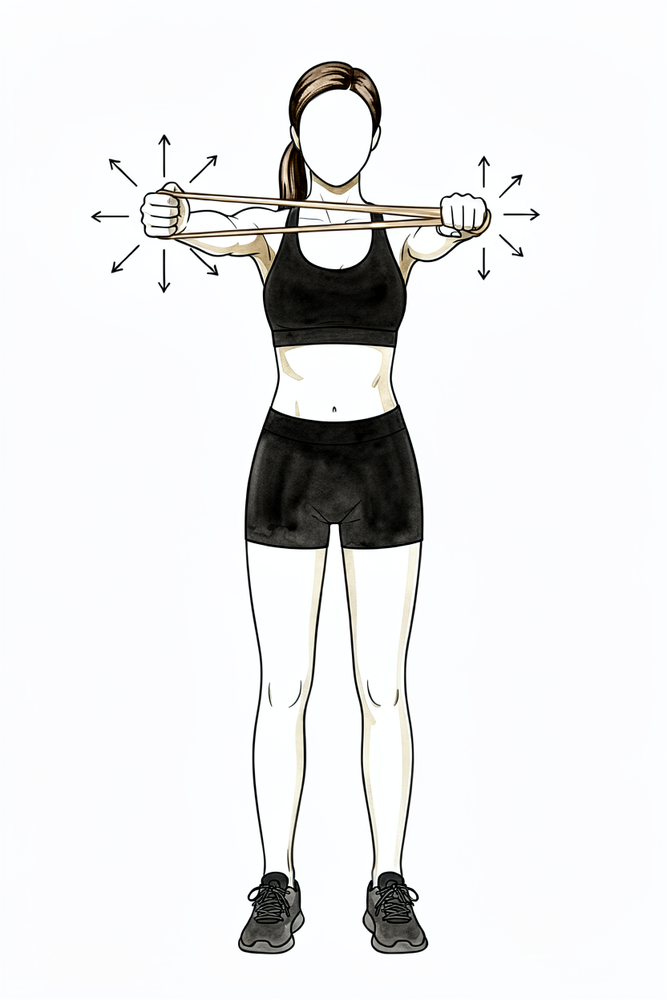
节律性稳定
将手臂支撑在身体前方,高度约与肩部齐平,请您的物理治疗师(或您的健侧手)从不同方向施加小而轻柔的推力,同时您保持手臂静止且稳定——不要让其移动。这旨在训练肩部稳定肌群的反应能力。所有动作力度均需保持轻柔。
在您的物理治疗师指导下
请在医院开始进行这些温和的锻炼,并在家中继续。锻炼过程应感觉舒适;如果疼痛加剧,请放缓动作。
如果您接受的是反式置换术,可以较早开始活动肩部;先从辅助运动和重力辅助运动开始(仰卧位最轻松,可借助重力),然后在舒适度允许的范围内逐渐加入温和的主动运动,保持在感觉舒适的范围内即可。只需避免“佩戴吊带”部分列出的那些需避免的姿势。
如果您接受的是全肩(解剖型)置换术或骨折置换术,请保持早期运动为辅助且温和,如图所示;让另一只手臂承担工作,不要将手术侧手臂向外推至超出锻炼要求的范围,以保护肩关节前部的愈合修复组织。
佩戴悬吊带
佩戴悬吊带的时间取决于您接受的是哪种置换手术;请遵循您手术对应的规则。
如果您接受的是反置式置换:
- 悬吊带主要用于提供舒适感和支撑,您只需佩戴约 2 周,而非全天候佩戴 6 周。
- 您可以将手臂从悬吊带中取出以进行锻炼和淋浴。
- 您可以立即开始温和的肩部活动(参见您的锻炼指南);无需让手臂保持完全静止。
- 在早期几周,当组织正在稳定时,有几种姿势需要避免:不要将手臂伸到身体后方或背部后方,不要将向后伸展与手臂内旋结合,不要提重物,也不要通过双手推撑(例如,从椅子上撑起身体)。您的物理治疗师会向您讲解这些注意事项。
如果您接受的是全肩(解剖型)置换,或骨折置换:
- 您需要佩戴悬吊带睡觉。
- 您可以将手臂从悬吊带中取出以进行锻炼和淋浴。
- 您需要佩戴悬吊带 6 周,尤其是在外出时。
- 肩部前部的修复需要时间来愈合,因此您早期的活动更温和且更受限制;请坚持进行所示的辅助锻炼,不要强行将手臂向外伸展超过锻炼要求的范围。
适用于所有人:
- 如有需要,请使用冰敷以缓解疼痛。
- 佩戴悬吊带时,请放松肩部,让悬吊带承受手臂的重量。
- 在进行锻炼和物理治疗预约之前,请服用止痛药。
- 除非您自行安排了物理治疗,否则已为您安排了预约,详情见您的出院资料包。
- 如果您遇到任何问题,请联系诊室或告知您的物理治疗师。
出院回家后
回家后,您的康复将继续按照手术对应的完整康复方案进行:反向肩关节置换术;全肩关节置换术;骨折肩关节置换术。
关于这一早期住院阶段背后的循证依据(即为何吊带固定和轻柔活动至关重要,为何反向置换术后可以早期自由活动,主要注意事项是避免手臂向后伸至身体后方,以及为何全肩关节置换术后需更为谨慎,限制外旋以保护肩关节前部的修复结构),已在证据部分进行总结,该部分以PDF格式提供,可从本页面顶部获取。
Evidence & references
This is the clinical evidence summary written for health professionals. It is technical, and it lists the research this page was built from. You do not need to read it to understand your treatment or to make a decision about it.
Topic scope: This page covers only the early in-hospital phase of recovery after a shoulder replacement — the first days on the ward and the principles of the first protected weeks — for anatomic total shoulder arthroplasty (TSA), reverse total shoulder arthroplasty (RSA), and shoulder replacement performed for a proximal-humerus fracture. The companion patient page (the synthesis) lists the actual in-hospital exercises and sling rules; this page sets out the evidence behind them. The full course of rehabilitation for each operation lives in its own protocol — follow that one once you are home: total shoulder replacement, reverse shoulder replacement, and shoulder replacement for fracture, each of which carries its own detailed evidence page.
Defining principle of the early phase: the two pathways now differ. A reverse replacement is run on an accelerated, permissive footing, while an anatomic total replacement (and a replacement for a fracture) remains protective. In every case the hand/wrist/elbow are kept active from the start, but what the shoulder itself is allowed to do — and what is being protected — differs by operation:
- Anatomic TSA protects the subscapularis repair. To put the ball-and-socket implant in, the surgeon detaches and re-attaches the subscapularis tendon (or its bone block) at the front of the shoulder. Early external rotation is limited, active and resisted internal rotation is delayed, and shoulder elevation is kept passive/assisted — because these are the positions that strain the healing repair. This is why the in-hospital ER exercise only moves the arm from the sling position to pointing straight ahead — and no further. The sling is worn full-time for about 6 weeks.
- Reverse TSA is accelerated. Often there is no subscapularis repair to protect, and the deltoid (not the cuff) powers the arm, so the shoulder can move early. The sling is for comfort and support only (~2 weeks), and active-assisted and active-as-tolerated shoulder motion begins from the start (supine/gravity-assisted first), within comfort. The main early constraint is dislocation precautions, whose at-risk position is hand-behind-the-back (combined extension + adduction + internal rotation): avoid reaching the arm behind the body or behind the back, no lifting, and no pushing up through the hands. This aligns with the accelerated reverse literature (see the reverse protocol's evidence page).
- Replacement for fracture adds a third constraint: the tuberosities (the bony muscle attachments) must heal, so this pathway follows the protective line (like anatomic TSA) and is usually the most protective of the three.
Common to all three: the hand/wrist/elbow are kept active immediately, and adequate analgesia makes early gentle motion possible. The sling duration and how freely the shoulder moves then differ — permissive for reverse, guarded for anatomic and fracture.
The early in-hospital phase, in brief
Most patients stay in hospital a short time after a shoulder replacement — commonly about one to two nights, and selected patients are now safely discharged the same day. Before discharge the ward physiotherapist fits the sling, teaches independent sling management, and starts the gentle exercises shown in the synthesis: keeping the hand, wrist and elbow active; pendulums; and shoulder elevation — assisted (passive) and limited in external rotation after an anatomic repair, but active-assisted and active-as-tolerated from the start after a reverse replacement. The arm is commonly numb from a nerve block when you wake, with sensation returning over roughly 24 hours. The job of this phase is pain control, swelling reduction, keeping the non-shoulder joints moving, and protecting the new joint while it settles — not building strength, which comes later in the home protocol.
Evidence by theme
1. Length of stay is short, and same-day discharge appears safe in selected patients
Shoulder replacement has traditionally been an inpatient operation, but length of stay is short and falling. At an orthopaedic specialty hospital the average stay was about 1.3 days versus ~1.85 days at a general centre [RAG corpus — 10.1016/j.jse.2016.01.010]. A large series found same-day discharge was not inferior to a longer in-hospital stay for 90-day readmissions [RAG corpus — 10.1016/j.jse.2019.09.037], and outpatient TSA in an ambulatory centre was reported as a safe alternative to inpatient care in a matched cohort (2016 Neer Award) [RAG corpus — 10.1016/j.jse.2016.07.011]. Same-day discharge appears safe even in patients aged ≥65 with appropriate selection [RAG corpus — 10.1016/j.jse.2021.02.022]. Whether you stay one night or go home the same day is an individual decision; the early-exercise and sling principles are the same either way.
Evidence: MODERATE (cohort / matched-cohort data).
2. Pain control is the patient's and the system's primary early concern
When patients consider shorter stays, perioperative pain control is their primary concern [RAG corpus — 10.1016/j.jse.2022.07.009] — which is why the synthesis emphasises taking analgesia before exercises and physiotherapy. Adequate pain relief is also what makes early gentle motion possible. A regional nerve block is commonly used, explaining the early numbness that recovers over about a day.
Evidence: MODERATE (survey / practice data).
3. Early motion depends on the operation — accelerated for reverse, guarded for anatomic
The ward starts active hand/wrist/elbow motion immediately after every replacement. What the shoulder is allowed to do then splits by operation. For reverse replacement the conservative-versus-early question has been tested directly: randomised trials show that earlier motion and shorter (or even no) immobilisation do not increase dislocation or complications, including a 3-week-versus-no-immobilisation RCT in primary RSA [RAG corpus — 10.1016/j.jse.2025.02.015], and home-based physiotherapy matched formal outpatient therapy after RSA [RAG corpus — 10.1016/j.jse.2023.03.023]. Dr Hirpara's reverse pathway now follows this accelerated line: a short (~2-week) comfort sling, and active-assisted and active-as-tolerated shoulder motion (supine/gravity-assisted first) from the start, within comfort — with dislocation precautions (no arm behind the body, no lifting, no pushing through the hands) the main early constraint. By contrast, anatomic TSA and replacement for fracture keep the protective early line — passive/assisted elevation only, no active shoulder lifting, and the front-of-shoulder repair (or the tuberosities) guarded — because there is a repair that the reverse construct does not have.
Evidence: MODERATE–STRONG for RSA early motion (RCTs), which the reverse pathway now reflects; the specific in-hospital timings are consensus/surgeon preference.
4. Why external rotation is limited after anatomic TSA but freer after reverse
In anatomic TSA the subscapularis must be detached to seat the implant and then repaired, and external rotation (especially with the arm out to the side) puts the greatest strain on that repair — so early ER is restricted while forward elevation and scaption, which do not load the repair, are allowed sooner [literature — Brigham & Women's Faulkner TSA guideline; subscapularis management review]. Typical published protocols cap early external rotation at around 20–30° and release it at about 6 weeks; the synthesis applies this by moving the arm only from the sling position to "pointing straight ahead." After reverse replacement there is usually no subscapularis repair to protect, so ER is more permissive and the dominant precaution is instead the hand-behind-the-back dislocation position [parent reverse protocol — RAG corpus 10.1016/j.jse.2016.12.073; 10.1016/j.jse.2020.05.019].
Evidence: MODERATE (biomechanical + protocol consensus); no single defining rehab RCT for the early in-hospital window.
Phased timeline — the early phase only
This focuses on the in-hospital and immediately-post-discharge window. The complete multi-phase course (intermediate, transitional, advanced strengthening, return to sport) lives in each parent protocol; the rows below are intentionally consistent with the Phase I content of those pages.
| Phase | Window | Sling | Shoulder motion | Operation-specific note |
|---|---|---|---|---|
| In hospital | Days 0–2 | Reverse: comfort/support. Anatomic + fracture: worn incl. overnight | Active hand/wrist/elbow (all); pendulums. Reverse: active-assisted + active-as-tolerated from the start (supine/gravity-assisted first). Anatomic + fracture: passive/assisted elevation, limited assisted ER | Ward physio fits sling, teaches management, starts the synthesis exercises before discharge |
| Early protection | Weeks 0–3 | Reverse: ~2 weeks for comfort. Anatomic + fracture: full-time (worn overnight) | Reverse: continue active-assisted/active motion within comfort; dislocation precautions (no arm behind body, no lifting, no pushing through hands). Anatomic TSA: passive/assisted only, no active lifting, ER limited (sling-to-straight-ahead), IR delayed. Fracture: most protective | Pain + swelling control; keep adjacent joints moving |
After this early window, follow the full protocol for your specific operation (linked above), where the sling is weaned, active motion is progressed, and strengthening begins.
Key controversies / evidence quality
- Inpatient vs same-day discharge. Cohort evidence supports same-day discharge in selected patients, but selection matters and pain control is the limiting factor; whether you stay overnight is a clinical judgement, not a fixed rule. Moderate.
- How protective to be early. Randomised data (strongest for reverse) show early motion and shorter immobilisation are safe. The reverse pathway now applies this accelerated approach (short comfort sling, early active-assisted/active motion, dislocation precautions). The anatomic pathway stays protective because it has a subscapularis repair to guard — there the protective early phase is a deliberate surgeon clinical decision, not an oversight relative to the accelerated literature. Moderate–strong evidence; applied per operation.
- The in-hospital protocol itself is consensus/expert. The specific early exercises and ROM limits are drawn from published institutional protocols and surgeon guidance, not from a rehab RCT of the in-hospital window. Weak/consensus.
Evidence-strength flags (summary)
- MODERATE (cohort): short length of stay; same-day discharge non-inferior for readmissions and safe in selected and older patients; pain control as the primary patient concern.
- MODERATE–STRONG (RCT, mainly reverse): early motion / shorter immobilisation safe after RSA; home-based PT equivalent to formal outpatient PT after RSA.
- MODERATE (biomechanical + protocol consensus): ER restriction protects the subscapularis repair in anatomic TSA; reverse rehab more permissive in ER but constrained by the dislocation position.
- WEAK / CONSENSUS: the specific in-hospital exercise set and early-phase timings (institutional protocols + surgeon preference; no defining rehab RCT of the inpatient window).
Citations
RAG corpus (180,000+ Orthopaedic articles) — real DOIs returned by search
- Length of stay after shoulder arthroplasty — the effect of an orthopedic specialty hospital. J Shoulder Elbow Surg. 2016. DOI: 10.1016/j.jse.2016.01.010
- Same-day discharge is not inferior to longer length of in-hospital stay for 90-day readmissions following shoulder arthroplasty. J Shoulder Elbow Surg. 2020. DOI: 10.1016/j.jse.2019.09.037
- Outpatient total shoulder arthroplasty in an ambulatory surgery center is a safe alternative to inpatient total shoulder arthroplasty in a hospital: a matched cohort study (2016 Neer Award). J Shoulder Elbow Surg. 2016. DOI: 10.1016/j.jse.2016.07.011
- Is outpatient shoulder arthroplasty safe in patients aged ≥65 years? A comparison of readmissions and complications in inpatient and outpatient settings. J Shoulder Elbow Surg. 2021. DOI: 10.1016/j.jse.2021.02.022
- Perioperative pain control represents the primary concern for patients considering outpatient shoulder arthroplasty: a survey-based study. J Shoulder Elbow Surg. 2022. DOI: 10.1016/j.jse.2022.07.009
- Three-week immobilization vs. no immobilization in primary reverse total shoulder arthroplasty: a randomized controlled trial. J Shoulder Elbow Surg. 2025. DOI: 10.1016/j.jse.2025.02.015
- Home-based physical therapy results in similar outcomes to formal outpatient physical therapy after reverse total shoulder arthroplasty: a randomized controlled trial. J Shoulder Elbow Surg. 2023. DOI: 10.1016/j.jse.2023.03.023
- The American Society of Shoulder and Elbow Therapists' consensus statement on rehabilitation for anatomic total shoulder arthroplasty. J Shoulder Elbow Surg. 2020. DOI: 10.1016/j.jse.2020.05.019
- Dislocation following reverse total shoulder arthroplasty. J Shoulder Elbow Surg. 2017. DOI: 10.1016/j.jse.2016.12.073
Literature (URLs)
- The effect of subscapularis-specific rehabilitation following total shoulder arthroplasty: a prospective, double-blinded, randomized controlled trial. J Hand Ther / ScienceDirect. 2023. https://pubmed.ncbi.nlm.nih.gov/37263480/
- Management of the subscapularis tendon during total shoulder arthroplasty (early ER strains the repair most). J Hand Ther / ScienceDirect. 2016. https://www.sciencedirect.com/science/article/abs/pii/S1058274616305791
Published rehabilitation protocols (basis for the early-phase structure)
- Brigham & Women's Faulkner Hospital — Department of Rehabilitation Services: Total Shoulder Arthroplasty Guideline (early ER restriction to protect the subscapularis repair). https://www.brighamandwomensfaulkner.org/assets/BWH/patients-and-families/rehabilitation-services/pdfs/total-shoulder-arthroplasty-guideline.pdf
- Massachusetts General Brigham Sports Medicine — Rehabilitation Protocol for Total Shoulder Arthroplasty and Hemiarthroplasty (Revised December 2018). https://www.massgeneral.org/assets/MGH/pdf/orthopaedics/sports-medicine/physical-therapy/rehabilitation-protocol-for-total-shoulder-arthroplasty-and-hemi.pdf
- Massachusetts General Brigham Sports Medicine — Rehabilitation Protocol for Reverse Shoulder Arthroplasty (Revised December 2018). https://www.massgeneral.org/assets/mgh/pdf/orthopaedics/sports-medicine/physical-therapy/rehabilitation-protocol-for-reverse-shoulder-arthroplasty.pdf





