

胸大肌修复 资料
该方案指导您在 Mater Private Hospital Rockhampton 接受 Kieran Hirpara 医生胸大肌修复术后的康复过程。以下每个阶段均以通俗易懂的语言说明当前发生的情况及最关键的事项,随后提供您的物理治疗师所需的结构化细节;请在首次物理治疗就诊时携带此页面或其 PDF 版本,以确保您的康复过程协调一致。您的物理治疗师可能会根据您的康复进展调整计划。
如果您在术后对伤口有任何担忧,请联系诊室。拍摄伤口照片并通过电子邮件发送以供审阅通常很有帮助。切口位于腋窝褶皱附近,该处容易积聚汗液和湿气;请保持其清洁干燥,并立即报告任何发红、分泌物或发热症状。
预期情况
胸大肌是驱动推举和拥抱动作的强大胸部肌肉:卧推、俯卧撑以及将手臂横过身体的动作。撕裂通常发生在健壮年轻男性进行大重量卧推的离心阶段(下放阶段),此时肌肉同时处于拉伸和负重状态。修复手术旨在重新连接撕裂的肌腱,整个康复计划围绕一个简单理念构建:在愈合期间,让修复后的肌腱避免拉伸和避免负重。
胸大肌将手臂拉向身体中线并内收,同时使手臂内旋。对修复部位拉伸和张力最大的两个动作是将手臂向侧方抬起(外展)和向外旋转(外旋),尤其是两者同时进行时,这正是最初导致撕裂的体位。因此,在早期,手臂保持在身体前方,轻轻内旋,并严格限制上述两个动作,随后每次增加几度逐步恢复。
如果修复部位承受过大负荷,可能会从骨骼上撕脱,因此刻意将重度胸部训练(卧推、飞鸟、双杠臂屈伸、俯卧撑及对抗性运动)推迟至四到六个月。这比感觉上应该花费的时间要长,但这是保护您修复部位最重要的单一因素。
您的时间表还取决于肌腱的修复方式。 骨-肌腱修复(使用锚钉或纽扣将肌腱重新连接到肱骨上)的愈合速度比肌腱-肌腱修复慢,且脱离悬吊带的时间稍晚。Hirpara医生会告知您适用哪种情况。在整个康复计划中,当您的肩部准备好时才向前推进,而不仅仅是日历指示的时间:以下每个阶段都列出了“准备好”的具体标准。
手术过程
胸大肌修复术旨在重新附着撕裂的胸肌肌腱。最常见的情况是肌腱从其在上臂骨(肱骨)上的附着点处撕脱,随后通过锚钉或纽扣,使用高强度缝合线将其重新固定于该处;有时撕裂发生在肌腱内部,则需将其缝合复位。康复训练的任务是在愈合期间保护该重新附着点,随后逐步恢复全范围活动度、肌力及自信的推压力量。
佩戴悬吊带
您将佩戴简易悬吊带:希拉帕医生使用简易悬吊带,而非笨重的外展枕或枪手护具。悬吊带将您的手臂保持在保护位置:位于身体前方并轻轻向内旋转,此时修复的胸肌处于放松状态。
- 佩戴悬吊带 4 至 6 周(骨-腱修复比腱-腱修复佩戴时间更长;希拉帕医生会告知您属于哪种情况)。您无需在睡眠时佩戴。
- 仅在淋浴和进行锻炼时取下悬吊带(前提是您已接受过操作指导);每当取下悬吊带时,请保持手臂位于身体前方并垂于体侧,不要向外侧伸展,也不要向外旋转。
- 在家中休息时,如果您能合理操作,可以取下悬吊带:用枕头支撑手臂,并保持手臂位于身体前方。
- 如果肩部肿胀或疼痛,尤其是锻炼后,请使用冰敷。
在佩戴悬吊带期间,请注意您的姿势。保持耳朵、肩膀和臀部在一条直线上,避免肩膀下垂;良好的姿势可以保护您的背部,并有助于防止肩部僵硬。
关键注意事项——切勿执行
- 切勿将手臂向外旋转超过物理治疗师设定的每周限制。外旋起始于正前方(中立位,0°)位置,每周仅逐步增加约 5°,因为外旋会牵拉修复部位。
- 切勿将手臂向侧方抬起超过每周允许的小幅度,且切勿将手臂向侧方抬起与向外旋转相结合:该体位会导致肌肉撕裂。
- 切勿让肘部向后移动至胸部平面之后(这会牵拉修复部位);此后在健身房锻炼时,需长时间避免此动作。
- 在最初几周,切勿进行钟摆(手臂悬垂)或杠杆式器械练习;与肩部手术不同,让手臂悬垂或使用杠杆器械会牵拉已修复的胸肌。(辅助器械练习将在后期引入,约从第 4 周开始。)
- 在获得许可前(不得早于 4 至 6 个月),切勿推、压或负重胸部(禁止卧推、飞鸟、双杠臂屈伸、夹胸机、俯卧撑或对抗性运动)。
- 切勿强行或拉伸任何动作,且在团队开始指导前(约从第 9 周开始),切勿直接锻炼已修复的胸肌(抗阻内旋或推压)。
第一阶段 — 保护期(第 0–3 周)
最初几周完全致力于保护修复后的肌腱,使其与骨骼愈合。白天您需佩戴简易悬吊带,手臂置于身体前方并轻微内旋;夜间无需佩戴,但需保持手臂处于该安全位置。您的手、腕、手指和肘部可正常活动。大约从第 2 周开始,您的物理治疗师可能会在严格限制范围内为您轻柔地活动肩关节(被动活动),但禁止主动用力,禁止强行活动,且禁止进行钟摆运动或棍棒练习。
- 悬吊带: 简易悬吊带,手臂置于前方并轻微内旋,白天佩戴;夜间取下,但保持手臂处于相同的安全位置。
- 允许的活动: 仅限被动(辅助)活动,大约从第 2 周开始,并严格限制在以下范围内:外旋仅限至中立位(0°),前举仅限至约 45°,侧方外展仅限至约 30°。您的肘部、腕部和手部可自由活动。
- 练习: 手、腕和肘部活动;轻柔握拳;肩胛骨固定及低位划船动作,针对肩胛骨周围的肌肉(保持低位,远低于肩部高度)。完全禁止胸肌负荷。
进入下一阶段的指征: 疼痛得到控制;伤口愈合且无异常迹象;在上述限制范围内被动活动舒适;且无修复部位过度受力的迹象。
第二阶段——恢复活动并逐步停用悬吊带(第 4–6 周)
Kieran Hirpara 4.0
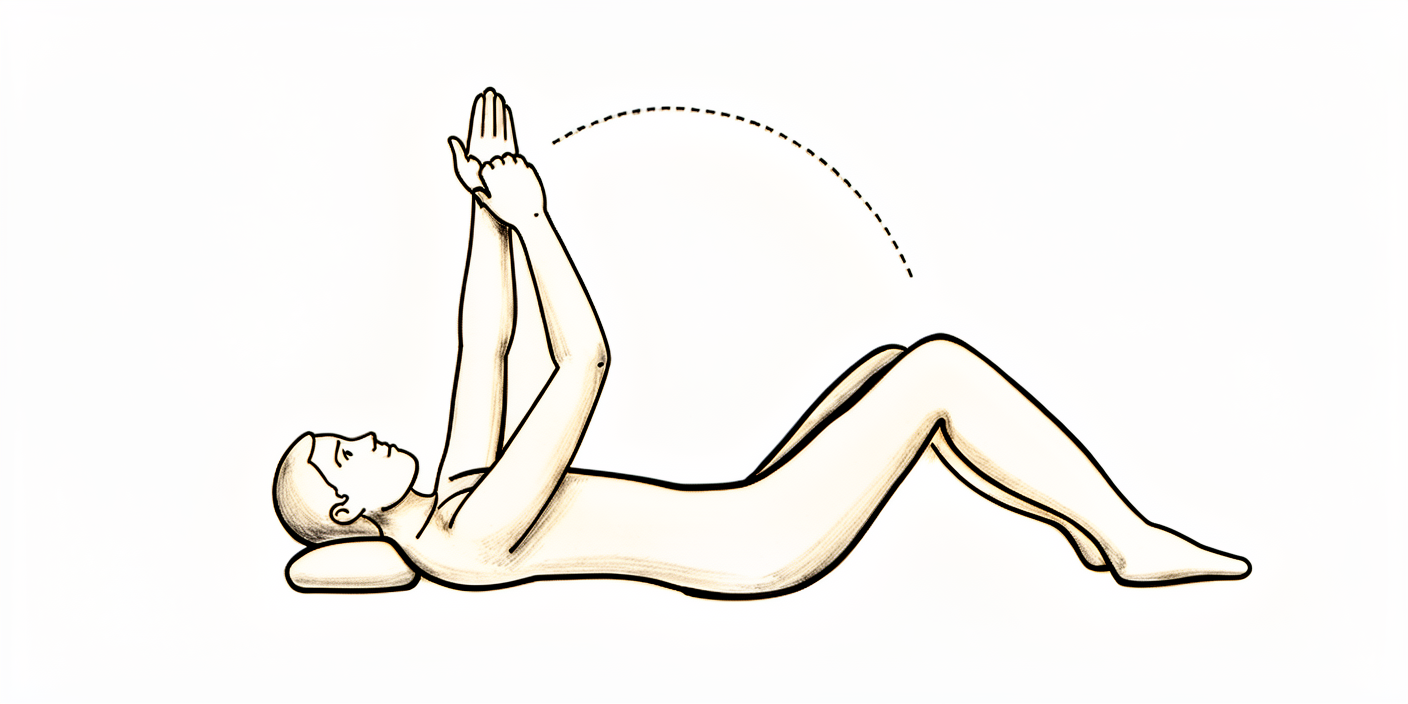
仰卧位辅助前举
仰卧。用健侧手置于患侧肘部下方,协助将患肢向前抬起,仅抬至物理治疗师规定的高度,然后缓慢放下。患侧肩部保持放松,由健侧手臂完成动作。此动作约从第4周开始引入——前几周不进行。
在您的物理治疗师指导下
Kieran Hirpara 4.0
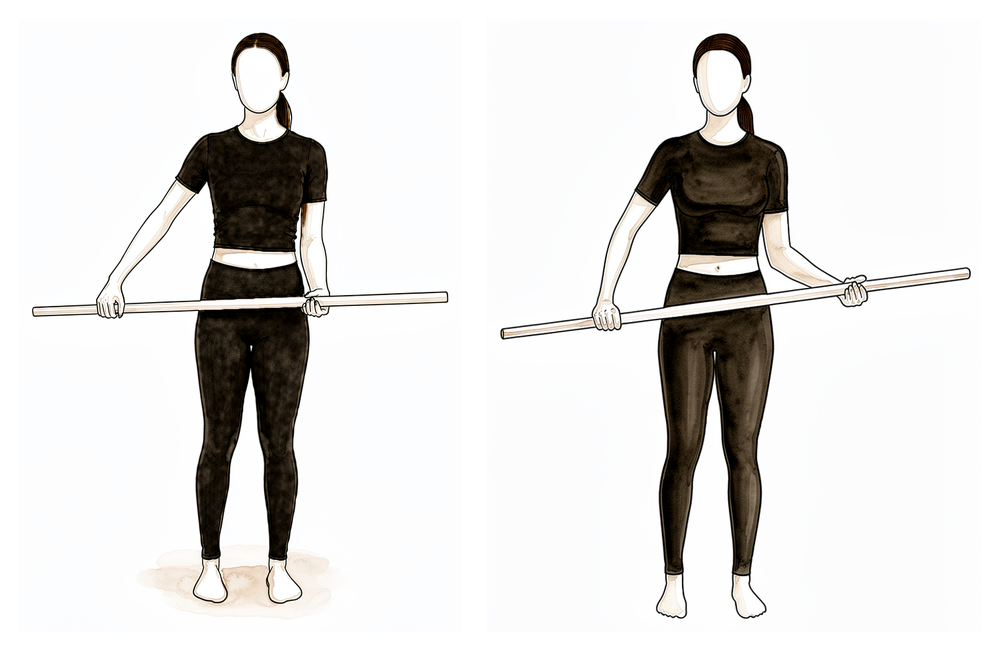
用棍棒辅助外旋
双手握住一根棍子(或手杖),将手术侧手臂的肘部紧贴身体一侧。用健侧手臂轻轻将手术侧前臂向外推,仅推至物理治疗师设定的每周活动度限制范围内,然后复位。此动作约从第4周开始引入——切勿在前几周进行。
在您的物理治疗师指导下
Kieran Hirpara 4.0
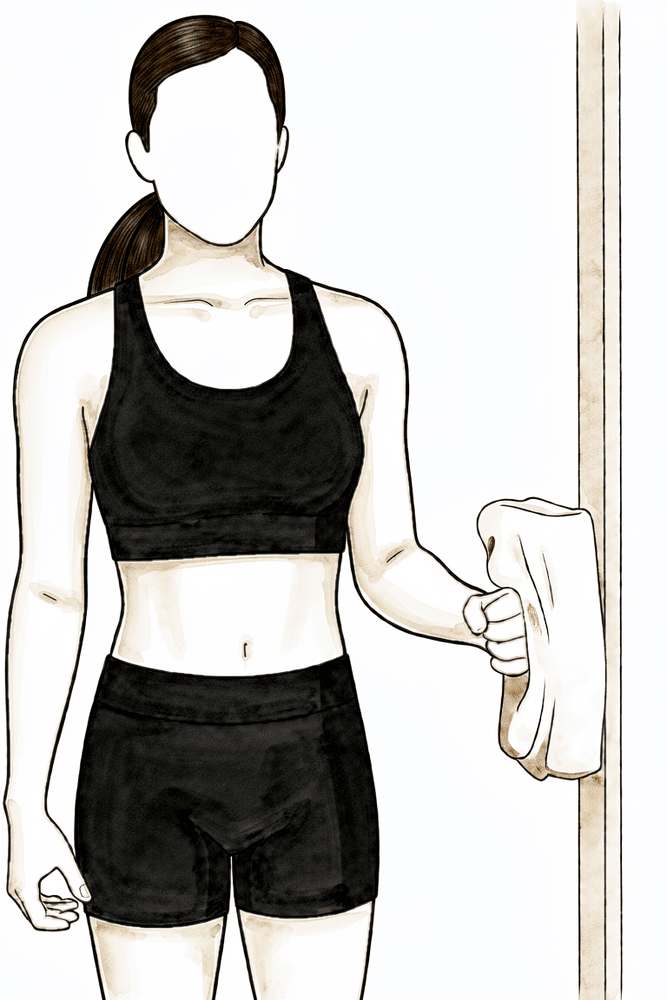
按压并保持外旋
将肘部贴紧身体一侧并弯曲至90度,使手背抵住墙壁或门框。轻轻将手背向外推压墙面——约用四分之一的力气——同时手臂保持不动。保持约5秒,然后放松。
10次,每日一次或两次
Kieran Hirpara 4.0
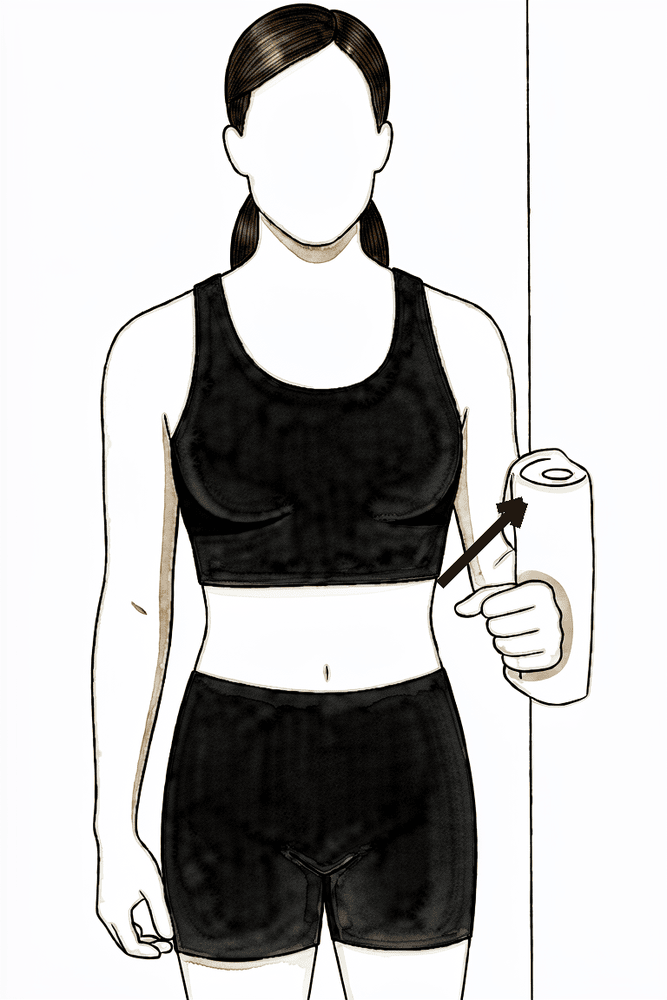
按压并保持手臂向侧方伸展
侧身站立,上臂外侧贴靠墙壁,肘部置于身侧。轻轻向外推压墙壁——力度约为最大力量的四分之一——保持手臂不动。保持约5秒,然后放松。
10次,每日一次或两次
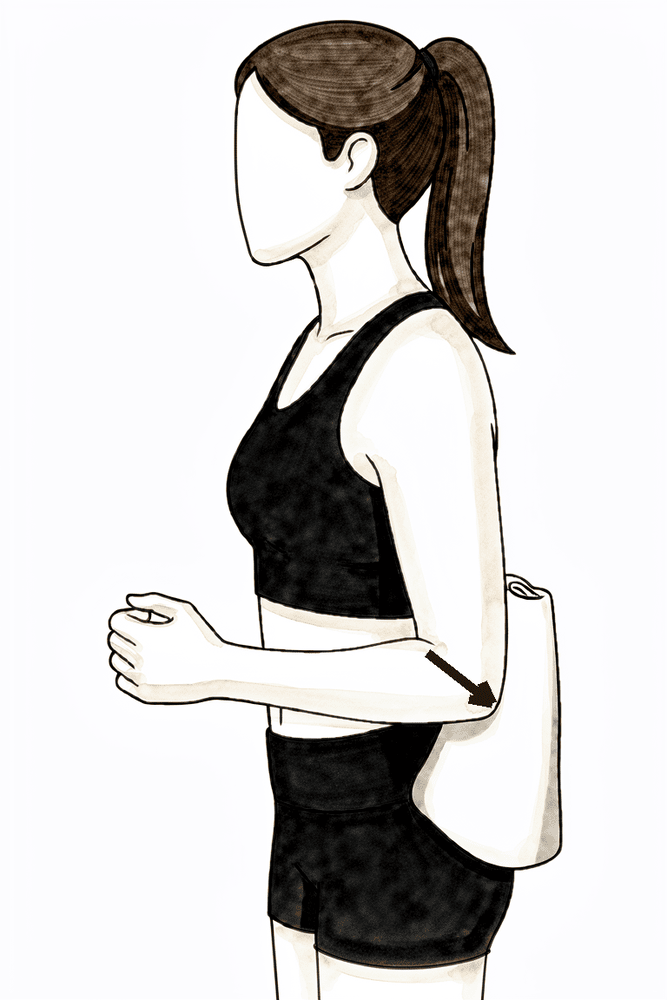
Kieran Hirpara 4.0
按压并保持手臂后伸
背靠墙站立,手臂自然下垂于体侧,肘部伸直。将上臂后侧轻轻向后抵住墙面——力度约为最大力量的四分之一——保持手臂不动。保持该姿势约5秒,然后放松。此动作锻炼肩后部肌肉。我们早期采用此动作而非向内按压的等长收缩,因为向内按压会增加已修复胸肌的负荷。
10次,每日一次或两次
修复部位正在愈合,悬吊带将在第 4 周至第 6 周之间逐步停用。您的保护性活动每周仅增加几度,现在可以开始进行轻柔的辅助(棍棒辅助)训练。肩部周围肌肉可开始进行轻度肌肉紧张(等长)训练,但不包括胸肌本身,也不包括内旋,因为这两者都会对修复部位产生负荷。
- 悬吊带: 正在逐步停用(骨-腱修复约在第 4 周,腱-腱修复在第 5–6 周)。
- 允许的活动: 被动和辅助活动,每周约增加 5°:外旋从中立位开始逐渐增加,前举向约 65–85° 方向进行,侧举向约 50° 方向进行。仍不允许主动发力活动,且不得超过每周的活动限制。
- 练习: 仰卧位辅助前举;使用棍棒进行辅助外旋(仅至每周限制范围内);针对外旋、侧举和后伸的按压保持(等长)训练,不包括内旋;肩胛骨定位训练。
进入下一阶段的指征: 您已停用悬吊带;您的保护性活动按计划进展;在外旋至极限时肩部前方无疼痛;且您的等长训练感觉舒适。
第三阶段 — 主动活动(第 6–8 周)
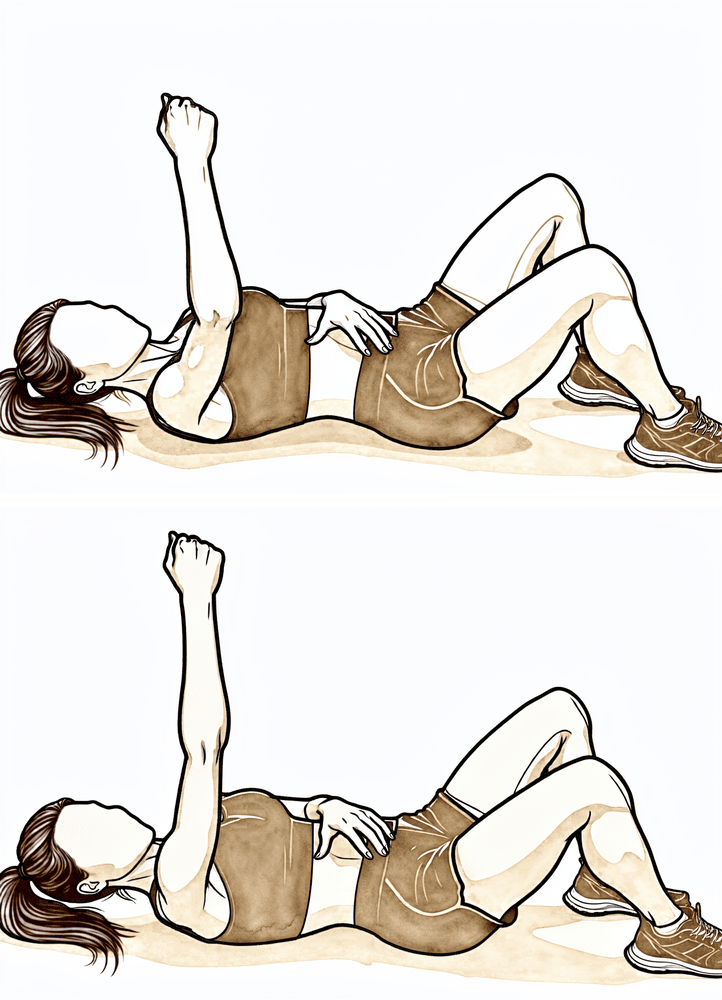
Kieran Hirpara 4.0
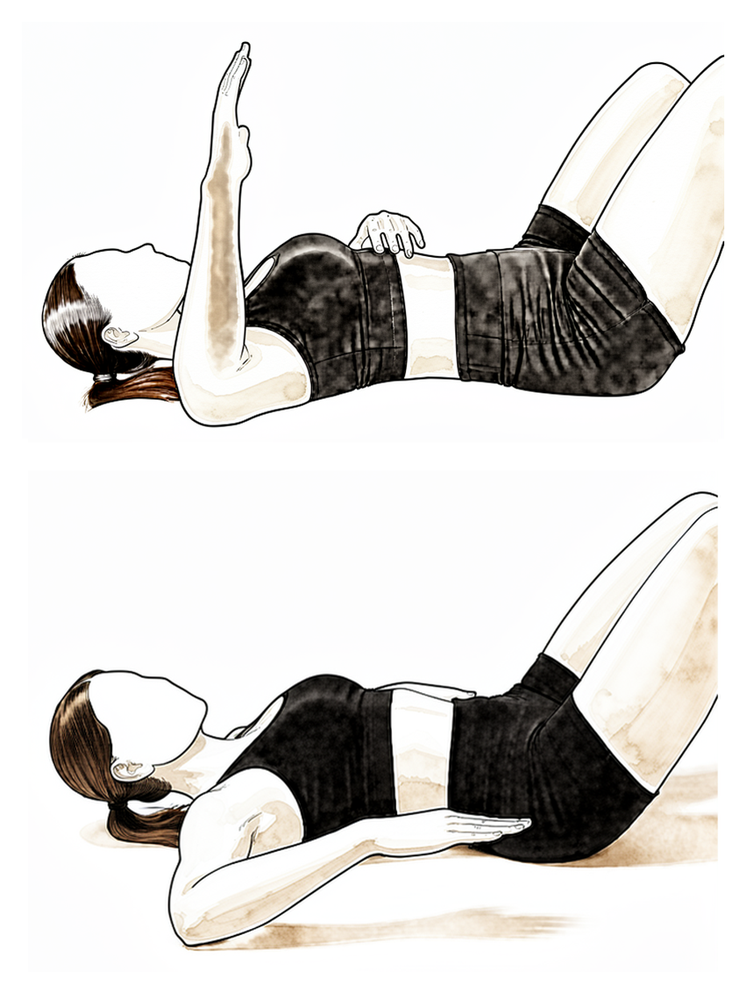
仰卧位冲拳(敬礼)
仰卧,手术侧手臂指向天花板。将手向上伸向天花板,使肩胛骨离开床面,然后缓慢放下。保持动作平稳,并在舒适的范围内进行。
10次,每日一次
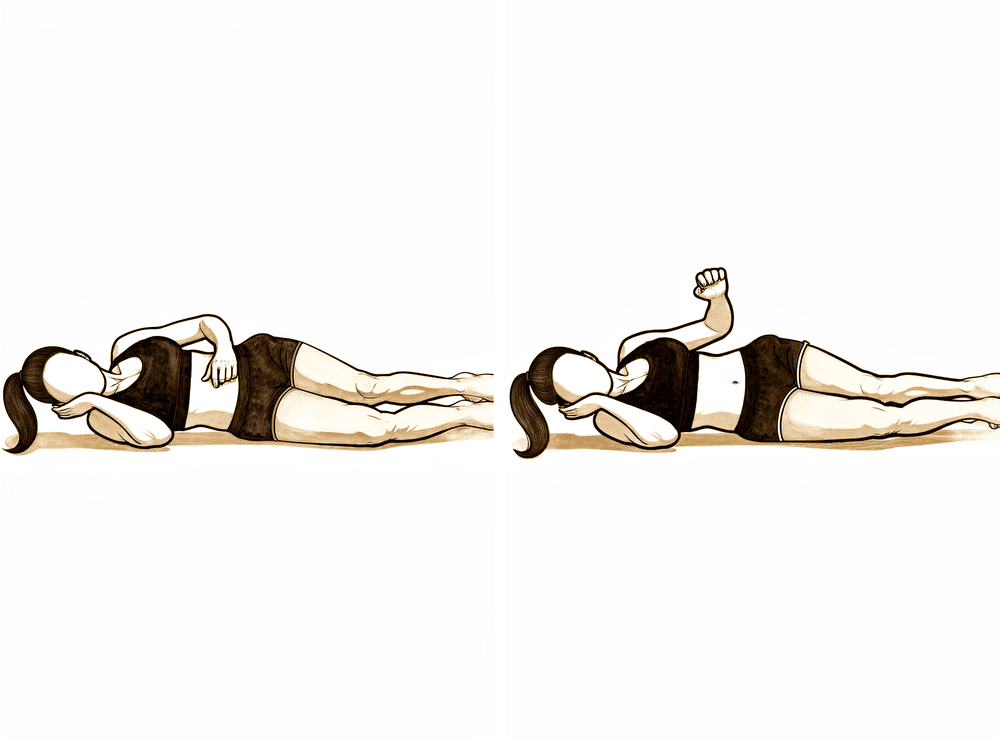
Kieran Hirpara 4.0
侧卧位外旋
健侧卧位,将术侧肘部屈曲至90度并贴紧腰部。保持肘部贴紧腰部的姿势,将前臂向上旋转至舒适的最大范围,然后缓慢放下。起始时不施加任何重量。
10–15 次,每日一次
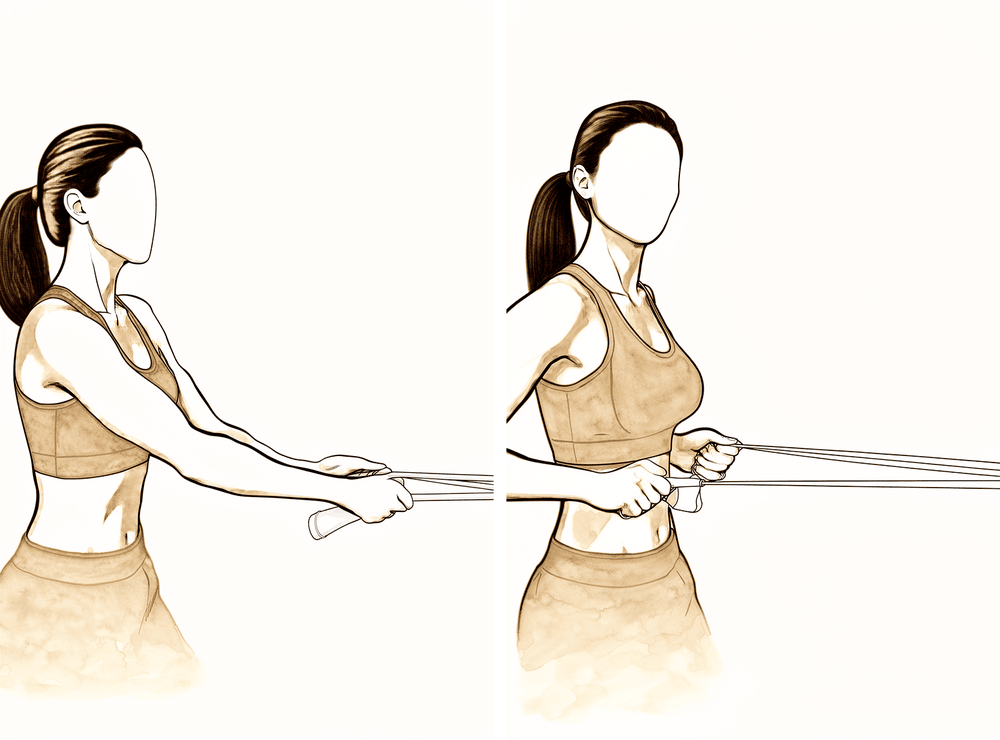
Kieran Hirpara 4.0
弹力带划船
在腰部高度前方固定一条弹力带。保持身体直立,将肘部向后拉向身体,夹紧肩胛骨,然后缓慢还原。保持肘部贴近身体两侧,不要让其越过身体后方的垂直线。
10–15 次,每日一次
Kieran Hirpara 4.0
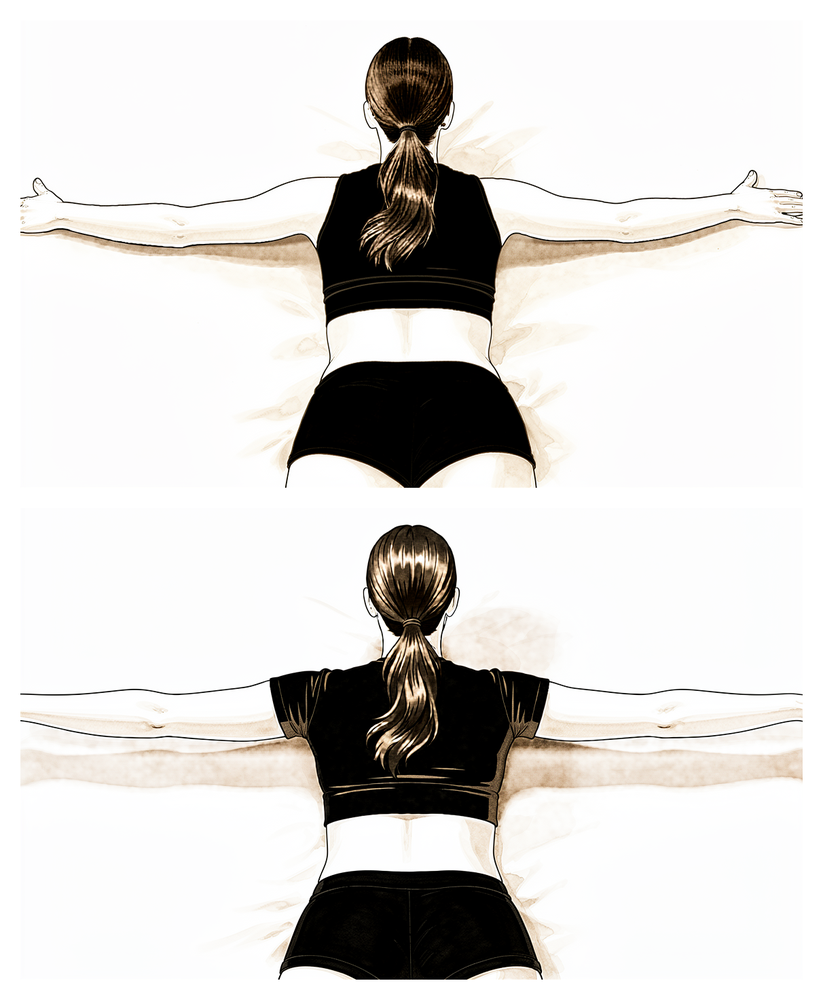
肩胛骨下拉(俯卧Y字伸展)
俯卧,双臂自然下垂。将双臂向两侧抬起至肩部水平,同时夹紧肩胛骨,然后缓慢放下。保持动作幅度小且受控。
10次,每日一次
Kieran Hirpara 4.0
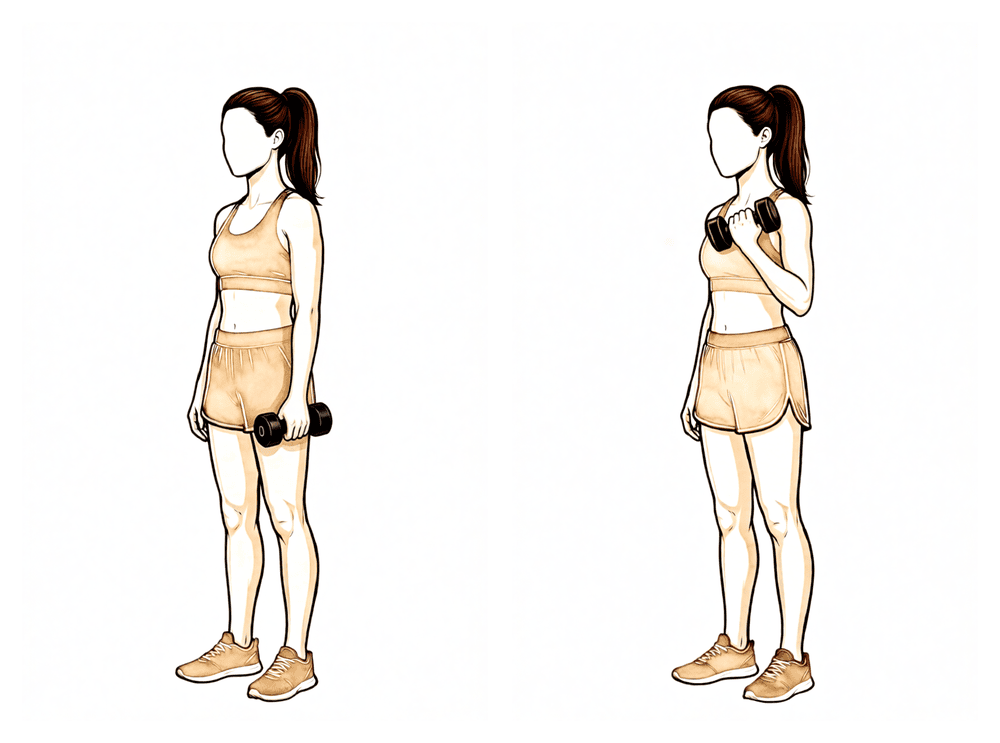
肱二头肌弯举
保持肘部贴紧身体一侧,手持轻重量,弯曲肘部将重量抬起,然后缓慢放下。保持上臂静止并置于身体前方。
10–15 次,每日一次
Kieran Hirpara 4.0
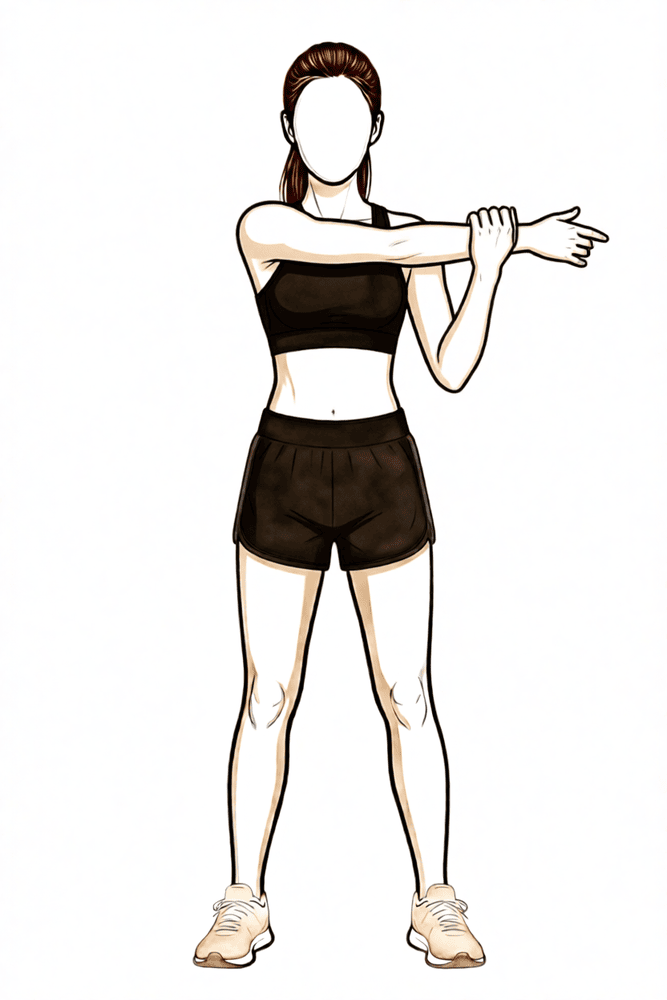
跨体拉伸
用健侧手轻轻将患侧手臂横过胸前,位置低于肩部高度,直至肩后部感到轻微牵拉感,然后放松。切勿强行牵拉或拉伸至疼痛。
保持 20–30 秒,重复 2–3 次
Kieran Hirpara 4.0
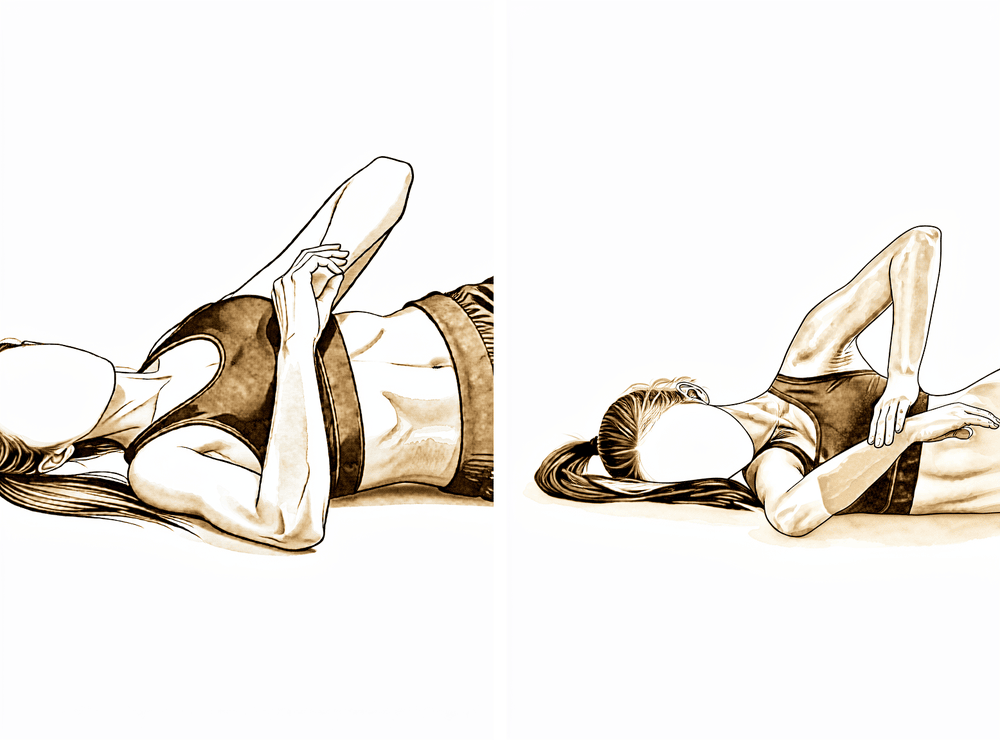
睡眠者拉伸
患侧卧位,肩关节和肘关节屈曲至90度。用健侧手轻轻将前臂向下压向床面,直至肩关节后侧感到轻微牵拉感。切勿强行用力。
保持 20–30 秒,重复 2–3 次
大约六周后,去除悬吊带,开始在自身力量下活动手臂,从重力辅助最小的轻松体位开始:仰卧位,或向天花板方向伸展。保护性活动范围每周向完全活动度增加几度。肩部周围肌肉得到强化,肩后方的轻柔拉伸开始进行,但修复后的胸肌仍保持静止。
- 悬吊带: 停用。
- 允许的活动: 被动活动继续向完全活动度进行(每个方向每周约增加 5°),并开始在自身力量下的主动活动。允许通过手臂进行轻度负重。
- 练习: 仰卧位出拳(敬礼);侧卧位外旋(无负重);弹力带划船和肩胛骨训练;轻度肱二头肌训练;肩后方的跨体拉伸和睡眠者拉伸。
进入下一阶段的条件: 各方向活动度完全或接近完全;能在良好控制下以自身力量活动手臂(无耸肩或卡顿);且无肩前部疼痛。
第四阶段——胸肌开始负重(第9–14周)
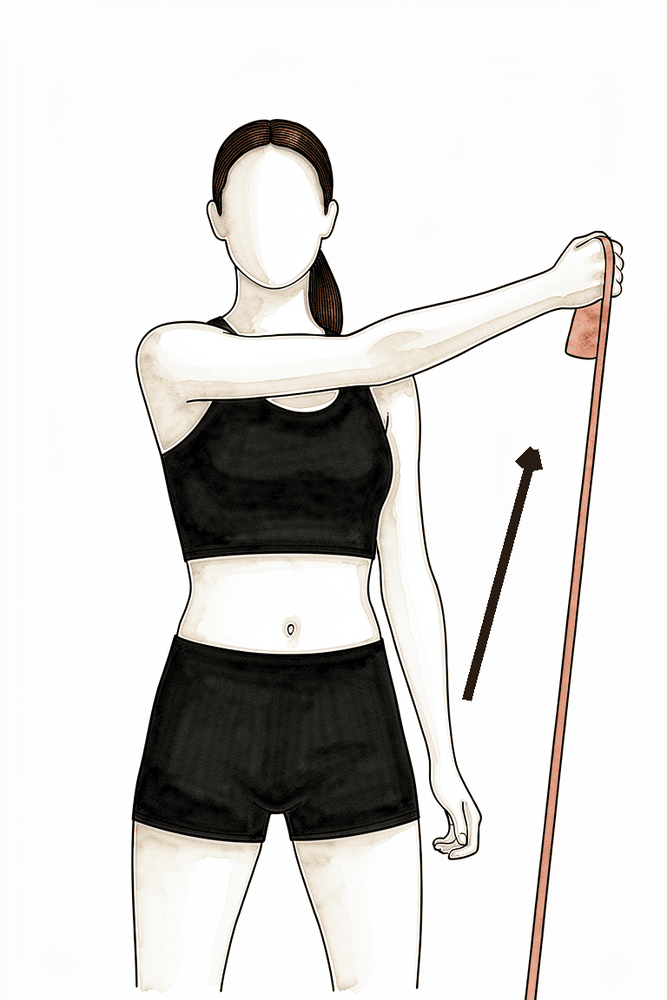
Kieran Hirpara 4.0
PNF 对角线 D1 模式,使用弹力带
握住弹力带,以受控的对角线方向移动手臂——从腹部前方斜向外上方移向对侧——然后平滑地反向移动。您的物理治疗师将设定起始和结束位置。仅在您拥有完全且无痛的活动范围时才开始进行。
在您的物理治疗师指导下
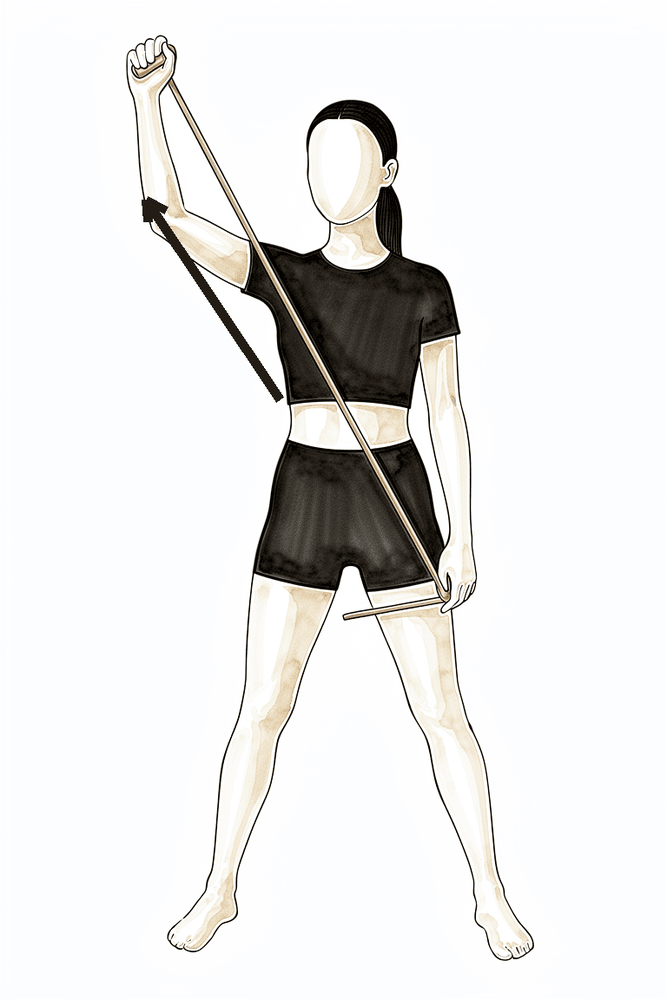
Kieran Hirpara 4.0
PNF D2 对角线模式,使用弹力带
握住弹力带,以受控的对角线方向移动手臂——从对侧髋部向外上方移至头顶上方——然后平稳地反向移动。您的物理治疗师将设定活动范围。仅在您拥有完全且无痛的活动度后,方可开始练习。
在您的物理治疗师指导下
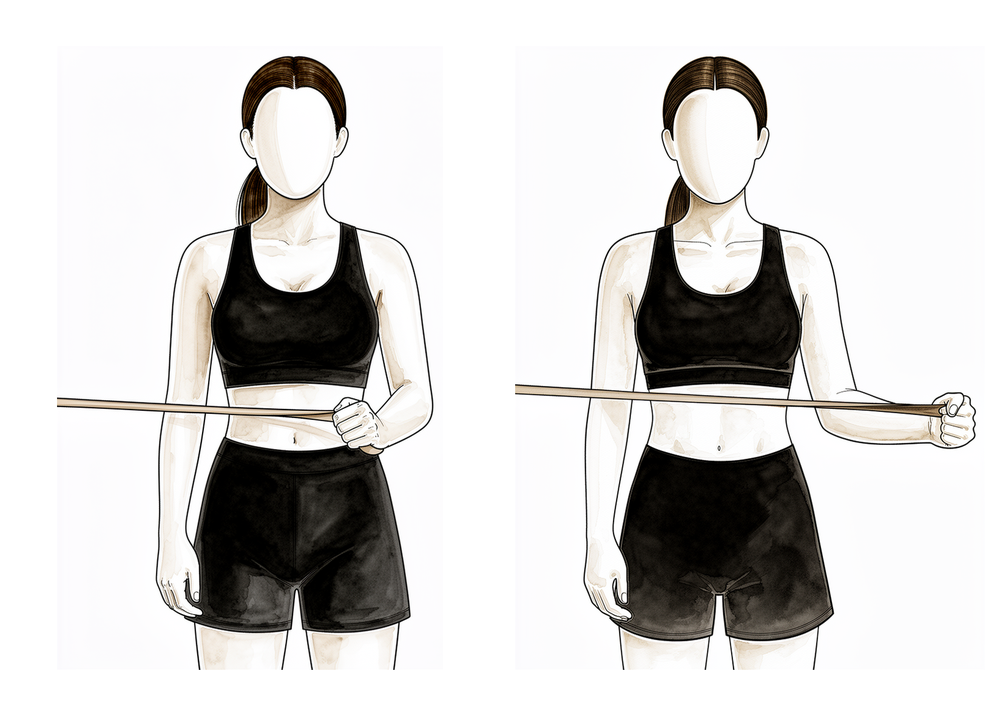
Kieran Hirpara 4.0
弹力带外旋
将肘部紧贴体侧并屈曲至90度,握住弹力带,对抗阻力将前臂向外旋转,然后缓慢复位。保持肘部紧贴体侧。
10–15 次,每日一次
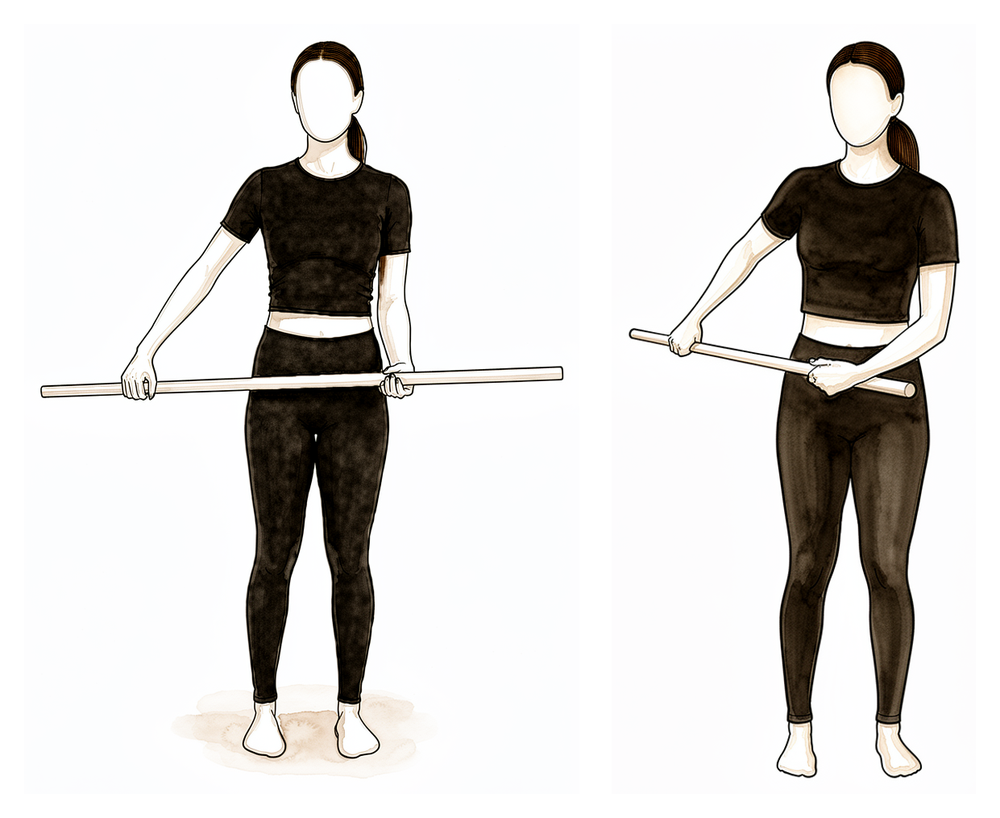
Kieran Hirpara 4.0
用棍棒进行内旋
握住一根棍子或毛巾,将手术侧的手轻轻向内引导,越过腹部或置于背后,直至达到舒适的范围。内旋会牵拉修复后的胸肌,因此该动作仅从第9周左右开始引入,并需循序渐进地加强。
在您的物理治疗师指导下
这是转折点:大约从第9周开始,修复后的胸肌本身开始轻柔地工作。它从缩短(放松)位置开始,随着其对负荷的耐受性增加,逐渐向拉长位置过渡。内旋——即胸肌自身的动作,此前被刻意抑制——也在此处引入并缓慢建立。活动应充分,重点转向受控的轻度负重。较重的推压动作仍需等待。
- 活动: 各方向充分或接近充分的被动和主动活动。
- 练习: 轻柔的内旋和胸肌紧张训练,先从缩短位置开始;使用棍棒进行内旋;弹力带外旋;使用弹力带进行PNF对角线模式(由物理治疗师设定的受控对角线运动)。
进入下一阶段的准备条件: 您拥有充分且无痛的活动;并且能够完成轻柔的胸肌训练,且之后无任何疼痛。
第五阶段 — 强化训练(第 14–20 周)
Kieran Hirpara 4.0
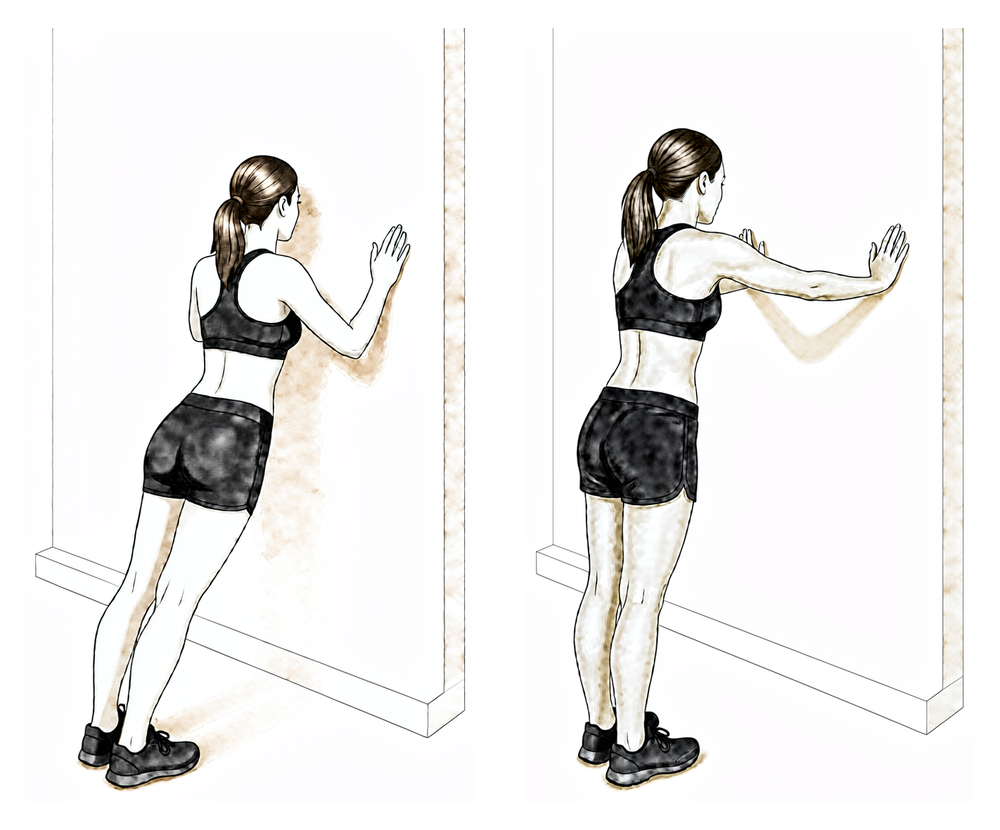
墙壁俯卧撑至地面俯卧撑
从靠墙俯卧撑开始:身体前倾,然后推离墙面,在顶端让肩胛骨相互分开。随着力量增强,逐步过渡到厨房台面,然后是跪姿,最后是地面。保持肘部不要向后移动超过身体所在的垂直线——切勿让胸部低于肘部水平。
在您的物理治疗师指导下
Kieran Hirpara 4.0
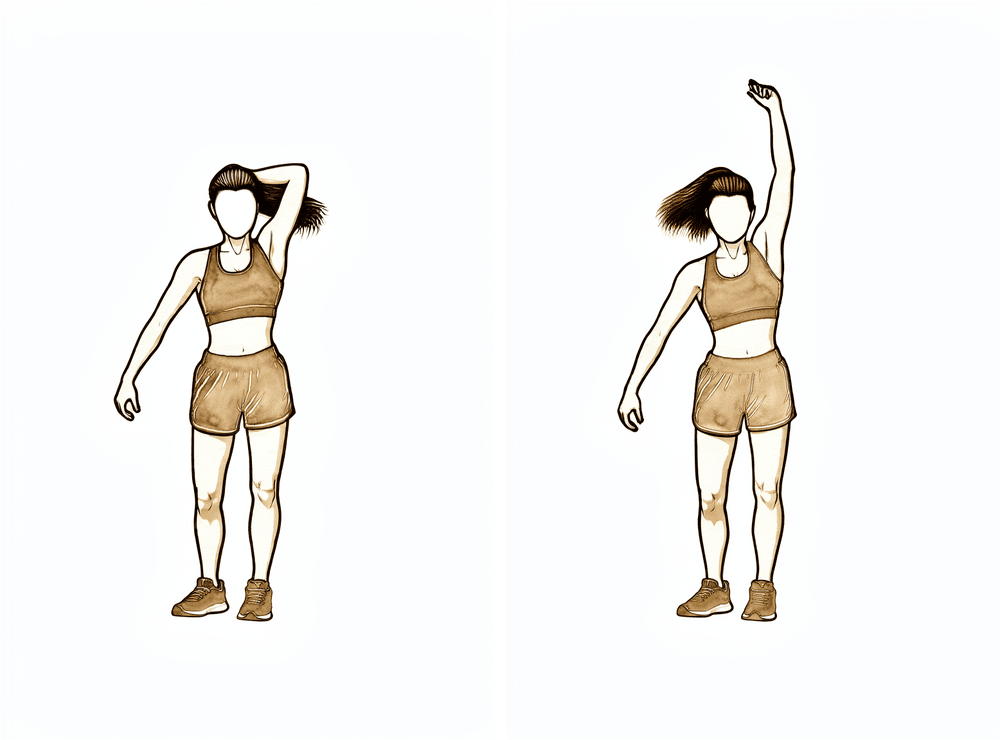
过头肱三头肌
手持轻物置于头顶上方,屈肘,伸直肘关节以抬起重物,然后缓慢放下。待过头顶活动完全且舒适时开始。
10–15 次,每日一次
Kieran Hirpara 4.0
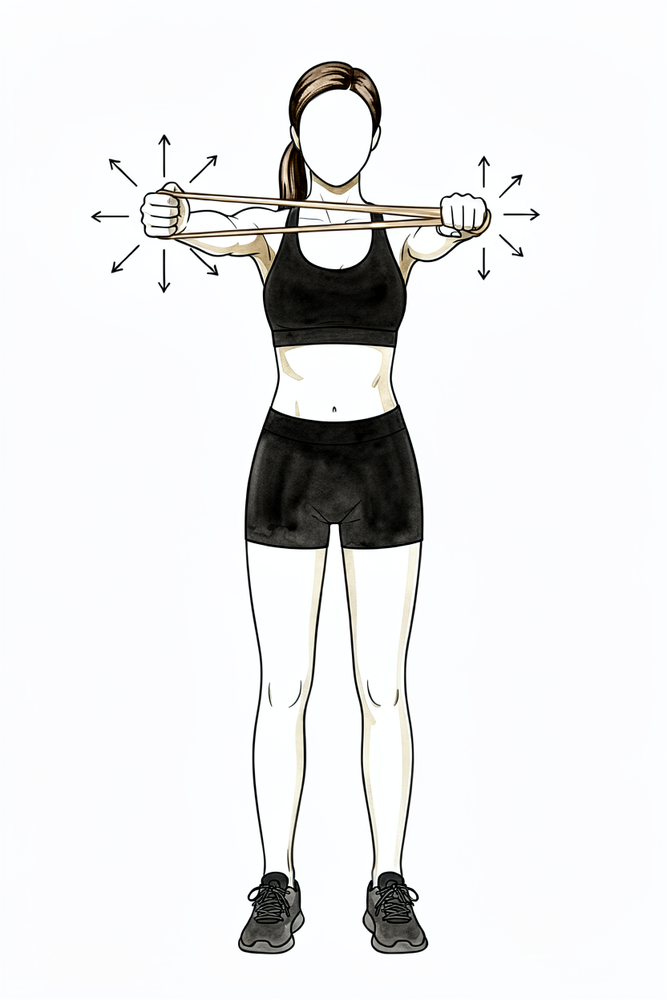
节律性稳定
将手臂支撑在身体前方,高度约与肩部齐平,请您的物理治疗师(或您的健侧手)从不同方向施加小而轻柔的推力,同时您保持手臂静止且稳定——不要让其移动。这旨在训练肩部稳定肌群的反应能力。所有动作力度均需保持轻柔。
在您的物理治疗师指导下
大约从第14周开始,进行适当的胸部强化训练(轻重量和阻力训练,或“等长收缩”),并随着另一侧的进展逐渐、对称地增加强度。俯卧撑训练从靠墙开始,仅在力量允许的情况下逐渐过渡到地面。以下两条健身房规则将在很长一段时间内至关重要,因为它们会以导致肌腱撕裂的方式对修复后的肌腱施加负荷:在推举、飞鸟或胸推机训练的最低点,切勿让肘部向后越过身体中线;并且避免大重量低次数训练:优先选择较轻的负荷和较多的次数,并缓慢热身。
- 活动度: 完全。
- 练习: 从靠墙俯卧撑逐渐过渡到地面俯卧撑;对抗弹力带的内旋;过头三头肌训练;轻度、渐进的胸部和推举训练;温和的门框胸部拉伸。
进入下一阶段的条件: 您的力量与另一侧相比均匀增长;且在进行抗阻胸部训练时无疼痛。
第六阶段 — 早期重返运动(5–6 个月)
Kieran Hirpara 4.0
90/90 外旋和内旋
手臂向侧方伸展至肩部高度,肘关节屈曲90度,在可控范围内将前臂上下旋转。这是一项后期、运动准备阶段的训练——仅在获得许可后开始,因为该姿势会拉伸修复后的胸肌。
在您的物理治疗师指导下
Kieran Hirpara 4.0
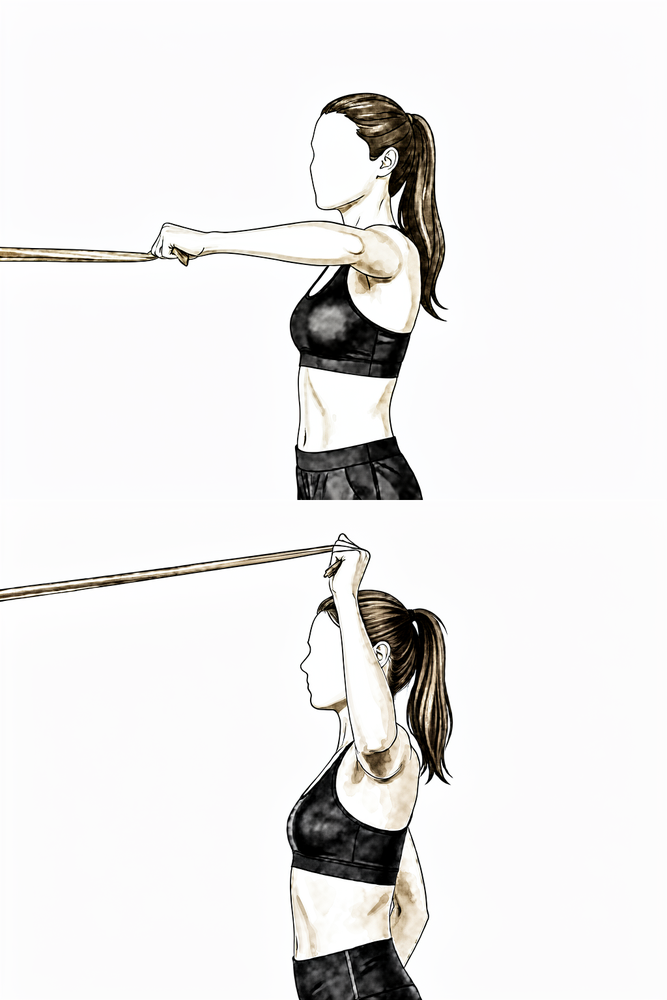
90/90位外旋(弹力带)
手臂侧平举至肩高,肘关节屈曲呈直角,前臂对抗轻阻力带或重量向后上方旋转,然后缓慢下放。此动作旨在增强肩袖肌群在抬高(投掷)位的力量。
2至3组,每组10至15次,低阻力
Kieran Hirpara 4.0
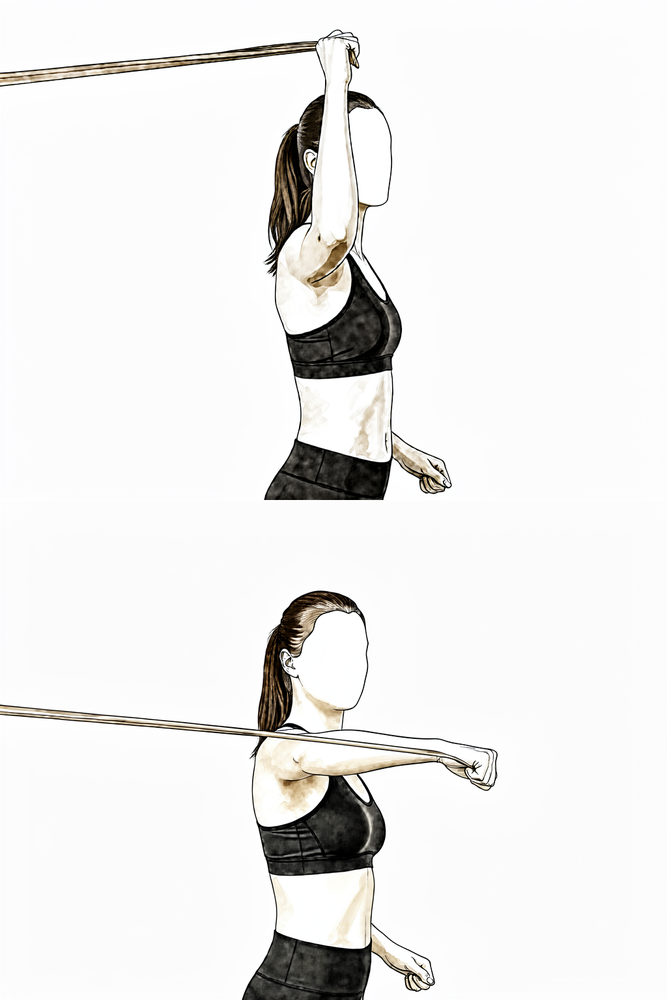
90/90位(弹力带)内旋
在手臂侧平举至肩高的同一姿势下,前臂向前下方朝脚部方向旋转,对抗轻阻力带或负重,然后有控制地复位。
每组10至15次,共2至3组,低阻力
手臂现已具备充分的力量和全范围活动度,训练将针对您的具体运动项目,包括更快、更具爆发力(增强式)的练习,如胸前传球和投掷姿势。这是为重返运动做准备,目前尚未获得无限制大负荷训练的许可。
- 活动度: 全范围。
- 练习: 在 90/90(运动)体位下进行外旋和内旋;按照物理治疗师的指导进行增强式胸前传球和投掷练习。
进入下一阶段的条件: 您通过针对您运动项目的力量和任务特异性测试;且 Dr Hirpara 和您的物理治疗师均予以批准。
第七阶段 — 无限制恢复(6个月以后)
大约六个月时,经医生许可,您即可恢复全部高强度工作和娱乐活动。卧推从您此前最大重量的约一半开始恢复,并缓慢增加负荷;接触性运动不得早于六个月进行。恢复的依据是您的力量至少达到对侧的85–90%,并获得Hirpara医生的许可,而非仅依据日历时间。
- 活动: 完全恢复。
- 锻炼: 完全恢复大重量推举和提举,从轻负荷开始逐步增加,并进行全面的专项运动训练。
准备就绪的标准: 您的力量至少达到对侧的85–90%;您拥有完全、无痛的活动度和耐力,且在承受大负荷后无反应性疼痛;并且Hirpara医生和您的物理治疗师均已签署确认。
重返运动与工作
恢复胸部负重及运动遵循标准导向原则:需具备足够的活动度、力量及耐力,且无疼痛,经Hirpara医生及您的物理治疗师共同评估确认后方可进行,而非仅由时间决定。
- 工作: 久坐类工作视耐受情况而定;体力或重体力工作至少需3个月后开始。
- 驾驶: 约需6至8周。
- 轻度胸部肌力训练: 约从第14周开始。
- 卧推、重物搬运、俯卧撑及对抗性运动: 不得早于4至6个月,且仅在力量恢复后方可进行;卧推从既往最大重量的约一半开始,并缓慢增加负荷。
对于投掷类及对抗性运动,在恢复无限制比赛前,须完成分级渐进训练计划。
早期锻炼
Kieran Hirpara 4.0
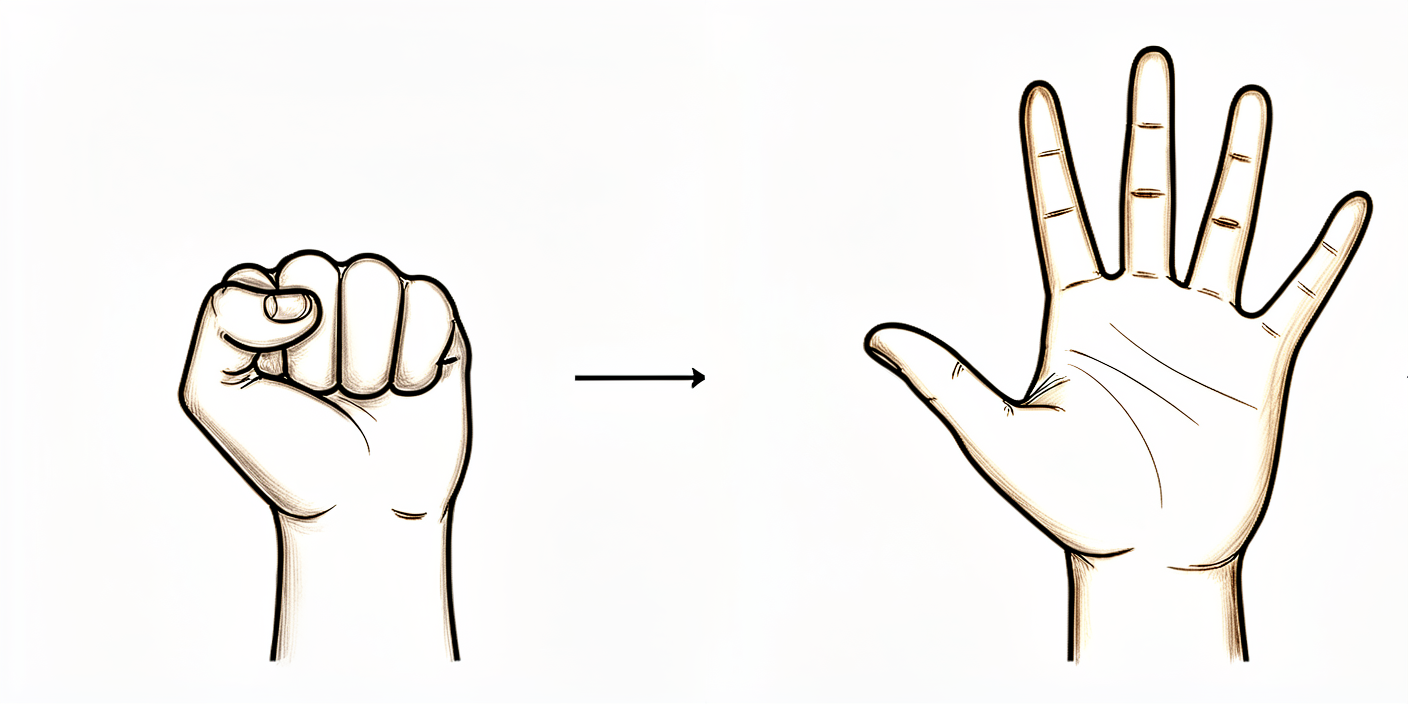
张开和握紧手
握紧拳头,然后张开手掌,将手指完全伸展。全天保持手、手指和手腕正常活动。
每小时10次
Kieran Hirpara 4.0
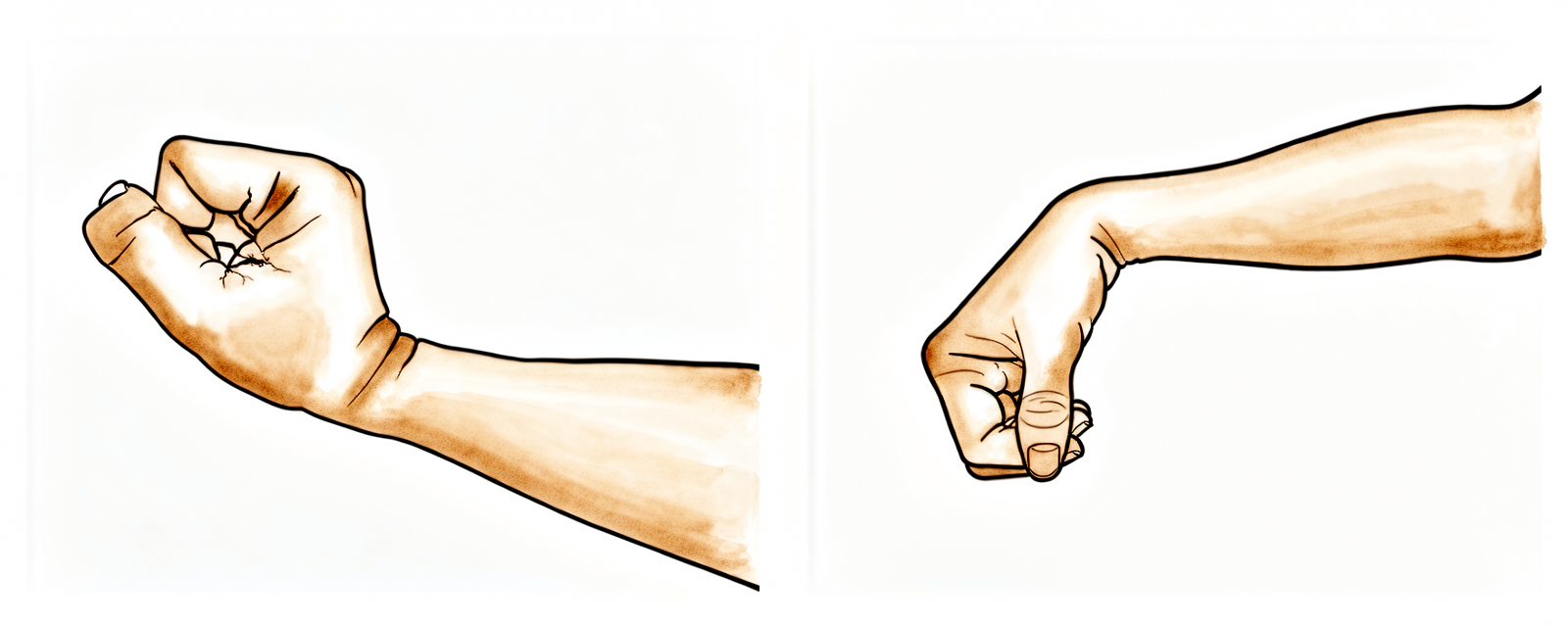
腕部运动
在前臂支撑的情况下,将手腕向前弯曲至舒适的最大范围,然后再向后弯曲。全天保持动作轻柔且规律。
10–15 次/小时
Kieran Hirpara 4.0
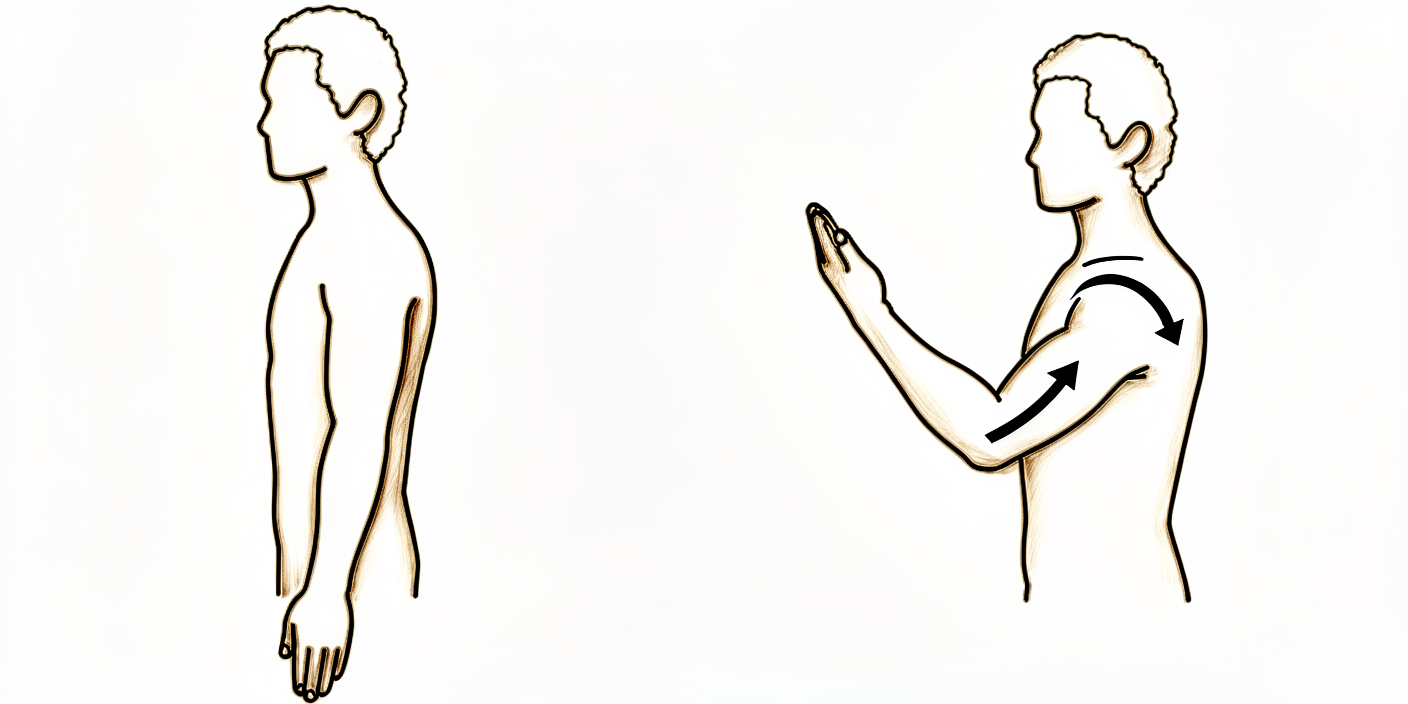
主动肘关节屈曲
上臂自然下垂于身体一侧并置于身体前方,将肘关节弯曲至舒适的最大范围,然后完全伸直。仅肘部活动——上臂保持静止。
10–15 次,每天 2–3 次
Kieran Hirpara 4.0
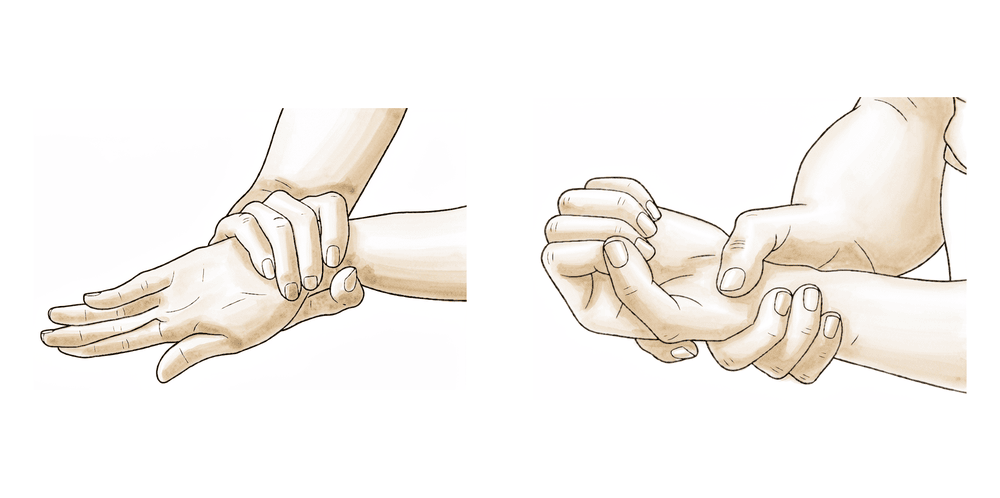
前臂旋转
肘关节屈曲90度并贴于体侧,将前臂旋转至掌心朝下,再旋转至掌心朝上。肘部紧贴身体,仅前臂进行旋转。
10次,2–3 次/天
Kieran Hirpara 4.0
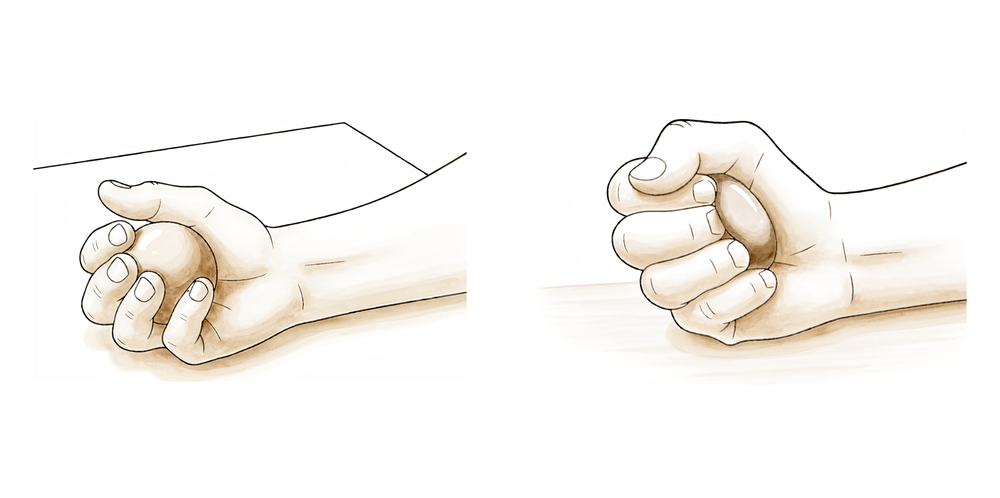
手部握力
将手臂支撑于身体前方,轻轻挤压一个软球或卷起的袜子,保持几秒钟,然后放松。这能让手臂保持活动,同时避免对修复部位产生牵拉。
10次,2–3次/天
Kieran Hirpara 4.0
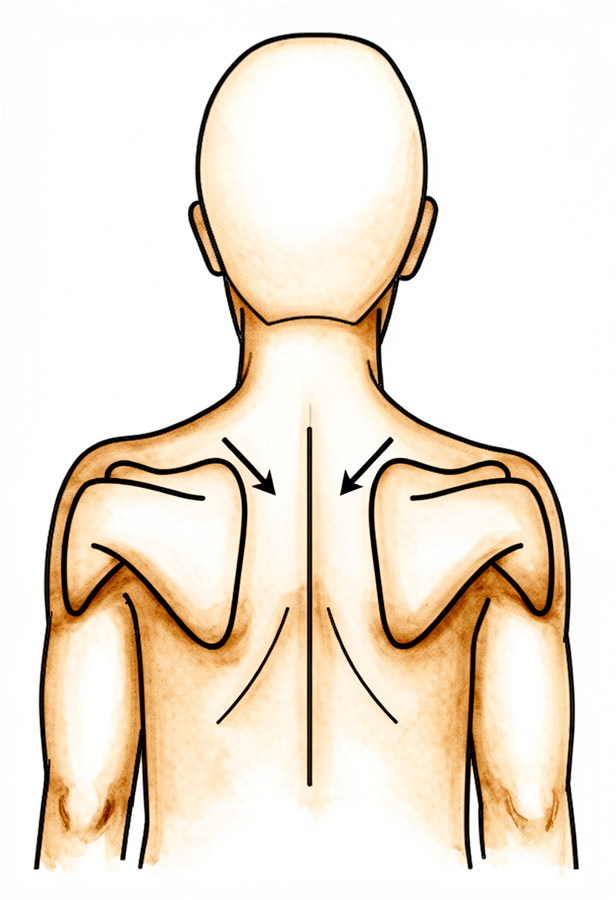
肩胛骨位置
坐直或站直,在不移动手臂的情况下,轻轻将肩胛骨向下并向后收拢,保持几秒钟,然后放松。保持耳朵、肩膀和臀部在一条直线上。
10次,2–3 次/天
Kieran Hirpara 4.0
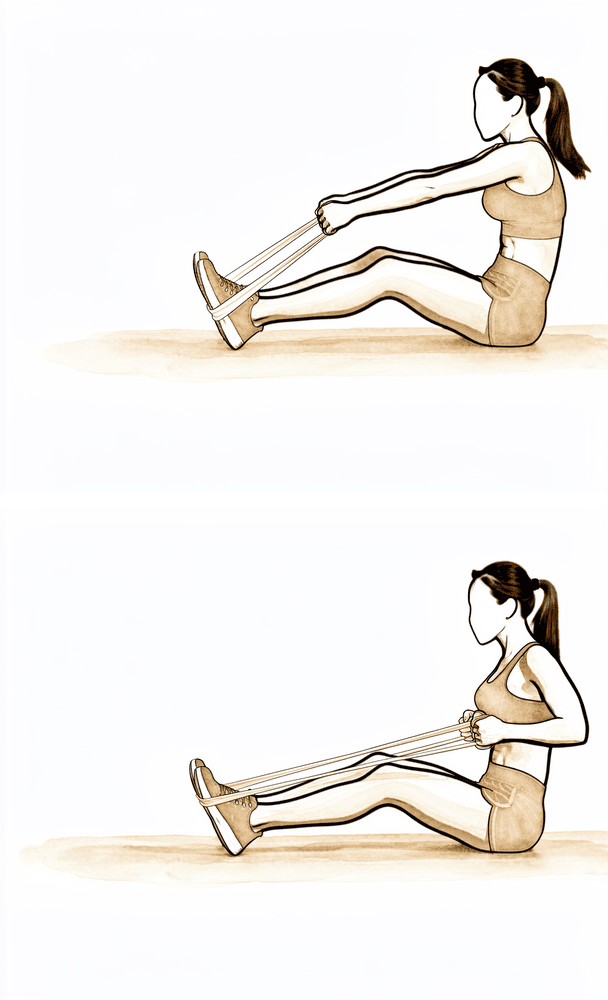
低位划船(肩胛骨定位)
坐直,手臂放低并置于身体前方,轻轻将肘部向下、向后牵引以调整肩胛骨位置,短暂保持,然后放松。保持手臂明显低于肩部高度——此动作锻炼肩胛骨周围肌肉,而不给胸部带来负荷。
10次,2–3 次/天
Kieran Hirpara 4.0
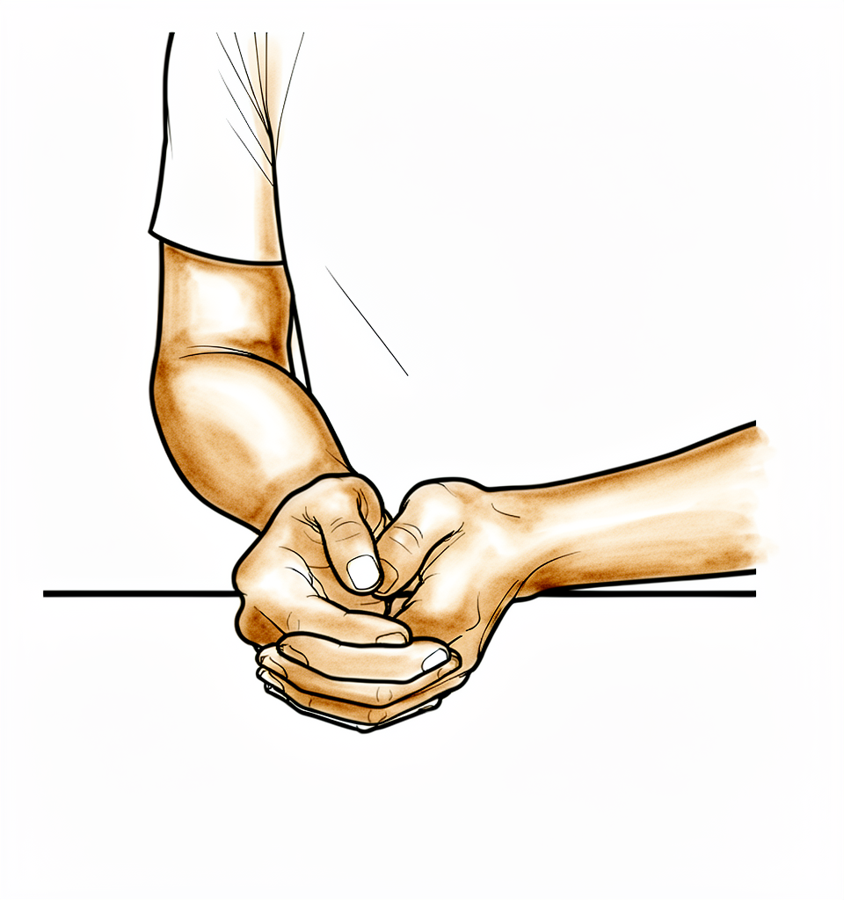
外旋至中立位
肘关节屈曲90度并贴紧身体侧面,轻柔地将前臂从平放于腹部的姿势旋转至正前方(中立位——0度),然后复位。在最初几周,仅旋转至中立位;仅向外旋转物理治疗师每周设定的微小幅度。切勿将手臂向侧方展开。
在您的物理治疗师指导下
Kieran Hirpara 4.0
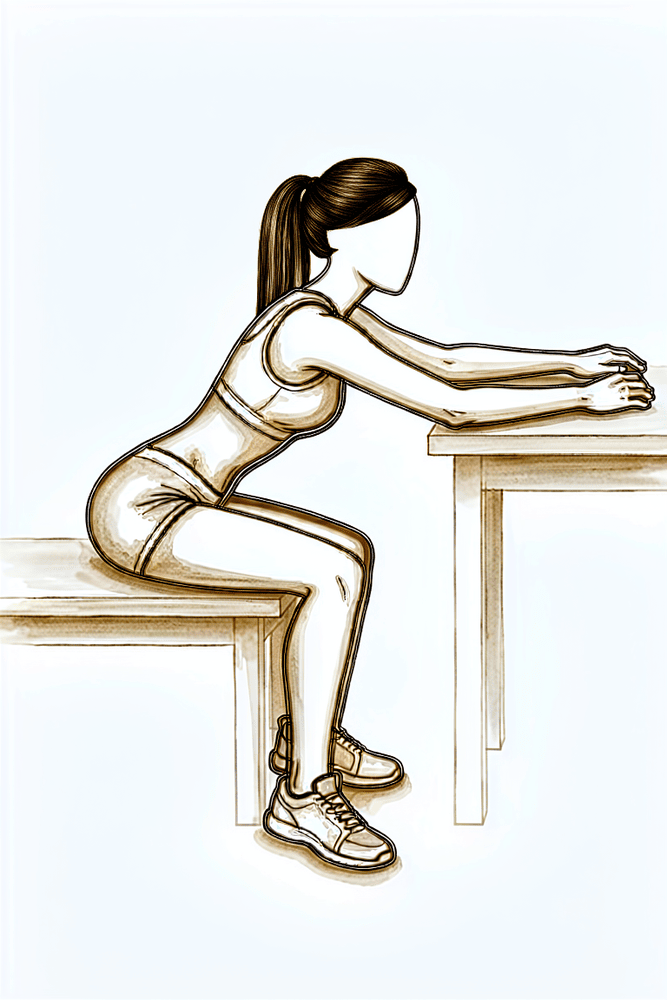
台上屈曲(台滑)
坐在桌前,将前臂放在桌面上。轻轻向前倾斜,让手沿桌面滑动,使桌面承担手臂的重量,然后坐直。保持在物理治疗师设定的限制范围内——手臂位于身体前方、低于肩部高度——不要强行用力或拉伸。
在您的物理治疗师指导下
这些是早期(保护期)的温和锻炼,从病房开始并在家继续,操作时将手术侧手臂保持在身体前方,并放松肩部肌肉。请按照物理治疗师的指导开始进行,并停止任何引起肩部剧烈疼痛的动作。请记住早期规则:暂不进行钟摆或棍棒锻炼,且切勿同时将手臂向外侧抬起并外旋。
方案实施后
本方案与本诊所的一般康复建议配合使用:请参阅术后疼痛管理和伤口护理。
Evidence & references
This is the clinical evidence summary written for health professionals. It is technical, and it lists the research this page was built from. You do not need to read it to understand your treatment or to make a decision about it.
Topic scope: Rehabilitation after surgical repair of a pectoralis major (PM) tendon rupture/tear (typically a humeral-insertion avulsion in a 20-40 yr-old male, classically during the eccentric phase of a bench press). Covers protected positioning, the early restrictions on abduction (ABD) and external rotation (ER), ROM progression, when active ROM and strengthening start, and return to heavy lifting / bench press / sport.
Defining principle (contrast with frozen-shoulder release): PM repair rehab is a classic protect-the-repair protocol -- the OPPOSITE of frozen-shoulder release. The repaired tendon runs anteriorly to its humeral insertion; abduction and external rotation stretch/tension the repair, so both are strictly limited early and the arm is held in adduction + internal rotation in a sling/immobiliser. Progression is deliberately slow, and heavy resisted pec loading (bench press, flyes, dips, contact sport) is delayed to ~4-6 months to avoid re-rupture.
A key modifier throughout: repair type dictates the timeline. Bone-tendon repairs (suture anchors/cortical buttons into humerus) heal slower than tendon-tendon or muscle-tendon repairs and wean from the sling later (MGH protocol).
CONSENSUS PHASED TIMELINE
Synthesised from the Mass General Brigham (MGH) Sports Medicine protocol (rev. 7/2023, the most granular degree-by-degree protocol) and the University Orthopedics protocol, cross-checked against the published literature (Cordasco/HSS 2017; Manske & Prohaska 2007; Schepsis 2000; Haley/Zacchilli 2014). Both published protocols agree on the core structure; the ROM numbers below are the MGH degree targets.
| Phase | Window | Sling / position | ROM allowed + RESTRICTIONS | Active ROM | Strengthening | RTS / lifting |
|---|---|---|---|---|---|---|
| I -- Immediate | 0-3 wk (UnivOrtho: 0-2 wk) | Sling/immobiliser, arm in NEUTRAL or INTERNAL ROTATION, worn day & night | PROM only, started ~week 2. ER limited: start at 0 deg in adduction, progress ~5 deg/week. Flexion start 45 deg, +5-10 deg/wk. ABD start 30 deg, +5 deg/wk. Elbow/wrist/hand AROM free. No active shoulder motion; no ER beyond limit; no abduction/extension stretch | None at shoulder (distal joints only) | Wk 3: periscapular only (inferior glide <35 deg ABD, low row), ball squeeze. No pec loading | None |
| II -- Intermediate | 4-6 wk | Begin weaning sling: bone-tendon at 4 wk; tendon-tendon / muscle-tendon at 5-6 wk (UnivOrtho: immobiliser to 6 wk for all) | PROM continues (ER +5 deg/wk; flex +5-10 deg/wk to ~65-85 deg; ABD +5 deg/wk to ~50 deg). Begin AAROM (cane flexion, cane ER stretch, washcloth press). Still no aggressive ER/ABD past targets | AAROM introduced | Submaximal isometrics: ABD, extension, ER -- explicitly NO IR isometrics (IR/adduction tension the pec); periscapular setting | None |
| III -- Late | 6-8 wk | Sling discontinued | PROM continue to full (ER, flex, ABD each +5 deg/wk to full). Initiate AROM (supine flexion, salutes, supine punch). Can begin weight-bearing through arm | Active ROM starts ~6 wk | Sidelying ER, periscapular rows/extension, biceps/triceps; rhythmic stabilisation; sleeper/cross-body stretch | None |
| IV -- Transitional | 9-14 wk | None | Restore full PROM/AROM (full by wk 12-14 for bone-tendon) | Full | Initiate shoulder IR isometrics + pec major isometrics (~week 9) -- shortened position first, then lengthened; ER w/ band, ABD; PNF D1/D2 | None |
| V -- Advanced strengthening | 14-20 wk (~3.5-5 mo) | None | Full | Full | Pectoralis isotonics begin; IR w/ band, counter push-ups -> push-ups, lat pulldowns; doorway pec stretch gentle | Begin sport-specific prep |
| VI -- Early return to sport | 5-6 months | None | Full | Full | ER/IR at 90 deg, plyometrics (med-ball chest pass, ball drops, 90/90 throws) | Begin return-to-sport program when criteria met |
| VII -- Unrestricted RTS | 6+ months | None | Full | Full | Bench press resumed at 50% 1-RM, progress slowly with physician; full return to strenuous work, recreation, contact sport NOT before 6 months | Heavy lifting / bench press / contact sport: 6+ months, criterion-based |
Key numeric consensus points
- Sling: ~4-6 weeks (4 wk bone-tendon may wean earlier; 6 wk common; UnivOrtho keeps immobiliser a full 6 wk), arm in adduction/internal rotation.
- ER early limit: 0 deg at the side, advance ~5 deg/week -- because ER tensions the anterior repair.
- ABD/flexion early limit: ABD ~30 deg and flexion ~45 deg initially, advancing ~5-10 deg/week.
- Active ROM: ~6 weeks.
- Isometrics: scapular wk 3; submaximal shoulder (ABD/ext/ER, no IR) wk 4-6; pec/IR isometrics ~wk 9 (Phase IV).
- Pec isotonics / push-ups: ~14 weeks (Phase V).
- Bench press / heavy lifting / contact sport: deferred to ~4-6 months (MGH: 50% 1-RM bench at 6+ mo; UnivOrtho: light bench from ~4 mo with very light resistance, no contact until 6 mo).
The rationale for restricting ER and ABD is biomechanical: the PM is a strong adductor, internal rotator and flexor; abduction + external rotation is the position of maximal stretch on the anterior insertion (this is the injuring mechanism -- eccentric load in abduction/ER, e.g. bench press), so it maximally tensions the repair (Maier 2021; Schepsis 2000; Provencher 2010). Biomechanical work shows transosseous sutures, suture anchors and cortical buttons confer similar repair strength, and early activity should stay below identified failure loads until soft-tissue- to-bone healing is reliable (Sherman 2012; Edgar 2017) -- the biomechanical basis for the slow progression.
OUTCOMES / RETURN TO SPORT EVIDENCE
- Surgical > non-operative for restoring strength/function: objective strength testing shows repair recovers significantly more peak torque and work than conservative care (Hanna 2001 -- comparative cohort); literature "strongly supports early operative treatment" of complete tears in active patients/athletes (Kircher 2010 review; Schepsis 2000). Acute repair > chronic/delayed repair (Schepsis 2000).
- Return to sport in repaired athletes is generally good, with most returning by ~6 months to a year; Cordasco (HSS, 2017, n=40 acutely repaired athletes) reported high RTS and functional scores with low re-operation. Faster individual returns (5-7 mo) are reported in single cases but 6 months is the consensus floor for heavy/contact loading.
KEY CONTROVERSIES / VARIABLES
- Sling duration & wean point. 4 wk vs 6 wk; MGH ties it to repair type (bone-tendon later); UnivOrtho fixes 6 wk for all. No RCT defines the optimum. Weak/consensus.
- How fast to advance ER/ABD. ~5 deg/week is widely used but arbitrary; tissue quality, tear size and fixation method modify it -- larger tears / poor tissue / chronic repairs progress slower. Expert opinion.
- Repair construct. Cortical button vs suture anchor vs transosseous -- biomechanically similar (Sherman 2012; Edgar 2017), so construct should not, in principle, change the rehab timeline, but surgeons individualise. Strong biomechanical, weak clinical.
- RTS timing for bench press / contact sport. Range 4-6 months across protocols; no high-level evidence sets the safe threshold -- driven by re-rupture fear and biomechanical failure-load data, not RCTs. Weak/consensus.
- Acute vs chronic / augmentation. Chronic or retracted tears may need allograft or autograft (semitendinosus) augmentation and a more conservative timeline (Neumann 2018 dermal allograft: 6 wk full immobilisation then 4-phase PT from wk 6; Garofo 2025 semitendinosus technique). Weak (technique notes/small series).
- Overall evidence base. Almost entirely retrospective cohorts, technique notes and biomechanical studies -- no RCTs of one rehab protocol vs another for PM repair. The whole timeline is consensus/expert, anchored by biomechanical failure-load data. Flag: WEAK.
EVIDENCE STRENGTH FLAGS (summary)
- STRONG: biomechanical failure-load / repair-construct comparisons (Sherman 2012; Edgar 2017 -- cadaveric, controlled) -- these justify the load restrictions.
- MODERATE: surgical vs conservative superiority (Hanna 2001 comparative; Schepsis 2000; Cordasco 2017 n=40 outcome series; Campbell's / Pochini 2014 prospective 60-case series).
- WEAK / CONSENSUS ONLY: every specific rehab parameter -- sling duration, ER/ABD degree-per- week limits, AROM/strengthening start weeks, 4-6 month RTS/bench-press timing. Derived from institutional PT protocols (MGH, University Orthopedics) and narrative reviews (Manske/Prohaska 2007; Haley/Zacchilli 2014; Maier 2021), not RCTs.
CITATIONS
RAG corpus (180,000+ Orthopaedic articles)
- Cordasco FA, Mahony GT, Tsouris N, et al. Pectoralis major tendon tears: functional outcomes and return to sport in a consecutive series of 40 athletes. J Shoulder Elbow Surg. 2017;26(3):458-463.
- Kang RW, Mahony GT, Cordasco FA. Pectoralis major repair with cortical button technique. Arthroscopy Techniques. 2014.
- Haley CA, Zacchilli MA. Pectoralis major injuries. Clin Sports Med. 2014.
- Schepsis AA, Grafe MW, Jones HP, et al. Rupture of the pectoralis major muscle. Am J Sports Med. 2000;28(1):9-15.
- Sherman SL, Lin EC, Verma NN, et al. Biomechanical analysis of the pectoralis major tendon and comparison of techniques for tendo-osseous repair. Am J Sports Med. 2012.
- Hanna CM, Glenny AB, Stanley SN, et al. Pectoralis major tears: comparison of surgical and conservative treatment. Br J Sports Med. 2001.
- Kircher J. Surgical and nonsurgical treatment of total rupture of the pectoralis major muscle in athletes: update and critical appraisal. Open Access J Sports Med. 2010.
- Maier J, Oak SR, Soloff L, et al. Management of common upper extremity injuries in throwing athletes: a critical review of current outcomes. JSES Rev Rep Tech. 2021;1(4).
- Neumann JA, Klein CM, van Eck CF, et al. Outcomes after dermal allograft reconstruction of chronic or subacute pectoralis major tendon ruptures. Orthop J Sports Med. 2018. (6 wk full immobilisation; PT from wk 6, 4 phases)
- Garofo AGP, Medina G, Schor B. Acute pectoralis major tendon tear reconstruction with semitendinosus augmentation: a technique note. JSES Rev Rep Tech. 2025;5(4).
- Azar FM, Canale ST, Beaty JH. Campbell's Operative Orthopaedics (cites Pochini 2014 prospective 60-case series; Edgar 2017 repair-configuration biomechanics; ElMaraghy classification). 2020.
- (Provencher MT, Handfield K, Boniquit NT, et al. Injuries to the pectoralis major muscle: diagnosis and management. Am J Sports Med. 2010;38(8):1693-1705 -- cited within MGH protocol.)
- (Manske RC, Prohaska D. Pectoralis major tendon repair post-surgical rehabilitation. N Am J Sports Phys Ther. 2007;2(1):22-33 -- cited within MGH protocol.)
Published rehab protocols (URLs)
- Mass General Brigham (MGH) Sports Medicine -- Rehabilitation Protocol for Pectoralis Major Repair (rev. 7/2023): https://www.massgeneral.org/assets/MGH/pdf/orthopaedics/sports-medicine/physical-therapy/rehabilitation-protocol-for-pectoralis-major-repair.pdf (source for the degree-by-degree ER 0 deg +5/wk, flex 45 deg, ABD 30 deg limits; sling neutral/IR; bone-tendon vs tendon-tendon wean; pec isometrics wk 9, pec isotonics wk 14; bench 50% 1-RM at 6+ mo).
- University Orthopedics, Inc. -- Pectoralis Major Repair Rehabilitation Protocol: https://universityorthopedics.com/assets/shoulder/PECTORALIS-MAJOR-REPAIR.pdf (immobiliser x6 wk; AROM ~6 wk; phased push-up progression; light bench from ~4 mo; no contact sport until 6 mo).
- Additional concordant institutional protocols: Melbourne Orthopaedic Group https://mgorthopaedics.com.au/wp-content/uploads/2021/04/PECTORALIS-MAJOR-REPAIR-PROTOCOL.pdf ; Summit Orthopedics https://www.summitortho.com/wp-content/uploads/2022/08/6575_SURGICAL-Pect-Major-Repair-Protocol_6.22_MB.pdf





