

肩袖修复 资料
本方案指导您在 Mater Private Hospital Rockhampton 接受 Kieran Hirpara 医生进行的肩袖修复术后的康复过程。该方案将每个阶段的通俗解释与一份结构化计划相结合,您可以将此计划分享给您的物理治疗师;请在首次就诊时携带此页面或其 PDF 版本,以确保您的康复过程协调一致。您的物理治疗师可能会根据您的康复进展调整该计划。
如果您对术后伤口有任何疑虑,请联系诊所。通常,拍摄伤口照片并通过电子邮件发送以供审阅会很有帮助。
预期情况
肩袖修复术是将撕裂的肌腱重新附着回骨骼上,而该计划所保护的核心正是这一生物学再附着过程。修复处在六周时仍然柔软,并会持续成熟数月:在愈合研究中,六周时其强度仅约为正常强度的四分之一,十二周时约为二分之一,直到至少六个月后才接近完全强度。因此,活动和负荷是逐步恢复的,而非一次性全部恢复。
虽然早期积极锻炼的诱惑很大,但证据令人安心。对于常见的较小和中等大小的撕裂,早期活动所获得的额外活动范围是暂时的,到一年时,早期开始与稍晚开始之间没有差异。在最初几周保持耐心在长期来看不会带来任何损失,并且能在修复最脆弱的时期保护它。此外,也有良好的证据表明,在第一周就开始激进的疗法弊大于利,因此最初几周刻意保持温和。
您能为肩部做的最有用的单件事是早期保护修复部位。大多数再撕裂发生在前三到六个月,且未遵守早期限制的患者再撕裂的可能性要高得多。坚持方案比任何练习都更重要。
肩袖修复术通常在同一手术中与其他手术联合进行:最常见的是肩峰下减压、远端锁骨切除、肱二头肌腱固定术或肩胛上神经松解术。当这种情况发生时,本方案将主导整个康复过程:修复的肌腱是愈合最慢的部分,其时间线决定了节奏。
您的时间线取决于所修复撕裂的大小。这是决定节奏的最大单一因素,因为较大的撕裂愈合更慢,且再撕裂的可能性更高。Hirpara 医生会告诉您您的修复属于哪一组,该页面在下方将计划分为两个明确标记的轨道:
- 小/中等撕裂: 一根或两根肌腱,组织质量良好。
- 大/巨大撕裂: 较大的撕裂,两根或更多肌腱,或组织质量较差。步骤相同,但保持时间更长且进展更谨慎:保护性运动维持更长时间,主动运动恢复更晚,强化训练推迟。
手术过程
您的肩袖修复术采用关节镜(微创)方式进行,偶尔也通过小切口开放手术完成。撕裂的肌腱被重新固定于肱骨上端的骨性附着点,康复工作的任务是保护该再附着部位直至愈合,随后逐步恢复完全的活动度、力量和功能。
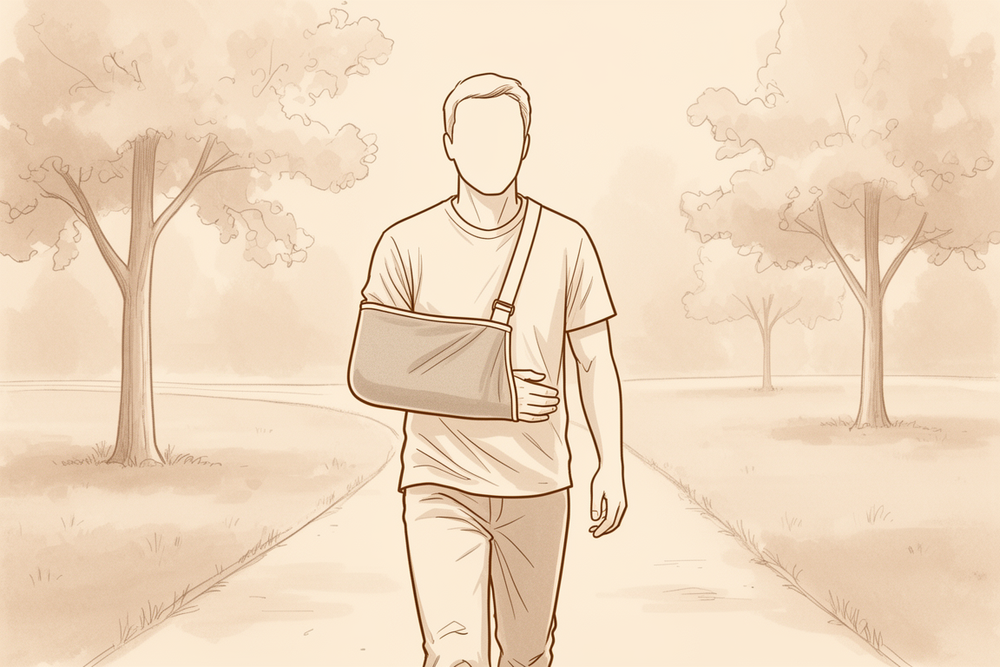
佩戴悬吊带
您将佩戴简易肩部悬吊带,而非外展枕悬吊带。这两种悬吊带在疗效上没有已证实的差异,且简易悬吊带在日常使用中更为方便。Hirpara 医生在所有肩袖修复手术中(包括大型和巨大撕裂)均使用简易悬吊带。
- 白天佩戴悬吊带6 周以提供支撑,特别是在您外出或在他人身边时。
- 请勿在佩戴悬吊带时睡觉。 它仅用于白天支撑;睡觉时应取下悬吊带,将手臂舒适地放置在枕头上以获得支撑。
- 在淋浴和进行锻炼时(在您已学会正确方法后)取下悬吊带。每当取下悬吊带时,请保持手臂放松并置于身体一侧。
- 如果肩部肿胀或疼痛,特别是锻炼后,请使用冰敷。
- 为了缓解疼痛,除非另有医嘱,否则请按照术后疼痛管理中所述,规律服用对乙酰氨基酚加非甾体抗炎药(如布洛芬)。在锻炼前服用一剂有助于缓解疼痛。
佩戴悬吊带时请注意您的姿势:保持耳朵、肩膀和臀部在一条直线上,避免弯腰驼背。良好的姿势可以保护您的背部,并有助于防止肩部僵硬。
关键注意事项——切勿
- 在约 6 周 内,切勿主动依靠自身力量活动肩部(修复组织在 4 周时仅具有正常强度约 20% 的强度)。
- 6 周 内,切勿通过手部或手臂进行提举、推、拉或承重。
- 早期切勿将手臂向外旋转超过正前方(中立位)位置。
- 如果修复了前方肩袖肌腱(肩胛下肌): 在前 12 周 内,将主动外旋角度保持在约 30° 以内,且在此期间切勿主动向内旋转手臂(对抗阻力);此举旨在保护前方修复部位。您的外科医生会告知您是否适用此规定。
- 切勿进行“空罐”(拇指向下)抬举动作。永远不要做。
- 早期切勿向后背伸手,并避免任何突然的猛拉或推挤。
- 在需要佩戴悬吊带期间(6 周),切勿驾驶车辆。
小型/中型撕裂
此方案适用于组织状况良好的一至两根肌腱撕裂。若某阶段标注了周数,即为您的时间安排。
中小型撕裂 — 第一阶段:保护期(第 0–6 周)
Kieran Hirpara 4.0
循环与深呼吸
为降低术后并发症风险,请确保每天步行至少30分钟(无需一次性完成),并每小时进行4–6次深呼吸。
全天
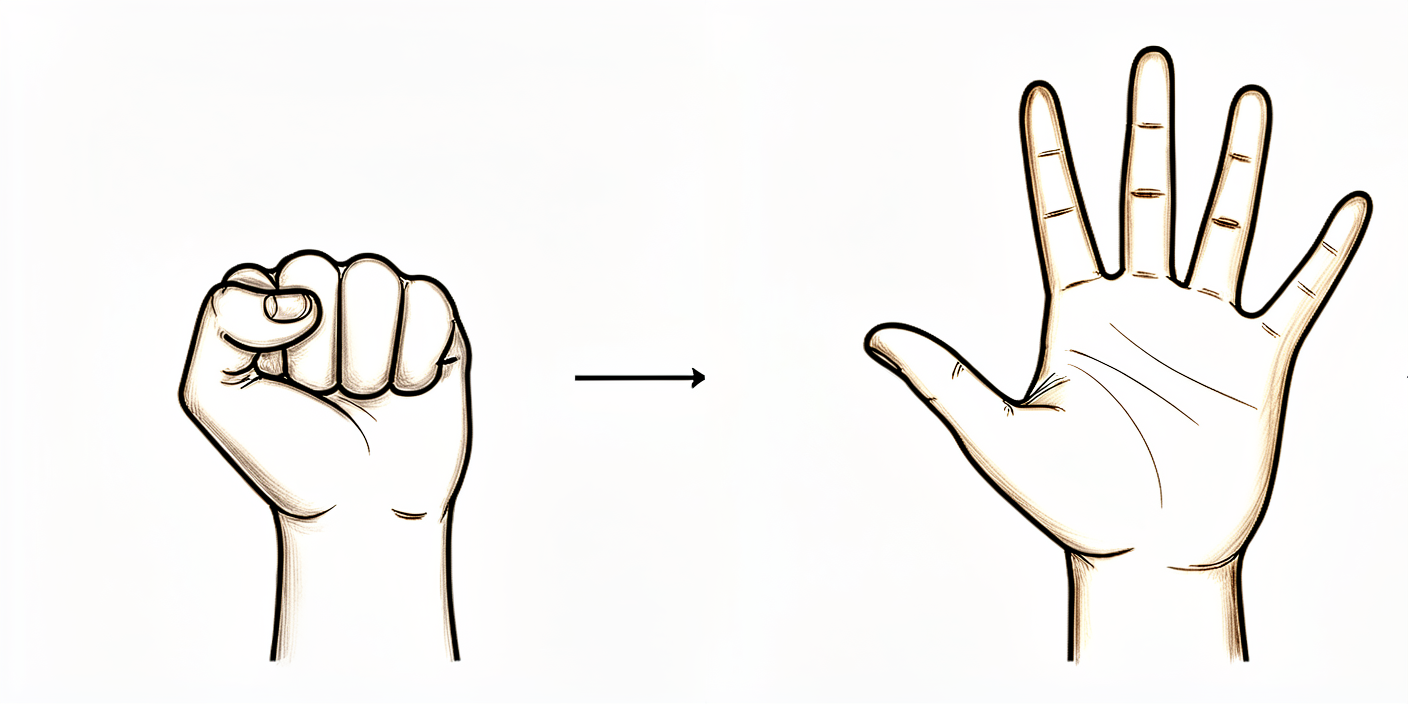
Kieran Hirpara 4.0
张开和握紧手
握紧拳头,然后完全张开。这有助于保持手部活动,帮助预防僵硬和肿胀。
每小时10次
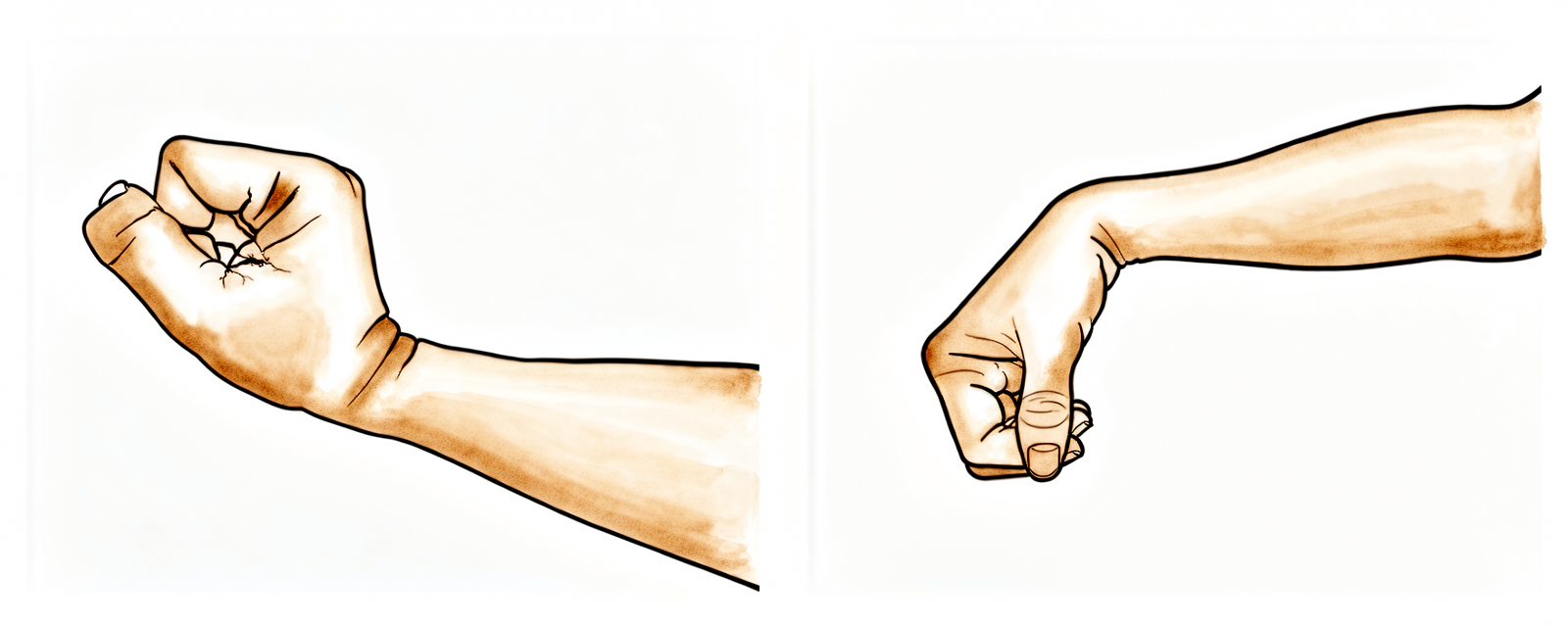
Kieran Hirpara 4.0
主动腕关节屈伸
轻轻将手腕向前弯曲,然后向后弯曲,以舒适为度。
10–15 次/小时
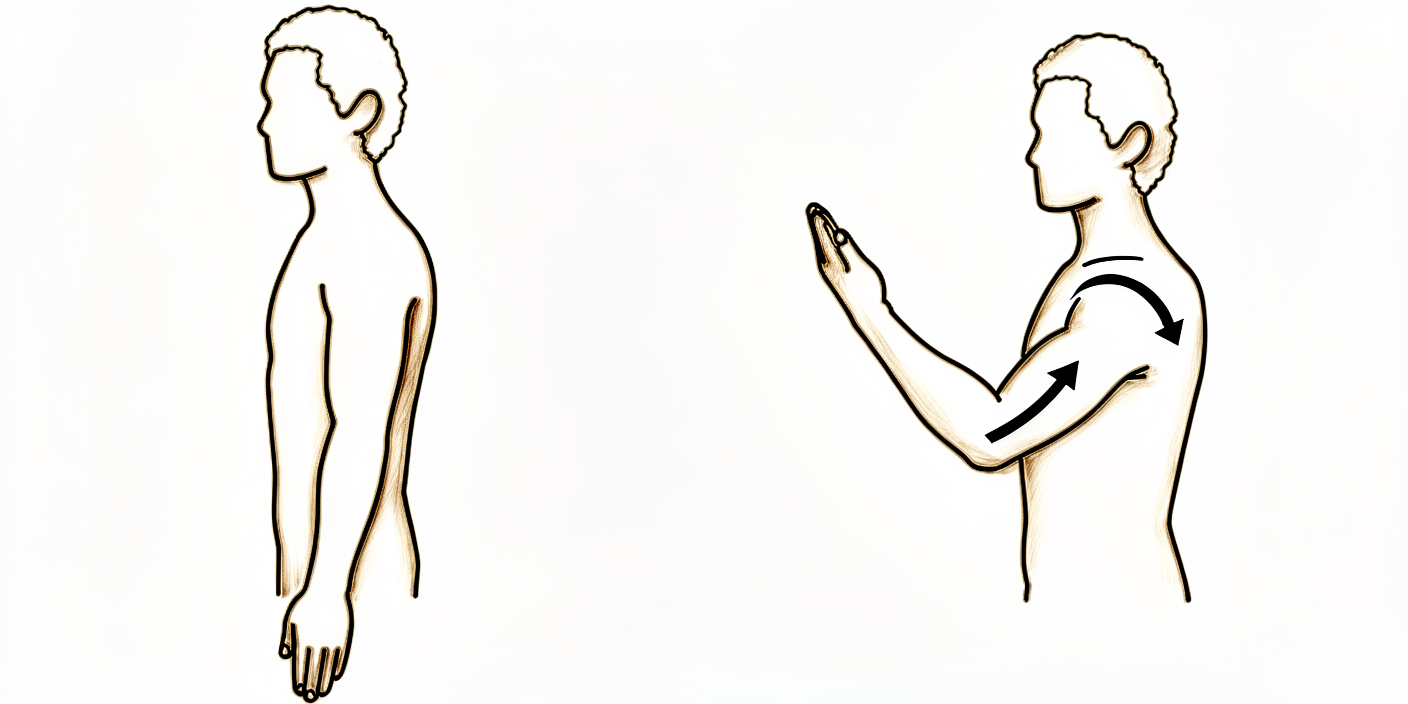
Kieran Hirpara 4.0
主动肘关节屈曲
掌心向上,尽可能轻柔地弯曲肘部,然后再次伸直手臂。保持上臂贴紧身体一侧。
10–15 次,每天 2–3 次
Kieran Hirpara 4.0
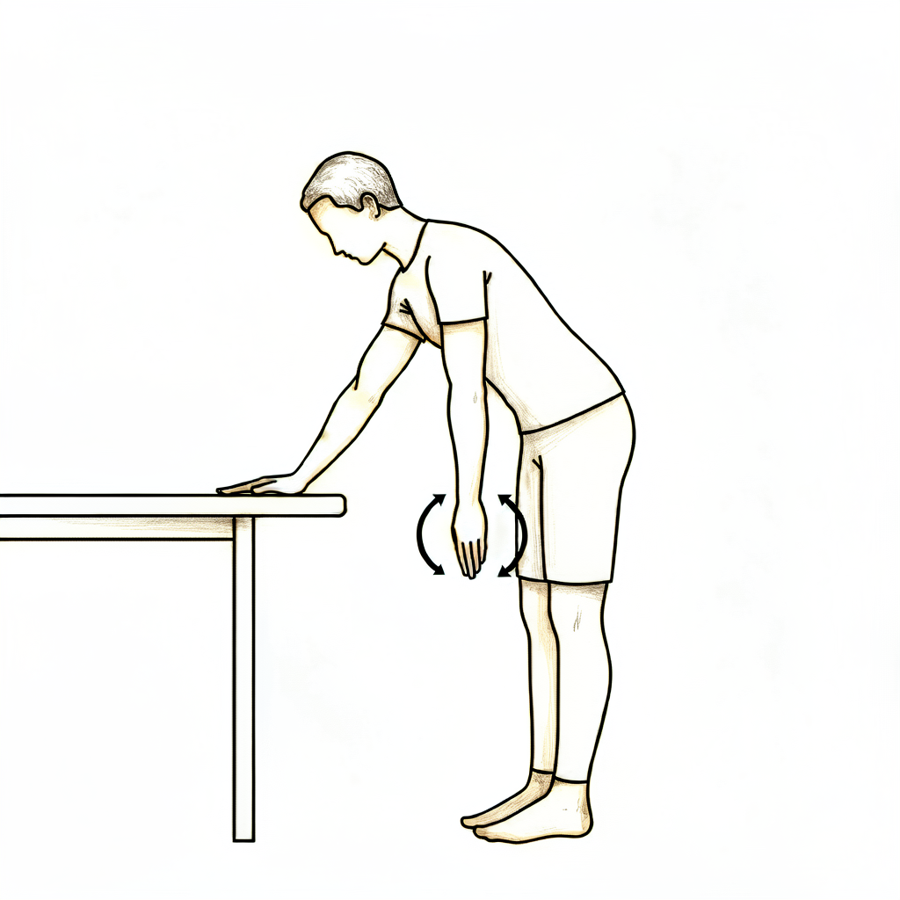
钟摆摆动
身体前倾,让手术侧手臂自然下垂,完全放松。通过身体摆动(而非使用肩部肌肉)做小幅度画圈动作——先顺时针,再逆时针。同时,轻轻前后及左右摆动手臂。保持画圈幅度较小(直径约20厘米以内)。整个过程中,手术侧手臂始终保持放松——您并未抬起手臂。
每个方向10次,每天2–3次
Kieran Hirpara 4.0
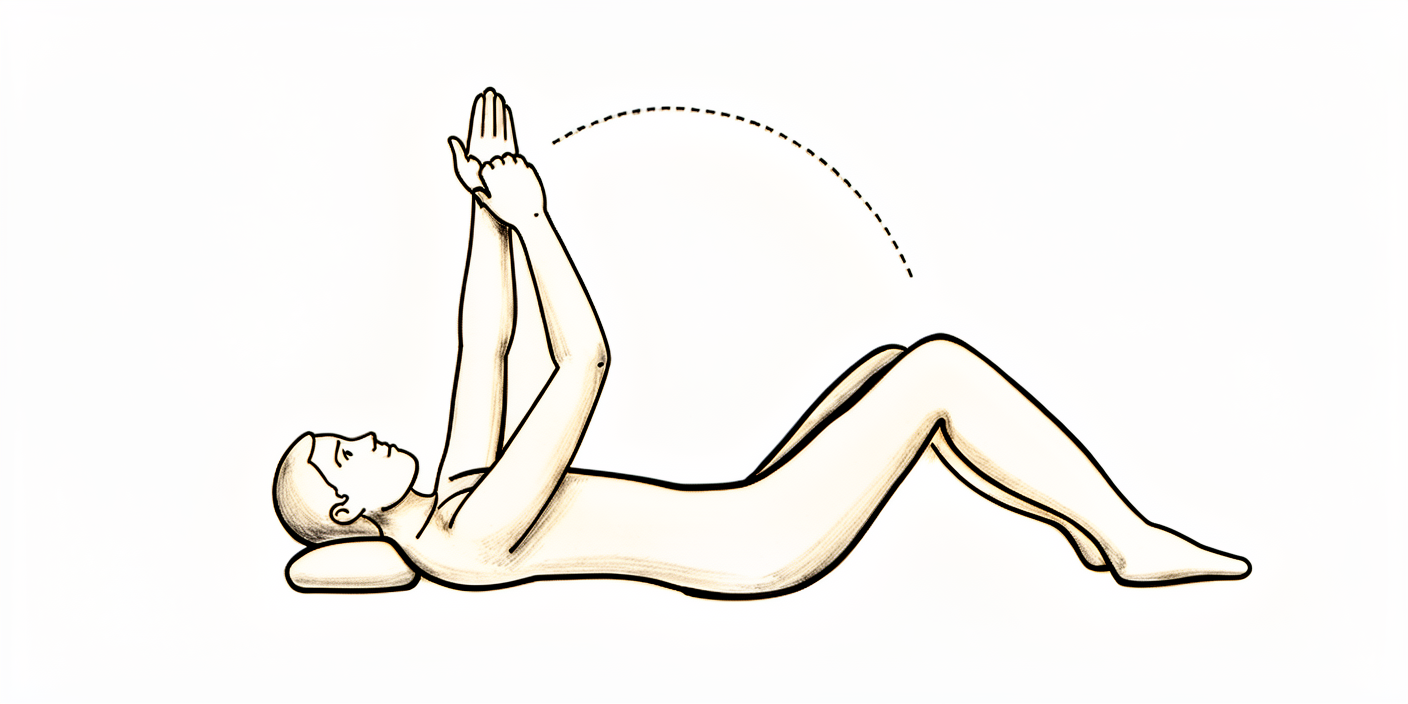
仰卧位辅助前举
仰卧。将健侧手置于患侧肘部下方,利用健侧手将患侧手臂向天花板方向抬起——患侧肩部保持放松,由健侧手代您完成动作。在此阶段,切勿将手臂抬至高于肩部的位置(约90°)。缓慢放下,回到起始位置。
10次,2–3次/天
Kieran Hirpara 4.0
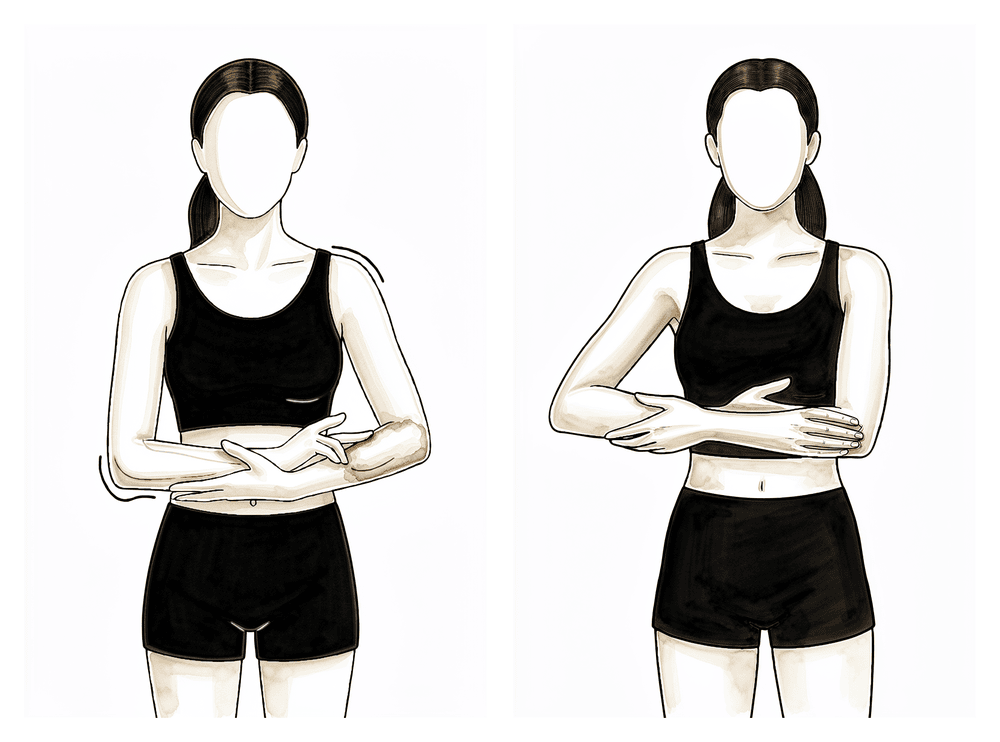
手臂外展托抱
坐位并略微前倾,用健侧手臂托住患侧手臂,将其向侧方轻轻送出——如同哄抱婴儿般。患侧肩部保持放松;由健侧手臂完成动作。
10次,2–3次/天
Kieran Hirpara 4.0
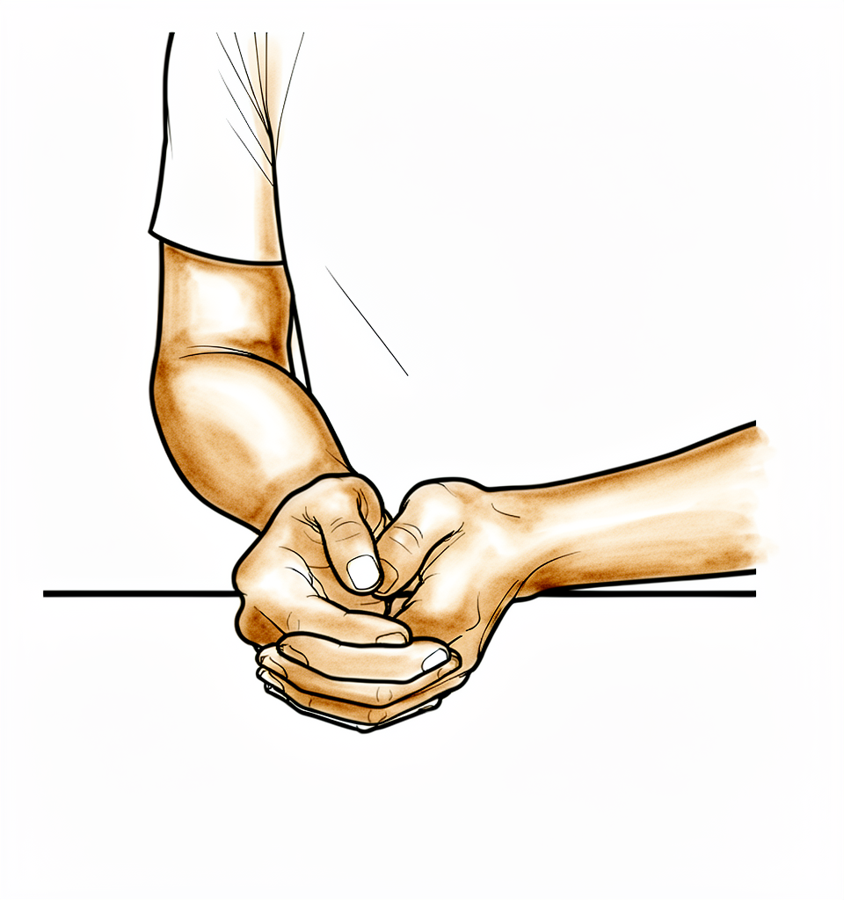
辅助外旋至中立位
坐位或站位,肘部贴紧身体一侧,手置于腹部。将前臂向外旋转,仅转至正前方(中立位)——不可超过此位置。切勿越过中立位旋转。缓慢复位。
10次,2–3次/天
Kieran Hirpara 4.0
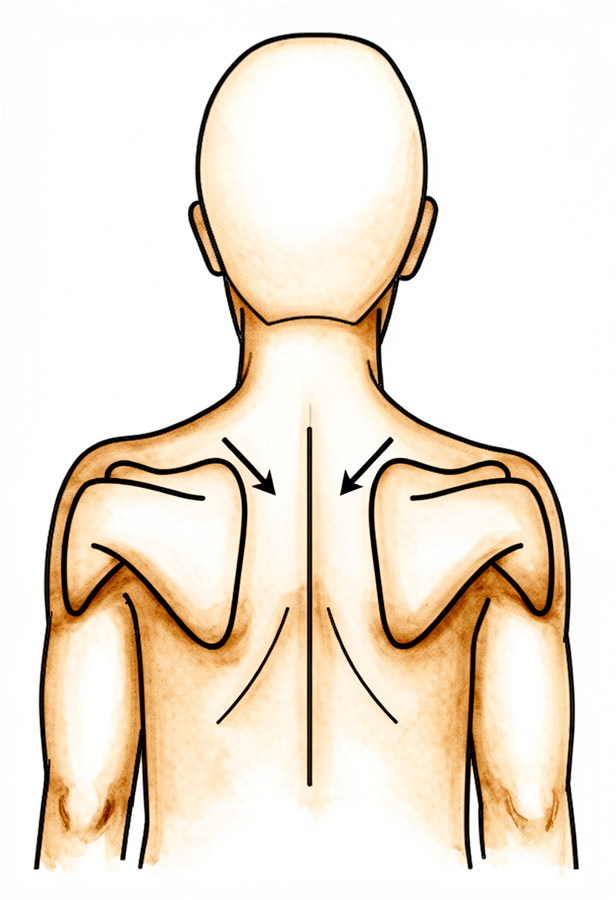
肩胛骨定位
轻轻将肩胛骨向下并向内收拢,保持该姿势,然后放松。这是一项轻度的肌肉激活练习——手臂不移动。
保持5秒,5次,每天2–3次
Kieran Hirpara 4.0
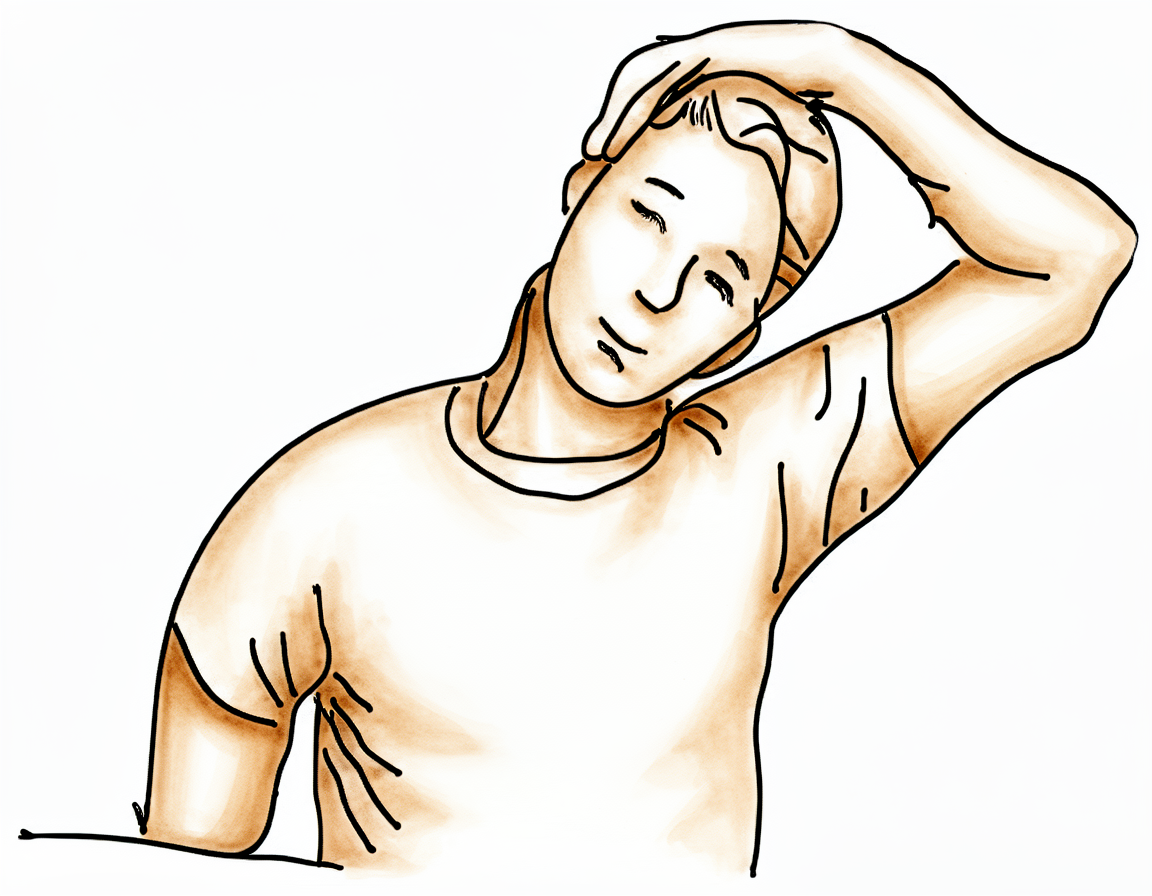
颈部侧向拉伸
用您的健侧手臂轻轻将耳朵移向健侧肩膀,远离手术侧,直到您感到颈部有舒适的拉伸感。
保持10秒,3次,每天2–3次
Kieran Hirpara 4.0
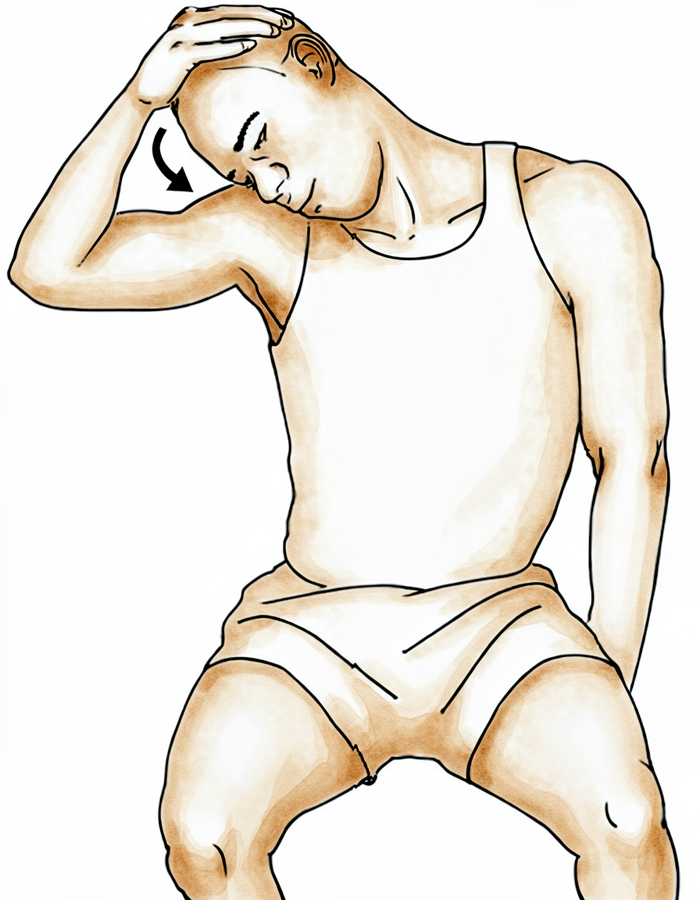
向腋窝方向拉伸颈部
用您的健侧手臂轻轻将鼻子向远离手术侧的腋窝方向下压,直至感到舒适的拉伸感。
保持10秒,3次,每天2–3次
最初六周的核心目标只有一个:在肌腱开始与骨骼愈合期间保护修复部位。白天佩戴简易悬吊带以提供支撑,睡觉时取下悬吊带,通过冰敷控制肿胀,并进行轻柔的练习,以保持手、腕、肘和颈部的活动度,而不对修复后的肌腱施加负荷。您的物理治疗师(或您自己借助健侧手臂)会为您轻柔地活动肩关节;您需保持完全放松。
- 悬吊带: 白天佩戴简易悬吊带以提供支撑;睡觉时取下悬吊带;进行锻炼和清洁时取下。
- 允许的活动: 仅限辅助运动和被动运动;禁止使用自身肩部力量进行任何活动。由您的健侧手臂或棍棒完成动作。早期逐渐增加辅助前举幅度,直至约 90°(半举位置);辅助外旋仅进行至正前方(中立位)。
- 练习: 钟摆运动;仰卧位辅助前举;托臂侧伸;辅助外旋至中立位;轻柔的手、腕和肘部活动;肩胛骨和颈部训练。
进入下一阶段的指征: 疼痛已缓解且可通过简单止痛药控制(约 3/10 或更低);辅助前举可舒适地达到约 90°;辅助外旋可舒适地达到中立位;伤口已愈合且无异常迹象;且无迹象表明修复部位受到过度应力。
中小型撕裂 — 第二阶段:恢复活动度(第 6–12 周)
Kieran Hirpara 4.0
仰卧位辅助前举
仰卧位,双手握住一根棍棒,用健侧手臂将患侧手臂向前上方抬起——患侧肩部保持放松。在此阶段内,逐步将活动范围增加至约120°(大致为向上方向的三分之二),并始终保持在物理治疗师设定的活动范围内。动作应平稳流畅,切勿强行用力,放下时需有控制。
10次,2–3 次/天
Kieran Hirpara 4.0
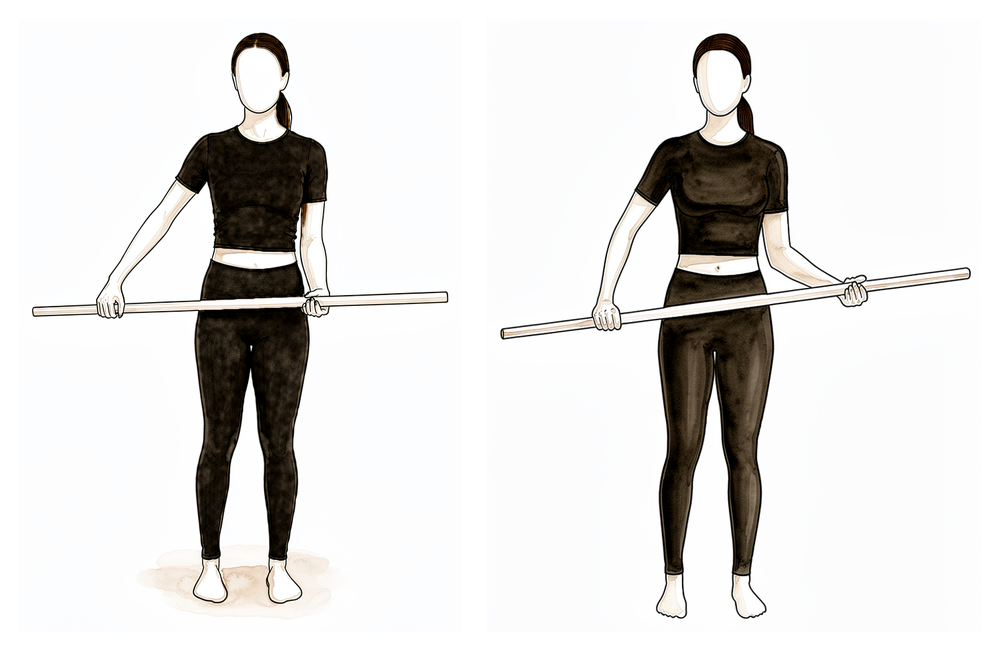
借助棍棒辅助外旋
仰卧,肘部贴于体侧并屈曲至90°,双手握住一根棍棒,用健侧手臂轻轻将患侧手向外推。保持在物理治疗师设定的活动范围内,切勿强行用力。
10次,2–3次/天
Kieran Hirpara 4.0
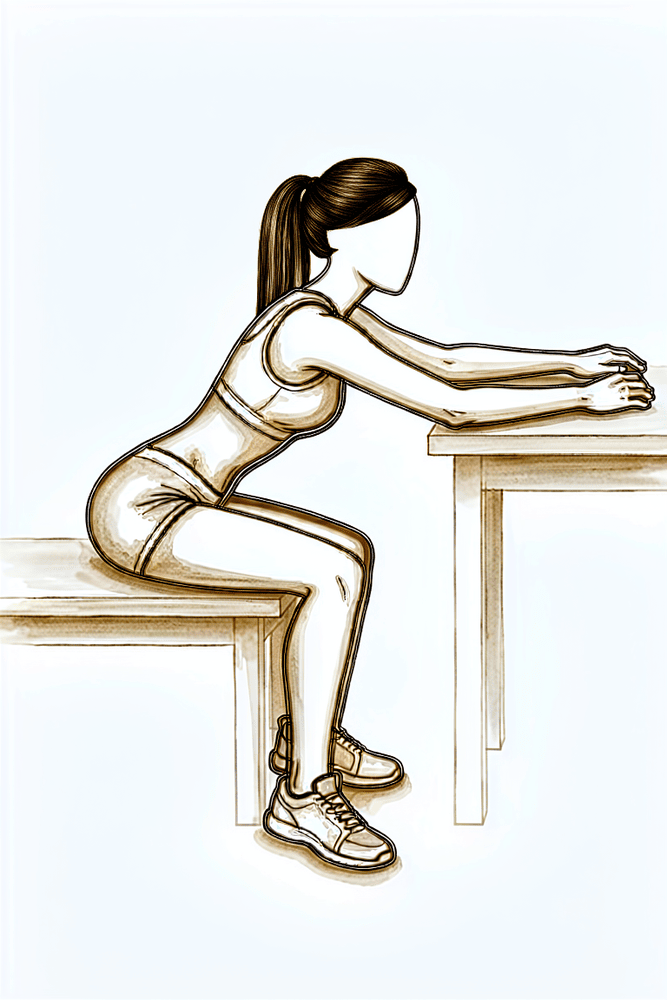
坐位桌板滑动
大约从第6周开始,坐在桌前,将手术侧手放在毛巾上。沿桌面将手向前滑动,使手臂向前上方伸展,让桌面承担重量,然后向后滑动。在物理治疗师的指导下,也可向侧方进行相同的练习。
10次,2–3次/天
Kieran Hirpara 4.0
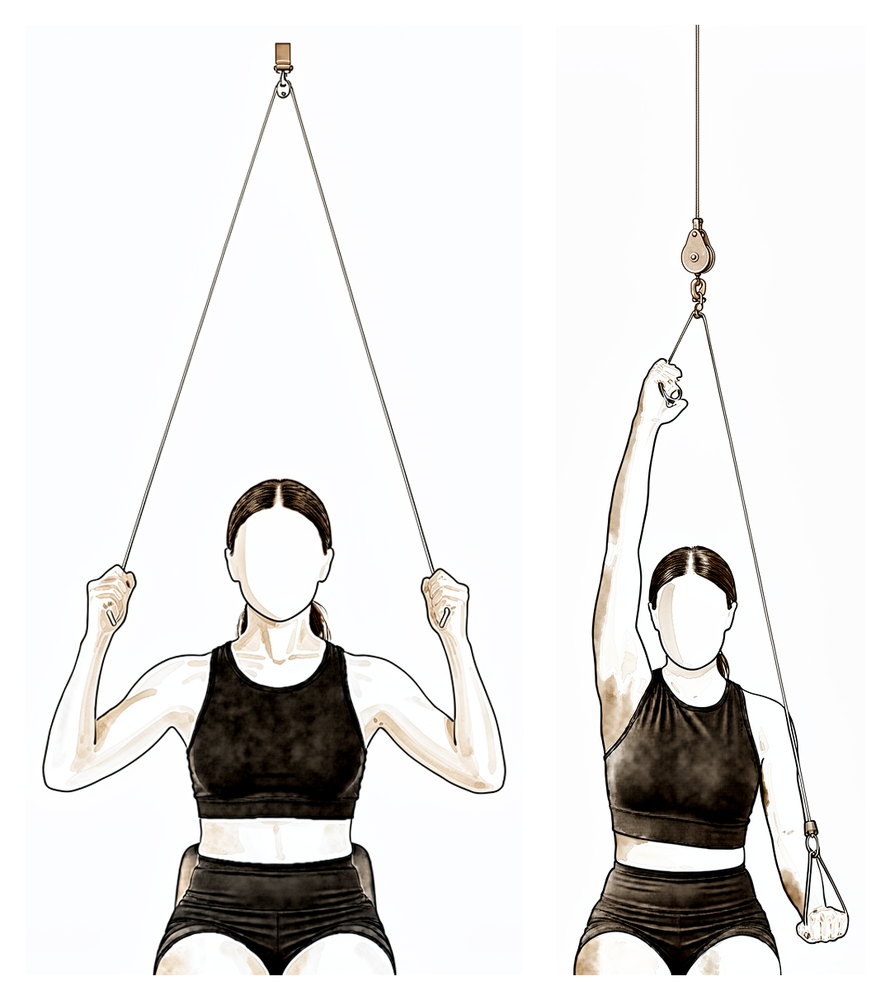
门顶滑轮
大约从第6周开始,坐在门顶滑轮装置下方,双手各握一个手柄。用健侧手臂向下拉,以抬起手术侧手臂,保持手术侧手臂放松,然后缓慢放下。
在您的物理治疗师指导下
Kieran Hirpara 4.0
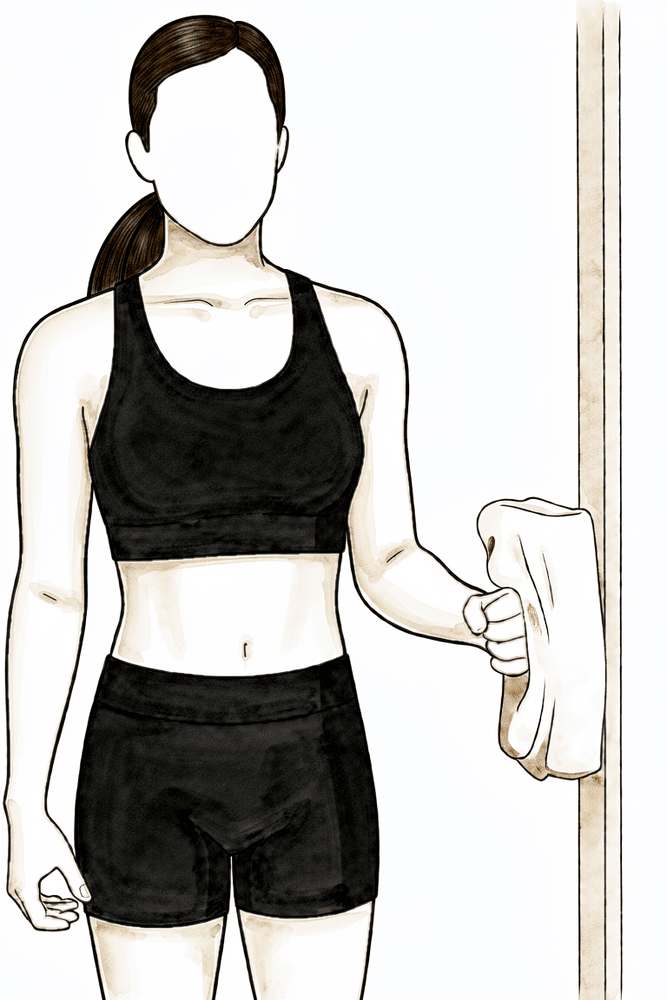
等长外旋
大约从第8周开始,若您的物理治疗师同意。站立,肘部贴紧体侧并屈曲至90°,手背靠近墙壁或门框。将手背轻轻向外推压至该表面,同时确保手臂不移动——动作轻柔,约使用四分之一力量,且无痛感。保持该姿势,然后放松。
保持约5秒,力度轻柔(约25%的用力程度),并遵循您的物理治疗师的指导
Kieran Hirpara 4.0
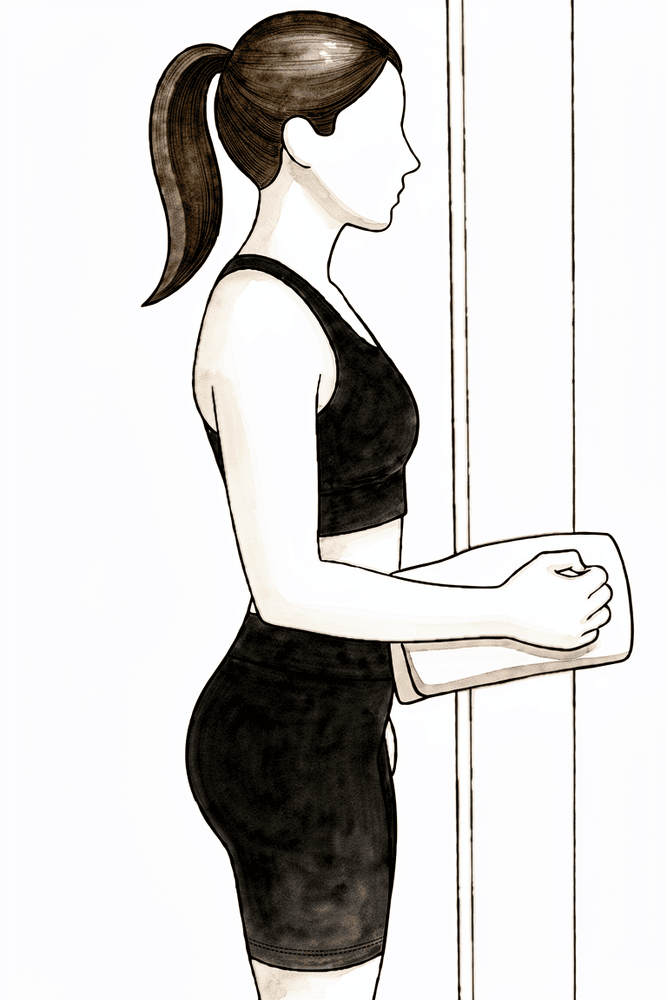
等长内旋
大约从第8周开始,如果物理治疗师同意——但如果修复了前方肩袖肌腱(肩胛下肌),则不得早于第12周。站立,肘部贴紧身体一侧,手掌抵住墙壁。轻轻将手掌向内推,同时确保手臂不移动——力度约为四分之一,且无痛感。保持该姿势,然后放松。
保持约5秒,力度轻柔(约25%的用力程度),并遵循您的物理治疗师的指导
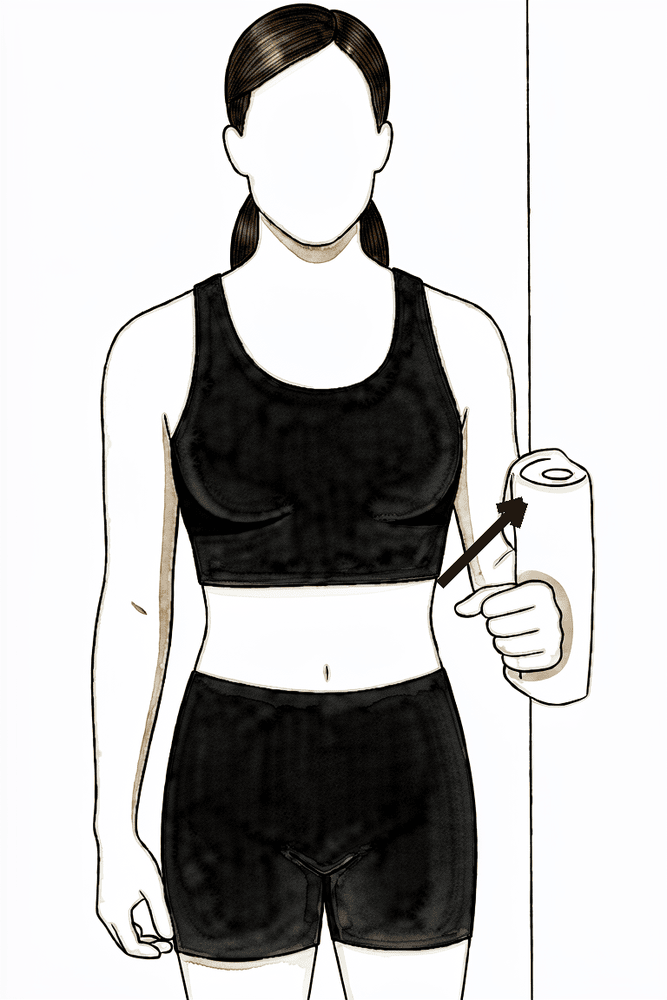
Kieran Hirpara 4.0
等长外展
从第8周左右开始,若您的物理治疗师同意。侧身站立,使上臂外侧靠近墙壁,肘部置于体侧。将手臂轻轻向外推压向墙壁,但切勿让手臂移动——力度约为四分之一,无疼痛感。保持该姿势,然后放松。
保持约5秒,力度轻柔(约25%的用力程度),并遵循您的物理治疗师的指导。
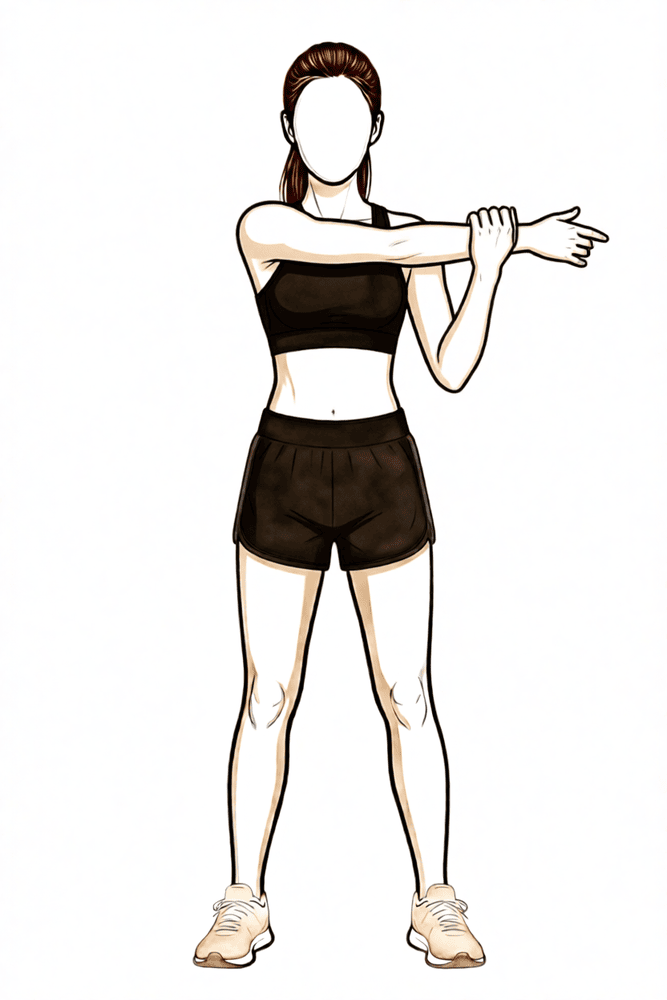
Kieran Hirpara 4.0
跨体拉伸
仅在本阶段后期(第9周后)。用健手轻柔地将患侧手臂横过胸前,直至肩后部感到舒适的牵拉感。动作务必轻柔,切勿强行用力。
保持 10–20 秒,重复数次,按照您的物理治疗师的指导进行
修复部位正在愈合,但强度仍较弱,六周时仅约为正常强度的 20–30%。因此,本阶段旨在恢复活动度,而非力量。此时已取下悬吊带。您将从辅助运动过渡到依靠自身力量活动手臂,从轻松体位开始(如仰卧,或在去除重力影响的桌面上滑动),逐步过渡到直立位。在本阶段后期,加入轻度肌肉激活(等长收缩)训练。
- 悬吊带: 逐步停用(至第 4–6 周时已基本停用)。
- 允许的活动: 完全辅助活动,约从第 6 周开始过渡到依靠自身力量的活动。将辅助/主动前屈抬高至约 120° 及以上。
- 练习: 仰卧位辅助前举;使用棍棒辅助外旋;坐姿桌面滑动;门顶滑轮训练;约从第 8 周开始进行温和的等长(按压并保持)外旋、内旋和外展训练;本阶段后期(第 9 周后)进行跨体拉伸。
进入下一阶段的条件: 您能依靠自身力量将手臂前举至至少 115–120°,且控制良好(无耸肩或肩胛骨上提);您的辅助/被动活动范围完全或接近完全且无痛;温和的等长训练可耐受,且之后无疼痛加剧;且在开始抗阻训练前,疼痛不超过 2/10 分。
中小型撕裂 — 第三阶段:强化训练(第 12–16 周)
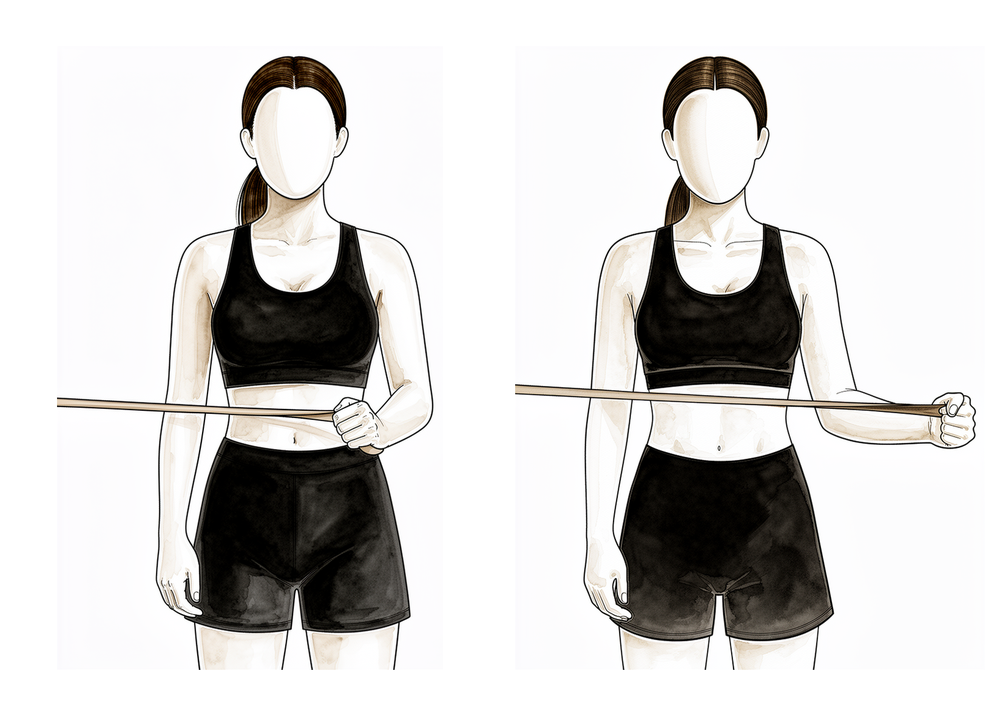
Kieran Hirpara 4.0
肩高外旋(弹力带)
从大约第12周开始,当过头活动变得舒适时。将手臂举至肩部高度并向外伸展,肘部弯曲至90°,用轻阻力带向上旋转前臂,然后有控制地返回。使用轻阻力带并进行多次重复,而非使用大阻力。
在您的物理治疗师指导下
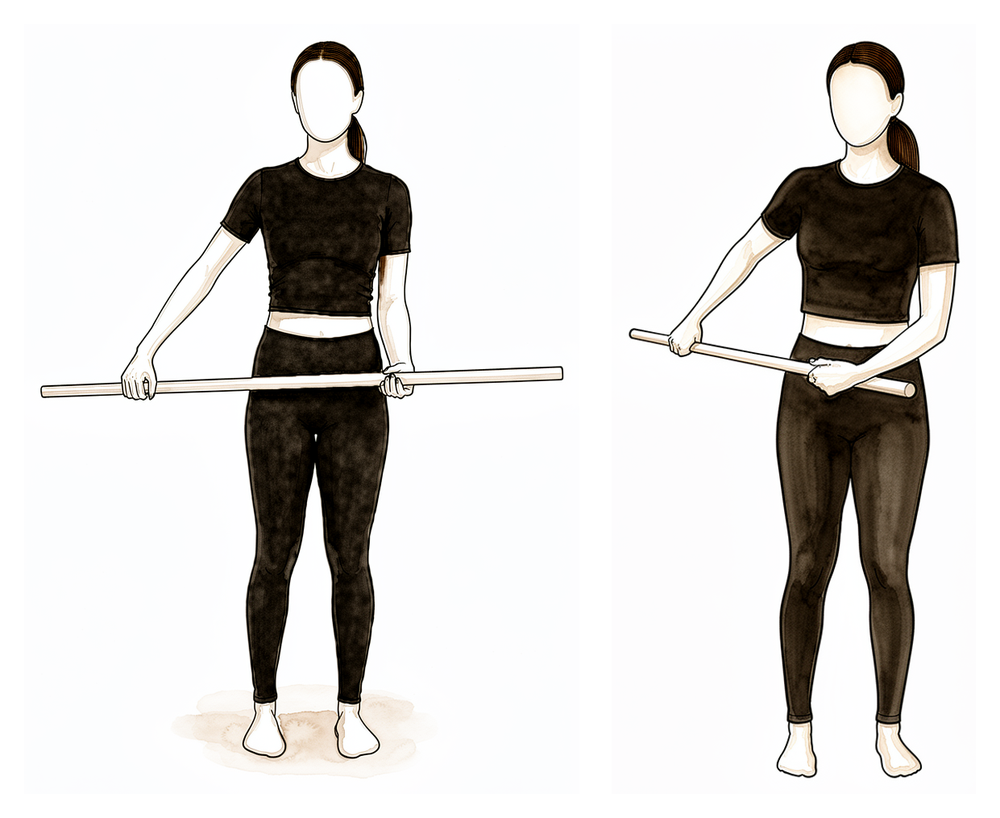
Kieran Hirpara 4.0
持棍内旋
从第12周左右开始(如果修复了前方肩袖肌腱,则更晚)。将一根棍子置于背后,用健侧手轻轻将患侧手沿背部向上牵引,然后有控制地放下。保持动作舒适,并在物理治疗师设定的活动范围内进行。
在您的物理治疗师指导下
Kieran Hirpara 4.0
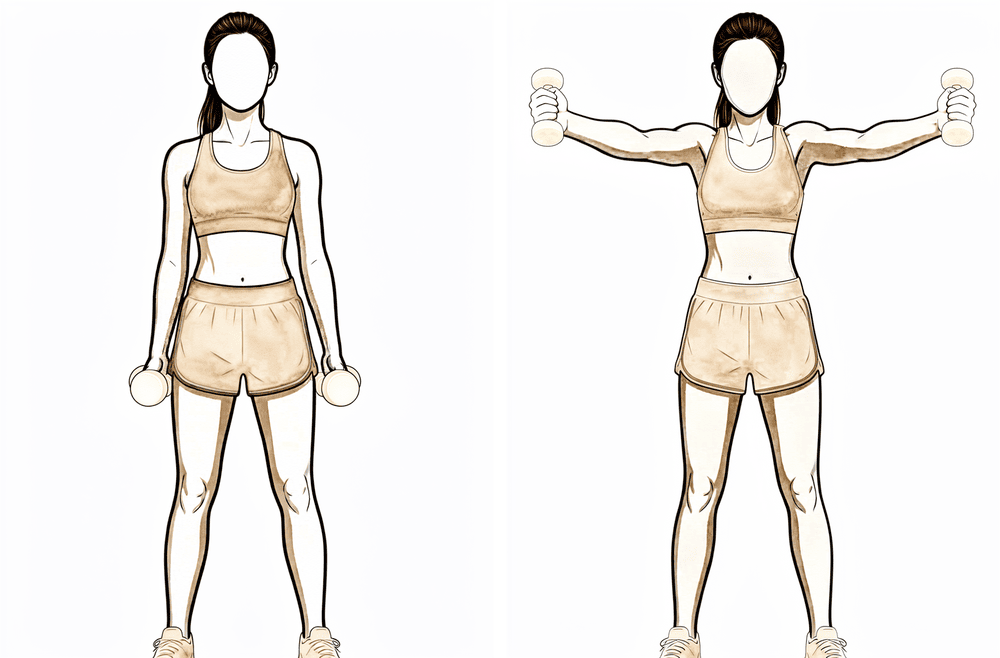
满罐抬举
大约从第12周开始,当向前抬举感到舒适时。将手臂向前并略微向侧方抬起,使拇指朝上——即“满罐”位——然后有控制地放下。切勿在拇指朝下(“空罐”位)时抬起手臂。
在您的物理治疗师指导下
Kieran Hirpara 4.0
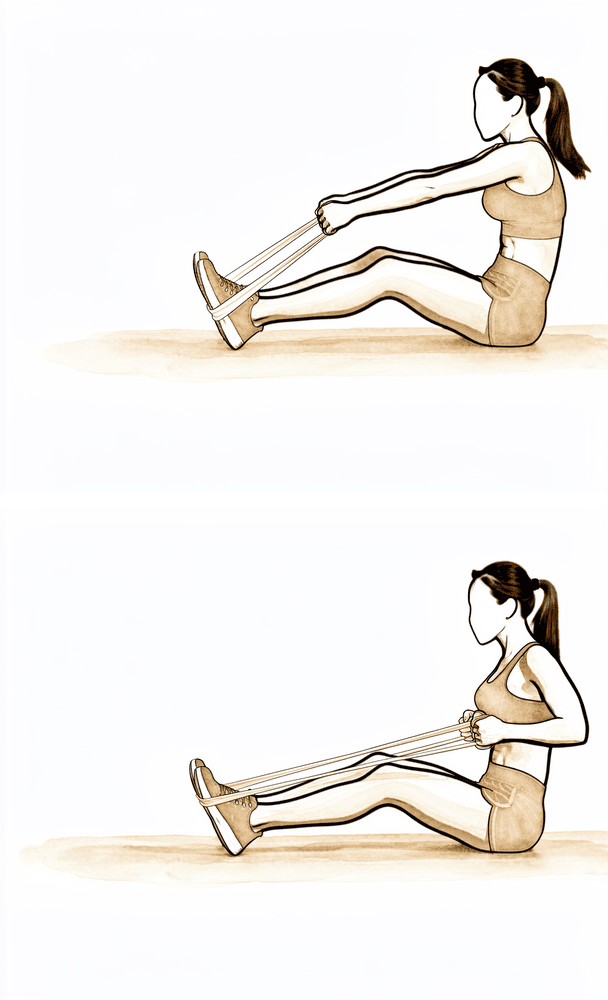
低位划船(肩胛骨定位)
从大约第12周开始。将手放在身体旁边的固定表面上,向下并向后按压,以将肩胛骨向下和向内拉动,并短暂保持。这有助于稳定肩胛骨(您的物理治疗师可能会称之为“向下滑动”)。
在您的物理治疗师指导下
Kieran Hirpara 4.0
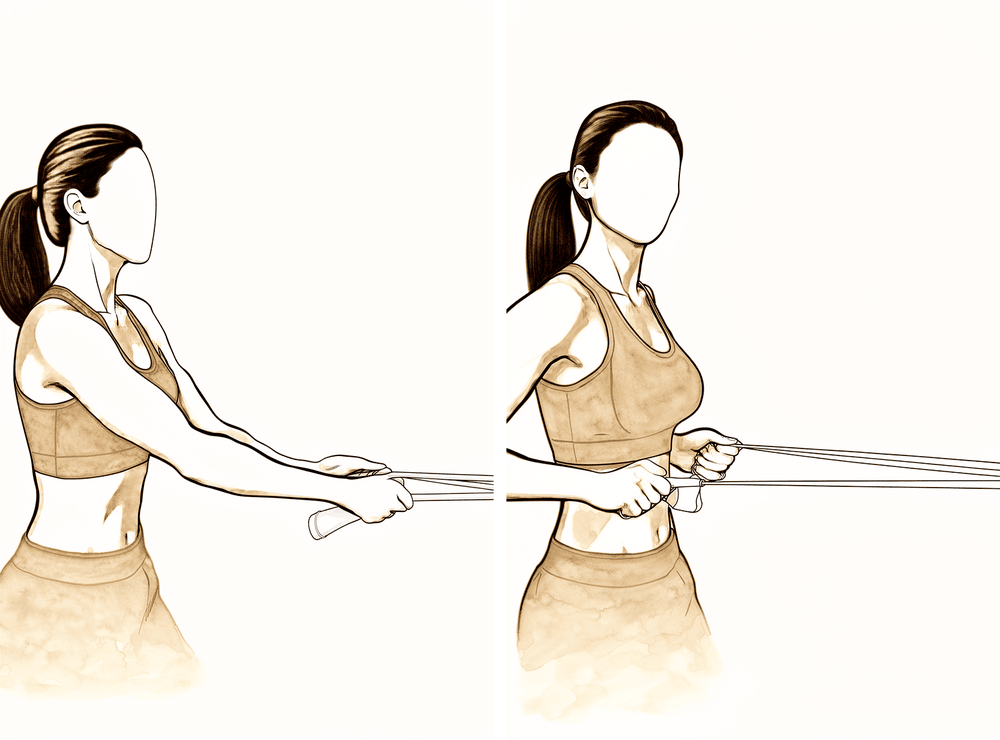
弹力带划船
从第12周左右开始。将弹力带固定于身前,将手柄向身体方向拉动,同时向后收肘并夹紧肩胛骨,随后有控制地还原。使用轻阻力弹力带,进行高次数重复;若肩部出现疼痛,立即停止。
在您的物理治疗师指导下
Kieran Hirpara 4.0
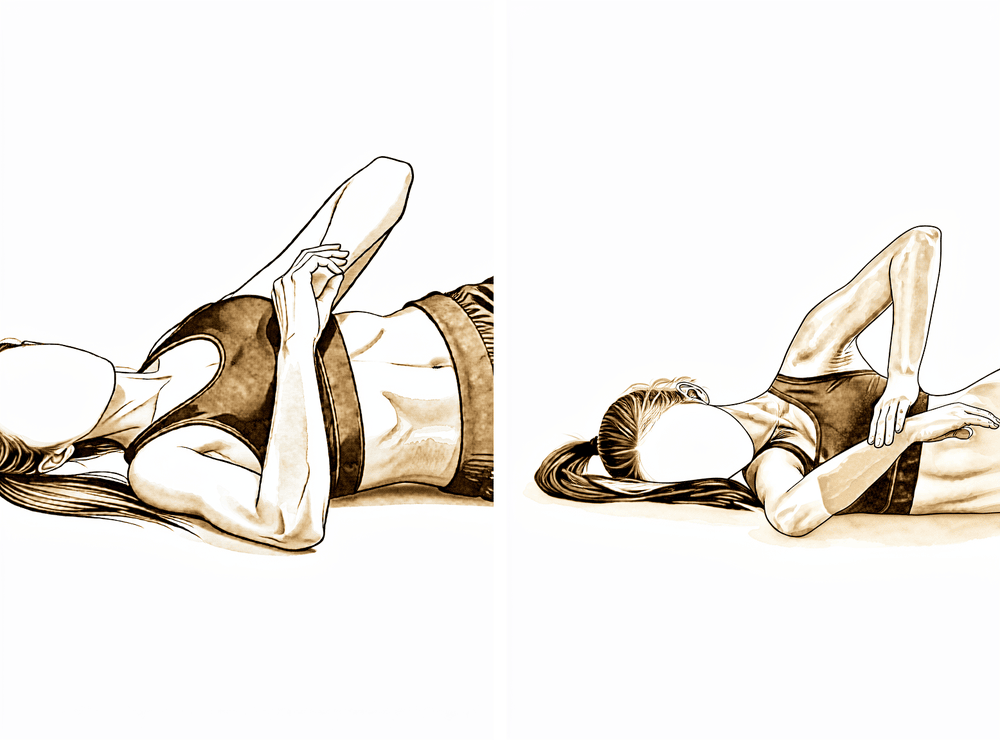
睡姿拉伸(sleeper stretch)
从大约第12周开始,若您的物理治疗师指示执行。侧卧于手术侧,手臂向前伸展,肘部弯曲。用上方手轻轻将前臂向下压向床面,直至感到肩后部有舒适的拉伸感。动作务必轻柔——切勿强行施力。
保持 10–20 秒,重复数次,按照您的物理治疗师的指导进行
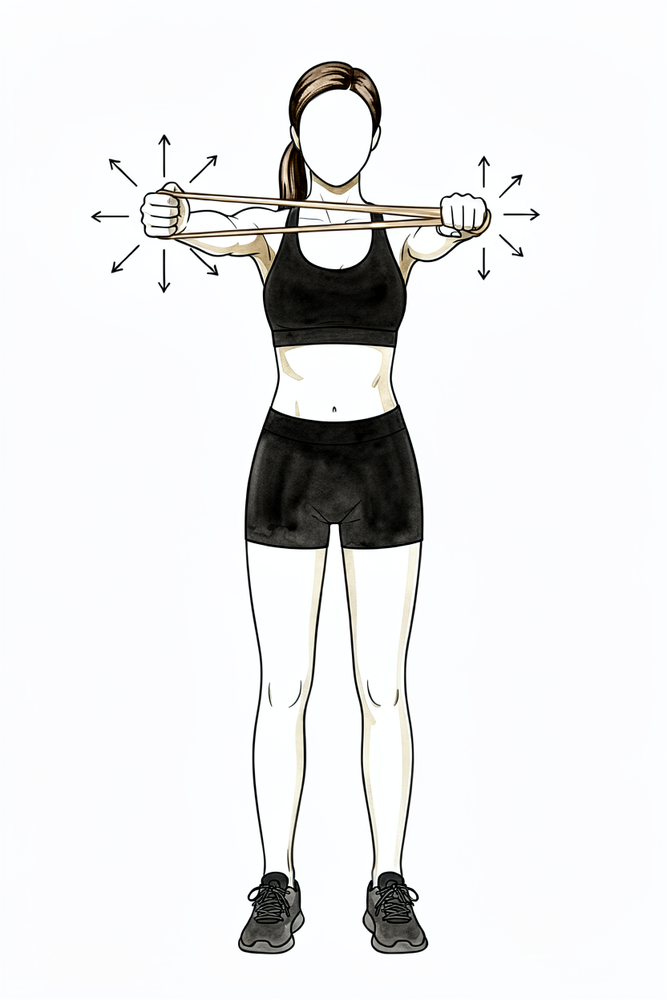
Kieran Hirpara 4.0
节律性稳定
将手臂支撑在身体前方,高度约与肩部齐平,请您的物理治疗师(或您的健侧手)从不同方向施加小而轻柔的推力,同时您保持手臂静止且稳定——不要让其移动。这旨在训练肩部的稳定肌群做出反应。所有用力动作均需保持轻柔。
在您的物理治疗师指导下
这是修复组织成熟最快的阶段,重点从恢复活动度转向重建力量、耐力和控制力。使用轻阻力带和轻重量进行抗阻训练大约从第 12 周开始:高次数,低负荷。黄金法则是一次只练一个平面:只有当你在某个方向上拥有接近完全且舒适的活动度时,才在该方向进行强化训练。抬举时始终保持拇指朝上,切勿拇指朝下。
- 悬吊带: 无需使用;预期活动度完全恢复。
- 练习: 肩高外旋阻力带训练;棍棒内旋训练;满罐抬举(full-can lift);低位划船(肩胛骨定位);阻力带划船;睡姿拉伸(sleeper stretch)。您的物理治疗师可能还会增加节律性稳定训练(一种温和的保持静止练习,治疗师轻推您的手臂,您进行抵抗)以重新训练控制力;这是手法操作,无图示。
进入下一阶段的标准: 您能在自主控制下实现完全且无痛的活动,并具备均匀的肩胛骨控制力;强化训练后无疼痛或肿胀;在肩胛骨平面进行抗阻抬举时感觉舒适;且旋转力量正向健侧靠拢(轻柔测试时约为 80%;完全力量测试需等到更晚时候)。
中小型撕裂 — 第四阶段:重返运动与工作(第 16–24 周)
Kieran Hirpara 4.0
持轻重量进行满罐抬举
如前所述进行满罐抬举,现使用轻重量,逐步增加负荷。保持拇指向上。若肩部疼痛或之后出现肿胀,请停止。
在您的物理治疗师指导下
本阶段是通往完全功能肩关节的桥梁,随后逐步重返运动及较重的体力劳动。您需保持已获得的关节活动度,并建立自信使用这些活动度的力量、爆发力与耐力:如伸展、搬运及过头顶作业。回归过程应分阶段进行,而非突然恢复;对于运动而言,采用逐步增加运动量和强度的间歇训练计划是最安全的回归途径。
- 悬吊带: 无需使用。
- 练习: 使用轻量并逐渐增加重量的满罐抬举;针对运动和工作特定的体能训练、渐进性负荷训练,以及在阶段后期适当进行受控的高速(增强式)训练。
满足以下条件方可回归: 您的旋转力量至少达到对侧的 85–90%;在较大负荷下拥有完全且无痛的活动度,且无反应性肿胀;并通过针对您特定运动或工作的任务特异性测试。重返运动或重体力劳动通常在 4–6 个月左右,这基于满足上述标准以及获得 Hirpara 医生和您的物理治疗师的许可,而不仅仅依据日历时间。
大型/巨大撕裂
此方案适用于较大的撕裂(两根或更多肌腱,或组织质量较差)。各阶段相同,但每个阶段持续时间更长,进展更为谨慎,以促进愈合。部分外科医生会刻意推迟该组患者的正式治疗;请遵循Hirpara 医生给出的具体指示。悬吊带仍为简易悬吊带,即使对于大型或巨大撕裂,也不使用外展枕。
大型-巨大撕裂 — 第一阶段:保护期(第 0–6 周)
Kieran Hirpara 4.0
钟摆摆动
身体前倾,让手术侧手臂自然下垂,完全放松。通过摆动身体画小圆圈,切勿使用肩部肌肉。整个过程中,手术侧手臂保持放松状态。
每个方向10次,每天2–3次
Kieran Hirpara 4.0
张开和握紧手
握紧拳头,然后完全张开手掌。保持手部活动并减轻肿胀。
每小时10次
Kieran Hirpara 4.0
主动腕关节屈伸
轻轻将手腕向前弯曲,然后向后弯曲,以舒适为度。
10–15 次/小时
Kieran Hirpara 4.0
主动肘关节屈曲
掌心向上,轻轻弯曲肘部,然后伸直,上臂紧贴体侧。
10–15 次,每天 2–3 次
Kieran Hirpara 4.0
肩胛骨定位
轻轻将肩胛骨向下并向内收拢,保持该姿势,然后放松。您的手臂不移动。
保持5秒,重复5次,每天2–3次
与小/中型撕裂方案类似,但活动需严格保护,且进展速度更慢。您的物理治疗师或您的健侧手臂为您活动肩部;您需保持放松。在此组别中,有时会推迟正式治疗以促进愈合。
- 悬吊带: 白天使用简易悬吊带提供支撑;睡觉时不要佩戴悬吊带;进行锻炼和清洁时取下。
- 允许的活动: 仅限受保护的被动活动,以 Hirpara 医生设定的范围为限;通常活动范围小于小/中型撕裂方案。
- 锻炼: 钟摆运动;按指示进行温和的受保护辅助活动;手、腕和肘部活动;肩胛骨定位。
进入下一阶段的条件: 疼痛得到控制;修复部位无过度受力迹象;且 Hirpara 医生批准您进入下一阶段(此组别需个体化评估;切勿仅依据日历时间自行进阶)。
大型-巨大撕裂 — 第二阶段:恢复活动度(第 6–12 周)
悬吊带通常在第 6 周左右移除,但主动活动(依靠自身力量)的重新引入比小/中型撕裂路径更晚且更具个体化,以保护修复部位更长时间。抗阻肩袖训练被刻意推迟。
- 悬吊带: 在第 6 周左右逐步停用。
- 允许的活动: 辅助活动逐渐过渡到依靠自身力量的活动,晚于小/中型撕裂路径;具体时间由您的物理治疗师根据您的愈合情况确定。
- 练习: 与小/中型撕裂第二阶段相同的训练(辅助前举、用棍辅助外旋、桌面滑动、门顶滑轮),但进展更慢;抗阻肩袖训练被推迟。
进入下一阶段的条件: 您的主动活动稳步改善;辅助/被动活动范围完全;您具有良好的肩胛骨控制能力;且您的医疗团队满意修复部位愈合良好,足以开始负重。
大型-巨大撕裂 — 第三阶段:强化训练(约从第16周开始)
Kieran Hirpara 4.0
节律性稳定
将手臂支撑在身体前方,高度约与肩部齐平,请您的物理治疗师(或您的健侧手)从不同方向施加小而轻柔的推力,同时您保持手臂静止且稳定——不要让其移动。这旨在训练肩部的稳定肌群做出反应。所有用力动作均需保持轻柔。
在您的物理治疗师指导下
强化训练推迟至约第16周,而非第12周,因为较大的修复部位需要更长时间成熟。此后,进展过程与小/中型撕裂的强化阶段相同:使用轻阻力带和重量,高重复次数,低负荷,每次仅在一个平面进行,始终保持拇指朝上。
- 悬吊带: 无;预期可实现全范围活动。
- 练习: 与小/中型撕裂强化阶段相同(阻力带外旋、用棍棒内旋、满罐抬举、低位划船、阻力带划船、睡姿拉伸),开始时间较晚并逐渐增加强度。随着控制能力提高,可加入节律性稳定训练(手法辅助的保持稳定练习)。
进入下一阶段的条件: 您能在自主控制下实现完全且无痛的活动;强化训练后无疼痛或肿胀;且您的力量与其他侧相比均匀增长。
大型-巨大撕裂 — 第四阶段:重返运动与工作(6个月以后)
对于大型和巨大撕裂,重返运动和重体力工作的时间更晚,通常在六个月或更久,且往往更长,且恢复过程更慢,能恢复到此前水平的人也更少。其循序渐进的过程与小/中型撕裂路径相同,均采用分阶段、基于标准的方案。
- 悬吊带: 无需使用。
- 练习: 渐进性负荷以及针对运动或工作特定需求的体能训练,逐步建立。
满足以下条件方可重返: Hirpara 医生和您的物理治疗师均予以许可;您的旋转力量至少达到健侧的85%;且在负荷下拥有完全、无痛的活动度和耐力,无反应性肿胀。预计需六个月或更久(往往更长),决策应基于是否达到这些标准,而非日历时间。
重返运动与工作
对于所有修复手术,重返活动均基于标准(无痛,且具备足够的活动范围、力量和耐力),并由Hirpara 医生和您的物理治疗师共同签字确认,而非仅由日历决定。
- 小型/中型撕裂: 久坐工作可在数周内恢复;较重的强化训练从12–16周开始;重返运动或重体力工作约在4–6个月后。
- 大型/巨大撕裂: 6个月或更久,通常更长,且需进行更缓慢、更谨慎的渐进式恢复。
对于过头顶运动和投掷类运动,在不受限制地参与比赛前,需完成分级间歇训练计划。完全(最大)力量测试推迟至手术后9–12个月进行。
您的早期练习
这些是早期(保护期)的轻柔练习,从病房开始并在家继续,操作时您的手术侧手臂需脱离悬吊带,肩部肌肉保持放松。请按照物理治疗师的指导开始练习,并停止任何会引起肩部剧烈疼痛的动作。它们列在上述各路径的第一阶段下。
本方案之后
本方案与诊所的一般康复建议配合使用;请参阅术后疼痛管理和伤口护理。关于手术本身,请参阅肩袖修复术。
Evidence & references
This is the clinical evidence summary written for health professionals. It is technical, and it lists the research this page was built from. You do not need to read it to understand your treatment or to make a decision about it.
Scope: arthroscopic (and mini-open) rotator cuff repair (RCR). Two evidence sources combined: (1) local RAG corpus of 180,000+ Orthopaedic articles (citations below carry the journal/year), and (2) authoritative published institutional rehabilitation protocols (URLs below).
Each claim is flagged [STRONG] (RCT / meta-analysis / systematic review) or [CONSENSUS] (institutional protocol, narrative review, expert opinion) where relevant.
1. Consensus phased timeline (small/medium, "standard" 1–2 tendon repair)
Synthesised primarily from the Brigham & Women's Hospital (BWH) Arthroscopic RCR protocol and the BWH Standard of Care, cross-checked against the published institutional consensus. [CONSENSUS] for the exact week windows; [STRONG] that no specific week-by-week schedule is proven superior across all sizes (see controversies — Baumgarten 2009 Level I/II review; Chan 2014 meta-analysis).
| Phase | Weeks | Sling | ROM allowed | Active ROM | Strengthening | Precautions |
|---|---|---|---|---|---|---|
| I — Passive motion / protective ("healing") | 0–6 | Sling + small abduction cushion worn at all times, including sleep; remove only for exercise/icing/hygiene. Weaned wks 4–6. | PROM/AAROM only. Pendulums. Supine passive forward elevation to ~90–100°; passive ER (arm near side) to ~30°. Progress toward 120–140° FE / 30–60° ER by end of phase. | None. No active shoulder motion (tendon ~20% of normal strength at 4 wks). Active elbow/wrist/hand OK (curls only if biceps not involved). | Submaximal scapular + cuff setting; manual scapular work only. No resisted shoulder. | No active abduction/elevation; no pushing off with the arm for 6 wks. |
| II — Active-assisted -> active ROM | 6–12 | Discontinued (weaned wks 4–6). | Full PROM/AAROM to tolerance; supine->seated AAROM with cane/towel. | AAROM starts ~6 wks; AROM starts ~6–8 wks (gravity-eliminated -> upright). Goal >115° active FE before Phase III. | Begin light isotonic for deltoid, non-repaired cuff, scapula at ~10–12 wks (small tears); delayed to 16 wks for large/massive. | Avoid empty-can raises ever; no straight-arm lateral raises; light waist-level use only early. |
| III — Strengthening | 12–16 | None. | Should have full ROM with good stability. | Full active use for ADLs; return to full work + modified recreation. | Progressive cuff/scapular/deltoid strengthening; endurance/power. | <=5 lb lifting; no sudden jerk/push; thumb-up (full-can) raises only. |
| IV — Return to sport/work prep | 16–24 | None. | Maintain full ROM. | Sport/work-specific conditioning, plyometrics, progressive weight program. | Advanced/sport-specific strengthening. | <=10 lb until cleared; no painful progressions. |
| Return to sport / heavy work | >=4–6 months (often 6 mo; up to 12 mo for full recovery) | — | — | — | — | Surgeon + therapist clearance; pain-free, adequate ROM + endurance. |
Tendon-healing biology underpinning the schedule (BWH protocol): repair strength ~20% of normal at 4 wks, ~40% at 8 wks, ~60% at 12 wks, ~70% at 16 wks, ~80% at 32 wks — the rationale for no active motion before 6 wks and no strengthening before 12 wks. [CONSENSUS] (institutional, biologically grounded).
2. Small/medium vs large/massive tears (the key size distinction)
[STRONG] Tear size is the dominant modifier of healing/retear risk: weighted mean retear ~26.6% overall (Chamberlain/Namdari/Keener, What's New in Shoulder & Elbow Surgery, JBJS 2015), rising to ">90% in massive tears" (Hsu, Horneff, Gee, Immobilization After Rotator Cuff Repair, Orthop Clin North Am 2016). Retear correlates with larger tear size, advanced age, fatty infiltration.
| Variable | Small / medium (<3 cm, 1–2 tendons, good tissue) | Large / massive (>3–5 cm, >=2 tendons, poor tissue) |
|---|---|---|
| Sling/immobilizer duration | 4–6 wks | 6 wks (commonly), abduction pillow; some delay PT to 6 wks to protect healing |
| PT start | within first 6 wks | may be delayed up to 6 wks to promote healing (BWH hybrid protocol) |
| Active ROM start | ~6–8 wks | later, individualised; protect repair longer |
| Strengthening start | ~10–12 wks | delayed to ~16 wks |
| Return to sport/heavy work | 4–6 months | >=6 months, frequently longer; lower/slower return |
[STRONG] Review of online RCR protocols (Coda et al., Arthrosc Sports Med Rehabil 2020): for large/massive tears, sling/immobilizer use ranged 4–10 wks, with the plurality (~55%) at 6 wks. [STRONG] Substantial between-protocol variability exists (Galetta et al., J Shoulder Elbow Surg 2021, ACGME-program protocol survey; Coda 2020) — i.e., no single validated schedule; size-stratification is consensus-driven.
Return-to-work pooled data: [STRONG] Haunschild et al. (Am J Sports Med 2021) systematic review/meta-analysis quantifies return-to-work after primary RCR (timeline varies with job demand; heavy-labor return slower).
3. KEY CONTROVERSY — Early vs Delayed (immobilization) passive motion after arthroscopic RCR
This is the central evidence debate. Two competing concerns: early PROM reduces post-op stiffness; delayed/immobilization may protect tendon-to-bone healing (reduce retear), especially in larger tears.
Evidence FOR early passive motion (less stiffness, no proven healing penalty in small/medium)
- [STRONG] Keener et al. RCT — early vs delayed passive motion after arthroscopic repair of full-thickness tears, 114 patients, small-to-medium tears (cited in Braman/Neviaser/Parsons, What's New in Shoulder and Elbow Surgery, JBJS 2014): the landmark RCT in this debate; early motion improved early ROM without a clear healing penalty in this size class.
- [STRONG] Mazzocca et al. RCT (Arthroscopy 2017): no difference between delayed and early motion in WORC scores, clinical outcomes, or structural failure at 6 months; both protocols equivalent on patient-reported outcomes.
- [STRONG] Saltzman et al. (J Shoulder Elbow Surg 2017) — systematic review of overlapping meta-analyses: early-motion protocols may give superior early ROM; differences trend toward equivalence by ~1 year.
- [STRONG] Li et al. meta-analysis (Medicine 2018): early passive motion (EPM) gives superior ROM recovery, with the caveat below.
Evidence FOR delayed motion / immobilization (protect healing, lower retear in larger tears)
- [STRONG] Chan et al. meta-analysis (J Shoulder Elbow Surg 2014): documents the shift toward delaying motion over healing concerns; early motion improves ROM but raises healing-integrity questions.
- [STRONG] Li et al. meta-analysis (Medicine 2018): EPM "may adversely affect shoulder function" and "might result in lower rates of tendon healing in large-sized tears" — i.e., the early-motion benefit is size-dependent and may cost healing in big tears.
- [STRONG] Gallagher et al. systematic review (Phys Sportsmed 2015): early aggressive rehab may compromise repair integrity; conclusions size/quality dependent.
- [STRONG] Stillson et al. (J Am Acad Orthop Surg 2022, large Medicare cohort): strong association between starting PT within 1 week post-op and increased revision/revision-surgery rates — the largest study to date on rehab timing; cautions against very early aggressive therapy.
- Supporting basic-science: delayed early passive motion was harmless to cuff healing in animal models (rabbit model cited in Thigpen/Shaffer/Kissenberth, Clin Sports Med 2015, "Knowing the Speed Limit").
Current consensus
[STRONG/CONSENSUS] The meta-analytic bottom line (Mazzocca 2017 RCT; Saltzman 2017; Chan 2014): for small-to-medium tears, early and delayed PROM converge by ~6–12 months — timing is largely surgeon preference and does not change final outcome, so either is defensible. For large/massive tears (and poor tissue), the balance tips toward a delayed / protected approach to favor healing and lower retear (Li 2018; Hsu 2016), and very early (<1 wk) aggressive PT should be avoided (Stillson 2022). This is exactly the size-stratified pattern the BWH protocol encodes (delay PT/strengthening for large/massive). Note Cochrane-level certainty remains low — no protocol is proven superior on patient-important outcomes (Baumgarten 2009 Level I/II review found insufficient evidence for a single optimal protocol).
4. Practice shift to flag
- Historical default = early passive motion (minimize stiffness). Over the last decade the field moved toward delaying/protecting motion in larger tears on healing grounds (Chan 2014; Li 2018), then partially back toward equipoise for small/medium tears as RCTs/meta-analyses showed equivalent final outcomes (Mazzocca 2017; Saltzman 2017).
- Newest signal: avoid ultra-early (<1 week) PT regardless — associated with higher revision rates (Stillson 2022, Medicare cohort). Net current practice = size-stratified: standard 6-wk sling + passive-only phase, active ROM ~6–8 wks, strengthening ~12 wks for small/medium and ~16 wks for large/massive, RTS 4–6+ months.
CITATIONS
RAG corpus articles (title / journal / year)
- Keener et al. — early vs delayed passive motion after arthroscopic full-thickness RCR (small–medium, n=114). Cited in Braman J, Neviaser A, Parsons B. What's New in Shoulder and Elbow Surgery. J Bone Joint Surg. 2014;96(20). [STRONG — RCT]
- Mazzocca AD, Arciero RA, Shea KP, et al. The Effect of Early Range of Motion on Quality of Life, Clinical Outcome, and Repair Integrity After Arthroscopic Rotator Cuff Repair. Arthroscopy. 2017;33(6). [STRONG — RCT]
- Chan K, MacDermid JC, Hoppe DJ, et al. Delayed versus early motion after arthroscopic rotator cuff repair: a meta-analysis. J Shoulder Elbow Surg. 2014. [STRONG — meta-analysis]
- Saltzman BM, Zuke WA, Go B, et al. Does early motion lead to a higher failure rate or better outcomes after arthroscopic rotator cuff repair? A systematic review of overlapping meta-analyses. J Shoulder Elbow Surg. 2017;26(9):1681-1691. [STRONG]
- Li S, Sun H, Luo X, et al. The clinical effect of rehabilitation following arthroscopic rotator cuff repair (meta-analysis). Medicine. 2018. [STRONG — meta-analysis]
- Gallagher BP, Bishop ME, Tjoumakaris FP, et al. Early versus delayed rehabilitation following arthroscopic rotator cuff repair: A systematic review. Phys Sportsmed. 2015. [STRONG]
- Stillson QA, Sun JQ, Maninang M, et al. Effect of Physical Therapy and Rehabilitation Timing on Rotator Cuff Repair Revisions and Capsulitis. J Am Acad Orthop Surg. 2022 (large Medicare cohort). [STRONG]
- Baumgarten KM, Vidal AF, Wright RW. Rotator Cuff Repair Rehabilitation: A Level I and II Systematic Review. Sports Health. 2009 (insufficient evidence for a single optimal protocol). [STRONG]
- Parsons BO, Gruson KI, Chen DD, et al. Does slower rehabilitation after arthroscopic rotator cuff repair lead to long-term stiffness? J Shoulder Elbow Surg. 2010;19(7):1034-1039. [moderate]
- Thigpen CA, Shaffer MA, Kissenberth MJ. Knowing the Speed Limit. Clin Sports Med. 2015. [CONSENSUS/review]
- Chamberlain AM, Namdari S, Keener JD. What's New in Shoulder and Elbow Surgery? J Bone Joint Surg. 2015;97(20) (retear ~26.6%; predictors). [STRONG — pooled]
- Hsu JE, Horneff JG, Gee AO. Immobilization After Rotator Cuff Repair. Orthop Clin North Am. 2016 (retear up to >90% massive). [CONSENSUS/review]
- Coda RG, Cheema SG, Hermanns CA, et al. A Review of Online Rehabilitation Protocols Designated for Rotator Cuff Repairs. Arthrosc Sports Med Rehabil. 2020;2(3) (sling 4–10 wks; ~55% at 6 wks for large/massive). [STRONG — protocol systematic review]
- Galetta MD, Keller RE, Sabbag OD, et al. Rehabilitation variability after rotator cuff repair. J Shoulder Elbow Surg. 2021;30(6) (ACGME program protocol variability). [STRONG]
- Haunschild ED, Gilat R, Lavoie-Gagne O, et al. Return to Work After Primary Rotator Cuff Repair: A Systematic Review and Meta-analysis. Am J Sports Med. 2021. [STRONG]
Published institutional protocols (URLs)
- Brigham & Women's Hospital — Arthroscopic Rotator Cuff Repair Protocol (hybrid patient/therapist; full phased timeline, tear-size stratification): https://www.brighamandwomens.org/assets/BWH/patients-and-families/rehabilitation-services/pdfs/shoulder-arthroscopic-rct-repair-protocol-hybrid-patient-therapist.pdf
- Brigham & Women's Hospital — Standard of Care: Arthroscopic repair of a rotator cuff tear (small/medium/large-massive protocol families; literature review): https://www.brighamandwomens.org/assets/BWH/patients-and-families/rehabilitation-services/pdfs/shoulder-rotator-cuff-repair-arthroscopic.pdf
Overall evidence grade: the biology-based phase structure is [CONSENSUS] (well-aligned across institutions). The early-vs-delayed motion question is supported by multiple [STRONG] RCTs and meta-analyses, which converge on equivalence for small/medium tears and a protect-healing tilt for large/massive — but Cochrane-level certainty for any single optimal schedule remains LOW.





