

拇指基底关节置换术(Touch) 资料
本方案指导您在 Mater Private Hospital Rockhampton 接受 Kieran Hirpara 医生进行的拇指基底关节置换术(一种双活动度全关节置换术,即 Touch 植入物)治疗拇指基底关节炎后的康复过程。方案首先介绍您的居家锻炼计划,随后是为您手部治疗师撰写的结构化临床方案;请在首次治疗就诊时携带此页面或其 PDF 文件,以确保您的康复过程协调一致。您的手部治疗师可能会根据康复进展调整计划。您的所有康复过程均通过正规手部治疗进行指导。
如果您对术后伤口有任何疑虑,请联系诊所。通常,拍摄伤口照片并通过电子邮件发送以供审阅会很有帮助。
预期情况
拇指基部的关节(即梯形骨掌骨关节,或称CMC关节)是拇指与手腕的连接处,也是关节炎非常常见的部位。在此手术中,磨损的关节面将被移除,并用一个小型人工关节替代:双活动度植入物,这是一种带有额外活动表面的微型球窝关节,使其既稳定又顺滑。梯形骨得以保留,拇指的长度也得到维持,因此恢复速度通常快于梯形骨切除术(一种较旧的手术,需移除骨骼并依赖瘢痕组织在数月内形成)。
位置良好的植入物是稳定的,能够立即分担负荷,这就是为什么拇指只需短时间保护,而非固定数周。计划是先让软组织稳定下来,然后迅速恢复拇指的对掌(触碰手指)和运动功能,随后逐步增强力量。
恢复过程分为三个阶段:
- 首先,保护(大约前 2–3 周)。 最初一周左右使用柔软厚实的敷料,随后使用拇指夹板使新关节休息,直至伤口和软组织稳定。在此期间,请保持手指、手腕及手部其他部位的活动。
- 然后,活动(从大约 2–3 周至6周)。 取下日间夹板后,开始轻柔的主动运动(对掌、抬起拇指、张开虎口及画圈),并用手进行轻微的日常生活任务。
- 最后,强化(从6周开始)。 一旦植入物与骨骼结合,捏握和抓握力量训练即开始并逐步加强。在接下来的 6至12个月 内,力量会持续改善。
早期需要特别注意的一点是,如果周围组织尚未愈合,新关节在极端位置下可能会脱位。这种情况并不常见,早期的计划仅仅是围绕在拇指稳定期间避免强行活动拇指而制定的。
注意事项与限制
- 按指示佩戴拇指支具(前2–3 周佩戴日间支具,随后佩戴夜间支具直至 6 周),并在手部治疗师允许前持续佩戴支具以提供保护。
- 切勿强行将拇指置于极端位置,早期数周内避免突然或不自然的抓握动作;若在新关节稳定前过度推压,可能导致关节脱位。仅在舒适范围内活动。
- 在约 6 周内,切勿进行强力捏取、抓握、扭转(如拧瓶盖、使用钥匙、开关水龙头)或提重物;仅当手部治疗师开始指导时,方可开始强化训练。
- 从一开始就保持手指、手腕及手部其余部位的活动,早期抬高患手以减轻肿胀。
- 在约 四到六周内,切勿驾驶,直至您取下支具且能舒适、无痛地握持方向盘。
关于伤口、肿胀及疤痕管理,请参阅本诊所的伤口护理指南。
您的练习
Kieran Hirpara 4.0
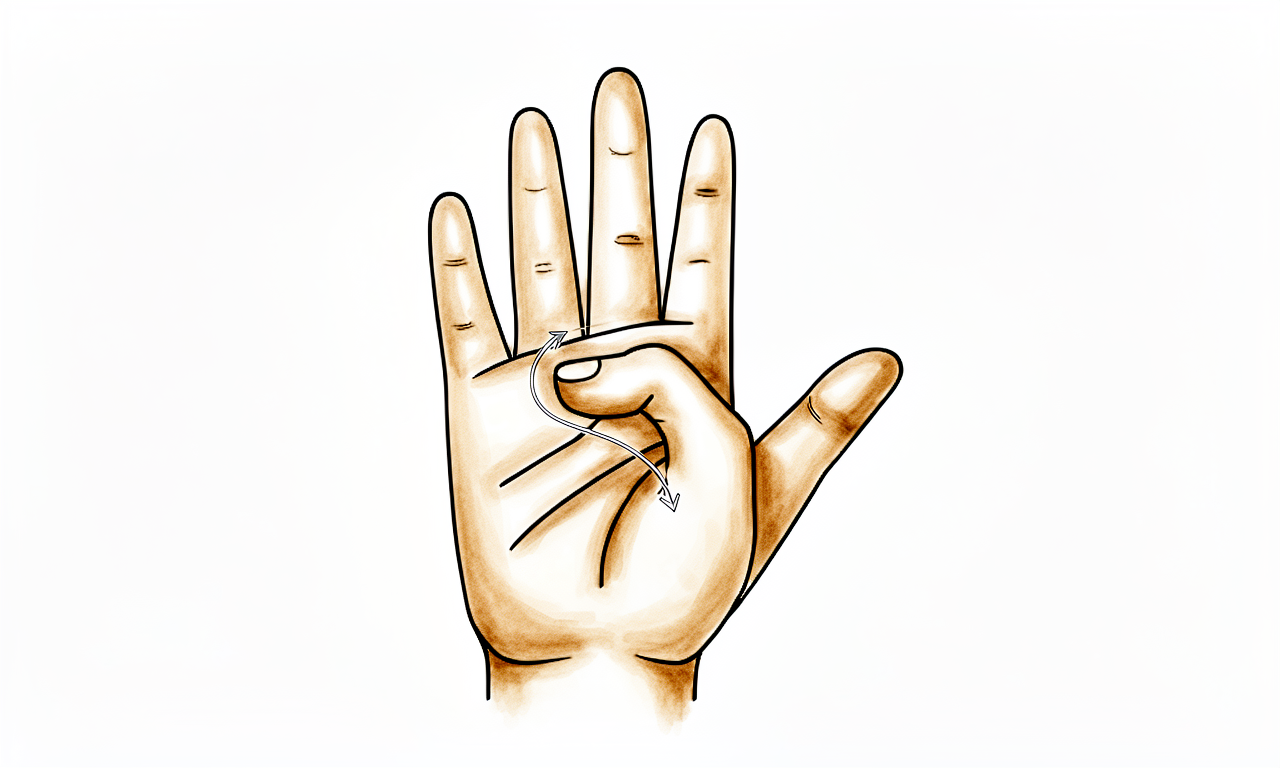
拇指对掌功能(卡潘日阶梯)
缓慢地用拇指指尖触碰食指的侧面,然后依次触碰每个指尖,再沿小指向下移动至其基部——随着身体放松,逐渐在“梯子”上爬得更高。仅在舒适范围内活动。这是拇指基底置换术后恢复的关键动作,在取下日间夹板(约两至三周后)后开始轻柔地进行。
每次完成爬梯练习5–10遍,每天2–3次,以舒适为度
Kieran Hirpara 4.0
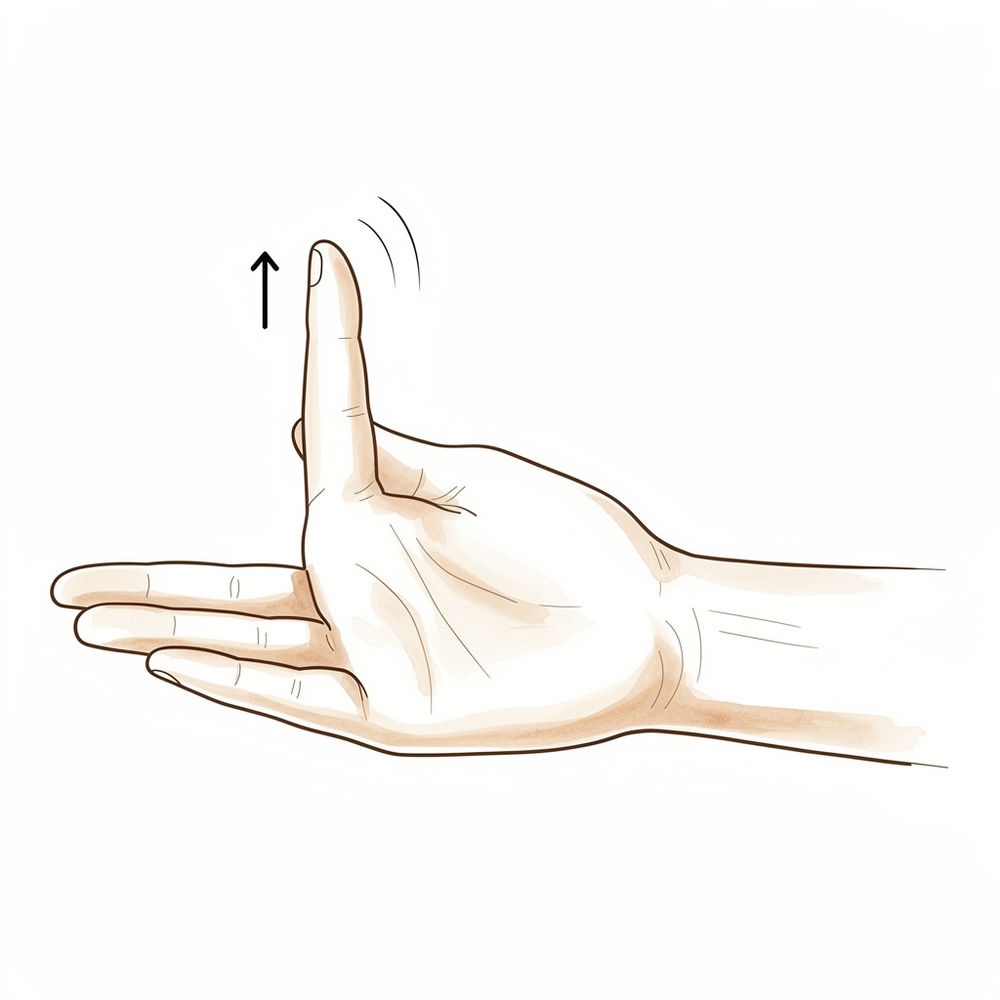
掌侧外展(拇指离开手掌)
将手平放,掌心向上。保持拇指伸直,将其从手掌向天花板方向抬起,如同张开手去拿罐子——然后放下。此动作可打开虎口并恢复拇指的活动范围。动作应轻柔、不勉强;在早期数周内,不要强行推至活动末端。
10次,2–3次/天,在舒适范围内
Kieran Hirpara 4.0
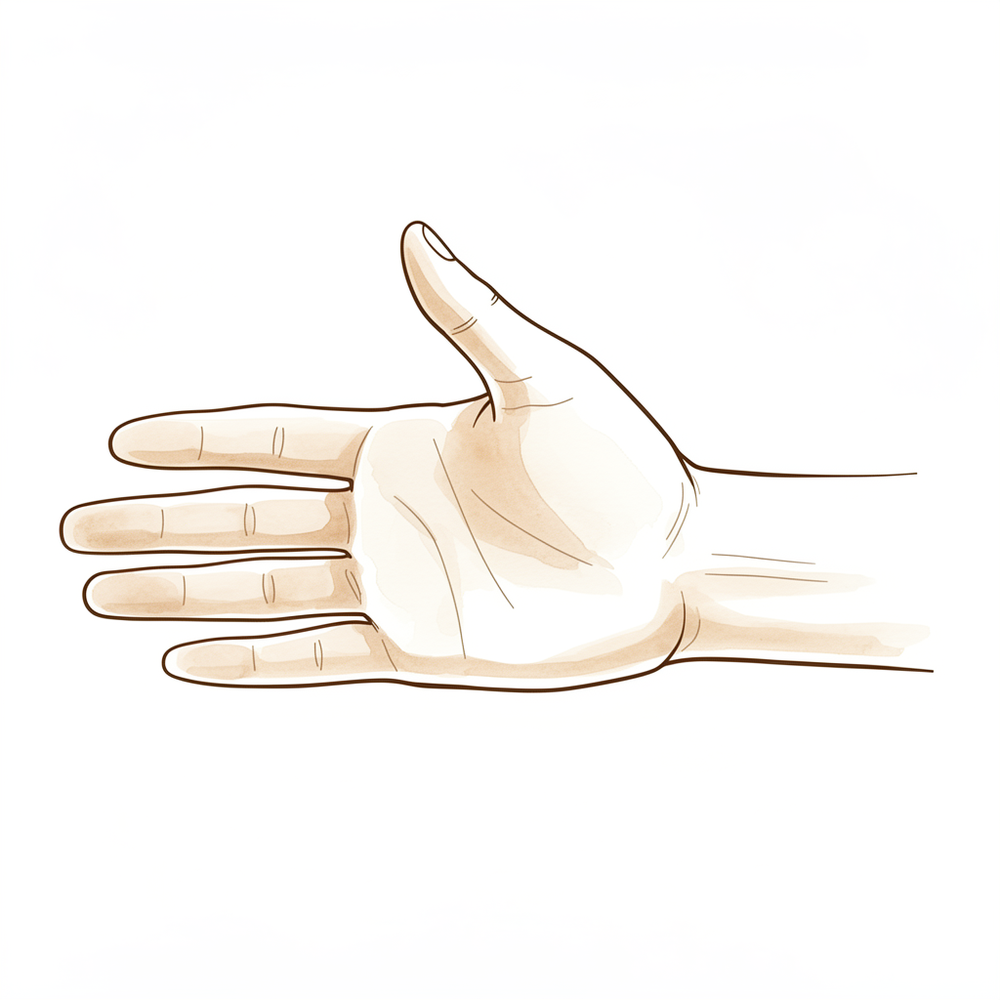
桡侧外展(拇指向侧方外展)
将手平放,掌心向下。将拇指向侧方滑动,远离食指,使其保持在与手掌相同的平面内——如同形成“L”形——然后收回。此动作可恢复拇指的侧向伸展范围。动作应缓慢进行,并避免过度用力。
10次,2–3次/天,在舒适范围内
Kieran Hirpara 4.0
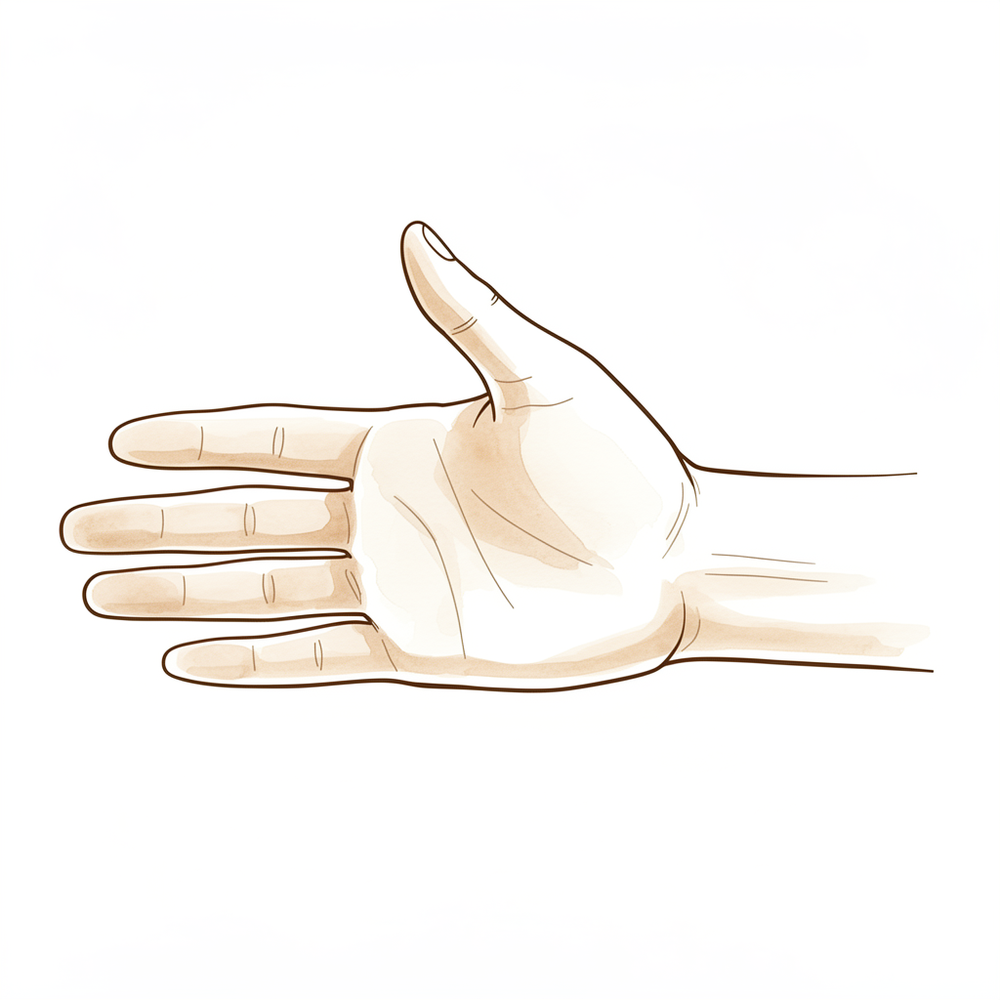
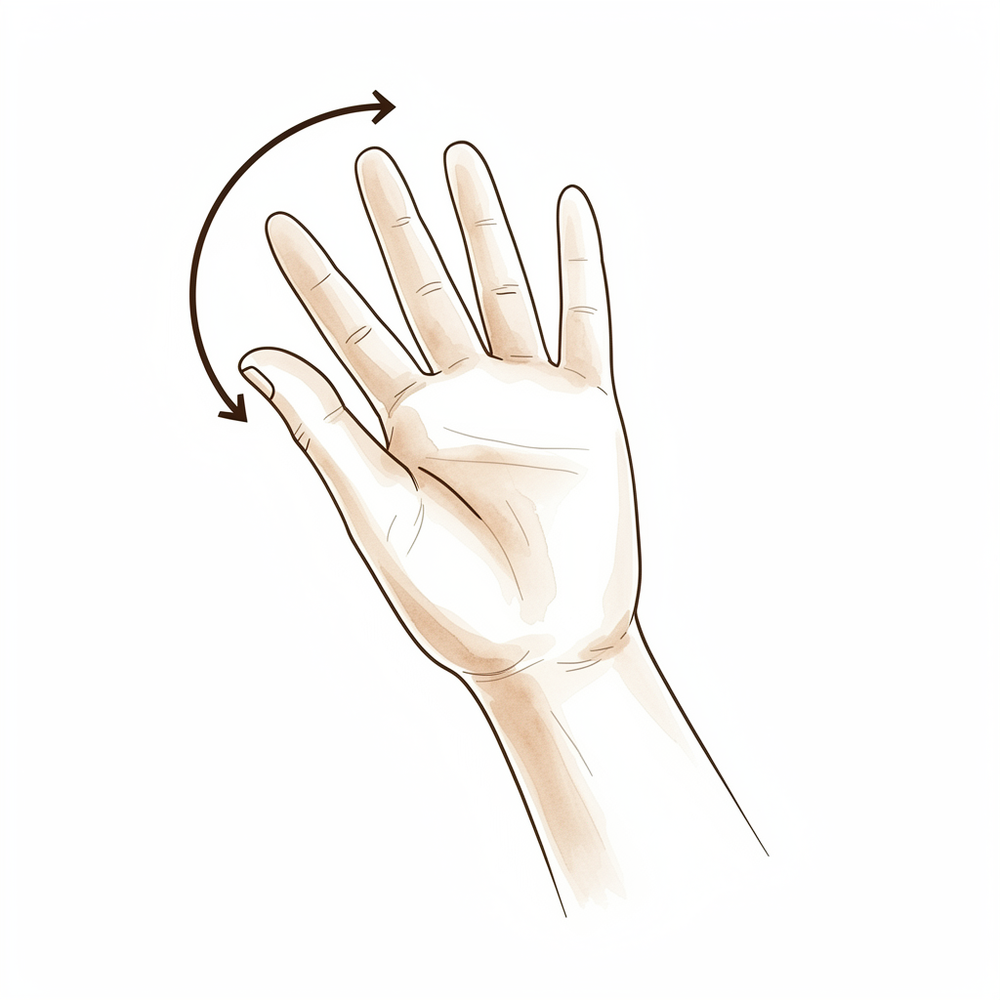
指蹼间隙牵伸
将拇指与食指之间的间隙舒适地张开,感受虎口处轻微的拉伸感。您可以将手放在桌面上,让拇指自然放松地张开,或者用手托住一个圆润的物体。短暂保持张开姿势,然后放松。这有助于防止在愈合过程中虎口间隙变紧——动作务必轻柔,切勿强行拉伸。
保持约5秒,5–10次,每天2–3次
Kieran Hirpara 4.0
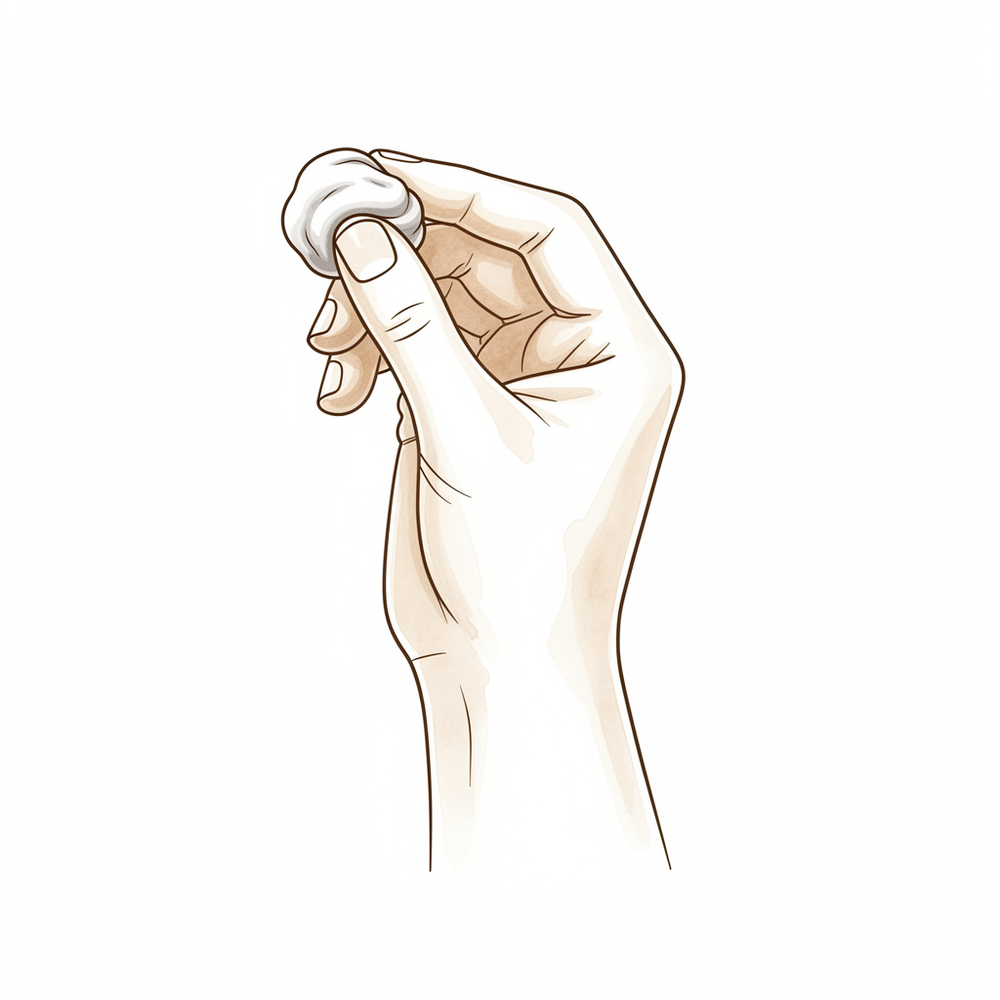
拇指环转
手部放松,用拇指缓慢、平滑地画圈,轻柔地沿其全范围在两个方向活动——如同搅拌一个小锅。保持画圈动作轻松且处于舒适范围内。这有助于恢复新关节的复合滚动运动,并在您脱离日间夹板后轻柔地开始进行。
5–10 圈,每个方向,每天 2–3 次
Kieran Hirpara 4.0
橡皮泥/钥匙捏握(从第6周开始)
后期练习——仅在约六周后,当您的手部治疗师开始进行肌力训练时方可进行。用拇指与食指侧面夹住一块治疗用橡皮泥(“钥匙”捏握),并将拇指指尖按压至其余指尖(“指尖”捏握),在接下来的数周和数月内逐步增加用力程度。六周前切勿进行强力捏握或抓握——新关节需要这段时间来稳定并与骨骼结合。
在您的手部治疗师指导下(约6周后),逐步进行
这些是您的手册中列出的练习。请仅在Hirpara医生和您的手部治疗师的指导下开始,并严格保持在您被允许的活动范围和限制之内。早期练习(对掌、拇指上抬、侧向运动、虎口拉伸和轻柔的画圈)旨在恢复拇指的活动度,同时避免对新关节施加负荷,并在您取下日间夹板后开始。橡皮泥和钥匙捏握是后期的强化练习,不应在大约六周之前开始,届时您的手部治疗师会指导您开始。在早期几周,请保持所有动作轻柔且不要强行用力,并停止任何导致拇指根部剧烈疼痛的动作。
您的临床方案
本页其余部分为双活动度梯形骨掌骨关节(Touch)全关节置换术后康复的分阶段临床方案。本节内容应提供给您的手部治疗师,每个阶段均以通俗易懂的语言解释当前正在发生的情况。与梯形骨切除术不同,植入物即刻稳定且可分担负荷,因此制动时间极短,早期即可恢复主动对掌功能;植入物特有的早期风险是若被强行推至极限活动范围则可能发生脱位,因此最初几周在恢复运动的同时,需避免强行或极限位置,待骨整合完成后,再逐步过渡至负重强化训练。
在治疗开始前,请查阅患者的手术报告及既往病史,并与主刀医生就植入物的就位/稳定性及任何术中顾虑进行沟通。Hirpara 医生的方案为:7–10 天内使用软质厚敷料,随后使用拇指人字 DAY 支具 2–3 周,之后继续使用夜间支具至术后 6 周(腕关节中立位,拇指处于中度掌外展位,指间关节自由活动)。保留梯形骨,维持拇指长度。
第一阶段 — 保护期(第 0 周至约 2–3)
最初几周旨在使软组织稳定并保护新关节。拇指置于柔软的厚敷料中,随后使用拇指人字石膏日间支具,同时手指、手腕及手部其余部分保持活动。禁止进行抗阻拇指训练,且避免强制或极端的拇指位置(早期脱位是植入物特有的风险)。
致您的手部治疗师:
健康教育与注意事项 - 固定拇指基底:柔软厚敷料 7–10 天 → 拇指人字石膏日间支具,持续约 2–3 周(腕关节中立位,拇指处于掌侧外展中间位,指间关节自由活动) - 避免强制/极端拇指位置及突然抓握:脱位是早期植入物特有的风险 - 禁止抗阻拇指训练(无捏握、抓握、扭转或提举动作) - 保持植入物无负荷状态;仅允许轻度的无负荷手部使用
管理 - 伤口:按指示使用外科敷料;监测感染迹象 - 水肿:抬高患肢、轻柔手部泵动、按需冰敷 - 练习:拇指指间关节、手指及手腕的主动活动范围(ROM);保持全手活动度;目前尚无主动腕掌关节/对掌功能训练,无负荷
进展标准 - 伤口稳定;感觉舒适;在约 2–3 周时脱离日间支具进行主动活动
第二阶段——夜间支具下的主动活动(约第2–3周至第6周)
从大约第2至第3周起,移除日间支具,并开始轻柔的拇指主动活动:对掌(Kapandji渐进训练)、掌侧外展和桡侧外展、轻柔的环转运动以及虎口间隙松动。夜间支具持续使用至第6周。鼓励进行轻度的日常使用;但仍需避免重度抓握和捏持。
致您的手部治疗师:
评估 - 拇指主动对掌(Kapandji评分)、掌侧/桡侧外展、虎口间隙宽度;疼痛与肿胀情况;伤口/瘢痕检查
宣教与注意事项 - 移除日间支具;夜间支具持续使用至第6周 - 仅进行无抗阻的拇指主动活动:第6周前禁止重度抓握或捏持 - 将活动范围控制在舒适范围内;避免强行达到终末活动度
处理 - 练习:主动无抗阻对掌(Kapandji渐进训练)、掌侧和桡侧外展、轻柔环转、虎口间隙松动;手部轻度日常功能性使用;伤口愈合后开始瘢痕按摩
晋级标准 - 良好的主动对掌功能恢复;伤口愈合;约第6周时无抗阻活动无痛
第三阶段——负重与强化(第6周起)
大约六周后,植入物已实现骨整合,可开始负重。开始进行捏握和抓握强化训练(橡皮泥捏握、钳形捏握和指尖捏握、对掌强化),并逐步进阶。力量在接下来的6至12个月内继续成熟。
致您的手部治疗师:
评估 - 钳形/指尖捏握和抓握力量与对侧比较;对掌功能;负重时的疼痛/肿胀反应;视情况进行功能性及工作特异性测试
宣教与注意事项 - 从第6周开始进行渐进性捏握和抓握强化;逐步增加负荷 - 预期力量将在6–12个月内成熟;就较重的负荷指导患者保持耐心
管理 - 练习:橡皮泥捏握、钳形/指尖捏握、对掌强化,渐进性阻力;抓握强化;继续任何残留的活动度和瘢痕处理 - 一旦力量达到功能性水平且获得适当的功能恢复,可考虑出院 - 如果恢复停滞或预后不佳,可考虑转回主治医生
出院标准 - 功能性、接近对称的捏握和抓握;日常及工作特异性使用无疼痛
恢复工作与活动
在早期阶段,鼓励在舒适范围内进行轻度日常手部活动(如进食、书写、轻度自我护理),前提是这些活动不涉及强行活动拇指或强烈的捏握和抓握。由于您必须在脱离夹板且能够舒适地握住方向盘之前不得驾车,请提前安排前几周的出行协助。通常在四到六周后恢复驾驶,前提是您能够无痛地握住方向盘,并经Hirpara医生确认。
办公室工作和轻体力工作通常在两到四周内即可恢复;重体力劳动和更繁重的工作需等到约六周后,并逐步增加强度,因为强烈的捏握和抓握负荷仅在六周后才开始。力量在6至12个月内持续改善,因此较重和更具挑战性的任务应循序渐进地恢复,而非一次性全部恢复,具体取决于拇指的反应情况,由Hirpara医生和您的手部治疗师共同评估,而非仅依据时间。
方案之后
本方案与诊所的总体康复建议相辅相成;请参阅术后疼痛管理、伤口护理和瘢痕管理。上述分阶段计划反映了双活动性拇指基底关节置换术后已发表的康复指南,您的持续康复将由Hirpara医生和您的手部治疗师根据拇指的进展情况提供个性化指导。
Evidence & references
This is the clinical evidence summary written for health professionals. It is technical, and it lists the research this page was built from. You do not need to read it to understand your treatment or to make a decision about it.
Topic scope: post-operative rehabilitation after a dual-mobility total joint replacement of the trapeziometacarpal (thumb base / CMC) joint for advanced thumb base osteoarthritis — the Touch implant. Unlike trapeziectomy, the trapezium is retained and thumb length preserved, and a correctly seated dual-mobility implant is immediately stable and load-sharing. The rehab is therefore a minimal-immobilisation, early-motion pathway: protect briefly against the implant-specific early dislocation risk, restore opposition within the first month, then load.
Defining principle of the rehab here: a trapeziectomy relies on a scar/haematoma "spacer" forming where the bone was removed, which takes roughly 12 months to mature — so rehab is slow by necessity. A dual-mobility thumb base replacement instead provides an immediately stable, load-sharing artificial joint, so immobilisation can be minimal, opposition is restored within the first month, and recovery is faster than trapeziectomy. The dual-mobility cup specifically reduces the early dislocation risk that drove longer immobilisation with older single-mobility implants. The one deliberate early restraint is therefore avoidance of forced/extreme thumb positions (the implant-specific dislocation risk) for the first few weeks, after which loaded pinch/grip strengthening begins. This is a newer implant: the evidence base is short-to-mid-term and low-to-moderate level, and rehab regimens are under-reported and not standardised.
A. PROCEDURE OUTCOMES (dual-mobility Touch TMC arthroplasty)
Dual-mobility total joint replacement of the thumb base is a comparatively new alternative to trapeziectomy for advanced trapeziometacarpal osteoarthritis. Early- to mid-term series report high implant survival and good restoration of pinch and function, with the principal trade-off being a higher complication/revision profile than the well-established trapeziectomy — though the dual-mobility design improves on the dislocation rate of earlier single-mobility implants.
- High short-to-mid-term implant survival and good function. A Touch-specific series reported 96% implant survival at 2 years with high key-pinch strength; the main adverse events were soft-tissue complications (de Quervain-type tenosynovitis, trigger digit) rather than implant failure [Herren 2023]. A 150-patient dual-mobility cohort similarly reports early normalisation of function. Moderate (case series / retrospective cohort).
- Faster recovery than trapeziectomy because the joint is immediately stable. Because the implant is load-sharing from the outset, the thumb is only briefly immobilised, patients return to near-normal activity early, and formal therapy may not always be required — contrasting with the ~12-month maturation of a trapeziectomy spacer [Duerinckx & Verstreken 2022]. Moderate (narrative review / cohort).
- Opposition and pinch/grip recover well. Using the MOOVIS dual-mobility implant, the Kapandji opposition score improved from 7 to 10 with improved pinch and grip [Dreant 2018]. Moderate (cohort).
- The dual-mobility design reduces dislocation. The extra articulation lowers the early dislocation risk that limited older single-mobility prostheses, supporting earlier mobilisation [Tchurukdichian 2019; Martins 2020]. Moderate (cohort / mechanistic).
- Lower reoperation than ball-and-socket designs; persistent revision risk overall. A network meta-analysis found dual-mobility implants had lower reoperation than ball-and-socket designs, with TOUCH reoperation around 1.0% [Burnett 2026 NMA]. Reported outcomes continue to evolve in ongoing reviews [Tosti & Duerinckx 2026]. Moderate (NMA of mostly observational data).
- Registry-level work-absence benchmark. Swedish registry data give a sense of real-world recovery: sick leave of roughly 94 days for men and 109 days for women — a benchmark to set realistic return-to-work expectations rather than a target. Moderate (registry).
B. REHABILITATION / THERAPY EVIDENCE
The central rehab questions are (1) how long to immobilise, and (2) when to start motion and loading. Because the implant is immediately stable, the modern answer is minimal immobilisation with early active opposition — but the literature is explicit that there is no consensus and wide variation between centres, and that rehab protocols are under-reported.
- Minimal immobilisation is justified by immediate stability. A correctly seated dual-mobility implant is stable and load-sharing, so prolonged casting is unnecessary; the thumb is briefly protected, then mobilised early, with opposition typically back within the first month [Duerinckx & Verstreken 2022]. Moderate (review).
- No standardised regimen — wide variation in immobilisation and motion timing. A dedicated review of immobilisation and rehabilitation after thumb-base arthroplasty found reported immobilisation ranging from 2 to 12 weeks and active range-of-motion commencing anywhere from 1 to 6 weeks, with no consensus across studies [Barrett 2022]. This is the key caveat for any protocol: the timings are a defensible, surgeon-confirmed plan, not a trial-derived standard. Moderate (systematic review of heterogeneous protocols).
- Early opposition recovery is achievable and is the functional priority. Improvement of the Kapandji opposition score (7→10) demonstrates that active opposition is the early rehab target and is realistically attainable in the first weeks-to-months [Dreant 2018]. Moderate (cohort).
- The early restraint is dislocation avoidance, not protected healing. The dual-mobility design reduces but does not abolish early dislocation; the practical implication is to avoid forced/extreme thumb positions in the first weeks rather than to immobilise for prolonged periods [Tchurukdichian 2019; Martins 2020]. Moderate / mechanistic.
Recovery trajectory (expected, evidence-anchored)
| Phase | Window | Restraint | Hand use / therapy focus | Strength / load | Notes |
|---|---|---|---|---|---|
| I — Protect | Week 0 to ~2–3 | Soft bulky dressing 7–10 d → thumb spica DAY splint | Keep IP/MCP/digits/wrist moving; oedema control; avoid forced/extreme thumb positions | No resisted thumb work | Early dislocation is the implant-specific risk; minimal immobilisation because the implant is immediately stable |
| II — Active motion | Week ~2–3 to 6 | NIGHT splint to 6 wk | Out of day splint; active unresisted opposition (Kapandji), palmar + radial abduction, gentle circumduction, web-space work; light everyday use; scar massage once healed | Still no heavy grip/pinch | Opposition typically restored within the first month; faster than trapeziectomy |
| III — Load / strengthen | Week 6+ | Restrictions lifted | Progress pinch/grip-specific loading and task use | Pinch + grip strengthening from 6 wk (putty, key/tip pinch); full weight-bearing ~6 wk | Strength matures over 6–12 months; return to heavy/manual work staged across this window |
(Phase windows reflect KH-confirmed parameters and are consistent with the wide ranges reported in the literature; they are typical guides, not trial-derived deadlines — see Barrett 2022.)
C. KEY CONTROVERSIES / EVIDENCE QUALITY
- Replacement vs trapeziectomy. Dual-mobility replacement restores the joint and gives a faster functional return (immediate stability, opposition back within a month) versus the ~12-month maturation of a trapeziectomy spacer, but at the cost of a higher complication and revision rate and a shorter evidence track record. Trapeziectomy remains the well-established, lower-risk benchmark. Moderate; trade-off, not a clear winner.
- How long to immobilise / when to start motion. No consensus — reported immobilisation spans 2–12 weeks and AROM start 1–6 weeks [Barrett 2022]. This page's day-splint-2–3-weeks → night-splint-to-6-weeks → strengthen-from-6-weeks plan is a defensible, surgeon-confirmed regimen within that reported range, not a proven standard. Weak–moderate.
- Dislocation risk. The dual-mobility cup reduces the early dislocation that limited older single-mobility implants, but the risk is not zero in the first weeks — hence the early forced/extreme-position restraint [Tchurukdichian 2019; Martins 2020]. Moderate / mechanistic.
- Complication profile. Soft-tissue complications (de Quervain-type tenosynovitis, trigger digit) are the commonest early issues rather than implant failure [Herren 2023]; reoperation is low for dual-mobility (TOUCH ~1.0%) and lower than ball-and-socket designs [Burnett 2026 NMA]. Moderate.
- Maturity of the evidence. This is a newer implant: outcomes are short-to-mid-term, evidence is low-to-moderate level (case series, retrospective cohorts, registry and NMA of mostly observational data), and rehabilitation is under-reported and not standardised. Tone should be appropriately cautious. Evidence base still maturing.
D. EVIDENCE STRENGTH FLAGS (summary)
- MODERATE (cohort / registry / NMA of observational data): high short-to-mid-term implant survival (96% at 2 yr, Touch) with good key-pinch; Kapandji opposition 7→10; dual-mobility lower reoperation than ball-and-socket (TOUCH ~1.0%); registry sick-leave benchmark (~94 d men / 109 d women); faster functional return than trapeziectomy.
- MODERATE (systematic review of heterogeneous protocols): no consensus on rehab — immobilisation 2–12 weeks, AROM start 1–6 weeks (Barrett 2022).
- WEAK / CONSENSUS: the specific immobilisation-then-early-opposition-then-strengthen phase timings (surgeon-confirmed, within the reported range; not trial-derived); the dislocation-avoidance rationale (mechanistic).
- CAVEAT: newer implant — short-to-mid-term, low-to-moderate-level evidence; higher complication/revision rates than trapeziectomy persist; rehab under-reported.
CITATIONS
RAG corpus (180,000+ Orthopaedic articles)
- Duerinckx J, Verstreken F. Dual mobility prosthesis for trapeziometacarpal joint arthritis. EFORT Open Rev. 2022. DOI: 10.1530/eor-22-0027
- Herren DB, et al. Trapeziometacarpal joint replacement with the Touch prosthesis: two-year results. J Hand Surg (Eur Vol). 2023. DOI: 10.1177/17531934231179581
- Dreant N, et al. Trapeziometacarpal arthroplasty with the dual-mobility MOOVIS prosthesis. Hand (NY). 2018. DOI: 10.1177/1558944718797341
- Tchurukdichian A, et al. Dual-mobility implant reduces the dislocation risk in trapeziometacarpal arthroplasty. Hand (NY). 2019. DOI: 10.1177/1558944719855690
- Martins A, et al. Dual-mobility trapeziometacarpal prosthesis. J Hand Surg (Eur Vol). 2020. DOI: 10.1177/1753193420901435
- Barrett H, et al. Immobilization and rehabilitation after trapeziometacarpal joint arthroplasty: a review. J Hand Surg Glob Online. 2022. DOI: 10.1016/j.jhsg.2022.05.011
- Tosti R, Duerinckx J. Trapeziometacarpal total joint arthroplasty: current concepts. J Hand Surg Am. 2026. DOI: 10.1016/j.jhsa.2026.01.003
- Burnett K, et al. Implant designs for trapeziometacarpal arthroplasty: a network meta-analysis of reoperation. J Hand Surg Am. 2026. DOI: 10.1016/j.jhsa.2025.12.011
Thumb base arthroplasty literature (URLs)
- Herren DB, et al. TOUCH trapeziometacarpal prosthesis — two-year results. PMC. https://pmc.ncbi.nlm.nih.gov/articles/PMC12098211/
- Dual-mobility trapeziometacarpal arthroplasty — 150-patient cohort. PMC. https://pmc.ncbi.nlm.nih.gov/articles/PMC12662895/
- TOUCH prosthesis case series. PMC. https://pmc.ncbi.nlm.nih.gov/articles/PMC8470025/
- KeriMedical — TOUCH thumb base prosthesis patient information. https://www.kerimedical.com/en/patients/





