

前方Bankart修复术 资料
本方案指导您在 Mater Private Hospital Rockhampton 接受 Kieran Hirpara 医生进行的关节镜下前方 Bankart 修复术后的康复过程。该方案将每个阶段的通俗解释与一份可供您与物理治疗师共享的结构化计划相结合;请在首次复诊时携带此页面或其 PDF 文件,以确保您的康复过程协调一致。您的物理治疗师可能会根据您的康复进展调整计划。
如果您对术后伤口有任何疑虑,请联系诊所。通常,拍摄伤口照片并通过电子邮件发送以供审阅会很有帮助。
预期情况
Bankart修复术旨在将撕裂的软骨边缘(盂唇)及被拉长的关节囊重新固定于肩胛盂前缘,适用于肩关节向前脱位或半脱位后的情况。该修复属于软组织修复,与肌腱愈合类似,需要时间才能牢固地重新附着于骨骼:通常需要约十二周才能达到可靠的强度。整个康复方案均围绕保护这一愈合过程而设计。
最重要的单一原则是在早期保护肩关节前部,即限制手臂外旋的幅度。手臂外旋(尤其是手臂向侧方抬起时)会直接牵拉前部的修复部位。因此,初期外旋幅度需保持较小,并仅通过谨慎的逐步方式增加,直至约十二周时恢复至全范围。
康复过程是分阶段进行的,而非仓促推进。活动度首先恢复,随后是力量,最后才是运动及重体力劳动的需求。软组织盂唇修复的愈合速度慢于骨性Latarjet手术,因此此处的时间线刻意保持耐心:大多数人在达到既定目标后,于四至六个月时重返对抗性或过头顶运动,而非依据固定日期。
手术过程
您的Bankart修复术采用关节镜(微创)方式完成。通过小切口,将肩关节前方的撕裂盂唇和关节囊用小型锚钉和缝线重新固定于关节盂边缘,从而恢复维持肱骨头在关节盂内居中的缓冲垫及张力。康复的目标是在愈合期间保护该再固定结构,随后逐步重建肩关节的完整活动度、力量及信心。
佩戴悬吊带
您将佩戴简易肩部悬吊带,而非特殊支具。Hirpara 医生使用保持中立旋转位(前臂横置于腹部)的简易悬吊带;无需外展枕、楔形垫或“枪手”支具。您的保护来自于悬吊带以及避免手臂处于风险位置,而非支具的形状。
- 白天佩戴悬吊带6 周以提供支撑,尤其是在您外出或在他人身边时。
- 您不要在悬吊带中睡觉。 它仅用于白天支撑;睡觉时请取下悬吊带,让手臂舒适地枕在枕头上得到支撑。在您睡着时,保持手臂置于身前并贴近身体:不要让手臂向外侧下垂并外旋(即下文描述的位置)。
- 在淋浴和进行锻炼时(在您被指导如何操作后)取下悬吊带。每当取下悬吊带时,保持手臂放松、置于身前并垂于体侧。
- 如果肩部肿胀或疼痛,尤其是锻炼后,请使用冰敷。
在使用悬吊带时请注意您的姿势:保持耳朵、肩膀和臀部在一条直线上,避免驼背。
关键注意事项 — 切勿
- 切勿将手臂置于“举手”或投掷姿势(手臂向侧方抬起并外旋,如同挥手或准备投掷)。这是肩关节脱位时所处位置,会直接牵拉前方修复组织。部分人使用的简易准则是“始终让肘部保持在视线范围内”:将手臂置于身体前方。
- 在早期数周内,切勿主动将手臂外旋超过以下限制。外旋活动度将分阶段开放:最初数周仅允许少量(约20°,远未达到正前方位置),至约12周时逐步恢复至全范围。
- 在约6周之前,切勿依靠自身力量主动活动肩关节:在此之前,请让健侧手臂或拐杖完成动作。
- 早期切勿向后伸手、扣文胸或把手伸入后裤袋。
- 6周内,切勿通过手术侧手臂进行提举、推、拉或承重。
- 在康复计划后期之前,切勿做俯卧撑、卧推、宽握或飞鸟负重、军姿(过头)推举或颈后下拉;这些动作均会对肩关节前方产生负荷或牵拉。
- 切勿强行或拉伸至感觉肩关节可能滑脱的位置;疼痛或不安感是停止动作的信号。
- 在需要佩戴悬吊带期间(6周),切勿驾驶车辆。
第一阶段:保护期(第 0–6 周)
Kieran Hirpara 4.0
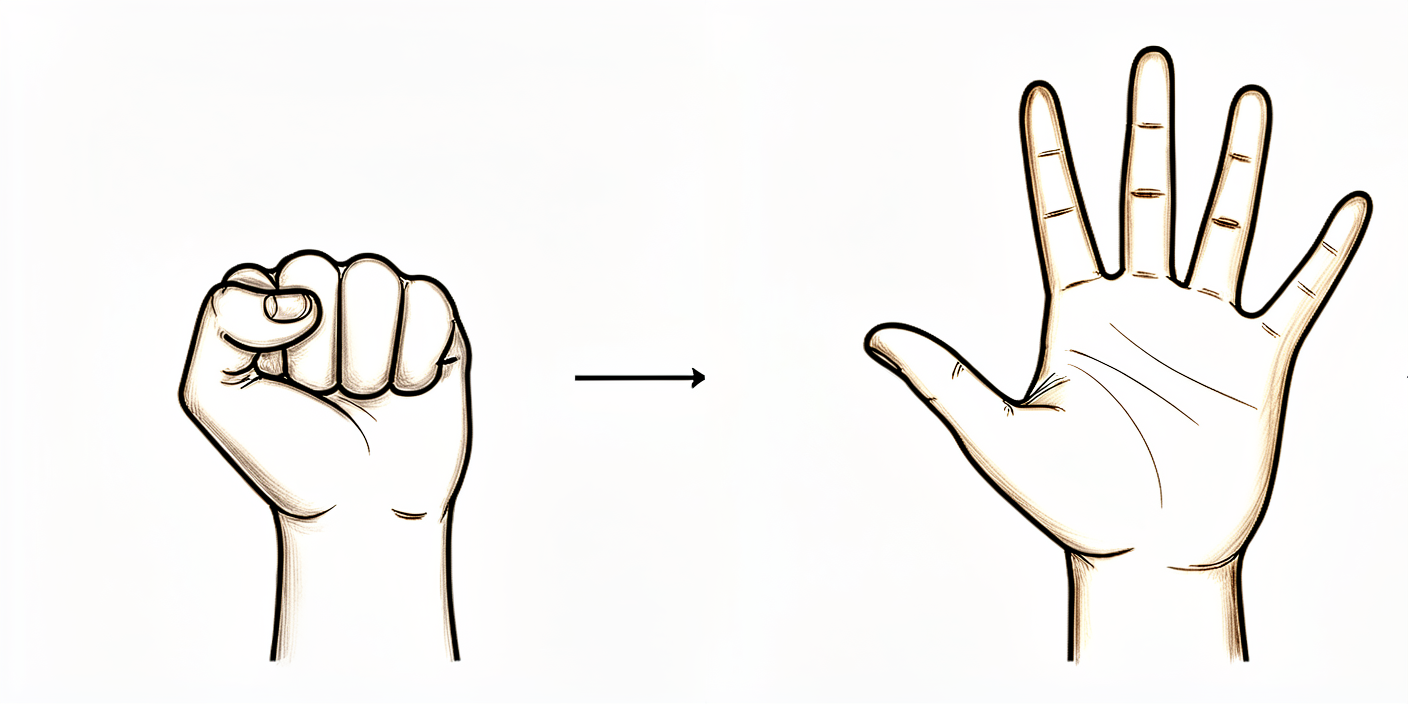
张开和握紧手
握紧拳头,然后完全张开。这有助于保持手部活动,防止僵硬和肿胀。
每小时10次
Kieran Hirpara 4.0
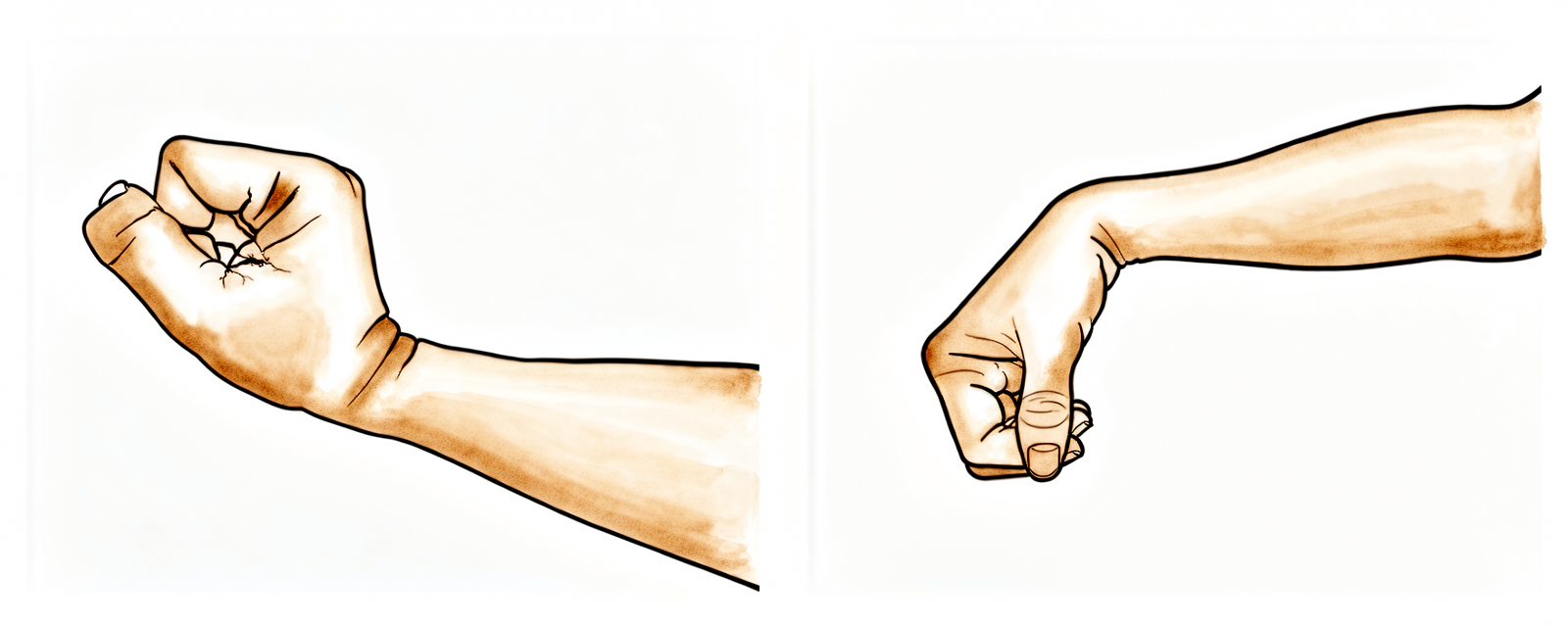
腕部屈伸
轻轻将手腕向前弯曲,然后向后弯曲,以舒适为度。
10–15 次/小时
Kieran Hirpara 4.0
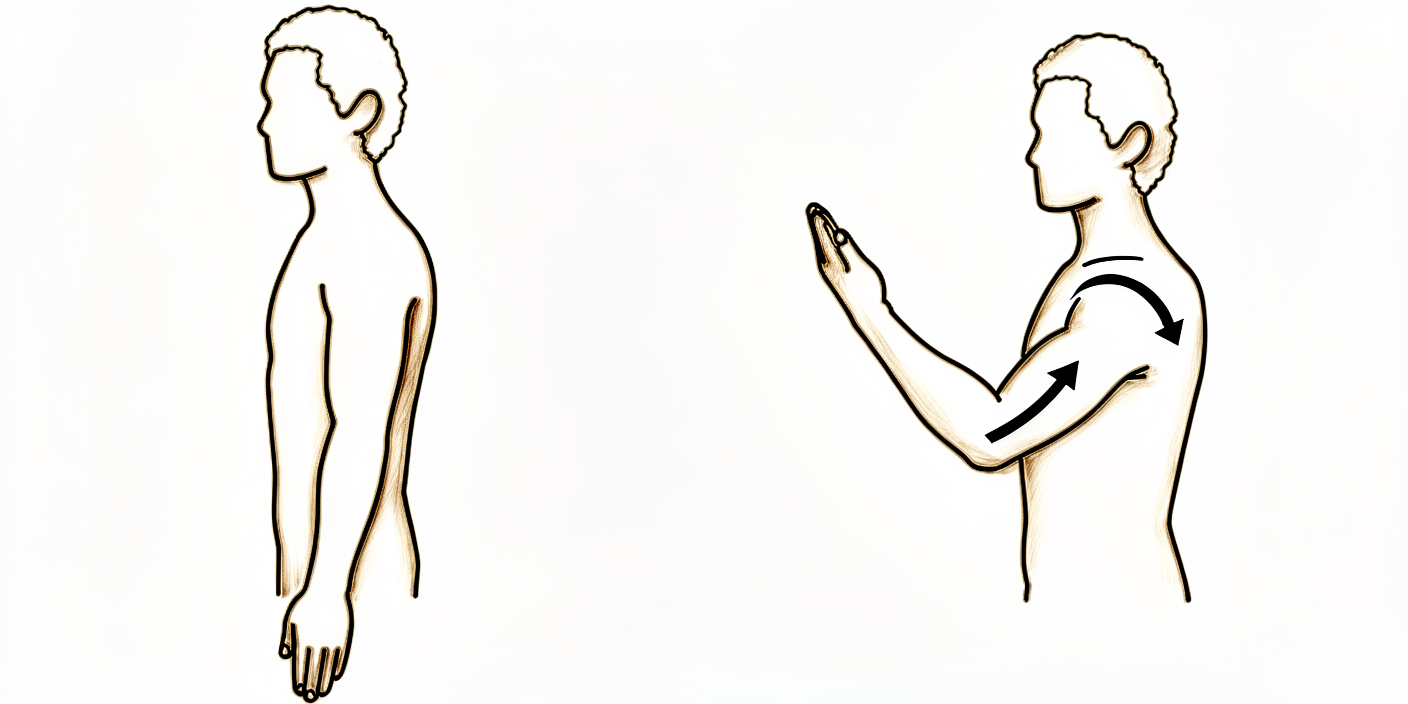
肘部弯曲
掌心向上,尽可能轻柔地弯曲肘部,然后再次伸直手臂。保持上臂紧贴身体一侧。在此过程中,切勿让手臂向外旋转。
10–15 次,每天 2–3 次
Kieran Hirpara 4.0
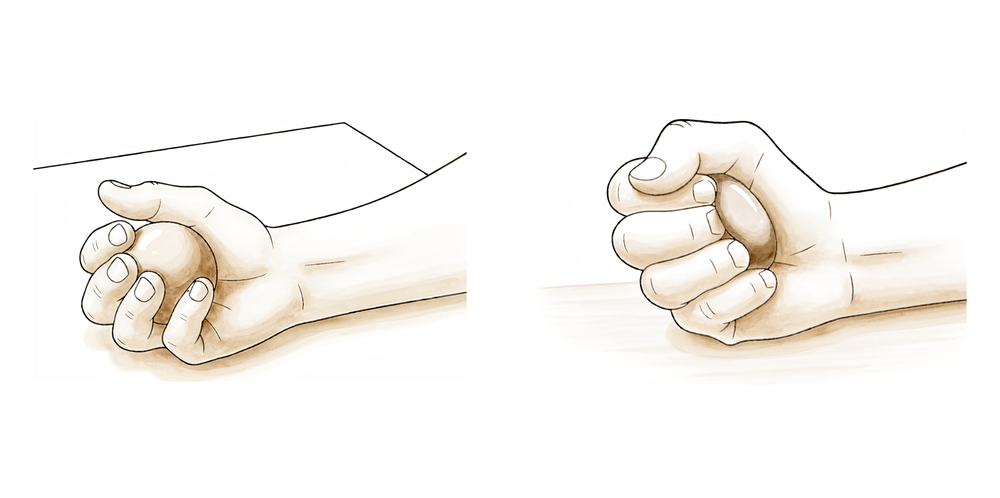
握球
轻轻用一只手挤压一个软球或卷起的袜子,然后松开。这能让手和前臂保持活动,同时让肩部得到休息。
10–15 次,每天几次
Kieran Hirpara 4.0
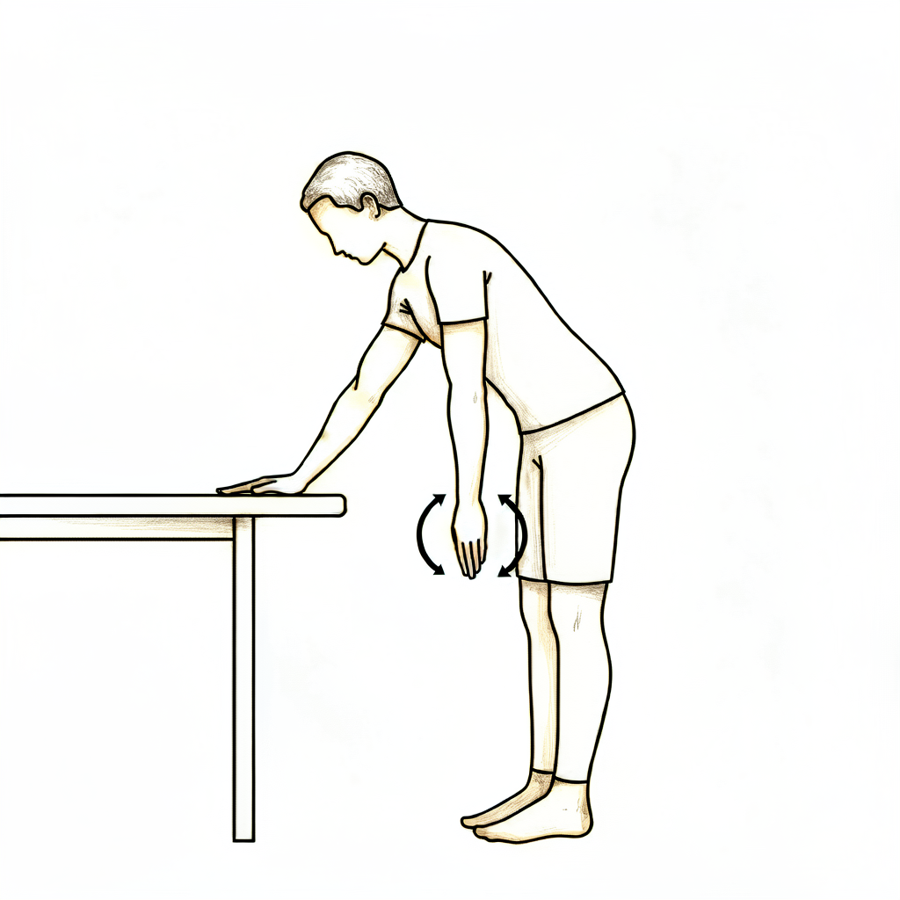
钟摆摆动
身体前倾,让手术侧手臂自然下垂,完全放松。通过身体轻微摆动(而非使用肩部肌肉)做小幅度画圈动作——先顺时针,再逆时针。保持画圈幅度较小(直径约20厘米以内),并让手臂始终垂直向下悬挂——切勿让手臂向外侧摆动并外旋。整个过程中,手术侧手臂需保持放松状态。
每个方向10次,每天2–3次
Kieran Hirpara 4.0
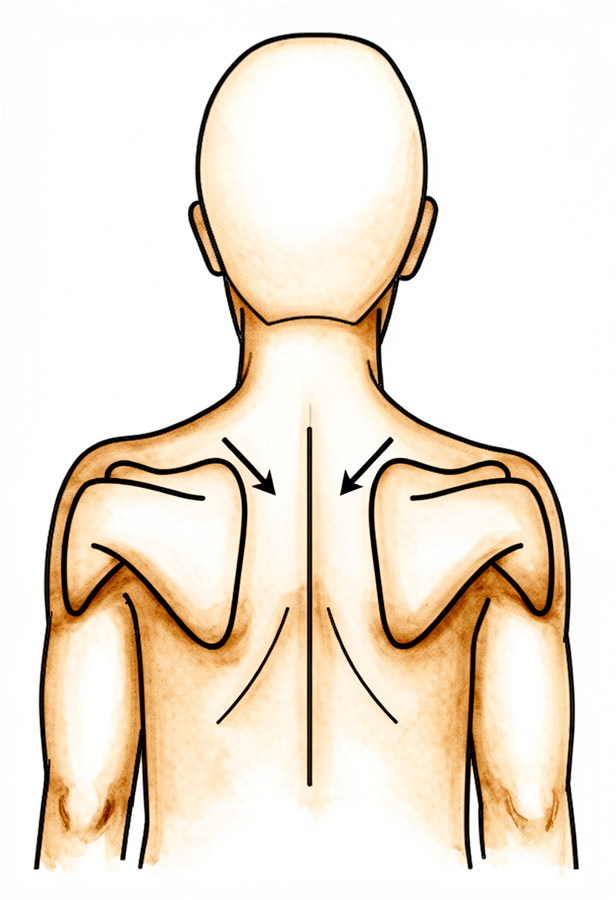
肩胛骨定位练习
轻轻将肩胛骨向下并向内挤压,保持,然后放松。这是一项轻度肌肉激活练习——您的手臂不移动,肩部保持放松。
保持5秒,5次,每天2–3次
Kieran Hirpara 4.0
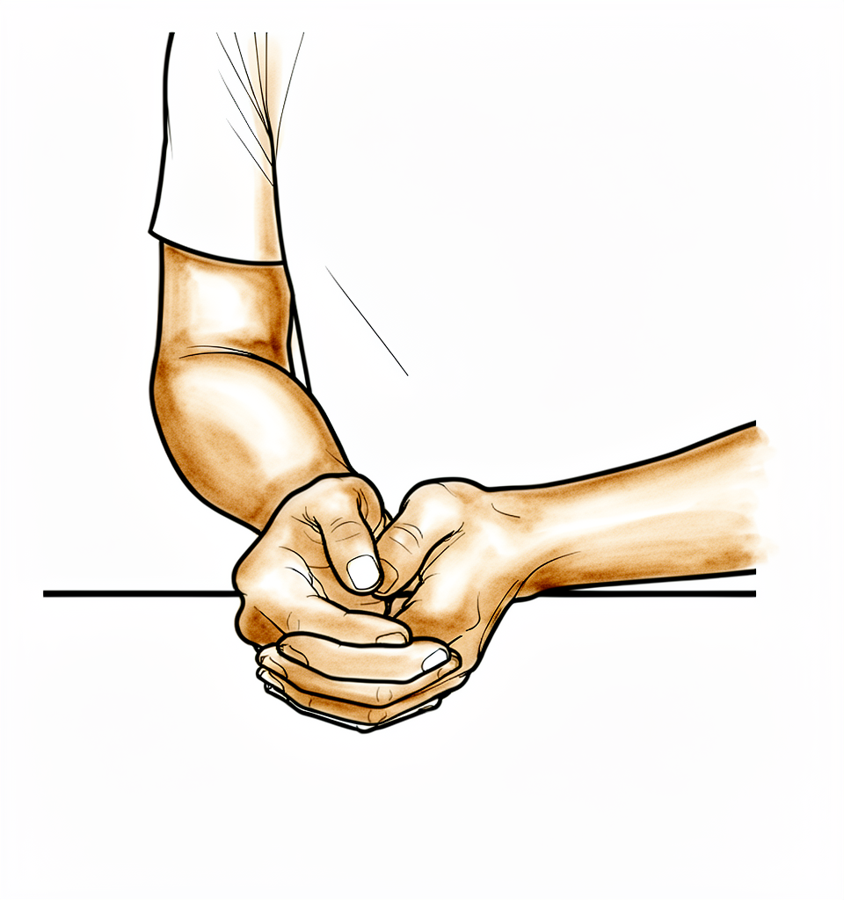
辅助外旋至中立位
从第2周左右开始,仅在物理治疗师的指导下进行。将肘部贴紧身体一侧并屈曲至90°,手置于腹部前方,用健侧手轻柔地引导前臂向外旋转——但幅度必须很小(约四分之一圈,大致20°),且在早期几周切勿超过正前方(中立位)。严格保持在物理治疗师设定的限制范围内,切勿强行用力。此动作会对修复部位产生应力,因此刻意保持幅度较小。
在物理治疗师的指导下,在设定的限制范围内
最初六周的核心目标只有一个:在肩关节前方的修复组织开始与骨骼愈合的过程中,对其进行保护。白天佩戴简易吊带以提供支撑,睡觉时取下吊带(手臂保持在身体前方,切勿向外伸展并外旋),通过冰敷控制肿胀,并进行轻柔的练习,以保持手、腕和肘部的活动,同时避免对修复组织施加负荷或牵拉。目前尚不能进行主动的肩关节运动;需借助健侧手臂或器械辅助完成动作,并保持完全放松状态。
- 吊带: 白天佩戴简易吊带,保持中立位旋转以提供支撑;睡觉时取下吊带,但需将手臂保持在身体前方并贴近躯干;进行锻炼和清洁时取下。
- 允许的活动: 仅限辅助运动和被动运动(不可依靠自身肩关节力量)。从第2周左右开始,进行轻柔的辅助前举,幅度约为 90°(即举至半高处),以及仅进行少量(约20°,未达到正前方位置)的辅助外旋。全程保持手臂位于身体前方;切勿将手臂向侧方伸展并外旋。
- 锻炼: 钟摆运动;轻柔的手、腕和肘部活动;握球练习;肩胛骨稳定训练;从第3周左右开始,在物理治疗师指导下,进行轻柔且无痛的肌肉等长收缩保持(将手臂非常轻地抵住墙壁或另一只手并保持,不旋转手臂,暂不进行内旋或外旋);以及,若物理治疗师指示,从第2周左右开始,在严格设定的限制范围内进行小幅度辅助外旋。
进入下一阶段的指征: 疼痛已缓解并可通过简单止痛药控制(约3/10或更低);已完成六周的吊带保护期;伤口已愈合且无异常迹象;在限制范围内耐受轻柔的辅助运动,且无肩关节可能脱位的感受;且无修复组织过度受力的迹象。
第二阶段:恢复活动度与旋转(第 6–12 周)
Kieran Hirpara 4.0
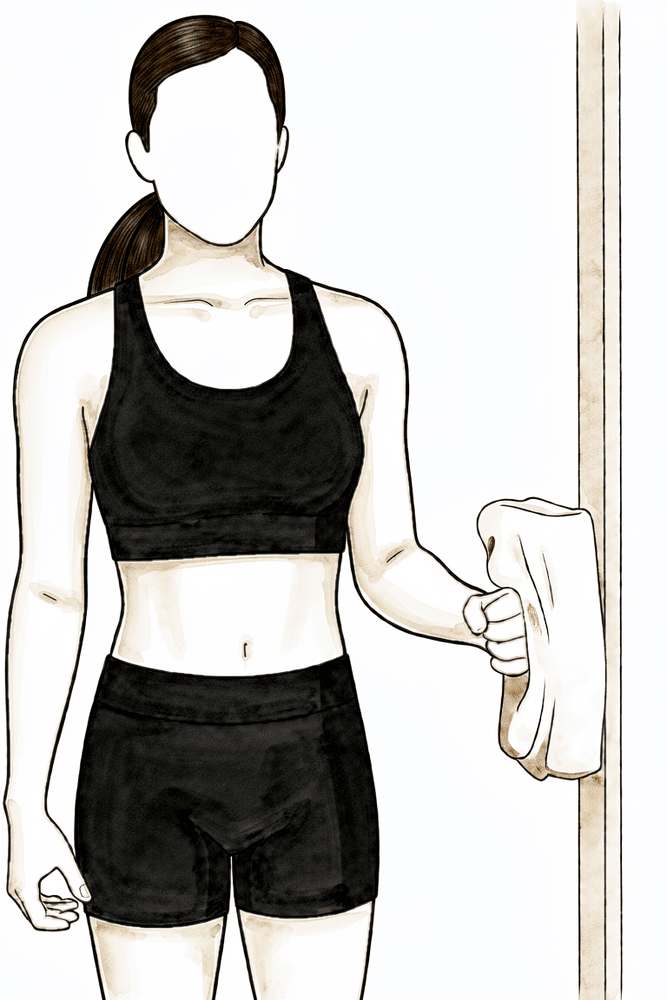
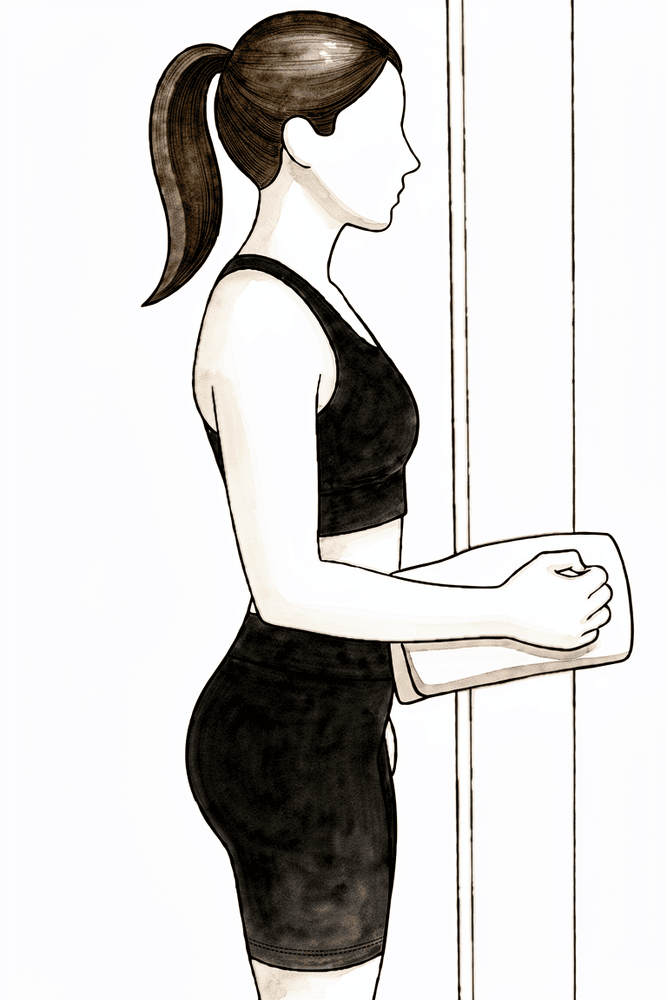
等长外旋
从大约第6–8周开始,待您的物理治疗师同意后进行。站立,肘部贴紧体侧并屈曲至90°,手背靠近墙壁或门框。将手背轻轻向外推压至该表面,同时确保手臂不发生移动——施加轻柔的力量,约为最大力量的四分之一,且无疼痛感。保持该姿势,然后放松。请缓慢增加强度,因为外旋方向是修复部位最敏感的方向。
保持约5秒,力度轻柔(约25%的用力程度),并遵循您的物理治疗师的指导
Kieran Hirpara 4.0
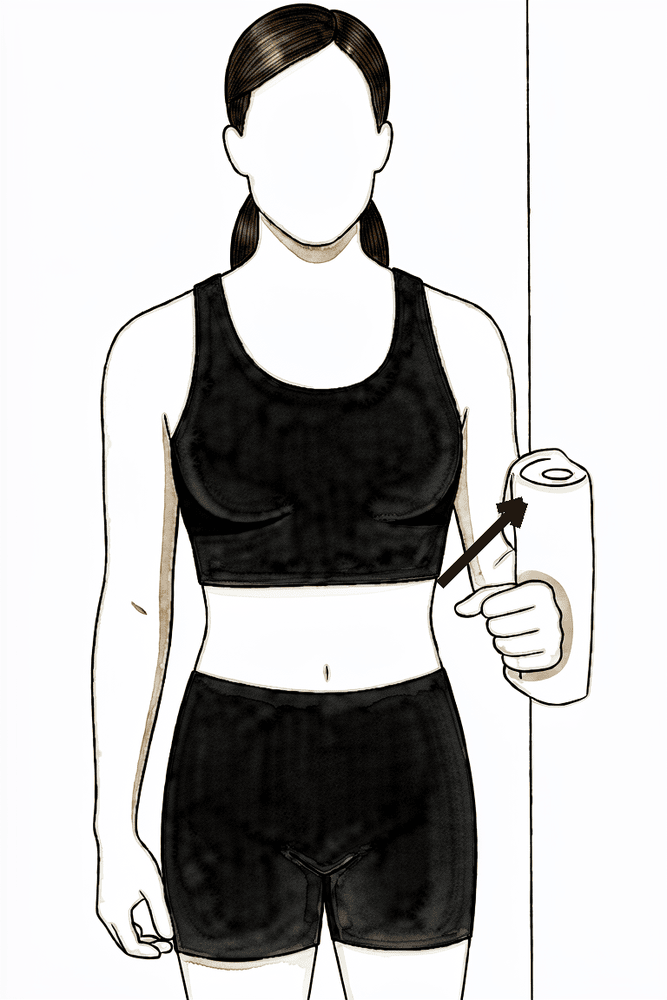
等长内旋
从大约第6–8周开始,在您的物理治疗师同意后。站立,肘部贴紧身体一侧,手掌抵住墙壁。轻轻将手掌向内推,同时确保手臂不移动——力度约为四分之一,且无痛感。保持该姿势,然后放松。
保持约5秒,力度轻柔(约25%的用力程度),并遵循您的物理治疗师的指导。
Kieran Hirpara 4.0
等长侧平举
大约从第6–8周开始,待您的物理治疗师同意后。侧身站立,上臂外侧靠近墙壁,肘部置于体侧。将手臂轻轻向外推抵墙壁,但切勿让手臂移动——力度约为四分之一,且无疼痛感。保持该姿势,然后放松。
保持约5秒,力度轻柔(约25%的用力程度),并遵循您的物理治疗师的指导。
Kieran Hirpara 4.0
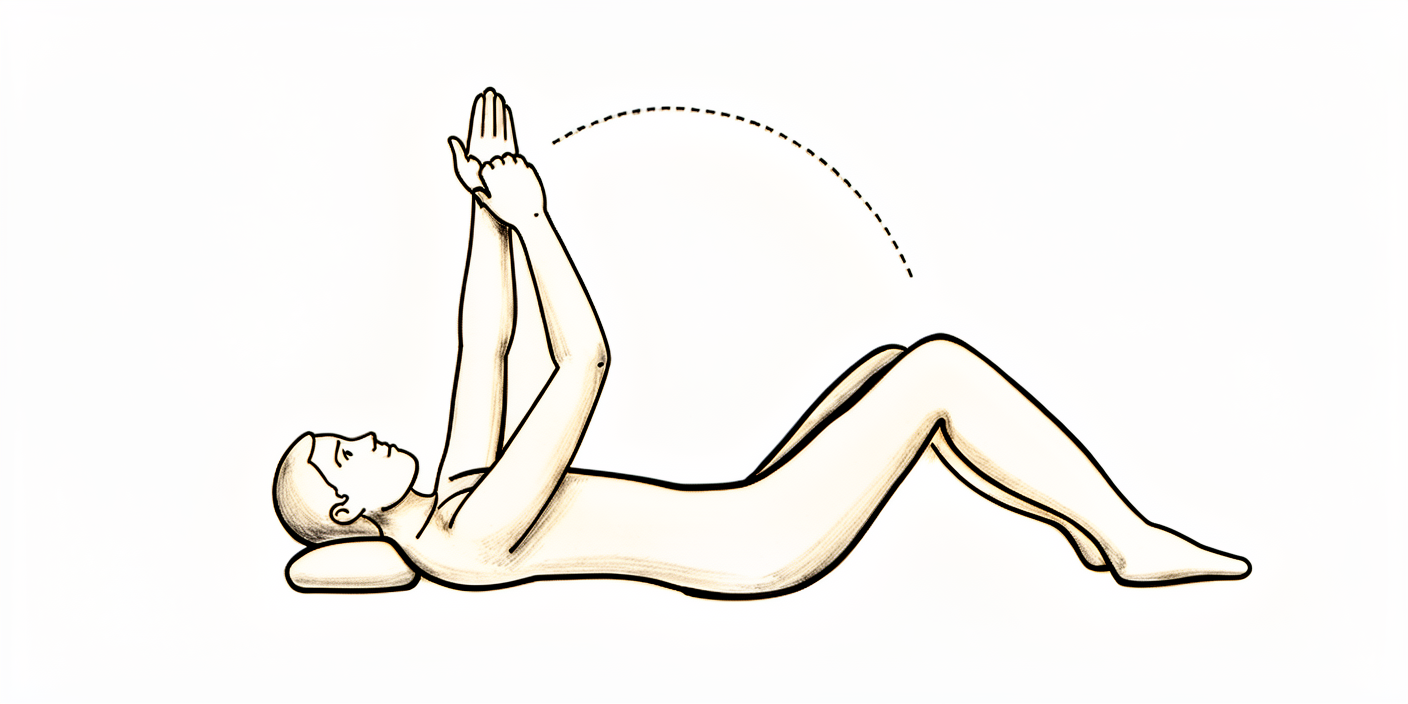
仰卧位辅助前举
仰卧,双手握住一根棍棒,用健侧手臂将患侧手臂向前上方抬起——患侧肩部保持放松。动作要平稳,切勿强行用力,并有控制地放下。在物理治疗师设定的活动范围内,逐渐增加抬举高度。
10次,2–3次/天
Kieran Hirpara 4.0
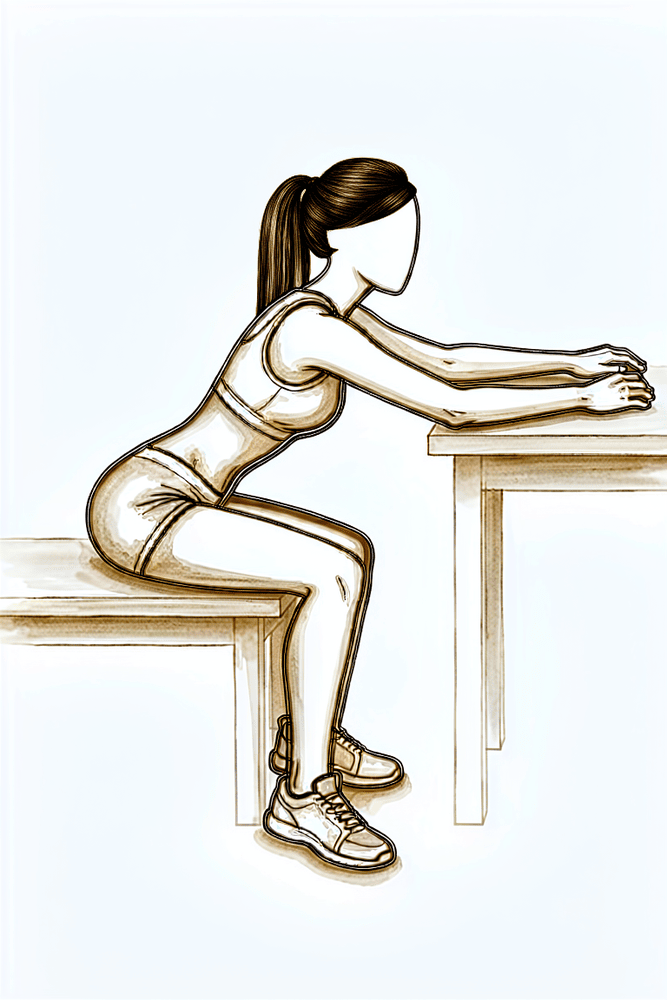
坐位桌面滑动
坐在桌旁,将手术侧的手放在毛巾上。沿桌面将手向前滑动,使手臂向前并向上伸展,让桌子承担重量,然后向后滑动。保持手臂位于身体前方——不要向侧面滑动并让手臂向外旋转。
10次,2–3次/天
Kieran Hirpara 4.0
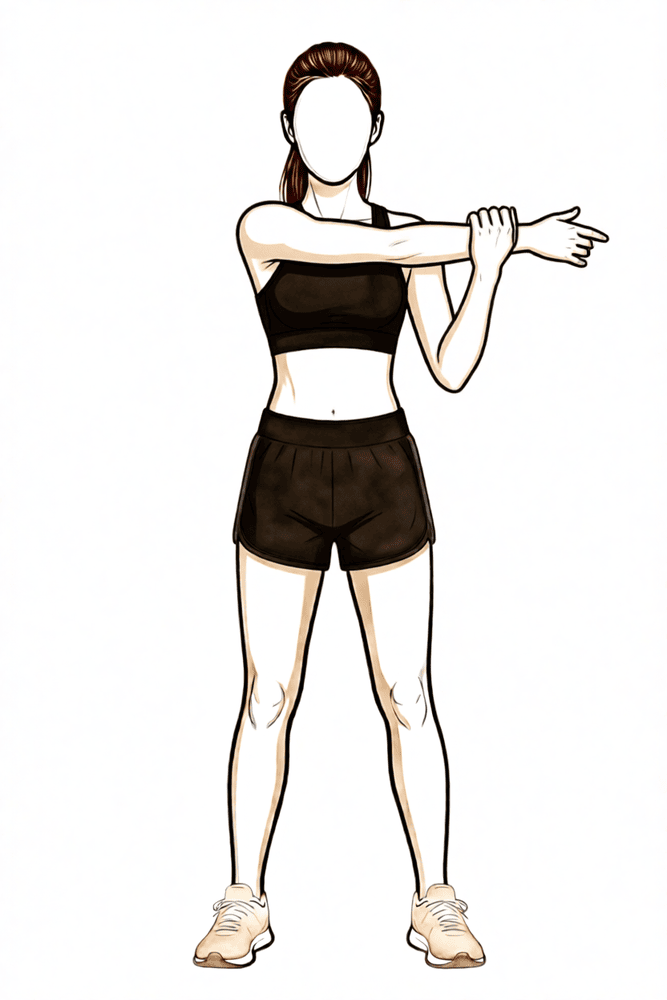
跨体拉伸
从大约第6–8周开始,若您的物理治疗师指示进行。用您的健侧手将手术侧手臂轻柔地横过胸前,直至感到肩后部有舒适的拉伸感。动作务必轻柔——切勿强行。此动作拉伸肩后部,不会对前方修复部位造成应力。
保持10–20秒,重复数次,具体请遵循物理治疗师的指导
现在已停止使用悬吊带,重点在于恢复活动度,而非力量。您将从辅助活动过渡到依靠自身力量活动手臂,并且,重要的是,外旋将逐步开放:从本阶段早期的约 30–45° 逐渐增加,至约十二周时达到完全活动度。这一过程分阶段进行,绝不强行,因为前方修复组织仍在成熟中。随着活动度的改善,将加入轻度的肌肉激活(等长收缩)训练。
- 悬吊带: 停用。
- 允许的活动: 从辅助活动逐步过渡到依靠自身力量的活动。前举逐渐进展至完全过头位。外旋分阶段推进: 本阶段早期约为 30–45°,随后逐渐开放,至约第 12 周时达到完全活动度。手背身后的动作将在本阶段后期轻柔地重新引入。
- 练习: 仰卧位辅助前举;坐姿桌面滑动;轻柔的等长(按压并保持)外旋、内旋及手臂侧平举训练;肩后部跨体拉伸。
进入下一阶段的条件: 您能在良好控制下(无耸肩或肩胛骨卡滞)依靠自身力量将手臂前举至接近完全高度;您的外旋已进展至完全或接近完全且感觉舒适;轻柔的等长训练可耐受,且之后无疼痛加剧;并且在日常活动中没有肩部可能脱位的感受。
第三阶段:强化训练(第 12–16 周)
Kieran Hirpara 4.0
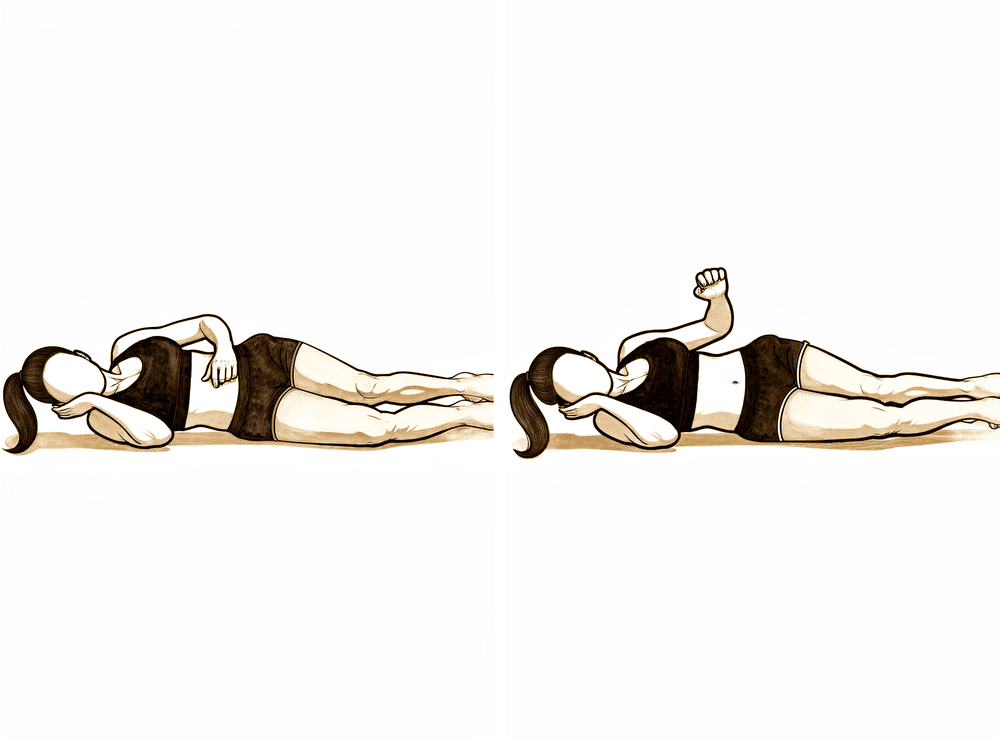
侧卧位外旋
从大约第12周开始。侧卧于健侧,术侧肘部屈曲90°并贴于腰部。将术侧前臂向上(朝向天花板)旋转,然后有控制地放下。从不负重开始,保持在物理治疗师设定的活动范围内。外旋是修复部位最需要保护的方向,因此外旋肌力放在最后重建。
在您的物理治疗师指导下
Kieran Hirpara 4.0
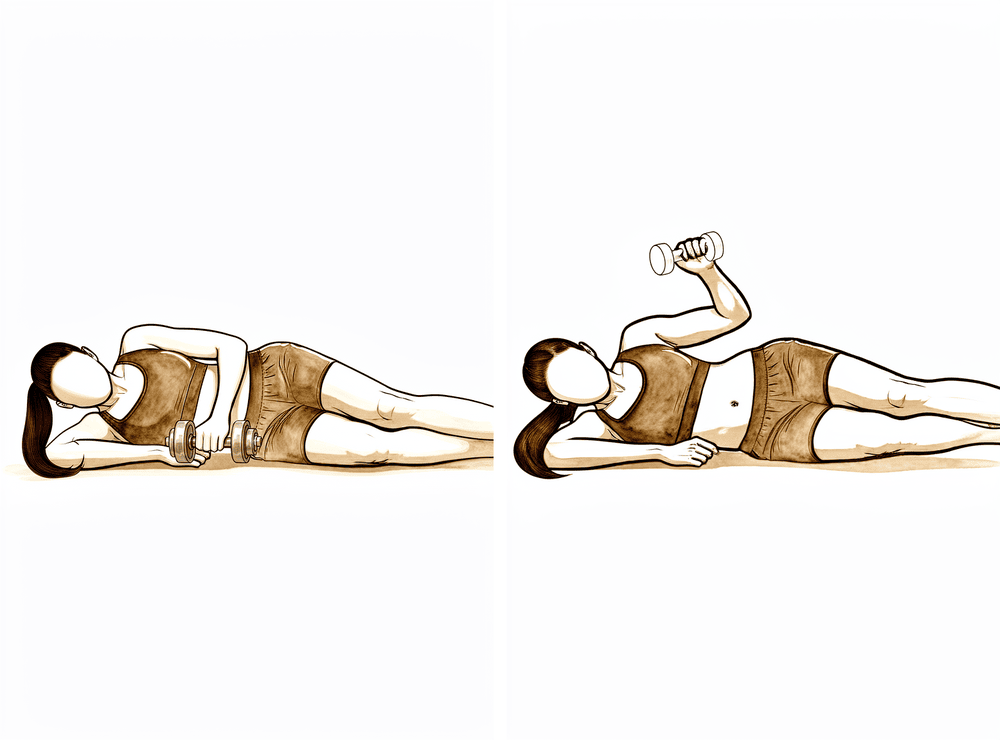
侧卧位外旋,持轻重量
侧卧位外旋,同前,现使用轻重量,逐渐增加负荷。肘部紧贴腰部。若肩部疼痛,请停止。
在您的物理治疗师指导下
Kieran Hirpara 4.0
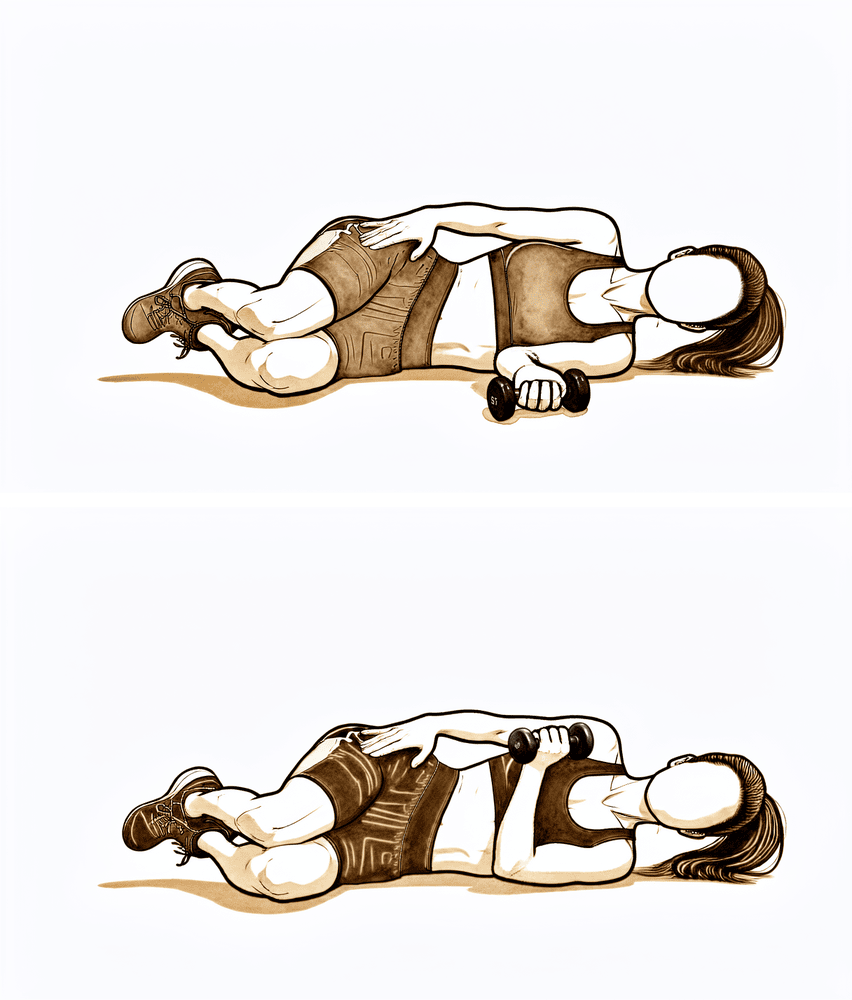
侧卧位,内旋,持轻重量
从大约第12周开始。侧卧于手术侧,肘部贴于腰部并屈曲至90°,手持轻重量。将前臂向上抬起朝向腹部,然后有控制地放下。
在您的物理治疗师指导下
Kieran Hirpara 4.0
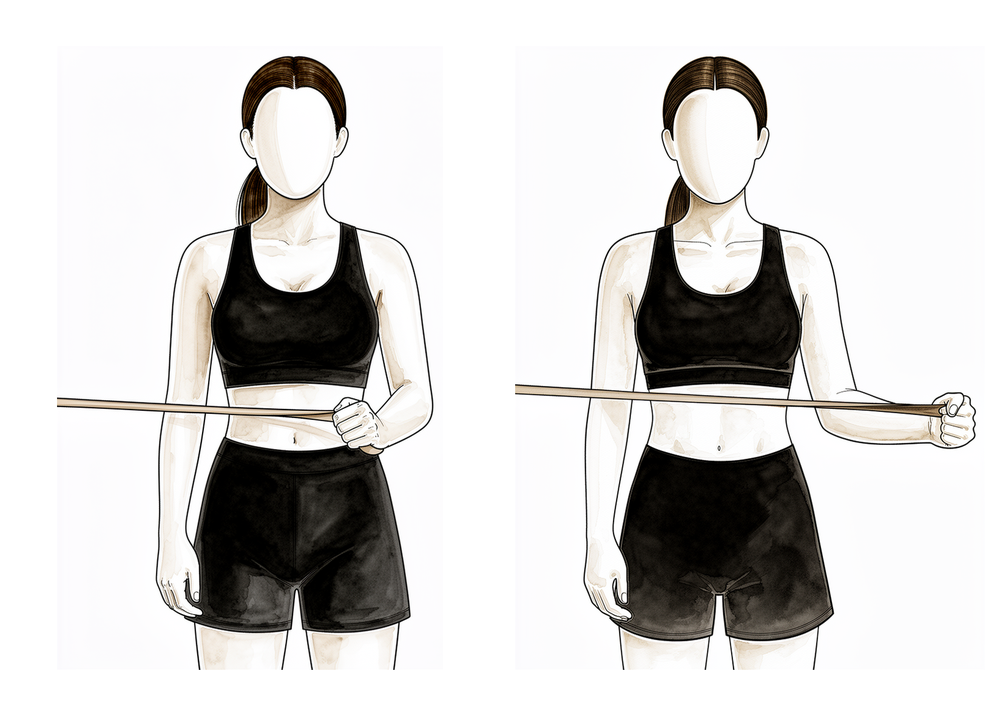
弹力带外旋
从大约第12周开始,当完全旋转变得舒适时。将肘部紧贴身体一侧并弯曲至90°。用前臂向外旋转以对抗轻阻力带,然后有控制地返回。使用轻阻力带并进行多次重复,而非使用重阻力。
在您的物理治疗师指导下
Kieran Hirpara 4.0
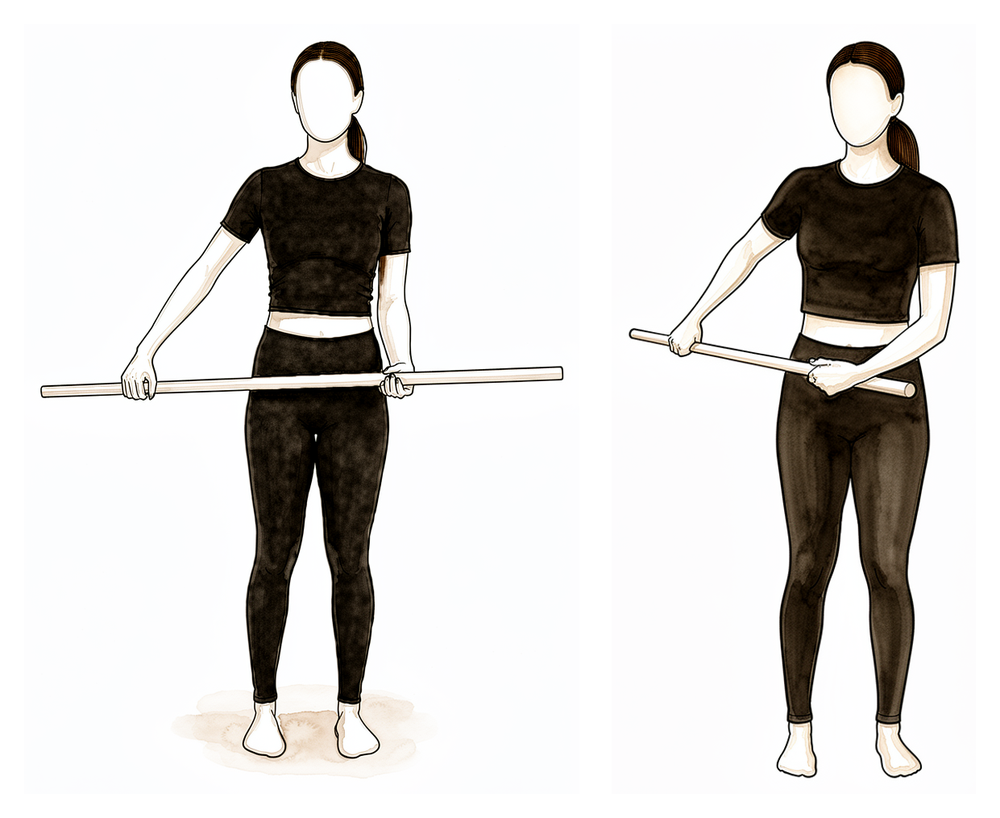
持棍内旋
大约从第12周开始。将一根棍子置于背后,用健侧手轻轻将患侧手沿背部向上拉动,然后有控制地放下。保持动作舒适,并在物理治疗师规定的活动范围内进行。
在您的物理治疗师指导下
Kieran Hirpara 4.0
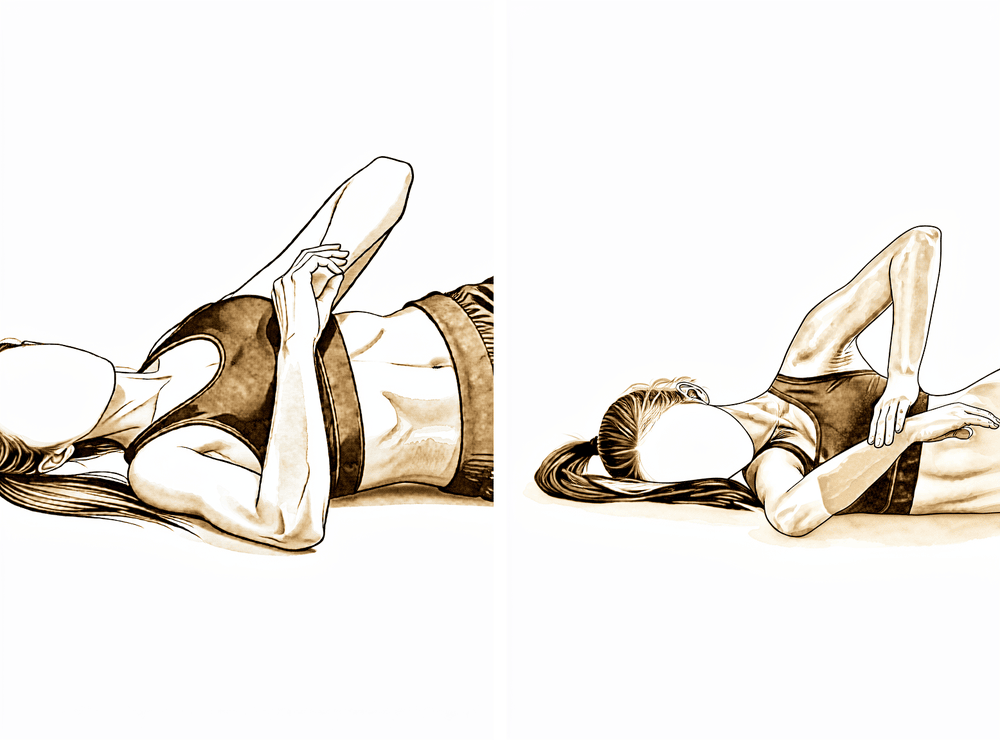
睡眠者拉伸
从大约第12周开始,若您的物理治疗师指示执行。侧卧于手术侧,手臂向前伸展,肘部弯曲。用上方手轻轻将前臂向下压向床面,直至感到肩后部有舒适的拉伸感。动作务必轻柔——切勿强行施力。
保持 10–20 秒,重复数次,按照您的物理治疗师的指导进行
Kieran Hirpara 4.0
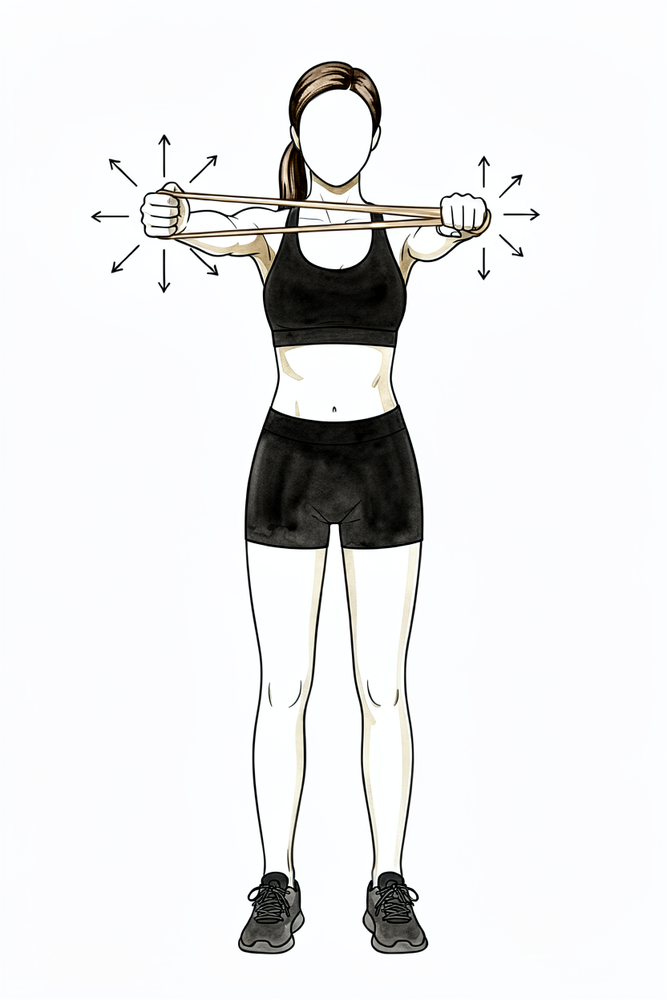
节律性稳定
将手臂支撑在身体前方,高度约与肩部齐平,请您的物理治疗师(或您的健侧手)从不同方向施加小而轻柔的推力,同时您保持手臂静止且稳定——不要让其移动。这旨在训练肩部稳定肌群的反应能力。所有动作力度均需保持轻柔。
在您的物理治疗师指导下
到第十二周时,修复部位已足够牢固,可以开始正式的强化训练,重点从恢复活动度转向重建力量、耐力和控制力。现在即可开始使用轻阻力带和轻重量进行抗阻训练:高次数、低负荷。负责稳定肩关节的肩袖肌肉将在各个方向上进行强化,其中外旋动作需谨慎渐进,因为这是修复部位最敏感的方向。始终保持动作受控且无痛。
- 悬吊带: 无需使用;预期可完全活动。
- 练习: 侧卧位外旋(逐渐过渡至轻重量);侧卧位使用轻重量进行内旋;肘部置于体侧,使用轻阻力带进行外旋;使用棍棒进行内旋;针对肩后部的“睡眠者”拉伸。您的物理治疗师可能还会增加节律性稳定训练(一种温和的保持稳定练习,治疗师轻轻推压您的手臂,您进行抵抗),以重新训练肩关节的控制能力。这是需要手把手指导的练习,无图示。
进入下一阶段的标准: 您能在自主控制下实现完全且无痛的活动,肩胛骨控制均匀;强化训练后无疼痛或肿胀;旋转力量正稳步向健侧靠拢;且在日常负重任务中无恐惧感或不稳感。
第四阶段:重返运动与工作(4–6 个月)
Kieran Hirpara 4.0
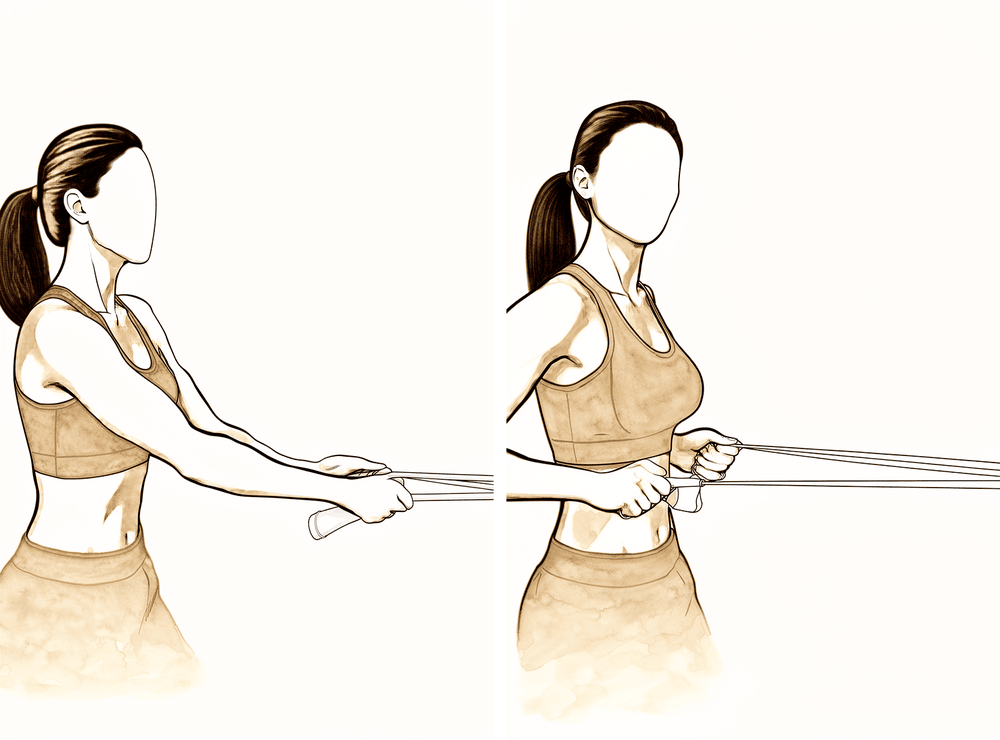
弹力带划船
将弹力带固定于身前,双手握住把手向身体方向拉动,肘部向后伸展,肩胛骨相互靠拢,随后有控制地还原。保持肘部贴近身体两侧并位于身前——切勿让肘部向后越过身体所在的平面。使用轻阻力弹力带,进行高次数重复。
在您的物理治疗师指导下
Kieran Hirpara 4.0
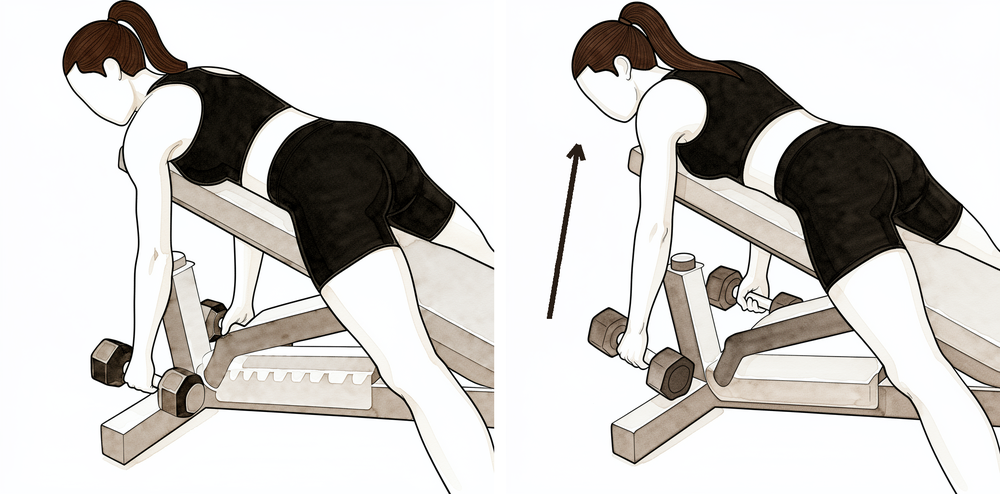
负重肩胛骨后缩
将肩胛骨向后、向下收紧,对抗轻重量或弹力带,短暂保持,然后有控制地放松。此练习可锻炼稳定肩胛骨并支撑修复后肩关节的肌肉。
在您的物理治疗师指导下
Kieran Hirpara 4.0
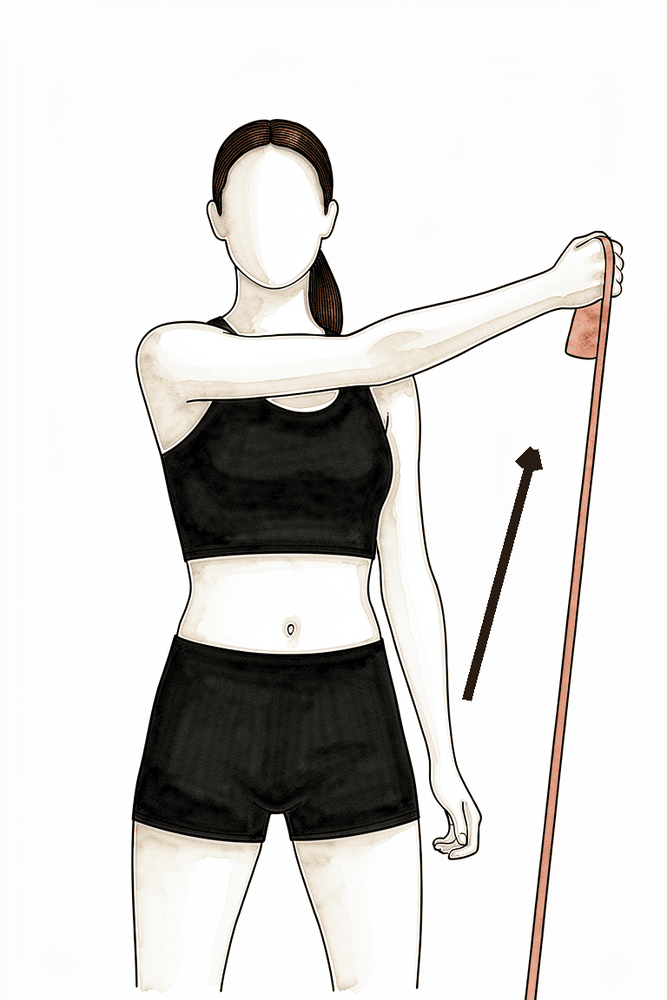
弹力带对角线模式(向下并向对侧伸展)
大约从第12周开始,一旦您拥有完全舒适的运动能力。使用一条轻阻力带,沿平滑的对角线移动手臂——从上方外侧,向下并向对侧髋部方向移动,然后返回。这训练肩部在日常活动和运动中使用的自然对角线模式。保持动作受控且无痛。
在您的物理治疗师指导下
Kieran Hirpara 4.0
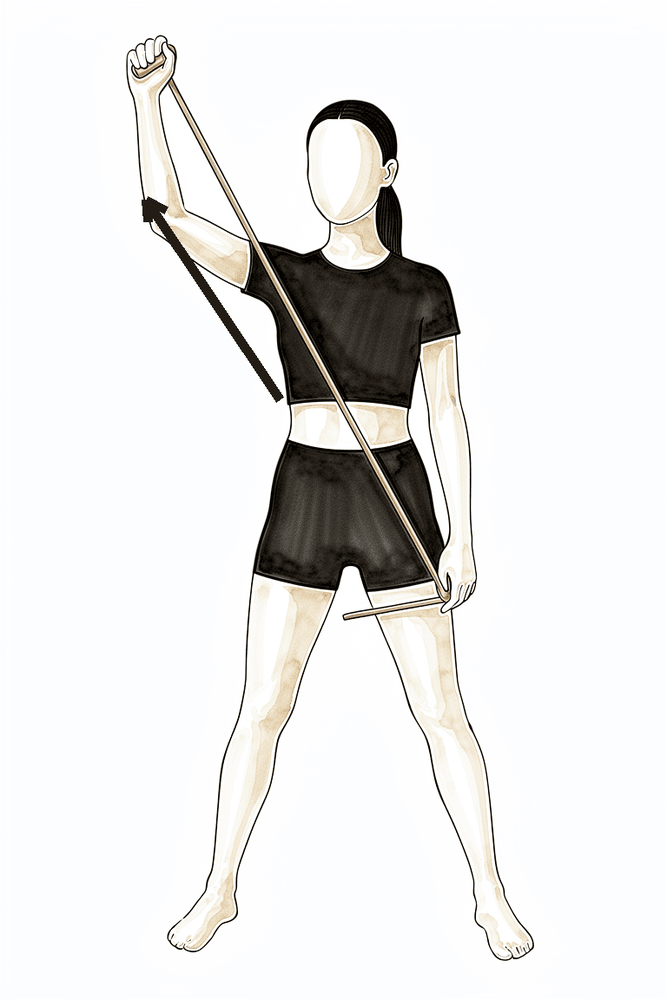
弹力带对角线模式(向上并向对侧伸展)
在此阶段后期,当外旋完全且舒适时。用一条轻带,沿平滑的对角线移动手臂——从身体下方横过,向上向外举过头顶,然后返回。由于此模式将手臂带入抬高并外旋的位置,仅在物理治疗师同意您已准备好时再引入。保持动作受控且无痛。
在您的物理治疗师指导下
本阶段是从强健、受控的肩部状态过渡到运动及较重工作需求的桥梁。您需保持已获得的关节活动度,并建立足以自信运用的力量、爆发力与耐力。回归过程应分阶段进行,而非突然发生;对于过头及对抗性运动,采用逐步增加运动量与强度的间歇训练计划是最安全的回归途径。
- 悬吊带: 无需使用。
- 练习: 渐进式肩袖及肩胛骨强化训练(弹力带划船、肩胛骨后缩);通过自然伸展轨迹训练肩部的对角线弹力带模式,仅当外旋达到全范围且舒适时,方可加入过头及旋转模式;随后根据情况进行运动及工作特异性体能训练以及受控的高速 drills。
重返标准: 您的力量至少达到对侧的 85%,且外旋与内旋力量之间的平衡良好;在负重状态下拥有完全、无痛的活动度,且无不稳定感;并通过针对您所在运动或职业的任务特异性测试。重返对抗性或过头运动通常在 4–6 个月左右,这基于满足上述标准以及 Hirpara 医生和您的物理治疗师的许可,而非仅依据日历时间。
重返运动与工作
重返运动与工作基于标准判定:无痛、活动度完全恢复、肌力均衡、无肩部可能脱位的异常感觉,且须经Hirpara医生及您的物理治疗师共同确认,而非仅由时间决定。
- 轻度、久坐型工作: 数周内即可恢复,期间需保护患肢。
- 强化训练: 约12周后可进行轻度抗阻训练。
- 投掷及过头顶运动: 不得早于4个月,且仅在完成分级渐进训练后方可进行。
- 对抗及碰撞类运动: 通常为4–6个月,基于标准判定。
软组织Bankart修复术的愈合速度慢于骨性Latarjet手术,因此恢复时间通常稍晚;在此过程中保持耐心可保护修复部位,并降低肩部再次脱位的风险。
方案实施后
本方案与诊所的通用康复建议配合使用;请参阅术后疼痛管理和伤口护理。
Evidence & references
This is the clinical evidence summary written for health professionals. It is technical, and it lists the research this page was built from. You do not need to read it to understand your treatment or to make a decision about it.
Topic: Arthroscopic capsulolabral (Bankart) repair for anterior glenohumeral instability. Compiled: 2026-06-16. Sources: local RAG Orthopaedic corpus (154k articles) + published fellowship/PT "standard of care" protocols. Core early precaution: protect the anterior repair -> limit external rotation (ER) (and combined abduction+ER) in the early weeks, because anterior-inferior capsulolabral healing is stressed by ER. This is the mirror image of the posterior protocol.
Consensus phased timeline
The two published academic protocols below are highly concordant. ER limits are given as degrees in the scapular plane / at the side and at 90 deg abduction.
| Phase | Week window | Sling/brace | ROM allowed & restrictions | AROM / strengthening | RTS |
|---|---|---|---|---|---|
| I - Immediate post-surgical / protection | 0-3 wk | Sling at ALL times (neutral rotation, ~30-45 deg abduction per MGH); remove only for shower + elbow/wrist ROM; sleep in sling 6 wk | No shoulder AROM. PROM begins wk 2: flexion <90 deg, ER in scapular plane <20 deg. Avoid abduction+ER (anterior capsule stress); no reaching behind back | Scapular setting, ball squeezes; submaximal isometrics start wk 3 (avoid ER/IR initially) | None |
| II - Protection / PROM | 4-5 wk | Continue sling | PROM progressed: flexion to ~140 deg, ER to 30-45 deg (at side / scapular plane / and at 90 deg abd per MGH), full IR, full abduction in scapular plane | AAROM; submaximal RC isometrics (ER, IR, flexion, abd, ext); periscapular strengthening | None |
| III - Intermediate / AROM | 6-8 wk | Wean / discontinue sling | ER to 50-65 deg scapular plane, ER to ~75 deg at 90 deg abd, flexion to ~160 deg. Begin AROM (gravity-minimised -> resisted). Begin posterior-capsule stretches (cross-arm, sleeper) | Begin isotonic RC + rhythmic stabilisation (closed->open chain). NO push-ups/pec flys (anterior stress) | None |
| IV - Strengthening / transitional | 8-12 (-16) wk | None | Progress ER (BWH: 65 deg at 20 deg abd, 75 deg at 90 deg abd wk 8-10; then all planes to tolerance). Full PROM/AROM by ~12 wk | Progressive RC + periscapular strengthening, PNF diagonals, light resistance until wk 12. Avoid contact sport | None |
| V - Return to activity / strengthening | 12-16 wk | None | Full ROM | Heavier strengthening, Thrower's 10, closed-chain push-up progression. Light golf/tennis (no serve until 4 mo) | Begin sport-specific / interval programs |
| VI - Unrestricted RTS | 4-6 months | None | Full | Throwing/overhead not before 4 months. Plyometrics, interval throwing | Full RTS on criteria + MD clearance |
Active ROM start: ~week 6. Strengthening start: isometrics wk 3; isotonic RC wk 6-8. RTS: sport-specific ~12-16 wk; throwing/overhead >=4 months; full/contact 4-6 months, criterion-based.
RTS criteria (criterion-based, both protocols)
Surgeon clearance; pain-free without instability/apprehension; adequate ROM for task; strength >=85% of uninvolved arm (handheld dynamometry / isokinetic); ER/IR ratio >64%; symmetric scapular mechanics; functional/endurance tests >85% (MGH battery).
Weight-lifting precautions (anterior-specific)
Avoid wide-grip bench press, military press, lat pulls behind the head; "always see your elbows" (avoid the abduction+ER position that re-stresses the anterior repair).
Key controversies & evidence flags
- Immobilisation position - ER vs IR (first-time DISLOCATION, mostly non-operative, but informs surgical positioning debate).
- Basic-science rationale (Itoi): a randomised cadaveric/MRI program showed the anterior labrum is better reduced (less separation/displacement) in external rotation, and that abduction further improves Bankart-lesion reduction (Abd-60ER > Add-ER/Add-IR). Itoi's RCT reported ER immobilisation x3 wk cut recurrence ~46%.
- Meta-analyses split: Hurley et al (JISAKOS 2021) meta-analysis - ER immobilisation reduced recurrence and improved RTP, with higher compliance. Whelan et al (AJSM 2015, meta-analysis of RCTs), Liu et al (Injury 2014) and Vavken et al (JSES 2014) - no significant benefit of ER over IR. Net: genuinely controversial; best-evidence (multiple RCT meta-analyses) does NOT consistently support ER bracing. Most post-Bankart-repair protocols (BWH/MGH above) use a standard neutral-rotation sling, not an ER brace.
-
Evidence strength: STRONG but conflicting (multiple RCTs + >=4 meta-analyses, opposite conclusions).
-
Accelerated vs conservative post-Bankart rehab. An RCT (NCT03347019, "Accelerated Rehabilitation After Arthroscopic Bankart Repair") exists; broader literature (Kim & Saper systematic review, Arthroscopy SM&R 2020; DeFroda et al, Sports Health 2018) finds wide protocol variability and a lack of high-level evidence to define the optimal pace, especially in adolescents/young adults. Evidence: WEAK / consensus-only.
-
Return-to-sport timing & criteria. International consensus (Hurley/Matache, Arthroscopy 2021/2022, Parts I & III) supports criteria-based rather than purely time-based RTS; Ryan (Arthroscopy 2025 editorial) and Kim et al (AJSM 2022 systematic review/meta-analysis) note RTS criteria reduce recurrence but remain hard to validate. Contact/collision athletes: Dickens et al (AJSM 2017, prospective multicentre) - surgical stabilisation gives ~90% successful RTS and far lower recurrence than non-op in contact athletes. Evidence: consensus + good prospective cohort; criteria-based RTS = moderate.
-
Bankart vs Latarjet for the same patient (context). Delgado et al (OJSM 2025, matched-pair long-term) and Beletsky et al (Sports Health 2020, protocol comparison) - Latarjet patients return to sport substantially faster (~19.6 wk vs ~32.4 wk for Bankart, p<0.001 in Beletsky) because bony fixation heals faster than soft-tissue labral repair (which needs ~12 wk). Relevant when choosing procedure in contact athletes / bone loss.
CITATIONS
Published rehabilitation protocols (URLs)
- Brigham & Women's Hospital, Dept. of Rehabilitation Services - Arthroscopic Anterior Stabilization (with or without a Bankart Repair) Protocol (rev. 2016): https://www.brighamandwomens.org/assets/bwh/patients-and-families/rehabilitation-services/pdfs/shoulder-arthroscopic-anterior-stabilization-protocol.pdf
- Massachusetts General Brigham Sports Medicine - Rehabilitation Protocol for Anterior Bankart Repair (rev. 10/2021): https://www.massgeneral.org/assets/MGH/pdf/orthopaedics/sports-medicine/physical-therapy/rehabilitation-protocol-for-anterior-bankart.pdf
- BWH - Open Anterior Stabilization (with or without a Bankart) Protocol: https://www.brighamandwomens.org/assets/bwh/patients-and-families/rehabilitation-services/pdfs/shoulder-open-shoulder-anterior-stabilization-protocol.pdf
Local RAG corpus (article / journal / year)
- Marcaccio SE, Kaarre J, Steuer F, et al. Anterior Glenohumeral Instability. Journal of Bone and Joint Surgery. 2024. (3-phase framework; RTS 4-6 mo; criteria-based testing.) [consensus/review]
- Hurley ET, Matache BA, Wong I, et al. Anterior Shoulder Instability Part I - Diagnosis, Nonoperative Management, and Bankart Repair - An International Consensus Statement. Arthroscopy. 2021;38(2). [consensus]
- Matache BA, Hurley ET, Wong I, et al. Anterior Shoulder Instability Part III - Revision Surgery, Rehabilitation and Return to Play, and Clinical Follow-up - An International Consensus Statement. Arthroscopy. 2021;38(2). [consensus]
- Whelan DB, Kletke SN, Schemitsch G, Chahal J. Immobilization in External Rotation Versus Internal Rotation After Primary Anterior Shoulder Dislocation: A Meta-analysis of Randomized Controlled Trials. The American Journal of Sports Medicine. 2015. [STRONG - meta-analysis of RCTs; no ER benefit]
- Hurley ET, Fried JW, Alaia MJ, et al. Immobilisation in external rotation after first-time traumatic anterior shoulder instability reduces recurrent instability: a meta-analysis. Journal of ISAKOS. 2021;6(1). [STRONG - meta-analysis; favours ER]
- Itoi E, Kitamura T, Hitachi S, et al. Arm Abduction Provides a Better Reduction of the Bankart Lesion During Immobilization in External Rotation After an Initial Shoulder Dislocation. The American Journal of Sports Medicine. 2015. [basic science / imaging]
- Liu A, Xue X, Chen Y, et al. The external rotation immobilisation does not reduce recurrence rates or improve quality of life after primary anterior shoulder dislocation: A systematic review and meta-analysis. Injury. 2014. [STRONG - meta-analysis; no ER benefit]
- Vavken P, Sadoghi P, Quidde J, et al. Immobilization in internal or external rotation does not change recurrence rates after traumatic anterior shoulder dislocation. Journal of Shoulder and Elbow Surgery. 2014;23(1). [STRONG - meta-analysis]
- Kim K, Saper MG. Postoperative Management Following Arthroscopic Bankart Repair in Adolescents and Young Adults: A Systematic Review. Arthroscopy, Sports Medicine, and Rehabilitation. 2020;2(6). [systematic review - notes protocol variability / weak evidence]
- Kim M, Haratian A, Fathi A, et al. Can We Identify Why Athletes Fail to Return to Sports After Arthroscopic Bankart Repair? A Systematic Review and Meta-analysis. The American Journal of Sports Medicine. 2022. [systematic review/meta-analysis]
- Ryan PM. Editorial Commentary: Criteria on the Basis of Return to Sport Evaluation After Arthroscopic Bankart Repair. Arthroscopy. 2025;41(8). [expert editorial]
- Dickens JF, Rue J, Cameron KL, et al. Successful Return to Sport After Arthroscopic Shoulder Stabilization Versus Nonoperative Management in Contact Athletes With Anterior Shoulder Instability: A Prospective Multicenter Study. The American Journal of Sports Medicine. 2017;45(11). [prospective cohort - contact athletes]
- Beletsky A, Cancienne JM, Manderle BJ, et al. A Comparison of Physical Therapy Protocols Between Open Latarjet Coracoid Transfer and Arthroscopic Bankart Repair. Sports Health. 2020. [protocol comparison - Bankart RTS ~32 wk vs Latarjet ~20 wk]
- Bartl C, Schumann K, Paul J, et al. Arthroscopic Capsulolabral Revision Repair for Recurrent Anterior Shoulder Instability. The American Journal of Sports Medicine. 2011;39(3). (ER restricted to 0 deg for 6 wk; flexion/abd limited to 90 deg for 6 wk - example surgical protocol.)
Overall evidence grade for the phased protocol itself: CONSENSUS / institutional standard-of-care (Level V) - no single RCT defines the canonical timeline; the immobilisation-position question is the only part addressed by RCT-level meta-analysis (and is unresolved).





