

肱二头肌腱固定术 资料
本方案涵盖在 Mater Private Hospital Rockhampton 由 Kieran Hirpara 医生进行肱二头肌腱固定术后的康复,无论手术是采用关节镜(微创)方式,还是通过腋窝前部的小开放切口(开放胸大肌下入路)进行。请在首次物理治疗就诊时携带本页面或其 PDF 文件,以确保您的康复过程协调一致。您的物理治疗师将根据肩部和手臂的恢复情况,通过以下阶段为您个体化地推进康复进程。
本方案仅适用于孤立的肱二头肌腱固定术。如果您的手术还包括了肩袖修复,请遵循肩袖修复方案;修复后的肌腱决定了更慢的康复节奏。
如果您对术后伤口有任何疑虑,请联系诊室。通常,拍摄伤口照片并发送电子邮件以供审阅会很有帮助。
预期情况
在肱二头肌腱固定术中,肱二头肌腱的长头从肩关节内的原始附着点分离,并使用锚钉或螺钉固定在上臂骨(肱骨)上。新的附着点需要时间才能牢固地愈合到骨骼上,因此康复初期的几周主要围绕保护该附着点来组织。
肱二头肌承担两项功能:弯曲肘关节和使手掌向上旋转(旋后)。因此(对于肩部手术而言,这种情况较为罕见),早期的限制措施主要针对肘关节:在最初几周,肘关节进行被动活动(由另一只手或物理治疗师进行弯曲),以避免让正在愈合的肌腱承受拉力。出于同样的原因,早期禁止用手术侧手臂进行提举和搬运。此外,最初还会限制几种会对肌腱产生张力的肩部姿势:将手臂向外旋转超过约40度,以及将手臂置于身体中线后方。
您需要佩戴吊带约三到四周,包括睡眠时;从第三周左右开始,根据舒适度逐渐停用吊带。任何肩部手术后,至少六周内禁止驾驶,即使已取下吊带;您的外科医生将在复查时(通常为术后六周)确认您可以恢复驾驶。
康复过程概览:
- 第一阶段 — 保护腱固定术(大约前四周)
- 第二阶段 — 主动活动(第 4–6 周)
- 第三阶段 — 强化训练(第 6–12 周,从第10周开始进行抗阻肱二头肌训练)
- 第四阶段 — 恢复完全活动(第12周起)
周数范围是典型参考值而非固定标准,您的物理治疗师将根据手臂的愈合和活动情况,而非日历时间,来推进康复进程。物理治疗通常在术后第一或第二周内开始,除非您选择自行安排,否则首次预约详情已包含在您的出院资料包中。
第一阶段 — 保护肌腱固定(第 0–4 周)
Kieran Hirpara 4.0
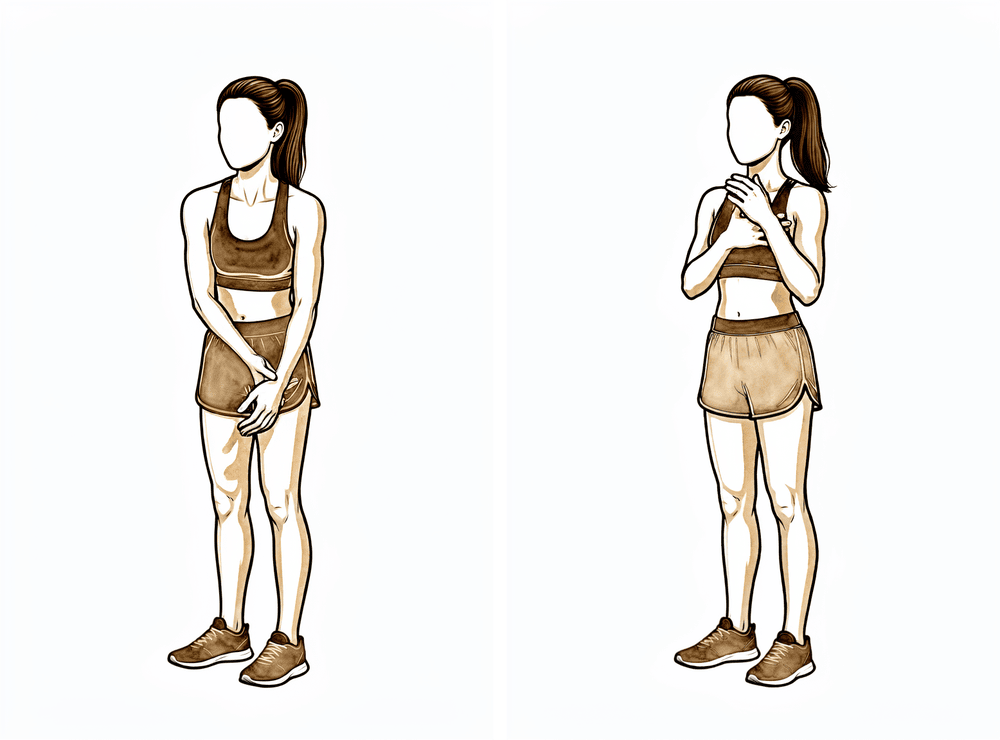
被动肘关节屈曲
让手术侧手臂完全放松,用另一只手将肘关节屈曲,然后让其伸直复位。另一只手完成所有动作——肱二头肌必须保持“关闭”状态,以免愈合中的肌腱被要求发力牵拉。对掌心向上和向下的旋转动作执行相同的操作。
每天
Kieran Hirpara 4.0
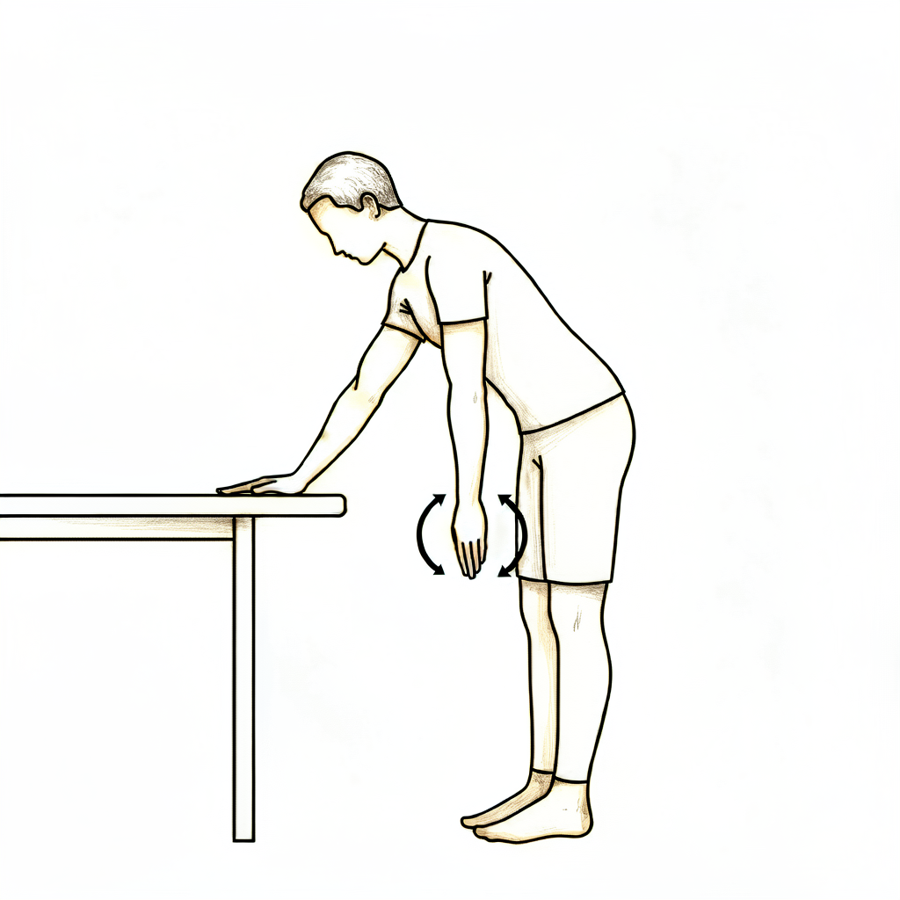
钟摆运动
将手臂从悬吊带中移出,腰部前屈,让手术侧手臂自然下垂并远离身体。让手臂做小而放松的圆周摆动——动作应源自躯干,而非肩部或手臂肌肉。保持在舒适范围内,然后将手臂放回悬吊带中。
在您的物理治疗师指导下
Kieran Hirpara 4.0
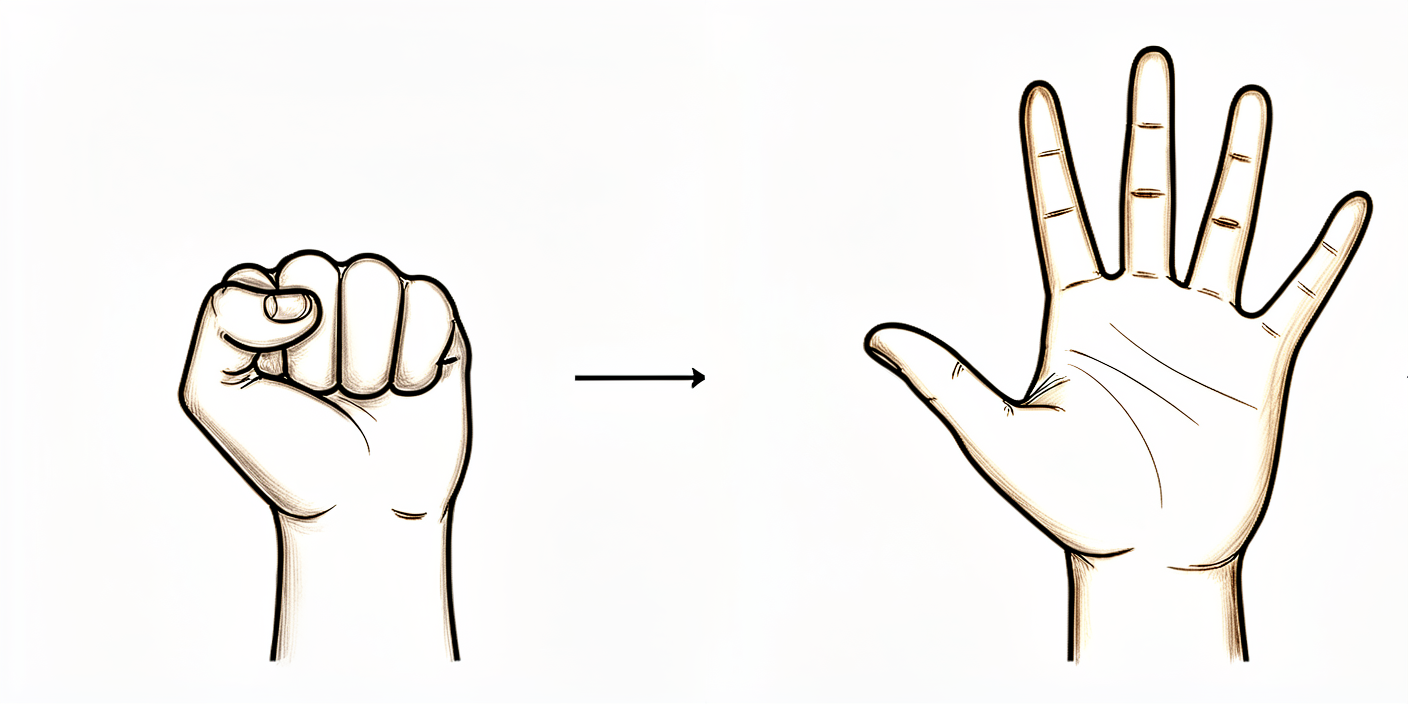
手部及握力练习
在手臂得到支撑的情况下,先握紧拳头,然后将手指完全伸直。可以挤压软球或卷起的袜子进行抓握练习。手部、腕部和手指从一开始就保持活动状态。
在您的物理治疗师指导下
Kieran Hirpara 4.0
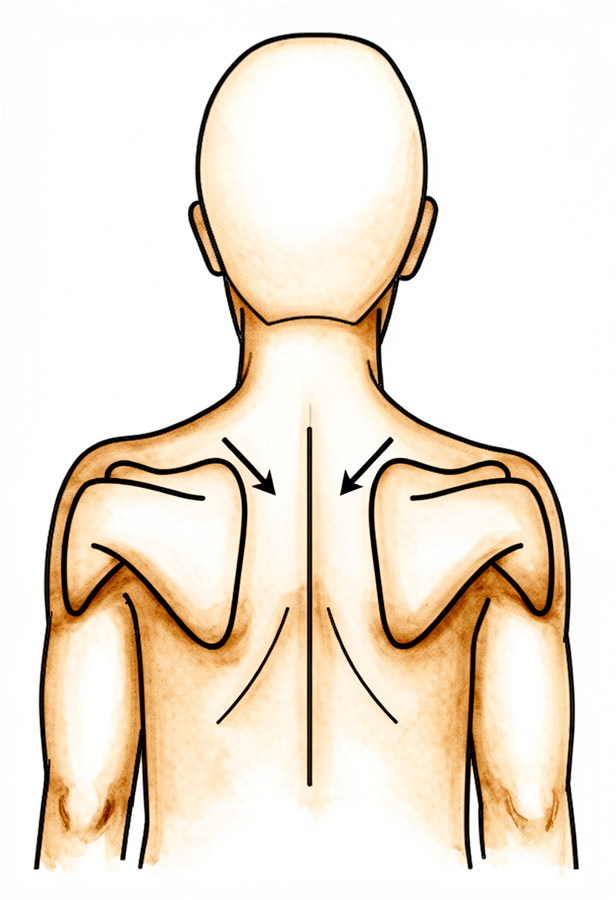
肩胛骨定位练习
在手臂得到支撑的情况下,轻轻将肩胛骨向后、向下收拢,使其远离耳朵。保持几秒钟,然后放松。这有助于在不给肌腱固定术带来负荷的情况下,维持姿势和肩胛骨控制功能。
在您的物理治疗师指导下
Kieran Hirpara 4.0
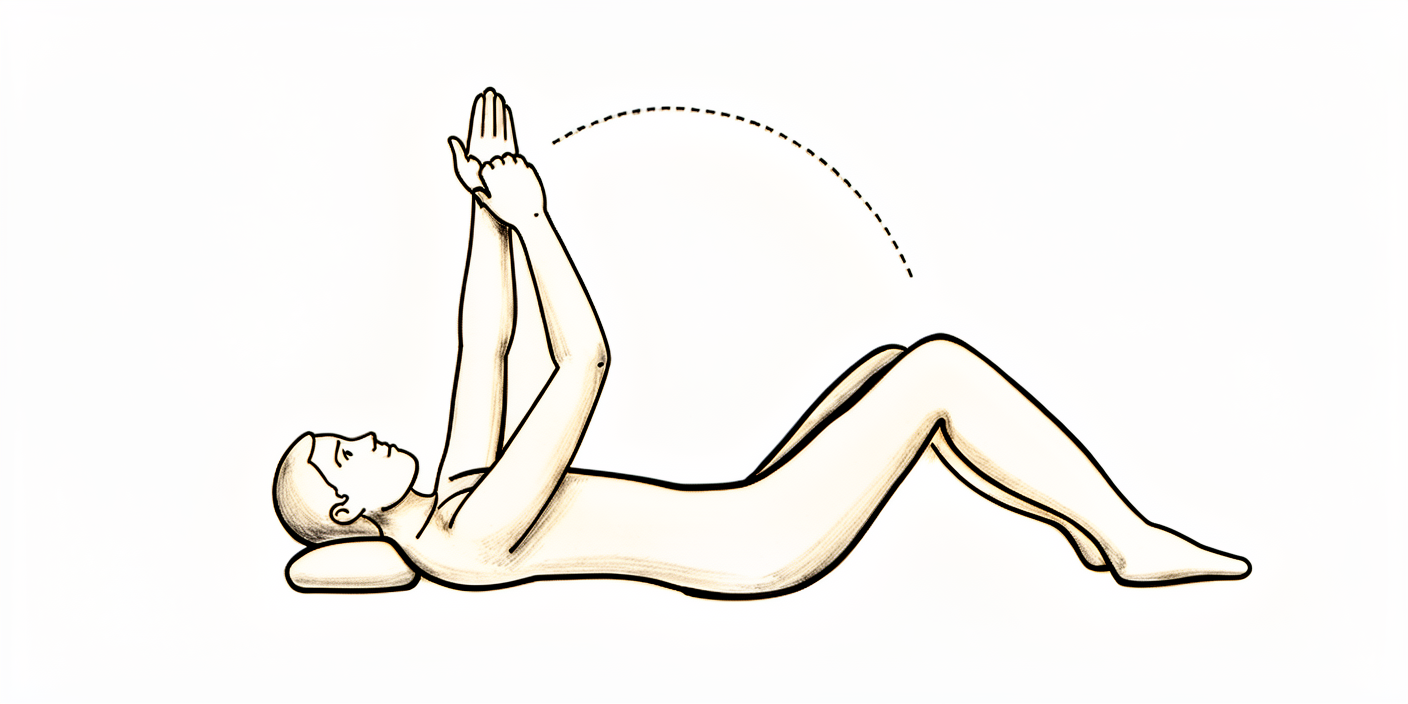
仰卧位辅助过头举
仰卧,用健侧手臂协助将患侧手臂抬起至前方约肩部高度,然后在健侧手臂的辅助下将其放回。由另一侧手臂完成动作,使肱二头肌保持放松。保持在舒适范围内——这有助于在肱二头肌腱固定术愈合期间维持肩关节活动。
在您的物理治疗师指导下
Kieran Hirpara 4.0
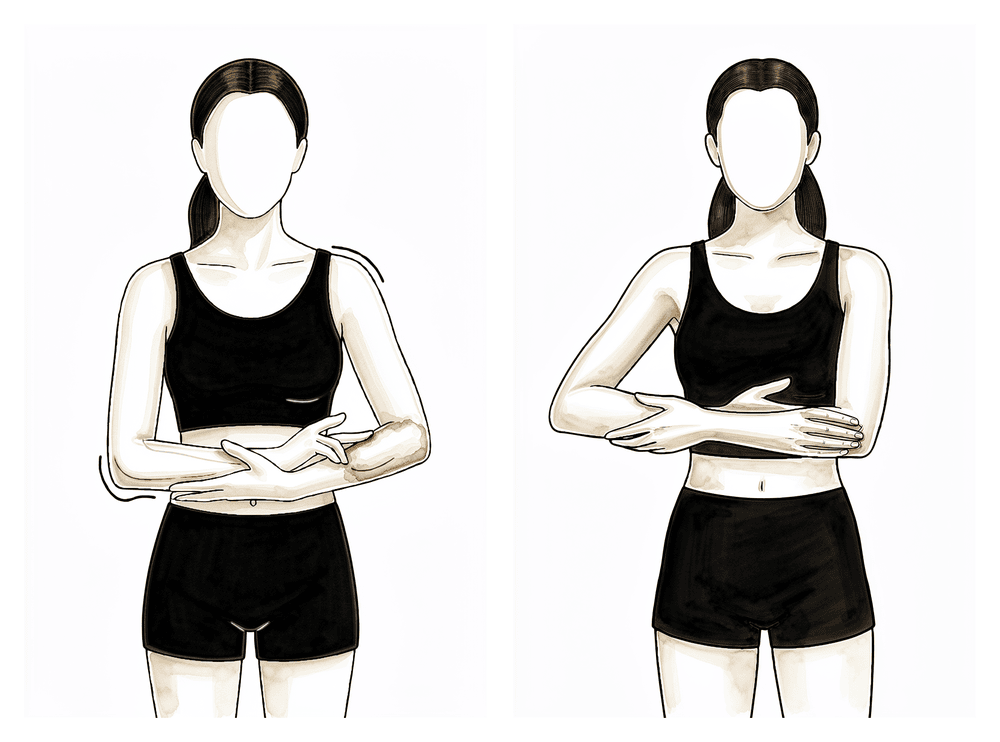
辅助向侧方移动
用另一只手臂托住手术侧前臂,轻轻将双臂向侧方抬起,让健侧手臂承担发力,然后有控制地放下。保持舒适且在早期活动范围内——这能在不要求肱二头肌发力的情况下维持肩关节的轻柔活动度。
在您的物理治疗师指导下
Kieran Hirpara 4.0
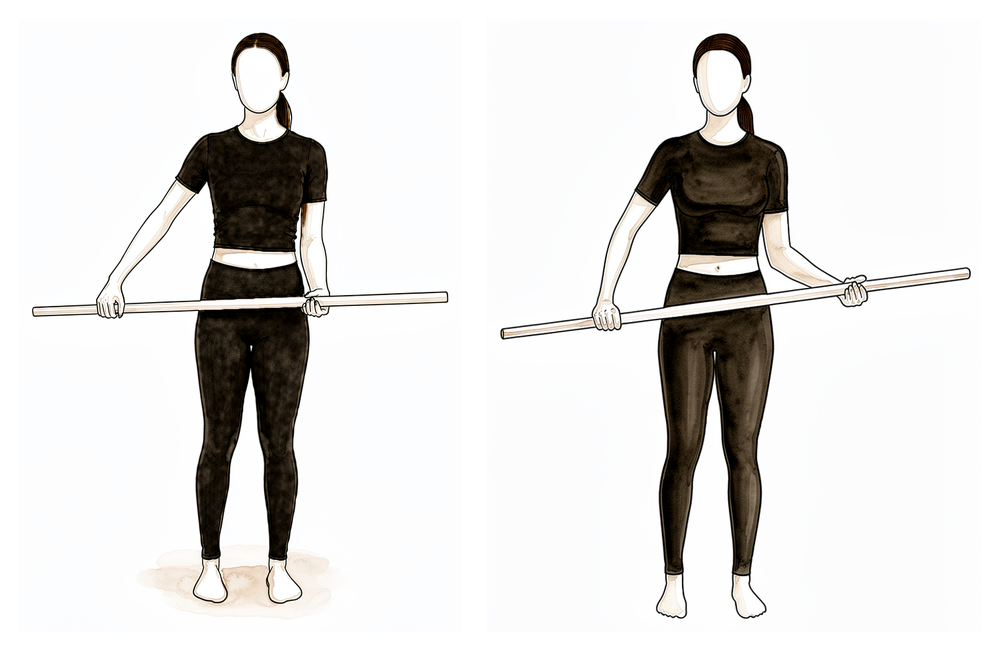
用棍棒辅助外旋
仰卧,肘部贴紧体侧并屈曲至直角。双手握住一根棍棒,用健侧手臂将患手向外旋转。在术后早期数周内,仅旋转至约40度——这是一种受限的保护性拉伸,而非完全拉伸,目的是避免对愈合中的肌腱产生张力。
在物理治疗师的指导下,至约40度
Kieran Hirpara 4.0
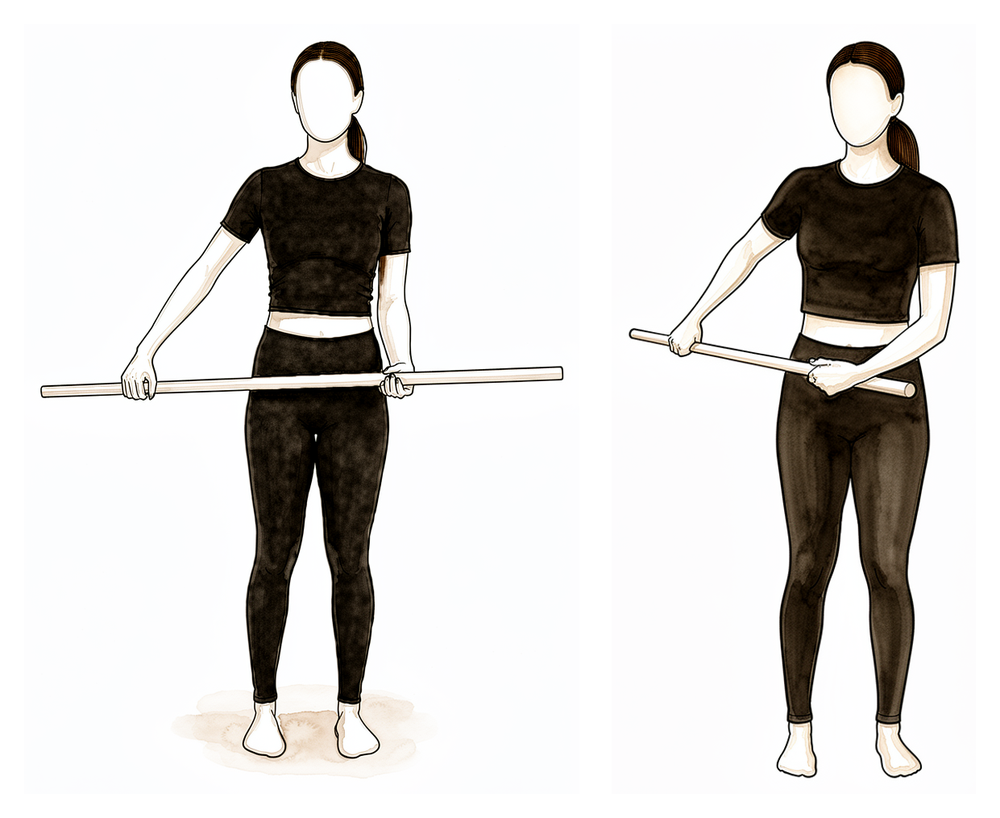
用棍棒辅助内旋
使用同一根棍子,让健侧手臂引导患侧手轻柔地向内、经身体前方移动,至约45度,然后返回。保持患侧手臂放松,并保持在早期活动范围内——这可在不增加腱固定术负荷的情况下维持内旋。
在物理治疗师的指导下,至约45度
最初几周的重点是让肌腱在骨骼上愈合,同时保持周围结构的活动。您的手、手腕和手指从一开始就保持活动。您的肘部每天进行活动,但为被动活动:让您的另一只手完成屈曲和掌心向上/向下的旋转,以使肱二头肌本身保持放松。肩部在以下限制范围内轻柔活动,进行钟摆练习和辅助运动。使用冰敷以缓解疼痛,在运动和物理治疗课程前服用止痛药,并佩戴悬吊带,包括在床上时。不要使用手术侧手臂提举或携带任何物品,且在需要佩戴悬吊带期间不要驾驶。在舒适度允许的情况下,前臂得到支撑的轻任务(如书写或打字)通常是可以的。
致您的物理治疗师:
目标
- 在肌腱固定愈合至骨骼期间保护其固定
- 缓解疼痛、肿胀和炎症反应
- 肘部和前臂全范围被动活动度;在以下限制范围内舒适的被动肩部活动度
- 维持肩胛骨功能和姿势
管理
- 佩戴悬吊带约 3–4 周,包括夜间,从第 3 周左右开始逐渐停用
- 肘部被动活动度:屈曲/伸展和前臂旋后/旋前
- 手腕和手部主动活动度;握球练习
- 肩部被动和轻柔的主动辅助活动度,在限制范围内:钟摆运动,初始屈曲和上举至约 90 度,随着舒适度允许逐渐增加;外旋至 40 度;内旋至约 45 度
- 肩胛骨定位和后缩(手臂得到支撑),逐渐过渡到肩胛骨等长收缩;颈椎活动度和姿势训练
- 冷冻疗法以缓解疼痛和肿胀;运动和课程前使用镇痛药
- 仰卧时,在肘部下方放置毛巾卷或小枕头,以避免肩部伸展
注意事项
- 禁止主动肘部屈曲,禁止抗阻前臂旋后;肱二头肌保持无负荷状态
- 禁止主动肩部活动度;禁止超过 40 度的外旋;禁止肩部伸展或超过中立位的水平外展
- 禁止使用手术侧手臂提举或携带物品
- 禁止在肱二头肌近端/肌腱固定部位进行摩擦按摩
- 六周内禁止驾驶(这适用于任何肩部手术)
进展标准
- 伤口愈合且疼痛得到良好控制
- 肘部屈曲/伸展和前臂旋转的全范围被动活动度
- 在处方限制范围内舒适的被动肩部活动度
第二阶段 — 主动活动(第 4–6 周)
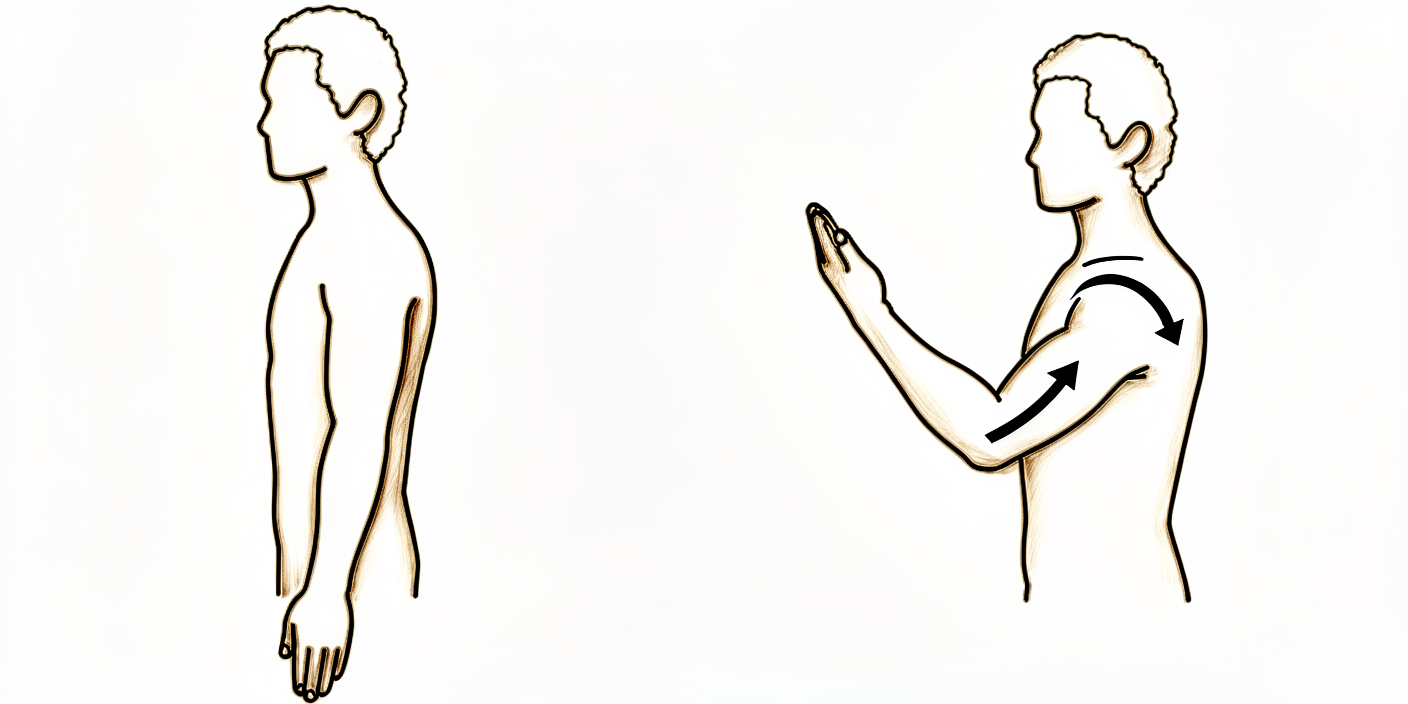
Kieran Hirpara 4.0
肘关节主动屈曲和伸直
在手中不持任何物品的情况下,依靠自身力量弯曲并伸直肘关节,同时使手掌上下翻转。此时肱二头肌已开始活动,但尚未承受负荷——在物理治疗师为您逐步增加训练强度之前,请尽量减少提举动作(该手臂提举的重量不得超过一杯茶)。
在您的物理治疗师指导下
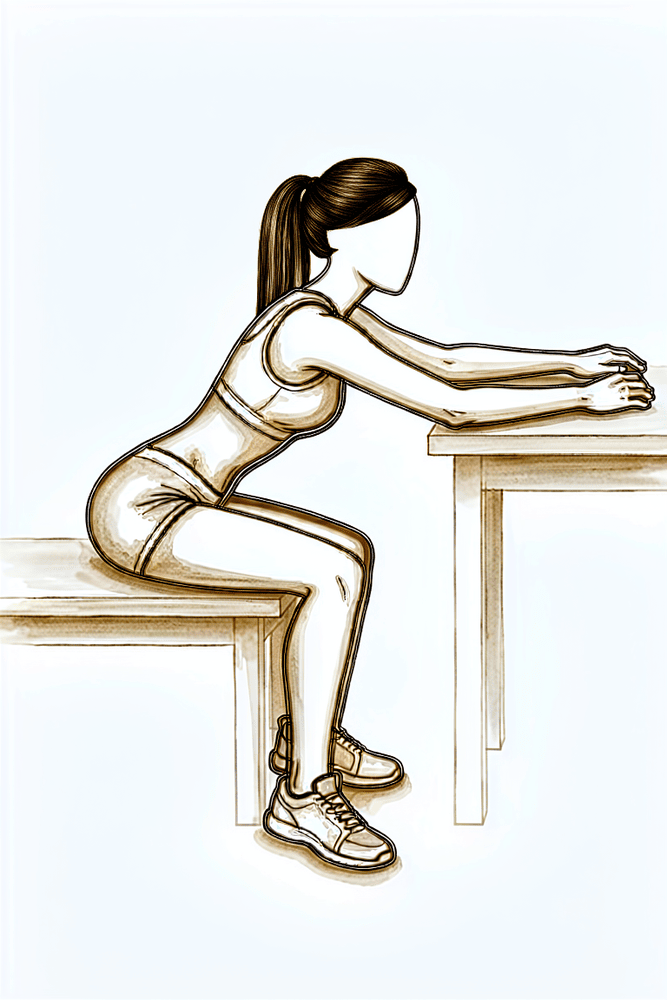
Kieran Hirpara 4.0
桌面滑动
坐在桌前,将手放在毛巾或布料上。沿桌面将手向前滑动,身体前倾使手臂在身前向上移动,然后向后滑动。桌面承托重量,有助于肩部主动活动,随着活动度恢复。
在您的物理治疗师指导下
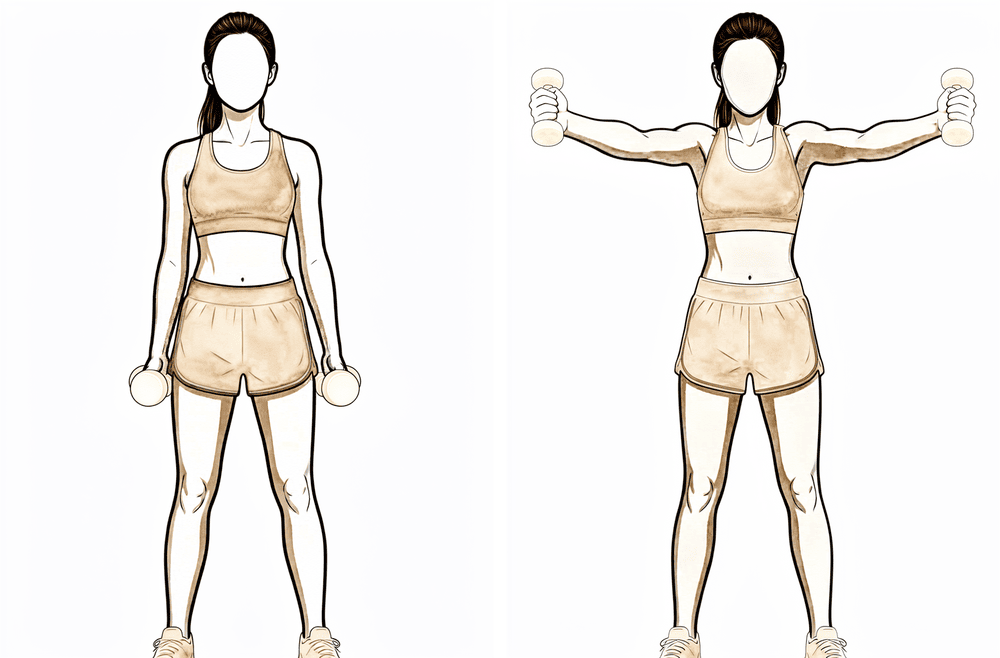
Kieran Hirpara 4.0
肩胛骨平面内的主动上举
站立,将手术侧手臂向上并略微向前抬起——大约位于正前方与侧方之间的中间位置——拇指朝上,如同握持一个装满的罐子。在舒适范围内依靠自身力量抬起,然后缓慢放下。此动作可在不增加任何重量的情况下恢复肩关节的主动抬举功能。
在您的物理治疗师指导下
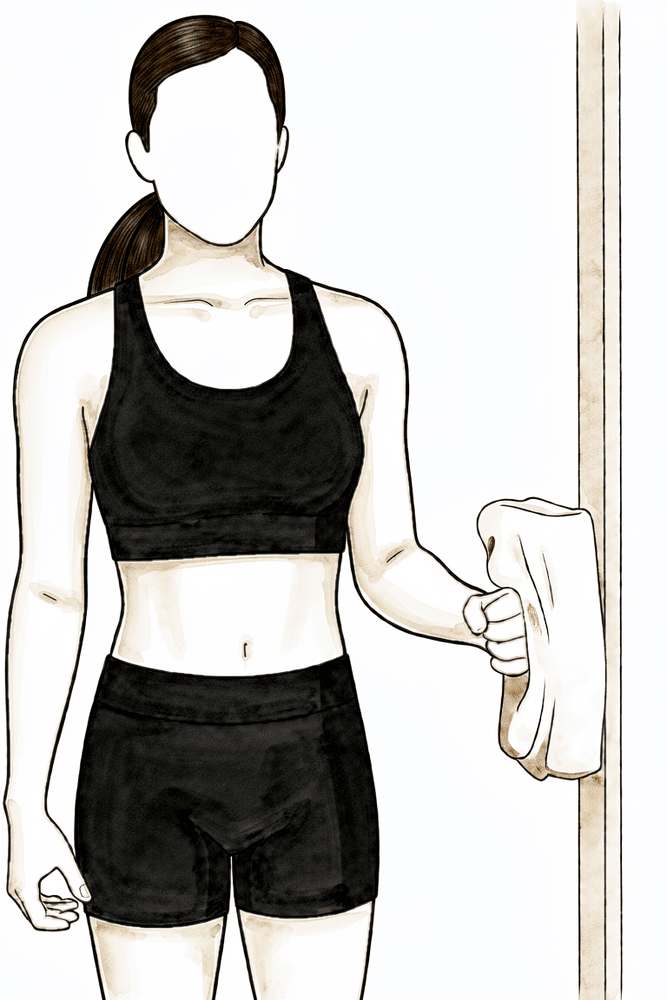
Kieran Hirpara 4.0
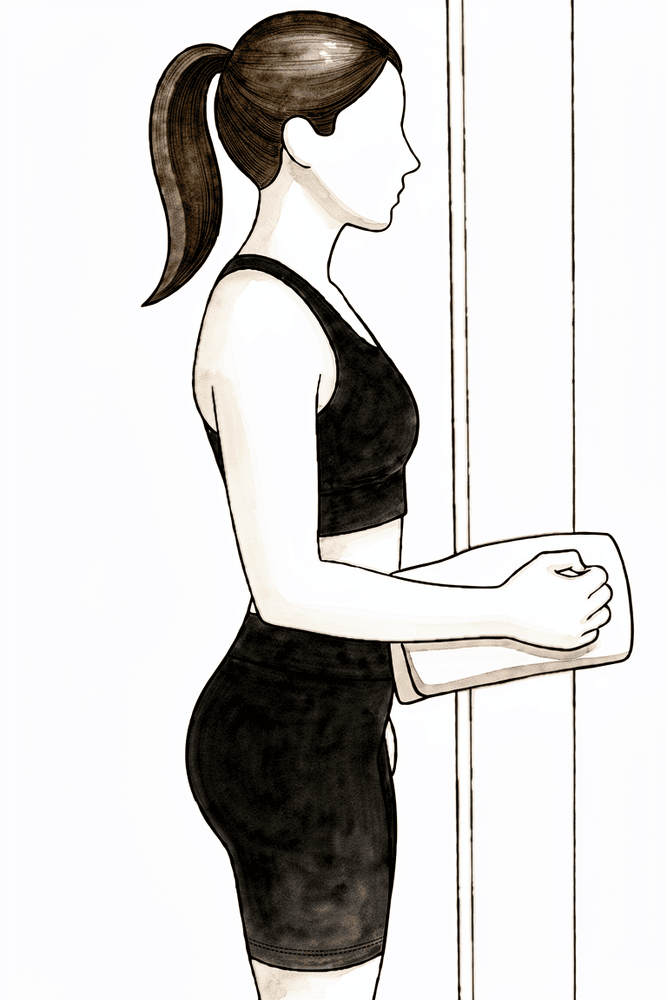
等长外旋
将肘部贴紧体侧并屈曲成直角,手背抵住墙壁或门框。轻轻向外推压,同时保持手臂不动,保持数秒,然后放松。此动作可在无运动且肱二头肌无负荷的情况下,开始锻炼肩袖。
保持数秒,重复数次;请遵循物理治疗师的指导
Kieran Hirpara 4.0
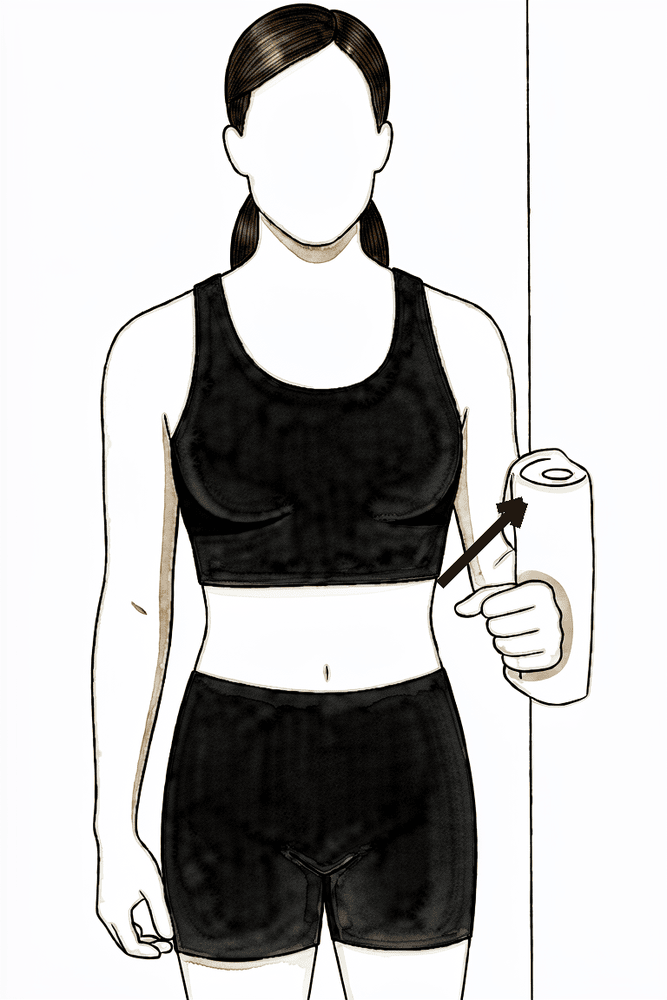
等长内旋
将肘部贴紧体侧并屈曲成直角,手掌抵住墙壁或门框。轻轻向内推压,同时保持手臂不动,维持数秒,然后放松。采用次最大力度的保持——用力但轻松,切勿过度用力。
保持数秒,重复数次;请遵循物理治疗师的指导
Kieran Hirpara 4.0
等长外展
侧身站立,肘部置于体侧。将上臂外侧轻轻抵住墙壁,如同将其向侧方抬起,但保持不动,持续数秒,然后放松。这会在开始主动负重前,以静态方式锻炼肩部肌肉。
保持数秒,重复数次;请遵循物理治疗师的指导
Kieran Hirpara 4.0
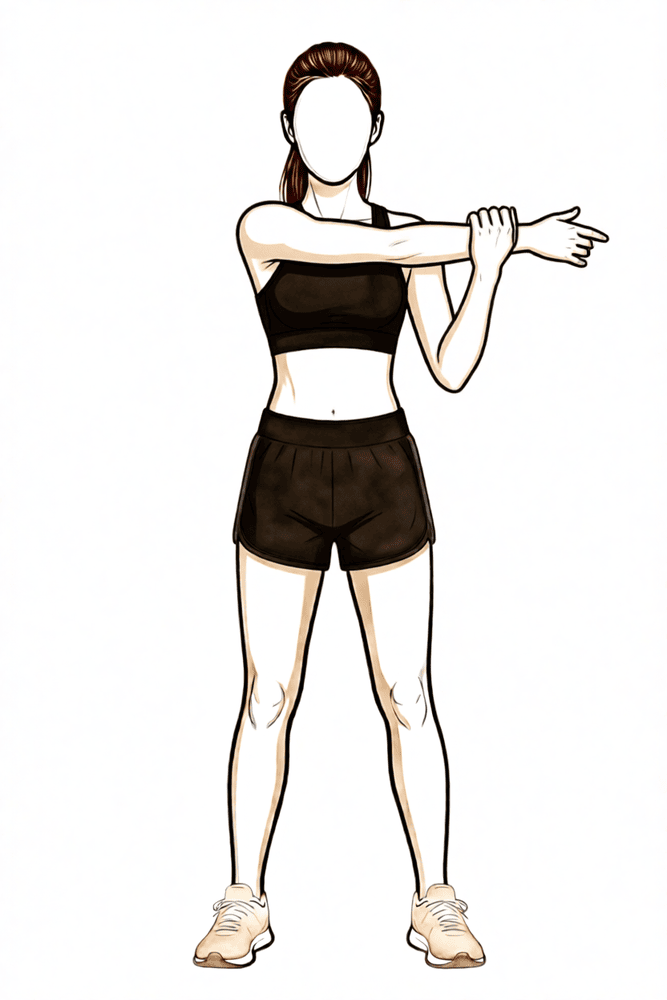
跨体拉伸
将手术侧手臂横过胸前,用另一只手臂轻轻将其进一步拉向对侧,直至肩后部感到舒适的牵拉感。保持该姿势片刻,然后放松。随着主动活动范围恢复,此动作有助于缓解肩后部的紧张。
在您的物理治疗师指导下
Kieran Hirpara 4.0
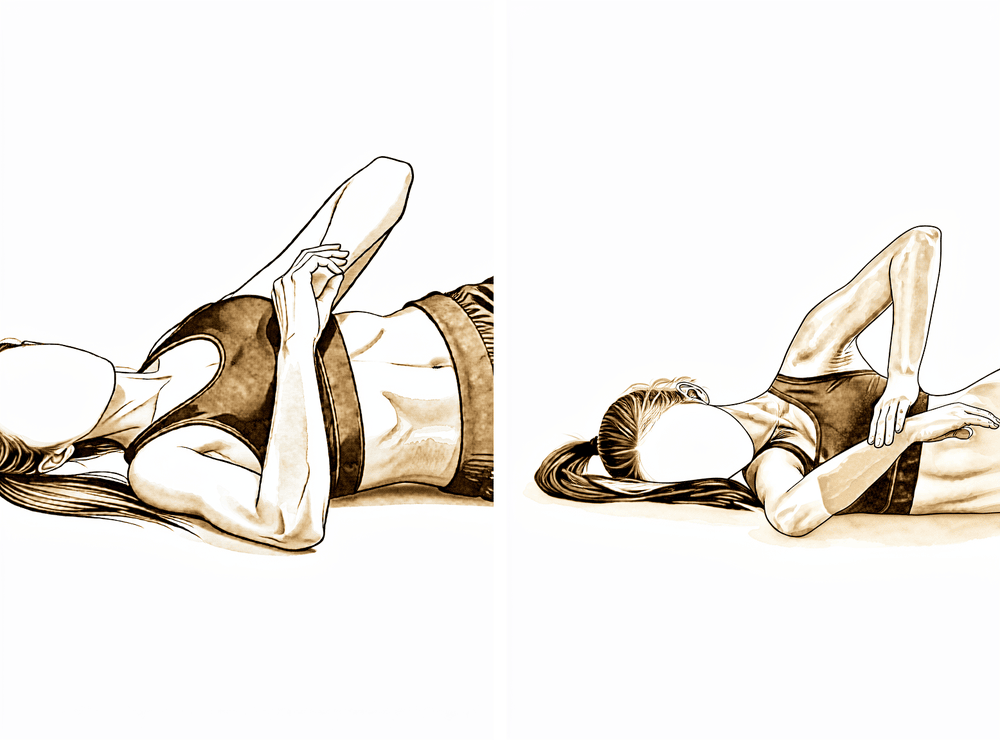
睡眠者拉伸
侧卧于手术侧,该侧手臂向前伸出,肘部弯曲呈直角。用另一只手轻轻将前臂向下压向床面,直至感到肩后部有牵拉感。动作要轻柔——放松身体顺应牵拉,切勿强行用力。
在您的物理治疗师指导下
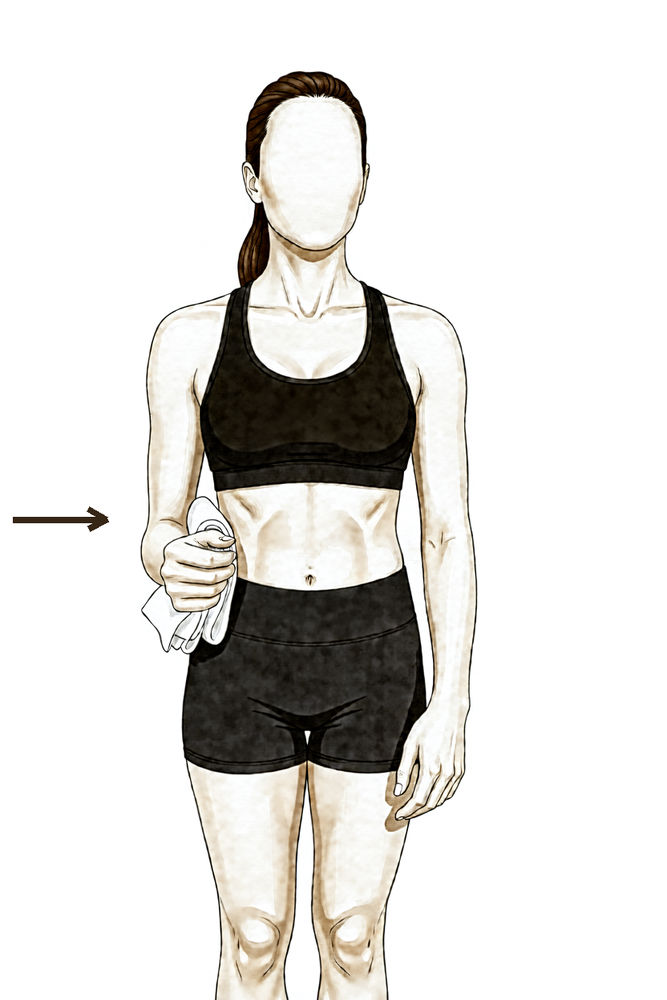
Kieran Hirpara 4.0
等长内收挤压
将肘部贴紧身体侧面,在上臂与身体之间夹一条卷起的毛巾。轻轻将手臂向内挤压毛巾,切勿移动——动作轻柔,约使用四分之一力量,且无痛感。保持该姿势片刻,然后放松。
保持约5秒,力度轻柔(约25%的用力程度),并遵循您的物理治疗师的指导。
随着悬臂带的移除,手臂开始在自身力量下活动。肩部从辅助运动过渡到各个方向的主动运动,肘部现在可以主动弯曲和旋转,但仍不承受负荷。肱二头肌正在活动,但尚未发力:将抬举动作降至最低(用该手臂不要提超过一杯茶重量的物品),并将推、拉和搬运动作留给另一侧。轻度的桌面工作在此阶段通常感觉舒适。从第六周开始恢复驾驶,前提是您的外科医生已批准,且您能够舒适、安全地控制车辆。
致您的物理治疗师:
目标
- 逐步恢复肩部和肘部完整的主动活动范围
- 运动时肩胛骨力学恢复正常
- 开始亚最大强度肩部等长收缩训练
- 手臂在腰部高度的轻度功能性使用
处理方案
- 肩部主动辅助运动过渡到所有平面的主动活动范围(例如草坪椅式渐进训练、墙面和栏杆滑动、仰卧屈曲到站立位肩外展)
- 无阻力主动肘屈曲/伸展和前臂旋后/旋前
- 亚最大强度肩部等长收缩:内旋、外旋、外展、内收
- 继续肩胛骨稳定训练和姿势矫正
- 随着伤口成熟进行瘢痕按摩;在肌腱固定术部位禁止横向摩擦按摩
- 根据需要进行后关节囊拉伸(跨体拉伸、睡眠者拉伸)
- 步行或固定自行车进行体能训练;患侧手臂不负重
注意事项
- 禁止抗阻肱二头肌训练;禁止对肘屈肌或旋后肌施加负荷
- 禁止用手术侧手臂提重物;暂不跑步
- 避免通过激进拉伸或手法治疗过度牵拉愈合中的肌腱
晋级标准
- 肩部、肘部和前臂完整的、无痛的主动活动范围
- 运动及轻度功能时肩胛骨力学正常
- 疼痛得到良好控制
第三阶段 — 强化训练(第 6–12 周)
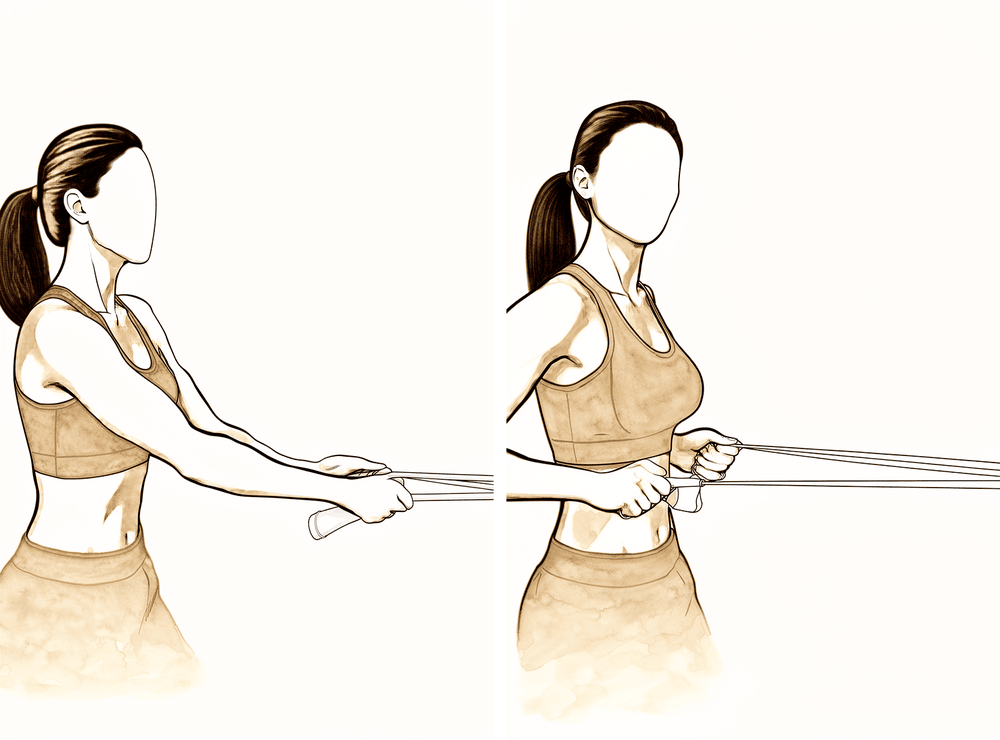
Kieran Hirpara 4.0
弹力带划船
将弹性阻力带固定于身前约腰部高度。将阻力带向身体方向拉动,在肘部经过身体侧方时,使肩胛骨向后下方回缩,随后有控制地还原。此动作为肩胛骨训练计划的一部分——保持负荷低、重复次数高。
在您的物理治疗师指导下
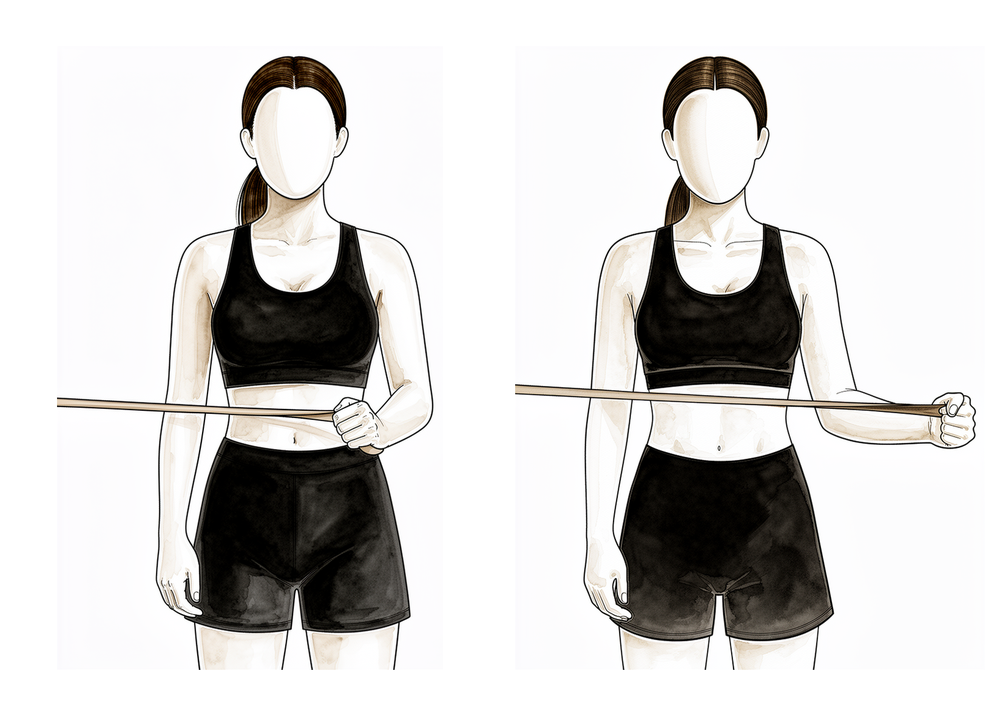
Kieran Hirpara 4.0
弹力带外旋
将弹力带固定在腰部高度。肘部紧贴体侧并弯曲成直角,向外拉动弹力带,使前臂远离身体旋转,然后缓慢还原。从低阻力、高次数开始——这能强化肩袖。
在物理治疗师的指导下——低负荷,高重复次数
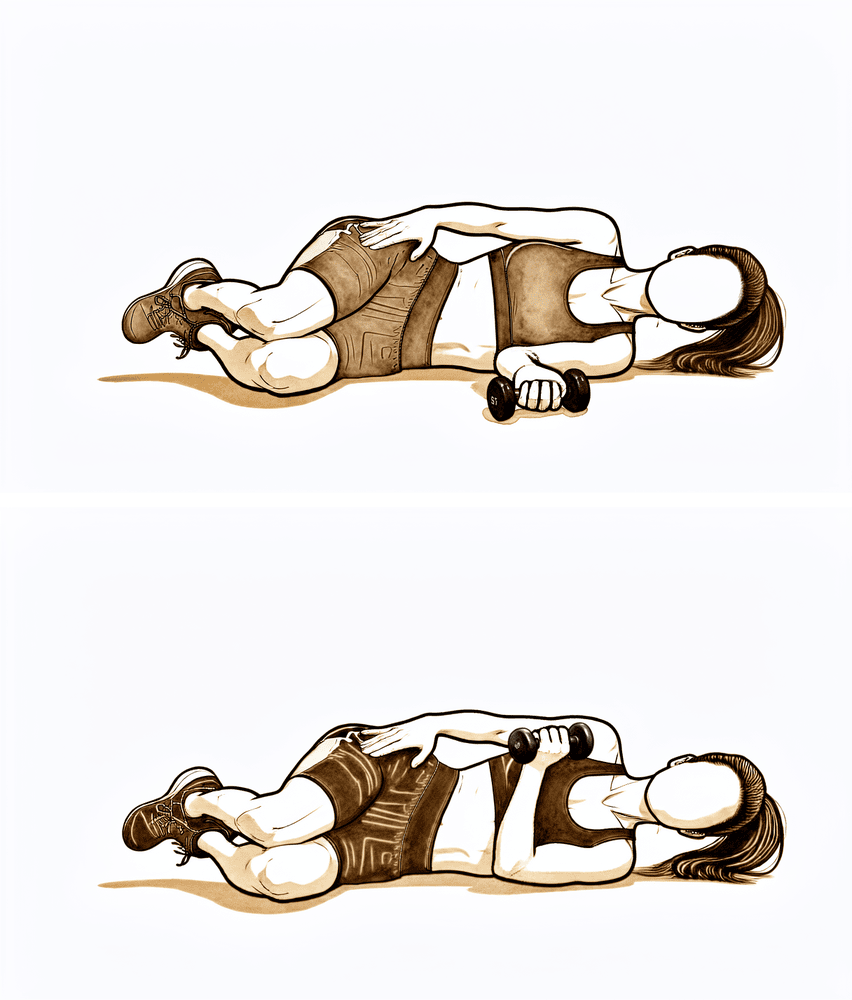
Kieran Hirpara 4.0
抗阻内旋
侧卧于手术侧,手中持轻重量,肘部弯曲置于体侧。通过前臂向身体方向旋转上举来抬起重量,然后缓慢放下。此动作可强化肩袖的内旋肌群——初期请保持负荷较轻。
在物理治疗师的指导下——低负荷,高重复次数
Kieran Hirpara 4.0
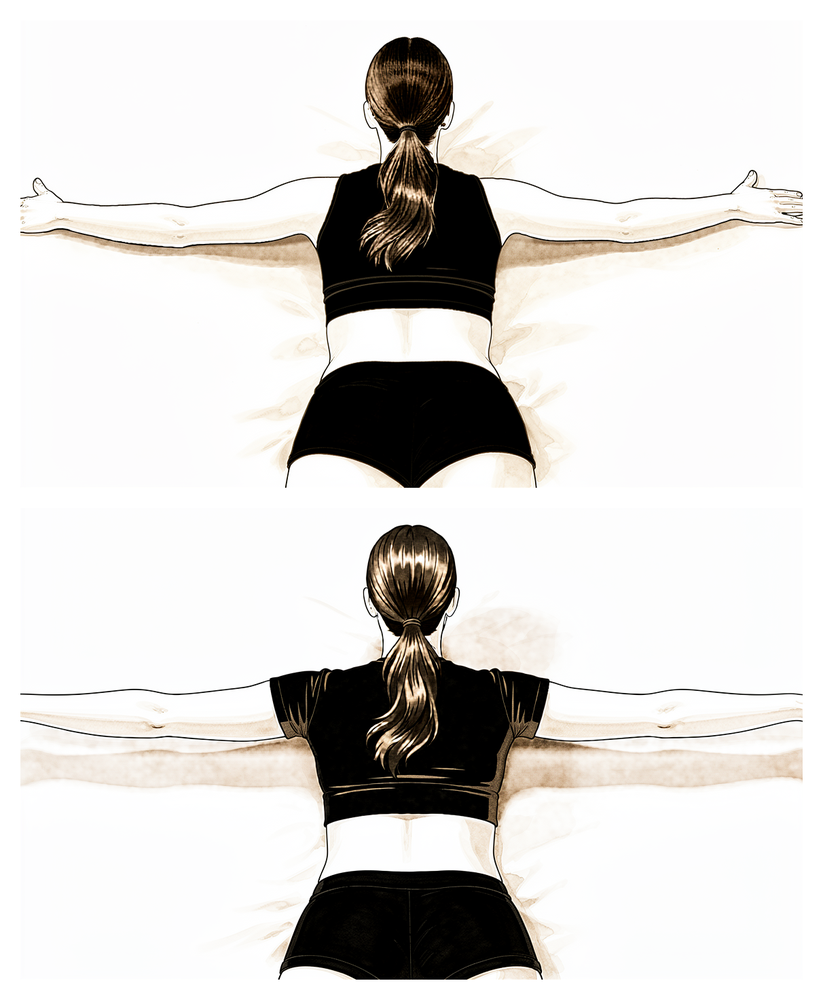
俯卧T字上举
俯卧,双臂自然垂于床沿。将手术侧手臂向侧方抬起至肩部高度,同时收缩肩胛骨,使双臂呈“T”字形,然后缓慢放下。这是肩胛骨训练计划的一部分——控制比负重更重要。
在您的物理治疗师指导下
Kieran Hirpara 4.0
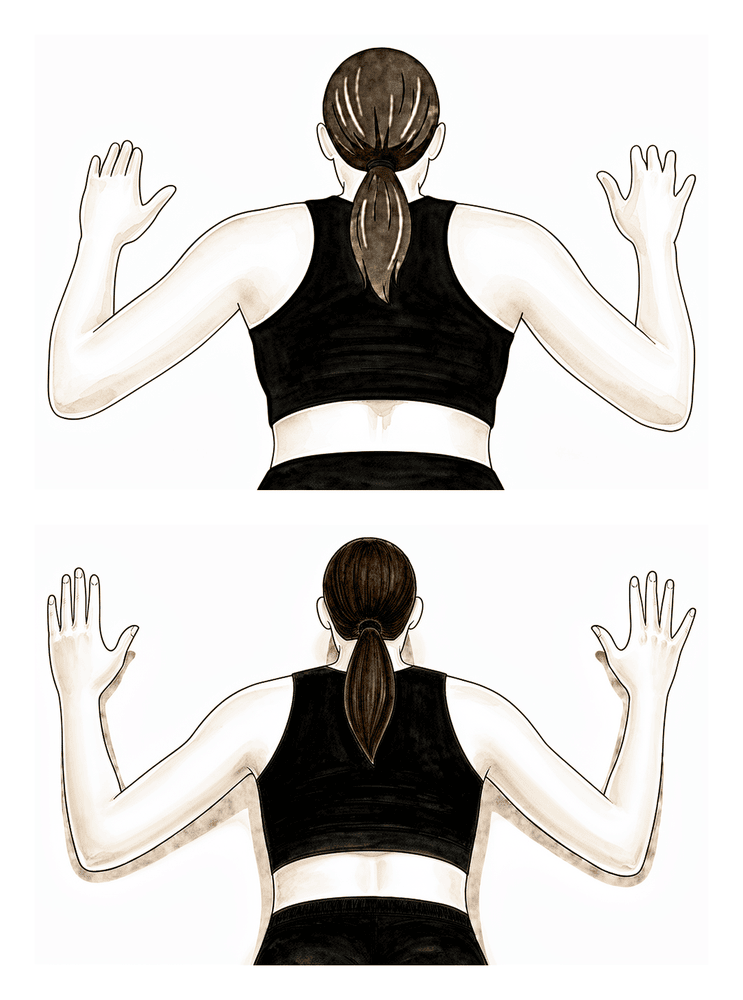
俯卧位 W 形抬举
俯卧,将肘部向后下方拉向腰部,弯曲肘关节使双臂呈W形,同时夹紧肩胛骨,然后缓慢放下。此动作可锻炼支撑良好体态的下部肩胛肌群。
在您的物理治疗师指导下
Kieran Hirpara 4.0
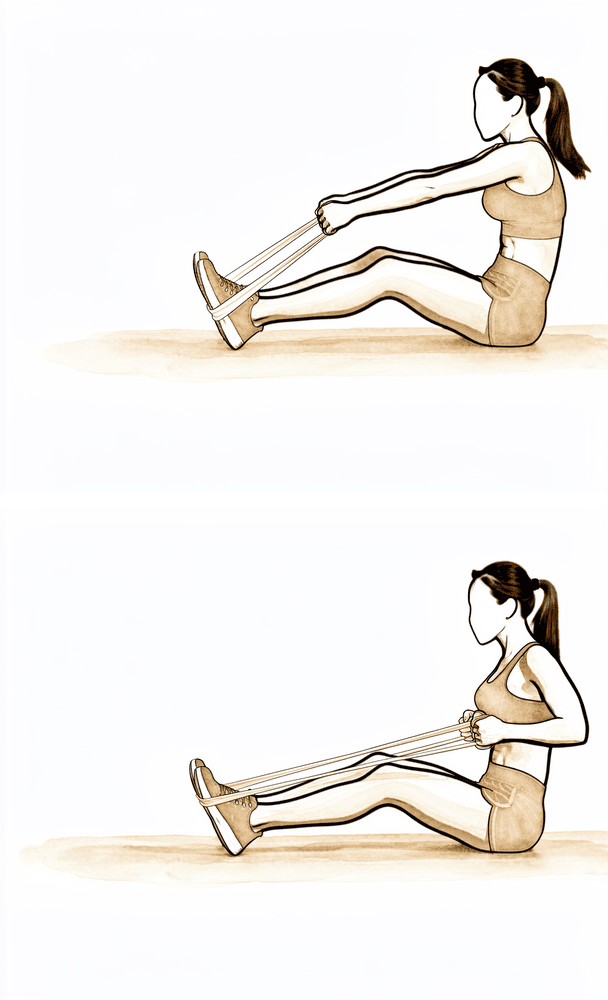
低位划船
手臂置于体侧,向下并向后按压弹力带或平面,使肩胛骨向下、向内收拢,随后放松。这是肩胛骨训练计划的一部分,旨在建立肩胛骨下缘的控制能力。
在您的物理治疗师指导下
Kieran Hirpara 4.0
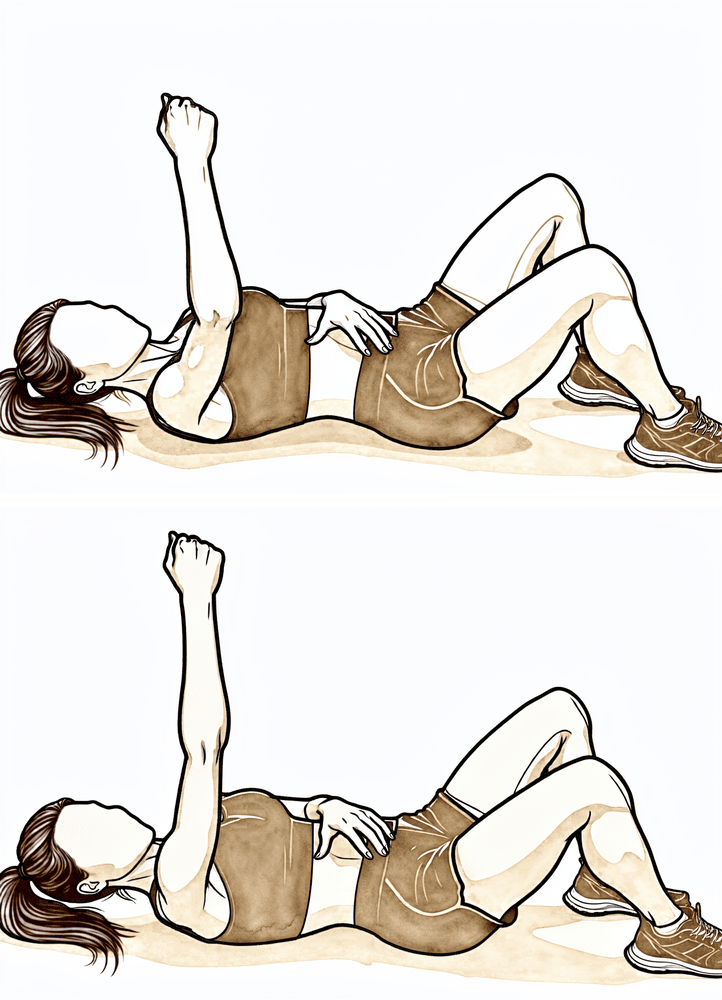
前锯肌冲拳
仰卧,将手术侧手臂笔直向上伸向天花板。向上再冲拳一点,使肩胛骨离开地面,然后放下。此动作锻炼前锯肌,该肌肉负责将肩胛骨固定在肋骨上。
在您的物理治疗师指导下
Kieran Hirpara 4.0
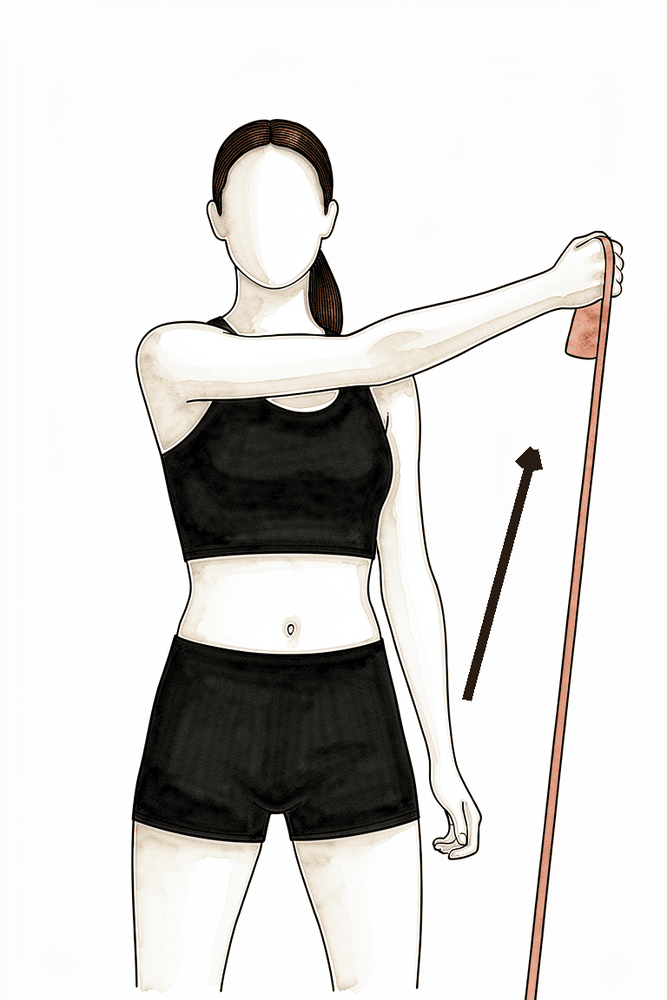
弹力带对角线模式(D1)
使用弹力带,将手臂从身体前方沿对角线向上向外拉动,然后有控制地返回。这些对角线模式可重建协调且功能性的肩部力量。
在您的物理治疗师指导下
Kieran Hirpara 4.0
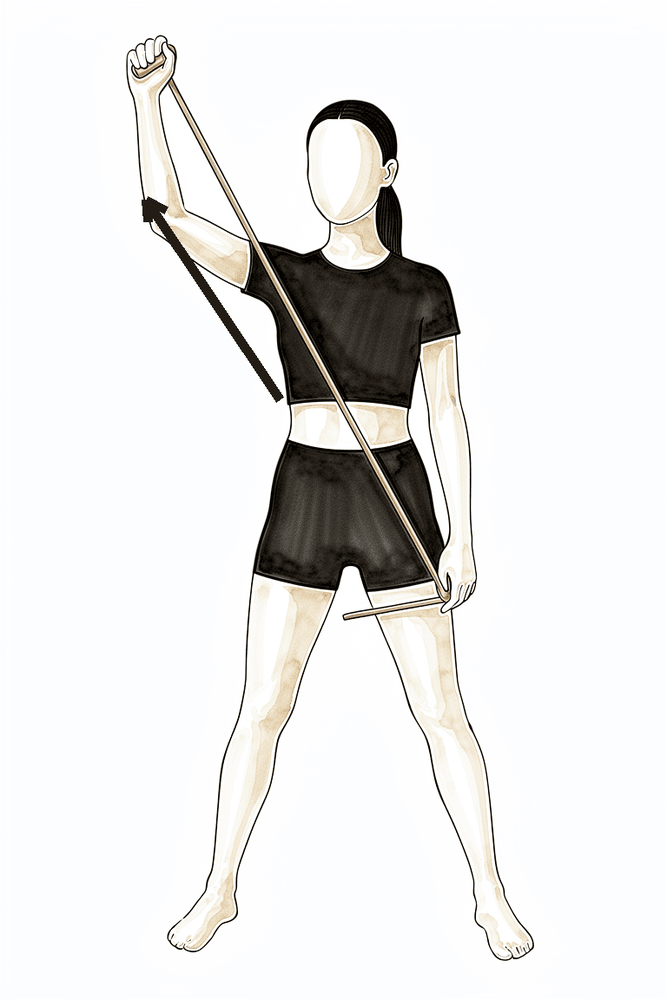
弹力带对角线模式(D2)
使用弹力带,沿对角线方向将手臂从身体低处向斜上方及外侧过头摆动,随后控制手臂缓慢下放。这是一种第二种对角线运动模式,通过更完整、类似运动的关节活动范围来增强力量。
在您的物理治疗师指导下
Kieran Hirpara 4.0
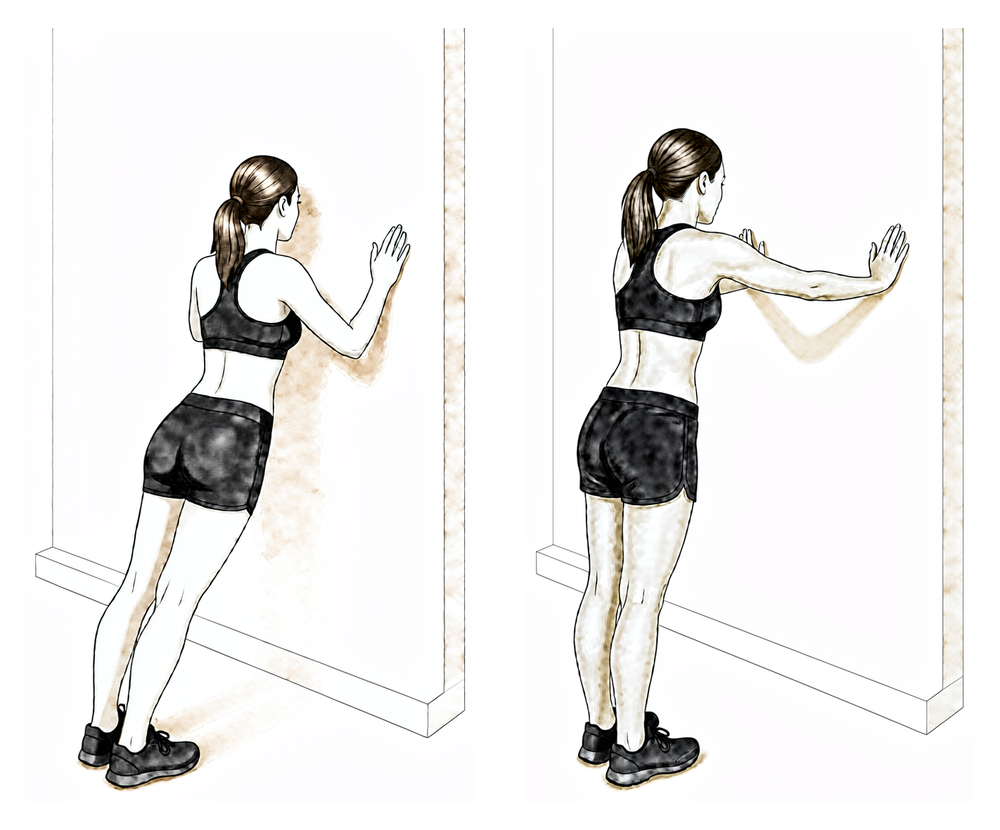
靠墙俯卧撑加强
双手置于肩高的墙面上站立。保持肘部伸直,将胸部推离墙面,使肩胛骨向前圆拱,然后放松回位。这是俯卧撑进阶训练的起始阶段——在指导下,依次进行墙面、台面、跪姿、地面俯卧撑。
在您的物理治疗师指导下
Kieran Hirpara 4.0
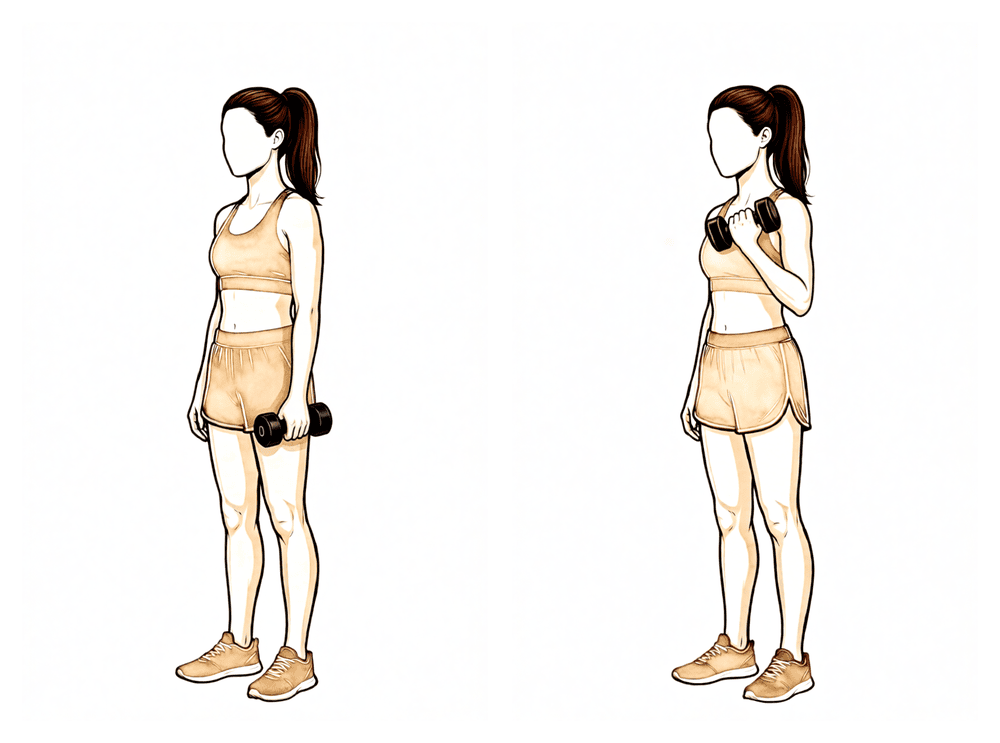
肱二头肌弯举
不早于第10周。手持轻重量,肘部置于体侧,屈肘抬起重量,然后缓慢放下。以相同方式增加抗阻旋后(掌心向上)动作。从轻重量开始并缓慢进阶——这是刻意安排在最后以加载愈合肌腱的练习。
从第10周开始——低负荷,高次数
Kieran Hirpara 4.0
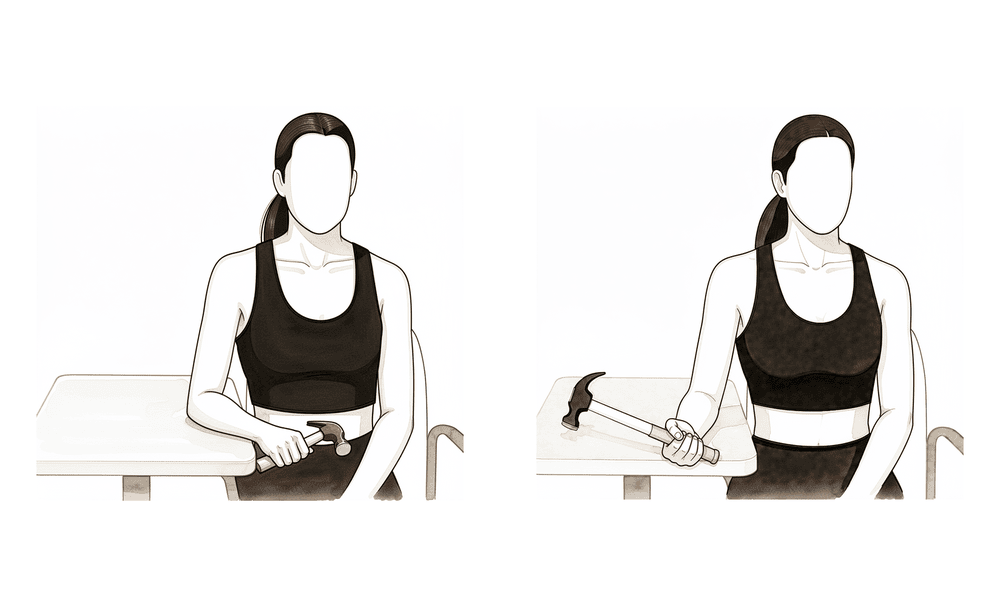
抗阻前臂旋转
不早于第10周。将前臂平放在桌面上,手部悬空于桌沿之外,手握一个轻重量。缓慢地将手掌向上翻转,然后再向下翻转,保持动作受控。手掌向上翻转的动作直接锻炼肱二头肌,因此该动作与肱二头肌弯举同期开始——从轻重量开始,逐步增加负荷。
第10周起——低负荷,高次数
Kieran Hirpara 4.0
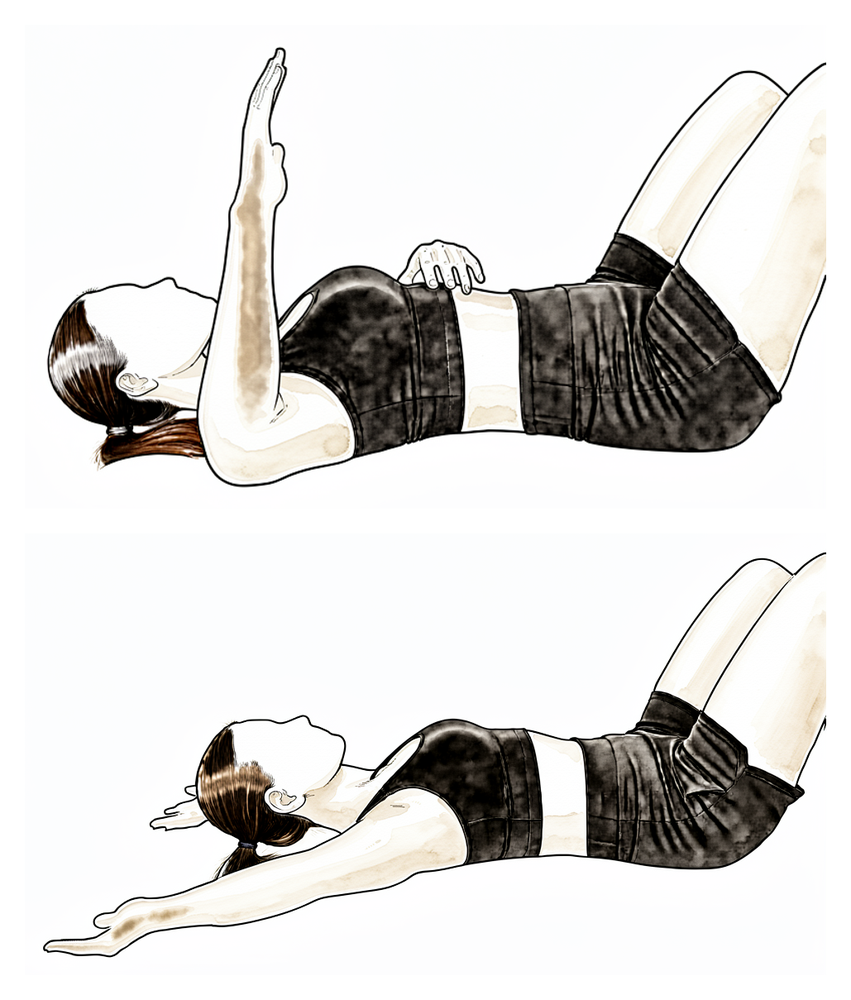
90/90位(弹力带)外旋
手臂侧平举至肩高,肘关节屈曲呈直角,前臂向后上方对抗轻阻力带或负重旋转,随后缓慢下放。此动作可在上举(投掷)位增强肩袖肌群力量。
每组10至15次,共2至3组,低阻力
Kieran Hirpara 4.0
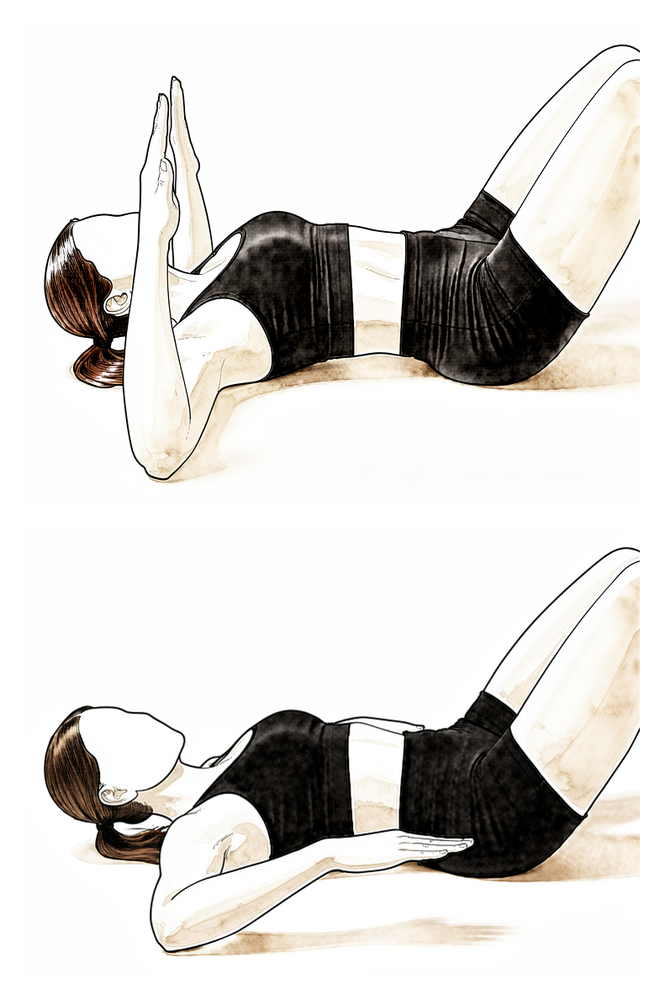
90/90位内旋(弹力带)
在手臂侧平举至肩高的同一姿势下,前臂向前下方朝脚部方向旋转,对抗轻阻力带或负重,然后有控制地返回。
2至3组,每组10至15次,低阻力
Kieran Hirpara 4.0
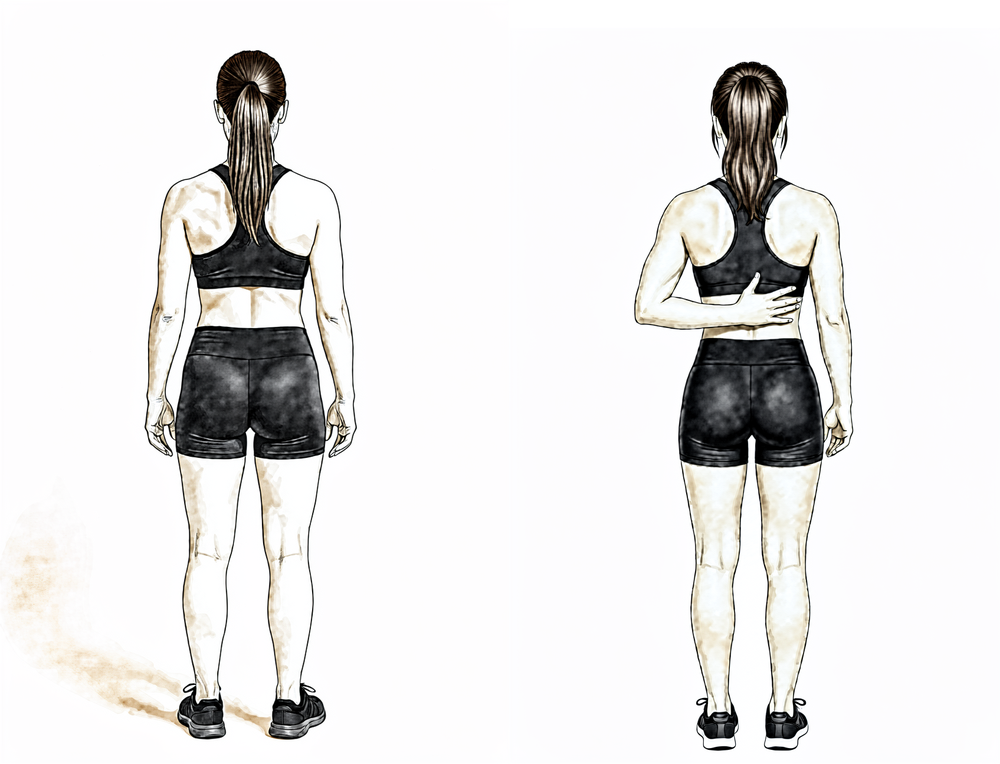
背后摸背
站立时,将手术侧手的手背贴于下背部,利用自身肌肉轻柔地沿脊柱向上滑动至舒适的最大范围,然后放下。仅在舒适范围内活动,切勿强行用力。
在您的物理治疗师指导下
Kieran Hirpara 4.0
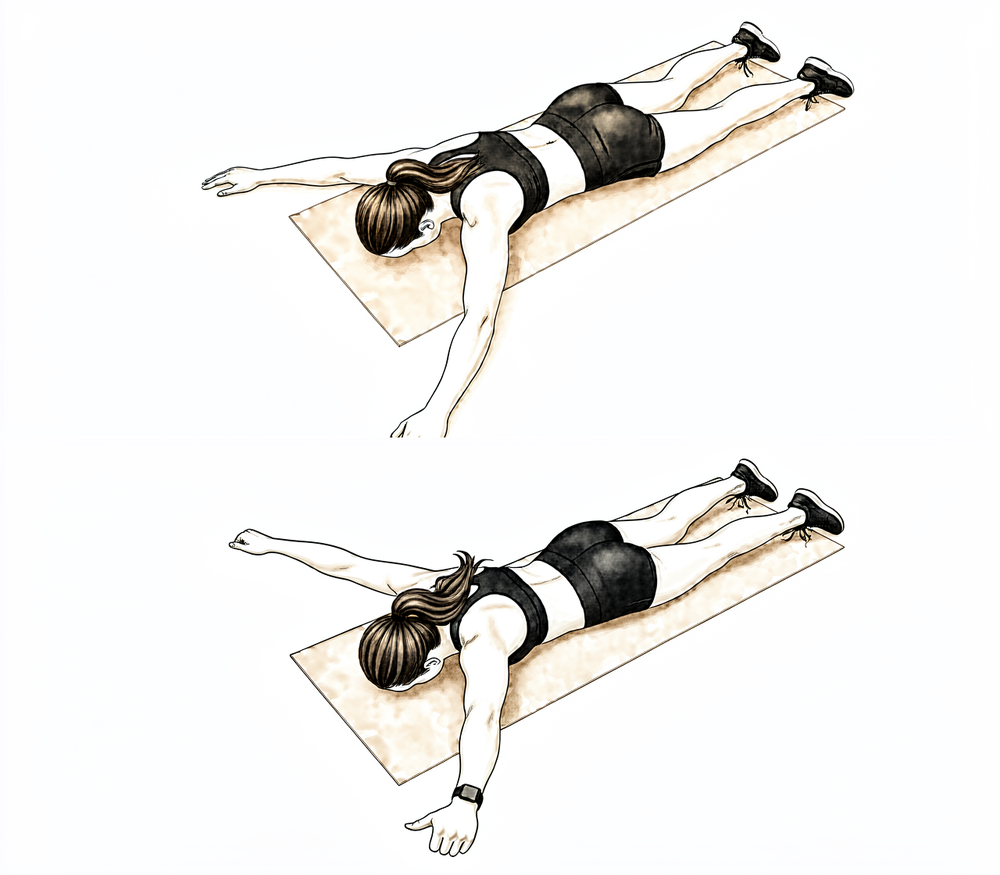
俯卧位Y形(肩胛骨下部)
俯卧,手术侧手臂向前上方伸展,与身体呈约45°角形成Y字形,拇指朝上。通过向下、向后牵拉肩胛骨,将手臂略微抬离支撑面,然后缓慢放下。动作保持轻柔——此动作主要针对肩胛骨下部肌肉。
在物理治疗师的指导下——轻负荷、高次数
Kieran Hirpara 4.0
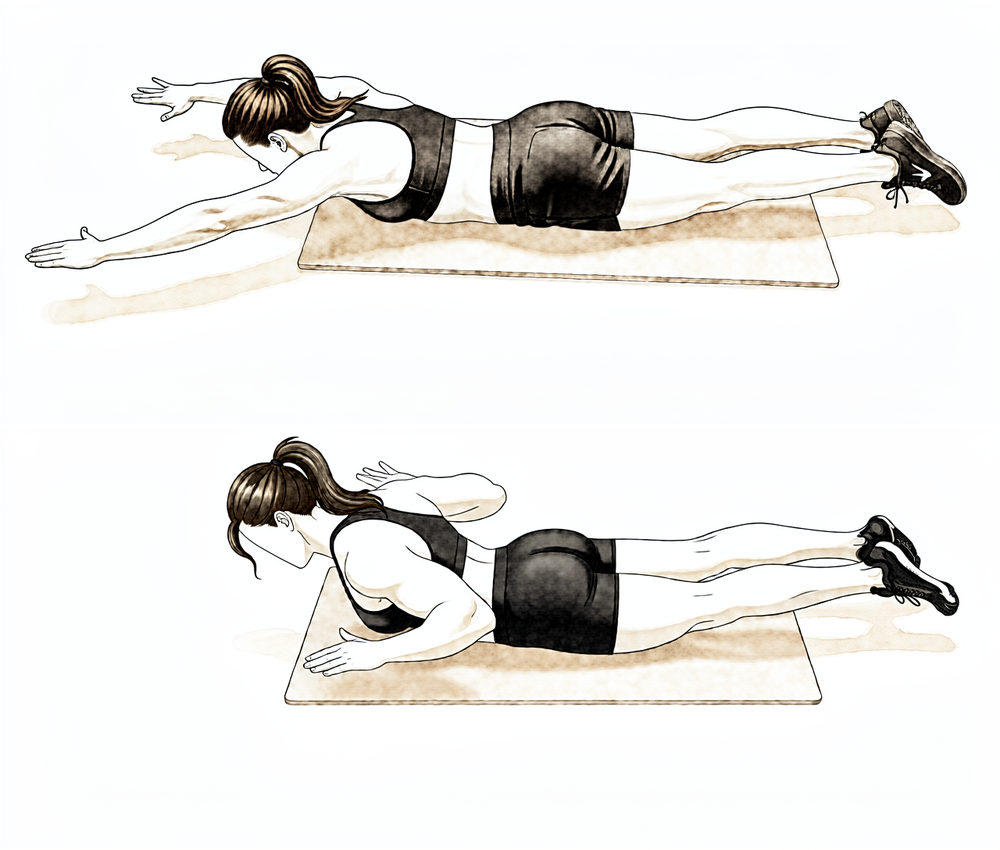
俯卧划船
俯卧,手术侧手臂自然下垂指向地面。将肘部向上抬向天花板,同时收缩肩胛骨使其向脊柱靠拢,然后缓慢放下。开始时不加负重,并保持动作受控。
在您的物理治疗师指导下
强化训练从肩部开始,由肩胛骨向外逐步推进:首先针对肩袖和肩胛肌群,使用弹力带和轻重量,采用低负荷、高重复次数的训练方式。肱二头肌抗阻训练(弯举和抗阻旋后)需等待至第 10 周,随后从轻量开始并缓慢进阶。已发表的方案通常在第 6 周至第 10 周之间引入该训练;本方案遵循该范围中更具保护性的端点,以便在加载前给予腱固定术最长时间的愈合期。在此阶段,日常活动应基本恢复正常;大约从第 8 周起,通常可在物理治疗师的指导下恢复跑步、骑自行车和打高尔夫球。
致您的物理治疗师:
目标
- 使力量、耐力和神经肌肉控制恢复正常
- 恢复从腰部水平经胸部水平至过头动作的功能
管理
- 全程维持肩关节和肘关节的完整活动范围
- 肩袖等长肌力强化:从中立位开始,向 90 度外展位渐进,进行轻阻力下的内旋和外旋训练
- 肩胛骨训练计划:俯卧系列动作在本阶段内逐步进阶;包括抗阻前锯肌出拳、低位划船、俯卧撑进阶(墙面、台面、跪姿、地面)
- 从第 10 周开始进行肱二头肌抗阻弯举、旋后和旋前;先使用短力臂,低负荷,高重复次数,谨慎进阶
- 节律性稳定训练和对角线(D1/D2)模式;闭链稳定训练
- 大约从第 8 周起恢复跑步、骑自行车和打高尔夫球,确保动作力学正确
注意事项
- 在本阶段早期避免长力臂的肘关节屈曲和旋后抗阻训练
- 在力量恢复之前,禁止进行重物搬运或提举
- 本阶段禁止游泳或投掷动作
- 强化训练需待活动范围接近完全正常时才开始,且训练过程应保持无痛
进阶标准
- 肩肱节律正常,主动活动范围完全且无痛
- 在肩胛骨平面 90 度外展位时,肩袖肌力达到 5/5 级,且肩胸肌力达到 5/5 级
- 强化训练耐受良好,未出现症状加重
第四阶段 — 恢复完全活动(第12周起)
最后阶段是逐步恢复较重的体力劳动、过头活动及体育运动。大多数人可在三至四个月时获得许可,进入健身房、从事体力劳动及参与休闲运动,并逐步增加负荷;过头及对抗性运动员(投掷、游泳、球拍类运动)的回归周期较长,通常需要四至五个月或更久。肱二头肌在此后数月内仍会持续增强力量与信心,因此本阶段的进展以手臂的实际功能为准,而非日期。
致您的物理治疗师:
目标
- 无代偿性运动模式下的完全力量与爆发力
- 在高速度及运动特异性动作中的稳定性与控制力
- 恢复正常运动及工作活动
管理
- 多关节及复合力量训练,稳步增加负荷
- 从低于肩部高度、双臂参与的增强式训练开始,逐步过渡至单臂及过头动作
- 针对投掷、游泳或球拍类运动(视具体情况而定)的间歇性重返运动计划
- 强化核心及髋部力量与控制,避免肩部代偿
注意事项
- 缓慢推进对肩关节前部施加压力的练习(例如卧推、直立划船)
- 重返运动需经评估许可,标准约为达到对侧手臂90%的力量,且在高速度、运动特异性动作中无痛并具备良好控制力
术后方案
上述各阶段改编自针对孤立性肱二头肌腱固定术的已发表康复方案,来源包括:马萨诸塞州总院布莱根运动医学中心、弗吉尼亚大学骨科系、俄亥俄州立大学韦克斯纳医学中心以及威斯康星大学健康中心(UW Health)。周数范围通常为典型参考值而非固定标准,您的持续康复将由您的物理治疗师在诊所的配合下,根据您的手臂恢复情况进行个体化指导。本页面与诊所的一般康复建议相辅相成;请参阅术后疼痛管理和伤口护理。关于手术本身,请参阅肱二头肌腱固定术。本方案背后的证据(包括固定与愈合、腱固定术与腱切断术的决策、并发症及失败率,以及康复节奏的选择依据)已在证据部分进行总结,该部分可作为PDF文件从本页面顶部获取。
Evidence & references
This is the clinical evidence summary written for health professionals. It is technical, and it lists the research this page was built from. You do not need to read it to understand your treatment or to make a decision about it.
Topic scope: the evidence behind post-operative rehabilitation after isolated biceps tenodesis (re-anchoring the long head of biceps to the humerus) — fixation methods and their healing implications, when to protect versus load the construct (active elbow flexion and resisted supination), shoulder ROM restrictions, return-to-activity timing, and the failure/complication profile (Popeye deformity, fixation failure). The combined cuff-repair pathway defers to the rotator-cuff-repair protocol and is out of scope here.
Defining principle of the surgical rehab here: a tenodesis is a healing construct that must be protected — the tendon has been detached from its native anchor and fixed into bone, and that bone–tendon interface needs weeks to heal. Because the biceps bends the elbow and turns the palm up (supination), the early restrictions are unusually centred on the elbow, not the shoulder: active elbow flexion and resisted supination are the loads that pull directly on the fresh tenodesis, so they are deferred while the construct heals. The shoulder itself is generally less restricted — only positions that tension the tendon (external rotation past ~40°, extension/horizontal abduction behind the body) are limited early. This is the inverse of a rotator-cuff or labral repair, where the shoulder is the protected structure.
A. THE PROCEDURE & WHY THE REHAB IS SHAPED THIS WAY
In a biceps tenodesis the long head of biceps is released from its origin on the superior glenoid/labrum and re-fixed into the proximal humerus, most commonly with an interference screw, a suture anchor, or a cortical/unicortical button (or combinations). The location is either suprapectoral (higher, usually all-arthroscopic, in or above the bicipital groove) or subpectoral (lower, usually open, below the pectoralis major tendon). Both achieve the same goal — remove the painful intra-articular biceps as a pain generator while preserving the muscle's length-tension relationship to avoid a Popeye deformity and cramping.
The rehab is built around the time for the tendon to incorporate into the bone tunnel/socket. The biceps' two actions — elbow flexion and forearm supination — are precisely the movements that load the tenodesis, so resisted/active use of these is staged in last. Shoulder motion is restored earlier because most shoulder positions do not pull hard on the construct.
B. EVIDENCE BY THEME
1. Tenodesis vs tenotomy — the decision upstream of rehab
Tenotomy (simply releasing the tendon) and tenodesis give broadly equivalent pain relief and function, but tenodesis trades a slightly more demanding recovery for a lower rate of Popeye deformity and cramping/fatigue, particularly relevant in younger, leaner and more active patients. A prospective double-blinded RCT and multiple reviews support this trade-off [Castricini RCT; Frost/Hackney review; Slenker review]. Moderate–strong (RCT + SR). This is why a tenodesis — and therefore a protected construct needing staged rehab — is chosen in the first place.
2. Fixation strength and what it permits
Interference screws and suture anchors both provide clinically adequate fixation; biomechanical load-to-failure figures vary between studies and clinical outcomes do not differ meaningfully by fixation type [biomechanical cadaver series; clinical comparisons]. The practical point for rehab: the construct is strong at time zero but the biological bond to bone is what is healing over the first 6–12 weeks — which is why loaded elbow flexion is deferred regardless of the hardware used. Moderate (biomechanical + clinical cohorts).
3. Does the rehab pace actually need to be slow? — the key controversy
The traditional protocol protects the elbow for ~6 weeks before active flexion and reserves resisted biceps work for ~10–12 weeks. However, Mazzocca et al. challenged this: in 105 open subpectoral tenodeses (dual-fixation button + interference screw) rehabilitated with immediate, unrestricted motion and no postoperative restrictions, the failure rate was only 2.2% (2 of 98) at minimum 2-year follow-up, with excellent ASES/DASH scores. Both failures occurred early (5 and 9 weeks). The conclusion: with a robust dual-fixation construct, early mobilisation is reasonable and may improve outcomes [Mazzocca, JSES 2018, DOI 10.1016/j.jse.2018.02.061]. A subsequent comparison of early versus delayed active ROM reached similar reassurance [PMID 34458384]. Moderate (single-arm cohort + comparative). This protocol nonetheless follows the more protective published pace — it is the safer default across mixed fixation methods and does not assume a dual-fixation construct.
4. Complications and failure rates — what rehab is protecting against
A review of 1,526 shoulders found a low overall complication rate: persistent anterior shoulder pain ~11–13%, Popeye deformity ~4.6–4.7%, with no meaningful difference by fixation type or location; reported fixation failure/re-rupture is ~0.8% [Nho/Virk review, DOI 10.1016/j.jse.2018.09.005]. The small early-failure window (the Mazzocca failures at 5 and 9 weeks) is exactly the period the protective phases cover. Moderate (large pooled review).
5. Suprapectoral vs subpectoral — does it change rehab?
A systematic review and meta-analysis of arthroscopic suprapectoral versus open subpectoral tenodesis found comparable clinical outcomes and complication profiles [DOI 10.1177/2325967120945322]. The rehabilitation pathway is therefore the same for both techniques — this protocol covers arthroscopic and open subpectoral alike. Moderate (SR-MA).
C. PHASED POST-OP TIMELINE (isolated tenodesis)
Consistent with the synthesis protocol. The hallmark is protect the elbow (no active flexion / no resisted supination) while keeping the hand, wrist, scapula and most of the shoulder moving.
| Phase | Window | Sling | ROM | Strengthening | Notes |
|---|---|---|---|---|---|
| I — Protecting the tenodesis | Week 0–4 | Yes, incl. at night; wean from ~wk 3 | Passive elbow flexion/extension + forearm rotation; active hand/wrist; gentle shoulder PROM/AAROM — flexion/scaption to ~90°, ER to 40°, IR to ~45°; pendulums | None (biceps stays unloaded) | No active elbow flexion, no resisted supination; no shoulder extension / horizontal abduction past neutral; no lifting/carrying. No driving while in the sling. |
| II — Active movement | Week 4–6 | Off | Progress shoulder AAROM → AROM all planes; active (unloaded) elbow flexion/extension + supination/pronation begins | Submaximal shoulder isometrics | Biceps moving but not working — keep lifting minimal (≤ a cup of tea). Driving once out of sling and able to control the car safely. |
| III — Strengthening | Week 6–12 | Off | Maintain full ROM | Cuff + scapular strengthening from wk 6; resisted biceps curls / resisted supination from ~week 10 | Resisted biceps deliberately last; published protocols introduce it wk 6–10, this protocol uses the protective end. Running/cycling/golf from ~wk 8. |
| IV — Return to full activity | Week 12+ | Off | Full | Progressive load, power, sport-specific | Gym/manual work/recreational sport ~3–4 months; overhead/throwing/contact staged over ~4–5 months+. |
Branch point — combined cuff repair: if a rotator cuff repair was performed at the same time, the rotator-cuff-repair protocol takes priority (sling ~6 weeks, ROM restrictions, slower strengthening, ~5 months total). The surgeon confirms post-operatively which pathway applies.
D. KEY CONTROVERSIES / EVIDENCE QUALITY
- How fast is safe? The strongest single piece of rehab-specific evidence (Mazzocca 2018) suggests immediate unrestricted motion is safe with a robust dual-fixation construct (2.2% failure). But this is a single-arm cohort with one specific construct; it does not license fast rehab across all fixation methods. The protective default remains the prudent generalisation. Moderate.
- Tenodesis vs tenotomy is well studied (RCT + SRs) and favours tenodesis for cosmesis/cramping — but this is the indication decision, not a rehab-timing trial. Moderate–strong.
- The rehab protocol timings themselves are consensus/expert, drawn from published academic physiotherapy guidelines (MGH Brigham, UVA, Ohio State, UW Health) rather than head-to-head rehab RCTs. Week ranges are typical, not trial-derived. Weak/consensus.
- Resisted-biceps start week varies (6–10) across published protocols; the choice of week 10 here is a deliberate protective bias, not a trial-supported threshold. Weak/consensus.
E. EVIDENCE-STRENGTH FLAGS (summary)
- MODERATE–STRONG (RCT / SR-MA): tenodesis vs tenotomy equivalence with lower Popeye/cramping after tenodesis; suprapectoral vs subpectoral outcome equivalence (SR-MA).
- MODERATE (cohorts / large pooled review): immediate-unrestricted-motion safety with dual fixation (Mazzocca, 2.2% failure); low overall complication profile (1,526-shoulder review — Popeye ~4.6%, fixation failure ~0.8%); fixation-type clinical equivalence.
- WEAK / CONSENSUS: the post-operative rehabilitation protocol itself (academic PT guidelines, no defining rehab RCT); the specific week-10 resisted-biceps threshold.
CITATIONS
RAG corpus (180,000+ Orthopaedic articles)
- Mazzocca AD, et al. Immediate physical therapy without postoperative restrictions following open subpectoral biceps tenodesis: low failure rates and improved outcomes at a minimum 2-year follow-up. J Shoulder Elbow Surg. 2018. DOI: 10.1016/j.jse.2018.02.061
- Complications of biceps tenodesis based on location, fixation, and indication: a review of 1526 shoulders. J Shoulder Elbow Surg. 2019. DOI: 10.1016/j.jse.2018.09.005
- Biceps tenotomy versus tenodesis: a review of clinical outcomes and biomechanical results. J Shoulder Elbow Surg. 2011. DOI: 10.1016/j.jse.2010.08.019
- Biceps Tenodesis Versus Tenotomy in the Treatment of Lesions of the Long Head of the Biceps Tendon in Patients Undergoing Arthroscopic Shoulder Surgery: A Prospective Double-Blinded Randomized Controlled Trial. Am J Sports Med. 2020. DOI: 10.1177/0363546520912212
- Outcomes and Complications After Primary Arthroscopic Suprapectoral Versus Open Subpectoral Biceps Tenodesis for SLAP Tears or Biceps Abnormalities: A Systematic Review and Meta-analysis. Orthop J Sports Med. 2020. DOI: 10.1177/2325967120945322
- Arthroscopic Proximal Biceps Tenodesis at the Articular Margin: Evaluation of Outcomes, Complications, and Revision Rate. Arthroscopy. 2014. DOI: 10.1016/j.arthro.2014.08.024
- Clinical and Biomechanical Evaluation of an All-Arthroscopic Suprapectoral Biceps Tenodesis. Orthop J Sports Med. 2014. DOI: 10.1177/2325967114553558
- All-Arthroscopic Suprapectoral Versus Open Subpectoral Tenodesis of the Long Head of the Biceps Brachii Without the Use of Interference Screws. Arthroscopy. 2016. DOI: 10.1016/j.arthro.2016.07.007
Literature (URLs)
- Early Versus Delayed Active Range of Motion After Open Subpectoral Biceps Tenodesis. PubMed. https://pubmed.ncbi.nlm.nih.gov/34458384/
- Complications of biceps tenodesis based on location, fixation, and indication: a review of 1526 shoulders. PubMed. https://pubmed.ncbi.nlm.nih.gov/30573431/
- Mazzocca — immediate PT without restrictions (minimum 2-year follow-up). PubMed. https://pubmed.ncbi.nlm.nih.gov/29804912/
- Interference Screw vs. Suture Anchor Fixation for Open Subpectoral Biceps Tenodesis: Does it Matter? PMC. https://www.ncbi.nlm.nih.gov/pmc/articles/PMC2553411/
Published rehab protocols (patient-guidance — basis for the phase structure)
- Massachusetts General Brigham Sports Medicine. Rehabilitation Guidelines for Biceps Tenodesis. https://www.massgeneral.org/assets/MGH/pdf/orthopaedics/sports-medicine/physical-therapy/rehabilitation-protocol-for-biceps-tenodesis.pdf
- UVA Department of Orthopaedic Surgery, University of Virginia. Isolated Biceps Tenodesis Post-operative Rehabilitation Protocol. https://med.virginia.edu/orthopaedic-surgery/wp-content/uploads/sites/242/2021/06/Isolated-Biceps-Tenodesis.pdf
- The Ohio State University Wexner Medical Center. Biceps Tenodesis Clinical Practice Guideline. https://medicine.osu.edu/-/media/files/medicine/departments/sports-medicine/medical-professionals/shoulder-and-elbow/bicep-tenodesis-2020.pdf
- UW Health Sports Medicine, University of Wisconsin. Rehabilitation Guidelines for Biceps Tenodesis. https://bynder.uwhealth.org/m/8a7c2438102f495f/original/Rehab-Guideline-Biceps-Tenodesis.pdf





