

住院期间锻炼 — 关节囊松解与肩峰下减压 资料
这些是关节囊松解术或肩峰下间隙减压术后在医院内开始进行的轻柔练习。对于这类手术,首要目标是保持肩关节自由活动。
您的锻炼
Kieran Hirpara 4.0
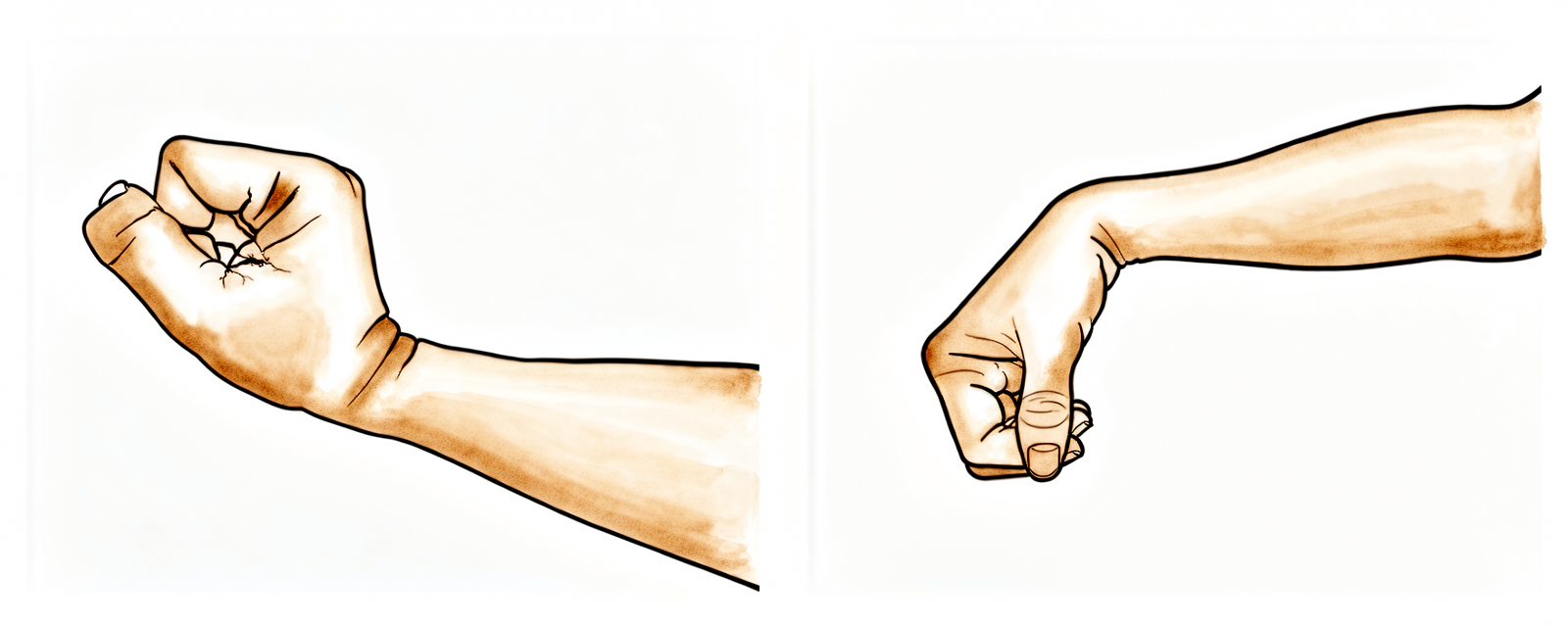
腕部运动
通过向前、向后及左右弯曲手腕来保持手部活动。
10次,每日3次
Kieran Hirpara 4.0
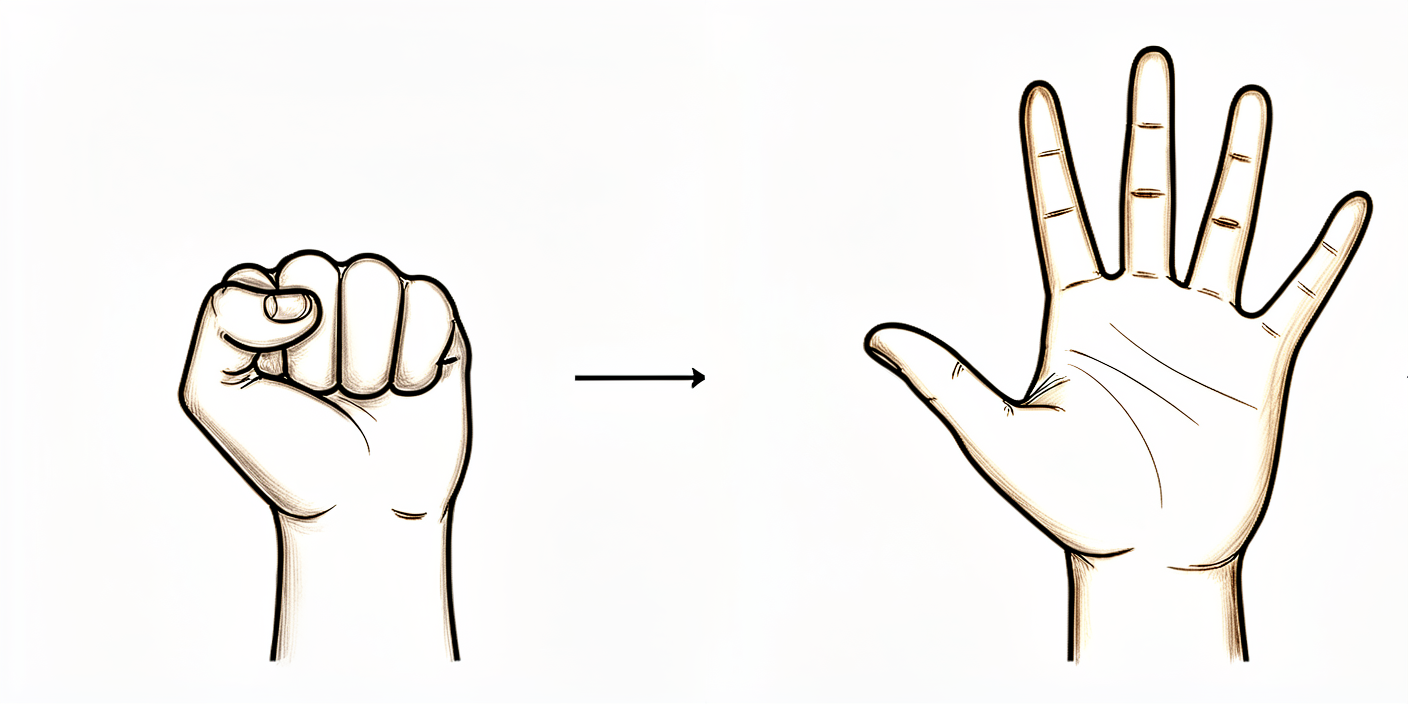
张开和握紧手
通过反复张开和握紧手部及手指,或挤压压力球,保持手部和手指的活动。
10次,每日3次
Kieran Hirpara 4.0
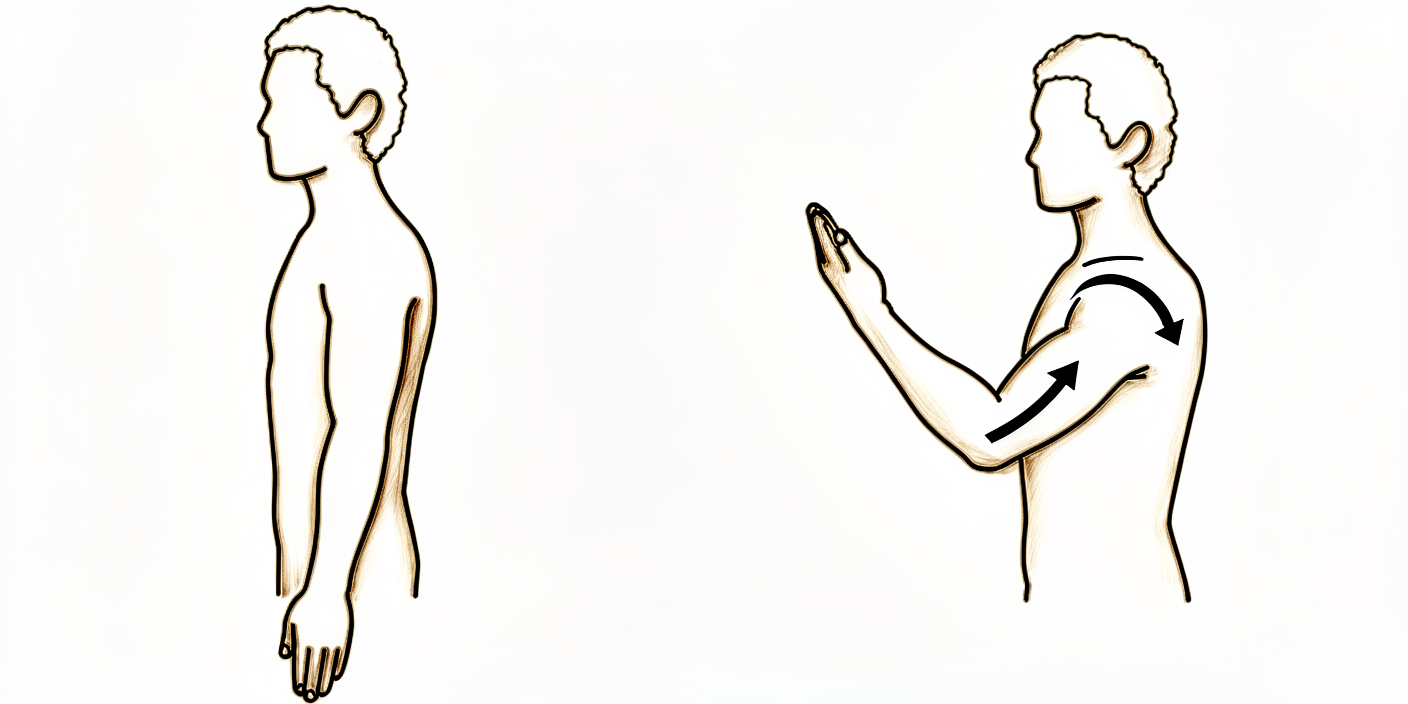
肘部弯曲
弯曲并伸直您的肘部。
10次,每日3次
Kieran Hirpara 4.0
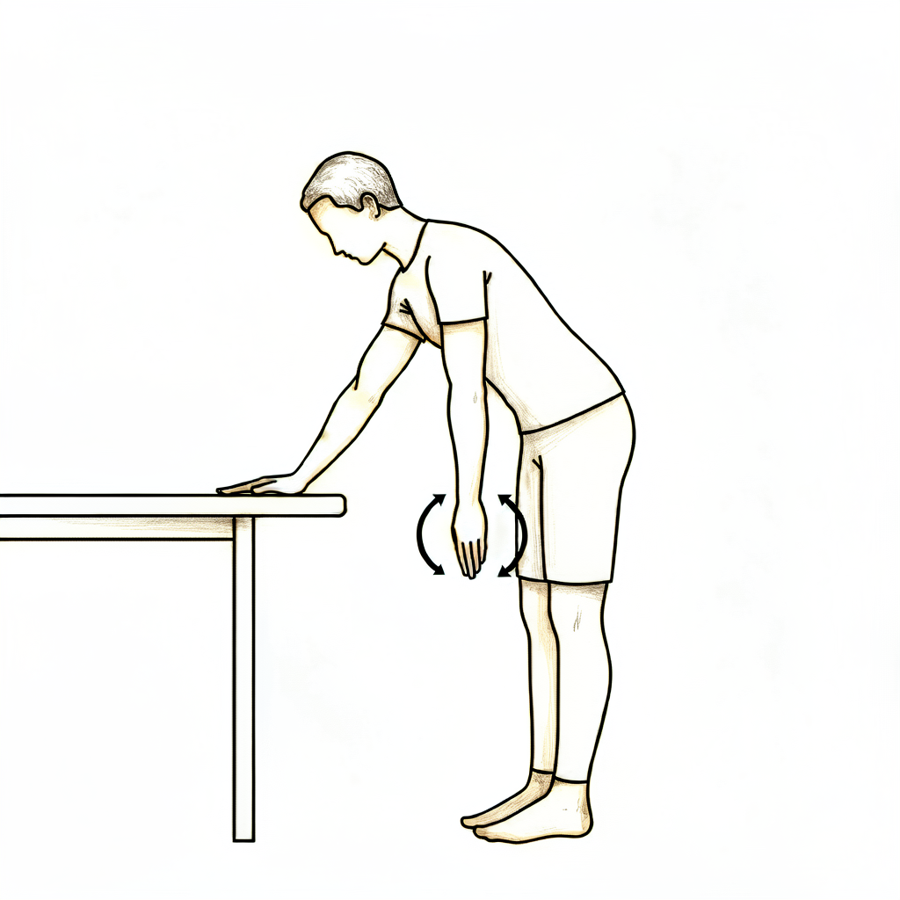
钟摆
这是一项被动练习。身体前倾,让手臂自然放松下垂。利用身体带动手臂轻柔地顺时针或逆时针转动,并配合前后及左右方向的摆动。
每个方向约30秒,每日3次
Kieran Hirpara 4.0
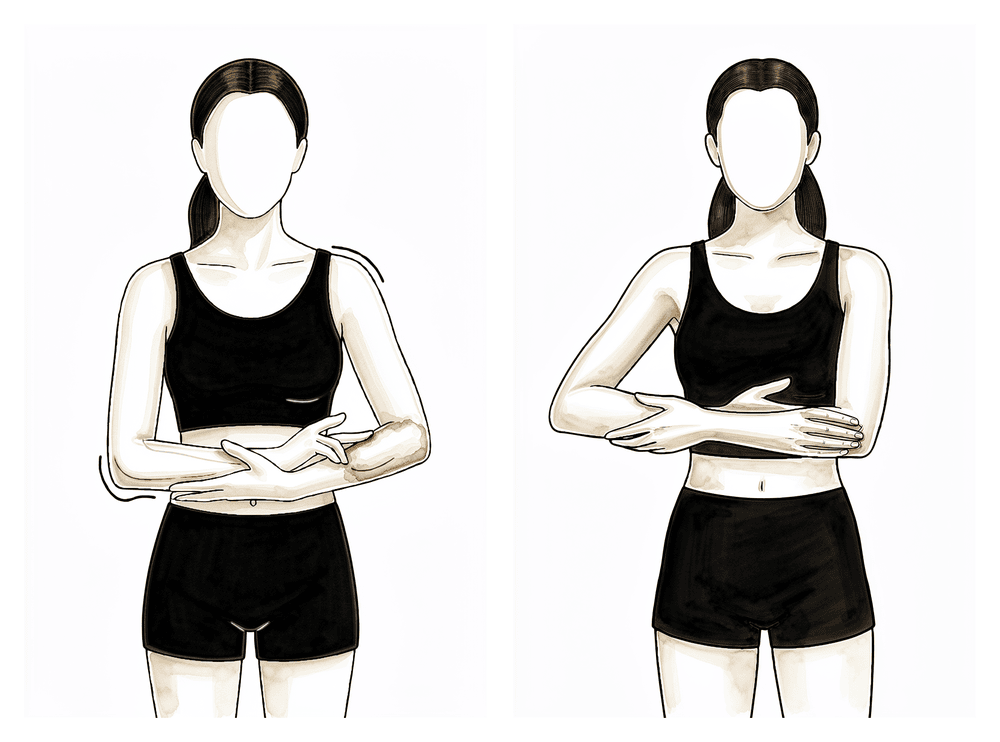
辅助外展
坐在椅子上,身体前倾,托住手术侧手臂,协助其向侧方移出(就像摇婴儿一样)。
10次,每日3次
Kieran Hirpara 4.0
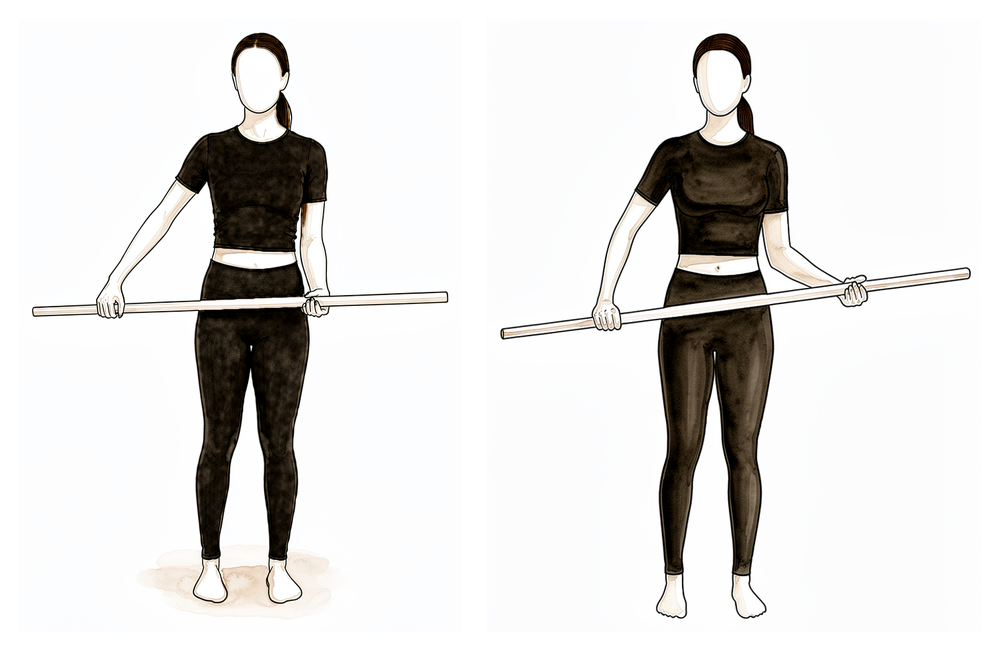
使用棍棒辅助外旋
仰卧,肘部贴紧体侧并屈曲成直角。双手握住一根棍棒,用健侧手臂带动患手向外旋转,以转动肩关节。术后外旋角度无限制,因此随着活动度逐渐恢复,可轻柔地略微增加外旋幅度。
10次,每日3次
Kieran Hirpara 4.0
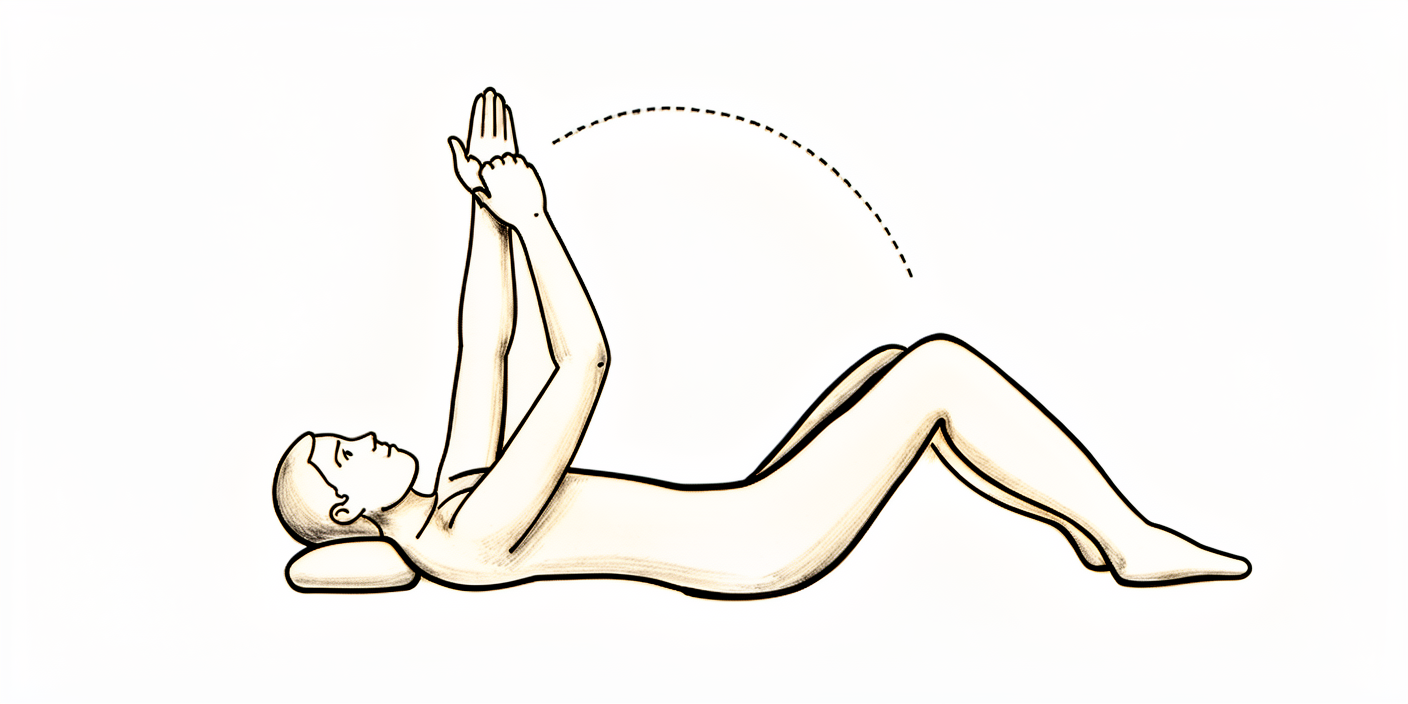
辅助前屈(仰卧位)
如果您愿意,可以仰卧,双手握住一根棍子或卷起的毛巾。用健侧手臂将患侧手臂向上推过头顶,直到舒适的最大范围,然后缓慢放下。每次都要推至产生坚实的牵拉感。
10次,每日3次
Kieran Hirpara 4.0
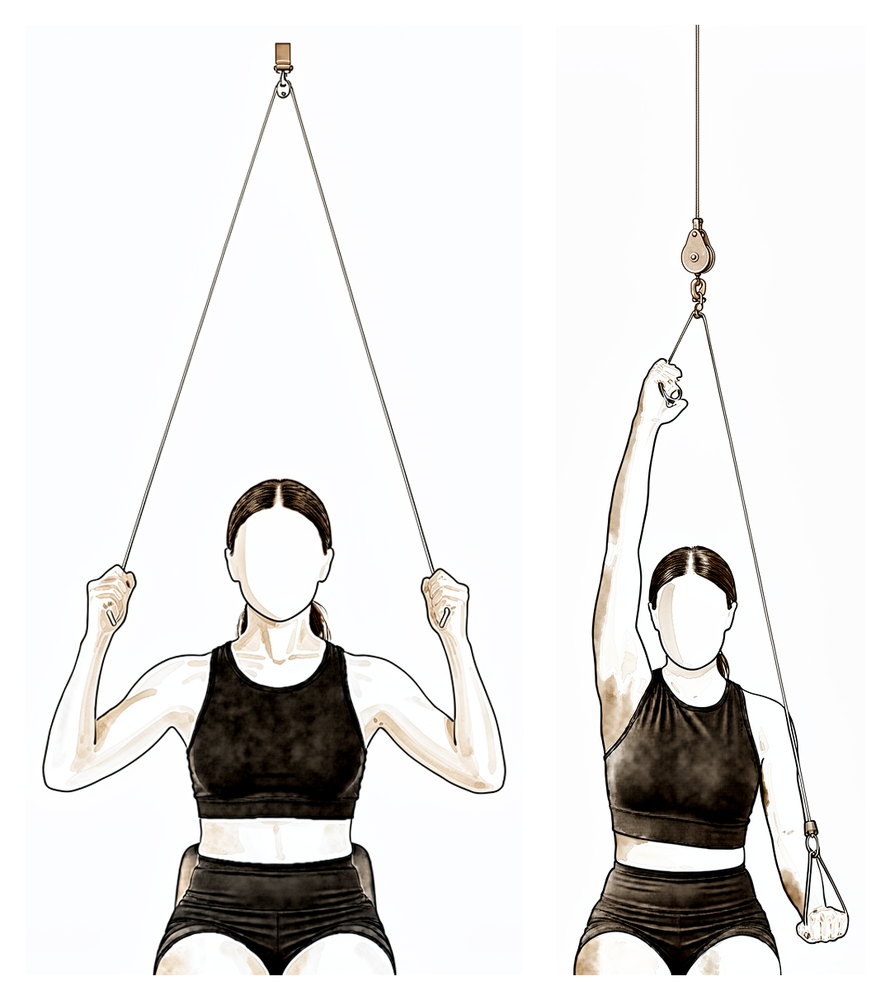
门顶滑轮
坐在门后滑轮装置下方,双手各握一个手柄。用健侧手臂向下拉,将手术侧手臂尽可能举过头顶,然后缓慢放下。每次动作均应达到稳固的拉伸感,而非剧烈疼痛。
10次,每日3次
Kieran Hirpara 4.0
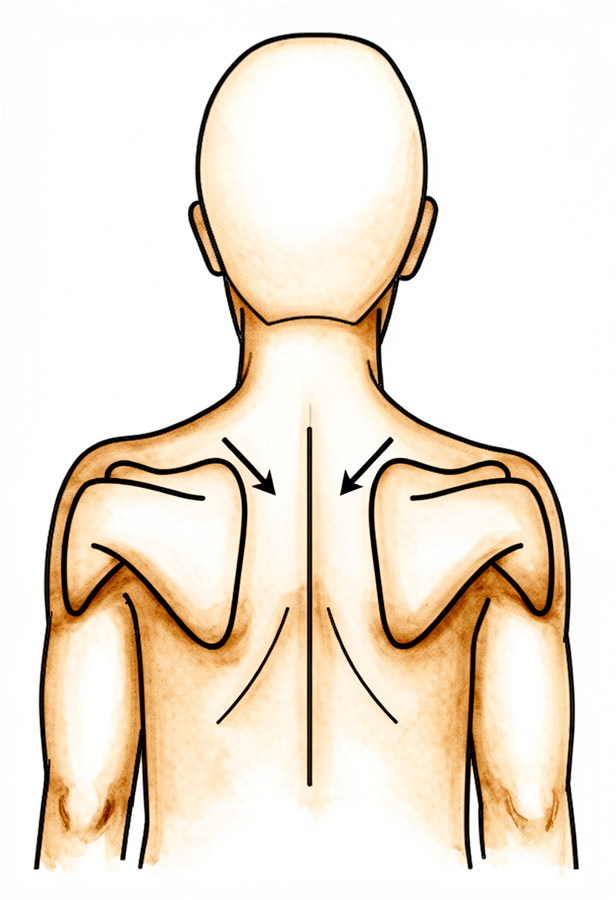
下斜方肌激活
将肩胛骨向下并向内收拢。
保持 5 秒,5 次,每天 3 次
Kieran Hirpara 4.0
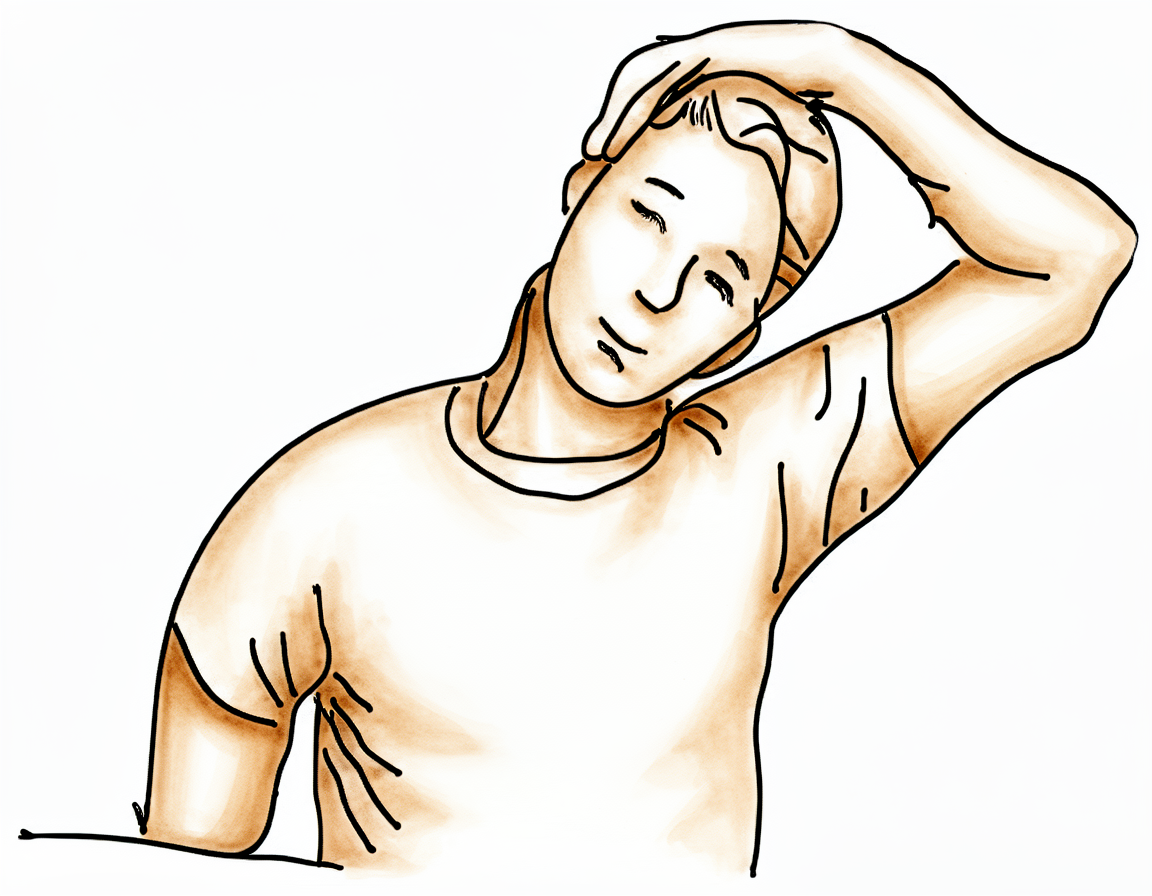
上斜方肌拉伸
请使用非手术侧手臂将耳朵向同侧肩部靠近,远离手术侧。
保持10秒,3次,每天3次
Kieran Hirpara 4.0
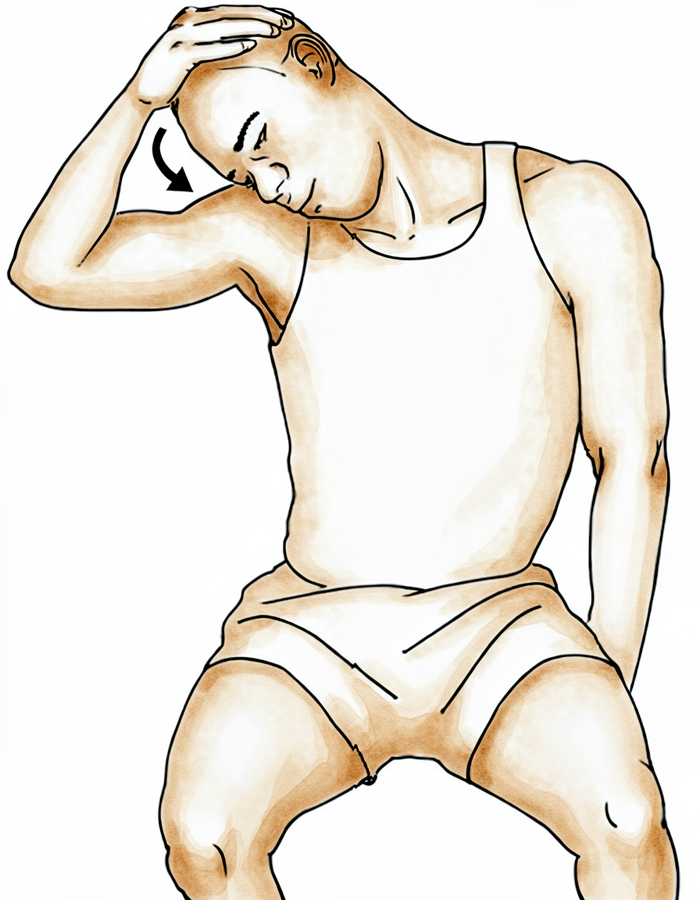
肩胛提肌拉伸
使用您的非手术侧手臂,将鼻子移向腋窝区域,远离手术侧。
保持10秒,3次,每天3次
Kieran Hirpara 4.0
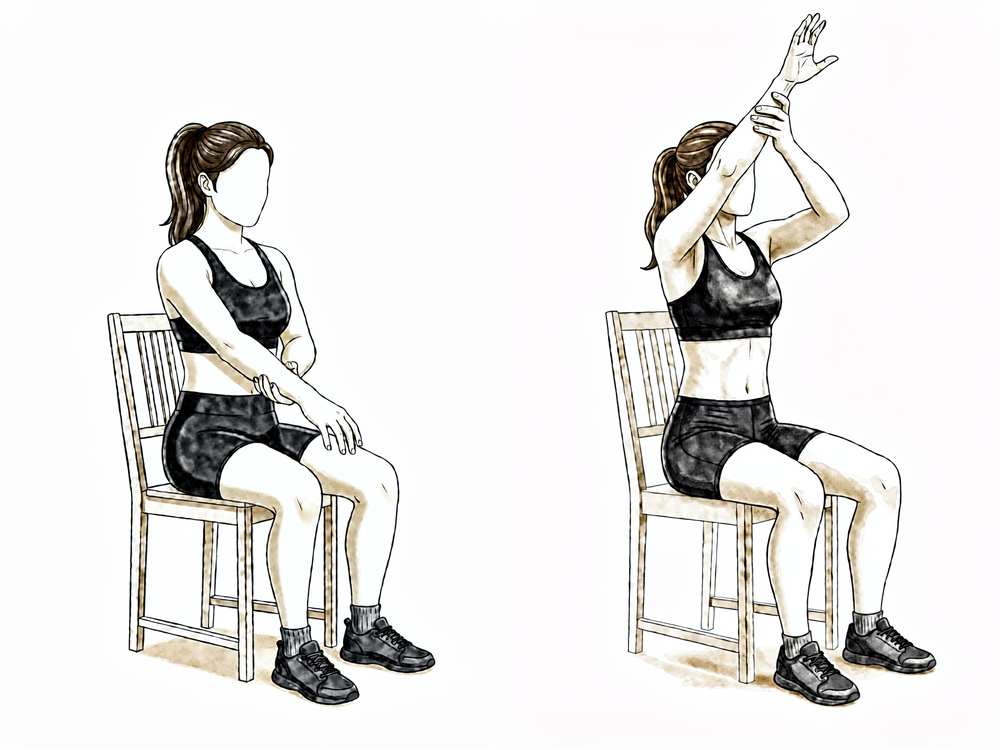
辅助前屈上举(坐位)
坐直并略微前倾,用健侧手托住患侧前臂,借助健侧手的力量将患侧手臂向前上方抬起至舒适的最大范围,然后缓慢放下。让健侧手臂承担主要动作,使患侧肩部保持放松。
在您的物理治疗师指导下
请在医院开始这些温和的锻炼,并在家继续。它们应当是舒适的;如果疼痛加剧,请放慢动作。
佩戴悬吊带
- 悬吊带仅用于提供舒适感,应尽可能少佩戴。您无需在睡觉时佩戴悬吊带。
- 尽可能多地活动和手臂。
- 建议外出时佩戴悬吊带,以防他人碰撞到您的手臂。
- 在前六周内,每周至少安排两次物理治疗。
- 如有需要,可使用冰敷缓解疼痛。
- 佩戴悬吊带时,放松肩部,让悬吊带承担手臂的重量。
- 在进行锻炼和物理治疗预约前服用止痛药。
- 除非您已自行安排物理治疗,否则已为您预约了物理治疗,详情见出院资料包。
- 如有任何问题,请联系病房或告知您的物理治疗师。
回家之后
回家后,您的康复将继续按照手术的全套康复方案进行:关节囊松解术;肩峰下减压术。
这些早期的院内锻炼改编自已发表的针对这些手术的患者指导和康复方案,时间安排是典型值而非固定值;您的物理治疗师将根据您的肩部反应,个体化地指导您的康复。这一早期阶段的证据基础(为什么关节囊松解术后优先进行即时活动而非保护肩部)在证据部分进行了总结,可从本页面顶部获取 PDF 文件。
Evidence & references
This is the clinical evidence summary written for health professionals. It is technical, and it lists the research this page was built from. You do not need to read it to understand your treatment or to make a decision about it.
Topic scope: the early in-hospital phase of rehabilitation for patients who have just had an arthroscopic capsular release (for a stiff/frozen shoulder) and/or an arthroscopic subacromial decompression (acromioplasty). This page covers only the first day or two after surgery — getting the shoulder moving before the patient goes home. The full recovery course lives in the parent protocols: capsular release and subacromial decompression. Read those for the week-by-week plan, strengthening and return to work/sport.
Defining principle of this pathway (the inversion): unlike most shoulder operations — where a repair (cuff, labrum, instability) must be protected in a sling and range of motion is restricted to let the tissue heal — capsular release does the opposite. Nothing has been repaired, so there is no construct to protect. The shoulder was deliberately freed up in theatre, and the enemy now is re-stiffening. The in-hospital priority is therefore immediate, aggressive range of motion from day 0–1, usually with no protective sling (or a sling only for comfort, discarded quickly), to hold on to the range gained at surgery. A subacromial decompression is also a "make room / take pressure off" operation with no repair, so it follows the same early-movement logic. The single thing that changes this is if the surgeon also had to repair a rotator cuff tear at the same time — then the slower, protected cuff-repair pathway applies and the surgeon will say so.
The early in-hospital phase
The aim of the first day or two is simple: keep the shoulder moving and keep the patient comfortable enough to do so. In hospital, patients are started on gentle hand, wrist and elbow movements, pendulum (Codman) swings, and assisted elevation and external rotation — exactly the gentle exercises listed on the patient page. Adequate pain relief is the practical key, because a comfortable patient will move the arm, and a moving arm does not re-stiffen.
For capsular release in particular, surgeons commonly inject an intra-articular corticosteroid and perform a gentle controlled manipulation at the end of the operation to confirm the gained range and to damp down the post-operative inflammation that drives re-contracture [Smith 2017, PMC5137660]. The early motion exercises then begin straight away — often the same day or the first day after surgery.
Evidence by theme
Immediate-motion capsular-release protocols
Published arthroscopic capsular release (ACR) series describe starting motion immediately, not after a protected period. The largest cohort (Kanbe 2018, n = 255) commenced "passive, assisted-active and stooping (pendulum) exercises for forward flexion and external rotation 1 day after surgery," progressing to active strengthening at ~2 weeks and return to work by 4–6 weeks [Kanbe 2018]. Surgical-technique reviews echo this: active-assisted and passive range-of-motion exercises — pendulum/circumduction and pulley work — "can be started on the first postoperative day," and patients perceive the improvement in motion immediately, which reinforces their commitment to moving the arm [Essential Surgical Technique, PMC6221416]. Several ACR series pair the release with an intra-articular steroid + controlled manipulation at the index procedure to limit re-stiffening [Smith 2017, PMC5137660]. Evidence: large cohorts + expert/consensus.
Subacromial decompression — early motion, sling for comfort only
Arthroscopic subacromial decompression (acromioplasty) likewise has no repair to protect. Patient-guidance protocols start physiotherapy immediately after surgery, with a sling worn only 1–2 weeks for comfort and early active range of motion (forward elevation below shoulder height, gentle rotation) from the outset; strengthening follows at 4–6 weeks and unrestricted activity by 6–12 weeks [Boston Shoulder Institute SAD protocol; London Shoulder Partnership]. The important caveat, stated in every protocol, is that a concomitant rotator cuff repair (or biceps/SLAP repair) converts the recovery to the slower, protected pathway [PMC6145625].
Why immediate motion (and not protection)
A small number of patients develop stiffness after even simple arthroscopic shoulder procedures, which is the failure mode early movement is designed to prevent [Frozen shoulder after simple arthroscopic procedures, 10.1302/0301-620x.97b7.35387]. Conversely, the corpus also flags chondrolysis after shoulder arthroscopy as a rare but serious complication — a reminder that "aggressive" here means aggressive motion, on a comfortable, well-analgesed patient, not aggressive intra-articular intervention [10.1177/0363546503262176].
Phased timeline — early phase only
| Phase | Window | Sling | ROM / use | Notes |
|---|---|---|---|---|
| 0 — In hospital (this page) | Day 0–1 | None, or comfort only — left off as much as possible, not worn to sleep | Gentle hand/wrist/elbow movement; pendulums; assisted forward flexion + external rotation begun day 1; HEP several times/day | Take painkillers before exercises and physio; ice for pain. Capsular release: intra-articular steroid ± gentle manipulation often given in theatre |
| 1 — First weeks (see parent protocol) | Week 0–2+ | Comfort only, discarded early | Continue assisted/active motion to hold the gained range; physio ≥ 2×/week early on | Full week-by-week plan, strengthening and return to function are in the capsular release and subacromial decompression protocols |
Branch point — if a rotator cuff repair was also performed: the recovery converts to the protected rotator-cuff-repair pathway (sling ~6 weeks, restricted motion, delayed strengthening). The surgeon confirms which pathway applies before discharge — this is a surgeon-decided point, not a default.
Key controversies / evidence quality
- The post-operative rehab protocol is consensus/expert, not RCT-derived. There is no high-level trial defining the optimal regimen after capsular release; published protocols are large cohorts and surgeon patient-guidance documents and vary in detail [Kanbe 2018; Willmore 2020 review]. What is consistent across them all is the immediate-motion, no-protective-sling principle.
- Sling: comfort only vs none. Protocols differ on whether to use a comfort sling at all and for how long (days to ~2 weeks for decompression). All agree it must be left off as much as possible and is never a protective device here.
- Steroid + manipulation at the index procedure. Common in ACR to limit re-stiffening, but the exact regimen (dose, whether to manipulate) is surgeon preference, not standardised by trial.
Evidence-strength flags
- MODERATE (large cohorts): clinical outcomes of arthroscopic capsular release with day-1 motion (Kanbe 2018, n = 255); subacromial decompression outcomes.
- WEAK / CONSENSUS: the early-phase rehab protocol itself — immediate motion, sling-for-comfort rules, intra-articular steroid + manipulation timing (surgeon patient-guidance and expert review; no defining rehab RCT).
- Branch-point claim (cuff repair → protected pathway): STRONG rationale and uniformly stated across protocols.
Citations
RAG corpus (180,000+ Orthopaedic articles)
- Arthroscopic capsular release for refractory shoulder stiffness: a critical analysis of effectiveness in specific etiologies. J Shoulder Elbow Surg. DOI: 10.1016/j.jse.2009.08.004
- Arthroscopic release of postoperative capsular contracture of the shoulder. J Bone Joint Surg Am. 1997. DOI: 10.2106/00004623-199708000-00006
- Arthroscopic release for chronic, refractory adhesive capsulitis of the shoulder. J Bone Joint Surg Am. 1996. DOI: 10.2106/00004623-199612000-00003
- Clinical outcome of arthroscopic capsular release for frozen shoulder: essential technical points in 255 patients (Kanbe 2018; day-1 ROM, 4–6 wk return to work). J Orthop Surg Res. 2018. DOI: 10.1186/s13018-018-0758-5
- Establishing the MCID and PASS thresholds following arthroscopic capsular release for idiopathic adhesive capsulitis. Arthroscopy. 2023. DOI: 10.1016/j.arthro.2023.08.083
- Frozen shoulder after simple arthroscopic shoulder procedures. Bone Joint J. 2015. DOI: 10.1302/0301-620x.97b7.35387
- Glenohumeral chondrolysis after shoulder arthroscopy (rare serious complication; "aggressive" = motion, not intra-articular intervention). Am J Sports Med. 2004. DOI: 10.1177/0363546503262176
- Effect of capsular release in the treatment of shoulder stiffness concomitant with rotator cuff repair. Am J Sports Med. 2014. DOI: 10.1177/0363546513519326
Literature & published protocols (URLs)
- Kanbe K. Clinical outcome of arthroscopic capsular release for frozen shoulder (day-1 ROM protocol). PMC: https://pmc.ncbi.nlm.nih.gov/articles/PMC5857121/
- Smith CD et al. Arthroscopic capsular release for idiopathic frozen shoulder with intra-articular injection and controlled manipulation. PMC5137660: https://pmc.ncbi.nlm.nih.gov/articles/PMC5137660/
- Essential surgical technique for arthroscopic capsular release (active-assisted/passive ROM from first post-op day). PMC6221416: https://pmc.ncbi.nlm.nih.gov/articles/PMC6221416/
- Arthroscopic subacromial decompression and acromioplasty — rehabilitation and concomitant-repair caveat. PMC6145625: https://pmc.ncbi.nlm.nih.gov/articles/PMC6145625/
- Boston Shoulder Institute — Post-operative arthroscopic subacromial decompression protocol (sling 1–2 wk for comfort, immediate physio): https://bostonshoulderinstitute.com/wp-content/uploads/2014/07/Shoulder-Subacromial-Decompression-protocol2.pdf
- The London Shoulder Partnership — Subacromial decompression (acromioplasty): http://thelondonshoulderpartnership.co.uk/shoulder/shoulder-surgery/subacromial-decompression-acromioplasty/
- J Paget NHS — Patient information: arthroscopic capsular release following a frozen shoulder (sling for comfort, early movement): https://www.jpaget.nhs.uk/media/efmf3bab/arthroscopic-capsular-release-following-a-frozen-shoulder.pdf





