

锤状指 资料
本方案指导您在 Mater Private Hospital Rockhampton 的 Kieran Hirpara 医生监护下,从锤状指(因伸直手指最末端关节的肌腱受伤而导致指尖下垂)中恢复。大多数锤状指无需手术,而是使用夹板将指尖保持伸直状态直至愈合。方案从您的家庭康复计划开始,随后是为您手部治疗师撰写的结构化临床方案。请在首次治疗就诊时携带此页面或其 PDF 文件,以确保您的康复过程协调一致。您的治疗师可能会根据恢复进展调整计划。
如果您对患指、夹板下的皮肤或恢复进度有任何疑虑,请联系诊所。通常,拍照并发送电子邮件以供审阅会很有帮助。
预期情况
锤状指发生于末端伸肌腱(使手指最末端关节——即靠近指甲的远指间关节(DIP)伸直的那条细小肌腱)从骨骼上撕裂脱开。这通常继发于伸直的手指指尖受到强制弯曲,例如球类撞击或碰撞“卡住”了手指末端。有时肌腱会撕下一小片骨块(骨性锤状指);有时则单纯发生肌腱撕裂(腱性锤状指)。无论哪种情况,结果都是相同的:指尖下垂,您无法自行将其伸直,尽管手指其余部分功能正常。
好消息是,这种损伤仅通过夹板固定即可非常可靠地愈合;大多数人无需手术。整个治疗基于一个简单的原则:
- 在肌腱愈合期间,指尖关节必须保持完全伸直,且不能中断。 夹板使最末端关节保持伸直(或略微过伸),以便撕裂的断端能够重新连接。腱性锤状指需全天(昼夜)佩戴约八周,骨性锤状指约六周。
- 在此期间,指尖绝不允许弯曲。 如果指尖即使短暂下垂(例如在更换夹板或清洗时),愈合过程就会中断,计时需从零重新开始。因此,您保持指尖伸直的谨慎程度是决定手指恢复效果的最关键单一因素。
- 手指的其他关节保持自由并继续活动。 中间关节(近指间关节,PIP)和掌指关节(MCP)不包含在夹板内,应从一开始就自由活动;活动这些关节不会干扰指尖的愈合。
在全天佩戴期结束后,夹板将逐渐停用(首先仅用于夜间和高风险活动时,随后完全取下),同时您开始缓慢地重新弯曲指尖。遗留约五到十度的轻微永久性下垂是正常的;这是预期结果,通常不影响手指功能,且大多数患者对结果非常满意。
注意事项与限制
- 在夹板固定阶段,切勿让指尖弯曲,即使在清洗或更换夹板时也绝不能弯曲哪怕一秒。如果指尖下垂,愈合过程将重新开始,夹板固定期需重新计算。
- 在整个治疗师设定的期间内全天佩戴夹板(白天和夜间):肌腱性锤状指约需 8 周,骨性锤状指约需 6 周。
- 仅在清洁和擦干皮肤时取下夹板,且前提是您能全程保持指尖完全伸直(将其平放在桌面上或用另一只手将其保持伸直)。
- 从一开始就保持中间关节和掌指关节自由活动;仅固定最末端的关节。
- 每日检查皮肤。 如果关节顶部皮肤变苍白、发白或疼痛,请告知您的手部治疗师;夹板可能将指尖固定得过于靠后,需要调整。
- 在手部治疗师开始脱除夹板过渡期之前,不要开始弯曲指尖。
关于伤口、肿胀和皮肤管理,请参阅本诊所的伤口护理指南。
您的练习
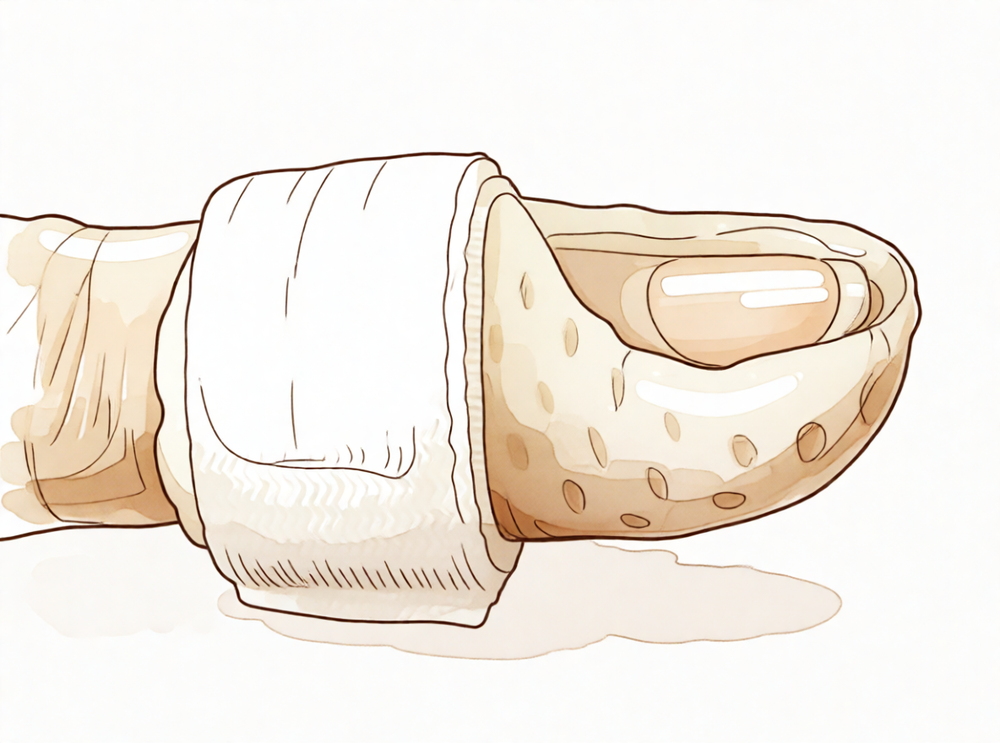
Davplast / Wikimedia Commons, CC BY-SA 4.0
佩戴远端指间关节(DIP)伸直支具(指尖绝不可弯曲)
请全天候佩戴夹板,固定指尖关节——无论白天还是夜晚——以确保最后一个关节(即远端指间关节,DIP,最靠近指甲的关节)保持完全伸直。这是您治疗过程中唯一最重要的部分。指尖绝不允许弯曲,哪怕只是一瞬间:如果指尖在任何时候下垂,愈合过程将从零开始,计时器将重置。请在清洗、睡觉和工作时保持夹板佩戴,并检查指尖在夹板内是否始终保持伸直。
持续佩戴——肌腱性锤状指约8周,骨性锤状指约6周
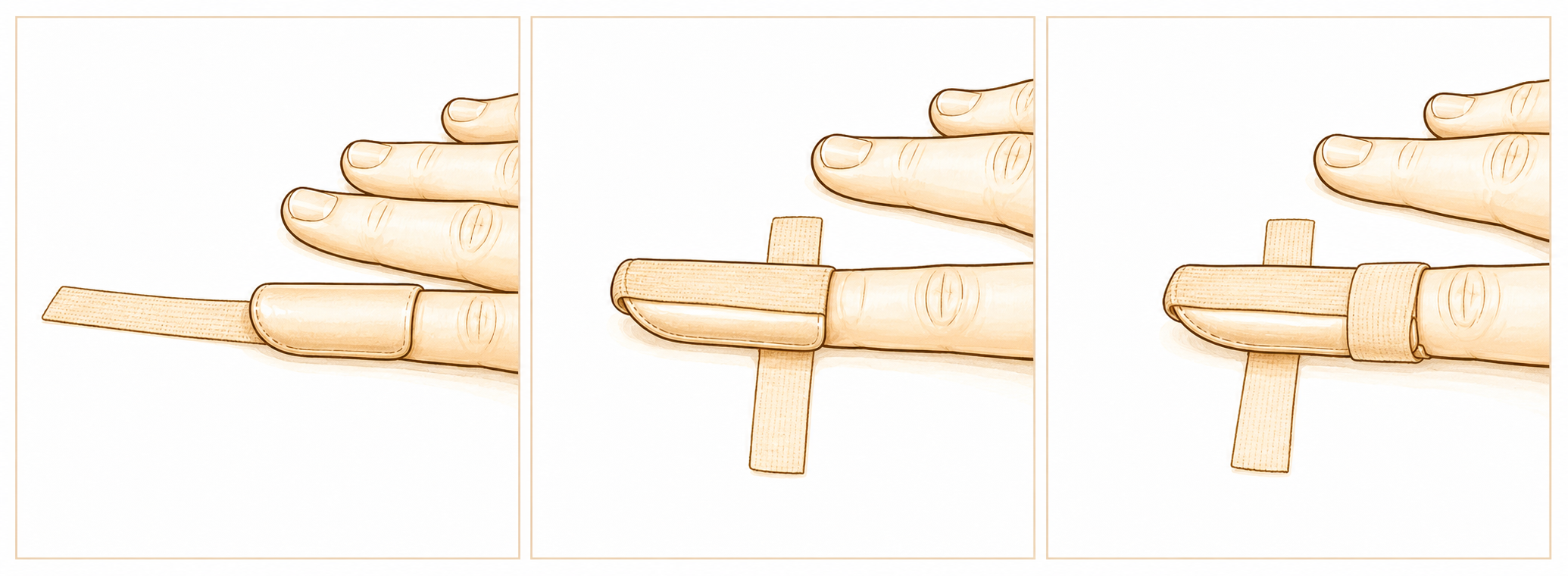
Kieran Hirpara 4.0
安全更换夹板(保持指尖伸直)
夹板仅在清洁和擦干皮肤时取下——且仅当您能全程保持指尖完全伸直时方可操作。将手指平放于桌边,使指尖获得支撑且无法下垂,或用另一只手将其固定伸直。将旧夹板滑下,清洁并擦干,再滑上新夹板——全程切勿让指尖弯曲。若您对此操作缺乏信心,请交由手部治疗师处理。
每日一次进行皮肤护理,且仅在指尖保持完全伸直的情况下进行
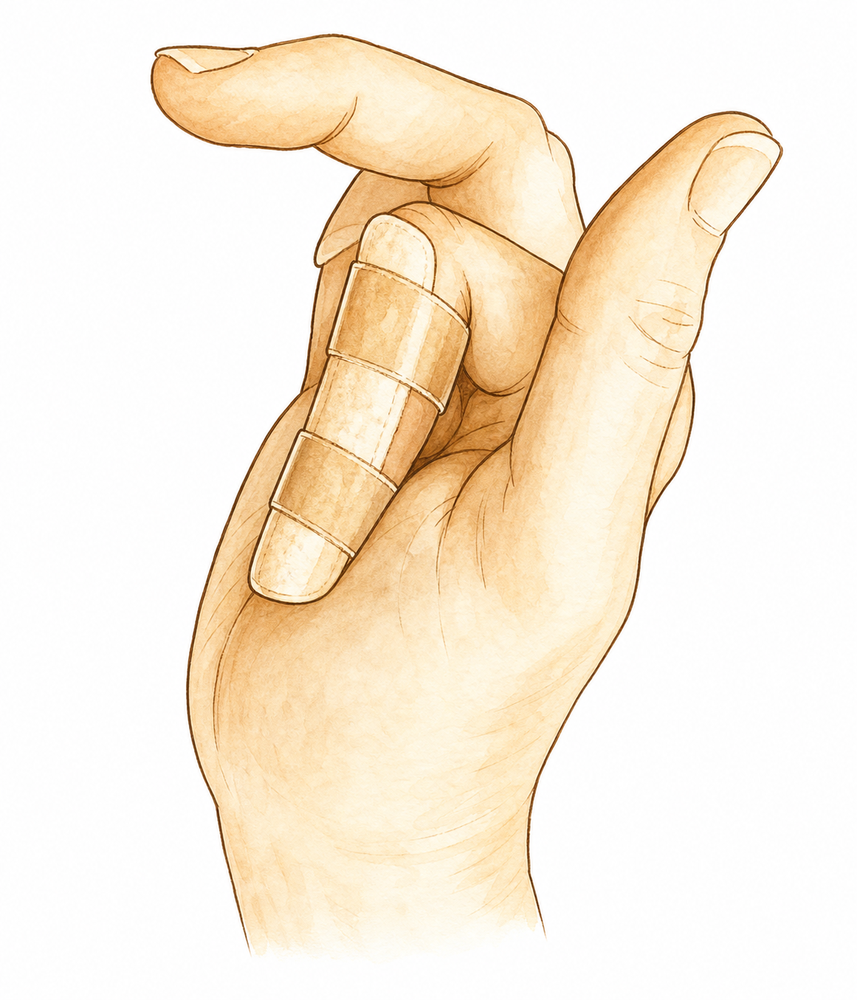
Kieran Hirpara 4.0
保持中间关节和掌指关节活动(PIP 和 MCP)
在指尖保持伸直夹板固定的同时,保持该手指的其他关节活动,以防止其僵硬。充分且自由地弯曲和伸直中间关节(近端指间关节,PIP)和掌指关节(MCP)——这些关节活动是安全的,且活动它们不会干扰指尖处愈合中的肌腱。做半握拳动作并再次张开,整个过程中保持夹板固定的指尖伸直。
每个关节10次,每天数次,夹板保持佩戴
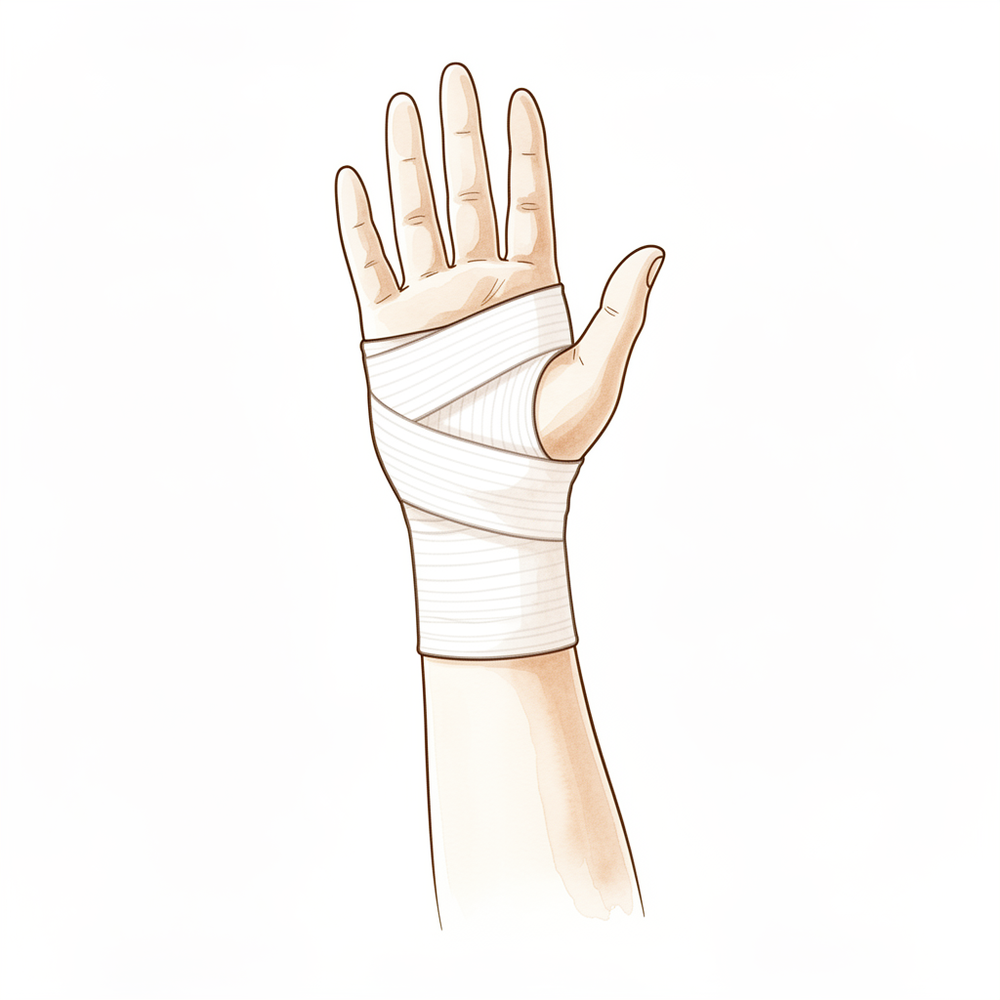
Kieran Hirpara 4.0
夹板下的皮肤与肿胀护理
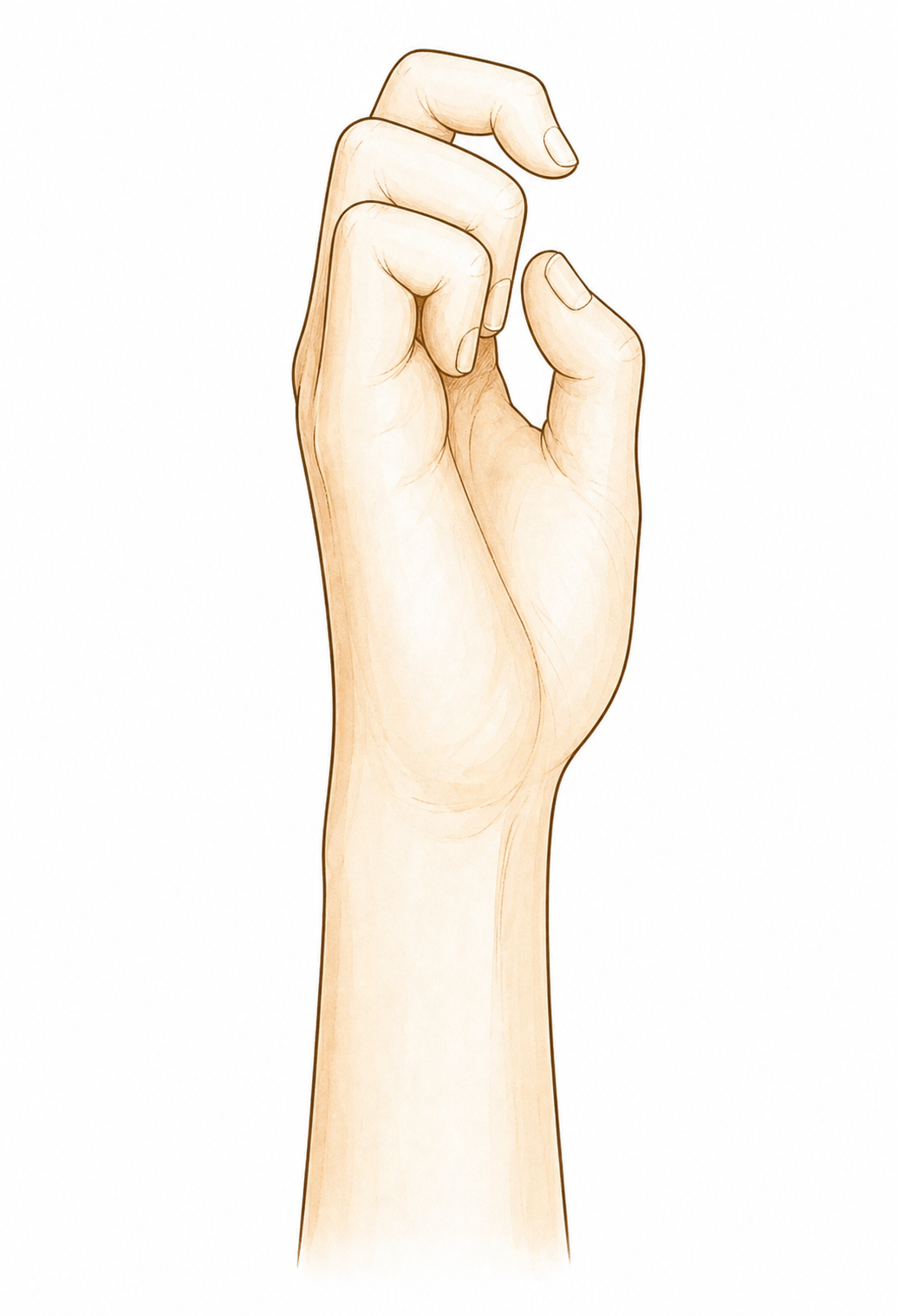
每天,保持指尖伸直,检查皮肤——尤其是关节背侧和指甲处。轻微的粉红色是正常的,但如果皮肤在夹板压迫处看起来苍白、发白或疼痛,夹板可能将指尖固定得过于靠后;请通知您的手部治疗师,以便调整夹板。保持手指和夹板清洁干燥,如果手部肿胀,请抬高患手。
每日检查;如有皮肤苍白、疼痛或破损,请立即报告
Kieran Hirpara 4.0
分级指尖屈曲(撤除期)
稍后的练习——仅在您的手部治疗师开始逐步撤除支具(通常从约6至8周开始)且指尖无下垂或仅有可接受的下垂时进行。脱离支具后,轻轻将指尖关节弯曲一小幅度,然后完全伸直,始终保持在舒适范围内。切勿强行用力。如果指尖再次出现下垂,请恢复全天佩戴支具并告知您的治疗师。
几次轻柔的弯曲,仅按撤除固定阶段的指导进行
这些是您的手册中的练习。最重要的“练习”其实是正确佩戴支具,并在每一时刻保持指尖伸直;其他所有内容都围绕这一点展开。在早期,您的任务是保持支具佩戴、保持皮肤健康,并让其他手指关节自由活动。轻柔的指尖弯曲和受限伸直练习属于后期的脱除阶段,除非您的手部治疗师明确开始指导,否则不应开始进行。如果任何动作导致指尖下垂,请立即停止并恢复全天候佩戴支具。
您的临床方案
本页其余部分为锤状指夹板主导康复的分阶段临床方案。本节内容应提供给手部治疗师,每个阶段均以通俗语言解释当前发生的情况。愈合取决于不间断的远指间关节(DIP)伸展:在夹板固定期间,远端肌腱(或撕脱的骨碎片)只有在远指间关节始终不被允许屈曲的情况下才能愈合,同时保持近指间关节(PIP)和掌指关节(MCP)自由活动,因为其运动不会干扰远端肌腱的愈合。患者依从性是决定预后的主要因素。
在治疗前,确认锤状指是肌腱型还是骨性型,并回顾影像学检查。使用远指间关节伸展矫形器:Stack、热塑性材料或掌侧/背侧铝泡沫;夹板类型对预后无实质性差异,因此根据贴合度、皮肤耐受性和依从性进行选择。将远指间关节保持在完全伸展或轻微过伸位,但避免过度过伸(背侧皮肤苍白/溃疡风险)。对于骨性锤状指,建议远指间关节保持伸直/中立位而非过伸位,以避免远节指骨掌侧半脱位。近指间关节始终保持自由活动。
第一阶段——不间断的全天候伸直支具固定(第 0 至 6/8 周)
指尖关节(DIP)需持续保持伸直状态,昼夜不间断,以便肌腱或骨碎片愈合。支具仅在皮肤护理时取下,且取下过程中 DIP 必须始终保持伸直;任何一次 DIP 屈曲都会使愈合进程重新开始。PIP 和 MCP 关节可自由活动。
致手部治疗师:
健康教育与注意事项 - 佩戴 DIP 伸直矫形器(Stack/热塑性/铝泡沫),DIP 置于完全伸直或轻微过伸位;避免过度过伸(皮肤发白/溃疡);骨性锤状指 → 保持伸直/中立位,而非过伸(以防半脱位风险) - 持续佩戴:肌腱性约 8 周,骨性约 6 周;在此期间 DIP 绝不可屈曲 - 教授平面换药/更换支具技术,确保 DIP 始终不向下坠落;若患者无法维持伸直位,则由治疗师执行更换操作 - PIP 和 MCP 关节保持自由,并从第 1 天起进行主动活动
管理 - 皮肤:每日检查 DIP 背侧及甲沟区域;若出现发白/受压,需调整矫形器;保持清洁干燥 - 水肿:抬高患肢;轻柔活动近端关节 - 练习:PIP 和 MCP 关节全范围主动活动;禁止 DIP 关节活动 - 骨性锤状指:在支具固定期间保持影像学监测(对位/半脱位),因为支具固定在伸肌滞后方面不劣于克氏针固定,但必须监测骨碎片位置
晋级标准 - 完成全天佩戴期(肌腱性约 8 周 / 骨性约 6 周),且 DIP 伸肌滞后在可接受范围内,皮肤健康
第二阶段 — 撤除支具并开始控制性 DIP 运动(第 6/8 周,随后 +2 至 6 周)
一旦全时佩戴期结束,且伸肌滞后无或仅为可接受范围,支具应撤除至夜间及高风险活动佩戴,同时开始温和的控制性 DIP 屈曲。夜间支具佩戴可被描述为可选(一项 I 级研究证实其非必需),并应务实使用。若出现显著滞后复发,患者应恢复全时伸展位支具佩戴。
致您的手部治疗师:
评估 - DIP 主动伸肌滞后(度数)及主动屈曲;皮肤状况;患者对指尖脱离支具的信心
教育与注意事项 - 撤除至夜间 + 高风险活动支具佩戴,持续约 2 至 6 周;根据当前证据,夜间佩戴为可选 - 若支具佩戴后伸肌滞后 >20° 复发,恢复全时伸展位支具佩戴约 4 至 6 周
管理 - 练习:开始温和、分级的主动 DIP 屈曲(先小范围)和阻断式主动 DIP 伸展(固定 PIP,伸展 DIP);随着滞后允许,逐步增加屈曲范围 - 一旦 DIP 能主动保持伸展位且无或可接受(≤10–20°)的滞后,减少日间支具佩戴 - 继续全 PIP/MCP 运动;按需进行瘢痕/皮肤护理 - 慢性或延迟就诊的锤状指仍对伸展位支具佩戴有反应;延迟开始并非禁忌症
进展标准 - DIP 能主动保持伸展位且滞后可接受;恢复受控、无痛的 DIP 屈曲;皮肤完整
第三阶段——强化与恢复(约第8至12周)
随着肌腱愈合和主动运动的恢复,手指完全脱离支具,开始分级强化训练及活动恢复。预计会出现轻微的永久性伸肌滞后(平均约8°),这与极佳的功能预后相符。
致您的手部治疗师:
评估 - 远端指间关节(DIP)主动伸展滞后及屈曲活动范围;握力;负重及运动准备情况
健康教育与注意事项 - 日常无支具使用;恢复期间进行对抗性运动的保护性支具固定 - 告知患者残留约5–10°的伸肌滞后属正常现象,且不影响满意度
管理 - 练习:分级握力与捏力强化训练;全指关节活动度(ROM);任务及运动特异性进阶训练 - 依据标准(对抗性运动需佩戴保护性支具)于约第8至12周恢复运动/重体力劳动 - 当肌力与功能充分且滞后稳定时予以出院;若明显滞后持续存在或复发,则转回医生复诊
恢复工作与活动
从开始起即可轻度使用佩戴支具的手:支具需保持佩戴,指尖保持伸直,且可在该限制范围内使用手部进行日常活动。佩戴指尖支具期间不应驾驶:须等到支具取下、您能够握住方向盘并安全控制车辆后方可驾驶,并需在复诊时经Hirpara医生确认。随着支具逐步撤除,抓握和力量训练大约从第六至第八周开始逐步建立。恢复体育运动和较重的体力劳动通常从第八至第十二周开始,评估标准是恢复受控运动能力,而非仅依据日历时间;在此期间恢复接触性运动时需佩戴保护性支具。预期指尖会出现约五至十度的轻微永久性下垂;这属于正常现象,不影响手部功能,且大多数人几乎察觉不到。
您的方案之后
本方案与本诊所的一般康复建议配合使用;请参阅术后疼痛管理、伤口护理和疤痕管理。上述分阶段计划反映了关于锤状指夹板固定的已发表指南,您的持续康复将由Hirpara医生和您的手部治疗师根据您指尖的进展情况,为您进行个体化指导。
关于锤状指手术固定的说明
大多数锤状指均无需手术。仅在骨性锤状指且骨折累及关节面较大范围(超过约三分之一)或末节指间关节出现脱位(掌侧半脱位)时,才考虑手术。若进行固定,通常采用伸展位阻挡(Ishiguro)克氏针固定,有时会在指尖关节处临时穿入一根克氏针以维持关节伸直。该克氏针通常保留约四至六周,并在约五至六周时取出,随后开始主动活动指尖,并可能需再佩戴夜间支具约四周。现有证据表明,就最终下垂程度而言,支具固定与克氏针固定疗效相当(非劣效),因此手术仅保留用于上述特定情况,而非常规使用。
Evidence & references
This is the clinical evidence summary written for health professionals. It is technical, and it lists the research this page was built from. You do not need to read it to understand your treatment or to make a decision about it.
Topic scope: non-operative (and, where indicated, post-fixation) management of a mallet finger — disruption of the terminal extensor tendon at the distal interphalangeal (DIP) joint, either purely tendinous or with an avulsion bony fragment (bony mallet). This is a healing injury, not a reconstruction: the entire treatment is uninterrupted DIP extension splinting that holds the tendon (or fragment) in apposition while it unites, with the PIP and MCP left free.
Defining principle of the rehab here: the terminal extensor tendon heals only if the DIP is held in continuous extension and is never allowed to flex during the splinting period. Any single lapse into DIP flexion separates the healing ends and restarts the healing clock, which is why patient compliance is the dominant outcome driver. The PIP is deliberately kept mobile because proximal-joint motion does not disturb terminal-tendon healing. Splint type (Stack, thermoplastic, volar/dorsal alumifoam) does not materially change the outcome — fit, skin tolerance and compliance matter more than the device. The single branch point is the bony mallet with a large articular fragment or DIP volar subluxation, where surgical fixation is considered; even there, splinting is non-inferior to pinning for the final extensor lag, so operation is reserved rather than routine.
A. INJURY OUTCOMES (tendinous vs bony mallet; splinting vs fixation)
Mallet finger is one of the most reliably treated closed tendon injuries in the hand: the great majority heal well with splinting alone, and the principal debate is over the bony mallet — when, if ever, to fix it.
- Continuous extension splinting is the standard of care and works well for both tendinous and bony mallets, including chronic and delayed presentations, which still respond to splinting weeks after injury [Valdes systematic review LoE 1a; Salazar Botero review; Medscape; StatPearls]. Strong (SR + reviews).
- Splint type makes no meaningful outcome difference. A randomised comparison of splint designs found no superiority of one orthosis over another; the determinant is uninterrupted DIP extension and compliance, not the device [Pike RCT]. Strong (RCT).
- Splinting is non-inferior to extension-block pinning for the final extensor lag. A randomised trial comparing conservative extension splinting with operative extension-block K-wiring for bony mallet found no advantage to pinning in the residual lag, supporting non-operative management as the default even for many bony mallets [Thillemann RCT]. Strong (RCT).
- Surgery is reserved for the large bony fragment or subluxating DIP. Operative fixation is
considered when the fracture involves a large part of the articular surface (often cited as
~30%) or there is volar subluxation of the distal phalanx; common techniques are extension-block (Ishiguro) K-wiring with or without a trans-articular DIP pin. Single-K-wire constructs perform less well in non-compliant settings [Aksan; Salazar Botero; Medscape]. Moderate.
- Stack splints can subluxate a bony mallet. Volar-based Stack-type orthoses holding the DIP in hyperextension can displace a bony-mallet fragment / promote subluxation, which is why a straight/neutral DIP is preferred for bony mallets rather than hyperextension [Kaplan]. Moderate (mechanistic/clinical).
- The underlying mechanism is a terminal tendon avulsion at the distal phalanx. Anatomical and injury studies characterise the lesion as avulsion of the terminal extensor at its distal-phalanx insertion, and a very small amount of tendon lengthening translates into a large extensor lag — roughly 1 mm of lengthening ≈ 25° of lag — which is the biomechanical reason apposition must be maintained so strictly [Tuttle; Yeh; PMC current concepts]. Mechanistic.
B. REHABILITATION / THERAPY EVIDENCE
The central rehab questions are (1) how long and how strictly to splint, (2) whether the PIP should be included, and (3) whether night-time and post-splinting splinting are needed. The evidence supports uninterrupted full-time DIP extension splinting (~6–8 weeks) with the PIP free, followed by a weaning phase, and downgrades routine night-splinting to optional.
- Uninterrupted DIP extension is the active ingredient; the PIP must stay free. Splinting holds the DIP in full extension (or slight hyperextension) continuously; the PIP and MCP are mobilised from the outset because proximal-joint motion does not load the terminal tendon. Full-time wear is about 8 weeks for tendinous and 6 weeks for bony mallets [Valdes SR 1a; Salazar Botero; StatPearls; Physiopedia]. Strong (SR + guideline-level reviews).
- Compliance is the dominant outcome driver. Because any DIP flexion restarts healing, outcome tracks adherence to continuous extension more than any device choice; patient education and a safe flat-surface splint-change technique are central [Valdes SR; Cook BAHT survey of therapist practice]. Strong (mechanism + practice consensus).
- Avoid excessive hyperextension. Holding the DIP in marked hyperextension risks dorsal-skin blanching and pressure ulceration over the joint; slight hyperextension or neutral is sufficient, and bony mallets should be held straight/neutral to avoid fragment subluxation [Azad dorsal splinting outcomes; Kaplan]. Moderate.
- Night-time splinting after the full-time phase is non-essential (optional). A Level-I study found that continued night-splinting after the primary full-time period was not essential to the result, so the ~2–6 week post-splinting night/risky-activity phase is framed as optional and pragmatic rather than mandatory [Valdes SR 1a evidence base]. Moderate (Level I within SR).
- Recurrent lag responds to re-splinting. If an extensor lag (>~20°) recurs after the splinting period, a further ~4–6 weeks of full-time extension splinting is appropriate; chronic/delayed mallets likewise still respond [Salazar Botero; Medscape; StatPearls]. Moderate.
- A small residual extensor lag is the expected, satisfactory result. Most patients are left with a slight permanent lag (mean ~8°, typically 5–10°) that does not impair function or satisfaction; this should be counselled as normal rather than as failure [Salazar Botero; PMC current concepts; Physiopedia]. Moderate–strong (natural history).
Recovery trajectory (expected, evidence-anchored)
| Phase | Window | Restraint | Hand use / therapy focus | Strength / load | Notes |
|---|---|---|---|---|---|
| I — Continuous DIP extension splinting | Week 0–6/8 (bony ~6, tendinous ~8) | DIP held continuously extended; never flex the DIP | Full-time extension orthosis (Stack/thermoplastic/alumifoam); flat-surface splint changes only; PIP + MCP moved freely from day 1; daily dorsal-skin checks | No DIP loading; light splinted hand use | Any DIP flexion resets the clock; bony mallet held straight/neutral + radiographic surveillance |
| II — Weaning & controlled DIP motion | +2–6 weeks after full-time phase | Night / high-risk-activity splinting (night wear optional) | Begin gentle graded active DIP flexion + blocked active DIP extension; reduce day wear once lag ≤10–20° | Light functional load | Lag >20° recurring → re-splint full-time ~4–6 wk; chronic mallets still respond |
| III — Strengthening & return | From ~week 8–12 | None (protective splint for contact sport) | Splint-free use; graded grip/pinch strengthening; full ROM; sport-/work-specific progression | Grip/strength built up; driving once able to grip the wheel safely | Expect ~5–10° permanent lag (mean ~8°) — normal, satisfaction preserved |
(Phase windows mirror the precautions in the patient protocol; they are typical guides, not trial-derived deadlines.)
C. KEY CONTROVERSIES / EVIDENCE QUALITY
- Splint type. Stack vs thermoplastic vs volar/dorsal alumifoam — randomised data show no meaningful outcome difference; the determinant is uninterrupted extension and compliance, not the device [Pike RCT]. Strong evidence of equivalence.
- Splinting vs operative fixation for bony mallet. Randomised data show extension splinting is non-inferior to extension-block pinning for the residual lag; surgery is reserved for the large articular fragment (>~30%) or volar DIP subluxation, not used routinely [Thillemann RCT; Aksan; Salazar Botero]. Strong (RCT) for non-inferiority; moderate for the fixation indications.
- Hyperextension vs neutral. Slight hyperextension aids tendinous apposition but excessive hyperextension risks dorsal-skin ischaemia/ulcer, and in bony mallets can subluxate the fragment — hence straight/neutral for bony mallets [Azad; Kaplan]. Moderate.
- Is night-splinting necessary? A Level-I study found continued night-splinting after the full-time phase non-essential; the post-splinting phase is therefore optional/pragmatic rather than mandatory [Valdes SR 1a]. Moderate.
- Residual lag as expected outcome, not failure. A small permanent lag (mean ~8°) is the norm and is compatible with full function and satisfaction; mislabelling it as failure drives unnecessary intervention [Salazar Botero; PMC current concepts]. Strong natural-history data.
D. EVIDENCE STRENGTH FLAGS (summary)
- STRONG (RCT / SR): uninterrupted DIP extension splinting as standard of care (6–8 wk full-time, tendinous ~8 / bony ~6); splint-type equivalence; PIP-free mobilisation; compliance as the key outcome driver; expected ~5–10° residual lag; splinting non-inferior to pinning for bony mallet (with radiographic surveillance during splinting).
- MODERATE: exact length of the weaning/night-splinting phase (night wear non-essential per a Level-I study); strengthening and return-to-sport/work timing (~8–12 weeks, criterion-based); hyperextension-vs-neutral splint positioning and the bony-mallet subluxation caveat; surgical indications (>~30% articular fragment / volar subluxation) and fixation technique.
- WEAK / CONFIRM: driving — a fingertip splint is not usually a contraindication once the wheel can be gripped safely, but this is confirmed clinically rather than evidence-defined.
CITATIONS
RAG corpus (180,000+ Orthopaedic articles)
- A randomized controlled trial comparing splint designs for mallet finger. J Hand Surg Am. 2010. DOI: 10.1016/j.jhsa.2010.01.005
- Conservative management of mallet finger: a systematic review (Level of Evidence 1a). J Hand Ther. 2015. DOI: 10.1016/j.jht.2015.03.001
- Mallet finger: a survey of British Association of Hand Therapists practice. Hand Therapy. 2016. DOI: 10.1177/1758998316664822
- The mallet finger injury: a review (current concepts in diagnosis and management). Arch Plast Surg. 2016. DOI: 10.5999/aps.2016.43.2.134
- Outcomes of dorsal splinting for mallet finger. Hand (N Y). 2022. DOI: 10.1177/15589447221093674
- Conservative splinting versus extension-block K-wiring for bony mallet finger: a randomized controlled trial. J Hand Surg (Eur Vol). 2020. DOI: 10.1177/1753193420917567
- Tendon avulsion fractures of the distal phalanx (terminal extensor avulsion). Clin Orthop Relat Res. 2006. DOI: 10.1097/01.blo.0000205903.51727.62
- Tendon ruptures in the hand. Hand Clin. 2012. DOI: 10.1016/j.hcl.2012.05.040
- Single K-wire fixation of bony mallet finger in non-compliant patients. Arch Orthop Trauma Surg. 2021. DOI: 10.1007/s00402-021-03793-4
- Subluxation of bony mallet fractures with Stack splint immobilisation. J Hand Surg Am. 2013. DOI: 10.1016/j.jhsa.2013.08.111
Mallet-finger management literature (URLs)
- Medscape — Mallet Finger Treatment & Management. https://emedicine.medscape.com/article/1242305-treatment
- StatPearls — Mallet Finger (NCBI Bookshelf). https://www.ncbi.nlm.nih.gov/books/NBK459373/
- Current concepts in the management of mallet finger (PMC; ~1 mm terminal-tendon lengthening ≈ 25° extensor lag). https://pmc.ncbi.nlm.nih.gov/articles/PMC4022957/
- Physiopedia — Mallet Finger. https://www.physio-pedia.com/Mallet_Finger





